David Morales – Nominee for the U.S. District Court for the Southern District of Texas

David Morales is Trump’s second hispanic judicial nominee to come before the Senate Judiciary Committee, after fellow S.D. Tex. nominee Fernando Rodriguez.  Unlike Rodriguez, however, who worked primarily in human rights law, Morales was a longtime litigator with the Texas Attorney General’s Office, working closely with Sens. John Cornyn, Ted Cruz and Gov. Greg Abbott, among others.  He also served as General Counsel to then-Gov. Rick Perry (now the Secretary of Energy).

Background

David Steven Morales was born in Edinburg, TX (in the Valley near the Mexican border) in 1968.  Morales attended Texas A&M University for a year, but received a B.B.A. from St. Edwards University in Austin.  After graduating, Morales spent a year at a Sales Associate at the Zale Corporation.[1]

In 1994, Morales received his J.D. from St. Mary’s University School of Law and then was hired by Texas Attorney General Dan Morales (a Democrat) as Assistant Attorney General in the General Litigation Division.[2]  Morales was appointed the Associate Deputy Attorney General for Litigation and Chief Ethics Officer by Texas Attorney General Greg Abbott (now the Republican Governor) in 2004.[3]  Abbott promoted Morales to Deputy Attorney General for Civil Litigation in 2007 and to Deputy First Assistant Attorney General in 2010.[4]

In 2011, Morales joined the Office of Gov. Rick Perry as General Counsel.  In 2014, Morales became Deputy General Counsel for the University of Texas System Board of Regents.  In 2016, Morales left that position to become a Partner in the Austin office of Kelly Hart & Hallman LLP.  He currently serves in that capacity.

History of the Seat

Morales has been nominated to fill the second longest pending judicial vacancy in the country.  This seat on the U.S. District Court for the Southern District of Texas opened on June 1, 2011, when Judge Janis Graham Jack moved to senior status.  The bipartisan Federal Judicial Evaluation Committee twice sent recommendations for nominees to Texas Senators John Cornyn and Ted Cruz, but the two were unable to agree on a nominee with the White House.[5]  As such, no nominee was ever put forward to fill the vacancy during the Obama Administration.

After the election of President Trump, Cruz and Cornyn reset up the Federal Judicial Evaluation Committee to take applications for the federal bench.  Morales interviewed with the Committee on March 17, 2017, and with Cornyn and Cruz on April 7.  Morales then interviewed with the White House Counsel’s Office and the Department of Justice on May 3, 2017, and was finally nominated on April 12, 2018.[6]

Important Cases

While Morales spent four years advising Perry as his General Counsel, and currently practices litigation in private practice, Morales’ most significant cases came during his 17-year long tenure at the Texas Attorney General’s Office, where he was responsible for both trial and appellate litigation involving the Texas government.

At the Texas Attorney General’s office, Morales litigated approximately 150 cases.[7]  Among his most notable cases, Morales successfully defended a challenge to Texas’ lethal injection method for capital punishment before the U.S. District Court, as well as assisting with the defense on appeal.[8]  Morales also negotiated an agreement with the U.S. Department of Justice in an investigation involving the treatment of persons with developmental disabilities in 12 Texas state schools.[9]

Morales also had an opportunity to work on briefing before the U.S. Supreme Court.  Notably, he helped assist Abbott and Cruz (then the Solicitor General) in defending a monument of the Ten Commandments that was displayed before the Texas Capitol.[10]  The Texas Supreme Court ultimately upheld the monument while striking down a similar display in Kentucky.[11]

Writings

In 2016, Morales published a letter to the editor for the Houston Chronicle in response to an editorial criticizing the decision to drop the lawsuit against Trump University.[12]  In the article, Morales described his role in leading the investigation against Trump University, stating that Abbott and political superiors had no role in directing or ending the inquiry.[13]  Rather, Morales stated that he decided to end the inquiry himself after Trump University agreed to permanently suspend Texas operations, noting:

“[The agreement] ensured that no further Texas citizens would be exposed to the company,”[14]

Morales also stated that his office had no written complaints from those who had used Trump University’s services, while also noting:

“I am proud that our Consumer Protection Division was able to get Trump University to immediately and permanently leave the State of Texas.”[15]

Morales’ letter sparked a letter in opposition from Houstonian John Fisch who noted that Trump University was given no sanctions for their deceptive conduct, stating:

“[Dropping the investigation] is akin to allowing a burglar to leave with the money and goods it took from a home, as long as he agrees not to break into the same house again.”[16]

Political Activity

Morales has a limited history of political activity.  He volunteered on President George W. Bush’s re-election campaign in 2004 and worked in then-Gov. Rick Perry’s Presidential Campaign in 2012, volunteering to assist with the Iowa caucuses.[17]

Overall Assessment

With over twenty years of litigation experience, Morales is clearly qualified for a seat on the federal bench.  While he has spent much of his career defending conservative statutes, the positions Morales took on behalf of the Attorney General’s Office cannot necessarily be considered predictive of his own approach on the bench.

Morales may draw questions, however, regarding his dropping of the investigation against Trump University.  Given his acknowledgment that he himself made the decision, Morales will likely be questioned on his motivation and reasoning.  Given the Republican majority and his otherwise noncontroversial record, however, Morales is still a favorite to be confirmed.


[1] Sen. Comm. on the Judiciary 115th Cong., David S. Morales, Questionnaire for Judicial Nominees 3.

[2] See id. at 2.

[3] See id.

[4] See id.

[5] Krista M. Torralva, 26 Apply for Federal Judge Post in Corpus Christi, Corpus Christi Caller-Times, March 1, 2017,  https://www.caller.com/story/news/local/2017/03/01/26-apply-federal-judge-post-corpus-christi/98580400/.  

[6] See Morales, supra n. 1 at 26.

[7] See id. at 14.

[8] See Raby v. Livingston, 600 F.3d 552 (5th Cir. 2010).

[9] See United States of America v. State of Texas, No. 009-CV-00790 (W.D. Tex.).

[10] Van Orden v. Perry, 545 U.S. 677 (2005).

[11] McCreary Cnty. v. ACLU, 545 U.S. 844 (2005).

[12] David Morales, Saturday Letters; Trump U. and Texas, Houston Chronicle, June 3, 2016, https://www.houstonchronicle.com/opinion/letters/article/Saturday-letters-Trump-U-and-Texas-7961669.php.  

[13] See id.

[14] Id.

[15] Id.

[16] John Fisch, Curious Actions, Houston Chronicle, June 20, 2016, https://www.houstonchronicle.com/opinion/letters/article/Trump-U-and-Texas-8000753.php.  

[17] See Morales, supra n. 1 at 11.

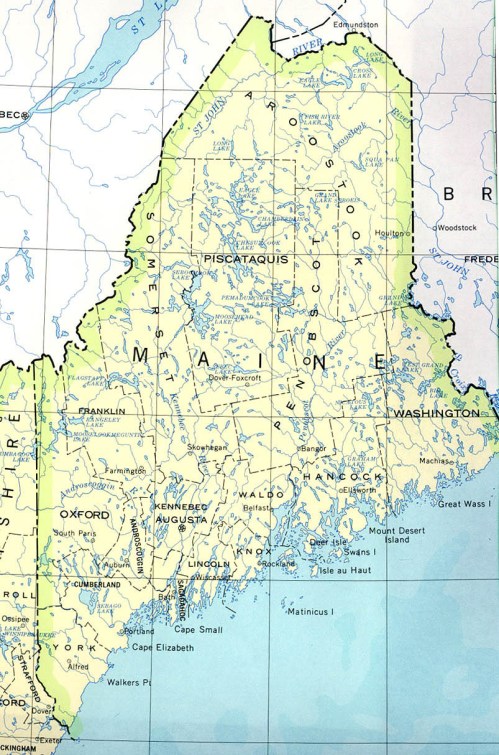
Justice Lance Walker – Nominee to the U.S. District Court for the District of Maine

Justice Lance Walker of the Maine Superior Court is Trump’s first judicial nominee from the Pine Tree state and boasts the strong support of his home-state senators.

Background

A native Mainer, Lance Edward Walker was born in the small town of Milo on March 13, 1972, and raised in Dover-Foxcroft.[1]  Walker attended the University of Maine and then started at Vermont School of Law in 1997.  However, he returned to his home state after a year to finish his J.D. at the University of Maine Law School, graduating in 2000.[2]

After graduating, Walker clerked on the Maine Superior Court and then joined the Maine law firm Norman Hansen & DeTroy LLC as Associate Attorney.[3]  In 2007, Walker was named a Member in the Portland Office in 2007.[4]

In 2014, Republican Governor Paul LePage appointed Walker as a District Court Judge.[5]  He was elevated to be the Maine Superior Court in 2015 and serves as a Justice on that court.

Walker was a member of the Federalist Society, a conservative legal organization that has produced many Trump nominees, between 1997 and 2002.[6]  He has also been a member of the National Rifle Association since 2001.[7]

History of the Seat

Walker has been nominated for a seat on the U.S. District Court for the District of Maine.  This seat opened on June 27, 2017, when Judge John Woodcock moved to senior status. In June 2017, Walker applied for the judgeship with Sen. Susan Collins (R-Maine).[8]  Walker interviewed with the Commission, Collins, and the White House Counsel’s Office before becoming confirmed as a nominee in October 2017.  Walker was officially nominated on April 10, 2018.[9]

Legal Career

Before he became a judge, Walker worked in litigation at Norman Hansen & DeTroy LLC for thirteen years.  During this time, he worked on approximately twenty cases as lead counsel, including five jury trials.[10]

Among his more notable cases as an attorney, Walker defended an insurance company being sued for damages owed to a tenant by her landlord who sexually molested her.[11]  In defending against the claim, Walker argued that a policy exclusion in the insurance contract prevented liability on the part of the insurer.[12]  While the trial court ruled for the tenant, the Maine Supreme Judicial Court reversed, finding that the policy exclusion barred the claims.[13]

Jurisprudence 

From 2014 to 2015, Walker served as a judge on the Maine District Court, where he heard civil, criminal and family matters from the bench.  Since 2015, Walker has served on the Maine Superior Court, where he has managed over thirty jury trials.[14]

Among the many cases that Walker has handled over his tenure, two are particularly notable.  In the first, Walker granted a preliminary injunction to the State of Maine barring anti-abortion protester Brian Ingalls from being within 50 feet of Planned Parenthood facilities and ordered Ingalls to pay civil penalties and attorney’s fees for the state.[15]  While the Ingalls case was pending, a second abortion protester succeeded in getting the law enjoined by U.S. District Judge Nancy Torresen (although Torresen’s ruling was later overturned by the First Circuit).

In his second notable matter, Walker blocked the State of Maine from reinstating criminal charges against 17 protesters from the Black Lives Matter movement.[16]  The criminal charges were initially dismissed as part of an agreement to seek a restorative justice session, but were reinstated after negotiations over the session fell apart.[17]  In blocking the reinstatement of charges, Walker held that the State was bound by its earlier agreement to seek a restorative justice session.[18]

Overall Assessment

As a judicial nominee, Walker has parts of his background that can please both the right and the left.  For conservatives, they can note Walker’s prior Federalist Society membership and his current affiliation with the NRA.  For liberals, they can be happy with his favorable decisions in the Ingalls and Black Lives Matter cases.  As such, Walker can potentially be seen as a consensus nomination.

This is not to say that Walker’s nomination does not have the potential to draw any controversy.  In 2017, Judge Scott Palk, an Obama nominee renominated by Trump drew 16 no votes over his membership in the NRA.  Given the heightened controversy over the NRA in recent months, it is possible that Walker’s membership will also raise opposition.  On the flip side, Planned Parenthood has been a bete noire for many on the right.  As such, Walker’s imposition of a civil penalty on a protester may lead some to paint him as a Planned Parenthood supporter and may draw the opposition of anti-abortion groups.

At the end of the day, all a nominee needs to be confirmed in 50 votes.  Given Walker’s support from Collins and Sen. Angus King (I-ME), he looks likely to get it.


[1] Judy Harrison, Trump Tapes Maine Superior Court Justice for Federal Vacancy, Bangor Daily News, Apr. 10, 2018.

[2] Sen. Comm. on the Judiciary, 115th Cong., Lance Walker: Questionnaire for Judicial Nominees 1.

[3] Id.

[4] Id.

[5] Judy Harrison, LePage’s Ex-Counsel, Former AG, Homicide Prosecutor Among Those Nominated to Replace Retiring Judges, Bangor Daily News, Feb. 7, 2014.

[6] Id. at 4.

[7] Id.

[8] Walker, supra n. 1 at 38.

[9] Press Release, White House, President Donald J. Trump Announces Twelfth Wave of Judicial Candidates, Twelfth Wave of United States Attorneys, and Sixth Wave of United States Marshals (Apr. 10, 2018) (on file at https://www.whitehouse.gov/the-press-office).  

[10] See Walker, supra n. 1 at 29.

[11] See Jacobi v. MMG Ins. Co., 17 A.3d 1229 (Me. 2011).

[12] Crest Group, Inc. v. Deloitte & Touche, LLP., No. 27-CV-03-005617 (Minn. Ct. App. Sept. 25, 2007).

[13] See id.

[14] United States v. Abdul-Ahad, No. 08-CR-142 (D. Minn. Oct. 27, 2008).

[15] See State v. Ingalls, No. 15-CV-487, 2016 Me. Super. LEXIS 55 (Me. Super. Ct. Mar. 17, 2016).

[16] Jake Bleiberg, Judge Won’t Reinstate Charges Against Portland Black Lives Matter Protesters, Bangor Daily News, May 24, 2017.

[17] See id.

[18] Id. (quoting Judge Lance Walker).

Judge Allen Winsor – Nominee for the U.S. District Court for the Northern District of Florida

A state appellate judge and former solicitor general, Judge Allen Winsor brings extensive legal experience to the bench.  However, he also brings a long record in hot-button cases.

Background

A native Floridian, Allen Cothrell Winsor was born in Orlando in 1976.  Winsor graduated from Auburn University in 1997 and worked in two years as a Solution Sales Specialist in Rockville, Maryland.[1]  In 1999, Winsor returned to Florida to attend law school at the University of Florida, receiving a J.D. in 2002.[2]

After graduating, Winsor clerked for Judge Ed Carnes on the U.S. Court of Appeals for the Eleventh Circuit.  He then joined the Atlanta office of King & Spalding as an Associate (that office has produced two other Trump judges).  In 2005, Winsor moved to Tallahassee to be an Associate at GrayRobinson PA.[3]  He became a Shareholder at the firm in 2008.[4]

In 2013, Florida Attorney General Pam Bondi chose Winsor to be Florida Solicitor General.  He served in this capacity for the next three years, until being appointed by Gov. Rick Scott to Florida’s First District Court of Appeal.[5]  He continues to serve on that court.

History of the Seat

The seat Ray has been nominated for opened on November 7, 2016, with Judge Robert Hinkle’s move to senior status.  Florida Senators Bill Nelson, a Democrat, and Marco Rubio, a Republican, continued the use of a Judicial Nominating Commission (JNC) to solicit recommendations for vacancies.  The JNC recommended Winsor for the Northern District alongside three other candidates on November 16, 2017.[6]  After interviews with Nelson, Rubio and the White House, Winsor was nominated for the vacancy on April 10, 2010.[7]

Private Practice

Before he became Florida Solicitor General, Winsor spent ten years in private practice working at King & Spalding and GrayRobinson.  At these firms, Winsor’s specialty was in election law and he frequently worked with Republican lawmakers in defending election regulations.

Election Regulation

While at GrayRobinson, Winsor frequently represented Florida’s Secretary of State in defending Florida’s election regulations.  For example, Winsor successfully defended Florida’s registration deadline set 29 days before the election.[8]  He also successfully defended a provision that matched voter applications against drivers license registries and other databases (the provision was challenged by the NAACP).[9]  Winsor also defended bans on electioneering near polling places,[10] and restrictions on third party voter registration organizations.[11]

Redistricting

In 2012, Winsor was part of the legal team challenging the Fair Districts Initiative (a citizen ballot initiative that restricted gerrymandering in Florida).[12]  Winsor, representing the Florida House of Representatives, joined other attorneys in arguing that the Initiative violated the Constitution’s Elections Clause.[13]  The Eleventh Circuit upheld the Initiative.[14]

Winsor also represented the Florida House of Representatives in defending the redistricting maps drawn before the Florida Supreme Court.[15]

Solicitor General

From 2013 to his appointment as a judge in 2016, Winsor served as the Solicitor General of Florida, serving as the primary appellate attorney for the state.  In this role, Winsor has participated in many high-profile cases.

Dealth Penalty – Sentencing

Until 2016, Florida permitted judges to make the requisite factual findings to impose the death penalty, even if a jury recommended otherwise.  In Hurst v. Florida, Winsor defended this sentencing scheme before the U.S. Supreme Court, arguing that no judge had overruled a jury’s recommendation not to impose death since 1999.[16]  The Supreme Court rejected the scheme in a 8-1 opinion authored by Justice Sotomayor, finding that it violated the Sixth Amendment.[17]

Death Penalty – Intellectual Capacity

Winsor was also charged with defending Florida’s bright-line intellectual capacity rule before the Supreme Court.  Florida barred inmates subject to the death penalty from claiming lack of intellectual capacity where their IQ scores were above 70.[18]  Winsor again came up short in the case, as the Supreme Court voted 5-4 to strike down the bright-line rule.[19]

Gay Marriage

Winsor also defended Florida’s ban on same-sex marriage.  The Solicitor General’s Office drew criticism during the defense for stating in a brief that overturning Florida’s ban on same-sex marriage would “impose significant public harm.”[20]  While the statement went viral and drew significant criticism, Winsor responded that the statement was taken out of context.[21]  He stated:

“Florida is harmed whenever a federal court enjoins enforcement of its laws, including the laws at issue here.”[22]

Docs v. Glocks

Winsor was charged with defending Florida’s “Docs v. Glocks” law, which prevents physicians from discussing gun ownership with their patients.[23]  At oral argument, Winsor argued that, as the law instructed physicians to “refrain” from the discussions, the law merely offered a recommendation rather than a prohibition.[24] The law was ultimately struck down by the Eleventh Circuit.[25]

Medical Marijuana

In 2015, Winsor represented the State of Florida in challenging a ballot initiative that would legalize medical marijuana.[26]  Winsor argued that the Amendment’s language was too broad, and that it would permit individuals with minor injuries to receive medical marijuana.[27]  The Florida Supreme Court, however, unanimously approved the Amendment’s language.[28]  The Amendment was approved by 71% of voters in 2016.

Jurisprudence

Winsor has served as an appellate judge on Florida’s First District Court of Appeals for the last two years.  In his two years on the bench, Winsor has heard over 1300 cases.[29]  During this tenure, none of Winsor’s opinions were reversed by a higher court.

The vast majority of appeals that Winsor has heard have been criminal in nature, and Winsor has voted to uphold the underlying convictions in most of those appeals.  In a few, however, Winsor has voted in favor of the defendant.  In one case, Winsor reversed a father’s conviction for sexually assaulting his daughter, noting that the prosecution had failed to timely disclose expert evidence that they offered at trial.[30]  In another case, a divided panel affirmed the defendant’s conviction for sexual battery on a child, finding that admitting child hearsay did not violate the defendant’s rights.[31]  Winsor dissented, arguing that the evidence was improperly admitted and that the defendant was entitled to a new trial.[32]

Writings

In 2012, Winsor authored an article that was critical of the Florida Supreme Court decision in Sarasota Alliance for Fair Elections, Inc. v. Browning, and specifically criticized the ruling on “implied pre-emption.”[33]  In the article, Winsor criticizes the Supreme Court for failing to find that a voter initiative regulating Sarasota County’s elections and voting was pre-empted by Florida state law.[34]  Among his criticisms, Winsor suggests that the Supreme Court “understated the public-policy considerations” noting that:

“…differing local treatment of votes can have disastrous effects, as evidenced in 2000.”[35]

As such, Winsor urged the Florida legislature to pass statements in election codes expressly pre-empting local regulation of vote-counting.[36]

Overall Assessment

Despite his relative youth, Winsor has managed to rack up an impressive array of accomplishments.  Having experience both as an attorney and as a judge, Winsor is qualified for a federal judgeship.  That being said, Winsor may draw questions regarding his defense of conservative laws and his challenge to the medical marijuana amendment as Florida Solicitor General.  He may also draw opposition based on his defense of voting restrictions and his opposition to gerrymandering reform as a private practice attorney.

Overall, Winsor’s support from Rubio and Nelson, as well as his relatively uncontroversial tenure on the bench should help his confirmation along.


[1] Sen. Comm. on the Judiciary, 115th Cong., Allen C. Winsor: Questionnaire for Judicial Nominees 3.

[2] Id. at 1.

[3] Id. at 2.

[4] Id. 

[5] Julie Kanner, Career Track, Florida Times-Union, Feb. 9, 2016.

[6] Alex Leary, Finalists Named for Federal Bench in Northern District of Florida, The Buzz, Nov. 16, 2017, http://www.tbo.com/florida-politics/buzz/2017/11/16/finalists-named-for-federal-bench-in-northern-district-of-florida/.  

[7] Press Release, President Donald J. Trump Announces Twelfth Wave of Judicial Nominees, Twelfth Wave of United States Attorneys, and Sixth Wave of United States Marshalls (April 10, 2018) (on file at www.whitehouse.gov/thepressoffice).

[8] Diaz v. Cobb, 541 F. Supp. 2d 1319 (S.D. Fla. 2008).

[9] Florida State Conference of NAACP v. Browning, 522 F.3d 1153 (11th Cir. 2008).

[10] Citizens for Police Accountability Political Comm. v. Browning, 581 F. Supp. 2d 1164 (M.D. Fla. 2008); 572 F.3d 1213 (11th Cir. 2009).

[11] League of Women Voters v. Browning, 575 F. Supp. 2d 1298 (S.D. Fla. 2008).

[12] Brown v. Secretary of State of Florida, 668 F.3d 1271 (11th Cir. 2012).

[13] Id.

[14] Id. at 1273.

[15] In re Senate Joint Resolution of Legislative Apportionment 1176, 83 So. 3d 597 (Fla. 2012).

[16] Robert Barnes, Supreme Court Hears Criminal Justice Cases, Wash. Post, Oct. 14, 2015.

[17] Hurst v. Florida, 136 S. Ct. 616 (2016)

[18] Mark Sherman, Court Skeptical of IQ Scores in Deciding Execution, Bismarck Tribune, Mar. 4, 2014.

[19] Hall v. Florida, 572 U.S. __ (2014).

[20] John Woodrow Cox, Public Harm and Gay Marriage, Tampa Bay Times, May 31, 2014.

[21] Id. 

[22] Id. (quoting Allen Winsor).

[23] Curt Anderson, US Court Hears Appeal in Docs vs. Guns Case, New Zealand Herald, July 19, 2013.

[24] See id.

[25] Wollschlaeger v. Governor of Florida, No. 1:11-cv-22026-MGC (11th Cir. 2017) (en banc).

[26] Matt Dixon, Marijuana Sides Argue Before State High Court; Debate Was About a Proposed Constitutional Amendment’s Wording, Florida Times-Union, Dec. 6, 2013.

[27] See id.

[28] Dan Sweeney, Medical Marijuana Proposal Moves Closer to Ballot, Sun-Sentinel, Dec. 17, 2015, http://www.sun-sentinel.com/news/florida/fl-medical-marijuana-supreme-court-approval-20151217-story.html.  

[29] See Winsor, supra n. 1 at 9.

[30] See Millette v. State, 223 So. 3d 466 (Fla. 1st DACA 2017).

[31] See Cabrera v. State, 206 So. 3d 768 (Fla. 1st DACA 2016).

[32] See id. (Winsor, J., dissenting).

[33] Allen Winsor, Sarasota Alliance for Fair Elections, Inc. v. Browning: The Implied End to Implied Pre-Emption, 41 Stetson L. Rev. 499 (Winter 2012).

[34] Id. at 507.

[35] Id. at 508.

[36] See id. at 515.

[37] See, e.g., I.A. Group, Ltd. Co. et al. v. RmNandco, Inc., 784 S.E.2d 823 (Ga. App. 2016) (rev’g judgment to plaintiff); Moore-Waters et al. v. Met-Test, LLC., 782 S.E.2d 848 (Ga. App. 2016) (rev’ing grant of default judgment to plaintiff); Martin et al. v. Hansen, 755 S.E.2d 892 (Ga. App. 2014) (rev’ing denial of summary judgment to defendant); Askew et al. v. Rogers, 755 S.E.2d 836 (Ga. App. 2014) (rev’ing grant of summary judgment to plaintiff); Security Real Estate Servs. Inc. v. First Bank of Dalton, 752 S.E.2d 127 (Ga. App. 2013) (rev’ing denial of summary judgment to defendant).

[38] See, e.g., Teston et al. v. Southcore Constr. Inc., 783 S.E.2d 921 (Ga. App. 2016) (rev’ing grant of default judgment to defendant); Gomez v. Innocent et al., 746 S.E.2d 645 (Ga. App. 2013) (rev’ing grant of summary judgment to defendant); Deberry v. Johnson et al., 747 S.E.2d 886 (Ga. App. 2013) (rev’ing grant of summary judgment to defendant).

Justice Patrick Wyrick – Nominee for the U.S. District Court for the Western District of Oklahoma

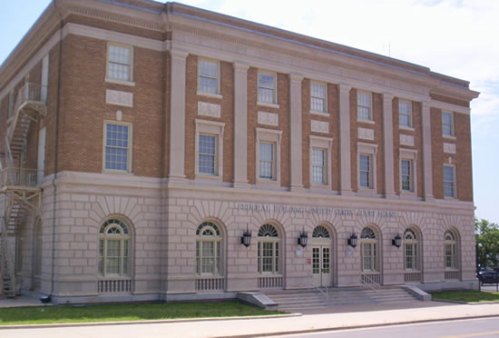
The Federal Courthouse in Lawton, Oklahoma

Justice Patrick Wyrick of the Oklahoma Supreme Court has the distinction of being the youngest candidate on President Trump’s Supreme Court shortlist.  So far, President Trump has prodigiously nominated all the state judges on his shortlist to the federal appellate bench.  However, as there are no Oklahoma vacancies on the Tenth Circuit, Wyrick has been nominated to the trial court instead.

Background

Patrick Robert Wyrick was born in Denison, TX on March 11, 1981.  Wyrick attended the University of Oklahoma, where he played baseball as a student athlete.[1]  While at the University, he met his future-wife, fellow athlete Jamie Wyrick (nee Talbert).[2]  Wyrick received his B.A. in 2004 and then received a J.D. from the University of Oklahoma College of Law in 2007.[3]

After graduating, Wyrick served as a law clerk to Judge James Payne on the U.S. District Court for the Eastern, Northern, and Western Districts of Oklahoma.[4]  He then joined the Oklahoma City office of GableGotwals as an Associate.

Just three years later, Wyrick, not even thirty, was chosen by newly elected Oklahoma Attorney General Scott Pruitt (now the EPA Director) to serve as Oklahoma Solicitor General.[5]  As Solicitor General, Wyrick was the primary representative before the courts for the state of Oklahoma.

In 2016, Justice Steven Taylor of the Oklahoma Supreme Court announced his retirement, and Wyrick was one of four candidates who applied for the seat.[6]  On February 9, 2017, the 35-year-old Wyrick was appointed by Governor Mary Fallin to fill the vacancy.[7]  Wyrick’s appointment sparked an immediate lawsuit from the American Civil Liberties Union, who argued that Wyrick, who listed a residence in Atoka to qualify for the appointment to a seat based in District 2 of Oklahoma, actually resided in Moore and Oklahoma City, citing Wyrick’s home purchases, marriage license, as well as the fact that he was registered to vote in Central Oklahoma in 2016.[8]  The Oklahoma Supreme Court dismissed the lawsuit, finding that they were not the proper agency to determine the eligibility of a sitting justice.[9]

In November 2017, Trump added Wyrick to his list of potential nominees to the U.S. Supreme Court.[10]  Wyrick’s addition makes him the youngest potential nominee on the list.

History of the Seat

Wyrick has been nominated to fill the fifth-longest pending vacancy in the nation.  This seat on U.S. District Court the Western District of Oklahoma opened on July 7, 2013, with Judge David Russell’s move to senior status.  However, the Obama Administration did not put forward a nomination for the next two and a half years, as they negotiated with Oklahoma Republican senators James Inhofe and James Lankford.  Finally, on December 16, 2015, President Obama nominated Judge Suzanne Mitchell, a U.S. Magistrate Judge on the Western District, to fill the vacancy.[11]

Mitchell, a Democrat, was nominated as part of a package with Scott Palk, a Republican.  The two nominees received a hearing before the Senate Judiciary Committee on April 20, 2016, and were both reported to the floor unanimously on May 19, 2016.  However, on the floor, Mitchell and Palk languished due to a confirmation blockade imposed by Senate Majority Leader Mitch McConnell and were not confirmed.[12]  After the election of Donald Trump, he renominated Palk (who was confirmed in late 2017).  However, Mitchell was not renominated.

Wyrick has been in contact with the White House Counsel’s Office since early 2017 in discussions on an appointment to the Western District.[13]  While he interviewed with the White House in March 2017, there was no further action on his nomination until November when he interviewed with a selection committee established by Inhofe and Lankford.[14]  After Inhofe and Lankford agreed to “recommend” Wyrick to the White House, he was nominated on April 10, 2018.

Political Activity

Other than a short stint as a volunteer for Republican Sen. Tom Coburn in 2004, Wyrick has no history with partisan politics.

Legal Experience

Wyrick began his legal career as a law clerk for Judge James Payne.  After that, he joined GableGotwals working on civil and appellate litigation.  After just three years at the position, Wyrick became Oklahoma’s Solicitor General, the primary appellate attorney for the state.  As Solicitor General, Wyrick has handled many controversial matters on behalf of then-Attorney General Scott Pruitt.

Death Penalty

In 2015, Wyrick argued Glossip v. Gross, a challenge to the use of midazolam as a sedative in Oklahoma executions, before the U.S. Supreme Court.[15]  Petitioners argued that midazolam was ineffective in preventing pain during the procedure and, as a result, the executed could feel the pain of being “burned alive” from the inside.[16]  In his briefs, Wyrick defended the Oklahoma drug protocol, arguing that death penalty opponents had successfully pressured drug companies into cutting off supplies of more effective drugs.[17]  It was a thread conservatives picked up on at oral argument.[18]

However, Wyrick also drew criticism from justices for allegedly misrepresenting the scientific evidence cited in the state’s brief.  Justice Sotomayor called out Wyrick at oral argument, noting that his assertions were “directly contradicted by the literature cited in the state’s written arguments.”[19]  Wyrick later conceded error on a related point, acknowledging that his office had inadvertently misrepresented that a letter sent to the Texas Department of Corrections had actually been sent to the Oklahoma Department of Corrections.[20]

Ultimately, the Supreme Court backed Wyrick’s position in a 5-4 decision.[21]

Abortion Rights

As Solicitor General, Wyrick was charged with defending abortion restrictions passed by the Oklahoma legislature and challenged under the Fourteenth Amendment.[22]  Among the restrictions Wyrick defended were laws requiring women to undergo ultrasounds before undertaking an abortion and laws restricting the use of drugs commonly used for medication abortions.  Both restrictions were unanimously struck down by the Oklahoma Supreme Court, as unconstitutional under Supreme Court precedent.[23]  Wyrick also defended a prescription requirement for minors who wanted to purchase Plan B contraceptives,[24] a provision imposing liability on physicians who prescribe prescription drugs for abortions,[25] and a ban on off-label use of drugs for abortions.[26]  In successfully defending the latter, Wyrick noted his views on the “dangers” of off-label use, noting:

“We have people who walk in perfectly healthy and are dead three days later.”[27]

Affordable Care Act

As Solicitor General, Wyrick sued to challenge a number of regulations imposed under the Affordable Care Act, including the IRS “large employer mandate” which Wyrick argued violated the intent of Congress in the ACA.[28]  Wyrick also raised the initial challenge to the IRS Rule permitting ACA subsidies to be offered to individuals on the federal exchange (this challenge was later rejected by the U.S. Supreme Court in King v. Burwell).[29]

Sharia Law

As Solicitor General, Wyrick also led the defense of the “Save Our State” Constitutional Amendment, which prohibited Oklahoma courts from considering international law or sharia law (Islamic jurisprudence) in its proceedings.  The Amendment was challenged by Muneer Awad, the executive director of the Oklahoma chapter of the Council on American-Islamic Relations (CAIR), who alleged that it violated his rights under the Establishment Clause and the Free Exercise Clause of the First Amendment.[30]

At oral argument, Wyrick denied that the authors of the Amendment sought to single out sharia law, instead arguing that the ban included all international law.[31]  Nevertheless, the Tenth Circuit upheld a preliminary injunction against the Amendment.[32]  In 2013, Judge Vicki Miles-LeGrange made the injunction permanent.[33]  (Disclosure: As a legal fellow at the American Civil Liberties Union, who represented the plaintiff, I assisted with legal research and writing in support of the plaintiff’s case on remand.)

Jurisprudence

Wyrick has served as a Justice on the Supreme Court of Oklahoma since 2017.  In his year and a half on the bench, Wyrick has heard approximately 100 cases, and has authored five majority opinions,[34] eight concurrences,[35] and six dissents.[36]  Despite his relatively new position on the court, Wyrick has not hesitated to stake out strong positions, concurring and dissenting frequently.

Taxes and Fees

In 2017, Wyrick wrote for the Oklahoma Supreme Court in two high-profile challenges to state taxes.  In one case, Wyrick struck down the newly passed tax on cigarettes, finding that the “tobacco cessation fee” was not passed in conjunction with the constitutionally mandated supermajority for revenue raising bills.[37]  In the other case, Wyrick upheld the elimination of the state’s sales tax exemption, writing for a 5-4 majority that bills removing exemptions from existing taxes do not count as “revenue” bills while bills imposing new taxes do.[38]  In dissent, Justice Doug Combs pointed to the legislative history and the purpose of the auto tax to show that it was intended to raise revenue.[39]

Dissents

In a variety of civil cases, Wyrick has authored dissents advocating denial of claims.  For example, in one case where the Oklahoma Supreme Court found that a worker had properly been adjudicated disabled and was entitled to benefits, Wyrick dissented with Justice James Winchester, calling the majority opinion a “legal fiction.”[40]  In another case, Wyrick authored a dissent (joined only by Justice Winchester) arguing that a sex offender should be permitted to deregister.[41]  In yet another case, the Oklahoma Supreme Court held that plaintiffs injured by a drunk driver could bring suit against a convenience store that negligently and recklessly sold alcohol to the visibly intoxicated driver.[42]  Wyrick dissented, arguing that the decision would lead to “arbitrary impositions of liability” and that it dismissed the proximate cause requirement of tort claims.[43]

Writings

In 2014, Wyrick authored a blog post at SCOTUSBlog arguing for the plaintiffs in King v. Burwell.[44]  In the post, Wyrick argues that the Supreme Court should strike down the IRS Rule permitting Obamacare subsidies to be granted to those who participated in state and federal exchanges.[45]  He calls the case “a straightforward question of statutory interpretation,” arguing that permitting the rule would “undermine Congress’ very specific intent.”[46]  The Supreme Court ultimately rejected the argument in the post, with Chief Justice Roberts upholded the IRS Rule in an opinion for six justices.[47]

Overall Assessment

Wyrick’s youth and his conservative background is likely to draw opposition during the confirmation process.  Overall, I expect four primary arguments to be raised against Wyrick.

First, opponents may argue that Wyrick, only thirty-seven years old, lacks the requisite level of experience to be a federal judge.  They may note that the American Bar Association (ABA) recommends a minimum of twelve years of practice for judicial nominees and that Wyrick has only practiced for nine years.  In response, Wyrick and his supporters will argue that Wyrick’s experience as Oklahoma Solicitor General is particularly high-level, and as such, Wyrick is well-qualified for the bench.  They will also note that Wyrick has argued (and won) before the highest courts on both the state and federal level.

Second, critics may point to Wyrick’s tenure as Solicitor General and criticize his defense of controversial laws, including abortion restrictions, the “Save our States” amendment, and the use of midazolam in imposing the death penalty.  They may also bring up Wyrick’s correction of the record in Glossip.  In response, Wyrick will argue that, as Solicitor General, it was his responsibility to defend Oklahoma laws, and that his defense does not indicate a policy agreement with the underlying laws.

Third, senators may look to Wyrick’s jurisprudence on the Oklahoma Supreme Court.  They may argue that his dissents in Garrett, Boyle, and Frye suggest an unwillingness to support plaintiffs in civil cases.  In response, Wyrick will argue that (even though a majority of his colleagues disagreed), the law compelled the reasoning of his dissents.

Fourth, senators may raise Wyrick’s connection to Pruitt, Trump’s controversial EPA Director.  Given Wyrick’s initial selection as Solicitor General by Pruitt, critics may try to tie Wyrick to his old-boss’ more controversial actions.  If this question is raised, it will be interesting to see if Wyrick offers to recuse himself in cases involving Pruitt, and if such recusal is demanded by critics.

Overall, there is no denying Wyrick’s intelligence and accomplishments.  Nevertheless, the ease of Wyrick’s confirmation will ultimately turn on his answers to the concerns raised above.


[1] See Jenni Carlson, Cancer Doesn’t Curb Wyrick’s Enthusiasm for her Marathon Run, The Oklahoman, Apr. 30, 2006.  

[2] See id.

[3] Sen. Comm. on the Judiciary, 115th Cong., Patrick Wyrick: Questionnaire for Judicial Nominees 1.

[4] Judge Payne is the only judge in the country to hear cases across three districts.

[5] See id. at 2.

[6] Dale Denwalt, Four Candidates Vie For State Supreme Court, The Journal Record, Dec. 12, 2016.

[7] Dale Denwalt, Oklahoma Governor Appoints Wyrick to State Supreme Court, The Daily Oklahoman, Feb. 9, 2017.

[8] Catherine Sweeney, Observers: Wyrick Flap a Rare Occurrence, The Journal Record, Feb. 22, 2017.

[9] See Spencer v. Wyrick, 392 P.3d 290 (Okla. 2017).

[10] Justin Wingerter, Oklahoma Supreme Court Judge Joins Trump’s List of Possible SCOTUS Picks, The Daily Oklahoman, Nov. 17, 2017.

[11] Press Release, President Obama Nominates Four to Serve on the United States District Courts (Dec. 16, 2015) (on file at https://obamawhitehouse.archives.gov/the-press-office/).

[12] The Oklahoman Editorial Board, U.S. Senate Should End Wait for Two Oklahoma Judicial Nominees, The Oklahoman, Nov. 18, 2016, https://newsok.com/article/5527448/us-senate-should-end-wait-for-two-oklahoma-judicial-nominees.

[13] Sen. Comm. on the Judiciary, 115th Cong., Patrick Wyrick: Questionnaire for Judicial Nominees 56-57.

[14] Id. at 57.

[15] Robert Barnes & Mark Berman, Sharp Questions About Using Sedative to Execute Inmates, Wash. Post, Apr. 30, 2015.

[16] See id.

[17] Maureen Johnson, You Had Me At Hello: Examining the Impact of Powerful Introductory Emotional Hooks Set Forth in Appellate Briefs Filed in Recent Hotly Contested Supreme Court Decisions, 49 Ind. L. Rev. 397, 456 (2016).

[18] See Barnes, supra n. 15.

[19] Chris Casteel, U.S. Supreme Court Sharply Divided in Oklahoma Lethal Injection Case, Daily Oklahoman, Apr. 29, 2015.

[20] Emily Summars, Oklahoma Attorney General Admits Court Filing Error, Journal Record Legislative Report, May 15, 2015.

[21] Glossip v. Gross, 135 S.Ct. 2726 (2015).

[22] See Patrick Gregory, Trump Nominee Wyrick Defended Executions, Abortion Regs, Bloomberg Law, May 18, 2018, https://biglawbusiness.com/trump-nominee-wyrick-defended-executions-abortion-regs/.

[23] See Nova Health Sys. v. Pruitt, 292 P.3d 28 (Okla. 2012) and Okla. Coal. for Reproductive Justice v. Cline, 2012 OK 12 (Okla. 2012).

[24] Marie Price, New Law Restricting Access of Minors’ Access to Plan B One-Step Emergency Contraceptive Temporarily Enjoined From Taking Effect in Okla, Journal Record Legislative Report, Aug. 19, 2013.

[25] Marie Price, Judge Strikes Physician Liability From Abortion Drug Law, Journal Record, Oct. 22, 2014.

[26] Oklahoma Judge to Let Most of New Abortion Law Take Effect; Plaintiffs Consider Appeal, Legal Monitor Worldwide, Oct. 25, 2014.

[27] Id.

[28] Marie Price, State of Oklahoma: Feds’ Delay Demonstrates Admission That ACA Requirements Are Hurting Large Employers, Journal Record Legislative Report, July 11, 2013.

[29] See Patrick Wyrick, Symposium: King v. Burwell – a simple case, SCOTUSBlog, Nov. 10, 2014, http://www.scotusblog.com/2014/11/symposium-king-v-burwell-a-simple-case/.

[30] See Awad v. Ziriax, 670 F.3d 1111 (10th Cir. 2012).

[31] See Robert Boczkiewicz, 10th US Circuit Court of Appeals Takes Up Oklahoma’s Islamic Law Case, The Oklahoman, Sept. 13, 2011.

[32] See Awad v. Ziriax, 670 F.3d 1111 (10th Cir. 2012).

[33] See Awad v. Ziriax, 996 F. Supp. 2d 1198 (W.D. Okla. 2013).

[34] Am. Honda Motor Co. v. Thygesen, 2018 OK 14 (Okla. 2018); Cates v. Integris Health, 412 P.3d 98 (Okla. 2018); State Farm Mut. Auto. Ins. Co. v. Payne, 408 P.3d 204 (Okla. 2017); Okla. Auto. Dealers Assoc. v. State ex rel. Oklahoma Tax Comm’n, 401 P.3d 1152 (Okla. 2017); Naifeah v. State ex rel. Oklahoma Tax Comm’n, 400 P.3d 759 (Okla. 2017).  

[35] Okla. Oil & Gas Ass’n v. Thompson, 414 P.3d 345 (Okla. 2018) (Wyrick, J., concurring specially); McDonald v. Thompson, 414 P.3d 367 (Okla. 2018) (Wyrick, J., concurring specially); Okla. Indep. Petroleum Ass’n v. Potts, 2018 OK 24 (Okla. 2018) (Wyrick, J., concurring specially); JP Energy Mktg. LLC v. Commerce & Indus. Ins. Co., 2018 OK 11 (Okla. 2018) (Wyrick, J., concurring in part and dissenting in part); Hunsucker v. Fallin, 408 P.3d 599 (Okla. 2017) (Wyrick, J., concurring in part and dissenting in part); Richard v. State ex rel. Oklahoma Tax. Comm’n, 406 P.3d 571, 573 (Okla. 2017) (Wyrick, J., concurring in judgment); Multiple Injury Trust Fund v. Wiggins, 404 P.3d 35, 37 (Okla. 2017) (Wyrick, J., concurring in judgment); Andrew v. Demani-Sparkes, 396 P.3d 210, 225 (Okla. 2017) (Wyrick, J., concurring in judgment).

[36] Keener v. Miller, No. 116,779 (Okla. Apr. 10, 2018) (Wyrick, J., dissenting); Boyle ex rel. Estate of Cain v. ASAP Energy Inc., 408 P.3d 183, 199 (Okla. 2017) (Wyrick, J., dissenting); Frye v. State ex rel. Dep’t of Corr., 404 P.3d 38, 41 (Okla. 2017) (Wyrick, J., dissenting); Multiple Injury Trust Fund v. Mackey, 406 P.3d 564, 567 (Okla. 2017) (Wyrick, J., dissenting); Multiple Injury Trust Fund v. Garrett, 408 P.3d 169, 176 (Okla. 2017) (Wyrick, J., dissenting); State ex rel. Oklahoma Bar Ass’n v. Helton, 394 P.3d 227, 242 (Okla. 2017) (Wyrick, J., dissenting).

[37] See Naifeah v. State ex rel. Oklahoma Tax Comm’n, 400 P.3d 759 (Okla. 2017).

[38] See Okla. Auto. Dealers Assoc. v. State ex rel. Oklahoma Tax Comm’n, 401 P.3d 1152, 1154 (Okla. 2017).

[39] See id. at 1165 (Combs, J., dissenting).

[40] See Multiple Injury Trust Fund v. Garrett, 408 P.3d 169, 176 (Okla. 2017) (Wyrick, J., dissenting).

[41] Frye v. State ex rel. Dep’t of Corr., 404 P.3d 38, 41 (Okla. 2017) (Wyrick, J., dissenting)

[42] See Boyle ex rel. Estate of Cain v. ASAP Energy Inc., 408 P.3d 183, 199 (Okla. 2017) (Wyrick, J., dissenting).

[43] Id. at 202.

[44] Patrick Wyrick, Symposium: King v. Burwell – a simple case, SCOTUSBlog, Nov. 10, 2014, http://www.scotusblog.com/2014/11/symposium-king-v-burwell-a-simple-case/.

[45] See id.

[46] Id.

[47] See King v. Burwell, 576 U.S. __ (2015).

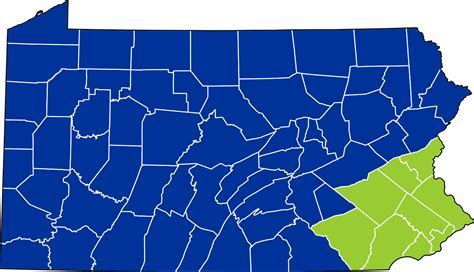
Judge Chad Kenney – Nominee for the U.S. District Court for the Eastern District of Pennsylvania

A former elected Sheriff in Pennsylvania, Judge Chad Kenney comes to the federal bench with experience in law enforcement and on the state bench.

Background

A native Pennsylvanian, Chad Francis Kenney Sr. was born in Lower Merion on August 8, 1955.  He attended Villanova University, graduating cum laude in 1976 and then getting a J.D. from Temple University School of Law in 1980.[1]

After graduation, Kenney worked at Benson Zion & Associates in Haverford for a year and then joined the Superior Court of Pennsylvania as a Staff Lawyer.[2]  In 1983, Kenney joined the Law Office of Boardman and Schermer in Philadelphia.  After six years there, Kenney started his own law practice in Upper Darby.[3]

In 1992, Kenney joined O’Donnell & Kenney as a named partner.  In 1996, he left the position to become an Assistant County Solicitor in Media, Pennsylvania.[4]  In 1998, Kenney was elected to be County Sheriff for Delaware County.[5]

In 2003, Democratic Governor Ed Rendell appointed Kenney to the Delaware County Court of Common Pleas.[6]  Kenney served as President Judge of the Court from 2012 to 2017 and still serves as a Judge today.

History of the Seat

Kenney has been nominated for a seat on the U.S. District Court for the Eastern District of Pennsylvania.  This seat opened on January 11, 2016, when Judge L. Felipe Restrepo was elevated to the U.S. Court of Appeals for the Third Circuit.  While the seat opened with a year left in President Obama’s second term, no nomination was ever made to fill the seat.

After reaching out to Sen. Patrick Toomey (R-PA), Kenney interviewed for a judgeship with Toomey and his staff in February 2017.[7]  Kenney then interviewed with Sen. Bob Casey (D-PA) in April 2017 and with the White House in May.[8]  President Trump announced Kenney’s nomination to the vacancy on December 20, 2017.[9]

Jurisprudence

From 2003, Kenney has served as a Judge on the Delaware County Court of Common Pleas, which is the primary trial courts in Pennsylvania.  As a Judge, Kenney presided over cases in civil and criminal matters, as well as domestic relations, juvenile, and family law matters.  Over the last fifteen years, Kenney has presided over approximately 150 jury trials.[10]

Charter School Funding

In 2015, newly elected Democratic Governor Tom Wolf created a new funding formula for charter schools in the state, one that critics suggested was intended to shut down the schools.[11]  The new funding plan set a uniform funding rate for charter schools based on the number of students served.[12]  Based in part on the formula and seeking to resolve a budget crisis, Wolf attempted to cut the tuition payments paid by the Chester Upland School District to charter schools.[13]  However, Kenney refused to approve the cut, instead rejecting Wolf’s plan and requiring the School District to continue to fully fund charter schools.[14]

Public Defender “Punishment”

In 2013, Joseph De Ritis, a recently-terminated Delaware County public defender, filed a lawsuit naming Kenney as one of the defendants.  The lawsuit claimed that Kenney had conspired by Douglas Roger, the head of the defender’s office to fire De Ritis for not pressuring his clients to accept plea deals rather than take cases to trial.[15]  De Ritis based his claim on the hearsay statement that Kenney thought that De Ritis was not moving his cases quickly enough.[16]  Kenney was ultimately dropped from the lawsuit by Judge Cynthia Rufe in 2016.[17]

Reversals

Over his fifteen years on the bench, Kenney’s rulings have been reversed by higher courts five times.  Of these reversals, the most significant is in Commonwealth v. Goldsborough.[18]  In that case, Kenney granted a defendant’s motion to suppress all evidence from his arrest, finding that the police lacked probable cause to detain the defendant.[19]  The Pennsylvania Superior Court reversed the decision, finding that probable cause existed for the detention.[20]

Political Activity

Before he became a judge, Kenney was an elected Sheriff in Delaware County where he was supported by the Pennsylvania Republican Party.[21]  Kenney also served as Pennsylvania State Republican Committee member from 1996 and 2003.[22]  He also donated in support of Pennsylvania Senator Arlen Specter (a liberal Republican who later switched parties to become a Democrat).[23]

Overall Assessment

For the most part, close cooperation between Toomey and Casey on judicial nominations have spared Pennsylvania nominees the controversy that other states have drawn.  Toomey supported the renomination of two Obama nominees, for example, who did not receive votes in 2016.  Kenney, whose nomination was a product of this cooperation, also looks likely to receive a comfortable conformation.


[1] Sen. Comm. on the Judiciary, 115th Cong., Chad F. Kenney Jr.: Questionnaire for Judicial Nominees 1.

[2] Id. at 3.

[3] Id. at 2-3.

[4] Id.

[5] Id. at 3.

[6] Id. at 1.

[7] Id. at 43.

[8] Id.

[9] Press Release, White House, President Donald J. Trump Announces Ninth Wave of Judicial Candidates and Tenth Wave of United States Attorney Nominees (December 20, 2017) (on file at https://www.whitehouse.gov/the-press-office).  

[10] See Kenney, supra n. 1 at 20.

[11] Jan Murphy, Charter School Advocates Think Gov. Tom Wolf Is Out to Shut Their Schools Down, Penn Live, Mar. 4, 2015, http://www.pennlive.com/politics/index.ssf/2015/03/charter_school_advocates_think.html.  

[12] See id.

[13] Mari A. Schaefer and Caitlin McCabe, Judge Rejects Wolf Challenge to Charter Funding, Philadelphia Inquirer, Aug. 26, 2015.

[14] Id. 

[15] Julie Zauzmer, Ex-Delco Defender: Fired Over Lack of Plea Deals, Philadelphia Inquirer, Dec. 5, 2013.

[16] See id.

[17] Alex Rose, Judge Dropped as Defendant in Wrongful Firing Lawsuit, Delaware County Daily Times, Mar. 2, 2016, http://www.delcotimes.com/article/DC/20160302/NEWS/160309905.

[18] 31 A.3d 299 (Pa. Super. Ct. 2011).

[19] See id. at 304.

[20] Id. at 308.

[21] See Nancy Petersen, Sanchez Likely As County’s First Hispanic Judge, Philadelphia Inquirer, Nov. 5, 1997.

[22] See Kenney, supra n. 1 at 36.

Alan Albright – Nominee for the U.S. District Court for the Western District of Texas

An attorney who first became a judge over 25 years ago (and left the bench approximately 20 years ago) would not seem like a likely judge from an Administration focused on youth as a key criteria of nomination.  However, Alan Albright became a judge at just 32 years of age and left the bench before he was forty.  As such, the seasoned litigator, now 58, is still young enough to serve on the bench for another thirty years.

Background

Alan D. Albright was born on November 24, 1959 in Hershey, PA.  After getting a B.A. from Trinity University in 1981, Albright received a J.D. from the University of Texas Law School in 1984.  After his graduation, Albright served as a law clerk to Judge James Nowlin on the U.S. District Court for the Western District of Texas.[1]

After his clerkship, Albright joined McGinnis, Lochridge & Kilgore LLP. as an associate.  Two years later, he joined the Austin office of Akin Gump Strauss Hauer & Feld as an associate.  In 1992, Albright, only 32, was tapped to be a U.S. Magistrate Judge for the U.S. District Court for the Western District of Texas.

Albright left the bench in 1999 to join the Austin office of Thompson & Knight LLP.  Two years later, he left Thompson to join Gray Cary (now DLA Piper) as a Partner.  In 2005, he moved to the Austin office of Fish & Richardson as a Partner.  In 2009, he joined the Austin office of Bracewell & Giuliani (now Bracewell) as a Partner.  In 2014, he left Bracewell to become a Partner at Sutherland Asbill & Brennan.  In 2015, he returned to Bracewell as a Partner, and works there to this day.

History of the Seat

Albright has been nominated for a vacancy on the U.S. District Court for the Western District of Texas.  This seat opened on September 14, 2016, when Judge Walter Scott Smith Jr. retired amidst allegations of sexual misconduct.[2]  In February 2017, Albright applied for a federal judgeship with an Evaluation Committee set up by Texas Republican Sens. John Cornyn and Ted Cruz.[3]  He interviewed with the Committee in March 2017 and then with Cornyn and Cruz in April.  Albright interviewed with the White House and Department of Justice on July 18, 2017.[4]  He was nominated on January 24, 2018.

Legal Experience

Albright’s work in private practice can be divided into two periods sandwiched around his seven years on the bench.  The first period was from 1986, when Albright finished his clerkship, to 1992, when he became a federal judge.  During his period, Albright primarily worked in insurance litigation, starting at the Austin firm McGinnis, Lochridge & Kilgore LLP and then working for the Biglaw firm Akin Gump.

The second period was from 1999, when Albright left the bench, to the present.  In this period, the primary focus of Albright’s career has been on patent litigation, at the firms Thompson & Knight, Gray Cary, Fish & Richardson, and Bracewell & Giuliani (now Bracewell).  Notably, Albright represented Overstock.com in defending against a patent infringement action, representing the website through a jury trial (the jury found for the defendants).[5]

While Albright focused primarily on patent litigation , he occasionally handled other cases.  Notably, Albright represented the Williamson County government in defending against a suit brought by Robert Lloyd, a conservative Republican who claimed that the County had improperly taken his political affiliation and his opposition to abortion and same-sex marriage into account in rejecting him for a Constable appointment.[6]

Jurisprudence

Albright served as a U.S. Magistrate Judge on the U.S. District Court for the Western District of Texas from 1992 to 1999.  In this capacity, Albright presided over the pretrial aspects of approximately 1000 misdemeanor and civil cases and approximately 500 civil cases.[7]  He also presided over around 15-20 civil cases by consent.[8]   Among the more prominent cases Albright handled, he overturned a $275,000 jury verdict for a San Marcos plaintiff shot by a police officer on qualified immunity and official immunity grounds (his decision was affirmed on appeal).[9]  In another notable case, Albright found for the parents of a daughter who suffered permanent injuries during birth due to the negligence of the doctor delivering the baby.[10]

In his seven years on the bench, Albright was reversed by the Fifth Circuit in four cases.  In three of the reversals, the Fifth Circuit reversed plaintiff-friendly rulings by Albright.[11]  In the fourth case, the Fifth Circuit reversed the grant of summary judgment to the defendant in a Lanham Act case.[12]

Political Activity

Albright has been a frequent donor to Republican candidates.  Cornyn was a particular beneficiary, having received approximately $5000 from Albright.[13]  Albright also donated almost $5000 to Rudy Giuliani’s 2008 Presidential campaign.[14]

Additionally, Albright volunteered on the campaigns of several Texas politicians, including Republican Governor Bill Clements, and Democrats Bob Krueger and Henry Cisneros.[15]

Overall Assessment

Compared to other nominees from Texas who have incited more pushback, Albright is relatively uncontroversial.  His long-time tenure as a patent litigator has allowed Albright to steer clear of controversial cases while maintaining the intellectual vigor needed for the bench.  Additionally, supporters will argue Albright’s representation of Williamson County in defending against a discrimination suit brought by a conservative employee reflects an apolitical approach to the law.

Furthermore, Albright’s record on the bench is relatively non-ideological.  While Albright did overturn a jury verdict for a plaintiff against the cop who shot him, his ruling for the victims of medical negligence in a bench trial suggests that he is not biased against plaintiffs.  Furthermore, most of his reversals from the Fifth Circuit have been from plaintiff-friendly rulings.

Overall, these factors, combined with his age and experience, suggest that Albright will be considered a consensus nominee.


[1] Sen. Comm. on the Judiciary, 115th Cong., Alan D. Albright: Questionnaire for Judicial Nominees 46.

[2] Tommy Witherspoon, Probe of Federal Judge Ends With His Retirement, Waco Tribune, Sept. 29, 2016, http://www.wacotrib.com/news/courts_and_trials/probe-of-federal-judge-ends-with-his-retirement/article_232c914f-578a-5e3d-813e-0f963cd75be3.html.

[3] See Albright, supra n. 1 at 44.

[4] See id.

[5] Alcatel-Lucent USA v. Amazon.com, Inc., 6:09-cv-00422-LED (E.D. Tex. Nov. 2, 2011), aff’d, 505 F. App’x 957 (Fed. Cir. 2013).

[6] Lloyd v. Birkman, No. 1:13-cv-00505 (W.D. Tex.).

[7] See Albright, supra n. 1 at 13-14.

[8] Id.

[9] Tamez v. City of San Marcos, No. 93-CV-666 (W.D. Tex. July 8, 1996), aff’d, 118 F.3d 1085 (5th Cir 1997), cert. denied, 522 U.S. 115 (1998).

[10] Jackson v. United States, No. 1:96-cv-00491-ADA (W.D. Tex. Aug. 20, 1998).

[11] See Castillo v. City of Round Rock, Tex., No. A-96-CV-863 (W.D. Tex. Feb. 2, 1998), rev’d, 177 F.3d 977 (5th Cir. 1999), cert. denied, 528 U.S. 1019 (1999) (reversing denial of summary judgment to defendants, noting that claims were barred by qualified immunity); Travis v. Bd. of Regents of the Univ. of Tex. Sys., No. A-94-CV-712 (W.D. Tex.), rev’d, 122 F.3d 259 (5th Cir. 1997), cert. denied, 522 U.S. 1148 (1992) (reversing verdict for plaintiff on sex discrimination and retaliation claims); Texas v. Thompson, No. A-93-CA-343 (W.D. Tex. Dec. 12, 1994), appeal dismissed in part and rev’d in part, 70 F.3d 390 (5th Cir. 1995) (per curiam) (reversing denial of summary judgment to one defendant). 

[12] Soc’y of Fin. Exam’rs v. Nat’l Ass’n of Certified Fraud Exam’rs, Inc., No. A-92-CA-792/ A-92-CV-937 (W.D. Tex. Dec. 8, 1993), vacated, 41 F.3d 223 (5th Cir. 1995), cert. denied, 515 U.S. 1103 (1995).

[14] See id.

[15] See Albright, supra n. 1 at 29-30.

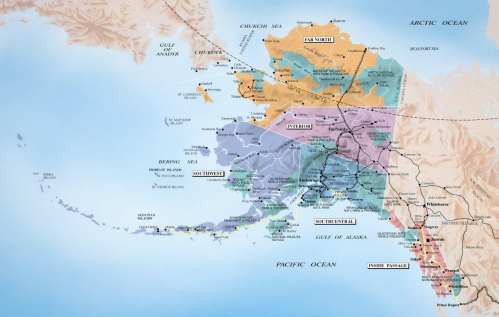
Jon Katchen – Nominee for the U.S. District Court for the District of Alaska

Jonathan W. Katchen is President Trump’s nominee for the U.S. District Court for the District of Alaska.  His career has been in natural resources law, both in the private and public sectors.

Background

Jonathan Katchen, 42, lives in Anchorage, Alaska.[1]  He grew up in the affluent town of Gladstone, New Jersey.[2]  He earned his B.A., cum laude, and his M.A., both in Theology, from Boston College in 1998 and 2001, respectively, and his J.D. from the University of California, Hastings College of the Law in 2004.[3]  Katchen worked in Alaska as a Jesuit volunteer before beginning a summer internship in the state during law school.[4]  He clerked for now retired Judge Maryanne Trump Barry of the U.S. Court of Appeals for the Third Circuit (President Trump’s older sister) upon graduating law school.[5]

Katchen has served as Special Assistant to Alaska’s former attorney general, Dan Sullivan, and as an Assistant Attorney General in the Oil, Gas & Mining Section.[6]  As Assistant Attorney General, Katchen counseled the Attorney General, Governor, and senior state officials on oil and gas lease disputes, permitting natural resource development on federal lands, and pipeline regulatory issues.[7]

From 2010-12, Katchen served as the Intergovernmental Coordinator for the Alaska Department of Natural Resources, advising senior administration officials and state legislators on natural resource issues and leading the department’s administrative appeals and litigation and providing counsel to the the then-Commissioner, Dan Sullivan.  Sullivan is currently Alaska’s U.S. senator (R).[8]

In 2012, Katchen began working in private practice at the Anchorage office of Crowell & Moring LLP, a large corporate law firm, where he practiced in environmental and natural resources law and regulatory industries.[9]  In 2017, he moved to Holland & Hart, where he currently practices oil and gas law.[10]

History of the Seat 

Katchen has been nominated to a vacancy on the U.S. District Court for the District of Alaska.  The vacancy opened with Judge Ralph Beistline’s move to senior status on December 31, 2015.  No nomination was put forward to the vacancy during the Obama Administration.

Katchen was one of five names submitted by Alaska’s senators, Sullivan and Murkowski, an unusually large number.[11]  Alaska’s former senator Mark Begich has suggested that the longer list may have been the product of the state’s senator’s disagreeing on who to send forward.  As Murkowski put it, ”We put forth a longer list in an effort to align our priorities.”[12]

Some have criticized Katchen’s nomination as the product of his connections and politics, rather than merit.[13]  Retired Superior Court Judge Elaine Andrews, who presided over Alaska’s Anchorage courts, has indicated that Katchen is not qualified for the position: “We should be taking the very best we have, and he may be decent, he may be very good, but he’s not the best we have.”[14]  Katchen ranked 13th out of 20 applicants on the Alaska bar association poll, with 31 percent rating him “extremely qualified” or “well qualified,” compared to 66 percent who gave those ratings to the top applicant, Eric Aarseth, a highly rated state judge since 2005.[15]  As writer Charles Wohlforth noted, “Two law school summer jobs and a clerkship are the extent of [Katchen’s] criminal law experience.”[16]

Legal Career

As outlined above, Katchen’s relatively short career has been primarily in the public sector.  He does not appear as counsel in any published cases on Westlaw.

Katchen was the state’s lead negotiator in a multi-year negotiation over Point Thomson, one of the largest undeveloped oil and gas fields in North America situated in a remote arctic area off of Alaska’s northern coast.[17]  The negotiation revolved around a long-standing dispute between Alaska’s Department of Natural Resources (DNR) and Exxon regarding Exxon’s drilling in Point Thomson.[18]  Although Point Thomson holds 8 trillion to 9 trillion cubic feet of natural gas and hundreds of millions of barrels of gas and oil liquids, as of 2005 it had never produced oil or gas.[19]  The state of Alaska leases acreage to developers who seek to drill for oil and gas, and Exxon had long held the rights to a significant portion of the Point Thomson acreage.  In 2005, the DNR Director denied as inadequate Exxon’s plan of development for Point Thomson, which led to the state’s revoking their leases to drill, prompting several years of litigation challenging that decision.[20]  The state argued that Exxon was obligated either to produce the liquids and send them down the existing trans-Alaska oil pipeline, or relinquish the leases so they could be auctioned off to another developer.[21]  These legal battles were finally put to rest with the 2012 settlement agreement, negotiated primarily by Katchen, which required Exxon to build a pipeline from Point Thomson to deliver product to the trans-Alaska pipeline and to produce 10,000 barrels per day of natural-gas condensates by the winter of 2015-16.[22]  Point Thomson has been developed since the agreement was finalized and now contributes the agreed-upon 10,000 barrels of product per day, which one commenter called “a major victory for the Alaska economy.”[23]

Katchen has received accolades from Alaska’s former governor, Sean Parnell, and former Attorney General (now U.S. Senator (R)), Dan Sullivan, who describe him as “an extremely competent attorney” and someone who will “make an exceptional jurist who will faithfully apply the law and uphold the Constitution.”[24]  He was named in Chambers USA’s 2015 publication, America’s Leading Lawyers for Business, in the environment, natural resources, and regulatory industries category.[25]

Speeches/ Writings

Katchen has written a handful of opinion pieces for the Anchorage Daily News since 2014.[26]  One such piece responds to Ray Metcalfe, a former Alaska lawmaker, who criticized then Attorney General Dan Sullivan for allegedly not criminally prosecuting Alaska oil giant Bill Allen for child sex crimes.[27]  Katchen explained that Allen was not prosecuted because his abuse of a minor violated only federal (not state) law, and the U.S. Department of Justice would not cross-designate the Alaska Department of Law so as to give Sullivan the authority to prosecute Allen for federal crimes.  “Thus, the only question that needs to be answered is why did Obama administration officials refuse Dan’s request to cross-designate state prosecutors to pursue a federal criminal action against Allen.”[28]

Katchen has also been openly critical of Alaska’s current governor, Bill Walker, for not prioritizing or developing policies that will result in additional oil production through the Trans-Alaska Pipeline.[29]  Decline in oil production means decline in the state’s economy, on top of the problems caused Walker’s “erratic” tax reform attempts, which Katchen criticizes as discouraging investors from investing in further developing Alaska’s oil and gas fields.[30]

Katchen authored a 2016 amicus on behalf of Alaska’s congressional delegation submitted in the U.S. Supreme Court case Sturgeon v. Frost, 136 S.Ct. 1061 (2016).  The case arose out of the National Park Service informing an Alaskan hunter that he could not pilot his hovercraft on a particular river.  The hunter filed suit, arguing that federal law limited the Park Service’s jurisdiction to portions of the river owned by the state of Alaska, and that the river where he operated his hovercraft was not state-owned.  The district court and the 9th Circuit rejected this argument, finding the exercise of jurisdiction appropriate.  On his involvement as amicus for appellant’s Supreme Court case, Katchen explained: “Right now, they haven’t done this, but the Park Service has the authority to say to a Native corporation, ‘You can’t build a lodge on your lands. You can’t build a trail. You can’t do berry-picking. You can’t land a plane.’ If the Ninth circuit’s decision in Sturgeon doesn’t get overturned they will have that authority.”[31]  The Supreme Court agreed, reversing the lower courts in a unanimous opinion, holding the Park Service may only regulate “non-public” lands in Alaska according to Alaska-specific laws.

Overall Assessment

Katchen has unimpeachable expertise in natural resources law and has earned the respect of his colleagues.  However, it is unclear how his expertise would translate to the federal judiciary, where judges’ dockets are widely varied and typically center on criminal law (where Katchen’s experience is more limited).

So far, Katchen has strong support from senator Sullivan, while senator Murkowski’s support is unclear.  He has also not yet been rated by the ABA.  As noted above, Katchen’s nomination has received some criticism for his youth and his perceived leapfrogging over more experienced candidates.  However, there is no requirement that a judicial nominee be the “most” qualified candidate in the state.  As there is little public controversy surrounding Katchen’s career and as he has accomplished himself professionally, he will likely be confirmed.


Thomas Kleeh – Nominee for the U.S. District Court for the Northern District of West Virginia

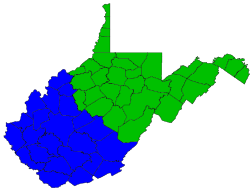
A West Virginia legislative attorney and labor and employment lawyer, Thomas Kleeh is the first federal judicial nominee in sixty years to be proposed by a West Virginia Republican senator.  While Kleeh shares strong conservative bona fides, he is also supported by his Democratic home state senator.

Background

A West Virginia native, Thomas Shawn Kleeh was born in Wheeling on September 14, 1974.  He graduated summa cum laude from West Virginia University in 1996 and received a Juris Doctor from the West Virginia University College of Law in 1999.[1]  After graduating from law school, Kleeh joined the Bridgeport, WV office of Steptoe & Johnson as an Associate and became a Partner with the firm in 2006.[2]  He continues to work there today.

Additionally, from 2015 to 2017, Kleeh served as a Per Diem Staff Attorney to the West Virginia Senate Judiciary Committee.  In 2018, Kleeh serves as Staff Attorney to Senate President Mitch Carmichael.[3]

History of the Seat

Kleeh has been nominated to fill a vacancy on the U.S. District Court for the Northern District of West Virginia.  The seat opened on August 12, 2017, when Judge Irene Keeley moved to senior status.  Interestingly, Kleeh did not apply to be considered for the judgeship.  Rather, he was contacted by Senator Shelley Moore Capito (R-WV) in May 2017.[4]  After interviews with Capito, Rep. David McKinley (R-WV), and Sen. Joe Manchin (D-WV), Kleeh’s name was submitted to the White House.  Kleeh was nominated on February 15, 2018.

Legal Experience

While Kleeh has served as a Staff Attorney in the West Virginia Senate for the past three years, his primary legal experience has been with the Labor and Employment Department at Steptoe & Johnson.  In his 19 years at the firm, Kleeh has handled six jury trials and three bench trials.[5]

As a labor and employment attorney, Kleeh defended many employers in discrimination and wrongful termination suits filed by their employees.[6]  For example, Kleeh successfully defended West Virginia State University against a wrongful termination suit filed by an employee who was dismissed for allegedly abandoning her duties to chaperone a group field trip.[7]  Kleeh has also frequently defended schools and school boards against suits brought by students.[8]

Writings

As a law student, Kleeh authored an article criticizing the common law distinction between invitees and licensees with regard to property owner liability.[9]  West Virginia common law, also followed by many other states, lays out different duties of care that a landowner must abide by with regard to guests on his property based on whether the guest is a trespasser, licensee (present for their own pleasure), or invitee (present for the benefit of the property owner).  In his article, Kleeh criticizes this distinction, suggesting that injured parties shouldn’t go uncompensated “because of the purpose of their particular visit[.]”[10]

Interestingly, Kleeh also criticizes the longetivity of the distinction, noting that it was developed “in feudal England.”[11]  Instead, Kleeh suggests that the distinction be abandoned and the duty of care be left to juries, noting:

“Perhaps West Virginia should place more trust in juries to decide what constitutes reasonable behavior rather than relying on eighteenth century common law to do so.”[12]

Political Activity

Kleeh has frequently supported Republican West Virginia candidates as a donor, including donating $1750 to Capito’s senate run in 2014.[13]  Kleeh has also given to $1000 each to McKinley and fellow Republican Rep. Evan Jenkins, as well as donating to the Congressional Campaign of controversial West Virginia Supreme Court Justice Spike Maynard.[14]  Additionally, Kleeh supported the Supreme Court campaign of Justice Beth Walker, who challenged and defeated Justice Brent Benjamin by running as a conservative.[15]

Overall Assessment

As he has attracted little media attention so far and is strongly supported of both his home state senators, Kleeh looks likely to be confirmed on a bipartisan vote.  (Even if some Democrats are skeptical of Kleeh’s conservative political background, they are unlikely to embarrass Manchin by airing such concerns publicly).

Interestingly, Kleeh’s paper on property owner liability suggests that he supports basing rules of jurisprudence on the practicalities of modern litigation rather than “eighteenth century common law.”  While views expressed in a 20-year-old article cannot be given excessive importance, the article’s reasoning suggests that Kleeh’s jurisprudence may be adaptable to legal and practical changes.

While District Court judges do not have the same scope to shape jurisprudential rules that Circuit Court judges do, it will be interesting to see if Kleeh shows a similar willingness to adapt the law to modern considerations as a judge.


[1] Sen. Comm. on the Judiciary, 115th Cong., Thomas Kleeh: Questionnaire for Judicial Nominees 1.

[2] See id. at 2.

[3] Id.

[4] See id. at 33.

[5] Id. at 24-25.

[6] See, e.g., M. Tim Crum v. Mingo Community Action Partnership, Inc., Circuit Court of Mingo County, West Virginia, Civil Action No. 09-C-287; Legg v. Rivers Edge Mining, Inc. et al., Circuit Court of Boone County, West Virginia, Civil Action No. 04-C-207 (2006).

[7] See Fuller v. Bd. of Governors of West Virginia State University, Circuit Court of Kanawha County, West Virginia, Civil Action No. 13-C-454, affirmed at 2016 WL 3369566 (2016).

[8] See, e.g., Danielle T. v. Kanawha Cnty. Bd. of Educ., et al., United States District Court for the Southern District of West Virginia, Civil Action No. 2:01-0514 (S.D.W.V.); Epps v. Putnam Cnty. Bd. of Educ., United States District Court for the Southern District of West Virginia, Civil Action No. 2:00-0069 (S.D.W.V. 2001).  

[9] Thomas S. Kleeh, Self v. Queen: Retaining Eighteenth Century Feudalistic Jurisprudence to Determine a Landowner’s Duty of Care, 100 W. Va. L. Rev. 467 (Winter 1997).

[10] Id. at 467.

[11] Id. at 492.

[12] See id.

[14] See id.

[15] See Kleeh, supra n. 1 at 22.

Peter Phipps – Nominee for the U.S. District Court for the Western District of Pennsylvania

A DOJ litigator with extensive experience in the federal courts, the 45-year-old Peter Phipps looks likely to join the Western District of Pennsylvania before the end of the year.

Background

Peter Joseph Phipps was born on April 8, 1973 at Dyess Air Force Base in Abilene, TX.[1]  Phipps attended the University of Dayton, getting a B.A. in History and a B.S. in Physics.[2]  He continued on to the Stanford University Law School, graduating with a J.D. in 1998.  He then joined the Washington D.C. Office of Jones Day (a firm that has sent many alumni to the Trump Administration and the federal bench).[3]

In 2001, Phipps left Jones Day to clerk for Judge R. Guy Cole on the U.S. Court of Appeals for the Sixth Circuit.  He then joined the Federal Programs Branch of the Civil Division of the U.S. Department of Justice.[4]  He is still with the same office in Washington D.C., working as Senior Trial Counsel.  Phipps has also served as an Adjunct Professor at Duquesne University School of Law in Pittsburgh since 2014.[5]

History of the Seat

The seat Phipps has been nominated for opened on September 30, 2013, with Judge Terrence McVerry’s move to senior status.  On July 30, 2015, President Obama nominated Judge Marilyn Horan from the Butler County Court of Common Pleas to fill the vacancy.[6]  The nomination of Horan, a Republican, was made as a package along with those of three Democrats to other vacancies.

While all four nominees in the package received a hearing on December 9, 2015, two of them, Judge Robert Colville, and Judge John Milton Younge, were blocked from Judiciary Committee consideration by Chairman Chuck Grassley, who was unhappy with their support of abortion rights.[7]  At the same time, Horan and Judge Susan Baxter were blocked by Senate Majority Leader Mitch McConnell on the Senate floor and were never confirmed.  Both were ultimately renominated by Trump.[8]

Phipps applied to the bipartisan judicial selection committee set up by Pennsylvania Senators Bob Casey and Pat Toomey in April 2017.[9]  Phipps interviewed with Toomey and Casey and was then recommended to the White House.  He was formally nominated on February 15, 2018.

Legal Experience

While Phipps’s primary legal occupation has been as a litigator at the Department of Justice, he began his career as an Associate in the Washington D.C. Office of Jones Day, representing corporations in civil litigation.[10]  Overall, Phipps has worked as counsel of record in three civil trials, as well as handling appellate matters in other cases.[11]

As Senior Trial Counsel at the Federal Programs Branch of the Department of Justice, Phipps litigated many contentious cases.  In one case, Phipps defended the U.S. Department of Housing and Urban Development against a class action suit brought by African American plaintiffs alleging racial discrimination in public housing.[12]  Through the litigation, which lasted ten years, Phipps worked through two separate trials, and managed to negotiate a settlement in the case.[13]

In another notable case, Phipps defended the constitutionality of the military’s “Don’t Ask, Don’t Tell” policy, which barred individuals engaging in homosexual conduct from serving openly in the armed forces.[14]  In yet another case, Phipps defended the constitutionality of HHS grants for faith based organizations that have religious objections to abortion and contraception.[15]

More recently, Phipps defended the constitutionality of the Professional and Amateur Sports Protection Act of 1992 (PASPA).[16]  PASPA’s constitutionality was challenged by New Jersey, which sought to legalize sports betting in its state in violation of the Act.[17]  Phipps represented the government in several suits before the District Court, the Third Circuit, and in certiorari arguments before the U.S Supreme Court.[18]

Overall Assessment

While Phipps, at 45, is a relatively young judicial nominee, his qualifications for the federal bench are unquestionable.  As an attorney with the Federal Programs Branch of the Department of Justice, Phipps has had experience in some of the most consequential litigation the Department engages in, preparing him well for the  issues he would face as a trial judge.

Skeptics may draw opposition based on Phipps’ defense of DADT and grants to faith-based organizations.  However, as an attorney at Federal Programs, Phipps has an ethical responsibility to present defenses to federal laws and regulations and his views in litigation cannot necessary be imputed as his personal views.

Overall, given that Phipps has the support of his Democratic and Republican home-state senators, as well as a fairly noncontroversial record, he looks set for a relatively painless confirmation.


[1] Sen. Comm. on the Judiciary, 115th Cong., Peter J. Phipps: Questionnaire for Judicial Nominees 1.

[2] Id.

[3] See id. at 2.

[4] See id.

[5] Id.

[6] Press Release, White House, President Obama Nominates Seven to Serve on the United States District Courts (July 30, 2015) (on file at https://obamawhitehouse.archives.gov).

[7] Philip Wegmann, After Facing Questions on Abortion, 2 Obama Judicial Nominations Fail to Advance, The Daily Signal, Jan. 29, 2016, http://dailysignal.com/2016/01/29/after-facing-questions-on-abortion-2-obama-judicial-nominees-fail-to-advance/.  

[8] Press Release, President Donald J. Trump Announces Ninth Wave of Judicial Nominees and Tenth Wave of United States Attorney Nominees (December 20, 2017) (on file at www.whitehouse.gov/thepressoffice).

[9] Sen. Comm. on the Judiciary, 115th Cong., Peter J. Phipps: Questionnaire for Judicial Nominees 24.

[10] Id. at 10.

[11] Id. at 11-12.

[12] Thompson v. HUD, No. 95-395 (D. Md.) (Garbis, J.) (Grimm, J.).

[13] See id.

[14] Witt v. United States Air Force, No. 06-5195 (W.D. Wash.) (Leighton, J.).

[15] American Civil Liberties Union of Northern California v. Hargan, No. 16-3539 (N.D. Cal.) (Beeler, M.J.).

[16] See NCAA v. Christie, Nos. 3:12-4947; 3:14-6450 (D.N.J.) (Shipp, J.); Nos. 13-1713,-1714,-1715 (3d Cir.); Nos. 14-4546,-4568,-4569 (3d Cir.) (subsequently en banc); Nos. 13-967; -979; -980, Nos. 16-476,-477 (U.S.).

[17] See id.

[18] Commonwealth v. Opperman, 780 A.2d 714 (Pa. Super. Ct. 2001).

UPDATED – Michael Truncale – Nominee for the U.S. District Court for the Eastern District of Texas

UPDATED 4/19 with comment from the Department of Justice

A longtime stalwart in the Texas Republican Party and a one-time Congressional candidate, Michael Truncale is a strongly conservative pick for the Eastern District of Texas.

Background

A native of Beaumont, Michael Joseph Truncale was born in 1957.  Truncale received a B.B.A. from Lamar University in 1978 and an M.B.A. from the University of North Texas in 1980.[1]  After two years as a Financial Analyst, Truncale attended Southern Methodist University School of Law, serving as Student Bar Association President there, and getting his J.D. in 1985.[2]  He then joined the Beaumont firm Orgain, Bell & Tucker as an associate.[3]  In 1991, Truncale became a partner at Orgain and still works as a partner there.[4]

History of the Seat

Truncale has been nominated to the U.S. District Court for the Eastern District of Texas, to a seat vacated on February 28, 2018, with Judge Ron Clark’s move to senior status.

In April 2017, Truncale applied for a judgeship with the Evaluation Committee set up by Texas Senators John Cornyn and Ted Cruz, both Republicans.[5]  He interviewed with the Committee on April 20, 2017.[6]  Truncale then interviewed with Cornyn and Cruz in May 2017, after which his name was submitted to the White House.[7]  Truncale interviewed with the White House late in July 2017.  His nomination was submitted to the U.S. Senate on January 23, 2018.

Political Activity & Memberships

Truncale has a long history of involvement with the Texas Republican Party, starting with working as a volunteer during the 1984 Presidential election.  From 2006 to 2014, Truncale served on the Executive Committee of the Texas Republican Party.[8]  He also was a Republican Delegate for John McCain in 2008 and a volunteer for the Trump campaign.[9]

Additionally, Truncale has been a generous donor to Republicans. Cornyn has been a particular beneficiary, having received almost $7000 in contributions over the last twelve years.[10]  Truncale also donated $1000 to Cruz in 2015.[11]

In 2011, after congressional redistricting reshaped Texas’ 14th Congressional District and Rep. Ron Paul declined to run for re-election, Truncale was the first Republican candidate to announce his campaign.[12]  In his campaign, Truncale emphasized his support for a Balanced Budget Amendment, cutting back federal regulations, and his opposition to the Affordable Care Act.[13]  Ultimately, Truncale came in third in the Republican primary, securing 14.03% of the vote, and did not make the runoff, which was eventually won by then State Rep. Randy Weber.[14]

Legal Experience

Truncale has spent his entire career at the firm of Orgain, Bell & Tucker.  At the firm, Truncale worked in civil defense, practicing in Texas state and federal courts.  He also practiced white collar criminal defense in federal court.[15]  Over the course of his legal career, Truncale has tried over 100 matters in state and federal court.[16]

Additionally, in 1992, Truncale became certified as a mediator under Texas law, mediating cases including contract disputes, tort actions, sexual harassment cases, and libel suits.[17]  In 2017 and 2018, Truncale mediated nine different suits, including suits under tort law, landlord-tenant law, and contract law.[18]

Interviews and Expressed Views

As noted above, Truncale was a congressional candidate in the 2011-12 election cycle.  As a candidate, Truncale ran as a conservative, expressing his desire for limited government, low spending and taxation, and the rollback of government regulation.  While many of his interviews and speeches focus on general talking points and his support of conservative agenda items such as the repeal of the Affordable Care Act and the implementation of the Balanced Budget Amendments, a few also discuss his views on the judiciary and the Constitution, as well as more potentially controversial topics.

Judicial Philosophy

Truncale, who served on the Federal Judicial Evaluation Commission for Texas during the Obama Administration, has labeled himself a “strict constructionist.”[19]  He has also described himself as a “conservative by conviction, not by convenience.”  In an interview, Truncale described his judicial philosophy as follows:

“I do not believe that judges should legislate from the bench…and, really, overlook the plain meaning of the United States Constitution.  That’s how we’ve got into a lot of trouble now.  That’s why government has gotten too big.  That’s why we’ve forgotten about the Tenth Amendment, which means that power is to be retained by the people and by the states, and that the people and the states don’t exist for the furtherance of the federal government…”[20]

Obamacare – Expansion of the Federal Government

In many of his speeches, Truncale has attacked Obamacare as a symbol of an expanding federal government.  One talking point that Truncale would often repeat was that “If Obamacare is not allowed to stand, there is no limit to what the federal government can do to you.”[21]

In another forum, Truncale noted:

“It [Obamacare] is unconstitutional.  There is no right in the Constitution for the government to tell you what kind of insurance to buy…”[22]

These remarks were made before the Supreme Court upheld the Obamacare individual mandate in June 2012.

Immigration

While Truncale, similar to other Republicans, advocated for stronger border enforcement during his campaign, one particular statement may draw controversy.  At a CD14 Job Interview in 2012, Truncale was asked a question about border security.  In responding, Truncale noted his desire in stronger border enforcement and “boots on the ground” near the Texas-Mexico border.[23]  He appears to say the following:

“And, of course, we must…with regard to immigration…we must not continue to have the maggots coming in.”[24]

While it is unclear what exactly Truncale means through the use of the term “maggots”, or if that is the term he used, the context of his statement and his preface “with regard to immigration” suggests that he is using the term to refer to immigrants (or potentially undocumented immigrants).  If this is what Truncale said and meant, his use of such inflammatory language may raise questions about his willingness and inability to treat litigants fairly, regardless of their background.

4/19 – UPDATE: According to Drew Hudson from the Department of Justice, Truncale  used the word “magnets”, not “maggots.”  Hudson notes that by magnets, Truncale was referring to incentives for illegal immigrants to enter the United States, such as entitlement programs.  As such, the correct transcription, Hudson suggests, is:

“And, of course, we must…with regard to immigration…we must not continue to have the magnets coming in.”

Abortion

In a May 2012 forum, Truncale was asked about his views on government funding of Planned Parenthood.  Truncale responded:

“I don’t think we should be funding Planned Parenthood.  I’m pro-life.”[25]

In another interview, Truncale criticized the Obama Administration’s contraception mandate, describing it as an “assault on the Catholic Church.”[26]

Gun Rights

In an interview with the Police News, Truncale described himself as a supporter of Second Amendment rights, noting:

“Once you start chiseling away at the Second Amendment rights, once you start chiseling away the First Amendment rights, with regard to religion, then all of our liberties are at risk.”[27]

Overall Assessment

In evaluating Truncale’s overall record, it is important to separate his record as an attorney from his record as a congressional candidate.  Looking solely at Truncale’s legal record, there is little to disqualify him from the federal bench.  His experience in complex civil litigation prepares him well for many of the matters he would address as a federal court judge, while his experience with white collar defense would help him on the criminal side.  Additionally, having spent his entire life in Beaumont, Truncale is intimately familiar with the legal community he would be serving as a judge.

However, the legal and political views expressed by Truncale during his congressional campaign may raise concerns regarding his impartiality on the bench.  Truncale’s self-description as a “conservative by conviction” may be raised by critics to argue that, on the bench, he would be motivated by conservative ideology rather than fidelity to the law.  Additionally, Truncale may draw opposition for his use of the term “maggots” during a discussion of immigration.

UPDATE – 4/19: As noted above, the Department of Justice argues that Truncale actually used the term “magnets.”  Obviously, if he actually said magnets, this should not bear on his qualification for judicial office.

Overall, Truncale’s nomination speaks to the danger of picking judges with electoral pasts.  Statements made as candidates invariably have a way of coming back to haunt nominees.


[1] Sen. Comm. on the Judiciary, 115th Cong., Michael Truncale: Questionnaire for Judicial Nominees 1.

[2] See id.

[3] See id. at 2.

[4] Id.

[5] See id. at 46.

[6] See id.

[7] See id.

[8] Id. at 5.

[9] See id. at 34.

[11] See id.

[12] Sherry Koonce, Beaumont Attorney Seeks District 14 Seat, The Port Arthur News, Aug. 3, 2011.

[13] David Yates, Tort Reform Among Issues for Beaumont Attorneys Running for Congress, Southeast Texas Record, May 22, 2012.

[14] Sherry Koonce, Brazoria County Candidates Lead Republicans in District 14 Race, Port Arthur News, May 29, 2012.

[15] See Truncale, supra n. 1 at 38.

[16] Id.

[17] See id. at 36.

[18] Id. at 35-36.

[19] Michael Truncale, Lake Jackson Tea Party Forum (May 1, 2012) (available at https://www.youtube.com/watch?v=n1ztJk4m8P4).

[20] Michael Truncale, Interview with the Police News (Feb. 18, 2012) (available at https://www.youtube.com/watch?v=Kzb9XP3Xago).

[21] Michael Truncale, Candidate for U.S. House, Address to the Southeast Texas Tea Party (Apr. 3, 2012) (available at https://www.youtube.com/watch?v=7DBeSssCOCM). See also Michael Truncale, North Galveston County Chamber of Commerce Forum (Feb. 21, 2012) (available at https://www.youtube.com/watch?v=LMSs6Ld1ggw); Michael Truncale, Beaumont Chamber of Commerce Republican Candidate Forum (January 13, 2012) (available at https://www.youtube.com/watch?v=8Qqpe7VM_UI); Michael Truncale, Lake Jackson Tea Party Forum (May 1, 2012) (available at https://www.youtube.com/watch?v=n1ztJk4m8P4).

[22] Michael Truncale, Lake Jackson Tea Party Forum (May 1, 2012) (available at https://www.youtube.com/watch?v=uN7KCQ6RzIw).   

[23] Michael Truncale, CD14 Job Interview (uploaded on May 23, 2012) (available at https://www.youtube.com/watch?v=Hr3rSPRTGJM).

[24] See id. at 1:31-1:36.

[25] Michael Truncale, Lake Jackson Tea Party Forum (May 1, 2012) (available at https://www.youtube.com/watch?v=HXUVd_Li-GM).  

[26] Michael Truncale, Interview with the Police News (Feb. 18, 2012) (available at https://www.youtube.com/watch?v=Kzb9XP3Xago).

[27] See id.