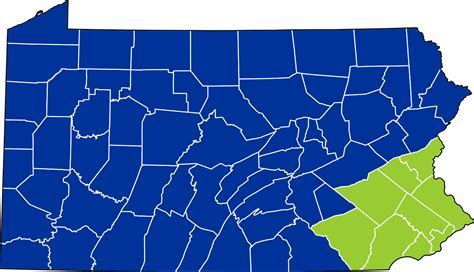
Joshua Wolson – Nominee to the U.S. District Court for the Eastern District of Pennsylvania

Joshua Wolson, a nominee to the Eastern District of Philadelphia, continues the trend of Federalist Society leaders being nominated to the federal bench by the Trump Administration.

Background

Joshua David Wolson was born in Ann Arbor, Michigan in 1974.  He attended the University of Pennsylvania, graduating magna cum laude in 1996 and then received a J.D. cum laude from Harvard Law School in 1999.[1]

After graduating, Wolson clerked for Judge Jan DuBois on the U.S. District Court for the Eastern District of Pennsylvania.[2]  He then joined the Washington D.C. Office of Covington & Burling LLP as an Associate.[3]

In 2008, Wolson moved to Philadelphia to become an Associate at Dilworth Paxson LLP.[4]  He became a Partner at the firm in 2010, and continues to work there to this day.[5]

History of the Seat

Wolson has been nominated for a seat on the U.S. District Court for the Eastern District of Pennsylvania.  This seat opened on April 3, 2017, when Judge James Knoll Gardner moved to senior status (Gardner himself replaced Judge Jan DuBois, for whom Wolson clerked).

In February 2017, Wolson discussed an appointment to the federal bench with the White House.[6]  Wolson then applied for and interviewed with the Judicial Nomination Advisory Panel for the Eastern District of Pennsylvania.  Wolson then interviewed with Sen. Pat Toomey (R-Pa), Sen. Bob Casey (D-Pa), and the White House.  President Trump announced Wolson’s nomination to the vacancy on May 10, 2018.[7]

Legal Experience

Wolson has spent his entire post-clerkship career in two firms: Covington in Washington D.C.; and Dilworth in Philadelphia.  At the former, Wolson focused on commercial litigation, including intellectual property, contract disputes, and antitrust matters.[8]  Notably, Wolson represented the National Football League (NFL) in defending against an antitrust case brought by Maurice Clarett.[9]  Clarett, a former player with the Ohio State Buckeyes, sought to enter the NFL Draft despite his dismissal from Ohio State.[10]  Judge Shira Scheindlin found in favor of Clarett, but the Second Circuit reversed (in an opinion by then-Judge Sonia Sotomayor), finding that the non-statutory labor exception covered the NFL.[11]

Since 2008, Wolson has worked at Dilworth in Philadelphia.[12]  At the firm, Wolson continued his practice in business litigation, while adding a government practice as well.  Notably Wolson represented the City of Butler, Pennsylvania in suing phone companies for undercharging 911 fees (a case presided over by fellow Pennsylvania judicial nominee Marilyn Horan).[13]  Wolson also Philadelphia Newspapers LLC in bankruptcy proceedings.[14]

Political Activity

In addition to volunteering with the Philadelphia Republican Party and serving as President of the Philadelphia Lawyers Chapter of the Federalist Society of Law & Public Policy Studies, Wolson has been an active donor to Republicans, having given approximately $8000 to candidates over the last eight years.[15]  In comparison, Wolson has also donated to two Democrats, U.S. Representatives Steny Hoyer and Eliot Engel.[16]

Overall Assessment

Given his youth and his Federalist Society pedigree, it is unlikely that Wolson will receive unanimous approval from the Senate Judiciary Committee.  However, his background yields nothing likely to significantly impede his nomination, and Wolson should see himself on the federal bench within the year.


[1] Sen. Comm. on the Judiciary, 115th Cong., Joshua Wolson.: Questionnaire for Judicial Nominees 1.

[2] Id. at 2.

[3] Id. 

[4] Id.

[5] Id. at 3.

[6] Id. at 33.

[7] Press Release, White House, President Donald J. Trump Announces Fourteenth Wave of Judicial Candidates, Thirteenth Wave of United States Attorney Nominees, and Eighth Wave of United States Marshall Nominees (May 10, 2018) (on file at https://www.whitehouse.gov/the-press-office).  

[8] See Wolson, supra n. 1 at 15.

[9] Clarett v. Nat’l Football League, 306 F. Supp. 2d 379 (S.D.N.Y. 2004), rev’d, 369 F.3d 124 (2d Cir. 2004).

[10] See id.

[11] See 369 F.3d 124 (2d Cir. 2004).

[12] Jan Murphy, Charter School Advocates Think Gov. Tom Wolf Is Out to Shut Their Schools Down, Penn Live, Mar. 4, 2015, http://www.pennlive.com/politics/index.ssf/2015/03/charter_school_advocates_think.html.  

[13] Cty. of Butler v. Centurylink Commc’ns LLC, 163 A.3d 504 (Pa. Cmwlth. 2017).

[14] In re Phila. Newspapers LLC, 423 B.R. 98 (E.D. Pa. 2010).

[16] See id.

Stephen Clark – Nominee for the U.S. District Court for the Eastern District of Missouri

The area in white is covered by the Eastern District

St. Louis attorney Stephen Clark is Trump’s first nominee to the Missouri federal bench. Clark, who has the strong support of Sen. Roy Blunt (R-Mo.), may draw questions from senators regarding his work in pro-life circles.

Background

Clark was born in 1966 in Evanston, Illinois.  He attended Notre Dame University and received a J.D. from Saint Louis University School of Law.[1]  Clark then joined the St. Louis office of Greensfelder, Hemker & Gale P.C. as an Associate.  In 1998, Clark was elevated to be an Officer at the firm.[2]

In 1999, Clark moved to Polsinelli P.C. as a Shareholder.[3]  He stayed there for seven years before moving to Husch Blackwell LLP as a Partner.[4]  Finally, in 2008, he moved to start his own law practice, which was eventually renamed to RUNNYMEDE law group.[5]  Clark is still in that position.

History of the Seat

Clark has been nominated for a vacancy on the U.S. District Court for the Eastern District of Missouri.  This seat was opened by Judge Carol Jackson’s move to senior status on August 31, 2017.  In early 2017, Clark reached out to Sen. Roy Blunt (R-Mo.) to express his interest in the vacancy.[6]  After interviewing with Blunt, Clark was recommended to the White House in July 2017.  Clark was officially nominated for the seat on April 12, 2018.

Legal Experience

Clark began his legal career at Greensfelder, Hemker & Gale P.C. while also working as a municipal prosecutor in Black Jack, Missouri.  As a municipal prosecutor, Clark helped to enforce nuisance ordinances against a 146-year-old pig farm that released pungent odors onto the neighboring properties.[7]

From 1999 to 2006, Clark worked at Polsinelli, P.C. as a Shareholder.  While there, Clark focused on civil litigation, including defending plastics manufacturers against allegations that they had exposed their employee to toxic chemicals, resulting in his death.[8]  In another case, Clark defended Maytag Corporation against allegations that a defective clothes dryer had caused a fire in the plaintiff’s home.[9]

From 2008, Clark has practiced on his own (the firm is currently named RUNNYMEDE law group).  In this role, Clark has taken on some politically charged cases.  For example, Clark represented the Missouri Roundtable for Life in challenging the Missouri Science Innovation and Reinvestment Act (MOSIRA).[10]  MOSIRA set up a fund to provide state money for science research, but was criticized by the Roundtable for allowing funding to go to abortion, embryionic stem cell research, or human cloning.  MOSIRA was ultimately struck down as violating the Single-Subject Rule of the Missouri Constitution.[11]

Clark also notably represented Jalesia McQueen in a case involving disposition of two frozen pre-embryos created between her and her ex-husband.[12]  McQueen argued that the pre-embryos should be treated as “children” and, as such, custody of the embryos should be given to her.  After a trial court ruled that the embryos were marital property, and not children, Clark represented McQueen on appeal, arguing that, under Missouri law, life begins at conception and that unborn children should be treated as “persons.”[13]  The Court of Appeals disagreed, noting that any declarations in Missouri law must be “qualified by and subject to, the decisions of the U.S. Supreme Court, including but not limited to holdings that a woman’s right to an abortion remains a constitutionally protected right.”[14]  The Court of Appeals ultimately held that the pre-embryos could not be treated as children.[15]

Political Activity and Memberships

Clark has a fairly active political history, including memberships in the Republican National Lawyers Association and the Republican National Committee.[16]  Clark has also frequently volunteered for and fundraised for Missouri Republicans including Blunt.[17]  He has also donated multiple times to Blunt’s campaigns.[18]

Clark has been active in the pro-life movement, serving as the Director to Lawyers for Life since 2009.[19]  Clark has also been a member of the Federalist Society for Law and Public Policy Studies since 2009 and of the National Rifle Association since 2016.[20]

Writings

In 2013, Clark authored an article criticizing the Missouri and Kansas Supreme Courts for failing to adopt transparent procedures for the appointment of “special” judges to hear cases where justices had recused themselves.[21]  In the article, Clark uses the examples of dueling decisions from the Supreme Courts both striking down and upholding caps on noneconomic damages to illustrate the influence of “special” judges.[22]  Given their power, Clark argues that courts should “adopt a transparent and non-discretionary procedure for appointing special judges.”[23]

Clark has also written and spoken against abortion in his role in Lawyers for Life.[24]  For example, in a speech at Duke University titled “Pious & Professional: Living the Faith at Work,” Clark urged medical schools to stop partnering with Planned Parenthood, suggesting that such partnerships encouraged abortions.[25]

Overall Assessment

As Clark’s nomination winds its way through the confirmation process, expect focus to be on his political beliefs rather than his professional capability.  Specifically, senators may argue that Clark’s history of pro-life activism raises questions as to his commitment to pro-choice precedent.  For his part, Clark has already reaffirmed his commitment to enforcing Roe v. Wade.[26]  As long as 50 senators are willing to give Clark the benefit of the doubt, he is likely to join the federal bench.


[1] Sen. Comm. on the Judiciary, Questionnaire for Judicial Nominees: Stephen Clark 1.

[2] See id. at 2.

[3] See id. 

[4] Id.

[5] Id.

[6] See Clark, supra n. 1 at 42.

[7] See William C. Lhotka, Pig Farm Must Go, Court Decides: Black Jack Wins Effort to Oust Smelly Business, St. Louis Post-Dispatch, Dec. 11, 1996.

[8] See Bogner v. AIRCO, Inc. et al., Case No. 02-1157, 2003 U.S. Dist. LEXIS 26890 (C.D. Ill. Apr. 1, 2003).

[9] See Declue v. Maytag Corp., Case No. 4:03CV1371 HEA, 2005 U.S. Dist. LEXIS 34639 (E.D. Mo. Aug. 29, 2005).

[10] Missouri Roundtable for Life, Inc., et al. v. State, no. 11AC-CC00770 (Circuit Court of Cole Cnty. 2011), 396 S.W.3d 348 (Mo. 2013).

[11] See 396 S.W.3d 348 (Mo. 2013).

[12] See McQueen v. Gadberry, 507 S.W.3d 127 (Mo. App. 2016).

[13] Id. at 139.

[14] Id. at 142-43.

[15] Id. at 158.

[16] See id. at 26.

[17] Id. 

[19] See Clark, supra n. 1 at 6.

[20] See id. at 5-6.

[21] See Stephen R. Clark, Avoiding the Appearance of Impropreity: Missouri and Kansas Supreme Court Decisions on the Constitutionality of Caps on Noneconomic Damages Demonstrate the Need for Objective Procedures in the Selection of Special Judges, 77 Alb. L. Rev. 1441 (2013/2014).

[22] Id. 

[23] Id. at 1453.

[24] See Clark, supra n. 1 at 7-24.

[25] See Brandi Buchman, Judicial Nominees Taken to Task for Views on Abortion, Climate, Courthouse News, July 11, 2018, https://www.courthousenews.com/judicial-nominees-taken-to-task-for-views-on-abortion-climate/.

[26] See id.

Mary McElroy – Nominee for the U.S. District Court for the District of Rhode Island

When the 114th Congress adjourned, it left 59 Obama nominees unconfirmed.  In 2017, President Trump renominated eight of those nominees.  After a long hiatus in the first few months of the year, Trump has sent forward and sent an additional four renominations, the first of which is Mary McElroy.

Background

A native Rhode Islander, Mary Susan McElroy was born in Providence in 1965.  McElroy attended Providence College, graduating with a Bachelor of Arts degree in 1987.  After a year working at The Personnel People, McElroy attended Suffolk University School of Law, graduating in 1992.[1]

After graduating, McElroy clerked for Justice Donald Shea on the Rhode Island Supreme Court and then worked as an Associate at the Providence firm Tate & Elias LLC.[2]  In 1994, McElroy joined the Rhode Island Public Defender’s Office as an Assistant Public Defender.

In 2006, McElroy moved to join Federal Defender for the Districts of Massachusetts, New Hampshire, and Rhode Island.[3]  In 2012, McElroy moved back to the state-law side to become the Public Defender for the State of Rhode Island.  She continues to serve in that capacity.

History of the Seat

McElroy has been nominated for a vacancy on the U.S. District Court for the District of Rhode Island.  This seat opened with Judge Mary Lisi’s move to senior status on October 1, 2015.  McElroy was first recommended for this vacancy by Sen. Jack Reed (D-RI) and was nominated by the Obama Administration on September 8, 2015.[4]

McElroy received a hearing before the Senate Judiciary Committee on December 9, 2015, and was approved without objection on January 28, 2016.  However, McElroy’ nomination stalled on the floor due to the blockade on confirmations imposed by Senate Majority Leader Mitch McConnell.  Without floor action, it was returned unconfirmed on January 3, 2017.

After the election of President Trump, Reed and Sen. Sheldon Whitehouse (D-RI) (a member of the Senate Judiciary Committee) pushed the new Administration to renominate McElroy for the vacancy.  After a long period of inaction, McElroy was renominated on April 10, 2018 by President Trump, with the support of Reed and Whitehouse.

Legal Experience

McElroy has spent virtually her entire legal career in indigent defense, working as a public defender on both the state and federal levels.  From 1994 to 2006, McElroy worked as an Assistant Public Defender on the state side.  In 2006 to 2012, McElroy served as Assistant Federal Defender, practicing in the U.S. District Court for the District of Rhode Island.  Since 2012, McElroy has served as the Public Defender for the State of Rhode Island, focusing on the administration of indigent defense services throughout the state.

In her twelve years as an Assistant Public Defender in Rhode Island, McElroy represented defendants charged with both misdemeanors and felonies.[5]  In that capacity, McElroy secured an acquittal for a defendant charged with accidentally shooting a colleague.[6]

In her time as an Assistant Federal Defender, McElroy represented defendants in federal court.  During her tenure, she helped successfully suppress evidence obtained through an unconstitutional search by a police officer.[7]  She was also able to turn back a sentencing enhancement under the Armed Career Criminal Act for a different client.[8]

Political Activity

McElroy has a relatively brief political history.  In high school and college, McElroy supported the campaigns of Democrats Julius Michaelson for U.S. Senate and James O’Neil for Rhode Island Attorney General.[9]  Additionally, McElroy also was a member of Rhode Island Young Democrats from 1984 to 1986.[10]

Overall Assessment

Given her history in representing indigent defendants, her left-of-center credentials, and her previous nomination by President Obama, it was unclear that McElroy would be renominated by the Trump Administration.  Now that her name has been sent back to the Senate, McElroy faces better odds at confirmation than she did the first time around. If confirmed, McElroy will join the small pool of judges who have experience with indigent defense.


[1] Sen. Comm. on the Judiciary, 114th Cong., Mary S. McElroy: Questionnaire for Judicial Nominees 1.

[2] Id. at 2.

[3] Id. 

[4] Press Release, White House, President Obama Nominates Three to Serve on the United States District Courts (September 8, 2015) (on file at https://obamawhitehouse.archives.gov).  

[5] See McElroy, supra n. 1 at 15.

[6] State v. Tabor, No. P1-1998-3839A (R.I. Super. Ct.).

[7] See United States v. Arias, Case No. 08-CR-002T (D.R.I.).

[8] United States v. Cruz, No. 06-CR-105ML (D.R.I.).

[9] See McElroy, supra n. 1 at 13.

[10] Id.

John O’Connor – Nominee for the Eastern, Northern, and Western Districts of Oklahoma

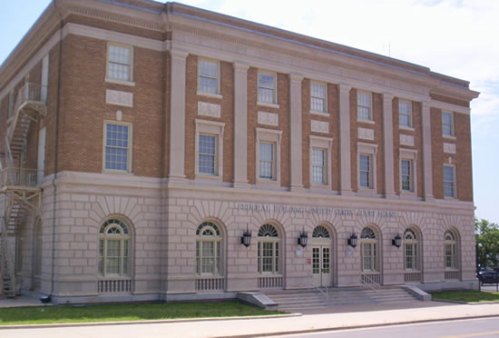
The Federal Courthouse in Lawton, Oklahoma

John O’Connor, a Tulsa based attorney, is Trump’s latest nominee to fill an Oklahoma-based vacancy.  O’Connor, a civil litigator in his 60s, is unlikely to draw the sustained opposition that two other Oklahoma judicial nominees have received.

Background

A Tulsa native, John Michael O’Connor was born in 1954.  O’Connor received a B.A. from Oklahoma State University in 1977 and a J.D. from the University of Tulsa in 1980.[1]  After graduating, O’Connor joined the Tulsa law firm Rosenstein, Fist & Ringold as an Associate.

In 1983, O’Connor moved to help found the firm Newton, O’Connor, Turner & Ketchum P.C.[2]  He served as President and Board Chair at the firm from 1985 to 1996 and then from 1999 to 2005.

In 2018, O’Connor joined the Tulsa office of Hall Estill as a Shareholder.  It is a position he currently holds.

History of the Seat

O’Connor has been nominated for the only judgeship in the country that traverses three districts: the Eastern, Northern, and Western Districts of Oklahoma.  Judge James Payne, who previously held this seat, moved to senior status on August 1, 2017.  In September, O’Connor reached out to Oklahoma’s U.S. Senators to express his interest in filling Payne’s seat.[3]  After interviews with Senators James Inhofe and James Lankford, O’Connor was recommended to the White House.  O’Connor was ultimately nominated on April 12, 2018.

Political Activity

O’Connor has been fairly active in Oklahoma Republican politics, having served as a State Delegate to the Oklahoma Republican Convention in 2015 and 2016, and having hosted fundraisers for many state and local Republican candidates, including Oklahoma Insurance Commissioner John Doak.[4]  O’Connor has also donated to both Oklahoma Senators, giving $500 to Inhofe and $2000 to Lankford[5].  Other politicians O’Connor has supported include former Rep. Jim Bridenstine and Republican Congressional candidate Kevin Hern.[6]

Legal Experience

Whether at Rosenstein, Fist & Ringold, at Newton, O’Connor, Turner & Ketchum P.C., or in his most recent post at Hall Estill, O’Connor has based his career primarily around commercial litigation.  In his thirty seven years in practice, O’Connor has handled 25-35 trials.[7]  Notably, O’Connor was tapped as outside counsel by Insurance Commissioner Doak in a number of cases involving the fraud and mismanagement of insurance companies.[8]

In a notable case, O’Connor represented Kirk of the Hills Presbyterian Church, as it severed ties with the Presbyterian Church USA and filed suit to hold onto its church properties.[9]  The dispute eventually settled with Kirk of the Hills retaining its property but paying a $1.75 million settlement.[10]  The case prompted reconsideration of Oklahoma’s church property statutes, with some advocates criticizing the suit and corresponding legislation as infringing on the autonomy of churches.[11]

Writings and Advocacy

In 2009, O’Connor testified before the Oklahoma State Legislature’s Adoption Review Task Force in favor of reforms to the adoption of foster children.  Specifically, O’Connor urged the passage of a law allowing parents who adopt a child from the state to return the child to the state’s custody if the child develops violent tendencies or severe mental health problems.[12]  O’Connor noted that, under current law, the state would only take back custody in cases of abuse or neglect, and that the current situation “threatens the health and welfare of siblings [and parents].”[13]

Overall Assessment

Out of the three Trump Oklahoma nominees processed thus far, two have faced significant opposition, while one has faced moderate objections.  Given O’Connor’s age, experience, and relatively uncontroversial record, it is unlikely that he will face the same degree of opposition as his fellow nominees.


[1] Sen. Comm. on the Judiciary, 115th Cong., Questionnaire for Judicial Nominees: John O’Connor 1.

[2] See id. at 2.

[3] See id. at 29.

[4] See id. at 19.

[6] See id.

[7] See O’Connor, supra n. 1 at 16.

[8] See, e.g., Oklahoma ex rel. Doak v. AmCare Health Plans of Oklahoma, Inc., No. CJ-2003-5311 (Okla. Dist. Ct. Okla. Cty.); Oklahoma ex rel. Doak v. Park Ave. Prop. and Cas. Ins. Co., No. CJ-2009-11178 (Okla. Dist. Ct. Okla. Cty.); Oklahoma ex rel. Doak v. Imperial Cas. and Indem. Co., No. CJ-2010-2340 (Okla. Dist. Ct. Okla. Cty.).

[9] See Kirk of the Hills Corp. v. Presbyterian Church USA, No. CJ-2006-5063 (Okla. Dist. Ct. Tulsa Cnty.).

[10] See Been et al. v. OK Indus., Inc., 495 F.3d 1217 (10th Cir. 2007).

[11] See id.

[12] See Michael McNutt, Attorney Seeks Legislation to Support Adoptive Parents, The Oklahoman, Nov. 21 2009.

[13] Id. (quoting John O’Connor).

Roy Altman – Nominee for the U.S. District Court for the Southern District of Florida

A former federal prosecutor, Roy Altman was on the shortlist to be the top federal prosecutor in the Southern District of Florida before getting the nod for a judgeship instead.  Today, at age 36, Altman is the youngest judge Trump has nominated, and the youngest judicial nominee put forward since Judge David Bunning was nominated in 2001.

Background

Roy Kalman Altman was born in Caracas, Venezuela in 1982.  Altman received his B.A. cum laude from Columbia University in 2004 and his J.D. from Yale Law School in 2007.[1]  After receiving his J.D., Altman clerked for Judge Stanley Marcus on the U.S. Court of Appeals for the Eleventh Circuit.

After finishing his clerkship, Altman became a federal prosecutor with the U.S. Attorney’s Office for the Southern District of Florida, staying with the office for six years.[2]  During his last year at the office, Altman served as Deputy Chief of the Special Prosecutions Section of the office.[3]  In 2014, Altman joined the Miami office of Podhurst Orseck, P.A. as a Partner.[4]  He continues to work there to this day.

In 2017, Altman’s name was floated as a candidate to be U.S. Attorney for the Southern District of Florida by the newly elected Trump Administration.[5]  The Administration ultimately ended up nominating Miami-Dade Circuit Judge Ariana Fajardo Orshan to that position.[6]

History of the Seat

Altman has been nominated for a vacancy on the U.S. District Court for the Southern District of Florida.  This seat opened when Judge Joan Lenard moved to senior status on July 1, 2017.  In October 2017, Altman interviewed with the Judicial Nominating Commission (JNC) formed by Florida Senators Marco Rubio and Bill Nelson.  The JNC chose Altman as one of ten finalists to be passed onto the Senators.[7]  After interviews with Rubio and Nelson, Altman Altman was contacted by the Trump Administration in February 2018.[8]  After interviewing with the White House Counsel’s Office and the Department of Justice, Altman was formally nominated on May 8, 2018.

Legal Experience

Altman’s legal career can be divided into two primary segments: working as a federal prosecutor; and being a Partner at Podhurst Orseck.  As a federal prosecutor, Altman handled a wide variety of cases, including drug crimes, white collar crimes, and immigration cases.[9]  During his time at the office, Altman had 22 jury trials (two as sole counsel, and 15 as lead counsel), and argued three appeals before the Eleventh Circuit.[10]  Among his more prominent cases, Altman prosecuted sex-trafficker Damian St. Patrick Baston and obtained a twenty-seven year sentence.[11]  During the trial, Altman’s cross-examination prompted Baston to accuse the attorney of being “an evil dude,” an outburst which did not ultimately help him either in the guilt or sentencing phases.[12]

From December 2014 onwards, Altman has worked as a Partner at Podhurst Orseck, working primarily in aviation disaster litigation.[13]  Notably, Altman represents the families of passengers killed in the disappearance of Malaysia Airlines Flight MH370, handling a multidistrict litigation before Judge Ketanji Jackson in Washington D.C.[14]

Writings

Over the last few years, Altman has occasionally voiced his opinion on public policy issues, usually advocating for conservative positions.

Border Security

In 2013, Altman authored an op-ed criticizing the recent Ninth Circuit decision in United States v. Cotterman.[15]  The Cotterman decision held that border patrol agents could not conduct a forensic search of a laptop seized at the border without reasonable suspicion of criminal activity.[16]  In his op-ed, Altman sharply criticizes the opinion, stating that the reasonable suspicion standard “will severely restrict the ability of federal agents to protect America’s borders.”[17]  He also argues that the opinion is “unworkable” and suggests that the Supreme Court should overturn the opinion (the Supreme Court denied to review the Cotterman decision, which remains good law to this day).

Search Incident to Arrest

In 2014, Altman authored an article advocating for an expansion of the search-incident-to-arrest doctrine (a doctrine that permits warrantless searches of items found on or around an arrestee’s person) to cover cell phones.[18]  In the article, Altman argues that, despite the storage capacity of modern cell phones, that:

“There is likewise little reason to treat cell phones differently because they may contain more “personal” information than a briefcase, suitcase, or address book.”[19]

Altman goes on to argue that criminals frequently use cell phones to “facilitate their illegal enterprises” and as such, they should not be granted protection against searches incident to arrest.[20]

Iran Deal

Altman has also been sharply critical of the Joint Comprehensive Plan of Action (Iran Nuclear Deal).  In a 2015 editorial, Altman urged Senator Chuck Schumer to fight the deal, stating:

“…wrongdoers must be punished, not rewarded; liars must be checked, not trusted; and terrorists must remain the objects of our enmity and the targets of our aggression, not our partners in negotiations or the subjects of our contrition.”[21]

Altman goes on to argue that the Deal will “embolden our enemies and discourage our allies” and urges Schumer to abandon his leadership ambitions to kill the deal.[22]

Political Activity

Altman has been fairly active as a donor and volunteer for Republican campaigns.  For example, Altman supported the campaigns of Miami Mayor Francis Suarez, Lt. Gov. Carlos Lopez Cantera, Rep. Mario Diaz-Balart, and Sen. Marco Rubio, all Republicans.[23]  Altman has also donated exclusively to Republicans, giving $4750 over the last five years.[24]

Additionally, Altman is also a member of the Republican Jewish Coalition, the American Enterprise Institute Enterprise Club, and the Federalist Society for Law and Public Policy Studies.[25]

Overall Assessment

While Altman is undoubtedly an intelligent and talented attorney, his nomination looks likely to draw opposition due to a number of factors.

First, Altman is remarkably young.  As noted above, Altman is only 36 years old, younger than any judicial nominee in the last sixteen years.  While Altman has gained a significant degree of experience in his 36 years, he still falls short of the twelve years of practice requirement the ABA recommends (an admittedly arbitrary cutoff).  Second, Altman has spoken and written in support of conservative legal and policy outcomes.  While Altman’s opposition to the Iran Nuclear Deal could be dismissed as a personal view irrelevant to his jurisprudence, his endorsement of broad law enforcement powers to search suspects could draw the ire of civil liberties groups and those rightfully distrustful of granting broad police powers to law enforcement.

Taking together his age, his writings, and his political activism Altman may face a tougher confirmation process than his fellow Southern District nominees.


[1] Sen. Comm. on the Judiciary, 115th Cong., Roy Altman: Questionnaire for Judicial Nominees 1.

[2] See id. at 2.

[3] Id.

[4] Id. at 1.

[5] David Markus, Candidate List for U.S. Attorney Expands (UPDATED), Southern District of Florida Blog, June 7, 2017, http://sdfla.blogspot.com/2017/06/candidate-list-for-us-attorney-expands.html.  

[6] Jay Weaver, Trump Nominates First Woman Ever to be U.S. Attorney in South Florida, Miami Herald, June 7, 2018, https://www.miamiherald.com/news/local/article212767819.html.  

[7] David Markus, Breaking — JNC Makes the Cut to 10 Finalists for District Judge, Southern District of Florida Blog, Nov. 29, 2017, http://sdfla.blogspot.com/2017/11/breaking-jnc-makes-cut-to-10-finalists.html.

[8] See Altman, supra n. 1 at 40.

[9] Id. at 20.

[10] Id. at 20, 23-24.

[11] United States v. Baston, No. 13-20914-CR-CMA (S.D. Fla. 2013).

[12] Jay Weaver, Jamaican Man Denies Being Global Pimp in Miami Sex-Trafficking Trial, Miami Herald, June 24, 2014, http://www.miamiherald.com/news/local/community/miami-dade/article1968022.html.  

[13]See Altman, supra n. 1 at 22.

[14] See Air Crash Over the S. Indian Ocean, No. 16-mc-00184-KBJ (D.D.C. 2016) (Jackson, J.) (pending).

[15] Roy Altman, Judges for Lax Border Security, Wall St. Journal, Apr. 3, 2013, https://www.wsj.com/articles/SB10001424127887323296504578397382773377250.  

[16] See United States v. Cotterman, 709 F.3d 952 (9th Cir. 2013) (en banc).

[17] See Altman, supra n. 15.

[18] Roy K. Altman, The Case for Incident-to-Arrest Searches of Cell Phones, 29 Crim. Just. 28 (Spring 2014).

[19] See id.

[20] See id.

[21] Roy K. Altman, Schumer Says the Right Thing on the Iran Deal – Now He Needs to Persuade Eleven More Senators, Nat’l Rev., Aug. 10, 2015, https://www.nationalreview.com/2015/08/charles-schumer-obama-iran-deal-senate-democrats/.

[22] See id.

[23] See Altman, supra n. 1 at 17-18.

[25] See Altman, supra n. 1 at 5-6.

Judge Rudy Ruiz – Nominee for the U.S. District Court for the Southern District of Florida

Rudy Ruiz, a state court judge in South Florida joined the bench at just 33 years old. Today, at age 39, he has been nominated to the federal bench.

Background

Rodolfo Armando Ruiz II was born in Miami in 1979.  Ruiz graduated from Duke University in 2002 and then from the Georgetown University Law Center in 2005.[1]

After graduation, Ruiz clerked for Judge Federico Moreno on the U.S. District Court for the Southern District of Florida, and then joined the Miami Office of White & Case as an Associate.[2]  In 2009, he moved to the Miami-Dade County Attorney’s Office.[3]

In 2012, Ruiz became a County Court Judge, appointed to the position by Republican Governor Rick Scott.  In 2015, Ruiz was appointed by Scott to be a Circuit Court Judge on the Eleventh Judicial Circuit of Florida, where he sits to this day.

History of the Seat

Ruiz has been nominated for a seat on the U.S. District Court for the Southern District of Florida.  This seat opened on January 31, 2017, when Judge William Zloch moved to senior status.  In October 2017, Ruiz applied and interviewed with the Judicial Nominating Commission (JNC) formed by Florida Senators Marco Rubio and Bill Nelson.  The JNC chose Ruiz as one of ten finalists to be passed onto the Senators.[4]  After interviews with Rubio and Nelson, Ruiz was contacted by the Trump Administration in February 2018.[5]  After interviewing with the White House Counsel’s Office and the Department of Justice, Ruiz was formally nominated on May 8, 2018.

Legal Career

Ruiz began his legal career as a law clerk on the U.S. District Court for the Southern District of Florida.  After he left that position, Ruiz joined the Miami office of White & Case, working in the Corporate Latin America transactional practice group.[6]  While his work at the firm was primarily transactional, his next position at the Miami-Dade County Attorney’s Office focused on litigation.

As an Assistant County Attorney, Ruiz worked in the Tax & Finance, Torts, & Federal Litigation sections, handling tax, defense of tort claims, and civil rights cases respectively.  During his time at the office, Ruiz tried two cases in Florida state court as associate counsel, while trying six other cases as lead counsel before administrative agencies.[7]

Ruiz’s most prominent cases involved the defense of civil rights claims brought against Miami-Dade County.[8]  In one of the cases, which went to trial, the jury found for the plaintiff, but Ruiz successfully petitioned for a new trial, and defended the grant on appeal.[9]

Jurisprudence

Ruiz served as a County Court Judge in Florida from 2012 to 2015 and has served as a Circuit Judge since 2015.  In the former capacity, Ruiz heard criminal misdemeanor and traffic matters, civil protective orders, and landlord-tenant and small claims litigation.[10]  As a Circuit Judge, Ruiz handles major felonies and any civil cases with more than $15000 in controversy.  Over his six year tenure on state court, Ruiz has heard approximately 300 cases.

Among his more notable decisions, Ruiz vacated a jury award for a plaintiff who had slipped and fallen in the lobby of the defendant’s building,[11] denied a criminal defendant immunity under Florida’s Stand Your Ground law after he had stabbed his colleague,[12] and presided over a plaintiff’s vicarious liability victory in a case where the decedent was electrocuted by a hydraulic conveyor belt boom.[13]

During his tenure as a Circuit Judge, only one case has been overruled by a higher court, a relatively low reversal rate.

Writings

As a law student, Ruiz co-authored an article laying out the law governing Securities Fraud.[14]  The article breaks down the offenses that fall under the Securities Fraud umbrella, including Fraud and Insider Trading, as well as describing common defenses and enforcement mechanisms.[15]

Overall Assessment

While the 39-year-old Ruiz is on the younger end of judicial nominees put forward by the Administration, it is unlikely that Ruiz will attract too much opposition through the confirmation process.  First, Ruiz lacks a paper trail on controversial issues, having avoided op-eds and political activism.  Second, his record on the bench is relatively mainstream, with a low reversal rate.  Third, Ruiz is one of Trump’s few Hispanic nominees, and has a record of supporting minority lawyers, including membership in the Cuban American Bar Association and the Florida Muslim Bar Association.[16]

Furthermore,despite his youth, Ruiz narrowly meets the ABA cutoff of twelve years of legal experience to take the federal bench.  As such, Democrats are likely to keep their powder dry and focus their fire on other nominees.


[1] Sen. Comm. on the Judiciary, 115th Cong., Rodolfo Ruiz: Questionnaire for Judicial Nominees 1.

[2] Id. at 2.

[3] Id.

[4] David Markus, Breaking — JNC Makes the Cut to 10 Finalists for District Judge, Southern District of Florida Blog, Nov. 29, 2017, http://sdfla.blogspot.com/2017/11/breaking-jnc-makes-cut-to-10-finalists.html.

[5] See Ruiz, supra n. 1 at 40.

[6] Id. at 41.

[7] Id. at 43.

[8] See Rolle v. Miami-Dade Cnty., Case No. 02-219101 CA 01 (25) (Fla. 11th Cir. Ct.), aff’d, 138 So. 3d 457 (Fla. 3d DCA 2014) (per curiam); Isaac v. Miami-Dade Cnty., Case No. 11-22698-CIV-PAS (S.D. Fla. 2011).

[9] See Rolle, supra n. 8.

[10] See Ruiz, supra n. 1 at 17.

[11] Gavers v. Espacio Miami Prop., LLC, Case No. 14-10879 CA 01 (22), 2017 WL 3047581 (Fla. 11th Cir. Ct. June 8, 2017).

[12] State v. Quintana, Case No. F12-23033 (Fla. 11th Cir. Ct. Mar. 2, 2016).

[13] Aldana v. Miami Tile Deliveries Corp., Case No. 15-6122 CA 01 (22) (Fla. 11th Cir. Ct.).

[14] XueMing Jimmy Cheng, Ryan Harrington and Rodolfo Ruiz II, Securities Fraud, 41 Am. Crim. L. Rev. 1079 (2004).

[15] See id.

[16] See Ruiz, supra n. 1 at 5-6.

Raul Arias-Marxuach – Nominee for the District of Puerto Rico

President Trump has received some criticism for the lack of diversity in his judicial candidates.  As of June 18, 2018, out of the 125 nominations made to the Article III courts, just four have been Hispanic.  One of those four is Raul Arias-Marxuach, who joins a federal bench composed entirely of Hispanic judges, serving a population where 95% of citizens speak Spanish as their first language.

Background

Raul Manuel Arias-Marxuach was born in San Juan, Puerto Rico in 1967.  Arias-Marxuach received his B.S. cum laude from Boston College in 1989 and his J.D. from the University of Puerto Rico School of Law in 1992.[1]  After graduating, Arias-Marxuach clerked on the Supreme Court of Puerto Rico and then received an LLM from Harvard Law School.

After receiving his LLM, Arias-Marxuach joined the San Juan firm Fiddler Gonzalez & Rodriguez P.S.C. as a Litigation Associate.[2]  In 1995, Arias-Marxuach moved to McConnell Valdes LLC.  Arias-Marxuach became an Income Partner at the firm in 1999 and a Capital Partner in 2003.[3]  He continues to practice at the firm.[4]

History of the Seat

Arias-Marxuach has been nominated for a vacancy on the U.S. District Court for the District of Puerto Rico.  This seat opened when Judge Jose Fuste moved to senior status on June 1, 2016.  No nomination was made to this seat during the Obama Administration.

In March 2017, Arias-Marxuach was contacted by the White House after being recommended for a judgeship by Resident Commissioner Jenniffer Gonzalez.[5]  Arias-Marxuach was selected as the primary candidate for the vacancy in April 2017, but was not officially nominated for the next year, until April 10, 2018.

Political Activity

Arias-Marxuach has limited political experience, having worked as a volunteer attorney for the campaign of Governor Luis Fortuno in 2008 (Fortuno caucused with the GOP as a resident commissioner in Washington).[6]  He also served as a member of the Republican National Lawyers Association in 2003.[7]

Legal Experience

Arias-Marxuach has spent almost his entire legal career at McConnell Valdes LLC,  working in a variety of subject areas including maritime law, product liability, and antitrust matters.[8]  During his career, Arias-Marxuach has tried three cases to verdict before the U.S. District Court for the District of Puerto Rico.[9]

Among the most notable cases he handled, Arias-Marxuach represented the University of Puerto Rico (UPR) in seeking legal remedies against 21 student “strikers” who sought to maintain collective action against the University.[10]  The case went all the way to the Puerto Rico Supreme Court, which found that students at the University do not have the right to strike.[11]

Overall Assessment

When nominated, Commissioner Gonzalez described Arias-Marxuach as “very professional…conservative, and his character is impeccable.”[12]  A review of his record mostly confirms her assessment.  Arias-Marxuach brings a long record with complex civil litigation to the bench, along with a generally non-controversial background.  While Arias-Marxuach may draw some questions based on his role in ending the UPR student strike, Democrats are unlikely to target his nomination, focusing on more conservative targets.


[1] Sen. Comm. on the Judiciary, 115th Cong., Raul Arias-Marxuach: Questionnaire for Judicial Nominees 1.

[2] See id. at 2.

[3] Id.

[4] Id.

[5] NotiCel, New Federal Judge Candidate in PR Closely Linked to UPR Strike, NotiCel, June 12, 2017, http://www.noticel.com/ahora/new-federal-judge-candidate-in-pr-closely-linked-to-upr-strike-document/609378099.

[6] See id. at 8.

[7] See id. at 4.

[8] See id. at 1.

[9] See id. at 18.

[10] NotiCel, New Federal Judge Candidate in PR Closely Linked to UPR Strike, NotiCel, June 12, 2017, http://www.noticel.com/ahora/new-federal-judge-candidate-in-pr-closely-linked-to-upr-strike-document/609378099.

[11] See Univ. of Puerto Rico v. Labarde Torres, 180 D.P.R. 253 (P.R. 2010).

[12] See Noticel, Supra n. 10.

Andrew Brasher – Nominee for the U.S. District Court for the Middle District of Alabama

Late last year, the Trump Administration suffered an unusual and embarrassing defeat when Alabama judicial nominee Brett Talley withdrew in the face of bipartisan opposition.  Among the many knocks against Talley were his youth and inexperience.  Now, the Administration has replaced Talley with Alabama Solicitor General Andrew Brasher, who is just as young, but brings a significantly greater amount of courtroom experience.

Background

Andrew Lynn Brasher was born in Milan, TN on May 20, 1981.  Brasher moved to Alabama to attend Samford University, a private Christian University in Homewood, where he graduated summa cum laude in 2002.[1]  Brasher went on to Harvard Law School, graduating cum laude in 2006.

Upon graduation, Brasher clerked for Judge William Pryor on the U.S. Court of Appeals for the Eleventh Circuit.[2]  He then joined the Birmingham office of Bradley Arant Boult Cummings LLP as an Associate.

In 2011, Brasher was appointed by Luther Strange, then the Attorney General of Alabama, to be Deputy Solicitor General.  Brasher served in that capacity until 2014 when he was appointed Solicitor General (working with Talley in the office).[3]  Brasher continues to serve in the office.

History of the Seat

Brasher has been nominated for a seat on the U.S. District Court for the Middle District of Alabama.  This seat opened on August 1, 2015, when Judge Mark Fuller resigned after his arrest for domestic violence.[4]  Despite the seat opening in President Obama’s second term, negotiations between the Administration and Alabama’s Republican senators fell apart and no nomination was ever made to fill the seat.[5]

In September 2017, the Trump Administration nominated Talley to the court.[6]  Unfortunately, Talley’s nomination quickly drew criticism from Democrats for his youth and lack of experience.  Shortly after his nomination passed through the Judiciary Committee on a party-line vote, it became public that Talley did not disclose his marriage to Ann Donaldson, the chief of staff to White House Counsel Don McGahn in his paperwork.[7]  Soon after, news broke of undisclosed posts and comments written by Talley under a pseudonym,[8] including message board comments defending “the first KKK.”[9]  Facing increasing bipartisan pushback to Talley’s nomination, the White House agreed to withdraw Talley’s nomination.[10]

On December 9, 2017, Sen. Richard Shelby (R-AL) reached out to Brasher to schedule an interview for the Middle District vacancy.[11]  Shelby recommended Brasher to the White House in late December.  Brasher was officially nominated on April 10, 2018.

Legal Experience

Setting aside his clerkship, Brasher has had two main legal jobs: as an associate at Bradley Arant; and as Deputy Solicitor General and Solicitor General of Alabama.  During his time at Bradley Arant, Brasher worked in complex civil litigation, including product liability cases.  At the firm, he notably represented Republican Gov. Bob Riley in defending a controversial line item veto (later overturned by the Alabama Supreme Court).[12]

As the Deputy Solicitor General and Solicitor General of Alabama, Brasher defended Alabama laws and convictions before state and federal courts.  As such, Brasher argued three cases before the U.S. Supreme Court.

In McWilliams v. Dunn, Brasher defended the imposition of the death penalty on James McWilliams, despite the latter’s alleged serious mental health issues.[13]  McWilliams argued that Supreme Court precedent required him to have access to a defense expert to provide evidence of mental incapacity, which Brasher disputed.  The Supreme Court ultimately sidestepped the question of whether McWilliams was entitled to a defense expert, ruling instead that the judge erred in denying any expert examination of McWilliam’s mental state.[14]

In Alabama Legislative Black Caucus v. Alabama, Brasher defended the constitutionality of Alabama’s state legislative districts.  The Supreme Court ultimately reversed the lower court ruling upholding the districts, suggesting that many of whom constituted racial gerrymanders.[15]  Additionally, in Alabama Department of Revenue v. CSX Transp., Inc., Brasher defended an Alabama tax on diesel for rail carriers while exempting competitor industries against charges that it was discriminatory.  The Court ultimately held that Alabama had violated federal law.[16]

In addition to his Supreme Court work, Brasher has also litigated extensively in Alabama state and federal courts.  Notably, Brasher defended the constitutionality of “admission privilege” requirements for abortion providers in Alabama, struck down by Judge Myron Thompson, and ultimately enjoined after the Supreme Court struck down a virtually identical law in Whole Woman’s Health.[17]  Brasher also successfully defended Alabama’s ban on PAC-to-PAC transfers against allegations that it violated the First Amendment.[18]

Writings and Speeches

Setting aside his official positions as Alabama Solicitor General, Brasher had written and spoken extensively on legal and political issues.


Federal Regulation

On February 4, 2017, Brasher served on a Federalist Society panel titled “Combating Federal Overreach.”[19]  The panel consisted of Brasher and the Solicitor Generals of Florida, West Virginia, and Texas, moderated by Allen Winsor, a former Florida Solicitor General who is now up for a federal judgeship.  On the panel, Brasher discussed the litigation over the EPA’s control of “navigable waters” as defined by the Clean Water Act and interpreted by the Army Corps of Engineers.  Brasher criticizes the rule as overly broad and beyond the statutory intent of Congress.  Later in the discussion, Brasher also criticized local regulations, noting:

“…oftentimes, you actually see a locality within a state that’s really, sort of, in league with the federal government against the state’s authority.”[20]

Charitable Donations

On July 21, 2015, Brasher moderated a debate titled “Fat Cats and Philanthropists: How the IRS Governs Your Charitable Donations.”  The discussion was between Dr. Craig Holman from Public Citizen and Hans Von Spakovsky of the Heritage Foundation and discussed IRS interference in not-for-profits and political organizations.[21]

Same-Sex Marriage

In 2015, while defending Alabama’s ban on same-sex marriage before the U.S. Supreme Court, Brasher wrote an article on the subject on SCOTUSBlog.[22]  In the piece, Brasher argues that the Supreme Court “should at least reject the argument that these laws serve no legitimate state interest.”[23]  Brasher suggests that states maintain a legitimate interest in limiting marriage to opposite sex couples, noting:

“I hope that . . . [the Court] does not malign the majority of voters in a majority of states as irrationally prejudiced.”[24]

Death Penalty

Shortly after the Supreme Court narrowly upheld Oklahoma’s lethal injection procedure in Glossip v. Gross, Brasher authored an article in SCOTUSBlog supporting the decision.[25]  In the article, Brasher argues that disputes about the method of administering the death penalty are actually about the legality of the penalty itself, stating:

“Why pretend these disputes are about a particular method of execution when they clearly go to the viability of capital punishment itself?”[26]

However, Brasher also acknowledges some of the arguments of death penalty opponents, noting:

“It is hard to argue that the death penalty is a strong deterrent when capital cases take twenty-five years to process.”

Redistricting

Shortly after the U.S. Supreme Court struck down North Carolina’s redistricted maps in Cooper v. Harris, Brasher published an article critical of the decision.[27]  Brasher suggests that the decision would lead to more judicial intervention in redistricting without providing adequate standards for them to do so.  Brasher also suggests that courts impose a requirement on plaintiffs to offer a map that would meet the partisan goals of the legislature.[28]

Political Activity

Brasher, a Republican, has worked as a volunteer on the 2010 campaigns of Luther Strange to be Attorney General and of Bradley Byrne (now a U.S. Representative) to be Governor of Alabama.[29]  Brasher also served on the Trump Transition Team, coordinating criminal justice policy with the incoming Administration.[30]

In addition, Brasher donated $300 to the Alabama Republican Party in 2015, his only notable political contribution.[31]

Overall Assessment

While Brasher is the exact same age as Brett Talley, he approaches the confirmation process with several key advantages that the latter did not have.

First, Brasher has served as Solicitor General, a position that has given him significant litigation experience, including three Supreme Court oral arguments.  In recognition of this fact, a substantial majority of the American Bar Association Standing Committee on the Judiciary rated Brasher “Qualified” for the judicial appointment, with a minority finding him “Well Qualified.” (In comparison, the Committee had unanimously found Talley “Not Qualified.”)

Second, Brasher has not, to our knowledge, ever blogged, anonymously or otherwise, on his personal political views.  Rather, his writings, while revealing a conservative judicial philosophy, focus on interpreting and understanding Supreme Court precedent.

That being said, Brasher will still likely attract significant opposition to his confirmation.  First, having defended many controversial positions as Solicitor General (and having lost repeatedly before the Supreme Court), Brasher will no doubt be called upon to answer for the stances he took.  Second, Brasher’s involvement in the Federalist Society will likely draw criticism, given much scrutiny over the conservative organization’s outsized influence over Trump’s court nominees.  As such, given Brasher’s background and expected longevity on the bench, Brasher will likely be opposed by most Democrats.  Nevertheless, unlike his predecessor, Brasher remains a favorite to be confirmed.


[1] Sen. Comm. on the Judiciary, 115th Cong., Andrew Brasher: Questionnaire for Judicial Nominees 1.

[2] Id. at 2.

[3] Id.

[4] Kyle Whitmire, Federal Judge Mark Fuller Resigns, AL.com, May 29, 2015, http://www.al.com/news/index.ssf/2015/05/federal_judge_mark_fuller_resi.html.  

[5] Compare Pema Levy, Jeff Sessions has a History of Blocking Black Judges, Mother Jones, Jan. 9, 2017, http://www.motherjones.com/politics/2017/01/jeff-sessions-blocked-black-judges-alabama/ with Mary Troyan, Judicial Vacancies in Alabama Pile Up, Montgomery Advertiser, April 22, 2015, http://www.montgomeryadvertiser.com/story/news/local/alabama/2015/04/22/judicial-vacancies-alabama-pile/26166537/.  

[6] Press Release, White House, President Donald J. Trump Announces Seventh Wave of Judicial Candidates (Sept. 7, 2017) (on file at https://www.whitehouse.gov/the-press-office/2017/09/07/president-donald-j-trump-announces-seventh-wave-judicial-candidates).    

[7] Matt Apuzzo and Michael S. Schmidt, Trump Judicial Pick Did Not Disclose He is Married to a White House Lawyer, N.Y. Times, Nov. 13, 2017, https://www.nytimes.com/2017/11/13/us/politics/trump-judge-brett-talley-nomination.html?_r=0.  

[8] Zoe Tillman, A Trump Judicial Nominee Appears to have Written About Politics on a Sports Website and Didn’t Disclose It, Buzzfeed News, Nov. 13, 2017, https://www.buzzfeed.com/zoetillman/a-trump-judicial-nominee-appears-to-have-written-about?utm_term=.lfJaLQm8G#.atjgYrER6.

[9] Mark Joseph Stern, Trump Judicial Nominee Brett Talley Appears to Have Defended “the First KKK” in Message Board Post, Slate, Nov. 15, 2017, http://www.slate.com/blogs/the_slatest/2017/11/15/trump_nominee_brett_talley_appears_to_have_defended_the_first_kkk.html.  

[10] Zoe Tillman, The White House Says Two of Trump’s Controversial Judicial Nominees Won’t Go Forward, BuzzFeed News, Dec. 12, 2017, https://www.buzzfeed.com/zoetillman/trump-is-suddenly-facing-a-significant-republican-roadblock?utm_term=.bo9w8BdnA#.siJmaqzpA.  

[11] See Brasher, supra n. 1 at 40-41.

[12] McWilliams v. Dunn, 137 S. Ct. 1790 (2017).

[13] Alabama et al. v. Nat’l Marine Fisheries Service, et al., No. CV-16-00593 (S.D. Ala. Nov. 29, 2016).

[14] See id.

[15] See 135 S. Ct. 1257 (2015).

[16] 135 S. Ct. 1136 (2015).

[17] See Planned Parenthood Southeast v. Strange, 2:13cv405-MHT (M.D. Ala.).

[18] Alabama Democratic Conference v. Attorney Gen., 838 F.3d 1057 (11th Cir. 2016).

[19] Andrew Brasher, Combatting Federal Overreach (Feb. 4, 2017) (video available at https://www.youtube.com/watch?v=s-71pu5xnOA).

[20] Id. at 1:19:45.

[21] Andrew Brasher, Fat Cats and Philanthropists: How the IRS Governs Your Charitable Donations (July 21, 2015) (video available at https://www.youtube.com/watch?v=_1tFCp-rYGQ).

[22] Andrew Brasher, Good Faith and Caution, Not Irrationality or Malice, SCOTUSBlog, Jan. 16, 2015, http://www.scotusblog.com/2015/01/symposium-good-faith-and-caution-not-irrationality-or-malice/.

[23] See id.

[24] Id.

[25] Andrew Brasher, The Death Penalty Lives to Fight Another Day, SCOTUSBlog, June 29, 2015, http://www.scotusblog.com/2015/06/symposium-the-death-penalty-lives-to-fight-another-day/.  

[26] Id.

[27] Andrew Brasher, A Recipe for Continued Confusion and More Judicial Involvement in Redistricting, SCOTUSBlog, Mar. 23, 2017, http://www.scotusblog.com/2017/05/symposium-recipe-continued-confusion-judicial-involvement-redistricting/.  

[28] Id.

[29] See Brasher, supra n. 1 at 20.
[30] See id.

JP Hanlon – Nominee for the U.S. District Court for the Southern District of Indiana

James Patrick (“J.P.”) Hanlon is President Trump’s nominee for a seat in the United States District Court for the Southern District of Indiana.[1]  Based on of Indianapolis, Indiana, Hanlon has worked both as a prosecutor and a criminal defense lawyer.  He is currently a partner at a prominent Indianapolis firm, where his work centers on white collar criminal defense.[2]  As of the publishing of this article, he had not yet been rated by the ABA.[3]

Background

Born in 1970, Hanlon earned his B.A. in history from DePauw University (1992) and his J.D., magna cum laude, from the Valparaiso University School of Law (1996), where he served as an articles editor of the Valparaiso University Law Review.[4]  Shortly thereafter, he clerked for Judge Robert L. Miller, Jr., of the U.S. District Court for the Northern District of Indiana.[5]  He worked as an associate in the defense-side labor and employment practice group at Seyfarth Shaw LLP for three years, after which he began a five-year stint as an Assistant United States Attorney for the Southern District of Indiana.[6]

In 2006, Hanlon moved to Baker & Daniels LLP, which in 2012 merged with Faegre & Benson LLP to become Faegre Baker Daniels, where Hanlon is currently a partner and co-chair of the firm’s white collar defense and investigations practice.[7]  His work at Faegre Baker Daniels includes representing clients in government investigations, enforcement proceedings, and related civil litigation; leading corporate internal investigations; and helping clients resolve complex compliance issues.[8]  From 2010-11, Hanlon taught courses on white collar crime as an adjunct professor at the Indiana University Robert H. McKinney School of Law.[9]

Hanlon has received extensive professional honors and recognition, including The Best Lawyers in America — White Collar Criminal Defense (2013-18), Indianapolis White Collar Criminal Defense Lawyer of the Year (2015-16), Indianapolis Business Journal Forty Under 40 Award (2010), Indiana Super Lawyers — Rising Star, Criminal Defense: White Collar (2009-10), and Indy’s Best and Brightest — Recipient, Law Category (2008).[10]

Indiana’s senators have publicly supported Hanlon alongside Holly Brady, President Trump’s nominee for the Northern District of Indiana.  Sen. Todd Young (R-Ind) said they have “earned excellent reputations in the legal community as experienced litigators in the types of cases that come before federal trial courts.” He described them as “fair, impartial and highly regarded attorneys with the right temperament to serve on Indiana’s district courts.”  Joe Donnelly (D-Ind.) echoed these sentiments, stating that “Both nominees have strong legal backgrounds and a range of experiences that have prepared them for the federal bench.”[11]

History of the Seat 

Hanlon has been nominated for a vacancy that will open on July 1, 2018, when Judge William Lawrence moves to senior status.  He was already under consideration, however, for the seat vacated by Judge Sarah Evans Barker (the White House nominated Indianapolis attorney James Sweeney to fill that seat), for which he applied to Sen. Todd Young (R-Ind.).  While he interviewed with Young in April 2017, Hanlon was not contacted by the White House until December.  Hanlon also began contact with the office of Sen. Joe Donnelly (D-Ind.) shortly therafter.  He was nominated on April 12, 2018.

Legal Career

In a Westlaw search, Hanlon appears on behalf of the government and criminal defendants in a handful of unpublished cases involving supervised release disputes and evidence suppression hearings.

The only published cases Hanlon appears in on Westlaw are from his labor and employment defense days. In Moriarty v. Svec, 55 F.Supp.2d 876 (N.D. Ill. 1999), a union trustee sued the owner of funeral home and livery business under the Employee Retirement Income Security Act (ERISA), seeking payment of delinquent contributions action to recover unpaid pension fund contributions on behalf of some of the owner’s employees.  The defendant funeral home owner, represented by Hanlon, was part of the Funeral Directors Services Association (“FDSA”), a multi-employer bargaining association representing approximately 250 businesses, until he withdrew from the FDSA in 1995.  Id. at 877-78.  Accepting Hanlon’s argument that recovery of three instances of allegedly unpaid pension contributions could have been litigated in prior related litigation, the court granted summary judgment to defendants on res judicata grounds as to those three instances.  The court held, however, that a material issue of fact existed for a separate count for recovery of pension funds occurring after defendant announced its withdrawal from the FDSA.  Whether defendant properly withdrew from the FDSA and was capable of paying those funds after his withdrawal required a trial.

In Alverio v. Sam’s Warehouse Club, 9 F. Supp. 2d 955 (N.D. Ill. 1998), a retaliation claim under Title VII, the district court granted summary judgment to the defendant employer, represented by Hanlon.  The court found that the plaintiff, a former employee, had failed to show a causal connection between her filing the discrimination charge and her dismissal over one year later, noting that the employer’s reason for discharge (the plaintiff’s alleged involvement in altercation with a coemployee) was not “patently inconsistent with the evidence.”  Id. at 963.  The court denied summary judgment on the employee’s hostile environment claim, holding that the defendant employer was vicariously liable for the bad actor’s conduct.

Hanlon has also engaged in pro bono work, including serving on Indiana University School of Law’s wrongful conviction clinic, representing asylum applicants in removal proceedings, and representing victims of domestic violence in obtaining orders of protection.[12]

Speeches/ Writings

Hanlon has published extensively over the past decade on practical guidance in white collar criminal defense.  In 2008, he co-authored the article, Rethinking How to Respond to Government Investigations, which responded to growing concern among corporations and white-collar defense lawyers in the wake of the 2006 Enron criminal prosecutions, at which point many practitioners contended that federal prosecutors routinely required companies to waive the attorney-client and work-product privileges as a prerequisite to getting credit for cooperation.[13]  Then-Deputy Attorney General Mark Filip (himself a former federal judge) released a 2008 memo announcing substantial changes to the DOJ’s policies then in effect, explicitly prohibiting seeking waiver of the privilege (although a corporation could still choose to waive).  Despite these changes, “the fundamental questions the government will ask in judging the corporation’s culpability remain essentially the same: 1) what steps did the corporation take to prevent the misconduct; and 2) what steps did the corporation take after learning of the misconduct to prevent it from happening again.”  Hanlon’s article provides practical guidance to the corporate criminal defense lawyer: beef up, proactively review, and fine-tune corporate compliance programs before any criminal investigation commences. Id. at 35.  “By proactively rethinking how to respond to a government investigation, a corporation can take action today that will help it when the government comes knocking.”  Id. at 36.

In his 2009 book, Punishing Corporate Crime: Legal Penalties for Criminal and Regulatory Violations, Hanlon discusses criminal punishment trends directed at corporations, analyzing the historical and statutory bases of corporate punishment and reviewing the remedies now employed by the government.  The book also offers advice in addressing the new and evolving punishments that face corporations and discusses preventative programs.[14]

Hanlon co-authored the 2013 article Keeping a Watchful Eye: The FBI’s Crackdown on Insider Trading, explaining the government’s crackdown on insider trading, admonishing “ organisations and compliance professionals [to] take steps to ensure that compliance processes are in place to prevent and detect insider trading activity before the government does.”[15]  Among the processes Hanlon  recommends are “creat[ing] an environment in which prompt reporting is culturally and professionally encouraged, thereby avoiding Dodd-Frank prohibitions against retaliation against whistleblowers,” and monitoring and establishing policies regarding employees’ use of social media for social vs. business purposes, consistent with the employees’ privacy interests.  Id. at 14-15.

Hanlon has also spoken on a wide range of corporate and white collar criminal defense topics as a panelist or presenter.  At the Seventh Circuit Bar Association’s Annual Meeting in 2017, he discussed the DOJ’s new enforcement priorities under the Trump administration and how those changes could impact the defense bar and U.S. Attorney’s Offices.[16]  He also presented at a 2016 CLE entitled “Crisis Management and the Legal Responses to a Government Investigation,” and a 2015 ABA roundtable, “How the DOJ’s Yates Memo Impacts Corporate Liability and Internal Investigations.”[17]

Overall Assessment

Hanlon’s experience in criminal law, both as a prosecutor and criminal defense attorney, labor and employment experience, and demonstrated expertise in corporate law issues make him an experienced and relatively noncontroversial candidate for the federal bench.  Research has not revealed any public political affiliations, consistent with Sen. Young’s (R-Ind.) effusive review of Hanlon as “fair, impartial and highly regarded … with the right temperament to serve on Indiana’s district courts.”  As such, Hanlon will likely be confirmed.


Holly Brady – Nominee for the U.S. District Court for the Northern District of Indiana

A prominent labor and employment attorney from Fort Wayne, Holly Brady is an unusual nominee for the federal bench, given her frequent representation of plaintiffs and victims of discrimination.

Background

A native Hoosier, Brady was born Holly Ann Winkeljohn in Fort Wayne on August 14, 1969.[1]  After getting an B.A. from Indiana University in 1991, Brady attended Valparaiso University School of Law, graduating in 1994.  Following her graduation, Brady joined the Fort Wayne law firm Gallucci Hopkins & Theisin P.C. which later merged into Barnes & Thornburg LLP.  In 2002, she moved to the firm Theisen Bowers & Brady LLC as a Member.[2]

In 2007, Brady joined Haller & Colvin P.C. as a Member.  She has served as President at the firm from 2012 to 2018.[3]

History of the Seat

Brady has been nominated for a seat on the U.S. District Court for the Northern District of Indiana.  This seat was vacated on September 29, 2017, when Judge Joseph Van Bokkelen moved to senior status.

Brady was approached by Sen. Todd Young (R-Ind.) for the seat in early June 2017.[4]  While she interviewed with Young in July, she wasn’t selected as the primary candidate by the White House until December 2017.[5]  Brady interviewed with Sen. Joe Donnelly (D-Ind.) and his staff early in 2018 and was nominated on April 10, 2018.[6]

Legal Experience

Brady began her legal career as an Associate at Gallucci, Hopkins & Theisen, which later merged into Barnes & Thornburg.  While there, Brady primarily represented employees in discrimination and wrongful termination cases.  During her time there, Brady represented Monte Sieberns, who was blind, in a discrimination suit against Wal-Mart, who declined to hire him.[7]   Brady argued that Wal-Mart discriminated by failing to hire Sieberns as a telephone operator, while Wal-Mart countered that their phone system could not have been operated by Sieberns.[8]  Brady ultimately lost the argument before Judge William Lee at the trial level and the Seventh Circuit.[9]  In another unique case, Brady represented the Estate of a police officer who was shot and killed by a fugitive.[10]  Brady and her fellow attorneys sued the fugitive’s parents for negligent storage of the firearm, permitting the fugitive to access and use it, successfully persuading the Indiana Supreme Court to recognize a statutory duty of care by firearm owners to store their weapons appropriately.[11]

In 2002, Brady joined Theisen Bowers & Brady, a boutique employment law firm.  At the firm, she represented current and former employees in a labor and breach of contract suit against DaimlerChrysler.[12]

In 2007, Brady moved to the Haller & Colvin, where she currently serves.  While she continued her work on labor and employment issues, she also handled other civil litigation.  Notably, Brady represented members of the House Democratic Caucus challenging the collection of fines imposed upon them by the Republican majority.[13]  The suit arose from two incidents in 2011 and 2012, when Indiana State House Democrats fled the state to prevent a legislative quorum and block anti-union legislation.[14]  In response, Republican Speaker Brian Bosma imposed fines on the absent lawmakers, and Democratic lawmakers, represented by Brady, challenged the collection of the fines by garnishing their wages.[15]  The Indiana Supreme Court ultimately dismissed the suit in a 3-2 decision, finding that courts had no jurisdiction over the issue.[16]

Overall Assessment

Generally speaking, regardless of the administration, attorneys practicing civil defense are more likely to become federal judges than those primarily representing plaintiffs.  As such, the nomination of Brady, who has primarily represented plaintiffs, is refreshingly different.  While Brady is a Republican,[17] her representation of Democrats, labor plaintiffs, and the victims of discrimination is likely to deem her a consensus nominee.


[1] Sen. Comm. on the Judiciary, 115th Cong., Holly A. Brady: Questionnaire for Judicial Nominees 1.

[2] Id. at 2.

[3] Id.

[4] Id. at 25-26.

[5] Id. at 26.

[6] See id.

[7] Sieberns v. Wal-Mart Stores, Inc., 946 F. Supp. 664 (N.D. Ind. 1996).

[8] See id. at

[9] Sieberns v. Wal-Mart Stores, Inc., 125 F.3d 1019 (7th Cir. 1997).

[10] Estate of Eryn T. Heck v. Stoffer, 786 N.E.2d 265 (Ind. 2003).

[11] Id. at 269.

[12] Bell v. DaimlerChrysler Corp., 547 F.3d 796 (7th Cir. 2008).

[13] See Berry v. Crawford, 990 N.E.2d 410 (Ind. 2013).

[14] Frank James, Indiana Democratic Lawmakers Imitate Wisconsin, Flee State, NPR, Feb.. 22, 2011, https://www.npr.org/sections/itsallpolitics/2011/02/22/133966237/indiana-democratic-lawmakers-imitate-wisconsin-flee-state.

[15] See Berry, supra n. 13 at 413.

[16] Id. at 422.

[17] See Brian Francisco, City Lawyer Picked for Federal Post, Fort Wayne Journal Gazette, Apr. 11, 2018, http://www.journalgazette.net/news/local/20180411/city-lawyer-picked-for-federal-post (citing Mark Gia-Quinta).