Judge Jeffrey Bryan – Nominee to the U.S. District Court for the District of Minnesota

Judge Jeffrey Bryan has a long history in the Minnesota legal community, having practiced law here for over a decade and then spent another decade as a state court judge. Bryan is now poised to join the federal bench.

Background

Bryan was born in El Paso, Texas, on April 16, 1976. Bryan attended the University of Texas at Austin, receiving a B.A. in 1998. He then attended Yale University Law School, graduating in 2002.

After graduation, Bryan clerked for Judge Paul Magnuson on the U.S. District Court for the District of Minnesota. He then joined the Minneapolis office of Robins Kaplan LLP as an associate. In 2007, Bryan left the firm to become a federal prosecutor with the U.S. Attorney’s Office for the District of Minnesota.

In 2013, Democratic Governor Mark Dayton appointed Bryan to a seat on the 2nd Judicial District of Minnesota, which covers Ramsey County (St. Paul).

In 2019, Governor Tim Walz appointed Bryan to the Minnesota Court of Appeals to replace Judge Heidi Schellhas. He continues to serve on that court to this day.

History of the Seat

Bryan has been nominated for a seat on the U.S. District Court for the District of Minnesota to replace Judge John Tunheim, who will take senior status upon appointment of a successor.

Legal Career

Bryan began his legal career as an associate at Robins Kaplan LLP, where he worked on complex civil litigation. However, Bryan also represented indigent clients as part of appointments as a Special Assistant Public Defender. See, e.g., State v. Fenning, No. A04-275 (Minn. Ct. App. 2005).

In 2007, Bryan shifted to become a federal prosecutor with the U.S. Attorney’s Office for the District of Minnesota, where he worked on white collar, gang, and drug trafficking cases. See, e.g., United States v. Mims, 567 F. Supp. 2d 1059 (D. Minn. 2008). Bryan also argued cases before the Eighth Circuit. See, e.g., United States v. Ybarra, 580 F.3d 735 (8th Cir. 2009) (affirming conviction for conspiracy to distribute marijuana).

Jurisprudence

Bryan was appointed to be a District Court judge in St. Paul by Governor Mark Dayton in 2013 to replace Judge J. Thomas Mott. In this role, he served as a primary trial judge, supervising criminal and civil cases. Bryan also served at Co-Chair of the Ramsey County Juvenile Detention Alternatives Initiative.

In 2019, Governor Tim Walz appointed Bryan to the Minnesota Court of Appeals, replacing Judge Heidi Schellhas, and Bryan has served on the court since. Of his recent opinions from the Court of Appeals, Bryan reversed a district court decision denying a motion for postconviction relief, finding that the district court had erred in finding that the claim was procedurally barred. See Edwards v. State, No. A22-1221 (Minn. Ct. App. 2023).

Writings

In 2006, Bryan authored an article discussing the intersection of feminism and Christianity. See Jeffrey M. Bryan, Sexual Morality: An Analysis of Dominance Feminism, Christian Theology, and the First Amendment, 84 U. Det. Mercy L. Rev. 655 (2006-2007). Specifically, Bryan discusses the role of Christian feminists in narrowing a gap between Christianity and feminism, and outlines points of convergence that can be found. See id.

Overall Assessment

Senator Amy Klobuchar has had a significant degree of success in ensuring the smooth confirmation of judges in her home state. Based on his record, there is little to suggest that Bryan will be an exception, and it is expected that Bryan will join the Minnesota bench before the end of the year.

Judge Joshua P. Kolar – Nominee to the U.S. Court of Appeals for the Seventh Circuit

After the smooth confirmation that Judge Doris Pryor saw to an Indiana seat on the Seventh Circuit, the Biden Administration has tapped another Indiana magistrate judge, Judge Joshua Kolar, to fill a second seat on the Seventh Circuit.

Background

Kolar received a B.A. from Northwestern University in 1999 and a J.D. from Northwestern University Law School in 2003.

After graduating law school, Kolar joined Mayer Brown as an associate, with a year hiatus clerking for Judge Wayne Anderson on the U.S. District Court for the Northern District of Illinois. In 2007, Kolar then joined the U.S. Attorney’s Office for the Northern District of Indiana, rising to become the National Security Head in 2015 (after a year in active duty in Afghanistan).

In 2019, Kolar was appointed to be a U.S. Magistrate Judge for the U.S. District Court for the Northern District of Indiana, where he currently serves. Kolar also serves as a Lieutenant Commander for the U.S. Navy Reserve.

History of the Seat

Kolar has been nominated for an Indiana seat on the U.S. Court of Appeals for the Seventh Circuit. This seat opened upon the death of Judge Michael Stephen Kanne on June 16, 2022.

Legal Career

While Kolar started his career at the firm of Mayer Brown, he spent the most significant portion of his pre-bench career at the U.S. Attorney’s Office for the Northern District of Indiana.

While at the office, Kolar handled a number of appeals before the Seventh Circuit. See, e.g., United States v. Allday, 542 F.3d 571 (7th Cir. 2008) (affirming conviction and sentence for receiving sexually explicit images and videos of minors). For example, Kolar argued to defend sentences imposed against two codefendants in a bank robbery case. See United States v. Quintero, 618 F.3d 746 (7th Cir. 2010). The codefendants challenged the sentence they received, with one claiming that he failed to receive a guidelines reduction for acceptance of responsibility, while the other argued that her guidelines were improperly calculated. The Seventh Circuit, however, affirmed the sentences in both cases. See id. In another case that Kolar argued before the Seventh Circuit, the court affirmed the denial of the defendant’s motion for resentencing after the U.S. Supreme Court ruled that the federal sentencing guidelines were advisory. See United States v. Guyton, 636 F.3d 316 (7th Cir. 2011).

Political Activity

Kolar has a handful of political donations to his name, including two to Senate Majority Leader Richard Durbin and two to Presidential candidate John Kerry, both Democrats.

Jurisprudence & Reversals

Since 2019, Kolar has served as a U.S. Magistrate Judge for the U.S. District Court for the Northern District of Indiana. In this role, he presides over settlement, preliminary hearings, bail, and any cases where the parties consent to his jurisdiction.

Among the notable cases that Kolar has handled as a magistrate, he partially denied a motion by attorneys for former Seventh Circuit Judge Richard Posner seeking dismissal of all claims by Brian Vukadinovich, who argued that Posner owed him $170,000 for his work at the Posner Center for Justice for Pro Ses. See Jacqueline Thomsen, Court Says Former Judge Posner Should Face Some Claims in Wage Case, Reuters, June 22, 2023, https://www.reuters.com/legal/government/court-says-former-judge-posner-should-face-some-claims-wage-case-2023-06-22/.

In a notable opinion, Kolar remanded a damages claim against State Farm Insurance back to state court, noting that the defendant filed to meet the 30-day clock for removing the case to federal court. See Tedesco v. State Farm Fire and Cas. Co., 599 F. Supp. 3d 750 (N.D. Ind. 2022).

In another notable opinion, Kolar denied a motion to quash a subpoena filed for records of a psychotherapist who counseled the plaintiff, declining to answer the novel legal question of whether a psychotherapist-patient privilege existed in Indiana, but instead noting that, even if the privilege existed, it had been waived. See Doe v. Purdue Univ., Cause No. 2:17-CV-33-JPK (N.D. Ind. Jan. 11, 2021).

Overall Assessment

As of this point, Judge Kolar looks likely to share the smooth confirmation that his fellow magistrate had last year. There is little in his background that is likely to ignite opposition, and his military background is also likely to draw support. As such, it is fairly likely that Kolar will be confirmed before the end of the year.

Judge Eumi Lee – Nominee to the U.S. District Court for the Northern District of California

A year after naming Judge Trina Thompson to the U.S. District Court for the Northern District of California, President Biden has nominated her Alameda County colleague, Judge Eumi Lee, to join her on the Northern District bench.

Background

Lee got her B.A. from Pomona College in 1994 and her J.D. from the Georgetown University Law Center in 1999. After graduating, Lee clerked for Judge Jerome Turner on the U.S. District Court for the Western District of Tennessee and then for Judge Warren Ferguson on the U.S. Court of Appeals for the Ninth Circuit.

Subsequently, Lee joined Keker & Van Nest, shifting in 2005 to become a Clinical Professor of Law at the University of California College of Law, San Francisco (formerly UC Hastings). In 2018, Lee became a Superior Court Judge in Alameda County, where she currently serves.

History of the Seat

Lee has been nominated to the U.S. District Court for the Northern District of California, to a seat vacated on May 17, 2023, by Judge William Orrick.

Legal Experience

Lee started her legal career in private practice at the firm of Thelen Reid & Priest, further moving to Keker & Van Nest. During her time in private practice, Lee represented the French company Societe Commerciale Toutelectric in an appeal from a default judgment imposed after striking its answer as a discovery sanction for failing to produce three witnesses for deposition. See Am. Home Assurance Co. v. Societe Commerciale Toutelectric, 104 Cal. App. 4th 406 (2002). The appellate court affirmed the sanction and the default judgment. See id.

While at Keker & Van Nest, Lee was part of the legal team representing Cobra Solutions, Inc., which successfully sued to have San Francisco City Attorney Dennis Herrera disqualified from an investigation of the company as Herrera had previously worked at a firm that had represented Cobra Solutions. See San Francisco v. Cobra Solutions, Inc.,135 P.3d 20 (Cal. 2006). After the trial court disqualified the City Attorney’s office and a divided panel of the Court of Appeals affirmed, the California Supreme Court, in a 5-2 decision by Justice Joyce Kennard, affirmed the disqualification of the entire office. See id.

Lee subsequently spent thirteen years as a clinical professor of law at the University of California College of Law, San Francisco (formerly UC Hastings), where she co-founded the Hastings Institute for Criminal Justice.

Jurisprudence

Since 2018, Lee has served as a judge on the Alameda County Superior Court. In this role, Lee presides over trial court matters in criminal, civil, family, and other state law matters. Lee was the first Korean American judge in Alameda County.

Statements and Writings

As a law professor, Lee has frequently written on spoken on issues in the law. Early in her time as a professor, Lee joined a Comment urging retention of robust protections under the Family and Medical Leave Act (“FMLA”) in response to a Request for Information issued by the Department of Labor under President George W. Bush.

Lee has written extensively on prison populations in California, the parole system, and the recurring problem of recidivism. Compare Eumi K. Lee, The Center to Real Reform? Political, Legal, and Social Barriers to Reentry in California, 7 Hastings Race and Poverty L.J. 243 (2010) with Eumi K. Lee, An Overview of Special Populations in California Prisons, 7 Hastings Race and Poverty L.J. 223 (2010). As part of her writing on criminal justice issues, Lee has been a sharp critic of the proliferation of websites publishing booking photos and keeping them up barring payment to take the photos down. See Eumi K. Lee, Monetizing Shame: Mugshots, Privacy, and the Right to Access, 70 Rutgers U.L. Rev. 557 (2017-2018). Lee has argued that such websites essentially ensure that the subjects are forever tainted by the arrest, when where the charges are eventually dropped. See Olivia Solon, Haunted By a Mugshot: How Predatory Web Sites Exploit the Shame of Arrest, Taipei Times, June 18, 2018, https://www.taipeitimes.com/News/feat/archives/2018/06/18/2003695058.

Political Activity

Lee has been a frequent donor to Democratic Party candidates throughout her career. California Attorney General Rob Bonta has been a frequent recipient of donations from Lee, having received around $1800 total.

Overall Assessment

If confirmed, Lee would join a federal court that already has a reputation as one of the most liberal in the nation. Lee’s record, while demonstrating her experience and scholarship with various areas of law, also suggests that she would sit within the liberal mainstream of that court. While Lee is likely to draw strong opposition through the confirmation process, she should nonetheless see confirmation by the end of the year.

Joseph Laroski – Nominee to the U.S. Court of International Trade

Joseph Laroski has spent virtually his entire career in the field of international trade law, traversing both private practice and the federal government. He is now poised to join the Court of International Trade.

Background

Joseph A. Laroski received a B.S.F.S. from the Georgetown University Walsh School of Foreign Service in 1993, his J.D. from Fordham University School of Law in 1997 and an L.L.M. from the Georgetown University Law Center in 1998. After graduating, Laroski clerked for Judge Dominick DiCarlo on the U.S. Court of International Trade and then joined Skadden Arps as an Associate. In 2004, Laroski shifted to Wilkie Farr & Gallagher L.L.P. and again in 2006 to Vinson & Elkins. In 2008, Laroski joined the Office of the U.S. Trade Representative as Associate General Counsel.

In 2012, Laroski returned to private practice at King & Spalding. In 2016, Laroski spent a year as Attorney-Advisor to the U.S. International Trade Commission, before becoming Deputy Assistant Secretary for Policy and Negotiations and Director of Policy in the International Trade Administration at the Department of Commerce under Wilbur Ross. In 2021, Laroski returned to private practice at Schagrin Associates, where he currently works.

History of the Seat

Laroski has been nominated for a seat vacated by Judge Timothy Stanceu, an appointee of President George W. Bush, on April 5, 2021.

Legal Experience

Laroski started his legal career at the firm of Skadden Arps, where he worked with the International Trade Group working on antidumping and countervailing duty litigation. In 2004, he shifted to join the international trade practice group at Wilkie Farr, which shifted in 2006 to Vinson & Elkins.

In 2008, Laroski joined the Office of the U.S. Trade Representative, representing the U.S. government in trade dispute resolutions against other nations. In this role, Laroski was lead counsel in an international arbitration involving a dispute between the United States and the European Union regarding disparities between U.S. laws and a World Trade Organization Anti-Dumping Agreement. He also served as lead counsel for the United States in a suit involving Chinese steel tariffs.

Between 2012 and 2016, Laroski worked in both litigation and policy at King and Spalding. In this role, Laroski represented aerospace manufacturer Embraer and advised the Government of Brazil with regard to a dispute brought by the United States against the European Union for Airbus subsidies they provided.

In 2017, Laroski joined the U.S. Department of Commerce as Director of Policy to the Undersecretary of Commerce for International Trade. In that role, he advised Commerce Department officials on trade policy, being promoted to Deputy Assistant Secretary for Policy and Negotiations in 2020. In that role, Laroski also participated in the administrative litigation over the countervailing duty over softwood lumber (also participated in by fellow nominee Lisa Wang).

Since 2021, Laroski has worked at Schagrin Associates, returning to his work on antidumping and countervailing duty litigation. Notably, in this role, Laroski represented Daiking America Inc., a chemical products manufacturer, who intervened in a trade suit brought by Indian chemical producer Gujarat Fluorochemicals Ltd. See Guajarat Fluorochemicals Ltd. v. United States, 578 F. Supp. 3d 1346 (Ct. Int’l Trade 2022), available at https://scholar.google.com/scholar_case?case=512358947348396049&q=%22Joseph+A.+Laroski%22+OR+%22Joseph+Laroski%22&hl=en&as_sdt=6,47&as_rr=1.

Political Activity

Laroski’s sole contribution of record is to Matt Doherty, a Democrat who served on the Borough Council and as Mayor of Belmar, New Jersey.

Overall Assessment

Laroski has a strangely parallel life trajectory to his co-nominee, with the two both overlapping and intersecting at the Office of the Trade Representative and the Department of Commerce, as well as sharing expertise over anti-dumping and countervailing duty litigation. This experience will serve Laroski well on the bench and he is likely to see a smooth confirmation.

Lisa Wang – Nominee to the U.S. Court of International Trade

Less than two years ago, Lisa Wang was unanimously confirmed by the U.S. Senate for a position in the U.S. Department of Commerce. Wang is now up for a seat on the U.S. Court of International Trade.

Background

Lisa Wang received a B.S. from Cornell University in 2002 and her J.D. from the Georgetown University Law Center in 2006. After graduating, Wang joined Dewey and LeBoeuf as an Associate. In 2009, under the Obama Administration, Wang became the Senior Import Administration Officer for the U.S. Embassy in Beijing. In 2012, she shifted to the Office of the U.S. Trade Representative as Assistant General Counsel.

In 2014, Wang joined the Office of the Chief Counsel for Trade Enforcement and Compliance in the Commerce Department and in 2016, became a Partner at Picard, Kentz & Rowe LLP. In 2021, Wang was unanimously confirmed by the U.S. Senate to be Assistant Secretary of Commerce for Enforcement and Compliance. She currently holds that role.

History of the Seat

Wang has been nominated for a seat vacated by Judge Leo Gordon, an appointee of President George W. Bush, on March 22, 2019. Late in the Trump Administration, he nominated Joseph L. Barloon to fill this seat. However, the Senate did not act on Barloon’s nomination and the seat remained vacant.

Legal Experience

Wang started her legal career at the firm of Dewey & LeBoeuf, where she litigated before the U.S. Court of International Trade and the Federal Circuit as well as handling administrative litigation before the U.S. Department of Commerce.

After a subsequent stint in Beijing, Wang worked for the Office of the U.S. Trade Representative, where she litigated against the People’s Republic of China in trade disputes before the U.S. Court of International Trade. China Manufacturers Alliance, LLC, et al v. United States, 1:15-cv-00124-TCS (Ct. Int’l Trade 2015). In 2014, Wang moved to the Department of Commerce, where she again handled matters before the U.S. Court of International Trade and the Federal Circuit, as well as providing enforcement guidance in duty laws.

In 2016, Wang returned to private practice to work at Pickard, Kentz and Rowe LLP, where she advised various commercial industries on navigating trade issues, including the softwood lumber, shrimping, and stainless-steel keg manufacturing industries. Notably, Wang served as chief counsel for the United States Lumber Coalition in administration litigation before the U.S. Department of Commerce. See Certain Softwood Lumber Imports from Canada: Countervailing Duty and Antidumping Duty Proceedings, C-122-858 and A-122-857 (Dep’t Comm. 2016-2021).

In her current role at the Department of Commerce, Wang doesn’t litigate but instead works on antidumping and countervailing duty laws, and their interaction with the U.S. ‘s trade agreements.

Overall Assessment

Wang has spent virtually her entire career developing expertise in the field of International Law. Her background makes her a strong fit for the specialized docket of the Court of International Trade, and she will likely see a smooth confirmation.

Judge Karoline Mehalchick – Nominee to the U.S. District Court for the Middle District of Pennsylvania

President Biden has nominated fellow Scranton native Karoline Mehalchick, a federal magistrate judge, to a vacancy on the U.S. District Court for the Middle District of Pennsylvania.

Background

Born in 1976 in Scranton, Pennsylvania, Karoline Mehalchick received a B.Sc. from Pennsylvania State University in 1998 and a J.D. from Tulane Law School in 2001.

After graduating, Mehalchick clerked for Judge Trish Corbett with the Lackawanna County Court of Common Pleas and then joined Oliver, Price & Rhodes as an Associate, becoming Partner in 2008. In 2013, Mehalchick was appointed to be a federal magistrate judge, where she currently serves.

History of the Seat

The seat Mehalchick has been nominated for opened on August 1, 2021 with the move to senior status of Judge John Jones.

Legal Experience

Between 2002 and 2013, Mehalchick worked at the firm of Oliver, Price & Rhodes in Lackawanna County, frequently representing municipalities in defending against various suits. See, e.g., Smith v. Borough of Dunmore, 633 F.3d 176 (3d Cir. 2011). Among her notable cases, Mehalchick represented the Diocese of Scranton in defending against suits brought by individuals alleging sexual abuse from ordained clergy in the diocese. See Doe v. Liberatore, 478 F. Supp. 2d 742 (M.D. Pa. 2007). Mehalchick has also represented private parties, including in an unfair competition suit brought in federal court. See Bobrick Corp. v. Santana Prods. Inc., 698 F.Supp.2d 479 (M.D. Pa. 2010).

On the plaintiff’s side, Mehalchick represented plaintiffs in a suit denying them a permit to place an outdoor sign on Interstate 81. See Joyce Outdoor v. Dep’t of Transp., 49 A.3d 518 (Comm. Ct. Pa. 2012).

Mehalchick also argued cases before the Third Circuit, including a defense of the Borough of Dunmore against a 1983 suit brought by a full-time firefighter. See Dee v. Borough of Dunmore, 549 F.3d 225 (3d Cir. 2008).

Judicial Experience

Since 2013, Mehalchick has served as a federal magistrate judge on the U.S. District Court for the Middle District of Pennsylvania. In this role, Mehalchick handles bond and release decisions, administrative law cases, discovery disputes, settlement, as well as reports and recommendations on substantive motions. See, e.g., Luciano-Jimenez v. Doll, 547 F. Supp. 3d 462 (M.D. Pa. 2021) (Mannion, J.) (accepting Judge Mehalchick’s recommendation ordering a prisoner released with conditions).

A number of Mehalchick’s rulings and opinions have been appealed to the Third Circuit, which has largely affirmed the rulings. See, e.g., Talley v. Wetzel, 15 F.4th 275 (3d Cir. 2021) (affirming district court order allowing prisoner to proceed in forma pauperis). In one notable opinion, Mehalchick ruled, on an issue of first impression, that incentive bonuses by third parties need to be included by employers when calculating the overtime rate. See Secretary United States Department of Labor v. Bristol Excavating Co., 935 F.3d 122 (3d Cir. 2019). The Third Circuit affirmed in part and reversed in part, finding that all incentive bonuses do not necessarily need to be considered when calculating overtime and that the record did not support the conclusion that the overtime bonuses in this case should be considered. See id. at 128.

Among other cases where Mehalchick’s opinion has been reversed, two Third Circuit panel reversed her grant of summary judgment against prisoner suits for lack of exhaustion. See Downey v. Pennsylvania Dep’t of Corr., 968 F.3d 299 (3d Cir. 2020); Hardy v. Shaikh, 959 F.3d 578 (3d Cir. 2020).

Political Activity

Mehalchick’s sole donation of record is to former Scranton mayor Christopher Doherty, a Democrat.

Overall Assessment

With experience in private practice and a decade as a magistrate judge, Mehalchick has racked up a significant legal record for her relatively young age. Given her relatively mainstream record, Mehalchick should see a comfortable confirmation.

Judge Jennifer L. Hall – Nominee to the U.S. District Court for the District of Delaware

U.S. Magistrate Judge Jennifer Hall has extensive experience litigating in Delaware federal court and is now poised to join it with a lifetime appointment.

Background

Jennifer L. Hall received a B.S. from the University of Minnesota in 1997, her M. Phil. from Yale University in 2000, her Ph.D. from Yale University in 2003, and her J.D. from the University of Pennsylvania School of Law in 2006. After graduating, Hall clerked for Judge Sharon Prost on the U.S. Court of Appeals for the Federal Circuit and then for Judge Kent Jordan on the U.S. Court of Appeals for the Third Circuit.

Hall subsequently joined Fish & Richardson, where she spent three years as an Associate before becoming a federal prosecutor in Delaware. She subsequently became Chief of the Civil Division of the U.S. Attorney’s Office in 2015.

In 2019, Hall became a U.S. Magistrate Judge on the U.S. District Court for the District of Delaware, where she currently serves.

History of the Seat

Hall has been nominated for a vacancy that will open by Judge Richard Andrews’ move to senior status on December 31, 2023.

Legal Experience

After her clerkships, Hall started her legal career at the firm of Fish & Richardson where she represented plaintiffs in a patent infringement suit over a generic version of the pain drug Amrix, which concluded in a bench trial before Judge Sue L. Robinson. See In re Cyclobenzaprine Hydrochloride, 794 F. Supp. 2d 517 (D. Del. 2011).

From 2011 to 2019, Hall worked as an AUSA in Delaware, handling both affirmative civil cases (brought by the government) and defensive ones. Compare United States v. Energy Solutions, Inc., 265 F. Supp. 3d 415 (D. Del. 2017) with LKQ Corp. v. U.S. Dep’t of Homeland Security, 369 F. Supp. 3d 577 (D. Del. 2019). Among her larger cases, Hall was lead counsel in challenging the acquisition of Andrews County Holding, Inc. by the defendants, arguing that the acquisition would significantly affect competition for disposal of low-level radioactive waste. United States v. Energy Solutions, Inc., 265 F. Supp. 3d 415 (D. Del. 2017). In 2017, U.S. District Judge Sue Robinson enjoined the merger as a violation of the Clayton Act. See id. at 446.

Hall also handled some criminal cases, including arguing appeals before the Third Circuit. See, e.g., United States v. Boney, 769 F.3d 153 (3d Cir. 2014).

Judicial Experience

Since 2019, Hall has served as a U.S. Magistrate Judge, presiding over discovery issues, pretrial release, administrative cases, and cases with the consent of the parties.

Among her notable decisions, Hall conducted a bench trial in response to an Eighth Amendment claim brought by Christopher West, an incarcerated individual, who alleged that he was deprived of a mattress. See West v. Emig, C.A. No. 13-2103-JLH (D. Del. Oct. 24, 2022) (Memorandum Opinion). Hall made a factual finding that West had been deprived of a mattress for a period of one month, but noted that the deprivation was based on a legitimate penological interest, as West had developed a habit of ripping over mattresses and swallowing the filling. See id. As a conclusion, Hall found both that West had not established an Eighth Amendment violation and that the officers were entitled to qualified immunity. See id.

Among the reports and recommendations she authored, Hall recommended the denial of a motion to dismiss racial and religious discrimination claims brought by a black muslim firefighter, while recommending the granting of contractual discrimination and hostile work environment claims, noting that the complaint failed to allege facts supporting those claims. See Ferrell v. City of Wilmington, C.A. No. 21-1593-RGA (D. Del. Feb. 1, 2023).

Overall Assessment

Like fellow Delaware nominees Leonard Stark, Gregory Williams, and Tamika Montgomery-Reeves, Hall has an unimpeachable resume for her position and little in her background that should cause controversy. She should be confirmed well in advance of Andrews’ move to senior status.

Brandy McMillion – Nominee to the U.S. District Court for the Eastern District of Michigan

Federal prosecutor Brandy McMillion is Biden’s fifth pick for the U.S. District Court for the Eastern District of Michigan.

Background

Brandy R. McMillion received a B.S.E. from the University of Michigan in 2001, her M.S.E. from the same university the following year, and her J.D. from the George Washington University Law School in 2006.

After graduation, McMillion spent a year as an associate at Pepper Hamilton L.L.P. before joining the liberal law firm Perkins Coie L.L.P. In 2012, McMillion became a senior litigation associate at Bryan Cave L.L.P. In 2015, McMillion became a federal prosecutor with the U.S. Attorney’s Office for the Eastern District of Michigan, where she currently serves as chief of the General Crimes Unit.

History of the Seat

McMillion has been nominated for a seat on the U.S. District Court for the Eastern District of Michigan. This seat opened on August 13, 2022, when Judge Gershwin Drain took senior status.

Legal Career

McMillion spent the first half of her career working in civil litigation at the firms of Pepper Hamilton, Perkins Coie, and Bryan Cave. Among the matters she handled during this time, McMillion worked on intellectual property cases, including appellate work. See, e.g., iLight Technologies, Inc. v. Fallon Luminous Products Corp., No. 2009-1342 (Fed. Cir. Apr. 20, 2010). Notably, McMillion represented Redbox Automated Retail, who was one of several defendants in a patent infringement lawsuit brought over a patent for a client-server communication applet. See Parallel Networks LLC v. Abercrombie & Fitch Co. et al., 704 F.3d 958 (Fed. Cir. 2013).

Since 2015, McMillion has worked as a federal prosecutor, where her role included prosecuting narcotics offenses. See, e,g., United States v. Vasquez, Crim. Case No. 18-20284 (E.D. Mich. Nov. 13, 2018). Notably, McMillion worked on the prosecution of Dr. Rajendra Bothra who was acquitted in 2022 of 40 counts related to an alleged $500 million health care fraud scheme. See Melissa Nann Burke, Biden Taps Prosecutor McMillion for Federal Bench in Michigan, Detroit News, June 28, 2023, https://www.detroitnews.com/story/news/local/michigan/2023/06/28/biden-taps-prosecutor-mcmillion-for-federal-bench-in-michigan/70363298007/. Bothra’s acquittal came as the result of a successful defense strategy to defend Bothra’s work, characterized by the prosecution as a “pill-mill” as legitimate pain intervention. See Tresa Baldas, How 4 Doctors Beat the Feds in Botched $500 Million Pill Mill Case, Detroit Free Press, June 30, 2022, https://www.freep.com/story/news/local/michigan/macomb/2022/06/30/doctors-opioid-scheme-birmingham-bothra/7778004001/.

Political Activity

In 2009, McMillion made a single donation to Democratic senate candidate Alexi Giannoulias, her only partisan donation of record.

Overall Assessment

With extensive experience in litigation on both the civil and criminal side, McMillion should enter the federal bench ready to address the legal issues before her. With a paucity of controversial writings or advocacy behind her, McMillion may nonetheless face scrutiny for her prosecution of Bothra, particularly as the latter was a politically connected Republican. However, McMillion can note that Bothra was indicted under the Trump Administration as a defense to any political element to the prosecution.

Margaret Garnett – Nominee to the U.S. District Court for the Southern District of New York

S.D.N.Y. federal prosecutor Margaret Garnett has worked on a number of prominent cases throughout her career, including one described as the largest criminal tax case in U.S. history. Garnett has now been nominated for the federal bench.

Background

Margaret Garnett received her B.A. from the University of Notre Dame in 1992, an M.A. from Yale University in 1995, and a M. Phil. from Yale University in 1997, before getting a J.D. in 2000 from Columbia Law School. After law school, Garnett joined Wachtell, Lipton, Rosen & Katz as an associate. In 2004, she left to clerk for Judge Gerald Lynch on the U.S. District Court for the Southern District of New York (Lynch was later elevated to the Second Circuit). After her clerkship, Garnett joined the U.S. Attorney’s Office for the Southern District of New York, where she rose to be Chief of Appeals. In 2017, she left to join the New York Attorney General’s Office and subsequently joined the New York City Department of Investigation.

In 2021, Garnett rejoined the U.S. Attorney’s Office for the Southern District of New York, serving initially as deputy U.S. Attorney and then as Special Counsel to the U.S. Attorney since 2023.

History of the Seat

Garnett has been nominated to the vacancy on the U.S. District Court for the Southern District of New York vacated on April 21, 2023 by Judge Vincent Bricetti’s move to senior status.

Legal Career

Garnett started her career as an associate at Wachtell, Lipton, Rosen & Katz, and then as a clerk before becoming a federal prosecutor in New York, where she has spent the vast majority of her career. In her first stint with the U.S. Attorney’s Office, Garnett notably prosecuted “the largest criminal tax case” in American history, covering multiple partners and employees at KPMG, who were indicted with conspiracy and tax evasion. See U.S. v. Stein, 452 F. Supp. 2d 230 (S.D.N.Y. 2006). Garnett also argued before the U.S. Court of Appeals for the Second Circuit. See, e.g., United States v. Gagliardi, 506 F.3d 140 (2d Cir. 2007).

In 2017, Garnett left to join the New York Attorney General’s Office and then joined the New York City Department of Investigation. In this role, Garnett was sued by groups challenging the state’s eviction moratorium during the Covid-19 pandemic. See Chrysafis v. Marks, 15 F.4th 208 (2d Cir. 2021).

Writings

During her time with the New York City Department of Investigation, Garnett notably authored a critical report of the New York Police Department’s response to the George Floyd protests, noting that the response “lacked a clearly defined strategy” and that officers lacked training to respond. The 115 page report (available here) detailed multiple officer and civilian injuries, and issues with the response, and recommended that a civilian independent board exercise oversight over the police department, noting that none of the three oversight agencies currently overseeing the NYPD have the ability to bind the department on specific allegations of misconduct.

Overall Assessment

Garnett has a powerful champion in her corner for confirmation in Senate Majority Leader Chuck Schumer. However, while her prosecution-heavy experience is generally less “controversial” in the confirmation process, Garnett may nonetheless draw attention for her critical report of the NYPD and its role in the 2020 protests. It will be interesting to see, how much attention, if any, her writings on that front draw in the confirmation process.

Six Months Into the Unexpected Democratic Senate – Assessing the Landscape of Judicial Vacancies

Last November, Democrats defied political gravity and expanded their razor-thin majority in the U.S. Senate, enabling them to continue confirming judicial nominees for another two years. Six months into their Senate, it is worth taking a look at their progress and the landscape that remains.

In the last Congress, despite depending on the Vice President’s vote for their Senate majority, the Senate confirmed 97 Article III judges: one to the U.S. Supreme Court; 28 to the Courts of Appeal; and 68 to the U.S. District Courts. To maintain a similar pace, Democrats would need to have confirmed between 25-30 judges so far.

The good news is that, so far, Democrats are on pace to slightly exceed their pace, having confirmed 39 judges so far (7 appellate and 32 district) and on pace to confirm two more next week. The less positive news, however, is that the pace of nominations from the White House has dramatically slowed. After sending 55 nominations to the Senate in his first year and 70 in his second year, Biden has nominated just 30 judges so far this year. He has also had to deal with the first nomination losses of his Administration, with one appellate and two district judges being withdrawn, with a third potentially going the same route.

As a result of this slowdown in nominations, the majority of existing judicial vacancies lack nominees, and the Senate has only enough nominees to carry through its current confirmation pace to August. A summary of this landscape follows:

D.C. Circuit – 0 vacancies out of 11 judgeships

In two and a half years, Biden has managed to appoint four judges to the so-called “second highest court in the land”, starting with now-Supreme Court Justice Jackson, who was confirmed to the court in June 2021, a mere two months after her nomination. In 2022, Judge David Tatel was replaced by Judge Michelle Childs while Judge Florence Pan was confirmed to replace Jackson when she was elevated. This year, 37-year-old Brad Garcia was confirmed to fill the last remaining vacancy on the court, vacated lat year by Judge Judith Ann Wilson Rogers. The influential court has only one judge who is currently eligible for senior status, 78-year-old Karen Henderson, who has shown no sign of slowing down, making it unlikely that Biden would have any more appointees to the court this term.

The only district court that reports to the D.C. Circuit is the U.S. District Court for the District of Columbia. The 15-judgeship court has two sitting Biden appointees and two current vacancies, from Pan’s elevation, for which Judge Todd Edelman remains pending on the senate floor for confirmation, and from Judge Amy Berman Jackson’s move to senior status last month, for which D.C. Court of Appeals Judge Loren AliKhan is pending a final Judiciary Committee vote. The outgoing chief judge of the court, Judge Beryl Howell, is the sole appointee on the court who is eligible for senior status, leaving the possibility that Biden may get an additional appointment to the court.

First Circuit – 1 vacancy out of 6 judgeships (no nominee pending)

The smallest court of appeals in the country was also the sole geographically-based court not to see a single Trump appointment. Biden has already named Judge Gustavo Gelpi and Public Defender Lara Montecalvo to the court. This year, reproductive rights attorney Julie Rikelman was confirmed to replace Judge Sandra Lynch, moving the court significantly to the left. The final seat, based in New Hampshire, was vacated by Judge Jeffrey Howard last year, and lacks a nominee now that Michael Delaney withdrew last month in the face of bipartisan opposition. Unless the Biden Administration has been pre-vetting an alternate candidate, it is unlikely that a new nominee to replace Howard will hit the senate before August. Meanwhile, Judge William Kayatta, who is based out of Maine, remains a possible contender to take senior status as well, giving Biden a chance to name five out of the six judges on the court.

While this Senate has already confirmed district judges to seats in Massachusetts and Puerto Rico, the district courts covered by the First Circuit have two pending judicial vacancies, both in Massachusetts, and both have nominees pending a final vote on the floor.

An additional five district judges in the circuit remain eligible for senior status: Chief Judge F. Dennis Saylor and Judges Nathaniel Gorton, Patti Saris, and Richard Stearns in Massachusetts; and Judge Aida Delgado-Colon in Puerto Rico. Judge Jon Levy, who becomes eligible for senior status next year in Maine, has already announced his intention to take it. No public process has been announced to select a replacement.

Second Circuit – 0 vacancies out of 13 judgeships

After replacing five left-leaning judges on the Second Circuit in the last Congress, the Senate confirmed Justice Maria Araujo Kahn to replace 81-year-old conservative Jose Cabranes in March, transforming the court. With Chief Judge Debra Ann Livingston unlikely to take senior status before her term as chief ends, there is unlikely to be another appointment to the Second Circuit for several years.

Of the states covered by the Second Circuit, Connecticut, which saw three Biden appointees hit the bench last year, currently has two of the eight active district judgeships vacant and one pending nominee, Judge Vernon Oliver, who received a Judiciary Committee hearing last month. It is expected that a second nominee is incoming.

Meanwhile, the district courts in New York, after six confirmations this Congress, are down to four current and future vacancies. The Eastern District of New York has one vacancy out of sixteen judgeships, with a nominee pending on the floor. Additionally, one nominee, Margaret Garnett, was submitted this week to fill a vacancy on the Southern District of New York. The remaining two vacancies, one on the Southern District, and one on the Western District, lack nominees.

Third Circuit – 1 vacancies out of 14 judgeships (no nominee pending)

The Senate confirmed two Biden appointees to this court last Congress (Arianna Freeman nominated to replace Judge Theodore McKee and Justice Tamika Montgomery-Reeves to replace Judge Thomas Ambro). This year, the Senate confirmed Cindy Chung to replace Judge Brooks Smith. This leaves one vacancy, left by Judge Joseph Greenaway’s retirement, which lacks a nominee, but is expected to get one expeditiously. Additional vacancies this Congress are unlikely unless Judge Kent Jordan chooses to take senior status.

All three states covered by the Third Circuit have judicial vacancies. The biggest number are in Pennsylvania, which has three vacancies, two of which have nominees. Additionally, Judge Richard Andrews on the District of Delaware has indicated his desire to take senior status in December and Judge Jennifer Hall is being nominated to replace him.

The District of New Jersey, vacancy-ridden when the Biden Administration came to office, is now down to two seats left to fill, both of which are scheduled to open in the coming months. An additional seat may open if Biden chooses to elevate a district court judge to replace Greenaway (if he does so, Judges Georgette Castner and Zahid Quraishi are the most likely). The Senate previously confirmed two judges to the court this Congress and will likely process new nominees promptly.

Fourth Circuit – 1 vacancy out of 15 judgeships (no nominee pending)

After the confirmation of Judge DeAndrea Benjamin to the Fourth Circuit early this year, the big question mark in the Fourth Circuit is a Maryland vacancy first announced in December 2021 that still lacks a nominee. This has been reported to be the result of an impasse between the White House and Sen. Ben Cardin. With this Congress six months through, the clock is ticking for the two sides to reach a compromise, particularly as additional vacancies on the Fourth Circuit are possible with six other judges eligible for senior status (Chief Judge Roger Gregory, who ends his term as chief this year, is one judge to watch in particular).

One sign of optimism for the White House is that they were able to agree on two district court nominations in Maryland that are pending before the Senate, including Judge Brendan Hurson on the senate floor.

The Western District of North Carolina, meanwhile, has one current and one future vacancy, with no nominee on the horizon. An additional three North Carolina judges are eligible for senior status, leaving the possibility of additional vacancies opening.

The District of South Carolina currently has one vacancy, after Judge J. Michelle Childs was elevated to the D.C. Circuit. Late last year, it was suggested that U.S. Magistrate Judge Jacqueline Austin and attorney Beth Drake were under consideration to replace Childs, but no nominee has hit the senate yet. Additional vacancies are possible as Judge David Norton was rumored to be considering senior status in 2021, and Judge Richard Gergel is eligible as well.

The confirmations of two Virginia district judges earlier this year has left the state without any vacancies. With Judge Leonie Brinkema on the Eastern District of Virginia showing little appetite for slowing down, it is unlikely that the White House would get additional appointments in this state this term.

Meanwhile, West Virginia is the only state in the Fourth Circuit that has not yet seen a vacancy under Biden. Nonetheless, four of the state’s eight active judges are eligible for senior status, making it a reasonable chance that an additional vacancy may open this Congress.

Fifth Circuit – 1 vacancy out of 17 judgeships (one nominee pending)

Having appointed Judge Dana Douglas to the Fifth Circuit last year, Biden is poised to have a second appointment to the court in Judge Irma Ramirez. Six other judges on the Fifth Circuit are eligible for senior status, leaving a serious possibility that additional vacancies may open before the end of this Senate.

Louisiana’s Republican senators have managed to reach consensus with the Biden Administration on four nominations now, including two pending district court picks. It also appears that the senators had signed off on a third district court nominee to fill the last vacancy on the district court but the White House decided to drop the nominee from the package. Nonetheless, the good relationship that the parties have built should stand them well in filling the vacancy, as well as others that may open (six other Louisiana judges are eligible for senior status and a seventh will become eligible next year).

Mississippi, meanwhile, is in a holding pattern as the nomination of Scott Colom has stalled due to the late-breaking opposition of Sen. Cindy Hyde-Smith. With two other judges eligible for senior status, it is possible that a deal may grease Colom’s path to confirmation. Otherwise, only a change in blue slip policy would allow him to move forward.

No other state has more pending district court vacancies than Texas (eight to be precise) without any nominees pending. However, Texas senators have been collecting applications for the vacancies and the successful collaboration over Ramirez’s nomination suggests that deals can still be made. With twelve additional judges eligible for senior status, more vacancies may be on the horizon.

Sixth Circuit – 1 vacancies out of 16 judgeships (one nominee pending)

Of the three vacancies on the Sixth Circuit that opened in the Biden Administration, only the Ohio based seat of Judge R. Guy Cole remains open. Rachel Bloomekatz, nominated to replace Cole, is awaiting a final vote on the senate floor, which should come before the August recess. Of the remaining judges on the court, five are eligible for senior status: Judges Karen Nelson Moore, Eric Clay, Julia Smith Gibbons, Richard Allen Griffin, and Jane Branstetter Stranch. As such, it would not be surprising to see an additional vacancy open before the end of this Congress.

On the district court level, two of the four states under the Sixth Circuit have vacancies pending. After the White House’s proposal to nominate conservative lawyer Chad Meredith to the Eastern District of Kentucky fell through, Judge Karen Caldwell withdrew her intention to take senior status. As Caldwell and Judge Danny Reeves are the only judges on the Kentucky federal bench who are eligible for senior status, it is unlikely that Biden would be able to name any judges to the state.

With the confirmation of Judge Jonathan Grey to the Eastern District of Michigan this year, the court has three pending vacancies with two nominees pending before the Senate Judiciary Committee. With five other Michigan district judges eligible for senior status, there is a strong possibility that additional vacancies may open this Congress.

After the confirmation of four judges last year, there are no vacancies on the district courts of Ohio. However, five judges remain eligible for senior status, and it is conceivable that additional vacancies may open, particularly as Chief Judge Algernon Marbley ages out of his position next year.

Finally, a vacancy is pending on the Western District of Tennessee. The White House and Tennessee Senators battled over the Sixth Circuit nomination of Andre Mathis, and no nominee has been put forward to replace Judge John Fowlkes, who took senior status last year. If additional vacancies open (three judges are eligible for senior status), it is possible that the White House may be able to strike a package deal with Tennessee senators to fill the vacancies.

Seventh Circuit – 1 vacancy out of 11 judgeships (no nominees pending)

Having named Judge Candace Jackson-Akiwumi, Judge John Lee, and Judge Doris Pryor to the Seventh Circuit last Congress, a fourth vacancy, opened by Judge Michael Kanne’s death, still lacks a nominee. Indiana’s Republican Senators worked with the White House to support Pryor, Judge Matthew Brookman for a district court seat, and two U.S. Attorney nominees. As such, it is expected that the White House will put forward a compromise candidate for the Seventh Circuit, likely paired with candidates to fill two vacancies on the Northern District of Indiana. If an additional seat opens, it will likely be that of Judge Ilana Rovner, who is in her mid-eighties and has been on the bench since the 1970s.

On the district court level, two vacancies are pending on the U.S. District Court for the Northern District of Illinois, with one nominee pending a final vote on the senate floor. The last vacancy will likely get a nominee in the coming weeks.

Meanwhile, in Wisconsin, Judge William Pocan‘s nomination was withdrawn due to the opposition of Sen. Ron Johnson, and Wisconsin’s senators recommended two alternate candidates for the seat: state judge Marc Hammer and personal injury attorney Byron Conway three weeks ago. As such, a nominee is unlikely to come before September. However, with three other Wisconsin district judges eligible for senior status, another vacancy may well open before the end of the Congress.

Eighth Circuit 0 vacancies out of 11 judgeships

The Eighth Circuit remains the sole court of appeals not to see a vacancy open under Biden, even as three judges are currently eligible for senior status and a fourth becomes eligible next year. Each of the four, however, are fairly conservative, and may choose to hold off on senior status until a Republican Administration.

Out of the eight active judgeships among Arkansas’ two districts, only one remains vacant, left open by Judge P.K. Holmes’ move to senior status in 2021. However, despite two and a half years since Judge Holmes announced his move to senior status, no nominee has been announced. Given that the White House has been unable to agree with senators even on U.S. Attorney nominees in Arkansas, the prospects of a nominee seem remote, despite talks ongoing.

With the confirmation of Judge Stephen Locher to the Southern District of Iowa last year, the state is unlikely to see further vacancies this Congress, given the youth of all of its judges.

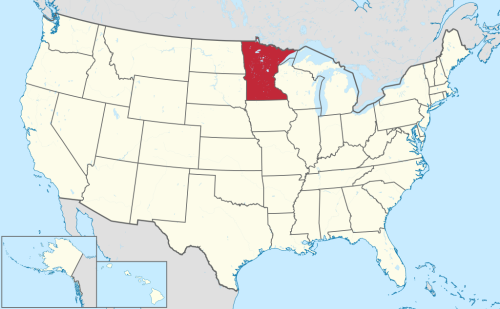
Having named two judges to the Minnesota district court last Congress, Biden has opportunity to replace Judge John Tunheim this year, and is expected to nominate Minnesota Court of Appeals Judge Jeffrey Bryan next month.

With three vacancies, Missouri is likely the sight of much Democratic frustration, as the state’s Republican senators have shown little willingness to agree to confirm replacements. As such, barring a change in blue slip policy, it is unlikely that Missouri will get any new judges soon.

The District of Nebraska has had a vacancy pending from Judge John Gerrard’s move to senior status. Senator Deborah Fischer opened the application process to replace Gerrard with a deadline in December 2022, suggesting that recommendations have likely already been made to the White House. If the Administration and senators can get on the same page, a nomination can likely be made and confirmed this year.

The District of North Dakota has two Trump appointees and no vacancies, while its neighbor to the south has two vacancies that need filling. Recent press suggests that the state’s Republican senators are not standing in the way of new appointments and that conversations are ongoing, suggesting optimism that nominations can be confirmed by the end of the year.

Ninth Circuit – 1 vacancy out of 29 judgeships (one nominee pending)

Compared to other courts of appeals, the White House has had comparative success in confirming judges to the Ninth Circuit, naming seven, with an eighth, Judge Ana de Alba, pending a final Senate vote. Of the judges who remain, six judges remain eligible for senior status, raising a fair possibility that an additional appointment may come Biden’s way.

Of the district courts covered by the Ninth Circuit, Biden has already named 29 judges, with seven additional nominees pending. One state that is still awaiting a nominee, however, is Alaska, which has still not seen a nominee to replace Judge Timothy Burgess who took senior status in December 2021. With Judge Sharon Gleason becoming eligible for senior status next year, a nomination grows increasingly important.

Similarly, Arizona has not seen any Biden district court appointees, although that is because no seat has opened during the Administration. However, in 2024, judges Douglas Rayes and James Soto become eligible for senior status, raising the possibility that Biden may be able to name some judges in Arizona.

California is the site of Biden’s greatest success on judicial nominations, with Biden having named 19 district judges, more than any other president in one term. An additional four nominees are pending confirmation of the senate floor and expected to be confirmed in the next few weeks. Furthermore, three other vacancies still lack nominees, and additional twelve judges are eligible for senior status. As such it would not be surprising to see Biden named thirty judges to the California district courts by the end of this term.

The District of Hawaii is expected to have some new judges with Judges J. Michael Seabright and Leslie Kobayashi taking senior status next year. Hawaii Senators Mazie Hirono and Brian Schatz have set up an evaluation committee to review applications with a deadline in March 2023, making it likely that new nominees should hit the senate in the coming months.

This Senate confirmed Judge Amanda Brailsford unanimously to a seat on the District of Idaho, adding gender diversity to one of a handful of all-male courts left in the nation.

Judge Dana Christensen in Montana has announced his intention to take senior status upon confirmation of a successor, and Montana’s senators have set up an application process to replace him with an application deadline on June 14 of this year. If the senators can reach an agreement on a nominee, confirmation can be expected promptly.

Having confirmed two judges to the District of Nevada last year, no additional vacancies are expected this Congress, with the bench largely composed of fairly young Obama and Biden nominees.

After the confirmation of Justice Adrienne Nelson to the District of Oregon earlier this year, the state is primed for two more Biden nominees, to replace Judges Ann Aiken and Marco Hernandez. Moving quickly, Oregon senators have already recommended six candidates rates to replace Hernandez. While Aiken does not base her chambers out of Portland, it is possible that one of the recommended candidates may be chosen to replace her.

The Eastern and Western Districts of Washington have seen a major transformation under Biden, with him filling six out of eleven judgeships already. An additional two nominees are expected to be confirmed in July, with the nomination of Charnelle Bjelkengren to the last remaining vacancy likely being a closer call.

Tenth Circuit – 1 vacancy out of 12 judgeships (no nominee pending)

The Kansas seat vacated by Judge Mary Briscoe is the oldest appellate vacancy in the country, and the site of failure by the White House when their first nominee, Jabari Wamble, crashed and burned due to the expectation of a bad ABA rating. Since then, there is little peep regarding a new Tenth Circuit nominee. Meanwhile, three other judges are also eligible for senior status, leaving the possibility that an additional appointment to the court may come Biden’s way.

The Colorado federal bench has seen significant turnover under Biden, with four out of the state’s seven judgeships filled with Biden appointees. Biden has a good chance to secure a fifth appointment upon the confirmation of Judge Kato Crews to fill the lone vacancy on the district court. Meanwhile, Judge Philip Brimmer becomes eligible for senior status next year, raising the possibility of a sixth appointment.

The District of Kansas has one pending vacancy, opened last year by Judge Julie Robinson’s move to senior status. The White House previously nominated Jabari Wamble to this seat, but Wamble withdrew in the face of an unfavorable ABA review, leaving the White House back at square one. If this seat gets filled now, it will likely be in conjunction with the Tenth Circuit vacancy.

Having confirmed three judges to the District of New Mexico, the court now has no pending vacancies, and is unlikely to have additional ones this Congress.

There are currently two vacancies on the Oklahoma district courts, and while Senators James Lankford indicated that he and the White House were having productive conversations back in 2021, there has been no nominee submitted and no updates since Sen. Markwayne Mullin replaced Sen. James Inhofe.

The District of Utah has a single vacancy, from Judge David Nuffer’s move to senior status last year. There has been little movement on a nominee publicly.

The District of Wyoming has a pending vacancy from Judge Nancy Freudenthal’s move to senior status last year. However, there appears to be little movement on a replacement and it is unclear what the status of negotiations is at.

Eleventh Circuit – 0 vacancies out of 12 judgeships

The Biden Administration achieved a significant victory last month when civil rights attorney Nancy Abudu was confirmed to the Eleventh Circuit. However, unless Judge Charles Wilson chooses to take senior status, the Administration is unlikely to secure a second appointment on the circuit.

On the district court level, Alabama has two pending vacancies, one from the elevation of Judge Andrew Brasher in the Trump Administration, and the second from Judge Abdul Kallon’s untimely resignation. Both lack nominees and it remains to be seen if a package can be reached (it’s possible that Alabama senators may demand the renomination of Trump nominee Edmund LaCour).

Florida currently has eight current and future district court vacancies, all of whom lack a nominee. Both Senator Marco Rubio and Florida’s Democratic House delegation recommended attorney Detra Shaw-Wilder (a Democrat) to the Southern District of Florida last year, but she was never nominated. However, in a breakthrough, the White House and senators were reported to have struck a deal to elevate two magistrate judges: Jacqueline Becerra and Melissa Damian; and nominate Rubio choice David Leibowitz to the Southern District. Assuming the deal holds up, nominees should hit the Senate this summer.

Meanwhile, Georgia has no current or pending judicial vacancies, although Judge Mark Treadwell on the Middle District is eligible for senior status and may take it soon.

Federal Circuit – 0 vacancies out of 12 judgeships

Biden has already named two judges to the specialized Federal Circuit, and the court has no current vacancies. However, two factors make this court one to keep an eye on. First, Judge Pauline Newman, at 96, the oldest active judge in the country, is in the middle of a disciplinary action concerning her continued fitness to remain in active status. Other judges on the court are pushing Newman to retire or take senior status, which would open a seat for Biden to fill. Second, even setting Newman aside, four other judges on the court are currently eligible for senior status, including judges Alan Lourie and Timothy Dyk, who are in their mid to late 80s. As such, the odds are in favor of an additional vacancy opening on the Federal Circuit this Congress.

Additionally, after more than two years of waiting, the White House finally named candidates to fill two vacancies on the Court of International Trade, the only Article III court that is required to have partisan balance. The candidates, a pair of a Democratic and Republican pick, should have relatively comfortable confirmations.

Conclusion

At this point, Democrats have many successes to tout in their first six months with a real majority, and have slightly exceeded their confirmation pace from the previous Congress. However, with a Presidential election looming, both the nomination and confirmation pace likely needs to accelerate further to give the Biden Administration a chance to catch up to, if not exceed, the accomplishments of the previous Trump Administration.