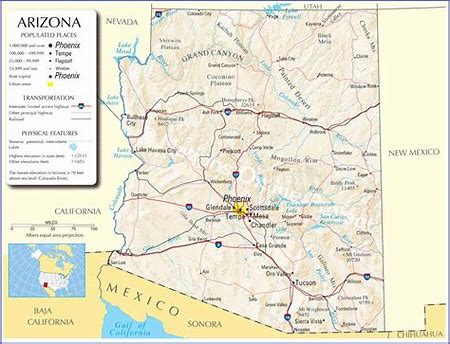
Michael Liburdi – Nominee to the U.S. District Court for the District of Arizona

Usually, district court nominees don’t attract as much controversy as those appellate picks, particularly when the nominee has support from home state senators from both parties.  However, when it comes to Michael Liburdi, the support for his nomination is actually hurting home state senator Kyrsten Sinema, creating an interesting reversal of the usual dynamic.

Background

Michael Thomas Liburdi Jr. was born in Scranton, Pennsylvania in 1977.  Liburdi attended Arizona State University, graduating summa cum laude in 1998.[1]  After graduation, Liburdi spent a year in working as a legislative assistant at DeMenna and Associates.[2]

In 1999, Liburdi matriculated at Arizona State College of Law, graduating in 2002.[3]  He then clerked for Justice Ruth McGregor on the Arizona Supreme Court.  Following his clerkship, Liburdi joined the Phoenix Office of Perkins Coie as an associate.[4]  He stayed until 2011 (barring a year long stint in 2008 at the Federal Election Commission).

In 2011, Liburdi joined Snell & Wilmer LLP as an Associate and became a Partner in 2014.[5]  After the election of Republican Doug Ducey to the Arizona Governorship, Liburdi joined his office as his General Counsel.[6]  Liburdi stayed in that capacity until 2018, when he left to join Greenberg Taurig LLP as a Shareholder.

History of the Seat

Liburdi has been nominated to the U.S. District Court for the District of Arizona, to a seat vacated on July 31, 2018, by Judge David Campbell’s move to senior status.  Liburdi had broached his interest in a judicial appointment in late 2016 to senate staff and in August 2018 to the Department of Justice.[7]  He interviewed with the White House in September 2018 and was nominated in January 2019.

Political Activity & Memberships

Liburdi has been particularly active in the Arizona Republican Party, serving as the Campaign Counsel for Gov. Doug Ducey, Secretary of State Michele Reagan, Sen. Martha McSally, former Sen. Jeff Flake, Rep. Paul Gosar, and Congressional candidate Wendy Rogers, among others.[8]  He was also legal counsel for the House and Senate Victory Funds in Arizona in the 2012 election.[9]

In 2012, Liburdi led the assignment of poll watchers for the Arizona Republican Party, coordinating volunteers trained by the voter fraud watchgroup Verify the Vote AZ, which has received criticism for seeking to suppress the votes of minorities.[16]

Liburdi has been a member of the the Federalist Society for Law and Public Policy Studies (a conservative legal society that has produced many Trump judicial nominees) since 2005.[10]

Legal Experience

Liburdi has developed a career as a conservative attorney, particularly focusing on the area of election law.  He has also gained experience working as Counsel for Governor Doug Ducey.

Private Practice

Throughout his career, Liburdi has built a practice in election law, representing various organizations in lawsuits around electioneering, referendum, and voting.  Early in his career, for example, Liburdi represented the Clean Elections Institute in successfully challenging a referendum that sought to end Arizona’s public financing of campaigns.[11]  Liburdi also represented Arizona Together in unsuccessfully challenging a ballot measure that sought to ban same-sex marriage in Arizona.[12]

On the flip side, Liburdi served as lead plaintiff’s counsel in challenging Arizona’s Independent Redistricting Commission legislative plan, arguing that the Commission had unconstitutionally packed Republican voters.[13]  Liburdi lost the case, and the Supreme Court affirmed.[14]  In another case, Liburdi sought unsuccessfully to block provisional ballots from a heavily latino area of Cochise County, stating that the ballots in question were not sealed.[15]

Governor’s General Counsel

From 2015 to 2018, Liburdi worked for Gov. Ducey as his Chief Counsel, assisting him on judicial nominations, drafting executive orders, and leading efforts to manage and fight litigation against the Governor’s office.  For example, Liburdi defended a lawsuit contending that a school finding settlement negotiated by Ducey violated federal law.[18]  Liburdi also advised on the appointment of three conservatives to the Arizona Supreme Court: Justices Clint Bolick, Andrew Gould, and John Lopez.

Overall Assessment

Arizona Sen. Kyrsten Sinema has already drawn sharp criticism for returning a blue slip on and supporting Liburdi.  Looking at his record overall, one can see both where this criticism comes from, as well as why Sinema may have returned the blue slip.

Looking at the positions of the opposition, Liburdi has had a strongly partisan career.  He has worked and volunteered solely for Republicans, and, while working a Ducey’s counsel, has supported a strongly conservative administration.  Furthermore, Liburdi’s work challenging Arizona’s Independent Commission drawn maps and seeking to prevent the counting of votes from overwhelmingly Latino precincts may also be sources of criticism.

On the flip side, Liburdi is obviously a talented attorney.  Furthermore, not all of his work has been on behalf of conservative groups.  In 2006, Liburdi notably fought the  ballot initiative seeking to ban same-sex marriage, seeking to have it thrown off the ballot.  He has done the same for initiatives challenging Arizona’s public financing system.  These decisions suggest that Liburdi is willing to advocate for legal positions that may run contrary to conservative politics.

Overall, with Sinema’s support, it is likely that Liburdi will be confirmed in due course, even with significant opposition from other Democrats.


[1] Sen. Comm. on the Judiciary, 115th Cong., Michael T. Liburdi: Questionnaire for Judicial Nominees 1.

[2] See id. at 2.

[3] See id. at 1.

[4] See id.

[5] See id. at 2.

[6] See id.

[7] See id. At 53.

[8] Id. at 28-29.

[9] Id. at 29.

[10] See id. at 8.

[11] See Clean Elections Inst. Inc. v. Brewer, 209 Arix. 241 (2004).

[12] See Arizona Together v. Brewer, 214 Ariz. 118 (2006).

[13] Harris v. Arizona Ind. Redistricting Comm’n, 993 F. Supp. 2d 1042 (D. Ariz. 2014).

[14] See Harris v. Arizona Ind. Redistricing Comm’n, 136 S. Ct. 1301 (2016).

[15] Ryan J. Reilly, Arizona Republicans Sue to Block Ballots In Latino Precinct, Talking Points Memo, Nov. 13, 2012.

[16] See Evan Wyloge, Arizona Voter Fraud Group Preps Election Day Pounce, The Arizona Capitol Times, Nov. 2, 2012.

[17] See id. at 14.

[18] See Bob Christie, Judge: Land Trust Use to Fund Arizona Schools is Illegal, The Today File, Mar. 27, 2018.

Judge Pamela Barker – Nominee to the U.S. District Court for the Northern District of Ohio

A longtime insurance and civil practice attorney, Pamela Barker has served as a state judge in Ohio since 2011.  Her support from Ohio Senators Rob Portman and Sherrod Brown makes her a likely candidate for a smooth confirmation.

Background

Barker was born Pamela Ann Addison in Cleveland, Ohio in 1957.  Barker received her B.A. magna cum laude from Kenyon College in 1979 and her J.D. from the Ohio State College of Law in 1982.

Barker worked primarily in insurance litigation, working in various positions including as a Claims Attorney at Progressive Insurance Company, a Claims Litigation Manager at Bristol West Insurance Group and as a solo practitioner.  Barker also served as a magistrate for the City of Brecksville, Ohio.

In 2011, Gov. John Kasich appointed Barker to serve on the Cuyahoga County Superior Court. She continues to serve in that capacity today.

History of the Seat

Barker has been nominated for a seat on the U.S. District Court for the Northern District of Ohio.  This seat was vacated on January 1, 2017, when Judge Donald Nugent moved to senior status.

In October 2017, Senators Sherrod Brown, a Democrat, and Rob Portman, a Republican recommended Barker to fill the vacancy.[1]  Barker interviewed with the White House in October 2017 and was officially nominated on April 12, 2018.[2]

Legal Experience

While Barker has held a number of different positions throughout her legal career, her focus has largely remained the same: insurance litigation.  During her time as an attorney, Barker has represented plaintiffs and defendants.   For example, Barker represented a Bedford Heights police officer who was struck by a vehicle during a highway stop.[3]  On the flip side, Barker represented Progressive Insurance Co. against an insurance coverage suit before the Ohio Court of Appeals.[4]

Jurisprudence

Barker has served as a judge on the Cuyahoga County Court of Common Pleas since her appointment in 2011 by Gov. John Kasich.  In that capacity, Barker handles civil cases as well as criminal felony cases as has presided over 78 jury trials.[5]  Among her most notable cases, Barker sentenced a high ranking member of the Heartless Felons gang to life in prison[6] and presided over five convictions of “cold case” rapes and kidnappings against a defendant.[7]

Overall Assessment

With a largely uncontroversial record on the state bench and the support of Ohio liberal Sherrod Brown, Barker is largely considered a moderate-conservative in the mold of other Republicans on the Northern District of Ohio.  As such, she should be confirmed shortly with little opposition.


[1] Earl Rinehart, Trump May Not Like Ohio’s Federal Judge Choices, Columbus Dispatch, Nov. 20, 2017, https://www.dispatch.com/news/20171120/trump-may-not-like-ohios-federal-judge-choices.  

[2] Sen. Comm. on the Judiciary, 116th Cong., Pamela A. Barker: Questionnaire for Judicial Nominees 67-68.szaa

[3] Leonardi, et al. v. Franzreb and Allstate Ins. Co., Cuyahoga County Court of Common Pleas, Case No. CV-94-278901.

[4] See Nussbaum v. Progressive Cas. Ins. Co., 61 Ohio App.3d 1, 572 N.E.2d 119 (1988). 

[5] See Barker, supra n. 2 at 30.

[6] State of Ohio v. Nitsche, No. CR-14-581917 (Ohio Com. Pl.).

[7] State of Ohio v. Ford, Nos. CR-15-598281 and CR-17-614544 (Ohio Com. Pl.).

Judge Wendy Williams Berger – Nominee for the U.S. District Court for the Middle District of Florida

Judge Wendy Williams Berger is not a stranger to the art of judging, having been a state judge in Florida for the last thirteen years.  Berger, who served as an aide under Gov. Jeb Bush, looks favored to take a lifetime appointment on the Florida federal bench.

Background

Berger was born Wendy Leigh Williams on December 1, 1968 in Athens, Georgia.  Berger graduated cum laude from Florida State University in 1990 and from the Florida State University College of Law in 1992.[1]  After graduating, Berger joined the Office of the State’s Attorney for the Seventh Judicial Circuit in St. Augustine.[2]

In 2001, Berger joined the Office of Governor Jeb Bush as Assistant General Counsel and a Clemency Aide.[3]  She held that position until she was appointed in 2005 to be a Circuit Judge on the Seventh Judicial Circuit.[4]  In 2012, Gov. Rick Scott elevated Berger to be on the Fifth District Court of Appeal.[5]  She holds that position today.

In 2016, Berger was one of three finalists for an appointment to the Florida Supreme Court to the seat vacated by Justice James Perry.[6]  Scott ultimately chose to elevate Judge C. Alan Lawson, her colleague.

History of the Seat

Berger has been nominated to a seat on the U.S. District Court for the Middle District of Florida.  This seat opened on June 3, 2015, when Judge John Steele moved to senior status.  On April 28, 2016, U.S. Magistrate Judge Patricia Barksdale was nominated by President Obama to fill this vacancy.  However, even though Barksdale had the support of both Democratic Senator Bill Nelson and Republican Senator Marco Rubio, the Senate did not take any action on her nomination.

In early 2017, Nelson and Rubio urged Trump to renominate Barksdale and two other unconfirmed Obama picks in Florida.[7]  While Trump renominated one of the candidates, William Jung, Barksdale was not renominated.

In October 2017, Berger applied for the judgeship with the Judicial Nominating Commission (JNC) set up by Nelson and Rubio.[8]  She was interviewed by the JNC and was selected as a finalist in December 2017.[9]  After interviews with Nelson, Rubio, and the White House, Berger was nominated on April 10, 2018.

Legal Experience

Berger started her legal career as a Florida state prosecutor.  In this role, Berger tried approximately 50 trials, ranging from misdemeanors to capital cases.[10]  Notably, Berger prosecuted Tanya Hudson for the death of her baby, successfully obtaining two manslaughter convictions.[11]  For her part, Hudson argued that her baby was stillborn and that she had never intended to kill the child.[12]

In 2001, Berger joined the Office of Gov. Jeb Bush, advising him on legal issues and serving as his clemency aide.  In this role, Berger advised Bush on clemency petitions, monitored death row cases, and prepared death warrants for the Governor’s signature.[13]

Jurisprudence

Berger served as a Circuit Judge for Florida’s Seventh Judicial Circuit from 2005 to 2012, where she handled approximately 200 cases, including around 60 jury verdicts.[14]  Since 2012, Berger has served on the Fifth District Court of Appeal.

In the course of Berger’s time as an appellate judge, she has been reversed by the Florida Supreme Court in approximately 15 cases.[15]  Similarly, Berger has been reversed 17 times during her tenure as a trial judge.[16]  Judging against the panoply of cases she has handled, this means that Berger’s rulings have been reversed in approximately 8-10% of her cases, a slightly higher level of reversal than other nominees profiled on this blog.

Overall Assessment

As Berger has served on the Florida state bench with little controversy over the past thirteen years, there seem to be few barriers to her successful confirmation.  Furthermore, Berger has the support of the Judicial Nominating Commission set up by Rubio and Nelson.  Even as Nelson is no longer in the Senate, this should help Berger gain a comfortable confirmation.  Nevertheless, we may see some questions raised about Berger’s prosecution of Hudson.  Nonetheless, while the Hudson case is controversial, it is unlikely to derail Berger’s confirmation entirely.


[1] Sen. Comm. on the Judiciary, 114th Cong., Wendy Williams Berger: Questionnaire for Judicial Nominees 1.

[2]Id. at 2.

[3] See id.

[4] In Brief, Daytona Beach News Journal, Apr. 29, 2005.

[5] Judge Berger Appointed to State Court of Appeal, Florida Times-Union, Aug. 22, 2012.

[6] Frank Fernandez, 2 Judges from Daytona Appeals Court Finalists for State Supreme Court, Daytona Beach News Journal, Nov. 29, 2016.

[7] Andrew Pantazi, Rubio, Nelson Urge Trump on 3 Judges, Florida Times-Union, March 24, 2017.

[8] See Berger supra n. 1 at 61-62.

[9] See id.

[10] See id. at 49.

[11] See Hudson v. State, 745 So. 2d 1014 (Fla. 5th DCA 1999); Hudson v. State, 792 So. 2d 474 (Fla. 5th DCA 2001).

[12] Alexa Jaworski, Convicted Baby Killer Pleads For a New Life: Tanya Hudson Seeks to Overturn Verdict, The Florida Times Union, June 8, 2001, https://www.questia.com/newspaper/1G1-75408721/convicted-baby-killer-pleads-for-a-new-life-tanya.  

[13] See Berger supra n. 1 at 47-48.

[14] Id. at 16.

[15] See, e.g., Burton v. State, 191 So. 3d 543 (Fla. 5th DCA 2016), quashed by Burton v. State, No. SC16-1116, 2018 WL 798521 (Fla. Feb. 9, 2018); Churchill v. State, 169 So. 3d 1260 (Fla. 5th DCA 2015), quashed by 219 So. 3d 13 (Fla. 2017); Florence v. State, 128 So. 3d 198 (Fla. 5th DCA 2013), disapproved by Weatherspoon v. State, 214 So. 3d 578 (Fla. 2017); State v. Myers, 169 So. 3d 1227 (Fla. 5th DCA 2015), quashed by 211 So. 3d 962 (Fla. 2017); Worley v. Cent. Fla. Young Men’s Christian Ass’n, 163 So. 3d 1240 (Fla. 5th DCA 2015); Hilton Hotel Corp. v. Anderson, 153 So. 3d 412 (Fla. 5th DCA 2014), quashed by Anderson v. Hilton Hotel Corp., 202 So. 3d 846 (Fla. 2016).  

[16] See Biller v. State, 109 So. 3d 1240 (Fla. 5th DCA 2013), disapproved by Smith v. State, 204 So. 3d 18 (Fla. 2016); Leatherwood v. State, 108 So. 3d 1154 (Fla. 5th DCA 2013); Lee v. State, 89 So. 3d 290 (Fla. 5th DCA 2012); Long v. State, 99 So. 3d 997 (Fla. 5th DCA 2012); McKinnon v. State, 85 So. 3d 1188 (Fla. 5th DCA 2013);  Rose v. State, 68 So. 3d 377 (Fla. 5th DCA 2011); Wilbur v. State, 64 So. 3d 756 (Fla. 5th DCA 2011); Gonzalez-Ramos v. State, 46 So. 3d 67 (Fla. 5th DCA 2010); Allen v. State, 43 So. 3d 874 (Fla. 5th DCA 2010); Outin v. State, 12 So. 3d 322 (Fla. 5th DCA 2009); Eberhardt v. State, 5 So. 3d 783 (Fla. 5th DCA 2009); Helms v. State, 993 So. 2d 1135 (Fla. 5th DCA 2008); McCauslin v. State, 985 So. 2d 558 (Fla. 5th DCA 2008); Lawrence v. State, 991 So. 2d 406 (Fla. 5th DCA 2008); Sadler v. State, 980 So. 2d 567 (Fla. 5th DCA 2008); Dasher v. State, 956 So. 2d 1209 (Fla. 5th DCA 2007); Infinity Design Builders v. Hutchinson, 964 So. 2d 752 (Fla. 5th DCA 2007).

Judge T. Kent Wetherell – Nominee for the U.S. District Court for the Northern District of Florida

A nonpartisan jurist with close ties to Florida Democrats, Judge Thomas Kent Wetherell looks fairly likely to receive a bipartisan confirmation to the federal bench.

Background

The son of former Florida State House Speaker T. Kent Wetherell, Judge Thomas Kent Wetherell II was born in Daytona Beach on August 26, 1970.  When Wetherell was ten, his father was elected to the Florida House of Representatives, where he would serve for twelve years, the last two as speaker.  For his part, Wetherell graduated magna cum laude from Florida State University and with High Honors from Florida State University College of Law.[1]

After graduating, Wetherell joined Hopping Green Sams & Smith in Tallahassee as an Associate.  Four years later, he joined the Florida Attorney General’s Office under Democrat Bob Butterworth as Deputy Solicitor General.[2]

In 2002, Wetherell became an Administrative Law Judge with the Florida Division of Administrative Hearings.[3]  In 2009, Gov. Charlie Crist appointed him to be a Judge on the First District Court of Appeal, where he serves to this day.

History of the Seat

The seat Wetherell has been nominated for opened on Dec. 31, 2015, with Judge John Smoak’s move to senior status.  Florida Senators Bill Nelson, a Democrat, and Marco Rubio, a Republican, continued the use of a Judicial Nominating Commission (JNC) to solicit recommendations for vacancies.  Acting on the recommendations of the JNC, President Obama nominated Philip Lammens, a magistrate judge for the U.S. District Court for the Middle District of Florida, to fill the vacancy.[4]  However, even though Lammens had the support of both Nelson and Rubio, he never received a hearing in the 114th Congress and his nomination was returned unconfirmed upon the election of Donald Trump.

In early 2017, Rubio and Nelson jointly recommended that Trump renominate Lammens and two other unsuccessful Obama nominees.[5]  However, while one of the other picks, William Jung, was renominated, Lammens was not.  Meanwhile, the JNC recommended Wetherell for the Northern District alongside three other candidates on November 16, 2017.[6]  Wetherell was nominated alongside another finalist, Judge Allen Winsor.[7]

Legal Experience

Wetherell started his career at the Tallahassee firm of Hopping Green Sams & Smith, where he practiced land use law, mostly representing developers seeking municipal approval.  He also worked as a lobbyist, handling matters related to the Administrative Procedure Act and the motor vehicle lemon law.

From 1999 to 2002, Wetherell served as Deputy Solicitor General under the newly created Solicitor General’s Office.  In this capacity, Wetherell handled appeals on behalf of the state, but also participated in trial efforts seeking to shield media attention from Dale Earnhart’s autopsy photos.[8]

Jurisprudence

Wetherell has served as a judge since 2002, serving as an Administrative Judge for seven years, and as a judge on the First District Court of Appeal for the last nine years.  In the former position, Wetherell handled licensing, permitting, and discrimination claims on an administrative level.  In the latter, Wetherell heard civil and criminal appeals from the Florida Circuit Courts.  During his time as an appellate judge, Wetherell heard approximately 6500 cases.[9]  Of these cases, Wetherell has been reversed three times.

In the first matter where Wetherell was reversed, he ruled that legislators were protected from being deposed in challenges to congressional reapportionment by legislative immunity.[10]  The Florida Supreme Court reversed over a dissent by Justice Charles Canady, finding that legislative privilege did not apply in the matter as legislative intent was essential for the lawsuit.[11]  In the second, Wetherell upheld an agency determination that the City of Miami could unilaterally modify a collective bargaining agreement with the police under the “financial urgency statute,” and the Florida Supreme Court reversed.[12]  In the third, the Florida Supreme Court reversed Wetherell’s ruling upholding a defendant’s convictions for use of a computer to solicit a minor and traveling to meet a minor.[13]

Political Activity

Wetherell has a fairly limited political history, including campaigning for his father in his state house campaigns.  For his own part, Wetherell has just one contribution of record, to Colorado Senator Ben Nighthorse Campbell, a Democrat-turned-Republican.[14]

Overall Assessment

Overall, Wetherell looks to be set for a comfortable confirmation.  His record shows little that is controversial and he is the product of a well-respected bipartisan commission.  Furthermore, given his ties to Florida Democrats including his father, Crist, and Butterworth, it is unlikely that he will draw strong opposition.


[1] Sen. Comm. on the Judiciary, 115th Cong., T. Kent Wetherell II: Questionnaire for Judicial Nominees 1.

[2] Id. at 2.

[3] Id. 

[4] Press Release, President Obama Nominates Eight to Serve on United States District Courts (Apr. 28, 2016) (on file at https://obamawhitehouse.archives.gov/the-press-office/).

[5] Andrew Pantazi, Rubio and Nelson Ask Trump to Keep Judicial Picks They Sent to Obama, Florida Times-Union, Mar. 23, 2017, https://www.jacksonville.com/news/national/2017-03-23/rubio-and-nelson-ask-trump-keep-judicial-picks-they-sent-obama.  

[6] Alex Leary, Finalists Named for Federal Bench in Northern District of Florida, The Buzz, Nov. 16, 2017, http://www.tbo.com/florida-politics/buzz/2017/11/16/finalists-named-for-federal-bench-in-northern-district-of-florida/.  

[7] Press Release, President Donald J. Trump Announces Thirteenth Wave of Judicial Nominees, and Seventh Wave of United States Marshal Nominees (April 26, 2018) (on file at www.whitehouse.gov/thepressoffice).

[8] See Wetherell, supra n.1 at 37.

[9] Id. at 16-17.

[10] Fla. House of Representatives v. Romo, 113 So. 3d 117 (Fla. 1st DCA 2013).

[11] League of Women Voters of Florida v. Fla. House of Representatives, 132 So. 3d 135 (Fla. 2013).

[12] Headley v. City of Miami, 118 So. 3d 885 (Fla. 1st DCA 2013), quashed, 215 So. 3d 1 (Fla. 2017).

[13] Griffis v. State, 133 So. 3d 650 (Fla. 1st DCA 2014), quashed, 2016 WL 1664979 (Fla. Apr. 27, 2016).

Judge John Milton Younge – Nominee for the U.S. District Court for the Eastern District of Pennsylvania

When Judge John Milton Younge was nominated to the federal bench by President Obama, Senate Judiciary Committee Chairman Chuck Grassley killed the nomination by refusing to give it a final Committee vote.  With Younge renominated by President Trump, Grassley appears to have dropped his opposition and scheduled the vote, making it significantly more likely that Younge will be confirmed.

Background

A native of Philadelphia, John Milton Younge was born there in 1955.  He attended Boston University, graduating in 1977 and then getting a J.D. from Howard University School of Law in 1981.[1]

After graduation, Younge worked as a solo practitioner for three years and then joined the Philadelphia Redevelopment Authority as a Staff Attorney.[2]  He moved up through the ranks of the organization, becoming General Counsel in 1990 and Deputy Executive Director in 1991.[3]

In 1996, Younge ran for and won a seat on the Pennsylvania Court of Common Pleas as a Democrat.[4]  He has served in that position ever since.  Younge made two unsuccessful runs for the Superior Court, losing elections in 2007 and 2009 to Republican candidates.

History of the Seat

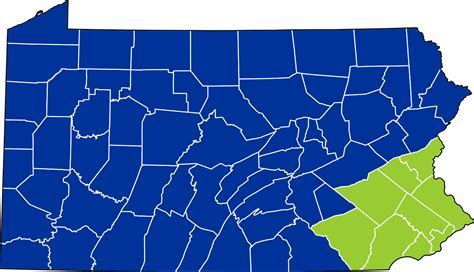
Younge has been nominated for a seat on the U.S. District Court for the Eastern District of Pennsylvania.  This seat opened on November 18, 2013, when Judge Mary McLaughlin moved to senior status.  Younge, who had applied for a judgeship with Pennsylvania Sens. Bob Casey and Pat Toomey back in 2011, was nominated on July 30, 2015.[5]  Younge received a hearing before the Senate Judiciary Committee on December 9, 2015, but never received a vote to move to the floor.  In blocking Younge, Chairman Chuck Grassley cited Younge seeking the endorsement of Planned Parenthood during his judicial campaigns.[6]  As such, Younge was never confirmed and the seat remained open throughout the Obama Presidency.

In early 2017, Casey and Toomey asked the White House to renominate Younge for the position.[7]  Younge was initially interviewed by the White House in April 2017, but then sat in limbo for a year before the vetting process began.[8]  President Trump announced Younge’s nomination to the vacancy on July 17, 2018.

Jurisprudence

From 1996, Younge has served as a Judge on the Philadelphia County Court of Common Pleas, which are the primary trial courts in Pennsylvania.  As a Judge, Younge presided over cases in civil and criminal matters, as well as domestic relations, juvenile, and family law matters.  Over the last twenty two years, Younge has presided over approximately 2300 cases.[9]

Among his more notable cases, Younge presided over a settlement between victims of gun violence and WalMart in relation to charges that WalMart negligently sold ammunition.[10]  Younge also presided over the settlement of claims arising from the sex abuse of Sean McIlmail by a priest at the Philadelphia Archdiocese.[11]

Over his twenty two years on the bench, Younge’s rulings have been reversed by higher courts twenty times.  Of these reversals, the most significant is in Zenak v. Police Athletic League City of Philadelphia.[12]  In that case, Younge allowed whistleblower claims brought by a police officer to proceed in a jury action against the City.[13]  The Pennsylvania Commonwealth Court reversed the decision, finding that the claims needed to statutorily be decided by a judge, not a jury.[14]

Political Activity

Younge has been involved with the Philadelphia Democratic Party since 1984, when he served on the Ward Executive Committee for the Party.[15]  Younge won election to the bench as a Democrat and ran twice unsuccessfully as a Democrat for the Pennsylvania Superior Court.

Overall Assessment

While the Trump Administration has renominated a fair number of Obama judicial nominees, Younge is a particularly unusual choice for renomination.  This is because, unlike the other picks renominated, Younge was actively opposed by Judiciary Committee Chairman Chuck Grassley.  As such, Younge could potentially not be considered a mainstream choice and could attract strong opposition from Republican senators.

However, even in the (slightly) more Republican senate of 2019, it is still likely that Younge gets confirmed.  Assuming all Democrats support Younge, he only needs three Republican votes to be confirmed.  One of those votes will undoubtedly come from Sen. Toomey, who pushed for his renomination.  Sens. Collins and Murkowski will likely provide the other two.  In addition, there are probably a fair number of Republicans who do not wish to see a Trump nominee fail on their watch.

Nevertheless, Younge will likely attract more opposition than most other Trump nominees, and does face a non-zero chance of being blocked by conservative opposition.


[1] Sen. Comm. on the Judiciary, 115th Cong., John M. Younge.: Questionnaire for Judicial Nominees 1.

[2] Id. at 2.

[3] Id.

[4] Id.

[5] Id. at 65.

[6] Philip Wegmann, After Facing Questions on Abortion, 2 Obama Judicial Nominees Fail to Advance, The Daily Signal, Jan. 29, 2016, https://www.dailysignal.com/2016/01/29/after-facing-questions-on-abortion-2-obama-judicial-nominees-fail-to-advance/.  

[7] See Younge, supra n. 1 at 65.

[8] Id.

[9] See Younge, supra n. 1 at 32.

[10] Peter Hall, Wal-Mart, Victims’ Families Settle, The Morning Call, Apr. 7, 2017.  

[11] Craig R. McCoy, In Largest Reported Payout Yet, Philadelphia Archdiocese Settles Abuse Suit, June 25, 2018.

[12] 132 A.3d 541 (Pa. Cmnwlth 2016).

[13] See id. 

[14] Id.

[15] See Younge, supra n. 1 at 58.

Judge J.P. Boulee – Nominee for the U.S. District Court for the Northern District of Georgia

Jones Day has generally been referred to as President Trump’s favorite law firm, given that they represented his campaign and many veterans have found spots in the Administration.  Additionally, a lot of Trump judicial nominees have Jones Day DNA.  J.P. Boulee, a state court judge tapped for the federal bench in Georgia is also a Jones Day alum.

Background

Jean-Paul Boulee was born in Kankakee, IL in 1971.  Boulee graduated magna cum laude from Washington & Lee University with a Bachelor of Arts degree, and continued on to UGA Law School graduating cum laude in 1996.[1]

After graduating, Boulee clerked for Judge Orinda Evans on the U.S. District Court for the Northern District of Georgia.  He then became a Judge Advocate with the U.S. Army, working for four years.

In 2001, Boulee joined the Atlanta Office of Jones Day as an Associate.[2]  He became a Partner in 2006.[3]  In 2015, Boulee was appointed by Republican Governor Nathan Deal to serve on the DeKalb County Superior Court to replace Judge Cynthia Becker.[4]  Boulee currently serves as a judge on that court.

In 2018, Boulee applied to fill vacancies on the Georgia Supreme Court created by Justice Britt Grant’s elevation to the Eleventh Circuit and Justice Harris Hines’ retirement.[5]  However, he withdrew his name upon nomination to the federal bench, and Sarah Hawkins Warren and Charlie Bethel were selected instead.

History of the Seat

The seat Boulee has been nominated for opened on July 1, 2018, with Judge William Duffey’s retirement.  In January 2018, Boulee applied for the vacancy with a Screening Committee set up by Georgia senators.  After interviewing with the Committee and the senators, Boulee was recommended to the White House in late March.  Boulee was nominated by the White House on August 28, 2018.

Legal Career

Boulee spent approximately fourteen years at the Atlanta office of Jones Day.  At the firm, Boulee focused on corporate, commercial litigation, and white collar defense.  Boulee also served in the JAG Corps of the U.S. Army, handling court-martials, both as a prosecutor and as a defense counsel.  As part of this latter duty, Boulee helped acquit a single mother accused of burning her child with a curling iron by explaining that the mother (who could not afford her heating bills) was using the iron under a blanket to help keep her son warm.[6]

Notably, while at Jones Day, Boulee represented Wilbur Ross (now the Secretary of Commerce) in a class action and derivative shareholder lawsuit challenging the merger of the International Textile Group and Safety Components International.[7]  Boulee worked on case strategy and the development of defense expert testimony for the case, which ultimately settled on the eve of trial.[8]

Jurisprudence

Boulee has served on the DeKalb County Superior Court since 2015, during which time, he presided over thirty-three jury trials, including twenty capital felonies.[9]  Notably, Boulee presided over the case of DeKalb County police officer Robert Olsen, who fatally shot Anthony Hill, an Afghanistan war veteran, who was “unarmed, unclothed and under severe mental duress.”[10]  Hill, who was African American, suffered from bipolar disorder, was nude and had his hands up when he was shot.[11]  While the officer argued that he had fired in self-defense, after Hill did not comply with instructions not to advance, Boulee declined to dismiss the murder charges, noting that the officer’s accounts had been inconsistent and that there was no evidence suggesting that Hill posed a threat of death or serious bodily harm to the officer.[12]

In his three years on the bench, Boulee has been reversed twice.[14]  In the first, Boulee was reversed for failing to grant a motion for a new trial to a defendant whose attorney had failed to request a relevant jury charge (Boulee found that the defendant had failed to show that the error had prejudiced him).[15]  In the second, Boulee was reversed for holding that a plaintiff’s voluntary dismissal without prejudice in response to a procedural defect barred the subsequent filing under the doctrine of res judicata.[16]

Political Activity

Boulee has been active with the Republican Party, maintaining membership in the Georgia Republican Party, the Republican National Lawyers Association, and other Republican groups until his ascension to the bench.[17]

Overall Assessment

Boulee’s record, both as an attorney and on the bench, reads as that of a moderate conservative.  However, it does not suggest that he is judicial activist or an extremist. To his credit, on a politically charged and sensitive case involving a police shooting, Boulee rejected the officer’s plea of self-defense where the evidence failed to support it.

As such, Boulee is unlikely to be a nominee that draws much partisan fire and will likely be confirmed early next year.


[1] Sen. Comm. on the Judiciary, 115th Cong., J.P. Boulee: Questionnaire for Judicial Nominees 1.

[2] Id. at 2.

[3] Id.

[4] See Mark Niesse, 2 DeKalb Judges Appointed By Gov. Deal, Atlanta Journal Constitution, May 12, 2015, https://www.ajc.com/news/local-govt–politics/dekalb-judges-appointed-gov-deal/FtMIOvcgZT0TXqpk6M0KVL/.  

[5] Nick Watson, Judge Deal Withdraws Name From Ga. Supreme Court Consideration, The Times, Gainesville Ga., Aug. 2, 2018.

[6] United States v. Boelter (1st Jud. Cir.).

[7] In re Int’l Textile Grp., Inc., Inc. Merger Litig., C.A. No. 2009-CP-23-3346 (S.C. Ct. Common Pleas). 

[8] See Boulee, supra n.1 at 45.

[9] Id. at 19-20.

[10] Christian Boone, AJC Digging Deeper Police Shooting; Case Shows Challenge of Prosecuting Police, Atlanta Journal-Constitution, May 18, 2018.

[11] See id.

[12] See Christian Boone, AJC Continuing Coverage Police Shooting; Ex-Cop Will Stand Trial For Shooting Unarmed Veteran, Aug. 17, 2018.

[13] See id. at 793.

[14] See Burns v. State, 803 S.E.2d 79 (Ga. Ct. App. 2017); Wentz v. Emory Healthcare, Inc., No. A18A0908, 2018 WL 4403345 (Ga. Ct. App. Sept. 17, 2018).

[15] Burns v. State, 803 S.E.2d 79 (Ga. Ct. App. 2017).

[16] Wentz v. Emory Healthcare, Inc., No. A18A0908, 2018 WL 4403345 (Ga. Ct. App. Sept. 17, 2018).

[17] See Boulee, supra n. 1 at 38.

Judge Thomas Barber – Nominee for the U.S. District Court for the Middle District of Florida

A well-respected state court judge in Florida, Judge Thomas Barber is a fairly uncontroversial choice for the federal bench.

Background

Thomas Patrick Barber was born on December 1, 1966 in Pittsburgh, Pennsylvania.  Barber graduated from the University of Florida in 1989 and from the University of Pennsylvania Law School in 1992.[1]  After graduating, Barber joined the Tampa office of Carlton Fields P.A. as an Associate.

In 1997, Barber became a state prosecutor at the State’s Attorney’s Office, and, after two years, became an Assistant Statewide Prosecutor with the Florida Attorney General’s Office.[2]  In 2000, Barber moved back to Carlton Fields, becoming a Partner in 2002.[3]

In 2004, Barber was appointed to be a County Court Judge for the Thirteenth Judicial Circuit.[4]  He was elevated to be a Circuit Judge in 2008.  He still holds the judgeship.

History of the Seat

Barber has been nominated to a seat on the U.S. District Court for the Middle District of Florida.  This seat opened on August 29, 2017, when Judge James Whittemore moved to senior status.

Barber was one of four finalists nominated for this court by the Judicial Nominating Commission (JNC) set up by Florida Senators Bill Nelson and Marco Rubio.[5]  Barber was formally nominated on May 7, 2018.

Legal Experience

Barber has spent his entire pre-bench career either at the firm of Carlton Fields or as a state prosecutor.  Over the course of his career, Barber has tried approximately seventy cases, including approximately twenty jury trials.[6]

Among the highlights of his career, Barber helped prosecute the leaders of a theft ring that stole baby formula from Florida drug stores for resale in Texas.[7]  The case, which ended with a 76-month prison sentence for the ringleader, revealed links between the operation and the funding for the 1993 terrorist attacks at the World Trade Center.[8]  In other matters, Barber represented a whistleblower who uncovered numerous improprieties at the Florida Department of Health & Rehabilitative Services[9] and represented a family in supporting an elderly patient’s right not to receive skin graft procedures in accordance with her living will.[10]

Judicial Experience

Barber served as a County Judge in Florida from 2004 to 2008 and has served as a Circuit Judge since 2008.  In this role, Barber handles civil cases involving more than $15000 and felony prosecutions.  Over the course of his career, Barber has handled approximately 700 cases.[11]  Among his more prominent cases, Barber ruled that the new Florida “stand your ground” law could not apply to cases currently pending when the law passed.[12]

Over the course of his judicial career, Barber has been reversed approximately thirteen times.  For example, Barber was reversed in two cases for granting motions to dismiss on behalf of criminal defendants.[13]

In one notable case, Barber granted a motion to suppress evidence, finding that the warrant was based on information based on an officer’s nonconsensual entry into a backyard.[14]  The Florida Court of Appeals for the Second District reversed, finding that the affidavit supporting the warrant still met the probable cause requirement without the officer’s personal observations.[15]

Overall Assessment

Looking at Barber’s record overall, senators are unlikely to find his nomination controversial.  His judicial record reflects a relatively low rate of reversal and does not suggest a bias towards either prosecutors and defendants.

However, Barber was among a group of nominees who received his hearing during the October recess, when Democrats were not present.  As such, unless Barber is given a second hearing, he may get some votes against him from Democrats who are protesting their lack of input in the confirmation process.  Barber may also receive questions regarding his ruling limiting the scope of Florida’s “stand your ground” law and for his work representing an elderly woman’s “right to die.”

Nevertheless, Barber faces a strong likelihood of a bipartisan support next year, and will likely be confirmed in due course.


[1] Sen. Comm. on the Judiciary, 114th Cong., Thomas P. Barber: Questionnaire for Judicial Nominees 1.

[2] Id. at 2.

[3] Id.

[4] Id.

[5] Id. at 46.

[6] See id. at 36.

[7] William R. Levesque, 3 Receive Probation in Baby Formula Theft Ring, St. Petersburg Times, Aug. 25, 1999.

[8] See Barber, supra n. 1 at 37.

[9] See Irven v. Dep’t of Health & Rehab. Servs., Case No. GC-G-95-2652 (Fla. Cir. Ct. 1997).

[10] See In re Rosemary Frost, Case No. 2001-1954 (Fla. Cir. Ct. 2001).

[11] See Barber, supra n. 1 at 14. 

[12] State v. Smith, 16-CF-007477 (Fla. Cir. Ct. 2017).

[13] See State v. Ramirez, 198 So.3d 52 (Fla. App. 2d. 2015); State v. Codore, 59 So.3d 1200 (Fla. App. 2d. 2011).

[14] State v. Rodriguez, 56 So. 3d 848 (Fla. Ct. App. 2d. 2011).

[15] See id.

Corey Maze – Nominee for the U.S. District Court for the Northern District of Alabama

The 40-year-old Corey Maze has, like two other Trump judicial nominees from Alabama, served as Alabama Solicitor General.  His tenure in that office, and his subsequent tenure with the Alabama Attorney General, has prepared him well for the federal bench.

Background

Corey Landon Maze was born in Gadsden, Alabama on January 4, 1978.  Maze graduated summa cum laude from Auburn University in 1996 and cum laude from Georgetown University Law Center in 2003.[1]

After graduation, Maze joined the Alabama Attorney General’s Office, working under then-AG William Pryor as Assistant Attorney General in Criminal Trials and Appeals.[2]  In 2008, Attorney General Troy King selected Maze to be Solicitor General of Alabama.  He held the position until 2011, when he became Special Deputy Attorney General for Civil Litigation, a position he still holds.

History of the Seat

Maze has been nominated for a seat on the U.S. District Court for the Northern District of Alabama.  This seat opened on June 22, 2018, when Judge Virginia Emerson Hopkins moved to senior status.  However, Maze had contacted Alabama Senator Richard Shelby in November 2016 to express his interest in an appointment to the federal bench.[3]  Maze interviewed with Shelby and then-Sen. Luther Strange in 2017, and with the White House in early 2018.  Maze was officially nominated on May 10, 2018.[4]

Legal Experience

Maze has spent his entire legal career at the Alabama Attorney General’s Office, working as Assistant Attorney General in Criminal Trials and Appeals, as Solicitor General, and, currently, as Special Deputy Attorney General for Civil Litigation.

As Assistant Attorney General, Maze prosecuted both non-capital and capital murder cases in Alabama state courts.  Notably, Maze prosecuted Daniel Wade Moore for the stabbing death of Karen Croft Tipton in 1999.[5]  Moore’s initial conviction was overturned by Judge Glenn Thompson, but was reinstated on appeal.[6]  Moore’s second trial ended in a hung jury, and, in his third, Maze was admonished by Judge Steve Haddock for failing to disclose a disk of FBI evidence to the defense, stating that the conduct of the investigators constituted “willful and intentional misconduct.”[7]  Moore was ultimately acquitted in his third trial.

As Solicitor General, Maze served as Alabama’s chief appellate attorney.  In this role, Maze argued three cases before the U.S. Supreme Court.  In one, Maze successfully defended a death penalty conviction under federal habeas review, as dictated by the Antiterrorism and Effective Death Penalty Act.[8]  In another, the Supreme Court ruled 5-4 against Maze’s position, holding that an inmate who had successfully obtained habeas relief was permitted to raise a challenge to his second death sentence on the same constitutional grounds.[9]  In a third case, the Supreme Court ruled 7-2 against Maze’s position that a railroad transportation company cannot challenge the imposition of Alabama sales tax on the purchase of diesel fuel.[10]

As Special Deputy Attorney General for Civil Litigation, Maze handles complex civil litigation for the state.  For example, Maze has served as Chief Counsel for Alabama’s suit against British Petroleum (BP) for damages resulting from the 2011 oil spill in the Gulf of Mexico.[11]  The suit led to a settlement with approximately $950 million in damages to be paid to the State.[12]

Overall Assessment

Despite his youth, Maze has built an impressive legal career.  Given his experience arguing before the Supreme Court and managing multi-million dollar settlements, Maze can argue that he has the legal and organizational ability to excel on the federal bench.

That being said, Maze may still be questioned regarding his time at the Attorney General’s Office.  Specifically, Maze may receive questions about his conduct in the Moore case, and whether he agrees that his office’s actions constituted misconduct.

Overall, Maze remains a favorite for confirmation.  While Sen. Flake’s blockade on judicial nominees will likely prevent Maze’s confirmation this year, he should be confirmed in due course next Congress.


[1] Sen. Comm. on the Judiciary, 115th Cong., Corey L. Maze: Questionnaire for Judicial Nominees 1.

[2] Id.

[3] Id. at 33.

[4] Press Release, White House, President Donald J. Trump Announces Fourteenth Wave of Judicial Nominees, Thirteenth Wave of United States Attorney Nominees, and Eighth Wave of United States Marshall Nominees (May 10, 2018) (on file at https://www.whitehouse.gov/the-press-office).  

[5] Sheryl Marsh, Spending 4 Weeks on a Jury: Judge Quizzes Potential Jurors About Lengthy Trial in Tipton Murder Case, Decatur Daily, Feb. 12, 2008.

[6] See id.

[7] Sheryl Marsh, Tipton Judge Cites Misconduct; Haddock Says Prosecutors Withheld Evidence, But Delays Motion to Dismiss Charges; Jury Selection Begins, Decatur Daily, Apr. 14, 2009.

[8] See Wood v. Allen, 130 S.Ct. 841 (2010).

[9] Magwood v. Patterson, 130 S.Ct. 2788 (2010).

[10] CSX Transp. Inc. v. Alabama Dep’t of Revenue, 131 S.Ct. 1101 (2011).

[11] Kyle Barnett, Ala. AG’s Office Re-Deputized Private Firm to Avoid Legal Challenge From BP, Has Always Intended to Use Firm for Trial, Legal News Line, June 2, 2015.

[12] Jessica Karmasek, Alabama’s $1B Settlement with BP Over 2010 Gulf Oil Spill ‘Officially Approved By All Parties’, Legal News Line, Oct. 15, 2015.

Judge Clifton Corker – Nominee to the U.S. District Court for the Eastern District of Tennessee

Judge Cliff Corker (no relation to Sen. Bob Corker) is Trump’s first nominee to the federal court that covers much of Eastern Tennessee.  While Corker is an experienced judge and advocate, some intemperate writings from his college years may cause him some heartburn.

Background

Clifton Leland Corker was born in Richmond, VA in 1967.  He graduated from James Madison University in 1990 and then attended William & Mary Law School, graduating in 1993.[1]  Corker then clerked for Judge Cynthia Kinser, then a magistrate on the U.S. District Court for the Western District of Virginia.[2]

After his clerkship, Corker worked as a volunteer for the Public Defender in Greenville, Tennessee for a year and then as an Associate at Terry, Terry & Stapleton briefly before opening his own law practice in Johnson City.[3]  Corker stayed at the practice until he became a U.S. Magistrate Judge for the Eastern District of Tennessee in 2015, where he serves today.[4]

History of the Seat

Corker has been nominated to fill a seat on the U.S. District Court for the Eastern District of Tennessee.  This seat opened on June 30, 2018, when Judge J. Ronnie Greer moved to senior status.  In June 2018, Corker was interviewed for the vacancy by the White House and was nominated on October 10, 2018.[5]

Legal Career

Corker started his legal career by clerking on the U.S. District Court for the Western District of Virginia.  He then worked as a Public Defender and at a small litigation practice.  Overall, Corker tried approximately 25 jury trials before joining the bench.[6]

From 1996 to 2005, Corker handled litigation matters in Johnson City, including the representation of indigent defendants on a court-appointed basis.[7]  During this time, he represented Gary Moore, an indigent defendant charged with conspiracy to distribute crack cocaine.[8]  Corker was able to successfully get the evidence of the crack cocaine suppressed by arguing that the officers lacked probable cause for a search incident to arrest.[9]  Similarly, Corker was able to get a search warrant issued by an associate municipal judge in Johnson City overturned, forcing a ruling that municipal judges had no authority to issue search warrants.[10]

However, Corker was less successful in arguing before the Tennessee Supreme Court that the Tennessee Constitution provides broader protections for defendants seeking access to counsel than the U.S. Constitution.[11]

Political Activity

Corker has a modest political history working for Republican candidates.  He volunteered for George H.W. Bush as a college student and has supported Tennessee Republicans more recently.[12]  Corker also contributed to the Presidential campaign of Mike Huckabee in 2008.[13]

Jurisprudence and Reversals

Corker has served as a U.S. Magistrate Judge since his appointment in 2015.  In his three years on the bench, Corker has presided over 149 cases where parties have consented to his jurisdiction, a remarkably high number.[14]

Over his three years on the bench, Corker has only had his reports and recommendations rejected twice.  In the first, Judge Greer rejected Corker’s recommendation that an ALJ’s denial of social security benefits be affirmed.[15]  In the second, Judge Pamela Reeves rejected Corker’s ruling that the criminal statute defendant was charged upon was not unconstitutionally vague.[16]

Writings

As a college student, Corker frequently wrote articles and letters to the editor for The Breeze, the JMU college paper.  In these writings, Corker takes strongly conservative positions, frequently employing hyperbolic language to lampoon the perceived weaknesses of ideological opponents.  For example, in one piece, Corker writes that the “evil spirit of liberalism is beginning to ooze out of the hearts and minds of those it holds captive, seeking to add more to its chains of slavery.”[17]  In another piece, Corker defends Col. Oliver North as “the victim of a prosecutor with an unlimited budget” and describes the U.S. Congress as the “enemy” for investigating North and interfering with the Reagan Administration’s foreign policy.[18]  In another column announcing a debate over the Reagan Administration’s Strategic Defense Initiative (SDI), Corker takes the first paragraph to dismiss the designation of Nov. 9-16 as Nuclear Awareness Week and Gay Rights Week, noting:

“This leads me to question as to whether it is the gays who want more nuclear awareness or the nuclear awareness persons who want more gay rights?”[19]

In other articles, Corker praises the Supreme Court candidacy of Robert Bork, arguing that “[w]omen’s rights will not suffer at all” by recognizing that, unlike with race, there are “reasonable differences between genders,”[20] and criticizes the push for divestment from South Africa due to apartheid, arguing that current sanctions “are neither helping blacks nor aiding in the abolishment of apartheid.”[21]

Overall Assessment

Is Corker a consensus nominee?  If we look at Corker’s record starting with his time in law school, the answer would unquestionably be “yes.”  His record as a judge is truly impressive with a very low rate of reversal.  Additionally, his background working to expand the rights of criminal defendants is fairly unique among federal judicial nominees, among whom prosecutors tend to be more common.

However, when you bring in Corker’s college writings, in which he calls liberals “evil”, suggests that opponents of Reagan are un-American, and mocks the designation of “Gay Rights Week” they paint a different picture.  To be fair, individuals change and grow throughout their lives, and it is likely that Corker is a different person today than when he wrote those statements.  As such, it remains to be seen how relevant senators find his college writings when contrasted with the rest of his record.  It is also important to see if Corker is willing to distance himself from these writings (at least in tone if not in substance).


[1] Sen. Comm. on the Judiciary, 114th Cong., Clifton L. Corker: Questionnaire for Judicial Nominees 1.

[2] Kinser would later serve on the Virginia Supreme Court.

[3] Id. at 2.

[4] Id.

[5] See id. at 51.

[6] Id. at 42.

[7] Id. at 40-41.

[8] See United States v. Brown, 390 F. App’x 503 (6th Cir. 2010).

[9] See id.

[10] United States v. Hall, No. 2:01-cr-0027-1 (E.D. Tenn. Aug. 6, 2001).

[11] See State v. Saylor, 117 S.W.3d 239 (Tenn. 2003).

[12] See Corker, supra n.1 at 39.

[14] See Corker, supra n.1 at 18.

[15] McMillan v. Colvin, Comm’r of Social Security, No. 2:15-cv-167 (E.D. Tenn. Aug. 30, 2016).

[16] See United States v. Lopez, No. 2:17-cr-62 (E.D. Tenn. Dec. 12, 2017).

[17] See Letter to the Editor, Evil Liberal Spirit Returns, The Breeze, Mar. 24, 1988, at 35, available at https://commons.lib.jmu.edu/cgi/viewcontent.cgi?article=1481&context=i19801989.

[18] Letter to the Editor, Anti-North Groups Really Resent ‘Success of Reagan Revolution’, The Breeze, Jan. 30, 1989, at 12, available at https://commons.lib.jmu.edu/cgi/viewcontent.cgi?article=1528&context=i19801989.

[19] Letter to the Editor, National Defense Debated: Two Sides to Arms Build-Up Discussed By High-Ranking Officers, The Breeze, Nov. 12, 1987, at 21, available at https://commons.lib.jmu.edu/cgi/viewcontent.cgi?article=1457&context=i19801989.

[20] Letter to the Editor, Bork Views Based on Sound Judgment, The Breeze, Oct. 8, 1987, at 27, available at https://commons.lib.jmu.edu/cgi/viewcontent.cgi?article=1448&context=i19801989.

[21] Clifton Corker, End Apartheid: Invest in South Africa, The Breeze, Feb. 23, 1989, at 10, available at https://commons.lib.jmu.edu/cgi/viewcontent.cgi?article=1535&context=i19801989.

Brian Buescher – Nominee to the U.S. District Court for the District of Nebraska

In 2014, Brian Buescher ran as a strong conservative for the Nebraska Attorney General’s office, but came in second to Doug Petersen.  Four years later, Buescher has an opportunity for an incredible consolation prize: a lifetime appointment to the federal bench.

Background

A native cornhusker, Brian Craig Buescher was born on January 16, 1975 in Beatrice, Nebraska.  Buscher attended the University of Nebraska at Lincoln and then Georgetown University Law Center, getting his J.D. in 2000.[1]  During law school, Buescher worked as a summer associate at Kutak Rock LLP, the largest law firm in Nebraska.  He was hired by the firm as an Associate upon graduation.[2]  Buescher became a Partner in 2007 and Chair of Agribusiness Litigation in 2009.[3]

In 2014, Buescher joined the race to be Nebraska Attorney General, replacing Jon Bruning, who was running for Governor of Nebraska.  Buescher ultimately got approximately 25% of the vote, coming in second in the five way race and losing to eventual winner Doug Peterson.

History of the Seat

Buescher has been nominated for a vacancy on the U.S. District Court for the District of Nebraska.  This seat will open on December 1, 2018, when Judge Laurie Smith Camp moves to senior status.  In early 2018, Buescher expressed his interest in a judgeship with representatives of Sen. Ben Sasse.[4]  Buescher interviewed with Sasse, Sen. Deb Fischer, and the White House in May 2018.  Buscher was selected as a preliminary nominee in early June and was nominated in October 2018.

Legal Experience

Buescher has spent virtually his entire legal career at the firm of Kutak Rock LLP in Omaha.  Barring a short stint working on detail as a Douglas County Domestic Violence Unit prosecutor, Buescher has worked in commercial litigation, primarily focusing on agribusiness cases.  Over the course of his career, Buescher has tried 10 cases.[5]

Notably, Buescher represented Lee Simmons, a Nebraska landowner who challenged the National Park Service’s designation of boundaries that implicated some of his properties.[6]  Both the district court and the Eighth Circuit rejected the challenge, arguing that the boundary designation was not arbitrary or capricious under the Administrative Procedure Act.[7]  Buescher touted his representation of Nebraska farmers and landowners in suits against the federal government in his fight for the Attorney General seat.[8]

Writings and Public Positions

Having run for Attorney General in 2014, Buescher’s public positions on many issues are well-known and are strongly conservative.  Some of the key ones are highlighted below.

Attorney General Campaign

During his campaign for the Republican nomination to be Nebraska Attorney General, Buescher ran as a strong conservative.[9]  In his campaign, Buescher repeatedly emphasized four platform positions: fighting federal regulations;[10] opposing Obamacare;[11] support for pro-life policies;[12] and reforming Nebraska’s good time law to prevent repeat offenders from leaving their prison sentences early.[13]  Buescher ran campaign commercials promising to “protect the rights of the unborn” and “stand up to the Obama Administration.”[14]  He also praised the concept of a “limited government”[15] and described himself as “very passionate about conservative, pro-life politics.”[16]

Conflict of Interest

As a law student, Buescher authored two articles discussing conflicts of interest and legal ethics.[17]  In the first, he discussed Nebraska’s bright line rule preventing representations where an appearance of impropriety can be raised due to a potential conflict of interest.[18]  Buescher argued that the rule’s strictness limited the mobility of lawyers and staff and had caused an exodus of lawyers from the state.[19]  Instead, Buescher recommended the adoption of the looser Model Rules approach to conflict of interest.[20]

In the second paper, Buescher addressed ABA Model Rule 7.6 which prevents political contributions made with the intention of procuring legal work.[21]  Buescher argues that the rule is ineffective because a violation is nearly impossible to prove, and that, instead, the burden should rest on lawyers to prove that their contributions were made for reasons other than to secure legal work.[22]

Political Activity

Other than his Attorney General campaign, Buescher has a long and active history in the Nebraska Republican Party, including serving on the State Central Committee from 2004 to 2018.[23]  In addition, Buescher has served as Counsel for the Nebraska Republican Party, for Gov. Pete Ricketts’ campaign in 2014, and has volunteered for numerous Nebraska Republicans including Sasse, Fischer, Ricketts, Rep. Don Bacon, and former Sen. Mike Johanns.[24]

Overall Assessment

Overall, while Buescher’s legal career reinforces his legal credentials, he is nonetheless likely to face some questions regarding his political activity.  Specifically, Buescher is likely to be closely questioned on his expressed commitment to “conservative, pro-life” politics.  While advocates are generally supposed to set aside their policy views upon ascension to the bench, opponents may argue that, given his own description of his beliefs, Buescher will be unable to do so.

In comparison, Buescher’s supporters will nonetheless argue that a past political career should not be a barrier to joining the judiciary and that many distinguished judges had previously run for office.

Ultimately, Buescher’s nomination shows the risks of appointing former candidates for office to the bench.  Statements that are encouraged for elected representatives to make usually raise eyebrows when made by a judge.  It remains to be seen if Buescher will, in his hearing, dispel any concerns about the kind of judge he will be.


[1] Sen. Comm. on the Judiciary, 115th Cong., Brian C. Buescher: Questionnaire for Judicial Nominees 1.

[2] See id. at 2.

[3] Id.

[4] Id. at 40.

[5] See id. at 29-30.

[6] Simmons v. Smith, 888 F.3d 994 (8th Cir. 2018).

[7] Id. at 1002.

[8] NTVNews, Brian Buescher 4-30-14, YouTube (May 1, 2014), https://www.youtube.com/watch?v=NcyJFZMr2BA.

[9] See Elizabeth Anna Valla, Buescher Opposes Federal Government’s Overreach, Columbus Telegram, Apr. 18, 2014.

[10] See, e.g., yorknewstimes, Brian Buescher Interview, YouTube (Mar. 7, 2014), https://www.youtube.com/watch?v=yqo0DaYH6wE (noting Buescher’s opposition to “undue interference from the federal government.”).  See also Brian Buescher, Brian Buescher for Attorney General, YouTube (Apr. 30, 2014), https://www.youtube.com/watch?v=SOW_dbaPv6s.

[11] Brian Buescher, Brian Buescher for Attorney General, YouTube (Apr. 30, 2014), https://www.youtube.com/watch?v=SOW_dbaPv6s.

[12] NTVNews, Brian Buescher 3-17-14, YouTube (May 1, 2014), https://www.youtube.com/watch?v=IbWctFT9ZLU.

[13] See NBC Nebraska, News 5 at 10 – Attorney General Candidates Talk Prison Reform/ April 29, 2014, YouTube (Apr. 30, 2014), https://www.youtube.com/watch?v=eL5Z51SdwgE.  See also NTVNews, Brian Buescher 3-17-14, YouTube (May 1, 2014), https://www.youtube.com/watch?v=IbWctFT9ZLU; NTVNews, Brian Buescher 4-30-14, YouTube (May 1, 2014), https://www.youtube.com/watch?v=NcyJFZMr2BA.

[14] Brian Buescher, Brian Buescher for Attorney General, YouTube (Apr. 30, 2014), https://www.youtube.com/watch?v=SOW_dbaPv6s.

[15] NTVNews, Brian Buescher 4-30-14, YouTube (May 1, 2014), https://www.youtube.com/watch?v=NcyJFZMr2BA.

[16] NTVNews, Brian Buescher 3-17-14, YouTube (May 1, 2014), https://www.youtube.com/watch?v=IbWctFT9ZLU.

[17] See Brian Buescher, ABA Model Rule 7.6: The ABA Pleases the SEC, But Does Not Solve Pay to Play, 14 Geo. L. J. Ethics 139 (Fall 2000); Brian Buescher, Out With the Code and In With the Rules: The Disastrous Nebraska “Bright Line” Rule for Conflict of Interest: A Direct Consequence of th Shortcomings in the Model Code, 12 Geo. L. J. Ethics 717 (Summer 1999).

[18] See Brian Buescher, Out With the Code and In With the Rules: The Disastrous Nebraska “Bright Line” Rule for Conflict of Interest: A Direct Consequence of th Shortcomings in the Model Code, 12 Geo. L. J. Ethics 717, 727 (Summer 1999).

[19] See id. at 728-31.

[20] Id. at 737-38.

[21] Brian Buescher, ABA Model Rule 7.6: The ABA Pleases the SEC, But Does Not Solve Pay to Play, 14 Geo. L. J. Ethics 139 (Fall 2000).

[22] Id. at 154.

[23] See Buescher, supra n. 1 at 24-25.

[24] See id.