Judge Peter Phipps – Nominee to the U.S. Court of Appeals for the Third Circuit

The 46-year-old Peter Phipps faced an uncontentious confirmation to the U.S. District Court for the Western District of Pennsylvania last year.  Now, just a few months later, Phipps is up for a seat on the U.S. Court of Appeals for the Third Circuit.

Background

Peter Joseph Phipps was born on April 8, 1973 at Dyess Air Force Base in Abilene, TX.[1]  Phipps attended the University of Dayton, getting a B.A. in History and a B.S. in Physics.[2]  He continued on to the Stanford University Law School, graduating with a J.D. in 1998.  He then joined the Washington D.C. Office of Jones Day (a firm that has sent many alumni to the Trump Administration and the federal bench).[3]

In 2001, Phipps left Jones Day to clerk for Judge R. Guy Cole on the U.S. Court of Appeals for the Sixth Circuit.  He then joined the Federal Programs Branch of the Civil Division of the U.S. Department of Justice.[4] 

Phipps was nominated in February 2018 to a seat on the U.S. District Court for the Western District of Pennsylvania.  He was confirmed by voice vote on October 11, 2018, and has served on the federal bench since then.

History of the Seat

Phipps has been nominated to Judge Thomas Vanaskie’s seat on the U.S. Court of Appeals for the Third Circuit.  Vanaskie, a Democrat, was appointed to the U.S. District Court for the Middle District of Pennsyvania by President Bill Clinton in 1994 and to the Third Circuit by President Obama in 2010.

Phipps’ nomination is opposed by Democratic Senator Bob Casey, who argues that Phipps lacks the experience on the bench for a seat on the Court of Appeals.[5] 

Legal Experience

While Phipps’s primary legal occupation has been as a litigator at the Department of Justice, he began his career as an Associate in the Washington D.C. Office of Jones Day, representing corporations in civil litigation.[6]  Overall, Phipps has worked as counsel of record in three civil trials, as well as handling appellate matters in other cases.[7]

As Senior Trial Counsel at the Federal Programs Branch of the Department of Justice, Phipps litigated many contentious cases.  In one case, Phipps defended the U.S. Department of Housing and Urban Development against a class action suit brought by African American plaintiffs alleging racial discrimination in public housing.[8]  Through the litigation, which lasted ten years, Phipps worked through two separate trials, and managed to negotiate a settlement in the case.[9] 

In another notable case, Phipps defended the constitutionality of the military’s “Don’t Ask, Don’t Tell” policy, which barred individuals engaging in homosexual conduct from serving openly in the armed forces.[10]  In yet another case, Phipps defended the constitutionality of HHS grants for faith based organizations that have religious objections to abortion and contraception.[11] 

More recently, Phipps defended the constitutionality of the Professional and Amateur Sports Protection Act of 1992 (PASPA).[12]  PASPA’s constitutionality was challenged by New Jersey, which sought to legalize sports betting in its state in violation of the Act.[13]  Phipps represented the government in several suits before the District Court, the Third Circuit, and in certiorari arguments before the U.S Supreme Court.[14]

Jurisprudence

Phipps has served as a U.S. District Judge on the Western District of Pennsylvania since late October 2018.  In his short time on the bench, Phipps has presided over just one case that has gone to verdict or judgment, a $125,000 jury verdict for a plaintiff in a workplace injury trial.[15]  In other notable opinions, Phipps granted summary judgment against a plaintiff who was injured in a slip-and-fall, finding that there was not enough evidence to support plaintiff’s contention that there was a wet floor on the premises.[16]

Overall Assessment

When Phipps was nominated for the district court, we predicted a painless confirmation due to his relatively apolitical background and strong background.  Notwithstanding Casey’s opposition, there is still little in Phipps’ record to warrant strong opposition to the Third Circuit.  Phipps’ record does not suggest that he is particularly conservative, let alone an activist.  While the White House should have accommodated Casey’s concerns regarding Phipps’ level of experience, the nominee has more judicial experience than five out of the last six nominees selected for the Third Circuit.  As such, I predict a swift, if not entirely painless, confirmation for Phipps to the Third Circuit, and a relatively centrist tenure on the court.


[1] Sen. Comm. on the Judiciary, 116th Cong., Peter J. Phipps: Questionnaire for Judicial Nominees 1.

[2] Id.

[3] See id. at 2.

[4] See id.

[5] Press Release, Alliance for Justice, Peter Phipps Should Not Be Confirmed to Third Circuit (May 31, 2019).

[6] Id. at 10.

[7] Id. at 11-12.

[8] Thompson v. HUD, No. 95-395 (D. Md.) (Garbis, J.) (Grimm, J.).

[9] See id.

[10] Witt v. United States Air Force, No. 06-5195 (W.D. Wash.) (Leighton, J.).

[11] American Civil Liberties Union of Northern California v. Hargan, No. 16-3539 (N.D. Cal.) (Beeler, M.J.).

[12] See NCAA v. Christie, Nos. 3:12-4947; 3:14-6450 (D.N.J.) (Shipp, J.); Nos. 13-1713,-1714,-1715 (3d Cir.); Nos. 14-4546,-4568,-4569 (3d Cir.) (subsequently en banc); Nos. 13-967; -979; -980, Nos. 16-476,-477 (U.S.).

[13] See id.

[14] Commonwealth v. Opperman, 780 A.2d 714 (Pa. Super. Ct. 2001).

[15] Powers v. Norfolk Southern Ry. Co., Case No. 2:17-cv-648 (W.D. Pa.).

[16] Wood v. Speedway LLC, Civil Action No. 2:17-cv-1408, 2019 WL 2248671 (W.D. Pa. May 24, 2019).

William Shaw Stickman IV – Nominee to the U.S. District Court for the Western District of Pennsylvania

Sen. Pat Toomey is adept at recommending young male lawyers with bright futures to serve on the Western District of Pennsylvania.  After Judge Peter Phipps and Nicholas Ranjan, he has now recommended William Shaw Stickman IV.  In Stickman’s case, assertive letters to the editor he authored in his youth may cause him difficulty in the confirmation process.

Background

William Shaw Stickman IV was born in Pittsburgh PA in 1979.[1]  Stickman graduated summa cum laude from Duquesne University in 2002 and from Duquesne University Law School in 2005.[2]  He spent a year at the Pittsburgh office of Reed Smith LLP and then clerked for Chief Justice Ralph Cappy on the Pennsylvania Supreme Court.  He then joined the Pittsburgh Office of Del Sole Cavanaugh Stroyd LLC as an Associate.[3]  He became a Partner in 2013 and continues to serve in that capacity.[4]

History of the Seat

The seat Stickman has been nominated for opened on December 6, 2018, with Judge Joy Flowers Conti’s move to senior status.  

Stickman applied to the bipartisan judicial selection committee set up by Pennsylvania Senators Bob Casey and Pat Toomey in March 2017.[5]  Stickman interviewed with Toomey and Casey shortly after but did not start the process with the White House until February 2019.  He was formally nominated on May 13, 2019.

Legal Experience

Stickman has spent entire legal career post clerkship at the Pittsburgh office of Del Sole Cavanaugh Stroyd LLC, handling a litigation practice on both civil and personal injury cases.  Overall, Stickman has litigated six jury trials to verdict.[6]  Notably, Stickman (with Third Circuit Judge Stephanos Bibas as his co-counsel) represented the mother of Ryan Maseth, a Pittsburgh-native soldier who was electrocuted in an Iraqi military base.[7]  Stickman’s case against the military contractor responsible for the barracks was dismissed by Judge Nora Barry Fischer,[8] but was reinstated by the Third Circuit.[9]  The case was ultimately settled.

In another matter, Stickman served as Counsel for the Pennsylvania Reapportionment Commission in defending redistricting plans developed after the 2010 census.[10] 

Political Activity

Stickman is a Republican and has served on the Alleghany County Republican Committee from 2014 to 2019.[11]  He also ran for the Alleghany County Council as a college student in 2001, losing the election to Democratic incumbent Wayne Fontana.[12]  During the election, the Pittsburgh Post-Gazette endorsed Fontana, describing Stickman as “earnest and diligent” but noting his youth and that he “lacks an adequate grasp of specific issues facing the county.”[13]

Writings

In the early 2000s, Stickman authored a number of Letters to the Editor for the Pittsburgh Post Gazette.  Three of these letters are particularly notable for revealing Stickman’s views on key social issues.

Abortion

During the 2004 election, Stickman wrote a response to another letter comparing the number of abortions in the U.S. to the number of deaths in Iraq.  In the letter, Stickman describes the abortion industry as “grotesque,” stating that “since Roe vs. Wade more than 39 million babies have been killed by abortion.”[14]  Stickman also criticizes the comparison between abortion and the Iraq war, stating:

“To argue that there is moral equivalence between the accidental deaths of Iraqi civilians while liberating them from a murderous tyrant and the intentional deaths of many millions of babies is specious at best.”[15]

Gay Rights

In 2003, shortly after the Supreme Court struck down anti-sodomy laws in its Lawrence v. Texas decision, Stickman wrote a letter defending the disapproval and anti-LGBT views of Sen. Rick Santorum.[16]  In the letter, Stickman describes gay rights groups criticizing Santorum as “leftist sharks” and states:

“Even if the senator did equate homosexual intercourse with adultery, bigamy and incest, isn’t that his prerogative?  Are we and the leaders we elect no longer allowed to disagree with the activities of certain groups?”[17] 

Anti-Catholic Bias

In a 2002 letter, Stickman criticized the Post-Gazette’s coverage of sexual abuse cases involving Catholic priests.[18]  Stickman suggested that the coverage sensationalized the scandal and was motivated by anti-Catholic prejudice, comparing it to the Ku Klux Klan burning crosses to intimidate his Catholic grandmother.[19]  Stickman also alludes to the campaign against anti-Muslim bigotry after the September 11 attacks, asking: “is anti-Catholicism the last acceptable prejudice in our society?”[20]  Stickman notes that only 1.8 percent of Catholic priests have been implicated in scandal, noting:

“…the PG [Post-Gazette] should apologize to the 98.2 percent of priests who have suffered due to one-sided coverage.”[21]

Overall Assessment

The 40-year-old Stickman is young, conservative, and seems to have the support of his home state senators (even Democratic Sen. Bob Casey).  Furthermore, his career as a lawyer has not attracted much controversy, and he has accrued the requisite level of experience for a federal trial judge.  As such, his confirmation seems fairly assured.  

However, senators are likely to raise concerns about Stickman’s letters to the editor, suggesting that such letters do not reflect an appropriate judicial temperament.  Furthermore, Stickman’s beliefs, as divined from those letters, can be read to suggest that abortion is equivalent to murder, that homosexuality is equivalent to incest, that criticism of the Catholic church for its role in covering up child abuse is motivated solely by anti-Catholic animus, and that criticism of homophobia is an attempt to suppress speech.  While a nominee’s personal views shouldn’t necessarily dictate their judicial decisions, the boundary is nonetheless appropriate for senators to explore.

Of course, as with any nominee whose previous writings come under scrutiny, the key question is whether the nominee maintains the same views today or if his views have evolved with time.  That will be the question that must be explored regarding Stickman.


[1] Sen. Comm. on the Judiciary, 115th Cong., William S. Stickman IV: Questionnaire for Judicial Nominees 1.

[2] Id.

[3] See id.

[4] Id.

[5] Id. at 31-32.

[6] Id. at 15.

[7] See Joe Mandak, Judge: No Iraqi Law in Pa. Soldier’s Shower Death, Associated Press, Oct. 3, 2011.

[8] Joe Mandak, Judge Nixes Pa. Soldier’s Iraq Electrocution Suit, Associated Press, July 16, 2012.

[9] Joe Mandak, Suit Over Pa. Soldier’s Death  in Iraq is Revived, Associated Press, Aug. 1, 2013.

[10] See Angela Couloumbis, Pa. Justices Hear Arguments Over New Legislative Plans, Philadelphia Inquirer, Sept. 13, 2012.

[11] See Stickman, supra n. 1 at 13-14.

[12] Id. at 13.

[13] Editorial, Fontana for District 12; More a Worker than a Reformer on County Council, Pittsburgh Post-Gazette, Oct. 26, 2001.

[14] See William S. Stickman IV, Accidental Deaths Vs. Intentional Deaths: No Comparison, Pittsburgh Post-Gazette, Oct. 29, 2004.

[15] Id.

[16] William S. Stickman IV, Free to Disagree, Pittsburgh Post-Gazette, Apr. 30, 2003.

[17] See id. 

[18] William Stickman, An Acceptable Prejudice?, Pittsburgh Post-Gazette, Mar. 29, 2002.

[19] See id.

[20] Id.

[21] Id.

Jason Pulliam – Nominee to the U.S. District Court for the Western District of Texas

The lack of diversity of Trump’s judicial nominees has already drawn criticism.  Trump has been especially slow about nominating African American judges, naming just six to date.  As such, the nomination of Jason Pulliam, who will be the first African American judge on the Western District of Texas, is particularly welcome.

Background

Jason Kenneth Pulliam was born in 1971 in Brooklyn.  After getting a B.A. and an M.A. from Brooklyn College, CUNY, Pulliam received a J.D. Texas Southern University Thurgood Marshall School of Law in 2000.  After his graduation, Pulliam spent three years as a Judge Advocate in the U.S. Marine Corps.[1]

After leaving the Marines, Pulliam spent the next six years as an associate in private practice, moving between The Carlson Law Firm, Ball & Weed P.C. and Ford & Murray PLLC.  In 2011, Pulliam became a Judge with the Bexar County Court of Law No. 5.[2]  In 2015, he was appointed by outgoing Gov. Rick Perry as a Justice on the Fourth Circuit Court of Appeals.  However, in 2016, Pulliam lost re-election to fellow Bexar County Court judge Irene Alarcon Rios.  He then joined the San Antonio office of Prichard Young LLP as a Counsel.

In 2018, Pulliam once again ran for the Fourth Circuit, but again lost the election to incumbent judge Patricia Alvarez, a Democrat.

History of the Seat

Pulliam has been nominated for a vacancy on the U.S. District Court for the Western District of Texas.  This seat opened on December 31, 2017, when Judge Sam Sparks took senior status.  While Pulliam was previously considered for vacancies filled by Judges Walter Counts and Fernando Rodriguez, he was ultimately recommended in mid-2018 for the Sparks vacancy, based out of Austin.[3]  However, while Pulliam was selected as a nominee by the White House in August 2018, he was not formally nominated until March 2019.

Legal Experience

Pulliam started his legal career as a Judge Advocate in the U.S. Marine Corps, where he served as a criminal defense and legal assistance attorney while serving on active duty.  During this period, Pulliam was trial defense counsel for James D. Mohammad, who was convicted for failing to follow an order to get inoculated based on his Muslim faith.[4]  Mohammad appealed, arguing that Pulliam was ineffective in his defense, but the Court of Criminal Appeals found that Pulliam had adequately researched the defenses Mohammad sought and had declined to bring them because they were specious.[5]

From 2004 to 2010, Pulliam worked in private practice, where he handled a variety of cases, including personal injury, civil litigation, and malpractice.  In this period, Pulliam notably defended RV Insurance Solutions LLC, a collection agency, against allegations that it had illegally misappropriated customer funds.[6]

Jurisprudence

Pulliam served as a county court judge from 2011 to 2014 and as an appellate judge from 2015 to 2016.  In the latter position, Pulliam sat as part of 3-judge panels to oversee appeals in the Fourth Circuit, which covered much of Southern Texas.  As an appellate judge, Pulliam notably dismissed a class action suit by a team of 1400 plaintiffs who alleged that payday lenders had improperly used criminal prosecution against their debtors.[7]  In his opinion, Pulliam found that the suits were foreclosed by arbitration clauses in the payday contracts.[8]  However, Judge Rebeca Martinez dissented from Pulliam’s conclusion.[9]

In another notable case, Pulliam held that Dino Villareal, a transgender man[10], could not bring suit for a paternity action for the adoptive children of his female partner.[11]  This holding also drew dissents, including one on the merits from Judge Martinez.[12]

Political Activity

As noted earlier, Pulliam ran as a Republican in Texas judicial elections, losing to Democratic candidates in 2016 and 2018.  In addition, Pulliam donated to Rep. Cathy McMorris Rodgers in 2016.[13]

Speeches and Writings

While a sitting judge and judicial candidate in 2016, Pulliam appeared on an interview with the Black Video Network, where he discussed his role as a judge and key issues.[14]  Among the topics he is asked to address, Pulliam discusses police brutality and Black Lives Matter noting:

“[Protestors] have an absolute right to protest under the First Amendment.  They have a right to seek redress for grievances, and I think we should encourage that as long as it doesn’t ever become violent.  Folks probably need to have a specific agenda and list of items that they seek redress for those grievances.  They may want to petition their city council or their state legislature, and then seek to change by being part of the process.”[15]

Later in the interview, Pulliam contrasted himself with Judge Rios, his opponent, by noting that he has criminal and civil experience, while Rios only has civil experience.[16]

Overall Assessment

Pulliam was the first African American Republican to be a Bexar County judge when he was appointed in 2011.  He then became the first African American on the Fourth Circuit and, would, if confirmed, become the first African American on the U.S. District Court for the Western District of Texas.

Setting aside his contribution to the diversity of the federal bench, Pulliam’s record is conservative but not overly political.  While Pulliam may draw criticism for his decisions in the CASH BIZ and Sandoval cases, such concerns are unlikely to derail his nomination.


[1] Sen. Comm. on the Judiciary, 115th Cong., Jason K. Pulliam: Questionnaire for Judicial Nominees 2.

[2] Id.

[3] See id. at 60-61.

[4] United States v. Mohammad, 2006 WL 1499986 (U.S. Navy-Marine Corps Ct. of Crim. App. May 31, 2006).

[5] See id. at *5.

[6] Motorhomebytel, Inc. v. RV Ins. Sols. LLC., Bexar Cnty. St. Dist. No. Cause 2007C105629.

[7] CASH BIZ, LP v. Henry, No. 04-15-00469-CV, 2016 WL 4013794 (Tex. App. – San Antonio, July 27, 2016, pet. filed).

[8] See id.

[9] Charles Kuffner, Appeals Court Blocks Litigation Against Payday Lenders, Off the Kuff, Aug. 7, 2016.

[10] Interestingly, while Mr. Villareal has obtained an Order Granting Change of Identity, and, while Pulliam’s original opinion refers to him as male, Pulliam’s SJC Questionnaire appears to misgender him.  See Pulliam, supra n. 1 at 26 (“The underlying matter involved two women who were in a relationship (Sandoval and another woman who identified as a man named Dino.”).

[11] In re Sandoval, No. 04-15-00244-CV, 2016 WL 353010 (Tex. App._San Antonio Jan. 27, 2016, orig. proceeding).

[12] Art Leonard, Texas Appeals Panel Denies Transgender Man Standing to Bring Paternity Action Concerning Children He Was Parenting, Art Leonard Observations, Jan. 30, 2016, https://www.artleonardobservations.com/texas-appeals-panel-denies-transgender-man-standing-to-bring-paternity-action-concerning-children-he-was-parenting/.  

[14] See Black Excellence – Jason Pulliam for Judge, https://www.youtube.com/watch?v=PJQY-FerUFM.  

[15] See id.

[16] Id.

Judge Robert Colville – Nominee to the U.S. District Court for the Western District of Pennsylvania

When the Obama Administration ended, four district court nominees in Pennsylvania were left unconfirmed before the Republican Senate.  With the nomination of Judge Robert Colville to the Western District, all four have now been renominated by President Trump.

Background

A Western Pennsylvania native, Colville was born in Pittsburgh in 1965, the son of Robert E Colville.[1]  The senior Colville was a longtime Alleghany County District Attorney and Pennsylvania Judge.  The younger Colville attended Pennsylvania State University, graduating with a B.A. in 1989.  Colville went on to get a Juris Doctor from Duquesne University School of Law.[2]

After graduating, Colville clerked for Pennsylvania Supreme Court Justice Ralph Cappy and then joined the Pittsburgh Office of Pietragallo Bosick & Gordon as an Associate.

In 2000, Colville became a judge on the Court of Common Pleas for Alleghany County.[3]   Colville continues to serve in that position today.

On July 30, 2015, President Obama nominated Colville to the U.S. District Court for the Western District of Pennsylvania to fill a vacancy opened by the death of Judge Gary Lancaster.  Colville received a hearing before the Senate Judiciary Committee but was never voted out by the Committee, where Republican Senators objected to Colville’s answers relating to Roe v. Wade and abortion rights.[4]

History of the Seat

As noted above, Colville’s nomination to the Lancaster seat on the Western District of Pennsylvania stalled in the Obama Administration.  President Trump chose not to renominate Colville to that seat, instead choosing another failed Obama nominee, Judge Marilyn Horan, who was confirmed.

Nevertheless, in August 2018, the White House reached out to Colville to vet him for a federal judgeship.[5]  Colville was nominated on March 5, 2019 for a seat that opened on January 1, 2018, with the move to senior status of Judge Arthur Schwab.

Legal Experience

From 1994 to 1999, Colville worked as an associate and a partner at Pietragallo Bosick & Gordon in Pittsburgh.  At the firm, Colville tried approximately four cases in Pennsylvania state court, focusing on general civil litigation.[6]  Among the most significant matters that Colville handled at the firm, he represented Universal Underwriters, an insurance company, in defending against a reimbursement action before the Pennsylvania Supreme Court.[7]

Jurisprudence

Colville has served as a state court judge in Alleghany County since 2000.  He spent his first two years in the Juvenile Division, the third year in the Family Division, and has been with the Civil Division since 2003.[8]  Colville has presided over around 400 civil trials.[9]

Among his more prominent cases, Colville presided over a medical malpractice case arising from the death of a patient from a perforated bowel.[10]  In another notable case, Colville presided over a $5.7 million verdict for the plaintiff in a medical malpractice case where a patient was not adequately screened for liver cancer and died as a result.[11]

Political Activity

Colville comes from a prominent Western Pennsylvania Democratic family and has only one donation of record, a $600 contribution to the Pennsylvania Democratic Party.[12]

Overall Assessment

As noted before, any nominee found worthy of nomination by two administrations of different political parties is likely to be fairly uncontroversial.  While Colville has bipartisan support, however, he is nonetheless likely to draw some opposition.  His initial nomination failed to make it out of Committee due to his (perceived) support for abortion rights, and his second nomination has already drawn Republican opposition.  None of this is to say that Colville will not be ultimately confirmed, but it does suggest that Colville will not attract the level of support that other Pennsylvania nominees have drawn.


[1] Sen. Comm. on the Judiciary, 116th Cong., Robert J. Colville: Questionnaire for Judicial Nominees 1.

[2] See id.

[3] See id. at 2.

[4] Philip Wegmann, After Facing Questions on Abortion, 2 Obama Judicial Nominees Fail to Advance, The Daily Signal, Jan. 29, 2016, https://www.dailysignal.com/2016/01/29/after-facing-questions-on-abortion-2-obama-judicial-nominees-fail-to-advance/.  

[5] See Colville, supra n. 1 at 60.

[6] See Colville, supra  n. 1 at 53-54.

[7] See State Farm Mutual Auto Ins. Co. v. Universal Underwriters, 701 A.2d 1330 (Pa. 1997).

[8] See Colville, supra n. 1 at 1-2.

[9] Id. at 25.

[10] See Cunning v. Ellwood City Hospital, No. GD12-020914, Alleghany Cnty., May 14, 2015 (trial date).

[11] See Kander v. Agha, No. GD 13-007761, Alleghany Cnty., Apr. 9, 2015 (jury verdict).

Steven Grimberg – Nominee to the U.S. District Court for the Northern District of Georgia

A former prosecutor focused on economic crimes, Steven Grimberg currently serves in an unusual capacity for a judicial nominee, as General Counsel for a global investigations firm.

Background

Steven Daniel Grimberg was born in New York City in 1974.[1]  After getting an B.A. from the University of Florida in 1995, Grimberg attended Emory University Law School, graduating in 1998.  Following his graduation, Grimberg spent a year at Vial, Hamilton, Koch & Knox LLP in Dallas, three years at Muller Mintz P.A. in Miami, and three years at Hunton & Williams in Atlanta.[2]

In 2005, Grimberg joined the Department of Justice in Washington D.C. as a trial attorney in the Tax Division.  In 2010, he moved to the U.S. Attorney’s Office for the Northern District of Georgia to be Deputy Chief of the Economic Crimes Division under then U.S. Attorney Sally Yates.[3]

In 2018, Grimberg became General Counsel at Nardello & Co, a global investigations firm.

History of the Seat

Grimberg has been nominated for a seat on the U.S. District Court for the Northern District of Georgia.  This seat was vacated on December 1, 2018, when Judge Richard Story moved to senior status.  Grimberg had applied with the Georgia senators for the vacancy that opened with Judge William Duffey’s move to senior status, but was not selected for that seat.[4]  However, in October 2018, when Story announced his intention to take senior status, the White House began vetting Grimberg.[5]  Grimberg was nominated on April 2, 2019.

Legal Experience

While Grimberg began his legal career in private practice, he has spent the most critical portion of his career as a prosecutor.  As a federal prosecutor, Grimberg prosecuted Becky McCord, a Georgia Superior Court clerk, of stealing $134,000 in fees and funds.[6]  He also prosecuted Annamalai Annamalai, a self-proclaimed spiritual leader who defrauded much of the Georgian Hindu community through fraudulent credit card transactions, which he used to finance a lavish lifestyle.[7]

Since 2018, Grimberg has served as General Counsel for the Americas at Nardello & Co, a global investigations firm.  In this role, Grimberg serves as the primary legal guide for the firm, which conducts investigations on behalf of law firms and financial institutions.

Political Activity

Grimberg is a member of the Federalist Society for Law & Public Policy.[8]  He has also donated to the Presidential campaign of Sen. Marco Rubio.[9]

Writings

In 2018, Grimberg co-authored a paper with former FBI Agent Mark Ray discussing cybersecurity measures that should be taken by corporations.[10]  The article suggested that corporations should conduct a cybersecurity assessment to determine their level of vulnerability to a data breach and then implement and test incident response plans to respond to such data breaches.[11]

Overall Assessment

While Grimberg’s current position in house with an investigations firm is unusual for a judicial nominee, his background as a prosecutor is not.  Grimberg is now the third (of four) Trump nominee to the Northern District with prosecutorial experience.  If confirmed, Grimberg is expected to add another conservative voice to that court.


[1] Sen. Comm. on the Judiciary, 115th Cong., Steven Grimberg: Questionnaire for Judicial Nominees 1.

[2] Id. at 2.

[3] Id.

[4] That nomination went to State Judge J.P. Boulee.

[5] Id. at 37.

[6] Andria Simmons, Crime and Punishment; Court Clerk Accused of Fraud, Atlanta Journal-Constitution, Apr. 27, 2011.

[7] United States v. Annamalai Annamalai, et al., No. 1:13-CR-00437-TCB-CMS (N.D. Ga.).

[8] See Grimberg, supra n. 1 at 7.

[9] Center for Responsive Politics, https://www.opensecrets.org/donor-lookup/results?name=steven+grimberg&cycle=&state=&zip=&employ=&cand= (last visited Apr. 29, 2019).  

[10] Steven Grimberg and Mark Ray, A Call to Action: Cybersecurity Due Diligence in Today’s Business Climate, 5 Emory Corp. Accountability Rev. 73 (2018).

[11] Id. at 75.

Judge Mark Pittman – Nominee to the U.S. District Court for the Northern District of Texas

A young state court judge with a conservative pedigree, Judge Mark Pittman is right out of central casting for the Trump Administration in its judicial nominees.

Background

A native Texan, Mark Timothy Pittman was born in Big Spring in 1975.  Pittman attended Texas A&M University, receiving his Bachelor of Arts magna cum laude in 1996 and a Juris Doctor from the University of Texas School of Law in 1999.  After graduating from law school, Pittman clerked for Judge Eldon Brooks Mahon on the U.S. District Court for the Northern District of Texas and then joined the Fort Worth office of Kelly, Hart and Hallman LLP as an associate.[1]

In 2004, Pittman joined the U.S. Department of Justice Civil Division in Washington D.C. as a Trial Attorney.  In 2007, he returned to Texas as a federal prosecutor.  In 2009, Pittman joined the Federal Deposit Insurance Corporation in Dallas as a Senior Attorney and in 2011, moved to the Securities and Exchange Commission as an Enforcement Attorney (from 2014 to 2015, he also served as a Special Assistant U.S. Attorney (SAUSA) in the U.S. Attorney’s Office).[2]

In 2015, outgoing Gov. Rick Perry appointed Pittman to serve as a District Judge on the 352d District in Texas.  Pittman won re-election in 2016 unopposed as a Republican.  In 2017, Gov. Greg Abbott appointed Pittman to the Texas Second District Court of Appeals, where he won re-election, unopposed, in 2018, and where he currently serves.

History of the Seat

Pittman has been nominated to fill a vacancy on the U.S. District Court for the Northern District of Texas.  The Northern District is facing a high level of turnover, with five nominees currently pending before the Senate.  The high level of vacancies have been exacerbated by the Republican Senate’s failure to confirm three Obama nominations to the Northern District in the 114th Congress.

The vacancy Pittman has been nominated to fill opened on October 9, 2018, when Judge John McBryde moved to senior status.  McBryde himself replaced Judge Mahon, and, as such, if confirmed, Pittman would fill the seat of his once-boss.

Legal Experience

Pittman has had a varied legal career, having worked in six different positions in the approximately 15 years of pre-bench legal work.  Overall, Pittman primarily focused on prosecuting securities and economic crimes, including at the SEC, the FDIC, and at the U.S. Attorney’s Office.  Pittman has tried 11 cases including a three-week long bench trial on a discrimination claim against the Federal Aviation Commission.[3]

In other notable cases, Pittman led investigations that led to prosecutions of an individual defrauding seniors in real estate investments,[4] and a defendant who created straw men to run an oil-and-gas Ponzi scheme.[5]

Jurisprudence

Pittman served as a state district judge from 2015 to 2017 and as an appellate judge since 2017.  In the former position, Pittman presided over approximately 75 trials among approximately 1000 cases.  Among the cases he handled, Pittman faced a motion to dismiss a tort claim brought against the University of North Texas Health Science Center.[6]  The issue was whether the hospital had adequately received notice under Texas law within six months of the underlying incident.  Pittman ruled that notes made in the hospital records reflected the hospital’s notice of potential tort claims.  However, this ruling was overturned by the Court of Appeals, who instructed Pittman to dismiss the action for lack of subject matter jurisdiction.[7]

As an appellate judge, Pittman has generally maintained a conservative record.  For example, in one case, Pittman found that a $10,000 fine assessed by a jury could still be assessed against a defendant where the judge left the fine out of his oral pronouncement.[8]  In dissent, Judge Elizabeth Kerr, a fellow Republican, noted that there was no “ambiguity” where a judge did not pronounce a fine at sentencing.[9]

However, in another case, Pittman affirmed the trial court grant of a motion to suppress a traffic stop based solely on information from the state vehicle insurance database, finding that the trial court had correctly credited testimony regarding the high incidence of error in the database.[10]

Political Activity

Pittman is a Republican who has run for judicial elections as such.  Before he joined the bench, Pittman volunteered with many Texas Republican campaigns, including those of then Governor George Bush, then Senator Phil Gramm, and then Attorney General Greg Abbott.[11]  Pittman is also a Founding Member of the Tarrant County chapter of the Federalist Society.[12]

Overall Assessment

Given the strong concern raised by many Democrats towards participation in the Federalist Society, it is unlikely that Pittman’s involvement with the group will be seen as a positive.  However, setting that aside, Pittman’s record as a judge is that of a mainstream conservative.  As such, while Pittman may not see a bipartisan confirmation, he is unlikely to be a nominee who is fought particularly aggressively.


[1] Sen. Comm. on the Judiciary, 115th Cong., Mark Pittman: Questionnaire for Judicial Nominees 2.

[2] Id.

[3] See Bland v. LaHood, 2010 WL 1328148 (N.D. Tex. Jan. 8, 2010).

[4] United States v. Battie, 3:16-cr-00051-D-1 (N.D. Tex.).

[5] Securities and Exchange Commission v. Halek, et al., 3:14-cv-01106-D (N.D. Tex.).

[6] University of North Tex. Health Science Cntr. v. Jimenez, 2017 WL 3298396 (Tex. App-Fort Worth, pet. Filed Sept. 15, 2017).

[7] See id.

[8] Ette v. State, 551 S.W.3d 783, 789-91 (Tex. App. 2017).

[9] Id. at 797-98 (J. Kerr, dissenting).

[10] See State v. Binkley, 541 S.W.3d 923 (Tex. App. 2018).

[11] See Pittman, supra n. 1 at 28-29.

[12] See Press Release, Office of Governor Greg Abbott, Governor Abbott Appoints Pittman to Second Court of Appeals (Jan. 6, 2017) (available at https://gov.texas.gov/news/post/governor_abbott_appoints_pittman_to_second_court_of_appeals).  

Sean Jordan – Nominee to the U.S. District Court for the Eastern District of Texas

The Eastern District of Texas is currently short three judges of its eight.  President Trump’s attempts to fill its bench have been somewhat complicated by the controversy many of his nominees have run into.  After his previous nominee to this seat was forced to withdraw, Trump has put forward Sean Jordan, an Austin based attorney with a close association with Sen. Ted Cruz.

Background

Sean Daniel Jordan was born in New York City in 1965.  Jordan attended the University of  Texas at Austin, graduating with a B.A. in 1991.  He proceeded to the University of Texas Law School, graduating with a J.D. in 1994.  After graduating, Jordan joined Bell & Murphy P.C. in Houston as an Associate.

In 1997, Jordan moved to become an Associate with Beirne, Maynard & Parsons LLP and in 1998, to Solar & Fernandes LLP.[1]  In 2000, Jordan joined Jackson Walker LLP in Austin.  He became a Partner there in 2002.[2]

In 2004, Jordan became Assistant Solicitor General of Texas under then Solicitor General Ted Cruz.[3]  Jordan became Deputy Solicitor General in 2006 and Principal Deputy in 2008.  In 2012, Jordan left the office to join Sutherland Ashbill & Brennan LLP as a Partner.

In 2015, Jordan rejoined Jackson Walker as a Partner and has been there ever since.

History of the Seat

The seat Jordan has been nominated for opened on March 10, 2015, with Judge Richard Schell’s move to senior status.  On March 15, 2016, President Obama nominated Karen Gren Scholer, a former Republican state court judge, to fill this vacancy.  However, Scholer was blocked from final confirmation by Sen. Majority Leader Mitch McConnell.[4]

On September 7, 2017, President Trump nominated Jeff Mateer, who served as the First Assistant Attorney General of Texas, to fill the vacancy.  However, shortly after his nomination, two of Mateer’s 2015 speeches were uncovered, in which Mateer suggested that transgender children were part of “Satan’s plan.”[5]  A few months later, the White House dropped Mateer’s nomination as it became clear that they lacked the votes to confirm him.[6]

In February 2018, Jordan applied for a judgeship with the Federal Judicial Evaluation Committee set up by Cornyn and Cruz.[7]  He interviewed with the Committee in April and then with Cornyn and Cruz in May.  Jordan’s name was submitted to the White House in August 2018.[8]  After interviews with the White House Counsel’s Office and the Department of Justice, Jordan was nominated on January 16, 2019.

Legal Experience

Jordan has spent much of his legal career in private practice, focusing on trial court litigation for the first part of his career and on appellate litigation in the latter part.  Jordan has tried five cases to verdict, including one in which he served as Associate Counsel.[9]

In 2014, Jordan authored a brief on behalf of the Student Press Law Center, the Electronic Frontier Foundation, and the PEN American Center in Elonis v. United States, arguing that discussions of violence on social media should not be interpreted as “true threats” unless thus understood in their original context.[10]

Between 2004 and 2012, Jordan served in the Solicitor General’s Office in Texas.  In this capacity, Jordan represented the state in numerous proceedings, including at the Supreme Court.  Jordan argued one case before the Court, unsuccessfully arguing that the grant of an out-of-time direct appeal to a criminal defendant does not toll the statute of limitations to file a habeas action.[11]

Additionally, Jordan was on the legal team that challenged President Bush’s 2006 directive that instructed state courts to comply with rulings of the International Court of Justice (ICJ).[12]  The Supreme Court ultimately sided with Texas and found that ICJ rulings were not self-executing that state courts were not thus required to comply.[13]  Jordan also argued successfully before the Fifth Circuit that the Due Process Clause was not violated when inmates convicted of a sex crime had additional conditions imposed on their parole without additional process.[14]

Political Activity

Jordan is a Republican and a current member of the Federalist Society for Law and Policy.  He also served on the Campaign Finance Committee for Cruz’s Senate campaign in 2012.[15]

Overall Assessment

Given the close association with Cruz, his membership in the Federalist Society, and his record as an attorney, it is fair to describe Jordan as a conservative.  However, unlike the previous nominee to this seat, Jordan does not have a record of inflammatory rhetoric and, as such, is unlikely to attract the same level of controversy in confirmation.


[1] Sen. Comm. on the Judiciary, 115th Cong., Sean D. Jordan: Questionnaire for Judicial Nominees 1.

[2] Id. at 2.

[3] Id.

[4] Scholer was later nominated by Trump to a vacancy on the U.S. District Court for the Northern District of Texas and was unanimously confirmed.

[5] Nicole Cobler, Cruz Stands By Trump Court Pick Who Sees ‘Satan’s Plan’ in Transgender Kids; Cornyn Undecided, Dallas Morning News, Sept. 28, 2017, https://www.dallasnews.com/news/politics/2017/09/28/cruz-stands-trump-court-pick-sees-satans-plan-transgender-kids.

[6] Nicole Cobler and Todd J. Gilman, No Judgeship for ‘Satan’s Plan’ Texan, as White House Drops Jeff Mateer Nomination, Dallas Morning News, Dec. 12, 2017, https://www.dallasnews.com/news/politics/2017/12/12/grassley-urges-trump-drop-mateer-judicial-pick-spoke-satans-plan-transgender-kids.

[7] Sen. Comm. on the Judiciary, 115th Cong., Sean D. Jordan: Questionnaire for Judicial Nominees 24-25.

[8] See id.

[9] See id. at 13.

[10] See Press Release, Don’t Criminalize Discussing Violence on Social Media, SPLC-Led Coalition Urges Supreme Court (Aug. 25, 2014).

[11] Jimenez v. Quarterman, 555 U.S. 113 (2009).

[12] Medellin v. Texas, 552 U.S. 491 (2008).

[13] See id.

[14] Jennings v. Owens, 602 F.3d 652 (5th Cir. 2010).

[15] See Jordan supra n. 1 at 10.

Judge David Novak – Nominee to the U.S. District Court for the Eastern District of Virginia

Twelve years ago, a young prosecutor named David Novak was nominated to serve on the U.S. District Court for the Eastern District of Virginia, only to see his nomination stalled.  Today, Novak, now a federal magistrate judge, is getting a second shot at that court.

Background

David John Novak was born in Greensburg PA in 1961.  He received a B.S. magna cum laude from St. Vincent College in Latrobe PA in 1983 and then got a J.D. from Villanova University Law School in 1986.[1]

After graduation, Novak worked as an Assistant District Attorney at the Philadelphia District Attorney’s Office and then worked as a federal prosecutor in the U.S. Attorney’s Office for the Southern District of Texas.[2]  In 1994, Novak moved to the U.S. Attorney’s Office for the Eastern District of Virginia.[3]

In 2007, Novak was nominated by President George W. Bush for a seat on the U.S. District Court for the Eastern District of Virginia vacated by Judge Robert Payne.[4]  While Novak received a hearing before the Senate Judiciary Committee in 2008, his nomination was never approved by Committee and he was not confirmed before the end of the 110th Congress.  President Obama chose not to renominate Novak, instead choosing John Gibney, who was confirmed and serves today.

In 2012, Novak was appointed as a U.S. Magistrate Judge in the Richmond Division of the U.S. District Court for the Eastern District of Virginia.  He continues to serve there today.

History of the Seat

Novak has been nominated for a seat on the U.S. District Court for the Eastern District of Virginia.  This seat opened on June 1, 2018, when Judge Henry Hudson moved to senior status.  While Novak originally applied for an Alexandria based vacancy that opened with Judge Gerald Lee’s retirement, he was not recommended for that seat and was instead supported by Virginia Senators Mark Warner and Tim Kaine, both Democrats, for the Richmond-based seat opened by Judge Hudson.  Novak was nominated on March 15, 2019.

Legal Experience

Novak spent virtually all of his career prior to taking the bench as a prosecutor, working first in Philadelphia, then in Houston, and finally in Richmond.  In Richmond, Novak became Chief of the Criminal Division in 2010, overseeing the criminal prosecutors under U.S. Attorney Neil McBride.

Most notably, Novak was the lead prosecutor against Zacarias Moussaoui, a French national who pleaded guilty of conspiring with Al Qaeda to kill American citizens in the September 11 attacks.[5]  On behalf of the Department of Justice, Novak presented evidence to the jury seeking the death penalty against Moussaoui.[6]  The case hit a hurdle when it was revealed that TSA Attorney Carla J. Martin had coached witnesses in violation of Judge Leonie Brinkema’s orders.[7]  Novak himself acknowledged the egrigiousness of Martin’s actions in court, which led Brinkema to impose a sanction against the government.  Ultimately, the jury decided not to impose the death penalty on Moussaoui, prompting the defendant to proclaim: “America, you lost; you lost, Novak. I won.”[8]

Jurisprudence

Novak has served as a U.S. Magistrate Judge since 2012.  In this capacity, Novak oversees discovery, adjudicates cases where jurisdiction is consented to, and presides over settlement.  In his time as a magistrate, Novak has presided over 7 bench and 3 jury trials.  Among his most significant trials, Novak presided over a negligence trial arising from a motorcyclist injured after being struck by an eighteen-wheeler.[9]

Over his seven years on the bench, Novak’s rulings have been partially reversed by higher courts six times.[10]  None of these reversals involve controversial issues or detail significant criticism of Novak’s reasoning.

Writings

In 1999, Novak authored an article[11] to provide guidance for federal prosecutors on handling death penalty cases.[12]  In the article, Novak outlines the various unique processes and issues that are raised in a capital case, including the notices issued by the Department of Justice, discovery, victim impact evidence, and voir dire.  Overall, Novak concludes that death penalty cases require “an enormous amount of preparation” and that prosecutors must “be dedicated to learning all aspects of the defendant’s life.”[13]

Political Activity

As a federal prosecutor, Novak occasionally donated to Republican candidates, including donations to U.S. Senator George Allen, N.Y.C.Mayor Rudolph Giuliani, and Rep. Eric Cantor.[16]

Overall Assessment

While Novak’s initial nomination to the federal bench stalled, his path to the federal bench looks much smoother this time around.  As Novak has already gotten the sign-off of Virginia’s Democratic senators, and given his impressive resume, it is more a question of when, rather than if, Novak will be confirmed.


[1] Sen. Comm. on the Judiciary, 115th Cong., David J. Novak Jr.: Questionnaire for Judicial Nominees 1.

[2] Id. at 2.

[3] Id. 

[4] Press Release, Warner and Webb Applaud Selection of Davis, Novak for Federal Judgeships (Office of Sens. Warner and Webb) (Nov. 15, 2007).

[5] Philip Sh and Benjamin Weiser, 2 Rival Legal Teams For ‘20th Hijacker’ Case, N.Y. Times, Dec. 18, 2001.

[6] Brooke A. Masters, U.S. Defends Its Moussaoui Stance, Wash. Post, May 11, 2002.

[7] Jerry Markon and Timothy Dwyer, Judge Halts Terror Trial, Wash. Post, Mar. 14, 2006.

[8] Neil A. Lewis, 911 Plotter Gets Life in Jail; Jury Swayed By Moussaoui’s Tough Childhood, Pittsburgh Post Gazette, May 4, 2006.

[9] Scott v. Watsontown Trucking Co., 920 F. Supp. 2d 644 (E.D. Va. 2013), aff’d, 553 F. App’x 259 (4th Cir. 2013).

[10] See Taylor v. Timepayment Corp., 2019 WL 1375594 (E.D. Va. Feb. 5, 2019); Testemark v. Berryhill, 736 F. App’x 395 (4th Cir. 2018); Parham v. Comm’r of Soc. Sec., 627 F. App’x 233 (4th Cir. 2015); Loving v. Astrue, 2012 WL 4329277 (E.D. Va. June 22, 2012); Fed. Nat’l Mortg. Assoc. v. CG Bellkor, LLC, 980 F. Supp. 2d 703 (E.D. Va. 2013); L. Foster Consulting, LLC v. XL Group, Inc., 2012 WL 2785904 (E.D. Va. June 1, 2012).

[11] The article was reviewed and incorporated feedback by then AUSA James Comey (who has since become famous for his tenure at the Department of Justice).

[12] David J. Novak, Trial Advocacy: Anatomy of a Federal Death Penalty Prosecution: A Primer for Prosecution, 50 S.C. L. Rev. 645 (Spring 1999).

[13] Id. at 677.

[14] Id. (quoting Judge Rossie Novak).

[15] Brad Kutner, Senator Don McEachin Talks LGBTQ Issues Ahead of the 2016 General Assembly Session, GayRVA, Aug. 26, 2015, http://www.gayrva.com/news-views/senator-don-mceachin-talks-lgbtq-issues-ahead-of-the-2016-general-assembly-session/.  

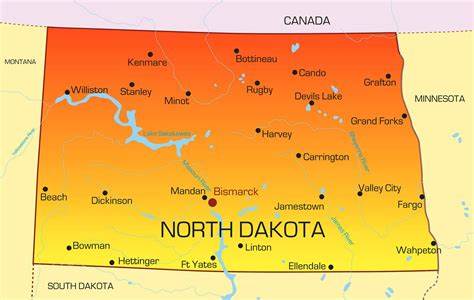
Peter Welte – Nominee for the U.S. District Court for the District of North Dakota

Peter Welte has worn many hats throughout his career: farmer, student, prosecutor, teacher, and, if his confirmation is secured, judge.

Background

Peter David Welte was born in New Britain, CT on December 21, 1965.  Welte graduated from the University of North Dakota in 1989 and then spent five years working for the U.S. Department of Agriculture and then the Cystic Fibrosis Foundation.[1]  He then attended the University of North Dakota Law School, graduating with distinction.[2]

After graduating, Welte worked as City Attorney in Larimore, North Dakota until he took a position as Assistant State’s Attorney for Grand Forks County.  In 2003, Welte was elected to become State’s Attorney for Grand Forks County, a position he held until 2015.

In 2015, Welte joined the Vogel law firm, a North Dakota institution whose alumni include two Eighth Circuit Judges, and former U.S. Attorney Timothy Purdon.[3]  He serves in that capacity today.

Welte has also been self-employed as a grain farmer at Ash Grove Farm since 1995.

History of the Seat

The seat Welte has been nominated for opened on October 12, 2017, with Judge Ralph Erickson’s elevation to the U.S. Court of Appeals for the Eighth Circuit.  In October 2017, Welte contacted North Dakota’s senators John Hoeven and Heidi Heitkamp to express his interest in the vacancy.[4]   Welte interviewed with the White House in December 2017, after which, his nomination sat in limbo for almost six months.  In May 2018, Welte was preliminary selected as a nominee for the seat.  However, Welte was not nominated until eight months after that, in which time, Heitkamp lost her re-election to Kevin Cramer, a Republican.  Cramer and Hoeven both support Welte’s nomination.

Legal Experience

Welte has spent the most significant portion of his legal career as a state prosecutor in Grand Forks.  As the elected State’s Attorney for Grand Forks County, Welte supervised the office and served as Chief Counsel for 19 county agencies and boards.  Notably, Welte brought the initial state prosecution against Alfonso Rodriguez for the murder of college student Dru Sjodin.[5]  Rodriguez was eventually prosecuted federally by Drew Wrigley (later the Lt. Governor of North Dakota) for the murder and sentenced to death.  Welte also oversaw the results of an investigation into the Grand Forks County Correctional Center after an inmate committed suicide at the institution, deciding not to bring any criminal charges as a result of the death.[6]  In contrast, Welte did bring charges against two Grand Forks Police officers who made an African American man stand outside in sub-zero temperatures without a coat.[7]

Welte’s tenure as Grand Forks prosecutor has not been without controversy, however.  In 2008, Naomi Lee made a complaint of prosecutorial misconduct against Welte and Assistant State’s Attorney Meredith Larson for choosing not to pursue charges against the man Lee claimed had sexually assaulted her.[8]  Larson had chosen not to continue with the prosecution after inculpatory statements made by the defendant were thrown out by a judge.[9]  Welte and Larson faced a hearing before an inquiry committee of the North Dakota State Bar but no disciplinary action appears to have been taken.

Political Activity

Welte is a Republican who was elected to be Grand Forks County State’s Attorney in 2002, 2006, 2010, and 2014.[10]  He has also volunteered on the campaigns of Hoeven, as well as Attorney General Wayne Stenehjem.[11]

Writings

Welte has frequently written both academically and as a blogger on legal issues.  In 2010, Welte wrote an article criticizing the North Dakota Supreme Court’s decision in Riemers v. Eslinger for expanding the right to a jury trial for violations of municipal offenses.[12]  In Riemers, the Court relied on the history of the jury trial right in North Dakota and held that the right extended beyond the protections of the federal constitution to petty offenses.[13]  Welte argued that the right to a jury trial for petty offenses was a waste of resources, noting that a jury empaneled for a $20 ticket cost the state $780.[14]  As such, he encouraged the narrowing of the right through reversal, legislative action, or constitutional amendments.

Overall Assessment

The District of North Dakota desperately needs new federal judges.  Since Erickson’s elevation to the Eighth Circuit, Judge Daniel Hovland has been the only active judge on the court, and he is set to vacate his seat this year.  As such, Welte will certainly be needed.

Looking at Welte’s record overall, it reads as that of a mainstream conservative with a few potential flashpoints but nothing that will draw excessive opposition.  As such, Welte looks likely to join the District of North Dakota this year, the first new judge since Erickson joined sixteen years ago.


[1] Sen. Comm. on the Judiciary, 115th Cong. Peter D. Welte: Questionnaire for Judicial Nominees 3.

[2] See id. at 1.

[3] Id. at 2.

[4] Id. at 51.

[5] Dave Kolpack, Man with Record as Sex Offender Arrested in Connection With Missing North Dakota Student, Associated Press, Dec. 2, 2003.

[6] Kevin Bonham, INVESTIGATION: Jailers Missed Suicide Attempt, Grand Forks Herald, Oct. 14, 2006.

[7] Susanne Nadeau, Officers Face Charges, Grand Forks Herald, Mar. 11, 2008.

[8] Stephen J. Lee, Prosecutors Face Inquiry Over Dismissal Of Rape Case, Grand Forks Herald, Mar. 14, 2008, https://www.grandforksherald.com/news/2070726-prosecutors-face-inquiry-over-dismissal-rape-case.  

[9] See id.

[10] See Welte, supra n. 1 at 35.

[11] See id.

[12] Peter D. Welte, The Law of Unintended Consequences: The North Dakota Supreme Court Recognizes the Right to a Jury Trial for Noncriminal Traffic Offenses in Riemers v. Eslinger, 86 N.D. L. Rev. 505 (2010).

[13] See id. at 514-15.

[14] Id. at 518-19.

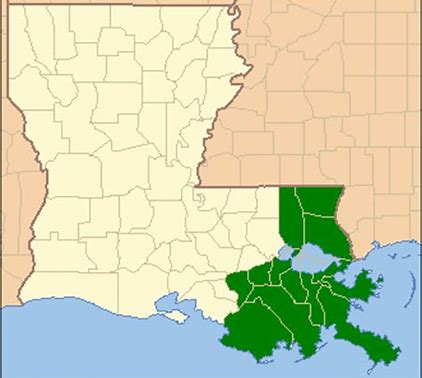
Justice Greg Guidry – Nominee to the U.S. District Court for the Eastern District of Louisiana

Greg Gerard Guidry (R) has been a Louisiana state court judge since 2000.[1] He has served on the state’s 24th Judicial District Court, Fifth Circuit Court of Appeal (state), and as an Associate Justice on the Louisiana Supreme Court, which position he has held since since 2009.[2] In January of 2019, the White House nominated Guidry to a seat on the United States District Court for the Eastern District of Louisiana.[3]

Background

Guidry, 58, is married with two children and currently lives near Covington, Louisiana.[4] He has been “riding and showing Western performance horses since [he] was nine years old,” and has “three horses, two dogs, three cats, four chickens and about 30 cows on a farm in St. Tammany Parish.”[5] He grew up in Marrero, Louisiana, where he attended public schools through high school.[6] According to a 2015 interview with Guidry, he knew he wanted to be a lawyer in high school and “really never strayed from that goal.” Although he “did not have a specific idea of exactly what [he] wanted to do as a lawyer,” he “could see that lawyers played an integral role in public life, and [he] wanted to be a part of that,” which made it “an easy decision.”[7]

Guidry received a bachelor’s degree from Louisiana State University (LSU) in political science and classical civilizations and a Juris Doctor from LSU’s law school (1985).[8] In law school, he was inducted into the Order of the Coif and “selected for the Louisiana Law Review on the basis of grades.”[9] Guidry was also awarded a “Rotary Foundation Scholarship for International Understanding,” during which he studied classical civilizations and Roman law at the University of the Witwatersrand in Johannesburg, Republic of South Africa.[10]

After his scholarship year, Guidry began working at the oil and energy firm Liskow & Lewis in New Orleans in its commercial litigation division.[11] He switched to the public sector in 1990, when he began a nearly ten-year stint as an Assistant United States Attorney for the Eastern District of Louisiana. As a federal prosecutor, Guidry’s work focused mainly on public corruption and commercial fraud,[12] and he also served as a supervisor, ethics officer and grand jury coordinator.[13] Guidry’s Louisiana Supreme Court bio (and other sources that have republished this bio) states that Guidry “received commendations for his work from the United States Attorney General and the Director of the Federal Bureau of Investigations.”[14]

Guidry was a district court judge on the Twenty-Fourth Judicial District Court for the Parish of Jefferson from 2000-06 and a circuit court judge (Louisiana Fifth Circuit Court of Appeal) from 2006-09. In 2009, he won an election for a position as an Associate Justice on the state’s highest court.[15] The New Orleans Advocate noted that “Guidry’s election…represented part of an ideological and partisan shift on the state Supreme Court. He replaced retiring Justice Pascal Calogero, a New Orleans Democrat who had served as the court’s chief justice.”[16] In 2010, Guidry received a master’s degree in judicial studies from the National Judicial College.[17] He has also served as a legal advisor and trial advocacy instructor to the Republic of South Africa and the United States Virgin Islands, and has “helped to train judges and prosecutors in the African nation of Malawi as they come to grips with complex financial fraud and corruption cases.”[18] He has been a member of the Federalist Society since 2000 and has stated publicly that he intends to remain a member if confirmed.[19]

History of the Seat

President Trump nominated Guidry for the seat in January of 2019. Both of Louisiana’s U.S. senators, Bill Cassidy (R) and John Kennedy (R) have praised the nomination.[20] The seat was left open by Judge Kurt Engelhardt, who has been promoted to a position on the U.S. Fifth Circuit Court of Appeals.[21] Guidry’s confirmation would fill the last open seat on the bench at the Eastern District of Louisiana.[22]

Legal Career

Guidry has spent most of his pre-bench career as a federal prosecutor.  In his testimony before the Senate Judiciary Committee, Guidry spoke about this position, noting, “It was the treat of a lifetime to walk into a courtroom and say on a regular basis, ‘I’m here today to represent the United States of America.’”[23] Searchable cases from Guidry’s legal practice are few and far between.[24] A LexisNexis search reveals one published case, a criminal defendant’s appeal from his conviction (U.S. v. Howard, 991 F. 2d 195 (5th Cir. 1993) (affirming conviction; appellant not entitled to a lesser included offense instruction because the indictment was narrowly drawn)), and one unpublished case. U.S. v. Cureaux, 1998 U.S. Dist. LEXIS 14210 (E.D.La. 1998) (denying defendant’s motion for release on bail pending appeal).

In Guidry’s legal career, he has occasionally faced allegations of legal and ethical improprieties. For example, in early 2000, while running for a judgeship, Guidry was accused by his opponent of violating the Hatch Act, which regulates federal employees’ political activities. Specifically, he was accused of accepting endorsements for his campaign for state district court judge before formally resigning as an Assistant United States Attorney. Guidry denies knowing about the complaint when it was made, being contacted by the DOJ in an investigation into the complaint, and engaging in any unauthorized political activity.[25]

In 2007, while Guidry was on the state appellate court, that court’s chief of central staff, Jerrold Peterson, committed suicide in his office, leaving notes revealing illegal practices by the court. For 13 years the court had been denying pro se prisoners’ writ applications without a three-judge panel reviewing them, as required by law.[26] The court had instead illegally allowed one judge to handle all pro se writ applications from 1994 to 2007.[27] Guidry’s opponent in the 2009 election for a position on the state Supreme Court criticized this practice, to which Guidry responded “I had no hand in it or knowledge of it.”[28]

During his 2008 campaign for the state Supreme Court, Guidry’s opponent in the race also accused him of using official court stationary to solicit campaign funds. Guidry has vehemently denied that this happened, contending that the stationary “was designed, created, printed, and distributed without public funds,” and that “the letter was not a solicitation, but an invitation for volunteers to serve on [his] campaign committee.”[29] The Louisiana Judicial Campaign Oversight Committee found Guidry’s opponent’s claims unsubstantiated.[30]

However, the same committee found that a mailer that Guidry had prepared for part of his 2008 campaign for the state Supreme Court violated the state’s code of judicial conduct, which prohibits judges and judicial candidates from “knowingly make or cause to be made a false statement concerning the identity, qualifications, present position or other fact concerning the candidate or an opponent.”). Guidry’s objectionable statements pertained to decisions by his opponent for the seat, Judge Jimmy Kuhn, and were “found not to be supported by the facts.”[31] The committee had investigated the statements in response to a complaint about same. In a public statement, Guidry explained the statements in detail, that “[a] media consultant retained by my campaign had created them, and I had relied upon the facts as presented to me,” and that he “specifically and unequivocally took full responsibility for the use of this campaign literature without any delay.”[32] No discipline was ever imposed as a result of the flyers. Guidry stated of this incident: “nothing similar has happened in my career either before or after these mailers. If confirmed, I will maintain the highest standards of ethical conduct and comply with the Code of Conduct for United States Judges.”[33]

Also in 2008, Guidry was the only judicial candidate nationwide that was endorsed by the Family Research Council (FRC), a group criticized as being antichoice and anti-LGBTQ, who has received the designation of hate group by the Southern Poverty Law Center.[34] The FRC’s executive director, David Nammo, has claimed to have had “several conversations with Guidry and that they considered Guidry’s election crucial to the future of the Louisiana court.”[35] Guidry has denied seeking the FRC’s endorsement.[36]

Jurisprudence

Describing his judicial philosophy, Guidry has said, “I believe that every person that comes to court deserves to be treated the same.”[37] Guidry has also noted that cases “involving the death penalty and the termination of parental rights” are “the two categories of cases that are most likely to cause me to lose sleep at night because of their extreme consequences.”[38] Reflecting on changes he has seen in his involvement in the judicial system, Guidry stated that “[t]he cost of accessing our court system has risen to a level which I believe is not acceptable.” Indeed, to the extent that a “first offense misdemeanor charge could lead to a massive financial obligation for someone of meager means[,] [s]ometimes, we are setting people up to fail.”[39]

Guidry has served on the Louisiana Supreme Court since 2009.  As such, Guidry was the sole dissenting judge in the Louisiana Supreme Court case Louisiana Federation of Teachers v. State, 118 So.3d 1033 (2013), which struck down Louisiana’s school voucher system as violating the state Constitution. The state Constitution establishes how monies are to be allocated to public schools based on a formula adopted by the state board of education. Then-Governor Bobby Jindal’s 2012 package of education reforms diverted money from each student’s per-pupil allocation to cover the cost of private or parochial school tuition.[40] In Guidry’s view, “the record showed that, once a student leaves a school district, the district is no longer entitled to the state’s share of the [per-pupil allocation] for that student, and thus the district’s state share…is removed from” the district’s overall allocation of funds, thus avoiding any constitutional problem.[41]

Additionally, in Costanza, et al. v. Caldwell, et al. (NO. 2014-CA-2090), which was the state of Louisiana’s appeal from a lower court’s ruling declaring Louisiana’s Defense of Marriage Act unconstitutional, the Louisiana Supreme Court considered the effect of the Supreme Court’s Obergefell decision, which came down while the appeal was pending.  The plaintiff-appellees were Louisiana women who got married in California, which had legalized gay marriage, and then sought to enforce their marriage when they returned to Louisiana, where same-sex marriage was still illegal. Additionally, one of the plaintiff-appellees had a biological son, who the other plaintiff-appellee sought to legally adopt after they were married. In light of SCOTUS’s then-recent opinion, the Louisiana Supreme Court issued a per curium opinion denying the appeal as moot, noting that SCOTUS’s “interpretation of the federal constitution is final and binding on this court.”[42] Guidry wrote separately in a concurrence to criticize a dissenting judge. The full text of Guidry’s concurrence:[43]

Judges are bound by oath to follow the law regardless of our personal opinions, and we insist that everyone appearing before us do the same. The dissenting opinion suggests we should not follow the holding of the Supreme Court of the United States. However, it cites no legal authority. It cannot, because there is none to support its position. I am bound by my oath as an elected justice of this state to abide by the rule of law.

I must also respond to the dissenting opinion’s assertion that the “most troubling prospect of same sex marriage is the adoption by same sex partners of a young child of the same sex.” The dissenting opinion appears to be unaware of the facts of the case before us, which involves the intra-family adoption of a boy by the female spouse of the boy’s biological mother. See In re Adoption of N.B., 14-314 (La. App. 3 Cir. 6/11/14), 140 So.3d 1263. In any event, the dissenting opinion cites no legal or scientific authority, nor does the record contain any evidence, that would support its insinuation.

Guidry echoed this sentiment in his answers to written questions from Senator Feinstein in February, 2019.[44] E.g., Answer 2(a) (“if I am confirmed as a district court judge, I will follow Roe v. Wade, which has been Supreme Court precedent for more than 40 years, as well as all other Supreme Court and Fifth Circuit precedent.”)

Speeches/Writings

In 1984, Guidry published a student note that criticized Louisiana’s physician-patient privilege statute and suggested that courts should be allowed to circumvent it in certain circumstances. Greg G. Guidry, Note, The Louisiana Supreme Court and the Physician Patient Privilege: Arsenaux v. Arsenaux, 44 La. L. Rev. 1813 (1984). He analyzed a state supreme court case, Arsenaux v. Arsenaux, in which a husband sought to access his wife’s medical records “in order to use evidence of an alleged abortion against her in divorce proceedings.”[45] The trial court held that the records were privileged, which Guidry criticized as an “inequitable” and “harsh” result. Senator Feinstein asked Guidry about this note earlier this year: “Do you still believe that the judiciary should be given the flexibility to undermine physician-patient privilege, even when it would interfere with a woman’s right to privacy in her reproductive choices?”[46] Guidry responded: “The issue presented in Arsenaux v. Arsenaux was whether the husband, who had undergone a vasectomy, was entitled to the medical records of the wife to prove adultery as a ground for divorce. In my case note for the Louisiana Law Review, I pointed out that the majority of the court felt constrained by the language of the health care provider statute and had correctly adopted a literal interpretation of the statute as enacted by the legislature, rather than judicially create any additional exceptions to the medical records’ privilege. 44 La. L. Rev. at 1819. It was properly within the legislature’s purview to provide any further guidance to the courts to resolve actions in which an essential issue is the existence of a mental or physical condition or ailment.”[47]

Guidry was published in the Louisiana Law Review again in 2010. Greg G. Guidry, The Louisiana Judiciary: In the Wake of Destruction, 70 La. L. Rev. 1145 (2010).[48] His aim was to “offer insight into the intimate details of the state courts’ response when faced with the near collapse of the legal system’s infrastructure,” in the wake of Hurricane Katrina. Id. at 1146. “These post-storm issues include the magnitude of catastrophic destruction, the longterm displacement of the entire New Orleans population, the paralysis of neighboring cities and states with the mandatory evacuation of coastal communities, and the scope of inadequate governmental response.”

Overall Assessment

Guidry is highly qualified for the federal judiciary and, as seen from his concurrence in the Costanza matter, appears to apply the law faithfully, regardless of political orientation. The ethical violations raised against him in the past are unlikely to pose difficulties for his confirmation, as they are either relatively minor or actively contested by Guidry himself.  As such, it is likely that most Republicans (who control the Senate) will give Guidry the benefit of the doubt on the matter.


[9]Id.

[10]http://www.lasc.org/justices/guidry.asp. A complete list of Guidry’s honors, recognitions, an employment can be found in his response to the Senate’s Questionnaire for Judicial Nominees, available at https://www.judiciary.senate.gov/imo/media/doc/Greg%20Guidry%20SJQ%20-%20PUBLIC.pdf.

[19] https://www.judiciary.senate.gov/imo/media/doc/Guidry%20Responses%20to%20QFRs.pdf (Sen. Feinstein Questions, at 7; Sen. Whitehouse Questions, at 3).

[24] The author found no cases from Guidry’s time in private practice.

[36] Id.