Where We Stand: Assessing Vacancies and Nominations in the Federal Judiciary – The Atlantic Coast

We are in the August recess, a little more than six months into the Biden Presidency. When President Biden came to office on January 20, 2021, there were 52 current and future vacancies in the federal judiciary. Since that time, an additional 73 vacancies have opened and nine nominees have been confirmed, leaving 116 vacancies pending (including future vacancies). There are currently 26 more judicial nominees pending, meaning that 22% of vacancies have nominees. In comparison, by the August recess of 2017, President Trump had nominees pending for around 20% of vacancies. Given the lull during the recess, now is a good time to look at the landscape of federal judicial nominations: vacancies open; nominations pending; prospective openings. Last week, we covered the states in the Northeast. We move on to the Atlantic Coast.

Third Circuit

Court of Appeals

The fourteen judgeship Third Circuit, covering the states of Delaware, New Jersey, and Pennsylvania, has ping-ponged between narrow majorities of Republican-appointed and Democrat-appointed judges over the last two decades. Nonetheless, it has maintained a reputation for collegiality and moderation. Currently, the court has four judges appointed each by Presidents Bush, Obama, and Trump and two judges appointed by President Clinton. The Court has one vacancy for President Biden to fill, to be vacated by Clinton-appointee Theodore McKee upon confirmation of his successor. With McKee’s announcement coming just a couple of weeks ago, a nomination will likely not be made until October or November at the earliest.

Other than McKee, two judges are currently eligible for senior status. Chief Judge D. Brooks Smith, a moderate appointed by President Bush, has been a federal judge since 1988, has been eligible for senior status since 2016, has announced his selection as Penn State Law’s jurist in residence, and will end his tenure as Chief on December 4, 2021 (his 70th birthday). All of these signs suggest that Smith will either take senior status or retire upon the conclusion of his term as Chief, but this is, by no means, guaranteed. The other eligible judge is Clinton-appointee Thomas Ambro, who has made no indications that he plans to vacate his Delaware-based seat.

Furthermore, two more judges become eligible for senior status next year. Bush appointee Kent Jordan, based in Delaware, becomes eligible for senior status on October 24, 2022, and may choose to vacate his seat at that time. Obama appointee Joseph Greenaway has been a federal judge since 1996 and may choose to vacate his New Jersey based seat upon eligibility on November 16, 2022. Either way, it would not be surprising if an additional vacancy opened on the Third Circuit before the end of the 117th Congress.

Delaware

In theory, the district court in the President’s home state is unlikely to see any vacancies this Congress. However, both Judges Leonard Stark and Maryellen Noreika have been proposed as nominees to the Federal Circuit, and both could also be considered for the Third Circuit if Ambro or Jordan moved to senior status. If either or both are nominated, the resulting vacancies could allow Biden to expand his impact on the local district court.

New Jersey

Due to a standoff between New Jersey Senators Robert Menendez and Cory Booker and the Trump Administration, no judges were appointed to the District of New Jersey in the last four years. As a result, when Biden came into office, six out of the seventeen judgeships on the court were vacant. Since then, Biden has filled two of the vacancies, with Judges Julien Neals and Zahid Quraishi. Two more nominees, Christine O’Hearn and Judge Karen Williams, are currently pending on the Senate floor, while two vacancies, both in Newark, remain without nominees.

Of the eleven active judges on the court, only one, Chief Judge Freda Wolfson, is eligible for senior status, although Judge Noel Hillman will hit eligibility on December 22 of this year. Wolfson, a Democrat appointed to the Court by President Bush, may choose to serve out her term as Chief (in 2024), while Hillman, another Bush appointee, has made no announcements about taking senior status.

Pennsylvania

Pennsylvania is divided into three district courts: the Eastern District, based in Philadelphia; the Western District, based in Pittsburgh; and the Middle District, based in Harrisburg. Traditionally, Pennsylvania senators divided judicial nominations on a 3-1 ratio, with the White House appointing one judge of the opposing party for three of their own party. Examples of cross-party appointments include Judges Yvette Kane and R. Barclay Surrick under President Clinton; Judges Legrome Davis, Timothy Savage, David Cercone, and C. Darnell Jones under Bush; Judges Matthew Brann, Jeffrey Schmehl, Edward Smith, and Jerry Pappert under Obama; and Judges Susan Baxter, Robert Colville, and John Milton Younge under Trump. This tradition is expected to continue under Biden.

Currently, there are four vacancies on the Eastern District, and one vacancy on the Middle District. Pennsylvania Senators Bob Casey, a Democrat, and Pat Toomey, a Republican, opened applications for the Eastern District in January 2021 with a February 8 application deadline. They similarly opened applications for the Middle District vacancy in June 2021 with an application deadline of July 8, 2021. In the past, Casey and Toomey refrained from making their recommendations public, and, as such, no names are expected to come to light until announced by the White House.

In addition to the current vacancies, a number of judges are eligible for senior status. Specifically, Chief Judge Juan Sanchez, and Judges Cynthia Rufe, Gene Pratter, and Paul Diamond on the Eastern District are currently eligible to take senior status. Additionally, in October, Judge Robert Mariani on the Middle District becomes eligible for senior status. Judge Christopher Conner of the Middle District also reaches eligibility on October 25, 2022. In contrast, the Western District is unlikely to see any vacancies open this Congress, as the earliest any judge reaches eligibility is in 2024.

Fourth Circuit

Court of Appeals

The Fourth Circuit Court of Appeals used to have a reputation as one of the most conservative courts in the country. However, after President Obama named seven judges to the court in his two terms, the Court underwent an ideological transformation. Today, the Court frequently divides into a 9-6 liberal-conservative divide in en banc votes. The Fourth Circuit currently is composed of Judge J. Harvie Wilkinson, a Reagan appointee; Judge Paul Niemeyer, a George H.W. Bush appointee; Judges Diana Motz, Robert King, and Roger Gregory, Clinton appointees (although Gregory was confirmed as a George W. Bush appointee, he was recess appointed to the Court by President Clinton); Judge Steven Agee, a George W. Bush appointee; Judges Barbara Keenan, James Wynn, Albert Diaz, Henry Floyd, Stephanie Thacker, and Pamela Harris, Obama appointees; and Judges Julius Richardson, Marvin Quattlebaum, and Allison Rushing, Trump appointees.

Of the 15 judges on the court, eight are currently eligible for senior status, and a ninth becomes eligible next year. However, despite this, only one vacancy has been announced so far on the court, with Keenan taking senior status on August 31, 2021. Biden has already nominated Virginia Solicitor General Toby Heytens to replace Keenan. After a smooth confirmation hearing, Heytens is expected to reach the Senate floor in September, with a final confirmation vote by the end of October. Given the sheer number of Fourth Circuit judges who are eligible for senior status, it would not be surprising to see an additional vacancy or two open up before the end of the 117th Congress.

Maryland

The U.S. District Court for the District of Maryland has already undergone a change in the current Administration, as Biden has named two judges to the court: Lydia Griggsby and Deborah Boardman. In addition, the ten judgeship court has a third vacancy that awaits a nomination: with Judge Ellen Lipton Hollander taking senior status upon confirmation of a successor. A fourth vacancy could potentially open next year as Judge Paul Grimm becomes eligible for senior status on December 6, 2022.

North Carolina

While the three judicial districts that cover North Carolina (the Eastern, Middle, and Western) do not currently have any vacancies, two judges are eligible for senior status, Judge Terrence Boyle on the Eastern District, an appointee of President Reagan, and Judge Max Cogburn, an appointee of President Obama. As such, there remains the possibility that additional vacancies may open in North Carolina this Congress.

South Carolina

The U.S. District Court for the District of South Carolina currently lacks judicial vacancies and only has one judge eligible for senior status, George H.W. Bush appointee David Norton. However, a vacancy may also open next year if Judge Juliana Michele Childs is elevated to the Fourth Circuit or if Judge Richard Gergel takes senior status upon reaching eligibility.

Virginia

Divided between the Eastern and Western Districts, Virginia is served by 15 active judgeships. Currently, Virginia has three Clinton appointees, one Bush appointee, five Obama appointees, and four Trump appointees, with the remaining two judgeships vacant. Thanks to swift recommendations made by Virginia Senators, both vacancies have nominees: federal prosecutor Patricia Giles; and Magistrate Judge Michael Nachmanoff. However, an additional two vacancies are scheduled to open later year, when Judges James Jones and John Gibney move to senior status. Earlier this month, Senators Mark Warner and Tim Kaine recommended U.S. Magistrate Judge Robert Ballou and Chief Federal Defender Juval Scott as prospective nominees to replace Jones on the Western District. Warner and Kaine also accepted applications to fill Gibney’s seat with a deadline of July 19, but no recommendations have been made yet.

Additional vacancies are also possible, as Judges Leonie Brinkema and Raymond Jackson on the Eastern District are eligible for senior status.

West Virginia

Despite being a small state, West Virginia is covered by two judicial districts, the Northern and Southern. Between them, the two districts have two judges appointed each by Presidents Clinton, Bush, Obama, and Trump. Of those judges, Judges Joseph Goodwin and Robert Chambers, the two Clinton appointees, and Judge John Bailey, a Bush appointee, are currently eligible for senior status. Additionally, Judge Irene Berger, an Obama appointee, joins them in eligibility next year. Given that fact, it would not be surprising if one or more vacancies opened in West Virginia before the end of the 117th Congress.

D.C. Circuit

Court of Appeals

The oft-described “second highest court in the country”, the D.C. Circuit is considered by many to be the first among equals in the federal Courts of Appeal. As currently composed, the Court has eleven active judges, four appointed by President Obama, three by President Trump, two by President Clinton, and one each by Presidents George H.W. Bush and Biden. While Biden has already named Judge Ketanji Brown Jackson to replace now-Attorney General Merrick Garland, he has a second vacancy to fill. Judge David Tatel, who has served on the court since 1994, announced in February his intent to take senior status upon the confirmation of a successor. So far, no nominee has been put forward to replace Tatel, unusual given that the D.C. Circuit does not require negotiating with home state senators before making a nomination.

Other than Tatel, two judges on the D.C. Circuit are currently eligible for senior status: Bush appointee Karen Henderson; and Clinton appointee Judith Ann Wilson Rogers. Both have been eligible for years and have declined to make the move under Presidents of both parties. While either could take senior status this Congress, it would not be surprising to see both continue to be active for a few more years.

Additionally, there is always the possibility that, if a vacancy opens on the U.S. Supreme Court, Jackson is elevated and Biden gains the opportunity to fill her seat and maintain the court’s narrow liberal majority.

District of Columbia

The U.S. District Court for the District of Columbia is the sole trial court that feeds into the D.C. Circuit. It is also a court of many firsts: the first Article III trial court to have a female judge, and the first Article III trial court to have an African American judge. Today, the 15-member court has two vacancies, both with pending nominees on the Senate floor: D.C. Superior Court Judge Florence Pan; and civil rights attorney Jia Cobb. Of the remaining judges on the court, only one, Judge Colleen Kollar-Kotelly, is eligible for senior status. Barring any moves on her part, additional vacancies are unlikely.

Federal Circuit

Court of Appeals

The Federal Circuit is the newest kid of the block in terms of federal courts, having only been created in 1982. Unlike other federal courts of appeal, which hear appeals from geographic areas, the Federal Circuit is specialized by subject matter, hearing patent cases, as well as appeals from a variety of Article I and Article III tribunals. It is also the only circuit not to see a vacancy during the Trump Administration. However, so far, only eight months into the Biden Administration, it has already seen two. The first, opened by Judge Evan Wallach’s move to senior status in May, has already been filled by Judge Tiffany Cunningham. The second will open next March when Judge Kate O’Malley, an Obama appointee like Wallach, will retire. No nominee has been named for the second vacancy so far.

There is significant potential for additional turnover on the Federal Circuit. Setting aside O’Malley, another four judges on the Circuit are eligible for senior status: Judges Pauline Newman, Alan Lourie, Timothy Dyk, and Sharon Prost. Three of the four are over eighty years old, with one, Judge Newman, being 94 (and the oldest active judge on the Federal Courts of Appeal). Furthermore, Judge Jimmie Reyna, an Obama appointee, becomes eligible for senior status next year, creating another potential vacancy. To be fair, it is unlikely that all of these seats will open. However, the last time that the Federal Circuit had so many judges poised for senior status eligibility, in the late 2000s, then President Obama named seven judges to the Court. For his part, Biden already has the opportunity to name two and will likely get at least one more vacancy before the end of the 117th Congress.

Court of International Trade

The United States Court of International Trade adjudicates civil actions arising from customs and trade laws, and its cases feed into the Federal Circuit on appeal. The Court is composed of nine judges, and, by statute, no more than five of those can be of the same political party. As a result, Presidents frequently make cross-party appointments to avoid violating this threshold. Currently, the court has four Obama appointees, three Trump appointees, and two vacancies. There are currently two-cross party judges on the court: Obama appointee Jennifer Choe-Groves; and Trump appointee Timothy Reif. Thus, Biden cannot fill both vacancies on the court with Democrats. Of the judges serving on the bench, none is close to eligibility for senior status, which makes it unlikely that additional vacancies will open on the Court in the next year.

Court of Federal Claims

After years of chronic shortages, a surge of confirmations late in the Trump Presidency brought the Court of Federal Claims down to just three vacancies by the time Biden was sworn in. Since then, a fourth vacancy has opened with Judge Lydia Griggsby’s confirmation to the District of Maryland. Of the four vacancies, two have nominees: Armando Bonilla and Carolyn Lerner. With an overwhelming majority of the court having been appointed over the last two years, no new vacancies are expected on the court after the current ons are filled.
Where We Stand: Assessing Vacancies and Nominations in the Federal Judiciary – The Northeast

We are in the August recess, a little more than six months into the Biden Presidency. When President Biden came to office on January 20, 2021, there were 52 current and future vacancies in the federal judiciary. Since that time, an additional 73 vacancies have opened and nine nominees have been confirmed, leaving 116 vacancies pending (including future vacancies). There are currently 26 more judicial nominees pending, meaning that 22% of vacancies have nominees. In comparison, by the August recess of 2017, President Trump had nominees pending for around 20% of vacancies. Given the lull during the recess, now is a good time to look at the landscape of federal judicial nominations: vacancies open; nominations pending; prospective openings. We start with the states in the Northeast.

First Circuit

Court of Appeals

With just six active judgeships, the First Circuit is the smallest court of appeals in the nation, and the only geographically based appellate court that President Trump did not name a single judge to. The First Circuit tends to cycle between periods of significant turnover and periods of relative stability. For example, President George H.W. Bush named four judges to the court in four years in office. President Clinton then named two over eight years and President George W. Bush named just one in his eight. President Obama then replaced half the court in his two terms, followed by President Trump who named none.

Today, the court has five active judges: one appointed by Clinton; one by Bush; and three by Obama. A sixth judgeship, vacated by the death of Judge Juan Torruella last year is currently vacant, with a nominee, U.S. District Judge Gustavo Gelpi, waiting for a final confirmation vote on the Senate floor. However, a second vacancy is already teed up as the Rhode Island based Judge Ojetta Rogeriee Thompson is taking senior status on December 31, 2021. Rhode Island senators have already set up a selection process with the deadline set on August 4. This timeline could yield a new nominee by October 2021 and potentially even a confirmation by the end of the year.

More vacancies are possible this Congress. Judge Sandra Lea Lynch, appointed by President Clinton, has been eligible for senior status since 2011. Chief Judge Jeffrey Howard, the sole Republican appointee on the court, is also eligible for senior status but will likely stay active until his term as Chief concludes next year. However, even if neither moves to senior status, Biden will still have a chance to replace a third of the court.

Maine

The three judgeship District of Maine is unlikely to see much turnover this Congress, as the first judge to hit eligibility for senior status, Chief Judge Jon Levy, won’t hit it until 2024. His colleagues Nancy Torresen and Lance Walker have much longer to wait: until 2025 and 2037 respectively.

Massachusetts

The 13-judgeship District of Massachusetts is currently three judges short, with a nominee, Judge Angel Kelley, pending to the oldest vacancy. Kelley’s nomination was the product of a January 2021 convening of a Bipartisan Advisory Committee by Massachusetts Senators Elizabeth Warren and Ed Markey. The Committee was reconvened in March to produce nominees to replace Judge William Young, who was leaving active status. Presumably, the Committee has recommended candidates to fill the remaining vacancies on the court, which means that nominees may be forthcoming in the Fall.

Of the remaining ten active judges on the court, four are already eligible for senior status and a fifth, Judge Timothy Hillman, becomes eligible next year. As such, it is possible that more vacancies could open before the end of this Congress.

New Hampshire

The District of New Hampshire currently has one vacancy, opened by Judge Paul Barbadoro’s move to senior status on March 1. So far, there has not been a public announcement from New Hampshire’s senators on the selection process, and no nomination has been made.

Puerto Rico (not technically in the Northeast but covered under the First Circuit)

The District of Puerto Rico currently has one vacancy out of seven judgeships, but two others are poised to come open. Judge Gustavo Gelpi has been named to the First Circuit and is pending confirmation, and Judge Francisco Besosa has announced his intent to take senior status on January 1, 2022. The resulting three nominations, when they come, will encompass the largest turnover on the court since 2006 when Gelpi and Besosa were appointed. The third appointee from 2006, Judge Aida Delgado-Colon, is also eligible from senior status. If she so moved, Biden would have an opportunity to name a majority of judges on the court.

Rhode Island

Like it’s counterpart in Maine, the District Court for the District of Rhode Island has three judgeships, all of whom are not eligible for senior status this Congress. As such, no vacancies are expected this Congress unless Judge Mary McElroy, a longtime public defender and Democrat named to the court by Trump, is picked to replace Thompson on the First Circuit.

Second Circuit

Court of Appeals

The Second Circuit, based in New York, is one of the most prestigious court of appeals in the federal system. The Court, which has two vacancies, is closely divided ideologically. The active judges on the court are split 7-4 in favor of the court’s conservative wing, but this is mitigated by the senior judges, who sit frequently and include many prominent liberals. Biden has already named Judge Eunice Lee to the court and both the pending vacancies have nominees: voting rights attorney Myrna Perez and Vermont Supreme Court Justice Beth Robinson.

Setting aside Lee, the active judges on the Second Circuit include five appointees of President Trump (who are all years away from senior status), Chief Judge Debra Livingston (who is expected to serve out her term as Chief until 2027); and Obama appointee Raymond Lohier (who doesn’t hit eligibility until 2030). While it would be tempting to consider Judges Jose Cabranes and Rosemary Pooler, the last remaining of nine judges appointed to the Court by Bill Clinton, as likely moves to senior status, the judges (both octagenarians) have resisted senior status for years despite being eligible to do so. A more likely candidate to move to senior status is Obama-appointee Judge Susan Carney, who hits eligibility in September 2021.

Connecticut

The District of Connecticut currently has three vacancies out of eight judgeships. However, unlike most other states, all of Connecticut’s vacancies have nominees: U.S. Magistrate Judge Sarah Merriam; state judge Omar Williams; and federal prosecutor Sarala Nagala. The expected confirmation of the three this Fall would restore the court to a full complement of eight. However, Chief Judge Stefan Underhill is also eligible for senior status and may take it, creating an opportunity for a fourth appointment (It’s just as likely that Underhill serves out his term as Chief, which ends in 2025).

New York

One of only three states to be divided into four federal judicial districts, New York is currently bogged with a number of judicial vacancies. During the Obama Administration, Senators Chuck Schumer and Kirsten Gillibrand split up making recommendations to fill vacancies and each publicized names as they were sent to the White House. So far, Schumer has only made one district court recommendation public: voting rights attorney Dale Ho for the Southern District of New York (Ho has yet to be nominated).

Meanwhile, vacancies remain, with only the Western District of New York having a full complement of active judges. The Southern District of New York, one of the busiest courts in the country, is short four judges, with two of the vacancies dating back to 2018. The Eastern District of New York, despite having around half as many judgeships as its neighbor, also has four vacancies. The Northern District has only one vacancy, but, dating back to 2016, it’s one of the oldest vacancies in the nation.

Additionally, more vacancies may open in the coming year. Currently, three judges are eligible for senior status but have held off: Judge John Koeltl; Judge David Hurd; and Judge William Kuntz. Next year, three more become eligible: Judges Kiyo Matsumoto; Roslyn Mauskopf; and Glenn Suddaby.

Vermont

Vermont is one of only three states in the country to be served by only two district court judges (Idaho and North Dakota being the others). With both of Vermont’s judges a few years from eligibility for retirement, it is unlikely that any vacancies will open on the district court this Congress.

Justice Beth Robinson – Nominee to the U.S. Court of Appeals for the Second Circuit

A pioneer in shaping the litigation and legislative strategy behind same-sex marriage, Beth Robinson made history in 2011 as the first openly LGBT Justice on the Vermont Supreme Court. She is now poised to make history again as the first openly LGBT judge on the Second Circuit.

Background

Born March 6, 1965, Beth Robinson graduated from Dartmouth College in 1986 and the University of Chicago Law School in 1989. After graduating, Robinson clerked for Judge David Sentelle on the U.S. Court of Appeals for the D.C. Circuit and then joined the D.C. Office of Skadden, Arps, Slate, Meagher & Flom as an associate.

In 1993, Robinson joined Langrock Sperry & Wool in Vermont. In 2010, newly elected Democratic Governor Peter Shumlin chose Robinson to be his counsel. A year later, Shumlin named Robinson to the Vermont Supreme Court, where she currently serves.

History of the Seat

Robinson has been nominated for a Vermont seat on the U.S. Court of Appeals for the Second Circuit. This seat was vacated by Judge Peter Hall, who moved to senior status on March 4, 2021 (Hall tragically passed away shortly after).

Legal Career

Robinson spent most of her career in private practice, although she did spend a few months as Counsel for Gov. Peter Shumlin before he appointed her to the Supreme Court.

Notably, while in private practice, Robinson was instrumental in shaping the legislative and litigation strategy to bring marriage equality to Vermont. In 1999, Robinson successfully argued before the Vermont Supreme Court that the Vermont Constitution prohibited restricting same-sex couples from the benefits of marriage. Baker v. State, 744 A.2d 864 (Vt. 1999). Robinson continued her work as an advocate for same-sex marriage on the legislative front throughout the 2000s until she was tapped by Shumlin. See, e.g., John Curran, In Vermont, Gay Marriage Debate Keeping It Civil, A.P. State * Local Wire, Jan. 13, 2008.

Jurisprudence

Robinson has served on the Vermont Supreme Court for the past decade. Her record on the bench is generally liberal but within the Court’s mainstream. Below, we have summarized some of the key features of her jurisprudence:

Negligence and Civil Liability

On the bench, Robinson has generally read civil liability broadly to allow matters to reach a jury. For example, in 2013, Robinson wrote for a unanimous court in finding that summary judgment should not have been granted to an insurer over an accident caused by a permittee to whom the insured owner loaned the car. See State Farm Mutual Automobile Co. v. Colby, 2013 VT 80.

Criminal Procedure

Robinson has also read criminal procedural protections broadly, cabining prosecutions. For example, she wrote for the court in holding that the mere fact of a motorist stopping his car in a remote location did not create grounds for a trooper to make a traffic stop. State v. Button, 2013 VT 92. Robinson also overturned Shamel Alexander’s conviction for heroin trafficking, finding that law enforcement violated Alexander’s Fourth Amendment rights in stopping and searching him. Vermont v. Alexander, 2016 VT 19.

Criminal Law

Robinson has generally read criminal statutes narrowly. For example, Robinson wrote for a divided 3-2 court in overturning a man’s conviction of harassment, holding that Vermont law required threats of violence in order for conduct to qualify under the statute. State v. Waters, 2013 VT 109. Robinson also wrote for the court in throwing out a state prisoner’s conviction for illegally practicing law after she assisted other inmates with filing legal claims. In re Serendipity Morales, 2016 VT 85.

Furthermore, Robinson dissented from the Supreme Court’s 3-2 decision upholding Justin Kuzawski’s conviction for assault with a deadly weapon, writing that, in her view, the safety boxcutter that Kuzawski brandished did not qualify under the statute. See State v. Kuzawski, 2017 VT 118. She was also part of a panel that held that Jack Sawyer, accused of planning a school shooting, could not be held without bail. See Sadie Housberg, VT Supreme Court: Sawyer Cannot Be Held Without Bail, Middlebury Campus, Apr. 18, 2018.

In contrast, Robinson upheld Latonia Congress’ conviction for murder, finding that the trial judge was correct in declining to instruct the jury that they could reduce the charge to voluntary manslaughter. State v. Congress, 2014 VT 129. Chief Justice Paul Reiber dissented, arguing that common law retained the discretion to reduce such charges in the jury. See id. Robinson also dissented from a decision tossing a conviction for posting KKK recruitment posters on the apartment doors of black women. See State v. Schenk, 2018 VT 45. Notably, Robinson wrote for a 4-1 court (with Chief Justice Marilyn Skoglund in dissent) upholding Vermont’s revenge porn law against a constitutional challenge. State v. Van Buren, 2018 VT 95.

Writings and Statements

Given her prominence in the marriage equality fight in Vermont, Robinson has spoken and written a number of times regarding the issue. For example, in 2009, Robinson moderated a panel at Dartmouth College on the subject, where she noted that she was working on the issue’s legal strategy as early as 1994. See Same-Sex Marriage in Law and Society: Dartmouth College’s Law Day Program 2009: Transcript of Law Day Panel, 34 Vt. L. Rev. 243 (Winter 2009). She also participated in a symposium on marriage law for the Michigan Journal of Gender & Law. See 10 Mich. J. Gender & L 21, 27 (2003). Her remarks have (understandably) been strongly supportive of marriage equality. For example, in a speech at Seton Hall Law School, Robinson noted the impact of laws that discriminate based on sexual orientation:

“The law also tells a story…Before July 1, 2000, the story told by the laws of every state in this country was that committed, loving same-sex couples don’t exist, or if we do, our relationships have no value, and aren’t worthy of equal treatment under the law.” Beth Robinson, The Road to Inclusion for Same-Sex Couples: Lessons From Vermont, 11 Seton Hall Const. L. J. 237 (Spring 2001).

Robinson has also worked on the legislative battle for same-sex marriage, speaking out against bills to define marriage as only between a man and a woman. See Bill Would Define Marriage as Union of Man and Woman, A.P. State & Local Wire, Mar. 10, 1999. Robinson also advocated in favor of Vermont’s civil union bill, see Ross Sneyd, Sweeping Civil Union Bill Passes; Governor Will Sign It Into Law, A.P. State & Local Wire, Apr. 25, 2000, and later, Vermont’s gay marriage law. See John Curran, In Vermont, Gay Marriage Debate Keeping It Civil, A.P. State * Local Wire, Jan. 13, 2008.

Not all of Robinson’s writings have focused on the issue of same-sex marriage. In 1999, Robinson authored an article discussing negligence law affecting skiers injured on the slopes, and noting that Vermont caselaw generally leaves releases of liability unenforceable as a matter of public policy. See Beth Robinson, Playing it Safe: Allocating the Risk of Harm on the Slopes, 25 Ver. B. J. 15 (Mar. 1999).

Overall Assessment

With a decade of experience on Vermont’s highest court and more than two decades in litigation, Robinson will likely be deemed to be qualified for a seat on the Second Circuit. However, her advocacy on the same-sex marriage front, as well as her left-leaning record on the Supreme Court, may make her a controversial nominee to some senators. Nonetheless, there is little in Robinson’s record that would cause Democratic support to vanish, and, as such, her nomination will likely be confirmed by the end of the year.

Judge Mary Katherine Dimke – Nominee to the U.S. District Court for the Eastern District of Washington

The U.S. District Court for the Eastern District of Washington is poised to get a new judge, with the Biden Administration putting forward the nomination of Judge Mary Katherine Dimke to fill a vacancy that’ll open on the court in October.

Background

Mary Katherine Dimke received her B.A. magna cum laude from Pepperdine University in 1999 and a J.D. from Vanderbily University Law School in 2000. Dimke then clerked for Judge Alan Johnson on the U.S. District Court for the District of Wyoming and then clerked for Judge Richard Tallman on the U.S. Court of Appeals for the Ninth Circuit.

After her clerkships, Dimke joined the Department of Justice Honors Program and worked in the Criminal Division. In 2008, Dimke became a federal prosecutor in Washington.

In 2016, Dimke was appointed to be a federal magistrate judge in the U.S. District Court for the Eastern District of Washington, where she currently serves.

History of the Seat

Dimke has been nominated for the U.S. District Court for the Eastern District of Washington. This seat will open on October 1, 2021, when Judge Rosanna Peterson moves to senior status.

Legal Experience

Before becoming a judge, Dimke worked for the federal government for twelve years, moving from the Criminal Division of the Department of Justice to the U.S. Attorney’s Offices in the Western and Eastern Districts of Washington. During her time at the offices, Dimke worked primarily on fraud and corruption prosecutions.

Among her most significant cases, Dimke prosecuted Christian Sapsizian, an Alcatel executive, for paying $2.5 million in bribes to Costa Rican officials in order to obtain a government contract. Sapsizian ended up pleading guilty to two counts of violating the Foreign Corrupt Practices Act. Similarly, while with the Western District of Washington, Dimke prosecuted Eddie Goodridge, the executive director of the Stillaguamish Indian tribe, for conspiring to sell contraband cigarettes. See Lynn Thompson, Tribal Head Pleads Guilty to Cigarette Trafficking, Seattle Times, Nov. 21, 2008. Dimke also prosecuted co-conspirators Carol Silverman and Rick Conn, among others, for the same scheme. Additionally, Dimke prosecuted conspirators who faked the origin of imported Chinese honey to avoid tariffs. See Tim Klass, Prosecutors Say Men Lied About Source of Honey, A.P. State & Local Wire, May 7, 2009.

Jurisprudence

Since 2016, Dimke has served as a U.S. Magistrate Judge in the Eastern District of Washington. In this role, Dimke presides over settlement, preliminary hearings, bail, and any cases where the parties consent to his jurisdiction.

Among the notable matters she has handled, Dimke affirmed the denial of social security benefits for Clarinda Gopher, finding that the ALJ did not err in holding that Ms. Gopher did not suffer from disabling symptoms. See Gopher v. Comm’r of Soc. Sec., 281 F. Supp. 3d 1102 (E.D. Wash. 2017).

Overall Assessment

So far, the Biden nominees who have attracted the most controversy have generally come from criminal defense or civil rights backgrounds. As a former government attorney with five years as a judge under her belt, Dimke should be deemed a relatively uncontroversial choice for the federal bench.

Charlotte Sweeney – Nominee to the U.S. District Court for the District of Colorado

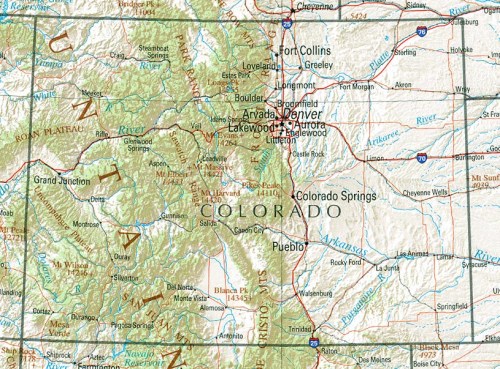
Colorado Senators have, compared to other states, moved swiftly to recommend candidates for judicial vacancies. With the announcement that Judge Richard Brooke Jackson was moving to senior status in September 2021, recommendations reached the White House swiftly and the White House chose employment attorney Charlotte Sweeney, who has a decent chance of being confirmed in time to replace Jackson as he comes off the bench.

Background

Sweeney received a B.S. from California Lutheran University in 1991 and a J.D. from the Sturm College of Law in 1995. She then joined LaFond & Clausen P.C. as an attorney, with the firm being renamed LaFond & Sweeney in 1998 when she became a partner.

In 2008, the partnership dissolved and Sweeney has been practicing at Sweeney & Bechtold LLC.

History of the Seat

Sweeney has been nominated for a vacancy on the U.S. District Court for the District of Colorado. This seat will open when Judge R. Brooke Jackson moves to senior status on September 30, 2021. Colorado Senators Michael Bennet and John Hickenlooper recommended Sweeney alongside U.S. Magistrate Judge Nina Wang and commercial attorney Kenzo Kawanabe on May 30, 2021. Sweeney was nominated for the vacancy on August 5, 2021.

Legal Experience

Sweeney has spent virtually her entire career as an employment attorney, primarily representing plaintiffs alleging violations of Title VII, the ADA, the ADEA, and other discrimination statutes.

Among the more notable cases she has handled, Sweeney represented Edward Garcia, a funeral home employee, who alleged that the home discriminated against him based on gender and national origin by promoting a “less-qualified” woman to a manager role that he wanted. See Pueblo, Colo. Funeral Home Worker Settles Reverse-Discrimination Suit, The Pueblo Chieftain, Dec. 31, 1999. She also represented United employee Glenn Cox who claimed that he was fired for being a whistleblower regarding the company’s failure to enforce size restrictions on baggage. See Former United Employee Sues Over Firing, A.P. State & Local Wire, Sept. 15, 2000.

In other matters, Sweeney secured a $64,000 settlement for Boulder Parks & Recreation worker Sally Deitrich, who alleged that she was discriminated against after revealing that she recently married her wife. See Alex Burness, Boulder to Pay $64K Settlement to Lesbian Ex-Employee Who Alleged Discrimination, Colorado Daily, June 24, 2016.

Sweeney, notably, was also a litigant in a suit against former law partner Richard LaFond seeking a portion of a contingent fee arrangement upon dissolution of the partnership. See LaFond v. Sweeney, 343 P.3d 939 (Colo. 2015). The suit made its way to the Colorado Supreme Court, which held that Sweeney was entitled to a portion of the fee recovered. See id. at 941.

Overall Assessment

Biden’s first nominee to a Colorado vacancy, Regina Rodriguez was confirmed with bipartisan support. While Sweeney may draw more opposition than Rodriguez did, she is still unlikely to draw enough rancor to threaten her nomination and should be confirmed in the fall. Her confirmation would make Sweeney the first openly LGBT federal judge in Colorado.

Armando Bonilla – Nominee to the U.S. Court of Federal Claims

Despite having six appointees confirmed to the court in 2020 alone, the U.S. Court of Federal Claims (CFC) has been battling a long-term vacancy crisis, with four seats on the court vacant. In an effort to fill them, President Biden has renominated a stalled nominee from the Obama Administration: Armando Bonilla.

Background

Born in 1967 in New York City, Armando Omar Bonilla received his B.A. from West Virginia University in 1989 and his J.D. from Seton Hall University School of Law in 1992. After graduation, Bonilla clerked for Judge Garrett Brown for the U.S. District Court for the District of New Jersey.

After his clerkship, Bonilla joined the Civil Division of the U.S. Department of Justice as a trial attorney. In 2001, he moved to the Criminal Division, starting in the Asset Forfeiture and Money Laundering Section and moving to the Public Integrity Section. In 2010, Bonilla joined the Deputy Attorney General’s Office.

Since 2018, Bonilla has served as Vice President of Ethics and Investigations at Capital One.

History of the Seat

Bonilla has been nominated for a seat on the U.S. Court of Federal Claims (CFC), an Article I court that hears monetary claims against the federal government. Judges to the CFC are appointed for 15-year terms, and can be reappointed. The seat Bonilla is nominated for opened up on October 22, 2013, with the retirement of Judge Edward Damich. On May 21, 2014, Bonilla was nominated for this seat by President Obama. Bonilla and four other nominees to the Court were approved by the Senate Judiciary Committee unanimously. However, the nominations were blocked by Sen. Tom Cotton (R-AR), who argued that the CFC did not need any more judges. Despite rebuttals from federal claims attorneys and Chief Judge Patricia Campbell-Smith, Cotton maintained his blockade, and the Obama Administration was unable to fill any vacancies on the Court, leaving six of the sixteen judgeships vacant.

On June 24, 2019, the Trump Administration nominated Daniel Zachary Epstein, a Special Assistant to the President, to fill this seat. However, Epstein’s nomination stalled in the Senate and he was never confirmed.

Bonilla was subsequently renominated to fill this vacancy on July 13, 2021.

Legal Experience

Bonilla has spent virtually his entire legal career working in the Department of Justice, where he worked on civil, criminal, and appellate litigation.

Notably, on the civil side, Bonilla represented the United States in defending against a lawsuit by the architects hired to design the Museum of the American Indian, alleging that the contract was wrongfully terminated. See GBQC Architects v. United States, No. 98-399C (Fed. Cl.) (Judge Miller). Bonilla also defended the Department of Veterans Affairs decision not to permit the display of a large Confederate flag at a national cemetery against a First Amendment challenge. See Griffin v. Secretary of Veterans’ Affairs, 288 F.3d 1309 (Fed. Cir.).

Among the criminal cases he handled, Bonilla prosecuted Katherine Stump, a New Orleans Sewarage and Water board member for conspiracy and wire fraud for accepting cash and gifts in exchange for promoting the interests of a Houston sewage company. See Pam Easton, New Orleans Water Board Chair, Contractor Sentenced to Prison for Wire Fraud, Conspiracy, A.P. State & Local Wire, Sept. 29, 2003.

Overall Assessment

The fact that Bonilla’s last appointment to the Court of Federal Claims stalled speaks more to the Senate’s intransigence on judicial nominees late in the Obama Administration than it does to Bonilla. With a Senate majority more willing to consider CFC nominees, Bonilla should be confirmed before the end of the year.

Carolyn Lerner – Nominee to the U.S. Court of Federal Claims

Carolyn Lerner, who currently serves as Chief Mediator for the Washington D.C. federal court system, has built up a significant portfolio of government service and litigation experience, including six years as the top whistleblower advocate in the nation. She has now been nominated for a seat on the U.S. Court of Federal Claims.

Background

Born on January 13, 1965 in Detroit, Carolyn N. Lerner graduated from the University of Michigan in 1986 with a Bachelor of General Studies, and earned her J.D. from the New York University School of Law in 1989. Upon graduating from law school, she clerked for Judge Julian Cook of the U.S. District Court for the Eastern District of Michigan before joining Kator, Scott, Heller & Huron as a litigation attorney. In 1996, Lerner helped found the civil rights firm Heller, Huron, Chertkof, Lerner, Simon & Salzman. In 2011, Lerner was confirmed to head the Office of Special Counsel, where served until 2017. Since 2017, Lerner has been the Chief Mediator for the U.S. Courts of the D.C. Circuit.

History of the seat

Lerner has been nominated for a seat on the U.S. Court of Federal Claims (CFC), an Article I court that hears monetary claims against the federal government. Judges to the CFC are appointed for 15-year terms, and can be reappointed. The seat Lerner was nominated for opened up when Judge Margaret Sweeney’s term expired on October 24, 2020. The Trump Administration nominated Stephen Kubiatowski to fill this vacancy, but his nomination was not confirmed before the end of the Administration.

Legal Career

For the first twenty years of her legal career, Lerner primarily practiced employment and whistleblower protection law. For example, she represented Larry Bryant, a civilian employee in the Department of the Army who was blocked from publishing letters supportive of allowing homosexuals to serve openly in the military. See Bryant v. Secretary of the Army, 862 F. Supp. 574 (D.D.C. 1994). She also represented Melodi Navab-Safavi, a contractor who was terminated after participating in a music video protesting the Iraq War. Navab-Safavi v. Broad. Bd., 650 F. Supp. 2d 40 (D.D.C. 2009) (affirmed by 637 F.3d 311 (D.C. Cir. 2011)).

From 2011 to 2017, Lerner headed the United States Office of Special Counsel after being unanimously confirmed by the Senate for the role. Among other roles, Lerner served as the primary advocate for government whistleblowers, working to ensure that they were safe from retaliation and investigating allegations of misconduct.

Lerner’s tenure as Special Counsel was met with widespread support for her aggressive advocacy on behalf of whistleblowers. See, e.g., Press Release, Office of Rep. Rod Blum, Blum Leads Effort to Retain Special Counsel Lerner (Feb. 10, 2017). See also Press Release, Washington Accountability Project Organization, Trump Withdraws Reappointment Nomination of Popular Whistleblower Advocate (Mar. 24, 2017). For example, in 2012, Lerner issued a directive finding that the FDA broke the law in monitoring the personal emails of whistleblowers, and urging agencies to review their electronic surveillance practices. See Johnathan Rickman, Lawyers for FDA Whistleblowers Tie Surveillance Guidance to Email Flap, Washington Drug Letter, June 25, 2012.

One of Lerner’s most prominent investigations involved alleged abuses of overtime at the Department of Homeland Security. See Jennifer Scholtes, DHS Announces Suspension of Overtime Privileges Ahead of Hearing, Congressional Quarterly Homeland Security, Jan. 28, 2014. Lerner also investigated allegations that the remains of war dead were mishandled at Dover Air Force Base. See Mackenzie Weinger, Probe: War Dead Mishandled at Dover, Politico, Nov. 8, 2011.

As Special Counsel, Lerner was also charged with enforcing the Hatch Act, which bars political activity by federal employees while on duty. In that role, Lerner ruled, in response to complaints, that the White House Office of Political Strategy and Outreach did not appear to have violated the Hatch Act. See Lauren French, W.H. Cleared of Hatch Act Violations, Politico, July 24, 2014. In contrast, Lerner found that HUD Secretary Julian Castro violated the Hatch Act by promoting Hillary Clinton’s candidacy during a TV interview. Joan Lowy, Gov’t Watchdog: HUD Secretary Violates Hatch Act, A.P. State & Local, July 18, 2016.

Speeches and Writings

Throughout her career, Lerner has commented on developments in the law. For example, in the 1990s, she encouraged companies to develop usage guidelines for company emails, noting that such emails were frequently relevant to employment litigation. See Loretta Prencipe, E-mail: The Litigation Time Bomb; Your E-Mail Can Become Evidence, So Craft a Usage Policy That You Can Stand Behind, Network World, Apr. 8, 1997.

As Special Counsel, Lerner also spoke out in favor of reform of the Hatch Act, arguing that the law is difficult to interpret and apply to modern technologies. See Josh Gerstein, Hatch Act Enforcer Seeks Reforms, Politico, Oct. 6, 2011. In a New York Times op-ed, Lerner urged Congress to rewrite the law to allow candidates tied to negligence amounts of federal funds to run for state and local office. See Carolyn Lerner, A Law Misused for Political Ends, N.Y. Times, Oct. 31, 2011. She also urged Congress to allow more flexibilities in penalties offered under the Act, noting that the standard of termination often leads to agencies refusing to report violations in an effort to avoid the harsh penalty. See Gerstein.

Overall Assessment

The last time Lerner came before the Senate, she received bipartisan support on her way to a smooth confirmation. Given the widespread accolades she has received for her service in the Office of the Special Counsel and extensive experience with the law, it is likely that she will be confirmed the Court of Federal Claims with similar bipartisan support.

Judge Michael Nachmanoff – Nominee to the U.S. District Court for the Eastern District of Virginia

A former federal defender and U.S. Magistrate Judge, Judge Michael Nachminoff is President Biden’s latest nominee to the U.S. District Court for the Eastern District of Virginia.

Background

A native of Arlington, Virginia Michael Stefan Nachmanoff received a B.A. from Wesleyan University in 1991 and then got a J.D. from the University of Virginia Law School in 1995.

After graduation, Nachmanoff clerked for Judge Leonie Brinkema on the U.S. District Court for the Eastern District of Virginia and then joined the firm of Cohen, Gettings & Dunham, P.C. as an associate. In 2002, Nachmanoff joined the Federal Defender’s Office for the Eastern District of Virginia and became Chief Public Defender in 2007.

In 2014, Nachmanoff was appointed as a U.S. Magistrate Judge in the Alexandria Division of the U.S. District Court for the Eastern District of Virginia. He continues to serve there today.

History of the Seat

Nachmanoff has been nominated for a seat on the U.S. District Court for the Eastern District of Virginia. This seat opened on June 1, 2021, when Judge Anthony Trenga moved to senior status. Nachmanoff was recommended, along with federal prosecutor Patricia Giles, by Virginia Senators Mark Warner and Tim Kaine to White House for an earlier vacancy left by Judge Liam O’Grady. While Giles was nominated for that seat, Nachmanoff was tapped for the newer vacancy.

Legal Experience

While Nachmanoff did spend a few years in private practice early in his career, the bulk of his practice has been as a federal defender, where he represented indigent defendants in some of the most prominent prosecutions of the 21st century. Notably, Nachmanoff was part of the legal team for Zacarias Moussaoui, an Al Qaeda member charged with conspiracy to kill U.S. citizens. See Neil A. Lewis, Moussaoui Tells Court of Plan to Hijack 5th Jet; Surprise Testimony Seen Likely to Help Death Penalty Case Against Him, N.Y. Times, Mar. 28, 2006.

Nachmanoff also represented Zachary Chesser, a Fairfax man who was sentenced to 25 years for attempting to provide material support to a terrorist group and for threatening the lives of writers on South Park. See Warren Richey, American Jihadi Gets 25 Years for ‘South Park’ and Facebook Death Threats; Zachary Chesser of Virginia, Who Converted to a Militant Form of Islam, Had Pleaded Guilty to Three Charges, Including Threatening the Lives of ‘South Park’ Writers and Participants in ‘Everybody Draw Mohammed Day.’ Christian Science Monitor, Feb. 24, 2011.

Most notably, Nachmanoff argued before the U.S. Supreme Court in favor of a below-guidelines sentence imposed by Judge Raymond Jackson that the Fourth Circuit found was unreasonable. In a 7-2 opinion by Justice Ruth Bader Ginsburg, the Supreme Court agreed with Nachmanoff that the sentence was reasonable under the law. See Kimbrough v. United States, 552 U.S. 85 (2007).

Jurisprudence

Nachmanoff has served as a U.S. Magistrate Judge since 2015. In this capacity, Nachmanoff oversees discovery, adjudicates cases where jurisdiction is consented to, and presides over settlement. He also oversees pretrial detention, and granted bond in the amount of $1 million to Lev Parnas and Igor Furman, clients of Rudy Giuliani, charged with concealing foreign donations. Geoff Earle, Rudy Giuliani’s Ukraine Fixers Are Arrested Trying to Flee the U.S. Hours After Lunching With Him And Are Charged With Funneling $350K From Mystery Russian Businessman to Trump PAC – Then Pushing to Have Ambassador to Kiev Fired, MailOnline, Oct. 10, 2019.

Among other significant matters over which he presided, Nachmanoff sharply criticized Volkswagen, as well as counsel for a class of plaintiffs, for failing to resolve discovery issues expeditiously and for letting the matter sit on the court docket for two years without resolution. See Christopher Cole, Discovery Talk ‘Abysmally Failed’ in VW Suit, Judge Says, Law 360, June 28, 2021. Nachmanoff encouraged the parties to seek settlement, noting “This litigation has gone on too long and the only people who have benefited are the lawyers, if they’re collecting their fees.” See Nadia Dried, Va. Court ‘Shocked’ By Sluggish VW Pre-Production Car Fight, Law 360, Feb. 26, 2021 (quoting Judge Michael Nachmanoff). Nachmanoff also sanctioned the Fairfax County School Board for failing to preserve documents relevant to a lawsuit against them. See Matthew Barakat, Judge Sanctions School System in Sexual Misconduct Lawsuit, A.P., June 29, 2019.

Statements and Writings

In addition to his work on cases, Nachmanoff has both written and spoken on a number of issues in criminal law and procedure. For example, in 2012, Nachmanoff responded to a press release from the Transactional Records Access Clearinghouse (TRAC) noting wide sentencing disparities, criticizing the methodologies used by TRAC. Michael Nachminoff, TRAC Analysis of Variations in Sentencing Misses the Mark, 25 Fed. Sent. R. 18 (Oct. 2012). Similarly, Nachmanoff has spoken out against budget cuts to federal defender offices, see Ron Nixon, Public Defenders are Tightening Belts Because of Steep Federal Budget Cuts, N.Y. Times, Aug. 24, 2013, and against the staggering of harsh penalties by prosecutors to push defendants into plea deals. See Erik Eckholm, Prosecutors Draw Fire For Sentences Called Harsh, N.Y. Times, Dec. 6, 2013.

Nachmanoff has also testified before Congress on multiple occasions. In 2013, Nachmanoff spoke on the impact of sequestration related budget cuts before the Senate Judiciary Committee Subcommittee on Bankruptcy and the Courts. Similarly, in 2008, Nachmanoff testified in favor of efforts to reduce sentencing disparities between powder and crack cocaine before the House Judiciary Committee Subcommittee on Crime, Terrorism, and Homeland Security.

Overall Assessment

Nachmanoff comes to the bench with extensive experience with both civil and criminal litigation, as well as a long history of advocating for the rights of the indigent. While his testimony, media statements, and articles will be scrutinized closely, ultimately, Nachmanoff is likely to get the support for confirmation.

Toby Heytens – Nominee to the U.S. Court of Appeals for the Fourth Circuit

Virginia Solicitor General Toby Heytens, nominated for the Fourth Circuit, is, in many ways, a liberal counterpart to President Trump’s most notable appellate nominees: young; impeccably credentialed; and politically active.

Background

Born on December 24, 1975, Toby Jay Heytens received a B.A. from Macalester College in 1997, where he was on the mock trial team, Seth Hattena, Mock Trial Judges College Students, Telegraph Herald, Dec. 2, 1995, and a J.D. from the University of Virginia Law School in 2000. After graduating, Heytens clerked for Chief Judge Edward Becker on the U.S. Court of Appeals for the Thirs Circuit and then for Justice Ruth Bader Ginsburg on the U.S. Supreme Court (his clerk year on the court included NYU Dean Trevor Morrison, SDNY Judge Jesse Furman, and 8th Cir. Judge David Stras).

After his clerkship, Heytens joined the D.C. office of O’Melveny & Myers as an Associate. Heytens left to become a professor at Cornell Law School, and then, in 2006, at the University of Virginia Law School, where he stayed until 2018 (notwithstanding a three year leave of absence to work in the U.S. Solicitor General’s Office). In 2018, Attorney General Mark Herring named Heytens to be Virginia’s Solicitor General, and Heytens has served in that role since.

History of the Seat

Heytens has been nominated to replace U.S. Circuit Judge Barbara Milano Keenan, who will be moving to senior status on August 31, 2021. Heytens was one of three candidates recommended by Virginia Senators Mark Warner and Tim Kaine for the vacancy on May 25, 2021. Frank Green, Senators from Virginia Recommend Three Candidates to Fill Federal Appeals Court Vacancy, Richmond Times-Dispatch, May 25, 2021. Heytens was announced on June 30, 2021.

Legal Experience

After his clerkships, Heytens started his career at O’Melveny & Myers, where, appointed under the Criminal Justice Act, Heytens represented Richard Wayne Simons, convicted of burglary in Maryland. See Peter Geier, New Trial Ordered for Burglary, Baltimore Daily Record, Nov. 2, 2004. Heytens was able to get the Court of Special Appeals to reverse Simons’ conviction, arguing that the prosecutor’s failure to disclose an inculpatory witness statement required suppression of the identification. See id.

While Heytens has spent most of his career since O’Melveny in academia, he did have two notable periods of litigation: from 2007 to 2010 in the U.S. Solicitor General’s Office; and since 2018 as Virginia Solicitor General.

During the former period, Heytens argued six cases before the U.S. Supreme Court:

Fed. Express Corp. v. Holowecki, 552 U.S. 389 (2008) – The Age Discrimination in Employment Act (“ADEA”) requires a plaintiff to file a “charge” with the Equal Employment Opportunity Commission (“EEOC”) within 60 days of the discriminatory act. This case discussed whether filing an intake questionnaire within the 60 days qualifies as filing a charge even where the agency fails to file a formal “charge” within the time limit. Heytens argued as amicus that the filing of an intake questionnaire did not qualify as a charge under the law. The Supreme Court disagreed in a 7-2 ruling by Justice Anthony Kennedy and held that the plaintiffs had met the requirement to file a charge.

Flores-Figueroa v. United States, 556 U.S. 646 (2009) – The petitioner in this case was an illegal immigrant who had used a social security number belonging to another person and was convicted of two counts of aggravated identity theft. The question raised was whether the government needed to prove that the petitioner was aware that the social security number he used belonged to another person for the conviction. Heytens argued that the government did not need to prove this element but the Supreme Court held unanimously, in an opinion by Justice Stephen Breyer, that it did.

Arizona v. Johnson, 555 U.S. 323 (2009) – The question was whether a police officer could, without probable cause, frisk a suspect during a traffic stop in the middle of a conversation about a topic unrelated to the stop. Heytens argued as amicus that probable cause was not needed in that scenario. The Supreme Court, in a unanimous opinion by Justice Ruth Bader Ginsburg, agreed that questions about unrelated topics during the temporary detention of a traffic stop did not transform the stop into a consensual encounter and that an officer could search an individual for weapons without probable cause.

United Student Aid Funds Inc. v. Espinosa, 559 U.S. 260 (2010) – In this case, Heytens argued as amicus in favor of a lender, arguing that the lender’s due process rights were violated when a borrower was permitted in discharging $4500 in loan debt in a bankruptcy proceeding without a showing of “undue hardship.” The Supreme Court, in a unanimous opinion by Justice Clarence Thomas, held that the failure to find “undue hardship” was mere legal error and did not rise to a due process violation.

Maryland v. Shatzer, 559 U.S. 98 (2010) – This case involved an inmate who had been questioned in 2003 regarding allegations of sexual abuse of his child, and had invoked his Miranda rights at the time. The inmate was subsequently questioned in 2006 by a different detective who was unaware of the previous invocation. The question before the Supreme Court was whether the statements made in the 2006 confession should be suppressed due to the 2003 invocation. Heytens argued as amicus that they should not be suppressed and the Supreme Court, in a unanimous opinion by Justice Antonin Scalia, agreed.

Dolan v. United States, 560 U.S. 605 (2010) – The question in this case was whether the 90 day time limit to award restitution under the Mandatory Victims Restitution Act was jurisdictional, with Heytens arguing that the district court could still award restitution outside the limits. The Supreme Court agreed in a 5-4 ruling by Justice Stephen Breyer.

During his time in academia, Heytens managed the University of Virginia Law School Supreme Court Litigation Clinic and also argued one case before the U.S. Supreme Court:

City of Hays, Kansas v. Vogt, 584 U.S. ___ (2018) – Heytens represented the City of Hays, Kansas, in arguing that the Fifth Amendment rights of a former police officer were not violated when compelled statements were used during a probable cause hearing. The Supreme Court did not decide the case, instead dismissing the petition for certiorari as improvidently granted after oral argument.

As Virginia Solicitor General, Heytens serves as the Commonwealth’s top appellate lawyer and has argued three more cases before the U.S. Supreme Court:

Virginia Uranium, Inc. v. Warren, 587 U.S. ___ (2018) – In this suit, Heytens defended Virginia’s ban on uranium mining against a pre-emption challenge under the Atomic Energy Act. The Supreme Court ultimately upheld the Virginia ban in a 6-3 decision, with Justice Neil Gorsuch writing for a plurality of three justices in the controlling opinion.

Virginia House of Delegates v. Bethune-Hill, 587 U.S. ___ (2019) – This case arose as a challenge to “racial gerrymandering” in the redistricting of state house districts in Virginia. After a lower court panel struck down 11 districts, the Solicitor General’s Office declined to appeal, and the Virginia House of Delegates (then controlled by Republicans) filed an appeal. The Supreme Court dismissed the case in a 5-4 opinion by Justice Ruth Bader Ginsburg on the basis that the Virginia House of Delegates lacked standing to appeal.

Mathena v. Malvo – In this case, Heytens sought to reinstate sentences of life imprisonment against D.C. sniper Lee Malvo, vacated by a lower court due to prior Supreme Court precedent regarding life in prison for minors. After argument, the Supreme Court dismissed the case without decision due to an intervening change in law in Virginia.

In addition to his work before the U.S. Supreme Court, Heytens has defended Virginia’s coronavirus restrictions against legal challenges. See, e.g., Denise Lavoie, Virginia Defends Coronavirus Restrictions in Church Lawsuit, A.P. Int’l, May 7, 2020. In other notable matters, Heytens successfully argued before the Virginia Supreme Court that the risk of violence justified a weapons bar on a gun rights rally, see Denise Lavoie, Virginia’s Highest Court Upholds Weapons Ban at Gun Rally, A.P., Jan. 17, 2020, and defended the legality of removal of a Robert E. Lee statue from Richmond. See Adam Klasfeld, ‘A Matter of Racial Equality’: Virginia’s Solicitor General Urges Top Court to Affirm Ruling Allowing Removal of Robert E. Lee Statue, Newstex Blogs, June 8, 2021.

Writings

Having been an academic for most of his career, Heytens has written a number of articles discussing developments in the law. Some of his writing is summarized below:

The Constitutionality of Blaine Amendments

As a law student in 2000, Heytens argued in a note that Blaine Amendments, amendments in state constitutions that bar public money from being spent to benefit religious institutions, are constitutionally suspect under the Equal Protection Clause as they discriminate based on religion. See Toby J. Heytens, School Choice and State Constitutions, 86 Va. L. Rev. 117, 140 (February 2000). Heytens details the anti-Catholic animus underlying many of the amendments and suggests that any effort by states to restrict public money in a voucher program from going to religious schools would likely run afoul of the Equal Protection Clause. See id. at 153-54.

“Transitional Moments”

Heytens has been particularly active in writing about the issues and problems that arise in applying changes in the law. In 2006, Heytens wrote on the application of changes in criminal law and precedent on cases that are pending during the “transition.” Toby J. Heytens, Managing Transitional Moments in Criminal Cases, 115 Yale L.J. 922 (March 2006). Heytens criticizes traditional views of “forfeiture” in the criminal context as unduly restrictive, arguing that we shouldn’t penalize criminal defendants from making legal arguments that were not viable at the time that the defendant was initially convicted. See id. at 942-43. In 2012, Heytens further discussed retroactivity in the law and potential remedies when the law changes. Toby J. Heytens, The Framework(s) of Legal Change, 97 Cornell L. Rev. 595 (March 2012).

Reassignment on Remand

In 2014, Heytens authored an article discussing the rare practice of appellate courts reassigning decisions to different district court judges after reversing the original opinions. Toby J. Heytens, Reassignment, 66 Stan. L. Rev. 1 (Jan. 2014). Heytens suggests that the practice be more clearly delineated through local rules that are broadly applicable to reassignment decisions rather than having the decisions be made on a case-by-case basis. See id. at 54.

Political Activity

Heytens has an extensive record of political contributions, almost exclusively to Democrats. Recipients of Heytens’ contributions included the Presidential campaigns of Barack Obama, Hillary Clinton, and Joe Biden, as well as Gov. Ralph Northam, A.G. Mark Herring, and Rep. Abigail Spanberger.

Overall Assessment

With excellent academic credentials, and a record of strong appellate advocacy, Heytens can be deemed well-qualified for a seat on the Fourth Circuit. Nonetheless, he may draw opposition based on his academic writings, as well as his litigation history (including his defense of the Lee statue removal and the firearms ban) and his political contributions.

However, barring any unexpected developments, Heytens will likely be confirmed in due course. On the bench, Heytens is expected to pad up the Fourth Circuit’s aging center-left majority.

Patricia Giles – Nominee to the U.S. District Court for the Eastern District of Virginia

In 2017, Virginia Senators Mark Warner and Tim Kaine recommended federal prosecutor Patricia Giles to be appointed to the U.S. District Court for the Eastern District of Virginia. However, she was not nominated. In 2018, they recommended her again. She was, again, not nominated. As such, when Giles was recommended for a judgeship in 2021, one wondered if Giles would be third time unlucky. As it happens, Giles’ co-recommendee, Judge Michael Nachmanoff, was nominated to the Eastern District. However, Giles was also picked for the court and looks poised to be confirmed with bipartisan support.

Background

Patricia Tolliver Giles received a B.A. from the University of Virginia in 1995 and then got a J.D. from University of Virginia Law School in 1998.

After graduation, Giles clerked for U.S. District Judge Gerald Bruce Lee on the U.S. District Court for the Eastern District of Virginia. She then spent three years as an Associate at Cooley Godward LLP before becoming a federal prosecutor with the U.S. Attorney’s Office for the Eastern District of Virginia. Giles is still with the office.

History of the Seat

Giles has been nominated for a seat on the U.S. District Court for the Eastern District of Virginia. This seat opened on May 1, 2020, when Judge Liam O’Grady moved to senior status. No nomination was made by the Trump Administration to fill this vacancy, and in May 2021, Giles was recommended by Virginia Senators to fill the vacancy, alongside U.S. Magistrate Judge Michael Nachmanoff. Giles was nominated on June 30, 2021.

Legal Experience

Setting aside three years at Cooley, Giles has spent virtually her entire legal career as a federal prosecutor, working on a number of prominent cases.

In particular, Giles helped lead many prosecutions of figures in the MS-13 gang. For example, Giles prosecuted four MS-13 members charged with stabbing 17-year-old Brenda Paz to death. Paul Bradley, ‘I Did Not Kill Ms. Paz’ Eldest of Gang Members on Trial in Stabbing Death Testifies He Played No Role, Richmond Times Dispatch, May 5, 2005. Giles also prosecuted MS-13 member Yimmy Pineda-Penado of Alexandria, securing a 210 month sentence against him for child sex trafficking. MS-13 Clique Leader Sentenced to 210 Months for Child Sex Trafficking, U.S. Fed News, Dec. 14, 2012.

In other matters she worked on, Giles prosecuted Keith Reed, Stanley Winston, Anthony Cannon, and Tobias Dyer for a string of robberies in Northern Virginia. The defendants challenged their convictions on appeal, arguing that the government’s decision to offer cell phone maps at trial that attached their names as labels to individual cell phones violated their Confrontation Clause rights. The Fourth Circuit, however, upheld the convictions, finding any error harmless. United States v. Reed, 780 F.3d 260 (4th Cir. 2014).

Overall Assessment

President Biden’s judicial nominations team has attracted attention (and some criticism) for being strongly focused on appointing public defenders to the bench. As such, the appointment of Giles, a longtime federal prosecutor, can be considered a bit more “traditional.” This factor, combined with Giles’ experience with the courtroom and lack of a controversial background, should ensure strong bipartisan support for her nomination.