Judge Robert Wier – Nominee to the U.S. District Court for the Eastern District of Kentucky

As the senior senator from Kentucky and the most powerful Republican in the Senate, Senate Majority Leader Mitch McConnell has had tremendous influence over the federal bench of his home state.  Since 1985, McConnell has recommended numerous judges to the federal bench, almost all of them conservative and very young.  While the average age of appointees to the federal bench is 50-52, the ten Kentucky judges appointed by Republican presidents since McConnell joined the senate have an average age of just 43.  At 50, U.S. Magistrate Judge Robert Wier is a more conventional nominee than McConnell’s usual recommendations.

Background

Robert Earl Wier was born in Harlan, KY in 1967.  After getting a B.A. with High Distinction from the University of Kentucky in 1989, Wier stayed and received a J.D. with High Distinction from the University of Kentucky Law School in 1992.  After his graduation, Wier served as a law clerk to Sixth Circuit Judge Eugene Siler.

In 1993, Wier joined the Lexington Law Firm Stoll, Keenon & Park LLP. as an associate.  Two years later, he co-founded the firm Ransdall & Wier, PLLC. as a partner.  After ten years at the firm, in 2006, Wier was tapped to be a U.S. Magistrate Judge for the U.S. District Court for the Eastern District of Kentucky.  He currently serves in that capacity.

In 2006, Wier contacted McConnell to express his interest in a federal judicial appointment.[1]  The appointment ultimately went to then-U.S. Attorney (and current Sixth Circuit Judge) Amul Thapar.

History of the Seat

Wier has been nominated for a vacancy on the U.S. District Court for the Eastern District of Kentucky.  This seat opened on May 25, 2017, when Judge Amul Thapar was elevated to the U.S. Court of Appeals for the Sixth Circuit.  Wier had maintained contact with McConnell and Senator Rand Paul through the Obama Administration regarding Kentucky federal judicial vacancies.[2]  He interviewed with McConnell’s staff in late 2016 and with McConnell in early 2017.  Wier interviewed with the White House and Department of Justice on Feb. 23, 2017.[3]  He was nominated on August 3, 2017.

Legal Experience

Wier has practiced as an attorney in two different positions.  First, after finishing his clerkship, Wier worked at Stoll, Keenon & Park, LLP. as an associate in their commercial litigation group.  In this position, which he held for two years, Wier represented businesses in pre-trial matters.  Second, from 1996 to 2006, Wier worked at Ransdall & Wier, P.C., a firm he founded and managed.

At Ransdall & Wier, P.C., Wier represented both businesses and individuals in commercial and employment cases.[4]  Among his more notable cases, Wier represented a plaintiff in establishing a cause of action for negligent hiring in Kentucky.[5]

Jurisprudence

Wier has served as a U.S. Magistrate Judge since 2006.  In this capacity, Wier has handled approximately 400 misdemeanor and civil cases that have proceeded to judgment, including approximately 200 jury trials.[6]  Among the more prominent cases that Wier has handled, he presided over the first extradition proceeding based on war crimes charges in the Eastern District of Kentucky,[7] and the discovery proceedings over a massive gender discrimination case brought against Wal-Mart.[8]  In another notable case, Wier found that compelling an Amish defendant to pose for a photograph in violation of his religious beliefs would violate the Religious Freedom Restoration Act (RFRA).[9]

Reversals

In his Senate Judiciary Questionnaire, Wier notes ten cases where his recommendations or rulings were reversed by the district court or by the U.S. Court of Appeals for the Sixth Circuit.[10]  Among these cases, the more substantive reversals generally fall into two categories: motions to suppress evidence under the Fourth Amendment; and motions for resentencing under 28 U.S.C. §2255.

Motions to Suppress

Wier has been reversed by the Sixth Circuit twice on motions to suppress.  In one case, upon Wier’s recommendation, Judge Danny Reeves denied a defendant’s motion to suppress cocaine and a firearm found in the passenger compartment of his vehicle.[11]  The Sixth Circuit, in a unanimous opinion by Judge Raymond Kethledge, reversed, finding that the Supreme Court’s intervening decision in Arizona v. Gant rendered the search unconstitutional.[12]  In another case, Reeves denied a motion to suppress, relying on Wier’s finding that the good-faith exception prevented suppression of child pornography found through a search lacking probable cause.[13]  The Sixth Circuit, in an opinion by Judge Alice Batchelder, reversed, finding that the good-faith exception did not apply.[14]

§2255 Motions

§2255 of Title 28 of the U.S. Code allows prisoners to collaterally challenge sentences that violate the Constitution, statutes, or are improperly decided.  Of the many §2255 rulings that Wier has made, a handful have been rejected by a district judge or the Sixth Circuit.  Notably, the Sixth Circuit reversed Reeves’ denial, upon Wier’s recommendation, of a §2255 motion involving interrelated sentences.[15]  In another case, Wier recommended that a prisoner originally sentenced under the Armed Career Criminal Act be resentenced, only to have his recommended rejected by Reeves.[16]

Political Activity

Wier has a relatively limited political history.  In 1997, Wier donated $200 to the Jonathan Scott Miller, a Democrat running for Kentucky State Treasurer (Miller was ultimately elected and served until 2007 as Treasurer).[19]  In 2003 and 2004, Wier served as Treasurer on the Campaign of former Kentucky State Senator Tim Philpot, a Republican, who was running to retain his appointed seat on the Fayette County Circuit Court.[20][21]

Overall Assessment

Overall, Wier is unlikely to attract major opposition.  He has a fairly non-controversial record of jurisprudence, and a long tenure as a U.S. Magistrate Judge.  Furthermore, he has a powerful advocate on his side.  No Kentycky judge recommended by McConnell has ever lost a vote for confirmation.  The streak is unlikely to end with Wier.


[1] Sen. Comm. on the Judiciary, 115th Cong., Robert E. Wier: Questionnaire for Judicial Nominees 46.

[2] See id.

[3] See id.

[4] See id. at 35-36.

[5] Oakley v. Flor-Shin, Inc., 964 S.W.2d 438 (Ky. App. 1998).

[6] Sen. Comm. on the Judiciary, 115th Cong., Robert E. Wier: Questionnaire for Judicial Nominees 9-10.

[7] United States v. Basic, No. 5:11-MJ-05002-REW, 2012 WL 3067466 (E.D. Ky. July 27, 2012).

[8] EEOC v. Wal-Mart Stores, Inc., No. 6:01-CV-339-KKC.

[9] United States v. Girod, 159 F. Supp. 3d 773, 784 (E.D. Ky. 2015).

[10] Sen. Comm. on the Judiciary, 115th Cong., Robert E. Wier: Questionnaire for Judicial Nominees 27-28.

[11] United States v. Lopez, No. 6:06-120-DCR, 2006 WL 3827468 (E.D. Ky Dec. 27, 2006).

[12] United States v. Lopez, 567 F.3d 755 (6th Cir. 2009).

[13] United States v. Hodson, No. 6:06-CR-117-DCR (E.D. Ky Dec. 13, 2006).

[14] U.S. v. Hodson, 543 F.3d 286 (6th Cir. 2008).

[15] Maxwell v. United States, 617 F. App’x 470 (6th Cir. 2015).

[16] United States v. Potter, No. 7:03-21-DCR, 2016 WL 6135433 (E.D. Ky Oct. 20, 2016).

[17] Id.

[18] Id.

[19] Center for Responsive Politics, https://www.opensecrets.org/donor-lookup/results?name=robert+wier&order=desc&sort=D (last visited Jan. 1, 2018).

[20] Sen. Comm. on the Judiciary, 115th Cong., Robert E. Wier: Questionnaire for Judicial Nominees 46.

[21] Philpot, a social conservative, later came under fire for anti-same sex marriage comments that some interpreted to be homophobic.  See Andrew Wolfson, Family Judge: Gay Marriage Like “Jumbo Shrimp”, Louisville Courier Journal, Sept. 21, 2016, https://www.courier-journal.com/story/news/local/2016/09/21/family-judge-gay-marriage-like-jumbo-shrimp/90729048/.  

Matthew Kacsmaryk – Nominee to the U.S. District Court for the Northern District of Texas

Yesterday, as the Senate recessed, it returned approximately 100 nominees to the White House unconfirmed.[1]  Among the nominees returned was Matthew Kacsmaryk, a Texas lawyer who has made a name for himself as an advocate for religious liberty.  While Kacsmaryk may lack the explosive paper trail that sank fellow Texas nominee Jeff Mateer, he is still likely to face strong opposition for his work on LGBT and reproductive rights issues.

Background

Matthew Joseph Kacsmaryk attended Abilene Christian University, receiving his Bachelor of Arts summa cum laude in 1999 and a Juris Doctor from the University of Texas School of Law in 2003.  After graduating from law school, Kacsmaryk joined the Dallas office of Baker Botts as an associate.

In 2008, Kacsmaryk left Baker Botts and joined the U.S. Attorney’s Office for the Northern District of Texas as an Assistant U.S. Attorney (AUSA).  In this role, Kacsmaryk prosecuted criminal and national security cases, working on both trials and appeals.  In 2013, Kacsmaryk joined the First Liberty Institute, a non-profit law firm frequently representing individuals in claims of religious liberty.  He serves as Deputy General Counsel at the organization.

History of the Seat

Kacsmaryk has been nominated to fill a vacancy on the U.S. District Court for the Northern District of Texas.  The Northern District is facing a high level of turnover, with four of the twelve allotted judgeships for the District currently vacant, and a fifth scheduled to open later next year.  The high level of vacancies have been exacerbated by the Republican Senate’s failure to confirm three Obama nominations to the Northern District in the 114th Congress.

The vacancy Kacsmaryk has been nominated to fill opened on February 3, 2016, when Judge Mary Lou Robinson moved to senior status.  While Obama sent nominees to three other vacancies on the Northern District, he did not nominate anyone to fill the Robinson seat.  As such, the seat remained vacant, and Kacsmaryk was nominated, with the recommendations of Texas Senators John Cornyn and Ted Cruz, on September 7, 2017.

Legal Experience

Kacsmaryk has worked in three primary legal positions in his career: as an associate at Baker Botts; as a federal prosecutor; and as Deputy General Counsel at the First Liberty Institute.  In his initial position at Baker Botts, Kacsmaryk focused on commercial, constitutional, and intellectual property litigation.[2]  He also received the Opus Justitiae Award for Outstanding Commitment to Pro Bono Work.[3]

From 2008 to 2013, Kacsmaryk worked as a federal prosecutor in the U.S. Attorney’s Office for the Northern District of Texas.  In this capacity, Kacsmaryk worked primarily with the appellate division, arguing criminal appeals before the U.S. Court of Appeals for the Fifth Circuit.[4]  He also handled several criminal trials, including the prosecution of college student Khalid Ali Aldawsari for his purchase of nitric acid and other products to construct explosives for a terror plot.[5]

As Deputy General Counsel at the First Liberty Institute, Kacsmaryk oversees the education and policy advisory teams.[6]  In this capacity, he has frequently commented on issues of religion and the law.  For example, in 2014, Kacsmaryk described the Obama Administration’s executive order requiring all federal contractors to avoid anti-LGBT discrimination as favoring “sexual revolution fundamentalism over the sincerely-held religious beliefs of Americans.”[7]  Kacsmaryk was also involved in fights against the Obama Administration’s directive to school districts encouraging the accommodation of “gender identity” in gender-specific public facilities.[8]  Kacsmaryk also criticized a similar directive in the Fort Worth Independent School District, arguing that the directive made “no reasonable accommodation for dissenting Muslims, Jews, Mormons, Catholics, and Protestants who adhere to the Book of Genesis and continue to believe that God ‘created them male and female.’”[9]

Among other cases, Kacsmaryk has been involved in the suit to defend a Mississippi law allowing businesses and government workers to avoid service to LGBT individuals and same-sex couples based on their religious beliefs,[10] as well as a challenge to the Obama Administration’s contraception mandate.[11]

Writings

In his capacity at First Liberty Institute, Kacsmaryk has authored several articles on issues of religious freedom and conscience.  These articles lay out a broad view of “religious freedom” encompassing the rights of religious individuals not to comply with laws that violate their moral beliefs.  In a 2016 article, Kacsmaryk wrote:

“…exceptions for conscientious objectors are the rule in the American legal tradition.”[12]

Kacsmaryk has also repeatedly criticized anti-discrimination provisions for LGBT individuals, as well as same sex marriage.  In an article published shortly before the Supreme Court’s decision in Obergefell, Kacsmaryk characterized same-sex marriage as an extension of the weakening on marriage’s four pillars, coming on top of no-fault divorce, the decriminalization of consensual extra-marital sexual conduct, and the decriminalization of contraception & abortion.[13]  He went on to note that, with the legalization of same-sex marriage, “faith-based organizations cannot safely assume that their external contracts, grants or cooperative agreements honor their sincerely held religious beliefs.”[14]

In another article, Kacsmaryk described the Equality Act, which would make sexual orientation and gender identity a “protected class” under Title VII as “seek[ing] to weaponize Obergefell.”[15]  Instead, Kacsmaryk endorsed the First Amendment Defense Act, which prevents government enforcement of civil rights laws against those who act with a religious belief or moral conviction opposing same-sex marriage or sexual relations.[16]

Political Activity

Kacsmaryk has frequently supported Republican candidates as a donor, including donations to both Cornyn and Cruz.[17]  Among his more prominent donations, Kacsmaryk donated $1000 to both Fred Thompson and John McCain during the 2008 Presidential campaign, and gave $1000 to Cruz’s campaign in 2016.[18]

Overall Assessment

Based on the aggressive questions from Democrats at his confirmation hearing, and by the strong opposition to his nomination by LGBT groups, it is unlikely that Kacsmaryk will get any Democratic support.  In a post-nuclear option world, the key question is whether Kacsmaryk will maintain enough Republican votes to be confirmed.  After the seating of Alabama senator Doug Jones, opponents will need to peel off two Republican senators to defeat Kacsmaryk.

In making their case, Kacsmaryk’s critics will likely point to his long paper trail of criticism of the LGBT and reproductive rights movement.  Specifically, they may point to his writings that criticize (by comparison) well-established principles such as no-fault divorce and the decriminalization of contraception.  They may also argue that Kacsmaryk’s writings demonstrate a bias against LGBT individuals (indeed, the Alliance for Justice has already made that argument).

In response, Kacsmaryk’s supporters will seek to contextualize his statements as reflecting a commitment to “religious liberty” rather than expressing hostility to LGBT rights.  Furthermore, they will likely point to Kacsmaryk’s less controversial tenures at Baker Botts and the U.S. Attorney’s Office to demonstrate his commitment to the law.

Given the salience of religious, reproductive, and LGBT rights in the political climate, Kacsmaryk’s nomination will likely rise and fall based on the pressure placed on Republican moderates such as Sens. John Kennedy, Susan Collins, and Lisa Murkowski.  As of today, he remains more likely than not to become a federal judge in 2018.


[1] Andrew Restuccia and Seung Min Kim, Democrats Block Dozens of Trump Nominees, Politico, Dec. 22, 2017, https://www.politico.com/story/2017/12/22/trump-nominees-democrats-block-314775?lo=ap_e2.  

[2] First Liberty Institute, Matthew Kacsmaryk, https://firstliberty.org/team/matthew-kacsmaryk/.  

[3] See id.

[4] See id.

[5] See United States v. Aldawsari, No. 5.11-Cr-015-C, 2011 U.S. Dist. LEXIS 159597 (N.D. Tex. April 6, 2011).  See also Associated Press, Saudi Man Aldawsari Sentenced to Life in Prison for Failed U.S. Bomb Plot, Fox News, Nov. 13, 2012, http://www.foxnews.com/us/2012/11/13/saudi-man-convicted-in-failed-us-bomb-plot-to-be-sentenced-faces-life-in-prison.html.  

[6] See supra n. 1.

[7] Press Release, New York County Lawyer’s Association, Liberty Institute Attorneys Respond to President Obama’s Disregard for Faith-Based Contractors in Signing Executive Order that Ignores American Ideal of Diversity (July 22, 2014).

[8] Press Release, First Liberty Institute, Threat to Religious Schools Partially Lifted by Trump Executive Order and Supreme Court Action (Mar. 10, 2017) (available at https://firstliberty.org/category-newsroom/commentary/).

[9] Leah Jessen, Parents Beat Back Obama’s Transgender Bathroom Mandate in Texas Schools, The Daily Signal, July 24, 2016, http://dailysignal.com/2016/07/24/parents-beat-back-obamas-transgender-bathroom-mandate-in-texas-schools/.  

[10] Chuck Lindell, Miss. Ruling Unlikely to Deter Texas GOP, Austin American Statesman, July 2, 2016.

[11] Christian & Missionary Alliance v. Burwell, 2015 WL 437631 (M.D. Fla. Feb. 3, 2015).

[12] Matthew Kacsmaryk, Moral Complicity at Court: Who Decides, The Witherspoon Institute, Apr. 6, 2016, http://www.thepublicdiscourse.com/2016/04/16709/.  

[13] Matthew Kacsmaryk, The Abolition of Man…and Woman, National Catholic Register, June 24, 2015, http://www.ncregister.com/daily-news/the-abolition-of-man-…-and-woman.  

[14] Id. (emphasis in original).

[15] Matthew Kacsmaryk, The Inequality Act: Weaponizing Same-Sex Marriage, The Witherspoon Institute, Sept. 4, 2015, http://www.thepublicdiscourse.com/2015/09/15612/.  

[16] See id.

[17] Center for Responsive Politics, https://www.opensecrets.org/donor-lookup/results?name=matthew+kacsmaryk&order=desc&sort=D (last visited Dec. 11, 2017).

[18] See id.

Judge R. Stan Baker – Nominee to the U.S. District Court for the Southern District of Georgia

Judge R. Stan Baker has accomplished a lot given his youth.  Baker has served as a ranch hand, a federal district court clerk, a civil litigator, and as a federal magistrate judge.  Now, at only forty, Baker has been nominated for a lifetime appointment to the U.S. District Court for the Southern District of Georgia.

Background

A native Georgian, Raymond Stanley Baker Jr. was born in Athens in 1977.  Baker attended Davidson College, graduating with a B.A. in 1999.  After graduating, Baker worked as a ranch hand at the Four Sixes Ranch in White Sulfur Springs, Montana, for two years.

In 2001, Baker joined the University of Georgia Law School, graduating magna cum laude in 2004.  After graduation, he clerked for Judge William Moore on the U.S. District Court for the Southern District of Georgia.  Years later, Moore would praise Baker as a model clerk.[1]

In 2006, Baker joined the Athens law firm, Prior, Daniels & Wiltshire LLC.  After three years, he moved to the Jordan Firm, LLC. in St. Simons Island.  In 2015, Baker was chosen to be a federal magistrate judge on the Southern District, replacing the retiring Judge James E. Graham.[2]  At Baker’s investiture, Moore described an instance during the clerkship where he had helped a distraught Baker and his wife give a funeral to and bury their family dog, suggesting that the incident was a testament to Baker’s sentiment and love for his family.[3]

History of the Seat

The seat Baker has been nominated for opened on February 28, 2017, with Judge William Moore’s move to senior status.  Baker applied to a screening committee formed by Senators Johnny Isakson and David Perdue in April 2017, and interviewed before the Committee in May.  After interviews with the White House Counsel’s Office and the Department of Justice, Baker was formally nominated to the U.S. District Court for the Southern District of Georgia on September 7, 2017.

Legal Experience

Baker’s first job out of law school was serving as a law clerk on the Southern District of Georgia.  After his clerkship, Baker joined Prior, Daniel & Wiltshire, handling both commercial litigation and the representation of governmental entities.[4]  For example, Baker represented the officers of Advantage Behavioral Health Services, Inc., an health and addictive disease services provider, in a whistleblower lawsuit brought by a former facility operations manager.[5]  Baker successfully settled the suit with the plaintiff.[6]

In 2009, Baker moved to the Jordan Firm.  At the firm, Baker focused on representing large railroads, particularly in tort suits involving exposure to toxic and traumatic injury.[7]  Notably, Baker defended CSX Transportation Inc. against a series of 438 coordinated lawsuits by workers alleging damages due to exposure to asbestos.[8]  Baker was able to secure dismissal of all but five of the lawsuits (the remaining five were settled).[9]  Baker also handled an education law practice, handling cases involving wage and hour disputes with school employees, termination suits, and ethical issues.[10]

Jurisprudence

Baker has served as a U.S. Magistrate Judge on the U.S. District Court for the Southern District of Georgia since 2015.  In this role, Baker has presided over the pretrial periods of approximately 1300 civil and 250 criminal cases.[11]  He has also handled around 170 civil cases that have gone to verdict or judgement.[12]

Notably, Baker presided over a trial concerning potential sexual misconduct by prison officials against a pro se inmate.[13]  During the trial, defense counsel asked the plaintiff whether he “loves his children, including and especially one of his daughters” implying the Plaintiff’s convictions for sexual misconduct.[14]  Baker “immediately halted this line of questioning, and, at sidebar, directed defense counsel not to pursue the questioning any further.”[15]  However, in a post-trial motion, Baker declined to use the questioning to overturn a jury verdict for the defendants, finding that the brief questioning was not sufficient to prejudice the jury.[16]

As a U.S. Magistrate Judge, Baker has also presided over many criminal proceedings, including arraignments and guilty pleas.  In one notable case, Baker recommended the denial of a series of motions by Paul Ruble, a physician charged with 440 counts of unlawful dispensation of controlled substances, including a motion to dismiss the indictment.[17]  Over Ruble’s objections, Baker’s recommendations were accepted by U.S. District Judge Lisa Godbey Wood.[18]

In the two years that Baker has served on the bench, eleven of his reports and recommendations have been partially or completely rejected by the district judge.[19]  In five of those cases, the district judge declined to adopt Baker’s recommendation to dismiss the case based on new factual allegations made by the plaintiff in their objections.[20]  In a different case, the district judge rejected Baker’s finding that a prisoner’s post-conviction filing was timely and should not be dismissed, finding that Baker erroneously relied on the prison mailbox rule in tolling the statute of limitations.[21]

Overall Assessment

When nominated for the bench, federal magistrates are generally seen as very likely to be confirmed.  As federal magistrate judges are usually selected by their district court colleagues, they have already been vetted.  Further, magistrates handle many of the same matters as their senate-confirmed colleagues, and have already developed reputations in the legal community.  In addition to these advantages, Baker has the advantage of youth.  At only 40, Baker will have as many as fifty years on the bench ahead of him.  Additionally, he is a prime candidate for later elevation to the Eleventh Circuit (or potentially further).

Furthermore, Baker is unlikely to draw strong opposition.  Not only does he have the strong endorsement of Moore (a Clinton appointee and a Democrat), but he also has a relatively mainstream record on the district court bench.  This was tacitly acknowledged at Baker’s confirmation hearing, with virtually all the questions being focused on other nominees at his panel.

Barring anything unforeseeable, Baker should expect a smooth confirmation, and Georgians should expect a new moderate-conservative federal judge to join their ranks in the next 2-3 months.


[1] Terry Dickson, Family, Colleagues See New Judge Take Bench: Celebratory Occasion for Golden Isles Attorney Baker, Florida Times-Union, Feb. 4, 2015.  

[2] See id.

[3] See id.

[4] Sen. Comm. on the Judiciary, 115th Cong., R. Stan Baker: Questionnaire for Judicial Nominees 40.

[5] Moore v. Gabriel, 3:05-CV-31 (M.D. Ga. April 8, 2005).

[6] Id.

[7] Sen. Comm. on the Judiciary, 115th Cong., R. Stan Baker: Questionnaire for Judicial Nominees 39.

[8] Id. at 41-42 (citing Adams v. CSx Transp. Inc., MDL No. 875, 2:09-CV-74307 (E.D. Pa. July 1, 2009).

[9] Id. at 42.

[10] Id. 

[11] Id. at 15.

[12] Id.

[13] Scott v. Dunnam, 5:14-cv-5 (S.D. Ga. Sept. 23, 2013).

[14] See Scott v. Dunnam, 5:14-cv-5, 2016 WL 1452413 (S.D. Ga. April 13, 2016).

[15] Id. 

[16] See id.

[17] See United States v. Ruble, 2:15-cr-23 (S.D. Ga. Sept. 2, 2013).

[18] See United States v. Ruble, 2016 WL 2344879 (S.D. Ga. May 3, 2016).

[19] See Sen. Comm. on the Judiciary, 115th Cong., R. Stan Baker: Questionnaire for Judicial Nominees 31-34.

[20] See Santais v. Corr Corp. of Am., No. 5:16-cv-80, 2017 WL 402979 (S.D. Ga. Jan. 20, 2017), rejected in part by 2017 WL 1100817 (S.D. Ga. Mar. 23, 2017); Brumfield v. Toole, No. 6:16-cv-1, ECF No. 9 (S.D. Ga. Apr. 12, 2016), rejected in part by ECF No. 22 (S.D. Ga. Feb. 3, 2016) (order); King v. Henry, No. 6:15-cv-17, ECF No. 14 (S.D. Ga. Nov. 12, 2015), rejected in part by ECF No. 22 (S.D. Ga. Feb. 3, 2016) (order); Marshall v. Tatum, No. 6:15-cv-85, 2016 WL 1039503 (S.D. Ga. Jan. 5, 2016), rejected in part by 2016 WL 1064604 (S.D. Ga. Mar. 14, 2016); Simpson v. Allen, No. 6:15-cv-118, 2016 WL 205403 (S.D. Ga. Jan. 15, 2016), rejected in part by 2016 WL 524620 (S.D. Ga. Feb. 8, 2016). 

[21] Crawford v. Benton, No. 6:16-cv-160, 2017 WL 1156744 (S.D. Ga. Mar. 28, 2017), rejected by Order No. 6:16-cv-160 (S.D. Ga. Aug. 29, 2017) ECF No. 25.

Judge Charles Barnes Goodwin – Nominee to the U.S. District Court for the Western District of Oklahoma

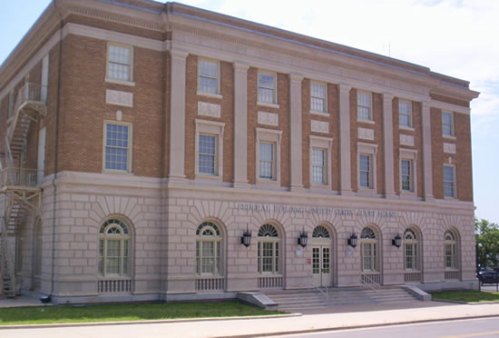
The Federal Courthouse in Lawton, Oklahoma

Judge Charles Goodwin was the first Trump nominee to receive a rating of unqualified from the American Bar Association.  Goodwin’s rating is particularly unusual, because, unlike the other two district court nominees who received the rating, Goodwin has been in practice for twenty years, and has served as a federal magistrate judge for the last four years.

Background

Goodwin has deep Oklahoma ties.  Charles Barnes Goodwin was born in Clinton, OK in 1970 to Charles L. and Nancy Goodwin.  His father, Charles L. “Buzz” Goodwin had served as a city councilman, city attorney, and mayor of Clinton before becoming elected as a state judge.[1]  Goodwin attended the University of Oklahoma, graduating with a B.A. in Letters and Economics in 1994.  He then attended the University of Oklahoma Law School, graduating in 1997.

After graduating, Goodwin served as a law clerk to then U.S. Magistrate Judge Claire Egan on the U.S. District Court for the Northern District of Oklahoma.[2]  He then served as a law clerk to Judge Lee West on the U.S. District Court for the Western District of Oklahoma.  In 2000, Goodwin joined the Oklahoma City office of Crowe & Dunleavy as an Associate.  In 2006, he became a Shareholder-Director.

In 2013, Goodwin became a federal magistrate judge on the U.S. District Court for the Western District of Oklahoma.  He currently serves in that capacity.

History of the Seat

The seat Goodwin has been nominated for opened on July 14, 2015, with Judge Robin Cauthron’s move to senior status.  While Cauthron moved to senior status with a year and a half left in the Obama Administration, no nominee was ever submitted for the vacancy.

Goodwin applied to fill the vacancy on November 30, 2016, shortly after the election of Donald Trump.[3]  After interviews with Oklahoma Senators James Inhofe and James Lankford, as well as with the White House and the Department of Justice, Goodwin was selected as a nominee in April 2017.  Goodwin was officially nominated on July 13, 2017, almost exactly two years to the day the vacancy opened.

Political Activity

Goodwin has a relatively short record of political activity.  He donated $500 to John McCain’s presidential campaign in 2008 and $1500 to Mitt Romney’s campaign in 2012.[4]  Additionally, he provided informal legal advice to the campaign of Ryan Leonard, a Republican running unsuccessfully for Oklahoma Attorney General in 2010.

In 2010, Goodwin applied to Democratic Governor Brad Henry for an appointment to the Oklahoma Supreme Court.[5]  However, Goodwin was not selected as one of the finalists for the seat and Henry appointed Oklahoma County District Judge Noma Gurich instead.[6]

Legal Experience

After stints as a law clerk for Judges Eagan and West, Goodwin joined Crowe & Dunleavy to work in commercial litigation.  In this capacity, Goodwin appeared in both state and federal court in securities, antitrust, fraud, contract, and class action cases.  Among the more significant matters he handled, Goodwin represented Duoyuan Global Water, Inc. in defending against a securities class action.[7]

In another matter, Goodwin represented 400 Oklahoma poultry farmers in a class action alleging violations of the Packers and Stockyards Act.[8]  After the district court granted summary judgment against Goodwin’s clients, he successfully argued for the ruling’s reversal from the Tenth Circuit.[9]  Goodwin then successfully defended the jury verdict for his clients before the Tenth Circuit,[10] and the Supreme Court.[11]

Jurisprudence

Goodwin has served as a U.S. Magistrate Judge on the U.S. District Court for the Western District of Oklahoma since 2013.  In this role, Goodwin presides over pretrial, trial, grand jury and discovery matters.

Benefits Cases

Goodwin has frequently heard appeals from denials of social security benefits by administrative law judges (ALJ).  In many of these cases, Goodwin has affirmed the denial of benefits.[12]  However, Goodwin has just as frequently reversed in favor of claimants.[13]  In one notable case, Goodwin found that the ALJ failed to consider the role of the plaintiff’s mental health defects on his disability.[14]  In another case, Goodwin found that the ALJ had failed to consider the role of the plaintiff’s obesity on his disability.[15]  However, the district court declined to follow Goodwin’s recommendation, finding that the ALJ had correctly decided the case.[16]

Civil Rights Suits

As a U.S. Magistrate Judge, Goodwin frequently offers the preliminary recommendations on civil rights suits filed by prisoners and others under §1983.  In almost every single suit he has reviewed, Goodwin has recommended rejection of the plaintiff’s claims.[17]  While Goodwin’s recommendations have generally been accepted by the district courts, they have been rejected in some cases.[18]  In one case, Goodwin recommended the dismissal of a civil rights claim based on denial of medical care to an inmate.[19]  Specifically, he ruled that there was no allegation of knowledge by the defendant medical administrator of the lack of care.[20]  In rejecting the recommendation, the district judge found that the administrator’s knowledge could be assumed.[21]  In another case, the district judge declined to adopt Goodwin’s conclusion that the plaintiff had failed to properly exhaust administrative remedies prior to filing the suit.[22]

Overall Assessment

On paper, Charles Goodwin is a well-qualified candidate for the federal bench.  However, it’s impossible to discuss Goodwin’s qualifications without addressing the elephant in the room: his Unqualified rating from the ABA.

Generally, the ABA identifies three criteria that are key in its evaluation: integrity, professional competence and judicial temperament.[23]  While the ABA has been criticized for using an additional ideological test to downgrade conservative candidates, there are plenty of examples of the ABA highly rating conservative candidates, including the highest Well Qualified ratings for Fifth Circuit nominees Don Willett, James Ho, and Kyle Duncan.  At any rate, while Goodwin’s judicial record is conservative, it is not unusually so.

Instead, the ABA, in a Dec. 12th letter, explained that its criteria was Goodwin’s “work ethic.”  Specifically, ABA Standing Committee past Chair Nancy Deegan noted that “Magistrate Judge Goodwin’s work habits, including his frequent absence from the courthouse until mid-afternoon” raised concerns.  Deegan went on to note that “no issues were noted regarding Magistrate Judge Goodwin’s judicial temperament, intellectual capacity, writing and analytical abilities, knowledge of the law, or breadth of professional experience.”

Setting aside the ABA rating, there is little in Goodwin’s record that would disqualify him from the federal bench.  As such, Goodwin’s confirmation turns on how concerning senators find his work ethic.


[1] Obituary, Charles L. “Buzz” Goodwin, The Oklahoman, Nov. 13, 2017, http://legacy.newsok.com/obituaries/oklahoman/obituary.aspx?pid=187223226.  

[2] Eagan was nominated to a lifetime appointment by President George W. Bush and confirmed in 2001.

[3] Senate Judiciary Questionnaire, Charles Goodwin 50, https://www.judiciary.senate.gov/imo/media/doc/Goodwin%20SJQ.pdf.

[5] See Michael McNutt, Askins Seeks Seat on State’s High Court, The Oklahoman, Nov. 23, 2010.

[6] Tim Talley, Henry Names Noma Gurich to Okla. Supreme Court, Deseret News, Jan. 7, 2011, https://www.deseretnews.com/article/700098729/Henry-names-Noma-Gurich-to-Okla-Supreme-Court.html.

[7] See Ho v. Duoyuan Global Water, Inc., 887 F. Supp. 2d 547 (S.D.N.Y. 2012).

[8] See Jim Stafford, Appeals Court Reinstates Farmers’ Lawsuit, The Oklahoman, Aug. 1, 2007.

[9] See Been et al. v. OK Indus., Inc., 495 F.3d 1217 (10th Cir. 2007).

[10] Been v. OK Indus., Inc., 398 F. App’x 382 (10th Cir. 2010).

[11] OK Indus., Inc. v. Been, 563 U.S. 975 (2011) (denying certiorari).

[12] See, e.g., Packer v. Colvin, No. CIV-15-655-CG, 2016 WL 6770271 (W.D. Okla. Nov. 15, 2016); Hall v. Colvin, No. CIV-15-105-CG, 2016 WL 5239832 (W.D. Okla. Sep. 22, 2016).  See also Austin v. Colvin, No. CIV-13-1089-L, 2015 WL 631065 (W.D. Okla. Feb. 12, 2015); Stringer v. Colvin, No. CIV-13-1053-HE, 2014 WL 6879083 (W.D. Okla. Dec. 4, 2014); Payne v. Colvin, No. CIV-13-650-R, 2014 WL 4929434 (W.D. Okla. Sept. 29, 2014); Salazar v. Colvin, No. CIV-13-878-F, 2014 WL 4668794 (W.D. Okla. Sept. 18, 2014); Thompson v. Colvin, No. CIV-13-744-R, 2014 WL 4660805 (W.D. Okla. Sept. 17, 2014); Keeling v. Colvin, No. CIV-13-498-M, 2014 WL 4388411 (W.D. Okla. Sept. 5, 2014); Devers v. Colvin, No. CIV-12-1285-D, 2014 WL 1272108 (W.D. Okla. Mar. 27, 2014); Humphreys v. Colvin, No. CIV-13-0098-HE, 2014 WL 1270748 (W.D. Okla. Mar. 25, 2014).

[13] See, e.g., Thompson v. Colvin, No. CIV-13-922-F, 2015 WL 586298 (W.D. Okla. Feb. 11, 2015); Johnson v. Colvin, No. CIV-13-871-R, 2014 WL 7187050 (W.D. Okla. Dec. 16, 2014); Hendrix v. Colvin, No. CIV-13-522-M, 2014 WL 4929427 (W.D. Okla. Sept. 30, 2014); Omes v. Colvin, No. CIV-13-375-HE, 2014 WL 4674364 (W.D. Okla. Aug. 29, 2014), report and recommendation adopted, No. CIV-13-0375-HE, 2014 WL 4674342 (W.D. Okla. Sept. 17, 2014); Shortnacy v. Colvin, No. CIV-13-297-HE, 2014 WL 4716075 (W.D. Okla. Aug. 26, 2014), report and recommendation adopted, No. CIV-13-0297-HE, 2014 WL 4716055 (W.D. Okla. Sept. 22, 2014); Cook v. Colvin, No. CIV-13-211-HE, 2014 WL 4209574 (W.D. Okla. July 30, 2014), report and recommendation adopted, No. CIV-13-0211-HE, 2014 WL 4209576 (W.D. Okla. Aug. 25, 2014); Williams v. Colvin, No. CIV-13-448-R, 2014 WL 2949470 (W.D. Okla. June 27, 2014); Robles v. Colvin, No. CIV-13-378-CG, 2014 WL 2219230 (W.D. Okla. May 29, 2014); Iles v. Colvin, No. CIV-13-0221-F, 2014 WL 1330010 (W.D. Okla. Mar. 31, 2014); Moore v. Colvin, No. CIV-13-60-M, 2014 WL 1344582 (W.D. Okla. Mar. 31, 2014); Hull v. Colvin, No. CIV-13-67-D, 2014 WL 1343502 (W.D. Okla. Mar. 31, 2014); Henderson v. Colvin, No. CIV-13-168-M, 2014 WL 1270978 (W.D. Okla. Mar. 26, 2014); Elix ex rel. JE v. Colvin, No. CIV-13-0139-HE, 2014 WL 903176 (W.D. Okla. Mar. 7, 2014); Pennington v. Colvin, No. CIV-12-1026-F, 2014 WL 869292 (W.D. Okla. Mar. 5, 2014); Redman v. Colvin, No. CIV-12-1039-R, 2014 WL 652314 (W.D. Okla. Feb. 19, 2014); Crowell v. Colvin, No. CIV-12-1126-L, 2013 WL 6800821 (W.D. Okla. Dec. 20, 2013).

[14] McClaflin v. Colvin, No. CIV-14-1128-CG, 2016 WL 5390908 (W.D. Okla. Sep. 27, 2016).

[15] Sanders v. Colvin, No. CIV-14-799-R, 2015 WL 5559868 (W.D. Okla. Aug. 18, 2015), report and recommendation rejected, No. CIV-14-799-R, 2015 WL 5559872 (W.D. Okla. Sept. 21, 2015).

[16] Sanders v. Colvin, No. CIV-14-799-R, 2015 WL 5559872 (W.D. Okla. Sept. 21, 2015).

[17] See, e.g., Alfred v. Alfred, No. CIV-17-273-C, 2017 WL 4563889, at *1 (W.D. Okla. Sept. 5, 2017), report and recommendation adopted, No. CIV-17-273-C, 2017 WL 4563062 (W.D. Okla. Oct. 12, 2017); Daly v. Gossen, No. CIV-15-13-C, 2017 WL 1051176, at *9 (W.D. Okla. Feb. 16, 2017), report and recommendation adopted, No. CIV-15-13-C, 2017 WL 1051140 (W.D. Okla. Mar. 20, 2017); Collins v. Payne Cty., No. CIV-15-1294-R, 2016 WL 7634475, at *1 (W.D. Okla. Nov. 30, 2016), report and recommendation adopted, No. CIV-15-1294-R, 2017 WL 31427 (W.D. Okla. Jan. 3, 2017); Tuell v. Kingfisher Cty., No. CIV-16-86-D, 2016 WL 7414597, at *1 (W.D. Okla. Nov. 30, 2016), report and recommendation adopted, No. CIV-16-86-D, 2016 WL 7410738 (W.D. Okla. Dec. 22, 2016); Blackburn v. Reeve, No. CIV-15-359-F, 2016 WL 3944940, at *1 (W.D. Okla. June 23, 2016), report and recommendation adopted, No. CIV-15-0359-F, 2016 WL 3945831 (W.D. Okla. July 19, 2016); Beals v. Elk City Police Dep’t, No. CIV-15-195-C, 2016 WL 3573241, at *1 (W.D. Okla. May 31, 2016), report and recommendation adopted, No. CIV-15-195-C, 2016 WL 3582152 (W.D. Okla. June 28, 2016); Barnett v. Sielert, No. CIV-14-1284-HE, 2016 WL 3802678, at *6 (W.D. Okla. May 31, 2016), report and recommendation adopted, No. CIV-14-1284-HE, 2016 WL 3829027 (W.D. Okla. July 12, 2016); Wilson v. Henry, No. CIV-15-1026-R, 2016 WL 3512035, at *4 (W.D. Okla. May 26, 2016), report and recommendation adopted, No. CIV-15-1026-R, 2016 WL 3523756 (W.D. Okla. June 22, 2016); Jordanoff v. Red Rock Adult Behavioral Health Ctr., No. CIV-15-846-R, 2016 WL 3561807, at *1 (W.D. Okla. May 11, 2016), report and recommendation adopted, No. CIV-15-846-R, 2016 WL 3566264 (W.D. Okla. June 27, 2016); Bishop v. Jester, No. CIV-14-678-C, 2016 WL 3526206, at *1 (W.D. Okla. May 11, 2016), report and recommendation adopted, No. CIV-14-678-C, 2016 WL 3546419 (W.D. Okla. June 23, 2016); Ray v. Dep’t of Corr., No. CIV-14-735-C, 2016 WL 1212773, at *6 (W.D. Okla. Mar. 2, 2016), report and recommendation adopted sub nom. JAMES PRESTON RAY, Plaintiff, vs. DEPARTMENT OF CORRECTIONS, et al., Defendants., No. CIV-14-735-C, 2016 WL 1228664 (W.D. Okla. Mar. 28, 2016); Coughlin v. Bear, No. CIV-15-536-R, 2016 WL 447345, at *6 (W.D. Okla. 2016), report and recommendation adopted, No. CIV-15-536-R, 2016 WL 447744 (W.D. Okla. Feb. 4, 2016); Beals v. Webb, No. CV 15-194-C, 2015 WL 8654450, at *1 (W.D. Okla. Nov. 24, 2015), report and recommendation adopted, No. CIV-15-194-C, 2015 WL 8678409 (W.D. Okla. Dec. 11, 2015); Burghart v. O’Keefe, No. CIV-15-445-C, 2015 WL 9208842, at *4 (W.D. Okla. Oct. 30, 2015), report and recommendation adopted, No. CIV-15-445-C, 2015 WL 9095029 (W.D. Okla. Dec. 16, 2015); Kirbo v. Patton, No. CIV-15-583-W, 2015 WL 7294389, at *1 (W.D. Okla. Oct. 28, 2015), report and recommendation adopted, No. CIV-15-583-W, 2015 WL 7303553 (W.D. Okla. Nov. 18, 2015); Bishop v. Stewart, No. CIV-14-775-C, 2015 WL 7767264, at *3 (W.D. Okla. Oct. 16, 2015), report and recommendation adopted, No. CIV-14-775-C, 2015 WL 7779696 (W.D. Okla. Dec. 2, 2015); Barber v. Sutmiller, No. CIV-15-78-C, 2015 WL 5472508, at *3 (W.D. Okla. July 31, 2015), report and recommendation adopted, No. CIV-15-78-C, 2015 WL 5472940 (W.D. Okla. Sept. 17, 2015); Williams v. Cox, No. CIV-13-0971-F, 2015 WL 159053, at *1 (W.D. Okla. Jan. 8, 2015); Smith v. Jones, No. CIV-12-1365-HE, 2014 WL 5448890, at *3 (W.D. Okla. Oct. 23, 2014), aff’d, 606 F. App’x 899 (10th Cir. 2015); Darnell v. Jones, No. CIV-12-1065-M, 2014 WL 4792144, at *2 (W.D. Okla. Sept. 24, 2014), aff’d, 610 F. App’x 720 (10th Cir. 2015); Craft v. Glob. Expertise in Outsourcing, No. CIV-12-1133-R, 2014 WL 4699614, at *4 (W.D. Okla. Sept. 19, 2014), aff’d sub nom. Craft, Jr. v. Glob. Expertise in Outsourcing, 601 F. App’x 748 (10th Cir. 2015); Davis v. Corr. Corp. of Am., No. CIV-13-1174-HE, 2014 WL 4716332, at *1 (W.D. Okla. July 30, 2014), report and recommendation adopted, No. CIV-13-1174-HE, 2014 WL 4716209 (W.D. Okla. Sept. 22, 2014); Farris v. Frazier, No. CIV-12-1099-W, 2014 WL 3749142, at *2 (W.D. Okla. July 29, 2014), aff’d, 599 F. App’x 851 (10th Cir. 2015); Hill v. Cates, No. CIV-13-1126-D, 2014 WL 2865920, at *1 (W.D. Okla. June 24, 2014); Failes v. Garfield Cty. Bd. of Cty. Comm’rs, No. CIV-13-0638-HE, 2014 WL 2712276, at *1 (W.D. Okla. June 16, 2014); Parkins v. Logan Cty., No. CIV-14-72-M, 2014 WL 2504517, at *1 (W.D. Okla. June 3, 2014); Free v. Stebens, No. CIV-13-14-F, 2014 WL 800915, at *6 (W.D. Okla. Feb. 28, 2014); Adams v. Sutmiller, No. CIV-10-920-F, 2014 WL 584749, at *2 (W.D. Okla. Feb. 12, 2014), aff’d sub nom. Adams v. Jones, 577 F. App’x 778 (10th Cir. 2014); Large v. Beckham Cty. Dist. Court, No. CIV-13-1276-F, 2014 WL 235477, at *1 (W.D. Okla. Jan. 22, 2014); Gray v. Ritter, No. CIV-11-1446-F, 2014 WL 37745, at *4 (W.D. Okla. Jan. 6, 2014); Gist v. Anderson, No. CIV-12-1208-HE, 2013 WL 6909470, at *2 (W.D. Okla. Dec. 30, 2013); Klein v. Gwinn, No. CIV-13-1207-HE, 2013 WL 6844276, at *2 (W.D. Okla. Dec. 27, 2013).  But see Savage v. Troutt, No. CIV-15-670-HE, 2016 WL 8711398, at *1 (W.D. Okla. Aug. 12, 2016), report and recommendation adopted as modified, No. CIV-15-0670-HE, 2016 WL 5107068 (W.D. Okla. Sept. 20, 2016) (recommending partial denial of defendant’s motion for summary judgment); Moore v. Pantoja, No. CIV-15-688-HE, 2016 WL 4493849, at *1 (W.D. Okla. July 26, 2016) (recommending denial of defendant’s motion for summary judgment); Young v. Rios, No. CIV-15-641-R, 2016 WL 1626609, at *5 (W.D. Okla. Mar. 10, 2016), report and recommendation adopted, No. CIV-15-641-R, 2016 WL 1611496 (W.D. Okla. Apr. 21, 2016).

[18] See, e.g., Williams v. Ormand, No. CIV-15-1288-HE, 2016 WL 6157651, at *1 (W.D. Okla. July 8, 2016), report and recommendation rejected, No. CIV-15-1288-HE, 2016 WL 6157429 (W.D. Okla. Oct. 21, 2016); Campbell v. Jones, No. CIV-13-926-R, 2015 WL 3971674, at *15 (W.D. Okla. Mar. 31, 2015), report and recommendation adopted in part, rejected in part, No. CIV-13-926-R, 2015 WL 3989137 (W.D. Okla. June 30, 2015); Jennings v. Dowling, No. CIV-14-335-C, 2015 WL 12915602, at *1 (W.D. Okla. Mar. 3, 2015), report and recommendation rejected, No. CIV-14-335-C, 2015 WL 12915603 (W.D. Okla. Mar. 31, 2015); Ford v. GEO Grp. Inc., No. CIV-13-1013-R, 2014 WL 4929443, at *1 (W.D. Okla. Aug. 8, 2014), report and recommendation rejected, No. CIV-13-1013-R, 2014 WL 4929334 (W.D. Okla. Sept. 30, 2014).

[19] Campbell v. Jones, No. CIV-13-926-R, 2015 WL 3971674 (W.D. Okla. Mar. 31, 2015).

[20] See id.

[21] Campbell v. Jones, No. CIV-13-926-R, 2015 WL 3971674, at *15 (W.D. Okla. Mar. 31, 2015), report and recommendation adopted in part, rejected in part, No. CIV-13-926-R, 2015 WL 3989137 (W.D. Okla. June 30, 2015).

[22] See Ford v. GEO Grp. Inc., No. CIV-13-1013-R, 2014 WL 4929443, at *1 (W.D. Okla. Aug. 8, 2014), report and recommendation rejected, No. CIV-13-1013-R, 2014 WL 4929334 (W.D. Okla. Sept. 30, 2014).

[23] American Bar Association Standing Committee on the Federal Judiciary, What It Is and How It Works, at 3, https://www.americanbar.org/content/dam/aba/migrated/scfedjud/federal_judiciary09.authcheckdam.pdf.

[24] Charlie Savage, Ratings Shrink President’s List for Judgeships, N.Y. Times, Nov. 22, 2011, http://www.nytimes.com/2011/11/23/us/politics/screening-panel-rejects-many-obama-picks-for-federal-judgeships.html.  

Matthew Petersen – Nominee to the U.S. District Court for the District of Columbia

A Commissioner at the Federal Election Commission (FEC), Matthew Petersen is the last of four Trump nominees to the U.S. District Court for the District of Columbia to come before the Senate Judiciary Committee.  While Petersen boasts extensive experience in election law, he may face pushback based on his tenure at the FEC.

Background

Matthew Spencer Petersen was born in Torrance, CA in 1970.  He matriculated at Utah State University in 1988 and then at Utah Valley University (then Utah Valley State College) in 1991, graduating with an A.S. with High Honors in 1996.  Petersen also matriculated at the University of Utah in 1993, transferring to Brigham Young University in 1994, and getting a B.A. magna cum laude in 1996.

Petersen then joined the University of Virginia School of Law, graduating in 1999.  After graduating, Petersen joined the Washington D.C. Office of Wiley Rein.

In 2002, Petersen was hired by the Republican majority on the Committee on House Administration as Majority Counsel.  He served in that capacity for three years, notwithstanding a short stint as Counsel to the Republican National Committee in late 2004.  In 2005, Petersen moved to the Senate to work as Chief Counsel for the Republicans on the Committee on Rules and Administration.

In 2008, Petersen was one of five new appointments to the FEC, a regulatory agency seeking to enforce campaign finance law.[1]  Specifically, Petersen was nominated to replace Hans Von Spakowsky, the controversial nominee previously recess-appointed to the Commission by President George W. Bush.[2]  While his term expired in 2011, Petersen continues to serve as a Republican representative on the Commission.

History of the Seat

The seat Petersen has been nominated for opened on March 16, 2016, with Judge Richard Roberts’ move to early senior status.  Roberts, an appointee of President Clinton, claimed the move was based on health reasons, but many speculated that Roberts was actually motivated by a different reason: a civil rights suit filed against him based on his relationship (while a young prosecutor) with a key witness in the trial he was managing.[3]   On April 28, 2016, President Obama nominated D.C. Superior Court Judge Todd Edelman to the vacancy.  However, the Republican controlled Senate Judiciary Committee did not take any action on Edelman’s nomination, and it was returned to the President at the end of the 114th Congress.

On May 20, 2017, Petersen was contacted by the White House Counsel’s Office to gauge his interest in an appointment to the U.S. District Court for the District of Columbia.  (Notably, the current White House Counsel Don McGahn served as a Republican member of the FEC alongside Petersen for five years.)  Petersen was formally nominated on September 11, 2017.

Legal Experience

Petersen has a relatively unusual background for a federal judicial nominee, having only spent three years working in litigation, and having spent significantly longer periods of time in legislative work and at the Federal Election Commission enforcing campaign finance laws.

Wiley Rein

Petersen’s litigation experience is limited to his time as an associate at Wiley Rein LLP where he served as an associate in the Election Law & Government Ethics practice group.[4]  In this capacity, Petersen represented corporations seeking to comply with campaign finance regulations, as well as candidates seeking to defend charges brought by the FEC.[5]

Capitol Hill

After leaving Wiley Rein, Petersen served as Majority Counsel on the House Committee on Administration.  In this role, Petersen served as a legal advisor to Chairman Robert Ney (R-OH), advising him on “legal and legislative matters relating to federal election and campaign finance laws.”[6]  He also worked on complaints submitted to the House Franking Commission, which regulates the use of official congressional mailings.  Notably, Petersen also helped draft the Help America Vote Act of 2002 (HAVA).

After a short stint at the RNC working to implement the HAVA during 2004 Presidential election, Petersen was hired by Sen. Trent Lott (R-MS) to serve as Chief Counsel for the Senate Committee on Administration.  In this capacity, Petersen notably worked on legislation merging the U.S. Capitol Police and the Library of Congress Police.[7]

Federal Election Commission

Petersen was confirmed to the FEC on June 24, 2008, as package deal of nominees that dramatically changed the Commission’s make-up.  Among his first acts on the FEC, Petersen joined with every other Commissioner in rejecting an effort by the Club for Growth (a conservative political group) to shorten disclosures on political advertisements.[8]

Early in Petersen’s tenure, the FEC drew criticism for a high number of 3-3 deadlocks, preventing enforcement action.[9]  Specifically, the Republican Commissioners, Petersen, Don McGahn[10], and Caroline Hunter, were criticized for voting as a bloc and “undercutting federal election law and its enforcement.”[11]  In one instance, Petersen, McGahn, and Hunter refused to support a proposed regulation governing corporate travel for lawmakers, forcing the adoption of a weaker rule that relaxed travel requirements for Senators.[12]  Petersen defended his actions in an op-ed, arguing that “an agency cannot include in regulation what was not enacted through legislation.”[13]  Petersen also wrote letters to the editor arguing that the proposed rule closely mirrored congressional intent,[14] and that the problem of FEC deadlocks is being exaggerated.[15]  Instead, Petersen argued, the focus of the Republican commissioners is on reducing “[r]ote enforcement of hyper-technical rules” as this “has an unfair impact on the inexperienced [candidate].”[16]

However, throughout Petersen’s tenure, the FEC continued to draw criticism for being ineffective and being unable to enforce the law, specifically due to the Republican Commissioner’s refusals to take enforcement actions.[17]  One article noted that since the appointments of Petersen, McGahn, and Hunter, the FEC’s rate of deadlocks had increased eightfold from 2% to 16%.[18]  Another article noted: “If you’ve been thinking of breaking federal election law, this would be an excellent time to do it, because the chance of being caught is close to nil.  There is no cop on the beat.”[19]  In response, Petersen, Hunter, and McGahn wrote:

“Aggressive enforcement in cases where the law is vague or complicated undermines the rule of law.  Few areas of the law demand more sensitivity to aggressive enforcement than those governing First Amendment-protected political speech.”

Ultimately, the FEC’s lack of enforcement drew a suit from the Campaign Legal Center, specifically challenging the lack of action against individuals alleged to be “straw donors” under the Federal Election Campaign Act.[20]  The situation drew a rare public rebuke from Democratic Commissioner Ann Ravel, who resigned from the FEC in March 2017, arguing that “[t]he ability of the commission to perform its role has deteriorated significantly.”[21]  In response, Republican Chairman Lee Goodman (who replaced McGahn in 2013) countered:

“the situation has indeed changed, but for the better.”[22]

Despite the controversy over the Republican bloc votes, Petersen has drawn positive reviews from Commissioners, with both Goodman and Commissioner Steven Walther, who vote in opposite blocs, praising him.[23]

Overall Assessment

So far, Trump’s appointments to the D.C. federal bench have not attracted much opposition.  Trump has already successfully appointed three judges with widespread bipartisan support.  Whether Petersen follows this trend or not depends on how senators evaluate his actions on the FEC.  Petersen’s critics will argue, as many watchdog groups have, that Petersen joined with other FEC Republicans to stymie agency enforcement and cripple campaign finance laws.  However, Petersen and his supporters will likely downplay FEC deadlocks as rare occurrences, and note that his votes were based on First Amendment concerns.  They will also likely note that many of Petersen’s votes against enforcement were in favor of Democratic candidates, and that, as such, he cannot be considered overly partisan.

Overall, given the Republican senate majority, it is unlikely that Petersen will face much trouble getting confirmed.  Ironically, his confirmation will further jeopardize the FEC’s effectiveness, leaving it with two out of six seats vacant.


[1] The Politico, Senate Confirms New FEC Commissioners, Ending Long Partisan Standoff, CBS News, June 24, 2008, https://www.cbsnews.com/news/senate-confirms-new-fec-commissioners-ending-long-partisan-standoff/.  

[2] Matthew Mosk, Candidates’ Fundraising Disputes May Be Heard, Wash. Post, May 23, 2008.

[3] Ann E. Marimow, Chief Judge of the District’s Federal Court Retires as Lawsuit Accuses Him of Sexual Assault, Wash. Post, Mar. 16, 2016, https://www.washingtonpost.com/local/public-safety/chief-judge-of-the-districts-federal-court-retires/2016/03/16/2ff09bf0-ebc1-11e5-b0fd-073d5930a7b7_story.html?utm_term=.38886e556276.  

[4] Petersen, Senate Judiciary Questionnaire 29, https://www.judiciary.senate.gov/imo/media/doc/Petersen%20SJQ.pdf.

[5] Id.

[6] Id. at 28.

[7] Id.

[8] Matthew Murray, FEC Rejects Club’s Bid to Tweak Disclosure Rules, RollCall, July 29, 2008.

[9] Matthew Murray, FEC Deadlocks on the Rise, RollCall, Apr. 6, 2009.

[10] McGahn currently serves as Trump’s White House Counsel, and has a significant role in selecting judicial nominees.

[11] Editorial, Obama’s FEC, RollCall, Dec. 2, 2009.

[12] See id.

[13] Matthew Petersen, FEC Implemented Congress’ Vision on Travel Rules, RollCall, Dec. 1, 2009.

[14] Matthew S. Petersen, Caroline S. Hunter, Donald F. McGahn, Travel Rules Follow the Law, Wash. Post, Dec. 7, 2009.

[15] Matthew S. Petersen, Caroline S. Hunter, Donald F. McGahn, Promoting Change, Not Paralysis, at the FEC, Wash. Post, June 19, 2009.

[16] See id.

[17] Craig Holman, Guest Observer, RollCall, March 14, 2011.

[18] Id.

[19] Dana Milbank, A Good Faith Effort to Break D.C. Gridlock, Wash. Post, Oct. 12, 2014.

[20] Press Release, The Campaign Legal Center, CLC, D21 Lawsuit Calling for FEC Enforcement Moves Forward (Mar. 29, 2017) (available at http://www.campaignlegalcenter.org/news/press-releases/clc-d21-lawsuit-calling-fec-enforcement-moves-forward).

[21] Eric Lichtblau, Democratic Member to Quit Election Commission, Setting Up Political Fight, N.Y. Times, Feb. 19, 2017, https://www.nytimes.com/2017/02/19/us/politics/fec-elections-ann-ravel-campaign-finance.html.

[22] Id.

[23] Dave Levinthal, Will Donald Trump Let the Federal Election Commission Rot, The Center for Public Intregrity, Sept. 14, 2017, https://www.publicintegrity.org/2017/09/08/21164/will-donald-trump-let-federal-election-commission-rot.

Fernando Rodriguez Jr. – Nominee to the U.S. District Court for the Southern District of Texas

Compared to the backgrounds of most Trump nominees, Fernando Rodriguez is particularly unique.[1]  First, Rodriguez is the first and, thus far, only hispanic nominee to the federal bench from the Trump Administration.  Second, Rodriguez has an unusual background for a judicial nominee, having spent much of his career in trainings and advocacy fighting human trafficking.

Background

Fernando Rodriguez Jr. was born in Harlingen, TX, a small town near the Mexican border, in 1969.  Rodriguez received a Bachelor of Arts degree from the Yale University in 1991.  After graduating, Rodriguez joined Teach for America, teaching at an inner city Houston elementary school, Scarborough Elementary, for three years.

In 1994, Rodriguez joined the University of Texas at Austin Law School, earning his J.D. with honors in 1997.  After graduating, Rodriguez was hired by Texas Supreme Court Justice Nathan Hecht, a Republican, to be his briefing attorney.  After a year there, Rodriguez joined the Dallas Office of Baker Botts LLP. as an associate.  He became a partner there in 2006.

In 2010, Rodriguez joined the International Justice Mission, a Christian non-profit focused on law enforcement issues (primarily human trafficking).  Specifically, Rodriguez was hired to be the Field Office Director in Bolivia.  In 2013, Rodriguez became the Field Office Director in the Dominican Republic.  He currently serves in that capacity.

History of the Seat

Rodriguez has been nominated to a seat on the U.S. District Court for the Southern District of Texas.  This seat opened on May 20, 2014, when Judge Gregg Costa was elevated to the U.S. Court of Appeals for the Fifth Circuit.[2]  While Obama and Texas Senators John Cornyn and Ted Cruz reached a deal to confirm three nominees to the Southern District, Costa’s seat was not among them and was never filled.[3]

After the election of President Trump, Cruz and Cornyn set up a Federal Judicial Evaluation Committee to take applications for the federal bench.  Rodriguez interviewed with the Committee on April 20, 2017, and with Cornyn and Cruz on May 4.  Rodriguez then interviewed with the White House Counsel’s Office and the Department of Justice on May 30, 2017, and was finally nominated on September 7, 2017.

Legal Experience

Rodriguez began his legal career as a briefing attorney for Texas Supreme Court Justice Nathan Hecht.  Despite the title, the role involved Rodriguez serving as Hecht’s law clerk.  After that position, Rodriguez has only worked for two employers: Baker Botts; and the International Justice Mission.

While an associate and a partner at Baker Botts, Rodriguez practiced commercial civil litigation, primarily representing corporate clients.  Notably, Rodriguez represented Ternium, a steel supplier, in a federal breach of contract action for failure to pay for a steel shipment.[4]  Rodriguez also successfully defended a Costa Rican partnership against breach of contract and business tort claims arising from funding of a hospital.[5]  Rodriguez also practiced in state court, winning a breach of contract claim involving the payment of taxes in a property sale.[6]

At the International Justice Mission, Rodriguez primarily worked to combat child sex trafficking.  While stationed in Bolivia, Rodriguez worked with law enforcement officials to secure convictions for 26 offenders.[7]  Rodriguez similarly worked to convict 23 offenders in the Dominican Republic.[8]  In these roles, Rodriguez also worked to train law enforcement and the judiciary on trafficking issues.

Political Activity

Rodriguez has a limited history of political activity.  He has only one donation of record: a $500 donation to John McCain’s Presidential Campaign in 2008.[9]  He also served as a volunteer for Judge Catharina Haynes’ re-election campaign in 2006.  Judge Haynes, a Republican, was later appointed to the Fifth Circuit by President George W. Bush.

Overall Assessment

In confirmation politics, as in electoral politics, a sympathetic narrative is the key to success.  In Rodriguez’s case, he has it in spades.  Not only is he the first hispanic judge nominated by President Trump, but he has devoted his career to a worthy cause: helping child escape human trafficking and sexual slavery.  His work on human trafficking issues along with his experience teaching elementary school in inner-city Houston is fairly unusual in a federal judicial nominee.  Furthermore, Rodriguez does not have a history of overly partisan advocacy, or of controversial writings.  Nor does he have a dearth of experience, having been an attorney for twenty years.  As such, all signs point to a comfortable nomination for Rodriguez.


[1] Rorie Spill Solberg and Eric N. Walterburg, Trump’s Judicial Nominations Would Put a Lot of White Men on Federal Courts, Wash. Post, Nov. 28, 2017, https://www.washingtonpost.com/news/monkey-cage/wp/2017/11/28/this-is-how-trump-is-changing-the-federal-courts/?utm_term=.0f24cb9a88ce.

[2] John Council, It’s Unanimous: Gregg Costa to Join Fifth Circuit, Texas Lawyer, May 26, 2014, https://www.law.com/texaslawyer/almID/1202656477944/.  

[3] Kevin Diaz, Texas Candidates for Federal Bench Caught Up in Political Gamesmanship, San Antonio Express-News, January 15, 2015, http://www.expressnews.com/news/local/article/Texas-candidates-for-federal-bench-caught-up-in-6039505.php.  

[4] See Ternium Int’l USA Corp. v. Consol. Sys. Inc., No. 3:08-cv-00816-G, 2009 WL 464953 (N.D. Tex. Feb. 24, 2009).

[5] See Int’l. Hosp. Corp. et al. v. Grupo Promoter Hosp. San Jose, S.A., et al., No. 3:06-cv-00266-N (N.D. Tex. 2006).

[6] See Hollywood Theatres, Inc. v. J.C. Mitchell, No. 98-11171-A (County Court of Law No. 1, Dallas County, Tex. 1999) (Judge David Gibson).

[7] Fernando Rodriguez Jr., Senate Judiciary Questionnaire 26 (available at https://www.judiciary.senate.gov/imo/media/doc/Rodriguez%20Jr%20SJQ.pdf).

[8] Id.

[9] Center for Responsive Politics, https://www.opensecrets.org/donor-lookup/results?name=fernando+rodriguez&order=desc&page=2&sort=D (last visited Nov. 28, 2017).

John Broomes – Nominee to the U.S. District Court for the District of Kansas

John Broomes, a corporate lawyer based in Wichita, brings a diverse background to the bench, having worked in the U.S. Navy, as an engineer, and as a manager at Koch Industries before changing careers to become a lawyer.  This experience makes Broomes an unusual choice for a judicial nominee.

Background

John Wesley Broomes was born in New Orleans in 1969.  Broomes attended the University of Texas at Austin, graduating with a B.S. in Petroleum Engineering in 1991.  Upon graduation, Broomes joined the U.S. Navy as a Lieutenant and Submarine Officer.  After serving for five years, Broomes moved to Wichita, Kansas to be an Engineer and Ranch Supervisor at Castle Rock Ranch, Inc.

In 1997, Broomes left Castle Rock Ranch to move to the communications company Omnipoint Communications, Inc. as a Project Manager.  He left the position that same year to Koch Industries, Inc., working as a Project Manager.  In 2000, Broomes was elevated to be a Laboratory Manager.

In 2000, Broomes left Koch Industries, Inc. to attend Washburn University School of Law in Topeka.  After graduating, Broomes served as a Law Clerk to U.S. Magistrate Judge Donald Bostwick on the U.S. District Court for the District of Kansas, and then to U.S. District Judge Monti Belot on the same court.

In 2007, Broomes joined the Wichita office of the Hinkle Law Firm LLC. as an Associate.  In 2010, Broomes was elevated to be a Partner at the office, where he currently works.

History of the Seat

Broomes has been nominated for a vacancy on the U.S. District Court for the District of Kansas.  This vacancy opened when Judge J. Thomas Marten moved to senior status on May 1, 2017, a move that had been announced a year in advance.[1]

In December 2016, Broomes expressed his interest in a federal judgeship with Kansas Senators Pat Roberts and Jerry Moran.  After interviews with Roberts and Moran, Broomes’ name was submitted to the White House.  Broomes interviewed with the White House Counsel’s Office and the Department of Justice on May 19, 2017.  He was officially nominated on September 7, 2017.

Political Activity

Broomes, a Republican, has donated both time and money to other Republicans running for office.  Broomes discloses in his Senate Judiciary Questionnaire that he serves as Republican Precinct Committeeman for Payne Township, a position he has held since 2010.  Furthermore, Broomes has served on the campaign committee of Kansas Republican Dennis Hedke.  Broomes has also donated to former Republican Congressmen Mike Pompeo and Todd Tiahrt, as well as the Presidential campaigns of Mitt Romney in 2012, and Ted Cruz in 2016.[2]

Legal Experience

Other than his experience as a law clerk on the federal bench, Broomes’ primary legal experience is his ten years of practice at the Hinkle Law Firm.  In this capacity, Broomes serves as an outside legal adviser for many large businesses, advising them on both transactional and litigation matters.  Among the matters he has litigated, Broomes has taken on a number of complex cases involving the oil and gas industry, including a class action involving royalties,[3] oil and gas lease disputes,[4] and leasehold interests.[5]

In one case, Broomes was named as a defendant in a fraudulent misrepresentation case involving his conduct as litigation counsel.  Specifically, Broomes and the Hinkle Law Firm were sued by Paul Atkins, the defendant in a breach of contract case filed by Broomes, who argued that Broomes’ submissions of exhibits in the breach of contract action constituted “fraud upon the court.”[6]  The actions were ultimately dismissed by the federal trial judge and affirmed by the Tenth Circuit.[7]

Writings

Both as a student and as an attorney, Broomes has written and published several legal articles.  Most of these focus on natural resources, oil and gas rights, and resource rights.  However, two of Broomes’ earlier articles address more controversial subjects, namely the interpretation of statutory language in the Clean Water Act, and the rights of terrorism suspects at Guantanamo Bay.

Legislative History and the Clean Water Act

In 2001, Broomes released a Comment in the Washburn Law Journal titled “Navigating in Isolated Waters: Section 404 of the Clean Water Act Revisited.”[8]  The piece discusses the then-recent Supreme Court decision in Solid Waste Agency of Northern Cook County v. United States Army Corps of Engineers, which limited section 404 of the Clean Water Act from regulating isolated, intrastate waters.[9]  In the article, Broomes disagrees with Chief Justice Rehnquist’s majority opinion in its finding that the plain text of the section compelled the limitation.  Instead, Broomes notes that “the provision’s clarity arises not from the plain text of the statute, but from its legislative history.”[10]  Broomes goes on to criticize the majority’s reliance on the plain meaning of the statute as “[approaching] the case with a rather cavalier tone.”[11]

Instead, Broomes finds support for the majority’s reading from the Clean Water Act’s legislative history, noting:

“Furthermore, the legislative history of the 1977 Amendments shows overwhelming disapproval of the jurisdictional position taken by the Corps.”[12]

He notes that this legislative history is the “richest source of support” for the majority’s holding, and by failing to rely on it, the majority “undermines the credibility of its opinion and positions this case for overruling as an aberration.”[13]

Rights for Terrorism Suspects

As a law student, Broomes published an article in the Washburn Law Journal titled “Maintaining Honor in Troubled Times: Defining the Rights of Terrorism Suspects Detained in Cuba.”[14]  The article endorses trying terrorism suspects detained at Guantanamo Bay in federal courts.[15]  Specifically, Broomes acknowledges the limited application of Fourth, Fifth, and Sixth Amendment protections outside the domestic criminal context, but nonetheless endorses the rights of prisoners to seek writs of habeas corpus in federal courts,[16] noting:

“…the federal judiciary must properly fulfill its responsibility to review these detentions and military trials through the writ of habeas corpus.”[17]

The U.S. Supreme Court endorsed the right of terrorism suspects to seek the writ of habeas corpus in federal court in 2008.[18]

Overall Assessment

As a Republican tapped for the federal bench by a Republican President, it can be surmised that Broomes will be a judicial conservative.  However, Broomes’ writings suggest a willingness to stray from conservative legal ideology.  First, Broomes’ article on Solid Waste Agency suggests a willingness to embrace legislative history, in contrast with the well-outlined positions of Justice Clarence Thomas and the late Justice Antonin Scalia, who disfavored it.  Furthermore, Broomes’ endorsement of habeas rights for Guantanamo detainees takes the position favored by the Supreme Court majority in Boumediene, and not the one embraced by the Court’s conservative bloc.  While these writings are from very early in Broomes’ legal career, and while his views may have evolved from that point, they suggest a moderate conservative outlook on the bench.  As such, Broomes should not expect much opposition in the confirmation process.


[1] Press Release, Kansas Bar Association, Hon. J. Thomas Marten Announces Decision to Take Senior Status (June 8, 2016) (on file at https://www.ksbar.org/news/292977/Hon.-J.-Thomas-Marten-Announces-Decision-to-Take-Senior-Status.htm).

[2] Center for Responsive Politics, https://www.opensecrets.org/donor-lookup/results?name=john+broomes (last visited Nov. 12, 2017).

[3] Wallace B. Roderick Irrevocable Trust v. XTO Energy, Inc., Case No. 08-cv-01330, 2016 WL 4039641 (D. Kan. July 28, 2016).

[4] Hall Penderosa, LLC. v. Petrohawk Properties, L.P., 90 So. 3d 512 (La. Ct. App. 2012).

[5] Perionnet v. Matador Res. Co., 144 So. 3d 791 (La. 2013).

[6] See Atkins v. Heavy Petroleum Partners, LLC., 635 Fed. Appx. 483, 485-86 (10th Cir. 2015).

[7] See id. at 484.

[8] John W. Broomes, Navigating in Isolated Waters: Section 404 of the Clean Water Act Revisited, 41 Washburn L.J. 209 (Fall 2001).

[9] 531 U.S. 159 (2001).

[10] Broomes, supra n. 9 at 223.

[11] Id.

[12] Id. at 229.

[13] Id. 

[14] John W. Broomes, Maintaining Honor in Troubled Times: Defining the Rights of Terrorism Suspects Detained in Cuba, 42 Washburn L.J. 107 (Fall 2002).

[15] See id. at 108.

[16] Id. at 131-33.

[17] Id. at 140.

[18] Boumediene v. Bush, 553 U.S. 723 (2008).

Rebecca Grady Jennings – Nominee to the U.S. District Court for the Western District of Kentucky

A Louisville based civil litigator, Rebecca Grady Jennings is on track to become the first woman exclusively appointed to the U.S. District Court for the Western District of Kentucky. (Judge Jennifer Coffman was appointed to a joint seat serving both the Western and the Eastern Districts of Kentucky.  However, Coffman was a Lexington attorney in the Eastern District prior to her appointment).  While Jennings is very young (not even 40), she is unlikely to draw significant opposition due to her mainstream background.

Background

Jennings was born Rebecca Christine Grady in Wilmington, DE in 1978.  Jennings attended Emory University, along with a stint studying abroad at Oxford, graduating in 1999.  Upon graduation, Jennings attended American University Washington College of Law, graduating in 2002.

Jennings then clerked for Judge William Haynes on the U.S. District Court for the Middle District of Tennessee. After her clerkship, Jennings joined the Louisville Kentucky office of Middleton Reutlinger PSC as an Associate.  Jennings was elevated to be a Director in 2009, and has served as Chair of the Litigation Department since 2014.

History of the Seat

Jennings has been nominated for a seat on the U.S. District Court for the Western District of Kentucky.  This seat opened on April 1, 2014, when Judge John G. Heyburn moved to senior status.  While the seat opened in President Obama’s second term, the Obama Administration and Kentucky Senators Mitch McConnell and Rand Paul were unable to reach an agreement on a nominee to fill the vacancy.  As such, no nomination was put forward by the Obama Administration.

Jennings received a call from Paul’s office indicating her consideration for a federal judgeship in April 2017.  After interviews with Paul and McConnell, Jennings’ name was recommended to the White House.  Jennings interviewed with the White House and the Department of Justice in May, and her nomination was officially put forward on September 7, 2017.

Political Activity

While Jennings has never held public office, she has donated occasionally to Republicans.[1]  Among her donations, Jennings gave $1000 to the senatorial campaign of Trey Grayson, $1000 to McConnell, and $1000 to the Republican Party of Kentucky.

Legal Experience

After her clerkship on the U.S. District Court for the Middle District of Tennessee, Jennings has spent the rest of her legal career at the same firm: the Louisville law firm Middleton Reutlinger, serving first as a litigation associate, then as a partner, and finally as head of the litigation division.  In this role, Jennings mainly focuses on complex commercial litigation, including contract claims, professional malpractice, and intellectual property.  Jennings also maintains an employment law portfolio, primarily defending employers against discrimination claims, but also working on compliance matters.

In one of her more prominent cases, Jennings represented Republican Dana Seum Stephenson, who had been elected to the Kentucky State Senate in 2004.[2]  Stephenson’s opponent Virginia Woodward challenged Stephenson’s seating, arguing that Stephenson did not meet the Kentucky Constitution’s residency requirements.  Jennings was part of the legal team representing Stephenson throughout the proceedings, and at the Kentucky Supreme Court, which affirmed a lower court ruling holding that Stephenson was ineligible to serve.[3]

Jennings has also frequently defended school districts against First Amendment and sex discrimination challenges.  She notably defended school programs offering single-sex classes,[4] school dress codes,[5] and school locker room assignment plans.[6]

Overall Assessment

In a hearing expected to be dominated by the testimony of the American Bar Association (ABA), it is unlikely that Jennings will draw much controversy.  Despite her age, Jennings was rated Qualified by the ABA, and has fifteen years of substantive legal experience, significantly more than many of the other young nominees.  Furthermore, Jennings has Paul and McConnell, both influential senators, as her champions.  As such, it is likely that Jennings will be confirmed by the Senate before the end of the year.


[1] Center for Responsive Politics, https://www.opensecrets.org/donor-lookup/results?name=rebecca+jennings&order=desc&sort=D (last visited Nov. 9, 2017).

[2] Stephenson v. Woodward, 182 S.W.3d 162 (Ky. 2005).

[3] See id. 

[4] A.N.A. ex rel. S.F.A. v. Breckenridge Cty. Bd. of Educ., 833 F. Supp. 2d 673, 675 (W.D. Ky 2011).

[5] Blau v. Fort Thomas Pub. Sch. Dist., 401 F.3d 381 (6th Cir. 2005).

[6] Richards et al v. Oldham Cnty. Bd. of Educ. et al., Civil Action No. 3:10-CV-00769 (W.D. Ky) (United States District Judge John G. Heyburn II).

St. Sen. Mark Norris – Nominee to the U.S. District Court for the Western District of Tennessee

While the federal judicial appointment process is political, it is unusual for politicians to directly be appointed to the judiciary.  As such, Mark Norris, the Majority Leader of the Tennessee State Senate, has a unique background as a nominee.  While other judges such as Judge Orlando Luis Garcia, Judge Henry Floyd, and Judge William J. Ray have stints as legislators, they all had judicial experience prior to their nominations.  Norris does not.

Background

Mark Saalfield Norris Jr. was born on [redacted] in Akron, Ohio.  Norris received a Bachelor of Arts degree from Colorado College in 1977 and went onto earn his J.D. from the University of Denver College of Law in 1980.  After graduating, Norris joined the Memphis office of Armstrong Allen PLLC. as an associate, working in Tennessee state and federal court litigation.  In 1987, Norris became a partner at the firm.

In 1994, Norris was elected to the Shelby County Commission, which establishes policy and taxation for Shelby County (which covers Memphis).  Norris served on the Commission until 2000, with a stint as the Chairman from 1996 to 1997.

In 2000, Norris was elected to the Tennessee State Senate to represent District 32, representing the heavily Republican Memphis suburbs.  In 2006, Norris was elected to be the Chairman of the Senate Republican Caucus, and upon the election of Republicans to the Tennessee Senate Majority, Norris was elected Majority Leader in 2007.  He continues to hold that position.

In 2006, Norris left his partnership at Armstrong Allen, and joined Adams and Reece LLP. as a Special Counsel.  He continues to hold this position.

History of the Seat

Norris has been nominated to a seat on the U.S. District Court for the Western District of Tennessee.  This seat opened on March 18, 2017, when Judge Daniel Breen moved to senior status.  In February 2017, Norris was contacted by Sen. Lamar Alexander (R-TN) to gauge his interest in a federal judicial vacancy.  After Norris confirmed his interest, he interviewed with the White House in March 2017 and was declared the presumed candidate.  Norris was formally nominated on July 13, 2017.

Legal Experience

Setting aside his stint in the state legislature and on the Shelby County Commission, Norris has practiced law at two firms: Armstrong Allen PLLC. and Adams & Reece LLP.  In both positions, Norris handled a general civil litigation practice, focusing on personal injury, commercial, and other civil claims, including insurance defense.  Over the course of his career, Norris has been counsel of record in approximately 600 cases.  For example, Norris served as Chief Counsel for a couple who sued Memphis after the wife broke her ankle near a city library.[1]  Norris also defended various municipalities based on a provision in the Tennessee Constitution requiring all consolidation of municipalities to have a majority of residents both within and without the municipality.[2]

State Legislative Service

As noted above, Norris has served in the Tennessee State Senate since 2000, and as the Majority Leader since 2007.  In this capacity, Norris helps lead the Senate’s agenda, and has ignited controversy in two areas in particular: LGBT rights; and Refugee Resettlement.

LGBT Rights

In 2017, Norris supported a measure that would redefine terms in state law to their “natural and ordinary meaning”, a measure widely viewed as attempting to counter-act the Supreme Court’s decision legalizing same-sex marriage.[3]  Norris was also part of a group of 53 Republican legislators who sought to intervene in a same-sex divorce case in Knoxville, arguing that they had an interest in the interpretation of the state’s marriage laws.[4]

Refugee Resettlement

Norris has been accused by some of anti-Muslim animus by some organizations based on his strong opposition to the settling of Syrian refugees in Tennessee.[5]  In 2016, Norris sponsored a resolution in the Tennessee Senate demanding that the Attorney General file suit to block the resettlement of refugees in Tennessee.[6]  In defending his actions, Norris cited a news study from the alt-right website Breitbart stating that 27% of refugees resettled in Tennessee between 2011 and 2015 tested positive for latent tuberculosis, noting:

“Public health is at risk, and doing nothing is not an option.”[7]

Norris neglected to mention the fact that, even if the Breitbart sources are accurate, latent tuberculosis is not contagious.[8]

Overall Assessment

There is generally good reason why state legislators are not directly appointed to the federal bench.  As legislating is inherently political, legislators invariably have a long record of controversial actions that can be mined for opposition.  Unfortunately for him, Norris does as well.  Norris’ strong conservative record in the Tennessee Senate and his rhetoric on same-sex marriage and refugee resettlement will certainly be used by opponents to paint him as a bigot.

However, Norris benefits from his thirty seven year long practice history.  He can argue that his representation of personal injury plaintiffs as well as defendants shows a willingness to understand both sides of the law.  Furthermore, Norris benefits from his strong endorsement from Alexander and Sen. Bob Corker (R-TN).

With Republicans in the majority, Norris remains the odds-on favorite for confirmation.  However, if he fails to adequately address concerns about his views or doubles-down at his hearing, all bets are off.


[1] See Cross v. City of Memphis, Case No. 72984 (Circuit Court of Shelby County), rev’d and remanded, 20 S.W.3d 642 (Tenn. 2000).

[2] Tigrett et al. v. Robert Cooper. et al., 7 F. Supp. 3d 792 (W.D. Tenn. 2014), dismissed as moot, 595 F. App’x 554 (6th Cir. 2014).

[3] Jake Lowary, Senate Passes ‘Natural, Ordinary Meaning’ Bill Slammed by LGBT Groups as Discriminatory, Tennessean, April 27, 2017, http://www.tennessean.com/story/news/politics/2017/04/27/senate-passes-natural-ordinary-meaning-bill-slammed-lgbt-groups-discriminatory/100976184/.  

[4] Tom Humphrey, 53 GOP Legislators Want to Intervene in Same-Sex Divorce, Humphrey on the Hill, Sept. 12, 2016, http://knoxblogs.com/humphreyhill/2016/09/12/53-gop-legislators-want-intervene-sex-divorce/.  

[5] See, e.g. Alliance for Justice, AFJ Nominee Report: Mark Norris, https://www.afj.org/wp-content/uploads/2017/10/AFJ-Norris-Report.pdf.

[6] See Tom Humphrey, Legislators Challenge Refugee Resettlement on Public Health Grounds, Knoxville News Sentinel, June 19, 2016, http://archive.knoxnews.com/news/politics/legislators-challenge-refugee-resettlement-on-public-health-grounds-35a811e3-cf1d-4759-e053-0100007f-383569751.html/.  

[7] See id.

[8] See Latent Tuberculosis, https://en.wikipedia.org/wiki/Latent_tuberculosis (last visited Nov. 1, 2017).

Judge Terry Doughty – Nominee to the U.S. District Court for the Western District of Louisiana

The Western District of Louisiana is currently facing a judge shortage unlike any other district in the country.  Due to unexpected retirements, lingering vacancies, and the Republican-controlled 114th Congress’ refusal to confirm President Obama’s nominee to the court, the Western District (allotted seven active judges) is expected to fall to just two by the end of the year.  As such, President Trump’s nomination of Judge Terry Doughty to the court takes on greater importance.

Background

Terry Alvin Doughty was born on January 16, 1959 in Rayville, Louisiana.  Doughty received a Bachelor in Science at Louisiana Tech University in 1981, going straight to Louisiana State University Law Center, graduating with a J.D. in 1984.

In 1984, Doughty joined the Rayville law firm, Cotton, Bolton & Hoychick, as an associate.  The next year, Doughty joined the Fifth Judicial District Attorney’s Office as a part-time prosecutor.  In 1987, Doughty was promoted to be a partner, and the firm was renamed Cotton, Bolton, Hoychick & Doughty.

In 2008, Doughty was elected to a judgeship on Louisiana’s Fifth Judicial District.  He was re-elected in 2014, and currently serves in that capacity.

History of the Seat

Doughty has been nominated to fill a vacancy on the U.S. District Court for the Western District of Louisiana.

The vacancy Doughty has been nominated to fill opened on May 31, 2016, when Judge Robert James moved to senior status.  In 2016, Doughty contacted Rep. Ralph Abraham (R-LA) to express his interest in the vacancy opened by Judge James’ retirement.  After interviewing with Sen. Bill Cassidy and then-Sen. David Vitter, Doughty’s nomination was not taken up by the Obama Administration.

After the election of President Trump, Doughty interviewed again with Cassidy and Sen. John Kennedy.  Upon Cassidy and Abraham’s recommendation, Doughty was interviewed by the White House in April 2017, and officially nominated on August 3, 2017.

Legal Experience

From the time he graduated law school to his election to the bench, Doughty served at the same firm: Cotton, Bolton, Hoychick & Doughty.  At the firm, Doughty practiced civil litigation, focusing primarily on the representation of insurance companies.  For example, Doughty represented an insurance company in proceedings involving an injury caused by a cow to a resident of the insured household.[2]  Doughty also represented a defendant and his insurer in an action over an injury caused by a falling deer stand.[3]

Alongside his work at Cotton Bolton, Doughty also worked as a part-time prosecutor working in Franklin, Richland, and West Carroll Parishes.  In this role, Doughty successfully persuaded the Fifth Circuit to reinstate a conviction thrown out by a federal district judge on appeal.[4]  Similarly, Doughty successfully persuaded the Fifth Circuit to reinstate a murder conviction overturned by Judge Robert James for violating North Carolina v. Alford.[5]  Doughty also assisted in a second degree murder trial involving a defendant who shot the victim with a .38 pistol.[6]  The verdict was overturned by the Louisiana Court of Appeal.[7]

Jurisprudence and Reversals

Doughty serves as a district judge in the Fifth Judicial District of Louisiana.  In that capacity, Doughty presides over criminal, civil, and juvenile cases.  In his nine years on the state bench, Doughty has presided over almost 300 cases.  Of those cases, 33 have been appealed to higher courts, and two have been partially reversed:

Credit et al. v. Richland Parish Sch. Bd. et al. – This case involved a child who had been pushed under a school bus by another student.  Doughty ruled that, under Louisiana law, school employees were protected from suit by the decedent’s mother based on qualified immunity.[8]  The Louisiana Second Circuit Court of Appeals reversed, holding that Louisiana statutes only protected school employees from suits based on acts of commission, not omission.[9]  The Louisiana Supreme Court reversed again, upholding Doughty’s ruling as to most of the defendants, but holding that Doughty erred in blocking suit against the bus driver.[10]

Aymond et al. v. Citizens Progressive Bank – This case involved a suit for damages by farm entities against a bank based on a farm loan.  In his ruling, Doughty found that the plaintiffs could not maintain an action against the bank.  The Louisiana Second Circuit Court of Appeals partially reversed.[11]

Additionally, Doughty has attracted some criticism for his conduct on the breach of contract lawsuit, KT Farms et al. v. Citizens Progressive Bank et al.  Specifically, Doughty had been accused of a bias against plaintiff’s attorney Sedric Banks and of a conflict of interest involving his own aspirations to a federal judgeship.[12]  Based on an allegedly hostile comment made by Doughty from the bench, Banks filed a motion to recuse.[13]  During the motion hearing, Doughty testified that he had questioned Luke Letlow, the chief of staff of Congressman Abraham, as to negative press articles about his conduct relating to Banks.[14]  Furthermore, Doughty denied that he believed that Banks was “messing up” his chances at a federal judgeship.[15]  Judge James “Jimbo” Stephens ultimately ruled that Doughty was not required to recuse himself from the case.[16]

Additional questions have been raised based on Doughty’s close connection with Abraham, who is a stockholder of one of the defendant bank’s parent company.[17]  Further, Abraham’s son-in-law is a member of the bank’s board of directors.[18]

Overall Assessment

While there is little doubt that the Western District desperately needs judges, Doughty’s path to the bench, like that of his co-nominee Michael Juneau, has the potential to get rocky.  In Doughty’s case, this is primarily due to the allegations raised by Sedrick Banks in the Citizens Progressive Bank case.  Senators may question Doughty as to the propriety of his remaining of the case, given the close links between the defendants and his congressional sponsor for a federal judgeship.  In defense, Doughty can note that another judge (Stephens) has ratified his conduct and has confirmed that no ethical violations are raised by his presence on the case.

Given Doughty’s conservative record on the bench, it is unlikely that Senate Democrats will want to give him the benefit of the doubt on a close case.  However, Doughty’s chances of confirmation will largely depend of whether any of the Committee’s Republicans find his conduct ethically problematic.  If not, Doughty can expect a swift, if not smooth, confirmation.


[1] Tyler Bridges, 42 Parish Area of Western Louisiana Suffers From Vacant Federal Judgeships, The Acadiana Advocate, Aug. 22, 2017, http://www.theadvocate.com/acadiana/news/article_dad54e68-8791-11e7-9cfc-678529cbf1c6.html.

[2] Andrade v. Shiers, 564 So.2d 787 (La. 2d Cir. 1990).

[3] J. Cooper, et ux v. D. Cooper, III et al., 786 So.2d 240 (La. 2d Cir. 2001).

[4] Cupit v. Whitley, 28 F.3d 532 (5th Cir. 1994).

[5] Orman v. Cain, 228 F.3d 616 (5th Cir. 2000).

[6] State v. Ruff, 504 So.2d 72 (La. 2d Cir. 1987).

[7] See id.

[8] See Credit et al. v. Richland Parish Sch. Bd. et al., 2010 WL 8759525.

[9] See Credit et al. v. Richland Parish Sch. Bd. et al., 61 So.3d 861 (La. 2d Cir. 2011).

[10] See Richland Parish Sch. Bd. et al. v. Credit et al., 85 So.3d 669 (La. 2012).

[11] See 206 So.3d 330 (La. 2d Cir. 2016).

[13] See Parker, Judge, supra n. 12.

[14] See id.

[15] Id.

[16] Id.

[17] See Parker, Family, supra n. 12.

[18] See id.