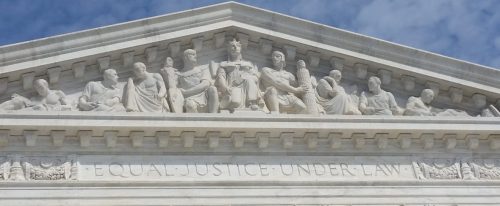
Judge Kari Dooley – Nominee for the U.S. District Court for the District of Connecticut

Republican Kari Anne Dooley, a judge for Connecticut’s Superior Court (trial court) since 2004, has been nominated for a seat on the U.S. District Court for the District of Connecticut.[1]  Before becoming a judge, she worked in private practice as well as serving for 12 years as an Assistant U.S. Attorney for the District of Connecticut.[2]

Background

Dooley, 54, was born in New York City on May 9, 1963.  She earned her B.A. in psychology from Cornell University in 1985 and her J.D. (cum laude) from the University of Connecticut School of Law in 1988.[3]  After graduating law school, she began her career in civil litigation and criminal defense at Whitman & Ransom (now Whitman Breed) in Greenwich, Connecticut.[4]  A mother of two, in 1992, Dooley moved to the public sector as an Assistant U.S. Attorney, staying in the office for twelve years.[5]  She served as counsel to the U.S. Attorney in 2004 until starting as a state court judge.[6]  She currently sits on Connecticut’s Superior Court in Waterbury and hears cases on the complex litigation docket.[7]  Dooley was nominated at the recommendation of Connecticut’s two democratic senators.[8]

History of the Seat

Dooley was nominated to a vacancy on the U.S. District Court for the District of Connecticut on December 20, 2017.  The vacancy opened on January 1, 2017, with Judge Roberty Chatigny’s move to senior status.

In May 2017, Dooley applied for the judgeship with Connecticut Senators Richard Blumenthal and Chris Murphy, both Democrats.  They recommended Dooley to the White House in August 2017.  Trump officially nominated Dooley on December 20, 2017.

Legal Career

While counsel to the U.S. Attorney, Dooley served as the Child Exploitation and Obscenity coordinator.[9]  Dooley has been involved in a number of high-profile prosecutions involving white collar fraud and child sex crimes.  She was involved in the 1993 prosecution of Stew Leonard, patriarch of the eponymous Connecticut grocery store, for $17.1 million in tax fraud.  He was sentenced to 52 months in federal prison.  She also aided in the 1997 prosecution of his son, Tom Leonard, who pleaded guilty to two counts of filing false tax returns.[10]  She worked with the child victims of the 2001 prosecution of Waterbury, Connecticut’s Mayor Philip Giordano, who was sentenced to 37 years for using his influence and political position to systematically sexually assault children.[11]  Connecticut U.S. Attorney Kevin O’Connor described her work interviewing the children victims as “masterful[].”[12]  In 2002, she brought 24 federal charges against Martin Frankel stemming from swindling small insurance companies in a scam that caused at least $200 million in losses.[13] In 2004, she prosecuted Danbury, Connecticut lawyer Bernabe “Bernie” Diaz for having sex with and receiving pornography of his girlfriend’s underage daughter.[14]

Dooley by all accounts has a reputation for being fair and a talented lawyer.  Counsel for criminal defendant Diaz, see supra, stated that Dooley “always struck [him] as being fair even though she’s a U.S. Attorney,” and “someone who knows their way around a courtroom.”[15]  Connecticut’s U.S. Attorney Kevin O’Connor has praised Dooley’s ability to work with child victims and her “demonstrated … commitment to the pursuit of justice,” and has decried her as “an immensely talented lawyer.”[16]  The state’s senators echoed these sentiments in their public statement lauding her for having “earned the deep respect of her colleagues and peers”[17]

Jurisprudence

Dooley has not presided over any published cases, and has participated in 12 unpublished cases, which address a range of criminal and civil issues.[18]  As Dooley puts it, her “judicial responsibilities have included presiding over a variety of criminal, civil, housing and juvenile matters,” and “[s]ince 2012, [she] ha[s] been assigned to the Complex Litigation Docket in Waterbury, Connecticut.”[19]

Connecticut senators Richard Blumenthal and Chris Murphy, in a statement released following Dooley’s nomination, described her as having “a well-deserved reputation for her tireless work ethic, a high standard of integrity, and an admirable judicial temperament.”[20]

Speeches/Writings

While research has not revealed publications or speeches by Dooley, Dooley commented on her 2004 nomination to a seat on Connecticut’s state trial court, calling it “a real privilege,” and stating that she “look[ed] forward to staying in public service.”[21]

Overall Assessment

Dooley’s long tenure as a federal prosecutor and state court judge, as well as her glowing reputation among her legal community, make her a consensus candidate for the vacancy.  Although research has revealed relatively little about Dooley, the unanimously positive endorsements she has received for her work both as a lawyer and as a judge suggest an even-handed and thoughtful approach, which should, logically speaking, translate to an apolitical approach as well.


[18] Westlaw search conducted by author, January 21, 2018.

[19] https://linkedin.com, input “Kari Dooley” in search, first result.

J. Campbell Barker – Nominee to the U.S. District Court for the Eastern District of Texas

Last year, Brett Talley’s nomination to the federal bench died as doubts were raised about his temperament, youth, and inexperience.  Born in 1981, Talley was only 36 at the time of his nomination.  While the Trump Administration has yet to send a nominee as young as Talley, Cam Barker, newly tapped for the Texas federal bench, comes pretty close, at only 37 years old.  While Barker boasts an impressive resume, including stellar academic credentials, his position as Texas Deputy Solicitor General has given him a footprint in many deeply controversial cases.

Background

John Campbell “Cam” Barker was born in New Orleans, LA in 1980.  Barker attended Texas A&M University, graduating with a B.S. summa cum laude in 2002.  He proceeded to the University of Texas Law School, graduating with a J.D. with highest honors in 2005.  After graduating, Barker clerked for Judge John Walker on the U.S. Court of Appeals for the Second Circuit and then for Judge William Bryson on the U.S. Court of Appeals for the Federal Circuit.

After his clerkships, Barker joined the U.S. Department of Justice Criminal Division as a Trial Attorney.  He worked there until 2011.  During that time, he had a short stint as a Special Assistant United States Attorney on detail with the U.S. Attorney’s Office for the Eastern District of Virginia.

In 2011, Barker left the government to join the Houston office of Yetter Coleman LLP as an associate.  In 2014, Barker was named a partner at the firm.

In 2015, Barker was hired by Texas Attorney General Ken Paxton to be Deputy Solicitor General for the State of Texas, working under Solicitor General Scott Keller.  Barker continues to serve in that position today.

History of the Seat

The seat Barker has been nominated for opened on May 15, 2015, with Judge Leonard Davis’ move to senior status.  Although the seat opened with 19 months left in the Obama Administration, no nominee was ever put forward to fill the vacancy, possibly due to an inability to reach an agreement with Texas’ Republican Senators, John Cornyn and Ted Cruz.

In February 2017, Barker applied for a judgeship with the Federal Judicial Evaluation Committee set up by Cornyn and Cruz.[1]  He interviewed with the Committee in March and then with Cornyn and Cruz in May.  Barker’s name was submitted to the White House in July 2017.[2]  After interviews with the White House Counsel’s Office and the Department of Justice, Barker was nominated on January 23, 2018.

Legal Experience

Other than his clerkships, Barker has held three primary legal positions: as a trial attorney with the Department of Justice; in private practice with Yetter Coleman; and as Deputy Solicitor General for Texas.  In these positions, Barker has practiced extensively in state and federal courts.

Department of Justice

From 2007 to 2011, Barker worked in the appellate section of the Criminal Division of the Department of Justice.[3]  In this capacity, Barker argued 12 criminal appeals in the federal appellate courts, generally defending convictions in federal criminal actions,[4] although, in some cases, Barker also appealed from adverse lower court rulings.[5]

In 2009, Barker detailed at the U.S. Attorney’s Office for the Eastern District of Virginia, where he was the lead prosecutor against three MS-13 gang members who were subsequently convicted of conspiracy and racketeering.[6]

Yetter Coleman

From 2011 to 2015, Barker worked as an associate and a partner at Yetter Coleman LLP.  In this role, Barker primarily carried a civil litigation caseload, including representing Bear Ranch, a beef producer, in a contract dispute,[7] and defending Oklahoma Gas & Electric Co. in a multidistrict patent infringement suit.[8]

Other than his civil docket, Barker also represented a Nepali immigrant seeking political asylum in the United States after facing torture from Maoists in Nepal.[9]  Barker was able to reverse the Board of Immigration Appeals decision denying his client asylum.[10]

Deputy Solicitor General

Since 2015, Barker has served as Deputy Solicitor General in Texas.  In this capacity, Barker has participated in a number of controversial cases.

For example, Barker was on the legal team, alongside Keller and Fifth Circuit nominee Andy Oldham, that sought to enjoin the Obama Administration’s DAPA initiative.  Barker succeeded in getting a nationwide injunction against the initiative from U.S. District Judge Andrew Hanen and in defending that injunction before the Fifth Circuit and the U.S. Supreme Court.[11]  The Texas legal team was able to convince Judge Hanen that Texas suffered an injury from the Obama Administration’s prioritization of certain deportations and that the DAPA initiative violated the separation of powers.[12]

In another controversial case, Barker defended Texas’ Voter ID law, which was challenged as an unconstitutional poll tax, being passed with a discriminatory purpose and effect, and creating a substantial burden to the right to vote.[13]  The law has been struck down by Judge Nelva Gonzalez Ramos, whose injunction has been stayed pending appeal.[14]

Barker has also represented the State of Texas as intervenors in the suits over President Trump’s executive orders restricting entry into the United States for travelers from seven predominantly Muslim countries, seeking to defend the constitutionality of the orders.[15]

Writings

As a law student, Barker authored an article discussing the statutory damages award for copyright infringement.[16]  In the article, Barker argues that the aggregation of statutory damages across many instances of misconduct creates a penalty “so large that it becomes grossly excessive in relation to any legitimate interest in punishment and deterrence.”[17]  He notes that this aggregation becomes particularly severe when imposed against those engaged in unauthorized file sharing, such as through sites such as Napster.[18]

Barker argues in the note that, because the statutory damages scheme under the Copyright Act is “punitive” in nature, that it is limited by the Substantive Due Process Clause, as interpreted under BMW of North America, Inc. v. Gore.[19]  He also notes that a defendant who illegally shares multiple files is not proportionally more culpable than a defendant who illegally shares one.[20]  As such, Barker endorses a rethinking of the statutory damages scheme and suggests the imposition of “much smaller penalties across a larger spectrum of the file-sharing public.”[21]

Overall Assessment

Given both his youth and his involvement in the controversial DAPA, voter id, and travel ban cases, it is unlikely that Barker will be considered a consensus nominee.  Barker’s critics will argue that, given Barker’s prominent role in “political” litigation at the Texas Solicitor General’s Office and his support for the travel ban, that this is an instance of the Trump Administration rewarding an unqualified supporter with a federal judgeship.

However, Barker boasts an impressive resume and can point to several factors in his favor.  Firstly, having graduated law school in 2005, Barker meets the ABA’s criteria of twelve years of practice.  Secondly, Barker has clerked for judges appointed by Republican and Democratic presidents.  Thirdly, Barker worked at the Department of Justice under both the Bush and the Obama Administration, defending their legal positions in court.  Finally, Barker can point to his defense in the Sharma case to counter suggestions that he is anti-immigrant.

Barker’s law review note raises an additional point.  While it may not be representative of his current views, the article demonstrates a strong concern with the proportionality of punishment and endorses the active use of the Substantive Due Process Clause to limit civil (and criminal) penalties that are excessive.  If Barker maintains these views, it is possible that he may yet end up endearing himself to liberals and disappointing many conservatives on the bench.


[1] Sen. Comm. on the Judiciary, 115th Cong., J. Campbell Barker: Questionnaire for Judicial Nominees 35.

[2] See id.

[3] See id. at 14.

[4] See, e.g., United States v. D’Andrea, 648 F.3d 1 (1st Cir. 2011) (reversing denial of motion to suppress).

[5] See, e.g., United States v. Crespo-Rios, 645 F.3d 37 (1st Cir. 2011) (reversing grant of motion to suppress).

[6] United States v. Gil Bernandez, No. 1:09-cr-216 (E.D. Va.), aff’d, 439 Fed. App’x. 209 (4th Cir. 2011), cert. denied, 565 U.S. 1160 (2012).

[7] See Bear Ranch, LLC v. Heartbrand Beef, Inc., No. 6:12-cv-14 (S.D. Tex.).

[8] See Transdata, Inc. v. Oklahoma Gas & Electric Co., No. 5:11-cv-1032 (W.D. Okla.).

[9] See Sharma v. Holder, 729 F.3d 407 (5th Cir. 2013).

[10] See id. at 413.

[11] See Texas v. United States, 86 F. Supp. 3d 591 (S.D. Tex. 2015), aff’d, 809 F.3d 134 (5th Cir. 2015), aff’d by an evenly divided court, 136 S. Ct. 2271 (2016), reh’g denied, 136 S. Ct. 2271 (2016).

[12] See id.

[13] See Veasey v. Abbott, 796 F.3d 487 (5th Cir. 2015).

[14] See Veasey v. Abbott, 265 F. Supp. 3d 684 (S.D. Tex. 2017), order stayed pending appeal by 870 F.3d 387 (5th Cir. 2017).

[15] See Int’l Refugee Assistance Project v. Trump, 857 F.3d 554 (4th Cir. 2017).  See also Int’l Refugee Assistance Project v. Trump, 2018 U.S. App. LEXIS 3513 (4th Cir. 2018) (en banc); State of Hawaii v. Trump, 859 F.3d 741 (9th Cir. 2017).

[16] J. Cam Barker, Grossly Excessive Penalties in the Battle Against Illegal File Sharing: The Troubling Effects of Aggregating Minimum Statutory Damages for Copyright Infringement, 83 Tex. L. Rev. 525 (Dec. 2004).

[17] Id. at 527.

[18] See id.

[19] Id. at 538 (citing 517 U.S. 559 (1996)).

[20] Id. at 553.

[21] See id. at 559.

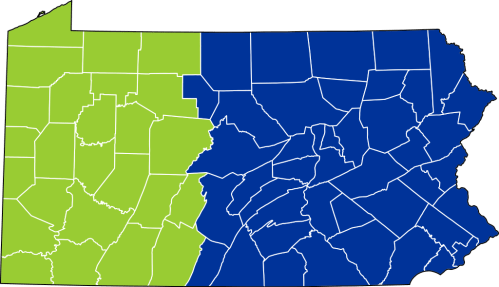
Judge Susan Paradise Baxter – Nominee for the U.S. District Court for the Western District of Pennsylvania

A well-respected magistrate judge with over twenty-two years on the bench, Judge Susan Paradise Baxter is a consensus nominee from the Trump Administration.  Her moderate background and support from senators of both parties, as well as her previous nomination from President Obama, should ensure a relatively smooth confirmation process.

Background

A Western Pennsylvania native, Baxter was born Susan Rose Paradise on September 20, 1956, in Latrobe, in the Pittsburgh suburbs.[1]  Baxter attended Pennsylvania State University, overlapping with fellow nominee Marilyn Horan, and graduating with a B.S. in 1978.  Baxter went on to get a Masters in Education and then a Juris Doctor from Temple University.[2]

After graduating, Baxter joined Cole Raywid & Braverman (now Davis Wright & Tremaine LLP) in Washington D.C. as an associate.  In 1989, Baxter became a partner at the firm.

In 1994, Baxter returned to Pennsylvania to serve as a court solicitor for the Court of Common Pleas for Erie County.[3]  A year later, Baxter was named to be a federal magistrate judge for the U.S. District Court for the Western District of Pennsylvania.[4]  Baxter continues to serve in that position today.

History of the Seat

The seat Baxter has been nominated for opened on August 16, 2013, with the resignation of Judge Sean McLaughlin.  In August 2013, Baxter applied for a federal judgeship with the application committee set up by Pennsylvania’s U.S. Senators Bob Casey (D-PA) and Pat Toomey (R-PA).[5]  Baxter interviewed with Casey and his staff in early 2015 and with Toomey in March of that year.[6]  In July 2015, Baxter was then nominated by President Obama for the vacancy on the U.S. District Court for the Western District of Pennsylvania.[7]

While Baxter had bipartisan support for the seat and was unanimously voted out of the Judiciary Committee in January 2016, she never received a floor vote and her nomination was returned at the end of the 114th Congress.

In January 2017, Toomey and Casey indicated their support for re-nominating Baxter for the Western District.  Baxter was officially re-nominated for the vacancy on December 20, 2017.[8]

Legal Experience

From 1983 to 1992, Baxter worked as an associate and a partner at Cole Raywid & Braverman in Washington D.C.  At the firm, Baxter handled approximately 100 cases, going to trial in ten cases.[9]  Among the most significant matters that Baxter handled at the firm, she represented a class of over one hundred former employees and stockholders of U.S. News & World Report in bringing an ERISA action.[10]  In 1994, Baxter’s family moved to Erie and Baxter worked as the Solicitor to the Erie County Court of Common Pleas, representing the judges on the court .[11]

Jurisprudence

Baxter has served as a federal magistrate judge for the last twenty two years.  During this time, Baxter handles pretrial matters in criminal and civil cases, as well as offering reports and recommendations to district court judges.[12]  Baxter also presides over civil cases with the consent of both parties, handling 20 cases to verdict and judgment over her tenure on the bench.[13]  Baxter has also written over 1300 opinions.[14]

Among her more prominent cases, Baxter presided over a class action suit under the Americans with Disabilities Act (ADA) challenging the lack of wheelchair ramps in many Erie intersections.[15]  Baxter certified the class of plaintiffs in the case, and presided over the entry of a consent decree to ensure compliance with the ADA.[16]  In another notable case, Baxter presided over unsuccessful settlement negotiations related to alleged Clean Air Act violations committed by the Erie Coke Corporation.[17]

Over the last twenty two years, Baxter has been reversed approximately nineteen times in over 1300 decisions she has made.[18]  In seventeen cases, Baxter’s report and recommendation was adopted by the district court, but the decision was ultimately reversed by the U.S. Court of Appeals for the Third Circuit.[19]  In two cases, Baxter’s report and recommendation was rejected by the district court, but was ultimately imposed by the Third Circuit.[20]

Political Activity

While Baxter is a Democrat, she has not been involved with any political party or campaign.[21]

Overall Assessment

Generally speaking, any nominee put forward by two administrations of different political parties is likely to be fairly uncontroversial.  Baxter is no different.  Her record on the bench reflects a close adherence to precedent and her low reversal rate suggests her relatively mainstream jurisprudence.  Furthermore, she has largely avoided controversial positions throughout her career and has the enthusiastic support of her home state senators (both of different political parties).  As such, Baxter will likely be confirmed swiftly with a strong bipartisan majority.


[1] Sen. Comm. on the Judiciary, 114th Cong., Susan Paradise Baxter: Questionnaire for Judicial Nominees 1.

[2] See id.

[3] See id. at 2.

[4] See id. 

[5] See id. at 50-51.

[6] Id.

[7] Press Release, White House, President Obama Nominates Seven to Serve on the United States District Courts (July 30, 2015) (on file at https://obamawhitehouse.archives.gov).

[8] Press Release, President Donald J. Trump Announces Ninth Wave of Judicial Nominees and Tenth Wave of United States Attorney Nominees (December 20, 2017) (on file at www.whitehouse.gov/thepressoffice).

[9] See Baxter, supra  n. 1 at 43.

[10] See Foltz v. U.S. News & World Report, Inc., Case No. 84-447 (D.D.C.).

[11] See Baxter, supra n. 1 at 43.

[12] See Baxter, supra n. 1 at 17.

[13] See id.

[14] Id.

[15] See Barrier Busters v. City of Erie, Civil Action No. 02-203 Erie.

[16] See id.

[17] Lisa Thompson, Erie Coke, Regulators Reach No Settlement: Erie Coke Case Goes to Judge After Settlement Negotiations Stall, Erie Times-News, Apr. 1, 2010.

[18] See Baxter, supra n. 1 at 33-37.

[19] See Haskell v. Superintendent Greene, SCI, Civil Action 10-249 Erie, 2015 WL 5227855 (W.D. Pa. Sept. 8, 2015), rev’d, 866 F.3d 139 (3d Cir. 2017) (reversing district court denial of writ of habeas corpus based on the state’s use of perjured testimony); Byrd v. Aaron’s, Inc., Civil Action 11-101 Erie, 2014 WL 1316055 (W.D. Pa. Mar. 31, 2014), rev’d and remanded, 784 F.3d 1154 (3d Cir. 2015) (reversing denial of class certification); Henry v. City of Erie, Civil Action 10-260 Erie, 2011 U.S. Dist. LEXIS 110562 (W.D. Pa. Sept. 28, 2011), rev’d and remanded, 728 F.3d 275 (3d Cir. 2013) (reversing denial of motion to dismiss based on qualified immunity); Tindell v. Penn., Civil Action 11-173 Erie (decision to revoke prisoner’s in forma pauperis due to three-strikes rule reversed by 3d Circuit); Torrence v. Sobina, Civil Action 10-217 Erie, 2011 WL 4473122 (W.D. Pa. Sept. 11, 2011), vacated and remanded, 455 Fed. Appx. 140 (3d Cir. Dec. 27, 2011) (reversed denial of plaintiff’s claims based on Eleventh Amendment immunity and remanded to dismiss for failure to exhaust); Mutschler v. SCI Albion CHCA, Civil Action 09-265 Erie, 2010 WL 3809849 (W.D. Pa. Sept. 23, 2010), aff’d in part and rev’d in part, 445 Fed. Appx. 617 (3d Cir. Sept. 27, 2011) (reversing dismissal of Eighth Amendment claim of deliberate indifference); DiLauri v. Mullen, Civil Action 09-198 Erie, 2011 WL 1428092 (W.D. Pa. Apr. 13, 2011), adopted by 2011 WL 2415243 (W.D. Pa. June 13, 2011), aff’d in part and vacated in part, 477 Fed. Appx. 944 (3d Cir. 2012) (reversing dismissal of plaintiff’s claims based on failure to plead involvement of defendants); Cauvel v. Schwan Home Servs. Inc., Civil Action 08-134 Erie, 2010 WL 5476698 (W.D. Pa. Dec. 31, 2010), rev’d and remanded, 458 Fed. Appx. 131 (3d Cir. Jan. 20, 2012) (reversing grant of summary judgment where genuine issue of material fact existed); Royster v. United States, Civil Action 07-228 Erie, 2010 WL 936764 (W.D. Pa. Mar. 11, 2010), rev’d and remanded, 475 Fed. Appx. 417 (3d Cir. Mar. 30, 2012) (reversing dismissal of FTCA claim for failure to exhaust); Nicholas v. Corbett, Civil Action 06-129 Erie, 2007 WL 1163694 (W.D. Pa. Apr. 18, 2007); Alston v. Forsyth, Civil Action 05-168 Erie, 2010 WL 95089 (W.D. Pa. Jan. 6, 2010), rev’d and remanded, 379 Fed. Appx. 126 (3d Cir. 2010) (reversing grant of summary judgment to defendant); Grier v. Klem, Civil Action 05-05 Erie, rev’d and remanded, 591 F.3d 672 (3d Cir. Jan. 12, 2010) (reversing dismissal of 1983 action based on intervening Supreme Court jurisprudence); Davila-Bajana v. Holohan, Civil Action 04-253 Erie, rev’d and remanded, 309 Fed. Appx. 606 (3d Cir. Feb. 5, 2009) (reversing dismissal of Eighth Amendment claim due to failure to exhaust); Armann v. Warden-McKean, Civil Action 04-118 Erie, 2006 WL 2882954 (W.D. Pa. Oct. 6, 2006), adopted by 2007 WL 1576407 (W.D. Pa. May 31, 2007), rev’d, 549 F.3d 279 (3d Cir. 2008) (reversing recommendation for evidentiary hearing in military tribunal challenge); Cooleen v. LaManna, Civil Action 04-63 Erie, rev’d and remanded, 248 Fed. Appx. 357 (3d Cir. 2007) (reversing dismissal of Eighth Amendment claim); Camp v. Brennan, Civil Action 98-180 Erie, aff’d in part and rev’d in part, 219 F.3d 279 (3d Cir. 2000) (reversing dismissal for failure to exhaust); Nelson v. Jashurek, Civil Action 95-97 Erie, rev’d and remanded, 109 F.3d 142 (3d Cir. 1997) (reversing dismissal of excessive force claim).

[20] See UPS Freight v. Nat’l Union Fire Ins. Co., Civil Action 06-137 Erie, 2007 WL 1880962 (W.D. Pa. June 26, 2007), vacated by 428 Fed. Appx. 168 (3d Cir. 2011); Jewell v. Reno, 297 F.3d 305 (3d Cir. 2002) (rejecting district court dismissal, contrary to magistrate recommendation, of plaintiff’s as-applied challenge).

[21] See Baxter, supra n. 1 at 40-41.

William Jung – Nominee to the U.S. District Court for the Middle District of Florida

It is not uncommon for unconfirmed nominees at the end of a president’s term to be renominated by a future president and then confirmed.  However, William Jung is unique as a nominee to have been renominated by two presidents of different parties only to see both nominations fail.  Now, Jung has been nominated by a third president and has to hope that the third time’s the charm.

Background

William Frederic Jung was born on March 29, 1958 in Fort Belvoir, Virginia.  Jung graduated magna cum laude from Vanderbilt University in 1980 and summa cum laude from the University of Illinois College of Law in 1983.  After graduating, Jung clerked for Judge Gerald Bard Tjoflat on the U.S. Court of Appeals for the Eleventh Circuit and for then-Associate Justice William Rehnquist on the U.S. Supreme Court.[1][2]

While most Supreme Court clerks parlay their clerkships into D.C.-based positions at large law firms, Jung instead joined the Tampa office of Carlton Fields Jordan Burt, P.A. as an associate.[3]  After two years, Jung moved to Miami to join the U.S. Attorney’s Office for the Southern District of Florida as an Assistant U.S. Attorney (AUSA).[4]  In 1990, Jung moved back to Tampa to be an AUSA in the Middle District of Florida.[5]

In 1993, Jung joined Anthony K. Black in starting the law firm Black & Jung, P.A.[6]  The firm was renamed Jung & Sisco, P.A. in 2000 when Black left and attorney Paul Sisco joined the firm.  Jung continues to practice as a partner at the firm to the present.

In 2007, Jung was one of 36 applicants to fill two vacant judgeships on the U.S. District Court for the Middle District of Florida.[7]  He was selected as one of four finalists by U.S. Senators Bill Nelson (D-FL) and Mel Martinez (R-FL).[8]  On July 10, 2008, Jung and U.S. Magistrate Judge Mary Stenson Scriven were nominated for the vacancies by President George W. Bush.  While Scriven was confirmed by the Senate on September 26, 2008, Jung did not get a hearing from the Democratic-controlled Judiciary Committee and his nomination was returned to the President.  President Obama declined to renominate Jung and instead nominated another finalist, Judge Charlene Honeywell, who was confirmed.

In 2013, Jung again applied to fill one of two open judgeships on the Middle District.[9]  Nelson and Sen. Marco Rubio (R-FL) selected Jung as one of four finalists.[10]  However, Obama chose to appoint two other finalists, Judge Carlos Mendoza and Paul Byron, who were confirmed.

In 2015, when two more seats opened on the Middle District, Jung applied once more.[11]  This time, Jung was nominated by Obama for the vacancy, alongside Judge Patricia Barksdale.  However, as in 2008, Jung’s nomination did not receive a hearing from the Republican-controlled Senate Judiciary Committee and was returned unconfirmed to the President.

History of the Seat

Jung has been nominated to a seat on the U.S. District Court for the Middle District of Florida.  This seat opened on August 1, 2015, when Judge Anne Conway moved to senior status.  On April 28, 2016, Jung was nominated by President Obama to fill this vacancy.  However, the Senate did not take any action on Jung’s nomination.

In early 2017, Nelson and Rubio urged Trump to renominate Jung and two other unconfirmed Obama picks in Florida.[12]  Jung was formally nominated on December 20, 2017.

Legal Experience

Jung started his legal career as a litigation associate at Carlton Fields.  In this role, Jung tried one “slip and fall” trial and handled one appeal in the Eleventh Circuit before becoming a federal prosecutor.[13]  As a federal prosecutor, Jung tried nearly 40 federal trials including white collar and public corruption cases.  Among his more notable cases, Jung prosecuted Tampa lawyer Charles Corces for “fixing” cases in collusion with state prosecutors.[14]

In 1993, Jung left the U.S. Attorney’s Office to start his own law firm.  In this role, Jung’s practice is evenly divided between complex civil and criminal defense matters.  Jung has particularly made a name in white collar defense, representing, among others, baseball players prosecuted for their use of steroids,[15] healthcare executives accused for accounting fraud,[16] a seafood company accused of importing rancid shrimp,[17] and the human resources director of a company alleged to have hired undocumented workers.[18]

Political Activity

Jung has been fairly active as a Republican donor, donating $2500 for Martinez’s 2004 campaign and $2500 to Rubio’s 2010 campaign, among others.[19]  Additionally, Jung served on the Hillsborough County Republican Central Executive Committee between 1998 and 2002.[20]

Jung has also supported Florida Democrat Dan Gelber, hosting a reception for his senate campaign in 2010 and donating $1350 to his campaign.[21]

Writings

Throughout his legal career, Jung has occasionally written on issues of law and policy.  Three articles that Jung has authored are particularly interesting.

Corporate Rights

In 1983, as a law student, Jung authored an article arguing that the Indictment Clause of the Fifth Amendment, which prohibits prosecution for a capital or infamous crime without a grand jury indictment, applies to corporations.[22]  While acknowledging that a corporation cannot face a capital charge, Jung delves into the common law history of “infamy” to argue that corporate infamy is not based on the potential for incarceration.[23]  Rather, Jung argues that, given the importance of public opinion on a corporation, it serves as a serious deterrent on criminal conduct.[24]  As such, Jung argues that corporations should receive the protections of indictment via grand juries.

Miranda v. Arizona

In a 2009 article, Jung discussed the Supreme Court decision in Miranda v. Arizona and the role of Chief Justice Rehnquist in reshaping the jurisprudence.[25]  Jung also makes a series of recommendations to improve Miranda including the implementation of uniform warnings and a requirement that all custodial interrogations be recorded.[26]

School Desegregation

In 2006, Jung wrote for the Florida Bar Journal in praise of his former boss Judge Tjoflat: specifically, praising Tjoflat’s implementation of the Supreme Court’s desegregation mantle in Swann v. Charlotte-Mecklenburg Board of Education as applied to the segregated Jacksonville school district.[27]  Specifically, Jung’s praises Tjoflat’s decision to insist of immediate desegregation rather than gradual and suggests that the judge is an unlikely hero of desegregation alongside civil rights heroes such as the Fifth Circuit four.[28]

Overall Assessment

While Jung’s last two nominations ended in disappointment, there is good reason to expect Jung to be confirmed this time around.  First, Jung’s nomination has the requisite qualifications for a district court appointment.  He has over thirty years of federal practice experience and has handled almost fifty federal trials.  Second, Jung is not particularly controversial, having the support of both Rubio and Nelson.  Finally, Jung’s last two nominations were made by a lame duck president facing an opposition congress in the last year of his term.  This time, Jung faces a senate that is eager to confirm Trump’s picks.  As such, his nomination will likely be confirmed fairly smoothly.

During the confirmation process, Jung may be asked to elaborate his views on the proper role of a trial judge, given his strong praise for Judge Tfolat’s assertive actions during the Jacksonville desegregation crisis.  He may also be asked to explain his views on corporate rights and whether he has evolved his opinion that corporate crimes are “infamous” for Fifth Amendment purposes.  However, barring the unexpected, such inquiries are unlikely to derail his nomination. After all, if Bush and Obama and Trump were able to agree on Jung’s fitness for the bench, it is unlikely that senators would disagree.


[1]Jung’s tenure as a Supreme Court clerk overlapped with, among others, Arizona Supreme Court Chief Justice W. Scott Bales and former Solicitor General Donald Verrelli.

[2] Sen. Comm. on the Judiciary, 114th Cong., William F. Jung: Questionnaire for Judicial Nominees 2.

[3] See id.

[4] Id.

[5] Id.

[6] See Susan Clary, Who’s News, St. Petersburg Times, Feb. 1, 1993.

[7] Elaine Silvestrini, 36 Step Up for 2 Open Federal Judgeships, Tampa Tribune, Nov. 12, 2007.

[8] Tampa & State, Four Nominated for Federal Judgeships, St. Petersburg Times, Dec. 18, 2007.

[9] Patty Ryan, 4 Left in Search for U.S. Attorney, Tampa Bay Times, Aug. 29, 2013.

[10] Derek Gilliam, Finalists Selected for Positions; 2 from NE Florida in Running for District Judge; 1 for U.S. Attorney, Florida Times-Union, Sept. 19, 2013.

[11] See supra n. 1 at 34-35.

[12] Andrew Pantazi, Rubio, Nelson Urge Trump on 3 Judges, Florida Times-Union, March 24, 2017.

[13] See supra n. 1 at 21.

[14] See Bruce Vielmetti, Jury Begins to Decide if Lawyer Was Taking a Bribe or Entrapped, St. Petersburg Times, Dec. 10, 1992.

[15] See United States v. Scruggs, No. 5:08-cr-144 (N.D. Cal.)

[16] See United States v. Whiteside, et al., No. S97-52-cr-FtM-24(d).

[17] See United States v. Sigma Int’l Seafood et al., No. 85-95-cr-T-24 (M.D. Fla.).

[18] See United States v. Ross, et al., No. 4:10-cr-201 (S.D. Tex.)

[20] See supra n. 1 at 19.

[21] See supra n. 19.

[22] William F. Jung, Recognizing a Corporation’s Rights Under the Indictment Clause, 1983 U. Ill. L. Rev. 477 (1983).

[23] See id. at 499-503.

[24] See id. at 504-05.

[25] See William F. Jung, Not Dead Yet: The Enduring Miranda Rule 25 Years After the Supreme Court’s October Term 1984, 28 St. Louis U. Pub. L. Rev. 447 (2009).

[26] See id. at 456-58.

[27] William F. Jung, The Last Unlikely Hero: Gerald Bard Tjoflat and the Jacksonville Desegregation Crisis 35 Years Later, 80 Fla. Bar. J. 10 (March 2006).

[28] See id. at 14.

Maryellen Noreika – Nominee for the U.S. District Court for the District of Delaware

The U.S. District Court for the District of Delaware, one of the nation’s busiest trial courts, is currently down two judges.  In seeking common ground with the state’s two Democratic senators, the Trump Administration has agreed to nominate two candidates recommended by them: one is a Republican former-U.S. Attorney, Colm Connolly; the other is Maryellen Noreika, a commercial litigator and a Democrat.

Background

Maryellen Noreika was born in Pittsburgh, Pennsylvania on July 12, 1966.  Noreika attended Lehigh University in Pennsylvania, getting a Bachelor in Science in 1988.[1]  After graduating, Noreika received an M.A. in Biology from Columbia University and then a J.D. magna cum laude at the University of Pittsburgh.

After graduating law school, Noreika joined Morris, Nichols, Arsht & Tunnell LLP, where she had been a summer associate.[2]  While at the firm, she briefly overlapped with her fellow nominee Connolly, who was a partner at the firm before his appointment as U.S. Attorney.  In 2001, Noreika became a partner at the firm and has served in that capacity until the present.

History of the Seat

Noreika has been nominated for a vacancy on the U.S. District Court for the District of Delaware.  This seat was opened by Judge Gregory Sleet’s move to senior status on May 1, 2017.  Noreika’s nomination was recommended and made in tandem with that of Connolly’s, who was nominated to fill a second vacancy on the court.

In mid-2017, Noreika interviewed with the selection committee set up by Senators Tom Carper and Chris Coons (D-DE).[3]  Noreika was one of three candidates recommended by the committee.[4]  She was formally nominated on December 20, 2017.

Legal Experience

Noreika has spent virtually her entire legal career at the firm of Morris, Nichols, Arsht & Tunnell LLP, starting as a summer associate while in law school, becoming an associate after she graduated, and finally becoming a partner in 2001.[5]  While at the firm, Noreika solely practiced civil litigation, primarily focusing on intellectual property issues.[6]  Among the most prominent cases she handled, Noreika represented a drug manufacturer in a successful suit based on infringement of hydrocone patents.[7]

In another notable case, Noreika represented Paradox Entertainment, whose character Red Sonya had been sued for trademark infringement by Red Sonja LLC.[8]  Serving as lead counsel for Paradox, Noreika was able to settle the infringement suit on the second day of trial for nominal damages of $1.[9]

Political Activity

Noreika may be a registered Democrat but she has donated several times to Republicans including the Presidential campaigns of John McCain and Mitt Romney.[10]  Noreika has also donated $3000 to Sen. Tom Cotton (R-AR) and $1000 to then-Sen. Rick Santorum in 2005.[11]  On the other side, Noreika gave $1000 to Sen. Hillary Clinton (D-NY) in 2008 as well as $1000 to the DSCC in 2009.[12]

Overall Assessment

The federal trial court in Delaware is home to some of the most complex commercial litigation in the country.  As such, Noreika, with the depth of her experience, is well-suited to this specialized jurisdiction.  While Noreika lacks the criminal experience to handle a significant portion of her docket, her civil experience more than makes up for this deficiency.

Furthermore, given Noreika’s strong support from Delaware’s senators, she is likely to be confirmed comfortably.  Additionally, as Noreika is, on one hand, a registered Democrat, and, on the other, a frequent donor to Republican candidates, both sides are likely to find her an acceptable choice.


[1] Sen. Comm. on the Judiciary, 115th Cong., Maryellen Noreika: Questionnaire for Judicial Nominees 1.

[2] See id. at 2.

[3] Id.

[4] See Tom McParland, Sources: Trump to Tap Connolly, Noreika for Delaware District Court, Delaware Law Weekly, Sept. 22, 2017, https://www.law.com/delawarelawweekly/sites/delawarelawweekly/2017/09/22/sources-trump-to-tap-connolly-noreika-for-delaware-district-court/.  

[5] See Noreika, supra n.1 at 9-10.

[6] See id. at 10.

[7] Recro Gainesville LLC v. Actavis Laboratories FL Inc., C.A. No. 14-1118 (GMS) 2017 WL 710051 (D. Del. Feb. 24, 2017).

[8] Red Sonja LLC v. Paradox Entertainment Inc., C.A. No. 06-270 (SLR) (D. Del.).

[9] Sen. Comm. on the Judiciary, 115th Cong., Maryellen Noreika: Questionnaire for Judicial Nominees 15.

[10] Center for Responsive Politics, https://www.opensecrets.org/donor-lookup/results?name=maryellen+noreika&order=desc&sort=D (last visited Jan. 31, 2018).

[11] See id.

[12] Id. 

Colm Connolly – Nominee for the U.S. District Court for the District of Delaware

Ten years ago, Colm Connolly’s nomination for a federal judgeship failed due to the opposition of a home state senator.  Now, he is getting a second opportunity, one that is much more likely to be successful.

Background

A native Delawarean, Colm Felix Connolly was born in Wilmington on October 18, 1964.  Connolly attended the University of Notre Dame, getting his B.A. in 1986.[1]  After graduating, Connolly moved to London to get a Masters in Science from the London School of Economics.  After the program, Connolly joined the Delaware Department of the Treasury as Special Assistant to the Secretary.[2]

In 1988, Connolly joined the Duke University School of Law, getting a J.D. in 1991.[3]  After graduating, Connolly clerked for Delaware native Judge Walter Stapleton on the U.S. Court of Appeals for the Third Circuit.[4]

After his clerkship, Connolly joined the U.S. Attorney’s Office for the District of Delaware, working as a federal prosecutor under U.S. Attorney Gregory Sleet.[5]  After seven years there, Connolly left to join Morris, Nichols, Arsht & Tunnell LLP.[6]

In 2001, Connolly was selected by newly elected President George W. Bush to serve as the U.S. Attorney for the District of Delaware.[7]  Connolly served as U.S. Attorney throughout the Bush Administration, resigning upon the election of President Obama to join Morgan Lewis & Brockius LLP as a partner.[8]  Connolly serves as a partner there currently.

In late 2006, U.S. District Judge Kent Jordan was elevated to the Third Circuit, and Connolly was considered the prime candidate to replace him.[9]  In March 2007, U.S. Rep. Mike Castle (R-DE) recommended Connolly to fill the vacancy left by Jordan.[10]  On February 26, 2008, Bush formally nominated Connolly for the seat.[11]  However, Connolly did not have the support of then-U.S. Sen. Joe Biden, who used his blue slip to block the nomination.[12]  As such, Connolly’s nomination never received a hearing or a vote.

History of the Seat

Connolly has been nominated for a vacancy opened by Judge Sue Lewis Robinson’s move to senior status on February 3, 2017.  Connolly’s nomination was recommended and made in tandem with that of Maryellen Noreika, a Democrat, who was nominated to fill a second vacancy on the court.

In November 2016, after the election of Donald Trump, Connolly reached out to U.S. Senator Tom Carper (D-DE) to express his interest in the seat opening up by Robinson’s retirement.[13]  In mid-2017, Connolly interviewed with the selection committee set up by Carper and U.S. Sen. Chris Coons (D-DE).[14]  Connolly also interviewed with a parallel process led by Delaware Republican Party Chairman Mike Harrington Sr.[15]  Ultimately, Connolly was the only candidate recommended by both processes.[16]  He was formally nominated on December 20, 2017.

Legal Experience

Connolly’s twenty-five years in legal practice can be broken down into two parts: fifteen years as a federal prosecutor; and ten in private practice.

U.S. Attorney’s Office

In 1992, Connolly joined the U.S. Attorney’s Office for the District of Delaware, primarily handling criminal cases, including drug and firearm crimes, money laundering, and civil rights violations.[17]  In 1997, Connolly was the lead attorney in the most significant case of his career, the prosecution of prominent Delaware attorney Thomas Capano for the murder of his mistress Anne Marie Fahey.[18]  As the head of the prosecution, Connolly developed the investigation plan and worked with witnesses to build the case against Capano.[19]  Connolly also led the examination of witnesses, including Capano, prompting an outburst with Capano calling Connolly a “heartless, gutless, soulless disgrace for a human being.”[20]  Ultimately, Connolly was able to secure a guilty verdict and the death penalty for Capano,[21] although the penalty was ultimately overturned by the Delaware Supreme Court.

In 2001, the 36-year-old Connolly was appointed to be U.S. Attorney for the District of Delaware.  In his role as U.S. Attorney, Connolly dramatically increased the rate of prosecutions in the office.[22]  Among his prosecutions, Connolly helped secure the largest forfeiture in Delaware history.[23]  Connolly’s prosecutorial zeal also attracted some criticism.  After Connolly indicted the Democratic leadership in New Castle County, the defendants complained that his conduct was motivated by political considerations.[24]

In 2007, Connolly’s name was found on a Justice Department list designating U.S. Attorneys to be removed or fired.[25]  The concerns regarding Connolly were never made clear and Connolly served out his term as U.S. Attorney until the end of the Bush Presidency.[26]

Private Practice

Connolly has had two stints in private practice.  First, Connolly worked as a partner with Morris, Nichols, Arsht & Tunnell, working primarily in civil litigation.[27]  Second, after leaving the U.S. Attorney’s Office in 2009, Connolly has worked as a partner at Morgan, Lewis & Bockius LLP.[28]  In this capacity, Connolly has handled primarily commercial litigation, but has also handled a few criminal defense matters.  Among his more prominent clients, Connolly represented Kathy Klyce, the widow of Jack Wheeler, a prominent defense consultant who was found dead in a landfill in 2010.[29]

Political Activity

Connolly has been active with the Delaware Republican Party, serving in volunteer capacities on the campaigns of former-U.S. Sen. Bill Roth (R-DE), former-U.S. Rep. Mike Castle (R-DE), and as the co-chair of Delaware Lawyers for Bush.[30]  Additionally, Connolly has donated to the Republican Party of Delaware, U.S. Rep. Susan Brooks (R-PA), former U.S. Rep. Pat Meehan (R-PA) and the 2012 campaign of Mitt Romney.[31]

Overall Assessment

While Connolly may have faced disappointment the first time he was tapped for the federal bench, all signs point to a smooth confirmation this time around.

First of all, unlike last time, Connolly has the support of his home state senators, with Carper and Coons expressing their support for the nomination.[32]  Second, Connolly is also appearing before a Republican controlled senate (with no judicial filibuster).  As such, unified Republican support (and the support of his home-state Democrats) should be enough to confirm him.

On a more substantive level, Connolly is well-qualified for a federal judgeship.  His years as a federal prosecutor should leave him well-equipped to handle criminal trials and sentencing as a judge.  Additionally, his time in private practice has given him the requisite civil experience as well.

As such, barring any Petersen-like slip-ups in his hearing, Connolly is a strong bet for a bipartisan confirmation.  With the overburdened federal court in Delaware already half-empty, his future colleagues will only be too pleased to get some relief.


[1] Sen. Comm. on the Judiciary, 115th Cong., Colm Connolly: Questionnaire for Judicial Nominees 1.

[2] See id. at 2.

[3] See id. at 1.

[4] See id. at 2.

[5] Id. 

[6] See id. at 2.

[7] Id.

[8] Id.

[9] David M. Drucker, Down on the Farm, Roll Call, May 8, 2007.

[10] Editorial, Judicial Appointments; Your Move, Senators, Philadelphia Inquirer, May 12, 2008.

[11] See id.

[12] See id.

[13] Sen. Comm. on the Judiciary, 115th Cong., Colm Connolly: Questionnaire for Judicial Nominees 64.

[14] Id.

[15] See Tom McParland, Sources: Trump to Tap Connolly, Noreika for Delaware District Court, Delaware Law Weekly, Sept. 22, 2017, https://www.law.com/delawarelawweekly/sites/delawarelawweekly/2017/09/22/sources-trump-to-tap-connolly-noreika-for-delaware-district-court/.  

[16] See id.

[17] Sen. Comm. on the Judiciary, 115th Cong., Colm Connolly: Questionnaire for Judicial Nominees 50.

[18] Id.

[19] George Anastasia and Bill Ordine, Federal Pressure Got Too Much for the Capanos/Were the Government’s Tactics Too Much? They are Routine – and Legal – Lawyers Say, The Philadelphia Inquirer, Nov. 23, 1997.

[20] Nation in Brief, Governor Prods Ramsey Inquiry, Atlanta Journal and Constitution, Jan. 5, 1999.

[21] George Anastasia, Capano Gets Death in Killing of Fahey/A Judge Scheduled the Execution for June 28. Appeals are Likely to Push the Date Back, Philadelphia Inquirer, Mar. 17, 1999.

[22] Editorial, Judicial Appointments; Your Move, Senators, Philadelphia Inquirer, May 12, 2008.

[23] Keith J. Kelly, Cond Gets Conned – Back-Office Manager Allegedly Embezzled $5.9M, N.Y. Post, Jan. 7, 2005.

[24] Local News, Federal Panel Indicts Top New Castle County Officials, Philadelphia Inquirer, May 27, 2004.

[25] David Johnson & Neil A. Lewis, Senate Democrats Plan A Resolution of Gonzales, N.Y. Times, May 18, 2007.

[26] Dan Eggen and Amy Goldstein, No-Confidence Vote Sought on Gonzales, Wash. Post, May 18, 2007.

[27] Sen. Comm. on the Judiciary, 115th Cong., Colm Connolly: Questionnaire for Judicial Nominees 50-51.

[28] Id. at 51.

[29] Steve Volk, Jack Wheeler Helped Build the Vietnam Wall and Worked for the White House & the Pentagon. How did he end up Dead in a Landfill?, Wash. Post, May 28, 2017.

[30] Sen. Comm. on the Judiciary, 115th Cong., Colm Connolly: Questionnaire for Judicial Nominees 48.

[31] Center for Responsive Politics, Open Secrets, https://www.opensecrets.org/donor-lookup/results?name=colm+connolly&order=desc&sort=D (last visited Jan. 30, 2018).

[32] Press Release, Office of Sen. Christopher Coons, Carper, Coons’ Judicial Candidates Nominated for U.S. District Court Bench, Dec. 29, 2017 (on file at http://www.coons.senate.gov).

Judge Marilyn Horan – Nominee for the U.S. District Court for the Western District of Pennsylvania

A longtime state judge in Western Pennsylvania, this is Judge Marilyn Horan’s second chance at a federal judgeship, her first having ended in failure due to a blockade on judicial confirmations at the end of the Obama Administration.  Given the bipartisan support behind her nomination, her distinguished background, and moderate judicial record, Horan is likely to be confirmed smoothly this time around.

Background

A Western Pennsylvania native, Marilyn Jean Horan was born on September 13, 1954 in Butler, in the outskirts of Pittsburgh.[1]  When Horan was 10, her father, a foreman at Armco Steel, was killed in a lightning strike alongside three others.[2]  Horan attended Pennsylvania State University, graduating magna cum laude in 1976.  Horan continued on to the University of Pittsburgh Law School graduating with a J.D. in 1979.  As a law student, Horan interned at the Neighborhood Legal Services Association in Butler.[3]

After graduating, Horan joined the Butler law firm Murrin, Murrin & Taylor.  Three years later, Horan became a partner and the firm was renamed Murrin, Taylor, Flach & Horan.

In 1996, Horan was appointed by Republican Governor Tom Ridge to be the first female judge on the Butler County Court of Common Pleas.[4]  Horan continues to serve as a judge there today.  In addition, Horan became a Common Pleas Court Administrative Judge in October 2017.[5]

During Horan’s tenure on the Court of Common Pleas, she has received several awards and commendations from the community including the Susan B. Anthony Award from the Women’s Bar Association of Western Pennsylvania,[6] the President’s Award from the Pennsylvania Conference of State Trial Judges,[7] the Outstanding Leadership Award from the Juvenile Justice Commission,[8] and the Anne X. Alpern Award from the Pennsylvania Bar Association Commission on Women in the Profession.[9]

In 2013, Horan applied for a federal judgeship with the application committee set up by Pennsylvania’s U.S. Senators Bob Casey (D-PA) and Pat Toomey (R-PA).[10]  Horan interviewed with Toomey and his staff in early 2014 and with Casey in early 2015.[11]  In July 2015, Horan was then nominated by President Obama for a vacancy on the U.S. District Court for the Western District of Pennsylvania created by Judge Terrence McVerry’s move to senior status.[12]  While Horan had bipartisan support for the seat and was unanimously voted out of the Judiciary Committee in January 2016, she never received a floor vote and her nomination was returned at the end of the 114th Congress.

History of the Seat

The seat Horan has been nominated for opened on April 24, 2013, with the unexpected death of Judge Gary Lancaster.[13]  On July 30, 2015, President Obama nominated Judge Robert J. Colville from the Alleghany County Court of Common Pleas to fill the vacancy created by Lancaster’s death.[14]  The nomination of Colville, a Democrat, was made as a package along with Horan’s nomination to a different seat as well as the nominations of two other Democrats.

While all four nominees in the package received a hearing on December 9, 2015, Colville and fellow Democrat John Milton Younge were blocked from Judiciary Committee consideration by Chairman Chuck Grassley, who was unhappy with their support of abortion rights.[15]  As such, Colville was not voted out of Committee and was returned unconfirmed at the end of the 114th Congress.  At the same time, Horan’s nomination for the McVerry seat was also returned unconfirmed to the President.

In January 2017, Toomey and Casey indicated their support for re-nominating Horan for the Western District.[16]  Horan was interviewed by the White House Counsel’s Office on May 15, 2017 and then maintained contact with their office while the nomination remained pending for seven months.[17]  Finally, Horan was nominated for the vacancy on December 20, 2017.[18]

Legal Experience

Horan’s sole legal occupation between law school and taking the bench was serving as an attorney at the firm of Murrin, Taylor, Flach & Horan in Butler, Pennsylvania.  At the firm, Horan handled family law, civil, and small business cases, practicing almost entirely in state court.[19]

Among other matters, Horan litigated many contentious family law cases.  In one case, Horan represented a father seeking visitation rights for his unborn child over the objection of the mother.[20]  In another case, Horan represented a mother in tracking down a child from a common law marriage who was kidnapped and taken to England by the child’s father.[21]  In another notable case, Horan successfully represented a mother in regaining custody of children that she had voluntarily relinquished to her parents.[22]

Jurisprudence

Horan has served on the Butler County Court of Common Pleas for the last twenty two years.  During this time, Horan has overseen over one thousand cases to verdict and judgment.[23]  Of these cases, the vast majority (approximately 75%) are civil cases, including municipal and administrative matters and family law.[24]

On the bench, Horan’s record has been relatively mainstream with a relatively low reversal rate.  Among over one thousand cases handled by Horan over the last twenty-two years, only approximately 26 have been reversed by a higher court.[25]  In one of her more notable reversals, Horan ruled that a defendant who had committed homicide by vehicle while under the influence had to pay restitution to the insurance company that paid out a life insurance policy to the decedent.[26]  In reversing, the Pennsylvania Superior Court found that an insurer did not constitute a victim that could claim restitution under Pennsylvania law.[27]

Political Activity

Horan is a Republican, and unsuccessfully pursued a Republican Party endorsement for a Superior Court seat in 2002.[28]  However, she has not been involved with any political party or campaign other than her own judicial campaigns.[29]

Overall Assessment

As of today, Horan’s chances of a smooth confirmation look pretty high.  She has a mainstream moderate record, is well-liked by fellow attorneys and has won several awards from legal associations.  Furthermore, she has the support of her Democratic and Republican home-state senators, as well as the backing of two different Administrations.  Finally, despite over two decades on the state bench, Horan has managed to avoid any hot-button decisions or cases.  As such, Horan looks set for a relatively painless confirmation.


[1] Sen. Comm. on the Judiciary, 115th Cong., Marilyn Jean Horan: Questionnaire for Judicial Nominees 1.

[2] Karen Kane, Horan Honored as State’s Outstanding Jurist, Pittsburgh Post-Gazette, Aug. 22, 2004.

[3] See Horan, supra n. 1 at 2.

[4] See Kane, supra n. 2.

[5] See Horan, supra n. 1.

[6] Erin Giebler, Judge Horan Receives WBA Award, Alleghany County Bar Association Lawyers Journal, Mar. 3, 2006.

[7] Kane, supra n. 2.

[8] Metro, Butler County, Pittsburgh Post-Gazette, Dec. 8, 2005.

[9] Bill Vidonic, Marilyn J. Horan, Pittsburgh Tribune Review, Apr. 9, 2014.

[10] See Horan, supra n. 1 at 55.

[11] Id.

[12] Press Release, White House, President Obama Nominates Seven to Serve on the United States District Courts (July 30, 2015) (on file at https://obamawhitehouse.archives.gov).

[13] Michael Hasch and Bobby Kerlik, Gary Lancaster, Chief U.S. Judge for Western Pa, Dead at 63, Pittsburgh Tribune Live, April 24, 2013, http://triblive.com/news/adminpage/3906347-74/district-chief-died.

[14] Press Release, White House, President Obama Nominates Seven to Serve on the United States District Courts (July 30, 2015) (on file at https://obamawhitehouse.archives.gov).

[15] Philip Wegmann, After Facing Questions on Abortion, 2 Obama Judicial Nominations Fail to Advance, The Daily Signal, Jan. 29, 2016, http://dailysignal.com/2016/01/29/after-facing-questions-on-abortion-2-obama-judicial-nominees-fail-to-advance/.  

[16] See Sen. Comm. on the Judiciary, 115th Cong., Marilyn Jean Horan: Questionnaire for Judicial Nominees 55.

[17] See id.

[18] Press Release, President Donald J. Trump Announces Ninth Wave of Judicial Nominees and Tenth Wave of United States Attorney Nominees (December 20, 2017) (on file at www.whitehouse.gov/thepressoffice).

[19] Sen. Comm. on the Judiciary, 115th Cong., Marilyn Jean Horan: Questionnaire for Judicial Nominees 47.

[20] Stroup v. Stroup (Butler County late 1980s).

[21] Jenkins v. Jenkins (Butler County approximately 1984).

[22] Cady v. Weber, 464 A.2d 423 (Pa. Super. 1983).

[23] Sen. Comm. on the Judiciary, 115th Cong., Marilyn Jean Horan: Questionnaire for Judicial Nominees 17.

[24] See id.

[25] See id. at 35-40.

[26] Commonwealth v. Opperman, CA 124 of 1999.

[27] Commonwealth v. Opperman, 780 A.2d 714 (Pa. Super. Ct. 2001).

[28] Sen. Comm. on the Judiciary, 115th Cong., Marilyn Jean Horan: Questionnaire for Judicial Nominees 45-46.

[29] See id. at 46.

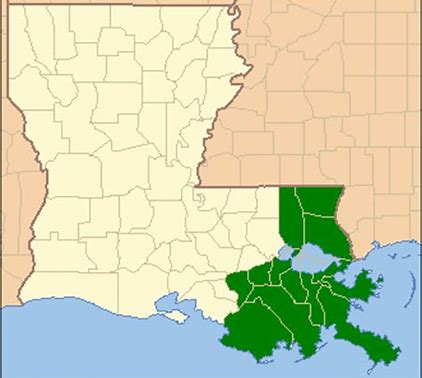
Barry Ashe – Nominee for the U.S. District Court for the Eastern District of Louisiana

A member of the conservative Federalist Society, Barry Ashe is President Trump’s first nominee to the New Orleans based Eastern District of Louisiana.

Background

Barry Weldon Ashe was born in 1956 in New Orleans, LA.  Ashe attended Tulane University, graduating summa cum laude in 1978.[1]  Ashe then joined the U.S. Navy, serving for three years.  In 1981, Ashe left the Navy to join Tulane University Law School, graduating in 1984 magna cum laude.

After graduation, Ashe clerked for Judge Carolyn Dineen King on the U.S. Court of Appeals for the Fifth Circuit.[2]  After completing his clerkship with King, Ashe joined the New Orleans office of Stone Pigman Walther Wittmann LLC as an Associate.  Ashe became a Member at the firm in 1991 and serves in that capacity today.

Ashe has served on the Executive Committee of the New Orleans Chapter of the Federalist Society since 2006.

History of the Seat

Ashe has been nominated for a vacancy on the U.S. District Court for the Eastern District of Louisiana.  This seat was opened by Judge Ivan Lemelle’s move to senior status on June 29, 2015.  On February 4, 2016, Obama nominated federal public defender Claude Kelly to fill the vacancy.[3]  Kelly, a Republican, had the support of Louisiana Senators David Vitter and Bill Cassidy.[4]

Kelly received a hearing before the Senate Judiciary Committee on May 18, 2016, and was approved without objection on June 16.  However, Kelly’s nomination never received a floor vote due to the blockade on confirmations imposed by Senate Majority Leader Mitch McConnell.

Shortly after the election of President Donald Trump, Ashe reached out to Cassidy and Louisiana Senator John Kennedy (who replaced Vitter) to express his interest in a federal judgeship.[5]  In 2017, Kennedy recommended Ashe to the White House for the vacancy.[6]

After interviews with the White House Counsel’s Office and the Department of Justice, Ashe was officially nominated on September 28, 2017.[7]

Legal Experience

Ashe has spent his entire legal career at the firm of Stone Pigman Walther Wittmann LLC.  At the firm, Ashe primarily works in commercial and appellate litigation representing financial institutions, pharmaceutical companies, and oil, gas, & chemical industries.[8]

In one of his most notable cases, Ashe represented the Tangipahoa Parish Board of Education in a suit defending an evolution disclaimer adopted by the Board.[9]  The disclaimer, required to be read to students before presenting evolution, declared that the teaching of the scientific theory of evolution in class was not meant as an endorsement and should not be taken to dissuade or influence the Biblical view of creation.[10]  The disclaimer was struck down by both Judge Marcel Livaudais on the Eastern District of Louisiana and the Fifth Circuit as violating the Establishment Clause of the First Amendment.[11]

In another notable case, Ashe argued on behalf of the Louisiana Attorney Discipline Board in favor of the constitutionality of restrictions on attorney advertising.[12]  While the Fifth Circuit upheld many of the challenged rules, it struck down restrictions on portraying judges or juries in advertisements and restrictions on the font size and speed of disclaimers.[13]

Writings

In 2000, Ashe authored an article titled “Constitutional Law: The Fifth Circuit’s War Against Religion in the Public Sphere.”[14]  In the article, Ashe argues that “the Fifth Circuit is waging a war against religion in the public sphere.”[15]  Looking at the Fifth Circuit’s decisions in five areas: public funding of parochial education; prayer at high school football games; disclaimers involving evolution; “clergy in schools” counseling program; use of school buildings for religious activities, Ashe concludes that the Fifth Circuit’s ruling in favor of a separation of church and state “evinces the court’s hostility towards religion.”[16]

Political Activity

Ashe has been a frequent donor to Louisiana Republicans, including Vitter, Cassidy, Kennedy, Rep. Steve Scalise, and former Governor Bobby Jindal.[17]  In contrast, Ashe has only donated to one Democrat: Public Service Commissioner Foster Campbell.[18]

Overall Assessment

Members of both parties will likely agree that Ashe, who has over thirty years of legal experience, is professionally qualified to serve as a trial judge.  They may differ however based on his ideology and willingness to follow precedent.

Specifically, Ashe will likely be questioned as to whether he continues to maintain that the Fifth Circuit is waging a “war on religion.”  Furthermore, he is likely to be asked if he can continue to follow Fifth Circuit precedent that he disagrees with (as he will be bound to do as a district court judge).  If Ashe is able to sufficiently answer those concerns, he will likely be confirmed easily.


[1] Sen. Comm. on the Judiciary, 115th Cong., Barry Ashe.: Questionnaire for Judicial Nominees 1.

[2] See id. at 2.

[3] Press Release, White House, President Obama Nominates Two to Serve on the United States District Court (February 4, 2016) (on file at https://obamawhitehouse.archives.gov).  

[4] The Leadership Conference, These Republican Senators Want Their Judicial Nominees Confirmed. Majority Leader McConnell Isn’t Listening, Medium, Aug. 4, 2016, https://medium.com/@civilrightsorg/these-republican-senators-want-their-judicial-nominees-confirmed-1d87e6bfc615.

[5] Sen. Comm. on the Judiciary, 115th Cong., Barry Ashe: Questionnaire for Judicial Nominees 30.

[6] Tyler Bridges, 42-Parish Area of Western Louisiana Suffers From Vacant Judgeships, The Acadiana Advocate, Aug. 22, 2017, http://www.theadvocate.com/acadiana/news/article_dad54e68-8791-11e7-9cfc-678529cbf1c6.html.  

[7] Press Release, White House, President Donald J. Trump Announces Eighth Wave of Judicial Candidates (September 28, 2017) (on file at www.whitehouse.gov/the-press-office).  

[8] Sen. Comm. on the Judiciary, 115th Cong., Barry Ashe: Questionnaire for Judicial Nominees 15.

[9] See Freiler v. Tangipahoa Parish Bd. of Educ., 185 F.3d 337 (5th Cir. 1999).

[10] Id. at 341.

[11] Id. at 348.

[12] See Public Citizen, Inc. v. Louisiana Attorney Disciplinary Bd., 632 F.3d 212 (5th Cir. 2011).

[13] See id.

[14] Barry W. Ashe, Constitutional Law: The Fifth Circuit’s War Against Religion in the Public Sphere, 46 Loy. L. Rev. 973 (Winter 2000).

[15] Id. at 976.

[16] Id. at 1027.

[18] Id.

Howard Nielson – Nominee for the U.S. District Court for the District of Utah

A conservative Washington D.C. based attorney, Howard Nielson’s ties to Utah, where he grew up and where his father served as a state legislator and congressman, have secured him a nomination for the federal bench.  However, Nielson will find his confirmation complicated by his participation in many hot-button cases, including his role in defending California Proposition 8.

Background

Howard Curtis Nielson Jr. was born in 1968 in Provo, UT.  Nielson’s father (also named Howard C. Nielson) was a professor at Brigham Young University who went on to serve in the U.S. House of Representatives as a Republican between 1983 and 1990.[1]  Nielson Jr. attended Brigham Young University, graduating summa cum laude in 1992.  He went on to spend two years at Kobe University in Japan as a Mombusho Scholar.[2]

In 1994, Nielson joined the University of Chicago Law School, where he served as articles editor at the University of Chicago Law Review.  Nielson graduated Order of the Coif in 1997, and clerked for the conservative luminary Judge J. Michael Luttig on the U.S. Court of Appeals for the Fourth Circuit.[3]  After completing his clerkship with Luttig, Nielson was hired by Supreme Court Justice Anthony Kennedy to clerk for him, joining other notable clerks that year including civil rights litigator Jeffrey Fisher, law professor Noah Feldman, Seventh Circuit Judge Amy Coney Barrett, and University of Georgia Law School Dean Bo Rutledge.

After his clerkship, Nielson joined the Washington D.C. Office of Jones Day as an Associate.[4]  After the election of President Bush, Nielson moved to the Department of Justice as Special Assistant to Deputy Attorney General Larry Thompson.[5]  He later became Counsel to Attorney General John Ashcroft and in 2003, became Deputy Assistant Attorney General in the Office of Legal Counsel, serving under then-head Jack Goldsmith.[6]

In 2005, Nielson left the Department of Justice to join the conservative law firm Cooper & Kirk as Of Counsel.  Nielson was made a Partner in 2010 and continues to serve in that capacity.  In addition to his work at Cooper & Kirk, Nielson also served as a Legal Consultant to The Boeing Company[7] between 2008 and 2014.  Nielson also taught at the J. Reuben Clark Law School at Brigham Young University between 2007 and 2014.

History of the Seat

Nielson has been nominated for a vacancy on the U.S. District Court for the District of Utah.  This seat was opened by Judge Ted Stewart’s move to senior status on September 1, 2014.  On December 16, 2015, Obama nominated former Centreville mayor Ronald G. Russell to fill the vacancy.[8]  Russell, a Republican, had the support of Utah Senators Orrin Hatch and Mike Lee.[9]

Russell received a hearing before the Senate Judiciary Committee on April 20, 2016, and was approved without objection on May 19.  However, Russell’ nomination stalled on the floor due to the blockade on confirmations imposed by Senate Majority Leader Mitch McConnell, and Democratic objections to expediting Russell’s nomination without confirming longer-pending Democrats.  Without floor action, Russell’s nomination was returned unconfirmed on January 3, 2017.

Shortly after the election of President Donald Trump, Lee reached out to Nielson to gauge his interest in a judicial appointment.[10]  In April 2017, Nielson interviewed with Hatch and was recommended by him as part of a slate of candidates to the White House.[11]

After interviews with the White House Counsel’s Office and the Department of Justice, Nielson was officially nominated on September 28, 2017.[12]

Legal Experience

Nielson began his legal career with clerkships at the U.S. Court of Appeals for the Fourth Circuit and the U.S. Supreme Court.  After the clerkships, Nielson spent two years in the Issues and Appeals Practice Group at Jones Day.  At Jones Day, Nielson primarily represented corporations in commercial litigation matters.[13]  However, he also represented the Michigan government in dismissing a suit charging the failure to provide adequate screening, diagnosis, and treatment services for Michigan children under Medicaid.[14]

Office of Legal Counsel

From 2003 to 2005, Nielson worked at the Office of Legal Counsel (OLC), which advises the Attorney General and the U.S. Government as to the legality of its actions and initiatives.  Nielson’s tenure at OLC coincided with a tumultuous time at the agency including the initial withdrawal of the Bybee memo and torture memos, the resignation of OLC head Jack Goldsmith, and the reinstatement of the Bybee memo by acting head Daniel Levin.[15]

Cooper and Kirk

In 2005, Nielson joined the Washington D.C. Office of Cooper & Kirk, a firm founded by Republican luminary Charles J. Cooper.  In his twelve years at the firm, Nielson has participated in many cases representing conservative causes.

In perhaps his most notable case, Nielson joined Cooper in defending Proposition 8 (“Prop 8”), the California voter initiative that restricted marriage to opposite-sex couples.  As defense counsel in the case, Nielson developed the arguments in defense of the Proposition, citing a state interest in the longstanding definition of marriage, and arguing that opposite-sex couples provide an optimal child-rearing environment.[16]  Nielson notably motioned (unsuccessfully) for the recusal of Judge Vaughn Walker from the case, noting that Walker was a “practicing homosexual” who could theoretically benefit from the expansion of same-sex marriage.[17]  During the subsequent trial, Nielson cross-examined Columbia professor Ilan Meyer, challenging his argument that Prop 8 causes stress to LGBT minorities.[18]  Nielson also challenged the conclusions of UC Davis Professor Gregory Herek, who argued that same-sex attraction is immutable.[19]  Instead, Nielson “attempted to show that gay [sic] and lesbians opt for their sexual preference at different points in their lives.”[20]  Nielson also argued, by citing a 1935 paper by Sigmund Freud, that homosexuals could change their sexual orientation through therapy.[21]

In addition to the Prop 8 case, Nielson has been involved in many other hot-button cases.  In King v. Burwell, the challenge to subsidies on state-run exchanges under the Affordable Care Act, Nielson represented a team of conservative lawmakers including Sen. Ted Cruz as amici.[22]  Nielson was also involved, as amicus, in challenging enforcement actions taken by the Consumer Financial Protection Bureau,[23] and served as part of the legal team on a successful challenge to D.C.’s restrictions on obtaining handgun permits.[24]  Nielson also represented Harvey Lembo, a resident in Maine affordable housing, who sought to avoid eviction for keeping a firearm at his residence for self-defense.[25]  Finally, Nielson represented Safe Streets Alliance in their challenge to Amendment 64, a Colorado ballot initiative decriminalizing marijuana.[26]

Writings

Two of Nielson’s writings may be brought up during his confirmation hearing.  While at Cooper & Kirk, Nielson joined a letter to the editor alongside eight other former OLC employees defending the actions of Steven Bradbury, who was then serving as the acting head of OLC.[27]  At the time, Bradbury was criticized for failing to maintain the professionalism of OLC and deferring to the legal pronouncements coming from the White House.  Nielson’s letter pushed back against that perception, arguing that Bradbury was “a careful lawyer of unimpeachable integrity and sound judgment.”[28]

As a law student, Nielson authored a law review article on the First Amendment protections offered to recklessly false statements made by public employees.[29]  The article argues that any recklessly false statements of fact made by public employees should not be protected under the First Amendment.[30]  In order to avoid a chilling effect on free speech, Nielson endorses proving the reckless falsity of a statement by “clear and convincing” evidence.[31]

Political Activity

Nielson has a long and active history of advocacy in the Utah Republican Party, going back to the 1980s when he campaigned alongside his father.[32]  As an adult, Nielson was a County and State Delegate for the Utah Republican Party, as well as a member of the Party’s Central Committee.[33]  Nielson also worked with Mitt Romney’s Presidential Campaigns in 2008 and 2012, advising them on justice related issues.[34]

Additionally, Nielson has supported Republicans financially, including contributions to the RNC, the NRCC, and the NRSC.[35]  Additionally, Nielson has donated to the campaigns of Trump, Hatch, Lee, and Sen. Ted Cruz (R-TX).[36]

Overall Assessment

In a recent release, LGBT rights organization Lambda Legal claimed that a third of Trump’s judicial nominees have anti-LGBT records.[37]  Regardless of whether you agree with that conclusion, Nielson’s nomination will likely be used to buttress it.  Specifically, Nielson has already drawn criticism for moving for Walker’s recusal in the Prop 8 case.[38]  He is likely to draw additional criticism for his reliance, as Prop 8 counsel, on studies from the 1930s to suggest that LGBT individuals can change their sexual orientation.  Overall, opponents will likely argue that Nielson’s record in the Prop 8 case reflects an anti-LGBT bias.

Opponents will likely also attack Nielson based on his participation in the King case, as well as his fight against gun regulations in the Wrenn and Lembo cases.  His push in the latter case to require an affordable housing unit to accommodate gun possession may also draw criticism from property rights activists.

In response, Nielson’s supporters will likely argue that his advocacy in the Prop 8 case was made on behalf of his client and pursuant to his ethical responsibilities to be a zealous representative.  They may also argue, as some did with the Barrett nomination, that criticizing Nielson’s opposition to same-sex marriage is an attack on his faith.

Overall, Nielson has a narrow margin in the Senate.  To avoid the fate of other failed nominees, he will need to demonstrate that he can separate his advocacy as an attorney from his behavior as a judge.  If he does so, his nomination should be able to unite Republicans and be confirmed.


[1] William E. Schmidt, 5 States Re-Elect Incumbents, N.Y. Times, Nov. 4, 1982.

[2] Sen. Comm. on the Judiciary, 115th Cong., Howard C. Nielson Jr.: Questionnaire for Judicial Nominees 1.

[3] See id. at 2.

[4] White House Counsel Don McGahn, who handles the selection of judicial nominees, is also a Jones Day alumnus.

[5] See id. at 2.

[6] Id.

[7] The General Counsel of Boeing at the time was Luttig, Nielson’s old boss.

[8] Press Release, White House, President Obama Nominates Four to Serve on the United States District Court (December 16, 2015) (on file at https://obamawhitehouse.archives.gov).  

[9] Press Release, Office of Senator Orrin Hatch, Hatch Applauds Nomination of Ronald G. Russell to U.S. District Court (December 17, 2015) (on file at https://www.hatch.senate.gov/public/index.cfm/2015/12/hatch-applauds-nomination-of-ronald-g-russell-to-u-s-district-court).

[10] Sen. Comm. on the Judiciary, 115th Cong., Howard C. Nielson Jr.: Questionnaire for Judicial Nominees 43.

[11] Id. at 44.

[12] Press Release, White House, President Donald J. Trump Announces Eighth Wave of Judicial Candidates (September 28, 2017) (on file at www.whitehouse.gov/the-press-office).  

[13] Sen. Comm. on the Judiciary, 115th Cong., Howard C. Nielson Jr.: Questionnaire for Judicial Nominees 26.

[14] See Westside Mothers, et al. v. Haveman et al., 133 F. Supp. 2d 549 (E.D. Mich. 2001).

[15] Jeffrey Rosen, Conscience of a Conservative, N.Y. Times, Sept. 9, 2007, http://www.nytimes.com/2007/09/09/magazine/09rosen.html.  

[16] See Perry v. Schwarzenegger, No. C 09-2292 VRW, 2009 U.S. Dist. LEXIS 555594 (N.D. Cal. June 30, 2009).

[17] Christianna Silva, Trump Judicial Nominee Howard Nielson: Gay Judges Shouldn’t Hear LGBT Cases, Towleroad, Jan. 5, 2018, http://www.towleroad.com/2018/01/howard-nielson/.  

[18] See Howard Mintz, Prop. 8 Trial Day 4: Live Coverage From the Courtroom, Contra Costa Times, Jan. 14, 2010.

[19] See Howard Mintz, Prop 8 Trial Sees Joust Over Whether Homosexuality is a Product of Choice or Nature, Inland Valley Daily Bulletin, Jan. 22, 2010.

[20] See id.

[21] See Howard Mintz, Prop 8 Trial Day 9: Live Coverage From the Courtroom, San Jose Mercury News, Jan. 22, 2010.

[22] See King v. Burwell, 759 F.3d 358 (4th Cir. 2014).

[23] Consumer Financial Protection Bureau v. Gordon, 819 F.3d 1179 (9th Cir. 2016).

[24] Wrenn v. Dist. of Columbia, 864 F.3d 650 (D.C. Cir. 2017).

[25] Stephen Betts, Rockland Man Told He Couldn’t Have Gun in Apartment Says He Suffered Emotional Damage, Bangor Daily News, April 19, 2016.

[26] Safe Streets Alliance v. Hickenlooper, 859 F.3d 865 (10th Cir. 2017).

[27] John C. Eisenberg and Howard C. Nielson, In Defense of the Office of Legal Counsel, Wash. Post, Oct. 12, 2007.

[28] See id.

[29] Howard C. Nielson Jr., Recklessly False Statements in the Public-Employment Context, 63 U. Chi. L. Rev. 1277 (Summer 1996).

[30] Id. at 1279.

[31] Id. at 1307.

[32] Sen. Comm. on the Judiciary, 115th Cong., Howard C. Nielson Jr.: Questionnaire for Judicial Nominees 24.

[33] See id.

[34] Id. at 23-24.

[36] Id.

[37] Lydia Wheeler, Advocacy Group: Nearly a Third of Trump Judicial Nominees are Anti-LGBT, The Hill, Dec. 20, 2017, http://thehill.com/regulation/court-battles/365784-advocacy-group-nearly-a-third-of-trump-judicial-nominees-are-anti.  

[38] Christianna Silva, Trump Judicial Nominee Howard Nielson: Gay Judges Shouldn’t Hear LGBT Cases, Towleroad, Jan. 5, 2018, http://www.towleroad.com/2018/01/howard-nielson/.  

James Sweeney – Nominee for the U.S. District Court for the Southern District of Indiana

A white collar criminal defense attorney and commercial civil litigator from Indianapolis, James Sweeney has been tapped for the federal bench in Indiana’s Southern District, one of Trump’s first district court nominees in a state with a Democratic senator.

Background

A native Hoosier, James Russell Sweeney III was born in Indianapolis in 1961.  In 1979, Sweeney joined the U.S. Naval Academy, graduating with a B.S. in 1983.  He then joined the U.S. Marine Corps as an Officer of Marines, as well as earning certificates of completion from East China Normal University, The Basic School, Naval Flight Officer School, U.S. Air Force Electronic Warfare School, U.S. Navy/Marine Corps EA-6B Fleet Replacement Squadron Training, U.S. Air Force Squadron Officer School, U.S. Marine Corps Amphibious Warfare School, Weapons and Tactics Instructor Course, and the NATO Joint Service Advance Electronic Warfare Staff Officer Course.[1]

In 1993, Sweeney matriculated at Notre Dame Law School, graduating in 1996 magna cum laude.  After graduation, Sweeney clerked for Judge John Daniel Tinder on the U.S. District Court for the Southern District of Indiana,[2] and then for Judge James Ryan on the U.S. Court of Appeals for the Sixth Circuit.  After his clerkships, Sweeney joined Barnes & Thornburg LLP’s Indianapolis office as an Associate.  In 2005, he was named a Partner and continues to serve in that capacity today.

History of the Seat

Sweeney has been nominated to the U.S. District Court for the Southern District of Indiana, to a seat vacated by Judge Sarah Evans Barker on June 30, 2014.  On January 12, 2016, President Obama nominated Winfield Ong, the Criminal Division Chief in the Office of the U.S. Attorney for the Southern District of Indiana, to fill the vacancy.[3]  Ong, who had the support of Democratic Senator Joe Donnelly and Republican Senator Dan Coats,[4] received a hearing before the Senate Judiciary Committee on May 18 and was approved by the Committee unanimously on June 16.[5]  Unfortunately, Ong’s nomination was blocked from a floor vote by Senate Majority Leader Mitch McConnell, and the vacancy was left unfilled at the end of the Obama Presidency.

In March 2017, Sweeney submitted an application for the vacancy to Sen. Todd Young (R-IN), who replaced Coats.[6]  After interviewing with Young’s staff and with Young, Sweeney was recommended to the White House in late April.[7]  Sweeney interviewed with the White House and the Department of Justice in early May and then with Donnelly’s staff in late June.[8]  Trump formally nominated Sweney on Nov. 1, 2017.

Legal Experience

Sweeney has spent his entire post-clerkship legal career at the firm of Barnes & Thornburg, LLP, handling a mix of commercial litigation, criminal defense, and intellectual property cases.   Sweeney’s time was split approximately evenly between federal court proceedings and administrative actions, as well as between civil and criminal cases.[9]

Among the most notable civil case he handled, Sweeney represented the surviving members and families of the crew of the USS Pueblo, the research ship attacked by North Korean forces in 1968.[10]  Sweeney served as lead plaintiff’s counsel in the case, which ultimately led to a $65 million judgment against the Government of North Korea.[11]  In another case, Sweeney represented Burlington Coat Factory in defending against an infringement action based on a patent on a child’s safety seat buckle.[12]

On the criminal side, Sweeney primarily worked on white collar defense.[13]  Notably, Sweeney represented William Matthews, a former Executive Vice President at Blackwater Worldwide (now Academi), a defense contractring company.[14]  Matthews, along with four other officials, was charged in 2010 after federal officers discovered 22 weapons that had been purchased in violation of federal firearm laws.[15]  However, Sweeney and other defense counsel argued that the purchases had been made at the direction of the Central Intelligence Agency (CIA).[16]  Ultimately, Matthews ended up pleading to a misdemeanor charge with time served, avoiding the felony violations he had initially been charged with.[17]  The sentence drew criticism from investigative journalist Marcy Wheeler, who described the deal as “an undeserved and inexplicable sweetheart misdemeanor plea.” and suggested that the deal had been a product of “graymail.”[18]

Political Activity

Sweeney, a Republican, has served as a delegate to the Indiana State Republican Convention and as a Marion County Precinct Judge.[19]  The vast majority of Sweeney’s contributions are directed to fellow Republicans.[20]  For example, Sweeney has given to many Indiana Republicans including Coats, Young, former senator Richard Lugar, Gov. Eric Holcomb and Representatives Luke Messer, Todd Rokita, Larry Buschon, and Susan Brooks.[21]  All in all, since 2003, Sweeney has given more than $87000 to Republican candidates, organizations, and PACs, including almost $20000 to Young.[22]

Sweeney has also made a few contributions to Indiana Democrats, including a $1000 contribution to Donnelly, $250 to former senator Evan Bayh, and $250 to House candidate Scott Reske.[23]  Interestingly, in each of the above examples, Sweeney also donated to the Democrat’s Republican opponent.

Overall Assessment

As a well-credential federal litigator, Sweeney has a fairly typical background for a judicial nominee.  Furthermore, he does not have a record of controversial statements or blog posts similar to those that have brought down other nominees.

Senators who ultimately vote against Sweeney will likely do so for one of two reasons.  First, they may cite the criticisms made by Wheeler regarding his representation of Matthews.  Second, they may balk at his extensive political contributions, making criticisms similar to those made against Obama appointee John McConnell in 2010.[24]  Ultimately, both arguments have easy counters.  First, supporters can argue that, as a criminal defense attorney, Sweeney has the ethical responsibility to engage in zealous representation.  As such, barring any unethical conduct on his part, it would be unfair to hold his representation of an unpopular client against him.  Second, supporters can note that engaging in political contributions is a form of First Amendment activity.  Barring a quid pro quo, punishing a nominee for making too many contributions would be akin to punishing a nominee for writing too many editorials or engaging in too many protests.

Overall, it is likely that Sweeney will see a smooth confirmation.  After all, if Sweeney comes before the Senate Judiciary Committee, it’ll be because Donnelly has returned a blue slip on his behalf.  In such a case, Sweeney will have at least one Democrat in his corner.


[1] Sen. Comm. on the Judiciary, 115th Cong., James R. Sweeney II: Questionnaire for Judicial Nominees 1-2.

[2] Tinder was later elevated to the U.S. Court of Appeals for the Seventh Circuit.

[3] Press Release, White House, President Obama Nominates Winfield D. Ong to Serve on the United States District Court for the Southern District of Indiana (Jan. 12, 2016) (on file at https://obamawhitehouse.archives.gov).  

[4] Press Release, Office of Sen. Joe Donnelly, Donnelly and Coats Pleased Senate Judiciary Committee Will Hold Hearing on U.S. District Court Nominee Winfield Ong (May 16, 2016) (on file at https://www.donnelly.senate.gov/newsroom/press/).

[5] Michael Macagnone, Senate Panel Advances 4 Federal Judges, Hints at Floor Votes, Law 360, June 16, 2016, https://www.law360.com/articles/807489/senate-panel-advances-4-federal-judges-hints-at-floor-votes.

[6] Sen. Comm. on the Judiciary, 115th Cong., James R. Sweeney II: Questionnaire for Judicial Nominees 37.

[7] Id.

[8] Id.

[9] See id. at 19-20.

[10] Massie v. Gov’t of Democratic People’s Republic of Korea, 592 F. Supp. 2d 57 (D.D.C. 2008).

[11] Rebecca Berfanger, Justice a Long Time Coming; Lawyers Win $65 Million for Tortured Crew, The Indiana Lawyer, Jan. 21, 2009.

[12] Galbreath v. Burlington Coat Factory Warehouse of Arundel, Inc., No. 1:03-cv-0555 (D. Md. Dec. 22, 2003).

[13] Sen. Comm. on the Judiciary, 115th Cong., James R. Sweeney II: Questionnaire for Judicial Nominees 20.

[14] United States v. Jackson, Case No. 2:10-cr-00008-FL (E.D.N.C. Feb. 21, 2013) (case dismissed pursuant to plea agreement).

[15] James Risen and Mark Mazzetti, Case Ends Against Ex-Blackwater Officials, N.Y. Times, Feb. 21, 2013, http://www.nytimes.com/2013/02/22/us/case-ends-against-five-ex-blackwater-officials.html.  

[16] See id.

[17] Id.

[18] Marcy Wheeler, DOJ Gives Blackwater a Whitewash on Felony Charges, Emptywheel, Feb. 21, 2013, https://www.emptywheel.net/2013/02/21/doj-gives-blackwater-a-whitewash-on-felony-charges/.

[19] Sen. Comm. on the Judiciary, 115th Cong., James R. Sweeney II: Questionnaire for Judicial Nominees 17.

[21] See id.

[22] Id.

[23] Id.

[24] John O’Brien, Obama’s Judicial Picks Sent Back to Senate, Legal News Line, Sept. 15, 2010, https://legalnewsline.com/stories/510523503-obama-s-judicial-picks-sent-back-to-senate.