Judge Terry Moorer – Nominee to the U.S. District Court for the Southern District of Alabama

Judge Terry Moorer, a U.S. Magistrate Judge in the Middle District of Alabama, is a man of many firsts.  He is President Trump’s first African American nominee to the federal bench.[1]  He is also the first African American nominee to the Alabama federal bench named by a Republican President, and the first Republican-appointed African American nominee since Judge C. Darnell Jones in 2008.  He would also be the first African American judge on the U.S. District Court for the Southern District of Alabama.  The historic nature of his nomination aside, Moorer may draw questions about his conduct in a politically charged case involving Alabama gambling.

Background

Terry Fitzgerald Moorer was born in Greenville, AL in 1961.  After getting an associate’s degree from Marion Military Institute in 1979, Moorer received a B.A. from Huntingdon College in 1983.   Moorer immediately proceeded to the University of Alabama Farrow School of Law, graduating in 1986.  While a law student, Moorer clerked for Justice Samuel A. Beatty on the Alabama Supreme Court.

After getting his J.D., Moorer joined the Office of the Staff Judge Advocate at Fort Rucker.  After four years there, Moorer joined the U.S. Attorney’s Office for the Middle District of Alabama as an Assistant U.S. Attorney.  In 2001, Moorer became the lead of the Organized Crime and Drug Enforcement Task Force (OCDETF).

From 1990 to 2005, Moorer also served  as a Judge Advocate in the Alabama National Guard.  From 2005 to 2014, Moorer served as a Military Judge.

In 2007, Moorer was selected to be U.S. Magistrate Judge for the U.S. District Court for the Middle District of Alabama.  He continues to serve in that position.

In 2013, Moorer applied for vacancies on the U.S. District Court for the Northern District of Alabama and the Middle District of Alabama.  He interviewed with Congresswoman Terri Sewell (D-AL) and the Alabama Democratic Party, but was not selected for the vacancies.  In 2015, Moorer interviewed again with Sen. Richard Shelby (R-AL) and then-Sen. Jeff Sessions (R-AL).  Again, Moorer was nominated by the Obama Administration for any of the vacancies.

History of the Seat

The seat Moorer has been nominated for opened on June 8, 2017, with Judge William Steele’s move to senior status.  While Moorer’s nomination for an unspecified seat on the U.S. District Court for the Middle District of Alabama had been announced on May 8, the White House ended up nominated two other lawyers: Emily Coody Marks, and Brett Talley, to that court.  Moorer was instead nominated to the U.S. District Court for the Southern District of Alabama on September 7, 2017.

Political Activity

In the 1980s, Moorer served as a paid campaign aide in two campaigns.  From April 1982 to September 1982, Moorer recruited and coordinated volunteers for the gubernatorial campaign of Alabama House Speaker Joe McCorquodale.  McCorquodale ultimately lost the Democratic primary to former Governor George Wallace, who won the general election.

From April 1986 to July 1986, Moorer also served as a paid campaign aide for the campaign of Don Siegelman to be Alabama Attorney General.  Siegelman, a Democrat, was ultimately elected and went on to become Governor in 1998.

Legal Experience

Moorer’s first job out of law school was working as a Judge Advocate for the U.S. Army.  In this role, Moorer represented the command in disciplinary proceedings, including court martials.  Moorer also provided legal assistance to members of the armed forces, and represented army hospitals in medical malpractice cases.  Other than this position, most of Moorer’s career as an attorney has been as a federal prosecutor.

Moorer worked as an Assistant U.S. Attorney in the U.S. Attorney’s Office for the Middle District of Alabama from 1990 to late 2006.  As a federal prosecutor, Moorer worked on cases involving narcotics, organized crime, firearms, fraud, immigration, gang activity, and child pornography.  Notably, early in his tenure, Moorer was the lead counsel in prosecuting PHE, one of the largest pornography distributors in the United States, for sending unsolicited material to juveniles.[2]

During his last six years as a federal prosecutor, Moorer was supervised by U.S. Attorney Leura Canary, the wife of prominent Alabama Republican Bill Canary.  As U.S. Attorney, Canary led the prosecution of then-Democratic Governor (and Moorer’s old boss) Don Siegelman on federal bribery and mail fraud charges.[3]  While the charges, which were extremely controversial and criticized for political motivation, overlapped with Moorer’s tenure at the office, there is no evidence of Moorer’s involvement in the case.

Jurisprudence

Moorer has served as a U.S. Magistrate Judge on the U.S. District Court for the Middle District of Alabama since 2007.  In this role, Moorer presides over pretrial, trial, grand jury and discovery matters.  He also hears civil trials in cases where both parties consent to his presence on the case.  In his ten years on the bench, Moorer has heard approximately 11 cases that have gotten a verdict or judgment.

Notably, Moorer presided over the deeply controversial trial of eleven defendants charged with illegally attempting to legalize gambling in Alabama.[4]  The charges drew criticism for being politically motivated, intended to hurt Democrats, and legally spurious.[5]  Moorer himself drew criticism for his refusal to call Republican Governor Bob Riley to testify in the trial, with one commentator, attorney Roger Shuler, arguing that Moorer had bent to the will of the Alabama Republican Party.[6]  Ultimately, the defendants were acquitted of all charges.[7]

As a U.S. Magistrate Judge, Moorer is called on to rule on pretrial motions in criminal cases, including motions to suppress evidence under the Fourth Amendment.  In the overwhelming majority of such motions he has reviewed, Moorer has recommended that the evidence not be suppressed.[8]  In one case, Moorer recommended that a suppression motion be denied in a case where an individual, pulled over for traffic offenses, was further detained and questioned after investigation of the traffic investigation had ended.[9]  Specifically, Moorer held that even if a constitutional violation had occurred, the “effect of suppression here would be marginal at best” in deterring future violations.[10]  Judge W. Harold Albritton declined to adopt that portion of Moorer’s reasoning, arguing that Moorer should have refrained from that “unnecessary” finding after having denied the motion to suppress.[11]

In the ten years that Moorer has served on the bench, nine of his decisions have been partially and completely reversed by a higher court.  Most notably, in one case, Moorer held that government officials were protected by qualified immunity against suit by an inmate alleging inadequate dental care.[12]  After the district court adopted Moorer’s report and recommendation, the Eleventh Circuit reversed, holding that material facts at issue in the case should have led to a denial of summary judgment.[13]

Overall Assessment

Given his long tenure as both a federal prosecutor and a U.S. Magistrate Judge, Moorer is well-prepared for the federal district court.  While Moorer’s record is fairly conservative, critics are likely to attack two aspects in particular: first, they may reiterate the allegations of bias raised against Moorer during the McGregor trial; second, they may attempt to question Moorer’s involvement, if any, in the Siegelman prosecution.

In response to these lines of inquiry, Moorer’s defenders can note that he had no involvement in the Siegelman case, and further, the acquittals in McGregor show Moorer’s ultimate fairness to the defendants.

Overall, the odds lean in favor of Moorer’s confirmation, which would give the U.S. District Court for the Southern District of Alabama its first African American federal judge.


[1] Kent Faulk, Trump Nominates Black Alabama Judge to Federal Bench, AL.com, Sept. 7, 2017, http://www.al.com/news/birmingham/index.ssf/2017/09/african_american_nominated_by.html.

[2] United States v. PHE, 2:93-cr-329-ID (M.D. Ala. 1993).

[3] Scott Pelley, Did Ex-Alabama Governor Get a Raw Deal?, 60 Minutes, Feb. 21, 2008, https://www.cbsnews.com/news/did-ex-alabama-governor-get-a-raw-deal/.  

[4] United States v. McGregor, Crim. Act. No. 2:10-cr-0186-MHT (M.D. Ala. 2011).  

[5] See Roger Shuler, Leura Canary’s “October Suprise” Becomes Reality, Legal Schnauzer, Oct. 4, 2010, https://legalschnauzer.blogspot.com/2010/10/leura-canarys-october-surprise-becomes.html.  See also BMAZ, Leura Canary Strikes Again: Alabama Bingo Arrests, Shadowproof, Oct. 4, 2010, https://shadowproof.com/2010/10/04/leura-canary-strikes-again-alabama-bingo-arrests/.  

[6] Roger Shuler, Is That Racism Hanging in the Air at the Federal Bingo Trial in Alabama, Legal Schnauzer, June 16, 2011, https://legalschnauzer.blogspot.com/2011/06/is-that-racism-hanging-in-air-at.html.  See also Bob Martin, Was Federal Court’s Table Set, The Tuskegee News, Nov. 18, 2010, http://www.thetuskegeenews.com/opinion/was-federal-court-s-table-set/article_7ecd8108-9586-5a36-ba85-667b0b0f93a8.html.  

[7] Kim Chandler, Milton McGregor, Five Others Acquitted in Alabama Gambling Trial, AL.com, March 8, 2012, http://blog.al.com/spotnews/2012/03/milton_mcgregor_5_others_acqui.html.  

[8] See, e.g., United States v. Cruz, 2017 WL 1745066 (M.D. Ala. April 17, 2017); United States v. Hughes, 2016 WL 6305963 (M.D. Ala. Oct. 27, 2016); United States v. Terry, 2015 WL 5852947 (M.D. Ala. Oct. 7, 2015); United States v. King, 2015 WL 4620530 (M.D. Ala. June 30, 2015); United States v. Nevels, 2014 WL 272309 (M.D. Ala. Jan. 23, 2014); United States v. McCall, 2014 WL 65738 (M.D. Ala. Jan. 8, 2014); United States v. Tears, 2012 WL 6568545 (M.D. Ala. Dec. 17, 2012); United States v. Vaught, 2012 WL 3670652 (M.D. Ala. July 26, 2012); United States v. Lovvorn, 2012 WL 3743975 (M.D. Ala. April 24, 2012); United States v. Thomas, 2010 WL 5579877 (M.D. Ala. Dec. 29, 2010); United States v. Guice, 2010 WL 5575287 (M.D. Ala. Nov. 30, 2010); United States v. Bruce, 2010 WL 3730149 (M.D. Ala. Aug. 31, 2010); United States v. Turner, 2010 WL 3880043 (M.D. Ala. Aug. 4, 2010); United States v. Thoussaint, 2010 WL 447107 (M.D. Ala. Feb. 4, 2010); United States v. Nelb, 2009 WL 4666868 (M.D. Ala. Dec. 2, 2009); United States v. DeJesus, 2009 WL 3488690 (M.D. Ala. Oct. 22, 2009); United States v. Rendon, 2009 WL 3052277 (M.D. Ala. Sept. 21, 2009); United States v. Brooks, 2009 WL 2960378 (M.D. Ala. Sept. 10, 2009); United States v. Hall, 2009 WL 2132702 (M.D. Ala. July 14, 2009).  But see United States v. Smith, 694 F. Supp. 2d 1242 (M.D. Ala. 2009) (adopting report and recommendation by Moorer granting motion to suppress in part); United States v. Mock, 2012 WL 7988590 (M.D. Ala. Nov. 29, 2012) (granting motion to suppress in part).

[9] United States v. Williams, 2010 WL 5579879 (M.D. Ala. Dec. 6, 2010).

[10] Id. at *3.

[11] See United States v. Williams, 2011 WL 124508 (M.D. Ala. Jan. 14, 2011).

[12] Iacullo v. United States, 2:10-cv-589-TMH, 2014 WL 2861427 (M.D. Ala. June 24, 2014).

[13] See Iacullo v. United States, 657 F. App’x 916 (11th Cir. 2016).

[14] As a law student at Georgetown, Kelly spent a year as a Work-Study Reference Clerk at the Edward Bennett Williams Law Library.

Karen Gren Scholer – Nominee for the U.S. District Court for the Northern District of Texas

Compared to previous presidents, President Trump has nominated fewer women and racial minorities to the bench.  As such, the nomination of Karen Gren Scholer is notable: as Scholer is not a former nominee of President Obama, but is an Asian American woman.

Background

Scholer, nee Karen Anne Gren, was born in 1957 in Tokyo, Japan.  Scholer received a Bachelor of Arts at Rice University in 1979 and a Juris Doctor from Cornell University Law School in 1982.  After graduating from law school, Scholer joined the Dallas law firm Strasburger & Price, LLP. as an Associate.  In 1989, Scholer was named a Partner at the firm.

In 1996, Scholer left Strasburger & Price to join Andrews & Kurth LLP. as a partner.  She served as Partner for four years, and as Of Counsel for a few months.  In 2000, Scholer was elected as a Republican to the 95th Judicial District Court in Dallas.  Scholer was re-elected unopposed in 2004.

In 2009, Scholer left the bench to join the Dallas office of Jones Day as a Partner.  In 2014, she left Jones Day to become a Principal at the firm Carter Scholer PLLC.  She currently serves in that capacity.

In 2014, Scholer also began work as an arbitrator and mediator for the American Arbitration Association.  She also serves in that capacity presently.

On July 30, 2014, Scholer applied to Senators John Cornyn and Ted Cruz for a vacancy on the U.S. District Court for the Northern District of Texas.  In April 2015, Scholer also applied for a vacancy on the U.S. District Court for the Eastern District of Texas.  After interviews with the Obama Administration and Democratic Representatives Marc Veasey and Eddie Bernice Johnson, Scholer was nominated to a vacancy on the U.S. District Court for the Eastern District of Texas on March 15, 2016.[1]  Scholer’s nomination had the support of Cornyn and Cruz[2] but attracted opposition from East Texas Republican Rep. Louie Gohmert due to Scholer’s base in Dallas.[3]  While Scholer received a hearing before the Senate Judiciary Committee, her nomination was never approved and died at the end of the Obama presidency.

History of the Seat

Scholer has been nominated to fill a vacancy on the U.S. District Court for the Northern District of Texas.  The Northern District is facing a high level of turnover, with four of the twelve allotted judgeships for the District currently vacant, and a fifth scheduled to open later next year.  The high level of vacancies have been exacerbated by the Republican Senate’s failure to confirm three Obama nominations to the Northern District in the 114th Congress.

The vacancy Scholer has been nominated to fill opened on May 1, 2016, when Judge Jorge Antonio Solis moved to senior status.  On March 15, 2016, Obama nominated James Wesley Hendrix, the 39-year-old appellate chief of the U.S. Attorney’s Office for the Northern District of Texas to fill the vacancy.[4]  While Hendrix had the support of his home state senators and received a hearing in September 2016, his nomination never moved to the floor and thus was not confirmed.  Hendrix was not renominated to the Court by President Trump.

After the election of President Trump, Scholer applied again for the vacancies on the Eastern and Northern Districts of Texas.  Upon Cornyn and Cruz’s recommendation, Scholer was interviewed by the White House in May 2017, and officially nominated on September 7, 2017.

Legal Experience

Scholer has spent virtually her entire legal career as a civil litigator.  In her initial position at Strasburger & Price LLP., Scholer focused on personal injury cases, specializing in the defense of product liability cases.  For example, Scholer was part of the defense team in a product liability action against General Motors based on allegedly defective three-point seatbelts in the backseats.[5]  Scholer also defended Budget Rent a Car in a personal injury action over an injury caused by a falling suitcase on a shuttle bus.[6]  Scholer continued this product liability work as a partner at Andrews & Kurth LLP.

After her eight years on the bench, Scholer joined the Dallas office of Jones Day as a partner in the complex tort and product liability section.  In this role, Scholer primarily handled the defense of Yamaha in a multi-district product liability action based on the defective design of the Yamaha Rhino off road vehicle.[7]

As a named partner at Carter Scholer PLLC., Scholer handles business tort and personal injury litigation.  Scholer also occasionally represents plaintiffs, notably representing the victim of a slip-and-fall to a successful settlement.[8]

Jurisprudence and Reversals

Scholer served two four year terms as a judge on the 95th Judicial District Court in Dallas.  In this role, Scholer presiding over civil cases in Dallas, including contract and tort cases.  Scholer was also briefly appointed by Governor Rick Perry to serve on the Tenth Circuit Court of Appeals of Texas for a single case.

Of Scholer’s more prominent cases, she presided over a medical malpractice trial where the plaintiff alleged that the defendant had negligently removed fat and skin creating infection in her sutures.[9]  Scholer presided over a jury verdict for the plaintiff in $291,000 in damages.  Scholer also presided over a jury verdict to the plaintiff in an unsafe workplace case brought by the employee of a public utility company.[10]  Scholer denied a defense motion for a new trial and entered judgment for the plaintiff.[11]

In her eight years on the bench, Scholer’s opinions have been reversed or criticized by a higher court in 19 cases.  On these, two are particularly notable:

City of Dallas v. VRC, LLC. – In this case, a towing company filed suit against a Dallas ordinance setting rates for non-consensual towing of vehicles, alleging that the rates were too low, and constituted a “regulatory taking.”[12]  The City argued lack of jurisdiction due to governmental immunity, and lack of ripeness.[13]  Scholer ruled against the City on both claims, allowing the case to move ahead.[14]  The Fifth Circuit Court of Appeals of Texas reversed, finding that there was no viable regulatory takings claim under either state or federal law.[15]

Ferguson v. Building Materials Corp. of America – This case involved a personal injury suit brought after an eighteen wheeler crashed into a building which collapsed on the plaintiff.[16]  Scholer granted summary judgment to the defendants in the case, finding that the plaintiff’s claims were judicially estopped.[17]  While the Fifth Circuit affirmed Scholer, the Texas Supreme Court reversed in a per curiam decision.[18]

Political Activity

Scholer has a long history with the Republican party, having been elected twice as a Republican to the state bench.  Scholer has also volunteered with the Travis County Republican Party between 1999-2010, and has been a member of the Texas Federation of Republican Women since 1999.

Overall Assessment

As noted with Judge David Counts, nominees put forward by presidents of both parties generally fare an easier time through the confirmation process.  For her part, Scholer does not have a paper trail of controversial statements, or any particularly unorthodox legal or judicial views.  While she does have a long history as a Republican, a partisan history, in and of itself, should not be disqualifying for the bench.  As such, a prompt confirmation should be expected for Scholer, who will be the first Asian American judge on the Northern District of Texas, when confirmed.


[1] Press Release, White House, President Obama Nominates Six to Serve on the United States District Courts (March 15, 2016) (on file at https://obamawhitehouse.archives.gov).

[2] John Council, Cornyn Pledges to Help Obama Seat Texas Judges, Texas Lawyer, March 28, 2016, http://www.law.com/texaslawyer/almID/1202752774603/.

[3] Press Release, Office of Rep. Louie Gohmert, Gohmert Objects to President Obama’s Eastern District of Texas Judge Nominee (April 7, 2016) (on file at https://gohmert.house.gov/news/documentsingle.aspx?DocumentID=398311).  

[4] See supra n. 1.

[5] Tarrantino et al. v. General Motors Corp. et al., Cause No. 86-12794, 14th Judicial District Court of Dallas County, Texas; Judge John Marshall; 1986-89.

[6] Simmons v. Budget Rent a Car, Civil Action No. 3:81-cv-01431-F, United States District Court for the Northern District of Texas, Judge Robert Porter, 1982-84.

[7] In re: Yamaha Motor Corp., Rhino ATV Products Liability Litigation, Master File No. 3:09-MD-2016-BC, Multi District Litigation in the United States District Court, Western District of Kentucky; Judge Jennifer Coffman, 2009-2013.

[8] Bearden v. Half Price Books, Cause No. 14-1168, 134th Judicial District Court of Dallas County, Texas; Judge Dale Tiller; 2014-15.

[9] Trebold v. Fowler, M.D., Cause No. 00-06073.

[10] Dennis v. Texas Utility Co, Inc. dba TU Electric Co., Cause No. 96-09957.

[11] See id.

[12] City of Dallas v. VRC, LLC., 260 S.W.3d 60 (Tex. App.-Dallas 2008 no pet.).

[13] See id.

[14] Id.

[15] See id.

[16] Ferguson v. Building Materials Corp. of America., 295 S.W.3d 642 (Tex. 2009).

[17] Id.

[18] Id.

Judge Walter David Counts III – Nominee for the U.S. District Court for the Western District of Texas

Generally, Presidents select judicial nominees from the political party that they belong to: Republicans select Republican judges; Democrats select Democrats.  Where Presidents make cross-party appointments, they are typically in deference to home-state senators of the opposite party, or as part of a package deal to confirm judges of their own party.  One of the exceptions to this rule was the appointment of Judge Robert Junell, a Democratic state legislator in Texas, who was appointed to the U.S. District Court for the Western District of Texas by President George W. Bush.  Interestingly, President Trump’s nominee to fill the vacancy left by Junell could also qualify: U.S. Magistrate Judge David Counts.

Background

Walter David Counts III was born in Knox City, TX in 1961, the son of Walter David Counts Jr.  Counts attended Texas Tech University in Lubbock, graduating in 1983.  In the summer of 1983, Counts worked as a Congressional Intern for former Democratic Rep. Jack Hightower.

After college, Counts attended St. Mary’s University School of Law, graduating in 1986.  Upon graduating, Counts joined the Austin firm Martin, Cox, Greenberg & Jones as an Associate Attorney.  After a year there, Counts joined the Travis County District Attorney’s Office as an Assistant District Attorney.  In 1990, Counts left to set up a solo practice in Austin, only to return to the District Attorney’s Office in 1991.

In 1995, Counts joined the U.S. Attorney’s Office for the Western District of Texas.  In 1999, Counts became Deputy Chief of Major Crimes in the Criminal Division.  In 2009, Counts was appointed by the Chief Judge of the U.S. District Court of the Western District of Texas to be a magistrate judge for the court.  He currently serves in that position.

On March 15, 2016, Counts was nominated by President Obama to serve as a U.S. District Court judge.  With the support of Republican Senators John Cornyn and Ted Cruz, Counts received a Senate Judiciary Committee hearing on September 7, 2016.  However, despite the friendly hearing, Counts was never voted out of Committee and his nomination ended upon the conclusion of the Obama presidency.

History of the Seat

Counts has been nominated for a vacancy on the U.S. District Court for the Western District of Texas.  This seat opened on February 13, 2015, when Judge Robert Junell moved to senior status.[1]  After extensive negotiations between President Obama and Senators Cornyn and Cruz, a package of five nominees to the Texas federal bench were announced on March 15, 2016.[2]  The package included Counts’ nomination to the vacancy left by Junell.  While the package of judges received a joint hearing on September 7, 2016, they were never voted on by the Senate Judiciary Committee.

In January 2017, Counts applied for the vacancy again to the Federal Judicial Evaluation Committee set up by Cornyn and Cruz.  After interviews with the Committee and the White House Counsel’s Office, Counts was nominated for the vacancy on September 11, 2017.

Legal Experience

There have been only two short periods of time in which Counts has not been either a prosecutor or a judge.  First, after graduating from law school, Counts worked at Martin, Cox, Greenberg and Jones, a civil law firm based in Austin.  In this position, which he only held for a year, Counts represented public health companies and nursing homes in regulatory proceedings.  Second, from 1990-91, Counts maintained a solo practice, practicing criminal defense.  Other than these two short periods, Counts spent his entire legal career before joining the bench in one of two positions: as a state prosecutor in Travis County; and as a federal prosecutor in the U.S. Attorney’s Office for the Western District of Texas.

Travis County District Attorney

Counts worked in the Travis County District Attorney’s Office from 1987-1990 and 1991-1995.  As a state prosecutor there, Counts worked primarily in violent felony cases, including sexual assault and murder.  Counts notably prosecuted a convicted serial rapist who had assaulted and murdered young women after being released on parole.[3]  Counts was able to successfully prosecute Mr. McDuff and obtain the death penalty, even while having to navigate the evidentiary obstacles of not having the victim’s body.[4]

Notably, Counts also prosecuted Joel Rene Valdez on a rape charge.[5]  Valdez presented an unusual defense: that the victim’s insistence that he wear a condom implied her consent.[6]  Despite heavy media attention, Counts was able to obtain a conviction and a 40-year sentence against Valdez.[7]

U.S. Attorney

In 1995, Counts became a federal prosecutor in the U.S. Attorney’s Office for the Western District of Texas.  In this role, Counts prosecuted a variety of cases, including narcotics, firearms, immigration, white collar crime, and public corruption.  Among the more notable matters he handled, Counts successfully prosecuted Frio County Treasurer for setting up schemes to steal funds from county and federal programs.[8]  Counts also prosecuted two San Antonio City Council members for taking kickbacks from attorneys in exchange for city contracts.[9]

Jurisprudence

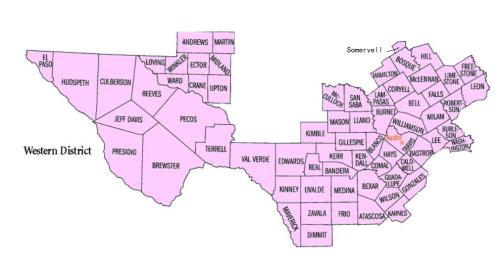
Counts has served as a U.S. Magistrate Judge since 2009.  In this capacity, Counts handles pretrial, grand jury, and discovery matters in criminal cases in the Midland/Odessa and Pecos Divisions of the Western District of Texas.  Counts also handles civil trials with the consent of both parties.

Among his more notable trials, Counts presided over the jury trial of two oilfield workers who sought unpaid overtime wages under the Fair Labor Standards Att (FLSA).[10]  After a jury verdict for the plaintiffs, Counts awarded them liquidated damages and attorney’s fees, denying the employer’s motions for a new trial.[11]  On the criminal front, Counts presided over the guilty pleas of four prominent Midland and Odessa citizens who were charged with mortgage fraud, bank fraud, and money laundering.[12]

In his eight years on the bench, Counts has written hundreds of Reports and Recommendations for federal district judges.  Of these, four have been partially rejected by the district judge.[13]  Of these, the most notable is Counts’ opinion in Sherwood v. United States.[14]  The case involved a habeas petition brought by a prisoner who argued that his right to self-representation during his trial was impeded.[15]  While Counts recommended that the plaintiff receive relief for his petition, the district court rejected this recommendation of relief.[16]

Political Activity

Counts has no political donation history, although his father, W. David Counts Jr., served as in the Texas state legislature as a Democrat between 1988 and 2002.

Overall Assessment

Generally speaking, nominees put forward by presidents of the opposite party (or presidents of both parties) fare well in the confirmation process.  The same process is likely to hold up for Counts.  Republicans are unlikely to object to Counts as he is the product of a recommendation process set up by Cornyn and Cruz, two conservative senators.  Democrats are unlikely to object to Counts given his previous nomination by President Obama, his ties to a prominent Democratic officeholder, and his relatively moderate record.

If confirmed, one can expect Counts to have a similar record to that of the judge he replaces.  Like Judge Robert Junell, Counts will likely be a center-right voice on the federal bench in Midland.


[1] John Council, U.S. District Judge Rob Junell Hits Career Peak, Texas Lawyer, Feb. 12, 2015, http://www.texaslawyer.com/id=1202717806165/US-District-Judge-Rob-Junell-Hits-Career-Peak?slreturn=20170918151134.

[2] Press Release, White House, President Obama Nominates Six to Serve on the United States District Courts (March 15, 2016) (on file at https://obamawhitehouse.archives.gov).  

[3] See State v. McDuff, No. 93-5281 (147th Dist. Ct., Travis Cnty., Tex. 1995).

[4] See id.

[5] See State v. Valdez, No. 92-5263 (147th Dist. Ct., Travis Cnty, Tex. 1995).

[6] Special to the N.Y. Times, Man is Convicted of Rape in Case Involving Condom, N.Y. Times, May 14, 1993.

[7] Sue Anne Presley, Rapist Asked to Use Condom Gets 40 Years; Terror ‘Indiscribable’, Victim Tells Court, Wash. Post, May 15, 1993.

[8] See United States v. Cantu, No. 5:07-CR-00662 (W.D. Tex. May 7, 2009).

[9] See United States v. Martin, No. 5:02-CR-00527 (W.D. Tex. Apr. 6, 2005).

[10] See Carley v. Crest Pumping Tech., No. 7:15-CV-00161, 2016 WL 8856917 (W.D. Tex. Jan 10, 2017).

[11] See id.

[12] United States v. Hilliard, No. 7-14-CR-00001 (W.D. Tex. Jan. 13, 2015).

[13] Lindig Construction & Trucking, Inc. v. Bonelli, No. 7:15-CV-00116 (W.D. Tex. April 6, 2016), adopted in part by 2016 WL 8677200 (W.D. Tex. Aug. 19, 2016); Nestor v. Penske Truck Leasing Co., L.P., No. 4:14-CV-00036, 2015 WL 4603313 (W.D. Tex. July 7, 2015), adopted in part by 2015 WL 4601255 (W.D. Tex. July 29, 2015); United States v. Venegas, No. 7:13-CR-00061 (W.D. Tex. Dec. 2 2013), aff’d, 594 F. App’x. 822 (5th Cir. 2014); Sherwood v. United States, No. 4:04-CR-00191 (W.D. Tex. Apr. 5, 2012).

[14] Sherwood v. United States, No. 4:04-CR-00191 (W.D. Tex. Apr. 5, 2012).

[15] Id.

[16] Id.

Brett Talley – Nominee for the U.S. District Court for the Middle District of Alabama

In the world of judicial confirmation politics, fortune favors the reticent.  Despite this, the Trump Administration has been relatively bold in choosing nominees for the federal bench with a paper trail of controversial statements.  As such, Brett Talley, the youthful attorney chosen for the Middle District of Alabama, will likely face significant scrutiny over his thin legal resume and his long paper trail of political writings.

Background

A native Alabamian, Brett Joseph Talley was born in Birmingham in 1981. Growing up in small town Alabama, Talley attended the University of Alabama, graduating summa cum laude in 2004.  Talley went on to Harvard Law School, getting his J.D. in 2007.

Upon graduation, Talley joined the Washington D.C. office of Gibson, Dunn & Crutcher as an Associate.  However, after just a year there, Talley felt that “working at a big D.C. law firm was sucking out his soul.”[1]  So he took a two-year clerkship with Judge L. Scott Coogler with the U.S. District Court for the Northern District of Alabama.  After a year there, Talley transitioned to a second clerkship with Judge Joel Dubina on the U.S. Court of Appeals for the Eleventh Circuit.

In January 2012, Talley was hired by the Romney campaign as a Senior Writer and Speechwriter.  Talley continued to work for Romney through the campaign, and upon Romney’s loss, found a job as a Speechwriter for Sen. Rob Portman (R-OH).

In 2015, Talley was appointed by Sen. Luther Strange, then the Attorney General of Alabama, to be Deputy Solicitor General.  Talley served in that capacity until January 2017 when he was appointed Deputy Assistant Attorney General for the Office of Legal Policy in the Department of Justice.

In addition to his legal work, Talley is an accomplished horror writer, having published his first book, That Which Should Not Be, in 2011.[2]  Talley has written six other horror books and true ghost accounts, as well as numerous short stories.  He also maintains a blog titled The Site That Should Not Be to discuss horror fiction.

History of the Seat

Talley has been nominated for a seat on the U.S. District Court for the Middle District of Alabama.  This seat opened on August 1, 2015, when Judge Mark Fuller resigned after his arrest for domestic violence.[3]  Despite the seat opening in President Obama’s second term, negotiations between the Administration and Alabama’s Republican senators fell apart and no nomination was ever made to fill the seat.[4]

In June 2017, Talley was contacted by Sen. Richard Shelby’s office, asking for his interest in a judicial appointment.  Talley interviewed with the White House Counsel’s Office and the Office of Legal Policy in July 2017 and his nomination was announced on September 7, 2017.[5]

Legal Experience

Setting aside his clerkships and time as a speechwriter, Talley has had two main legal positions: as an associate at Gibson Dunn; and as Deputy Solicitor General of Alabama.  During the year he spent at Gibson Dunn, Talley represented a U.S. Congressman in a public corruption investigation, represented a landlord tenant case pro bono, and worked on an international investigation involving the Foreign Corrupt Practices Act.

As the Deputy Solicitor General of Alabama, Talley defended Alabama laws and convictions before state and federal courts.  For example, Talley unsuccessfully argued before the 11th Circuit for the execution of a defendant with impaired cognitive functioning and no memory of his crime.[6]  Talley also occasionally engaged state resources to sue the federal government, challenging, for example, EPA regulations intended to protect the habitat of marine wildlife.[7]   Finally, Talley also filed amicus briefs in other courts seeking to push conservative interpretations of the Constitution and state statutes.  For example, he submitted an amicus brief in a challenge to a San Diego ordinance regulating concealed carry permits.[9]

Writings

As noted above, Talley is an accomplished horror writer and maintains a blog to discuss horror fiction.  More pertinently, Talley maintained a second blog for a few months in 2013 titled Government in Exile – When Your Guy Didn’t Win, outlining his political views and criticisms of the Obama Administration.  In this blog, Talley attacked a number of political issues.  Most notably, Talley wrote on gun control and the Newtown massacre in a series of posts.  Specifically, Talley criticizes the post-Newtown gun control push, arguing that gun control would not have prevented the massacre, noting:

“As long as guns are legal, incidents like Newtown will continue to occur.”[10]

In another post, Talley criticizes Sen. Dianne Feinstein (D-CA) (who is now the ranking member of the Senate Judiciary Committee) for her views on gun control, noting:

“Feinstein comes by this view honestly.  She’s not trying to enslave us all, or strip away our rights, or set up a one world state.  She just hates guns.”[11]

Instead of gun control, Talley suggests that “a society that respects life” is the key to preventing mass shootings.[12]  He also calls on his readers to donate to the National Rifle Association.[13]

In other blog posts, Talley argues in favor of immigration reform,[14] noting that failure could push Hispanics further into the Democratic camp, and against drone strikes on American soil.[15]

Talley has also authored op-eds outside his blog and political career.  In 2016, Talley authored articles supporting the candidacy of President Trump.[16]  Post-election, Talley authored an op-ed criticizing liberals who opposed Trump supporters such as Attorney General Sessions and former advisor Steve Bannon, arguing that these critics were “weaponizing racism.”[17]

Political Activity

Talley, a Republican, worked as a researcher, speechwriter, and op-ed writer for the Romney campaign during the 2012 Presidential election.  Talley similarly served in a political capacity for Portman, producing columns, op-eds, speeches, and social media posts in support of the senator’s positions.

In addition, Talley donated $1000 to Portman’s re-election campaign in 2016, and an additional $250 to the Alabama Republican Party.[18]

Overall Assessment

Yesterday, we wrote on Holly Lou Teeter, the federal prosecutor whose eleven years of legal experience fell narrowly short of the ABA guidelines, which recommend twelve for federal judges.  Brett Talley, an attorney tapped for the Alabama federal bench, has even less experience, having practiced law for only three years (six if you include his clerkships).  Considering the fact that Talley is only 36, legitimate questions can be raised about Talley’s fitness for the bench.

Furthermore, Talley has an extensive history of strongly held political beliefs.  He has already expressed his opposition to most gun control, as well as to gay marriage,[19] and has indicated his strong opposition to liberalism and the Democratic party.  While many judges come from a political background, Talley does not share a extensive legal history that could temper the impact of his writings.  As such, Democrats will likely question him on whether his bias against Democrats could influence his rulings on the bench.

Given his youth, limited experience, and strongly expressed conservative beliefs, Talley will likely an objectionable nominee for most Democrats.  While Talley is still more likely to be confirmed than not, out of all the district court nominees reviewed thus far, he is the most likely to fall short.


[2] See id.

[3] Kyle Whitmire, Federal Judge Mark Fuller Resigns, AL.com, May 29, 2015, http://www.al.com/news/index.ssf/2015/05/federal_judge_mark_fuller_resi.html.  

[4] Compare Pema Levy, Jeff Sessions has a History of Blocking Black Judges, Mother Jones, Jan. 9, 2017, http://www.motherjones.com/politics/2017/01/jeff-sessions-blocked-black-judges-alabama/ with Mary Troyan, Judicial Vacancies in Alabama Pile Up, Montgomery Advertiser, April 22, 2015, http://www.montgomeryadvertiser.com/story/news/local/alabama/2015/04/22/judicial-vacancies-alabama-pile/26166537/.  

[5] Press Release, White House, President Donald J. Trump Announces Seventh Wave of Judicial Candidates (Sept. 7, 2017) (on file at https://www.whitehouse.gov/the-press-office/2017/09/07/president-donald-j-trump-announces-seventh-wave-judicial-candidates).    

[6] Madison v. Comm’r, Alabama Dep’t of Corr., 851 F.3d 1173 (11th Cir. 2017).

[7] Alabama et al. v. Nat’l Marine Fisheries Service, et al., No. CV-16-00593 (S.D. Ala. Nov. 29, 2016).

[8] See Perry, et al. v. Wyeth-Ayerst Laboratories Co., et al., No. 99-0089, Circuit Court of Jefferson County (Miss.) (Judge Pickard), Vadino, et al. v. American Home Products Corp., et al., No. MID-L-425-98, Superior Court, Middlesex County (N.J.) (Judge Corodemus).

[9] See Peruta v. City of San Diego, 824 F.3d 919 (9th Cir. 2016) (en banc), cert. denied, 137 S. Ct. 1995 (2017).

[10] Brett J. Talley, Are We Learning the Wrong Lessons From Newtown, Government in Exile, Jan. 14, 2013, https://happywarriordotme.wordpress.com/2013/01/14/are-we-learning-the-wrong-lesson-from-newtown/.  

[11] Brett J. Talley, Are Any Restrictions on Gun Ownership Legitimate, Government in Excile, Jan. 15, 2013, https://happywarriordotme.wordpress.com/2013/01/15/are-any-restrictions-on-gun-ownership-legitimate/.

[12] Brett J. Talley, The Wrong Lessons From Newtown: Part 2, Government in Exile, Jan. 18, 2013, https://happywarriordotme.wordpress.com/2013/01/18/the-wrong-lessons-from-newtown-part-2/.

[13] Brett J. Talley, A Call to Arms: It’s Time to Join the National Rifle Association, Government in Exile, Jan. 26, 2013, https://happywarriordotme.wordpress.com/2013/01/26/a-call-to-arms-its-time-to-join-the-national-rifle-association/.  

[14] Brett J. Talley, Immigration Reform, The Bitter Pill Republicans Must Swallow, Feb. 1, 2013, https://happywarriordotme.wordpress.com/2013/02/01/immigration-reform-the-bitter-pill-republicans-must-swallow/.  

[15] Brett J. Talley, Drone Attacks on American Soil Against American Citizens?, Government in Exile, Mar. 8, 2013, https://happywarriordotme.wordpress.com/2013/03/08/drone-attacks-on-american-soil-against-american-citizens/.  

[16] See, e.g., Brett J. Talley, Don’t Let ‘Never Trump’ Become ‘Ready for Hillary’, CNN, May 7, 2016, http://www.cnn.com/2016/05/07/opinions/never-trump-risks-electing-hillary-clinton-opinion-talley/index.html.  

[17] Brett J. Talley, Democrats: The Party Who Cried Racist, CNN, Dec. 1, 2016, http://www.cnn.com/2016/12/01/opinions/democrats-the-party-who-cried-racist-talley/index.html.  

[18] Center for Responsive Politics, https://www.opensecrets.org/donor-lookup/results?name=Brett+Talley (last visited Oct. 16, 2017).

[19] See Terris, supra n. 1.

Jeff Beaverstock – Nominee for the U.S. District Court for the Southern District of Alabama

Jeff Beaverstock brings an unusual background to the federal bench, having served not only as a civil litigator, but as an Army Reserve lawyer practicing in the military legal system.

Background

Jeffrey Uhlman Beaverstock was born in Waterbury, CT on November 29, 1968.  Beaverstock attended The Citadel, the Military College of South Carolina, overlapping with another Trump nominee, Judge Tripp Self.  After graduating in 1991, Beaverstock spent four years as an active duty Airborne Ranger Infantry Officer in the U.S. Army.

In 1995, Beaverstock joined the University of Alabama Law School alongside fellow Trump nominee Emily Coody Marks.[1]  Graduating in 1998, Beaverstock joined the Mobile law firm Pierce, Ledyard, Latta, Wasden & Bowron, PC.  In 2003, the firm split and Beaverstock joined Bowron, Latta & Wasden, PC as a partner.  In 2008, Beaverstock joined Burr & Forman, LLP. as a partner.  He currently practices at the firm.

Alongside his private practice, Beaverstock also served as an army lawyer, representing Army Reserve soldiers in judicial and non-judicial proceedings.  From 2010-12, Beaverstock served as an operations officer, training Army Reserve lawyers.  Beaverstock currently serves as Chief of Contract & Administrative Law for the 377th Theater Sustainment Command.

History of the Seat

Beaverstock has been nominated for a seat on the U.S. District Court for the Southern District of Alabama.  This seat opened on March 7, 2016, when Judge Callie Granade moved to senior status.  While the seat opened in President Obama’s second term, negotiations between the Administration and Alabama’s Republican senators fell apart and no nomination was ever made to fill the seat.[2]

In February 2017, Beaverstock contacted Sen. Richard Shelby as well as then-Sen. Jeff Sessions to be considered for the vacancy.  Sessions recommended Beaverstock for the vacancy on February 7, 2017.  President Trump announced Beaverstock’s nomination to the vacancy on September 7, 2017.[3]

Legal Experience

Beaverstock primarily practices as a civil litigator in Alabama state and federal courts.  More specifically, Beaverstock specializes in construction law and maritime law, as well as mortgage foreclosure actions.  For example, while at Bowron Latta, Beaverstock represented the manufacturer of mobile homes in a breach of home warranty and personal injury action arising from the intrusion of water into a mobile home.[4]  Additionally, at Burr & Forman, Beaverstock represented a general contractor sued by their subcontractor in a contract dispute.[5]  Despite an adverse verdict at the trial court, Beaverstock was able to overturn the verdict at the Alabama Supreme Court.[6]

Additionally, as an Army Reserve lawyer, Beaverstock handles the legal review of procurement actions and supervises all administrative matters for 37,000 troops in the U.S. Army Reserve.

Overall Assessment

All indications point to a smooth confirmation for Beaverstock.  He does not have a paper trail of controversial statements, or a partisan political history, or any ethical issues.  Further, his long history of military service will make it difficult for senators to drum up opposition.  If and when Beaverstock is confirmed, the Southern District of Alabama, which is already down to only one active judge out of three authorized judgeships, should expect a new conservative voice.


[1] Annemarie Axon, another Trump nominee to the federal bench in Alabama joined the following year.

[2] Compare Pema Levy, Jeff Sessions has a History of Blocking Black Judges, Mother Jones, Jan. 9, 2017, http://www.motherjones.com/politics/2017/01/jeff-sessions-blocked-black-judges-alabama/ with Mary Troyan, Judicial Vacancies in Alabama Pile Up, Montgomery Advertiser, April 22, 2015, http://www.montgomeryadvertiser.com/story/news/local/alabama/2015/04/22/judicial-vacancies-alabama-pile/26166537/.  

[3] Press Release, White House, President Donald J. Trump Announces Seventh Wave of Judicial Candidates (Sept. 7, 2017) (on file at https://www.whitehouse.gov/the-press-office/2017/09/07/president-donald-j-trump-announces-seventh-wave-judicial-candidates).    

[4] Johnson v. Southern Energy Homes, Inc., 391 F. Supp. 2d 1118 (S.D. Ala. 2006).

[5] White-Spunner Construction, Inc. v. Construction Completion Co., 103 So.3d 781 (Ala. 2012).  

[6] See id.

Emily Coody Marks – Nominee for the U.S. District Court for the Middle District of Alabama

Typically, public defenders have a reputation as being politically liberal, as prosecutors have a reputation as politically conservative.  However, this reputation is undeserved.  For example, a high proportion of President Obama’s judicial nominees were former prosecutors,[1] while President George W. Bush appointed many public defenders to the federal bench, including Judges Juan Sanchez, Aida Delgado-Colon, and John E. Jones.  Emily Coody Marks, a Montgomery based labor attorney nominated to the Alabama federal bench, has significant ties of the indigent defense community.

Background

Marks was born Emily Michele Coody on March 6, 1973 in Tuscaloosa, AL.  Marks attended Spring Hill College, a private Jesuit college in Mobile, AL, graduating magna cum laude in 1995.  After graduating, Marks joined the University of Alabama School of Law, graduating in 1998.

As a law student, Marks worked as a summer associate for Ball, Ball, Matthews & Novak, P.A.  Upon graduation, Marks was hired by the firm as an associate.  In 2005, Marks was elevated to become a partner at the firm, a position she holds to this day.

Since 2005, Marks has been a Board Member for the Federal Defenders for the Middle District of Alabama, which represents indigent defendants in the U.S. District Court for the Middle District of Alabama.  Marks served as Vice President of the Board from 2013-14 and the President from 2014-16.

History of the Seat

Burke has been nominated for a seat on the U.S. District Court for the Middle District of Alabama.  This seat opened on August 22, 2013, when Judge Myron Thompson moved to senior status.[2]  While the seat opened only a year into President Obama’s second term, negotiations between the Administration and Alabama’s Republican senators fell apart and no nomination was ever made to fill the seat.[3]  President Trump announced Marks’ nomination to the vacancy on September 7, 2017.[4]

Legal Experience

Marks has spent her entire legal career at the firm of Ball, Ball, Matthews & Novak, P.A., serving as a summer associate and an associate before becoming a partner in the Montgomery Office in 2005.  At the firm, Marks focuses primarily on the defense of labor, employment and civil rights claims.  For example, Marks successfully defended the Alabama Department of Conservation against a suit by terminated employees who sought damages for denial of Equal Protection and Due Process rights, and defamation, among other claims.[5]

Notably, Marks represented an apartment complex being sued for wrongful death based on a drowning death in the complex’s swimming pool.[6]  The plaintiffs filed suit within the two-year statute of limitations, but, rather than paying the filing fee, they filed an affidavit of hardship and requested waiver of the fee.  By the time the court granted the request, the statute of limitations had passed.  Marks successfully obtained a writ of mandamus from the Alabama Supreme Court ordering the case to be thrown out due to its untimely filing.[7]

Marks also frequently defends municipalities and towns from civil rights and other claims brought by plaintiffs.  Notably, Marks has defended a number of jurisdictions against Sec. 1983 claims brought for false arrest or police brutality.[8]  Marks has also defended municipalities against employment and ADA claims.[9]

Political Activity

Marks, a Republican, has a relatively short record of political activity.  In 2017, Marks made a $500 contribution to the campaign of appointed Sen. Luther Strange.[10]  Marks also served on the host committee of a campaign event for Strange on April 11, 2017.  Strange, a Republican, lost his runoff against controversial former Alabama Supreme Court Justice Roy Moore.

Overall Assessment

While judicial observers who are concerned about the dominance of former prosecutors on the bench may be relieved by Marks’ ties to the indigent defense community, there is no reason to doubt that Marks will be a conservative voice on the bench.  Most of her legal career has focused on opposing claims of civil rights violations, employment discrimination, and labor violations.  Her successful obtaining of a writ of mandamus to dismiss a wrongful death action that was filed (but not paid for) before the statute of limitations could also be used against her.  Marks’ supporters can reasonably argue that, in defending against civil rights and discrimination claims, Marks was merely demonstrating zealous advocacy.  Nevertheless, just as Republicans have routinely used the zealous advocacy of plaintiffs’ attorneys and public defenders against them in the confirmation process, Marks may face the flip side of such opposition.


[1] The Editorial Board, The Homogenous Federal Bench, N.Y. Times, Feb. 6, 2014, https://www.nytimes.com/2014/02/07/opinion/the-homogeneous-federal-bench.html.

[2] Rickey Stokes, Federal Judge Myron Thompson Moves to Senior Status – Leaves Alabama Appointment for President of United States, Rickey Stokes News, Aug. 24 2013, http://www.rickeystokesnews.com/article.php/federal-judge-myron-thompson-moves-to-senior-status–leaves-alabama-appointment-for-president-of-united-states-45071.  

[3] Compare Pema Levy, Jeff Sessions has a History of Blocking Black Judges, Mother Jones, Jan. 9, 2017, http://www.motherjones.com/politics/2017/01/jeff-sessions-blocked-black-judges-alabama/ with Mary Troyan, Judicial Vacancies in Alabama Pile Up, Montgomery Advertiser, April 22, 2015, http://www.montgomeryadvertiser.com/story/news/local/alabama/2015/04/22/judicial-vacancies-alabama-pile/26166537/.  

[4] Press Release, White House, President Donald J. Trump Announces Seventh Wave of Judicial Candidates (Sept. 7, 2017) (on file at https://www.whitehouse.gov/the-press-office/2017/09/07/president-donald-j-trump-announces-seventh-wave-judicial-candidates).    

[5] Brackin v. Anson, No. 2:12-cv-750-WKW, 2014 WL 555315 (M.D. Ala. Feb. 12, 2014), aff’d, Case No. 14-11180-C, 585 Fed. App’x 991 (11th Cir. Sept. 25, 2014).

[6] Ex Parte Courtyard Citiflats, LLC., 191 So. 3d 787 (Ala. 2015).

[7] See id.

[8] See, e.g., Windham v. City of Fairhope, 597 Fed. Appx. 1068 (11th Cir. 2015); Johnson v. City of Clanton, Ala., No. 2:04-cv-117-F(WO), 2005 WL 1618557 (M.D. Ala. July 7, 2005); Nicholson v. Moates, 159 F. Supp. 2d 1336 (M.D. Ala. 2001).

[9] See, e.g., Cotrell v. Chickasaw City Sch. Bd. of Educ., No. 16-503-CG-N, 2017 WL 562420 (S.D. Ala. Jan. 23, 2017); Daniel v. Huntsville City Bd. of Educ., No. 5:16-cv-1919-CLS, 2017 WL 1282319 (N.D. Ala. April 6th, 2017); Quest v. Ala. House of Reps., No. 2:04-cv-077-MHT, 2006 WL 1476112 (M.D. Ala. May 24, 2006). See also Holmes v. Escambia Cnty. Sheriffs’ Dep’t, No. 14-0363-WS-M, 2015 WL 2095671 (S.D. Ala. May 4, 2015).

[10] Center for Responsive Politics, https://www.opensecrets.org/donor-lookup/results?name=emily+marks&order=desc&sort=D(last visited Oct. 15, 2017).  

Holly Lou Teeter – Nominee for the U.S. District Court for the District of Kansas

The American Bar Association Standing Committee on the Judiciary has been evaluating judicial candidates since 1953, as a way of providing an independent view of their qualifications.  As a part of their criteria, the Committee sets a baseline of “at least twelve years’ experience in the practice of law.”[1]  Holly Lou Teeter, the federal prosecutor tapped by President Trump for a seat on the U.S. District Court for the District of Kansas, falls narrowly short of that mark, with only eleven years of legal practice.

Background

Teeter was born Holly Lou Hydeman in Kansas City, KS in 1979.  In 1996, Teeter began taking classes at Johnson County Community College (which she would do for the next four years).  In 1998, Teeter matriculated at the University of Kansas, graduating with a B.S. in Chemical Engineering in 2002.  Upon graduation, Teeter attended the University of Oxford for a year-long diploma program, receiving a Diploma in Legal Studies in 2003.

Teeter returned to Kansas to attend the University of Kansas School of Law, graduating first in her class in 2006.  Upon graduation, Teeter took a non-litigation patent law clerk position at Los Alamos National Security LLC., the corporation that operates the Los Alamos National Laboratory for the Department of Energy.  In 2007, Teeter joined the Kansas City office of Shook, Hardy & Bacon LLC., working in intellectual property litigation.

In 2011, Teeter was hired to be a Law Clerk for Judge Carlos Murguia in the U.S. District Court for the District of Kansas.  In 2013, Teeter was then hired by Judge Brian Wimes of the U.S. District Court for the Western and Eastern Districts of Missouri to serve as his law clerk.

In 2016, Teeter was hired by U.S. Attorney Tammy Dickinson to serve as an Assistant U.S. Attorney (AUSA) in the Civil Division of the Western District of Missouri.  Teeter currently serves in that capacity.

History of the Seat

The seat Teeter has been nominated for opened on April 22, 2014, with Judge Kathryn Vratil’s move to senior status.  On January 28, 2016, President Obama nominated Terrence Campbell, an attorney in private practice, and a Republican, to fill the vacancy.[2]  Despite Campbell having the support of Republican Senators Pat Roberts and Jerry Moran,[3] he nonetheless never received a hearing before the Senate Judiciary Committee.  On December 7, 2016, Campbell withdrew his nomination.[4]

In January 2017, Teeter discussed her interest in a federal judgeship with Roberts.  After interviews with Roberts and Moran, Teeter’s name was submitted to the White House.  Teeter interviewed with the White House Counsel’s Office and the Department of Justice on April 27, 2017.  She was officially nominated on August 3, 2017.

Legal Experience

As Teeter did not engage in litigation as a patent law clerk, and as her clerkship experience is largely shielded from public view, Teeter’s record in court spans only five years, with a four year window in private practice, and a year as an AUSA.

Teeter’s time at Shook, Hardy & Bacon was focused on intellectual property litigation.  Among her more significant matters, Teeter successfully represented Cerner Corporation in seeking a declaratory judgment that its monitoring system for intensive care unit patients did not infringe on any patents.[5]  Teeter also defended a group of hospitals against an infringement suit based on a patent for portable processing means.[6]

As an AUSA, Teeter works in the Civil Division, defending the United States against civil claims.  In one case, Teeter successfully defended the government against charges that it should be held liable for the plaintiff’s false arrest, imprisonment, and assault by the United States Marshalls.[7]

Overall Assessment

As noted above, Teeter falls narrowly short of the experiential requirements laid out by the ABA.  However, while this may affect the ABA rating Teeter receives, it is unlikely to jeopardize her confirmation.  While skeptics may question Teeter’s youth and inexperience, she is not the youngest nominee put forward by the Trump Administration.  Furthermore,  Teeter’s supporters will note Teeter’s stellar academic credentials, and her substantive experience clerking on the federal bench for five years.  Additionally, the fact that Teeter has clerked only for judges nominated by Democratic presidents may reassure senators of her overall moderation.  As such, with Roberts and Moran strongly in her corner, it is unlikely that Teeter will face many problems through the process.


[1] American Bar Association, Standing Committee on the Federal Judiciary: What It Is, and How It Works, (2009), https://www.americanbar.org/content/dam/aba/migrated/scfedjud/federal_judiciary09.authcheckdam.pdf.

[2] Press Release, White House, President Obama Nominates Terrence J. Campbell to Serve on the United States District Court (Jan. 28, 2016) (on file at https://obamawhitehouse.archives.gov).  

[3] Associated Press, President Obama Nominates Lawrence Attorney Terrence Campbell to Federal Bench, Lawrence Journal-World, Jan. 29, 2016, http://www2.ljworld.com/news/2016/jan/29/president-obama-nominates-lawrence-attorney-federa/.  

[4] Peter Hancock, Lawrence Attorney Withdraws as Nominee for Federal Judgeship, Lawrence Journal-World, Dec. 7, 2016, http://www2.ljworld.com/news/2016/dec/07/lawrence-attorney-withdraws-nominee-federal-judges/.

[5] See Cerner Corp. v. Visicu, Inc., 667 F. Supp. 2d 1062 (W.D. Mo. 2009).

[6] Brown v. Baylor Health Care Systems, 662 F. Supp. 2d 669 (S.D. Tex. 2009).

[7] See Wright v. United States, 2017 U.S. Dist. LEXIS 75724 (W.D. Mo. 2017) (Judge Hays).

A. Marvin Quattlebaum – Nominee to the U.S. District Court for the District of South Carolina

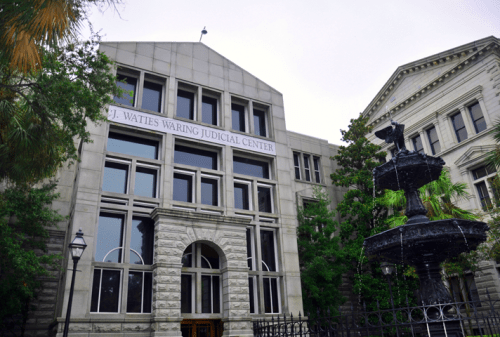
The J. Waites Waring Judicial Center in Charleston, SC

There are no sure things in judicial confirmations.  Nominees expected to sail through the process become bogged down, while nominees expected to draw controversy surprise everyone by getting confirmed easily.  Nevertheless, A. Marvin Quattlebaum, nominated for a vacancy on the U.S. District Court for the District of South Carolina, should feel good about his chances.  A former president of the South Carolina Bar and a nationally recognized attorney, Quattlebaum has attracted little controversy over his career and should be confirmed easily.

Background

Arthur Marvin Quattlebaum Jr. was born on August 2, 1964 in Durham, NC.  He received a B.A. with Honors from Rhodes College in 1986 and a J.D. from the University of South Carolina Law School in 1989.  While a law student, Quattlebaum worked as a summer associate at the Columbia law firm Nelson, Mullins, Riley & Scarborough, LLP.  Upon graduation, Quattlebaum was hired there as an Associate.

In 1996, Quattlebaum left Nelson Mullins to be a partner at the law firm Robinson & Quattlebaum.  A year later, Quattlebaum returned to Nelson Mullins as a Partner.  He continues to work as a Partner in the firm’s Greenville, SC Office.

From 2011-2012, Quattlebaum served as Chair on the South Carolina Bar Association.  He continues to hold a seat in the Bar’s House of Delegates.

History of the Seat

The seat Quattlebaum has been nominated for opened on October 3, 2013, with Judge Cameron McGowan Currie’s move to senior status.  The Obama Administration made two unsuccessful attempts to fill this vacancy.  First, on June 26, 2013, Obama nominated Judge Alison Renee Lee of South Carolina’s Fifth Judicial Circuit to fill the vacancy.[1]  However, Lee’s nomination ran into opposition from conservatives over her decision to reduce bond on a Columbia-area burglary suspect who killed a man after his release.[2]  Ultimately, Sen. Tim Scott (R-SC) came out in opposition to Lee, and declined to return a blue slip, killing her nomination.[3]

On February 25, 2016, President Obama nominated Justice Donald Beatty of the South Carolina Supreme Court in a second attempt to fill the vacancy.[4]  Unfortunately, neither Scott nor Sen. Lindsey Graham (R-SC) returned blue slips on Beatty’s nomination, and Beatty never received a hearing.

In January 2017, Quattlebaum discussed his interest in a federal judgeship with Scott and Congressman Trey Gowdy.  After an interview with the Department of Justice and the White House Counsel’s Office, Quattlebaum was officially nominated on August 3, 2017.

Legal Experience

Other than one year working on plaintiff’s side law at Robertson & Quattlebaum, Quattlebaum has spent his entire legal career practicing business litigation at Nelson Mullins.  As a partner in the Greenville office, Quattlebaum primarily focuses on the defense of product liability actions.  Among Quattlebaum’s more prominent cases, he was the primary lawyer defending Michelin North America Inc. against a suit alleging injuries from the sale of a defective tire.[5]  He also represented Michelin in antitrust and breach of contract actions.[6]

Political Activity

Quattlebaum has a long history of contributions to Congressional Republicans.  This includes approximately $8000 to Graham, $7600 to Scott, and $6400 to Gowdy.[7]  Additionally, Quattlebaum has also donated to former Sen. Jim DeMint, and former Rep. Bob Inglis, both South Carolina Republicans.[8]  In contrast, Quattlebaum has only one contribution to a Democrat, donating $1000 to Alex Sanders’ Senate bid against Graham in 2001.[9]

In addition, Quattlebaum has served in a volunteer capacity in the campaigns of Graham, Scott, and Gowdy.  Quattlebaum also served on the South Carolina Lottery Commission from 2003-2010, appointed to that role by Republican Governor (and now Congressman) Mark Sanford.

Overall Assessment

As noted above, Quattlebaum should face relatively little trouble winning confirmation.  He has avoided taking controversial stances as an attorney, and has shown legal acumen through his managing of complex litigation.  While he may draw criticism for his exclusive representation of large corporations seeking to avoid damages from defective products, such criticism is unlikely to derail his nomination.  Overall, Quattlebaum would join the South Carolina bench as a fairly mainstream conservative judge.


[1] Press Release, White House, President Obama Nominates Three to Serve on the United States District Courts (June 26, 2013) (on file at https://obamawhitehouse.archives.gov).  

[2] Michael Doyle, New Questions Raised About South Carolina Federal Court Nominee, The State, Sept. 25, 2013.

[3] Ali Watkins, U.S. Sen. Tim Scott Joins Opposition to Nomination of SC Judge for Federal Post, The State, July 17, 2014, http://www.thestate.com/news/politics-government/politics-columns-blogs/the-buzz/article13869248.html.

[4] Press Release, White House, President Obama Nominates Two to Serve on the United States District Court (Feb. 25, 2016) (on file at https://obamawhitehouse.archives.gov).  

[5] See Demas v. Michelin N. Am., Inc., No. 09 L 013814, Illinois Circuit Court (Judge Daniel Lynch).

[6] Michelin N. Am., Inc. v. Inter-city Tire, No. 6:13-cv-01067 HMH, 2015 WL 12843914 (D.S.C. Jan 20, 2015) (Judge Henry Herlong).  

[7] Center for Responsive Government, https://www.opensecrets.org/donor-lookup/results?name=Marvin+Quattlebaum&order=desc&page=1&sort=D (last visited Oct. 3, 2017).  

[8] See id.

[9] Id.

Michael Juneau – Nominee to the U.S. District Court for the Western District of Louisiana

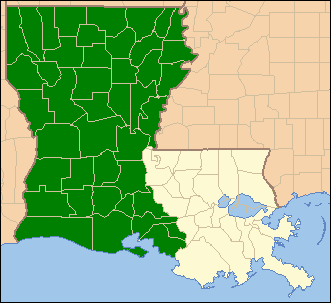
The Western District of Louisiana is a court desperately short of judges.  Due to retirements and resignations, the District, which is assigned a complement of seven active judges, will be down to two by the end of the year.  Today, we look at one of two nominees offered by the Trump Administration: Michael Juneau.

Background

Michael Joseph Juneau was born in Monroe, LA on June 29, 1962, the son of prominent attorney Patrick Juneau.  Juneau attended Louisiana State University in Baton Rouge, graduating magna cum laude in 1984.  He went straight from college to Harvard Law School, getting his J.D. in 1987.

After graduating, Juneau returned to Lafayette, joining his father’s law firm Juneau, Judice, Hill & Adley as an Associate.  After six years as an Associate there, Juneau co-founded the firm Juneau David, APLC in Lafayette.  He currently serves as a Shareholder there.

History of the Seat

Juneau has been nominated to fill a vacancy on the U.S. District Court for the Western District of Louisiana.  The Western District is facing a vacancy crisis, with four of the seven allotted judgeships for the District currently vacant, and a fifth scheduled to open later this year.[1]  This crisis has been exacerbated by the Republican Senate’s failure to confirm any Obama nominations to Louisiana seats in the 114th Congress.

The seat Juneau has been nominated for opened on March 6, 2015, with Judge Richard Haik’s move to senior status.[2]  On February 4, 2016, President Obama nominated Stephanie Finley, the then-serving U.S. Attorney for the Western District of Louisiana, to fill the vacancy.[3]  While Finley, who would have been the first African American judge on the Western District,[4] had the enthusiastic support of Republican senators David Vitter and Bill Cassidy,[5] and was approved by the Senate Judiciary Committee unanimously,[6] her nomination was blocked from the floor by Senate Majority Leader Mitch McConnell.

After the election of President Donald Trump, Juneau submitted his resume for a federal judgeship to Sen. John Kennedy (R-LA).  In March 2017, Kennedy submitted Juneau’s name to the White House.  Trump formally nominated Juneau on Aug. 3, 2017.

Legal Experience

Juneau has only held two positions since graduating from law school: as an associate at Juneau, Judice, Hill & Adley, and as a Shareholder at Juneau David APLC.  In the former position, Juneau focused primarily on civil litigation, maritime law and product liability cases, including representing a child in a suit against a pastor who had committed sexual abuse.[7]

After moving to Juneau David, Juneau focused on maritime law and product liability actions.  Juneau handled many maritime accident cases, including a consolidated law suit over the explosion of an offshore oil rig,[8] and the suit over a boat accident on the way to an oil and gas facility.[9]

In 2012, Judge Carl Barbier of the U.S. District Court for the Eastern District of Louisiana appointed Juneau’s father, Patrick, to supervise two mass-tort court-supervised settlements: the Deepwater Horizon Economic and Property Damages Settlement; and the Halliburton & Transocean Punitive Damages Settlement.  Patrick Juneau then hired Michael to assist him with the settlement.[11]  While British Petroleum (BP), the defendant in the Deepwater Horizon case, initially approved Juneau’s appointment, the relationship soured amidst allegations that the Administrators were approving claims too readily.[12]  Ultimately, BP ended up suing to remove Patrick Juneau,[13] with the support of some plaintiff’s attorneys.[14]  The decision to appoint Michael Juneau to the case drew particular criticism, with plaintiff’s attorney Daniel Becnel calling it “unconscionable.”  Ultimately, BP failed to remove the Juneaus from the claims process, which continues to this day.[15]

Memberships and Affiliations

As noted in a colloquy between Sen. Mike Lee (R-UT) and Sen. Dick Durbin (D-IL) during the Sept. 20th confirmation hearing, a judicial nominee’s professional affiliations can sometimes become an issue in the confirmation process.  As such, two of Juneau’s affiliations could draw criticism.  First, Juneau has been a member of the Krewe of Gabriel from 1993 to 2017.  The Krewe, a social club that organizes Mardi Gras events, restricts its membership to men (it also, in the past, restricted membership by race).  Second, Juneau has noted an affiliation with the Alliance Defending Freedom (ADF) on his Judiciary Questionnaire.  As previously noted, ADF has been designated as a hate group by the Southern Poverty Law Center.  As such, the exact nature of Juneau’s relationship with ADF will likely be probed in his hearing.

Political Activity

While he has never run or held political office, Juneau, a registered Republican, has been a frequent donor to Louisiana politicians.  The vast majority of Juneau’s donations are directed to Republicans.[16]  Among the more targets are former senator David Vitter, current senators Bill Cassidy and John Kennedy, and Congressman Garret Graves.[17]  Juneau has also donated to the presidential campaigns of Mitt Romney, Rick Santorum, Rick Perry, and Marco Rubio.[18]

Earlier in his career, Juneau donated almost exclusively to Democrats, including a $1000 contribution to the presidential campaign of Al Gore.[19]   However, since 2000, Juneau has only donated once to a Democrat, a $2400 contribution to former senator Mary Landrieu in 2009.[20]

Overall Assessment

In the rough-and-tumble world of judicial politics, Juneau has one key advantage that should help him win confirmation: the support of Sen. John Kennedy.  Kennedy, as noted in the past, is one of the more aggressive questioners on the Judiciary Committee, and is likely the most “gettable” of the Judiciary Committee Republicans for opponents of Trump nominees.  As such, having Kennedy in his corner virtually ensures Juneau’s passage through Committee.

This is not to say that Juneau will necessarily have a smooth confirmation.  He faces two potential lines of criticism: the first based on his (allegedly nepotistic) appointment to the Deepwater Horizon case; and the second based on his affiliation with ADF.  The first may draw criticism from Republicans who believe that the Deepwater settlement unfairly penalized BP.  The second will raise concerns among Democrats, similar to those they raised with Prof. Barrett.

Overall, Juneau’s record confounds efforts to pigeonhole him on either side.  His Republican record of donations and alliance with ADF paint him as a judicial conservative, while his willingness to pay out billions in claims in the Deepwater Horizon case and his support for some Democrats, including Gore and Landrieu suggest moderation.  Overall, his testimony at his confirmation hearing on Oct. 4th will help us further understand the kind of judge he would be.


[1] Tyler Bridges, 42 Parish Area of Western Louisiana Suffers From Vacant Federal Judgeships, The Acadiana Advocate, Aug. 22, 2017, http://www.theadvocate.com/acadiana/news/article_dad54e68-8791-11e7-9cfc-678529cbf1c6.html.

[2] Leslie Turk, Judge Haik Assuming Senior Status in March, The Independent, Sept. 11, 2014, http://theind.com/article-18588-judge-haik-assuming-senior-status-in-march.html.

[3] Press Release, White House, President Obama Nominates Two to Serve on the United States District Courts (Feb. 04, 2016) (on file at https://obamawhitehouse.archives.gov).  

[4] Leslie Turk, Finley Could Be First African American on Western District Bench, Acadiana Business, Feb. 5, 2016, http://theind.com/article-22647-finley-could-be-first-african-american-on-western-district-bench.html.

[5] The Leadership Conference, These Republican Senators Want Their Judicial Nominees Confirmed. Majority Leader McConnell Isn’t Listening, Medium, Aug. 4, 2016, https://medium.com/@civilrightsorg/these-republican-senators-want-their-judicial-nominees-confirmed-1d87e6bfc615 (quoting David Vitter) (describing Finley as a “great Louisianian”).

[6] Michael Macagnone, Senate Panel Advances 4 Federal Judges, Hints at Floor Votes, Law 360, June 16, 2016, https://www.law360.com/articles/807489/senate-panel-advances-4-federal-judges-hints-at-floor-votes.

[7] In the Matter of a Minor Child, et ux v. Louisiana District Council of the Assemblies of God et al., 16th Judicial Dist. Ct., St. Martin Parish, Louisiana, Judge Michael McNulty (1990-1992).  

[8] In re: The Matter of Mallard Bay Drilling, as Owner and Operator of Mr. Beldon, otherwise designated as Mallard Rig 52, Praying for Exoneration from and/or Limitation Liability, Docket No. 97-1223, (W.D. La. 1997).  

[9] Lincoln v. Goodrich Petroleum Corp., et al., 25th Judicial Dist., Plaquemines Parish, Louisiana, Docket No. 50-620, Judge Joy Lobrano (2004-2011).

[10] See Perry, et al. v. Wyeth-Ayerst Laboratories Co., et al., No. 99-0089, Circuit Court of Jefferson County (Miss.) (Judge Pickard), Vadino, et al. v. American Home Products Corp., et al., No. MID-L-425-98, Superior Court, Middlesex County (N.J.) (Judge Corodemus).

[11] Campbell Robertson and John Schwartz, How a Gulf Settlement That BP Once Hailed Became its Target, N.Y. Times, April 27, 2014.  

[12] Tom Young, BP to Blame for Payment Delays, Not Deepwater Claims Administrator Juneau, The Legal Examiner, March 21, 2016, http://neworleans.legalexaminer.com/toxic-substances/bp-to-blame-for-payment-delays-not-deepwater-claims-administrator-juneau/.

[13] Jonathan Stempel, Patrick Juneau, BP Spill Claims Administrator, Urges Dismissal of Company’s Lawsuit, Huff. Post, April 1, 2013, http://www.huffingtonpost.com/2013/04/01/patrick-juneau-bp-spill-settlement_n_2994406.html.

[14] Kyle Barnett, Prominent Plaintiff Attorney Backs BP’s Bid to Remove Claims Administrator Patrick Juneau, Louisiana Record, Feb. 4, 2015, http://louisianarecord.com/stories/510585593-prominent-plaintiff-attorney-backs-bp-rsquo-s-bid-to-remove-claims-administrator-patrick-juneau.

[15] Richard Thompson, After 4 Years, 300K Claims, $9.2B, BP Claims Administrator Nearing Finish Line, New Orleans Advocate, Sept. 29, 2016, http://www.theadvocate.com/new_orleans/news/business/article_965235aa-8682-11e6-8181-0b5297cc5994.html.

[16] Center for Responsive Politics, https://www.opensecrets.org/donor-lookup/results?name=michael+juneau&order=desc&sort=D (last visited Sept. 27, 2017).  

[17] See id.

[18] Id.

[19] Id.

[20] Id.

[21] As a law student at Georgetown, Kelly spent a year as a Work-Study Reference Clerk at the Edward Bennett Williams Law Library.

Judge Tripp Self – Nominee to the U.S. District Court for the Middle District of Georgia

The Georgia Court of Appeals has been a major source of federal judges for the Trump Administration: three of the 15 current judges have already been tapped to the federal bench.  Last week, we profiled Judge William Ray, who was nominated for a seat on the U.S. District Court for the Northern District of Georgia.  Today, we look at Judge Tripp Self, who has been tapped to fill a vacancy on the U.S. District Court for the Middle District of Georgia.

Background

Tilman Eugene (“Tripp’) Self was born in November 1968 in Macon, Georgia.  Self attended The Citadel, The Military College of South Carolina, graduating in 1990 with a Bachelor of Science in Business Administration degree.  Following his graduation, Self joined the U.S. Army as a Field Artillery Officer, serving in the Republic of Korea and Fort Stewart in Hinesville, Georgia.

In 1994,Self joined the University of Georgia School of Law, graduating in 1997 with a J.D. cum laude. Self then joined the Macon office of Sell & Melton LLP as an Associate.  In 2002, he was promoted to be a Partner.

In 2006, Self was elected to join the Georgia Superior Court, serving as a trial judge in Macon.  He was re-elected in 2010 and 2014.

In November 2016, Self was appointed by Republican Governor Nathan Deal to serve on the Georgia Court of Appeals.  Self currently serves as a judge on that court.

History of the Seat

The seat Self has been nominated for opened on September 1, 2016, with Judge C. Ashley Royal’s move to senior status.  As the vacancy opened fairly late in the Obama Presidency, no nomination was put forward to fill it.

Self submitted an application fill the vacancy in January 2017, and was interviewed by the Federal Judicial Appointment Screening Committee in March.  Self was formally nominated by President Trump on July 13, 2017.

Legal Experience

After graduating from law school, Self practiced at the Macon firm Sell & Melton LLP. for nine years (the last four as a Partner).  In his time there, Self described himself as the firm’s “utility infielder.”[1]  In other words, Self handled the cases that other partners did not want to be involved with.[2]  This involved focusing on civil litigation in Georgia state court.

Among his more significant cases, Self defended a man who had failed to file an answer to a civil lawsuit due to his limited mental capacity.[3]  While the man faced a $185,000 default judgment, Self was able to negotiate a small settlement and prevent the defendant from losing his home.[4]  The team ultimately reached a national settlement over the claims during simultaneous state court trials in Mississippi and New Jersey.[5]

Jurisprudence

While Self currently serves on the Georgia Court of Appeals, his tenure as an appellate judge is fairly short (only nine months).  In contrast, Self has spent ten years as a trial court judge.  As such, we will look at his more prominent rulings as a trial court judge.

Criminal Law

As a trial judge, Self established a conservative record on criminal justice, presiding over many complex cases, and handing out harsh sentences in some cases.  For example, Self handed the maximum sentence to a defendant who pled guilty to embracery.[6]  He also sentenced six defendants to life in prison without parole after their convictions for felony murder.[7]  In another case, the Georgia Court of Appeals reversed a defendant’s conviction based on an erroneous instruction offered to the jury by Self.[8]

Self also presided over several high-profile death penalty cases.  In one case, Self held that there was no constitutional bar from the death penalty for defendants who had unknowingly shot a law enforcement officer who was carrying out a “no knock” warrant.[9]  The Georgia Supreme Court affirmed Self’s decision in a 5-2 opinion.[10]  In dissent, Chief Justice Carol Hunstein argued that there was no rational basis for “imposing the death penalty on defendants who at the moment they fired the fatal shots neither knew nor should have known that their victim was a police officer.”[11]

Civil Law

On the civil side, Self held that a plaintiff who had dislocated her knee while bending down to pick up her fallen medication was not entitled to workers’ compensation, a decision that was reversed by the Georgia Court of Appeals.[12]  In another case, Self ruled against a plaintiff who was struck by the car of a deputy sheriff while fleeing from the police.[13]  The Georgia Court of Appeals overturned the decision, holding that there was a factual dispute as to whether the plaintiff had assumed the risk of injury by running from the police.[14]

Political Activity

Self has a long history of activity and contributions in the Georgia Republican Party. In addition to serving as the General Counsel for the Bibb County Republican Party, Self also served as the Bibb County chairman for the campaign of Gov. Sonny Perdue.  Additionally, Self donated $1000 to Sen. Saxby Chambliss, and $3000 to the Congressional Campaign of Calder Clay, who unsuccessfully challenged Democratic Rep. Jim Marshall twice.[15]  Additionally, Self has financially supported former President George W. Bush, Georgia senators Johnny Isakson and David Perdue, and the Presidential Campaign of Sen. Ted Cruz.[16]

Overall Assessment

Like his colleague Judge Ray, Self has developed a fairly conservative record on the bench.  Nevertheless, like Ray, Self’s record is not so severely conservative as to imperil his confirmation.  While critics may argue that Self’s decision in Harris and Davis show a bias against plaintiffs, it is unlikely that Republicans, who control the Senate, will view such a bias as disqualifying for the bench.  Furthermore, Self’s long record of public service and his deep history with the Georgia Republican Party will give him plenty of allies and support.  As such, Self, when confirmed, will add a conservative voice to the Middle District of Georgia.


[1] Senate Judiciary Questionnaire, Tilman Eugene Self, https://www.judiciary.senate.gov/imo/media/doc/Self%20SJQ.pdf (last visited Sept. 24, 2017).  

[2] See id. (Sec. 16(b)(i)).

[3] Gardner v. Vincent, 03-CV-37954F (Ga. Super. Ct.) (Judge Winfield).  

[4] See id.

[5] See Perry, et al. v. Wyeth-Ayerst Laboratories Co., et al., No. 99-0089, Circuit Court of Jefferson County (Miss.) (Judge Pickard), Vadino, et al. v. American Home Products Corp., et al., No. MID-L-425-98, Superior Court, Middlesex County (N.J.) (Judge Corodemus).

[6] State v. Allen, No. 11-CR-042 (Ga. Super. Ct. 2011).  

[7] State v. Easton, No. 15-CR-107 (Ga. Super. Ct. 2015).  

[8] Dean v. State, 722 S.E.2d 436 (Ga. Ct. App. 2012).  

[9] State v. Jolly, Criminal Action No. 08-CR-63815, 2009 WL 6608746 (Ga. Super. Ct. Sept. 28, 2009), aff’d in part, vacated in part, and rev’d in part sub nom. Fair v. State, 702 S.E.2d. 420 (Ga. 2010).

[10] Fair v. State, 702 S.E.2d. 420 (Ga. 2010).

[11] See id. at 435 (Hunstein, C.J., dissenting).  

[12] Harris v. Peach Cnty. Bd. of Comm’rs, 674 S.E.2d 36 (Ga. Ct. App. 2009).  

[13] Davis v. Batchelor, Civil Action No. 07-V-0711 (Ga. Super. Ct. Nov. 12, 2008).

[14] Davis v. Batchelor, 686 S.E.2d 314 (Ga. Ct. App. 2009).

[15] Center for Responsive Politics, https://www.opensecrets.org/donor-lookup/results?name=tripp+self(last visited Sept. 24, 2017).