John Holcomb – Nominee to the U.S. District Court for the Central District of California

An intellectual property lawyer based in Orange County, John Holcomb is one of several California nominees recommended by Democratic Senators and approved by the Administration.

Background

John William Holcomb was born in Olean, NY in 1963.  Holcomb attended Massachusetts Institute of Technology, getting an S.B. in civil engineering in 1984.[1]  He then spent five years in the U.S. Navy.  He then received a J.D. and M.B.A. from Harvard in 1993.  While in law school, Holcomb worked as a Research Assistant for a visiting professor named Elizabeth Warren (now a U.S. Senator and Democratic presidential contender).[2]

After law school, Holcomb clerked for U.S. Bankruptcy Judge Ronald Barliant before joining Irell & Manella LLP in Newport Beach as an Associate.[3]  In 1997, he moved to Knobbe, Martens, Olson & Bear LLP.  He became a Partner with the firm in 2002.

In 2019, Holcomb joined Greenberg Gross LLP in Costa Mesa as a Partner, where he currently serves.[4] 

History of the Seat

Holcomb has been nominated to the U.S. District Court for the Central District of California, to a seat vacated on January 28, 2016, by Judge Dean Pregerson’s move to senior status.  On December 16, 2015, President Obama nominated Paul Abrams, a U.S. Magistrate Judge on the Central District to fill this vacancy.  However, while Abrams received a hearing before the Senate Judiciary Committee on May 18, 2016, he was blocked from a confirmation vote by Senate Majority Leader Mitch McConnell.

Holcomb had broached his interest in a judicial appointment in October 2017 with the White House.[5]  He interviewed with selection committees set up by California’s Democratic Senators Dianne Feinstein and Kamala Harris in 2017 and 2018.[6]  In March 2019, Holcomb interviewed with the White House and was selected as a nominee in September 2019. Holcomb was nominated on November 21, 2019.

Legal Experience

Holcomb has spent virtually his entire career focusing on intellectual property law, and has tried five cases throughout his career, including two jury trials.[7]  Notably, Holcomb represented Jean Sprengel, a physician who sought copyright protections over her book, which provided advice to cancer patients.[8]  Holcomb represented Dr. Sprengel in a bench trial in front of Judge Michael Fitzgerald who held that Dr. Sprengel retained the sole right to create derivative works from the book.[9]

Political Activity

Holcomb’s political history is fairly mixed.  While Holcomb has been a member of the Federalist Society since 1992, his only political contribution of record is to Rep. Matt Cartwright, a Democrat from Pennsylvania.[10]

Overall Assessment

Holcomb’s history with intellectual property law and his relatively uncontroversial history should ensure a smooth confirmation and a relatively moderate presence on the Central District.


[1] Sen. Comm. on the Judiciary, 116th Cong., John Holcomb: Questionnaire for Judicial Nominees 1.

[2] Id. at 2-3.

[3] See id. at 2.

[4] See id. 

[5] See id. at 31.

[6] Id.

[7] Id. at 20.

[8] Sprengel v. Mohr, 2013 WL 645532 (C.D. Cal. 2013).

[9] Jason Frankovitz, Apple Patent Trial Goes to Jury: Why Fight When You Can License, TechZulu, Nov. 20, 2013.

Judge Steve Kim – Nominee to the U.S. District Court for the Central District of California

On October 8, 2017, Judge Beverly Reid O’Connell, a federal judge in Los Angeles, unexpectedly and tragically passed away after collapsing in a middle of a speech to the California State Bar.  Two years after Judge O’Connell’s passing, President Trump has nominated an apolitical magistrate judge to fill that vacancy.

Background

Judge Steve Kim was born in Seoul, South Korea in 1972.  Kim got his B.A. from the University of Oklahoma in 1996, and a J.D. from Georgetown University Law Center in 1999.[1]  After graduating, Kim clerked for Judge Sidney Thomas on the U.S. Court of Appeals for the Ninth Circuit and for Judge Stephen Wilson on the U.S. District Court for the Central District of California before joining Munger Tolles Olson in Los Angeles as an Associate.[2]

In 2003, Kim joined the U.S. Attorney’s Office for the Central District of California as a federal prosecutor.[3]  In 2007, he joined Stroz Freidberg LLC.  In 2015, he left to found SK Advisory Services.

In 2016, Kim was selected as a U.S. Magistrate Judge for the U.S. District Court for the Central District of California.[4] 

History of the Seat

Kim has been nominated to the U.S. District Court for the Central District of California, to a seat vacated on October 8, 2017 by the untimely death of Judge Beverly Reid O’Connell.

In November 2017, Kim applied and interviewed for a federal judgeship with selection committees set up by California’s Democratic Senators Dianne Feinstein and Kamala Harris.[5]  In February 2019, Kim interviewed with the White House and was selected as a nominee in September 2019.  Kim was nominated on November 21, 2019.

Legal Experience

Before he joined the federal bench, Kim worked both as a prosecutor handling criminal matters in federal court, and in private practice handling white collar, cybersecurity, and forensic issues.  Over his career, Kim has litigated eight trials, and has argued five cases before the U.S. Court of Appeals for the Ninth Circuit.

As a federal prosecutor, Kim argued before the Ninth Circuit that forensic searches of computers crossing the U.S. border did not require reasonable suspicion, a position adopted by the appellate court.[6]  He also handled the trial and appeal involving a real estate agent convicted of possession of cocaine with intent to distribute.[7] 

Jurisprudence

Since 2016, Kim has served as a U.S. Magistrate Judge in Los Angeles.  In this role, Kim presides over settlement, preliminary hearings, bail, and any cases where the parties consent to his jurisdiction.  By his estimation, Kim has presided over five bench trials over his judicial career.[8] 

Notably, Kim presided over the arraignment of Lori Loughlin, who was arrested for her role in fraudulently obtaining college admissions.[9]  Kim allowed Loughlin to be released on a bail of $1 million, although he prohibited her from international travel beyond Vancouver, Canada, where she was filming.[10]  Kim also presided over the bench trial of Robert Rosebrock, who was charged with displaying U.S. flags on the fence of a Veteran’s Affairs facility without permission.[11]  Kim acquitted Rosebrock, finding that the state had failed to provide evidence that Rosebrock lacked permission to display the flags.[12]

Overall Assessment

Judge Steve Kim was recommended for appointment by California’s Democratic senators and has been approved by the White House.  Additionally, given his apolitical background and relatively noncontroversial record, Kim should be confirmed relatively comfortably and will create a relatively moderate record on the district court.


[1] Sen. Comm. on the Judiciary, 116th Cong., Steve Kim: Questionnaire for Judicial Nominees 1.

[2] See id. at 2.

[3] See id. 

[4] See id. 

[5] Id. at 46-47.

[6] See United States v. Arnold, 533 F.3d 1003 (9th Cir. 2008).

[7] See United States v. Lloyd, No. 05-50300, 2006 WL 1737564 ((th Cir. June 22, 2006).

[8] See Kim, supra n. 1 at 9.

[9] Jonah Valdez, Actress Released on Bail of $1 M, Inland Valley Daily Bulletin, Mar. 14, 2019.

[10] See id.

[11] U.S. Army Veteran Acquitted of Illegally Displaying Flags at Los Angeles Veterans Affairs Facility, City News Service, Apr. 18, 2017.

[12] See id.

Todd Robinson – Nominee to the U.S. District Court for the Southern District of California

The U.S. District Court for the Southern District of California is currently short five judges.  The Trump Administration and California’s Democratic senators have settled on a package of five nominees to fill the vacancies.  One of the Republican picks is longtime prosecutor and Federalist Society member Todd Robinson.

Background

Todd Wallace Robinson was born in Jacksonville, FL in 1967.  Robinson attended the University of California, Berkeley, getting his B.A. in 1989.[1]  He then received a J.D. magna cum laude from the Georgetown University Law Center in 1993.[2]

After law school, Robinson joined the U.S. Department of Justice as a trial attorney.[3]  In 1997, he moved to the U.S. Attorney’s Office for the Southern District of California, where he has stayed since, barring a short stint with the Central Intelligence Agency.[4] 

History of the Seat

Robinson has been nominated to the U.S. District Court for the Southern District of California, to a seat vacated on September 30, 2016, by Judge Marilyn Huff’s move to senior status.  As the seat opened with around four months left in the Obama Administration, they did not put forward a nomination to fill the seat.

In January 2017, Robinson broached his interest in the vacancy with Congressman Darrell Issa (R-CA).[5]  He interviewed with Issa in January 2018 and then with selection committees set up by California’s Democratic Senators Dianne Feinstein and Kamala Harris in late 2018.[6]  In March 2019, Robinson interviewed with the White House and then again with Feinstein’s office in August 2019 before his nomination on November 21, 2019.

Legal Experience

Robinson has spent virtually his entire career as a federal prosecutor, where he has handled a number of high profile immigration, terrorism, and narcotics cases.  Notably, Robinson led the racketeering prosecution against the Mexican Mafia prison gang, using organized crime laws to target gang activity.[7]  Under his leadership, the Office used the Racketeer Influenced and Corrupt Organizations Act (RICO), which was tailored to target organized crime, against gang and drug crime, indicting over 200 defendants, including members of the Arellano Felix drug cartel and the North Park gang.[8]

In another significant matter, Robinson led the prosecution of three Pakistani nationals who sought to purchase Stinger missiles in an effort to target U.S. aircraft in Afghanistan.[9]

Overall Assessment

Handling a heavy caseload of drugs, guns, immigration, and terrorism cases, Robinson  possesses the familiarity with the criminal half of his likely docket on the Southern District.  While some senators may question Robinson’s comparative lack of experience on the civil side, this should pose little threat to his nomination.  

If confirmed, Robinson’s background is likely to make him a conservative presence on the Southern District, particularly on criminal issues.  As such, he may follow in the mold of Chief Judge Larry Burns, another longtime federal prosecutor.


[1] Sen. Comm. on the Judiciary, 116th Cong., Todd Robinson: Questionnaire for Judicial Nominees 1.

[2] See id.

[3] See id. at 2.

[4] See id. 

[5] See id. at 53.

[6] Id.

[7] Onell R. Soto, 36 Indicted in Mexican Mafia Crackdown, Copley News Service, June 17, 2006.

[8] Kristina Davis, RICO LAW NOT JUST FOR MOBSTERS: Federal Tool Used in North Park Gangs Roundup Last Week, San Diego Union-Tribune, Jan. 13, 2004.

[9] United States v. Syed Shah, et al., 02CR2012-L (S.D. Cal.).

Judge Fernando Aenlle-Rocha – Nominee to the U.S. District Court for the Central District of California

Judge Fernando Aenlle-Rocha, who currently serves on the Los Angeles Superior Court,  comes to the federal bench with extensive experience in litigation, and will likely be fairly uncontroversial.

Background

Fernando Lazaro Aenlle-Rocha was born in Havana, Cuba in 1961.  Aenlle-Rocha got an A.B. from Princeton University in 1983, and a J.D. from U.C. Berkley School of Law in 1986.[1]  After graduating, Aenlle-Rocha joined the Los Angeles County District Attorney’s Office as a Deputy District Attorney.[2]

In 1990, Aenlle-Rocha joined the U.S. Attorney’s Office for the Southern District of Florida as a federal prosecutor.  In 1994, he moved to the U.S. Attorney’s Office for Central District of California.[3]  In 1999, he joined Stephan , Oringher, Richmand & Theodora PC and then moved to the Los Angeles office of McDermott, Will & Emery in 2000.  He became a Partner at White & Case in 2005.

In 2017, Aenlle-Rocha was named by Gov. Jerry Brown to the Los Angeles Superior Court, where he currently serves.[4] 

History of the Seat

Aenlle-Rocha has been nominated to the U.S. District Court for the Central District of California, to a seat vacated on December 30, 2018, by Judge S. James Otero.

In May 2017, Aenlle-Rocha applied and interviewed for a federal judgeship with selection committees set up by California’s Democratic Senators Dianne Feinstein and Kamala Harris.[5]  In February 2019, Aenlle-Rocha interviewed with the White House and was selected as a nominee in August 2019.  Aenlle-Rocha was nominated on October 17, 2019.

Legal Experience

Aenlle-Rocha has worked both as a state and federal prosecutor and in private practice, where he primarily handled white-collar criminal defense.  As such, he has extensive experience with the criminal justice system.  Over the course of his career, Aenlle-Rocha tried 37 jury trials and four bench trials.  

As a federal prosecutor, Aenlle-Rocha prosecuted Todd McCormick, an activist for legalized marijuana.[6]  He also prosecuted Peter McWilliams, who argued that he used marijuana to treat his medical issues.[7]  During the prosecution of McWilliams, Aenlle-Rocha opposed requests for McWilliams to smoke marijuana as a part of his treatment.[8]  The stance of Aenlle-Rocha and the federal government was criticized by others who argued that it lacked compassion.[9]

In private practice, Aenlle-Rocha largely handled white collar criminal defense and complex civil litigation.  However, in a pro bono capacity, Aenlle-Rocha also represented a philanthropic group seeking to stop the sale of a home for the elderly.[10]

Jurisprudence

Since 2017, Aenlle-Rocha has served as a judge on the Los Angeles Superior Court.  In this role, Aenlle-Rocha presides over trial court matters in criminal, civil, family, and other state law matters.  By his estimation, Aenlle-Rocha has presided over around 38 trials in his judicial career.[11]  Aenlle-Rocha has presided over both the criminal and civil dockets on the court, including cases involving child abuse,[12] drugs,[13] and domestic violence.[14] 

Political Activity

Despite having been appointed to the state bench by a Democratic Governor, Aenlle-Rocha is a registered Republican.[15]

Overall Assessment

Aenlle-Rocha’s record overall is fairly uncontroversial, with few hot-button issues implicated in his rulings.  Furthermore, as he is a Republican who was suggested and recommended for the federal bench by California’s Democratic senators, his confirmation process should be fairly smooth.


[1] Sen. Comm. on the Judiciary, 116th Cong., Fernando Aenlle-Rocha: Questionnaire for Judicial Nominees 1.

[2] See id. at 2.

[3] See id. 

[4] See id. 

[5] Id. at 46-47.

[6] David Houston, Marijuana Mansion, City News Service, Apr. 27, 1998.

[7] See David Houston, Medical Marijuana, City News Service, July 27, 1998.

[8] David Houston, Pot Politics, City News Service, Feb. 26, 1999.

[9] Doug Bandow, Punishing the Sick, Copley News Service, Jan. 18, 2000.

[10] National Charity League, Inc., Glendale Chapter, et al. v. Jack W. Anderson et al., Case No. E061333.

[11] See Aenlle-Rocha, supra n. 1 at 14.

[12] People v. Gomez, No. 5AV07341 (L.A. Sup. Ct.).

[13] People v. Ayala, No. MA069885 (L.A. Sup. Ct.).

[14] People v. Alvarez, No. 6AN01213 (L.A. Sup. Ct.).

[15] Press Release, Office of Gov. Edmund G. Brown, Governor Brown Appoints Nine to Los Angeles Superior Court, May 22, 2017 (available at https://www.ca.gov/archive/gov39/2017/05/22/news19797/index.html).

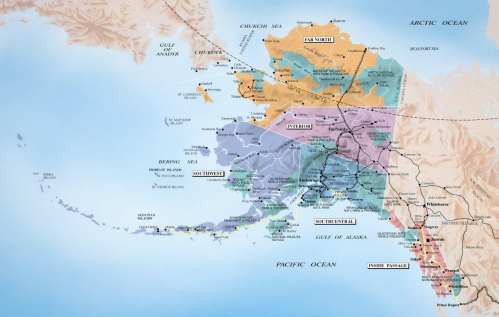
Joshua Kindred – Nominee to the U.S. District Court for the District of Alaska

Last year, the nomination of Jon Katchen to the federal bench in Alaska failed amidst opposition from Alaskan lawyers regarding Katchen’s relative inexperience.  The Trump Administration has responded by nominating an even younger lawyer with less experience.  This time, with a broader Senate majority, Republicans look to push through Joshua Kindred to the Alaska federal bench.

Background

        Joshua Michael Kindred was born in Goldsboro, North Carolina in 1977.[1]  He earned his B.A. from the University of Alaska at Anchorage in 1999 and his J.D. from the Willamette School of Law in 2005.[2]  He  clerked for Chief Justice Paul Demuniz on the Oregon Supreme Court before joining Lane Powell LLC in Anchorage as an associate.[3] 

In 2008, Kindred became a state prosecutor in Anchorage, a role which he held for five years.  In 2013, Kindred became Environmental Counsel at the Alaska Oil and Gas Associate, where he worked on both litigation and government relations on behalf of the Association.[4]  In 2018, he joined the U.S. Department of the Interior’s Office of the Regional Solicitor, where he currently serves.

History of the Seat 

        Katchen has been nominated to a vacancy on the U.S. District Court for the District of Alaska.  The vacancy opened with Judge Ralph Beistline’s move to senior status on December 31, 2015.  No nomination was put forward to the vacancy during the Obama Administration.

The Trump Administration initially nominated Jon Katchen, an Anchorage based attorney who was one of five candidates recommended by Alaska Senators Lisa Murkowski and Dan Sullivan.[5]  Katchen’s nomination drew sharp criticism from Alaskan attorneys, with Alaska Superior Court Judge Elaine Andrews, who presided over Alaska’s Anchorage courts, noting: “We should be taking the very best we have, and he may be decent, he may be very good, but he’s not the best we have.”[6]  Katchen ranked 13th out of 20 applicants on the Alaska Bar Association poll, with 31 percent rating him “extremely qualified” or “well qualified,” compared to 66 percent who gave those ratings to the top applicant, Eric Aarseth, a highly rated state judge since 2005.[7]  For whatever reason, Katchen never received a hearing, instead withdrawing his nomination on August 28, 2018.[8]

In August 2019, Kindred was contacted by Sullivan to gauge his interest in a federal judgeship.[9]  Kindred was selected as a nominee in August 2019 and was nominated on November 21, 2019.

Legal Career

Kindred’s legal experience largely derives from two positions, his time as an Assistant District Attorney in Anchorage, and his time with the Alaska Oil and Gas Association.

In the former role, Kindred was responsible for litigating misdemeanors and felonies in Alaska state court.  During this time, Kindred tried around 40 jury trials to verdict.[10]  In one of his most prominent trials, Kindred tried a defendant for First Degree Murder, seeking to get around the defendant’s self-defense argument.[11]  The case ended with an acquittal on the Murder charge, albeit with a conviction on a lesser Manslaughter charge.[12] 

In the latter role, Kindred participated in regulatory rulemaking processes, including commenting on proposed regulations of the Alaska oil and gas industries.  For example, in 2015, Kindred testified before the Senate Committee in favor of further oil and gas development under the Alaska National Interest Lands Conservation Act (ANILCA).[13]  He also opposed potential state regulations on fracking, arguing that the regulations are “unnecessary” and “provide delays and increased costs.[14]                  

Overall Assessment

        In 2018, Katchen’s nomination faced sharp criticism on the grounds that he was rated 13th out of 20 applicants before the Alaska Bar Association.  Today, Kindred has been nominated for the position despite having an even worse rating of 16th.[15]  Comparatively, while only 31% of respondents rated Katchen as Extremely Qualified or Well Qualified for a federal judgment, only 15% similarly rated Kindred.  As such, the same criticisms of youth and inexperience that dogged Katchen could be applied to Kindred.

        That being said, unlike Katchen, Kindred does have some experience with criminal law, including extensive experience litigating before juries.  Additionally, Kindred’s supporters will argue that his experience with the oil and gas industry is uniquely suited to Alaska.  In contrast, opponents will question Kindred’s commitment to enforcing environmental laws fairly.[16] 

        Overall, it is likely that Alaska Senators are tired of the extended vacancy on their courts.  While the Trump Administration could have picked a more experienced candidate, Kindred will be approved as long as senators find that he meets the minimum threshold to be a district court judge.


[1] Sen. Comm. on the Judiciary, 116th Cong., Questionnaire for Judicial Nominees: Joshua Kindred 1.

[2] Id.

[3]Id. at 2.

[4] Id. at 14.

[5]Charles Wohlforth, How Connections Trumped Qualifications to be Alaska’s New Federal Judge, Anchorage Daily News, Apr. 24, 2018, https://www.adn.com/opinions/2018/04/24/how-connections-trumped-qualifications-to-be-alaskas-new-federal-judge/.  

[6]Id.

[7]Id.

[8] Erica Martinson, Anchorage Attorney, Nominated By Trump, Withdraws From Federal Judgeship, Anchorage Daily News, Aug. 28, 2018, https://www.adn.com/politics/2018/08/28/anchorage-attorney-nominated-by-trump-withdraws-from-federal-judgeship/.  

[9]  See Kindred, supra n. 1 at 26.

[10]See id. at 15-16.

[11]See State of Alaska v. Josiah Darroux, 3AN-07-05280 CR (Alaska Super. Ct.).

[12] Id.

[13] See Testimony of Joshua Kindred, Sen. Comm. on Energy and Natural Resources, as reported by CQ Congressional Testimony, Dec. 3, 2015.

[14] Alaska Fracking Projects Could Get New Comment Period, A.P. State & Local, Jan. 27, 2017.

[15] See Alaska Bar Association Poll Results, https://s3-us-west-2.amazonaws.com/ktoo/2019/12/2017-Results-4.pdf (last visited Dec. 13, 2019).

[16] See, e.g., Kindred Won’t Protect Alaska’s Environment, States News Service, Dec. 3, 2019.

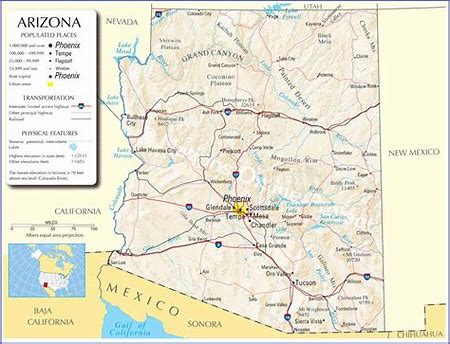
Judge John Hinderaker – Nominee to the U.S. District Court for the District of Arizona

Sen. Kyrsten Sinema has generally supported President Trump’s judicial nominees, backing Arizona nominee Michael Liburdi even as many liberals actively opposed him.  Her relationship with the Administration has resulted in the nomination of her recommendation: Judge John Hinderaker.

Background

John Charles Hinderaker was born in 1968 in Indio, CA.  Hinderaker graduated from the University of California Santa Barbara in 1991 and then from the University of Arizona College of Law n 1996.[1]

After graduation, Hinderaker clerked for Judges John Roll and Raymond Terlizzi on the U.S. District Court for the District of Arizona. He then joined the Tucson office of Lewis Roca Rothgerber Christie LLP as an Associate.[2]  In 2003, he became a Partner with their office.  In 2018, Hinderaker was appointed to the Pima County Superior Court by Republican Gov. Doug Ducey.[3]  He continues to serve on that Court.

History of the Seat

Hinderaker has been nominated for a seat on the U.S. District Court for the District of Arizona.  This seat opened on March 4, 2019, when Judge Raner Collins moved to senior status.

In May 2019, Hinderaker was contacted by the Office of Sen. Kyrsten Sinema (D-AZ) to inquire as to his interest in a federal appointment.[4]  Hinderaker was recommended to the White House for appointment in late July 2019.  Hinderaker interviewed with the White House Counsel’s Office on August 14, 2019.  President Trump nominated him on December 2, 2019.

Legal Career

Hinderaker has spent virtually his entire pre-bench career as an attorney with Lewis Roca Rothgerber Christie LLP.  At the firm, Hinderaker worked primarily with complex civil litigation, focusing on issues of land use, property law, contract law, and torts.[5]

Notably, Hinderaker represented the City of Tucson in seeking to condemn a parcel of real property in order to widen the road.[6]  He also represented Walmart in defending against a tort suit brought by a woman who was attacked in the Walmart parking lot.[7] 

Jurisprudence

Hinderaker has served as a Superior Court judge since his appointment in 2018.  In this role, he serves as a primary trial judge, supervising criminal and civil cases.  Over the last year on the bench, Hinderaker has presided over approximately 19 cases that have proceeded to verdict or judgment.[8]  Among his more notable decisions, Hinderaker sentenced a man sentenced a man to eight years in prison for driving a vehicle while intoxicated and killing a bicyclist in an accident.[9]  Furthermore, given his short tenure on the bench, Hinderaker has never been reversed by a higher court.

Political Activity

While Hinderaker is a Democrat, he was appointed as a district judge by a Republican Governor.[10]  He also has a mixed contribution history, having contributed both to Democratic Rep. Gabby Giffords and Republican congressional candidate Lea Marquez Petersen.[11]

Overall Assessment

As Hinderaker is a Democrat appointed by a Republican president and supported by his Democratic and Republican home state senators, he is likely to have a relatively uncontroversial nomination.


[1] Sen. Comm. on the Judiciary, 116th Cong., John Hinderaker: Questionnaire for Judicial Nominees 1.

[2] Id.

[3] Id.

[4] See id. at 49.

[5] Id. at 31.

[6] City of Tucson v. Han, No. C20151491 (Ariz. Super. Ct.).

[7] Sklias v. WalMart, No. C20145321 (Ariz. Super. Ct.).

[8] See Hinderaker, supra n. 1 at 16.

[9] State v. Corral, CR2016-3731-001 (Ariz. Super. Ct. 2018).

[10] Jeremy Duda, Judicial Nominees Announced, Yellow Sheet Report, Dec. 19, 2017.

Judge Scott Rash – Nominee to the U.S. District Court for the District of Arizona

Judge Scott Rash has built a conservative reputation on the Pima County Superior Court.  Now, he has been nominated for a seat on the federal bench in Arizona.

Background

Rash was born in 1963 in Minneapolis, MN.  Rash graduated from the University of Arizona in 1985 and then attended the University of Arizona Law School and Graduate School, getting a J.D. in 1991.[1]

After graduation, Rash joined the Arizona Attorney General’s Office as an Assistant Attorney General.[2]  In 1999, he joined Bosse Rollman P.C. in Tucson as a Shareholder.[3]  In 2010, Rash was appointed to the Pima County Superior Court by Republican Governor Jan Brewer.  He continues to serve on that Court.  

History of the Seat

Rash has been nominated for a seat on the U.S. District Court for the District of Arizona.  This seat opened on April 6, 2018, when Judge Cindy Jorgensen moved to senior status.  In January 2018, Rash was contacted by then Sen. Jeff Flake to gauge his interest in a judicial appointment.[4]  After interviews with Flake and Sen. John McCain, Rash interviewed with the White House on August 17, 2018 and was selected as a nominee in early September.

Despite having been selected as a nominee in September 2018, Rash saw no real movement on his nomination for the next few months, potentially because of Flake and McCain’s replacement by Sens. Kyrsten Sinema and Martha McSally.  Instead, Rash reinterviewed with McSally in April 2019 and then with Sinema in July 2019.  After getting their approval, Rash was nominated on October 15, 2019.

Legal Career

In his nineteen years in practice before becoming a state judge, Rash worked both for the Arizona Attorney General handling criminal law and in private practice, working on civil matters such as contract disputes, land use cases, and employment matters.  Over his time in practice, Rash tried 32 cases.[5]

Among his more significant cases, Rash represented the City of Tucson in prosecuting violations of municipal code signs and in defending against First Amendment challenges brought by Clear Channel Outdoor, Inc.[6]  The case ultimately settled after an extensive eight year long litigation.

Jurisprudence 

Rash has served as a Superior Court judge since his appointment in 2010.  In this role, he serves as a primary trial judge, supervising criminal and civil cases.  Over the last nine years, Rash has presided over approximately 208 cases that have proceeded to verdict and judgment.[7]

On the bench, Rash has developed a fairly conservative jurisprudence, frequently interpreting criminal laws expansively and protections narrowly.  For example, in one case, Rash barred a defendant from using the entrapment defense where the defendant was approached by an officer who asked him to help him obtain crack cocaine and who had expressed reluctance in performing the act.[8]  In another case, Rash held that a Defendant could be convicted of burglary for stealing from the bed of a pickup truck, ruling that the burglary statute covered such activity.[9]

Political Activity

In 2012, while Rash was a sitting state judge, he made a $250 contribution to Flake’s campaign, his only contribution of record.[10]  Further, Rash has been a member of the Federalist Society since 2018.

Overall Assessment

Given Rash’s extensive experience with litigation both as an attorney and as a judge, it is hard to dispute that he possesses the basic qualifications to be a federal judge.  While he may draw a few negative votes for his conservative jurisprudence, this is unlikely to seriously damage his confirmation.


[1] Sen. Comm. on the Judiciary, 116th Cong., Scott Rash: Questionnaire for Judicial Nominees 1.

[2] Id. at 2.

[3] Id.

[4] Id. at 53-54.

[5] Id. at 36.

[6] City of Tucson v. Clear Channel Outdoor, Inc., No. C20003722 (Ariz. Super. Ct.).

[7] See Rash, supra n. 1 at 9.

[8] See State v. Gray, 372 P.3d 999 (Ariz. 2016).

[9] See State v. Bon, 338 P.3d 989 (Ariz. Ct. App. 2014).

Judge Bernard Jones – Nominee to the U.S. District Court for the Western District of Oklahoma

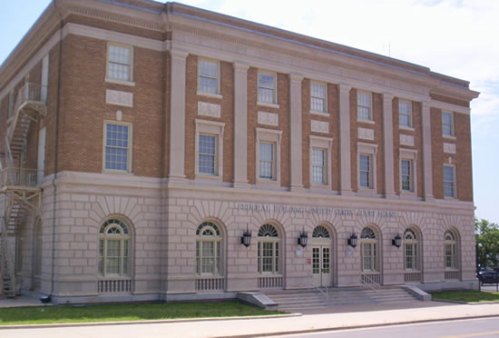
The Federal Courthouse in Lawton, Oklahoma

Judge Bernard Jones, while only forty, has already been on the bench for seven years.  His level of experience, alongside a relatively moderate record, should ensure a comfortable confirmation.

Background

Bernard Maurice Jones II was born in Oklahoma City in 1979.[1]  Jones attended Southern Methodist University in Dallas, graduating with a B.A. in 2001.  He then attended Notre Dame Law School, graduating in 2004.

After graduating, Jones joined Porter Wright Morris & Arthur LLP as an Associate.[2]  In 2006, he moved to Oklahoma City to be an Associate at McAfee & Taft.  In 2008, Jones joined the Oklahoma City University of Law as an Associate Dean.

In 2012, Jones was appointed to be a District Judge in Oklahoma by Governor Mary Fallin.[3] In 2015, Jones became a federal magistrate judge on the U.S. District Court for the Western District of Oklahoma.  He currently serves in that capacity.

History of the Seat

The seat Jones has been nominated for opened on July 1, 2019, with Judge Joe Heaton’s move to senior status.  Jones applied to fill the vacancy in February 2019.[4]  After interviews with Oklahoma Senators James Inhofe and James Lankford, as well as with the White House and the Department of Justice, Jones was selected as a nominee in July 2019.  Jones was officially nominated on October 17, 2019.

Political Activity

Jones’ only political record is as a campaign worker for Democrat Tony Sanchez, who was running for the Governor of Texas in 2002.[5]

Legal Experience

Jones’ litigation experience before he became a judge was relatively brief, consisting of his stints in private practice between 2004 and 2008.  In this time, Jones tried two cases before a judge and one before a jury.  His sole jury trial involved a fraud case concerning commercial real estate, which ended in a jury verdict against Jones’ client.[6]

Jurisprudence

Jones has served as a U.S. Magistrate Judge on the U.S. District Court for the Western District of Oklahoma since 2015, and served as a state court judge from 2012 to 2015.  In his time on the bench, Jones has presided over approximately twenty cases that proceeded to verdict or judgment.

State Court

As a state court judge between 2012 and 2015, Jones handled both civil and criminal matters under Oklahoma law.  In one notable case, Jones was asked to order the replaying of the last sixty-four seconds of a high school football match in response to an alleged poor call by a referee.[7]  Jones ultimately denied an injunction in the case, finding that plaintiffs could not meet the extraordinary burden needed before requiring court intervention into high school football matches.[8] 

U.S. Magistrate Judge

As a U.S. Magistrate Judge, Jones oversaw pretrial detention and settlement matters, as well as offering recommendations to district court judges on substantive rulings.  In one case, Jones recommended that a plaintiff’s civil rights claims concerning denial of medical treatment be dismissed, which was accepted by the district court.[9]  The Tenth Circuit, however, reversed the dismissal, finding that the district court had erred in not allowing the plaintiff to amend his complaint.[10]

Writings

Jones has only one published article to his name.  In 2008, Jones wrote an opinion piece in favor of stricter bans of public smoking.[12]  The piece countered arguments that such bans infringed on people’s freedom, stating:

“We agree that freedom is of utmost importance, but the freedom we seek is for the 75 percent of Oklahomans who do not smoke.”[13]

Overall Assessment

Despite his youth and relative lack of litigation experience as an attorney, Jones is still likely to be an uncontroversial nominee.  This is partially because he has extensive judicial experience, but it is also because Jones has not made any high-profile rulings and has avoided associations with controversial stances.  As such, Jones is poised to join the Western District.


[1] Sen. Comm. on the Judiciary, 116th Cong., Bernard Jones: Questionnaire for Judicial Nominees 1.

[2] See id. at 2.

[3] Sheila Stogsdill, Fallin Names District Judge, The Daily Oklahoman, Sept. 18, 2012.

[4] Sen. Comm. on the Judiciary, 116th Cong., Bernard Jones: Questionnaire for Judicial Nominees 44-45.

[5] See id. at 34.

[6] Nudeal Enters. LLC v. Founder’s Tower Condos., LLC, CJ-2007-2454 (Okla. Cty. Dist. Ct. Mar. 26, 2007).

[7] Indep. Sch. Dist. No. I-89 of Okla. Cnty., Okla. v. Okla. Secondary School Activities Ass’n, CV-2014-2235 (Okla. Cty. Dist. Ct. Dec. 11, 2014).

[8] Scott Wright, Key Points in Judge Bernard Jones’ Ruling to Deny Douglass’ Injunction Request, The Daily Oklahoman, Dec. 11, 2014.

[9] See Gray v. GEO Group, Inc., 727 F. App’x 940 (10th Cir. 2018).

[10] See id.

[11] Campbell v. Jones, No. CIV-13-926-R, 2015 WL 3971674 (W.D. Okla. Mar. 31, 2015).

[12] Bernard Jones, Don’t Forget Nonsmoker’s Rights, The Oklahoman, Apr. 5, 2008.

[13] Id.

Judge Barbara Jongbloed – Nominee to the U.S. District Court for the District of Connecticut

Barbara Jongbloed, a judge for Connecticut’s Superior Court since 2000, has been nominated for a seat on the U.S. District Court for the District of Connecticut.  While Jongbloed is a registered Democrat, this is her second nomination by a Republican executive, having been tapped for state court by Gov. John Rowland.

Background

Jongbloed was born in Washington D.C. in 1959.  She earned her B.A. from Lawrence University in 1981 and her J.D. from New York University School of Law in 1984.  After graduating law school, she clerked for U.S. District Judge T. Gilroy Daly, before joining Day Berry & Howard in Stamford, Connecticut.  In 1987, Jongbloed moved to the public sector as an Assistant U.S. Attorney, staying in the office for thirteen years, the last two as criminal chief.  In 2000, Jongbloed was nominated by Rowland to become a Superior Court Judge in New London, where she currently serves.

History of the Seat

Jongbloed was nominated to a vacancy on the U.S. District Court for the District of Connecticut on October 15, 2019.  The vacancy opened on August 31, 2018, with Judge Alvin Thompson’s move to senior status.

In August 2018, Jongbloed applied for the judgeship with Connecticut Senators Richard Blumenthal and Chris Murphy, both Democrats.  They recommended Jongbloed to the White House in March 2019.  

Legal Career

Jongbloed’s primary experience before becoming a judge was as a federal prosecutor.  Over the thirteen years she was at the U.S. Attorney’s Office, Jongbloed tried 14 cases to verdict.  Jongbloed was co-counsel with fellow Connecticut federal judge Kari Dooley in the prosecution of Stewart Leonard, who was sentenced to 52 months in federal prison for embezzlement.[1]  She also prosecuted Greenwich Acupuncture Center and its owners for various forms of fraud.[2] 

Jurisprudence

Jongbloed has served as a Judge on the Connecticut Superior Court since 2000, when she was appointed by Republican Gov. John Rowland.  In the past 19 years, Jongbloed has presided over approximately 105 cases that have proceeded to verdict and judgment.  Among these, Jongbloed has not hesitated to issue long sentences in criminal cases where she deems it appropriate.  For example, she sentenced Dante Hughes, who shot a good samaritan who was attempting to intervene in a domestic dispute, to 50 years in prison.[3]  Similarly, she sentenced George Leinart to the mandatory sentence of life for capital felony for the death of a 15 year old girl,[4] and sentenced Mozzelle Brown to 56 years in prison for the murder of physicist Eugene Mallove.[5]  In fact, the two cases in which Jongbloed was reversed over her tenure as a judge, both involve rulings in favor of the prosecution which were overruled by the Connecticut Supreme Court.[6]

Overall Assessment

Jongbloed’s status as a Democrat nominated by Trump will likely be enough to satisfy partisans on either side to let her move through without a fight.  Nonetheless, setting aside party affiliation, Jongbloed has extensive experience both as an attorney and as a state court judge, which should quell concerns about her jurisprudence.


[1] See United States v. Stewart J. Leonard Sr., et al., 37 F.3d 32 (2d Cir. 1994).

[2] United States v. Greenwich Acupuncture Cntr., et al., No. 5:91CR00040 WE (D. Conn. 1991).

[3] State v. Dante Hughes: KNL-CR16-335957.

[4] Karen Florin, A ‘True Predator’ Removed From Society: Judge Sentences Leniart to Life in Cold-Case Murder, The Day, June 23, 2010.

[5] Karen Florin, Mozzelle Brown Sentenced to 58 Years For Mallove Murder, The Day, Jan. 6, 2015.

[6] Compare State v. Jean Jacques, 332 Conn. 271 (2019) and State v. Chihan Eric Chyung, 325 Conn. 236 (2017).

Judge Silvia Carreno-Coll – Nominee to the U.S. District Court for the District of Puerto Rico

Judge Silvia Carreno-Coll has extensive experience with litigation and with case management, as she currently serves as a U.S. Magistrate Judge.  As such, she can be considered a fairly uncontroversial selection for a federal judgeship.

Background

Silvia Luisa Carreno-Coll was born in Santo Domingo in the Dominican Republic in 1963.  Carreno-Coll received her B.A. cum laude from Emerson College in 1983 and her J.D. from the University of Puerto Rico School of Law in 1986.[1]  After graduating, Carreno-Coll joined the Federal Litigation Division of the Puerto Rico Department of Justice.  In 1989, she became a federal prosecutor with the U.S. Attorney’s Office for the District of Puerto Rico.[2]

In 1995, Carreno-Coll became Associate Regional Counsel for the Environmental Protection Agency in San Juan.[3]  She held that position until her appointment as a federal magistrate judge in 2011.[4]

History of the Seat

Carreno-Coll has been nominated for a vacancy on the U.S. District Court for the District of Puerto Rico.  This seat opened when Judge Jay Garcia-Gregory moved to senior status on September 30, 2018.  

In August 2018, Carreno-Coll was contacted by Resident Commissioner Jennifer Gonzalez to gauge her interest in a federal judgeship.[5]  Carreno-Coll was selected as the primary candidate for the vacancy after interviews with the White House in June and July of 2019.

Legal Experience

Carreno-Coll has spent her entire career in the public sector, starting with her work with the Attorney General’s Office, where she defended police departments in 1983 and civil rights suits.  Similarly, in the U.S. Attorney’s Office, she was responsible for defending federal officers against Bivens suits alleging violations of constitutional rights.  However, Carreno-Coll also brought affirmative civil actions seeking to remove houseboats that were obstructing movement in navigable waters.[6] 

From 1995 to 2011, Carreno-Coll worked for the EPA seeking to remedy violations of environmental laws.  For example, Carreno-Coll prosecuted Braulio Agosto Motors, Inc. for intentionally discharging raw sewage into the Espiritu Santo River.[7]

Jurisprudence

Since 2011, Carreno-Coll has served as a full-time U.S. Magistrate Judge with the U.S. District Court for the District of Puerto Rico.  During his career, Carreno-Coll has presided over 15 cases that have proceeded to verdict or judgment.[8] 

Among the most notable cases he handled, Carreno-Coll presided over the jury trial arising from a car crash, which resulted in a $6 million jury verdict for the plaintiff.[9]  She also presided over an action in diversity arising from damages from a dog bite, which also ended in a verdict for the plaintiff.[10]

Overall Assessment

Nominations to the District of Puerto Rico have rarely brought the same degree of partisan fervor as those to other courts.  Judge Carreno-Coll’s nomination is unlikely to be any different.  Given her extensive experience, she will likely get bipartisan support.


[1] Sen. Comm. on the Judiciary, 116th Cong., Silvia Carreno-Coll: Questionnaire for Judicial Nominees 1.

[2] Id. at 2.

[3] See id. 

[4] Id.

[5] Id. at 36.

[6] United States v. Members of the State of Luis Boothby, 16 F.3d 19 (1st Cir. 1994).

[7] See United States v. Braulio Agosto, et al., 617 F.3d 541 (1st Cir. 2010).

[8] See Carreno-Coll, supra n. 1 at 11.

[9] See Quiles-Velar v. Ox Bodies, Inc., 823 F.3d 712 (1st Cir. 2016).

[10] See Correa-Zayas v. Miranda Menchaca, et al., No. CV-15-1585 (D.P.R.).