Jay Richardson – Nominee for the U.S. Court of Appeals for the Fourth Circuit

On June 17, 2015, Dylann Roof, a 21-year-old white supremacist murdered nine African Americans during a prayer service at Emanuel African Methodist Episcopal Church in Charleston.  During Roof’s subsequent capital trial, the lead federal prosecutor was a well-connected South Carolinian named Jay Richardson.  On April 26, 2018, approximately sixteen months after Roof received the death penalty, Richardson was tapped by President Donald Trump for a seat on the U.S. Court of Appeals for the Fourth Circuit.

Background

A native South Carolinian from a well-connected family with a history in the Palmetto State, Julius Ness Richardson was born on October 26, 1976 in Columbia.  He received a B.S. from Vanderbilt University in 1999 and a J.D. from the University of Chicago Law School in 2003.  After graduating, Richardson worked for the prolific Judge Richard Posner on the U.S. Court of Appeals for the Seventh Circuit and then for Chief Justice William Rehnquist on the U.S. Supreme Court (clerking alongside fellow judicial nominee Martha Pacold and Deputy Solicitor General Jeff Wall).[1]

After his clerkship, Richardson joined the D.C. office of Kellogg, Huber, Hansen, Todd, Evans & Figel as an Associate.  In 2009, Richardson moved to the U.S. Attorney’s Office for the District of South Carolina, where he continues to serve as an Assistant United States Attorney.[2]

History of the Seat

Richardson has been nominated to replace U.S. Circuit Judge Dennis Shedd, who moved to senior status on January 30, 2018.  In June 2017, a few months before Shedd would announce his departure, Richardson was contacted by the White House to gauge his interest in an appointment to the Fourth Circuit.[3]  Richardson was nominated on May 7, 2018, after interviews with the White House and South Carolina Senators Tim Scott and Lindsey Graham.[4]

Legal Experience

Richardson has held two main legal positions after finishing his clerkships: working as an associate at Kellogg Huber; and working as a federal prosecutor.  In the former position, Richardson focused primary on commercial litigation.  Among the matters he handled at Kellogg Huber, Richardson represented Standard Iron Works, a steel purchaser, in a Sherman Act antitrust action against a series of defendant iron producers, alleging coordinated supply cuts.[5]

As a federal prosecutor, Richardson’s most famous case was the prosecution of Dylann Roof, the aforementioned white supremacist who had murdered nine churchgoers in Charleston.[6]  In the case, Richardson handled all pre-trial matters, as well as the trial and the sentencing phase, successfully leading to the imposition of the death penalty against Roof.[7]  Richardson also successfully defended a challenge based on the constitutionality of the death penalty brought by Roof’s attorneys.[8]

In other cases he handled as a federal prosecutor, Richardson prosecuted MS-13 gang members in a murder-for-hire case,[9] and the longest-serving sheriff in South Carolina for bribery.[10]

Writings

In 2002, as a student at the University of Chicago Law School, Richardson authored an article discussing Federal Rule of Civil Procedure 4(k)(2).[11]  Rule 4(k)(2) allows federal courts to exercise jurisdiction over defendants who would otherwise not fall under the jurisdiction of any state jurisdiction.  Richardson notes that courts vary in interpreting which party has the burden of production to determine that a defendant falls under the purview of 4(k)(2), with at least one court (the Seventh Circuit) placing the burden on the Defendant.[12]

In his paper, Richardson advocates a burden-shifting mechanism, in which plaintiffs bear an initial burden to present a prima facie case that a defendant falls under the purview of 4(k)(2), at which point the burden shifts to the defendant to demonstrate that a state jurisdiction can exercise jurisdiction over themselves.[13]  Richardson notes that this burden-shifting “minimizes the costs of dispute resolution.”[14]

Memberships

Richardson has been a member of the Federalist Society for Law and Public Policy Studies since 2017 (approximately the time that he has been under consideration for a federal judgeship).[15]  Richardson has also been a member of the Palmetto Club and the Forest Lake Club, two private clubs that previously restricted African Americans from membership (the Forest Lake Club admitted its first African American member in 2017).[16]

Overall Assessment

Given his fame as the prosecutor who successfully convicted Dylann Roof, Richardson is not an easy nominee for senators to oppose (the attack ads write themselves).  Nevertheless, even setting the Roof case aside, it is hard to deny that Richardson is qualified for a seat on the federal bench.

First, Richardson has impeccable academic credentials, including having clerked for two of the most influential judges in the country.  Second, Richardson boasts complex litigation experience on both the civil and criminal side.  Additionally, Richardson’s relative reticence on public policy issues and his relative lack of controversy also favor his confirmation.  Furthermore, while Richardson is a member of the Federalist Society, his membership is relatively recent and has not been accompanied by any extensive speaking or political activity.

Overall, barring any unexpected developments, Richardson will likely be confirmed in due course.  On the bench, Richardson looks likely to chart a conservative course, but may, like Posner before him, surprise.


[1] Sen. Comm. on the Judiciary, 115th Congress, Julius Ness Richardson: Questionnaire for Judicial Nominees 2.

[2] Id.

[3] Id. at 30.

[4] Id.

[5] Standard Iron Works v. Arcelormittal et al., 639 F. Supp. 2d 877 (N.D. Ill. 2009) (denying Defendant steel producers’ motion to dismiss).

[6] See Matt Zapotosky, Roof’s Journal of Racist Rants Revealed on Emotional Day, Wash. Post, Jan. 6, 2017.

[7] Alan Blinder and Kevin Sack, Dylann Roof is Sentenced to Death in Charleston Church Massacre, N.Y. Times, Jan. 10, 2017.

[8] United States v. Roof, 225 F. Supp. 3d 413 (D.S.C. 2016).

[9] United States v. Teran, 496 Fed. App’x. 287 (4th Cir. 2012).

[10] Chris Dixon, Judge Rejects Plea Deal for South Carolina Sheriff, N.Y. Times, Dec. 18, 2014.

[11] Julius Ness Richardson, Shifting the Burden of Production Under Rule 4(k)(2): A Cost-Minimizing Approach, 69 U. Chi. L. Rev. 1427 (Summer 2002).

[12] Id. at 1431

[13] See id. at 1437-39.

[14] Id. at 1441.

[15] See Richardson, supra n. 1 at 5.

[16] Id. at 5-6.

Raul Arias-Marxuach – Nominee for the District of Puerto Rico

President Trump has received some criticism for the lack of diversity in his judicial candidates.  As of June 18, 2018, out of the 125 nominations made to the Article III courts, just four have been Hispanic.  One of those four is Raul Arias-Marxuach, who joins a federal bench composed entirely of Hispanic judges, serving a population where 95% of citizens speak Spanish as their first language.

Background

Raul Manuel Arias-Marxuach was born in San Juan, Puerto Rico in 1967.  Arias-Marxuach received his B.S. cum laude from Boston College in 1989 and his J.D. from the University of Puerto Rico School of Law in 1992.[1]  After graduating, Arias-Marxuach clerked on the Supreme Court of Puerto Rico and then received an LLM from Harvard Law School.

After receiving his LLM, Arias-Marxuach joined the San Juan firm Fiddler Gonzalez & Rodriguez P.S.C. as a Litigation Associate.[2]  In 1995, Arias-Marxuach moved to McConnell Valdes LLC.  Arias-Marxuach became an Income Partner at the firm in 1999 and a Capital Partner in 2003.[3]  He continues to practice at the firm.[4]

History of the Seat

Arias-Marxuach has been nominated for a vacancy on the U.S. District Court for the District of Puerto Rico.  This seat opened when Judge Jose Fuste moved to senior status on June 1, 2016.  No nomination was made to this seat during the Obama Administration.

In March 2017, Arias-Marxuach was contacted by the White House after being recommended for a judgeship by Resident Commissioner Jenniffer Gonzalez.[5]  Arias-Marxuach was selected as the primary candidate for the vacancy in April 2017, but was not officially nominated for the next year, until April 10, 2018.

Political Activity

Arias-Marxuach has limited political experience, having worked as a volunteer attorney for the campaign of Governor Luis Fortuno in 2008 (Fortuno caucused with the GOP as a resident commissioner in Washington).[6]  He also served as a member of the Republican National Lawyers Association in 2003.[7]

Legal Experience

Arias-Marxuach has spent almost his entire legal career at McConnell Valdes LLC,  working in a variety of subject areas including maritime law, product liability, and antitrust matters.[8]  During his career, Arias-Marxuach has tried three cases to verdict before the U.S. District Court for the District of Puerto Rico.[9]

Among the most notable cases he handled, Arias-Marxuach represented the University of Puerto Rico (UPR) in seeking legal remedies against 21 student “strikers” who sought to maintain collective action against the University.[10]  The case went all the way to the Puerto Rico Supreme Court, which found that students at the University do not have the right to strike.[11]

Overall Assessment

When nominated, Commissioner Gonzalez described Arias-Marxuach as “very professional…conservative, and his character is impeccable.”[12]  A review of his record mostly confirms her assessment.  Arias-Marxuach brings a long record with complex civil litigation to the bench, along with a generally non-controversial background.  While Arias-Marxuach may draw some questions based on his role in ending the UPR student strike, Democrats are unlikely to target his nomination, focusing on more conservative targets.


[1] Sen. Comm. on the Judiciary, 115th Cong., Raul Arias-Marxuach: Questionnaire for Judicial Nominees 1.

[2] See id. at 2.

[3] Id.

[4] Id.

[5] NotiCel, New Federal Judge Candidate in PR Closely Linked to UPR Strike, NotiCel, June 12, 2017, http://www.noticel.com/ahora/new-federal-judge-candidate-in-pr-closely-linked-to-upr-strike-document/609378099.

[6] See id. at 8.

[7] See id. at 4.

[8] See id. at 1.

[9] See id. at 18.

[10] NotiCel, New Federal Judge Candidate in PR Closely Linked to UPR Strike, NotiCel, June 12, 2017, http://www.noticel.com/ahora/new-federal-judge-candidate-in-pr-closely-linked-to-upr-strike-document/609378099.

[11] See Univ. of Puerto Rico v. Labarde Torres, 180 D.P.R. 253 (P.R. 2010).

[12] See Noticel, Supra n. 10.

Andrew Brasher – Nominee for the U.S. District Court for the Middle District of Alabama

Late last year, the Trump Administration suffered an unusual and embarrassing defeat when Alabama judicial nominee Brett Talley withdrew in the face of bipartisan opposition.  Among the many knocks against Talley were his youth and inexperience.  Now, the Administration has replaced Talley with Alabama Solicitor General Andrew Brasher, who is just as young, but brings a significantly greater amount of courtroom experience.

Background

Andrew Lynn Brasher was born in Milan, TN on May 20, 1981.  Brasher moved to Alabama to attend Samford University, a private Christian University in Homewood, where he graduated summa cum laude in 2002.[1]  Brasher went on to Harvard Law School, graduating cum laude in 2006.

Upon graduation, Brasher clerked for Judge William Pryor on the U.S. Court of Appeals for the Eleventh Circuit.[2]  He then joined the Birmingham office of Bradley Arant Boult Cummings LLP as an Associate.

In 2011, Brasher was appointed by Luther Strange, then the Attorney General of Alabama, to be Deputy Solicitor General.  Brasher served in that capacity until 2014 when he was appointed Solicitor General (working with Talley in the office).[3]  Brasher continues to serve in the office.

History of the Seat

Brasher has been nominated for a seat on the U.S. District Court for the Middle District of Alabama.  This seat opened on August 1, 2015, when Judge Mark Fuller resigned after his arrest for domestic violence.[4]  Despite the seat opening in President Obama’s second term, negotiations between the Administration and Alabama’s Republican senators fell apart and no nomination was ever made to fill the seat.[5]

In September 2017, the Trump Administration nominated Talley to the court.[6]  Unfortunately, Talley’s nomination quickly drew criticism from Democrats for his youth and lack of experience.  Shortly after his nomination passed through the Judiciary Committee on a party-line vote, it became public that Talley did not disclose his marriage to Ann Donaldson, the chief of staff to White House Counsel Don McGahn in his paperwork.[7]  Soon after, news broke of undisclosed posts and comments written by Talley under a pseudonym,[8] including message board comments defending “the first KKK.”[9]  Facing increasing bipartisan pushback to Talley’s nomination, the White House agreed to withdraw Talley’s nomination.[10]

On December 9, 2017, Sen. Richard Shelby (R-AL) reached out to Brasher to schedule an interview for the Middle District vacancy.[11]  Shelby recommended Brasher to the White House in late December.  Brasher was officially nominated on April 10, 2018.

Legal Experience

Setting aside his clerkship, Brasher has had two main legal jobs: as an associate at Bradley Arant; and as Deputy Solicitor General and Solicitor General of Alabama.  During his time at Bradley Arant, Brasher worked in complex civil litigation, including product liability cases.  At the firm, he notably represented Republican Gov. Bob Riley in defending a controversial line item veto (later overturned by the Alabama Supreme Court).[12]

As the Deputy Solicitor General and Solicitor General of Alabama, Brasher defended Alabama laws and convictions before state and federal courts.  As such, Brasher argued three cases before the U.S. Supreme Court.

In McWilliams v. Dunn, Brasher defended the imposition of the death penalty on James McWilliams, despite the latter’s alleged serious mental health issues.[13]  McWilliams argued that Supreme Court precedent required him to have access to a defense expert to provide evidence of mental incapacity, which Brasher disputed.  The Supreme Court ultimately sidestepped the question of whether McWilliams was entitled to a defense expert, ruling instead that the judge erred in denying any expert examination of McWilliam’s mental state.[14]

In Alabama Legislative Black Caucus v. Alabama, Brasher defended the constitutionality of Alabama’s state legislative districts.  The Supreme Court ultimately reversed the lower court ruling upholding the districts, suggesting that many of whom constituted racial gerrymanders.[15]  Additionally, in Alabama Department of Revenue v. CSX Transp., Inc., Brasher defended an Alabama tax on diesel for rail carriers while exempting competitor industries against charges that it was discriminatory.  The Court ultimately held that Alabama had violated federal law.[16]

In addition to his Supreme Court work, Brasher has also litigated extensively in Alabama state and federal courts.  Notably, Brasher defended the constitutionality of “admission privilege” requirements for abortion providers in Alabama, struck down by Judge Myron Thompson, and ultimately enjoined after the Supreme Court struck down a virtually identical law in Whole Woman’s Health.[17]  Brasher also successfully defended Alabama’s ban on PAC-to-PAC transfers against allegations that it violated the First Amendment.[18]

Writings and Speeches

Setting aside his official positions as Alabama Solicitor General, Brasher had written and spoken extensively on legal and political issues.


Federal Regulation

On February 4, 2017, Brasher served on a Federalist Society panel titled “Combating Federal Overreach.”[19]  The panel consisted of Brasher and the Solicitor Generals of Florida, West Virginia, and Texas, moderated by Allen Winsor, a former Florida Solicitor General who is now up for a federal judgeship.  On the panel, Brasher discussed the litigation over the EPA’s control of “navigable waters” as defined by the Clean Water Act and interpreted by the Army Corps of Engineers.  Brasher criticizes the rule as overly broad and beyond the statutory intent of Congress.  Later in the discussion, Brasher also criticized local regulations, noting:

“…oftentimes, you actually see a locality within a state that’s really, sort of, in league with the federal government against the state’s authority.”[20]

Charitable Donations

On July 21, 2015, Brasher moderated a debate titled “Fat Cats and Philanthropists: How the IRS Governs Your Charitable Donations.”  The discussion was between Dr. Craig Holman from Public Citizen and Hans Von Spakovsky of the Heritage Foundation and discussed IRS interference in not-for-profits and political organizations.[21]

Same-Sex Marriage

In 2015, while defending Alabama’s ban on same-sex marriage before the U.S. Supreme Court, Brasher wrote an article on the subject on SCOTUSBlog.[22]  In the piece, Brasher argues that the Supreme Court “should at least reject the argument that these laws serve no legitimate state interest.”[23]  Brasher suggests that states maintain a legitimate interest in limiting marriage to opposite sex couples, noting:

“I hope that . . . [the Court] does not malign the majority of voters in a majority of states as irrationally prejudiced.”[24]

Death Penalty

Shortly after the Supreme Court narrowly upheld Oklahoma’s lethal injection procedure in Glossip v. Gross, Brasher authored an article in SCOTUSBlog supporting the decision.[25]  In the article, Brasher argues that disputes about the method of administering the death penalty are actually about the legality of the penalty itself, stating:

“Why pretend these disputes are about a particular method of execution when they clearly go to the viability of capital punishment itself?”[26]

However, Brasher also acknowledges some of the arguments of death penalty opponents, noting:

“It is hard to argue that the death penalty is a strong deterrent when capital cases take twenty-five years to process.”

Redistricting

Shortly after the U.S. Supreme Court struck down North Carolina’s redistricted maps in Cooper v. Harris, Brasher published an article critical of the decision.[27]  Brasher suggests that the decision would lead to more judicial intervention in redistricting without providing adequate standards for them to do so.  Brasher also suggests that courts impose a requirement on plaintiffs to offer a map that would meet the partisan goals of the legislature.[28]

Political Activity

Brasher, a Republican, has worked as a volunteer on the 2010 campaigns of Luther Strange to be Attorney General and of Bradley Byrne (now a U.S. Representative) to be Governor of Alabama.[29]  Brasher also served on the Trump Transition Team, coordinating criminal justice policy with the incoming Administration.[30]

In addition, Brasher donated $300 to the Alabama Republican Party in 2015, his only notable political contribution.[31]

Overall Assessment

While Brasher is the exact same age as Brett Talley, he approaches the confirmation process with several key advantages that the latter did not have.

First, Brasher has served as Solicitor General, a position that has given him significant litigation experience, including three Supreme Court oral arguments.  In recognition of this fact, a substantial majority of the American Bar Association Standing Committee on the Judiciary rated Brasher “Qualified” for the judicial appointment, with a minority finding him “Well Qualified.” (In comparison, the Committee had unanimously found Talley “Not Qualified.”)

Second, Brasher has not, to our knowledge, ever blogged, anonymously or otherwise, on his personal political views.  Rather, his writings, while revealing a conservative judicial philosophy, focus on interpreting and understanding Supreme Court precedent.

That being said, Brasher will still likely attract significant opposition to his confirmation.  First, having defended many controversial positions as Solicitor General (and having lost repeatedly before the Supreme Court), Brasher will no doubt be called upon to answer for the stances he took.  Second, Brasher’s involvement in the Federalist Society will likely draw criticism, given much scrutiny over the conservative organization’s outsized influence over Trump’s court nominees.  As such, given Brasher’s background and expected longevity on the bench, Brasher will likely be opposed by most Democrats.  Nevertheless, unlike his predecessor, Brasher remains a favorite to be confirmed.


[1] Sen. Comm. on the Judiciary, 115th Cong., Andrew Brasher: Questionnaire for Judicial Nominees 1.

[2] Id. at 2.

[3] Id.

[4] Kyle Whitmire, Federal Judge Mark Fuller Resigns, AL.com, May 29, 2015, http://www.al.com/news/index.ssf/2015/05/federal_judge_mark_fuller_resi.html.  

[5] Compare Pema Levy, Jeff Sessions has a History of Blocking Black Judges, Mother Jones, Jan. 9, 2017, http://www.motherjones.com/politics/2017/01/jeff-sessions-blocked-black-judges-alabama/ with Mary Troyan, Judicial Vacancies in Alabama Pile Up, Montgomery Advertiser, April 22, 2015, http://www.montgomeryadvertiser.com/story/news/local/alabama/2015/04/22/judicial-vacancies-alabama-pile/26166537/.  

[6] Press Release, White House, President Donald J. Trump Announces Seventh Wave of Judicial Candidates (Sept. 7, 2017) (on file at https://www.whitehouse.gov/the-press-office/2017/09/07/president-donald-j-trump-announces-seventh-wave-judicial-candidates).    

[7] Matt Apuzzo and Michael S. Schmidt, Trump Judicial Pick Did Not Disclose He is Married to a White House Lawyer, N.Y. Times, Nov. 13, 2017, https://www.nytimes.com/2017/11/13/us/politics/trump-judge-brett-talley-nomination.html?_r=0.  

[8] Zoe Tillman, A Trump Judicial Nominee Appears to have Written About Politics on a Sports Website and Didn’t Disclose It, Buzzfeed News, Nov. 13, 2017, https://www.buzzfeed.com/zoetillman/a-trump-judicial-nominee-appears-to-have-written-about?utm_term=.lfJaLQm8G#.atjgYrER6.

[9] Mark Joseph Stern, Trump Judicial Nominee Brett Talley Appears to Have Defended “the First KKK” in Message Board Post, Slate, Nov. 15, 2017, http://www.slate.com/blogs/the_slatest/2017/11/15/trump_nominee_brett_talley_appears_to_have_defended_the_first_kkk.html.  

[10] Zoe Tillman, The White House Says Two of Trump’s Controversial Judicial Nominees Won’t Go Forward, BuzzFeed News, Dec. 12, 2017, https://www.buzzfeed.com/zoetillman/trump-is-suddenly-facing-a-significant-republican-roadblock?utm_term=.bo9w8BdnA#.siJmaqzpA.  

[11] See Brasher, supra n. 1 at 40-41.

[12] McWilliams v. Dunn, 137 S. Ct. 1790 (2017).

[13] Alabama et al. v. Nat’l Marine Fisheries Service, et al., No. CV-16-00593 (S.D. Ala. Nov. 29, 2016).

[14] See id.

[15] See 135 S. Ct. 1257 (2015).

[16] 135 S. Ct. 1136 (2015).

[17] See Planned Parenthood Southeast v. Strange, 2:13cv405-MHT (M.D. Ala.).

[18] Alabama Democratic Conference v. Attorney Gen., 838 F.3d 1057 (11th Cir. 2016).

[19] Andrew Brasher, Combatting Federal Overreach (Feb. 4, 2017) (video available at https://www.youtube.com/watch?v=s-71pu5xnOA).

[20] Id. at 1:19:45.

[21] Andrew Brasher, Fat Cats and Philanthropists: How the IRS Governs Your Charitable Donations (July 21, 2015) (video available at https://www.youtube.com/watch?v=_1tFCp-rYGQ).

[22] Andrew Brasher, Good Faith and Caution, Not Irrationality or Malice, SCOTUSBlog, Jan. 16, 2015, http://www.scotusblog.com/2015/01/symposium-good-faith-and-caution-not-irrationality-or-malice/.

[23] See id.

[24] Id.

[25] Andrew Brasher, The Death Penalty Lives to Fight Another Day, SCOTUSBlog, June 29, 2015, http://www.scotusblog.com/2015/06/symposium-the-death-penalty-lives-to-fight-another-day/.  

[26] Id.

[27] Andrew Brasher, A Recipe for Continued Confusion and More Judicial Involvement in Redistricting, SCOTUSBlog, Mar. 23, 2017, http://www.scotusblog.com/2017/05/symposium-recipe-continued-confusion-judicial-involvement-redistricting/.  

[28] Id.

[29] See Brasher, supra n. 1 at 20.

[30] See id.

David Porter – Nominee to the U.S. Court of Appeals for the Third Circuit

While the Trump Administration has displayed a tendency to nominate conservative judges to courts in blue and purple states, the selection of David Porter marks one of the most aggressive moves by the Trump Administration on this front. Porter’s nomination, which comes over the repeated objections of Pennsylvania Senator Bob Casey, sends a clear signal that the White House will not accommodate senatorial objections to their preferred candidates on the circuit court level.

Background

David Porter was born in Kittanning, Pennsylvania on March 8, 1966. He graduated from Grove City College in Northwest Pennsylvania in 1988 and graduated from George Mason Law School in 1992. Upon earning his J.D., Porter went to clerk for Judge D. Brooks Smith on the U.S. District Court for the Western District of Pennsylvania for two years. Following his clerkship, Porter joined the law firm Buchanan Ingersoll & Rooney and has stayed at the firm ever since.[1]

In 2014, Porter’s name was floated by Sen. Pat Toomey to fill a vacancy on the U.S. District Court on the Western District of Pennsylvania.[2]  While Toomey had struck a deal with Sen. Bob Casey to nominate one judge for every three that Casey put forward, Porter’s nomination was ultimately scrapped due to progressive backlash (legal groups were able to raise 40,000 signatures against Porter) and Casey’s opposition.[3]

History of the Seat

Porter is nominated to take the seat of Judge D. Michael Fisher, another GOP stalwart from Western Pennsylvania who in 2002 served as the GOP nominee for governor, who moved to senior status on February 1, 2017.[4]  Porter had been in contact with the White House and was selected as a prospective nominee early in 2017.[5]  However, Casey informed the White House of his opposition to the nomination soon after and indicated that he had “serious concerns” with Porter.[6]  As Casey’s opposition was clear, the White House sat on the nomination for a year, only nominating Porter after Chairman Chuck Grassley substantially cut back the blue slip policy for Circuit Court nominees, indicating that he would only block action on nominees where home state senators had not been adequately consulted.[7]

Legal Career

Porter’s legal career at Buchanan Ingersoll consists mostly of defense side commercial litigation work and First Amendment work for media and broadcasters.[8]  However, he notably represented former Sen. Rick Santorum in sorting out a residency challenge during his 2006 re-election campaign (which coincidentally was won by Casey).[9]

Political Activity and Affiliations

Porter has been a frequent GOP political donor since 2000. Over the last two decades, He has made 29 donations to GOP candidates and/or the Republican National Committee. He has no recorded donations to a Democrat. His donations to the GOP and GOP candidates totaled $13,550.

Porter has been a particular supporter of Santorum; making eight donations worth $4150 to Santorum’s campaigns over the years. From 2010 to 2016, he also has made four donations of $500 each to Pat Toomey.[10]

Porter also leads the Pittsburgh Chapter of the Federalist Society, a conservative legal advocacy group,[11] and is a member of the Republican National Lawyers Association. He served as a counsel on the Bush-Cheney 2004 reelection campaign.

Writings and Advocacy

While Porter has not been as prolific a writer as other Trump nominees, he has frequently advocated for conservative legal positions.  In 2009, Porter co-founded the Pennsylvania Judicial Network, which opposed the nomination of then-Judge Sonia Sotomayor to the U.S. Supreme Court, branding her nomination a sign of “judicial elitism.”[12]

Additionally, Porter was a strong opponent of the constitutionality of the Affordable Care Act as challenged in NFIB v. Sebelius. In the Pittsburgh Post-Gazette, he wrote a piece titled “Is the health care law constitutional? No, strike it down.”  In the piece, Porter emphasizes originalist arguments, writing that “[t]he framers and those who ratified the Constitution withheld from Congress a plenary police power to enact any law that it deems desirable.”[13] He adds that original understandings of the Commerce Clause, the Necessary and Proper Clause, and the Taxing Clause made clear “the mandate is an unprecedented assertion of federal control that violates the framers’ constitutional design.”[14]

In another piece on the Commerce Clause, Porter stressed that a ruling for the ACA would “break the Framers’ structural design that for 225 years has preserved individual liberty and served as a check on unlimited federal power.”[15]

Porter likewise found fault with the externality and tax arguments in favor of the ACA. He called the notion that we are all part of the healthcare marketplace a “metaphysical abstraction,”[16] and claimed that such a reading could “require people to buy a car.”[17] He said of the tax argument “that the Supreme Court is not likely to adopt it, either. Nor should it.”[18]  Ultimately, the Supreme Court upheld the individual mandate of the Affordable Care Act as a tax.

Overall Assessment

Looking at his overall record, there is little doubt that Porter will be a conservative judge on the Third Circuit.  His writings also suggest a strong leaning towards an originalist judicial philosophy.  This philosophy, combined with his advocacy against the Affordable Care Act and Justice Sotomayor’s nomination, has already drawn the strong opposition of liberal groups and, likely, will draw the opposition of senators as well.

However, one cannot talk about Porter without addressing the procedural problems with his nomination.  During the 114th Congress, the Obama Administration nominated Rebecca Ross Haywood, a well-respected appellate prosecutor, to the Third Circuit.  Haywood was blocked by Toomey, and Grassley respected his use of a blue slip and declined to give Haywood a hearing.  Grassley’ has now refused to extend the same courtesy to Casey.

While three appellate nominees have been given hearings in this Congress without home-state senatorial support, there is something different about Porter.  Namely, when the White House nominated Porter, Casey’s opposition was clearly (and publicly) laid out.  While the White House is under no obligation to honor a senator’s preferences on appellate nominees, one would expect the Judiciary Chairman to uphold the standards he himself laid out.  Grassley previously indicated that he would move forward on circuit court judges without blue slips only where the recalcitrant home state senators had been adequately consulted.  It is hard to demonstrate meaningful consultation in a case like this, where the home state senator has repeatedly and consistently expressed his opposition to a prospective nominee, and the nominee was put forward anyway.

Overall, it is unclear whether Casey’s objections will carry any weight among his Republican colleagues.  Assuming they don’t, Porter remains a favorite for confirmation, adding an assertive conservative voice to the relatively collegial Third Circuit.


[1] Sen. Comm. on the Judiciary, 115th Cong., David James Porter Questionnaire for Judicial Nominees, at 1-2.

[2] Jennifer Bendery, Pennsylvania Progressives Race to Stave Off Potential Republican Obama Nominee, HuffPost, March 27, 2014, https://www.huffingtonpost.com/2014/03/27/obama-judicial-nominee-david-porter_n_5042326.html.  

[3] Jennifer Bendery, Pennsylvania Progressives Torpedo Nomination of Potential GOP Obama Pick, HuffPost, June 2, 2014, https://www.huffingtonpost.com/2014/06/02/david-porter-toomey-obama-nominee_n_5433446.html.  

[5] See Porter, supra n. 1 at 28-29.

[6] Jennifer Bendery, Democrats Can’t Stop Trump’s Agenda. But They Can Block His Judicial Nominees., HuffPost, May 10, 2017, https://www.huffingtonpost.com/entry/trump-judicial-nominees-democrats-blue-slips_us_59137061e4b0bc71ddae8749?section=us_politics.  

[7] See Harsh Voruganti, “Bending Blue Slips: Grassley’s Strategic Error,” Vetting Room (Nov. 24, 2017) at  https://vettingroom.org/tag/blue-slips/.

[8] Supra Porter, note 1 at 15.

[9] Andrew Conte, “Santorum’s lawyer rebuffs challenge to residency,” Pittsburgh Tribune Review (May 26, 2006).

[11] Supra, note 1, at 4.

[12] See Letter from Vanita Gupta, President & CEO, Leadership Conference on Civil and Human Rights to U.S. Senate (June 4, 2018) (available at https://civilrights.org/oppose-confirmation-david-porter-u-s-court-appeals-third-circuit/#_ftn14).

[13] Porter, “Is the health care law constitutional? No, strike it down.”  Pittsburgh Post-Gazette (Mar 25. 2012) at http://www.post-gazette.com/opinion/Op-Ed/2012/03/25/Is-the-health-care-law-constitutional-No-strike-it-down/stories/201203250223.

[14] Id.

[15] Porter, “A Whirlwind Tour of the Supreme Court’s Commerce Clause Jurisprudence,” Center for vision and values (Apr. 2, 2012) at http://www.visionandvalues.org/2012/04/a-whirlwind-tour-of-the-supreme-courts-commerce-clause-jurisprudence/.

[16] Id.

[17] Supra, note 13.

[18] Supra, note 13.

Holly Brady – Nominee for the U.S. District Court for the Northern District of Indiana

A prominent labor and employment attorney from Fort Wayne, Holly Brady is an unusual nominee for the federal bench, given her frequent representation of plaintiffs and victims of discrimination.

Background

A native Hoosier, Brady was born Holly Ann Winkeljohn in Fort Wayne on August 14, 1969.[1]  After getting an B.A. from Indiana University in 1991, Brady attended Valparaiso University School of Law, graduating in 1994.  Following her graduation, Brady joined the Fort Wayne law firm Gallucci Hopkins & Theisin P.C. which later merged into Barnes & Thornburg LLP.  In 2002, she moved to the firm Theisen Bowers & Brady LLC as a Member.[2]

In 2007, Brady joined Haller & Colvin P.C. as a Member.  She has served as President at the firm from 2012 to 2018.[3]

History of the Seat

Brady has been nominated for a seat on the U.S. District Court for the Northern District of Indiana.  This seat was vacated on September 29, 2017, when Judge Joseph Van Bokkelen moved to senior status.

Brady was approached by Sen. Todd Young (R-Ind.) for the seat in early June 2017.[4]  While she interviewed with Young in July, she wasn’t selected as the primary candidate by the White House until December 2017.[5]  Brady interviewed with Sen. Joe Donnelly (D-Ind.) and his staff early in 2018 and was nominated on April 10, 2018.[6]

Legal Experience

Brady began her legal career as an Associate at Gallucci, Hopkins & Theisen, which later merged into Barnes & Thornburg.  While there, Brady primarily represented employees in discrimination and wrongful termination cases.  During her time there, Brady represented Monte Sieberns, who was blind, in a discrimination suit against Wal-Mart, who declined to hire him.[7]   Brady argued that Wal-Mart discriminated by failing to hire Sieberns as a telephone operator, while Wal-Mart countered that their phone system could not have been operated by Sieberns.[8]  Brady ultimately lost the argument before Judge William Lee at the trial level and the Seventh Circuit.[9]  In another unique case, Brady represented the Estate of a police officer who was shot and killed by a fugitive.[10]  Brady and her fellow attorneys sued the fugitive’s parents for negligent storage of the firearm, permitting the fugitive to access and use it, successfully persuading the Indiana Supreme Court to recognize a statutory duty of care by firearm owners to store their weapons appropriately.[11]

In 2002, Brady joined Theisen Bowers & Brady, a boutique employment law firm.  At the firm, she represented current and former employees in a labor and breach of contract suit against DaimlerChrysler.[12]

In 2007, Brady moved to the Haller & Colvin, where she currently serves.  While she continued her work on labor and employment issues, she also handled other civil litigation.  Notably, Brady represented members of the House Democratic Caucus challenging the collection of fines imposed upon them by the Republican majority.[13]  The suit arose from two incidents in 2011 and 2012, when Indiana State House Democrats fled the state to prevent a legislative quorum and block anti-union legislation.[14]  In response, Republican Speaker Brian Bosma imposed fines on the absent lawmakers, and Democratic lawmakers, represented by Brady, challenged the collection of the fines by garnishing their wages.[15]  The Indiana Supreme Court ultimately dismissed the suit in a 3-2 decision, finding that courts had no jurisdiction over the issue.[16]

Overall Assessment

Generally speaking, regardless of the administration, attorneys practicing civil defense are more likely to become federal judges than those primarily representing plaintiffs.  As such, the nomination of Brady, who has primarily represented plaintiffs, is refreshingly different.  While Brady is a Republican,[17] her representation of Democrats, labor plaintiffs, and the victims of discrimination is likely to deem her a consensus nominee.


[1] Sen. Comm. on the Judiciary, 115th Cong., Holly A. Brady: Questionnaire for Judicial Nominees 1.

[2] Id. at 2.

[3] Id.

[4] Id. at 25-26.

[5] Id. at 26.

[6] See id.

[7] Sieberns v. Wal-Mart Stores, Inc., 946 F. Supp. 664 (N.D. Ind. 1996).

[8] See id. at

[9] Sieberns v. Wal-Mart Stores, Inc., 125 F.3d 1019 (7th Cir. 1997).

[10] Estate of Eryn T. Heck v. Stoffer, 786 N.E.2d 265 (Ind. 2003).

[11] Id. at 269.

[12] Bell v. DaimlerChrysler Corp., 547 F.3d 796 (7th Cir. 2008).

[13] See Berry v. Crawford, 990 N.E.2d 410 (Ind. 2013).

[14] Frank James, Indiana Democratic Lawmakers Imitate Wisconsin, Flee State, NPR, Feb.. 22, 2011, https://www.npr.org/sections/itsallpolitics/2011/02/22/133966237/indiana-democratic-lawmakers-imitate-wisconsin-flee-state.

[15] See Berry, supra n. 13 at 413.

[16] Id. at 422.

[17] See Brian Francisco, City Lawyer Picked for Federal Post, Fort Wayne Journal Gazette, Apr. 11, 2018, http://www.journalgazette.net/news/local/20180411/city-lawyer-picked-for-federal-post (citing Mark Gia-Quinta).

David Morales – Nominee for the U.S. District Court for the Southern District of Texas

David Morales is Trump’s second hispanic judicial nominee to come before the Senate Judiciary Committee, after fellow S.D. Tex. nominee Fernando Rodriguez.  Unlike Rodriguez, however, who worked primarily in human rights law, Morales was a longtime litigator with the Texas Attorney General’s Office, working closely with Sens. John Cornyn, Ted Cruz and Gov. Greg Abbott, among others.  He also served as General Counsel to then-Gov. Rick Perry (now the Secretary of Energy).

Background

David Steven Morales was born in Edinburg, TX (in the Valley near the Mexican border) in 1968.  Morales attended Texas A&M University for a year, but received a B.B.A. from St. Edwards University in Austin.  After graduating, Morales spent a year at a Sales Associate at the Zale Corporation.[1]

In 1994, Morales received his J.D. from St. Mary’s University School of Law and then was hired by Texas Attorney General Dan Morales (a Democrat) as Assistant Attorney General in the General Litigation Division.[2]  Morales was appointed the Associate Deputy Attorney General for Litigation and Chief Ethics Officer by Texas Attorney General Greg Abbott (now the Republican Governor) in 2004.[3]  Abbott promoted Morales to Deputy Attorney General for Civil Litigation in 2007 and to Deputy First Assistant Attorney General in 2010.[4]

In 2011, Morales joined the Office of Gov. Rick Perry as General Counsel.  In 2014, Morales became Deputy General Counsel for the University of Texas System Board of Regents.  In 2016, Morales left that position to become a Partner in the Austin office of Kelly Hart & Hallman LLP.  He currently serves in that capacity.

History of the Seat

Morales has been nominated to fill the second longest pending judicial vacancy in the country.  This seat on the U.S. District Court for the Southern District of Texas opened on June 1, 2011, when Judge Janis Graham Jack moved to senior status.  The bipartisan Federal Judicial Evaluation Committee twice sent recommendations for nominees to Texas Senators John Cornyn and Ted Cruz, but the two were unable to agree on a nominee with the White House.[5]  As such, no nominee was ever put forward to fill the vacancy during the Obama Administration.

After the election of President Trump, Cruz and Cornyn reset up the Federal Judicial Evaluation Committee to take applications for the federal bench.  Morales interviewed with the Committee on March 17, 2017, and with Cornyn and Cruz on April 7.  Morales then interviewed with the White House Counsel’s Office and the Department of Justice on May 3, 2017, and was finally nominated on April 12, 2018.[6]

Important Cases

While Morales spent four years advising Perry as his General Counsel, and currently practices litigation in private practice, Morales’ most significant cases came during his 17-year long tenure at the Texas Attorney General’s Office, where he was responsible for both trial and appellate litigation involving the Texas government.

At the Texas Attorney General’s office, Morales litigated approximately 150 cases.[7]  Among his most notable cases, Morales successfully defended a challenge to Texas’ lethal injection method for capital punishment before the U.S. District Court, as well as assisting with the defense on appeal.[8]  Morales also negotiated an agreement with the U.S. Department of Justice in an investigation involving the treatment of persons with developmental disabilities in 12 Texas state schools.[9]

Morales also had an opportunity to work on briefing before the U.S. Supreme Court.  Notably, he helped assist Abbott and Cruz (then the Solicitor General) in defending a monument of the Ten Commandments that was displayed before the Texas Capitol.[10]  The Texas Supreme Court ultimately upheld the monument while striking down a similar display in Kentucky.[11]

Writings

In 2016, Morales published a letter to the editor for the Houston Chronicle in response to an editorial criticizing the decision to drop the lawsuit against Trump University.[12]  In the article, Morales described his role in leading the investigation against Trump University, stating that Abbott and political superiors had no role in directing or ending the inquiry.[13]  Rather, Morales stated that he decided to end the inquiry himself after Trump University agreed to permanently suspend Texas operations, noting:

“[The agreement] ensured that no further Texas citizens would be exposed to the company,”[14]

Morales also stated that his office had no written complaints from those who had used Trump University’s services, while also noting:

“I am proud that our Consumer Protection Division was able to get Trump University to immediately and permanently leave the State of Texas.”[15]

Morales’ letter sparked a letter in opposition from Houstonian John Fisch who noted that Trump University was given no sanctions for their deceptive conduct, stating:

“[Dropping the investigation] is akin to allowing a burglar to leave with the money and goods it took from a home, as long as he agrees not to break into the same house again.”[16]

Political Activity

Morales has a limited history of political activity.  He volunteered on President George W. Bush’s re-election campaign in 2004 and worked in then-Gov. Rick Perry’s Presidential Campaign in 2012, volunteering to assist with the Iowa caucuses.[17]

Overall Assessment

With over twenty years of litigation experience, Morales is clearly qualified for a seat on the federal bench.  While he has spent much of his career defending conservative statutes, the positions Morales took on behalf of the Attorney General’s Office cannot necessarily be considered predictive of his own approach on the bench.

Morales may draw questions, however, regarding his dropping of the investigation against Trump University.  Given his acknowledgment that he himself made the decision, Morales will likely be questioned on his motivation and reasoning.  Given the Republican majority and his otherwise noncontroversial record, however, Morales is still a favorite to be confirmed.


[1] Sen. Comm. on the Judiciary 115th Cong., David S. Morales, Questionnaire for Judicial Nominees 3.

[2] See id. at 2.

[3] See id.

[4] See id.

[5] Krista M. Torralva, 26 Apply for Federal Judge Post in Corpus Christi, Corpus Christi Caller-Times, March 1, 2017,  https://www.caller.com/story/news/local/2017/03/01/26-apply-federal-judge-post-corpus-christi/98580400/.  

[6] See Morales, supra n. 1 at 26.

[7] See id. at 14.

[8] See Raby v. Livingston, 600 F.3d 552 (5th Cir. 2010).

[9] See United States of America v. State of Texas, No. 009-CV-00790 (W.D. Tex.).

[10] Van Orden v. Perry, 545 U.S. 677 (2005).

[11] McCreary Cnty. v. ACLU, 545 U.S. 844 (2005).

[12] David Morales, Saturday Letters; Trump U. and Texas, Houston Chronicle, June 3, 2016, https://www.houstonchronicle.com/opinion/letters/article/Saturday-letters-Trump-U-and-Texas-7961669.php.  

[13] See id.

[14] Id.

[15] Id.

[16] John Fisch, Curious Actions, Houston Chronicle, June 20, 2016, https://www.houstonchronicle.com/opinion/letters/article/Trump-U-and-Texas-8000753.php.  

[17] See Morales, supra n. 1 at 11.

Judge A. Marvin Quattlebaum – Nominee for the U.S. Court of Appeals for the Fourth Circuit

If the name A. Marvin Quattlebaum sounds familiar, it should: we wrote on his nomination to the district court just last year.  At the time we said the following:

“Nominees expected to sail through the process become bogged down, while nominees expected to draw controversy surprise everyone by getting confirmed easily.  Nevertheless, A. Marvin Quattlebaum, nominated for a vacancy on the U.S. District Court for the District of South Carolina, should feel good about his chances.”

The qualifying sentence proved surprisingly prescient when Quattlebaum’s confirmation drew 28 no votes (to be fair, the no votes were not about Quattlebaum but rather about the two African American Obama nominees to the same seat who never received the courtesy of a Senate vote).  Just one month after his confirmation to the U.S. District Court, Quattlebaum became a nominee again, this time for the U.S. Court of Appeals for the Fourth Circuit.  As such, here is an updated take on his nomination.

Background

Arthur Marvin Quattlebaum Jr. was born on August 2, 1964 in Durham, NC.  He received a B.A. with Honors from Rhodes College in 1986 and a J.D. from the University of South Carolina Law School in 1989.  While a law student, Quattlebaum worked as a summer associate at the Columbia law firm Nelson, Mullins, Riley & Scarborough, LLP.  Upon graduation, Quattlebaum was hired there as an Associate.

In 1996, Quattlebaum left Nelson Mullins to be a partner at the law firm Robinson & Quattlebaum.  A year later, Quattlebaum returned to Nelson Mullins as a Partner.

On August 3, 2017, Quattlebaum was nominated by President Trump to be a U.S. District Court Judge for the District of South Carolina to fill the seat vacated by Judge Cameron Currie on October 3, 2013.  Two African American Obama nominees, Judge Allison Lee and Justice Donald Beatty, were blocked from a final vote for this seat by the opposition of South Carolina’s Republican Senators.  For his part, Quattlebaum attracted little controversy but was confirmed on March 1, 2018 by a relatively narrow 69-28 vote with Democrats citing the treatment of Lee and Beatty as the reason for their opposition.  Quattlebaum serves as a U.S. District Court Judge today.

History of the Seat

Quattlebaum has been nominated to replace U.S. Circuit Judge William Traxler, who is scheduled to move to senior status on August 31, 2018.  Traxler, who was appointed to the U.S. District Court by President George H.W. Bush and to the Fourth Circuit by President Bill Clinton, has been a fairly conservative judge.

Legal Experience

Other than one year working on plaintiff’s side law at Robertson & Quattlebaum, Quattlebaum spent his entire pre-bench legal career practicing business litigation at Nelson Mullins.  As a partner in the Greenville office, Quattlebaum primarily focused on the defense of product liability actions.

Among Quattlebaum’s more prominent cases, he was the primary lawyer defending Michelin North America Inc. against a suit alleging injuries from the sale of a defective tire.[1]  He also represented Michelin in antitrust and breach of contract actions.[2]  In another key case, Quattlebaum successfully defended an industrial manufacturer from a wrongful death claim based on an earth compactor that rolled over.[3]

Jurisprudence

Quattlebaum has been a federal judge since March 6, 2018.  In those two months, he has only had a chance to hear and decide a handful of cases, none of which have reached a resolution on appeal.  Most of these cases involve 1983 civil rights suits brought by state prisoners, which Quattlebaum has generally accepted recommendations to dismiss.[4]

One notable case handled by Quattlebaum in his short tenure was a constitutional challenge to a unique traffic control plan imposed by Myrtle Beach on participants in Bikefest.[5]  The NAACP brought the suit, alleging that the restrictions on Bikefest, whose participants are predominantly African American, violated the First Amendment and the Equal Protection Clause, noting that similar restrictions were not levied against the majority-white participants in Harley Week.[6]  Quattlebaum declined to grant a preliminary injunction against the traffic control plan, noting that plaintiffs had failed to make the requisite factual findings.[7]

Political Activity

Quattlebaum has a long history of contributions to Congressional Republicans.  This includes approximately $8000 to Graham, $7600 to Scott, and $6400 to Gowdy.[8]  Additionally, Quattlebaum has also donated to former Sen. Jim DeMint, and former Rep. Bob Inglis, both South Carolina Republicans.[9]  In contrast, Quattlebaum has only one contribution to a Democrat, donating $1000 to Alex Sanders’ Senate bid against Graham in 2001.[10]

In addition, Quattlebaum has served in a volunteer capacity in the campaigns of Graham, Scott, and Gowdy.  Quattlebaum also served on the South Carolina Lottery Commission from 2003-2010, appointed to that role by Republican Governor (and now Congressman) Mark Sanford.

Overall Assessment

Quattlebaum’s nomination to the District Court drew opposition primarily based on the history of the specific seat he was nominated for rather than his own personal characteristics.  Furthermore, he has not been on the District Court long enough to draw a controversial record.  As such, one can reasonably conclude that his nomination is unlikely to attract a significant degree of controversy.

However, nominations to the Court of Appeals tend to attract significantly more controversy than those to the District Court, and factors that were forgiven in confirming Quattlebaum earlier, such as his political donation history, may draw more weight for an appellate nominee.  Additionally, critics may argue that Quattlebaum, having only been a judge for two months, lacks the requisite judicial experience to be an appellate judge (although many appellate nominees lack any judicial experience whatsoever).

Overall, Quattlebaum still remains favored for a comfortable confirmation.  However, as his initial confirmation rodeo proved, nothing can be taken for granted.


[1] See Demas v. Michelin N. Am., Inc., No. 09 L 013814, Illinois Circuit Court (Judge Daniel Lynch).

[2] Michelin N. Am., Inc. v. Inter-city Tire, No. 6:13-cv-01067 HMH, 2015 WL 12843914 (D.S.C. Jan 20, 2015) (Judge Henry Herlong).  

[3] Edwards v. Ingersoll Rand Co., No. 6:01-cv-02205-HFF (D.S.C.).

[4] See, e.g., Rose v. Nettles, No. CV01702000AMQPJG, 2018 WL 2268021, at *1 (D.S.C. May 16, 2018); Townsend v. S. Health Partners, No. 0:18-CV-00414-AMQ, 2018 WL 2220282, at *1 (D.S.C. May 15, 2018); Tyler v. Chavis, No. CV 9:17-3270-AMQ-BM, 2018 WL 2011526, at *1 (D.S.C. Apr. 30, 2018); Hurley v. Lovett, No. CV 8:17-1993-AMQ-KFM, 2018 WL 1811371, at *1 (D.S.C. Apr. 17, 2018).

[5] NATIONAL ASSOCIATION FOR THE ADVANCEMENT OF COLORED PEOPLE, INC., et al., Plaintiffs, v. CITY OF MYRTLE BEACH, et al., Defendants. Additional Party Names: Cedric Stevenson, City of Myrtle Beach Police Dep’t, Leslie Stevenson, Simuel Jones, No. 4:18-CV-00554, 2018 WL 2332018 (D.S.C. May 23, 2018).

[6] Id. at *1.

[7] Id. at *4-*5.

[8] Center for Responsive Government, https://www.opensecrets.org/donor-lookup/results?name=Marvin+Quattlebaum&order=desc&page=1&sort=D (last visited Oct. 3, 2017).  

[9] See id.

[10] Id.

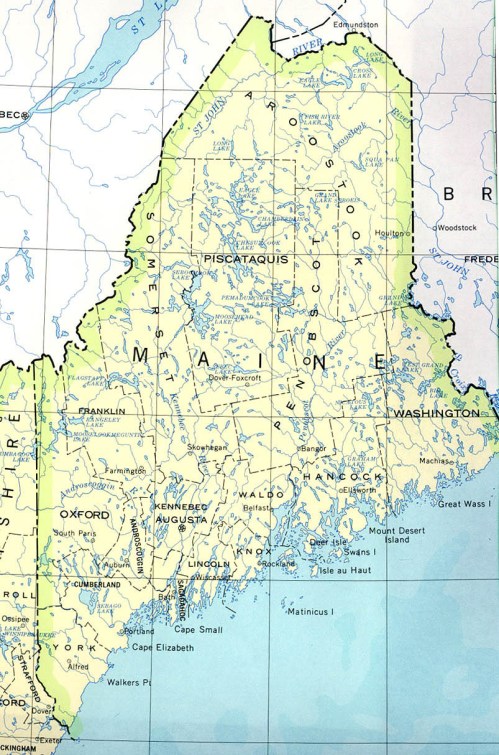
Justice Lance Walker – Nominee to the U.S. District Court for the District of Maine

Justice Lance Walker of the Maine Superior Court is Trump’s first judicial nominee from the Pine Tree state and boasts the strong support of his home-state senators.

Background

A native Mainer, Lance Edward Walker was born in the small town of Milo on March 13, 1972, and raised in Dover-Foxcroft.[1]  Walker attended the University of Maine and then started at Vermont School of Law in 1997.  However, he returned to his home state after a year to finish his J.D. at the University of Maine Law School, graduating in 2000.[2]

After graduating, Walker clerked on the Maine Superior Court and then joined the Maine law firm Norman Hansen & DeTroy LLC as Associate Attorney.[3]  In 2007, Walker was named a Member in the Portland Office in 2007.[4]

In 2014, Republican Governor Paul LePage appointed Walker as a District Court Judge.[5]  He was elevated to be the Maine Superior Court in 2015 and serves as a Justice on that court.

Walker was a member of the Federalist Society, a conservative legal organization that has produced many Trump nominees, between 1997 and 2002.[6]  He has also been a member of the National Rifle Association since 2001.[7]

History of the Seat

Walker has been nominated for a seat on the U.S. District Court for the District of Maine.  This seat opened on June 27, 2017, when Judge John Woodcock moved to senior status. In June 2017, Walker applied for the judgeship with Sen. Susan Collins (R-Maine).[8]  Walker interviewed with the Commission, Collins, and the White House Counsel’s Office before becoming confirmed as a nominee in October 2017.  Walker was officially nominated on April 10, 2018.[9]

Legal Career

Before he became a judge, Walker worked in litigation at Norman Hansen & DeTroy LLC for thirteen years.  During this time, he worked on approximately twenty cases as lead counsel, including five jury trials.[10]

Among his more notable cases as an attorney, Walker defended an insurance company being sued for damages owed to a tenant by her landlord who sexually molested her.[11]  In defending against the claim, Walker argued that a policy exclusion in the insurance contract prevented liability on the part of the insurer.[12]  While the trial court ruled for the tenant, the Maine Supreme Judicial Court reversed, finding that the policy exclusion barred the claims.[13]

Jurisprudence 

From 2014 to 2015, Walker served as a judge on the Maine District Court, where he heard civil, criminal and family matters from the bench.  Since 2015, Walker has served on the Maine Superior Court, where he has managed over thirty jury trials.[14]

Among the many cases that Walker has handled over his tenure, two are particularly notable.  In the first, Walker granted a preliminary injunction to the State of Maine barring anti-abortion protester Brian Ingalls from being within 50 feet of Planned Parenthood facilities and ordered Ingalls to pay civil penalties and attorney’s fees for the state.[15]  While the Ingalls case was pending, a second abortion protester succeeded in getting the law enjoined by U.S. District Judge Nancy Torresen (although Torresen’s ruling was later overturned by the First Circuit).

In his second notable matter, Walker blocked the State of Maine from reinstating criminal charges against 17 protesters from the Black Lives Matter movement.[16]  The criminal charges were initially dismissed as part of an agreement to seek a restorative justice session, but were reinstated after negotiations over the session fell apart.[17]  In blocking the reinstatement of charges, Walker held that the State was bound by its earlier agreement to seek a restorative justice session.[18]

Overall Assessment

As a judicial nominee, Walker has parts of his background that can please both the right and the left.  For conservatives, they can note Walker’s prior Federalist Society membership and his current affiliation with the NRA.  For liberals, they can be happy with his favorable decisions in the Ingalls and Black Lives Matter cases.  As such, Walker can potentially be seen as a consensus nomination.

This is not to say that Walker’s nomination does not have the potential to draw any controversy.  In 2017, Judge Scott Palk, an Obama nominee renominated by Trump drew 16 no votes over his membership in the NRA.  Given the heightened controversy over the NRA in recent months, it is possible that Walker’s membership will also raise opposition.  On the flip side, Planned Parenthood has been a bete noire for many on the right.  As such, Walker’s imposition of a civil penalty on a protester may lead some to paint him as a Planned Parenthood supporter and may draw the opposition of anti-abortion groups.

At the end of the day, all a nominee needs to be confirmed in 50 votes.  Given Walker’s support from Collins and Sen. Angus King (I-ME), he looks likely to get it.


[1] Judy Harrison, Trump Tapes Maine Superior Court Justice for Federal Vacancy, Bangor Daily News, Apr. 10, 2018.

[2] Sen. Comm. on the Judiciary, 115th Cong., Lance Walker: Questionnaire for Judicial Nominees 1.

[3] Id.

[4] Id.

[5] Judy Harrison, LePage’s Ex-Counsel, Former AG, Homicide Prosecutor Among Those Nominated to Replace Retiring Judges, Bangor Daily News, Feb. 7, 2014.

[6] Id. at 4.

[7] Id.

[8] Walker, supra n. 1 at 38.

[9] Press Release, White House, President Donald J. Trump Announces Twelfth Wave of Judicial Candidates, Twelfth Wave of United States Attorneys, and Sixth Wave of United States Marshals (Apr. 10, 2018) (on file at https://www.whitehouse.gov/the-press-office).  

[10] See Walker, supra n. 1 at 29.

[11] See Jacobi v. MMG Ins. Co., 17 A.3d 1229 (Me. 2011).

[12] Crest Group, Inc. v. Deloitte & Touche, LLP., No. 27-CV-03-005617 (Minn. Ct. App. Sept. 25, 2007).

[13] See id.

[14] United States v. Abdul-Ahad, No. 08-CR-142 (D. Minn. Oct. 27, 2008).

[15] See State v. Ingalls, No. 15-CV-487, 2016 Me. Super. LEXIS 55 (Me. Super. Ct. Mar. 17, 2016).

[16] Jake Bleiberg, Judge Won’t Reinstate Charges Against Portland Black Lives Matter Protesters, Bangor Daily News, May 24, 2017.

[17] See id.

[18] Id. (quoting Judge Lance Walker).

Judge Allen Winsor – Nominee for the U.S. District Court for the Northern District of Florida

A state appellate judge and former solicitor general, Judge Allen Winsor brings extensive legal experience to the bench.  However, he also brings a long record in hot-button cases.

Background

A native Floridian, Allen Cothrell Winsor was born in Orlando in 1976.  Winsor graduated from Auburn University in 1997 and worked in two years as a Solution Sales Specialist in Rockville, Maryland.[1]  In 1999, Winsor returned to Florida to attend law school at the University of Florida, receiving a J.D. in 2002.[2]

After graduating, Winsor clerked for Judge Ed Carnes on the U.S. Court of Appeals for the Eleventh Circuit.  He then joined the Atlanta office of King & Spalding as an Associate (that office has produced two other Trump judges).  In 2005, Winsor moved to Tallahassee to be an Associate at GrayRobinson PA.[3]  He became a Shareholder at the firm in 2008.[4]

In 2013, Florida Attorney General Pam Bondi chose Winsor to be Florida Solicitor General.  He served in this capacity for the next three years, until being appointed by Gov. Rick Scott to Florida’s First District Court of Appeal.[5]  He continues to serve on that court.

History of the Seat

The seat Ray has been nominated for opened on November 7, 2016, with Judge Robert Hinkle’s move to senior status.  Florida Senators Bill Nelson, a Democrat, and Marco Rubio, a Republican, continued the use of a Judicial Nominating Commission (JNC) to solicit recommendations for vacancies.  The JNC recommended Winsor for the Northern District alongside three other candidates on November 16, 2017.[6]  After interviews with Nelson, Rubio and the White House, Winsor was nominated for the vacancy on April 10, 2010.[7]

Private Practice

Before he became Florida Solicitor General, Winsor spent ten years in private practice working at King & Spalding and GrayRobinson.  At these firms, Winsor’s specialty was in election law and he frequently worked with Republican lawmakers in defending election regulations.

Election Regulation

While at GrayRobinson, Winsor frequently represented Florida’s Secretary of State in defending Florida’s election regulations.  For example, Winsor successfully defended Florida’s registration deadline set 29 days before the election.[8]  He also successfully defended a provision that matched voter applications against drivers license registries and other databases (the provision was challenged by the NAACP).[9]  Winsor also defended bans on electioneering near polling places,[10] and restrictions on third party voter registration organizations.[11]

Redistricting

In 2012, Winsor was part of the legal team challenging the Fair Districts Initiative (a citizen ballot initiative that restricted gerrymandering in Florida).[12]  Winsor, representing the Florida House of Representatives, joined other attorneys in arguing that the Initiative violated the Constitution’s Elections Clause.[13]  The Eleventh Circuit upheld the Initiative.[14]

Winsor also represented the Florida House of Representatives in defending the redistricting maps drawn before the Florida Supreme Court.[15]

Solicitor General

From 2013 to his appointment as a judge in 2016, Winsor served as the Solicitor General of Florida, serving as the primary appellate attorney for the state.  In this role, Winsor has participated in many high-profile cases.

Dealth Penalty – Sentencing

Until 2016, Florida permitted judges to make the requisite factual findings to impose the death penalty, even if a jury recommended otherwise.  In Hurst v. Florida, Winsor defended this sentencing scheme before the U.S. Supreme Court, arguing that no judge had overruled a jury’s recommendation not to impose death since 1999.[16]  The Supreme Court rejected the scheme in a 8-1 opinion authored by Justice Sotomayor, finding that it violated the Sixth Amendment.[17]

Death Penalty – Intellectual Capacity

Winsor was also charged with defending Florida’s bright-line intellectual capacity rule before the Supreme Court.  Florida barred inmates subject to the death penalty from claiming lack of intellectual capacity where their IQ scores were above 70.[18]  Winsor again came up short in the case, as the Supreme Court voted 5-4 to strike down the bright-line rule.[19]

Gay Marriage

Winsor also defended Florida’s ban on same-sex marriage.  The Solicitor General’s Office drew criticism during the defense for stating in a brief that overturning Florida’s ban on same-sex marriage would “impose significant public harm.”[20]  While the statement went viral and drew significant criticism, Winsor responded that the statement was taken out of context.[21]  He stated:

“Florida is harmed whenever a federal court enjoins enforcement of its laws, including the laws at issue here.”[22]

Docs v. Glocks

Winsor was charged with defending Florida’s “Docs v. Glocks” law, which prevents physicians from discussing gun ownership with their patients.[23]  At oral argument, Winsor argued that, as the law instructed physicians to “refrain” from the discussions, the law merely offered a recommendation rather than a prohibition.[24] The law was ultimately struck down by the Eleventh Circuit.[25]

Medical Marijuana

In 2015, Winsor represented the State of Florida in challenging a ballot initiative that would legalize medical marijuana.[26]  Winsor argued that the Amendment’s language was too broad, and that it would permit individuals with minor injuries to receive medical marijuana.[27]  The Florida Supreme Court, however, unanimously approved the Amendment’s language.[28]  The Amendment was approved by 71% of voters in 2016.

Jurisprudence

Winsor has served as an appellate judge on Florida’s First District Court of Appeals for the last two years.  In his two years on the bench, Winsor has heard over 1300 cases.[29]  During this tenure, none of Winsor’s opinions were reversed by a higher court.

The vast majority of appeals that Winsor has heard have been criminal in nature, and Winsor has voted to uphold the underlying convictions in most of those appeals.  In a few, however, Winsor has voted in favor of the defendant.  In one case, Winsor reversed a father’s conviction for sexually assaulting his daughter, noting that the prosecution had failed to timely disclose expert evidence that they offered at trial.[30]  In another case, a divided panel affirmed the defendant’s conviction for sexual battery on a child, finding that admitting child hearsay did not violate the defendant’s rights.[31]  Winsor dissented, arguing that the evidence was improperly admitted and that the defendant was entitled to a new trial.[32]

Writings

In 2012, Winsor authored an article that was critical of the Florida Supreme Court decision in Sarasota Alliance for Fair Elections, Inc. v. Browning, and specifically criticized the ruling on “implied pre-emption.”[33]  In the article, Winsor criticizes the Supreme Court for failing to find that a voter initiative regulating Sarasota County’s elections and voting was pre-empted by Florida state law.[34]  Among his criticisms, Winsor suggests that the Supreme Court “understated the public-policy considerations” noting that:

“…differing local treatment of votes can have disastrous effects, as evidenced in 2000.”[35]

As such, Winsor urged the Florida legislature to pass statements in election codes expressly pre-empting local regulation of vote-counting.[36]

Overall Assessment

Despite his relative youth, Winsor has managed to rack up an impressive array of accomplishments.  Having experience both as an attorney and as a judge, Winsor is qualified for a federal judgeship.  That being said, Winsor may draw questions regarding his defense of conservative laws and his challenge to the medical marijuana amendment as Florida Solicitor General.  He may also draw opposition based on his defense of voting restrictions and his opposition to gerrymandering reform as a private practice attorney.

Overall, Winsor’s support from Rubio and Nelson, as well as his relatively uncontroversial tenure on the bench should help his confirmation along.


[1] Sen. Comm. on the Judiciary, 115th Cong., Allen C. Winsor: Questionnaire for Judicial Nominees 3.

[2] Id. at 1.

[3] Id. at 2.

[4] Id. 

[5] Julie Kanner, Career Track, Florida Times-Union, Feb. 9, 2016.

[6] Alex Leary, Finalists Named for Federal Bench in Northern District of Florida, The Buzz, Nov. 16, 2017, http://www.tbo.com/florida-politics/buzz/2017/11/16/finalists-named-for-federal-bench-in-northern-district-of-florida/.  

[7] Press Release, President Donald J. Trump Announces Twelfth Wave of Judicial Nominees, Twelfth Wave of United States Attorneys, and Sixth Wave of United States Marshalls (April 10, 2018) (on file at www.whitehouse.gov/thepressoffice).

[8] Diaz v. Cobb, 541 F. Supp. 2d 1319 (S.D. Fla. 2008).

[9] Florida State Conference of NAACP v. Browning, 522 F.3d 1153 (11th Cir. 2008).

[10] Citizens for Police Accountability Political Comm. v. Browning, 581 F. Supp. 2d 1164 (M.D. Fla. 2008); 572 F.3d 1213 (11th Cir. 2009).

[11] League of Women Voters v. Browning, 575 F. Supp. 2d 1298 (S.D. Fla. 2008).

[12] Brown v. Secretary of State of Florida, 668 F.3d 1271 (11th Cir. 2012).

[13] Id.

[14] Id. at 1273.

[15] In re Senate Joint Resolution of Legislative Apportionment 1176, 83 So. 3d 597 (Fla. 2012).

[16] Robert Barnes, Supreme Court Hears Criminal Justice Cases, Wash. Post, Oct. 14, 2015.

[17] Hurst v. Florida, 136 S. Ct. 616 (2016)

[18] Mark Sherman, Court Skeptical of IQ Scores in Deciding Execution, Bismarck Tribune, Mar. 4, 2014.

[19] Hall v. Florida, 572 U.S. __ (2014).

[20] John Woodrow Cox, Public Harm and Gay Marriage, Tampa Bay Times, May 31, 2014.

[21] Id. 

[22] Id. (quoting Allen Winsor).

[23] Curt Anderson, US Court Hears Appeal in Docs vs. Guns Case, New Zealand Herald, July 19, 2013.

[24] See id.

[25] Wollschlaeger v. Governor of Florida, No. 1:11-cv-22026-MGC (11th Cir. 2017) (en banc).

[26] Matt Dixon, Marijuana Sides Argue Before State High Court; Debate Was About a Proposed Constitutional Amendment’s Wording, Florida Times-Union, Dec. 6, 2013.

[27] See id.

[28] Dan Sweeney, Medical Marijuana Proposal Moves Closer to Ballot, Sun-Sentinel, Dec. 17, 2015, http://www.sun-sentinel.com/news/florida/fl-medical-marijuana-supreme-court-approval-20151217-story.html.  

[29] See Winsor, supra n. 1 at 9.

[30] See Millette v. State, 223 So. 3d 466 (Fla. 1st DACA 2017).

[31] See Cabrera v. State, 206 So. 3d 768 (Fla. 1st DACA 2016).

[32] See id. (Winsor, J., dissenting).

[33] Allen Winsor, Sarasota Alliance for Fair Elections, Inc. v. Browning: The Implied End to Implied Pre-Emption, 41 Stetson L. Rev. 499 (Winter 2012).

[34] Id. at 507.

[35] Id. at 508.

[36] See id. at 515.

[37] See, e.g., I.A. Group, Ltd. Co. et al. v. RmNandco, Inc., 784 S.E.2d 823 (Ga. App. 2016) (rev’g judgment to plaintiff); Moore-Waters et al. v. Met-Test, LLC., 782 S.E.2d 848 (Ga. App. 2016) (rev’ing grant of default judgment to plaintiff); Martin et al. v. Hansen, 755 S.E.2d 892 (Ga. App. 2014) (rev’ing denial of summary judgment to defendant); Askew et al. v. Rogers, 755 S.E.2d 836 (Ga. App. 2014) (rev’ing grant of summary judgment to plaintiff); Security Real Estate Servs. Inc. v. First Bank of Dalton, 752 S.E.2d 127 (Ga. App. 2013) (rev’ing denial of summary judgment to defendant).

[38] See, e.g., Teston et al. v. Southcore Constr. Inc., 783 S.E.2d 921 (Ga. App. 2016) (rev’ing grant of default judgment to defendant); Gomez v. Innocent et al., 746 S.E.2d 645 (Ga. App. 2013) (rev’ing grant of summary judgment to defendant); Deberry v. Johnson et al., 747 S.E.2d 886 (Ga. App. 2013) (rev’ing grant of summary judgment to defendant).

Justice Patrick Wyrick – Nominee for the U.S. District Court for the Western District of Oklahoma

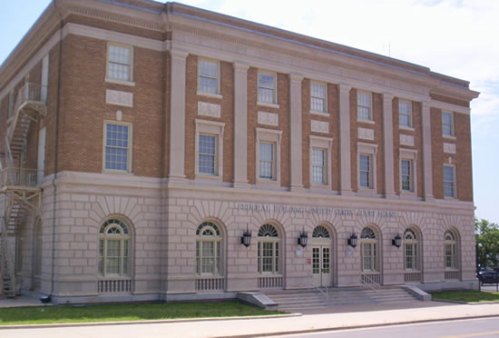
The Federal Courthouse in Lawton, Oklahoma

Justice Patrick Wyrick of the Oklahoma Supreme Court has the distinction of being the youngest candidate on President Trump’s Supreme Court shortlist.  So far, President Trump has prodigiously nominated all the state judges on his shortlist to the federal appellate bench.  However, as there are no Oklahoma vacancies on the Tenth Circuit, Wyrick has been nominated to the trial court instead.

Background

Patrick Robert Wyrick was born in Denison, TX on March 11, 1981.  Wyrick attended the University of Oklahoma, where he played baseball as a student athlete.[1]  While at the University, he met his future-wife, fellow athlete Jamie Wyrick (nee Talbert).[2]  Wyrick received his B.A. in 2004 and then received a J.D. from the University of Oklahoma College of Law in 2007.[3]

After graduating, Wyrick served as a law clerk to Judge James Payne on the U.S. District Court for the Eastern, Northern, and Western Districts of Oklahoma.[4]  He then joined the Oklahoma City office of GableGotwals as an Associate.

Just three years later, Wyrick, not even thirty, was chosen by newly elected Oklahoma Attorney General Scott Pruitt (now the EPA Director) to serve as Oklahoma Solicitor General.[5]  As Solicitor General, Wyrick was the primary representative before the courts for the state of Oklahoma.

In 2016, Justice Steven Taylor of the Oklahoma Supreme Court announced his retirement, and Wyrick was one of four candidates who applied for the seat.[6]  On February 9, 2017, the 35-year-old Wyrick was appointed by Governor Mary Fallin to fill the vacancy.[7]  Wyrick’s appointment sparked an immediate lawsuit from the American Civil Liberties Union, who argued that Wyrick, who listed a residence in Atoka to qualify for the appointment to a seat based in District 2 of Oklahoma, actually resided in Moore and Oklahoma City, citing Wyrick’s home purchases, marriage license, as well as the fact that he was registered to vote in Central Oklahoma in 2016.[8]  The Oklahoma Supreme Court dismissed the lawsuit, finding that they were not the proper agency to determine the eligibility of a sitting justice.[9]

In November 2017, Trump added Wyrick to his list of potential nominees to the U.S. Supreme Court.[10]  Wyrick’s addition makes him the youngest potential nominee on the list.

History of the Seat

Wyrick has been nominated to fill the fifth-longest pending vacancy in the nation.  This seat on U.S. District Court the Western District of Oklahoma opened on July 7, 2013, with Judge David Russell’s move to senior status.  However, the Obama Administration did not put forward a nomination for the next two and a half years, as they negotiated with Oklahoma Republican senators James Inhofe and James Lankford.  Finally, on December 16, 2015, President Obama nominated Judge Suzanne Mitchell, a U.S. Magistrate Judge on the Western District, to fill the vacancy.[11]

Mitchell, a Democrat, was nominated as part of a package with Scott Palk, a Republican.  The two nominees received a hearing before the Senate Judiciary Committee on April 20, 2016, and were both reported to the floor unanimously on May 19, 2016.  However, on the floor, Mitchell and Palk languished due to a confirmation blockade imposed by Senate Majority Leader Mitch McConnell and were not confirmed.[12]  After the election of Donald Trump, he renominated Palk (who was confirmed in late 2017).  However, Mitchell was not renominated.

Wyrick has been in contact with the White House Counsel’s Office since early 2017 in discussions on an appointment to the Western District.[13]  While he interviewed with the White House in March 2017, there was no further action on his nomination until November when he interviewed with a selection committee established by Inhofe and Lankford.[14]  After Inhofe and Lankford agreed to “recommend” Wyrick to the White House, he was nominated on April 10, 2018.

Political Activity

Other than a short stint as a volunteer for Republican Sen. Tom Coburn in 2004, Wyrick has no history with partisan politics.

Legal Experience

Wyrick began his legal career as a law clerk for Judge James Payne.  After that, he joined GableGotwals working on civil and appellate litigation.  After just three years at the position, Wyrick became Oklahoma’s Solicitor General, the primary appellate attorney for the state.  As Solicitor General, Wyrick has handled many controversial matters on behalf of then-Attorney General Scott Pruitt.

Death Penalty

In 2015, Wyrick argued Glossip v. Gross, a challenge to the use of midazolam as a sedative in Oklahoma executions, before the U.S. Supreme Court.[15]  Petitioners argued that midazolam was ineffective in preventing pain during the procedure and, as a result, the executed could feel the pain of being “burned alive” from the inside.[16]  In his briefs, Wyrick defended the Oklahoma drug protocol, arguing that death penalty opponents had successfully pressured drug companies into cutting off supplies of more effective drugs.[17]  It was a thread conservatives picked up on at oral argument.[18]

However, Wyrick also drew criticism from justices for allegedly misrepresenting the scientific evidence cited in the state’s brief.  Justice Sotomayor called out Wyrick at oral argument, noting that his assertions were “directly contradicted by the literature cited in the state’s written arguments.”[19]  Wyrick later conceded error on a related point, acknowledging that his office had inadvertently misrepresented that a letter sent to the Texas Department of Corrections had actually been sent to the Oklahoma Department of Corrections.[20]

Ultimately, the Supreme Court backed Wyrick’s position in a 5-4 decision.[21]

Abortion Rights

As Solicitor General, Wyrick was charged with defending abortion restrictions passed by the Oklahoma legislature and challenged under the Fourteenth Amendment.[22]  Among the restrictions Wyrick defended were laws requiring women to undergo ultrasounds before undertaking an abortion and laws restricting the use of drugs commonly used for medication abortions.  Both restrictions were unanimously struck down by the Oklahoma Supreme Court, as unconstitutional under Supreme Court precedent.[23]  Wyrick also defended a prescription requirement for minors who wanted to purchase Plan B contraceptives,[24] a provision imposing liability on physicians who prescribe prescription drugs for abortions,[25] and a ban on off-label use of drugs for abortions.[26]  In successfully defending the latter, Wyrick noted his views on the “dangers” of off-label use, noting:

“We have people who walk in perfectly healthy and are dead three days later.”[27]

Affordable Care Act

As Solicitor General, Wyrick sued to challenge a number of regulations imposed under the Affordable Care Act, including the IRS “large employer mandate” which Wyrick argued violated the intent of Congress in the ACA.[28]  Wyrick also raised the initial challenge to the IRS Rule permitting ACA subsidies to be offered to individuals on the federal exchange (this challenge was later rejected by the U.S. Supreme Court in King v. Burwell).[29]

Sharia Law

As Solicitor General, Wyrick also led the defense of the “Save Our State” Constitutional Amendment, which prohibited Oklahoma courts from considering international law or sharia law (Islamic jurisprudence) in its proceedings.  The Amendment was challenged by Muneer Awad, the executive director of the Oklahoma chapter of the Council on American-Islamic Relations (CAIR), who alleged that it violated his rights under the Establishment Clause and the Free Exercise Clause of the First Amendment.[30]

At oral argument, Wyrick denied that the authors of the Amendment sought to single out sharia law, instead arguing that the ban included all international law.[31]  Nevertheless, the Tenth Circuit upheld a preliminary injunction against the Amendment.[32]  In 2013, Judge Vicki Miles-LeGrange made the injunction permanent.[33]  (Disclosure: As a legal fellow at the American Civil Liberties Union, who represented the plaintiff, I assisted with legal research and writing in support of the plaintiff’s case on remand.)

Jurisprudence

Wyrick has served as a Justice on the Supreme Court of Oklahoma since 2017.  In his year and a half on the bench, Wyrick has heard approximately 100 cases, and has authored five majority opinions,[34] eight concurrences,[35] and six dissents.[36]  Despite his relatively new position on the court, Wyrick has not hesitated to stake out strong positions, concurring and dissenting frequently.

Taxes and Fees

In 2017, Wyrick wrote for the Oklahoma Supreme Court in two high-profile challenges to state taxes.  In one case, Wyrick struck down the newly passed tax on cigarettes, finding that the “tobacco cessation fee” was not passed in conjunction with the constitutionally mandated supermajority for revenue raising bills.[37]  In the other case, Wyrick upheld the elimination of the state’s sales tax exemption, writing for a 5-4 majority that bills removing exemptions from existing taxes do not count as “revenue” bills while bills imposing new taxes do.[38]  In dissent, Justice Doug Combs pointed to the legislative history and the purpose of the auto tax to show that it was intended to raise revenue.[39]

Dissents

In a variety of civil cases, Wyrick has authored dissents advocating denial of claims.  For example, in one case where the Oklahoma Supreme Court found that a worker had properly been adjudicated disabled and was entitled to benefits, Wyrick dissented with Justice James Winchester, calling the majority opinion a “legal fiction.”[40]  In another case, Wyrick authored a dissent (joined only by Justice Winchester) arguing that a sex offender should be permitted to deregister.[41]  In yet another case, the Oklahoma Supreme Court held that plaintiffs injured by a drunk driver could bring suit against a convenience store that negligently and recklessly sold alcohol to the visibly intoxicated driver.[42]  Wyrick dissented, arguing that the decision would lead to “arbitrary impositions of liability” and that it dismissed the proximate cause requirement of tort claims.[43]

Writings

In 2014, Wyrick authored a blog post at SCOTUSBlog arguing for the plaintiffs in King v. Burwell.[44]  In the post, Wyrick argues that the Supreme Court should strike down the IRS Rule permitting Obamacare subsidies to be granted to those who participated in state and federal exchanges.[45]  He calls the case “a straightforward question of statutory interpretation,” arguing that permitting the rule would “undermine Congress’ very specific intent.”[46]  The Supreme Court ultimately rejected the argument in the post, with Chief Justice Roberts upholded the IRS Rule in an opinion for six justices.[47]

Overall Assessment

Wyrick’s youth and his conservative background is likely to draw opposition during the confirmation process.  Overall, I expect four primary arguments to be raised against Wyrick.

First, opponents may argue that Wyrick, only thirty-seven years old, lacks the requisite level of experience to be a federal judge.  They may note that the American Bar Association (ABA) recommends a minimum of twelve years of practice for judicial nominees and that Wyrick has only practiced for nine years.  In response, Wyrick and his supporters will argue that Wyrick’s experience as Oklahoma Solicitor General is particularly high-level, and as such, Wyrick is well-qualified for the bench.  They will also note that Wyrick has argued (and won) before the highest courts on both the state and federal level.

Second, critics may point to Wyrick’s tenure as Solicitor General and criticize his defense of controversial laws, including abortion restrictions, the “Save our States” amendment, and the use of midazolam in imposing the death penalty.  They may also bring up Wyrick’s correction of the record in Glossip.  In response, Wyrick will argue that, as Solicitor General, it was his responsibility to defend Oklahoma laws, and that his defense does not indicate a policy agreement with the underlying laws.

Third, senators may look to Wyrick’s jurisprudence on the Oklahoma Supreme Court.  They may argue that his dissents in Garrett, Boyle, and Frye suggest an unwillingness to support plaintiffs in civil cases.  In response, Wyrick will argue that (even though a majority of his colleagues disagreed), the law compelled the reasoning of his dissents.

Fourth, senators may raise Wyrick’s connection to Pruitt, Trump’s controversial EPA Director.  Given Wyrick’s initial selection as Solicitor General by Pruitt, critics may try to tie Wyrick to his old-boss’ more controversial actions.  If this question is raised, it will be interesting to see if Wyrick offers to recuse himself in cases involving Pruitt, and if such recusal is demanded by critics.

Overall, there is no denying Wyrick’s intelligence and accomplishments.  Nevertheless, the ease of Wyrick’s confirmation will ultimately turn on his answers to the concerns raised above.


[1] See Jenni Carlson, Cancer Doesn’t Curb Wyrick’s Enthusiasm for her Marathon Run, The Oklahoman, Apr. 30, 2006.  

[2] See id.

[3] Sen. Comm. on the Judiciary, 115th Cong., Patrick Wyrick: Questionnaire for Judicial Nominees 1.

[4] Judge Payne is the only judge in the country to hear cases across three districts.

[5] See id. at 2.

[6] Dale Denwalt, Four Candidates Vie For State Supreme Court, The Journal Record, Dec. 12, 2016.

[7] Dale Denwalt, Oklahoma Governor Appoints Wyrick to State Supreme Court, The Daily Oklahoman, Feb. 9, 2017.

[8] Catherine Sweeney, Observers: Wyrick Flap a Rare Occurrence, The Journal Record, Feb. 22, 2017.

[9] See Spencer v. Wyrick, 392 P.3d 290 (Okla. 2017).

[10] Justin Wingerter, Oklahoma Supreme Court Judge Joins Trump’s List of Possible SCOTUS Picks, The Daily Oklahoman, Nov. 17, 2017.

[11] Press Release, President Obama Nominates Four to Serve on the United States District Courts (Dec. 16, 2015) (on file at https://obamawhitehouse.archives.gov/the-press-office/).

[12] The Oklahoman Editorial Board, U.S. Senate Should End Wait for Two Oklahoma Judicial Nominees, The Oklahoman, Nov. 18, 2016, https://newsok.com/article/5527448/us-senate-should-end-wait-for-two-oklahoma-judicial-nominees.

[13] Sen. Comm. on the Judiciary, 115th Cong., Patrick Wyrick: Questionnaire for Judicial Nominees 56-57.

[14] Id. at 57.

[15] Robert Barnes & Mark Berman, Sharp Questions About Using Sedative to Execute Inmates, Wash. Post, Apr. 30, 2015.

[16] See id.

[17] Maureen Johnson, You Had Me At Hello: Examining the Impact of Powerful Introductory Emotional Hooks Set Forth in Appellate Briefs Filed in Recent Hotly Contested Supreme Court Decisions, 49 Ind. L. Rev. 397, 456 (2016).

[18] See Barnes, supra n. 15.

[19] Chris Casteel, U.S. Supreme Court Sharply Divided in Oklahoma Lethal Injection Case, Daily Oklahoman, Apr. 29, 2015.

[20] Emily Summars, Oklahoma Attorney General Admits Court Filing Error, Journal Record Legislative Report, May 15, 2015.

[21] Glossip v. Gross, 135 S.Ct. 2726 (2015).

[22] See Patrick Gregory, Trump Nominee Wyrick Defended Executions, Abortion Regs, Bloomberg Law, May 18, 2018, https://biglawbusiness.com/trump-nominee-wyrick-defended-executions-abortion-regs/.

[23] See Nova Health Sys. v. Pruitt, 292 P.3d 28 (Okla. 2012) and Okla. Coal. for Reproductive Justice v. Cline, 2012 OK 12 (Okla. 2012).

[24] Marie Price, New Law Restricting Access of Minors’ Access to Plan B One-Step Emergency Contraceptive Temporarily Enjoined From Taking Effect in Okla, Journal Record Legislative Report, Aug. 19, 2013.

[25] Marie Price, Judge Strikes Physician Liability From Abortion Drug Law, Journal Record, Oct. 22, 2014.

[26] Oklahoma Judge to Let Most of New Abortion Law Take Effect; Plaintiffs Consider Appeal, Legal Monitor Worldwide, Oct. 25, 2014.

[27] Id.

[28] Marie Price, State of Oklahoma: Feds’ Delay Demonstrates Admission That ACA Requirements Are Hurting Large Employers, Journal Record Legislative Report, July 11, 2013.

[29] See Patrick Wyrick, Symposium: King v. Burwell – a simple case, SCOTUSBlog, Nov. 10, 2014, http://www.scotusblog.com/2014/11/symposium-king-v-burwell-a-simple-case/.

[30] See Awad v. Ziriax, 670 F.3d 1111 (10th Cir. 2012).

[31] See Robert Boczkiewicz, 10th US Circuit Court of Appeals Takes Up Oklahoma’s Islamic Law Case, The Oklahoman, Sept. 13, 2011.

[32] See Awad v. Ziriax, 670 F.3d 1111 (10th Cir. 2012).

[33] See Awad v. Ziriax, 996 F. Supp. 2d 1198 (W.D. Okla. 2013).

[34] Am. Honda Motor Co. v. Thygesen, 2018 OK 14 (Okla. 2018); Cates v. Integris Health, 412 P.3d 98 (Okla. 2018); State Farm Mut. Auto. Ins. Co. v. Payne, 408 P.3d 204 (Okla. 2017); Okla. Auto. Dealers Assoc. v. State ex rel. Oklahoma Tax Comm’n, 401 P.3d 1152 (Okla. 2017); Naifeah v. State ex rel. Oklahoma Tax Comm’n, 400 P.3d 759 (Okla. 2017).  

[35] Okla. Oil & Gas Ass’n v. Thompson, 414 P.3d 345 (Okla. 2018) (Wyrick, J., concurring specially); McDonald v. Thompson, 414 P.3d 367 (Okla. 2018) (Wyrick, J., concurring specially); Okla. Indep. Petroleum Ass’n v. Potts, 2018 OK 24 (Okla. 2018) (Wyrick, J., concurring specially); JP Energy Mktg. LLC v. Commerce & Indus. Ins. Co., 2018 OK 11 (Okla. 2018) (Wyrick, J., concurring in part and dissenting in part); Hunsucker v. Fallin, 408 P.3d 599 (Okla. 2017) (Wyrick, J., concurring in part and dissenting in part); Richard v. State ex rel. Oklahoma Tax. Comm’n, 406 P.3d 571, 573 (Okla. 2017) (Wyrick, J., concurring in judgment); Multiple Injury Trust Fund v. Wiggins, 404 P.3d 35, 37 (Okla. 2017) (Wyrick, J., concurring in judgment); Andrew v. Demani-Sparkes, 396 P.3d 210, 225 (Okla. 2017) (Wyrick, J., concurring in judgment).

[36] Keener v. Miller, No. 116,779 (Okla. Apr. 10, 2018) (Wyrick, J., dissenting); Boyle ex rel. Estate of Cain v. ASAP Energy Inc., 408 P.3d 183, 199 (Okla. 2017) (Wyrick, J., dissenting); Frye v. State ex rel. Dep’t of Corr., 404 P.3d 38, 41 (Okla. 2017) (Wyrick, J., dissenting); Multiple Injury Trust Fund v. Mackey, 406 P.3d 564, 567 (Okla. 2017) (Wyrick, J., dissenting); Multiple Injury Trust Fund v. Garrett, 408 P.3d 169, 176 (Okla. 2017) (Wyrick, J., dissenting); State ex rel. Oklahoma Bar Ass’n v. Helton, 394 P.3d 227, 242 (Okla. 2017) (Wyrick, J., dissenting).

[37] See Naifeah v. State ex rel. Oklahoma Tax Comm’n, 400 P.3d 759 (Okla. 2017).

[38] See Okla. Auto. Dealers Assoc. v. State ex rel. Oklahoma Tax Comm’n, 401 P.3d 1152, 1154 (Okla. 2017).

[39] See id. at 1165 (Combs, J., dissenting).

[40] See Multiple Injury Trust Fund v. Garrett, 408 P.3d 169, 176 (Okla. 2017) (Wyrick, J., dissenting).

[41] Frye v. State ex rel. Dep’t of Corr., 404 P.3d 38, 41 (Okla. 2017) (Wyrick, J., dissenting)

[42] See Boyle ex rel. Estate of Cain v. ASAP Energy Inc., 408 P.3d 183, 199 (Okla. 2017) (Wyrick, J., dissenting).

[43] Id. at 202.

[44] Patrick Wyrick, Symposium: King v. Burwell – a simple case, SCOTUSBlog, Nov. 10, 2014, http://www.scotusblog.com/2014/11/symposium-king-v-burwell-a-simple-case/.

[45] See id.

[46] Id.

[47] See King v. Burwell, 576 U.S. __ (2015).