Adam Braverman – Nominee to the U.S. District Court for the Southern District of California

The U.S. District Court for the Southern District of California is currently short five judges.  The Trump Administration and California’s Democratic senators have settled on a package of five nominees to fill the vacancies.  One of the Republican picks is former U.S. Attorney Adam Braverman.

Background

Adam Lorne Braverman was born in Columbus, OH in 1975.  Braverman attended the George Washington University and the George Washington University Law School.[1]  After graduating from law school, Braverman clerked for Judge Ann O’Regan Keary on the D.C. Superior Court, Judge Reggie Walton on the U.S. District Court for the District of Columbia, and Judge Consuelo Callahan on the U.S. Court of Appeals for the Ninth Circuit.[2]  In between his clerkships, Braverman spent a year working for William E. Artz, P.C. in Tysons Corner, and three years with Goodwin Proctor LLP in Washington D.C.[3]

In 2008, Braverman moved to the U.S. Attorney’s Office for the Southern District of California.[4]  After the election of Donald Trump in 2016, Braverman was selected to serve as interim U.S. Attorney while the nomination process proceeded to permanently appoint him to the seat.[5]  However, the Administration and California Democratic Senators Dianne Feinstein and Kamala Harris selected another candidate, Robert Brewer, to be the permanent U.S. Attorney.[6]  Since Brewer’s confirmation, Braverman has served as Associate Deputy Attorney General in Washington D.C.

History of the Seat

Braverman has been nominated to the U.S. District Court for the Southern District of California, to a seat vacated on December 31, 2017, by Judge Roger Benitez’s move to senior status.  As the seat opened with around four months left in the Obama Administration, they did not put forward a nomination to fill the seat.

In June 2018, Braverman submitted an application for the vacancy with selection committees set up by Feinstein and Harris.[7]   In March 2019, Braverman interviewed with the White House and then again with Feinstein’s office in April 2019 before his nomination on November 21, 2019.

Legal Experience

Braverman has spent almost his entire career, barring clerkships and a few years in private practice, as a federal prosecutor with the U.S. Attorney’s Office for the Southern District of California.  As an Assistant U.S. Attorney, Braverman primarily prosecuted drug trafficking, including prosecuting the leaders of the Sinaloa cartel, including Chino Antrax.[8]  His record on this matter led to his selection as interim U.S. Attorney, where Braverman made waves on a number of fronts.

Duncan Hunter 

As interim U.S. Attorney, Braverman authorized the indictment of Rep. Duncan Hunter (R-Calif.) and his wife for using campaign contributions on personal expenses.[9]  Hunter responded by criticizing the prosecution as motivated by political bias, which many commenters noted was unfounded, pointing to Braverman’s approval of the indictment.[10]  Hunter ultimately plead guilty to one count and was sentenced to 11 months in prison.[11]

Border Crossings and Immigration

In 2018, then Attorney General Jeff Sessions ordered federal prosecutors to adopt a zero-tolerance policy on individuals in the U.S. without documentation, ordering criminal charges to be filed against each one.[12]  In seeking to implement the massive increase in caseload that this would bring, Braverman asked the federal court to implement Operation Streamline, a streamlined process for handling immigration violation cases.[13]  Operation Streamline has drawn criticism from civil rights and human rights organizations, as well as from federal judges, for the over-criminalization of migrants and denial of due process.[14]  While other prosecutors have criticized the program as ineffective, some have noted that, as an interim U.S. Attorney, Braverman had no authority to push back against Sessions’ directive.[15]

Drug Prosecutions

Another area where Braverman was called upon to implement Sessions’ priorities was with marijuana enforcement.  Specifically, despite a push to legalize recreational and medical use of marijuana in the states, Sessions ordered U.S. Attorneys to pursue federal marijuana related cases, even in jurisdictions where they were legal under state laws.[16]  For his part, Braverman was generally supportive of Sessions’ policy.[17]  He also laid out a policy of prosecuting drug dealers for the deaths caused by drug overdoses.[18]

Overall Assessment

The fact that Braverman has been nominated means that he has been cleared by the selection committees set out by Feinstein and Harris, and likely has their approval as well.  That being said, Braverman may well attract opposition from the left and the right.  For liberals and civil libertarians, Braverman’s decisions to push aggressively on drug and immigration prosecutions under Sessions’ directive may raise grounds for opposition (although Braverman was generally bound to follow policy dictates from DOJ).  For conservatives, some may blame Braverman for Hunter’s prosecution and for not taking the charges of political bias among his line prosecutors more seriously.  As long as Braverman retains the support of his home-state senators, however, he is still favored to join the federal bench this year.


[1] See Sen. Comm. on the Judiciary, 116th Cong., Adam Braverman: Questionnaire for Judicial Nominees 1.

[2] See id. at 2.

[3] Id.

[4] See id. 

[5] Kristina Davis, Braverman Appointed Interim U.S. Attorney for S.D., San Diego Union Tribune, Nov. 18, 2017.

[6] Kristina Davis, Trump Selects, San Diego Union Tribune, June 21, 2018.

[7] See Braverman, supra n. 1 at 40.

[8] Kristina David, Border Could Be Key In Selection, San Diego Union Tribune, Sept. 18, 2017.

[9] Matt Zapotosky, Dan Lamothe, Rep. Duncan Hunter, Wife Charged With Spending Campaign Money on Personal Expenses, Wash. Post, Aug. 21, 2018.

[10] See, e.g., James Hohmann, Duncan Hunter Embraces the Smash-Mouth Tactics Trump Learned From Roy Cohn, Wash. Post, Aug. 23, 2018.

[11] A.P., Ex-California Rep. Duncan Hunter Gets 11 Months in Prison, KPBS, Mar. 17, 2020, https://www.kpbs.org/news/2020/mar/17/ex-california-rep-duncan-hunter-gets-11-months-pri/.

[12] James Stiven, Mass Criminalization of Migrants is Not Justice, San Diego Union Tribune, June 22, 2018.

[13] See id.

[14] Id.

[15] Astrid Galvan, California, Long a Holdout, Adopts Mass Immigration Hearings, East Bay Times, July 9, 2018.

[16] See Paige Winfield Cunningham, U.S. Crackdown on Pot Seen As Unlikely, Wash. Post, Jan. 9, 2018.

[17] See id.

[18] Kristina Davis, Charging Drug Dealers in Deaths, San Diego Union Tribune, Feb. 18, 2018.
Thomas Cullen – Nominee to the U.S. District Court for the Western District of Virginia

U.S. Attorney Thomas Cullen built his reputation on the aggressive response to the 2017 Charlottesville attacks and his subsequent calling out of far-right terrorism.  As such, despite his conservative background, Cullen looks poised to be elevated to the federal bench with bipartisan support.

Background

A native Virginian, Thomas Tullidge Cullen was born in Richmond in 1977, the son of former Virginia Republican Attorney General Richard Cullen.[1]  Cullen attended Furman University and William and Mary School of Law, where he graduated Order of the Coif.  He then clerked for Judge Robert Payne on the U.S. District Court for the Eastern District of Virginia and for Judge Roger Gregory on the U.S. Court of Appeals for the Fourth Circuit.  

After his clerkships, Cullen became a federal prosecutor with the U.S. Attorney’s Office for the Western District of North Carolina, and then moved to the U.S. Attorney’s Office for the Western District of Virginia.[2] 

In 2013, Cullen moved to Woods Rogers PLC in Roanoke as a Partner.[3]  In 2018, upon the recommendation of U.S. Senators Mark Warner and Tim Kaine, he was appointed by President Trump to be the U.S. Attorney for the Western District of Virginia.[4]

History of the Seat

Cullen has been nominated for the U.S. District Court for the Western District of Virginia.  This seat opened on December 11, 2017, when Judge Glen Conrad moved to senior status.  In November 2018, Warner and Kaine recommended U.S. Magistrate Judge Robert Ballou and Scott County Circuit Court Judge John Kilgore to fill the vacancy.[5] 

Meanwhile, in May 2019, the Trump Administration broached the nomination with Cullen, instead of nominating either Ballou or Kilgore.[6]  However, Warner and Kaine refused to back Cullen unless he was vetted through the same process as Ballou and Kilgore.[7]  After the White House indicated that neither Ballou nor Kilgore would get the nomination, Warner and Kaine reopened the nomination process.[8]  This time, Cullen applied and was selected through the nomination process.  He was nominated in December 2019.

Legal Experience

Despite his relative youth, Cullen has fairly extensive experience, particularly in criminal law.  In particular, Cullen started his career as a federal prosecutor, then moved to private practice, and now serves as the U.S. Attorney.

Federal Prosecutor

Cullen had two stints as an Assistant U.S. Attorney: first in the U.S. Attorney’s Office for the Western District of North Carolina from 2006 to 2010; and then in the U.S. Attorney’s Office for the Western District of Virginia from 2010 to 2013.  In these offices, Cullen worked on both appellate and trial level criminal cases.  Notably, Cullen prosecuted Jean-Claude Bridges, for the arson of a predominantly African American church in Henry County, Virginia.[9] 

Private Practice

Cullen was a Partner with WoodsRogers PLC in Roanoke between 2013 and 2018.  At the firm, Cullen worked primarily on defending individuals and corporations charged with white collar crimes.

Notably, Cullen represented Republican Delegate Terry Kilgore, who was under investigation for hiring Democratic State Sen. Phil Puckett at the State Tobacco Commission, a move that ended Democratic control of the State Senate and doomed Medicaid expansion.[10] 

U.S. Attorney

Since 2018, Cullen has served as U.S. Attorney for the Western District of Virginia.  During his tenure, Cullen notably led the prosecutions relating to the 2017 Unite the Right rally in Charlottesville, including for the death of Heather Heyer, who was killed by White supremacist James Fields.[11]  Fields was charged federally related to the death of Heyer and plead guilty to 29 hate crimes.[12]  Cullen also prosecuted the Rise Above Movement, a white supremacist movement, for violence caused in rioting in Charlottesville.[13] 

Writings

While Cullen has occasionally written on the law and politics, two of the articles he authored as a U.S. Attorney are particularly notable.

In 2018, Cullen authored an article commending the Albemarle-Charlottesville Jail Authority Board (ACJAB) for cooperating with Immigration and Customs Enforcement (ICE).[14]  In particular, Cullen was critical of groups who urged local prosecutors not to cooperate with ICE, arguing that ICE-notification implicates public safety as there are “numerous recent examples of unlawful aliens committing serious crimes after being released from sanctuary jails.”[15]

Additionally, after his prosecutions related demonstrations and attacks in Charlottesville by far-right protestors, Cullen authored an article critical of far-right extremism.[16]  In the article, Cullen wrote that “white supremacy and far-right extremism are among the greatest domestic-security threats facing the United States.[17]  He also urged Congress to pass stricter hate crime laws to help prosecutors address the rise of far-right extremism.[18]

Overall Assessment

From his work prosecuting an arsonist targeting an African-American church to his handling of the Charlottesville attacks and subsequent prosecutions, to his writings, Cullen has built his reputation combating far-right extremism.  As such, despite his youth and lack of judicial experience, Cullen is likely to have a smooth confirmation process.


[1] Sen. Comm. on the Judiciary, 116th Cong., Thomas Cullen: Questionnaire for Judicial Nominees 1.

[2] Id. at 2.

[3] See id.

[4] See id.

[5] See Jeff Sturgeon, Ballou, Kilgore Recommended for Federal Judgeship, Ronaoke Times, Nov. 21, 2018, https://www.roanoke.com/news/local/ballou-kilgore-recommended-for-federal-judgeship/article_ceb919e5-a5e4-5316-ad6b-d54b9bd1bca2.html.

[6] See Cullen, supra n. 1 at 48.

[7] See Jeff Schapiro, Judge Trouble for a Familiar Virginia Name, Sept. 15, 2019, https://www.pressreader.com/usa/richmond-times-dispatch-weekend/20190915/284077733332137.  

[8] Henri Gendreau, Virginia Senators Reopen Search For Roanoke-Based Federal Judge, Roanoke Times, Sept. 18, 2019, https://www.roanoke.com/news/local/virginia-senators-reopen-search-for-roanoke-based-federal-judge/article_3051fc75-101b-5ba2-b7c5-e26812ab5581.html.  

[9] See United States v. Jean-Claude Bridges, No. 4:13CR260002 (W.D. Va.).

[10] See Laura Vozzella, Puckett Exit Undid Secret Medicaid Plan, Wash. Post, Nov. 23, 2014.

[11] See United States v. James Alex Fields, No. 3:18CR0011 (W.D. Va.).

[12] Id.

[13] See Katie Benner and Hawes Spencer, ‘Serial Rioters’ Charges in 2017 Protests, N.Y. Times, Oct. 3, 2018.

[14] Thomas T. Cullen, Standing Up For the Rule of Law?, Richmond Times Dispatch, Sept. 10, 2018.

[15] See id.

[16] Thomas T. Cullen, Rising Far-Right Extremism in America, N.Y. Times, Feb. 23, 2019.

[17] See id.

[18] Id.

Rick Richmond – Nominee to the U.S. District Court for the Central District of California

Longtime Federalist Society leader Rick Richmond has been flagged as a potential federal judicial nominee since 2017, but the extensive process of negotiation over California nominees is allowing his nomination to move now.

Background

Rick Lloyd Richmond was born in Grand Junction, Colorado in 1959.  Richmond attended Brigham Young University, getting a B.S. in 1983.[1]  He then received a J.D. with Honors from the George Washington University Law School in 1986.[2]

After law school, Richmond clerked for Judge Harlington Wood on the U.S. Court of Appeals for the Seventh Circuit before joining the U.S. Department of Justice as an Appellate Attorney with the Civil Division.  After two years there, Richmond joined the D.C. office of Kirkland & Ellis, where he became a Partner in 1993.[3]  In 1997, Richmond moved to the Los Angeles office of Kirkland.  In 2009, Richmond moved to the Los Angeles office of Jenner & Block, where he currently works.

History of the Seat

Richmond has been nominated to the U.S. District Court for the Central District of California, to a seat vacated on November 4, 2018 by Judge Manuel Real, the last judge appointed by President Lyndon B. Johnson still serving in active status.[4] 

Richmond was recruited to be a judicial nominee by the White House and interviewed with them in August 2017.[5]  Richmond then applied and interviewed with selection committees set up by California’s Democratic Senators Dianne Feinstein and Kamala Harris.[6]  On August 28, 2019, Richmond was nominated by the White House.

Legal Experience

Richmond has practiced commercial litigation for over thirty years, with experience in contract cases, intellectual property, and class actions.  Over the course of his career, Richmond has tried 31 cases and has argued approximately 20 appeals.[7]  Notably, Richmond has briefed several cases at the U.S. Supreme Court, including Morse v. Frederick, in which Richmond represented a school district seeking to prohibit students from displaying pro-marijuana messages.[8]  The court sided with Richmond’s client on a 5-4 basis.[9]

Among other cases, Richmond represented the credit card company Discover in successfully enforcing arbitration agreements that prevented consumers from pursuing class actions to recovering interest and penalties.[10]  He also represented Louisiana citizens in challenging a black-majority Louisiana congressional district as an unconstitutional racial gerrymander.[11]

Political Activity

In addition to being a longtime member of the Federalist Society, Richmond has frequently donated to support Republican presidential and congressional candidates.  Richmond has been particularly generous in donating to Sen. Mitt Romney’s campaign for the Presidency, giving $5000 directly to the campaign and an additional $500 to Romney’s SuperPAC in 2012.[12]

Overall Assessment

Given his generally conservative record, Richmond’s greatest obstacle to confirmation is the return of blue slips from California’s Democratic senators.  However, given that Richmond was nominated as a part of a package of nominees which includes others chosen by the Senators, it is likely that he will be confirmed, albeit with some negative votes.


[1] Sen. Comm. on the Judiciary, 116th Cong., Rick Richmond: Questionnaire for Judicial Nominees 1.

[2] See id.

[3] See id. at 2.

[4] Judge Real passed away in 2019.

[5] See id. at 37.

[6] Id.

[7] Id. at 24.

[8] Morse v. Frederick, 551 U.S. 393 (2007).

[9] Id.

[10] W.A. Lee, Discover’s Legal Win May Be Industry’s, The American Banker, Jan. 21, 2003.

[11] Hays v. Louisiana, Nos. CV92-1522S & CV95-1241 (W.D. La. 1995).

Knut Johnson – Nominee to the U.S. District Court for the Southern District of California

The U.S. District Court for the Southern District of California is currently short five judges.  The Trump Administration and California’s Democratic senators have settled on a package of five nominees to fill the vacancies.  One of the Democratic picks is Knut Johnson, one of the most prominent criminal defense attorneys in San Diego.

Background

Knut Sveinbjorn Johnson was born in Chicago in 1957.  Johnson grew up in New Mexico and then attended Tulane University.[1]  He then received a J.D. cum laude from the University of San Diego School of Law in 1986.[2]

After law school, Johnson spent two years as an associate at Jenkins & Perry before joining the Federal Defenders of San Diego, Inc..[3]  In 1994, he moved to McKenna & Cuneo as an Associate before opening his own law practice in 1996.[4]  Johnson maintains that practice to this day.  

History of the Seat

Johnson has been nominated to the U.S. District Court for the Southern District of California, to a seat vacated on February 6, 2018, by Judge John Houston’s move to senior status.  Johnson applied with selection committees set up by California’s Democratic Senators Dianne Feinstein and Kamala Harris and interviewed with each in 2018.[5]  In February 2019, Johnson interviewed with the White House and was selected as a nominee.  Johnson was nominated on November 2, 2019.

Legal Experience

Johnson has spent virtually his entire career in criminal defense, making a name for himself as one of the most prominent criminal defense attorneys in San Diego, including service as the President of the San Diego Criminal Defense Bar Association.  Over the course of his career, Johnson has tried over 70 criminal cases, although he has only tried one civil bench trial.[6] 

Over the course of his career, Johnson has represented clients in some of San Diego’s most colorful cases.  For example, Johnson has represented a military officer who was charged with the beating of an illegal immigrant,[7] the “tattoo bandit” who robbed 22 people in San Diego,[8] the executive of a bidet company that faced charges of alleged false advertising,[9] and an individual who allegedly paid babysitters to bring him children to molest.[10]

Among his more significant cases, Johnson was court appointed to represent Everardo Arturo Paez, an accused Mexican drug kingpin.[11]  He also represented Jason Sullivan, the former social media advisor for Roger Stone.[12]

Political Activity

Throughout his career, Johnson has occasionally made political donations, all to Democrats.[13]  For example, Johnson donated $1625 to the presidential campaign of Hillary Clinton.[14]  Johnson also gave to Rep. Scott Peters and Sen. Kamala Harris.[15] 

Writings

Johnson has occasionally written on the law, generally focused on providing guidance in navigating the criminal justice process.  For example, in 1997, Johnson authored an article on subpoenas.[16]  The article advises criminal defendants on their rights relating to subpoenas and potential issues raised under the Fourth Amendment.[17]  He also authored another article advising solo practitioners on managing their practice.[18]

Overall Assessment

Criminal defense attorneys are vital to the orderly and effective operation of the criminal justice system.  Unfortunately, when put up for judgeships, defense attorneys often face demonization because of the clients they represent.  However, Johnson’s nomination by the Trump Administration should insulate him from the worst of the attacks.  As his background demonstrates both the legal experience and the acumen to be a federal judge, Johnson should be confirmed comfortably.


[1] Sen. Comm. on the Judiciary, 116th Cong., Knut Johnson: Questionnaire for Judicial Nominees 1.

[2] See id.

[3] See id. at 2.

[4] See id. 

[5] Id. at 46-47.

[6] Id. at 32.

[7] Dana Calvo, Civil Rights Indictment Unsealed, A.P. Online, Dec. 20, 1997.

[8] Kelly Wheeler, San Diego’s Alleged ‘Tattoo Bandit’ Goes On Trial, City News Service, Apr. 29, 1998.

[9] Don Bauder, Firm’s Bidet Claims Flush With Falsehoods, Regulators Allege, San Diego Union-Tribune, July 22, 1998.

[10] Kelly Wheeler, Man Who Got Babysitters to Bring Him Children to Molest Gets 45 Years to Life, City News Service, Aug. 5, 2010.

[11] Robert J. Caldwell, An Uncooperative Drug Kingpin and a Curious Plea Bargain, Copley News Service, Oct. 26, 2001.

[12] Kate Sullivan, Roger Stone Says He is ‘Prepared’ for Possibility of Special Counsel Indictment, CNN.com, May 20, 2018.

[14] Id.

[15] Id.

[16] Knut S. Johnson, Responding to Subpoenas: Constitutional and Practical Issues, 21 Champion 10 (Jan/Feb 1997).

[17] See id.

[18] Knut S. Johnson, Practice Management, on Your Own Solo and Small Firm Practices, 18 GP Solo 22 (Sept. 2001).

Kathryn Davis – Nominee to the U.S. Court of Federal Claims

Kathryn Davis may only be 42, but her time with the Federal Programs Branch has involved her in some very significant cases.  

Background

Born Kathryn Celia Mason in Miami in 1978, Davis received a B.S. from Boston University and a J.D. from Temple University Beasley School of Law.[1]  After graduation, Davis joined McKissock & Hoffman P.C. in Philadelphia as an associate.[2]

After two years at McKissock and a year at Burns White LLC, Davis moved to Washington D.C. to become a trial attorney with the Federal Programs Branch of the Civil Division of the U.S. Department of Justice.  Since 2014, Davis serves as a Senior Counsel in that Branch.[3] 

Additionally, Davis has been a Professor at the George Washington University School of Law since 2018, where she teaches Legal Research and Writing.[4]

History of the Seat

Davis has been nominated for a seat on the U.S. Court of Federal Claims (CFC), an Article I court that hears monetary claims against the federal government.  Judges to the CFC are appointed for 15-year terms, and can be reappointed.  The seat Davis was nominated for opened up on July 13, 2018, with the conclusion of the term of Judge Charles Lettow.

In February 2018, Davis was contacted by the White House regarding a vacancy on the CFC.  While she was interviewed in February 2018, she wasn’t selected as a nominee at the time.[5]  In June 2019, Davis was contacted again by the White House, and, this time, her nomination moved forward.  Davis was ultimately nominated on February 4, 2020.

Legal Experience

As an attorney with the Federal Programs Branch, Davis litigates cases across the country that challenge the Administration’s policies and initiatives.  To this end, Davis has litigated some very contentious political issues, defending both Obama and Trump Administration policies.

Detention in Guantanamo Bay

Across the Bush, Obama, and Trump Administrations, Davis handled a number of challenges to detention brought by detainees held in the Guantanamo Bay Detention Facility.[6] Notably, Davis defended the government’s policy of force-feeding Guantanamo Bay detainees who were on hunger strikes to protest government policies.[7]  Judge Rosemary Collyer sided with Davis’ position and denied an injunction to block the Government policy.[8]

Policy Defense

In addition to her work on Guanatanamo detention cases, Davis has litigated a number of contentious challenges to Administration policies.  For example, Davis defended the Administration’s decision to rescind the Deferred Action for Childhood Arrivals (DACA) program.[9]  She also defended the Administration’s building of border fencing and barriers against a court challenge brought by the U.S. House of Representatives.[10]

Writings

As a law student, Davis authored a law review article discussing the Supreme Court’s decision in Sattazahn v. Pennsylvania.[11]  The article was critical of the 5-4 opinion, which held that the State of Pennsylvania was not barred from seeking the death penalty for a defendant when a previous jury had deadlocked and was unable to decide whether to impose the death penalty.[12]  Specifically, Davis argued that the court “failed to safeguard the interests of a defendant who receives a life sentence, as mandated by state law, after a jury deadlocks on the life or death question in a capital sentencing proceeding.”[13]

Additionally, Davis noted the “unique, final nature of the death penalty” which “increases the need for double jeopardy protection” for defendants.[14]  Davis notes:

“Disregarding the Double Jeopardy Clause in capital sentencing does not mean just a wrongful conviction; it could mean the wrongful imposition of death.”[15]

Instead, Davis advocates that the Supreme Court hold that the Double Jeopardy Clause bars a state from seeking the death penalty in a subsequent trial where the initial sentencing jury failed to impose the death penalty.[16]

Overall Assessment

Trump’s CFC nominees in particular have drawn criticism for their youth and inexperience.  Davis, in contrast, may be young, but also has substantial experience with complex litigation.  While Davis may draw some criticism for her role in defending the Trump Administration’s initiatives, it must be noted that she is a career attorney who also played a role in defending the Obama Administration’s priorities as well.


[1]  Sen. Comm. on the Judiciary, 116th Cong., Kathryn Davis: Questionnaire for Judicial Nominees 1.

[2] Id. at 2.

[3] Id.

[4] See id. at 22.

[5] See Davis, supra n. 1 at 24.

[6] See, e.g., Al Madhwani v. Obama, No. 04-cv-1194 (D.D.C.) (Hogan, J.); Al-Qahtani v. Bush, No. 05-cv-1971 (D.D.C.) (Collyer, J.); Esmail v. Obama, No. 05-cv-1254 (D.D.C.) (Kennedy, J.); Mingazov v. Obama, No. 05-cv-2479 (D.D.C.) (Kennedy, J.) (Hogan, J.).

[7] Rabbani v. Obama, 76 F. Supp. 3d 21 (D.D.C. 2014).

[8] See id. at 22.

[9] See NAACP v. Trump, 139 S.Ct. 2779 (2019).

[10] See U.S. House of Representatives v. Mnuchin, 379 F. Supp. 3d 8 (D.D.C. 2019).

[11] Kathryn C. Mason, Life Or Limb: The Supreme Court’s Apathy Toward Capital Offenders Sentenced to Life Imprisonment By Operation of Law, 14 Temp. Pol. & Civ. Rts. L. Rev. 307 (Fall 2004).

[12] See Sattazahn v. Pennsylvania, 537 U.S. 101 (2003).

[13] See Mason, supra n. 11 at 320.

[14] See id.

[15] Id.

[16] See id. at 321.

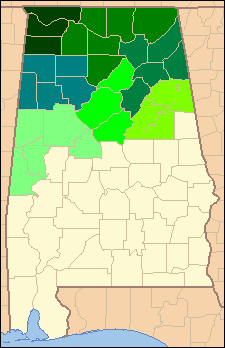
Anna Manasco – Nominee to the U.S. District Court for the Northern District of Alabama

An Alabama-based attorney who worked closely with Eleventh Circuit Judge Kevin Newsom before the former’s appointment to the federal bench, Anna Manasco has been tapped for the U.S. District Court for the Northern District of Alabama.

Background

An Alabama native, Anna Marie Manasco was born in Montgomery in 1980.  She was involved in public service from a young age, attending Girls Nation in Washington D.C. and having a chance to meet President Bill Clinton and Vice President Al Gore.[1]  Manasco received a B.A. summa cum laude from Emory University, a Masters of Science and a Doctor of Philosophy degree from the University of Oxford and a J.D. from Yale Law School.[2]  After graduating, Manasco clerked for Judge William Pryor on the United States Court of Appeals for the Eleventh Circuit.

After her clerkship, Manasco joined the Birmingham office of Bradley Arant Boult Cummings LLP, where she became a Partner in 2019.  She is currently with the firm.

History of the Seat

Manasco has been nominated for a seat on the U.S. District Court for the Northern District of Alabama.  This seat will open on April 25, 2020, when Judge Karen Bowdre is scheduled to take senior status.  While this seat hasn’t opened yet, Judge Bowdre announced her departure months in advance and Manasco had been recommended to fill the seat back in July 2019.[3]  Manasco’s nomination was sent to the Senate in February 2020.

Legal Experience

Manasco has spent our entire legal career at the firm of Bradley Arant Boult Cummings LLP, where she practiced in trial and appellate litigation in state and federal court.  However, Manasco has never tried a case to a jury in either state or federal court.[4] 

Among her more notable cases, Manasco represented the drug company Wyeth in seeking to defend against lawsuits alleging a failure to warn of long term use risks for the drug Reglan.[5]  Manasco argued that plaintiffs could not seek damages against Wyeth where they had been injured from taking the generic version of Reglan made by a different manufacturer.  However, the Alabama Supreme Court disagreed in an 8-1 vote, finding that Alabama law could justify liability under such circumstances.[6]

In other cases, Manasco worked on a number of cases alongside then-Partner Kevin Newsom, who now serves on the U.S. Court of Appeals for the Eleventh Circuit.  Manasco also represented the travel website Priceline.com in seeking to defend against tax charges levied against them in New Hampshire.[7]

Overall Assessment

Despite her youth, Manasco has cut her teeth on some fairly complex cases.  This experience, combined with her support from Alabama’s senators and her relatively apolitical background, makes Manasco a fairly uncontroversial nominee.

Nonetheless, Manasco could face some criticism for her lack of trial experience, but given the fact that nominees with significantly less litigation experience have been approved, Manasco shouldn’t face too many issues.


[1] Pres. Clinton to Greet 96 Girls Nation Senators, U.S. Newswire, July 17, 1997.

[2] Sen. Comm. on the Judiciary, 116th Cong., Anna Manasco: Questionnaire for Judicial Nominees 1.

[3] See id. at 42.

[4] See id. at 19.

[5] Wyeth Inc., et al. v. Weeks et al., No. 1101397 (Ala. Sup. 2013).

[6] See id.

[7] New Hampshire v. Priceline.com, Inc., 2016 A.3d 333 (N.H. 2019).

Drew Tipton – Nominee to the U.S. District Court for the Southern District of Texas

Baker Hostettler partner Drew Tipton, who has focused his career on employment and labor litigation, is poised to fill the last judicial vacancy on the Texas federal bench.

Background

Tipton was born in Angleton TX in 1967.  Tipton graduated from Texas A&m University in 1990 and received a J.D. from South Texas College of Law in 1994.[1]  After graduating, Tipton clerked for Judge John Rainey on the U.S. District Court for the Southern District of Texas.  He then joined the Houston office of Littler Mendelson P.C. as an Associate.

In 1997, Tipton moved to Victoria, Texas, to the firm of Houston, Marek, & Griffin LLP.[2] In 1999, Tipton moved to the Houston office of Baker Hostettler, where he became a Partner in 2001, and where he still practices.

History of the Seat

Tipton has been nominated to fill a vacancy opened by Judge Sim Lake’s move to senior status on July 5, 2019.  In late 2019, Tipton applied and interviewed with the Federal Judicial Evaluation Committee (FJEC) created by Texas Senators John Cornyn and Ted Cruz to fill federal judicial vacancies.[3]  Tipton interviewed with the White House in November 2019 and was subsequently selected as a nominee.

Legal Experience

Tipton’s career in private practice is primarily at the firm of Baker Hostettler, where he primarily practices in labor and employment law.[4]  While he started his career in representing plaintiffs in employment matters, he currently primarily represents defendants.[5]  Tipton has tried six cases as lead counsel and an additional six as associate counsel.[6]

In one of his most significant cases, Tipton represented a company sued by its employee, who alleged an attempt to murder him.[7]  The Plaintiff in the case, Andy Olmeda, was a machinist who was shot at with a shotgun by two employees, both of whom were intoxicated at the time.[8]  Olmeda brought a number of charges against his employer, including assault and battery.  However, all claims were dismissed after discovery by Judge Martin Feldman.[9]

Political Activity

Tipton has been fairly active with the Republican Party, serving as a member of the Republican National Lawyers Association and of the Federalist Society.  He’s also been a frequent donor to Republicans, giving over $8000 to Cornyn and approximately $3000 to Cruz.[10]

Overall Assessment

While many of Trump’s nominees in Texas have drawn sharp criticism, Tipton’s relatively noncontroversial background and lack of controversial statements should grease his path to confirmation.


[1] Sen. Comm. on the Judiciary, 116th Cong., Drew Tipton, Questionnaire for Judicial Nominees 1.

[2] See id.

[3] Id. at 25.

[4] See id. at 13-14.

[5] Id. at 14.

[6] See id.

[7] Olmeda v. Cameron Int’l Corp., 139 F. Supp. 3d 816 (E.D. La. 2015).

[8] Id. at 821.

[9] Id. at 837.

Judge John Badalamenti – Nominee to the U.S. District Court for the Middle District of Florida

A longtime public defender, Judge John Badalamenti is President Trump’s fourth nominee to the U.S. District Court for the Middle District of Florida.

Background

The 45-year-old Badalamenti received a B.A. in Criminology and an M.A. in Sociology from the University of Florida.[1]  Badalamenti then received his J.D. from the University of Florida Levin College of Law, after which he joined the U.S. Attorney General’s Honors Program, where he was placed with the Federal Bureau of Prisons in Atlanta.[2]

After his time with the Honors Program, Badalamenti clerked for Judges Frank Hull and Judge Paul Roney on the U.S. Court of Appeals for the Eleventh Circuit before joining the Federal Public Defender’s Office for the Middle District of Florida.[3] 

In 2015, Badalamenti was appointed to the Second District Court of Appeal in Florida by Governor Rick Scott.  He still holds the judgeship.

History of the Seat

Badalamenti has been nominated to a seat on the U.S. District Court for the Middle District of Florida.  This seat opened on December 14, 2018, when Judge Elizabeth Kovachevich moved to senior status.  

Badalamenti was one of four finalists nominated for this court by the Judicial Nominating Commission (JNC) set up by Florida Senators Bill Nelson and Marco Rubio in December 2017.[4]  Badalamenti was formally nominated on February 4, 2020.

Legal Experience

Badalamenti has most of his pre-bench career as a federal public defender, an unusual background for a judicial nominee, particularly one in a Republican administration.  In his role as a federal public defender, Badalamenti practiced before the U.S. Court of Appeals for the Eleventh Circuit, as well as the U.S. District Court for the Middle District of Florida.  For example, in one case, Badalamenti successfully got the sentences of his client reversed on the grounds that a prior conviction for carrying a concealed weapon should not be considered a “violent” crime for sentencing enhancement.[5] 

However, Badalamenti’s most notable case was Yates v. United States, which he argued before the U.S. Supreme Court.[6]  In the case, his client was caught catching grouper that were too small to fit under federal regulations, and subsequently disposed of the small fish before federal authorities could inspect the catch.[7]  Yates was prosecuted and convicted for destruction of evidence under a provision in the Sarbanes-Oxley Act that criminalized destroying “tangible objects” while impeding federal investigations.[8]  Ultimately, the Supreme Court, in a 5-4 ruling, agreed with Badalamenti that the Sarbanes-Oxley charges were improper.[9]  The ruling cut across ideological lines with Justice Ruth Bader Ginsburg writing the opinion striking down the conviction, which was joined by Chief Justice John Roberts, and Justices Stephen Breyer, Samuel Alito, and Sonia Sotomayor.[10]  Meanwhile, Justice Elena Kagan dissented, joined by Justices Antonin Scalia, Anthony Kennedy, and Clarence Thomas.

Judicial Experience

Badalamenti served as an appellate judge in Florida since 2015.  In this role, Badalamenti serves as an intermediate appellate judge, reviewing criminal and civil appeals from the county courts and the circuit courts.  

Among his most notable cases while sitting as an appellate judge, Badalamenti joined an opinion finding that the state of Florida needed to reimburse Lee County homeowners for cutting down healthy citrus trees, an act committed to slow down the spread of citrus-canker disease.[11]  Badalamenti agreed with the trial court that the Takings Clause of the Florida Constitution required repayment even where the repayment had not been authorized by the Florida legislature.[12]

Overall Assessment

Much ink has been spelled on the relative paucity of public defenders on the federal bench compared to prosecutors, and the brutal campaign against Judge Jane Kelly, another former public defender, during her brief consideration for the Supreme Court helps explain why that gap exists.  

Nonetheless, public defenders perform an important constitutional duty in the criminal justice process.  Given his support from Trump and Florida’s Republican senators, Badalamenti should be able to avoid any negative comment from his work.


[1] Florida Second Circuit Court of Appeal, Judge John L. Badalamenti, Biography (available at https://www.2dca.org/Judges/Judge-John-L.-Badalamenti),

[2] Id.

[3] Id. 

[4] Fellow nominees Thomas Barber and Wendy Berger were also finalists.

[5] United States v. Canty, 570 F.3d 1251 (11th Cir. 2009).

[6] See 135 S. Ct. 1074.

[7] See Robert Barnes, Justices Tackle the Case of the Missing Grouper: Federal Prosecutors Used a Portion of the Law to Tackle a Commercial Fisherman Who Threw Some Back, Wash. Post, Nov. 5, 2014.

[8] See In re Rosemary Frost, Case No. 2001-1954 (Fla. Cir. Ct. 2001).

[9] Supreme Court: One Fish, Two Fish, Red Fish, Blue Fish, CNN Wire, Feb. 25, 2015.

[10] See id.

[11] See Jim Saunders, Court Says State Should Pay in Citrus Fight, The News Service of Florida, Nov. 13, 2019, https://cbs12.com/news/local/court-says-state-should-should-pay-in-citrus-fight.

[12] See id.

Judge Cory Wilson – Nominee to the U.S. District Court for the Southern District of Mississippi

Judge Cory Wilson, who currently serves on the Mississippi Court of Appeals has a relatively short jurisprudential record.  However, as a former state representative, Wilson has a larger record of political activity and statements that may be mined during the confirmation process.

Background

Cory Todd Wilson was born on August 8, 1970, in Pascagoula, Mississippi.  After getting a B.A. summa cum laude from the University of Mississippi, Wilson received his J.D. from Yale Law School.[1]  Wilson then clerked for Judge Emmett Ripley Cox on the U.S. Court of Appeals for the Eleventh Circuit and then joined the Jackson office of Watkins Ludlam Winter & Stennis P.A.

In 2001, Wilson joined Bradley Arant Rose & White LLP as an associate.  He stayed until 2008, except for a year as a White House Fellow.[2]  In 2008, he joined the Mississippi Secretary of State’s Office as Chief of Staff/Deputy Secretary of State.  Wilson also served as Counsel for State Treasurer Lynn Fitch.  

In 2011, Wilson joined Heidelberg Steinberger Colmer & Burrow, P.A., where he stayed until his election to the Mississippi House of Representatives as a Republican in 2016.  Wilson served in the House until 2019, when he was appointed to the Mississippi Court of Appeals.

History of the Seat

Wilson has been nominated for a vacancy on the U.S. District Court for the Southern District of Mississippi.  This seat opened on March 23, 2018, when Judge Louis Guirola took senior status.  While Wilson broached his interest in the judgeship in mid-2018, his nomination was not sent to the White House until May 2019, after he had been appointed to a seat on the Mississippi Court of Appeals.[3]  Wilson was ultimately nominated in November 2019.

Legal Experience

Before he joined the legislature, Wilson generally practiced civil litigation, albeit with some work with both the Secretary of State and the Treasurer of Mississippi.  Over the course of his career, Wilson has tried three cases to verdict.[4]  Notably, Wilson represented one of the defendants sued for allegedly engaging in a conspiracy to photograph Sen. Thad Cochran’s wife in order to damage his re-election campaign.[5]  Wilson was able to get the case against his client dismissed for failure to state a claim.[6]

Jurisprudence

Wilson has served on the Mississippi Court of Appeals since his appointment in February 2019.  In his time on the bench, Wilson has authored approximately twenty opinions, mostly on matters of criminal law.  For example, Wilson wrote for the Court in finding that the trial judge did not err in trying and convicting a defendant while he was not present, finding that the defendant was trying to willfully avoid trial.[7]  In contrast, in another case, Wilson reversed a conviction for possession of a controlled substance, finding that the indictment was defective.[8]

Political Activity

As noted earlier, Wilson was elected as a Republican to the Mississippi House of Representatives in 2015 and served until his appointment to the Court of Appeals in 2019.  Wilson also previously ran for the state legislature in 2007, albeit unsuccessfully.  During his campaign, Wilson identified himself as a “conservative consensus builder.”[9]  He also attacked his opponent for opposing the record of Gov. Haley Barbour,[10] crime policy,[11] and cuts in dyslexia funding.[12]

In addition to his campaigns, Wilson has extensive involvement with the Mississippi Republican Party, including serving as a volunteer during many Republican campaigns and serving on Republican organizations.[13] 

Speeches and Writings

As both a state representative and as a private citizen, Wilson wrote frequently on the law and policy, generally representing a conservative perspective on both.  Additionally, Wilson also maintains an active Twitter account.[14]  His tweets and his writings have already drawn sharp criticism from liberal groups.[15]  Specifically, Wilson has been criticized for calling for the reversal of the Supreme Court’s decision in Roe v. Wade,[16] and for referring to same-sex marriage as “a pander to liberal interest groups.”[17]

On his Twitter account, Wilson’s tweets are generally innocuous, describing the weather or celebrating major American holidays.  However, some of the tweets touch on more controversial topics.  For example, in a tweet on October 5, 2018, Wilson praises Sen. Susan Collins for supporting the nomination of Justice Brett Kavanaugh, praising her for rejecting “ugly tactics employed by the Left.”[18]  Similarly, the day before the 2018 election, Wilson wrote that the election was a choice between “#RepublicanResults, or unhinged Dem #Resistance.”[19]

Overall Assessment

Given Wilson’s public statements attacking his perceived political opponents, it is unsurprising that he has drawn controversy since his nomination and that his name has proceeded relatively slowly through the confirmation process.  That being said, given the Republican majority, Wilson is favored for confirmation.  Nonetheless, Democrats may raise questions as to Wilson’s willingness to consider with an open mind the legal arguments of parties he disagrees with.  If Wilson is able to rebut such concerns, he will likely get a bipartisan confirmation.


[1] Sen. Comm. on the Judiciary, 115th Cong., Cory Wilson: Questionnaire for Judicial Nominees 1.

[2] Id. at 2.

[3] See id. at 87.

[4] Id. at 72.

[5] See Mayfield v. Butler Snow LLP, 341 F. Supp. 3d 664 (S.D. Miss. 2018).

[6] Id.

[7] Morales v. State, 2019 WL 3562031 (Miss. Ct. App. Aug. 6, 2019).

[8] Payne v. State, 2019 WL 2511477 (Miss. Ct. App. June 18, 2019).

[9] See A Time For Choosing, YouTube, https://www.youtube.com/watch?v=AVYGAn5Ddkw.

[10] See id.

[11] Cory Wilson on Crime, YouTube, https://www.youtube.com/watch?v=7MvqKGgcVVQ.

[12] Cory Wilson (Unaired), YouTube, https://www.youtube.com/watch?v=iDp-wvvs9_A.

[13] See Wilson, supra n. 1 at 68-69.

[14] See Cory Wilson (@CoryWilsonMS), https://twitter.com/CoryWilsonMS.

[15] See, e.g., Alliance for Justice, Report on Cory Wilson (available at https://afj.org/wp-content/uploads/2019/11/Cory-Wilson-Report-Final-1.3.20.pdf).

[16] See Mississippi Right to Life Candidate Questionnaire, available at https://afj.org/wp-content/uploads/2019/11/Wilson-Attachments-p489-493.pdf.

[17] Cory T. Wilson, When Tolerance Is Really ‘Zero Tolerance’, Press-Register, June 1, 2012, available at https://afj.org/wp-content/uploads/2019/11/Wilson-Attachments-p200-201.pdf.

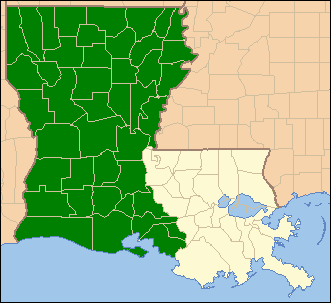
David Joseph – Nominee to the U.S. District Court for the Western District of Louisiana

The Western District of Louisiana faced a massive vacancy crisis early in the Trump Administration, with five vacancies on a court of seven judgeships.[1]  Over the past two years, the Administration has appointed four men to the bench.  Now, a fifth, U.S. Attorney David Joseph, has been tapped to fill the final vacancy on the court.

Background

David Cleveland Joseph was born in Dallas on May 6, 1977.  Joseph attended the University of Oklahoma, graduating in 2000.  He went straight from college into Louisiana State University Law School, getting his J.D. in 2003.  Joseph then clerked for Justice Jeffrey Victory on the Louisiana Supreme Court and for Judge John Parker on the U.S. District Court for the Middle District of Louisiana before joining the U.S. Army as a JAG Officer.[2] 

In 2008, Joseph joined the Dallas office of Fulbright & Jaworski LLP as a litigation associate.  After three years there and a year at Kane, Russell, Coleman & Logan, P.C., Joseph joined the Federal Deposit Insurance Corporation as a Senior Attorney.[3]

In 2014, Joseph moved from Dallas to Lafayette, Louisiana, becoming a federal prosecutor under U.S. Attorney Stephanie Finley.  In 2018, upon the recommendation of Louisiana’s Republican senators, Joseph was nominated by Trump and confirmed by the Senate to replace Finley.  Joseph currently serves as the U.S. Attorney for the Western District of Louisiana.

History of the Seat

Joseph has been nominated to fill a vacancy on the U.S. District Court for the Western District of Louisiana.  The seat Joseph has been nominated for opened on November 30, 2017, with Judge Dee Drell’s move to senior status.  

In September 2019, Joseph was contacted by Sen. John Kennedy (R-LA) to urge him to serve as a federal judge.[4]  Joseph subsequently interviewed before the White House in October 2019 and was nominated on December 2, 2019.  

Legal Experience

While Joseph has held a number of different positions throughout his legal career, his most prominent positions are those of U.S. Attorney and assistant U.S. attorney.  In the latter position, Joseph served as a federal criminal prosecutor, handling white collar crimes, firearm cases, and crimes committed on military bases.[5]  In particular, Joseph prosecuted Buddhist monk Khang Nguyen Le for stealing temple funds to gamble at a local casino.[6]  Le ended up pleading guilty and being sentenced to 30 months in prison.[7]  Joseph also prosecuted Ryan Taylor for manufacturing and detonating a chemical weapon at the Fort Polk Army Installation.[8]

As U.S. Attorney, Joseph leads an office of approximately forty attorneys in conducting both criminal prosecutions and civil defense of the United States.  Notably, Joseph’s office prosecuted Lake Charles police officer Robert Hammac for using excessive force during an arrest.[9]  In the prosecution, Joseph stated:

“…officers who betray the badge and the public’s trust, as the defendant did here, dishonor their profession and endanger the safety of their fellow officers.”[10] 

Among other prominent prosecutions of his time as U.S. Attorney, Joseph’s office indicted Donnie Laing for orchestrating a million dollar Ponzi scheme,[11] and prosecuted Gilvin Aucoin for poaching an endangered whooping crane.[12]

Overall Assessment

At 42 years old, Joseph is, by far, the youngest district court nominee put forward by Trump in Louisiana.  Nonetheless, Joseph has a fairly varied resume, with extensive litigation experience in both criminal and civil law.  

Joseph has generally managed to steer clear of controversy throughout his career, and his aggressive prosecution of poaching and police brutality should win him some Democratic support.  As such, Joseph will likely be confirmed fairly comfortably.


[1] Tyler Bridges, 42 Parish Area of Western Louisiana Suffers From Vacant Federal Judgeships, The Acadiana Advocate, Aug. 22, 2017, http://www.theadvocate.com/acadiana/news/article_dad54e68-8791-11e7-9cfc-678529cbf1c6.html.

[2] Sen. Comm. on the Judiciary, 116th Cong., David Joseph: Questionnaire for Judicial Nominees 2.

[3] See id.

[4] Id. at 42-43.

[5] See id. at 28.  

[6] Press Release, Office of the U.S. Attorney, Buddhist Monk Pleads Guilty of Defrauding Temple of More than $263,000 (March 17, 2016).

[7] Press Release, Office of the U.S. Attorney, Buddhist Monk Sentenced to 30 Months in Prison For Defrauding Temple of More than $263,000 (July 25, 2016).

[8] United States v. Taylor, Case No. 17-CR-00324 (W.D. La.).

[9] See U.S. Attorney: Former Lake Charles Police Officer Sentenced to 18 Months in Federal Prison For Civil Rights Violation, States News Service, Nov. 21, 2019.

[10] See id. (quoting David Joseph).

[11] See Youngsville Man Indicted in Million Dollar Investment Fraud and Ponzi Scheme, States News Service, Nov. 21, 2019.

[12] See Man From Ville Platte Sentenced For Killing Endangered Whooping Crane, States News Service, Nov. 1, 2019.