Professor Amy Coney Barrett – Nominee to the U.S. Court of Appeals for the Seventh Circuit

The Seventh Circuit is known for attracting academics.  Three of its most prominent judges, Richard Posner, Frank Easterbrook, and Diane Wood, served as law professors before being elevated to the bench.  If confirmed, Prof. Amy Coney Barrett will continue that trend.

History of the Seat

Barrett has been nominated for an Indiana seat on the U.S. Court of Appeals for the Seventh Circuit.  This seat opened in February 2015 with the retirement of Judge John Daniel Tinder.[1]  Even though Tinder’s plans were leaked almost a year before his actual retirement,[2] the Obama Administration did not submit a nominee to the Senate until January 2016, when Myra Selby, a former justice on the Indiana Supreme Court, was nominated.[3] 

While Selby’s nomination was strongly supported by Sen. Joe Donnelly (D-IN), Sen. Dan Coats (R-IN) opposed the nomination, arguing that the nominee should be selected by a bipartisan commission for the state.[4]  With Coats declining to return a blue slip, the Senate Judiciary Committee did not take any action on Selby’s nomination, and it was returned unconfirmed at the end of the 114th Congress.  As such, the vacancy was left open for Trump to fill.

Background

Barrett was born as Amy Vivian Coney on Jan. 28, 1972 in New Orleans, Louisiana.  After getting a B.A. from Rhodes College, Barrett attended Notre Dame Law School, where she was executive editor of the Notre Dame Law Review.  After graudating from law school, Barrett clerked for Judge Lawrence Silberman on the U.S. Court of Appeals for the D.C. Circuit, and obtained a prestigious Supreme Court clerkship with Justice Antonin Scalia.  

After her clerkship, Barrett joined the D.C. office of Miller, Cassidy, Larocca & Lewin LLP, which merged into Baker Botts LLP.  While at Baker, Barrett was a part of the legal team representing then-Governor George W. Bush in Bush v. Gore.  

As an attorney at Baker, Barrett started working as an adjunct faculty member at the George Washington University Law School, co-teaching a class with fellow Baker attorney John Elwood (himself a distinguished Supreme Court practitioner).  Shortly after, Barrett joined the Law School as a John H. Olin Fellow in Law.  In 2002, Barrett moved to become a Professor of Law at Notre Dame Law School, her alma mater.  Other than a short stint as a Visiting Associate Professor of Law at the University of Virginia, Barrett has served at Notre Dame ever since.  

In February 2017, Barrett was contacted by the Office of Sen. Todd Young (R-IN), and asked about her interest in a Seventh Circuit opening.  After confirming her interest, Barrett completed an application, met with the Senator, the White House and the Department of Justice.[5]  On May 8, President Trump formally nominated Barrett to the Seventh Circuit.[6]

Legal Practice

Because Barrett has spent the vast majority of her professional life as a law professor, she has relatively little experience in litigation.  During her two years at Baker Botts, Barrett worked on cases in the trial and appellate courts, including the second-chairing of an accounting malpractice case in Virginia state court.[7]  As noted earlier, Barrett was also part of the legal team in Bush v. Gore.  

In 1999, Barrett assisted the appellate counsel for two individuals convicted of conspiracy to defraud several government agencies.[8]  Barrett, working with other attorneys, raised several challenges to the convictions and sentence, including challenges to the sufficiency of the evidence, and the jury instructions.  Ultimately, the Second Circuit affirmed the convictions and the sentences.[9]

In 2000, Barrett was part of the legal team representing the National Council of Resistance of Iran in challenging their designation as a “foreign terrorist organization” by the State Department.[10]  The D.C. Circuit sided with Barrett, holding that the designation violated the Council’s due process rights, reversing and remanding.[11]  The designation was eventually lifted by Secretary of State Hillary Clinton in 2012.[12]

Writings

As a law professor, Barrett has written exhaustively on a range of legal issues, often taking legal positions that call into question established legal doctrines.  For example, in one article, Barrett argues that the traditionally held view of the Supreme Court’s supervisory power over lower courts is flawed.[13]  In her confirmation, Barrett is particularly likely to face questions about her writings challenging the principle of stare decisis.

The legal doctrine of stare decisis is the foundation of a common law system.  The doctrine asks courts to generally follow the precedent made by previous courts, even where a judge may disagree with the previous outcome.  As Justice Louis Brandeis once noted, “it is more important that the applicable rule of law be settled than that it be settled right.”[14]  While stare decisis is not inflexible (Brandeis goes on to note that courts have an obligation to reverse incorrect constitutional rulings),[15] judges generally will follow rulings from previous panels, even where they might have ruled differently.[16]

For her part, Barrett has repeatedly questioned stare decisis, and whether the doctrine should be applied as broadly as it is.  In a 2013 article, Barrett argued that a weakened form of stare decisis in constitutional cases helps promote pluralism on the Supreme Court and mitigates disagreements.[17]

Most notably, in 2003, Barrett published an article in the University of Colorado Law Review calling into question the application of stare decisis in certain cases.  The article, titled Stare Decisis and Due Process, posits that, in many instances, the application of stare decisis violates the due process rights of litigants, as it denies them the opportunity to litigate the merits of their own claim.[18]  Specifically, Barrett argues that, just as the due process clause limits the application of issue preclusion (or collateral estoppel), it should similarly limit the application of stare decisis.[19]  Barrett notes that a more flexible application of stare decisis is not only consistent with history, but would not impair the appropriate value of precedent.[20]  In other words, as Barrett notes, she suggests using precedent in a way analogous to the way it is used in civil law systems, as a “shortcut” in figuring out how to reach a decision.[21]

Barrett also questions stare decisis in the statutory context in a separate article, where she urges that the doctrine is “an ill fit in the inferior courts.”[22]

Overall Assessment

As an academic, Barrett is paid to push the envelope on legal thought and theory.  While this makes her a prolific and talented writer, it leaves little sign of how she would rule on the bench.  Barrett’s experience in litigation is fairly limited.  By her own admission, Barrett has never tried a case as first chair, never argued an appeal, and never been counsel of record in an appellate case.  This may cause critics to suggest that she is unqualified for the federal bench.

On the other hand, Barrett’s academic credentials are beyond question.  Her clerkships to two legal luminaries, Judge Silberman and Justice Scalia, are enough to put to rest any questions about her legal ability.  While she may lack litigation experience, the Seventh Circuit is full of former academics who have distinguished themselves on the bench.

A bigger question is Barrett’s commitment to following precedent that she disagrees with.  Given her repeated questioning of stare decisis, it is reasonable to expect Senators to explore her willingness to abide by it.  

Another point which may hurt Barrett is her likely status as a future Supreme Court nominee.  Barrett is young (only 45), a woman, and has impeccable academic credentials.  It remains to be seen if Democrats will attempt to handicap her ascent by attacking her appellate confirmation.  

Provided Barrett manages to allay concerns about her experience and her views on precedent, there is little reason to oppose her nomination.  In all likelihood, Barrett will avoid the fate of Myra Selby and be confirmed in due course to the Seventh Circuit.


[1] Dave Stafford, Tinder Departs 7th Circuit, The Indiana Lawyer, July 29, 2015, http://www.theindianalawyer.com/tinder-departs-7th-circuit/PARAMS/article/37799.

[2] Dave Stafford, Judge Tinder’s Retirement Plans Leaked, The Indiana Lawyer, Mar. 12, 2014, http://www.theindianalawyer.com/judge-tinders-retirement-plans-leaked/PARAMS/article/33639.  

[3] Press Release, White House Archives, President Obama Nominates Two to Serve on the United States Court of Appeals (January 12, 2016) (on file at https://obamawhitehouse.archives.gov/the-press-office).  

[4] Press Release, Office of Sen. Dan Coats, Coats Responds to President’s Nominations for Indiana Judicial Vacancies (Jan. 12, 2016) (on file at www.legistorm.com).  

[5] There are no indications of any meetings or consultations with Sen. Joe Donnelly (D-IN).

[6] Press Release, White House, President Donald J. Trump Announced Judicial Candidate Nominations (May 8, 2017) (on file at www.whitehouse.gov/the-press-office).

[7] Tassi Drywall Construction Co., Inc. v. Turner Jones & Assoc., P.C. et al., No. L190384 (Va. Cir. Ct.).

[8] United States v. Berger, 224 F.3d 107 (2d Cir. 2000).

[9] Id. at 111.

[10] Nat’l Council of Resistance of Iran v. Dep’t of State, 251 F.3d 192 (D.C. Cir. 2001).

[11] Id.

[12] Shane Scott, Iranian Dissidents Convince U.S. to Drop Terrorist Label, N.Y. Times, Sept. 21, 2012, http://www.nytimes.com/2012/09/22/world/middleeast/iranian-opposition-group-mek-wins-removal-from-us-terrorist-list.html.

[13] Amy Coney Barrett, The Supervisory Power of the Supreme Court, 106 Colum. L. Rev. 324 (2006).

[14] Burnet v. Coronodo Oil & Gas Co., 285 U.S. 393, 405 (1932) (Brandeis, J., dissenting).

[15] Id. at 407.

[16] See, e.g., United States Inter. Revenue Serv. v. Osborne, 76 F.3d 306 (9th Cir. 1996).  

[17] Amy Coney Barrett, Symposium: Constitutional Foundation: Precedent and Jurisprudential Disagreement, 91 Tex. L. Rev. 1711, 1737 (2013).

[18] Amy Coney Barrett, Stare Decisis and Due Process, 74 U. Colo. L. Rev. 1011 (2003).

[19] See id. at 1035.

[20] Id. at 1074 (“To the extent, however, that precedent is well-established in a court of appeals, it is unlikely that many litigants would press for overruling it, even with a flexible system of stare decisis in place.”).

[21] Id. at 1069.

[22] Amy Coney Barrett, Statutory Stare Decisis in the Courts of Appeals, 73 Geo. Wash. L. Rev. 317, 351 (2005).

Damien M. Schiff – Nominee to the U.S. Court of Federal Claims

Among the ten nominees that Trump jointly named on May 8, Damien Schiff stands out for his relative youth.  Schiff is only thirteen years out of law school, and has spent virtually his entire legal career in one position: working for the libertarian Pacific Legal Foundation.  Even though Schiff has not been named to a lifetime appointment, his youth, in addition to his political background, and some inflammatory writings, may create resistance to his nomination.

Background

Damien Michael Hennessy Schiff was born in San Jose, California in 1979.  After getting a B.A. from Georgetown University and a J.D. from the University of San Diego Law School, Schiff clerked for Judge Victor Wolski on the U.S. Court of Federal Claims.  

After his clerkship, Schiff joined the Pacific Legal Foundation as a staff attorney.  Other than a brief stint as counsel at Alston & Bird LLP., he has worked at the Pacific Legal Foundation ever since, becoming a Senior Staff Attorney in 2011, a Principal Attorney in 2012, and a Senior Attorney in 2017.  

In February 2017, Schiff reached out to the White House Counsel’s Office, indicating his interest in an appointment to the Court of Federal Claims.  After follow-up interviews with the Counsel’s Office and the Department of Justice, Schiff was nominated on May 8, 2017.[1]

History of the Seat

Schiff has been nominated for a seat on the U.S. Court of Federal Claims (CFC), an Article I court that hears monetary claims against the federal government.  Judges are appointed for 15-year terms.  The seat Schiff was nominated for opened up in August 2013, with the retirement of Judge George W. Miller.  On May 14, 2014, Jeri Kaylene Somers, a judge on the Civilian Board of Contract Appeals was nominated for the vacancy by President Obama.[2]  In February 2015, Somers and four other nominees to the Court were approved by the GOP-led Senate Judiciary Committee unanimously.  However, the nominations were blocked by Sen. Tom Cotton (R-AR), who argued that the CFC did not need any more judges.[3]  Despite rebuttals from federal claims attorneys and Chief Judge Patricia Campbell-Smith, Cotton maintained his blockade, and the Obama Administration was unable to fill any vacancies on the Court, leaving six of the sixteen judgeships vacant at the inauguration of the Trump Administration.[4]   Schiff is the first nominee Trump has put forward for the CFC.

Legal Experience

From 2005 to 2017, Schiff served as an attorney for the Pacific Legal Foundation, a public interest law firm that litigates cases involving public interest takings, property rights, and environmental regulation.  Schiff focused most of his career on the latter, litigating and advocating against environmental regulations.

Schiff was the counsel of record in Sackett v. EPA, a case clarifying whether compliance orders issued by the EPA were subject to judicial review under the Administrative Procedure Act.[5]  The Sacketts, an Idaho couple, were issued a compliance order under the Clean Water Act by the EPA, for filling in wetlands to build a home.  The Sacketts sought to challenge the jurisdictional basis of the compliance order, but were ruled against by the trial court and the Ninth Circuit.  The Supreme Court, in an opinion by Justice Scalia, unanimously reversed, holding that the Sacketts had the right to challenge the compliance orders.[6]

Schiff has represented both governmental and business plaintiffs in challenging state and federal environmental regulations.  Schiff unsuccessfully argued to overturn a veto by the Bush EPA of a proposed flood control project that would lead to the discharge of pollutants.[7]   Schiff also unsuccessfully challenged the EPA’s designation of critical habitat for 18 vernal pool species.[8]  He also unsuccessfully challenged California’s designation of two salmon species as endangered.[9]

While the bulk of Schiff’s legal experience has been focused on environmental law, he also successfully challenged a local campaign finance initiative that banned non-local corporations from spending money in county elections.[10]

Speeches and Writings

From 2007-2009, Schiff maintained a personal blog titled Omnia Omnibus.  In this forum, Schiff discussed his views on public policy, politics, and the law, generally from a religious lens.  For example, in one post, Schiff suggests that, for Catholic voters, a candidate’s view on abortion should generally trump other social and moral issues.[11]  In another, Schiff describes the nomination of the Catholic (but pro-choice) Tom Daschle to be Secretary for Health and Human Services as a “poke in the eye to the [Catholic] bishops.”[12] 

The blog also lays out many strongly religious political views.  In one post, Schiff defends the right of Catholic universities to ban pro-choice speakers and viewpoints from campus.[13]  In another, Schiff argues that public schools should not teach students that homosexual families are the “moral equivalent of heterosexual families.”[14]  In this post, Schiff goes on to state that he would have objected to the teaching of an anti-racism curriculum in 1950s Arkansas.[15]  He goes onto advocate allowing parents to stop paying taxes to public schools, noting: “Why should folks have to pay for somebody else’s education, or for facilities that they themselves do not use?”[16]

One of Schiff’s blog posts has already drawn significant attention in the media.  In a blog post from June 29, 2007, Schiff describes Supreme Court Justice Anthony Kennedy as a “judicial prostitute.”[17]  While the language was used in criticism of Kennedy’s swing-vote status, its intemperate wording has already drawn criticism from liberal groups.[18]

Overall Assessment

If Schiff had been named to a lifetime appointment, rather than to the CFC, his writings and background would have guaranteed an explosive confirmation fight.  In fact, given the blue slip rules, it is unlikely Schiff would have been approved to a seat on the federal bench in California (where he resides).  Given the CFC’s limited jurisdiction, it is possible that Senate Democrats may choose to save their powder, and focus on fighting Article III appointments.  

That being said, Schiff’s confirmation to the CFC could nonetheless open up a lifetime appointment.  Judge Alex Kozinski of the Ninth Circuit and former Judge Randall Rader of the Federal Circuit both served as CFC judges before their appellate appointments.  At 38, Schiff is young enough to be elevated in a few years to an appellate court, and potentially even further.  

As such, it is incumbent on the Senate Judiciary Committee to carefully probe Schiff’s writings, and ensure that his strongly held political views would not affect his rulings as a judge.  It also falls upon Schiff to clarify some of the more aggressive opinions he has taken, particularly his reference to Justice Kennedy as a “judicial prostitute.”  After all, every litigant, regardless of whether they are before the Supreme Court, or the CFC, deserves an impartial and qualified judge.


[1] Press Release, White House, President Donald J. Trump Announced Judicial Candidate Nominations (May 8, 2017) (on file at www.whitehouse.gov/the-press-office).

[2] Press Release, White House, Presidential Nominations Sent to the Senate (May 14, 2014) (on file at https://obamawhitehouse.archives.gov/the-press-office).

[3] Jordain Carney, Cotton Blocks Senate From Approving Federal Claims Judges, The Hill, July 14, 2015, http://thehill.com/blogs/ballot-box/247934-cotton-blocks-senate-from-approving-federal-claims-judges.

[4] Daniel Wilson, Claims Court a Quiet Victim of Senate Nomination Deadlock, Law360, July 18, 2016, https://www.law360.com/articles/817931/claims-court-a-quiet-victim-of-senate-nomination-deadlock.

[5] Sackett v. EPA, 132 S. Ct. 1367 (2012).

[6] Id.

[7] Bd. of Miss. Levee Comm’rs. v. EPA, 674 F.3d 409 (5th Cir. 2012).

[8] Home Builders Ass’n of N. Cal. v. U.S. Fish & Wildlife Serv., 616 F.3d 983 (9th Cir. 2010).

[9] Cal. Forestry Ass’n v. Cal. Fish & Game Comm’n, 68 Cal. Rptr. 3d 391 (2007).

[10] Mercer, Fraser Co. v. County of Humboldt et al., No. C 08-4098, 2008 WL 4344523 (N.D. Cal. Sept. 22, 2008).

[11] Damien Schiff, Chaput on Obama, Omnia Omnibus, Oct. 20, 2008, http://www.afj.org/wp-content/uploads/2017/05/Schiff-SJQ-Attachments-Final-1511.pdf.

[12] Damien Schiff, Daschle at HHS?, Omnia Omnibus, Nov. 19, 2008, http://www.afj.org/wp-content/uploads/2017/05/Schiff-SJQ-Attachments-Final-1503.pdf.

[13] Damien Schiff, Unknown Title, Omnia Omnibus, Unknown Date, http://www.afj.org/wp-content/uploads/2017/05/Schiff-SJQ-1487-1488.pdf.

[14] Damien Schiff, Teaching “Gayness” in Public Schools, Omnia Omnibus, May 17, 2009, http://www.afj.org/wp-content/uploads/2017/05/Schiff-SJQ-1487-1488.pdf.

[15] Id. (“…not that I approve of racism, but that, as a prudential matter, the best way to get people to drop their racist views would not be to force the teaching of their children.”) (emphasis in original).

[16] Id.

[17] Seung Min Kim, Trump Nominee Called Kennedy Judicial Prostitute, Politico, May 26, 2017, http://www.politico.com/story/2017/05/26/trump-judicial-nominee-justice-kennedy-slight-damien-schiff-238874.

[18] Id. (Quoting Nan Aron) (“Mr. Schiff clearly lacks the judicial temperament necessary to be a judge…”).

Scott L. Palk – Nominee to the U.S. District Court for the Western District of Oklahoma

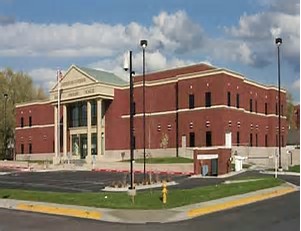
The Federal Courthouse in Lawton, Oklahoma

Like Judge David Nye, Scott L. Palk has been waiting a long time for a federal judicial appointment: over two years to be exact.  Luckily, it looks like 2017 may be the year that Palk finally gets to don the black robes.

Background

An Oklahoma native, Scott Lawrence Palk was born in Tulsa in 1967.  After getting a B.S. from Oklahoma State University and a J.D. from the University of Oklahoma School of Law, Palk joined the District Attorney’s office in Cleveland County.  In 2002, Palk moved to the U.S. Attorney’s Office for the Western District of Oklahoma, serving as an Assistant U.S. Attorney in the Criminal Division.  In 2004, Palk rose to be Deputy Chief of the Criminal Division.

In 2011, Palk left the U.S. Attorney’s Office to rejoin his alma mater, the University of Oklahoma School of Law, as an Assistant Dean of Students and Assistant General Counsel.

On May 18, 2015, Palk was contacted by the office of Sen. James Lankford (R-OK), asking about his interest in an appointment to the Western District of Oklahoma.  After meetings with the Oklahoma Senators, and the Obama Administration, Palk was formally nominated on December 16, 2015.[1]  Palk, and fellow nominee Judge Suzanne Mitchell, received Committee hearings on April 21, 2016,[2] and were approved out of committee unanimously.[3]  However, they ran into a roadblock on judicial confirmations set up by Senate Majority Leader Mitch McConnell (R-KY).  As such, Palk’s nomination was never confirmed and returned to the White House at the end of the 114th Congress.

However, both Lankford and Sen. James Inhofe (R-OK) indicated their continued support for Palk’s nomination.  By their recommendation, Palk was renominated by the Trump Administration on May 8, 2017.[4]

History of the Seat

The seat Palk has been nominated for opened on December 1, 2014, with Judge Stephen P. Friot’s move to senior status.  Despite three of the seven judgeships on the Western District of Oklahoma being vacant, no judges were confirmed to this court during the Obama Administration.  Instead, the Administration’s nominees, Palk and Mitchell, were left unconfirmed despite unanimous committee approval and the support of Oklahoma’s Republican Senators.

Legal Experience

Palk has spent most of his career as a state and federal prosecutor (ten years as the former, nine as the latter).  As an assistant D.A. in Norman, Palk prosecuted violent crimes, drug crimes, sex crimes, and crimes against children.  Among his more notable cases, Palk successfully prosecuted Larry Gene Goble of Noble for the shooting deaths of two people.[5]

In one of his most significant cases, Palk prosecuted Frank Duane Welch for the 1987 murder of Jo Talley Cooper.[6]  In his defense, Welch argued that Cooper died while the two were engaged in auto-erotic asphyxiation.[7]  To combat Welch’s defense, Palk and the prosecution team admitted evidence of another murder Welch had committed, that of Debra Stevens.[8]  After Welch was convicted and sentenced to death, he challenged his trial on several bases, including the admission of the Stevens murder.[9]  The Oklahoma Court of Criminal Appeals affirmed the sentence and the conviction, but criticized Palk and the other prosecutors for failing to delineate the Burks exception that would admit the Stevens conviction when filing their notice with the court.[10]  After the Supreme Court denied review of his case,[11] Welch was executed in 2007.[12]

As an AUSA, Palk successfully prosecuted Sean Michael Gillespie, a white supremacist who was convicted of throwing a Molotov cocktail into a Jewish temple.[13]  Palk was also part of the appellate team that successfully defended Gillespie’s conviction.

As a Dean at the University of Oklahoma Law School, Palk handles civil and administrative matters for the school, including the recruitment of students, supervision of staff, and the mediation of employment issues.

Political Activity

Palk is a registered Republican, but his only political contribution of record is a $250 contribution to Tully McCoy, a Democratic Congressional candidate in 1994.[14]  However, at the time of his candidacy, McCoy was the District Attorney for Cleveland County (and Palk’s boss).  As such, Palk’s contribution can merely be viewed as support for his boss, rather than an endorsement of the Democratic party.

Overall Assessment

As his nominations by President Obama and President Trump would suggest, Palk is not a controversial candidate.  There is little in his record that will incite opposition on either the left or the right.  While Palk’s criminal experience is one-sided (he has spent most of his legal career as a prosecutor), this is hardly disqualifying.  Approximately one year ago, the Judiciary Committee approved Palk’s nomination unanimously.  It will likely do so again.  However, this time, Palk will likely get a floor vote as well.


[1] Press Release, White House, President Obama Nominates Four to Serve on the United States District Courts (Dec. 16, 2015) (on file at https://obamawhitehouse.archives.gov).  

[2] Chris Casteel, Federal Judicial Nominees Sail Through Committee Hearing, The Oklahoman, Apr. 21, 2016, http://newsok.com/article/5493224.

[3] Chris Casteel, Committee Clears Two for Oklahoma City Court, The Oklahoman, May 19, 2016,http://newsok.com/article/5499079.  

[4] Press Release, White House, President Donald J. Trump Announced Judicial Candidate Nominations (May 8, 2017) (on file at www.whitehouse.gov/the-press-office).

[5] Oklahoma v. Goble, No. CF-1995-1495-L (Okla. Cleveland Cnty. Ct. Sept. 18, 1996).  See also Oklahoman, Jury Gives Life Sentence in Double-Murder Case, The Oklahoman, Sept. 18, 1996, http://newsok.com/article/2551273.

[6] Oklahoma v. Welch, No. CF-1997-247-H (Okla. Cleveland Cnty. Ct. March 30, 1998).

[7] Welch v. State, 2 P.3d 356 (Okla. Crim. App. April 10, 2000) at ❡5.

[8] Id. at ❡7.

[9] Id.

[10] Id. at ❡9 (“However, we take this opportunity to remind trial judges and prosecutors of the importance of delineating the exception and purpose for which other crimes evidence is being offered.”).

[11] Welch v. State, 531 U.S. 1056 (2000).

[12] Ben Fenwick, State Executes Man for 1987 Murder, Oklahoma Gazette, Aug. 22, 2007, http://okgazette.com/2007/08/22/state-executes-man-for-1987-murder/.

[13] United States v. Gillespie, No. CR-04-94-C (W.D. Okla. Sept. 9, 2005), aff’d, 452 F.3d 1183 (10th Cir. 2006), cert. denied, 549 U.S. 1063 (2006). 

[14] Open Secrets, https://www.opensecrets.org/donor-lookup/results?name=scott+palk (last visited May 25, 2017).  

Senate Invokes Cloture on Thapar’s Nomination

Today, the U.S. Senate invoked cloture on Judge Amul Thapar’s nomination to the U.S. Court of Appeals for the Sixth Circuit.  The 52-48 vote was surprisingly close, with every Democrat voting against cloture.

Democrats’ unified opposition to Thapar is notable, as his record is not particularly extreme, and several mainstream legal groups, including the National Asian Pacific American Bar Association support his nomination.  If anything, Thapar’s record is more moderate than that of Justice Neil Gorsuch.  Yet, the four Democrats who supported cloture for Gorsuch all voted against Thapar.  Three factors may explain the unanimity:

  1. Thapar is Trump’s first lower court nomination.  By establishing firm opposition to him, Democrats are setting a baseline for their standards, refusing to vote for any nominee to Thapar’s right.
  2. Thapar is a prospective Supreme Court nominee if Justice Kennedy retires.  Voting against him unanimously gives Democratic Senators cover to reject Thapar if he is ever elevated.
  3. Thapar’s nomination has moved incredibly quickly.  He spent a mere five days on the Senate Executive Calendar before cloture was filed.  In contrast, during the Obama Administration, Republicans made even non-controversial Obama appointees wait months before a confirmation vote.  By voting no, Democrats are registering their opposition to the speed of Thapar’s confirmation.

At any rate, Thapar’s nomination can be compared to that of Judge David Hamilton, the first circuit court nominee President Obama sent to the Senate.  Hamilton, who had a relatively moderate profile, and strong support from Indiana Republicans, faced intense Republican opposition and accusations of being a judicial activist.  After languishing on the floor for over five months, Hamilton was confirmed with the support of just one Republican Senator (his home state Senator Richard Lugar).

Tomorrow, we will see if Thapar can manage even the one cross-party vote that Hamilton got.  Based on the vote today, I wouldn’t count on it.

UPDATE – John K. Bush Criticized Cruz, Abortion, and the Affordable Care Act As a Blogger.

Approximately one hour ago, Zoe Tillman of BuzzFeed News reported that John K. Bush, nominated for the Sixth Circuit, has an extensive history of politically-charged blog posts at Elephants in the Bluegrass under the pseudonym, G. Morris.  Among the more impolitic of these are posts calling Sen. Ted Cruz (R-TX) a “sore loser”, calling for the repeal of the Affordable Care Act,  criticizing Roe v. Wade, and comparing Barack Obama to Monica Lewinsky.

In our analysis of Bush’s record yesterday, we noted the concerns that had already been raised over his statements about New York Times v. Sullivan, and his generally conservative record. The new posts on Elephants in the Bluegrass raise legitimate questions about Bush’s willingness to set aside ideology and give all litigants a fair hearing.  Needless to say, with Cruz as one of his questioners, Bush’s confirmation hearings are shaping up to be very interesting.


John K. Bush – Nominee to the U.S. Court of Appeals for the Sixth Circuit

John K. Bush, a distinguished commercial litigator, is the second Kentucky nominee named by President Trump to the Sixth Circuit.  Like the first, Judge Amul Thapar, Bush has a close connection with the Federalist Society.  However, unlike Thapar, Bush has no judicial record, making his conservative legal background even starker.

Background

John Kenneth Bush was born on Aug. 24, 1964 in Hot Springs, Arkansas.  After getting a B.A. from Vanderbilt University and a J.D. from Harvard Law School, Bush clerked for Judge J. Smith Henley on the U.S. Court of Appeals for the Eighth Circuit.  After his clerkship, Bush joined the Washington D.C. office of Gibson, Dunn & Crutcher LLP, working primarily in federal appellate matters.

In 1996, Bush moved to the Louisville office of Bingham, Greenebaum & Doll LLP, becoming a member in 1998, and a partner in 2012.  At Bingham, Bush served as Co-Chair of the Litigation Department, as well as Team Leader of the Antitrust Team.

Starting in 1997, Bush has served as President of the Louisville Lawyers Chapter of the Federalist Society, an organization dedicated to shaping the American legal system in accordance with originalist and textualist principles.

In November 2016, Bush indicated his interest in serving as a federal judge to Senate Majority Leader Mitch McConnell (R-KY).  After meetings with McConnell, Senator Rand Paul (R-KY), and officials in the White House Counsel’s Office and the Department of Justice, Bush was formally nominated on May 8, 2017.[1]

History of the Seat

Bush has been nominated for a Kentucky seat on the U.S. Court of Appeals for the Sixth Circuit.  This seat opened in February 2017 with Judge Danny Julian Boggs’ move to senior status.[2]  Boggs, an appointee of President Ronald Reagan, has been eligible to take senior status (a status which allows for more flexibility in workload, and opens up a vacancy on the court) since October 2009, but did not announce the move until shortly before President Trump’s inauguration.

Legal Experience

In almost thirty years as an attorney, Bush has primarily worked on commercial litigation, both on the trial and the appellate level.  As the head of Bingham’s Antitrust team, many of Bush’s most prominent cases involve antitrust litigation.  Early in his year, Bush was chief trial counsel for Hillerich & Bradsby Co. (H&B.), a baseball bat manufacturer in Louisville, in multidistrict litigation involving NCAA rules governing aluminium baseball bats.[3]

In one of his most significant cases, Bush represented Vibo Corporation, a tobacco manufacturer, in challenging its payment obligations under the Master Settlement Agreement (MSA) negotiated between the tobacco industry and state attorney generals in the 90s.  In the suit, Bush challenged the MSA, arguing that the agreement violated federal antitrust law.  The primary suit, brought in the Western District of Kentucky, resulted in both trial and appellate rulings against Bush’s client.[4]

Despite his primary focus on commercial litigation, Bush has also worked on some more controversial cases.  Alongside Theodore Olson, Bush was part of President Ronald Reagan’s defense team during the Iran-Contra investigation.[5]  Bush also worked with law school classmate Mark Nielson to sue the State of Connecticut and force implementation of a voter-approved constitutional limit on state spending.[6]  Bush was also part of the legal team that successfully defended a low sentence for Stacey C. Koon, the Los Angeles police sergeant convicted of civil rights violations for his role in the beating of Rodney King.[7]

Furthermore, Bush’s participation as amicus counsel in two politically charged cases may also be brought up at his confirmation hearing.  In 2007, Bush filed an amicus brief on behalf of the Louisville Area Chamber of Commerce, Inc. urging the Supreme Court to uphold the Louisville school district’s desegregation plan.[8]  Despite drafting a brief aimed at drawing conservative votes, the Supreme Court voted 5-4 to strike down the desegregation plan for relying too closely on race.[9]  Furthermore, last year, Bush participated as amicus counsel in Susan B. Anthony List v. Driehaus, a landmark First Amendment case which struck down Ohio’s ban of false statements in political campaigning.[10] 

Political Activity

Bush, a registered Republican,[11] has a long history of involvement with the Republican party.  Bush has contributed to the campaigns of numerous Republicans including McConnell, Paul, Congressman Andy Barr, and former Congresswoman Anne Northup.[12]  Over the course of his career, Bush has contributed $4500 to McConnell and $1050 to Paul, as well as volunteering for both Senators’ re-election campaigns.[13]

Bush has also made two small contributions to the Louisville and Jefferson County Republican Committee, as well as serving as an Executive Committee Member for the Jefferson County Republican Party for the last year.  Bush also served on Republican Governor Matt Bevin’s Transition Team.

Speeches and Writings

Over his thirty year long legal career, Bush has both spoken and written extensively on legal issues.  While most of Bush’s speeches and writings focus on the practice of litigation[14] and antitrust law,[15] two in particular may draw controversy.

Right to Privacy and the Kentucky Supreme Court

In 2006, Bush co-authored a paper for The Federalist Society of Law and Public Policy Studies alongside Prof. Paul E. Salamanca of the University of Kentucky School of Law.  The paper, titled “Eight Ways to Sunday: Which Direction, Kentucky Supreme Court?” criticized a series of rulings made by the Kentucky Supreme Court that the authors felt had expanded judicial authority at the expense of the legislature, and had disregarded precedent.  Among the areas of criticism, the authors noted the Kentucky Supreme Court’s tendency “to find rights in the state constitution above and beyond those in the U.S. Constitution.”[16]  Specifically, they highlighted that the Court “immunized consensual sodomy from criminal prosecution” despite the U.S. Supreme Court’s ruling to the contrary in Bowers v. Hardwick.[17]

Bush and Salamanca also criticized the Court’s abortion jurisprudence, noting that while the Court was initially willing to defer to state regulation of abortion, it’s “affirmance of the state’s efforts to protect unborn life was short-lived.”[18]  They also chided former Justice Charles Leibson, stating that “Justice Leibson’s interpretation of Roe gave little, if any, weight to the protection of unborn life.

Originalist Interpretation of Libel Law

On March 7, 2009, Bush spoke at the Symposium on Constitutional Law at the University of Louisville Brandeis School of Law.  His speech, titled “The Constitution and the Importance of Interpretation: Original Meaning” included an endorsement of originalism: a method of interpretation that gives primacy to the words of the constitution as they were understood by the authors.[19]  In his speech, Bush singled out the Supreme Court case of New York Times v. Sullivan as a case inconsistent with originalism.[20]  Sullivan, which insulated news articles that criticized public figures, has been cited as a case that protects freedom of the press.[21]  As such, Bush’s criticism of the case may raise questions about his willingness to interpret and apply it as a federal judge.  Bush’s remarks have already drawn concern from liberal groups, who argue that they could be used as a blueprint by the Trump Administration to target independent journalists.[22]

Overall Assessment

Unlike the previous nominees featured on the Vetting Room, Bush has no experience as a judge.  While there is nothing innately disqualifying about this, Bush’s lack of judicial experience makes it more difficult to gauge what kind of a judge he will be.  However, looking at his extensive history with the Federalist Society, his endorsement of originalism, and his long involvement with the Republican party, it is reasonable to conclude that Bush will be a deeply conservative addition to the Sixth Circuit.

While partisan activity should not be a bar to judicial service, Bush’s background makes it easy for progressive legal groups to build a case against his confirmation.  In particular, Bush’s criticism of both Sullivan and an expanded right to privacy, as well as his defense of Koon, a white police officer charged with violating the civil rights of a black man, could be used as grounds for concern.[23]

Overall, there is enough in Bush’s record to draw concern from the Judiciary Committee Democrats.  If and when Bush’s nomination comes up for Committee consideration, I expect a partisan battle over his confirmation.


[1] Press Release, White House, President Donald J. Trump Announced Judicial Candidate Nominations (May 8, 2017) (on file at www.whitehouse.gov/the-press-office).

[2] Jonathan Adler, Judge Danny Boggs to take Senior Status,Nat’l Rev., Jan 10, 2017, http://www.nationalreview.com/bench-memos/443711/judge-boggs-take-senior-status.

[3] See, e.g., Baum Research & Dev. Co. v. Hillerich & Bradsby Co., No. 98-72946, 2003 WL 25775524, at *1 (E.D. Mich. Nov. 23, 2003).  

[4] See VIBO Corp. v. Conway, 594 F. Supp. 2d 758 (W.D. Ky. 2009), aff’d 669 F.3d 675, 680 (6th Cir. 2012).

[5] Jonathan Adler, Judge Danny Boggs to take Senior Status,Nat’l Rev., Jan 10, 2017, http://www.nationalreview.com/bench-memos/443711/judge-boggs-take-senior-status.

[6] Jack Ewing, Frustrated Lawmaker Asks Court for Assist, Hartford Courant, Sept. 11, 1993, http://articles.courant.com/1993-09-11/news/0000004890_1_spending-cap-legislator-courts.

[7] Koon v. United States, 518 U.S. 81 (1996).

[8] See Parents Involved in Community Schs. v. Seattle Sch. Dist. No. 1, 551 U.S. 701 (2007).

[9] Andrew Wolfson, President Trump Taps Louisville Conservative John K. Bush for Court, Louisville Courier-Journal, May 8, 2017, http://www.courier-journal.com/story/news/politics/2017/05/08/donald-trump-taps-louisville-conservative-john-k-bush-court/101426196/. See also Robert Barnes, Three Years After Landmark Court Decision, Louisville Still Struggles With School Desegregation, Wash. Post, Sept. 20, 2010, http://www.washingtonpost.com/wp-dyn/content/article/2010/09/19/AR2010091904973.html?sid=ST2010091904357.

[10] Susan B. Anthony List v. Driehaus, 814 F.3d 466, 469 (6th Cir. 2016).

[12] While Bush takes the unusual step of reporting his campaign contributions on his Senate Judiciary Questionnaire, he omits some small donations, including a $500 contribution to McConnell made on Aug. 31, 2005, and a $200 contribution to Northup on July 26, 2004.  

[13] Open Secrets, https://www.opensecrets.org/donor-lookup/results?name=john+bush (last visited May 18, 2017).

[14] See, e.g., John K. Bush, A Better Approach to Civil Litigation Reform,

[15] See, e.g., John K. Bush, So You Have a Big Antitrust Problem: Now What?, Antitrust Law Client Strategies, 2007.  

[16] John K. Bush, Paul E. Salamanca, Eight Ways to Sunday: Which Direction, Kentucky Supreme Court?, The Federalist Society of Law and Public Policy Studies, Sept. 2006, 5.  

[17] Id.

[18] Id. at 6.

[19] John K. Bush, Speech at the Brandeis School of Law’s Symposium on Constitutional Law (Mar. 7, 2009).

[20] Ian Millhiser, Trump Judicial Nominee Offered Blueprint to Allow Trump to Target the Press, ThinkProgress, May 11, 2017, https://thinkprogress.org/trump-judicial-nominee-offered-a-road-map-that-would-allow-trump-to-target-the-press-13d1b14c5cb2.

[21] New York Times Editorial Bd., The Uninhibited Press, 50 Years Later, N.Y. Times, Mar. 8, 2014, https://www.nytimes.com/2014/03/09/opinion/sunday/the-uninhibited-press-50-years-later.html (“[Sullivan] rejected virtually any attempt to squelch criticism of public officials – even if false – as antithetical to the ‘central meaning of the First Amendment.’”).

[22] See Justice Watch, Trump Judicial Nominee John K. Bush Has Advocated Stripping First Amendment Protections from the Press, Alliance for Justice, May 11, 2017, http://www.afj.org/blog/trump-judicial-nominee-john-k-bush-has-advocated-stripping-first-amendment-protections-from-the-press; Ian Millhiser, Trump Judicial Nominee Offered Blueprint to Allow Trump to Target the Press, ThinkProgress, May 11, 2017, https://thinkprogress.org/trump-judicial-nominee-offered-a-road-map-that-would-allow-trump-to-target-the-press-13d1b14c5cb2.

[23] Although Bush’s defenders may note his defense of aggressive desegregation plans as amici in Parents Involved.  

Senate Judiciary Committee Advances Thapar’s Nomination to the Floor

Today, the Senate Judiciary Committee advanced the nomination of Judge Amul Thapar to the U.S. Court of Appeals to the Sixth Circuit.  The vote to move his nomination was 11-8, with all Republicans voting in favor, and all Democrats voting against (Senator Mazie Hirono did not cast a vote).

In explaining her opposition, Senator Feinstein (D-CA), the ranking member of the committee, noted Thapar’s decision in Winter v. Wolnitzek.  This blog discussed Winter and other cases where Thapar had been reversed here.

Thapar now joins a small but growing list of nominees waiting for a floor vote.  Given his close ties to Senate Majority Leader Mitch McConnell, it would not be surprising to see Thapar called up for a confirmation vote before the Memorial Day recess.

Judge David Nye – Nominee to the U.S. District Court for the District of Idaho

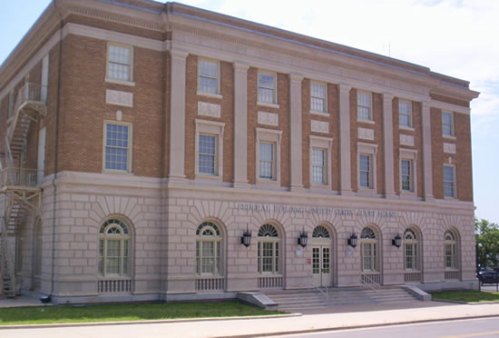
The Idaho Federal Courthouse in Pocatello, where Nye will likely sit.

In December 2016, the Republican-controlled U.S. Senate left 59 pending judicial nominations made by President Obama unconfirmed as it adjourned.  Among those nominations was that of Judge David Nye, an Idaho state judge named to a federal district court seat.  Last week, Nye’s nomination was improbably revived by President Trump, giving him another opportunity for a lifetime appointment.

Background

David Charles Nye was born in 1958 in Lynwood, California.  After spending a year at the University of Utah, Nye received his Bachelor’s degree and his J.D. from Brigham Young University in Provo.  After graduation, Nye spent two years at the Utah Attorney General’s office, before moving to Idaho to serve as a law clerk for Judge George Granata on Idaho’s Fifth District Court.

In 1987, Nye joined the Pocatello law firm, Merrill & Merrill, as an associate.  He was promoted to a partner there two years later.  At the firm, Nye maintained a diverse litigation practice, representing both plaintiffs and defendants in civil cases, as well as working on contract disputes, family law, and administrative cases.

In 2007, Nye was appointed by Republican Governor Butch Otter to a judgeship on Idaho’s Sixth District Court.  As a District Judge, Nye handled all felony cases and civil cases involving more than $10,000 in damages.  Nye was re-elected to this position in 2010 and 2014.[1] 

On April 5, 2016, upon the recommendation of Idaho Senators Mike Crapo and Jim Risch, Nye was nominated for a seat on the U.S. District Court for the District of Idaho by President Barack Obama.

History of the Seat

The District of Idaho, which covers the entire state, has only two authorized active judgeships.  For 20 years, the same two judges, Edward Lodge, and B. Lynn Winmill, held those judgeships.  In 2014, however, Judge Lodge announced his move to senior status, opening up a vacancy for President Obama to fill.[2]  In response, Crapo and Risch, both Republicans, both offered to work with the Obama Administration to find a nominee who was acceptable to all parties.[3] 

This began a sixteen-month long negotiation between the Senators and the Obama Administration.  After receiving criticism for a secretive selection process that ignored qualified female candidates,[4] the Senators suggested Erika Malmen, a little-known environmental attorney whose husband, Jeff, was prominent in the Idaho Republican Party.[5]  After Malmen was rejected by the Administration, the Senators turned to Idaho Fifth District Court Judge G. Richard Bevan, a Republican and former prosecutor.[6]

After Bevan was also rejected by the White House, Crapo and Risch reached out to Nye in late January 2016 to gauge his interest for the position.[7]  On Feb. 4, the Senators formally recommended Nye to the White House.  The White House formally nominated Nye on April 5, 2016.

With both Crapo and Risch’s support, Nye’s nomination received a hearing on June 21, 2016,[8] and was voted out of the Judiciary Committee unanimously on July 15.[9]
However, it proceeded to languish on the floor due to Senate Majority Leader Mitch McConnell’s refusal to confirm any of President Obama’s judicial nominees.  Despite the efforts of Crapo and Risch, the nomination expired unconfirmed at the end of the 114th Congress.

Nevertheless, the Idaho Senators immediately indicated that they would re-recommend Nye to the Trump Administration.[10]  On May 8, 2017, Trump announced that he would renominate Nye to the District of Idaho.[11]

Legal Experience

For approximately twenty years before he became a judge, Nye practiced law in Pocatello, working primarily in litigation.  During this time, he tried approximately 90 trial court cases, the vast majority of which were jury trials.

Among Nye’s most notable cases are several where he served as defense counsel in personal injury cases.  Early in his career, Nye obtained summary judgment on behalf of a fertilizer plant against two workers who suffered burn injuries while working there.  Nye successfully argued that the case was barred by Idaho’s statute of repose.[12]  Similarly, Nye successfully defended a dairy farm in an action brought by an injured employee,[13] and a farmer whose cow ran onto a highway and caused a car accident.[14]

Nye also represented plaintiffs and criminal defendants.  Nye unsuccessfully represented a defendant challenging the constitutionality of Utah’s law prohibiting the showing of harmful materials to minors.[15]  He also represented road workers injured from an accident at a construction site in their unsuccessful appeal to the Idaho Supreme Court.[16]

Jurisprudence and Reversals

In his ten years on the state bench, Nye has presided over more than 1200 cases.  Approximately 7% of Nye’s decisions have been reversed by higher courts.  Here is a summary of the more prominent reversals.

Reversals in Civil Cases

Bennett v. Patrick – In this case, the Idaho Supreme Court reversed Nye’s refusal to award attorney’s fees to prevailing plaintiffs in a car accident case.[17]  Nye had refused to award attorney’s fees to the plaintiffs under Idaho Statute IC § 12-120(4), which eliminated attorney’s fees in cases where the initial demand was greater than $25,000.  The Supreme Court found that, while plaintiff’s trial demand was indeed greater than $25,000, their initial offer of settlement was less, and as such, the plaintiffs are not barred from recovering attorney’s fees under IC § 12-120(4).

Cummings v. Stephens – This case involved an appeal from Nye’s judgment for the plaintiffs in a dispute involving the sale of a farm.[18]  Nye had found that a title company was negligent in issuing title on the farm and owed $50,000 in damages to the buyer.[19]  The Idaho Supreme Court reversed the grant of damages, while affirming the finding of negligence.[20]

Sadid v. Idaho State Univ. – This case involved a professor’s suit against his university for breach of employment contract and violation of First Amendment Rights.[21]  The professor argued that his dismissal was based on his public criticism of the university and its administrators.[22]  Nye granted summary judgment against the professor, finding that he spoke as a public employee on matters not of public concern, and as such, his dismissal was not a violation of the First Amendment.[23]  The Idaho Supreme Court reversed this holding, but affirmed the grant of summary judgment on alternative grounds.[24]

Wanner v. State Dep’t of Transp. – In this case, a motorist challenged the suspension of his personal and commercial driver’s license after he failed a breathalyzer test.  Nye struck down the suspension of the commercial driver’s license, holding that the state had failed to provide adequate notice.[25]  On appeal, the Idaho Supreme Court agreed that the notice was inadequate but reversed the ruling, noting that the motorist had failed to exhaust his administrative remedies.[26]

Reversals in Criminal Cases

Cook v. State – In this case, Nye granted a Rule 60(b) motion to reduce the sentence of a defendant whose previous sentence had been struck down by the Idaho Court of Appeals.[27]  The Idaho Court of Appeals reversed this reduction of sentence, arguing that Nye had failed to require the defendant to show incompetent performance by his sentencing counsel.[28]

State v. Erickson – This case involved a defendant’s challenge to his conviction, arguing that the prosecution had engaged in misconduct during his trial, including shifting the burden of proof to the defense.[29]  While Nye denied the challenge, the Idaho Court of Appeals reversed, holding that the prosecutorial misconduct in the case was a fundamental error.[30]

Overall Assessment

The willingness of both President Obama and President Trump to nominate Nye speaks to his uncontroversial background.  A review of his record as an attorney and a judge does not suggest a bias towards prosecutors, plaintiffs, or defendants.  When Nye’s nomination by President Obama failed, Crapo and Risch could have chosen a more conservative candidate.  The fact that they did not speaks to the support and respect that Nye commands.

For over 20 years, Judge Lodge and Judge Winmill have managed Idaho’s busy trial docket among themselves.  The likely confirmation of Judge Nye will give them both a well-deserved break.


[1] Idaho District Court judges serve four year terms, and can be re-elected in nonpartisan elections.

[2] Betsy Z. Russell, Judge Lodge to Take Senior Status, Idaho to Get New Federal Judge, The Spokesman-Review, Sept. 24, 2014, http://www.spokesman.com/stories/2014/sep/24/judge-lodge-take-senior-status-idaho-get-new-feder/.

[3] David Cole, In Search of the Best Person for the State, Couer D’Alene/Post Falls Press, Sept. 26, 2014, http://www.cdapress.com/archive/article-e388fae9-46fc-5371-bc45-4058f2be739b.html (quoting Sen. Risch) (“There will be people who won’t be acceptable to Sen. Crapo or I, and there will be people who won’t be acceptable to the President, but at the end of the day, we’ll come up with somebody and fill the spot.”).

[4] Betsy Z. Russell, Women Shut Out of Idaho Judge Selection, The Spokesman-Review, Apr. 25, 2015, http://www.spokesman.com/stories/2015/apr/28/women-shut-out-of-idaho-judge-selection/.  

[5] Betsy Z. Russell, The Boise Attorney Who Could Be Idaho’s Next Federal Judge: Erika Malmen, The Spokesman-Review, Oct. 21, 2015, http://www.spokesman.com/blogs/boise/2015/oct/21/boise-attorney-who-could-be-idahos-next-federal-judge-erika-malmen/.

[6] Betsy Z. Russell, Twin Falls Judge Now Being Considered for Federal Judgeship, Idaho Statesman, Dec. 9, 2015, http://www.idahostatesman.com/news/politics-government/state-politics/article48808210.html.  

[7] Unlike Malmen and Bevan, Nye is not registered with the Idaho Republican Party.

[8] Nathan Brown, Nye on Track for Confirmation as Idaho Federal Judge, MagicValley.com, Jun. 22, 2016, http://magicvalley.com/news/local/govt-and-politics/nye-on-track-for-confirmation-as-idaho-federal-judge/article_cbc12dbf-4f81-59d5-a2b7-e0a5d40bc878.html.

[10] Betsy Z. Russell, White House Agrees to Renominate Judge Nye for Long-Vacant Federal Judgeship, The Spokesman-Review, Apr. 27, 2017, http://www.spokesman.com/blogs/boise/2017/apr/27/white-house-agrees-re-nominate-judge-nye-long-vacant-idaho-federal-judgeship/.

[11] Press Release, White House, President Donald J. Trump Announced Judicial Candidate Nominations (May 8, 2017) (on file at www.whitehouse.gov/the-press-office).

[12] West v. El Paso Products Co., 832 P.2d 306 (Idaho 1992).

[13] Loza v. Arroyo Dairy, 53 P.3d 347 (Idaho Ct. App. 2002).

[14] Karlson v. Harris et al., 97 P.3d 428 (Idaho 2004).  

[15]  State v. Brown, 856 P.2d 358 (Utah App. 1993).

[16]  Fuhriman v. State Dep’t of Transp., 153 P.3d 480 (Idaho 2007).

[17] Bennett v. Patrick, 276 P.3d 1231 (Idaho 2011).

[18] Cummings v. Stephens, Bear Cnty. Case No. CV-2009-183.

[19] See id.

[20] Cummings v. Stephens, 336 P.3d 281 (Idaho 2014).

[21] Sadid v. Id. State Univ., Bannock Cnty. Case No. CV-2008-3942.

[22] Id.

[23] Id.

[24]Sadid v. Id. State Univ.,265 P.3d 1144 (Idaho 2011).

[25] Wanner v. State Dep’t of Transp., Franklin Cnty. Case No. CV-2008-364.

[26] Wanner v. State Dep’t of Transp., 244 P.3d 1250 (Idaho 2011).

[27] Cook v. State, Lake Cnty. Case No. CV-2004-267.

[28] State v. Cook, 2010 WL 9589151 (Idaho Ct. App., Aug. 27, 2010).

[29] State v. Erickson, 227 P.3d 933 (Idaho Ct. App. 2010).

[30] United States v. Badger, 581 F. App’x 541 (6th Cir. 2014).