Where are the Women: The Alarming Gender Gap Among Trump’s Judges

During the 2012 Presidential campaign, Republican candidate Mitt Romney was mocked for declaring that he had “binders full of women” ready to appoint to federal positions.  The phrase, while awkward, signaled Romney’s commitment to gender diversity in his appointments.  In contrast, President Trump’s appointments, from his US Attorneys to his executive appointments, have been overwhelmingly male.  This pattern is evident in his judicial appointments.

As of August 23, 2017, President Trump has named 36 nominees to Article III courts: 11 to the U.S. Court of Appeals; 24 to the U.S. District Courts; and Justice Neil Gorsuch to the U.S. Supreme Court.  Out of these 36 nominees, only seven are women.  In contrast, by August 2009, President Obama had nominated only 17 nominees, but had named just as many women: seven, including Justice Sonia Sotomayor to the U.S. Supreme Court.

Comparatively, only 19% of President Trump’s judicial nominations are women, a lower percentage than the last three presidents, and comparable with the nominations made by President George H.W. Bush.  The ratio is particularly skewed in nominations to the U.S. District Courts.  Only four out of 24 District Court nominations have gone to women.

Out of the seven female nominees, three replace departing female judges and four replace male judges.  In contrast, six of the male nominees put forward replace female judges.  In other words, with the confirmation of these nominees, for the first time since the Eisenhower Administration, the overall number of active female judges would go down.

It is still early, and the Trump Administration could pick up the pace and appoint more women to the federal bench.  However, the tea leaves are not promising.  Rather, the nominees the Administration have in the works are also, generally, male:

  • DC Circuit – While the Administration was looking at four well-qualified female candidates to fill the vacancy left by Judge Janice Rogers Brown’s retirement, the expected nominee, Deputy White House Counsel Greg Katsas, is male.
  • Second Circuit – The Administration has pitched four candidates to New York Senators Chuck Schumer and Kirsten Gillibrand to fill two 2nd circuit vacancies: all four candidates are male.
  • Third Circuit – The Administration is preparing to nominate Paul Matey to fill one of two vacancies without a nominee.  For the other vacancy, the Administration is mulling David Porter.  Both candidates are male.
  • Fifth Circuit – The Administration is weighing four male candidates for two vacancies on the court.
  • Seventh Circuit – The White House has interviewed three men to replace Judge Ann Claire Williams.
  • Ninth Circuit – The leading candidates for vacancies in Arizona, California, and Oregon are all men.
  • Tenth Circuit – Three male attorneys are being considered for the New Mexico seat vacated by Judge Paul Kelly.
  • Eleventh Circuit – The list of candidates being considered for the vacancy by Judge Frank Hull (a woman), is mostly male, but does include female Georgia Supreme Court Justice Britt Grant.

The Administration and its supporters will argue that this doesn’t matter.  As long as the nominees put forward are qualified, their gender is irrelevant.

While this is true on the individual level, such an argument is based around the erroneous assumption that the only way a female candidate would be chosen over a male one is due to emphasis on diversity.  This is patently false.  Women make up approximately 35% of the legal profession, and this percentage is increasing sharply. Furthermore, the federal bench (the elite of the judiciary) is already one third female.   As such, producing a pool of nominees that is only 19% female suggests an inability to consider qualified female nominees, rather than a slavish devotion to quality.

Since FDR was in office, every single administration appointed a greater percentage of women to the federal bench than the previous administration of their party.  Unless corrective measures are taken, the Trump Administration looks set to break that trend.

Update – I wanted to address a reader inquiry.  The reader in question wanted to know why the relevant barometer for comparison was the percentage of women in the legal profession, rather than the percentage of women in organizations like the Federalist Society, from where Trump draws his appointees.  Three responses.

First, federal judges primarily serve the rule of law and the general public.  As such, it is particularly important that the public maintain faith in the judiciary.  Numerous studies have shown that when female or minority judges are left off the bench, that both the quality and perception of justice suffer.  As such, you judge the diversity of federal judges based on those appearing in court before them.

Second, the Federalist Society does not constitute the entirety of conservative lawyers.  While the membership of the Federalist Society may be predominantly white and male, there are other sources of conservative women.  Furthermore, District Court appointments, where the gender gap is particularly bad, generally do not come from the Federalist Society.  In most cases, the male nominees being chosen are themselves not members of the Federalist Society.  As such, it is difficult to believe that Federalist Society membership is the basis on which female judges are being ignored.

Third and most importantly, the pool of conservative attorneys that Trump is drawing upon for his nominees is essentially the same as the pool tapped by past Republican Presidents.  Over ten years ago, despite women making up only about 25% of the legal community, President Bush managed to have women constitute 22% of his appointees.  Twenty five years ago, President George H.W. Bush essentially matched Trump’s current 19% despite working with a female legal population that was substantially lower than what Trump has now.  When these past presidents, whose nominees were equally conservative, could maintain parity between the percentage of women in their appointments and the percentage of women in the legal community, there is no reason why President Trump cannot do so.

Annemarie Carney Axon – Nominee to the U.S. District Court for the Northern District of Alabama

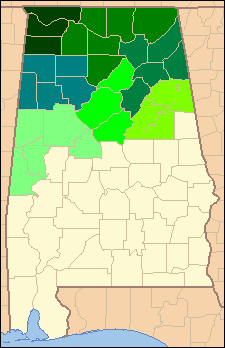
It is relatively unusual to have a federal judge share the bench with a former clerk.  However, upon her expected confirmation, Annemarie Carney Axon, a Birmingham based attorney, would join her former boss, Judge Inge Prytz Johnson, on the United States District Court for the Northern District of Alabama.

Background

Axon, born Annemarie M. Carney, attended the University of Alabama, graduating with a B.A. in History and Political Science in 1995.  She went on to the University of Alabama law school, graduating in 1999.  After graduating, Axon clerked for Judge Inge Prytz Johnson on the United States District Court for the Northern District of Alabama.

After her clerkship, Axon moved to Providence, RI to work as an associate at Edwards & Angell LLP.  Axon returned to Alabama in 2005 to join the Birmingham office of Wallace, Jordan, Ratliff & Brandt, LLC.  She currently serves as a partner there.

History of the Seat

Axon has been nominated for a seat on the U.S. District Court for the Northern District of Alabama.  This seat opened on May 8, 2015, when Judge Sharon Lovelace Blackburn moved to senior status.  Shortly after this seat opened, negotiations on a judicial nominations package between the Administration and Alabama’s Republican senators fell apart and no nomination was ever made to fill the seat.[1]  President Trump announced Axon’s nomination to the vacancy on July 13, 2017.

Legal Experience

Axon has spent nearly two decades litigating in state and federal courts.  Much of her career has been focused on representing banks and other financial institutions, defending them against contract claims,[2] and against SEC liability.[3]  For example, Axon successfully defended a bank serving as trustee for a Rhode Island mother and children against charges that the bank mismanaged the trust.[4]  While Axon’s work representing financial institutions is unlikely to raise many eyebrows, she may be asked about two more controversial cases.

In Providence, Axon defended the Palestinian Authority (PA) in a series of suits brought by American citizens killed by Hamas.[5]  Axon and her legal team at Edwards Angell argued that the suits brought against the PA were nonjusticiable, and the PA was protected by sovereign immunity.  After adverse rulings against them in the lower court,[6] the First Circuit ruled against the PA, and held that it did not constitute a “state” for sovereign immunity purposes.[7]

In Birmingham, Axon was part of the legal team defending then Governor Bob Riley’s appointments to the Alabama A&M Board of Trustees.[8]  The appointments were challenged by a group of alumni as violating the express interests of the Alabama Senate.[9]  However, the Alabama Supreme Court rejected Riley’s argument that the alumni lacked standing but found that the trial court lacked subject matter jurisdiction to hear the case, as such affirming Axon’s position.[10]

Political Activity

Axon does not have a history of donations to candidates of either political party.

Overall Assessment

In confirmation politics, nominees who don’t speak out on judicial and political issues generally attract less opposition.  As such, Axon’s focus on (less high profile) financial issues, and her non-involvement with politics speaks to her confirmability.

If critics attack Axon, it will likely be due to her defense of the Palestinian Authority.  Her involvement in the politically volatile case, and the ultimate rejection of her legal position by the First Circuit could be grounds for criticism.  Nevertheless, she and her supporters can argue that her zealous advocacy on behalf of her client should not be considered representative of her own legal views.

To sum up, Axon’s record suggests an easily confirmation and middle-of-the-road nominee.


[1] Compare Pema Levy, Jeff Sessions has a History of Blocking Black Judges, Mother Jones, Jan. 9, 2017, http://www.motherjones.com/politics/2017/01/jeff-sessions-blocked-black-judges-alabama/ with Mary Troyan, Judicial Vacancies in Alabama Pile Up, Montgomery Advertiser, April 22, 2015, http://www.montgomeryadvertiser.com/story/news/local/alabama/2015/04/22/judicial-vacancies-alabama-pile/26166537/.  

[2] See, e.g., Tomaiolo v. Malinoff, 281 F.3d 1 (1st Cir. 2002) (representing Transamerica Corporation); Morris v. Highmark Life Ins. Co., 255 F.Supp.2d 204 (D. Mass. 2003).

[3] See, e.g., S.E.C. v. Slocum, Gordon & Co., 334 F. Supp. 2d 144, 149 (D.R.I. 2004).

[4] Rose v. Firststar Bank et al., 819 A.2d 1247 (R.I. 2003).

[5] The Estates of Ungar ex rel. Strachman v. The Palestinian Auth., 228 F. Supp. 2d 40 (D.R.I. 2002).

[6] Estates of Ungar v. Palestinian Auth., 315 F. Supp. 2d 164, 187 (D.R.I. 2004).

[7] Ungar v. Palestine Liberation Org., 402 F.3d 274, 276 (1st Cir. 2005).

[8] Riley v. Hughes, 17 So. 3d 643 (Ala. 2009).

[9] Id. at 645.

[10] Id. at 646.

Thomas Alvin Farr – Nominee to the U.S. District Court for the Eastern District of North Carolina

In December 2006, Thomas Alvin Farr, a well-connected Republican attorney from Raleigh, was nominated for a vacancy on the U.S. District Court for the Eastern District of North Carolina.  For the next two years, Farr waited for a hearing and a vote, neither of which came in the Democratic-controlled Senate.  Then, with the election of President Obama, Farr’s hopes of a federal judgeship died.  On July 13, 2017, however, President Trump revived Farr’s nomination, submitting him once again to the seat he had originally been nominated for, a seat studiously kept open by North Carolina’s Republican Senators.

Background

Thomas Alvin Farr was born in Cincinnati, OH on October 24, 1954.[1]  Farr attended Hillsdale College, a Christian liberal arts school in Michigan, graduating summa cum laude in 1976.  Farr proceeded to Emory University, graduating with a J.D. in 1979.

After graduating, Farr joined the National Right to Work Legal Defense Foundation as a staff attorney.  In 1981, upon the election of Republican senator John P. East,[2] Farr moved to Washington D.C. to serve as Counsel for the Senate Labor and Human Resources Committee.  Farr left D.C. in 1982 to serve as a law clerk to Judge Frank Bullock of the U.S. District Court for the Middle District of North Carolina.

In 1983, Farr joined the Raleigh law firm Maupin, Taylor, Ellis & Adams, P.A., working on civil litigation, with a focus on labor law.  During this period, Farr also served as a member of the North Carolina Elections Board.

In 2003, Farr and three other partners left Maupin for Haynsworth, Baldwin, Johnson & Greaves, a Greenville, SC based labor and employment firm.[3]  In 2006, Farr joined the Raleigh office of Ogletree Deakins, where he currently works as a partner.

In December 2006, President George W. Bush nominated Farr for a vacancy on the U.S. District Court for the Eastern District of North Carolina.  Farr’s nomination came a month after Democrats took control of the U.S. Senate.  Incoming Chairman Patrick Leahy (D-VT) declined to process Farr’s nomination, despite moving and confirming three other North Carolina nominees.  Farr’s nomination was ultimately returned to the President unconfirmed.

History of the Seat

Farr has been nominated for the longest pending federal judicial vacancy.  This seat opened on December 31, 2005, when Judge Malcolm J. Howard moved to senior status.  After Farr’s unsuccessful nomination expired in 2008, President Barack Obama and newly elected Senator Kay Hagan (D-NC) did not renominate Farr.  Instead, in July 2009, Hagan submitted a list of three new candidates, Superior Court Judges Allen Cobb and Quentin Sumner, and federal prosecutor Jennifer May-Parker, to the Administration.[4]  Republican Senator Richard Burr (R-NC) submitted his own letter endorsing Cobb and May-Parker.[5]  However, despite the joint endorsements, Obama did not nominate a judge during his first term.

On June 20, 2013, Obama finally nominated May-Parker to fill the vacancy.[6]  However, Burr reversed his prior support for May-Parker, blocking her nomination by refusing to return a blue slip.[7]  Without Burr’s support, May-Parker did not receive a hearing, and her nomination died at the end of the 113th Congress.

On April 28, 2016, President Obama nominated Patricia Timmons-Goodson, a former justice on the North Carolina Supreme Court, to fill the vacancy.[8]  Timmons-Goodson’s nomination drew immediate opposition from Burr, who refused to support her.[9]  As a result, she was never confirmed.

On July 13, 2017, President Trump renominated Farr for the vacancy,[10] this time with the support of Burr and Senator Thom Tillis (R-NC).[11]

Legal Experience

Having been a lawyer since 1979, Farr has more experience litigating than any other nominee put forward by the Trump Administration.  The vast majority of his experience has been in the fields of labor and election law.

Labor Law

Farr has spent virtually his entire legal career in labor law, generally opposed to the positions of unions and unionized workers.  He started his legal career at the National Right to Work Legal Defense Foundation, litigating against unions and union-friendly regulation.  Furthermore, as Counsel for Sen. East, Farr worked on labor policy in the U.S. Senate.

In private practice, Farr fought claims by truck drivers seeking the rights of union membership,[12] and industrial workers seeking to take necessary measurements to file a grievance.[13]  Farr also successfully intervened in a suit blocking NLRB enforcement of its bargaining order against a pork product plant in North Carolina.[14]  He also filed suit to challenge an arbitration decision in favor of a unionized employee.[15]

Farr also filed a Supreme Court amicus brief on behalf of Helms urging affirmance of a decision holding that unions could not spend money on activities unrelated to collective bargaining.[16]

Election Law

In addition to his expertise in labor law, Farr is also known for his extensive litigation experience representing the Republican party, Republican elected officials, and conservative interests in election law litigation.[17]

Early in his career, Farr represented Sen. Jesse Helms (R-NC) and the North Carolina Republican Party in a suit challenging the constitutionality of North Carolina election laws.  The suit arose when Republican Congressman Bill Hendon lost a close election to Democrat James Clarke, and filed suit to challenge the election results, and the North Carolina straight-ticket statute.  After years of litigation, Judge David Sentelle (now on the U.S. Court of Appeals for the D.C. Circuit) found that the statute, which voided cross-over votes cast in opposition to a straight-ticket ballot, was unconstitutional, accepting Farr’s position.[18]

Following the 1990 census, Farr represented the Republican Party of North Carolina in its unsuccessful challenge against the state’s congressional map, alleging partisan gerrymandering.[19]  In 1995, Farr argued the case of Shaw v. Hunt before the U.S. Supreme Court.  The Supreme Court ended up siding with Farr on a 5-4 vote, striking down the congressional map as an unconstitutional racial gerrymander.[20]

In 2001, Farr and future U.S. District Judge James Dever once again challenged the maps drawn by North Carolina’s Democratic legislature, alleging that they were a partisan gerrymander.[21]

In contrast to his litigation against partisan gerrymandering by Democrats, Farr has defended gerrymandering by Republicans.  For example, Farr was a part of the legal team defending the North Carolina legislature’s gerrymandering of the Guilford County Board of Commissioners.[22]

Farr also defended the congressional map and state legislative maps drawn by the Republican legislature against charges that they were unconstitutional racial gerrymanders.[23]  He also defended “election reform” measures enacted by the legislature that, critics argued, would disenfranchise minority voters.[24]

Controversially, Farr’s firm was hired at taxpayer expense to defend North Carolina’s restrictive voter id law against suit by the Department of Justice, who argued that the law disenfranchised minority voters.[25]  In court, Farr argued that voter id was a “minor inconvenience” for voters.[26]  Ultimately, the appeals were dismissed by Democratic Governor Roy Cooper, and Farr was dismissed from the case.[27]

Other Representations

In addition to the cases mentioned above, Farr has defended business interests against civil rights and other actions in court.[28]  Early in his career, Farr successfully defended a railroad accused of promoting white candidates over an experienced black conductor.[29]  Farr also successfully defended American Safety Products, Inc. against breach of contract and RICO claims,[30] as well as defending Dow Corning Corp. against wrongful termination claims.[31]

Political Activity

As may be evident from his frequent appointments by the Republican legislature, Farr is well connected in the North Carolina Republican Party and has been a generous donor to Republicans.  Through his career, Farr has donated to Sen. Lauch Faircloth (R-NC), President George W. Bush, Sen. Elizabeth Dole (R-NC), Sen. Bob Smith (R-NH), Sen. Richard Burr (R-NC), Rep. Renee Ellmers (R-NC), Rep. George Holding (R-NC), Rep. Richard Hudson (R-NC), Mitt Romney, Newt Gingrich, Speaker Paul Ryan, Sen. Thom Tillis (R-NC), and Senate Majority Leader Mitch McConnell, among others.[32]  Farr has also been a strong supporter of President Trump, donating almost $2500 to Trump’s campaign, and an additional $1100 to the Make America Great Again PAC.[33]  While most of his donations are to Republicans, Farr did donate $1000 to Rep. Mike McIntyre (D-NC) in 2009.

Overall Assessment

Both Farr’s supporters and detractors will likely turn to one-word arguments for their position.  For Farr’s supporters, the word is “qualified.”  For his opponents, it’s “partisan.”

As noted, Farr has more experience practicing law than any other Trump nominee.  With almost forty years of legal experience, including work in government, nonprofits, and private practice, Farr is certainly well qualified for a federal judgeship.

However, Farr also has a deeply partisan history.  His switch from attacking partisan gerrymanders drawn by Democrats to defending partisan gerrymanders drawn by Republicans allows detractors to paint him as a partisan ideologue.  Furthermore, his dismissal of the burdens of voter id as a “minor inconvenience” is sure to draw opposition from civil rights groups.

As a bottom line, Democrats, civil rights plaintiffs, and labor unions will argue that, given Farr’s partisan past, he cannot be fair to them in court.  Unlike his first nomination, however, this time, Farr will get a hearing to defend himself and try and put those doubts to rest.


[2] East later gained notoreity as one of the principal opponents of a federal holiday honoring Rev. Martin Luther King, Jr.  Frances Romero, A Brief History of Martin Luther King Jr. Day, Time, Jan. 18, 2010, http://content.time.com/time/nation/article/0,8599,1872501,00.html.

[3] Kim Nilsen, Eillis [sic] Leaves Maupin Taylor & Ellis, Triangle Business Jrnl., Mar. 24, 2003, https://www.bizjournals.com/triangle/stories/2003/03/24/daily11.html.

[4] Hagan Looks to Split U.S. Attorney Job, WRAL.com, July 10, 2009, http://www.wral.com/news/local/politics/story/5547659/.

[5] Letter from Richard Burr, North Carolina Senior Senator, to Barack Obama, The President of the United States (July 21, 2009) (on file at http://big.assets.huffingtonpost.com/Burrletter.pdf).

[6] Press Release, White House, President Obama Announces Intent to Nominate Three to Serve on the United States District Court (June 20, 2013) (on file at https://obamawhitehouse.archives.gov).  

[7] Jennifer Bendery & Sam Stein, Richard Burr Blocks Judicial Nominee After Recommending Her to Obama, Huffington Post, Jan. 8, 2014, http://www.huffingtonpost.com/2014/01/08/richard-burr-judicial-nominee_n_4563083.html.

[8] Press Release, White House, President Obama Nominates Eight to Serve on the United States District Courts (April 28, 2016) (on file at https://obamawhitehouse.archives.gov).  

[9] Anne Blythe, Burr Vows to Block Obama Nomination to NC Federal Court Seat, The News & Observer, April 28, 2016, http://www.newsobserver.com/news/politics-government/state-politics/article74534012.html.

[10] Press Release, President Donald J. Trump Announces Fifth Wave of Judicial Candidates (July 13, 2017) (on file at www.whitehouse.gov/thepressoffice).

[11] Press Release, Burr and Tillis Welcome Nomination of Thomas Farr as District Judge for Eastern North Carolina (July 13, 2017) (on file at www.burr.senate.gov/press/releases).

[12] Joyner v. Abbott Labs., 674 F. Supp. 185, 188 (E.D.N.C. 1987).

[13] N.L.R.B. v. Am. Nat. Can Co., Foster-Forbes Glass Div., 924 F.2d 518, 520 (4th Cir. 1991).

[14] N.L.R.B. v. Lundy Packing Co., 68 F.3d 1577, 1579 (4th Cir. 1995), supplemented, 81 F.3d 25 (4th Cir. 1996).

[15] Bandag, Inc. v. Local 922, United Steel Workers of Am., No. 5:96-CV-450-BR3, 1996 WL 943527, at *1 (E.D.N.C. Dec. 20, 1996), aff’d sub nom. Bandag, Inc. v. Local 922, 121 F.3d 697 (4th Cir. 1997).

[16] Commc’ns Workers of Am. v. Beck, 487 U.S. 735, 745, 108 S. Ct. 2641, 2648, 101 L. Ed. 2d 634 (1988).

[17] See, e.g. Wesley Brown, Hudson and Jackson Exchange Blows in Senate Race, The Free Press, Oct. 15, 2010 (noting that while representing Sen. Brent Jackson, Farr sent a cease-and-desist letter to his Democratic opponent, alleging untruths in his ads).

[18] Hendon v. N. Carolina State Bd. of Elections, 633 F. Supp. 454, 462 (W.D.N.C. 1986).

[19] Pope v. Blue, 809 F. Supp. 392, 394 (W.D.N.C.), aff’d, 506 U.S. 801, 113 S. Ct. 30, 121 L. Ed. 2d 3 (U.S. 1992).  See also Shaw v. Hunt, 861 F. Supp. 408, 417 (E.D.N.C. 1994), rev’d, 517 U.S. 899, 116 S. Ct. 1894, 135 L. Ed. 2d 207 (U.S. 1996).

[20] Shaw v. Hunt, 517 U.S. 899, 902, 116 S. Ct. 1894, 1899, 135 L. Ed. 2d 207 (U.S. 1996).

[21] Stephenson v. Bartlett, 180 F. Supp. 2d 779, 781 (E.D.N.C. 2001).

[22] NAACP-Greensboro Branch v. Guilford Cty. Bd. of Elections, 858 F. Supp. 2d 516 (M.D.N.C. 2012).

[23] Harris v. McCrory, 159 F. Supp. 3d 600, 604 (M.D.N.C. 2016), aff’d sub nom. Cooper v. Harris, 137 S. Ct. 1455, 197 L. Ed. 2d 837 (U.S. 2017). See also  Covington v. North Carolina, 316 F.R.D. 117, 124 (M.D.N.C. 2016), aff’d, 137 S. Ct. 2211, 198 L. Ed. 2d 655 (U.S. 2017).

[24] League of Women Voters of N. Carolina v. North Carolina, 769 F.3d 224, 230 (4th Cir. 2014).

[25] N. Carolina State Conference, of the NAACP v. McCrory, 156 F. Supp. 3d 683, 686 (M.D.N.C. 2016).

[26] Ken Otterbourg, Closing Arguments Given in Key Voter Rights Trial, N.Y. Times, Feb. 2, 2016.

[27] Taft Wireback, Law Firm Disputes Dismissal from NC Voter ID Case, Greensboro News & Record, Feb. 21, 2017, http://www.greensboro.com/news/government/law-firm-disputes-dismissal-from-nc-voter-id-case/article_fc41ca4c-139e-5faf-9232-a5785ca01aba.html.

[28] See, e.g., Dotson v. Pfizer, Inc., 558 F.3d 284, 290 (4th Cir. 2009); Rodger v. Elec. Data Sys. Corp., 160 F.R.D. 532, 535 (E.D.N.C. 1995); Mumford v. CSX Transp., 878 F. Supp. 827, 829 (M.D.N.C. 1994), aff’d sub nom. Mumford v. CSX Transp., Inc., 57 F.3d 1066 (4th Cir. 1995).

[29] Miller v. Seaboard Sys. R.R., No. C-85-1156-R, 1986 WL 15502, at *1 (M.D.N.C. Dec. 23, 1986).

[30] Grantham & Mann, Inc. v. Am. Safety Prod., Inc., 831 F.2d 596, 598 (6th Cir. 1987).

[31] Riley v. Dow Corning Corp., 876 F. Supp. 732, 733 (M.D.N.C. 1992), aff’d, 986 F.2d 1414 (4th Cir. 1993).

[32] Open Secrets, https://www.opensecrets.org/donor-lookup/results?name=Thomas+Farr (last visited Aug. 17, 2017).  

Michael Lawrence Brown – Nominee to the U.S. District Court for the Northern District of Georgia

Third time’s the charm?  After two different Obama nominees were blocked from filling this Atlanta-based judgeship, the Trump Administration has put its hopes on a prominent white collar defense attorney: Michael Lawrence Brown.

Background

Brown has close ties to Atlanta, having grown up there and attended the Marist school, an independent Catholic prep school.[1]  After getting an B.A. from Georgetown University in 1991, Brown attended the University of Georgia Law School, graduating in the Top 10% in 1994.  Following his graduation, Brown clerked for Judge J.L. Edmondson on the United States Court of Appeals for the Eleventh Circuit.

After his clerkship, Brown joined the Atlanta office of King & Spalding, LLC., coinciding with another Trump judicial nominee, Claria Horn Boom.  Brown spent four years at the firm, leaving in 1999 to join the U.S. Attorney’s Office for the Southern District of Florida.

In 2002, Brown was hired by then-U.S. Attorney William Duffey to be a federal prosecutor in the Northern District of Georgia.  He served in this role until 2005, when he moved to the Atlanta office of Alston & Bird.  He currently serves as a partner and the co-leader of the firm’s Government & Internal Investigations Team.

History of the Seat

Brown has been nominated for a seat on the U.S. District Court for the Northern District of Georgia.  This seat was vacated on July 31, 2014, when Judge Julie Carnes was elevated to the U.S. Court of Appeals for the Eleventh Circuit.  Twice, President Obama attempted unsuccessfully to fill this seat.  His first nominee was then-Georgia Court of Appeals judge (and current Georgia Supreme Court Justice) Michael Boggs.[2]  Boggs, a conservative Democrat, was part of a six judge package negotiated between the White House and Georgia’s Republican senators.  Unfortunately, while Boggs received a hearing with the other nominees from the package, he faced strong opposition from progressive groups, who objected to stances he had taken as a state senator.[3]  Ultimately, the Senate Judiciary Committee did not process Boggs’ nomination, and the White House abandoned the nomination.[4]

Facing a Republican-controlled Judiciary Committee, Obama nominated Judge Dax Eric Lopez of the State Court of Dekalb County on July 30, 2015.[5]  However, Lopez, a Latino Republican, drew sharp opposition from some Georgia conservatives for his participation in the Georgia Association of Latino Elected Officials, a nonpartisan civic organization.[6]  Ultimately, Lopez’s nomination was blocked by Sen. David Perdue (R-GA), who declined to return his blue slip.[7]

President Trump declined to renominate Lopez, instead nominating Brown on July 13, 2017.

Legal Experience

Brown began his legal career as a clerk for Judge J.L. Edmondson on the U.S. Court of Appeals for the Eleventh Circuit.  He followed this up by joining the Atlanta office of King & Spalding as an associate.  During his time there, Brown was part of a legal team representing a holding company in a legal malpractice action against its former attorneys.[8]  Brown also defended a furniture manufacturer against antitrust liability,[9] and served as court appointed counsel in a Bivens action against federal agents.[10]

In 1999, Brown moved to Florida to serve as an Assistant United States Attorney (AUSA).  In 2002, he moved back to Atlanta to work as an AUSA in the Northern District of Georgia.  In this role, he was part of the legal team prosecuting Baltimore Ravens running back Jamal Lewis for drug charges in 2004.[11]  This case also drew criticism for Brown, as U.S. District Judge Orinda Evans found the charges “weak.”[12]  The felony charges were ultimately plead down to a single charge of using a cellphone to help facilitate a drug deal.[13]

In 2004, Brown moved to the Atlanta office of Alston & Bird, where he currently serves.  In that role, Brown developed a reputation for the vigorous defense of defendants accused of white-collar and corruption crimes.[14]  Notably, Brown represented Crawford Lewis, a former DeKalb County School Superintendent charged with public corruption and racketeering.[15]  Brown helped secure a probationary sentence for Lewis, who was facing up to 65 years in jail, in exchange for testimony against his co-defendants.[16]  When Judge Cynthia Becker, who was unimpressed with the deal, sentenced Lewis to prison anyway, Brown “flooded Becker’s office with calls and emails asking for bond.”[17]  The Georgia Court of Appeals eventually granted the bond request and Becker was struck from the bench for her conduct in the case.

Brown also represented Tyler Peters, a bond trader who was ultimately acquited of conspiracy, securities fraud and wire fraud charges.[18]  Brown has also handled antitrust matters including representing automobile safety manufacturer Autoliv Inc.

Political Activity

Brown has been fairly active as a political donor, having contributed to former Republican Senator Saxby Chambliss and current Senator David Perdue.[19]  In 2012, Brown contributed a total of $3600 to Mitt Romney’s presidential candidacy.  More recently, Brown contributed $1000 to the Right to Rise PAC, which supported the presidential campaign of former Florida Governor Jeb Bush.  While most of Brown’s contributions have been to Republicans, his most recent contribution was $250 to California Senator Kamala Harris.

In 2012, Brown was one of two non-jurists to be included on Gov. Nathan Deal’s list of finalists for a Georgia Supreme Court vacancy.  Deal ultimately chose Georgia Court of Appeals judge Keith Blackwell.

Overall Assessment

As an appellate clerk, a former federal prosecutor, and a law firm partner, Brown is well-qualified to serve as a federal judge.  Having served as a prosecutor and a defense attorney, Brown has the experience to gauge both sides of a criminal case.  At any rate, Brown lacks the baggage that brought down both the Boggs and Lopez nominations.  As such, as a candidate who supported both David Perdue and Kamala Harris, Brown will likely be confirmed comfortably.


[1] R. Robin McDonald, Alston & Bird Partner Brown’s Path to the Georgia Federal Court Bench, Daily Report, July 18, 2017, http://www.dailyreportonline.com/id=1202793307311/Alston-amp-Bird-Partner-Browns-Path-to-the-Georgia-Federal-Court-Bench?slreturn=20170709231611.

[2] Press Release, White House, President Obama Nominates Eight to Serve on the United States District Courts (Dec. 19, 2013) (on file at https://obamawhitehouse.archives.gov).  

[3] See Humberto Sanchez, Next Nasty Nomination Fight for Obama: Michael Boggs on the Hot Seat, RollCall, March 10, 2014, http://www.rollcall.com/news/home/debo-adegbile-defeat-emboldens-michael-boggs-opponents.

[4] Burgess Everett, Obama Abandons Judicial Nomination, Politico, Dec. 31, 2014, http://www.politico.com/story/2014/12/president-obama-abandon-michael-boggs-nomination-113898.

[5] Press Release, White House, President Obama Nominates Seven to Serve on the United States District Courts (July 30, 2015) (on file at https://obamawhitehouse.archives.gov).  

[6] See Greg Bluestein, Johnny Isakson Says Dax Lopez Deserves a Hearing: ‘I Believe in the Constitution’, The Atlanta Journal Constitution, Jan. 11, 2016, http://politics.blog.ajc.com/2016/01/11/johnny-isakson-says-dax-lopez-deserves-a-hearing-i-believe-in-the-constitution/.

[7] Seung Min Kim, Republican Senator Sinks GOP Judge’s Nomination, Politico, Feb. 2, 2016, http://www.politico.com/story/2016/02/dax-lopez-federal-judge-appointment-david-perdue-218460.

[8] Hunter, MacLean, Exley & Dunn, P.C. v. Frame et al., 507 S.E.2d 411 (Ga. 1998).

[9] Rockholdt Furniture Inc. v. Kincaid Furniture Co., Inc.; Rhodes Furniture Co., 1999 U.S. App. LEXIS 22426 (6th Cir., Sept. 10, 1999).

[10] Uboh v. Reno, 141 F.3d 1000 (11th Cir. 1998).

[11] George Henry, Lewis Pleads Not Guilty to Drug Charges; No Trial Date Established for Ravens Running Back, Wash. Post, Feb. 27, 2004.

[12] See supra n. 1.

[13] See id.

[14] See id.

[15] See id.

[16] Maghen Moore, DeKalb Judge Becker Gobbled Up in Corruption Investigation, The Atlanta Journal-Constitution, Aug. 26, 2015, http://www.myajc.com/news/local/they-wanted-head-the-wall-judge-becker-says/A8Vq5qrwcasZvFBlP26CLI/.

[17] Id.

[18] Press Release, Alston & Bird, Former Nomura Bond Trader Wins Jury Acquittal on Securities & Wire Fraud Charges (June 20, 2017) (on file at https://www.alston.com/en/insights/news/2017/06/former-nomura-bond-trader-wins-jury-acquittal).

Liles Burke – Nominee to the U.S. District Court for the Northern District of Alabama

Judge Liles Burke, now 48, is one of three Alabama district court nominees put forward by the Trump Administration.  Having been a judge since his early thirties, Burke currently serves on the Alabama Court of Criminal Appeals.  Burke’s conservative record on and off the bench will likely endear him to Senate Republicans, while raising concerns among Democrats.

Background

Liles Clifton Burke was born in Arab, AL in June 1969.  The son of a prominent local attorney, Burke attended public school and graduated from The University of Alabama in 1991.  He went on to the University of Alabama Law School, graduating in 1994.

After graduation, Burke returned to Arab to join his father’s firm.  While working there, Burke also served as Arab’s Municipal Prosecutor and City Attorney.  In 2001, Burke was appointed a Municipal Judge for Arab.  In 2006, he was elevated to be a Marshall County District Judge by Republican Governor Bob Riley.

In 2011, Republican Governor Robert Bentley appointed Burke to a seat on the Alabama Court of Criminal Appeals, the chief intermediate court in the state for criminal issues.[1]  Burke was elected unapposed to a full term on the court in 2012 and still serves as an associate judge.

History of the Seat

Burke has been nominated for a seat on the U.S. District Court for the Northern District of Alabama.  This seat opened on August 31, 2013, when Judge Charles Lynwood Smith moved to senior status.[2]  While the seat opened only a year into President Obama’s second term, negotiations between the Administration and Alabama’s Republican senators fell apart and no nomination was ever made to fill the seat.[3]  President Trump announced Burke’s nomination to the vacancy on July 13, 2017.[4]

Jurisprudence

Burke’s first judicial position was as a Municipal Judge in Arab, Alabama.  In this capacity, Burke handled hearings on misdemeanor and traffic offenses, as well as issuing warrants and handling bond hearings.  Upon his elevation to the District Court, Burke handled more serious criminal matters, as well as civil proceedings.  In that role, Burke helped set up a family drug court and domestic violence court in Marshall County.[5]  During his four year tenure as a District Judge, Burke had only one case overturned by a higher court.[6]

As a judge on the Alabama Court of Criminal Appeals, Burke reviewed appeals from criminal cases brought in Alabama trial courts.  As their cases could only be appealed through a writ of certiorari to the Alabama or the United States Supreme Courts, Burke and his colleagues frequently were the final word on criminal law in Alabama.  During his tenure, Burke established himself as a part of the court’s conservative mainstream, rarely dissenting or concurring.[7]  The following patterns are established in his jurisprudence.

General Affirmance of Death Penalty Convictions

Burke has consistently voted to affirm the imposition of the death penalty,[8] even in circumstances that have led his colleagues to question its application.  In Lane v. State of Alabama, Burke affirmed the death penalty against a series of challenges by the defendant.[9]  Specifically, Burke rejected arguments that the defendant was mentally retarded, and that violent rap lyrics written by the defendant were unfairly used against him, noting:

“The fact that Lane wrote such lyrics makes it more likely, though not certain, that he held such violent behavior in high esteem. The fact that Lane valued that type of behavior is probative of both his motive and intent in shooting Wright and stealing his vehicle.”[10]

Judge Samuel Welch dissented on both those points, noting that the rap lyrics, written years before the crime, had no probative value in the trial.[11]  Further, on the issue of Lane’s mental disability, Welch criticizes the legal standard used by Burke to examine the case, noting:

“I do not believe that the majority’s statement is an accurate statement of the law.”[12]

Burke’s opinion was vacated by the U.S. Supreme Court, which remanded the case back to the Alabama Court of Appeals to be reconsidered in light of Hall v. Florida.  On remand, Burke again affirmed the death penalty, over dissents by Welch and Judge J. Elizabeth Kellum.[13]

Similarly, Floyd v. State involved a challenge by a white defendant under Batson v. Kentucky.[24]  The defendant argued that his rights were challenged by the prosecutor’s decision to strike 10 out of 11 african american venire members and 12 out of 18 women.  Floyd’s initial challenge resulted in a remand by the Court of Criminal Appeals to determine the race-neutral reason for the strikes.  When the trial court again ruled against Floyd, the Court of Criminal Appeals affirmed his death sentence on the second appeal.  However, the Alabama Supreme Court reversed and sent the case back down to the trial court.  On the third appeal, Burke wrote the opinion rejecting the Batson challenge.  Burke’s ruling was affirmed by the Alabama Supreme Court,[25] but reversed by the U.S. Supreme Court.[26]  On remand, the Alabama Supreme Court reinstated the death penalty against Floyd.[27]

Like in Lane and Floyd, Burke has shown a willingness to re-impose the death penalty where higher courts have reversed previous decisions on the issue.[14]  For example, in Wimbley v. State of Alabama, Burke joined a unanimous court in re-affirming the death penalty after it was vacated by the Supreme Court.[15]

Willingness to Consider Sufficiency of the Evidence Arguments

In contrast to his rigid stance on the death penalty, Burke has shown a willingness to overturn convictions based on “sufficiency of the evidence” arguments.  “Sufficiency of the evidence” challenges argue that, based on the evidence offered at trial, no reasonable juror would find that the elements of the crime have been proven.  During his tenure, Burke has written several opinions overturning convictions based on insufficient evidence.[16]

Burke’s willingness to entertain challenges based on “sufficiency of the evidence” is particularly surprising as trial judges and juries are generally given deference in factual issues, and federal judges from both political parties almost always reject appeals based on the “sufficiency of the evidence.”

Mixed Record on Criminal Procedural Protections

Burke’s record on protecting defendant’s Fourth, Fifth, and Sixth Amendment rights is decidedly mixed.  While Burke generally affirms convictions against criminal procedural challenges, he has demonstrated a willingness to side with defendants in some cases.

For example, Burke voted to overturn the conviction of a driver who was pulled over for driving with a cracked windshield.[17]  In his majority opinion, Burke noted that, as Alabama law does not specifically prohibit driving with a cracked windshield, the traffic stop was improper and all evidence obtained violates the Fourth Amendment.[18]  In contrast, most of Burke’s votes on Fourth Amendment issues have been against the defendant.[19]  Notably, Burke wrote for the majority in finding that a bag of narcotics recovered from a defendant’s pocket was in “plain view” and as such did not violate the Fourth Amendment.[20]  Judges Welch and Kellum dissented, pointing out that the police officers could not see the contents of the bag from the defendant’s pocket, merely the “knot” and as such, there was no probable cause to assume that the bag contained contraband.[21]

Similarly, Burke reversed a trial court judge who had found that a juvenile defendant’s waiver of his Miranda rights was not “intelligent and voluntary.”[22]  This opinion drew a sharp dissent from Welch, who argued that Burke failed to follow the deferential standard of review for trial court factual findings.[23]

Conservative Rulings on Divisive Issues

In addition to the rulings above, Burke’s votes in two cases involving divisive social issues may draw scrutiny.

Diggs v. State[28] – This case involved Alabama’s “Stand Your Ground” Law.  The defendant, charged with manslaughter, argued that he shot the victim in self-defense after the victim fired first.  The trial court refused to instruct the jury on self-defense.  The Court of Criminal Appeals reversed, finding that the jury should have instructed on both self-defense and the lack of a right to retreat.  Burke concurred with the result.

Gilbert v. State[29]– This case involved a constitutional challenge to Alabama’s sexual misconduct law.  Specifically, the defendant argued that, in criminalizing a consensual sexual encounter between two men, the law violated Lawrence v. Texas.  In writing for the court, Burke rejected this argument.  He noted that, even though the statute, on its face, criminalizes consensual “deviate sexual intercourse,” the defendant had not demonstrated that his own conduct was consensual, and as such, did not fall within the bounds of Lawrence. Judge Kellum dissented from this holding.

Political Activity

Burke is a Republican and has run for judicial office on the Republican Party line.[30]  In 2012, Burke was re-elected unopposed as a Republican to the Court of Criminal Appeals.  In addition, Burke has been fairly active as a donor, including political donations to Rep. Robert Aderholt, and the Alabama Republican Party.  Notably, as a sitting judge, Burke donated to Sen. Marco Rubio in 2015.[31]

Twitter Use

Since August 2012, Burke has maintained a Twitter account under the handle @JudgeLilesBurke.[32]  While the account has “Judge” in the title, it serves primarily as a personal account.  While the vast majority of the posts are innocuous, sharing family photos, his views on sports, and inspirational Bible messages, some posts focus on controversial subjects including religion and politics.

Religion

Burke, who is a committed Christian, frequently tweets and retweets inspirational Bible messages and verses.[33]  On occasion, Burke has tweeted his support for the expansion of Christianity.  For example, on Dec. 22, 2013, Burke retweeted a message from Pastor Steve Gaines, who said:

“I pray that the Lord will raise up more preachers in 2014 who will preach God’s Word compassionately & passionately with no compromise.”

Similarly, on Sept. 12, 2015, Burke posted an article from Christianity Today under the caption: “Christianity is surging in the heart of Islam.”

Burke has also tweeted messages against Islamic extremism, tweeting on March 31, 2015:

“68 Christian churches burned by Muslim extremists.  We must pray for those people of faith who are suffering.”

Similarly, on Feb. 21, 2015, Burke retweeted conservative journalist Sean Davis:

“I believe Obama when he says he’s a Christian.  I also believe ISIS when it claims to be Islamic.”

Burke has also tweeted articles criticizing agnosticism,[34] and atheism.[35]

Politics

Burke’s tweets on politics fall into two main categories.  The more numerous category of posts details partisan events for the Alabama Republican Party he attended as a judge.[36]  The second category of posts are more overtly political.  In tweets, Burke has criticized Bernie Sanders,[37] Edward Snowden,[38] and socialism.[39]  He also tweeted messages supporting Margaret Thatcher,[40] Ronald Reagan,[41] George H.W. Bush,[42] and Senator Richard Shelby.[43]  During the Alabama referendum elections in March 2016, Burke also tweeted messages of support for Amendment 1, which allows the legislature to restructure judicial retirement.

Overall Assessment

Critics of the Trump Administration will find much to dislike about Burke, from his conservative record on the Alabama Court of Criminal Appeals to his active affiliation with the Republican party.  Burke’s opinion in Lane, indicating that writing violent rap lyrics is probative of motive and intent to commit crimes, is likely to draw particular criticism.

Burke’s tweets are another source of concern.  Alabama’s Canons of Judicial Ethics instruct judges to “avoid impropriety and the appearance of impropriety,” “regulate his extra-judicial activities to minimize the risk of conflict with his judicial duties,” and “refrain from political activity inappropriate to judicial office.”  It could be argued that Burke’s tweets on political issues, including his endorsement of Republican candidates and Amendment 1, violate these canons.  Burke’s tweets on religious issues do not raise a similar concern, but may draw criticism from those advocating a separation of church and state.

Burke’s defenders may argue that, given Alabama’s system of electing judges through partisan elections, Burke’s campaigning and involvement with the Republican party is inevitable.  They will also point out that Burke has frequently supported defendants in non-capital cases, and that his record does not suggest any bias in favor of prosecutors.

With a Republican majority in the Senate, Burke is almost certain to be confirmed.  If and when he makes it through the process, he will likely bolster the ranks of conservatives on the Alabama federal bench.


[1] Charles Whisenant, Burke is Appointed by Gov. to State Court, The Arab Tribune, Feb. 21, 2011, http://www.thearabtribune.com/news/burke-is-appointed-by-gov-to-state-court/article_9893de61-4e3e-5212-bb22-9713436d4d61.html.

[2] Brian Lawson, U.S. District Judge Lynwood Smith Retiring From Active Service, Will Continue ‘Substantial Judicial Duties’, AL.com, Aug. 2, 2013, http://blog.al.com/breaking/2013/08/us_district_judge_lynwood_smit.html.

[3] Compare Pema Levy, Jeff Sessions has a History of Blocking Black Judges, Mother Jones, Jan. 9, 2017, http://www.motherjones.com/politics/2017/01/jeff-sessions-blocked-black-judges-alabama/ with Mary Troyan, Judicial Vacancies in Alabama Pile Up, Montgomery Advertiser, April 22, 2015, http://www.montgomeryadvertiser.com/story/news/local/alabama/2015/04/22/judicial-vacancies-alabama-pile/26166537/.  

[4] Press Release, White House, President Donald J. Trump Announces Fifth Wave of Judicial Candidates (July 13, 2017) (on file at https://www.whitehouse.gov/the-press-office/2017/07/13/president-donald-j-trump-announces-fifth-wave-judicial-candidates).  

[5] Supra n.1.

[6] See id.

[7] Burke authored concurrences or dissents in less than 20 cases out of the over 300 cases he oversaw.

[8] See, e.g., Johnson v. State, 2015 Ala. Crim. App. LEXIS 3 (Ala. Crim. App. Feb. 6, 2015); ; Thomas v. State, 155 So. 3d 270 (Ala. Crim. App. 2013). But see Smith v. State, 157 So. 3d 1007 (Ala. Crim. App. 2014) (reversing death sentence due to improper admission of polygraph evidence).

[9] See Lane v. State, 169 So. 3d 1076 (Ala. Crim. App. 2013).

[10] Id. at 1099.

[11] See id. at 1143 (Welch, J., dissenting) (“Even if writing rap lyrics about violence established that the songwriter held violent behavior in high esteem, and I do not agree that it does, it is sheer speculation to hold that valuing violent behavior somehow established motive or intent as to the robbery-murder of Wright.”).

[12] Id. at 1147.

[13] See Lane v. State, 2016 Ala. Crim. App. LEXIS 21 (Ala. Crim. App., Apr. 29, 2016).

[14] See, e.g., Russell v. State, 2016 Ala. Crim. App. LEXIS 81 (Ala. Crim. App., Dec. 16, 2016).

[15] See Wimbley v. State, 2016 Ala. Crim. App. LEXIS 83 (Ala. Crim. App., Dec. 16, 2016).

[16] See Caver v. State, 219 So. 3d 1 (Ala. Crim. App. 2016); McClellion v. State, 167 So. 3d 381 (Ala. Crim. App. 2014); Folds v. State, 143 So. 3d 845 (Ala. Crim. App. 2013); Black v. State, 74 So. 3d 1054 (Ala. Crim. App. 2011). But see Evans v. State, 82 So. 3d 766 (Ala. Crim. App. 2011) (affirming conviction against sufficiency of the evidence standards).

[17] JDI v. State, 77 So. 3d 610 (Ala. Crim. App. 2011).

[18] See id. at 621.

[19] See, e.g., Skipper v. State, 195 So. 3d 1075 (Ala. Crim. App. 2015); Pickering v. State, 194 So. 3d 980 (Ala. Crim. App. 2015); State v. Harris, 159 So. 3d 86 (Ala. Crim. App. 2014).  

[20] Nix v. State, 136 So. 3d 1101 (Ala. Crim. App. 2013).

[21] See id. at 1106 (Welch, J., dissenting).

[22] State v. RC, 195 So. 3d 317 (Ala. Crim. App. 2015).

[23] See id. at 326 (Welch, J., dissenting).

[24] Floyd v. State, 190 So. 3d 987 (Ala. Crim. App. 2013).

[25] Floyd v. State, 191 So. 3d 147 (Ala. 2015).

[26] Floyd v. Alabama, 136 S. Ct. 2484 (2016).

[27] Floyd v. State, 2016 Ala. LEXIS 132 (Ala., Nov. 18, 2016).

[28] Diggs v. State, 168 So. 3d 156 (Ala. Crim. App. 2014).

[29] Gilbert v. State, 2016 Ala. Crim. App. LEXIS 15 (March 18, 2016).

[30] Judges are elected in partisan elections in Alabama.

[32] https://twitter.com/judgelilesburke?lang=en

[33] See, e.g., Retweet of David Jeremiah, July 31, 2015.

[34] See Tweet, Jan. 28, 2015 (“Great article by Rabbi Wolpe.  ‘Being spiritual is not the same as being religious.’”

[35] See Tweet, Nov. 18, 2014 (“This is a great short read that made my day. ‘How a French Atheist Becomes a Theologian’”).

[36] See, e.g., Tweet, Sept. 3, 2016 (“I greatly enjoyed speaking to the Cullman County Republicans today about Alabama’s Court System.  Many old friends.”).

[37] See Retweet of Ben Shapiro, June 6, 2016 (“To be fair, if Sanders understood math, he wouldn’t be a socialist.”).

[38] See Retweet of Ari Fleischer, June 10, 2013 (“Real whistleblowers don’t flee the country.”).

[39] See Tweet, Apr. 16, 2016 (“For those in our country who seem to have forgotten that socialism always ends badly, look no further than this…”).

[40] See Tweet, Jan. 17, 2014 (quoting Margaret Thatcher) (“The facts of life are conservative.”).

[41] See Tweet, Oct. 4, 2014 (“The country I love sure needs another dose of this great man.”).

[42] See Tweet, June 26, 2016 (“I miss President Bush’s leadership and his keen sense of humor.”).

[43] See Tweet, Feb. 1, 2016 (“…Thank you, Senator, for all you do for our state!”).

[44] As a law student at Georgetown, Kelly spent a year as a Work-Study Reference Clerk at the Edward Bennett Williams Law Library.

New Judicial Nominations – Aug. 3, 2017

Today, the White House submitted another two nominees to the U.S. Court of Appeals and six nominees to the U.S. District Courts.  The nominees are:

Michael B. Brennan – a partner at the Milwaukee law firm Gass Weber Mullins LLC. has been nominated for a Wisconsin seat on the Seventh Circuit.

Donald C. Coggins – an attorney in private practice in Spartanburg, Coggins has been nominated for the U.S. District Court for the District of South Carolina.  Coggins had previously been nominated to this court by President Obama.

Judge Terry A. Doughty – a state court judge, Doughty has been nominated for the U.S. District Court for the Western District of Louisiana.

L. Steven Grasz – the senior counsel at Husch Blackwell LLP. has been nominated for a Nebraska seat on the Eighth Circuit.

Michael J. Huneau – a Lafayette attorney in private practice, Juneau has been nominated for the U.S. District Court for the Western District of Louisiana.

A. Marvin Quattlebaum – an attorney in private practice in Greenville, Quattlebaum has been nominated for the U.S. District Court for the District of South Carolina.

Holly Lou Teeter – a federal prosecutor, Teeter has been nominated for the U.S. District Court for the District of Kansas.

Judge Robert E. Weir – a federal magistrate judge, Weird has been nominated for the U.S. District Court for the Eastern District of Kentucky.


Claria Horn Boom – Nominee to the U.S. District Court for the Eastern District of Kentucky & the U.S. District Court for the Western District of Kentucky

Claria Horn Boom has a relatively low profile for a federal judicial candidate.  Unlike other nominees put forward by the Trump Administration, Horn Boom hasn’t written extensively on her judicial philosophy, participated in the conservative legal movement, or built a strong litigation record.  In a confirmation process often marred by controversy, Horn Boom’s lack of a paper trail may serve her well.  However, it makes it difficult for litigants to anticipate the type of judge she will be.

Background

A native Kentuckyian, Horn Boom grew up in a Republican family in a small town in East Kentucky, where her mother served as county clerk for Martin County.[1]  Horn Boom attended Transylvania University in Lexington, graduating summa cum laude in 1991.  Horn Boom then attended Vanderbilt University Law School, graduating in 1994 with the Order of the Coif.  Horn Boom went on to clerk for Judge Pierce Lively on the U.S. Court of Appeals for the Sixth Circuit.

In 1995, Horn Boom joined the Atlanta office of King & Spalding, focusing on product liability and tort cases.  In 1998, Horn Boom returned to Kentucky as a federal prosecutor, focusing on the prosecution of financial crimes.  In 2005, Horn Boom became the first executive director of the Kentucky Equine Education Project, which advocates for the horse industry.[2]

In 2006, Horn Boom joined the Lexington office of Frost, Brown, Todd LLC., one of the largest midwestern law firms.  As a partner, Horn Boom focuses on advising businesses and financial institutions on matters, including real estate, regulations and litigation.

History of the Seat

Horn Boom has been nominated to a shared seat for the U.S. District Courts for the Eastern District of Kentucky and the Western District of Kentucky.  This seat opened on January 8, 2013, with the retirement of Clinton appointee Judge Jennifer Coffman.  While Coffman’s retirement was announced in 2012,[3] President Obama never sent a nominee to the Senate for the vacancy.  While the exact reason for the nominee is unclear, it is likely that Obama was unable to agree on a nominee with Kentucky Senators Mitch McConnell and Rand Paul.  The Obama Administration did vet Courtney Baxter, a commonwealth’s attorney in Eastern Kentucky, and a Republican, for the vacancy, but ultimately decided against nominating her.[4]

Horn Boom’s name was first floated for the vacancy early in the Trump Presidency.[5]  She was ultimately nominated for the seat on June 7, 2017.

Legal Experience

Horn Boom has spent the majority of her legal career focused on advising and defending corporations and financial institutions.  As an associate at King & Spalding, however, Horn Boom represented General Motors in successfully defending a consent agreement granting the corporation credits against future taxes.[6]  Similarly, as a partner in Lexington, Horn Boom successfully defended Central Bank against a suit alleging violations of the Right to Financial Privacy Act.[7]  Horn Boom also helped implement a “$90 million acquisition of coal terminals and coal mines in Kentucky, Virginia, and West Virginia.”[8]

During her time as an AUSA, Horn Boom worked on financial crimes, including the prosecution of Gary Douglas Burks for a kickback scheme involving defense contracts.[9]  Horn Boom also successfully argued that the U.S. Attorney’s Office was not required to recuse itself in a case where the defendant had been represented by the newly appointed U.S. Attorney in his previous capacity.[10]

Political Activity

Horn Boom, who comes from a Republican family,[11] has a record of support for Republican candidates.[12]  Between 2001 and 2016, Horn Boom has donated approximately $4900 to Kentucky Republicans, including $1450 to McConnell and $1000 to Paul.[13]  Horn Boom also retweeted a message in support of Rep. Ryan Zinke’s candidacy for Secretary of the Interior.[14]

Overall Assessment

Unlike almost every other Trump judicial nomination, Horn Boom had a minority of ABA Standing Committee rate her “Not Qualified” for a federal judgeship.[15]  Typically, such ratings reflect either the relative youth of the candidate, lack of relevant experience, or ethical and temperament issues.  As Horn Boom is in her late 40s, and doesn’t seem to have any major ethical issues, it is possible that the low rating is based on Horn Boom’s focus on transactional law rather than litigation in the federal courts.

While Horn Boom has practiced as a federal prosecutor for several years, a search of both Westlaw and LexisNexis yields only a handful of cases where she is the counsel of record.  Furthermore, even her official profile at Frost Brown & Todd suggests that her primary expertise is in transactional law, not litigation.[16]

None of this suggests that Horn Boom is unqualified for the bench, or that she should not be confirmed.  Horn Boom is, by all accounts, an intelligent and non-ideological candidate.  Nevertheless, it is the responsibility of the Senate Judiciary Committee to probe Horn Boom’s background and judicial philosophy before voting to confirm.


[1] Andrew Wolfson, Two Women in Line for Federal Bench in Kentucky, Which Now Only Has One Female Judge out of 13, The Courier-Journal, May 9, 2017, http://www.courier-journal.com/story/news/2017/05/09/two-women-line-federal-bench-kentucky-which-now-only-has-one-female-judge-out-13/314847001/.

[2] See id.

[3] Jennifer Hewlett, U.S. District Judge Jennifer Coffman to Retire from the Bench, Lexington Herald Leader, March 7, 2012, http://www.kentucky.com/news/local/crime/article44159211.html.  

[4] See Andrew Wolfson, Baxter Being Vetted for Federal Bench, Clerk Says, The Courier-Journal, April 15, 2014, http://www.courier-journal.com/story/news/politics/2014/04/15/baxter-vetted-federal-bench-clerk-says/7755619/.

[5] See Wolfson, supra n. 1.

[6] See Fulton Cnty. Tax. Comm’r. v. General Motors Corp., 507 S.E.2d 772 (Ga. App. 1998).

[7] See Coffman v. Centr. Bank & Trust Co., 2012 U.S. Dist. LEXIS 136757 (E.D. Ky., Sept. 25, 2012).

[9] See United States v. Burks, 2001 U.S. Dist. LEXIS 24481 at *18 n.10 (W.D. Ky. Aug. 10, 2001). See also Former Executive Admits Role in Kickback Scheme, The Courier-Journal, July 1, 2000, https://www.newspapers.com/newspage/110487250/.  

[10] See United States v. Huff, 2002 U.S. Dist. LEXIS 15480 (W.D. Ky. Aug. 13, 2002).

[11] See Wolfson, supra n. 1.

[13] See id.

[15] See ABA Standing Committee on the Federal Judiciary, Ratings of Article III and Article IV Judicial Nominees, 115th Cong., https://www.americanbar.org/content/dam/aba/uncategorized/GAO/Web%20rating%20Chart%20Trump%20115.authcheckdam.pdf.

Stephen S. Schwartz – Nominee to the U.S. Court of Federal Claims

Two months ago, I wrote on Damien Schiff, a nominee for the Court of Federal Claims (CFC).  Specifically, I called out Schiff’s youth, noting that he was only 38, and had spent less than thirteen years in practice.  Steven S. Schwartz, Trump’s second nominee for the CFC, has even less experience, having been out of law school for less than ten years.  

Background

Stephen S. Schwartz received a B.A. with Distinction from Yale University in 2005, and immediately proceeded to the University of Chicago Law School, graduating with a J.D. in 2008.[1]  After graduating, Schwartz clerked for conservative Judge Jerry Edwin Smith on the U.S. Court of Appeals for the Fifth Circuit.

After his clerkship, Schwartz joined the Washington D.C. Office of Kirkland and Ellis as a litigation associate.  After five years there, Schwartz was hired as Counsel at Cause of Action, a public interest law firm focused on FOIA and administrative law suits against the federal government.  

In November 2016, Schwartz left Cause of Action to become a partner at Schaerr Duncan LLP., a D.C> Boutique Litigation firm, that, among other matters, represented Sen. Ted Cruz in the challenge to his eligibility to run for president.  

History of the Seat

Schwartz has been nominated for a seat on the U.S. Court of Federal Claims (CFC), an Article I court that hears monetary claims against the federal government.  Judges are appointed for 15-year terms.  The seat Schwartz was nominated for opened up on October 21, 2013, with Judge Lynn Bush’s move to senior status.  On April 10, 2014, Thomas Halkowski, a Principal in the Delaware office of Fish & Richardson, P.C. was nominated for the vacancy by President Obama.[2]  Halkowski and four other nominees to the Court were approved by the Senate Judiciary Committee unanimously.  However, the nominations were blocked by Sen. Tom Cotton (R-AR), who argued that the CFC did not need any more judges.[3]  Despite rebuttals from federal claims attorneys and Chief Judge Patricia Campbell-Smith, Cotton maintained his blockade, and the Obama Administration was unable to fill any vacancies on the Court, leaving six of the sixteen judgeships vacant.[4]

Legal Experience

From 2009 to 2015, Schwartz served as a litigation associate at Kirkland & Ellis.  In this capacity, Schwartz represented large companies in trials and appeals in federal court.  For example, Schwartz was part of the legal team for UBS Securities LLC in a case involving alleged violations of the Georgia Racketeering Influenced and Corrupt Organizations Act.[5]  Schwartz also joined noted advocate Christopher Landau in an unsuccessful appeal of a jury award against Avis Budget Group Inc.[6]

In 2015, Schwartz moved to Cause of Action, challenging agency determinations that he considered abuses of discretion. During the transition, Schwartz was part of the legal team challenging FDA interpretations of exclusivity rights on behalf of pharmaceutical companies.[7]  He also represented a franchise charged with wage and hour violations by the Department of Labor.[8]

Overall Assessment

Like Damien Schiff before him, Schwartz comes from a background of legal resistance to agency determinations.  However, unlike Schiff, Schwartz does not have a long record of inflammatory blog posts.  As such, it is unlikely that Schwartz’s nomination will attract the same intensity of opposition that Schiff has.  If opposition gathers, it will be based on his youth and inexperience, rather than his political opinions.


[2] Press Release, White House, Presidential Nominations Sent to the Senate (May 14, 2014) (on file at https://obamawhitehouse.archives.gov/the-press-office).

[3] Jordain Carney, Cotton Blocks Senate From Approving Federal Claims Judges, The Hill, July 14, 2015, http://thehill.com/blogs/ballot-box/247934-cotton-blocks-senate-from-approving-federal-claims-judges.

[4] Daniel Wilson, Claims Court a Quiet Victim of Senate Nomination Deadlock, Law360, July 18, 2016, https://www.law360.com/articles/817931/claims-court-a-quiet-victim-of-senate-nomination-deadlock.

[5] See Raser Tech. Inc. v. Morgan Stanley & Co. LLC., 2012 U.S. Dist. LEXIS 189209 (N.D. Ga. Oct. 30, 2012).

[6] Alaska Rent-A-Car, Inc. v. Avis Budget Group, Inc., 709 F.3d 872 (9th Cir. 2013).

[7] Mylan Pharmaceuticals, Inc. v. United States Food & Drug Admin., 23 F. Supp. 3d 631 (N.D.W.V. 2014), rev’d, 594 Fed. Appx. 791 (4th Cir. 2014).  

[8] Rhea Lana, Inc. & Rhea Lana’s Franchise Systems Inc. v. Dep’t of Labor, 824 F.3d 1023 (D.C. Cir. 2016).

Judge Ralph Erickson – Nominee to the U.S. Court of Appeals for the Eighth Circuit

Judge Ralph Erickson has served on the bench in some capacity for 24 years, and has served as a federal trial judge for 14 of those years.  As such, he is a fairly experienced and safe choice by the Trump Administration for the Eighth Circuit.

Background

Ralph Robert Erickson was born in in the small town of Thief River Falls, Minnesota in 1959.  After getting a B.A. at Jamestown College (now the University of Jamestown), Erickson attended the University of North Dakota School of Law, graduating with distinction in 1984.  After graduating, Erickson was hired as an associate at Ohnstad Twichell P.C., working on family law and municipal court matters.  Alongside that position, Erickson also served as a prosecutor for the cities of West Fargo and Riverside, North Dakota.

In 1992, Erickson left these positions to run for a seat in the North Dakota state legislature while setting up a private practice.  Erickson lost the race for a seat in the North Dakota House of Representatives, but was appointed as a County Magistrate a year later.  In 1994, Erickson was appointed as a County Judge for a four county district, and in 1995, he became a District Judge for the East Central Judicial District, based in Fargo.

In September 2002, Erickson, then 43, was nominated by President George W. Bush for a lifetime appointment on the U.S. District Court for the District of North Dakota.  Erickson was unanimously confirmed by the U.S. Senate on March 12, 2003.[1]  Erickson currently serves in that capacity.

Erickson has often spoken out about his personal struggles with alcohol.  In a 2007 interview with the University of North Dakota Law School, Erickson described overcoming alcoholism as “one of his greatest strengths.”[2]  He specifically noted:

“I have an insight into personal failures that I would not have if I had not had this particular problem, and as a judge it allows me to refrain from judging other people.”[3]

Erickson is also a frequent speaker at Alcoholics Anonymous, assisting others with finding sobriety.

History of the Seat

Erickson was tapped for a North Dakota seat on the U.S. Court of Appeals for the Eighth Circuit.  This seat was vacated by Judge Kermit Edward Bye, an appointee of President Bill Clinton.  Bye moved to senior status on April 22, 2015, and President Obama nominated Jennifer Klemetsrud Puhl, a federal prosecutor, to fill the vacancy.[4]  Puhl, who had the support of Sen. Heidi Heitkamp (D-ND) and Sen. John Hoeven (R-ND), received a hearing on June 21, 2016,[5] and was unanimously moved to the floor on July 14, 2016.  However, Puhl’s nomination ran into a blockade on confirmations imposed by Senate Majority Leader Mitch McConnell (R-KY), and was never confirmed.

In December 2016, Erickson contacted Hoeven and Heitkamp expressing his interest in the vacancy.  After interviewing with the White House Counsel’s Office and the Department of Justice, Erickson was formally nominated on June 7, 2017.[6]  Like Puhl, Erickson has the support of both Hoeven and Heitkamp.[7]

Political Activity

Before becoming a judge, Erickson was fairly active in the North Dakota Republican Party.  In addition to donating to the party,[8] Erickson served as an Executive Committee member, a Precinct Chair, and a member of the State Republican Committee at various times.  He ceased participation in such roles upon his selection as a judge.

Legal Career

Before becoming a judge, Erickson worked as a part-time prosecutor, prosecuting small traffic and misdemeanor cases between 1984 and 1991.  Erickson also practiced family law and landlord tenant matters, trying approximately thirty five cases.  During this time, Erickson handled the unsuccessful appeal of a construction worker who suffered a heart attack due to workplace stress.[9]  The North Dakota Supreme Court ruled against Erickson’s client 3-2.  Erickson also represented personal injury plaintiffs, including a senior citizen who was struck by a fully loaded luggage cart while on a bus tour of New England,[10] and a single father who was struck by a pickup truck while riding his motorcycle.[11]

Jurisprudence

Erickson has served as a federal trial judge for approximately fourteen years.  During this time, he has established a reputation as a fair, middle of the road judge.[12]  A look at the 500+ orders and decisions Erickson has handed down suggests certain patterns:

Deference to Jury Determinations of Facts

While many federal judges continue to use summary judgment to maintain control of their dockets, Erickson has shown an unwillingness to decide factual disputes reserved for the jury.  As such, he has frequently denied summary judgment on motions of both plaintiffs[13] and defendants.[14]  In one case, Erickson notes

“The parties have not had an opportunity to conduct discovery with regard to any of the claims; therefore, summary judgment is premature as to all claims.”[15]

Similarly, Erickson is generally deferential to jury verdicts, regardless of whether they support the plaintiff or the defendant.  In one case, Erickson rejected a defendant’s motion to overturn a jury verdict for the plaintiff, noting that the verdict was “reasonable based on the substantial evidence provided at trial.”[16]

Narrow Enforcement of Criminal Procedural Protections

While Erickson has generally ruled against criminal defendants raising Fourth, Fifth, and Sixth Amendment claims, he has, under narrow circumstances, shown a willingness to support their claims.  

While sitting by designation on the Eighth Circuit, Erickson held that a defendant’s rights were not violated where he was committed for a mental competency evaluation without being present at the hearing.[17]  Specifically, Erickson noted that while the decision could constitute a trial error, such error was harmless.[18]

However, in another case, Erickson ruled in favor of a defendant seeking to avoid having his request for a lawyer used as an inference of guilt.[19] 

Similarly, while Erickson has generally rejected motions to suppress based on Fourth Amendment violations,[20] he suppressed evidence in a case where the defendant’s consent to search her hotel room was coerced.[21]

Willingness to Reverse Criminal Convictions

While Erickson has affirmed most challenges to criminal convictions before him,[23] he has also shown a willingness to overturn convictions obtained through violations of defendants’ rights.

For example, in one case, Erickson found that a defendant had been convicted despite the failure of the government to provide appropriate Brady evidence.[24] 

Perhaps no case better demonstrates Erickson’s willingness to overturn convictions than U.S. v. Williams.  Alphonso Williams was convicted of participating in a drug trafficking conspiracy despite the fact that “Williams was never seen selling drugs… buying drugs…using drugs…[or] discussing drugs.”[25]  In granting Williams’ motion for acquittal, Erickson describes a jury process that was tainted by race, noting that this was “a trial so tainted and a result so perverse that to allow the verdict to stand would render all of us insecure as citizens.”[26]  Erickson also lambasts his own role as trial judge, stating:

“Rulings that I made and oversight I failed to provide created an atmosphere in which a jury was simply unable to avoid an elephant in the courtroom—an elephant that should never have been allowed in the first place. Had the court made the correct rulings and had the court provided appropriate instructions and guidance, I have no doubt the verdict would have been different.”[27]

Ultimately, Erickson’s decision was partially reversed by the Eighth Circuit.[28]

Reversals

In the fourteen years he has been a federal judge, Erickson has been reversed approximately thirty times, a reasonable rate of reversal.  Many of these have reversed Erickson’s rulings in favor of criminal defendants,[29] although a handful of reversals are based on errors that prejudiced defendants.[30]  Notably, the Eighth Circuit reversed Erickson’s granting of a judgment of acquittal in Williams, although it affirmed his decision to grant Williams a new trial.[31]   

In one key case, Erickson found that police officers who shot a suicidal man were not entitled to qualified immunity, as there was a genuine dispute of material fact involving their actions.[32]  However, the Eighth Circuit reversed, holding that, based on the facts of the case, the officers’ actions were objectively reasonable.[33]

Judicial Controversies

Of the 500+ plus cases that Erickson has presided over, three in particular are likely to draw attention:

United States v. Rodriguez

Rodriguez was the first death penalty trial in North Dakota since 1913.  The defendant was charged with kidnapping, sexually assaulting, and murdering Dru Sjodin.  Erickson managed both the trial and penalty proceedings, ultimately sentencing Rodriguez to the death penalty.[34]

Erickson’s decision was appealed to the Eighth Circuit, who affirmed the death sentence.[35]  However, Judge Melloy dissented, arguing that improper arguments by the prosecutors during the penalty trials required reversal of the death sentence.[36] 

North Dakota v. EPA

This case involved a challenge to an Environmental Protection Agency (EPA) Rule that broadened the definition of “Waters of the United States” under the Clean Water Act to ensure that small streams and wetlands were also protected.[37]  Erickson found that the EPA’s rule was “arbitrary and capricious” and violated the Administrative Procedure Act (APA).[38]

Erickson’s ruling drew sharp criticism at the time,[39] and may be revived to suggest a prejudice against environmental groups.

United States v. Martinez

In this case, Erickson’s conduct was called into question by a defendant he sentenced.  Erickson sentenced Martinez to life in prison after his guilty plea on a trial involving a cartel killing.  However, Martinez challenged the sentence, arguing that his attorney, Thomas Dickson, and Erickson had an improper social relationship, and that Dickson had assured him that Erickson would give him a lower sentence.

After an evidentiary hearing, Judge Jeffrey Viken rejected Martinez’s claims and found that “no improper out-of-court or social relationship existed between Judge Erickson and Mr. Dickson and that they never discussed Mr. Martinez’s plea options outside of the record.”[40]

Overall Assessment

Erickson represents the kind of nominee Trump should nominate more often: experienced, well-respected, and judicially moderate.  With the exception of the rulings highlighted above, it is unlikely that any of Erickson’s judicial conduct will draw scrutiny.  Additionally, given Sen. Heitkamp’s strong support, it is likely that Erickson will be swiftly confirmed.


[1] Jeff Zent, Senate Confirms Confirms as Judge, Inforum, Mar. 14, 2003, http://www.inforum.com/content/senate-confirms-confirms-judge.

[2] The University of North Dakota School of Law, The Case of a Lifetime, UND Law, Summer 2007, 4, 7, https://law.und.edu/_files/docs/alumni/pdf/nd-law/07nd-law02.pdf.

[3] 

[4] Press Release, The White House Archives, President Obama Nominates Jennifer Klemetsrud Puhl to Serve on the United States Court of Appeals (Jan. 28, 2016) (on file at https://obamawhitehouse.archives.gov/the-press-office/2016/01/29/president-obama-nominates-jennifer-klemetsrud-puhl-serve-united-states).

[5] Patrick Springer, Senate Hearing Friendly for Appointment to Replace Fargo-Based Appeals Judge, The Bismarck Tribune, June 21, 2016, http://bismarcktribune.com/news/state-and-regional/senate-hearing-friendly-for-appointment-to-replace-fargo-based-appeals/article_5155ec6c-fe6e-5445-910a-6816105c8f51.html.

[6] AP, North Dakota Federal Judge Nominated for Appeals Court, US News, June 7, 2017, https://www.usnews.com/news/best-states/north-dakota/articles/2017-06-07/north-dakota-federal-judge-nominated-for-appeals-court.  

[7] See id.  See also Press Release, Office of Sen. Heidi Heitkamp, Heitkamp Statement on Nomination of Ralph Erickson to Serve as Judge on 8th Circuit Court of Appeals (June 7, 2017) (on file at https://www.heitkamp.senate.gov/public/index.cfm/2017/6/heitkamp-statement-on-nomination-of-ralph-erickson-to-serve-as-judge-on-8th-circuit-court-of-appeals).

[9] See Grace v. North Dakota Workers Comp. Bureau, 395 N.W.2d 576 (N.D. 1986).

[10] Sellie v. North Dakota Ins. Guaranty Assoc., 494 N.W.2d 151 (N.D. 1992).

[11] In re the Matter of Kyle Smith, 119 B.R. 714 (Bankr. D.N.D. 1990).

[12] See Patrick Springer, Trump Nominates U.S. District Judge in Fargo to Federal Appeals Court, The Bismarck Tribune, June 9, 2017, http://bismarcktribune.com/news/state-and-regional/trump-nominates-u-s-district-court-judge-in-fargo-to/article_401fa1b0-5d60-5ad5-a2c2-0b39d7675640.html (quoting Prof. Carl Tobias) (“[Erickson] enjoys a reputation for being a fair, mainstream jurist who possesses great judicial temperament.”).

[13] See, e.g., Associated Potato Growers, Inc. v. BNSF Ry. Co., corporation, No. 2:15-CV-11, 2016 WL 7495845, at *1 (D.N.D. May 12, 2016); Tioga Townhomes, LLC v. Auto-Owners Ins. Co., No. 4:14-CV-99, 2016 WL 7507792, at *1 (D.N.D. Jan. 4, 2016).

[14] See, e.g., Ewina v. Basic Energy Servs., Inc., No. 4:14-CV-157, 2016 WL 4717985, at *1 (D.N.D. Sept. 9, 2016); BNSF Ry. Co. v. Progress Rail Servs. Corp., No. 3:13-CV-80, 2016 WL 7496873, at *1 (D.N.D. Aug. 16, 2016); Max Bancorp, LLC v. Nat’l Bank of Harvey, No. 4:14-CV-152, 2016 WL 7496899, at *1 (D.N.D. May 25, 2016); Korinek v. FlexTM, Inc., No. 3:14-CV-74, 2015 WL 12591730, at *1 (D.N.D. Mar. 2, 2015).

[15] A & R Fugleberg Farms, Inc. v. Triangle Ag, LLC, No. 3:09-CV-07, 2010 WL 1418870, at *1 (D.N.D. Apr. 7, 2010).  

[16] Energy Heating, LLC v. Heat On-The-Fly, LLC, No. 4:13-CV-10, 2016 WL 3762697, at *1 (D.N.D. Mar. 4, 2016).

[17] United States v. Zavesky, 839 F.3d 688, 691 (8th Cir. 2016), cert. denied, 137 S. Ct. 1388, 197 L. Ed. 2d 565 (2017).

[18] See id. at 694-95.

[19] United States v. Garcia, No. 4:13-CR-207, 2015 WL 13229566, at *1 (D.N.D. Apr. 14, 2015).

[20] See United States v. Trotter, No. 2:14-CR-96, 2015 WL 13101987, at *1 (D.N.D. Mar. 4, 2015); United States v. Brown, No. 2:11-CR-84, 2011 WL 13130436, at *2 (D.N.D. Oct. 25, 2011); United States v. Hager, No. 3:11-CR-11, 2011 WL 3862072, at *1 (D.N.D. Aug. 31, 2011), aff’d, 710 F.3d 830 (8th Cir. 2013).

[21] United States v. Quintero, No. 3:10-CR-51, 2010 WL 3522251, at *1 (D.N.D. Sept. 8, 2010), aff’d, 648 F.3d 660 (8th Cir. 2011).

[22] State of Minn. v. Obeta, 796 N.W.2d 282 (Minn. 2011) (Stras, J., dissenting).

[23] See, e.g., United States v. Banks, No. 2:11-CR-4, 2015 WL 12723043, at *1 (D.N.D. July 30, 2015); United States v. Trotter, No. 2:14-CR-96-02, 2015 WL 13101986, at *1 (D.N.D. Apr. 21, 2015); United States v. Bagola, No. 2:12-CR-63, 2013 WL 11322598, at *6 (D.N.D. Dec. 5, 2013), aff’d, 796 F.3d 903 (8th Cir. 2015); United States of Am. Plaintiff, v. Jonathan Jason McClarin, a/k/a Jay Defendant., No. 3:09-CR-155-3, 2012 WL 12966187, at *1 (D.N.D. June 28, 2012); United States v. Garrett, 648 F.3d 618, 621 (8th Cir. 2011).

[24] Cvijanovich v. United States, No. 3:07-CR-55, 2011 WL 2680485, at *11 (D.N.D. July 8, 2011).

[25] United States v. Williams, No. 3:09-CR-55-02, 2010 WL 9137843, at *2 (D.N.D. Jan. 22, 2010).

[26] Id. at *1.

[27] Id. at *1.

[28] United States v. Williams, 647 F.3d 855 (8th Cir. 2011).

[29] See Davis v. United States, No. 12-cr-109, Doc. No. 243 (D.N.D. Mar. 30, 2016), rev’d, __ F.3d __, 2017 WL 2295789 (8th Cir. 2017); Taylor v. United States, No. 3:09-cr-69, Doc. No. 723 (D.N.D. Jan. 30, 2014), rev’d, 792 F.3d 865 (8th Cir. 2015); United States v. Cavanaugh, 680 F. Supp. 2d 1062, 1077 (D.N.D. 2009), rev’d, 643 F.3d 592 (8th Cir. 2011)

[30] See, e.g., United States v. Robertson, No. 08-cr-62, Doc. No. 65 (D.N.D. Feb. 18, 2009), rev’d, 606 F.3d 943 (8th Cir. 2010); United States v. Chalupnick, No. 06-cr-94, Doc. No. 23 (D.N.D. Feb. 5, 2007), rev’d, 514 F.3d 748 (8th Cir. 2008).

[31] See United States v. Williams, 647 F.3d 855 (8th Cir. 2011).

[32] Partlow v. Stadler, No. 3:12-CV-80, 2014 WL 12059001, at *5 (D.N.D. Jan. 22, 2014), rev’d, 774 F.3d 497 (8th Cir. 2014).  

[33] See 774 F.3d 497 (8th Cir. 2014).

[34] United States v. Rodriguez, 581 F.3d 775, 784 (8th Cir. 2009).

[35] See id. at 783.

[36] Id. at 816 (Melloy, J., concurring in part and dissenting in part).

[37] North Dakota v. U.S. E.P.A., 127 F. Supp. 3d 1047, 1051 (D.N.D. 2015).

[38] See id. 

[39] Samantha Page, Judge Steps in at the Last Minute to Block EPA, Heroically Saves America from Clean Water, ThinkProgress, Aug. 28, 2015, https://thinkprogress.org/judge-steps-in-at-last-minute-to-block-epa-heroically-saves-america-from-clean-water-3de1d55fd473.

[40] United States v. Martinez, No. 3:06-CR-14-17, 2017 WL 944188, at *7 (D.N.D. Mar. 8, 2017).

Justice David R. Stras – Nominee to the U.S. Court of Appeals for the Eighth Circuit

At 43 years old, Justice David Stras is the youngest appellate nominee put forward by the Trump Administration.  Despite his youth, Stras, who has spent seven years on the Minnesota Supreme Court, has both the academic and judicial qualifications for the job.  However, the Trump Administration’s failure, once again, to preclear Stras’ nomination with Minnesota’s senators could jeopardize a comfortable confirmation.

Background

David Ryan Stras was born in Wichita, Kansas on July 4, 1974.  After getting a B.A. with highest distinction at the University of Kansas, Stras attended the University of Kansas School of Law for a joint JD/MBA program.  After graduating, Stras clerked for Judge Melvin Brunetti at the U.S. Court of Appeals for the Ninth Circuit, and then for conservative superstar Judge J. Michael Luttig with the U.S. Court of Appeals for the Fourth Circuit.  After his clerkship, Stras was hired as an associate at the Washington D.C. Office of Sidley Austin LLP.

In 2002, Stras left Sidley to take a prestigious clerkship with Supreme Court Justice Clarence Thomas.  After clerking for Thomas, Stras moved to the University of Alabama School of Law as a Hugo Black Faculty Fellow, teaching Federal Jurisdiction and Law and Economics.  After his fellowship, Stras was hired as an Associate Professor of Law at the University of Minnesota Law School, where Stras taught Federal Jurisdiction and Constitutional Law.

In 2010, Stras was tapped by Republican Governor Tim Pawlenty for an opening on the Minnesota Supreme Court.[1]  The appointment drew criticism both for Stras’ age (35) and inexperience, and for the timing of the appointment, coming shortly after the Supreme Court had narrowly rejected Pawlenty’s use of unallotments to reduce state spending.[2]  Stras was subsequently elected to a six year term on the court and currently serves as a supreme court justice.[3] 

History of the Seat

Stras was tapped for a Minnesota seat on the U.S. Court of Appeals for the Eighth Circuit vacated by Judge Diana Murphy.  Murphy, a centrist voice on the court who was tapped for the U.S. District Court for the District of Minnesota by President Jimmy Carter, and elevated to the Eighth Circuit by President Bill Clinton in 1994, moved to senior status on Nov. 29, 2016.  

Stras, who was on President Trump’s shortlist for the Supreme Court vacancy created by the death of Justice Antonin Scalia,[4] was contacted regarding his interest in the Minnesota seat in January 2017.  He interviewed with the White House Counsel in March and was formally nominated on May 8, 2017.  Stras’ nomination was met with skepticism by Minnesota Senators Amy Klobachar and Al Franken, who indicated that they were not meaningfully consulted about Stras prior to the nomination.[5]

Political Activity

Minnesota Supreme Court justices are elected to 6-year terms in nonpartisan elections.  In theory, this allows candidates to run for open seats.  However, since 1992, every new justice has been appointed by the Minnesota Governor and has run as an incumbent.  In 2012, Stras was challenged for a full six year term by magistrate judge Tim Tingelstad and attorney Alan Nelson.  Stras led the first round of balloting with 49% of the vote, and faced Tingelstad who received 29%.  

In the general election, Stras emphasized his apolitical nature, and the bipartisan support he had received, while Tingelstad pushed for the elimination of court appointments.[6]  Faith became a dividing line between the candidates, as Tingelstad emphasized his Christian faith, while Stras, who is Jewish, stated “I do not think that God dictates any of my decisions.”[7]  In the general election, Stras defeated Tingelstad, taking 56% of the vote.[8]

Other than his run for judicial office, Stras has minimal involvement with electoral politics.  His only involvement with campaigns involved attending fundraising events for Gov. Pawlenty in the years before his appointment to the Supreme Court.

Legal Career

Having spent most of his legal career either as an academic or as a jurist, Stras has comparatively little experience in the practice of law.  Stras’ litigation experience consists of one year as an associate at Sidley Austin LLP., and one year serving as Of Counsel in the Minneapolis office of Faegre Baker Daniels LLP.  During his time at Sidley, Stras worked on white collar criminal defense and the representations of telecommunications, railroads, and utilities on appeal.  At Faegre, Stras served as an advisor on appellate and federal court matters, including the representation of a mortgage company seeking to foreclose on homes in Minnesota.[9]

Jurisprudence

Stras has served on the Minnesota Supreme Court for approximately seven years, hearing appeals from the Minnesota lower courts, and serving as the final voice on Minnesota state law. During his tenure, Stras has developed a reputation as an idiosyncratic conservative, frequently staking out liberal positions in dissent.[10]  Below are some patterns drawn from his jurisprudence.

Limited View of a Judge’s Role

Throughout his tenure, Stras has frequently written concurrences and dissents criticizing his colleagues for departing from the appropriate “role of a judge.”  In doing so, Stras has criticized equitable, judge-made doctrines that seek to remedy wrongdoing.  Stras has been particularly critical of the “interests of justice” standard, noting in one case:

“…I continue to doubt our authority to reduce sentences or reverse convictions in the interests of justice or under some comparable, “highly subjective” power…”[11]

In another case, the Minnesota Supreme Court held that the Minnesota Department of Health must comply with the informed consent provisions of the Genetic Privacy Act before collecting blood samples from newborn children to screen for diseases.[12]  In dissent, Stras noted:

“In my view, the court reaches the correct policy result. If I were a legislator, I would vote for legislation protecting blood samples under the Genetic Privacy Act. However, my role as a judge is not to implement my own policy preferences, but to interpret the law as written.”[13]

Strictness on Jurisdiction and Timeliness

Stras has also taken a very narrow view of the Minnesota Supreme Court’s jurisdiction, frequently arguing that cases should be dismissed for lack of jurisdiction, untimeliness, or mootness.[14]

For example, in one case, Stras lambasted his colleagues for deciding an appeal he deemed untimely:

“The court’s rule in the decision we announce today can be boiled down to the following proposition: we may treat the time limits for filing an appeal as optional in some cases and mandatory in others, depending on our intuition about whether judicial economy favors review.”[15] 

Similarly, Stras notes in another case:

“The majority undoubtedly addresses an issue of great importance for sexual assault prosecutions in Minnesota. The majority does so, however, in a case over which we have no jurisdiction.”[16]

Willingness to Enforce Criminal Procedural Rules

Despite his conservative background, Stras’ jurisprudence is relatively friendly to those charged with crimes, interpreting the Fourth, Fifth, and Sixth Amendments and their protections strictly.

Like most judges, Stras has generally affirmed convictions against procedural arguments.[17]  However, compared to his colleagues, Stras has frequently found the violation of criminal defendants’ procedural rights.  In State v. Bernard, Stras dissented from a 5-2 decision holding that compelled breath tests looking for alcohol did not violate the Fourth Amendment.[18]  Similarly, in State v. Brooks, Stras wrote in dissent that a driver did not voluntarily consent to a blood and urine test.[19]  Specifically, Stras noted:

“It is hard to imagine how Brooks’ consent could have been voluntary when he was advised that refusal to consent to a search is a crime.”[20] 

In another case, Stras held that a defendant had a Sixth Amendment right to have a jury, not a judge, determine his statutory “risk level” for sentencing purposes.[21]  In yet another case, Stras joined a dissent arguing that a 21-month delay violated a defendant’s speedy trial rights under the Sixth Amendment.[22]

However, in a few cases, Stras has disagreed with colleagues who have overturned the convictions of defendants.[23]  In one case, Stras found that a defendant’s waiver of counsel should be treated as knowing and voluntary even after a significant charging change by the prosecution.[24]  In another case, Stras disagreed with the court majority in their ruling that the state’s attempt to interfere in the testimony of a defense expert witness required reversal of the conviction.[25]

Reluctance to Grant Postconviction Relief

While Stras has been willing to find for criminal defendants whose procedural rights were violated, he is much less friendly to defendants challenging their convictions based on trial errors or evidentiary issues.  Specifically, Stras has rejected claims based on prosecutorial misconduct,[26] incorrect evidentiary rulings,[27] or sufficiency of the evidence.[28]  Stras is particularly willing to dismiss collateral challenges as procedurally barred.[29]

However, Stras has shown a willingness to reverse convictions that rely on jury instructions that misstate the elements of the offense or the burden of proof.[30]

Reversals

The Minnesota Supreme Court, on which Stras serves, is the final authority on the interpretation of the Minnesota Constitution and statutes.  As such, the only decisions of the Minnesota Supreme Court that can be appealed to the U.S. Supreme Court are interpretations of the U.S. Constitution or federal law.  

During Stras’ seven year tenure on the bench, none of his opinions have been reversed by the Supreme Court.  However, the Supreme Court did indirectly reverse Stras’ view in one case.

State v. Bernard was a challenge to a Minnesota law making it a crime to refuse to take a chemical test to detect alcohol in a DWI case.  Bernard challenged the statute as a violation of his due process rights, as the search itself was unreasonable under the Fourth Amendment.  The Minnesota Supreme Court, in a 5-2 opinion, upheld the law, arguing that chemical tests are a proper search incident-to-arrest and as such, criminalizing the refusal of the search did not implicate due process rights.[31]  In a joint dissent, Stras and Justice Alan Page sharply criticized the majority’s reasoning, arguing that it was contrary to Supreme Court precedent limiting the search incident-to-arrest exception.[32]

On a consolidated appeal, the U.S. Supreme Court found that warrantless breath tests did not implicate the Fourth Amendment, essentially affirming the Minnesota Supreme Court decision, and implicitly disagreeing with Stras’ dissent.[33]  Stras’ position did draw the votes of Justices Sotomayor and Ginsburg.[34]

Scholarship

During his time as a law professor, and, to a lesser extent, during his years on the Minnesota Supreme Court, Stras has written fairly extensively about the Constitution, the rule of law, and legal decisionmaking.  We have outlined the main topics of his writings below, along with the themes on each topic.

Role of the Law Clerk

Both as a law professor and as a justice, Stras has written and spoken extensively on the role of law clerks in the judicial process.  In a 2007 book review, Stras, a former Supreme Court clerk himself, noted the importance of law clerks who serve in the cert pool, and thus help limit the number of petitions granted by the court.[35]  In another article, Stras notes the significant role that law clerks placed in the oral argument preparation for Justice Harry Blackmun.[36]

Stras has also spoken candidly on his own experience both as a law clerk and as a justice hiring law clerks.  In his keynote address at the Marquette University Law School’s conference, Judicial Assistants or Junior Judges: The Hiring, Utilization, and Influence of Law Clerks, Stras explained the different roles for clerks at the Fourth Circuit, the Ninth Circuit, and the U.S. Supreme Court (where Stras clerked) as well as the Minnesota Supreme Court.[37]  In the speech, Stras noted that, while he uses clerks extensively for preliminary work on cases, he does not use clerk input for oral argument.[38]  At the same conference, Stras noted that he does not have a political “litmus test” for his clerks and hires clerks from all backgrounds.[39]  Rather, he noted:

“I just want people with diverse backgrounds, which can include things like race, region, things like that.”[40]

Life Tenure

Stras has written and spoken repeatedly in defense of the constitutional guarantee of life tenure for federal judges.  

In a 2005 law review article, Stras argued that Congress could not abrogate life tenure for federal judges without violating a number of constitutional provisions, including the tenure and salary clauses.[41]  He also defended life tenure against critics in the article, noting that it insulates judges from political pressure.[42]  He has further expanded on this defense using empirical evidence to counter critics of life tenure.[43]

In a 2009 panel held by the Federalist Society, Stras debated Prof. Stephen Burbank, Prof. James Lindgren, and supreme court advocate Charles Cooper in strong defense of life tenure.  During his remarks, he described himself as “a fundamental Burkean conservative who believes that everything in the Constitution has very strong meaning and very strong reasons behind it.”[44]  He went on to defend the uniqueness of the Judiciary, praising its “anti-majoritarian” nature.[45]

Support for Conservative Judges

Stras has gone on record multiple times praising conservative judges and judicial philosophies.  In 2005, during the confirmation debate over then-Judge Samuel Alito, Stras published an editorial arguing for his confirmation.  Specifically, Stras noted:

“[Justice Alito] is a mainstream conservative jurist that has shown great respect for the rule of law.”[46]

Stras also authored an article praising Justice Pierce Butler, a justice who served on the Supreme Court early in the 20th century.  In the article, Stras describes Butler as “stereotypically libertarian” with a strong commitment to protecting private property rights.[47]  Stras disagrees with the traditional view of Butler as a “conservative”, pointing out that Butler’s jurisprudence took a broad view of the rights of criminal defendants.[48]  Stras also speaks approvingly of Butler’s opinion striking down New York’s minimum wage law as an infringement on the right to contract,[49] even while acknowledging that Butler’s broad views of private property rights did not extend to resident aliens.[50]

Overall, Stras acknowledges that Butler’s broad view of economic liberty and the right to contract are “on the wrong side of history” but nonetheless praises him as a “judicial minimalist” who decided cases in a “narrow, concise, and technical manner.”[51]  Stras’ praise of Butler suggests that he would seek to emulate similar qualities on the bench.

Overall Assessment

Had the Trump Administration pre-cleared Stras’ nomination with Sens. Klobuchar and Franken, his confirmation would be all but assured.  Not only does Stras have the requisite qualifications for the Eighth Circuit, his jurisprudence places him well within the mainstream of his future colleagues.  

Critics of Stras’ nomination will likely draw concern from his praise of Pierce Butler and his jurisprudence on economic liberty.  They could argue that, as a federal judge, Stras would seek to strike down economic and environmental regulations that he deemed violations of “liberty.”  However, there is nothing in Stras’ seven-year record on the Minnesota Supreme Court that suggests a hostility to government or regulation.  On the contrary, Stras’ tenure suggests that he, like Butler is a “judicial minimalist”, seeking to take the court out of policy debates and allow legislatures the freedom to legislate.

Now, Stras is still a judicial conservative, and many of his rulings will likely upset those with a more liberal view of the law.  Nonetheless, he is also likely to disappoint conservatives on the bench.  As a Minnesota Supreme Court justice, Stras frequently joined Justice Alan Page, one of the most liberal members of the court, in dissent against rulings by the conservative majority.  It would be unsurprising if, on the Eighth Circuit, Stras frequently voted with Judge Jane Kelly (the circuit’s sole liberal voice) in holding law enforcement accountable for violations of Fourth, Fifth, and Sixth Amendments.

In this sense, Stras is likely to emulate Justice Scalia, another conservative lion who nevertheless proved to be a criminal defendant’s best advocate on many cases.  If that is the case, the federal bench will be lucky to have him.


[1] Press Release, Office of Governor Tim Pawlenty, Governor Pawlenty Names Gildea Chief Justice, Appoints Stras to Supreme Court (May 13, 2010) (on file at https://www.leg.state.mn.us/docs/2010/other/101582/www.governor.state.mn.us/mediacenter/pressreleases/JudicialSelections/PROD009980.html).  

[2] See Eric Black, Pawlenty’s Supreme Court Picks Raise Sticky and Embarrassing Issues, MinnPost, May 14, 2010, https://www.minnpost.com/eric-black-ink/2010/05/pawlentys-supreme-court-picks-raise-sticky-and-embarrassing-issues. See also Peter S. Wattson, Unallotment Conflict in Minnesota 2009-2010, Senate Counsel, State of Minnesota, June 3, 2010, https://www.senate.mn/departments/scr/treatise/Unallotment/Unallotment_Conflict_in_Minnesota.pdf.

[3] Wendy Erlein, Election Results 2012: Voters Name Lorie Skjervein Gildea Minnesota Supreme Court Chief Justice, Maple Grove Patch, Nov. 8, 2012, https://patch.com/minnesota/maplegrove/election-results-2012-voters-choose-lorie-skjerven-gi0f19fe5885.

[4] Ricardo Lopez, Minnesota Justice David Stras on Trump Shortlist of Potential Supreme Court Picks, Minnesota Star Tribune, May 18, 2016, http://www.startribune.com/minnesota-justice-david-stras-on-trump-shortlist-of-potential-supreme-court-picks/379988881/.

[5] See Press Release, Office of Sen. Al Franken, Sen. Franken’s Statement on Trump Nomination of Minnesota Supreme Court Justice David Stras for the Eighth Circuit (May 8, 2017) (on file at https://www.franken.senate.gov/?p=press_release&id=3693). But see Scott Johnson, The Luger Lobby: Sen. Klobuchar Comments, Western Free Press, Apr. 10, 2017, http://www.westernfreepress.com/2017/04/10/the-luger-lobby-sen-klobuchar-comments/ (suggesting that Klobuchar was aware of Stras’ nomination in April 2017).

[6] See Minnesota Lawyer Staff, Minnesota Supreme Court, Seat 4: Stras v. Tingelstad, Minnesota Lawyer, Oct. 5, 2012, http://minnlawyer.com/2012/10/05/minnesota-supreme-court-seat-4-stras-v-tingelstad/.

[7] Court Opponents Don’t Agree on What Counts as Experience, The Bemidji Pioneer, Oct. 28, 2012, http://www.bemidjipioneer.com/content/court-opponents-don%E2%80%99t-agree-what-counts-experience.

[8] Wendy Erlein, Election Results 2012: Voters Name Lorie Skjervein Gildea Minnesota Supreme Court Chief Justice, Maple Grove Patch, Nov. 8, 2012, https://patch.com/minnesota/maplegrove/election-results-2012-voters-choose-lorie-skjerven-gi0f19fe5885.

[9] See Williams v. Geithner, Case No. 09-CV-1959 (Minn. 2009).

[10] See Bob Collins, On MN Supreme Court, Stras Found Unlikely Allies, Minnesota Pub. Radio, May 18, 2016, http://blogs.mprnews.org/newscut/2016/05/on-mn-supreme-court-david-stras-found-unlikely-allies/.

[11] Nose v. State of Minn., 845 N.W.2d 193 (Minn. 2014) (Stras, J., concurring).

[12] Bearder v. State of Minn. et al., 806 N.W.2d 766 (Minn. 2011).

[13] See id. at 784 (Stras, J., dissenting).

[14] See Bicking v. City of Minneapolis et al., 891 N.W.2d 304 (Minn. 2017) (Stras, J. dissenting) (arguing that the case before the court is nonjusticiable); In re Guardianship of Tschumy, 853 N.W.2d 728 (Minn. 2014) (Stras, J., dissenting) (stating that there was no case or controversy); Schober v. Comm’r of Revenue, 853 N.W.2d 102 (Minn. 2013) (Stras, J., dissenting) (arguing that the petition is untimely); Berkowitz v. Office of Appellate Cts., 826 N.W.2d 203 (Minn. 2013) (holding that the petition for relief is untimely; Carlton v. State, 816 N.W.2d 590 (Minn. 2012) (Stras, J., concurring) (expressing disagreement with the use of equitable tolling to revive untimely petitions for relief); State v. Ali, 806 N.W.2d 45 (Minn. 2011) (Stras, J., concurring) (expressing disagreement with the collateral order doctrine).

[15] Harbaugh v. Comm’r of Revenue, 830 N.W.2d 881, 885 (Minn. 2013) (internal citations omitted).

[16] State of Minn. v. Obeta, 796 N.W.2d 282 (Minn. 2011) (Stras, J., dissenting).

[17] See Sanchez v. State of Minn., 890 N.W.2d 716 (Minn. 2017); State v. McAllister, 862 N.W.2d 49 (Minn. 2015); State v. Lemert, 843 N.W.2d 227 (Minn. 2014); Ferguson v. State of Minn., 826 N.W.2d 808 (Minn. 2013); State v. Ortega, 813 N.W.2d 86 (Minn. 2012); State v. Brist, 812 N.W.2d 51 (Minn. 2012). See also State v. Beecroft, 813 N.W.2d 814 (Minn. 2012) (Stras, J., dissenting); State v. Rhoads, 813 N.W.2d 880 (Minn. 2012) (Stras, J. dissenting).  

[18] State v. Bernard, 859 N.W.2d 762, 774 (Minn. 2015) (Page J. and Stras J., dissenting jointly).

[19] State v. Brooks, 838 N.W.2d 563, 573 (Minn. 2013) (Stras, J., dissenting). See also State v. Fawcett, 884 N.W.2d 380 (Minn. 2016) (Stras, J., dissenting) (stating that a search for alcohol and controlled substances in a blood test violates the Fourth Amendment when the warrant only mentions alcohol).

[20] Id. at 573-74 (internal citations omitted).

[21] State v. Ge Her, 862 N.W.2d 692 (Minn. 2015).

[22] State v. Osorio, 891 N.W.2d 620, 633-38 (Minn. 2017) (Hudson, J., dissenting).

[23] See, e.g., United States v. Sydnor, No. CR 16-21-ART-HAI-(2), 2017 WL 772341, at *6 (E.D. Ky. Feb. 28, 2017) (suppressing non-Mirandized statement as elicited in violation of the Fifth Amendment).

[24] State v. Rhoads, 813 N.W.2d 880 (Minn. 2012) (Stras, J. dissenting).  

[25] See State v. Beecroft, 813 N.W.2d 814 (Minn. 2012) (Stras, J., dissenting).

[26] See Hooper v. State, 838 N.W.2d 775 (Minn. 2013); State v. Hill, 801 N.W.2d 646 (Minn. 2011).

[27] See State v. Horst, 880 N.W.2d 24 (Minn 2016); Bobo v. State, 820 N.W.2d 511 (Minn. 2012) (Stras, J., concurring in part and dissenting in part); State v. Tanksley, 809 N.W.2d 706 (Minn. 2012). See also State v. Pass, 832 N.W.2d 836 (Minn. 2013) (reversing trial court exclusion of evidence as substantially prejudicial to defendant). But see Caldwell v. State, 853 N.W.2d 766 (Minn. 2014) (granting evidentiary hearing to defendant).

[28] See State v. Bahtuoh, 840 N.W.2d 804 (Minn. 2013); State v. Hayes, 826 N.W.2d 799 (Minn. 2013); State v. Hohenwald, 815 N.W.2d 823 (Minn. 2012). But see State v. Nelson, 842 N.W.2d 443 (Minn. 2014) (reversing conviction for insufficiency of the evidence).

[29] See Gail v. State, 888 N.W.2d 474 (Minn. 2016); Davis v. State, 880 N.W.2d 373 (Minn. 2016); Taylor v. State, 874 N.W.2d 429 (Minn. 2016); Wayne v. State, 870 N.W.2d 389 (Minn. 2015); Williams v. State, 869 N.W.2d 316 (Minn. 2015); Lussier v. State, 853 N.W.2d 149 (Minn. 2014); Wallace v. State, 820 N.W.2d 843 (Minn. 2012); Buckingham v. State, 799 N.W.2d 229 (Minn. 2011).

[30] See, e.g.,State v. Struzyk, 869 N.W.2d 280 (Minn. 2015) (Stras, J., concurring); State v. Kelly, 855 N.W.2d 269 (Minn. 2014) (Stras, J., concurring); State v. Koppi, 798 N.W.2d 358 (Minn. 2011).

[31] State v. Bernard, 859 N.W.2d 762, 764 (Minn. 2015).  

[32] See id. at 774 (Page, J., and Stras, J., jointly dissenting).

[33] See Birchfield v. North Dakota, 136 S. Ct. 2160 (2016).

[34] See id. at 2187 (Sotomayor, J., concurring in part and dissenting in part).

[35] David R. Stras, The Supreme Court’s Gatekeepers: The Role of Law Clerks in the Certiorari Process, 85 Texas L. Rev. 947 (2007).

[36] Timothy R. Johnson, David R. Stras, and Ryan C. Black, Advice from the Bench (Memo): Clerk Influence on Supreme Court Oral Arguments, 98 Marq. L. Rev. 21 (Fall 2014).

[37] David R. Stras, Keynote Address: Secret Agents: Using Law Clerks Effectively, 98 Marq. L. Rev. 151 (Fall 2014).

[38] See id. at 172.

[39] Chad Oldfather, Panel Discussion: Judges’ Perspective on Law Clerk Hiring, Utilization, and Influence, 98 Marq. L. Rev. 441 (Fall 2014).

[40] See id. at 464.

[41] David R. Stras and Ryan W. Scott, Retaining Life Tenure: The Case for a “Golden Parachute”, 83 Wash. U. L. Q. 1397 (2005).

[42] See id. at 1424-25.

[43] See David R. Stras, The Incentives Approach to Judicial Retirement, 90 Minn. L. Rev. 1417 (May 2006); David R. Stras and Ryan W. Scott, An Empirical Analysis of Life Tenure: A Response to Professors Calabresi and Lindgren, 30 Harv. J. L. & Pub Pol’y 791 (Summer 2007).

[44] Federalist Society Transcript: Showcase Panel II: Judicial Tenure: Life Tenure or Fixed Non-Renewable Terms?, 12 Barry L. Rev. 173 (Spring 2009).  

[45] Id. at

[46] David Stras, No Nukes, Nat’l Rev., Nov. 7, 2005, http://www.nationalreview.com/article/215882/no-nukes-david-stras.  

[47] David R. Stras, Pierce Butler: A Supreme Tactician, 62 Vand. L. Rev. 695, 717-720 (March 2009).

[48] See id. at 721 (citing Olmstead v. United States, 277 U.S. 438, 486-88 (1928) (Butler, J., dissenting)).

[49] See id. at 727 (citing Morehead v. New York ex rel. Tipaldo, 298 U.S. 587 (1936)).
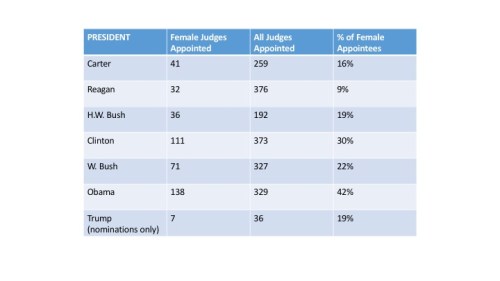
[50] See id. at 728.

[51] Id. at 756.