Sherri Lydon – Nominee to the U.S. District Court for the District of South Carolina

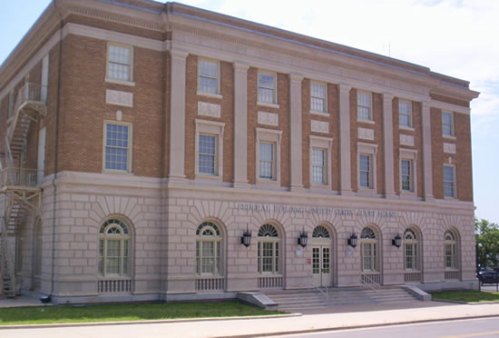
The J. Waites Waring Judicial Center in Charleston, SC

Sherri Lydon has not only the distinction of being the first female U.S. Attorney to be confirmed for the District of South Carolina, but also of being the first Trump-era U.S. Attorney to be nominated for a federal judgeship.

Background

Lydon was born Cheryl Darlene Allen on Myrtle Beach Air Force Base in 1962.  She received a B.A. from Clemson College in 1983 and a J.D. from the University of South Carolina Law School in 1987.  Upon graduation, Lydon was hired by the Columbia firm of Nexsen, Pruet, Jacobs & Pollard as an Associate.[1] 

In 1990, Lydon joined the U.S. Attorney’s Office for the District of South Carolina.  She left in 1993 to return to private practice.  In 2003, Lydon joined the South Carolina Attorney General’s Office as Chief for the State Grand Jury.[2]

In 2005, Lydon reopened her own law practice in Columbia, where she stayed until she was appointed as U.S. Attorney for the District of South Carolina in 2018.

History of the Seat

The seat Lydon has been nominated for opened on September 4, 2018, with Judge A. Marvin Quattlebaum’s elevation to the U.S. Court of Appeals for the Fourth Circuit.  In June 2019, Lydon was contacted by Sen. Tim Scott to gauge her interest in a federal judgeship.[3]  After Lydon confirmed her interest, she was recommended by Scott and Sen. Lindsay Graham to the White House.

Legal Experience

Lydon has primarily spent her career in criminal law, alternating between working as a prosecutor and a criminal defense attorney.  Over the course of her career, Lydon has tried approximately fifteen cases to verdict.  

Lydon’s time as a prosecutor is obviously capped by her current position as U.S. Attorney, a position she got over the frontrunner possibly due to his more liberal position on cannabis.[4]  However, even before she became U.S. Attorney, Lydon made a name for herself as a prosecutor on Operation Lost Trust, a corruption probe.[5]  Lydon also prosecuted Earle Morris, the former Lieutenant Governor of South Carolina, for violations of state securities laws.[6]

As a criminal defense attorney, Lydon notably represented Lexington County Sheriff James Metts who faced criminal charges for bribery.[7]  While representing Metts, Lydon managed to negotiate a no-prison-sentence plea deal with prosecutor Jay Richardson (now on the Fourth Circuit), which was rejected by Judge Terry Wooten.[8]  Metts ultimately plead guilty and spent less than a year in jail.[9]

Overall Assessment

As an experienced prosecutor with extensive experience on the defense side as well, Lydon would be well-prepared to handle the criminal side of being a federal judge.  While senators may question the extent of her civil experience, Lydon would likely overcome that hurdle on the way to a comfortable confirmation.


[1] Sen. Comm. on the Judiciary, 116th Cong., Sherri A. Lydon: Questionnaire for Judicial Nominees 2.

[2] Id.

[3] Id. at 35.

[4] See Meg Kinnard, SC Prosecutor Contender at Odds With Feds on Medical Pot, Ass. Press State & Local, Mar. 18, 2017.

[5] See id.

[6] See Ben Werner, Former South Carolina Lieutenant Governor Sentenced to 44 Months, The State, Nov. 20, 2004.

[7] See Meg Kinnard, SC Sheriff Pleads Not Guilty to Bribery Charges, A.P. State & Local Wire, July 1, 2014.

[8] Jeffrey Collins, Judge Rejects Ex-Lexington Sheriff’s Plea Deal, A.P. State & Local Wire, Dec. 17, 2014.

[9] Former Sheriff Headed to Prison to Donate Political Money, A.P. State & Local Wire, May 3, 2015.

Justice Robert Luck – Nominee to the U.S. Court of Appeals for the Eleventh Circuit

Trump has frequently elevated justices on state supreme courts to the federal bench.  However, Florida Supreme Court Justice Robert Luck is unique in the swiftness of his elevation as he has barely served six months before being nominated for the Eleventh Circuit.

Background

Robert Joshua Luck was born in South Miami on March 17, 1979.  After getting a B.A. with Highest Honors from the University of Florida, Luck spent a year as a Legislative Correspondent in the U.S. Senate.[1]  He then joined the University of Florida Levin College of Law, graduating magna cum laude in 2004.  After graduating, Luck clerked for the very conservative Judge Ed Carnes on the U.S. Court of Appeals for the Eleventh Circuit, and went on to become a federal prosecutor with the U.S. Attorney’s Office for the Southern District of Florida.

In 2013, Governor Rick Scott named Luck to be a Judge on the Eleventh Judicial Circuit Court in Florida.  In 2017, he was elevated to the Third District Court of Appeal.  In 2019, Gov. Ron DeSantis appointed Luck to the Florida Supreme Court, replacing Justice Barbara Pariente.  Luck now serves on the Supreme Court.

History of the Seat

Luck was tapped for a Florida seat on the U.S. Court of Appeals for the Eleventh Circuit.  The seat was vacated by Judge Gerald Bard Tjoflat, who is the longest serving active judge on the U.S. Court of Appeals, having served since 1976.  Notably, Luck was nominated only months after he joined the Florida Supreme Court.

Legal Experience

Luck’s primary experience before he became a judge is as a federal prosecutor with the U.S. Attorney’s Office for the Southern District of Florida.  In his five years with the office, Luck tried nineteen cases to a jury.[2]

Among his trials, Luck prosecuted Rene De Los Rios, a doctor who fraudulently billed Medicare by around $50 million, resulting in a conviction and a twenty year sentence.[3]  Luck also prosecuted Crecencio Hernandez, who attempted to smuggle foreign nationals into the United States when his boat capsized, killing six people.[4]  He also prosecuted Juan Carlos Rodriguez who operated MDN Financial, a Ponzi scheme that cost many clients their life’s savings.[5]

Jurisprudence

Even though he is only forty, Luck has already served on three levels of Florida courts, the Circuit Court; the Court of Appeals; and the Florida Supreme Court.  His jurisprudence at all three reflects a conservative judicial philosophy, albeit one that does lead to some independent decisions.

Trial Court

In 2013, Luck was appointed to the Eleventh Judicial Circuit in Florida, where he served until 2017.  On that court, Luck sat in both the Civil and Criminal Divisions, overseeing felony cases and civil cases with over $15,000 in controversy.  All in all, Luck presided over approximately 300 cases.  Among these was that of Ricardo Garganelly, who attacked Luck during his competency hearing.[6]  Luck subsequently recused himself from Garganelly’s case.[7]

Court of Appeals

In 2017, Luck was appointed to the Court of Appeal of Florida for the Third District, where he served until his appointment to the Florida Supreme Court.  In this role, Luck served as an intermediate appellate judge.  As a judge, Luck wrote for the court in rejecting a lawsuit alleging that Miami-Dade Commissioner Joe Carrollo was ineligible to hold office.[8]  In another decision, Luck held that a charge for defamation couldn’t stand against the Diocese of Palm Beach because litigating such a dispute would entangle the court in ecclisiastical affairs.[9]

Florida Supreme Court

Since his appointment in 2019, Luck has served on the Florida Supreme Court where he has been one of seven justices who has served as the final voice on Florida law.  Luck’s appointment to the Florida Supreme Court, alongside that of Justices Barbara Lagoa and Carlos Muniz, flipped the Court to a conservative majority, and led to a flurry of reversals on the court, where the new majority overturned decisions made by the previous liberal majority.[10]

For example, in one case, Luck joined 6-1 majorities in reversing two 4-3 Florida Supreme Court decisions: one that upheld Orange County election code that allowed officials to be elected in nonpartisan elections; and one that handled attorney-fee disputes in a foreclosure battle.[11]  The reversals could suggest that Luck would be willing to revisit and overturn precedent without feeling bound by stare decisis.

However, in a different case, as the new majority reversed another 4-3 Florida Supreme Court ruling, allowing Florida legislative standards for expert witnesses to be entered, Luck joined Judge Jorge Labarga (the lone liberal on the court) in dissent.[12]

Overall Assessment

While Luck’s record is that of a judicial conservative, it displays signs of a more independent bent.  For example, Luck was the only one of the Florida Supreme Court conservatives to dissent as the court overturned prior precedent to uphold legislative restrictions on expert testimony.  As such, while Luck would no doubt maintain a conservative bent on the Eleventh Circuit, his jurisprudence may nonetheless surprise parties in some cases.


[1] Sen. Comm. on the Judiciary, 116th Cong., Robert Luck: Questionnaire for Judicial Nominees 2.

[2] See Luck, supra n. 1 at 44.

[3] See United States v. De Los Rios, 489 F. App’x 320 (11th Cir. 2012).

[4] United States v. Hernandez, Case No. 08-21054 CR-Zloch.

[5] See United States v. Rodriguez, 537 F. App’x 840 (11th Cir. 2013).

[6] David Ovalle, Miami-Dade Judge Returns to Bench After Attack in Courtroom,  Miami Herald, Feb. 13, 2015, https://www.miamiherald.com/news/local/crime/article9999575.html.

[7] See id.

[8] See Florida Politics, Appeals Court Rejects Election Challenge Over Residency, State Capital Newsfeed, May 2, 2018.

[9] Florida Politics, Court Sides With Church in Priest Defamation Fight, State Capital Newsfeed, May 9, 2018.

[10] See Florida Politics, Reversals Show New Day on Supreme Court, State Capital Newsfeed, Apr. 19, 2019.

[11] See id.

[12] What’s Up With Florida’s New Supreme Court? This Case Helps Explain,  Tampa Bay Times Blogs, May 24, 2019.

Thirteen Candidates the Next Democratic President Should Seriously Consider For the Supreme Court

It’s been a busy week for SCOTUS-nerds.  Last Monday, the Supreme Court kicked off for another blockbuster session, and last Tuesday, the liberal judicial group Demand Justice kicked off the latest bout of SCOTUS fever with its list of 32 prospective nominees under a Democratic president.  The Demand Justice list has received some criticism for not being “realistic,” presumably by which the critics argue that the names of the list are likely to be overlooked for more mainstream candidates.  While I’ve discussed that argument elsewhere, it is worth wondering: what would a “realistic” Democratic shortlist look like?

If a Democratic presidential candidate is foolish enough to task me with compiling their Supreme Court shortlist, here are the names I would suggest. 

Chief Justice Cheri Beasley – North Carolina Supreme Court

Chief Justice Beasley made history earlier this year when she became the first African American woman to be Chief Justice of the North Carolina Supreme Court.  While she has never served on the federal bench, the 53-year-old Beasley has twenty years of judicial experience, as well as experience in indigent defense, which is lacking in all of the current Supreme Court justices.

Justice Richard Bernstein – Michigan Supreme Court

With diversity key on the minds of many Supreme Court watchers, Justice Richard Bernstein would be the first Supreme Court nominee who has been diagnosed as legally blind.  The 44-year-old Bernstein has demonstrated his intellect and his commitment for the rights of the disabled throughout his professional career and would add the perspective of a solo practitioner to the Supreme Court.

Judge Gregg Costa – U.S. Court of Appeals for the Fifth Circuit

The 47-year-old Costa currently serves on one of the most conservative courts in the country, where he has demonstrated a balanced and principled approach to the law.  Costa, who clerked for the strongly conservative Chief Justice William Rehnquist, won the support of Sen. Ted Cruz in his appointment to the Fifth Circuit, demonstrating his evenhanded approach to the law.

Justice Mariano-Florentino Cuellar – California Supreme Court

While there are several extraordinarily qualified SCOTUS candidates on the California Supreme Court, my personal favorite is Justice Tino Cuellar.  The 47-year-old Cuellar would be the first Hispanic male on the Supreme Court, and would bring extensive experience with administrative and constitutional law, providing a liberal intellectual counterweight to the originalists on the court.  It doesn’t hurt that he is arguably the most liberal voice on the court.

Judge Michelle Friedland – U.S. Court of Appeals for the Ninth Circuit

The 47-year-old Friedland is the youngest Democratic appointee on the federal appellate bench and, as such, cannot be ignored.  Friedland has stellar credentials for the Supreme Court, having clerked for Justice Sandra Day O’Connor and on the U.S. Court of Appeals for the D.C. Circuit.  Despite the Ninth Circuit’s reputation as a conservative bugbear, Friedland is hardly the second coming of William Douglas.  Rather, she has developed a moderate-liberal brand of jurisprudence on the Ninth Circuit, going where the law takes her and frequently getting the votes of more conservative judges.

Justice Melissa Hart – Colorado Supreme Court

The 49-year-old Hart has the least amount of judicial experience of any candidate on this list.  Yet, her stellar credentials (clerked for Judge Guido Calabresi and Justice John Paul Stevens) make her impossible to ignore.  Before she was appointed to the Colorado Supreme Court in 2017, Hart was a longtime legal academic, chairing the Byron White Center for the Study of American Constitutional Law at the University of Colorado Law School.  As such, many compare Hart to Justice Elena Kagan (also a longtime academic before she joined the bench), and the similarities may bear out on the bench.

Judge Jane Kelly – U.S. Court of Appeals for the Eighth Circuit

Judge Kelly is my personal favorite for the Supreme Court.  The Iowan graduated from Harvard Law School alongside President Obama in 1991.  However, rather than taking a traditional law firm position, Kelly chose to be a public defender, spending her entire career defending the rights of indigent defendants.  She continued this work even as she became a victim of crime herself, being attacked and left barely conscious while jogging.  Kelly would provide a refreshingly different perspective on the Supreme Court, particularly on criminal justice issues.

Judge Patricia Millett – U.S. Court of Appeals for the D.C. Circuit

It is my personal (and completely uninformed) belief that, had Hillary Clinton won the 2016 election, Millett would have been her choice to replace Justice Scalia on the Supreme Court.  The 56-year-old Millett is the oldest candidate on this list but still wins out due to quite possibly being the most qualified candidate in the country.  Not only is Millett on the second most important court in the country, but, at the time of her confirmation, she had argued more cases before the Supreme Court than any other female advocate.  Needless to say, there will be no learning curve for a Justice Millett.

Justice Raheem Mullins – Connecticut Supreme Court

The 41-year-old Mullins is the youngest candidate on this list.  Despite his youth, however, Mullins does not lack judicial experience, having already been on the bench for seven years.  Before he joined the bench, Mullins served as a prosecutor, but has proved to be a strong voice on the Connecticut Supreme Court, willing to go where the law takes him.  For example, Mullins wrote for the Court in ordering the release of police records regarding Adam Lanza, the shooter in the Sandy Hook shooting of 2012.  As a young, African American jurist, Mullins provides an intriguing possibility if Justice Clarence Thomas vacated his seat.

Justice Adrienne Nelson – Oregon Supreme Court

Justice Nelson has been breaking barriers throughout her life, including in high school, where she and her mother successfully sued to be named valedictorian of her graduating class, instead of a white student with a lower GPA.  Last year, the 52-year-old Nelson became the first African American on the Oregon Supreme Court.  If confirmed to the Supreme Court, Nelson would bring extensive experience working in indigent defense and in low income communities.  Furthermore, for those who may question her credentials, Nelson has been on the bench longer than both Justices Gorsuch and Kavanaugh.

Judge Robin Rosenbaum – U.S. Court of Appeals for the Eleventh Circuit

The 53-year-old Rosenbaum has developed a reputation as the conscience of the Eleventh Circuit.  A member of that court’s liberal wing, who frequently find themselves in dissent, Rosenbaum has won plaudits for her respectful and reasonable opinions.  While Justice Sonia Sotomayor became the first judge in decades to have experience as a trial court judge, a Justice Rosenbaum would beat her out by one step.  This is because Rosenbaum has served as a U.S. Magistrate Judge, a U.S. District Judge, and a U.S. Circuit Judge.  It is a testament to Rosenbaum’s stellar reputation in Florida that she has won near unanimous approval at each of those steps.

Judge Srikanth Srinivasan – U.S. Court of Appeals for the D.C. Circuit

There may not be a better testament to Judge Srinivasan’s reputation than the fact that he won unanimous approval to one of the most important courts in the country at a time when judicial battles were at their most heated.  During his confirmation to the D.C. Circuit, Srinivasan won plaudits from both sides of the aisle for his distinguished career (including a clerkship with Justice Sandra Day O’Connor) and his apolitical background.  On the D.C. Circuit, Srinivasan has served as a liberal counterweight, moderating the conservative trend of the court.  Additionally, if confirmed, Srinivasan would be the first Asian American, Indian American, and Hindu American on the Supreme Court.

Judge Paul Watford – U.S. Court of Appeals for the Ninth Circuit

The 52-year-old Watford is probably the most likely judge to see a promotion to the U.S. Supreme Court, with stellar credentials and a razor-sharp intellect.  When Watford was first nominated for the Ninth Circuit in 2011, Republicans recognized the telegenic young attorney as a future SCOTUS-shortlister and lined up to oppose him, despite not really having a basis for doing so.  Luckily for Watford, enough Republicans broke from the pack and supported him to allow him to clear the then-60 vote cloture threshhold and be confirmed.

While the former federal prosecutor, law firm partner, and SCOTUS clerk (Ginsburg) wouldn’t exactly be forging a new career path to the Supreme Court, it’s hard to deny Watford’s commitment to the law and his influence as a jurist.


In compiling any finite list, it is inevitable that qualified candidates are left out, and the exclusion of such names such as Justice Leondra Krueger, Judge David Barron, and Judge Adalberto Jordan is not a statement about their fitness.  Rather, the overall goal of any such list is, ultimately, marketability, which means that you have to create a broadly acceptable group.  Ultimately, each of these candidates has the ability and the experience to hit the ground running if confirmed to the Supreme Court.  And the nation would be well-served with each of them.


Initial Thoughts on the Demand Justice Shortlist

On May 19, 2016, then candidate Donald Trump unveiled a list of thirteen judges, pledging only to appoint candidates to the Supreme Court from that list.  The intent of the list was to shore up flagging conservative support for the candidate, and it worked.  The list, along with Senate Majority Leader Mitch McConnell’s refusal to fill the vacancy created by Justice Antonin Scalia’s death, meant that the Supreme Court was a key issue in the 2016 Presidential election, and conservative judicial voters carried Trump to a narrow victory.

So far, no Democratic presidential candidate has taken a page from Trump’s playbook and released their own list, but liberal judicial group Demand Justice has taken up that mantle, releasing a list of 32 lawyers, law professors, and judges for appointment to the Supreme Court.  The list has attracted both praise and criticism, including from those who have argued that the list is not even close to a plausible Democratic shortlist.  However, Demand Justice is not running for President.  Where Trump’s list was intended to convince conservatives that he can be trusted to appoint “safe” picks, Demand Justice’s shortlist is seeking something different: to remind progressives that there are alternatives to the traditional appellate hunting grounds for court appointments.  In that sense, the list has been successful.

That being said, let’s break down the names further.

Demographic Diversity

Demographic diversity was obviously important to Demand Justice’s compilers, as the list reflects nominees from across the racial and ethnic spectrum.  The list is majority female and majority POC.  In fact, there is only one cisgender straight white male on the list: Philadelphia D.A. Larry Krasner.  Rather than being a coincidence, this is likely a deliberate effort on Demand Justice’s part to craft a list that is more diverse than the names typically considered.

Geographic Diversity

Let us look at the home states of the last five Democratic nominees to the Supreme Court: Ginsburg (N.Y./D.C.); Breyer (Mass.); Sotomayor (N.Y.); Kagan (Mass./D.C.); Garland (D.C.).  In fact, the last Democratic SCOTUS nominee who was not from New York, D.C., or Massachusetts was Homer Thornberry in 1968, and the last successful appointment not from one of these three states/districts was Arthur Goldberg in 1962 (and even he was serving as a cabinet official in D.C. before his appointment).  Unfortunately, the Demand Justice list is also heavy with nominees from these three states, although you can also add California, which hosts a fair number of shortlisters.  Leaving out these four states, you have Krasner from Pennsylvania; Judge Jane Kelly from Iowa; Judge Carlton Reeves from Mississippi; Judge Richard Boulware from Nevada; and Justice Anita Earls from North Carolina.

Educational Diversity

Much has been made of the Harvard-Yale duopoly on the Supreme Court, and this list is unlikely to change that too much.  Of the 32 names on that list, 19 are alumni of either Harvard or Yale (or in some cases, both).  Of those who are not, only ONE attended a non-top 20 law school (ACLU attorney Brigitte Amiri, who attended Northeastern Law).

Experiential Diversity

Here’s where this list differs the most from Trump’s.  Every single candidate on Trump’s shortlist was a judge (either on state or federal court).  In contrast, the majority of Demand Justice’s list has no judicial experience.  Only two serve on the U.S. Court of Appeals (Judges Jane Kelly and Nina Pillard), while another two serve as U.S. District Court Judges (Judges Richard Boulware and Carlton Reeves).  Four serve on State Supreme Courts (Justices Liu, Cuellar, and Krueger from the California Supreme Court and Justice Earls on the North Carolina Supreme Court).  The remaining twenty four (75%) have no judicial experience.

Rather, the list is heavy with law professors, civil rights lawyers, and even includes three elected officials (one of whom, Rep. Katie Porter, was a former academic).  The list does include a fair number of former clerks.  Nine on the list clerked on the U.S. Supreme Court including:

  • 3 Blackmun clerks (Michelle Alexander; Pam Karlan; Cecillia Wang)
  • 1 Stevens clerk (Leondra Kruger)
  • 1 O’Connor clerk (James Forman)
  • 2 Ginsburg clerks (Goodwin Liu; M. Elizabeth Magill)
  • 1 Breyer clerk (Timothy Wu)
  • 1 Sotomayor clerk (Melissa Murray)

Age and Youth

One factor that Republican Administrations tend to prize in their appointments is youth, generally selecting nominees in their 40s and early 50s, while Democrats tend to choose older judges with more experience.  While there are a handful of younger picks on the list, for the most part, the Demand Justice continues the pattern of older Supreme Court picks.

By mid-2021, which is the earliest that a Democrat can expect to fill a Supreme Court vacancy, seven members on the list would be sixty or above (Becerra; Earls; Karlan; Krasner; Minter; Pillard; Stevenson).  If we go to 2025, seventeen fall into that category.

Overall Analysis

Between the age issue and the judicial experience issue, one can see why some would criticize this list as being unrealistic.  However, as noted above, Demand Justice is not making appointments.  Its goal here is to push the conversation about Democrats towards nominating progressives for the bench, and it has done so here.

Furthermore, not everyone on Trump’s own lists was a plausible Supreme Court choice (did anyone realistically believe that Trump would appoint Michigan Supreme Court Justice Robert Young to the Supreme Court).  Rather, for many, placement on the list was intended to raise their profile before an expected lower federal appointment.  It is for this reason that so many names on the list found their way onto the federal bench.  Similarly, don’t be surprised if a President Warren or Sanders or Biden appoints Dale Ho to the Second Circuit; or Deepak Gupta to the D.C. Circuit; or Katie Porter to the Ninth Circuit.  As such, the greatest impact of this list may well be on the courts of appeals.


Prof. Richard Myers – Nominee to the U.S. District Court for the Eastern District of North Carolina

The U.S. District Court for the Eastern District of North Carolina is home to one of the longest vacancies in the country, having opened in December of 2005.  Since then, conflicts between senators and the White House have kept this seat vacant through four presidential terms.  Now, Richard Myers, a professor with the University of North Carolina, is the fifth nominee to fill this vacancy.

Background

Richard Earnest Myers was born in Kingston, Jamaica, and grew up in Wilmington, NC.[1]  Myers attended the University of North Carolina at Wilmington and then became a reporter with the Star-News in Wilmington.  In 1995, Myers joined the University of North Carolina School of Law, graduating with high honors in 1998.  

After graduating, Myers clerked for Judge David Sentelle (a North Carolina native) with the U.S. Court of Appeals for the D.C. Circuit and then became an Associate with O’Melveny & Myers in Los Angeles.  In 2002, Myers became a federal prosecutor with the U.S. Attorney’s Office for the Central District of California and later with the U.S. Attorney’s Office for the Eastern District of North Carolina.

In 2004, Myers joined the faculty of the University of North Carolina Law School, where he is currently a professor.

History of the Seat

Myers has been nominated for the longest pending federal judicial vacancy.  This seat opened on December 31, 2005, when Judge Malcolm J. Howard moved to senior status.  In 2006, President George W. Bush nominated Thomas Farr, but, Farr’s nomination stalled after Democrats took control of the Senate after the 2006 elections.  After Farr’s unsuccessful nomination expired in 2008, President Barack Obama and newly elected Senator Kay Hagan (D-NC) did not renominate Farr.  Instead, in July 2009, Hagan submitted a list of three new candidates, Superior Court Judges Allen Cobb and Quentin Sumner, and federal prosecutor Jennifer May-Parker, to the Administration.[2]  Republican Senator Richard Burr (R-NC) submitted his own letter endorsing Cobb and May-Parker.[3]  However, despite the joint endorsements, Obama did not nominate a judge during his first term.

On June 20, 2013, Obama finally nominated May-Parker to fill the vacancy.[4]  However, Burr reversed his prior support for May-Parker, blocking her nomination by refusing to return a blue slip.[5]  Without Burr’s support, May-Parker did not receive a hearing, and her nomination died at the end of the 113th Congress.

On April 28, 2016, President Obama nominated Patricia Timmons-Goodson, a former justice on the North Carolina Supreme Court, to fill the vacancy.[6]  Timmons-Goodson’s nomination drew immediate opposition from Burr, who refused to support her.[7]  As a result, she was never confirmed.

On July 13, 2017, President Trump renominated Farr for the vacancy,[8] this time with the support of Burr and Senator Thom Tillis (R-NC).[9]  However, Farr’s nomination stalled on the Senate floor and was withdrawn due to lack of majority support when Republican Senators Tim Scott and Jeff Flake expressed their opposition based on Farr’s work with Sen. Jesse Helms at the time when the Senator worked to suppress African American votes in North Carolina.[10]  After Republicans picked up two seats in the 2018 Senate elections and Flake left the chamber, conservatives pushed to renominate Farr.[11]  However, Scott maintained his opposition and the White House decided not to move forward, instead choosing Myers.

Legal Experience

Before becoming a law professor, Myers has primarily worked in two legal positions: the first is as an Associate with O’Melveny & Myers; the second is as a federal prosecutor in two districts, the Central District of California and the Eastern District of North Carolina.  At O’Melveny, Myers worked in the White Collar Criminal Law and Environmental and Regulatory Compliance Practice Group.  At the firm, Myers most notably represented Wen Ho Lee, the Los Alamos scientist charged with stealing government secrets.[12]

Writings

As an academic, Myers has written extensively on the law, particularly focusing on criminal law and procedure, which is his area of expertise.

Prosecutorial Power

Myers has been particularly vocal on the growing power of prosecutors in the criminal justice system, speaking on the subject frequently in media.[13]  Myers has noted that this concentration of power can mean that the criminal justice system can be “held hostage” by rogue prosecutors.[14]  Myers’ work on this regard has been cited by African American journalist and author Ta-Nehisi Coates.[15] 

On a similar note, Myers has also criticized the American criminal justice system for making it difficult to “expand liberty” by repealing unjust or outdated criminal laws and penalties.[16]  Instead, Myers suggests that a constitutional amendment be passed that sunsets all criminal laws to expire after a period of twenty-five years unless renewed.[17]  Myers suggests that the proposed amendment would better reflect changes in society and would create a “pro-liberty bias” within criminal law.[18]

Fourth Amendment and the Exclusionary Rule

Myers has also written extensively on the Fourth Amendment to the U.S. Constitution, which protects citizens against unreasonable searches and seizures.  In particular, Myers is a critic of the “exclusionary rule,” which requires that any evidence obtained through an illegal search be excluded from a criminal prosecution.  In one paper, Myers writes that the exclusionary rule only comes into play when evidence is found through the illegal searches, thus, ensuring that judges see only “guilty people trying to enforce their rights.”[19] 

Instead, Myers advocates for a separate court that oversees the executive branch’s searches and hears from victims of illegal searches who are both innocent and guilty of the underlying offenses.[20]  Myers notes:

“We need a new range of remedies because, to an important segment of the populace, the exclusionary rule clearly benefits the guilty, while providing such an attenuated benefit to the innocent in the form of deterrence that it extracts a high price from the system in terms of perceived legitimacy.”[21]

Political Activity

Myers is a Republican, and a member of the Federalist Society and the National Rifle Association.  However, his only political contribution of record was a $250 contribution in 2016 to Rep. George Holding.[22] 

Overall Assessment

Given how long this seat has sat vacant, and the number of nominees who have fallen by the wayside in the attempt to fill it, one can start to wonder if this seat is cursed.  However, if there is a nominee primed to end this “curse,” it is Myers.  Not only does Myers, as a African American attorney, not attract the same degree of opposition that Farr did, but his record should win him bipartisan approval.  In fact, Myers’ criminal justice jurisprudence largely accords with that of many liberals in its criticism of prosecutorial power and overcriminalization.

This is not to say that Myers will be a liberal on the bench.  He will likely be a conservative voice.  However, his criminal justice jurisprudence may well end up surprising many who thought they could pigeonhole the nominee, and despite being a former prosecutor, defense attorneys may well have a friend in Myers.


[1] AP, Trump Nominates Law Professor for Judicial Vacancy, Associated Press, Aug. 15, 2019, https://www.apnews.com/858d3a46c016451cad351b24eb1cc292.  

[2] Hagan Looks to Split U.S. Attorney Job, WRAL.com, July 10, 2009, http://www.wral.com/news/local/politics/story/5547659/.

[3] Letter from Richard Burr, North Carolina Senior Senator, to Barack Obama, The President of the United States (July 21, 2009) (on file at http://big.assets.huffingtonpost.com/Burrletter.pdf).

[4] Press Release, White House, President Obama Announces Intent to Nominate Three to Serve on the United States District Court (June 20, 2013) (on file at https://obamawhitehouse.archives.gov).  

[5] Jennifer Bendery & Sam Stein, Richard Burr Blocks Judicial Nominee After Recommending Her to Obama, Huffington Post, Jan. 8, 2014, http://www.huffingtonpost.com/2014/01/08/richard-burr-judicial-nominee_n_4563083.html.

[6] Press Release, White House, President Obama Nominates Eight to Serve on the United States District Courts (April 28, 2016) (on file at https://obamawhitehouse.archives.gov).  

[7] Anne Blythe, Burr Vows to Block Obama Nomination to NC Federal Court Seat, The News & Observer, April 28, 2016, http://www.newsobserver.com/news/politics-government/state-politics/article74534012.html.

[8] Press Release, President Donald J. Trump Announces Fifth Wave of Judicial Candidates (July 13, 2017) (on file at www.whitehouse.gov/thepressoffice).

[9] Press Release, Burr and Tillis Welcome Nomination of Thomas Myers as District Judge for Eastern North Carolina (July 13, 2017) (on file at www.burr.senate.gov/press/releases).

[10] Marianne Levine and Burgess Everett, Tim Scott Sinks Trump Judicial Nominee, Politico, Nov. 29, 2018, https://www.politico.com/story/2018/11/29/senate-confirms-farr-judicial-nominee-1027236.  

[11] Emma Dumain, SC’s Tim Scott Still Opposes Thomas Farr, Has Sharp Words for Conservative Critics, McClatchy DC, Jan. 30, 2019, https://www.mcclatchydc.com/news/politics-government/congress/article225279815.html.  

[12] James Sterngold, Lee’s Dream Team High on Case, Low on Compensation; The Lawyers, Largely Unpaid, Say They’ve Become Fond of Los Alamos Scientist, Contra Costa Times, Sept. 11, 2000.

[13] See, e.g., Richard A. Oppel, Jr., Sentencing Shift Gives New Clout to Prosecutors, N.Y. Times, Sept. 26, 2011.

[14] See id. (quoting Richard E. Myers).

[15] See Ta-Nehisi Coates, The Collapse of American Criminal Justice, Atlantic Online, Sept. 26, 2011.

[16] Richard E. Myers II, Responding to the Time-Based Failures of the Criminal Law Through a Criminal Sunset Amendment, 49 B.C. L. Rev. 1327 (Nov. 2008).

[17] See id. at 1361-62.

[18] Id. at 1380.

[19] Richard E. Myers II, “The Exclusionary Rule: Is it On Its Way Out? Should It Be?”, 10 Ohio St. J. Crim. L. 571, 577 (Spring 2013).
[20] Id. at 578.

[21] Id. at 585.

[22] Center for Responsive Politics, https://www.opensecrets.org/donor-lookup/results?name=richard+myers&cycle=&state=NC&zip=&employ=&cand= (last visited Sept. 27, 2017).  

Daniel Traynor – Nominee to the U.S. District Court for the District of North Dakota

Dan Traynor, a longtime North Dakota Republican, had set his sight on a judicial appointment in the Trump Administration, and, after having been passed over previously, has now been picked for the District Court in North Dakota.

Background

Daniel Mack Traynor was born in Devils Lake, North Dakota in 1970, the son of longtime state senator John T Traynor.  Traynor graduated from the University of North Dakota in 1994 and then attended the University of North Dakota Law School, graduating with distinction in 1997.[1]

After graduating, Traynor clerked for Chief Justice Gerald VandeWalle on the North Dakota Supreme Court and then started a solo practice, which he still maintains.  Traynor has also worked as the City Attorney of Devil’s Lake since 1998.

History of the Seat

While Traynor has been tapped for a seat expected to open with the retirement of Judge Daniel Hovland on November 10, 2019, his name was previously under consideration for the U.S. Court of Appeals for the Eighth Circuit.[2]  However, Traynor was not nominated for that seat, which went to U.S. District Judge Ralph Erickson.  Traynor was also passed over for the seat that Erickson vacated, but has now been tapped for Hovland’s seat.

Legal Experience

Traynor has primarily worked for himself in his hometown of Devil’s Lake, working on personal injury cases on both the plaintiff’s and defendant’s side.  Over the course of his career, Traynor has tried fifteen cases before a jury.  Among those, Traynor represented the defendant in a trial for “timber trespass” for the defendant’s cutting down of trees on the plaintiff’s property.[3] 

Among his other notable cases, Traynor defended the Norman Lutheran Church in Kindred, ND against  a suit brought by disgruntled parishioners who opposed the Church’s use of homosexual clergy.[4]  He also prosecuted, after an appointment from Gov. Doug Burgam, Ward County Sheriff Steven Kukowski after the death of an inmate in his jail facility.[5] 

Political Activity

Traynor is a Republican and has a long history with the North Dakota branch of the party, including having served as the Chairman from 2001 to 2003.[6]  Interestingly, as a Party delegate in the 1990s, Traynor pushed back against resolutions against same-sex marriage and supporting “parental rights.”[7]  Traynor has also served as Chair of the North Dakota chapter of the Republican National Lawyers Association since 2000, as well as being active within the American Bar Association (ABA).

Overall Assessment

The District of North Dakota is one of only three districts in the country that have just two active judgeships attached.  It’s already seen a fair amount of turnover with Ericksen’s elevation and replacement with Peter Welte.  With a largely mainstream record, Traynor looks favored to join the bench without too much controversy.


[1] Sen. Comm. on the Judiciary, 116th Cong., Questionnaire for Judicial Nominees: Daniel Mack Traynor 1.

[2] See David Lat, More Judicial Nominations From the Trump Administration, Above the Law, May 8, 2017, https://abovethelaw.com/2017/05/more-judicial-nominations-from-the-trump-administration/.  

[3] Haider v. Moen, Ward County Civil No. 51-2014-CV-00890.

[4] Grabanski v. Evangelical Lutheran Church in America, et al., Cass County Civil No. 09-2016-CV-00022.

[5] Jill Schramm, Kukowski’s Criminal and Civil Cases May Be Settled, The Bismarck Tribune, Apr. 12, 2017.

[6] See Traynor, supra n. 1 at 28.

[7] Compare John MacDonald, It’s No to Tax Hikes, Bismarck Tribune, Mar. 29, 1996, with Frederic Smith, GOP Panel OKs ‘Parental Rights,’ Bismarck Tribune, Mar. 30, 1996.

Judge Danielle Hunsaker – Nominee to the U.S. Court of Appeals for the Ninth Circuit

Last July, Ryan Bounds became a first appellate nominee to be rejected due to lack of majority support since the enactment of the nuclear option in 2013.  Bounds faced particular opposition due to the lack of support from his home-state senators.  With the senators in support of the newest candidate to that seat, Judge Danielle Hunsaker will likely be confirmed comfortably.

Background

Hunsaker was born Danielle Jo Forrest in 1977 in Roseburg, OR.  Hunsaker received her B.A. from the University of Idaho in 2001 and a J.D. from the University of Idaho Law School summa cum laude in 2004.[1]  After graduating from law school, Hunsaker clerked for Judge Paul Kelly on the U.S. Court of Appeals for the Tenth Circuit, Judge Michael Mosman on the U.S. District Court for the District of Oregon, and for Judge Diarmund O’Scannlain on the U.S. Court of Appeals for the Ninth Circuit.[2] 

After her clerkships, Hunsaker joined Stoel Rives LLP in Portand as a Litigation Associate, and moved after a year to Larkins Vacura Keyser LLP, where she became a Partner in 2014.[3]  In 2017, Hunsaker was nominated by Gov. Kate Brown to the Washington County Circuit Court, where she currently serves.

History of the Seat

Hunsaker has been nominated to an Oregon seat on the U.S. Court of Appeals for the Ninth Circuit.  This seat opened on December 31, 2016 with O’Scannlain’s move to senior status.  In 2017, Oregon attorney Ryan Bounds was recommended for the judge vacancy by U.S. Rep. Greg Walden (R – Or.), whose chief of staff is Bounds’ sister.  Oregon’s two Democratic senators, Ron Wyden and Jeff Merkley offered Oregon District Judge Marco A. Hernandez as a potential nominee to the White House.  However, the White House nominated Bounds on September 7, 2017.

In response, both Wyden and Merkley declined to return blue slips on Bounds, noting, in a letter to White House Counsel Don McGahn, that Bounds had not been approved by the state’s bipartisan judicial selection committee as of his nomination date, and that they had not been adequately consulted.  McGahn disputed the lack of consultation and instead criticized the senators for not engaging with or vetting Bounds for several months after his name was first proposed.  Nonetheless, the Senate Judiciary Committee processed Bounds’ nomination.  However, the nomination failed on the Senate floor when Sen. Tim Scott announced his opposition based on writings from Bounds’ past that contained racially fraught statements.[4]

For her part, Hunsaker had applied for the vacancy with Democratic Sen. Ron Wyden.[5]  She interviewed with the White House in January 2018 (while Bounds was already the nominee) and again in July 2018 (after the defeat of Bounds’ nomination).  In June 2019, Hunsaker reapplied with Wyden and was selected as one of four finalists by Oregon’s Democratic Senators.[6]  Hunsaker’s nomination was subsequently announced by the White House.

Legal Experience

Before joining the bench, Hunsaker worked primarily as a commercial civil litigator.  Hunsaker notably represented the rideshare company Lyft in a suit to keep information on riders and drivers collected by Seattle regulators secret from access to media companies.[7]  She also represented investors in derivative actions and similar suits.  Furthermore, Hunsaker represented a prisoner injured in an excessive force claim against the guards who injured him.[8]

Jurisprudence

Hunsaker has spent the last two years serving as a circuit judge in Oregon, where she presides over criminal and civil cases on the trial level.  In this role, Hunsaker has presided over approximately 23 jury trials.  Among her more prominent cases, Hunsaker acquitted parents of a baby testing positive for methamphetamine of child abuse, ruling that the state had failed to prove the “knowing” element of child abuse.[9]

Writings

As a law student, Hunsaker authored a note discussing the Supreme Court’s decision in Ring v. Arizona and the subsequent Idaho remedial death penalty statute passed.[10]  Ring ruled that, where the death penalty is imposed, any additional aggravating factores leading to exposure to the death penalty must be determined by the jury and not by a judge.[11]  Hunsaker notes that this decision invalidated the death penalty scheme in Idaho, leading to a revised scheme wherein the jury convenes for a sentencing hearing after a determination of guilt in capital cases.[12]  Overall, Hunsaker commends the legislature for adapting the death penalty scheme post-Ring but adds that further tweaks may be necessary to ensure a role for the jury in capital sentencing.[13]

Overall Assessment

Hunsaker was not the Administration’s first choice for the Ninth Circuit, but she is nonetheless likely to get a comfortable confirmation.  Hunsaker’s Federalist Society credentials are likely to endear her to Republicans while her appointment by a Democratic Governor will ensure support from Democrats.


[1] Sen. Comm. on the Judiciary, 116th Cong., Danielle Hunsaker: Questionnaire for Judicial Nominees 1.

[2] Id. at 2.

[3] Id.

[4] Nina Totenberg and Jessica Taylor, Appeals Court Nomination Withdrawn Before An Expected Failure on Senate Floor, Nat’l Pub. Radio, Jul. 19, 2018, https://www.npr.org/2018/07/19/630552662/appeals-court-nomination-withdrawn-before-it-was-expected-to-fail-on-senate-floo.  

[5] See Hunsaker, supra n. 1 at 45.

[6] The other three finalists included two Oregon Court of Appeals judges, Judge James Egan, and Judge Erin Lagesen, and appellate attorney Bruce Campbell.

[7] See Lyft v. King Broadcasting Co., No. 16-2-26971-1 (Wash. Circ. Ct., King Cnty.).

[8] See Tilahun v. Oregon Dep’t of Corr., No. 2:13-cv-01074 (D. Or.).

[9] State v. Richelle Seamster, No. 18CR35682 (Or. Cir. Ct. Wash. Cnty.); State v. Andre Wamulumba, No. 18CR40953 (Or. Cir. Ct. Wash. Cnty.).

[10] Danielle J. Hunsaker, The Right to a Jury “Has Never Been Efficient; But It Has Always Been Free”: Idaho Capital Juries After Ring v. Arizona, 39 Idaho L. Rev. 649 (2003).

[11] Id. at 661-62.

[12] Id. at 669-70.

[13] Id. at 688.

Jodi Dishman – Nominee to the U.S. District Court for the Western District of Oklahoma

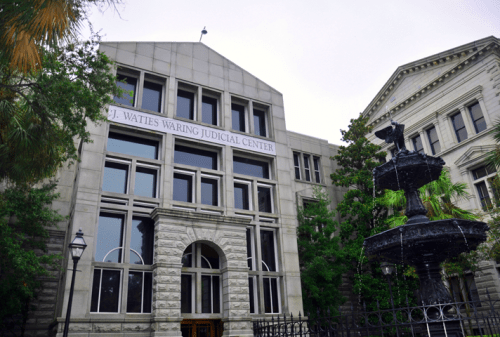
The Federal Courthouse in Lawton, Oklahoma

Jodi Dishman, an Oklahoma City based attorney, is Trump’s fourth pick for the Western District of Oklahoma, and will be the first woman appointed to the court after twenty five years.

Background

Dishman was born Jodi Marie Warmbrod in Memphis, TN in 1979.  Dishman attended Southern Methodist University, where she served as Student Body President.[1]  Dishman then attended the University of Oklahoma College of Law, where she graduated summa cum laude.[2]  After graduation, Dishman clerked on the U.S. Court of Appeals for the Fifth Circuit for Judges Carolyn Dineen King and Edward Prado.

After her clerkships, Dishman joined the San Antonio office of Akin Gump Strauss Hauer & Feld LLP as an Associate.  She become Counsel in 2010.  In 2012, she moved to Oklahoma City to join McAfee & Taft, where she became a Shareholder in 2014.  It is a position she currently holds.

History of the Seat

Dishman has been nominated to the U.S. District Court for the Western District of Oklahoma.  Judge Vicki Miles-LeGrange, who was the first African American appointed to this court when she joined in 1994, vacated this seat on November 5, 2018.  Dishman had previously interviewed with Oklahoma Senators in January 2017 to fill one of three other vacancies on the Western District, but was not selected.[3]  After Judges Miles-LeGrange moved to senior status, Dishman again expressed her interest.[4]  After another interview with an advisory committee set up by the senators, Dishman was selected as the nominee.

Legal Experience

Whether at Akin Gump or at McAfee & Taft, Dishman’s career has focused on commercial litigation.  Dishman has tried three cases as chief counsel and one as associate counsel in her career.[5]  The most prominent of these involved a lawsuit against an insurance company (her client) alleging that they breached their agreement in failing to make needed claim payments.[6]  Dishman also represented the company on appeal after a split verdict from the jury.

In another notable case, Dishman represented the Oklahoma City Landfill, LLC in a class action case by property owners who alleged that the landfill interfered with their properties.[7]  The case eventually settled.  

Overall Assessment

While most of Trump’s Oklahoma nominees have been fairly controversial, it’s unlikely that Dishman will be one of them.  While she is very young, Dishman has cut their teeth on some fairly complex cases, and, at forty, Dishman is the same age as the judge she will be replacing, Judge Miles-LeGrange, was at the time of her nomination.


[1] NBC News Broadcast, Attack on America, 12:00 Midnight, NBC, Sept. 15, 2001.

[2] Sen. Comm. on the Judiciary, 116th Cong., Questionnaire for Judicial Nominees: Jodi Dishman 1.

[3] Those seats were all filled with male candidates, Scott Palk, Charles Goodwin, and Patrick Wyrick.

[4] See id. at 32-33.

[5] See id. at 17.

[6] See Lavoy v. USAA General Indemnity Co., Case No. CJ-2014-131, District Ct., Jackson Cnty., Okla.

[7] See McCarty et al. v. Oklahoma City Landfill, LLC, et al., Case No. 5:12-cv-01152-C, W.D. Okla.

William Nardini – Nominee to the U.S. Court of Appeals for the Second Circuit

While New York senators have frequently clashed with the White House over judicial appointments in the state, their neighbors in Connecticut have quietly formed a working relationship that has produced three relatively uncontroversial nominations, including that of William Nardini to the Second Circuit.

Background

William Joseph Nardini was born in Glen Ridge, NJ in 1969.  Nardini received his B.A. summa cum laude from Georgetown University in 1990 and his J.D. from Yale Law School in 1994.[1]  After graduating, Nardini clerked for Judge Jose Cabranes on the U.S. Court of Appeals for the Second Circuit and then for Judge Guido Calabresi on the same court.  Nardini then clerked for Judge Sandra Day O’Connor on the U.S. Supreme Court

In 2000, Nardini joined the U.S. Attorney’s Office for the District of Connecticut.[2]  He currently serves as Criminal Chief of the Office.

History of the Seat

Nardini has been nominated for a Connecticut seat on the U.S. Court of Appeals for the Second Circuit.  This seat was vacated by Judge Christopher Droney, who moved to senior status on June 30, 2019.  

In April 2019, Nardini was contacted by the White House to gauge his interest in the Second Circuit.[3]  In May 2019, Nardini applied to a selection committee set up by Connecticut Senators Richard Blumenthal and Christopher Murphy (both Democrats).[4]  On July 31, 2019, Nardini interviewed with the White House and with Blumenthal and Murphy, who both decided to back his nomination.  Nardini was nominated in September 2019.

Legal Career

Nardini has primarily worked as a federal prosecutor in Connecticut.  However, Nardini also spent four years on detail with the U.S. Embassy in Rome, where he represented the United States in extradition and mutual legal assistance in Italian criminal matters.[5]  Over the course of his career, Nardini has handled ten jury trials and around 350 appeals before the Second Circuit.

Nardini primarily prosecuted public corruption, organized crime, and racketeering cases.  For example, Nardini prosecuted FBI Agent John Connolly for his corrupt relationships with mobster Whitey Bulger.[6]  Nardini also prosecuted former Connecticut NAACP head Ben Andrews for a corrupt relationship with State Treasurer Paul Silvester.[7]

Nardini also handled terrorism cases, including the prosecution of U.S. Navy sailor Hassan Abu-Jihaad for disclosing national security information to organizations engaging in material support for terrorists.[8]

Political Activity

Nardini has a fairly apolitical background, with his only political experience being support for NJ Assemblyman Joseph A. Mecca, a Democrat, in 1991.[9]

Writings

In 2006, Nardini authored an article discussing the tools that prosecutors can use in prosecuting and undermining organized crime.[10]  In the article, Nardini outlines the various tools prosecutors can use, from subpoenas and warrants to offers of transactional immunity that can encourage witnesses to turn against their superiors in a criminal enterprise.[11]  Nardini suggests that prosecutors can use the tools at their disposal “in concert” with each other to ensure maximum effectiveness to target organized crime.[12]

Overall Assessment

Unlike the last few nominations to the Second Circuit, who have all drawn controversy, Nardini will likely be confirmed relatively easily.  His nonpartisan background and focus on prosecuting organized crime and terrorists make him salable to senators of both parties, and the support of Blumenthal and Murphy won’t hurt.  As such, Nardini’s nomination and likely confirmation is a testament to how smoothly the process can be when all parties work together in good faith.


[1] Sen. Comm. on the Judiciary, 116th Cong., William Nardini: Questionnaire for Judicial Nominees 1.

[2] Judge Andy Oldham on the U.S. Court of Appeals for the Fifth Circuit was a co-clerk of Nardini’s.

[3] See id. at 31.

[4] See id.

[5] Id. at 19.

[6] United States v. Connolly, Criminal No. 99-CR-10428-JLT (D. Mass.).

[7] Larry Neumeister, Lawyer Argues for New Trial for former Connecticut NAACP Head, Associated Press, Sept. 20, 2006.

[8] See United States v. Abu-Jihaad, Criminal No. 3:07-CR-57 (MRK) (D. Conn.).

[9] See Nardini, supra n. 1 at 17.

[10] William J. Nardini, The Prosecutor’s Toolbox, J. Int. Criminal Justice (2006) 4 (3): 528 (July 1, 2006).

[11] See id.

[12] Id. at 536.

Judge Raag Singhal – Nominee to the U.S. District Court for the Southern District of Florida

Florida state court judge Raag Singhal is nothing if not persistent, having applied to be a judge 15 times before he was selected.  Singhal is now up for a federal judgeship after narrowly missing an appointment to the Florida Supreme Court.

Background

Anuraag Hari “Raag” Singhal was born in Philadelphia in 1963, the son of Indian parents who had moved to the U.S. in 1960.[1]  Singhal attended Rice University and Wake Forest University Law School.[2]

After graduation, Singhal spent a year with Fleming, O’Brien & Fleming as an Associate and then became a prosecutor in Ft. Lauderdale.[3]  In 1993, Singhal became a Partner in a criminal defense practice in Ft. Lauderdale, which he maintained until 2011.[4] 

In 2011, Singhal, who had previously applied fifteen times to be a judge, was finally appointed to be a Circuit Court Judge in Broward County by Republican Governor Rick Scott.  His appointment made him the first Asian-American judge in the county and only the third in Florida.[5]  Singhal continues to serve on that court.

In 2019, Singhal was considered by Gov. Ron DeSantis for appointment to the Florida Supreme Court, but DeSantis chose three other candidates instead.[6]

History of the Seat

Singhal has been nominated for a seat on the U.S. District Court for the Southern District of Florida.  This seat opened on August 5, 2016, when Judge James Cohn moved to senior status.  In October 2017, Singhal applied and interviewed with the Judicial Nominating Commission (JNC) formed by Florida Senators Marco Rubio and Bill Nelson.  The JNC chose Singhal as one of ten finalists to be passed onto the Senators.[7]  After interviews with Rubio and Nelson, Singhal was contacted by the Trump Administration in February 2018.[8]  After interviewing with the White House Counsel’s Office and the Department of Justice, Singhal was not contacted for a year before vetting resumed in April 2019.  Singhal was ultimately nominated in August 2019.  

Legal Career

For most of his pre-bench legal career, Singhal has worked as a criminal defense attorney, handling both white collar and violent crime cases.  Over the course of his career, Singhal tried over 200 jury trials, including 33 First Degree Murder cases.[9]  Singhal also accepted court appointments to represent difficult or problematic clients.

Among his most prominent appointments, Singhal was appointed to represent serial killer Aileen Wuornos, who was awaiting execution.[10]  While representing her, Singhal came to believe that Wuornos was not competent to be executed and communicated as such to the Florida Supreme Court.[11]  In response, then-Gov. Jeb Bush stayed Wuornos’ execution, pending review from psychiatrists.[12]  However, the examiners found Wuornos to be competent and she was subsequently executed.[13]  Even after the execution, which Wuornos had wanted, Singhal maintained his belief that she was insane.[14]

Jurisprudence

Singhal served as a Circuit Judge in Broward County since 2011.  As a Circuit Judge, Singhal handles major felonies and any civil cases with more than $15000 in controversy.  Over his eight year tenure on state court, Singhal has heard approximately 8000 cases, including over 450 trials.  Interestingly, Singhal was on the bench when an inmate slipped through his restraints and escaped in the middle of open court.[15]  The inmate later apologized to Singhal, who stayed on the case despite being named as a defense witness, arguing that he was escaping to obtain evidence of his innocence.[16] 

Most recently, Singhal presided over suits related to Brenda Snipes, the head of the Broward County Election Board, who has been criticized by Republicans for her poor management of elections.[17]  In August 2018, Singhal issued an injunction ordering Snipes not to open vote-by-mail ballots before they could be reviewed by the Canvassing Board.[18]  Singhal also presided over a suit brought by law professor Tim Canova, who alleged that ballots had been improperly destroyed by Snipes in his race against Rep. Debbie Wasserman-Schultz.[19]  Singhal ruled that Snipes acted contrary to state and federal law in destroying ballots in the race.[20]

Political Activity

Other than his own campaigns for judicial office, Singhal has volunteered with the Broward County Republican Party as an attorney.[21]  Singhal resigned his post with the Republican Party in 2010 to support the Independent Senate candidacy of Gov. Charlie Crist (Crist is now a Democrat serving in Congress).[22] 

Singhal has also been a member of the South Florida Chapter of the Federalist Society since 2011.[23]

Speeches, Writings, and Public Statements

As a criminal defense attorney, Singhal frequently spoke out in support of more compassionate sentencing and a reduction in over-incarceration.  For example, Singhal has generally pushed for treatment of drug addicts rather than incarceration.[24]  He has also argued for the reduction in federal disparities on crack cocaine sentencing, noting that the disparity unfairly targets African Americans for incarceration.[25]

Singhal has also been a strong advocate of more compassionate treatment of offenders convicted of white collar crimes, noting in one interview:

“Typically, the white collar criminal is more able to do good things than other people charged with violent offenses, and that’s just the way it is.”[26]

In the same interview, he pushed back against suggestions that white collar criminals are given special treatment, arguing that the disparity in sentencing for non-violent drug offenders and white collar criminals speaks in favor of leniency for both rather than stricter sentences.[27]

Overall Assessment

While Singhal has a long history with the Federalist Society and the Republican Party, he is unlikely be considered a controversial nominee.  This is primarily for two reasons.  First, as a criminal defense attorney, Singhal has a long record of advocating for the rights of defendants, which is likely to appeal to Democrats such as Sen. Cory Booker, who are passionate about overincarceration and implicit bias in criminal justice.  Second, Singhal’s record as a judge is fairly uncontroversial and does not demonstrate a bias towards any party.  As such, Singhal is likely to get a fairly comfortable confirmation and will present a moderate conservative voice on the Southern District of Florida.


[1] Paula McMahon, Broward’s First Asian-American Judge Formally Sworn In, South Florida Sun Sentinel, Jan. 20, 2012, https://www.sun-sentinel.com/news/fl-xpm-2012-01-20-fl-first-asian-american-judge-broward-20120120-story.html.  

[2] Sen. Comm. on the Judiciary, 116th Cong., Anuraag Singhal: Questionnaire for Judicial Nominees 1.

[3] Id. at 2.

[4] Id.

[5] See McMahon, supra n. 1.

[6] John Breslin, DeSantis Set to Announce Appointment of Second Supreme Court Justice, Florida Record, Jan. 14, 2019, https://flarecord.com/stories/511720805-desantis-set-to-announce-appointment-of-second-supreme-court-justice.  

[7] David Markus, Breaking — JNC Makes the Cut to 10 Finalists for District Judge, Southern District of Florida Blog, Nov. 29, 2017, http://sdfla.blogspot.com/2017/11/breaking-jnc-makes-cut-to-10-finalists.html.

[8] See Singhal, supra n. 1 at 64.

[9] Id. at 55.

[10] See Jackie Hallifax, Lawyer Tells High Court of ‘Grave Doubts’ About Wuornos, A.P., Sept. 24, 2002.

[11] Id. 

[12] Jackie Hallifax, Gov. Bush Issues Stays of Two Executions; Inmates’ Mental Competence to Waive Appeals at Issue, A.P., Sept. 30, 2002.

[13] Ron Word, Female Serial Killer Executed For Murders of Six Men, A.P., Oct. 9, 2002.

[14] Rich McKay, ‘I’ll Be Back,’ Serial Killer Declares Before Her Execution; Grin, Final Words Puzzle Witnesses, Orlando Sentinel, Oct. 10, 2002.

[15] See Elahe Izadi, ‘Worst Fears Were Realized’: Manhunt Underway for Murder Suspect Who Escaped Courthouse; Dayonte Resiles, 21, Escaped the Broward County Courthouse on Friday Morning, Leaving His Shackles and Jumpsuit Behind, Wash. Post, July 15, 2016.

[16] Ariel Zilber, ‘I Hope You Don’t Take It Personal’: Florida Man on Trial for Murder Pens Apology Letter to Judge After Escaping His Courtroom ‘To Gather Evidence That Would Prove My Innocence’, Daily Mail, Sept. 11, 2016.

[17] See Alana Goodman, Republicans Protest Broward County Election Overseer Who Is a Registered Democrat With Years of Ballot Blunders – As Lawyer Who Commissioned ‘Golden Showers’ Dossier Pushes For Recount to Topple Florida GOP ‘Winners’, Daily Mail, Nov. 9, 2018.

[18] See id.

[19] Marc Caputo, Florida to Monitor Broward Election Chief After Judge Finds ‘Unlawful’ Ballot Destruction in Wasserman Schultz Race, Politico, May 14, 2018.

[20] See id.

[21] See Anna Scott, Political System is Broken, Crist Says, Sarasota Herald Tribune, Apr. 30, 2010.

[22] See id.

[23] See Singhal, supra n. 1 at 5.

[24] See, e.g., William Raspberry, A Contemptible System, Wash. Post, Oct. 21, 2002.

[25] See Genaro C. Armas, State Prison Populations Levelling Off, While Federal Facilities Have Largest Increases, A.P. Int’l, Apr. 11, 2002.

[26] Interview with Neal Conan, Penalties Against White-Collar Crime, Nat’l Pub. Radio Talk of the Nation, Jan. 8, 2003.

[27] See id.