Judge Hernan Vera – Nominee to the U.S. District Court for the Central District of California

Judge Hernan D. Vera currently serves on the Los Angeles Superior Court, a popular source for California judicial nominees. While his time on the bench is fairly brief, his extensive tenure at the pro bono firm Public Counsel is likely to bring scrutiny in evaluating Vera’s nomination to the bench.

Background

Hernan D. Vera got a B.A. with Distinction from Stanford University in 1991, and a J.D. from U.C.L.A. School of Law in 1994. After graduating, Vera briefly joined the Los Angeles office of O’Melveny & Myers before clerking for Judge Consuelo Marshall on the U.S. District Court for the Central District of California. He then spent a year as a staff attorney at the Mexican American Legal Defense and Educational Fund (MALDEF) before returning to O’Melveny.

In 2002, Vera joined the public interest law firm Public Counsel and became President and CEO in 2008. In 2015, he moved to become a Principal at Bird Marella P.C.

In 2020, Vera was named by Gov. Gavin Newsom to the Los Angeles Superior Court, where he currently serves.

History of the Seat

Vera has been nominated to the U.S. District Court for the Central District of California to a seat vacated by Judge Margaret Morrow on October 29, 2015. Despite the seat opening with more than a year left in the Obama Administration, the Administration did not put a candidate forward to fill the vacancy.

In October 2018, the Trump Administration nominated Jeremy Rosen, a Los Angeles based appellate attorney and longtime member of the Federalist Society. However, Rosen’s nomination stalled due to the opposition of California Senators, and he was never confirmed.

Legal Experience

While he started his career in private practice, Vera spent a significant portion at the public-interest law firm, Public Counsel, where he served as President and CEO. Among the matters he handled there, Vera sued the Hollywood (CA) Presbytarian Medical Center for “dumping” a paraplegic homeless man on skid row. See Lawsuit Says Hospital ‘Dumped’ Homeless Man, Healthcare Risk Management, Mar. 1, 2008. Vera also sued the Pasadena school district to allow foster children in group homes to attend school. Jennifer English, Suit Brought Against Pasadena School District on Behalf of Foster Youth, City News Service, June 27, 2006.

Since 2015, Vera has been a Principal at Bird Marella, largely focusing on commercial litigation. For example, Vera represented Defendants in a private fraud and breach of fiduciary duty lawsuit in the Central District of California. See Tatung Co. v. Shu Tze Hsu, 217 F. Supp. 3d 1138 (C.D. Cal. 2016). Vera also represented a Charter School in challenging tax assessments that are not levied against public schools. Los Angeles Leadership Academy, Inc. v. Prang, 46 Cal. App. 5th 270 (2020).

Jurisprudence

Since 2020, Vera has served as a judge on the Los Angeles Superior Court. In this role, Vera presides over trial court matters in criminal, civil, family, and other state law matters. Vera’s brief tenure does not reveal enough about a judicial philosophy.

Writings and Statements

During his time at Public Counsel, Vera frequently wrote and spoke on the law. For example, in a 2012 column, Vera noted that the lack of comprehensive immigration reform leads to “rampant fraud” targeting immigrants. Hernan Vera, The Silent Casualties of Immigration Scams, Political Machine, May 18, 2012. He has also written in support of “access to justice” initiatives, noting that public interest lawyers perform an important role by offering free legal service to the underserved. See Hernan D. Vera, Closing Argument: Looking for Big Solutions For Access to Justice in California, 37 Los Angeles Lawyer 68 (November 2014).

Additionally, Vera advocated in favor of a Los Angeles ordinance against predatory lending, James K. Hahn, L.A. Council Expected to OK Predatory Measure, American Banker, Dec. 4, 2002, and against a ballot proposition that would narrow multiple-plaintiff lawsuits in California to class suits. Steve Lawrence, Targets of Unfair Competition Law Try to Make It Tougher to Use It, A.P. State & Local Wire, July 8, 2004.

In 2014, Vera awarded former First Lady and Secretary of State Hillary Clinton with Public Counsel’s William O. Douglas award, noting that Clinton “embodies the very highest American values of civic engagement and public service.” Hillary Rodham Clinton Signs Books, Receives Award During L.A. Visit, City News Service, June 19, 2014.

While at Bird Marella, Vera was critical of cooperation between the Los Angeles County Sheriff’s Department and ICE, stating: “…people should know that [the Sheriff’s Department is] working for them only, and not for Immigration and Customs Enforcement.” See City News Service, Inc., Watchdog Group Wants Sheriff’s Department to Freeze Out ICE, Nov. 16, 2018 (quoting Hernan Vera).

Overall Assessment

As a longtime public interest lawyer with extensive experience with commercial litigation as well, Vera would be able to hit the ground running as a trial judge. Nonetheless, his nomination is likely to attract opposition for his long history of civil rights litigation, as well as potentially over his praise of Hillary Clinton.

David Urias – Nominee to the U.S. District Court for the District of New Mexico

Despite the confirmation of Margaret Strickland to the court, the District of New Mexico needs more judges, with a long pending Albuquerque vacancy from 2019 and a future Santa Fe based vacancy opening next year. The Biden Administration has nominated Albuquerque attorney David Urias to fill the latter seat.

Background

An Albuquerque native, David Herrera Urias received his B.A. from the University of New Mexico in 1997 and a J.D. from the University of New Mexico School of Law in 2001. Urias then clerked for Judge Vanessa Ruiz on the D.C. Court of Appeals and then worked as an Associate at Fried Frank in New York City for two years.

In 2004, Urias returned to New Mexico to work at the Mexican American Legal Defense and Educational Fund (MALDEF). In 2008, he became a Partner at Freedman Boyd Hollander Goldberg Urias & Ward P.A., where he currently works.

History of the Seat

Urias has been nominated for a future vacancy on the U.S. District Court for the District of New Mexico. This seat will open on January 1, 2022, when Judge Martha Vazquez takes senior status. This is a little unusual as there is a currently pending two-year-old Albuquerque based vacancy without a nominee, and Vazquez is based in Santa Fe.

Legal Career

While Urias started his career at the firm of Fried Frank, he made his name as a civil rights attorney in New Mexico. For example, while at MALDEF, Urias sued the U.S. Border Patrol on behalf of three undocumented students who were arrested while at high school. See Anna Macias Aguayo, Hispanic Group Sues Over Arrest of Teens at High School, A.P. State & Local Wire, May 25, 2005. He also sued Roger Barnett, a vigilante border watcher, for pointing guns at suspected undocumented individuals and for physically imprisoning and assaulting them. See Randal C. Archibold, Immigrant Groups Suing Vigilantes; Rights Groups Trying to Curb Armed Border Monitors By Going After Their Money, Pittsburgh Post-Gazette, Nov. 24, 2006. The suit ended in a mixed verdict, with the jury finding Barnett liable for assault and infliction of emotional distress, but found him not guilty of battery and false imprisonment. Arthur Rothstein, Jury: Rancher Didn’t Violate Migrants’ Rights, A.P. State & Local Wire, Feb. 18, 2009.

Urias also represented MALDEF in suing Otero County, New Mexico, for allegedly launching illegal deportation raids against the local Hispanic population. Alicia A. Caldwell, Civil Rights Groups Sue County Over Impromptu Immigration Raids, A.P. State & Local Wire, Oct. 17, 2007. The suit was ultimately settled after the Sheriff’s Department agreed to revise its Operational Procedures and to pay monetary damages to the families targeted.

Even after leaving MALDEF, Urias has been involved in a number of civil rights suits, including one against Gov. Susana Martinez’s attempt to crack down of undocumented immigrants getting driver’s licenses. See Marc Lacey, License Access in New Mexico is Heated Issue, N.Y. Times, Aug. 24, 2011. The suit resulted in a judge blocking Martinez’s plan for verification of licenses issued to immigrants. See Barry Massey, Judge Blocks NM Plan to Verify Immigrant Licenses, A.P., Sept. 1, 2011. Urias also sued the New Mexico government to block officials from withholding tax refunds from immigrants using an alternative tax identification number provided by the federal government. Morgan Lee, New Mexico Officials, Immigrants Clash Over Tax Returns, A.P. State & Local, Apr. 1, 2016. He also successfully obtained a court ruling allowing inmates to breast-feed their infants. Phaedra Haywood, Judge: Breast-Feed Ban in Prison Violates Constitution, Santa Fe New Mexican, July 1, 2017.

Political Activity

Urias has a few political contributions to his name, all to New Mexico Democrats totalling $600 over his entire career.

Statements

Urias has frequently, both in connection to his litigation and independently, spoken on the law. For example, Urias spoke against efforts by local officials to crack down on illegal immigration, arguing that this leads to those without documentation not wanting to call the police and leading to less safety. See Damien Cave, Local Officials Adopt New, Harder Tactics on Illegal Immigrants, N.Y. Times, June 9, 2008.

Overall Assessment

Having litigated in New Mexico state and federal courts for the past twenty years, Urias can be considered to be qualified for a federal district court seat. Nonetheless, he is likely to attract opposition based on his civil rights work, and his suits on behalf of immigrants.

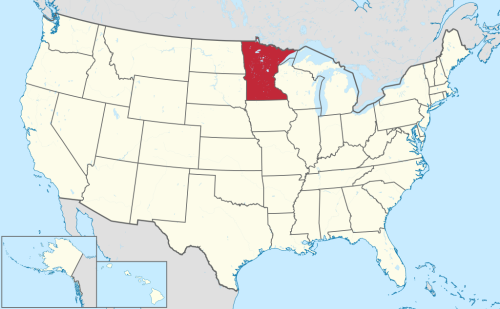
Judge Katherine Menendez – Nominee to the U.S. District Court for the District of Minnesota

U.S. Magistrate Judge Katherine Menendez, a former public defender, is the Biden Administration’s first nominee to the U.S. District Court for the District of Minnesota.

Background

Katherine Marie Menendez received a B.A. from the University of Chicago in 1993 and a J.D. from the New York University Law School in 1997.

After graduation, Menendez clerked for Judge Sam Ervin on the U.S. Court of Appeals for the Fourth Circuit. She then joined the Office of the Federal Defender for the District of Minnesota.

In 2016, Menendez was appointed to be a U.S. Magistrate Judge for the District of Minnesota, where she currently serves.

History of the Seat

Menendez has been nominated for a seat on the U.S. District Court for the District of Minnesota. This seat opened on October 15, 2019, when Judge Joan Ericksen moved to senior status. The Trump Administration did not put forward any nominee to fill this vacancy.

Legal Career

Menendez has spent her entire legal career before becoming a judge as a federal defender in the District of Minnesota. In this role, Menendez was appointed to represent indigent defendants in federal court, and handled a number of prominent cases. For example, Menendez argued before the Eighth Circuit that an airport police officer violated her client’s Fourth Amendment rights by picking up a suspicious package for a closer look. A unanimous panel of the Eighth Circuit disagreed and found no violation. United States v. DeMoss, 279 F.3d 632 (8th Cir. 2002).

Most notably, Menendez argued before the U.S. Supreme Court twice in Johnson v. United States, arguing that the possession of a sawed-off shotgun does not qualify as a violent felony under the Armed Career Criminal Act. After re-argument in the case, the Supreme Court struck down the Act’s residual clause, finding that it was unconstitutionally vague, siding with Menendez. Johnson v. United States, 526 Fed. Appx. 708 (2015).

In other matters, Menendez represented Justine Reisdorf, who was sentenced to five years in prison for running an online prostitution ring involving juveniles, and Zdenko Jakisa, a Bosnian man accused of concealing his involvement in crimes during the Bosnian war, including the killing of his Serbian neighbor.

Jurisprudence

Menendez has served as a U.S. Magistrate judge in Minnesota since her appointment in 2016. In this role, she handles settlement, discovery, and makes recommendations on dispositive motions. She also presides over cases where the parties consent.

Among the notable cases she handled, Menendez authored a Report and Recommendation finding that a Sudanese immigrant who was being held in ICE custody after a motor-vehicle theft conviction should receive habeas relief. See Bolus A.D. v. Sec’y of Homeland Security, 376 F. Supp. 3d 959 (D. Minn. 2019). Specifically, Menendez found that prolonged detention without a bond hearing violated the petitioner’s Due Process rights, and that the government had the burden to show by clear and convincing evidence that continued detention of the petitioner was warranted due to a danger to the community or risk of flight. Id. at 960. U.S. District Judge Wilhemina Wright adopted the first conclusion made by Menendez but reversed the second, finding that the Due Process Clause did not require the government to meet a particular standard of proof. Id. at 963.

In another case, Menendez authored a Report and Recommendation rejecting a challenge to a search warrant obtaining videos of the Defendant shooting a gun. See United States v. Eggerson, 999 F.3d 1121 (8th Cir. 2021). Judge Donovan Frank adopted the recommendation and a unanimous panel of the Eighth Circuit affirmed. Id. at 1127.

Writings

As a federal defender, Menendez has occasionally written on the law, primarily focused on federal criminal statutes. Shortly after the Johnson decision, Menendez drafted a law review article noting that the Supreme Court had “breathed new life” into the void for vagueness doctrine, and suggested that the Court could go further in striking down statutes that are unclear. See Katherine M. Menendez, Johnson v. United States Don’t Go Away, 31 Crim. Just. 12 (Spring 2016). Previously, Menendez discussed the impact of recent amendments to the sentencing guidelines, which were aimed at overturning the impact of Koon v. United States, which required departures from guidelines sentences to be evaluated based on abuse of discretion. See Katherine M. Menendez, De Novo Review of Sentencing Departures: The End of Koon v. United States, 27 Hamline L. Rev. 458 (Summer 2004).

Overall Assessment

With five years of experience as a magistrate judge and almost twenty as a public defender, and having argued twice before the U.S. Supreme Court, Menendez is likely to be deemed qualified for a seat on the federal bench. If and when she is confirmed, Menendez could likely be considered for any Minnesota vacancies that open on the Eighth Circuit.

Judge Lucy Koh – Nominee to the U.S. Court of Appeals for the Ninth Circuit

This is Judge Lucy Koh’s second chance at a Ninth Circuit seat, having first been nominated by President Obama but never confirmed. With a Democratic Senate, Koh’s chances look significantly better this time around.

Background

Born August 7, 1968 in Washington D.C., Koh grew up in Maryland, Mississippi, and Oklahoma before attending Harvard University and Harvard Law School. After graduating from law school, Koh worked for the Senate Judiciary Committee in Washington D.C. and then for the U.S. Department of Justice.

In 1997, Koh became a federal prosecutor with the U.S. Attorney’s Office for the Central District of California. She left this post in 2000 to become a Senior Associate with Wilson Sonsini Goodrich & Rosati in Palo Alto and in 2002, became a Partner with McDermott Will & Emery LLP.

In 2008, Gov. Arnold Schwarzenegger appointed Koh to the Santa Clara Superior Court. In 2010, President Obama appointed Koh to replace Judge Ronald Whyte on the U.S. District Court for the Northern District of California.

On February 25, 2016, Obama nominated Koh to the Ninth Circuit to replace Judge Harry Pregerson. Despite the Senate being controlled by Republicans, the Senate Judiciary Committee favorably reported Koh’s nomination to the Senate floor on September 20, 2021. However, Koh never received a final vote of confirmation and the seat was later filled by Trump appointee Daniel Collins. Koh remains a judge on the Northern District of California.

History of the Seat

Koh has been nominated for a California seat on the U.S. Court of Appeals for the Ninth Circuit. This seat will open when Judge Richard Paez takes senior status upon the confirmation of his successor.

Writings and Statements

While a student at Harvard, Koh both wrote and advocated on more diversity in hiring and academia, organizing a 1989 rally to promote the hiring of female and minority faculty. See, e.g., Campus Life: Harvard: The Flames of Student Protest Still Flicker, N.Y. Times, Mar. 19, 1989; see also Lucy Koh, Combatting Inequity, Public Interest Job Search Guide (Harvard Law School 6th ed. 1995). Koh continued her advocacy on this issue through law school. See Elizabeth A. Brown, Harvard Law School Sued, Christian Science Monitor, Dec. 26, 1990.

Legal Experience

Before joining the bench, Koh worked in a variety of positions, including in government, as a prosecutor, and in private practice. Throughout this time, Koh tried seven cases as either sole or co-counsel, three before juries, and four before judges. Among these trials, Koh led the prosecution of four defendants for a telemarketing fraud that cost $5 million to consumers, leading to the conviction of all four. United States v. Stapleton, SA CR-99-47(A)-GLT (C.D. Cal.).

On the appellate side, while in private practice, Koh successfully convinced the en banc Federal Circuit Court of Appeals to overturn prior precedent and place the burden of proof for willful patent infringement on challengers rather than defendants. See In re Seagate Technology, LLC, 497 F.3d 1360 (Fed. Cir. 2007) (en banc).

Jurisprudence

In 2008, Koh was appointed to the Santa Clara Superior Court, where she presided over 19 cases to verdict/judgment, including fourteen jury trials. Among her more notable cases, Koh presided over a jury trial on molesting a child and indecent exposure. People v. Valdovinos, No. CC805147 (Cal. Super. Ct. 2008).

Since 2010, Koh has served as a U.S. District Court Judge for the Northern District of California. In this role, Koh has handled a number of high profile cases. Most notably, Koh presided over a lawsuit filed by Apple alleging that Samsung infringed on its patents in making its galaxy phone. Apple, Inc. v. Samsung Electronics, Inc., 137 S. Ct. 429 (2016). A jury found that Samsung had willfully infringed on Apple’s patents and ordered over $1 billion in damages. However, Koh ordered a retrial, finding that the jury had miscalculated damages and denied Apple’s motion for an injunction stopping sales of Samsung phones, a decision reversed by the Federal Circuit. See Apple, Inc. v. Samsung Electronics, Inc., 678 F.3d 1314 (Fed. Cir. 2012). The case ended up with the Supreme Court, which unanimously reversed the jury ruling and remanded. A second jury later also found in Apple’s favor.

More recently, Koh presided over litigation regarding the Trump Administration’s September 30 deadline for conducting the U.S. Census, issuing a preliminary injunction requiring an extension to the census deadline. The Ninth Circuit later, in a 2-1 vote, declined to disturb the injunction.

Overall Assessment

The first time Koh came before the U.S. Senate for confirmation, she was confirmed unanimously. When nominated for the Ninth Circuit in 2016, Koh was approved by the Senate Judiciary Committee by a bipartisan majority. As such, Koh can be optimistic the third time around. Of the three California nominees put forward for the Ninth Circuit, Koh remains the most likely to get bipartisan support although it would still be unlikely for Koh to get more than 5-6 Republican votes. Nonetheless, one can expect Koh to be confirmed by the end of the year.

Judge Jennifer L. Thurston – Nominee to the U.S. District Court for the Eastern District of California

The Eastern District of California is one of the most heavily overworked courts in the country. The Court has not been expanded in decades, even as caseloads explode, and has relied heavily on senior judges to carry the burden. With the court scheduled to be down to half its judgeships next year, President Biden has nominated Chief Magistrate Judge Jennifer Thurston to the Court.

Background

Thurston received her B.Sc. from California State University in 1989 and her J.D. in 1997 from the California Pacific School of Law. She then joined the Office of the County Counsel in Kern County.

In 2009, Thurston was appointed to be a U.S. Magistrate Judge for the Eastern District of California, where she currently serves as Chief Magistrate.

History of the Seat

Thurston has been nominated to the U.S. District Court for the Eastern District of California, to a seat vacated on February 2, 2020 by Judge Lawrence O’Neill. On June 18, 2020, the Trump Administration nominated Sacramento Superior Court Judge James Arguelles to replace O’Neill, but Arguelles was not confirmed before the end of the 116th Congress.

Legal Experience

Thurston spent her entire career before becoming a judge at the Office of the Kern County Counsel in Bakersfield. In this role, Thurston litigated child dependency proceedings, which sought to limit or terminate parental rights in cases of child abuse and neglect. See, e.g., In re Baby Boy H., 63 Cal. App. 4th 470 (1998). For example, Thurston represented the County on appeal challenging a trial judge’s ruling that step-siblings and other “legal” sibling relationships do not fall under the definition of siblings under California reunification law. See In re Tanyann W., 97 Cal. App. 4th 675 (2002). The California Court of Appeals, however, disagreed, finding that the term “sibling” should be given its ordinary meaning, referring to children with parents in common. See id. at 677.

In other matters, Thurston defended the County against a class action suit alleging that the Kern County Sheriff’s Department conducted strip and body cavity searches of prisoners. See Lopez v. Youngblood, 609 F. Supp. 2d 1125 (E.D. Cal. 2009).

Jurisprudence

Since 2009, Thurston has served as a U.S. Magistrate Judge. In this role, she presides by consent over civil matters and misdemeanors, assists district judges with discovery and settlement, and writes reports and recommendations on legal issues. Among the matters she handled on the bench, Thurston reversed an ALJ determination that a man with a seizure disorder and degenerative disc disease not disabled by law. See Terrezas v. Astrue, 726 F. Supp. 2d 1139 (E.D. Cal. 2010).

In other matters, Thurston granted a motion for summary adjudication in favor of an insurance company arguing that it had no duty to defend an employer from a state court suit brought by an employee who was impaled by a gate during his work. See Imperium Ins. Co. v. Unigard Ins. Co., 16 F. Supp. 3d 1 (E.D. Cal. 2014).

As with most district and magistrate judges, Thurston has had reversals of her decisions. One notable reversal was from her grant of summary judgment in favor of Kern County against a lawsuit by a prisoner alleging inappropriate conduct and sexual harassment from a corrections officer. See Vazquez v. City of Kern, 949 F.3d 1153 (9th Cir. 2020). In reversing, the Ninth Circuit found that the alleged conduct arose to the level of a Constitutional violation and that the officer was not entitled to qualified immunity. Id. at 1160.

Writings

In 2019, Thurston authored a law review article discussing the lack of diversity among the federal magistrate bench. See Jennifer L. Thurston, Black Robes, White Judges: The Lack of Diversity On the Magistrate Judge Bench, 82 Law & Contemp. Prob. 63 (2019). In the article, Thurston discusses the composition of magistrate judges across the country as well as the value of diversity on the bench, noting:

“…diversity does not assure fairness any more than a lack of diversity assures unfairness. The color of the judge’s skin, whether the judge grew up in poverty, sleeps with a person of the same gender, has a strong political identity, or regularly attends church, does not ensure that the judge will rule in favor of a litigant who has a similar background. To suggest otherwise sorely ignores judges’ commitment to the dictates of the law.” Id. at 70.

She goes on, however, to note that the differing perspectives offered by diversity can nonetheless cause an impact, noting studies indicating that the presence of female judges in cases involving sexual harassment do lead to more favorable outcomes for plaintiffs. See id. at 71. Thurston also notes that diversity is important in the sense that it lends “credibility” to the courts and affects the perception of the bench by those who appear before it. See id. at 72.

Overall Assessment

Having an uncontroversial background and extensive experience as a magistrate judge, Thurston should be a relatively mainstream choice for the federal bench. However, having written on diversity in the federal bench, some may attempt to equate Thurston’s writings to Justice Sotomayor’s then-maligned “wise Latina” comments, and suggest that she is arguing that minority judges rule differently or better than their white counterparts (although such a conclusion is hard to draw from reading the full context of her writing). However, the impact of such arguments is likely to be limited and Thurston is likely to be confirmed by the end of the year.

Judge Maame Ewusi-Mensah Frimpong – Nominee to the U.S. District Court for the Central District of California

A longtime consumer protection attorney in private practice and at the Department of Justice, Judge Maame Ewusi-Mensah Frimpong has now been nominated for a seat on the federal bench.

Background

Born in Los Angeles to an immigrant family from Ghana, Frimpong got an B.A. from Harvard University in 1997, and a J.D. from Yale Law School in 2001. After graduating, Frimpong clerked for Judge Stephen Reinhardt on the U.S. Court of Appeals for the Ninth Circuit and then joined Morrison & Foerster as an associate.

In 2007, Frimpong joined the U.S. Department of Justice Civil Division, rising to become Principal Deputy Assistant Attorney General, working on consumer protection litigation.

In 2015, Frimpong was named by Gov. Jerry Brown to the Los Angeles County Superior Court, where she currently serves.

History of the Seat

Frimpong has been nominated to the U.S. District Court for the Central District of California to replace Judge Christina Snyder, who took senior status on November 23, 2016. The Trump Administration had previously nominated Judge Sandy Leal from the Orange County Superior Court to fill this seat, but Leal was never confirmed.

Legal Experience

While she started her career at the big law firm, Morrison & Foerster, Frimpong spent the most significant portion of her career litigating with the Department of Justice in a variety of capacities. For example, as Acting Deputy Assistant Attorney General for the Office of Consumer Protection Litigation, Frimpong helped assist with the prosecution of W. Scott Harkonen, the former CEO of Intermune, Inc. who was convicted of wire fraud for dissemination of false and misleading information.

During Frimpong’s tenure, the Second Circuit notably overturned a criminal conviction for promoting the off-label use of drugs, holding that such promotion of otherwise legal off-label use could not lead to criminal penalty. See United States v. Caronia, 703 F.3d 149 (2d Cir. 2012). Shortly after, the Fourth Circuit ruled that violations of FDA Good Manufacturing Practices regulations cannot be the basis for qui tam claims. United States ex rel. Rostholder v. Omnicare, 745 F.3d 694 (4th Cir. 2014). Despite the adverse decisions, Frimpong spoke before the 2013 CBI Pharmaceutical Compliance Congress, stating that cracking down on misbranding, adulteration, and off-label advertising was an essential part of consumer protection.

Jurisprudence

Since 2015, Frimpong has served as a judge on the Los Angeles County Superior Court. In this role, Frimpong presides over trial court matters in criminal, civil, family, and other state law matters. Among the matters that Frimpong has presided over, she ruled that a bail bondsman could not set aside the forfeiture of a bond after missing the deadline to file a motion to set aside the forfeiture, a ruling affirmed on appeal. See County of LA v. Lexington Nat. Ins. Corp., 2020 WL 830748 (Cal. App. Feb. 20, 2020).

Overall Assessment

Given her experience in private practice, the Department of Justice, and on the state court bench, Frimpong can certainly be deemed qualified for the federal bench. With little in her background that is likely to cause controversy, Frimpong will likely be confirmed by the end of the year.

Judge Holly Thomas – Nominee to the U.S. Court of Appeals for the Ninth Circuit

Los Angeles County Superior Court Judge Holly Thomas is, at 41, the youngest of the four nominees to the Ninth Circuit put forward by the Biden Administration. If confirmed, Thomas would likely be a strong future contender for elevation to the Supreme Court.

Background

Thomas received her B.A. with Honors and Distinction from Stanford University in 2000 and a J.D. from Yale Law School in 2004. After graduating from law school, Thomas clerked for Judge Kim McLane Wardlaw on the U.S. Court of Appeals for the Ninth Circuit.

After her clerkship, Thomas joined the NAACP Legal Defense and Educational Fund as assistant counsel. In 2010, Thomas moved to the U.S. Department of Justice Civil Rights Division as an appellate attorney. She left the Department in 2015 to join the New York Solicitor General’s Office.

In 2016, Thomas returned to California to work for the California Department of Fair Employment and Housing. In 2018, Thomas was nominated by Gov. Jerry Brown to the Los Angeles County Superior Court, where she currently serves.

History of the Seat

Thomas has been nominated for a California seat on the U.S. Court of Appeals for the Ninth Circuit. While the White House has not announced which seat Thomas is expected to fill on the Court, she may be nominated to replace Judge Richard Paez, who is the only Los Angeles-based judge on the Ninth Circuit taking senior status.

Legal Experience

Before joining the bench, Thomas worked primarily as a civil rights litigator. She started her career at the NAACP Legal Defense and Education Fund. At the fund, Thomas was part of the legal team that defended the University of Texas’ admissions policies, which used race as part of a variety of factors in college admissions. See Fisher v. Texas, 556 F. Supp. 2d 603 (W.D. Tex. 2008). The suit eventually ended in the Supreme Court, which upheld the policy. See id., 136 S. Ct. 2198 (2016).

From 2010 to 2015, Thomas worked for the Civil Rights Division in the U.S. Department of Justice. In this role, Thomas represented the United States in suing the Tucson School District over court supervision of a desegregation decree. Fisher v. Tucson Unified Sch. Dist., 652 F.3d 1131 (9th Cir. 2011). She also represented the government as amicus in support of female volleyball players suing Quinnipiac University for violations of Title IX. See Biediger v. Quinnipiac Univ., 691 F.3d 85 (2d Cir. 2012).

In 2015, Thomas left the Department of Justice to join the New York Solicitor General’s Office. During her time with that office, Thomas helped defend New York’s ban on assisted suicide. See Myers v. Schneiderman, 140 A.D.3d 51 (N.Y. App. Div. 2016). She also argued before the Second Circuit arguing that the Eighth Amendment complaint of a state prisoner should be dismissed for failure to exhaust administrative remedies (the Circuit, in an opinion by Judge Robert Katzmann, disagreed). Williams v. Priatno, 829 F.3d 118 (2d Cir. 2016).

Jurisprudence

Since 2018, Thomas has served as a judge on the Los Angeles Superior Court. In this role, Thomas presides over trial court matters in criminal, civil, family, and other state law matters. Among the notable matters she has handled on the court, Thomas dismissed with prejudice a restraining order request by musician Elizabeth le Fey against her ex-boyfriend Sam France, finding that she had failed to disclose a prior restraining order against her by him on her application. Thomas’ ruling attracted criticism from some Los Angeles family lawyers, who noted that le Fey was proceeding without an attorney and that she had disclosed the restraining order in a different place on her application.

Overall Assessment

While Thomas doesn’t have a history of controversial statements, she is nonetheless likely to attract strong opposition for three reasons: first, her comparative youth; second, her history of work as a civil rights attorney; and third, her promise as a future SCOTUS candidate. Nonetheless, Thomas looks favored to win confirmation by the end of the year and to add a liberal voice to the Ninth Circuit.

Where We Stand: Assessing Vacancies and Nominations in the Federal Judiciary – The West

We are in the August recess, a little more than six months into the Biden Presidency. When President Biden came to office on January 20, 2021, there were 52 current and future vacancies in the federal judiciary. Since that time, an additional 73 vacancies have opened and nine nominees have been confirmed, leaving 116 vacancies pending (including future vacancies). There are currently 26 more judicial nominees pending, meaning that 22% of vacancies have nominees. In comparison, by the August recess of 2017, President Trump had nominees pending for around 20% of vacancies. Given the lull during the recess, now is a good time to look at the landscape of federal judicial nominations: vacancies open; nominations pending; prospective openings. We finish with the states of the West.

Ninth Circuit

Court of Appeals

In terms of the number of judges on the court, the geographic area covered, and the population served, the Ninth Circuit Court of Appeals is the largest in the country. The whopping twenty-nine judgeship court has been the target of many attempts to break it up, ostensibly due to its liberal leanings. Whatever its previous leanings (the Ninth was never as liberal as critics alleged), the current court is fairly evenly divided between liberals and conservatives. The court currently has ten judges appointed by President Trump, nine Clinton appointees, seven Obama appointees, and three Bush appointees. While the court is currently full, four Clinton appointees, Susan Graber, Marsha Berzon, Richard Paez, and William Fletcher, have announced their intention to move to senior status upon confirmation of successors. Only Graber’s seat has a nominee, labor lawyer Jennifer Sung.

Additional vacancies are likely as eight other judges on the court are eligible for senior status: Clinton appointees Sidney Runyan Thomas, Margaret McKeown, Kim McLane Wardlaw, Ronald Gould, and Johnnie Rawlinson; and Bush appointees Consuelo Callahan, Milan Dale Smith, and Sandra Segal Ikuta. Additionally, Obama appointee Andrew Hurwitz will also become eligible for senior status next July. The most likely of these judges to take senior status is Chief Judge Thomas, who may make the move once he concludes his term as Chief on December 1. Of the Bush appointees, the moderate Smith, who will be eighty next year, is the most likely to take senior status.

Alaska

The District of Alaska has three active judgeships, currently filled by Chief Judge Timothy Burgess, a Bush appointee, Judge Sharon Gleason, an Obama appointee, and Judge Joshua Kindred, a Trump appointee. Of the three, only Burgess is eligible for senior status. He is, however, unlikely to move to senior status before his term as Chief ends in 2022.

Arizona

The District of Arizona is one of the most overworked courts in the country, with heavy caseloads. Luckily, after years of chronic vacancies, all judgeships on the court are currently full, with one Bush appointee, seven Obama appointees, and five Trump appointees serving. No vacancy is expected before 2024, when Chief Judge Murray Snow, and Judges Douglas Rayes and James Soto all become eligible for senior status. However, if Judge Andrew Hurwitz moves to senior status upon eligibility next year, Judge Rosemary Marquez may be selected to replace him, opening up a seat for Biden to fill.

California

The nation’s most populous state also has the most district court judgeships serving its population, sixty one, divided into four districts: the Central, Northern, Eastern, and Southern. Despite the high numbers, California’s district courts are, if anything, understaffed in proportion to their caseload. This is particularly true now, as the courts have a whopping 18 vacancies with an additional two set to open next year. California Senators Dianne Feinstein and Alex Padilla have each claimed to have sent recommendations to the White House, but it’s an open question when nominees will hit the senate.

The largest of the four districts is the Central, based in Los Angeles. Currently, the court is served by 22 active judges, eight appointed by Bush, seven by Obama, four by Trump, two by Clinton, and one by Reagan. There are also six vacancies, with the oldest going back to 2015. Additionally, a seventh vacancy will open in February 2022 when Judge Virginia Phillips moves to senior status. Of the remaining 21 judges, nine are eligible for senior status: Reagan appointee Stephen Wilson; Clinton appointee David Carter; Bush appointees Percy Anderson, John Walter, Gary Klausner, Dale Fischer, Otis Wright, and George Wu; and Obama appointee John Kronsdadt. This makes future vacancies on the court fairly likely.

While the Sacramento based Eastern District is, with six judgeships, the smallest in California, it is also severely overworked. This is particularly true as it is currently having only four active judges carry the burden as the remaining two seats are vacant. Unless judges are confirmed swiftly, the situation will get worse next year when Judge John Mendez takes senior status.

The Bay area based Northern District of California has eleven active judges serving, all appointees of President Obama. An additional three seats are vacant. While none of the active judges is eligible for senior status, two, Edward Davila and Edward Chen, will become eligible for senior status next year and may move then.

Finally, the San Diego based Southern District of California is the hardest hit of all the California courts when it comes to vacancies, as seven of the thirteen judgeships are vacant. Of the remaining six active judges, one, Judge Janis Sammartino, is eligible for senior status and could choose to make the move.

Hawaii

The four judgeship District of Hawaii does not currently have any vacancies and no new vacancies are expected, with the first judges to hit senior status eligibility doing so in 2024.

Idaho

One of only two states to be served by just two active judgeships, Idaho is currently at half-capacity with Judge B. Lynn Winmill’s move to senior status in August. Winmill gave plenty of notice of his intention to take senior status, and the Idaho Democratic Party recommended four candidates to replace Winmill in March: Idaho Falls attorney DeAnne Casperson; former U.S. Attorney Wendy Olson; and Boise attorneys Keely Duke and Deborah Ferguson. Idaho Senator Mike Crapo indicated that his office has had many “preliminary” conversations regarding the judgeship with the White House and that they are working to find a mutually agreeable nominee.

Montana

While none of the three active judges in the District of Montana, all Obama appointees, are eligible for senior status, Judge Dana Christensen becomes eligible for senior status in December and may choose to make the move at that time.

Nevada

The U.S. District Court for the District of Nevada has two vacancies among its seven judgeships, with the remaining five judges all appointed by President Obama and years from taking senior status. The two pending vacancies on the District Court, one in Reno and one in Las Vegas, are both over three years old. Nevada Senators set up judicial nomination commissions to fill the vacancies with application deadlines of February 28, 2021. Since then, there has been no public recommendations made and the White House has not yet sent any nominations to the Senate.

Oregon

The U.S. District Court for the District of Oregon has six active judgeships: three Obama appointees, and one appointee each from Clinton, Bush, and Trump. The Court will have a vacancy open on December 27 of this year when Bush appointed Judge Michael Mosman takes senior status. Clinton appointee Ann Aiken is also eligible for senior status but has made no indication that she intends to take it. So far, there has not been any word on recommendations by Oregon Senators to replace Mosman.

Washington

After an agreement over judicial nominations fell apart during the Trump Administration, Washington’s district courts saw no confirmation over the last four years. As a result, the Western District of Washington now has five vacancies out of seven active judgeships, with one future vacancy set to open on the Eastern District. So far, nominees have been submitted to the Senate for three vacancies on the Western District, and for the lone Eastern District vacancy. All three Western District nominees are awaiting final Senate votes, with Judge David Estudillo being teed up for confirmation in September. So far, there is no timeline on nominees for the remaining two vacancies.

Additionally, the two active judges remaining on the Western District: Judges Richard Jones and Ricardo Martinez, are also eligible for senior status, so additional vacancies may open as the current ones are filled.

Tenth Circuit

Court of Appeals

The Tenth Circuit, based in Denver, is considered a moderate court, evenly divided between five Republican and five Democrat appointed judges, with two vacancies. The Senate is poised to confirm public defender Veronica Rossman to fill a Colorado vacancy on the court in September. The other vacancy, based in Kansas, is still without a nominee.

Of the remaining judges on the court, only Judge Harris Hartz, appointed by President George W. Bush, is eligible for senior status. While Chief Judge Timothy Tymkovich, another Bush appointee, will reach eligibility for senior status in November, he is unlikely to take senior status without serving out his term as Chief in 2022. Additionally, Judge Scott Matheson, an Obama appointee, becomes eligible for senior status at the end of 2022, and may also make the move.

Colorado

The seven judgeship District of Colorado is undergoing a significant transformation, with Biden already having appointed Judge Regina Rodriguez to the court, and having nominated Charlotte Sweeney for a second vacancy. A third vacancy is set to open in 2022 when Judge Christine Arguello moves to senior status. The only other vacancy that could open this Congress could occur when Judge William Martinez reaches eligibility for senior status at the end of 2022.

Kansas

The District of Kansas currently has all six judgeships filled, although Judge Julie Robinson, a George W. Bush appointee, is set to take senior status on January 14, 2022. So far, there has been no public application period or recommendation noted for Robinson’s seat. Judge Eric Melgren, another Bush appointee, also reaches eligibility in 2022 but has so far made no indications of taking senior status.

New Mexico

The seven-judgeship District of New Mexico is one of the busiest courts in the country. The Court currently has two vacancies, with a third set to open with Judge Martha Vazquez’s move to senior status next year. New Mexico Senators Martin Heinrich and Ben Ray Lujan submitted nominees to fill the two existing vacancies in January 2021, but so far the White House has only nominated one nominee: Margaret Strickland. Strickland is currently the longest pending judicial nominee waiting on the Senate floor, and, although Majority Leader Schumer filed cloture on three pending nominees before the August recess, he skipped over Strickland.

The situation could potentially become worse as Judge James Browning is also eligible for senior status, although he has not indicated that he will take it. If Browning and Vazquez vacate their seats, this could leave the District of New Mexico with less than half of its allotted judgeships full.

Oklahoma

The Oklahoma District Courts currently have one vacancy, from Judge John Dowdell’s early move to senior status earlier this year. So far, no public process has started to replace Dowdell.

Utah

The five judgeship District of Utah, composed of three Obama appointees and two Trump appointees, will see a vacancy open next year when Judge David Nuffer takes senior status. So far, there is no public replacement process for Judge Nuffer.

Wyoming

The three-judge District of Wyoming already has a vacancy pending, as Judge Nancy Freudenthal has announced her intention to take senior status on June 1, 2022. As Wyoming has no Democrats in the Congressional delegation, the White House will have to work with Republican Senators John Barrasso and Cynthia Lummis. During the Obama Administration, Barrasso endorsed and supported Fredeunthal and Chief Judge Scott Skavdahl, but it’s unclear if a similar accommodation would be reached today. Additionally, Judge Alan Johnson, who is 82, and is one of the few actively serving Reagan appointees, may also take senior status, opening up a second vacancy and potentially opening the door to a one-for-one deal.

Where We Stand: Assessing Vacancies and Nominations in the Federal Judiciary – The South

We are in the August recess, a little more than six months into the Biden Presidency. When President Biden came to office on January 20, 2021, there were 52 current and future vacancies in the federal judiciary. Since that time, an additional 73 vacancies have opened and nine nominees have been confirmed, leaving 116 vacancies pending (including future vacancies). There are currently 26 more judicial nominees pending, meaning that 22% of vacancies have nominees. In comparison, by the August recess of 2017, President Trump had nominees pending for around 20% of vacancies. Given the lull during the recess, now is a good time to look at the landscape of federal judicial nominations: vacancies open; nominations pending; prospective openings. This week, we focus on the South.

Fifth Circuit

Court of Appeals

The Fifth Circuit Court of Appeals is arguably the most conservative court of appeals in the country. Many of the conservative legal movement’s most outspoken jurists, from Judge Edith Jones to Judge James Ho, sit on this court. The Fifth Circuit includes six nominees appointed by President Trump, four appointed by President Bush, three by President Obama, and two each by Presidents Reagan and Clinton. Of the judges, six are currently eligible for senior status: Reagan appointees Jones and Jerry Smith, Clinton appointees Carl Stewart and James Dennis, and Bush appointees Priscilla Owen and Leslie Southwick. Of the six, only Dennis, the Fifth Circuit’s oldest active judge and one of the few liberal voices on the court, has announced a move to senior status. So far, no nominee has been announced to replace Dennis.

The other judges on the court, with the exception of Stewart and potentially Southwick, are unlikely to take senior status anytime soon. Another of the court’s liberals, Judge James Graves of Mississippi, hits eligibility for senior status next year and may take so at that time.

Louisiana

Louisiana has three judicial districts: the Eastern; Middle; and Western. The twenty-two active judgeships across the three courts are all currently filled, although one will open on the Western District when Judge Elizabeth Erny Foote takes senior status in January 2022. No nominee has been put forward to replace Foote and Biden may seek to work with Louisiana Senators with a package of nominees to include U.S. Attorney picks and Dennis’ replacement.

Additional vacancies are likely, particularly on the Eastern District. Of the twelve active judges on the Eastern District, six are currently eligible for senior status: Martin Feldman, Sarah Vance, Eldon Fallon, Carl Barbier, Jay Zainey, and Lance Africk. Of the six, Feldman and Fallon, who are both over eighty, are judges to watch. Additionally, Chief Judge Maurice Hicks on the Western District, who will have to step down as Chief next year, is another possibility for senior status.

Mississippi

While Mississippi currently has no judicial vacancies, additional retirements are possible. Out of the nine active judges in Mississippi, three are eligible for senior status: Judges Michael Mills and Sharion Aycock on the Northern District; and Judge Henry Wingate on the Southern District. While no other judge reaches eligibility before 2028, Judge Carlton Reeves for the Southern District may be considered for elevation if either Southwick or Graves moves to senior status on the Fifth Circuit.

Texas

Texas’ four judicial districts entered the Trump Administration with eleven judicial vacancies, and, as a result of a flood of new confirmations, are almost entirely full. There is only one current judicial vacancy in Texas: on the Western District from the death of Judge Philip Martinez. Additionally, one future vacancy is expected next year when Judge Vanessa Gilmore moves to senior status in the Southern District. So far, there has not been any public movement in Texas towards recommendations to fill the vacancies.

Additional vacancies are likely as a number of judges are eligible for senior status. Currently, the possibilities include: Marcia Crone on the Eastern District; Sam Lindsay, Barbara Lynn, James Kinkeade and Jane Boyle on the Northern District; Lee Rosenthal, Ricardo Hinojosa, Lynn Hughes, Keith Ellison, and Andrew Crane on the Southern District; and Orlando Luis Garcia, Samuel Biery, Earl Yeakel, Kathleen Cardone, and Frank Montalvo on the Western District. Furthermore, next year, Judge David Godbey on the Northern District will reach eligibility for senior status.

Eleventh Circuit

Court of Appeals

The Atlanta based Eleventh Circuit, despite a more equitable party division, has a reputation almost as conservative as its neighbor to the West. An influx of Trump and Obama appointees (75% of the court has served less than ten years) leaves few judges who are eligible for senior status. One of the two judges who are, Judge Beverly Martin, is retiring in September. So far, there has been no nominee to replace Martin, who is one of the court’s few liberals. Judge Charles Wilson, the other judge eligible for senior status, is another liberal, ensuring that the conservative tilt of the court is unlikely to change anytime soon.

Alabama

All the states under the Eleventh Circuit are divided into a Northern, Middle, and Southern District. In Alabama’s case, the three courts together have fourteen judgeships: eight Trump appointees; three Bush appointees; two Obama appointees; and one vacancy. The lone vacancy is on the Middle District, vacated by Judge Andrew Brasher’s elevation to the Eleventh Circuit. Trump nominated Solicitor General Edmund LaCour to fill this seat, but LaCour was blocked by Sen. Doug Jones, and the vacancy is still pending. So far, there has been no nominee to fill this vacancy.

Additional vacancies are unlikely as no judge is eligible for senior status until Judge Scott Coogler reaches it in 2024.

Florida

Between the Northern, Middle, and Southern Districts of Florida, there are thirty seven judgeships, and two vacancies. The two currently pending vacancies are both on the Southern District of Florida. As Florida has two Republican Senators, Sen. Marcio Rubio and Florida’s Democratic House Delegation set up rival nominations commissions for the vacancies. Rubio recommended attorneys David Leibowitz and Detra Shaw-Wilder to fill the vacancies in July. The Democratic JNC also recommended Shaw-Wilder alongside state court Judges Samantha Feuer, Ayana Harris, and Miguel De La O, federal magistrate Shaniek Maynard, and federal public defender Michael Caruso. Having been recommended by both committees, it is likely that Shaw-Wilder will be nominated. However, it is unclear who the second nominee will be.

Additional vacancies are possible. Out of the thirty five active judges serving, seven are currently eligible for senior status: H.W. Bush appointees Steven Merryday and Michael Moore, Clinton appointees William Dimitrouleas and Donald Middlebrooks; and Bush appointees Timothy Corrigan, Marcia Cooke, and Jose Martinez.

Georgia

The Northern, Middle, and Southern Districts of Georgia have a total of eighteen judgeships: six appointees each of Presidents Obama and Trump; and four appointees of President Bush. There are also two vacancies on the Northern District of Georgia. Georgia Senators Raphael Warnock and Jon Ossoff began soliciting nominees for the vacancies early this year, with an application deadline of March 17, 2021. While no names have become public, it is likely that recommendations have already made their way to the White House. Additional vacancies are unlikely before 2023, unless Judge Leslie Abrams is tapped for the Eleventh Circuit to replace Martin.

Where We Stand: Assessing Vacancies and Nominations in the Federal Judiciary – The Midwest

We are in the August recess, a little more than six months into the Biden Presidency. When President Biden came to office on January 20, 2021, there were 52 current and future vacancies in the federal judiciary. Since that time, an additional 73 vacancies have opened and nine nominees have been confirmed, leaving 116 vacancies pending (including future vacancies). There are currently 26 more judicial nominees pending, meaning that 22% of vacancies have nominees. In comparison, by the August recess of 2017, President Trump had nominees pending for around 20% of vacancies. Given the lull during the recess, now is a good time to look at the landscape of federal judicial nominations: vacancies open; nominations pending; prospective openings. We turn now to the Midwest.

Sixth Circuit

Court of Appeals

The Cincinnati based Sixth Circuit Court of Appeals serves the states of Kentucky, Michigan, Ohio, and Tennessee. The sixteen member court has been the site of notable squabbles between the judges, including allegations of judicial misconduct. Today, while the court has eleven Republican appointees and five Democratic appointees, the conservative-liberal divide is a closer nine to six, with Judge Julia Smith Gibbons occasionally voting with both blocs.

The Sixth Circuit also has a dramatic age divide between the conservative and the liberal wings. Of the six “liberal” judges on the court, four are already eligible for senior status. Additionally, a fifth, Judge Helene White, becomes eligible this year, while the sixth, Judge Jane Stranch, becomes eligible next year. In contrast, only two judges outside the liberal bloc are eligible for senior status, Gibbons and Judge Richard Griffin.

Despite the number of liberal judges who are eligible for senior status, there has not been an exodus in the Biden Administration. So far, no Sixth Circuit judge has officially announced their intention to take senior status or retire. Judge Bernice Donald, an Obama appointee who has been eligible for senior status since 2016, reportedly announced her move to take senior status in a letter to clerks in May. However, to date, no official announcement of the vacancy has been posted on the U.S. Courts website, and it is not unprecedented for a judge who initially decides to take senior status to subsequently change their mind.

At any rate, even without Donald, three Clinton appointees on the court have been eligible for senior status for the better part of a decade, and one or more of them could take senior status before the end of the Congress, as could Gibbons, White, or Stranch. The only eligible judge unlikely to take senior status under Biden is the staunchly conservative Griffin.

Kentucky

The Eastern and Western Districts of Kentucky are served by ten active judges, four appointed by George W. Bush, two by Obama, and four by Trump. Currently, only Judge Karen Caldwell of the Eastern District of Kentucky is eligible for senior status, although Chief Judge Danny Reeves becomes eligible on August 1, 2022. Neither is expected to take senior status in the near future.

Michigan

Michigan is divided into two judicial districts: the Eastern and Western. The Eastern District, based in Detroit and composed of 15 active judgeships, currently has two vacancies, vacated by Judge Victoria Roberts on February 24 and by Judge David Lawson on August 6. Biden has nominated Oakland County Judge Shalina Kumar to replace Roberts and Michigan Senators are currently accepting applications to replace Lawson, with a deadline of September 2. The four judgeship Western District has one vacancy, opened by Judge Janet Neff’s move to senior status March 1. Michigan Court of Appeals Judge Jane Beckering has been nominated to replace Neff. Both nominees have received a hearing before the Senate Judiciary Committee.

Additional vacancies may also be possible. Judges Denise Hood, Paul Borman, and Thomas Ludington on the Eastern District and Judge Paul Maloney on the Western District are already eligible for senior status. Additionally, Judges Sean Cox, Mark Goldsmith, and Gershwin Drain will become eligible for senior status before the end of the 117th Congress.

Ohio

Bisected into two judicial districts, Ohio federal trial courts are poised for a significant turnover. The eleven judgeship Northern District of Ohio currently has three vacancies. Ohio Senator Sherrod Brown gathered applications to fill the vacancies in February with an application deadline on March 16. So far, no recommendations have been made public and no nominations have been announced. Additionally, Chief Judge Patricia Gaughan and Judge John Adams are eligible for senior status although both have disclaimed any interest in taking it.

The Southern District has no current vacancies but Chief Judge Algernon Marbley and Judge Judge Edward Sargus are already eligible for senior status, while Judge Michael Watson will reach eligibility on November 7 and Judge Timothy Black will hit the threshold in 2022. One or more of these jurists may move to senior status before the end of the 117th Congress.

Tennessee

The citizens of Tennessee are served by three judicial districts: the Eastern, Middle, and Western Districts. None of the three districts currently have any vacancies, although there are several judges who are eligible for senior status who may take senior status before the end of 2022: Judge Thomas Varlan on the Eastern District; Judge Aleta Trauger on the Middle District; and Judges Stanley Anderson and John Fowlkes on the Western District. Additionally, Chief Judge Travis McDonough on the Eastern District is a possibility to be elevated to the Sixth Circuit to replace Donald, which would allow Biden to replace him in turn.

Seventh Circuit

Court of Appeals

The Chicago based Seventh Circuit Court of Appeals is home to many of the federal judiciary’s intellectual heavyweights. Despite having an 8-3 Republican appointee majority, the court is generally considered to be more moderate than conservative. Biden has already named one judge to the Seventh Circuit, Judge Candace Jackson-Akiwumi. He may have the opportunity to name others as four of the court’s eleven judges are eligible for senior status: Judges Frank Easterbrook, Michael Kanne, Ilana Rovner, and Diane Wood. Additionally, two more judges reach eligibility next year, Chief Judge Diane Sykes, and Judge David Hamilton. While Easterbrook and Sykes are unlikely to move to senior status in the near future, any of the other four could choose to vacate their seats before the end of the 117th Congress.

Illinois

Represented by Senate Judiciary Committee Chairman Richard Durbin, Illinois saw seats filled fairly quickly under the previous few Administrations and largely avoided the lingering vacancies that plagued other states. Currently, there is no vacancy on any of the Illinois District Courts and only one future vacancy is teed up, from Northern District Judge Matthew Kennelly’s move to senior status in October. Additional vacancies, however, are possible, as Judge Sue Myerscough on the Central District and Judges Rebecca Pallmeyer and Charles Norgle on the Northern District are eligible for senior status.

Indiana

Indiana is served by the Northern District and the Southern District, each with five active judgeships. Currently, there is one judgeship vacant in the Northern District, created by Judge Theresa Springmann’s move to senior status in January. There is also a future vacancy scheduled in the Southern District when Judge Richard Young moves to senior status upon confirmation of a successor. While Indiana’s Republican Senators accepted applications to replace Springmann in 2019, no nomination has been made as of yet. However, President Biden named U.S. Attorneys to both of Indiana’s judicial districts as part of his first batch of nominees, suggesting that judicial nominees may also be in the offing.

Wisconsin

Divided into the five judgeship Eastern District and the two judgeship Western District, Wisconsin currently has one judicial vacancy, vacated by Judge William Griesbach’s move to senior status on December 31, 2019. So far, no nomination has been put forward to replace Griesbach, although Wisconsin Senators Tammy Baldwin and Ron Johnson recommended four candidates to fill the vacancy in June: state court judges Tammy Jo Hock, William Pocan, and Thomas Walsh, and federal public defender Krista Halla-Valdes. Given the recommendations, a nominee is likely in the Fall.

Additional vacancies may also be possible. Both Judges Joseph Stadtmueller and Lynn Adelman are eligible for senior status and may choose to make the move this Congress.

Eighth Circuit

Court of Appeals

With ten judges appointed by Republican Presidents and only one appointed by a Democratic President, the Eighth Circuit is widely considered one of the most conservative courts in the country. This effect is magnified by the senior judges on the court, the vast majority of whom are also deeply conservative. If there is a bright side for liberals, it is that the lone Democratic-appointee on the court, Judge Jane Kelly, is also one of the court’s younger judges. The Eighth Circuit is currently the only court of appeals that has not had a vacancy open during the Biden Administration. If one opens, it’ll likely be due to the moves of Judges James Loken, William Benton, or Bobby Shepherd, who are the only judges currently eligible for senior status.

Arkansas

Arkansas, divided into the Eastern and Western Districts, has eight trial judgeships in total. Currently, those judgeships are filled by six appointees of President Obama, one of President George W. Bush, and one of President Trump. The only judgeship set to open this Congress is Judge Paul K. Holmes’ seat on the Western District of Arkansas, which is set to open on November 10. While Holmes gave plenty of warning, announcing his move on December 1, 2020, no nominee has been put forward by the White House. This is likely because the White House has been unable to reach an agreement with Arkansas Senators John Boozman and Tom Cotton. While, during the Obama Administration, Boozman supported and returned blue slips for five District Court nominees, including Holmes, Cotton has yet to approve any Arkansas nominee from a Democratic President. As such, it remains to be seen if a nominee can be put forward to fill the vacancy.

Iowa

The judges on the Northern and Southern Districts of Iowa are comparatively young, with four out of five being under the sixty (and two under the age of fifty). The lone exception is Judge John Jarvey who has announced his intention to retire on March 18, 2022. Given Iowa Senator Chuck Grassley’s role as Ranking Member of the Senate Judiciary Committee, the White House is likely to consult with him on Jarvey’s replacement. So far, no recommendations have been made public.

Minnesota

The U.S. District Court for the District of Minnesota has one vacancy, created when Judge Joan Ericksen moved to senior status on October 15, 2019. Senators Amy Klobuchar and Tina Smith sent a shortlist of candidates to fill the vacancy to the White House in early January but no nomination has been officially submitted yet. To compound the issue, additional vacancies may soon open as Chief Judge John Tunheim, who is eligible for senior status, steps down as Chief next year and as Judge Susan Nelson hits eligibility later this year.

Missouri

The Eastern and Western Districts of Missouri share an interesting quirk: they have sixteen active judgeships between them but only fourteen active judges. This is because two of the judges, Judge Rodney Sippel and Judge Brian Wimes, sit on both the Eastern and Western Districts. Counting each judge only once, the Districts are composed of eight Obama appointees, three Trump appointees, two Bush appointees, and one Clinton appointee. While there are no current vacancies, Sippel and Judge Henry Autrey are both eligible for senior status.

Nebraska

While currently without a vacancy, the District of Nebraska has an informal policy of judges moving to senior status as soon as they hit eligibility in order to best handle the caseload. The first judge to hit that eligibility threshold is Judge John Gerrard, who will hit it by the end of 2022.

North Dakota

With the two judgeships in North Dakota having been filled recently by President Trump, it’s extremely unlikely that either will open this Congress.

South Dakota

The three judgeship District of South Dakota is currently composed of two appointees of President Obama and one of President Clinton. It is set to have a vacancy open on October 1 when Judge Jeffrey Viken moves to senior status. In addition to Viken, Judge Karen Schreier became eligible for senior status on July 29 and may make the move as well. In April 2021, South Dakota Democratic Party Chairman Randy Seiler submitted three names to fill the vacancy: former Congresswoman Stephanie Herseth Sandlin; Cheyenne River Sioux Tribe Attorney General Tracey Zephier; and federal prosecutor Sarah Collins. A few weeks later, Herseth Sandlin took her name out of consideration. No nominee has been named to replace Viken yet.