A. Marvin Quattlebaum – Nominee to the U.S. District Court for the District of South Carolina

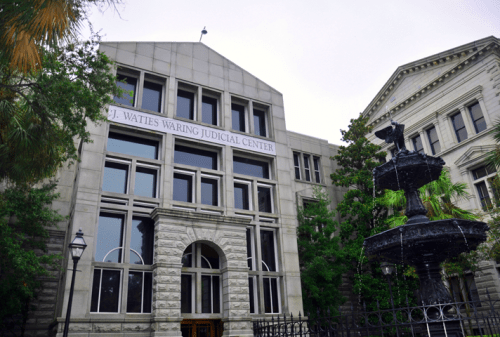
The J. Waites Waring Judicial Center in Charleston, SC

There are no sure things in judicial confirmations.  Nominees expected to sail through the process become bogged down, while nominees expected to draw controversy surprise everyone by getting confirmed easily.  Nevertheless, A. Marvin Quattlebaum, nominated for a vacancy on the U.S. District Court for the District of South Carolina, should feel good about his chances.  A former president of the South Carolina Bar and a nationally recognized attorney, Quattlebaum has attracted little controversy over his career and should be confirmed easily.

Background

Arthur Marvin Quattlebaum Jr. was born on August 2, 1964 in Durham, NC.  He received a B.A. with Honors from Rhodes College in 1986 and a J.D. from the University of South Carolina Law School in 1989.  While a law student, Quattlebaum worked as a summer associate at the Columbia law firm Nelson, Mullins, Riley & Scarborough, LLP.  Upon graduation, Quattlebaum was hired there as an Associate.

In 1996, Quattlebaum left Nelson Mullins to be a partner at the law firm Robinson & Quattlebaum.  A year later, Quattlebaum returned to Nelson Mullins as a Partner.  He continues to work as a Partner in the firm’s Greenville, SC Office.

From 2011-2012, Quattlebaum served as Chair on the South Carolina Bar Association.  He continues to hold a seat in the Bar’s House of Delegates.

History of the Seat

The seat Quattlebaum has been nominated for opened on October 3, 2013, with Judge Cameron McGowan Currie’s move to senior status.  The Obama Administration made two unsuccessful attempts to fill this vacancy.  First, on June 26, 2013, Obama nominated Judge Alison Renee Lee of South Carolina’s Fifth Judicial Circuit to fill the vacancy.[1]  However, Lee’s nomination ran into opposition from conservatives over her decision to reduce bond on a Columbia-area burglary suspect who killed a man after his release.[2]  Ultimately, Sen. Tim Scott (R-SC) came out in opposition to Lee, and declined to return a blue slip, killing her nomination.[3]

On February 25, 2016, President Obama nominated Justice Donald Beatty of the South Carolina Supreme Court in a second attempt to fill the vacancy.[4]  Unfortunately, neither Scott nor Sen. Lindsey Graham (R-SC) returned blue slips on Beatty’s nomination, and Beatty never received a hearing.

In January 2017, Quattlebaum discussed his interest in a federal judgeship with Scott and Congressman Trey Gowdy.  After an interview with the Department of Justice and the White House Counsel’s Office, Quattlebaum was officially nominated on August 3, 2017.

Legal Experience

Other than one year working on plaintiff’s side law at Robertson & Quattlebaum, Quattlebaum has spent his entire legal career practicing business litigation at Nelson Mullins.  As a partner in the Greenville office, Quattlebaum primarily focuses on the defense of product liability actions.  Among Quattlebaum’s more prominent cases, he was the primary lawyer defending Michelin North America Inc. against a suit alleging injuries from the sale of a defective tire.[5]  He also represented Michelin in antitrust and breach of contract actions.[6]

Political Activity

Quattlebaum has a long history of contributions to Congressional Republicans.  This includes approximately $8000 to Graham, $7600 to Scott, and $6400 to Gowdy.[7]  Additionally, Quattlebaum has also donated to former Sen. Jim DeMint, and former Rep. Bob Inglis, both South Carolina Republicans.[8]  In contrast, Quattlebaum has only one contribution to a Democrat, donating $1000 to Alex Sanders’ Senate bid against Graham in 2001.[9]

In addition, Quattlebaum has served in a volunteer capacity in the campaigns of Graham, Scott, and Gowdy.  Quattlebaum also served on the South Carolina Lottery Commission from 2003-2010, appointed to that role by Republican Governor (and now Congressman) Mark Sanford.

Overall Assessment

As noted above, Quattlebaum should face relatively little trouble winning confirmation.  He has avoided taking controversial stances as an attorney, and has shown legal acumen through his managing of complex litigation.  While he may draw criticism for his exclusive representation of large corporations seeking to avoid damages from defective products, such criticism is unlikely to derail his nomination.  Overall, Quattlebaum would join the South Carolina bench as a fairly mainstream conservative judge.


[1] Press Release, White House, President Obama Nominates Three to Serve on the United States District Courts (June 26, 2013) (on file at https://obamawhitehouse.archives.gov).  

[2] Michael Doyle, New Questions Raised About South Carolina Federal Court Nominee, The State, Sept. 25, 2013.

[3] Ali Watkins, U.S. Sen. Tim Scott Joins Opposition to Nomination of SC Judge for Federal Post, The State, July 17, 2014, http://www.thestate.com/news/politics-government/politics-columns-blogs/the-buzz/article13869248.html.

[4] Press Release, White House, President Obama Nominates Two to Serve on the United States District Court (Feb. 25, 2016) (on file at https://obamawhitehouse.archives.gov).  

[5] See Demas v. Michelin N. Am., Inc., No. 09 L 013814, Illinois Circuit Court (Judge Daniel Lynch).

[6] Michelin N. Am., Inc. v. Inter-city Tire, No. 6:13-cv-01067 HMH, 2015 WL 12843914 (D.S.C. Jan 20, 2015) (Judge Henry Herlong).  

[7] Center for Responsive Government, https://www.opensecrets.org/donor-lookup/results?name=Marvin+Quattlebaum&order=desc&page=1&sort=D (last visited Oct. 3, 2017).  

[8] See id.

[9] Id.

Prof. Stephanos Bibas – Nominee to the U.S. Court of Appeals for the Third Circuit

The Trump Administration has nominated many academics and former academics to the bench.  Yet, even among them, no one is as prolific as Stephanos Bibas.  Bibas, a professor of law and criminology at the University of Pennsylvania Law School, enters the confirmation process as one of the nation’s foremost experts in criminal law and procedure.  If confirmed, he stands ready to shape a new era of criminal jurisprudence, with an increased focus on the morality of punishment and the rights of victims.

Background

Stephanos Bibas was born in New York City in 1969 in a Greek-American family.  While spending summers working in his family’s restaurant, Bibas graduated high school early and entered Columbia University at 16.[1]  At Columbia, Bibas became involved with Parliamentary Debate, and began to explore a career in law.[2]  Bibas graduated summa cum laude from Columbia in 1989 with a B.A. in political theory.

After graduating from Columbia, Bibas attended Oxford University, receiving a B.A. and M.A. in jurisprudence.  While at Oxford, Bibas participated in the 1991 World Debate Championships in Toronto, being awarded the title of 1st Place Speaker.[3]  Bibas then attended Yale Law School, graduating with a J.D. in 1994.

After graduation, and a clerkship with Judge Patrick Higginbotham on the U.S. Court of Appeals for the Fifth Circuit, Bibas joined Covington & Burling as a litigation associate.  In 1997, Bibas secured a prestigious clerkship with Justice Anthony Kennedy, clerking on the Supreme Court alongside future appellate judges Raymond Kethledge,[4] John Owens,[5] and Sri Srinivasan.[6]

After his Supreme Court clerkship, Bibas was hired as a federal prosecutor by Mary Jo White, the U.S. Attorney for the Southern District of New York.  In 2000, he left that position to join Yale Law School at a research fellow.[7]  In 2001, Bibas joined the faculty of the University of Iowa College of Law, teaching criminal law and criminal procedure.

In 2006, Bibas moved from the University of Iowa to the University of Pennsylvania Law School as a Professor of Law.  Bibas took on a secondary appointment as a Professor of Criminology in 2009.  He currently serves in both capacities.

History of the Seat

Bibas has been nominated for a Pennsylvania seat on the U.S. Court of Appeals for the Third Circuit vacated by Judge Marjorie Rendell.  Rendell, a Democrat who was appointed by President Bill Clinton, moved to senior status on July 1, 2015.[8]  On March 15, 2016, President Obama nominated Rebecca Ross Haywood, the Appellate Chief of the Civil Division of the United States Attorney’s Office for the Western District of Pennsylvania, to fill the vacancy.[9]  However, Haywood was opposed by Sen. Patrick Toomey (R-PA) who refused to return a blue slip on her nomination.[10]  Without the blue slip, Haywood did not receive a hearing, and her nomination died at the end of the 114th Congress.

After his election, President Trump declined to renominate Haywood, instead nominating Bibas to the seat on June 7, 2017.

Political Activity

Bibas has made a few political donations in his lifetime, all to Republicans.  In 1996, Bibas donated $250 to the Presidential Campaign of Bob Dole.[11]  Similarly, in 2012, he gave $2500 to the Presidential Campaign of Mitt Romney, as well as $1000 to Romney’s Political Action Committee (PAC), Restore Our Future.[12]  Additionally, Bibas has given $1500 to Sen. Pat Toomey’s PAC, Citizens for Prosperity in America.[13]

Legal Experience

While Bibas has spent most of his legal career in academia, he has practiced law for two short periods: 1995-97, when he was a litigation associate at Covington & Burling; and 1998-2000, when he was a federal prosecutor with the U.S. Attorney for the Southern District of New York.  Additionally, Bibas has represented clients through his work at the University of Pennsylvania Supreme Court clinic.

As a litigation associate at Covington & Burling, Bibas handled a variety of cases, including representing a pro bono plaintiff in an employment discrimination trial and appeal in D.C. federal court.[14]  As a federal prosecutor, Bibas notably prosecuted Alastair Duncan, a dealer charged with conspiracy for stealing Tiffany Glass from mausoleums.[15]

More controversially, in 1999, Bibas led the aggressive prosecution of a cashier at the Veterans’ Affair Medical Center in the Bronx.[16]  The cashier in question, Linda Williams, lost her job and faced a misdemeanor charge (later dropped to a citation) for allegedly pocketing $7.00 given to her by a customer.[17]  Bibas led an aggressive prosecution, calling five government witnesses (none of whom had actually seen the entire transaction that Williams was charged with pilfering).[18]  Despite one of the government witnesses testifying that the missing money was later found in Williams’ cash register, Bibas pushed for a guilty verdict, stating in his closing that Williams “is guilty and she knows it.”[19]  Judge Douglas Eaton was unimpressed and acquitted Williams from the bench after Bibas’ closing.  Bibas’ conduct during the Williams trial has already drawn criticism from Alliance for Justice, a liberal-leaning nonprofit group.[20]

As a law professor at the University of Pennsylvania, Bibas also runs the Law School’s Supreme Court clinic.  In this capacity, Bibas has argued six cases before the U.S. Supreme Court:

Turner v. Rogers[21] – This case involved a challenge to civil contempt charges in a child support proceeding.  Turner challenged South Carolina’s refusal to provide him with counsel during a civil contempt proceeding, even though he faced the risk of incarceration.  Bibas represented Rebecca Rogers, the mother in the underlying child support action, and argued that, as Turner had already served the contempt sentence, the case was moot.  The Supreme Court unanimously disagreed with Bibas, finding that the case was not moot.  Furthermore, a five-justice majority found, in an opinion by Justice Stephen Breyer, that South Carolina needed to provide safeguards against the erroneous deprivation of liberty in civil contempt cases.

Tapia v. United States[22] – Tapia, convicted of bail jumping and bringing illegal aliens into the United States, was sentenced to a 51-month sentence, in part, to permit Tapia to take part in drug rehabilitation while incarcerated.  Tapia challenged her extended sentence, arguing that a judge could not lengthen a sentence for a rehabilitative goal.  With the United States declining to defend the sentence, Bibas was appointed as amicus to do so.  Ultimately, the Supreme Court, in a unanimous opinion by Justice Elena Kagan, found that Tapia’s sentence violated the Sentencing Reform Act of 1984.

Vartelas v. Holder[23] – In this case, Bibas represented Vartelas, an immigrant who had been convicted of conspiracy to make or possess a counterfeit security in 1994.  In 2003, Vartelas visited Greece for a week and was denied re-entry based on his 1994 conviction.  Representing Vartelas, Bibas argued that the Illegal Immigration Reform and Immigrant Responsibility Act, which was passed after Vartelas’ conviction and barred his re-entry, could not be retroactively applied against convictions of record before the law’s passage.  In a 6-3 opinion by Justice Ruth Bader Ginsburg, the Supreme Court agreed.

Petrella v. MGM, Inc.[24] – This case involved a copyright claim filed over the movie Raging Bull.  Bibas represented the plaintiffs in the case who sought to overcome the defense of “laches” against their copyright claim.  In an opinion by Ginsburg, a six-justice majority agreed with Bibas that laches did not bar the copyright claim in this case.

Bank of America v. Caulkett[25] – In this case, Bibas represented debtors who had taken out second mortgages on an already underwater property, and sought to avoid foreclosure.  In an opinion by Justice Clarence Thomas, a unanimous Supreme Court rejected Bibas’ arguments and found that debtors could not void junior mortgages where senior mortgages on the same property were underwater.

Encino Motorcars, LLC. v. Navarro, et al.[26] – In this case, Bibas represented a group of “service advisors” at a car dealership who sought overtime compensation under the Fair Labor Standards Act.  While the Department of Labor had held that service advisors were exempt from overtime protections in 1987, it reversed its position in 2011.  The Supreme Court found, in a 6-2 opinion by Justice Anthony Kennedy, that the Labor Department’s new position should not be according controlling weight in determining whether overtime should be offered.

Scholarship

Summarizing Bibas’ scholarship is not an easy task.  Not only is he a thought leader on issues of criminal law, he is also one of the most prolific academics to be nominated for the bench.[27]  Below are summaries of his writings, organized by general topic.

Habeas Corpus

One of Bibas’ earliest writings is a “Letter to the Editor” that he authored as an associate at Covington & Burling.  In the Letter, written in response to an editorial opposing the Antiterrorism and Effective Death Penalty Act of 1996 (AEDPA), Bibas argues that the writ of habeas corpus should be significantly limited.[28]  Specifically, Bibas notes that habeas was originally limited to those held by military police and was not available in civilian courts.  Bibas goes on to argue that “there is no reason to allow prisoners who make no claim that they are innocent to hog the justice system at the expense of law-abiding citizens.”[29]

Bibas’ letter sparked a response from Boston University Law School Prof. Larry Yackle, who disagreed with Bibas’ historical analysis, noting:

“[S]tate convictions have been subject to re-examination in Federal court virtually since the founding of the Republic.”[30]

Yackle’s letter also calls out Bibas by name, accusing him of thinking that “Federal court enforcement of the Bill of Rights is a bad idea.”[31]

Plea Bargaining

Bibas is a strong advocate of reforming the current plea bargaining system, arguing that plea bargaining, as it currently exists, fails to protect defendants’ rights, while simultaneously failing to impose adequate punishment on the guilty.

In particular, Bibas is a strong critic of Alford or nolo contendre pleas (plea deals that allow the defendant to avoid admitting guilt).  In a 2003 article, Bibas argued for the abolishment of Alford pleas, arguing that they detract from the moral clarity that should be the main feature of the criminal sentencing process.  Bibas notes that Alford pleas “undermine the procedural values of accuracy and public confidence in accuracy and fairness by convicting innocent defendants and creating the perception that innocent defendants are being pressured into pleading guilty.”[32]  Bibas also argues that Alford pleas “allow guilty defendants to avoid accepting responsibility for their wrongs” and “muddy the criminal law’s moral message.”[33]  In another article, Bibas argues that the public will lose confidence in a criminal justice system that uses Alford pleas to convict the innocent.[34]  Elsewhere, Bibas notes that “most defendants who balk at accepting guilt are not innocent, but guilty criminals in denial” and that Alford pleas “harm not only offenders’ rehabilitation, but also victims’ healing.”[35]

Furthermore, Bibas has advocated for a more general reform of the plea bargain process, noting that the current process often has outcomes dependant on the quality of counsel, with poorer defendants often being stuck with inept attorneys.[36]  He also notes that courts have stopped relying more heavily on trials and “unequivocal” guilty pleas.[37]  As such, Bibas endorses a “consumer protection” model of regulating plea bargains, allowing defendants some protections against bad advice from defense counsel.[38]

Apprendi

In 2000, the Supreme Court ruled in Apprendi v. New Jersey that any facts used to enhance a defendant’s sentence beyond the prescribed statutory maximum must be found by the jury beyond a reasonable doubt.[39]  Bibas has been critical of Apprendi since the decision came out, arguing that requiring enhancing facts to be proven by a jury puts defendants in an impossible position: plead guilty and give up the right to a jury determination of enhancement; or go to trial and risk enhanced trial penalties.[40]  Furthermore, Bibas argues that, by removing sentencing power from judges, Apprendi empowers prosecutors to “charge bargain.”[41]

In 2004, the Supreme Court applied and reaffirmed Apprendi in Blakely v. Washington.[42]  Bibas wrote in response that Blakely would lead to the invalidation of the Sentencing Guidelines, and that, while this would benefit defendants “who could afford first-rate lawyers,” it would also increase “arbitrariness, disparity, and variations in sentences.”[43]  After the Supreme Court struck down the mandatory sentencing guidelines in United States v. Booker,[44] Bibas once again criticized the decision, noting that it undercuts Congress’ desire to punish white collar criminals harshly, and would lead to more leniency by judges in their sentencing.[45]  Specifically, Bibas notes that, if left up to the discretion of judges, “sentencing judges may be indulging unconscious racial and class stereotypes by going easy on defendants who remind judges of themselves or with whom judges can identify.”[46]

Fifth Amendment

Bibas is also strongly critical of the Supreme Court’s decision in Miranda v. Arizona and the “right to remain silent” framework it set up.  In response to an article praising the right to remain silent, Bibas notes that many guilty defendants do not remain silent, and instead choose to confess or lie and make up an alibi.  Remaining silent is often treated as evidence of guilt by police and investigators, and, with the prominence of plea bargaining, their inferences may matter more than those of juries.[47]  As such, there is a strong incentive for defendants, guilty or innocent, to co-operate with the police.[48]  In another article, Bibas argues that Miranda failed to adequately regulate coercive police interrogations, and criticizes the Rehnquist Court for failing to overturn Miranda in its decision in United States v. Dickerson.[49]

Gideon and Right to Counsel

Bibas has also written about the right to counsel, as guaranteed by the Supreme Court in Gideon v. Wainwright.  Specifically, Bibas argues that Gideon has spread the resources of lawyers too thin, thus diluting their effectiveness in capital cases.[50]  Furthermore, Bibas argues that the bar for effectiveness of lawyers is set too low, and as such, “many defendants have lawyers in name only.”[51]  Bibas also attacks the Strickland test for determining effectiveness of counsel, arguing that courts have a “hindsight bias” that prevents them from finding prejudice in cases with ineffective attorneys.[52]

Prosecutorial Regulation

A former prosecutor himself, Bibas has written extensively on prosecutorial discretion, and reform of prosecutorial incentives.  In one paper, Bibas advocates for the use of compensation to encourage prosecutors to model appropriate conduct.  For example, Bibas notes:

“A prosecutor who regularly burns the midnight oil deserves to be paid more than one who who leaves the office every day at 5 p.m.”[53]

Bibas also advocates an evaluation model to encourage judges, defense attorneys, and the public to provide feedback of prosecutors’ work, and to base compensation on such feedback.[54]  Bibas has also advocated reforming the culture in prosecutor’s offices to encourage self-regulation.[55]  Interestingly, Bibas cites the New Orleans District Attorney’s Office under the leadership of Harry Connick Sr. as an example of self-regulation by prosecutors, noting:

“The New Orleans District Attorney’s Office used centralized screening, close supervisory review, and information technology to restrict overcharging and plea bargaining.  By doing so, District Attorney Harry Connick, Sr. fulfilled his campaign pledge to crack down on plea bargaining.”[56]

Bibas fails to note that Connick and the New Orleans D.A.’s Office have come under repeated scrutiny for failing to disclose relevant exculpatory evidence,[57] and using prosecutorial power to intimidate defense witnesses.[58]

Sentencing Reform

Most academics and attorneys who discuss sentencing reform focus on mandatory minimum sentences or overly harsh sentencing laws.  In contrast, Bibas has been a strong advocate for more unorthodox sentencing procedures.  For example, in 2004, Bibas co-authored a paper expressing the need for “remorse and apology” in the sentencing process.[59]  Specifically, Bibas argued that courts at sentencing should use defendant’s conduct at trial, during pleas, and in mediation with the victim to tailor the sentence based on the level of remorse and apology demonstrated.[60]  In another paper, Bibas also encourages the incorporation of mercy and forgiveness, through greater victim involvement, in the criminal justice system.[61]

Originalism

Unlike other academics with Federalist Society backgrounds, Bibas is not an advocate of originalism.  Instead, Bibas argues that, while originalism can be helpful, in many cases, historical evidence is unclear and cannot be the foundation for workable rules.[62]  For example, Bibas notes that originalism contradicts long-held doctrines such as the exclusionary rule.[63]  Further, he argues that many of the defendant-friendly doctrines brought about by an originalist interpretation, including a strict interpretation of the Confrontation Clause, do not take into account evolving views in the law during the 18th Century.[64]  Adopting an originalist framework on the Confrontation Clause, Bibas notes, “freezes in place a snapshot of law that was changing in the late eighteenth century.”[65]  Furthermore, Bibas notes that historical propositions cannot be analogized to all present day situations:

“…today’s issues do not involve the same set of considerations that concerned the Framers.”[66]

Overall Assessment

Some may describe Bibas as a solid conservative.  His writings demonstrate a deep interest with the moral element of crime and punishment, focusing on a belief that the criminal justice system can and should identify and punish “morally wrong” actors.  Furthermore, his aggressive (and politically unwise) prosecution of a popular cashier over $7 in cash makes it easy to caricature Bibas as a modern-day Javert.

At the same time, Bibas’ criticisms of the current criminal justice system are based not only on its failure towards victims, but also towards defendants.  His writings show a strong concern with ensuring that defendants receive adequate representation, and that constitutional protections are not limited to the small fraction of defendants who go to trial, but extend to the vast majority who plead their cases.  As such, others can argue that Bibas holds more moderate-liberal views.

This combination makes Bibas’ ideology hard to pin down.  Rather, Bibas’ most apparent characteristic is his willingness to challenge traditional thought on criminal law and jurisprudence.  From demanding the greater involvement of remorse in the sentencing process, to the advocacy of offering prosecutors financial incentives to perform well, Bibas is definitely an outside-the-box thinker.

If there is a jurist that Bibas looks likely to model, it is recently-retired Seventh Circuit Judge Richard Posner.  Like Bibas, Posner was a brilliant path-breaking academic when he was tapped to the federal bench.  On the bench, Posner was notoriously unpredictable, with little ideological commitment, but a deep concern nonetheless for the practical application of decisions, famously noting:

“A case is just a dispute. The first thing you do is ask yourself – forget about the law – what is a sensible resolution of this dispute?”

Bibas’ own concern about the practical effect of the Supreme Court’s criminal decisions, especially their effects both for defendants and victims, can be described as Posnerian.  It is up to the Senate Judiciary Committee to determine if that is a quality to be encouraged on the federal bench.


[1] See Steven Bibas, Letter to the Editor, Early Entry to College Demands Maturity, N.Y. Times, Mar. 12, 1989, http://www.nytimes.com/1989/03/12/opinion/l-early-entry-to-college-demands-maturity-885089.html.

[2] Stephanos Bibas, CrimProf Blog Professor Spotlight: Stephanos Bibas, CrimProf Blog, Nov. 27, 2004, http://lawprofessors.typepad.com/crimprof_blog/2004/11/profesor_spotli.html.

[3] See id.

[4] Kethledge also clerked for Justice Kennedy.

[5] Owens clerked for Justice Ruth Bader Ginsburg.

[6] Srinivasan clerked for Justice Sandra Day O’Connor.

[7] See Bibas, supra n. 2

[8] Jeremy Roebuck, Judge Rendell to Take On ‘Senior Status’, Philadelphia Inquirer, Jan. 31, 2015, http://www.philly.com/philly/news/politics/20150131_3rd_Circuit_Judge_Rendell_to_take_on__quot_senior_status_quot_.html.

[9] Obama Nominates McKeesport Native to Federal Bench, Pittsburgh Action News 4, Mar. 15, 2016, http://www.wtae.com/article/obama-nominates-mckeesport-native-to-federal-bench/7478509.

[10] Jonathan Tamari and Jeremy Roebuck, Obama’s Pick for Judgeship Here Draws Toomey’s Ire, Philadelphia Inquirer, Mar. 15, 2016, http://www.philly.com/philly/news/politics/20160316_Obama_nominates_Pittsburgh_federal_prosecutor_for_Third_Circuit_vacancy.html.

[11] Center for Responsive Politics, https://www.opensecrets.org/donor-lookup/results?name=stephanos+bibas (last visited Sept. 27, 2017).

[12] See id.

[13] Id.

[14] See Prof. Stephanos Bibas, Curriculum Vitae, https://www.law.upenn.edu/cf/faculty/sbibas/cv.pdf (last visited Sept. 28, 2017).

[15] See Greg B. Smith, Robber’s Ghoulish Tale Sold Cemetery Treasure to Art Pro, N.Y. Daily News, Aug. 4, 1999, http://www.nydailynews.com/archives/news/robber-ghoulish-tale-sold-cemetery-treasure-art-pro-article-1.849599.  

[16] Benjamin Weiser, A Federal Case of Small Change; U.S. Prosecutes a Hospital Cashier Over $7 and Loses, N.Y. Times, Oct. 6, 1999, http://www.nytimes.com/1999/10/06/nyregion/a-federal-case-of-small-change-us-prosecutes-a-hospital-cashier-over-7-and-loses.html?mcubz=1.  

[17] Id.

[18] See id.

[19] Id. (quoting Stephanos Bibas).

[21] 564 U.S. 431 (2011).

[22] 564 U.S. 319 (2011).

[23] 132 S. Ct. 1479 (2011).

[24] 134 S. Ct. 1962 (2013).

[25] 135 S. Ct. 1995 (2015).

[26] 136 S. Ct. 1538 (2016).

[27] Jonathan Adler, Professor Bibas Writes Letters (and Lots of Articles Too), Wash. Post, June 13, 2017, https://www.washingtonpost.com/news/volokh-conspiracy/wp/2017/06/13/professor-bibas-writes-letters-and-lots-of-articles-too/?utm_term=.1a5e03bafa9d.  

[28] Stephanos Bibas, Framers Never Intended Habeas Corpus As We Know It, N.Y. Times, Mar. 20, 1996.  

[29] Id.

[30] Larry Yackle, History of Habeas Corpus Didn’t Begin With 20th Century, N.Y. Times, Mar. 25, 1996.

[31] Id.

[32] Stephanos Bibas, Harmonizing Substantive Criminal Law Values and Criminal Procedure: The Case of Alford and Nolo Contendre Pleas, 88 Cornell L. Rev. 1361, 1364 (July 2003).  

[33] Id. 

[34] Stephanos Bibas, Bringing Moral Values Into a Flawed Plea Bargaining System, 88 Cornell L. Rev. 1425 (July 2003).  

[35] Stephanos Bibas, Exacerbating Injustice, 157 U. Pa. L. Rev. PENNnumbra 53, 55-56 (2008).  

[36] Stephanos Bibas,Plea Bargaining Outside the Shadow of Trial, 117 Harv. L. Rev. 2463, 2481-82 (June 2004).  

[37] See Bibas, n. 33 at 56.

[38]Stephanos Bibas, Regulating the Plea-Bargaining Market: From Caveat Emptor to Consumer Protection, 99 Calif. L. Rev. 1117, 1152 (August 2011) (“What defendants need is more robust consumer protection, much like the laws that regulate consumer contracts.”).  

[39] Apprendi v. New Jersey, 530 U.S. 466 (2000).

[40] Stephanos Bibas, Judicial Fact-Finding and Sentence Enhancements in a World of Guilty Pleas, 110 Yale L.J. 1097 (May 2001).  

[41] Stephanos Bibas, Symposium: Legal Issues and Sociolegal Consequences of the Federal Sentencing Guidelines: How Apprendi Affects Institutional Allocations of Power, 87 Iowa L. Rev. 465, 470-74 (January 2002).

[42] Blakely v. Washington, 542 U.S. 296 (2004).

[43] Stephanos Bibas, Blakely’s Federal Aftermath, 16 Fed. Sent. R. 333, 350 (June 2004).

[44] United States v. Booker, 543 U.S. 220 (2005).

[45] Stephanos Bibas, White Collar Plea Bargaining and Sentencing After Booker, 47 Wm. & Mary L. Rev. 721 (December 2005).

[46] See id. at 724.

[47] Stephanos Bibas, The Right to Remain Silent Helps Only the Guilty, 88 Iowa L. Rev. 421, 424-28 (January 2003).

[48]See id.

[49] Stephanos Bibas, The Rehnquist Court’s Fifth Amendment Incrementalism, 74 Geo. Wash. L. Rev. 1078 (August 2006).

[50]  Stephanos Bibas, Gideon at 50: Reassessing the Right to Counsel: Panel 4: The Future of the Right to Counsel: Shrinking Gideon and Expanding Alternatives to Lawyers, 70 Wash. & Lee L. Rev. 1287 (Spring 2013).

[51] Id. at 1288.

[52]  Stephanos Bibas, The Psychology of Hind-sight and After-the-Fact Review of Ineffective Assistance of Counsel, 2004 Utah L. Rev. 1 (2004).

[53] Stephanos Bibas, Prosecutorial Discretion: Rewarding Prosecutors for Performance, 6 Ohio St. J. Crim. L. 441, 443 (Spring 2009).

[54] Id. at 447.

[55] Stephanos Bibas, Prosecutorial Regulation Versus Prosecutorial Accountability, 157 U. Pa. L. Rev, 959 (April 2009).  

[56] Id. at 1004.

[57] The Editorial Board, Justice Gone Wrong in New Orleans, N.Y. Times, Oct. 20, 2015, https://www.nytimes.com/2015/10/20/opinion/justice-gone-wrong-in-new-orleans.html?mcubz=1.

[58] Radley Balko, New Orleans’ Persistent Prosecutor Problem, Wash. Post, Oct. 27, 2015, https://www.washingtonpost.com/news/the-watch/wp/2015/10/27/new-orleanss-persistent-prosecutor-problem/?utm_term=.b276413d45b6.  

[59]  Stephanos Bibas & Richard A. Biershbach, Integrating Remorse and Apology into Criminal Procedure, 114 Yale L.J. 85 (October 2004).

[60] Id. at 144-45.

[61] Stephanos Bibas, Mercy and Clemency: Forgiveness in Criminal Procedure, 4 Ohio St. J. Crim. L. 329 (Spring 2007).  

[62] Stephanos Bibas, Originalism and Formalism in Criminal Procedure: The Triumph of Justice Scalia, the Unlikely Friend of Criminal Defendants?, 94 Geo. L.J. 183 (Nov. 2005).  

[63] Stephanos Bibas, Originalism in Criminal Procedure: Ancient Checks or Newfangled Rights?: Two Cheers, Not Three, for Sixth Amendment Originalism, 34 Harv. J.L. & Pub. Pol’y 45, 46 (Winter 2011).
[64] Id. at 51.

[65] Id.

[66] Id. 

Nominations – Sept. 28, 2017

Today, the White House announced nine new judicial nominations (seven to lifetime appointments).  The new nominees are:

Barry Ashe, a New Orleans based civil litigator, has been nominated to the U.S. District Court for the Eastern District of Louisiana.

Daniel Domenico, the former Solicitor General of Colorado, has been nominated to the U.S. District Court for the District of Colorado.

Stuart Kyle Duncan, an appellate attorney and former counsel for the Becket Fund for Religious Liberty, has been nominated to the U.S. Court of Appeals for the Fifth Circuit.

Judge Kurt Engelhardt, a federal district judge appointed by President George W. Bush, has been nominated to the U.S. Court of Appeals for the Fifth Circuit.

James Ho, a partner in the Dallas Office of Gibson Dunn, and the former Solicitor General of Texas, has been nominated to the U.S. Court of Appeals for the Fifth Circuit.

Ryan T Holte, a professor at the University of Akron School of Law, has been nominated to the U.S. Court of Federal Claims.

Gregory E. Maggs, the Arthur Selwyn Miller Research Professor of Law at the George Washington University Law School, has been nominated to the U.S. Court of Appeals for the Armed Forces. (Full disclosure, Maggs taught me in law school, wrote several of my clerkship recommendations, and remains a mentor.)

Howard Nielson, a former Deputy Assistant Attorney General in the Department of Justice, has been nominated to the U.S. District Court for the District of Utah.

Justice Don Willett, currently serving on the Texas Supreme Court, has been nominated to the U.S. Court of Appeals for the Fifth Circuit.


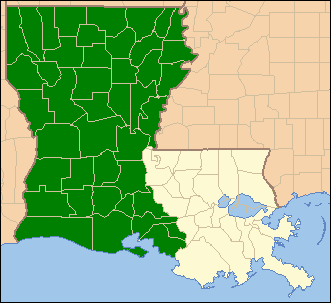
Michael Juneau – Nominee to the U.S. District Court for the Western District of Louisiana

The Western District of Louisiana is a court desperately short of judges.  Due to retirements and resignations, the District, which is assigned a complement of seven active judges, will be down to two by the end of the year.  Today, we look at one of two nominees offered by the Trump Administration: Michael Juneau.

Background

Michael Joseph Juneau was born in Monroe, LA on June 29, 1962, the son of prominent attorney Patrick Juneau.  Juneau attended Louisiana State University in Baton Rouge, graduating magna cum laude in 1984.  He went straight from college to Harvard Law School, getting his J.D. in 1987.

After graduating, Juneau returned to Lafayette, joining his father’s law firm Juneau, Judice, Hill & Adley as an Associate.  After six years as an Associate there, Juneau co-founded the firm Juneau David, APLC in Lafayette.  He currently serves as a Shareholder there.

History of the Seat

Juneau has been nominated to fill a vacancy on the U.S. District Court for the Western District of Louisiana.  The Western District is facing a vacancy crisis, with four of the seven allotted judgeships for the District currently vacant, and a fifth scheduled to open later this year.[1]  This crisis has been exacerbated by the Republican Senate’s failure to confirm any Obama nominations to Louisiana seats in the 114th Congress.

The seat Juneau has been nominated for opened on March 6, 2015, with Judge Richard Haik’s move to senior status.[2]  On February 4, 2016, President Obama nominated Stephanie Finley, the then-serving U.S. Attorney for the Western District of Louisiana, to fill the vacancy.[3]  While Finley, who would have been the first African American judge on the Western District,[4] had the enthusiastic support of Republican senators David Vitter and Bill Cassidy,[5] and was approved by the Senate Judiciary Committee unanimously,[6] her nomination was blocked from the floor by Senate Majority Leader Mitch McConnell.

After the election of President Donald Trump, Juneau submitted his resume for a federal judgeship to Sen. John Kennedy (R-LA).  In March 2017, Kennedy submitted Juneau’s name to the White House.  Trump formally nominated Juneau on Aug. 3, 2017.

Legal Experience

Juneau has only held two positions since graduating from law school: as an associate at Juneau, Judice, Hill & Adley, and as a Shareholder at Juneau David APLC.  In the former position, Juneau focused primarily on civil litigation, maritime law and product liability cases, including representing a child in a suit against a pastor who had committed sexual abuse.[7]

After moving to Juneau David, Juneau focused on maritime law and product liability actions.  Juneau handled many maritime accident cases, including a consolidated law suit over the explosion of an offshore oil rig,[8] and the suit over a boat accident on the way to an oil and gas facility.[9]

In 2012, Judge Carl Barbier of the U.S. District Court for the Eastern District of Louisiana appointed Juneau’s father, Patrick, to supervise two mass-tort court-supervised settlements: the Deepwater Horizon Economic and Property Damages Settlement; and the Halliburton & Transocean Punitive Damages Settlement.  Patrick Juneau then hired Michael to assist him with the settlement.[11]  While British Petroleum (BP), the defendant in the Deepwater Horizon case, initially approved Juneau’s appointment, the relationship soured amidst allegations that the Administrators were approving claims too readily.[12]  Ultimately, BP ended up suing to remove Patrick Juneau,[13] with the support of some plaintiff’s attorneys.[14]  The decision to appoint Michael Juneau to the case drew particular criticism, with plaintiff’s attorney Daniel Becnel calling it “unconscionable.”  Ultimately, BP failed to remove the Juneaus from the claims process, which continues to this day.[15]

Memberships and Affiliations

As noted in a colloquy between Sen. Mike Lee (R-UT) and Sen. Dick Durbin (D-IL) during the Sept. 20th confirmation hearing, a judicial nominee’s professional affiliations can sometimes become an issue in the confirmation process.  As such, two of Juneau’s affiliations could draw criticism.  First, Juneau has been a member of the Krewe of Gabriel from 1993 to 2017.  The Krewe, a social club that organizes Mardi Gras events, restricts its membership to men (it also, in the past, restricted membership by race).  Second, Juneau has noted an affiliation with the Alliance Defending Freedom (ADF) on his Judiciary Questionnaire.  As previously noted, ADF has been designated as a hate group by the Southern Poverty Law Center.  As such, the exact nature of Juneau’s relationship with ADF will likely be probed in his hearing.

Political Activity

While he has never run or held political office, Juneau, a registered Republican, has been a frequent donor to Louisiana politicians.  The vast majority of Juneau’s donations are directed to Republicans.[16]  Among the more targets are former senator David Vitter, current senators Bill Cassidy and John Kennedy, and Congressman Garret Graves.[17]  Juneau has also donated to the presidential campaigns of Mitt Romney, Rick Santorum, Rick Perry, and Marco Rubio.[18]

Earlier in his career, Juneau donated almost exclusively to Democrats, including a $1000 contribution to the presidential campaign of Al Gore.[19]   However, since 2000, Juneau has only donated once to a Democrat, a $2400 contribution to former senator Mary Landrieu in 2009.[20]

Overall Assessment

In the rough-and-tumble world of judicial politics, Juneau has one key advantage that should help him win confirmation: the support of Sen. John Kennedy.  Kennedy, as noted in the past, is one of the more aggressive questioners on the Judiciary Committee, and is likely the most “gettable” of the Judiciary Committee Republicans for opponents of Trump nominees.  As such, having Kennedy in his corner virtually ensures Juneau’s passage through Committee.

This is not to say that Juneau will necessarily have a smooth confirmation.  He faces two potential lines of criticism: the first based on his (allegedly nepotistic) appointment to the Deepwater Horizon case; and the second based on his affiliation with ADF.  The first may draw criticism from Republicans who believe that the Deepwater settlement unfairly penalized BP.  The second will raise concerns among Democrats, similar to those they raised with Prof. Barrett.

Overall, Juneau’s record confounds efforts to pigeonhole him on either side.  His Republican record of donations and alliance with ADF paint him as a judicial conservative, while his willingness to pay out billions in claims in the Deepwater Horizon case and his support for some Democrats, including Gore and Landrieu suggest moderation.  Overall, his testimony at his confirmation hearing on Oct. 4th will help us further understand the kind of judge he would be.


[1] Tyler Bridges, 42 Parish Area of Western Louisiana Suffers From Vacant Federal Judgeships, The Acadiana Advocate, Aug. 22, 2017, http://www.theadvocate.com/acadiana/news/article_dad54e68-8791-11e7-9cfc-678529cbf1c6.html.

[2] Leslie Turk, Judge Haik Assuming Senior Status in March, The Independent, Sept. 11, 2014, http://theind.com/article-18588-judge-haik-assuming-senior-status-in-march.html.

[3] Press Release, White House, President Obama Nominates Two to Serve on the United States District Courts (Feb. 04, 2016) (on file at https://obamawhitehouse.archives.gov).  

[4] Leslie Turk, Finley Could Be First African American on Western District Bench, Acadiana Business, Feb. 5, 2016, http://theind.com/article-22647-finley-could-be-first-african-american-on-western-district-bench.html.

[5] The Leadership Conference, These Republican Senators Want Their Judicial Nominees Confirmed. Majority Leader McConnell Isn’t Listening, Medium, Aug. 4, 2016, https://medium.com/@civilrightsorg/these-republican-senators-want-their-judicial-nominees-confirmed-1d87e6bfc615 (quoting David Vitter) (describing Finley as a “great Louisianian”).

[6] Michael Macagnone, Senate Panel Advances 4 Federal Judges, Hints at Floor Votes, Law 360, June 16, 2016, https://www.law360.com/articles/807489/senate-panel-advances-4-federal-judges-hints-at-floor-votes.

[7] In the Matter of a Minor Child, et ux v. Louisiana District Council of the Assemblies of God et al., 16th Judicial Dist. Ct., St. Martin Parish, Louisiana, Judge Michael McNulty (1990-1992).  

[8] In re: The Matter of Mallard Bay Drilling, as Owner and Operator of Mr. Beldon, otherwise designated as Mallard Rig 52, Praying for Exoneration from and/or Limitation Liability, Docket No. 97-1223, (W.D. La. 1997).  

[9] Lincoln v. Goodrich Petroleum Corp., et al., 25th Judicial Dist., Plaquemines Parish, Louisiana, Docket No. 50-620, Judge Joy Lobrano (2004-2011).

[10] See Perry, et al. v. Wyeth-Ayerst Laboratories Co., et al., No. 99-0089, Circuit Court of Jefferson County (Miss.) (Judge Pickard), Vadino, et al. v. American Home Products Corp., et al., No. MID-L-425-98, Superior Court, Middlesex County (N.J.) (Judge Corodemus).

[11] Campbell Robertson and John Schwartz, How a Gulf Settlement That BP Once Hailed Became its Target, N.Y. Times, April 27, 2014.  

[12] Tom Young, BP to Blame for Payment Delays, Not Deepwater Claims Administrator Juneau, The Legal Examiner, March 21, 2016, http://neworleans.legalexaminer.com/toxic-substances/bp-to-blame-for-payment-delays-not-deepwater-claims-administrator-juneau/.

[13] Jonathan Stempel, Patrick Juneau, BP Spill Claims Administrator, Urges Dismissal of Company’s Lawsuit, Huff. Post, April 1, 2013, http://www.huffingtonpost.com/2013/04/01/patrick-juneau-bp-spill-settlement_n_2994406.html.

[14] Kyle Barnett, Prominent Plaintiff Attorney Backs BP’s Bid to Remove Claims Administrator Patrick Juneau, Louisiana Record, Feb. 4, 2015, http://louisianarecord.com/stories/510585593-prominent-plaintiff-attorney-backs-bp-rsquo-s-bid-to-remove-claims-administrator-patrick-juneau.

[15] Richard Thompson, After 4 Years, 300K Claims, $9.2B, BP Claims Administrator Nearing Finish Line, New Orleans Advocate, Sept. 29, 2016, http://www.theadvocate.com/new_orleans/news/business/article_965235aa-8682-11e6-8181-0b5297cc5994.html.

[16] Center for Responsive Politics, https://www.opensecrets.org/donor-lookup/results?name=michael+juneau&order=desc&sort=D (last visited Sept. 27, 2017).  

[17] See id.

[18] Id.

[19] Id.

[20] Id.

[21] As a law student at Georgetown, Kelly spent a year as a Work-Study Reference Clerk at the Edward Bennett Williams Law Library.

Judge Tripp Self – Nominee to the U.S. District Court for the Middle District of Georgia

The Georgia Court of Appeals has been a major source of federal judges for the Trump Administration: three of the 15 current judges have already been tapped to the federal bench.  Last week, we profiled Judge William Ray, who was nominated for a seat on the U.S. District Court for the Northern District of Georgia.  Today, we look at Judge Tripp Self, who has been tapped to fill a vacancy on the U.S. District Court for the Middle District of Georgia.

Background

Tilman Eugene (“Tripp’) Self was born in November 1968 in Macon, Georgia.  Self attended The Citadel, The Military College of South Carolina, graduating in 1990 with a Bachelor of Science in Business Administration degree.  Following his graduation, Self joined the U.S. Army as a Field Artillery Officer, serving in the Republic of Korea and Fort Stewart in Hinesville, Georgia.

In 1994,Self joined the University of Georgia School of Law, graduating in 1997 with a J.D. cum laude. Self then joined the Macon office of Sell & Melton LLP as an Associate.  In 2002, he was promoted to be a Partner.

In 2006, Self was elected to join the Georgia Superior Court, serving as a trial judge in Macon.  He was re-elected in 2010 and 2014.

In November 2016, Self was appointed by Republican Governor Nathan Deal to serve on the Georgia Court of Appeals.  Self currently serves as a judge on that court.

History of the Seat

The seat Self has been nominated for opened on September 1, 2016, with Judge C. Ashley Royal’s move to senior status.  As the vacancy opened fairly late in the Obama Presidency, no nomination was put forward to fill it.

Self submitted an application fill the vacancy in January 2017, and was interviewed by the Federal Judicial Appointment Screening Committee in March.  Self was formally nominated by President Trump on July 13, 2017.

Legal Experience

After graduating from law school, Self practiced at the Macon firm Sell & Melton LLP. for nine years (the last four as a Partner).  In his time there, Self described himself as the firm’s “utility infielder.”[1]  In other words, Self handled the cases that other partners did not want to be involved with.[2]  This involved focusing on civil litigation in Georgia state court.

Among his more significant cases, Self defended a man who had failed to file an answer to a civil lawsuit due to his limited mental capacity.[3]  While the man faced a $185,000 default judgment, Self was able to negotiate a small settlement and prevent the defendant from losing his home.[4]  The team ultimately reached a national settlement over the claims during simultaneous state court trials in Mississippi and New Jersey.[5]

Jurisprudence

While Self currently serves on the Georgia Court of Appeals, his tenure as an appellate judge is fairly short (only nine months).  In contrast, Self has spent ten years as a trial court judge.  As such, we will look at his more prominent rulings as a trial court judge.

Criminal Law

As a trial judge, Self established a conservative record on criminal justice, presiding over many complex cases, and handing out harsh sentences in some cases.  For example, Self handed the maximum sentence to a defendant who pled guilty to embracery.[6]  He also sentenced six defendants to life in prison without parole after their convictions for felony murder.[7]  In another case, the Georgia Court of Appeals reversed a defendant’s conviction based on an erroneous instruction offered to the jury by Self.[8]

Self also presided over several high-profile death penalty cases.  In one case, Self held that there was no constitutional bar from the death penalty for defendants who had unknowingly shot a law enforcement officer who was carrying out a “no knock” warrant.[9]  The Georgia Supreme Court affirmed Self’s decision in a 5-2 opinion.[10]  In dissent, Chief Justice Carol Hunstein argued that there was no rational basis for “imposing the death penalty on defendants who at the moment they fired the fatal shots neither knew nor should have known that their victim was a police officer.”[11]

Civil Law

On the civil side, Self held that a plaintiff who had dislocated her knee while bending down to pick up her fallen medication was not entitled to workers’ compensation, a decision that was reversed by the Georgia Court of Appeals.[12]  In another case, Self ruled against a plaintiff who was struck by the car of a deputy sheriff while fleeing from the police.[13]  The Georgia Court of Appeals overturned the decision, holding that there was a factual dispute as to whether the plaintiff had assumed the risk of injury by running from the police.[14]

Political Activity

Self has a long history of activity and contributions in the Georgia Republican Party. In addition to serving as the General Counsel for the Bibb County Republican Party, Self also served as the Bibb County chairman for the campaign of Gov. Sonny Perdue.  Additionally, Self donated $1000 to Sen. Saxby Chambliss, and $3000 to the Congressional Campaign of Calder Clay, who unsuccessfully challenged Democratic Rep. Jim Marshall twice.[15]  Additionally, Self has financially supported former President George W. Bush, Georgia senators Johnny Isakson and David Perdue, and the Presidential Campaign of Sen. Ted Cruz.[16]

Overall Assessment

Like his colleague Judge Ray, Self has developed a fairly conservative record on the bench.  Nevertheless, like Ray, Self’s record is not so severely conservative as to imperil his confirmation.  While critics may argue that Self’s decision in Harris and Davis show a bias against plaintiffs, it is unlikely that Republicans, who control the Senate, will view such a bias as disqualifying for the bench.  Furthermore, Self’s long record of public service and his deep history with the Georgia Republican Party will give him plenty of allies and support.  As such, Self, when confirmed, will add a conservative voice to the Middle District of Georgia.


[1] Senate Judiciary Questionnaire, Tilman Eugene Self, https://www.judiciary.senate.gov/imo/media/doc/Self%20SJQ.pdf (last visited Sept. 24, 2017).  

[2] See id. (Sec. 16(b)(i)).

[3] Gardner v. Vincent, 03-CV-37954F (Ga. Super. Ct.) (Judge Winfield).  

[4] See id.

[5] See Perry, et al. v. Wyeth-Ayerst Laboratories Co., et al., No. 99-0089, Circuit Court of Jefferson County (Miss.) (Judge Pickard), Vadino, et al. v. American Home Products Corp., et al., No. MID-L-425-98, Superior Court, Middlesex County (N.J.) (Judge Corodemus).

[6] State v. Allen, No. 11-CR-042 (Ga. Super. Ct. 2011).  

[7] State v. Easton, No. 15-CR-107 (Ga. Super. Ct. 2015).  

[8] Dean v. State, 722 S.E.2d 436 (Ga. Ct. App. 2012).  

[9] State v. Jolly, Criminal Action No. 08-CR-63815, 2009 WL 6608746 (Ga. Super. Ct. Sept. 28, 2009), aff’d in part, vacated in part, and rev’d in part sub nom. Fair v. State, 702 S.E.2d. 420 (Ga. 2010).

[10] Fair v. State, 702 S.E.2d. 420 (Ga. 2010).

[11] See id. at 435 (Hunstein, C.J., dissenting).  

[12] Harris v. Peach Cnty. Bd. of Comm’rs, 674 S.E.2d 36 (Ga. Ct. App. 2009).  

[13] Davis v. Batchelor, Civil Action No. 07-V-0711 (Ga. Super. Ct. Nov. 12, 2008).

[14] Davis v. Batchelor, 686 S.E.2d 314 (Ga. Ct. App. 2009).

[15] Center for Responsive Politics, https://www.opensecrets.org/donor-lookup/results?name=tripp+self(last visited Sept. 24, 2017).  

Eli Richardson – Nominee to the U.S. District Court for the Middle District of Tennessee

Strictly speaking, judges are not agents of law enforcement.  Rather, they serve as neutral magistrates, balancing the playing field between the prosecution and the defense.  Nevertheless, several prominent judges have risen to the bench with law enforcement experience.  For the second time this year (after Trevor McFadden in June), President Trump has nominated a former law enforcement official to the federal bench: former FBI agent Eli Richardson.

Background

Eli Jeremy Richardson was born in 1967.  He attended Duke University, graduating with a Bachelors of Engineering degree in 1989.  Richardson went on to Vanderbilt Law School, overlapping slightly with another Trump judicial nominee, Claria Horn Boom.  At Vanderbilt, Richardson served as a member of the Vanderbilt Law Review and graduated Order of the Coif in 1992.

Upon graduation, Richardson moved to Grand Rapids, MI, working as an Associate at Warner, Norcross, & Judd, LLP.  In September 1993, Richardson moved to Atlanta to work as an Associate at Rogers & Hardin LLP.  After two years there, in 1995, Richardson moved into solo practice, founding Richardson & Associates in the Atlanta suburb of Conyers.

In 1998, Richardson left the practice of law, moving to Newark, NJ as a Special Agent in the Federal Bureau of Investigation (FBI).[1]  In that capacity, Richardson worked on public corruption and counter-terrorism.  In 2002, Richardson joined the U.S. Attorney’s Office in Newark as a federal prosecutor.

In 2004, Richardson moved to Nashville to be an Assistant U.S. Attorney in the Middle District of Tennessee.  He rose rapidly in the position, becoming Criminal Chief for the office in 2008.  Upon the election of President Barack Obama, Richardson left the U.S. Attorney’s Office and moved to the Department of Justice, moving to Belgrade, and working as a Resident Legal Advisor for Serbia, assisting Serbian judges, police, and prosecutors on rule of law issues.

In October 2010, Richardson moved back to Nashville to become a Member at Bass, Berry & Sims PLC.  While he has taken on additional roles over the years, including as an Adjunct Professor at Vanderbilt University, Richardson continues to serve as a Member as of his nomination to the federal bench.

History of the Seat

Richardson has been nominated for a vacancy on the U.S. District Court for the Middle District of Tennessee.  This vacancy opened on December 1, 2016, when Judge Todd Campbell retired from the bench.  Campbell, a former aide to Vice President Al Gore, was appointed to the federal bench at the relatively young age of 39, but retired at 60 due to an unnamed disability.[2]  As the vacancy came very late in the Obama Administration, no nominee was put forward to fill the vacancy.  Richardson was tapped by President Trump on  July 13, 2017, along with three other Tennessee nominees.[3]

Legal Experience

Richardson’s varied legal career can largely be broken down into three distinct periods for analysis: the first is from 1992-1998, where he worked in private practice.  The second is from 2002-2010, where Richardson worked as a federal prosecutor and DOJ attorney.  The final is from 2010-2017, where Richardson worked at Bass Berry in Nashville.

Richardson’s first job out of school was working as an associate at Warner, Norcross & Judd, LLP. in Grand Rapids. After moving to Rogers & Hardin in Atlanta, Richardson began to handle more complex commercial litigation matters.  For example, Richardson was part of the legal team representing S.N. Patel in his fight for control of Alpha Investment Properties, a motel operation company.[4]  After forming his own practice, Richardson represented telemarketer Alfred Estfan in his unsuccessful defense against charges of violating the Federal Trade Commission Act.[5]  Richardson also defended Sunrise Carpet Industries against an action for excess premiums from its insurance company.[6]

As an AUSA in Newark, Richardson worked on many criminal matters, but emphasized terrorism-related cases.  After moving to Nashville, Richardson shifted focus to white collar crimes.  For example, Richardson helped prosecute Albert Ganier, the founder of Education Networks of America (ENA) for obstruction of justice and destruction of evidence.[7]  Richardson also prosecuted violent crimes[8] and firearm cases.[9]  In 2009, Richardson moved to the Department of Justice, serving as a legal advisor in Belgrade to Serbian lawyers, judges, and law enforcement.[10]

After returning to Nashville, Richardson joined the Compliance and Government Investigations practice group at Bass, Berry & Sims.  In that role, Richardson successfully defended Charles Wells, a cigarette supplier, against charges relating to the Racketeer Influenced and Corrupt Organizations Act (RICO).[11]  Richardson also represented David Miller in charges that he had made a false statement to a bank.[12]

Scholarship

Despite not being an academic, Richardson has written extensively on issues of criminal law, trial practice and attorney ethics.  Here are some themes from Richardson’s writings.

Double Jeopardy

The Double Jeopardy Clause of the Fifth Amendment protects Americans against multiple punishments for the same offense.  For much of the 20th Century, double jeopardy was analyzed under the test set out by the Supreme Court in Blockburger v. United States.  In Blockburger, the Supreme Court held that a single act or transaction could violate multiple statutory provisions without implicating double jeopardy, as long as each separate offense required the proof of a different element.[13]  In 1990, the Supreme Court abrogated the Blockburger test in Grady v. Corbin, which held that the government could not prosecute an individual for an offense if an essential element of the crime charged constitutes an offense already prosecuted.[14]  Three years after Grady was decided, it was overruled by United States v. Dixon, which reimposed the Blockburger test.[15]

In 1992, between Grady and Dixon, Richardson published his law review note as a student, analyzing Grady and Blockburger.[16]  In the note, Richardson argues that Blockburger both underprotects and overprotects defendants.[17]  As such, Richardson argues that Grady should provoke a reform of Blockburger and a move away from its standard.[18]

In 1994, after the decision in Dixon, Richardson published an additional article criticizing the decision.[19]  Specifically, Richardson criticizes the Court for moving away from a “same offense” standard on double jeopardy:

“Simply put, the muddled state of double jeopardy jurisprudence is cause largely by the Supreme Court’s abandonment of what should be the anchor of the Court’s double jeopardy analysis: a requirement of same offenses.”[20]

Despite his criticism of Dixon, Richardson does not only argue that the Court is shortchanging criminal defendants.  Rather, he also argues that the Blockburger test confuses the difference between successive prosecutions and multiple punishments, and that, under the Double Jeopardy Clause, the former should be restricted more than the latter.[21]

Attorney Ethics

As a young lawyer in 1994, Richardson authored an article on the ethical obligations of attorneys.[22]  The article advocates a reform of the federal rules of attorney ethics, arguing that the current rules are cumbersome and that “lawyers cannot possibly determine what the applicable rules are, let alone determine whether or not they are in compliance.”[23]

In a more recent article co-authored with former federal judge Robert Echols, Richardson outlines best practices for white collar defense attorneys.[24]  Among other practice tips, Richardson urges defense attorneys not to lob ad hominem attacks against prosecutors.  Specifically, Richardson urges defense counsel to make charges of misconduct “where well-grounded and in the client’s best-interest”[25] but notes that unfair attacks may “be an uphill battle that ultimately damages counsel’s credibility.”[26]

Political Activity

Richardson does not have a particularly active political donation history.  His only contributions of record are two contributions, totalling $300 to the congressional campaign of Grant Starrett, a Republican who was challenging Rep. Scott DesJarlais in the Republican primary.[27]  The contributions were made months before Starrett’s campaign faced criticism over Islamophobic campaigning.[28]

Overall Assessment

For the most part, Trump’s district court nominees have not attracted much controversy.  As he has not represented any controversial clients, or taken any divisive stances, and as his legal writings are fairly anodyne, Richardson is unlikely to be any different.  If confirmed, Richardson will likely add another moderate conservative voice to the Tennessee federal bench.


[1] Eli J. Richardson, Linkedin Profile, https://www.linkedin.com/in/elirichardsonlawyer/ (last visited Sept. 14, 2017).

[2] Stacey Barchenger, Federal Judge to Retire From Bench in Nashville, Tennessean, Nov. 15, 2016, http://www.tennessean.com/story/news/2016/11/15/federal-judge-retire-bench-nashville/93932624/.

[3] Press Release, President Donald J. Trump Announces Fifth Wave of Judicial Candidates (on file at www.whitehouse.gov) (July 13, 2017).

[4] See Patel, et al. v. Alpha Investment Properties, Inc., et al., 458 S.E.2d 476 (Ga. 1995).

[5] Fed. Trade Comm’n v. Gem Merchandising Corp., 87 F.3d 466 (11th Cir. 1996).

[6] Home Ins. Inc. v. Sunrise Carpet Indus. Inc., 493 S.E.2d 641 (Ga. App. 1997).

[7] See United States v. Ganier, 468 F.3d 920 (6th Cir. 2006).

[8] See United States v. Jones, 2007 U.S. Dist. LEXIS 50030 (M.D. Tenn. July 10, 2007).

[9] See United States v. Hamblen, 239 Fed. Appx. 130 (6th Cir. 2007).

[10] Tennessee Bar Journal, Article: You Need to Know: People, 45 Tenn. B.J. 9 (March 2009).

[11] City of New York v. Chavez, et al., 944 F. Supp. 2d 260 (S.D.N.Y. 2013) (granting Wells’ motion for summary judgment on RICO claims).

[12] United States v. Miller, 734 F.3d 530 (6th Cir. 2013).

[13] Blockburger v. United States, 284 U.S. 299 (1932).

[14] Grady v. Corbin, 495 U.S. 508 (1990).

[15] United States v. Dixon, 509 U.S. 688 (1993).

[16] Eli J. Richardson, Matching Tests for Double Jeopardy Violations with Constitutional Interests, 45 Vand. L. Rev. 273 (Jan. 1992).

[17] Id. at 306 (noting that Blockburger underprotects defendants in successive prosecutions, but overprotects them in multiple punishments).

[18] Id. at 307.

[19] Eli J. Richardson, Eliminating Double-Talk From the Law of Double-Jeopardy, 22 Fla. St. U.L. Rev. 119 (Summer 1994).

[20] Id. at 143.

[21] See id. at 149.

[22] Eli J. Richardson, Demystifying the Federal Law of Attorney Ethics, 29 Ga. L. Rev. 137 (Fall 1994).

[23] Id. at 140.

[24] Robert L. Echols and Eli J. Richardson, White-Collar Defense, 47 Tenn. B.J. 14 (Dec. 2011).

[25] Id. at 19.

[26] Id.

[27] Center for Responsive Politics, https://www.opensecrets.org/donor-lookup/results?name=eli+richardson (last visited Sept. 14).

[28] Scott Broden, Grant Starrett Mailer Attacking DesJarlais Also Offends Muslims, Daily News Journal, July 20, 2016, http://www.dnj.com/story/news/2016/07/20/mailer-attacking-desjarlais-also-offends-muslims/87264290/.

Justice Allison Eid – Nominee to the U.S. Court of Appeals for the Tenth Circuit

Allison Eid shares a similar background to another Trump judicial nominee, David Stras:  like Stras, Eid is a former academic; like Stras, she clerked for Justice Clarence Thomas; and like Stras, she serves on a state supreme court.  However, unlike Stras, whose nomination is currently stymied by the opposition of a home state senator, Eid has received the requisite sign-off from her home state senators, allowing her nomination to move forward.

Background

Eid was born Allison Hartwell in Seattle, Washington in 1965.  After getting a B.A. with distinction from Stanford University, Eid joined the staff of U.S. Secretary of Education William Bennett as a Special Advisor and Speechwriter.  At the end of the Reagan Administration, Eid joined the University of Chicago Law School, graduating with high honors in 1991.  After graduating, Eid clerked for the notoriously conservative Judge Jerry Edwin Smith on the U.S. Court of Appeals for the Fifth Circuit, and went on to clerk for Supreme Court Justice Clarence Thomas, clerking at the Supreme Court in a particularly notable year for clerks (prominent co-clerks include Justice Neil Gorsuch, Paul Clement, Prof. Eugene Volokh, and federal judges Brett Kavanaugh, Gary Feinerman, J. Paul Oetken, and Brian Morris).

In 1994, at the conclusion of her clerkship with Thomas, Eid joined Arnold & Porter, working as a litigator there for four years.  She left the firm in 1998, joining the University of Colorado Law School, teaching Torts, Constitutional Law, and Legislation.[1]

In 2005, Eid was tapped by Republican Attorney General John Suthers to be Colorado’s Solicitor General.[2]  Shortly after, Eid was one of three finalists for a vacancy on the U.S. Court of Appeals for the Tenth Circuit (eventually filled by Gorsuch).[3]  However, instead, Eid was instead nominated for a vacancy on the Colorado Supreme Court by Republican Governor Bill Owens.[4]

History of the Seat

Eid was tapped for a Colorado seat on the U.S. Court of Appeals for the Tenth Circuit.  The seat was vacated by now-Justice Neil Gorsuch, who was elevated to the U.S. Supreme Court on April 9, 2017.

Like Gorsuch, Eid was also among the finalists for the Supreme Court vacancy left by Justice Antonin Scalia’s death.[5]

Political Activity

Colorado Supreme Court justices serve ten year terms, with retention elections marking the end of every term.  Since her appointment in 2006, Eid has come up for retention once (in 2008) and was retained with 75% of voters in support.[6]

Other than her time in judicial elections, Eid has minimal involvement with electoral politics.  She has made small contributions to former Republican senator Wayne Allard,[7] and to failed Republican congressional candidate Greg Walcher.[8]

Legal Career

While Eid has spent most of her legal career either as an academic or as a jurist, she has four years of experience in private practice working at Arnold & Porter.  Among her work there, Eid was part of the legal team defending investors who recovered profits from a Ponzi scheme.  Eid helped successfully defend the recovered profits against actions by bankruptcy trustees seeking “fictitious profits”.[9]

Jurisprudence

Eid has served on the Colorado Supreme Court for approximately eleven years.  As the Colorado Supreme Court has discretionary review, Eid hears appeals on issues of exceptional importance, as well as constitutional challenges, death penalty cases, and certain election law issues. During her tenure, Eid has carved out a pattern as the most conservative justice on the court, frequently voting in favor of narrow interpretations of criminal and civil protections.  Below are some patterns drawn from her jurisprudence.

Conservative View of Tort Remedies

A former torts professor, Eid has worked on the bench to narrow avenues for tort remedies, including limiting liability,[10] reading affirmative defenses broadly,[11] and expanding immunity.[12]  In one case, for example, Eid dissented from a majority opinion that expanded the “attractive nuisance” doctrine to cover all children in Colorado.[13]

In another case, the Colorado Supreme Court eliminated the “sudden emergency doctrine”: a common law defense for defendants whose negligence was borne from responding to a “sudden emergency.”[14]  In dissent, Eid noted:

“[The sudden emergency doctrine] simply repeats the standard negligence formulation that the jury is to determine whether the defendant’s conduct was reasonable under the circumstances, including circumstances that would amount to a sudden emergency…”[15]

Narrow Interpretation of Criminal Procedural Protections

Eid also takes a conservative view of criminal procedural protections, interpreting the Fourth, Fifth, and Sixth Amendments and their protections narrowly, and frequently voting against motions to suppress.

For example, in one case, Eid joined a dissent by Justice Nathan Coats arguing that revoking a defendant’s probation for refusing to answer questions posed to him did not violate his Fifth Amendment rights.[16]  In another dissent, Eid argues that threatening a defendant with deportation to Iraq does not render his subsequent statements involuntary.[17]

Similarly, Eid has also generally voted against defendants who have argued for Fourth Amendment relief based on unreasonable searches and seizures.[18]  For example, in one case, Eid was the lone dissenter arguing that a warrantless search of a cell-phone did not violate a defendant’s Fourth Amendment rights as the defendant had abandoned the cell-phone.[19]

Unwillingness to Consider Legislative History

Similar to Justices Scalia and Thomas, Eid refuses to consider legislative history in analyzing the meaning of statutes.[20]

For example, in one case, Eid notes:

“I join the majority opinion because I agree that under the plain language of section 10-4-110.5(1), C.R.S. (2007), Granite State’s late notice resulted in a forty-five-day extension of the old policy, but not in a full-term renewal. See maj. op. at 14. I write separately to note that I would not resort to an examination of the statute’s legislative history.”[21]

Reversals

The Colorado Supreme Court, on which Eid serves, is the final authority on the interpretation of the Colorado Constitution and statutes.  As such, the only decisions of the Colorado Supreme Court that can be appealed to the U.S. Supreme Court are interpretations of the U.S. Constitution or federal law.

During Eid’s eleven year tenure on the bench, only a handful of Colorado Supreme Court cases have made it up to the Supreme Court.  We have outlined the key cases below.

Air Wisconsin Airlines Corp. v. Hoeper was a defamation action brought by a pilot based on statements to the TSA by airline employees questioning his mental stability.  After the jury returned a verdict for the plaintiff, the Colorado Court of Appeals affirmed.  The Colorado Supreme Court also affirmed the verdict in a 4-3 decision, holding that the airline employees were not immunized by Congress for their remarks.[22]  Eid concurred in part and dissented in part, joined by two colleagues, arguing that the airline and its employees were immune from the defamation action under the Aviation and Transportation Security Act (ATSA), and furthermore, that the statements made were not materially false.[23]  The Supreme Court granted certiorari and reversed the Colorado Supreme Court.  Writing for a six justice majority, Justice Sotomayor agreed with Eid’s dissent that the challenged statements were not materially false, and that, in any case, the airline was immunized under the ATSA.[24]  Justice Scalia, joined by Justices Thomas and Kagan, concurred with the opinion, agreeing with the reversal but noting that the material falsity of the challenged statements is a factual issue best left to the lower courts.[25]

Pena-Rodriguez v. Colorado involved the question of whether racial animus on the part of a juror permitted a trial judge to grant a new trial.  One of the jurors in the panel that convicted Pena-Rodriguez expressed anti-Hispanic sentiments during the jury deliberations.  After the trial court denied a motion for a new trial, and the Colorado Court of Appeals affirmed, the Colorado Supreme Court held on a 4-3 vote that the Colorado Rule of Evidence 606(b) barred inquiry into racist juror statements, and that such statements did not violate Pena-Rodriguez’s Sixth Amendment right to a fair trial.[26]  Eid joined a dissent by Justice Monica Marquez, which argued that inquiries into racially biased statements by jurors were permitted when they compromised a defendant’s Sixth Amendment rights.[27]  The U.S. Supreme Court, in a 5-3 vote agreed.  Writing for the majority, Justice Kennedy found that, where there is compelling evidence that racial animus motivated a jury decision, the Sixth Amendment requires examination.[28]

Nelson v. Colorado was a challenge to a Colorado statute that required defendants whose convictions have been reversed or vacated to prove their actual innocence by clear and convicing evidence before they could get a refund of the court costs, fees, and restitution paid.  The Colorado Supreme Court, in a 5-1 decision, with Eid in the majority, held that the statute was constitutional.[29]  In dissent, Justice Richard Hood noted that keeping money paid by a defendant who was legally innocent was a violation of the Due Process Clause.[30]  In a 7-1 decision, the U.S. Supreme Court agreed.  Writing for the majority, Justice Ginsburg found that the Colorado Statute violated the Fourteenth Amendment’s guarantee of due process.[31]  Only Justice Thomas, in a lone dissent, sided with the majority (and Eid).[32]

Scholarship

During her time as a law professor, Eid has written many articles discussing salient law and policy issues.  We have outlined the main topics of her writings below, along with the themes on each topic.

Federalism

Eid has written extensively on constitutional structure, specifically on federalism.  Specifically, Eid has analyzed New Federalism, the re-invogaration of federal structure and states rights by the Rehnquist Court.  Eid defends New Federalism against critiques that it is too formalistic, arguing that the Court’s decisions striking down broad federal schemes recognize the value of federalism.[33]  In another article, Eid argues that formalism in constitutional interpretation helps to “counteract the Justices’ inherent tendency to nationalism.”[34]

Similarly, Eid also argues for a limited role for the federal government in other contexts.  In one article, she disputes the argument that the Property Clause of the U.S. Constitution gives the federal government broad authority to regulate environmental policy.[35]  In another, she notes that the Supremacy Clause is not a “repository of congressional power” but rather a mere conflict-of-laws provision.[36]

Tort Reform

As a former torts professor, Eid has written and spoken repeatedly on tort law, usually in support of conservative tort reform.

In a 2001 symposium talk, Eid speaks approvingly of tort reform measures imposed in Colorado, including limitations on joint and several liability, and caps on punitive damages.[37]  In her law review note as a student, Eid spoke in support of expanded immunity to federal civil rights actions (specifically 1983 suits) for private parties.[38]  Specifically, she notes that opening public and private parties to civil rights liability could cause them to be “deterred by undue fear of frivolous litigation.”[39]

Overall Assessment

Eid is an ideal judicial candidate from a conservative perspective.  She has a conservative pedigree (having clerked for Smith and Thomas) and a conservative record of jurisprudence.  Furthermore, her writings on federalism and tort reform should draw support from those favoring a more right-wing judiciary.

As such, Eid will likely trigger strong opposition from Senate Democrats.  They will likely argue that her judicial record shows an unwillingness to defend the rights of civil plaintiffs and criminal defendants, and will paint her as a clone of her mentor Justice Thomas.  For Senate Republicans, these same qualities will be argued to be a positive.  As Republicans still maintain a majority in the U.S. Senate (and as Democratic Colorado Senator Michael Bennet has returned his blue slip on Eid), there is little Democrats can do to stop her nomination.

As such, Eid is likely to bring a strong voice for limits on government power, and restrictions on tort liability to the Tenth Circuit.  Democrats can take some comfort from the fact that Eid’s departure will permit Democratic Governor John Hickenlooper to make another appointment to the Colorado Supreme Court, reshaping it in a more liberal direction.


[1] Colorado Judicial Branch, Biography of Justice Allison Eid, https://www.courts.state.co.us/Bio.cfm?Employee_ID=70.

[2] Press Release, University of Colorado Law School, Allison Eid is new Colorado Solicitor General (July 30, 2005) (on file at http://lawweb.colorado.edu/news/showArticle.jsp?id=91).  

[3] Alicia Caldwell, Colorado Trio Eyed for U.S. Appeals Post, The Denver Post, Jan. 10, 2006, http://www.denverpost.com/2006/01/10/colorado-trio-eyed-for-u-s-appeals-bench/.  

[4] AP, Owens Names Solicitor General to Supreme Court, Denver ABC 7, Feb. 15, 2006, http://www.thedenverchannel.com/news/owens-names-solicitor-general-to-supreme-court.

[5] Jill Colvin,Trump’s Supreme Court List Underscores Election’s Importance, The Associated Press, May 19, 2017, https://web.archive.org/web/20160519104509/http://hosted.ap.org/dynamic/stories/U/US_GOP_2016_TRUMP_SUPREME_COURT?SITE=AP&SECTION=HOME&TEMPLATE=DEFAULT&CTIME=2016-05-18-14-08-40.  

[6] Colorado Supreme Court 2008 General Election Results, http://data.denverpost.com/election/results/supreme-court/2008/.

[7] Center for Responsive Politics, https://www.opensecrets.org/donor-lookup/results?name=allison+hartwell (last visited Sept. 18, 2017).

[9] See Sender v. Simon, 84 F.3d 1299 (10th Cir. 1996).

[10] See, e.g., Fleury v. IntraWest Winter Park Oper., 372 P.3d 349 (Colo. 2016) (finding that an in-bound avalanche was included among the “risks of skiing” for liability purposes).  

[11] See, e.g., Hesse v. McClintic, 176 P.3d 759 (Colo. 2008) (finding sufficient evidence to submit comparative negligence instruction to jury).  

[12] See, e.g., Burnett v. Colorado Dep’t of Nat. Res., 346 P.3d 1005 (Colo. 2016) (Eid, J., concurring) (finding that the plain text of the Colorado Governmental Immunity Act prevents tort relief from injury caused by tree limb).  

[13] S.W. v. Towers Boat Club, 315 P.3d 1257 (Colo. 2013) (Eid, J., dissenting).

[14] Bedor v. Johnson, 292 P.3d 924 (Colo. 2013).

[15] See id. at 931 (Eid, J., dissenting).

[16] In re People v. Roberson, 377 P.3d 1039, 1049 (Colo. 2016) (Coats, J., dissenting).  

[17] People v. Ramadon, 314 P.3d 836, 845 (Colo. 2013) (Eid, J., dissenting).

[18] See People v. Cox, 2017 Colo. LEXIS 88; People v. Fuerst, 302 P.3d 253 (Colo. 2013) (Hobbs, J., concurring in the judgment); People v. Arapu, 283 P.3d 680 (Colo. 2012); People v. McCarty, 229 P.3d 1041, 1046 (Colo. 2010) (Eid, J., dissenting). But see People v. Herrera, 357 P.3d 1227 (Colo. 2015) (affirming trial court suppression order).

[19] People v. Schutter, 249 P.3d 1123, 1126 (Colo. 2011) (Eid, J., dissenting).  

[20] See Burnett v. Colorado Dep’t of Nat. Res., 346 P.3d 1005 (Colo. 2016) (Eid, J., concurring).

[21] Granite State Ins. Co. v. Ken Caryl Ranch Master Assoc., 183 P.3d 563, 568 (Colo. 2008) (Eid, J., concurring).

[22] Air Wisconsin Airlines Corp. v. Hoeper, 320 P.3d 830 (Colo. 2012).  

[23] Id. at 842 (Eid, J., concurring in part and dissenting in part).

[24] Air Wisconsin Airlines Corp. v. Hoeper, 134 S.Ct. 852, 858 (2014). 

[25] See id. at 867 (Scalia, J., concurring in part and dissenting in part).

[26] State v. Pena-Rodriguez, 350 P.3d 287, 289 (Colo. 2015).  

[27] Id. at 293-94 (Marquez, J., dissenting).  

[28] Pena-Rodriguez v. Colorado, 137 S.Ct. 855 (2017).  

[29] State v. Nelson, 362 P.3d 1070 (Colo. 2015).  

[30] Id. at 1079 (Hood, J., dissenting).

[31] Nelson v. Colorado, 137 S.Ct. 1249, 1254 (2017).

[32] Id. at 1263 (Thomas, J., dissenting).  

[33] Allison H. Eid, Federalism and Formalism, 11 Wm. & Mary Bill of Rts. J. 1191 (April 2003).

[34] Allison H. Eid, Judge White and the Exercise of Judicial Power: Justice White’s Federalism: The (Sometimes) Conflicting Forces of Nationalism, Pragmatism, and Judicial Restraint, 74 U. Colo. L. Rev. 1629, 1634 (Fall 2003).

[35] Allison H. Eid, Constitutional Conflicts on Public Lands: The Property Clause and New Federalism, 75 U. Colo. L. Rev. 1241 (Fall 2004).

[36] Allison H. Eid, Pre-emption and the Federalism Five, 37 Rutgers L. J. 1, 38 (Fall 2005).

[37] Allison H. Eid, Symposium: Panel Four: Tort  Law in the Federal System: An Exchange on Constitutional and Policy Considerations, 31 Seton Hall L. Rev. 740 (2001).

[38] Allison Hartwell Eid, Private Party Immunities to Section 1983 Suits, 57 U. Chi. L. Rev. 1323 (Fall 1990).

[39] See id. at 1351.

Judge William Ray II – Nominee to the U.S. District Court for the Northern District of Georgia

Federal judges are often called upon to interpret laws and legislative history, and bring meaning to legislative ambiguities. So, it can be argued that the system benefits from judges with legislative experience.  As such, Judge William Ray, who has served as a legislator, a trial judge, and an appellate judge, brings a diverse set of experiences to the bench.

Background

William McCrary Ray II was born in Macon, GA in 1963 to a family of active Democrats (Ray’s uncle was U.S. Rep. Richard Ray).[1]  Ray’s father, a farmer, was tragically murdered in a dispute with neighbors when Ray was 13.[2]  Ray went on to the University of Georgia, graduating in 1985 with a Bachelor of Business degree, and obtaining a Masters in Business the next year.  Ray continued on to UGA Law School graduating cum laude in 1990.

After graduating, Ray joined the Lawrenceville law firm Andersen, Davidson & Tate as an Associate working in civil litigation and family law.  In 1995, he became a partner at the firm.

In 1996, Ray won election to the Georgia State Senate with 69% of the vote, representing the 48th Senate District.[3]  He served in the State Senate for six years, serving on the Judiciary, Special Judiciary, Rules, Appropriations, Natural Resources, and Transportation Committees.  During his tenure, Ray helped pass Heidi’s law, which tightened penalties for repeat DUI offenders.[4]  In an interview, Ray noted that his experience with tragedy from his father’s murder spurred a commitment to victim’s rights, and made him a “proponent of capital punishment.”[5]

In 2002, Ray was appointed by Democratic Governor Roy Barnes to serve on the Gwinnett County Superior Court.[6]  Ray served in that capacity until 2012, when Republican Governor Nathan Deal elevated Ray to the Georgia Court of Appeals.[7]  Ray currently serves as a judge on that court.

History of the Seat

The seat Ray has been nominated for opened on March 31, 2017, with Judge Harold Lloyd Murphy’s move to senior status.[8]  Ray was nominated for the vacancy on July 13, 2017.[9]

Jurisprudence – Trial Judge

Ray spent approximately ten years as a trial judge in Gwinnett County, and another five years as an appellate judge.  As a trial judge, Ray served as presiding judge of the Gwinnett County drug treatment court, a program he helped found that allows drug offenders to have their convictions stricken.[10]

In 2006, Ray was drawn into a controversy involving budget cutbacks for indigent representation.  In response to rapidly depleting funds, the Georgia public defender council cut payments to private attorneys in capital cases from $125 an hour to $95 an hour.[11]  In response, Ray ordered state officials into his courtroom and probed the state’s obligation to pay for indigent defense.[12]  Further, he ordered the chief of the public defender council to turn over payment information for another expensive death penalty case, directly conflicting with an order from Judge Hilton Fuller to keep that information secret.[13]  The controversy resulted in a temporary halt on all capital cases as the state funding system ran out of money.[14]

Among other cases, Ray presided over the initial motions in the trial of Lisa Ann Taylor, the “Mansion Madam” who allegedly ran a house of prostitution in an exclusive Atlanta community.[15]  He also presided over the guilty plea of basketball star Al-Farouq Aminu, who had shot a woman with a BB gun.[16]  Ray sentenced Aminu to three years of probation, allowing him to attend college while on probation.[17]

Jurisprudence – Court of Appeals

During his five years on the Georgia Court of Appeals, Ray has established a conservative record on criminal issues.  Notably, Ray has voted to affirm criminal convictions against both procedural[18] and substantive[19] challenges.  For example, on Fourth Amendment challenges, Ray has upheld denials of motions to suppress,[20] and reversed grants of motion to suppress based on police misconduct.[21]  In one case, the trial court found that officers did not have probable cause to conduct a blood test on a driver suspected of driving under the influence.  Ray wrote for a 4-3 majority in reversing the decision.[22]  In dissent, Judge M. Yvette Miller argued that the majority failed to apply the proper level of deference to factual findings made by the trial court.[23]

In another decision, Ray wrote for a 5-2 majority in holding that a warrant application to obtain images of child pornography was supported by probable cause.[24]  The Georgia Supreme Court unanimously reversed Ray’s decision in an opinion by Judge Harold Melton, finding that the affidavit supporting the warrant application was “rife with issues.”[25]

On civil matters, Ray’s record is more mixed.  While he has shown a willingness to rule against plaintiffs,[26] he has also, on occasion ruled in their favor.[27]  Overall, Ray’s civil record does not suggest an undue bias towards either party in civil matters.

Political Activity

As noted above, Ray served as a Republican State Senator in Georgia for six years.  His only contribution of record is from 1996, when he gave Republican Clinton M. Day $500.[28]

Overall Assessment

Ray is a judicial conservative.  As such, he is far from an ideal candidate for the federal bench, as far as Senate Democrats are concerned.  That being said, it is to be expected that a Republican Administration will nominate conservative judges.  While Ray’s record is conservative, there are no smoking guns in his record to rally opposition around.  As such, Ray should expect a relatively smooth confirmation process, and Northern Georgia residents should expect a conservative addition to the federal bench.


[1] Greg Land, Federal Bench Nominee William Ray Hailed for Fairness, ‘Farm Boy Work Ethic’, Daily Report, July 17, 2017, http://www.dailyreportonline.com/id=1202793213784/Federal-Bench-Nominee-William-Ray-Hailed-for-Fairness-FarmBoy-Work-Ethic?slreturn=20170809211213.

[2] Id.

[3] Lucy Soto, Special Section; Election ‘96: Georgia; Democrats Keep Control But GOP Gains, Atlanta Journal & Const., Nov. 6, 1996.

[4] See Land, supra n. 1.

[5] Doug Nurse, Legislator Spurred by Early Tragedy; Crime Victims Close to his Heart, Atlanta Journal & Const., Mar. 6, 1999.

[6] See Land, supra n. 1.

[7] Id.

[8] R. Robin McDonald, Approaching 90, Judge Harold Murphy to Take Senior Status, Daily Report, Jan. 6, 2017, http://www.dailyreportonline.com/id=1202776272180/Approaching-90-Judge-Harold-Murphy-To-Take-Senior-Status.

[9] Press Release, President Donald J. Trump Announces Fifth Wave of Judicial Candidates (July 13, 2017) (on file at www.whitehouse.gov/thepressoffice).

[10] George Chidi, Drug Offenders Get Second Chance, Atlanta Journal Const., Oct. 20, 2006.

[11] Bill Rankin, Lawyers for the Poor Get Pay Cut, Atlanta Journal Const., Dec. 2, 2006.

[12] George Chidi, Tight Budget Hits Capital Trials, Atlanta Journal Const., Dec. 6, 2006.

[13] Rhonda Cook, Nichols Case Stirs Judicial Standoff; One Judge Wants Financial Records that Another Sealed, Atlanta Journal Const., Feb. 27, 2007.

[14] Scott Freeman, Brian Nichols and Georgia’s Indigent Defense Crisis, Creative Loafing, Feb. 27, 2008, http://www.creativeloafing.com/news/article/13026778/brian-nichols-and-georgias-indigent-defense-crisis.

[15] George Chidi, Sex Advice from ‘Mansion Madam’, Atlanta Journal Const., Aug. 14, 2007.

[16] Curtis Bunn, Hoops Star to Plead Guilty; Aminu Likely to Receive Probation, Atlanta Journal Const., Aug. 7, 2008.

[17] Andria Simmons, Ex-Norcross Star Can Attend College While on Probation, Atlanta Journal Const., Aug. 8, 2008.

[18] See, e.g., Jackson v. State, 782 S.E.2d 691 (Ga. App. 2016) (affirming denial of motion to suppress); State v. Fedrick, 763 S.E.2d 739 (Ga. App. 2014) (rev’ing grant of motion to suppress); Talton v. State, 749 S.E.2d 18 (Ga. App. 2013) (D knowingly waived right to jury trial).

[19] See, e.g., Fitzpatrick v. State, 793 S.E.2d 446 (Ga. App. 2016); Pippen v. State, 791 S.E.2d 795 (Ga. App. 2016); State v. Reid, 770 S.E.2d 665 (Ga. App. 2015) (rev’d grant of new trial); Harris v. State, 767 S.E.2d 747 (Ga. App. 2014).

[20] See Jackson v. State, 782 S.E.2d 691 (Ga. App. 2016); Shirley v. State, 765 S.E.2d 491 (Ga. App. 2014). But see Nichols v. State, 783 S.E.2d 918 (Ga. App. 2016) (rev’ing denial of motion to suppress).

[21] See State v. Wallace, 791 S.E.2d 187 (Ga. App. 2016); State v. Hasson, 778 S.E.2d 15 (Ga. App. 2015); State v. Fedrick, 763 S.E.2d 739 (Ga. App. 2014). But see State v. Camp, 782 S.E.2d 819 (Ga. App. 2016) (affirming grant of motion to suppress).

[22] State v. Hughes, 750 S.E.2d 789 (Ga. App. 2013).

[23] See id. at 793.

[24] Shirley v. State, 765 S.E.2d 491 (Ga. App. 2014).

[25] Shirley v. State, 777 S.E.2d 444, 446 (Ga. 2015).

[26] See, e.g., I.A. Group, Ltd. Co. et al. v. RmNandco, Inc., 784 S.E.2d 823 (Ga. App. 2016) (rev’g judgment to plaintiff); Moore-Waters et al. v. Met-Test, LLC., 782 S.E.2d 848 (Ga. App. 2016) (rev’ing grant of default judgment to plaintiff); Martin et al. v. Hansen, 755 S.E.2d 892 (Ga. App. 2014) (rev’ing denial of summary judgment to defendant); Askew et al. v. Rogers, 755 S.E.2d 836 (Ga. App. 2014) (rev’ing grant of summary judgment to plaintiff); Security Real Estate Servs. Inc. v. First Bank of Dalton, 752 S.E.2d 127 (Ga. App. 2013) (rev’ing denial of summary judgment to defendant).

[27] See, e.g., Teston et al. v. Southcore Constr. Inc., 783 S.E.2d 921 (Ga. App. 2016) (rev’ing grant of default judgment to defendant); Gomez v. Innocent et al., 746 S.E.2d 645 (Ga. App. 2013) (rev’ing grant of summary judgment to defendant); Deberry v. Johnson et al., 747 S.E.2d 886 (Ga. App. 2013) (rev’ing grant of summary judgment to defendant).

[28] Center for Responsive Politics, https://www.opensecrets.org/donor-lookup/results?name=william+ray&cycle=&state=GA&zip=&employ=&cand= (last visited Sept. 10, 2017).  

New Judicial Nominations – Sept. 7, 2017

Today, President Donald Trump announced the nominations of three circuit court nominees and thirteen district court nominees. The nominees are as follows:

Judge R. Stan Baker – a federal magistrate judge on the U.S. District Court for the Southern District of Georgia, Baker has been tapped to fill a vacancy on the same district.

Jeffrey Uhlman Beaverstock – a partner in a Mobile law firm, Beaverstock has been nominated to fill a vacancy on the U.S. District Court for the Southern District of Alabama.

Ryan Wesley Bounds – a federal prosecutor and former clerk to conservative Judge Diarmund O’Scannlain, Bounds has been nominated to fill O’Scannlain’s Oregon seat on the U.S. Court of Appeals for the Ninth Circuit.

Judge Elizabeth Branch – a judge on the Georgia Court of Appeals, Branch has been nominated to fill the Georgia seat vacated by Judge Frank Hull on the U.S. Court of Appeals for the Eleventh Circuit.

John W. Broomes – a partner in an Overland Park based law firm, Broomes has been tapped for a vacancy on the U.S. District Court for the District of Kansas.

Judge Walter David Counts III – a federal magistrate, Counts has been nominated to a fill a vacancy on the U.S. District Court for the Western District of Texas.  He had been nominated to the same court by President Obama but was not confirmed.

Rebecca Grady Jennings – a Louisville law firm partner, Jennings has been tapped for a vacancy on the U.S. District Court for the Western District of Kentucky.

Matthew Kacsmaryk – Deputy General Counsel to the First Liberty Institute, Kacsmaryk has been nominated for the U.S. District Court for the Northern District of Texas.

Gregory Katsas – a Deputy White House Counsel and former clerk to Justice Clarence Thomas, Katsas has been nominated to fill a vacancy left by Judge Janice Rogers Brown on the U.S. Court of Appeals for the D.C. Circuit.

Emily Coody Marks – a Montgomery law firm partner, Marks has been nominated to the U.S. District Court for the Middle District of Alabama.

Jeff Mateer – the first Assistant Attorney General of Texas, Mateer has been nominated for the U.S. District Court for the Eastern District of Texas.

Judge Terry F. Moorer – a federal magistrate judge, Moorer’s nomination was announced for the U.S. District Court for the Middle District of Alabama in May (but never submitted).  Moorer has instead been nominated for the U.S. District Court for the Southern District of Alabama.

Matthew Petersen – a Commissioner on the Federal Election Commission, Petersen has been nominated for the U.S. District Court for the District of Columbia.

Fernando Rodriguez – field office director in the Dominican Republic for International Justice Mission, Rodriguez has been nominated for the U.S. District Court for the Southern District of Texas.

Karen Gren Scholer – a principal at a Dallas law firm, Scholer has been nominated to fill a vacancy on the U.S. District Court for the Northern District of Texas.  She had previously been nominated to fill a vacancy on the U.S. District Court for the Eastern District of Texas by President Obama.

Brett Talley – a Deputy Assistant Attorney General in the Office of Legal Policy at the Department of Justice, Talley has been nominated to fill a vacancy on the U.S. District Court for the Middle District of Alabama.


Donald Coggins – Nominee to the U.S. District Court for the District of South Carolina

The J. Waites Waring Judicial Center in Charleston, SC

When the 114th Congress adjourned, it left 59 Obama nominees unconfirmed.  Among his first batch of District Court nominees on May 8, 2017, President Trump renominated two names from that group: David Nye, and Scott Palk.  On August 3, 2017, Trump renominated a third: Donald C. Coggins Jr.

Background

Donald Cecil Coggins Jr. was born on July 17, 1959 in Spartanburg, SC.  Coggins attended Clemson University, graduating with a Bachelor of Arts degree in 1981.  He went on to the University of South Carolina School of Law, graduating in 1984.

After graduating, Coggins returned to Spartanburg, joining Cummings and Smith as an associate.  Two years later, Coggins was made partner in the firm, which was renamed Cummings, Smith and Coggins.

In 1993, Coggins became a partner in Smith and Coggins, Attorneys at Law.  After six years, Coggins founded the firm Harrison, White, Smith & Coggins, P.C. as a Shareholder.  He became the Managing Shareholder at the firm in 2010, and served in that capacity until 2013.  Coggins currently continues as a Shareholder there.

History of the Seat

Coggins has been nominated for a vacancy on the U.S. District Court for the District of South Carolina.  This seat was opened by Judge Joseph Fletcher Anderson’s move to senior status on November 16, 2014.  Coggins’ name was first floated for this vacancy in early 2015, when news broke that Sen. Lindsey Graham (R-SC) was urging the Obama Administration to nominate Coggins.[1]  Obama ultimately nominated Coggins and South Carolina Supreme Court Justice Donald Beatty to fill two vacancies on February 25, 2016.[2]

While Beatty did not get the support of Graham or Sen. Tim Scott (R-SC), Coggins did.[3]  Coggins received a hearing before the Senate Judiciary Committee on June 21, 2016, and was approved without objection on July 14.  However, Coggins’ nomination stalled on the floor due to the blockade on confirmations imposed by Senate Majority Leader Mitch McConnell.  Without floor action, it was returned unconfirmed on January 3, 2017.

Coggins was renominated on August 3, 2017 by President Trump, with the support of Graham and Scott.[4]

Legal Experience

Coggins has spent virtually his entire legal career in Spartanburg, practicing a primarily civil litigation practice focused on representing plaintiffs in personal injury, product liability, and professional negligence cases.  In these fields, Coggins has secured large awards for his clients.  In 2001, Coggins secured a $1.35 million verdict in a Family and Medical Leave Act case, a record at the time.[5]

In 2007, Coggins was hired by South Carolina Attorney General Henry McMaster (now the Governor) to represent the State in an Unfair Trade Practices Act case against a pharmaceutical company.[6]  After a two week trial, Coggins helped secure a landmark $327 million award,[7] although it was reduced to $124 million by the South Carolina Supreme Court.[8]

Additionally, in 2014, Coggins helped secure the largest medical malpractice award ever obtained in Upstate South Carolina.[9]  The $2 million verdict was the result of the doctor’s failure to adequately diagnose and treat the patient’s mesenteric ischemia (a medical condition in which the small intestine fails to get sufficient blood flow).[10]

In addition to his work as a litigator, Coggins also serves as a member of the South Carolina Commission on Lawyer Conduct.  In this capacity, Coggins has overseen formal charges of misconduct against South Carolina attorneys, including making recommendations to the South Carolina Supreme Court.

Political Activity

Coggins has a history of supporting candidates of both political parties, making his own political leanings hard to discern.  On one side, Coggins’ firm is Republican-leaning, and his candidacy was championed by Graham, a Republican.[11]  Additionally, Coggins has frequently supported Graham, including donating almost $15000.[12]  Coggins has also supported other Republicans, donating $5100 to Scott, $3000 to former Governor David Beasley, and $3200 to Rep. Trey Gowdy.[13]

On the other hand, Coggins has been a strong supporter of President Obama, volunteering on his behalf in the 2008 primary, and donating almost $7500 to his campaigns.[14]  Coggins has also donated to other Democrats, including Rep. Jim Clyburn, senate candidates Inez Tenenbaum and Vic Rawl, and house candidate Preston Brittain.[15]  Coggins also donated $1000 to the Democratic National Committee in 2008.[16]

Overall Assessment

Coggins is the first Trump nominee whose legal career has primarily been as a plaintiff’s attorney.  Coggins’ experience handling complex cases with large verdicts and complicated settlements will serve him well as a federal trial judge.  Furthermore, Coggins will benefit from his bipartisan history of support.  Given his nomination by Presidents Obama and Trump, as well as his support from Republicans, including Graham and Scott, and Democrats, including Rep. Jim Clyburn, Coggins should sail through the confirmation process.


[1] John Monk, Three Candidates Emerging for Two S.C. Federal Judgeships, The Herald, Jan. 2, 2015, http://www.heraldonline.com/news/local/article12319307.html.

[2] Press Release, White House, President Obama Nominates Two to Serve on the United States District Court (February 25, 2016) (on file at https://obamawhitehouse.archives.gov).  

[3] John Monk, Beatty’s Nomination to be a SC Federal Judge is Stalled, The Herald, July 24, 2016, http://www.heraldonline.com/news/local/article91640322.html.  

[4] Press Release, Sen. Lindsey Graham, Joint Statement from Senators Lindsey Graham and Tim Scott on Judicial Nominations (August 4, 2017) (on file at www.lgraham.senate.gov).

[5] Bellsey v. Betras Plastics, Inc. and Betras, No. 7:00-3882-13 (D.S.C. 2001) (Judge G. Ross Anderson).

[6] See Perry, et al. v. Wyeth-Ayerst Laboratories Co., et al., No. 99-0089, Circuit Court of Jefferson County (Miss.) (Judge Pickard), Vadino, et al. v. American Home Products Corp., et al., No. MID-L-425-98, Superior Court, Middlesex County (N.J.) (Judge Corodemus).

[7] South Carolina ex rel. Wilson v. Ortho-McNeil-Janssen Pharms., Inc., No. 07-CP-42-1438, 2011 WL 2185861 (S.C. Com. Pl. June 3, 2011).

[8] State v. Ortho-McNeil-Janssen Pharms., Inc., 777 S.E.2d 176 (S.C. 2015), cert. denied, 136 S. Ct. 824 (2016).

[9] Easler v. Spartanburg Reg. Health Serv. Dist. Inc., No. 2011-CP-42-2840 (Spartanburg Cty. Ct. Com. Pl. 2015).

[10] See id.

[11] See Monk, supra n. 1.

[13] Id.

[14] Id.

[15] Id.

[16] Id.