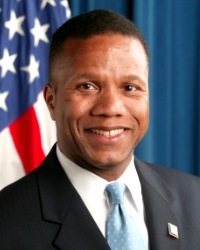
John Nalbandian – Nominee for the U.S. Court of Appeals for the Sixth Circuit

So far, the Trump Administration has moved relatively quickly to fill vacancies on the Court of Appeals.  However, the nomination of John Nalbandian to the Sixth Circuit was seemingly finalized in supernatural speed, coming just two days after Judge John Rogers announced his intent to move to senior status.  This speed is a sign that Nalbandian was being vetted before the vacancy was announced, potentially for the Ohio seat vacated by Judge Alice Batchelder.

Background

John Baylor Nalbandian was born in 1969 in Fort Ord, California.[1]  After getting a B.S. magna cum laude from the University of Pennsylvania and a J.D. from the University of Virginia Law School, Nalbandian clerked for Judge Jerry Edwin Smith on the U.S. Court of Appeals for the Fifth Circuit.[2]  After his clerkship, Nalbandian joined the Washington D.C. office of Jones Day.

In 2000, Nalbandian moved from Jones Day to the Cincinnati office of Taft Stettinius & Hollister LLP.[3]  He became a partner there in 2004 and continues to serve in that capacity today.

In 2010, upon the recommendation of Senate Republican Leader Mitch McConnell (R-KY), Nalbandian was appointed by President Obama to serve on the board of directors of the State Justice Institute (SJI), a nonprofit organization focused on improving resources for judges and court staff.[4]  Nalbandian continues to serve as a director.

History of the Seat

Nalbandian has been nominated for a Kentucky seat on the U.S. Court of Appeals for the Sixth Circuit.  This seat opened in January 2018 with Judge John Rogers’ announcement that he would move to senior status upon confirmation of his successor.  However, Nalbandian had been under consideration for a federal judgeship as far back as November 2016, when he first began talking to McConnell about a judicial appointment.[5]  While he interviewed with McConnell in January 2017, he wasn’t contacted by the White House until September (approximately when Judge Alice Batchelder announced her move to senior status in an Ohio seat).  Nalbandian interviewed with the White House and the Department of Justice in October 2017, and was nominated on January 24, 2018.

Political Activity

Nalbandian is a Republican and has a long history with the Kentucky Republican party, including serving as the Party’s General Counsel between 2010 and 2016, and serving as a Delegate to the 2016 Republican National Convention.[6]  Nalbandian also advised and volunteered on the campaigns of several Kentucky Republicans including those of McConnell, Sen. Rand Paul, Rep. Andy Barr, Rep. James Comer, and former State Senate President David Williams.[7]

Nalbandian has also been an active donor to Republicans, having given almost $15000 over the last thirteen years.[8]  Barr has been a particular beneficiary of the donations, having received $3250 of the donations.[9]  Nalbandian has also donated to other Republicans including Senators Todd Young and Tom Cotton.[10]

Nalbandian has been active in the Federalist Society for the past twenty seven years, including serving as President of the Cincinnati Lawyers Chapter from 2000 to 2008, and serving as an Advisory Board Member from 2010 to the present.[11]

Legal Experience

Nalbandian has practiced law for around twenty five years, cutting his teeth by representing a habeas petitioner as a law student at the University of Virginia.[12]  In his time at Jones Day and at Taft Stettinius, Nalbandian has specialized in appellate practice, representing businesses on commercial, environmental, labor, and other matters.[13]  For example, Nalbandian helped defend the brand name manufacturers of Percocet in a series of class-action lawsuits borne out of injuries caused by the drug.[14]  Throughout his career, Nalbandian has handled a vast array of cases.  We summarize some of them below:

Criminal Defense

Nalbandian has developed a thriving criminal defense practice, working on many white collar criminal defense matters.[19]  Notably, he has also represented capital and habeas defendants pro bono.  For example, Nalbandian represented an Ohio death penalty petitioner in seeking a new sentencing hearing.[20]  In challenging the death penalty sentence, Nalbandian successfully argued that the petitioner did not receive the effective assistance of his counsel at the penalty phase of his trial, leading to the Sixth Circuit reversing the death penalty on a 2-1 vote.[21]

Environmental Pollution & Toxic Torts

Nalbandian has represented many businesses in suits over environmental pollution or toxic torts, typically seeking to shield the business from penalties or civil damages.  In one suit, Nalbandian represented a steel company seeking to reverse damages assigned to plaintiffs based on “fugitive dust” that had migrated to the plaintiffs’ properties.[15]  However, Nalbandian has also represented plaintiffs in contamination and toxic tort actions, in one case, suing on behalf of plaintiffs who had consumed contaminated water in West Virginia.[16]

Local Government

Throughout his career, Nalbandian has also occasionally represented municipalities in zoning and other such suits.[17]  In one of his more prominent cases, Nalbandian represented Northern Ohio municipalities in an unsuccessful challenge to the regional stormwater management program implemented by the Sewer District.[18]

Election Law

As part of his election law practice, Nalbandian represented Hamilton County Judge John Williams in a contentious election challenge.[22]  In the 2010 elections, Williams was challenged by Democrat Tracie Hunter, and was certified as the winner with a narrow lead in the final vote count.  However, Hunter challenged the results, arguing that 849 provisional ballots were erroneously thrown out due to poll worker error.[23]  When outgoing Ohio Secretary of State Jennifer Brunner, a Democrat, stepped in to offer guidance in reviewing the 849 disputed ballots, Nalbandian sued on Williams’ behalf, successfully getting the Republican-dominated Ohio Supreme Court to step in and block Brunner’s guidance.[24]

In response to the Ohio Supreme Court’s intervention, Hunter filed a federal suit, and U.S. District Judge Susan Dlott granted a preliminary injunction in Hunter’s favor to count the disputed ballots.[25]  When Nalbandian appealed, a divided panel of the Sixth Circuit affirmed the injunction,[26] and with the recounting of 149 additional ballots, Hunter was declared the winner of the election.

Academic Judgment

In one of his more unusual cases, Nalbandian represented the Case Western Reserve University in seeking to revoke a medical school diploma given to one of its students.[27]  The plaintiff in the case, Amir Al-Dabagh, had fulfilled all the academic requirements for a medical degree.[28]  However, the Medical School declined to give him a degree, citing numerous “professionalism” violations, including incurring a DUI in North Carolina.[29]  Al-Dabagh filed suit, arguing that the failure to give him a medical degree violated its state law duties of fair dealing and good faith, and U.S. District Judge James Gwin ruled in his favor.[30]  However, Nalbandian filed an appeal and was able to convince the Sixth Circuit to reverse the ruling.  Writing for the court, Judge Jeffrey Sutton found that the Medical School’s decision not to award the degree based on “professionalism” was an “academic judgment” that could not be second-guessed by the court.[31]

Overall Assessment

Kentucky nominees to the Sixth Circuit have not had the smoothest confirmations under Trump, with both Judges Thapar and Bush being confirmed by narrow partisan margins.  While Nalbandian has already been unanimously confirmed by the senate once, this does not necessarily portend an easy confirmation for him this time around.  The State Justice Institute, while important, focuses on education rather than shaping law or policy.  As such, it is unlikely that Democrats, who were willing to confirm Nalbandian to the SJI, will be equally accommodating when the prize is a lifetime appointment one step below the supreme court.

Furthermore, Nalbandian is active in the Federalist Society, and the conservative legal organization has become a a bete noire for Senate Democrats.  As such, it is likely that Nalbandian will see significantly more opposition to this nomination than he did eight years ago.

That being said, unlike the previous two nominees to the Sixth Circuit from Kentucky, Nalbandian lacks both a judicial paper trail and a bevy of controversial statements that can be mined for opposition research.  Furthermore, unlike most Trump nominees, Nalbandian has worked with diversity-based legal organizations, including as an active member of the Greater Cincinnati Minority Counsel Program  and the National Asian Pacific American Bar Association.  His active role in the Asian American legal community and his pro bono work should also deflect criticism.

Overall, while Nalbandian may not see the unanimous support he received eight years ago, he will likely be confirmed with a bipartisan majority.  His expected confirmation will make him the second Asian Pacific American on the Sixth Circuit, and will help secure the court’s conservative majority.


[1] Sen. Comm. on the Judiciary, 115th Cong., John Nalbandian: Questionnaire for Judicial Nominees 1.

[2] Id. at 2.

[3] See id.

[4] See The Salt Lake Tribune, Utah Court Official Appointed by Obama to National Board, The Salt Lake Tribune, July 1, 2010.

[5] See Nalbandian, supra n. 1 at 25.

[6] See id. at 11.

[7] See id. at 11-12.

[9] See id.

[10] See id.

[11] See Nalbandian, supra n. 1 at 4.

[12] In re: Burnley, 998 F.2d 1 (4th Cir. 1992).

[13] See Nalbandian, supra n. 1 at 13.

[14] See Germain et al. v. Teva Pharmaceuticals USA Inc., 756 F.3d 917 (6th Cir. 2014).

[15] Ellis et al. v. Gallatin Steel Co., 390 F.3d 461 (6th Cir. 2004).

[16] See Rhodes et al. v. E.I. Du Pont De Nemours & Co., 636 F.3d 88 (4th Cir. 2011).

[17] See, e.g., John K. Bush, A Better Approach to Civil Litigation Reform,

[18] See Northeast Ohio Regional Sewer Dist. v. Bath Twnship, 44 N.E.3d 246 (Ohio 2015).

[19] See, e.g., United States v. Romanini, 502 Fed. Appx. 503 (6th Cir. 2012).

[20] See Frazier v. Huffman, 348 F.3d 174 (6th Cir. 2003).

[21] See Frazier v. Huffman, 343 F.3d 780, 801 (6th Cir. 2003).

[22] See Hunter v. Hamilton Cnty. Bd. of Elections, 635 F.3d 219 (6th Cir. 2011).

[23] See id. at 226.

[24] The State ex rel. Painter et al. v. Brunner, 941 N.E.2d 782 (Ohio 2011).

[25] See Hunter v. Hamilton Cnty. Bd. of Elections, No. 10-00820-Dlott, 2010 U.S. Dist. LEXIS 128434 (S.D. Ohio, Nov. 22, 2010).

[26] See Hunter v. Hamilton Cnty. Bd. of Elections, 635 F.3d 219 (6th Cir. 2011).

[27] See Al-Dabagh v. Case Western Reserve University, 777 F.3d 355 (6th Cir. 2015).

[28] See id. at 358.

[29] See id.

[30] See id. at 358-59.

[31] See id. at 360.

Gordon Giampietro – Nominee for the U.S. District Court for the Eastern District of Wisconsin

Last year, Gordon Giampietro was nominated by President Trump to be a federal judge upon the recommendation of Wisconsin’s U.S. Senators, indicating a comfortable nomination.  As such, when news broke of controversial statements made by Giampietro in interviews and online comments and of allegations that the statements were not properly disclosed in the nomination process, many felt that this latest controversy had derailed his nomination.  However, even without the reported statements, Giampietro’s record shows involvement in several political flashpoints, suggesting that his confirmation was always unlikely to be smooth.

Background

Gordon Peter Giampietro was born on October 19, 1965, in Washington D.C.  Giampietro spent much of his formative years in D.C., attending The Catholic University of America and The Catholic University Columbus School of Law, getting his J.D. in 1992 with a Comparative and International Law Certificate.  In between his undergraduate education and law school, Giampietro worked at The Connecticut Avenue Club Hotel as the Assistant Manager.[1]  After graduating law school, Giampietro moved to Wisconsin to clerk for Judge Rudolph Randa on the U.S. District Court for the Eastern District of Wisconsin, serving as the newly appointed conservative’s first law clerk.[2]

After his clerkship, Giampietro joined the Milwaukee Office of Michael, Best & Friedrich LLP as a Litigation Associate.[3]  In 2000, he was named a Litigation Partner at the firm.  In 2002, Giampietro left the firm to join the U.S. Department of Justice Criminal Division, serving as an Assistant U.S. Attorney in the Eastern District of Wisconsin.[4]  Additionally, in 2007, Giampietro became the Bankruptcy Fraud Coordinator for the Office.  In 2010, Giampietro gave up that position and became the Criminal Health Care Fraud Coordinator and Deputy Elections Officer.[5]

In 2015, Giampietro left the government to join the Northwestern Mutual Life Insurance Company as Assistant General Counsel.[6]  He serves in that role today.

History of the Seat

Giampietro has been nominated to the U.S. District Court for the Eastern District of Wisconsin, to a seat vacated on February 5, 2016, by Judge Rudolph Randa (for whom Giampietro had clerked).  Interestingly, Randa had expressed his interest in moving to senior status back in 2007, and the Bush Administration had nominated state judge Timothy Dugan to replace him.[7]  However, Dugan was never confirmed by the then-Democratic senate, and, after the election of President Obama, Randa reversed his desire to go on senior status.

In February 2017, Wisconsin senators Ron Johnson and Tammy Baldwin, a Republican and a Democrat, respectively, announced the renewal of their bipartisan Judicial Nominating Commission.  Giampietro submitted an application to the Committee on May 30th.[8]  He interviewed with the Committee in July and his name, alongside three others, was submitted to the White House in August 2017.[9]  After interviews with the White House Counsel’s Office and the Department of Justice, Giampietro was nominated on December 20, 2017.

Legal Experience

Excluding his time as a clerk, Giampietro has split his career between working as a federal prosecutor and working in private practice.

Private Practice

In his first position out of his clerkship, Giampietro managed corporate litigation as an associate and a partner at Michael Best.[10]  Notably, Giampietro was able to dismiss a tort action brought by the estate of a worker killed by a vertical boring mill, by successfully arguing, as a matter of first impression, that Wisconsin law did not permit suits against brokers of second hand industrial equipment.[11]

In addition to his corporate work, Giampietro also participated in more controversial cases.  For example, Giampietro represented the Republican leaders in the Wisconsin House and Senate in the lawsuit over Wisconsin’s legislative districts.[12]  Giampietro also represented the Metropolitan Milwaukee Association of Commerce in an unsuccessful challenge to a Milwaukee labor ordinance requiring county contractors to sign “labor peace agreements” with unions.[13]

However, Giampietro’s most politically charged case was his representation of Munir Hamdan, a grocery store owner seeking the right to carry a concealed weapon to protect his store.[14]  Hamdan was charged with carrying a concealed weapon in violation of Wisconsin law, but his conviction was reversed in a 5-2 vote of the Wisconsin Supreme Court, who held that Hamdan’s conviction violated the Right to Bear Arms in the Wisconsin Constitution.[15]

Department of Justice

From 2002 to 2015, Giampietro worked as a prosecutor at the Department of Justice through the U.S. Attorney’s Office for the Eastern District of Wisconsin.  In this role, Giampietro handled the prosecutions of both violent offenders and white collar criminals.[16]  Notably, Giampietro prosecuted Kimberly Prude, a convicted felon, for casting a ballot in the 2004 elections.[17]  Prude had cast a ballot while on supervised release from a forgery conviction.[18]  Upon discovering that she was ineligible to vote, Prude contacted the Election Commission and attempted to withdraw her ballot only to be told “not to worry about it.”[19]  Despite the fact that she herself had reported the mistake and had attempted to withdraw the ballot, Prude was nonetheless prosecuted and convicted of voter fraud.[20]  During the trial, Prude was not permitted to present witnesses to testify as to her efforts to withdraw her ballot, while the government was allowed to testify on the subject.[21]  On appeal, the Seventh Circuit agreed that Judge Rudolph Randa had erred in his evidentiary rulings but found that the errors did not require reversal under “plain error” review.[22]

Giampietro was also central to a conflict between the U.S. Attorney’s Office and federal judge J.P. Stadtmueller.  In 2008, Giampietro was prosecuting Rashid Salahuddin for being a felon in possession of a firearm, a case that had, at the time, been pending for three years.[23]  On October 9, 2008, Stadtmueller, who was overseeing the case, called U.S. Attorney Steven Biskupic and Federal Defender Daniel Stiller into his chambers for a meeting without the court reporter present.[24]  At the meeting, Stadtmueller expressed concern as to the length and litigation costs in the case and suggested that the parties resolve the issue without further litigation.[25]  In response to this meeting, the U.S. Attorney’s Office filed a motion for Stadtmueller to recuse himself from the case, alleging bias against Giampietro and the U.S. Attorney’s Office.[26]  Stadtmueller, a former U.S. Attorney, declined to recuse himself and granted motions to suppress in the defendant’s favor.[27]  Giampietro appealed the recusal motion to the Seventh Circuit, who forced Stadtmueller off the case, citing that Stadtmueller “suggested that the case was an embarrassment to the justice system and an inefficient allocation of taxpayer resources” in his remarks.[28]  The removal prompted Stadtmueller to take the unprecedented step of declining all future criminal cases, suggesting that the U.S. Attorney’s Office was using recusal to engage in “judge shopping.”[29]

Writings, Interviews, and Expressed Views

Over his career, Giampietro has occasionally commented on issues of law and policy, both in writing, and through interviews and speeches.

Expressed Political Views in Interviews

On February 2015, 2018, Zoe Tillman at Buzzfeed broke the story that Giampietro had, in his writings and interviews, made “disparaging comments about diversity, same-sex relationships, and birth control.”[30]  Specifically, in a 2015 radio interview, Giampietro stated that it was “irrefutable” that children were best-raised by heterosexual couples and that same-sex relationships were troubled.[31]  In other comments, Giampietro referred to the birth control pill as an “assault on nature” and suggested that diversity was “code for relaxed standards.”[32]  In response to the story, Baldwin indicated that the statements had not been disclosed to the Evaluation Commission and that they “raise serious questions about whether this nominee would be able to serve as a fair and impartial judge.”[33]

In response, Giampietro wrote to Baldwin privately arguing that the article “reads like an attack on my Catholic faith.”[34]  Additionally, five Wisconsin based Catholic bishops wrote to Baldwin arguing that Giampietro was “not receiving a fair hearing because of his Catholic faith.”[35]  Furthermore, members of the Evaluation Commission disagreed as to the significance of the undisclosed statements, with Republican member Rick Esenberg arguing that the statements were irrelevant while Democratic member Barbara Quindel indicating that the Commission would not have recommended Giampietro if they had known about the statements.[36]

“Moral Force” of Judicial Decisions

In 2003, the Wisconsin Supreme Court, in a 4-3 decision, upheld a $3.5 million punitive damages award against an insurance company, finding as a matter of law, that the insurance company had acted in bad faith in failing to inform the insured of a mutual mistake in the insurance contract.[37]  The decision was criticized by some attorneys, including many conservatives.[38]  In response to the criticism, George Burnett, President of the Wisconsin Bar, authored a President’s Message urging members of the Bar to defend the Court against “political attacks.”  In response, Giampietro wrote a response, arguing that Burnett overstepped in arguing that Courts rule by “moral force.”[39]  He noted that “[w]hen the judicial branch abandons ‘the idea of law,’ it forfeits the right to claim that its decisions are imbued with a ‘moral force.’”[40]  In response, Burnett countered that Giampietro’s piece misinterpreted his own and noted that “when one ascribes political motives as a substitute for a legal critique of judicial decisions, one undermines public confidence in our judiciary.”[41]

Political Activity & Memberships

On May 22, 2017, Giampietro donated $1000 to Sen. Ron Johnson.[42]  The contributions were made approximately a week before Giampietro applied for a federal judgeship with Johnson and Baldwin’s Selection Committee.

Giampietro has been a member of the Federalist Society for Law and Public Policy Studies (a conservative legal society that has produced many Trump judicial nominees) since 1989, serving as the President of the Milwaukee Chapter between 1995 and 1997.[43]

Overall Assessment

It is undeniable that Giampietro is an exceptional lawyer, with significant experience in both civil and criminal law.  As such, it is unlikely that critics of the nomination will raise substantive objections to his qualifications.  Instead, they may object to Giampietro’s temperament and impartiality, relying on the statements reported on by Buzzfeed, his membership in the Federalist Society, his involvement in politically charged cases including the Hamdan case, and, potentially, his conduct in the Prude and Salahuddin cases.

In contrast, Giampietro’s supporters are likely to try a tactic that worked well for then-nominee Amy Coney Barrett in 2017: accusing Giampietro’s critics of anti-Catholic bias.  They will argue, as Giampietro already has, that his views on LGBT relationships and birth control are integral to his faith and that attacking those views is tantamount to imposing a religious test for federal judges.

Ultimately, the Constitution forbids a religious test for public office, and, additionally, public opinion stands strongly by that principle.  As such, to disqualify Giampietro, critics will have to make an additional point in their case, that Giampietro would be unable to set aside his views (religious or otherwise) to rule based on the law and precedent.  The future of Giampietro’s nomination ultimately depends on whether Sen. Baldwin is convinced on this point.


[1] Sen. Comm. on the Judiciary, 115th Cong., Gordon Giampietro: Questionnaire for Judicial Nominees 2.

[2] See id.

[3] See id.

[4] See id.

[5] See id.

[6] See id.

[7] Giampietro had applied to fill that vacancy but was not selected.

[8] See id. at 28.

[9] See id.

[10] See id. at 12.

[11] See Geboy v. TRL, Inc., 976 F. Supp. 1202 (E.D. Wis. 1997), aff’d, 159 F.3d 993 (7th Cir. 1998).

[12] See Arrington v. Elections Bd., 173 F. Supp. 2d 856 (E.D. Wis. 2001).

[13] See Metropolitan Milwaukee Assoc. Of Commerce v. Milwaukee Cnty., 201 F. Supp. 2d 942 (E.D. Wis. 2002).

[14] See State of Wisconsin v. Hamdan, 665 N.W.2d 785 (Wis. 2003).

[15] See id. at 478 (concluding that the right to keep and bear arms is at an apex when protecting a home or a business).

[16] See Giampietro, supra n. 1 at 11.

[17] See United States v. Prude, 489 F.3d 873 (7th Cir. 2007).

[18] See id. at 875.

[19] Id.

[20] See id. at 876.

[21] See id. at 878-81.

[22] See id. at 881.

[23] See In re: United States of America, 572 F.3d 301, 305 (7th Cir. 2009).

[24] See id. 

[25] See id.

[26] See id. at 305-06.

[27] See United States v. Salahuddin, 607 F. Supp. 2d 930 (E.D. Wis. 2009), motion for reconsideration denied, 608 F. Supp. 2d 1061 (E.D. Wis. 2009).

[28] In re: United States of America, 572 F.3d 301, 311 (7th Cir. 2009).

[29] John Diedrich, U.S. Judge Stadtmueller Not Taking New Criminal Cases, Milwaukee Journal Sentinel, Aug. 23, 2009, http://archive.jsonline.com/news/milwaukee/54417857.html/.  

[30] Zoe Tillman, One of Trump’s Judicial Nominees Once Wrote That Diversity is “Code for Relaxed Standards”, BuzzFeed News, Feb. 15, 2018, https://www.buzzfeed.com/zoetillman/one-of-trumps-judicial-nominees-once-wrote-that-diversity?utm_term=.bunlpv57b#.ferWeqXP9.  

[31] See id.

[32] See id. (citing Giampietro’s comments).

[33] See id. (quoting Sen. Tammy Baldwin’s spokesperson).

[34] Bill Glauber and Daniel Bice, Catholic Bishops Call on Tammy Baldwin Not to Block Judicial Nomination of Gordon Giampietro, Milwaukee Journal Sentinel, Feb. 27, 2018, https://www.jsonline.com/story/news/politics/2018/02/27/catholic-bishops-call-tammy-baldwin-not-block-nomination-gordon-giampietro-federal-bench/377622002/.

[35] See id. (quoting Letter from The Bishops of the State of Wisconsin to Sen. Tammy Baldwin (Feb. 20, 2018)).

[36] See id.

[37] See Trinity Evangelical v. Tower Ins. Co., 661 N.W.2d 789 (Wis. 2003).

[38] See, e.g., Robert J. Dreps & Katherine Stadler, Insurance Bad Faith: Failure to Reform Policy Based on Agent Error May Constitute Bad Faith as a Matter of Law, Godfrey & Kahn S.C. Blog, May 28, 2003, http://www.gklaw.com/newsupdatespressreleases/Insurance-Bad-Faith-Failure-to-Reform-Policy-Based-on-Agent-Error-May-Constitute-Bad-Faith-as-a-Matter-of-Law-2003-05-28-1.htm (describing decision as “puzzling” and “at odds” with Supreme Court precedent).

[39] Gordon P. Giampietro, Ruling by Moral Force?, Wis. Lawyer (Feb. 2004), https://www.wisbar.org/NewsPublications/WisconsinLawyer/Pages/Article.aspx?Volume=77&Issue=2&ArticleID=734.  

[40] See id.

[41] See George Burnett, Response to Ruling by Moral Force?, Wis. Lawyer (Feb. 2004), https://www.wisbar.org/NewsPublications/WisconsinLawyer/Pages/Article.aspx?Volume=77&Issue=2&ArticleID=734.

[42] Center for Responsive Politics, https://www.opensecrets.org/donor-lookup/results?name=gordon+giampietro (last visited Feb. 25, 2018).

[43] See id. at 4.

Jill Otake – Nominee for the U.S. District Court for the District of Hawaii

Jill Otake, the federal prosecutor nominated by Trump to a district court seat in Hawaii, is an unusual nominee for two reasons.  First, the Trump Administration has foregone appointing a Republican and has instead chosen a candidate recommended by Hawaii’s Democratic senators to a Democratic President.  Second, while Otake is a native of Hawaii, she has spent almost all of her legal career practicing, not in her home state, but in Washington.

Background

Jill Aiko Otake was born in Honolulu on October 3, 1973.  Otake received her B.S. cum laude from Georgetown University in 1995 and her J.D. from the University of Washington School of Law in 1998.[1]  After graduating, Otake joined the King County Prosecuting Attorney’s Office, serving as a prosecutor in the metro Seattle area.

In 2001, Otake returned to Hawaii to clerk for Justice Simeon Acoba on the Hawaii Supreme Court.[2]  She returned to the King County Prosecuting Attorney’s Office after her clerkship.  In 2005, Otake became a federal prosecutor with the U.S. Attorney’s Office for the Western District of Washington, working as an Assistant United States Attorney (AUSA).  In 2011, Otake became the Deputy Supervisor of the Terrorism and Violent Crimes Unit and in 2013, she became the Co-Supervisor for the General Crimes Unit.[3]

In 2014, Otake moved to the U.S. Attorney’s Office for the District of Hawaii.[4]  In 2016, she was named Deputy Chief of the Special Crimes Section and, since 2017, she has served as Acting Chief of the Section.[5]

History of the Seat

Otake has been nominated for a vacancy on the U.S. District Court for the District of Hawaii.  This seat opened when Judge Susan Oki Mollway moved to senior status on November 6, 2015.  In May 2015, Otake interviewed with a Commission formed by Hawaii Senators Mazie Hirono and Brian Schatz, both Democrats.[6]  After interviews with Hirono and Schatz, Otake was one of three candidates recommended by the senators to the Obama Administration.[7]  However, the Obama Administration chose to nominate Clare Connors, another recommended candidate, on September 8, 2015.[8]  While Connors received a hearing in January 2016, and was unanimously approved by the Senate Judiciary Committee in April, she never received a floor vote.

In April 2017, Otake was contacted by the Trump Administration to gauge her interest in a federal judgeship.[9]  After interviewing with the White House Counsel’s Office and the Department of Justice, Otake was formally nominated on December 20, 2017.  Otake has the strong support of Hirono and Schatz.[10]

Legal Experience

Otake has spent her entire legal career as a prosecutor, working on the state level between 1998 and 2005, and on the federal level since 2005.[11]  Over the course of her career, Otake tried approximately 40 cases to verdict, including as lead counsel in approximately 15.[12]  As a state prosecutor, Otake not only handled criminal trials, but also worked in a supervisory capacity over other prosecutors.[13]

As a federal prosecutor in Washington, Otake initially worked in the General Crimes Unit but later joined the Terrorism and Violent Crimes Unit, becoming a Deputy Supervisor in 2011 under U.S. Attorney Jenny Durkan.[14]  While there, Otake helped prosecute members of the Sovereign Assemblies, an anti-government group that had set up its own law enforcement arm and worked to commit tax fraud in an effort to cheat the U.S. Government.[15]

After moving to Hawaii in 2014, Otake handled a variety of cases, including civil rights violations, firearms offenses, and human trafficking.[16]  Early in her tenure, Otake led the prosecution of eighteen members of a prison gang engaged in violence, smuggling, and fraud.[17]  She also prosecuted a prison guard who had assisted in smuggling methamphetamines into correctional facilities.[18]

Overall Assessment

Nominated by Trump and supported by her Democratic home state senators, Otake should sail to confirmation.  While questions can be raised as to Otake’s ties to the Hawaii legal community (she had practiced there for approximately a year before applying for a federal judgeship), with Hawaii senators on board, it is unlikely that others will raise them.

On the bench, Otake is likely to be familiar with the intricacies of sentencing and criminal law, given her long tenure as a prosecutor.  While she lacks the commensurate civil experience, focusing one’s legal career on either criminal or civil law has not barred previous nominees, and, as such, should not disqualify Otake.  As such, Hawaii should expect Otake on the bench this year, restoring a full bench.


[1] Sen. Comm. on the Judiciary, 115th Cong., Jill Otake: Questionnaire for Judicial Nominees 1.

[2] See id. at 2.

[3] Id.

[4] Id.

[5] Id.

[6] Id. at 26-27.

[7] Shiwani Johnson, Former Hawaii Attorney General Among 3 Nominees for U.S. District Court Opening in Honolulu, Pacific Business News, June 17, 2015, https://www.bizjournals.com/pacific/blog/morning_call/2015/06/former-hawaii-attorney-general-among-3-nominees.html.  

[8] Press Release, White House, President Obama Nominates Three to Serve on the United States District Courts, Sept. 8, 2015 (on file at https://obamawhitehousearchives.gov).

[9] See Otake, supra n. 1 at 27.

[10] Press Release, Office of Sen. Mazie Hirono, Hirono & Schatz Announce Nomination of Jill Otake to U.S. District Court, Dec. 20, 2017 (on file at hirono.senate.gov).

[11] See Otake, supra n.1 at 1-2.

[12] See id. at 18.

[13] See id. at 17.

[14] Id.

[15] See United States v. Jarlik-Bell, et al., No. CR11-5407RBL (W.D. Wash. Aug. 10, 2011).

[16] See Otake, supra n. 1 at 17.

[17] See, e.g., United States v. Esera, et al., Nos. CR13-860LEK (D. Haw. Sept. 12, 2013).

[18] See United States v. Damas, et al., No. CR14-177JMS (D. Haw. Feb. 5, 2014).

Judge Kari Dooley – Nominee for the U.S. District Court for the District of Connecticut

Republican Kari Anne Dooley, a judge for Connecticut’s Superior Court (trial court) since 2004, has been nominated for a seat on the U.S. District Court for the District of Connecticut.[1]  Before becoming a judge, she worked in private practice as well as serving for 12 years as an Assistant U.S. Attorney for the District of Connecticut.[2]

Background

Dooley, 54, was born in New York City on May 9, 1963.  She earned her B.A. in psychology from Cornell University in 1985 and her J.D. (cum laude) from the University of Connecticut School of Law in 1988.[3]  After graduating law school, she began her career in civil litigation and criminal defense at Whitman & Ransom (now Whitman Breed) in Greenwich, Connecticut.[4]  A mother of two, in 1992, Dooley moved to the public sector as an Assistant U.S. Attorney, staying in the office for twelve years.[5]  She served as counsel to the U.S. Attorney in 2004 until starting as a state court judge.[6]  She currently sits on Connecticut’s Superior Court in Waterbury and hears cases on the complex litigation docket.[7]  Dooley was nominated at the recommendation of Connecticut’s two democratic senators.[8]

History of the Seat

Dooley was nominated to a vacancy on the U.S. District Court for the District of Connecticut on December 20, 2017.  The vacancy opened on January 1, 2017, with Judge Roberty Chatigny’s move to senior status.

In May 2017, Dooley applied for the judgeship with Connecticut Senators Richard Blumenthal and Chris Murphy, both Democrats.  They recommended Dooley to the White House in August 2017.  Trump officially nominated Dooley on December 20, 2017.

Legal Career

While counsel to the U.S. Attorney, Dooley served as the Child Exploitation and Obscenity coordinator.[9]  Dooley has been involved in a number of high-profile prosecutions involving white collar fraud and child sex crimes.  She was involved in the 1993 prosecution of Stew Leonard, patriarch of the eponymous Connecticut grocery store, for $17.1 million in tax fraud.  He was sentenced to 52 months in federal prison.  She also aided in the 1997 prosecution of his son, Tom Leonard, who pleaded guilty to two counts of filing false tax returns.[10]  She worked with the child victims of the 2001 prosecution of Waterbury, Connecticut’s Mayor Philip Giordano, who was sentenced to 37 years for using his influence and political position to systematically sexually assault children.[11]  Connecticut U.S. Attorney Kevin O’Connor described her work interviewing the children victims as “masterful[].”[12]  In 2002, she brought 24 federal charges against Martin Frankel stemming from swindling small insurance companies in a scam that caused at least $200 million in losses.[13] In 2004, she prosecuted Danbury, Connecticut lawyer Bernabe “Bernie” Diaz for having sex with and receiving pornography of his girlfriend’s underage daughter.[14]

Dooley by all accounts has a reputation for being fair and a talented lawyer.  Counsel for criminal defendant Diaz, see supra, stated that Dooley “always struck [him] as being fair even though she’s a U.S. Attorney,” and “someone who knows their way around a courtroom.”[15]  Connecticut’s U.S. Attorney Kevin O’Connor has praised Dooley’s ability to work with child victims and her “demonstrated … commitment to the pursuit of justice,” and has decried her as “an immensely talented lawyer.”[16]  The state’s senators echoed these sentiments in their public statement lauding her for having “earned the deep respect of her colleagues and peers”[17]

Jurisprudence

Dooley has not presided over any published cases, and has participated in 12 unpublished cases, which address a range of criminal and civil issues.[18]  As Dooley puts it, her “judicial responsibilities have included presiding over a variety of criminal, civil, housing and juvenile matters,” and “[s]ince 2012, [she] ha[s] been assigned to the Complex Litigation Docket in Waterbury, Connecticut.”[19]

Connecticut senators Richard Blumenthal and Chris Murphy, in a statement released following Dooley’s nomination, described her as having “a well-deserved reputation for her tireless work ethic, a high standard of integrity, and an admirable judicial temperament.”[20]

Speeches/Writings

While research has not revealed publications or speeches by Dooley, Dooley commented on her 2004 nomination to a seat on Connecticut’s state trial court, calling it “a real privilege,” and stating that she “look[ed] forward to staying in public service.”[21]

Overall Assessment

Dooley’s long tenure as a federal prosecutor and state court judge, as well as her glowing reputation among her legal community, make her a consensus candidate for the vacancy.  Although research has revealed relatively little about Dooley, the unanimously positive endorsements she has received for her work both as a lawyer and as a judge suggest an even-handed and thoughtful approach, which should, logically speaking, translate to an apolitical approach as well.


[18] Westlaw search conducted by author, January 21, 2018.

[19] https://linkedin.com, input “Kari Dooley” in search, first result.

Unconfirmed: Claude Allen

Official Portrait Claude Allen

Even compared to other failed judicial nominees, Claude Allen’s story is uncommonly tragic. His nomination to the U.S. Court of Appeals for the Fourth Circuit was doomed by several familiar factors—a history of offensive statements, a record of extreme social conservatism, and a lack of traditional legal experience— and an unusual one: He was caught in the middle of a spat between Maryland Democrats and Virginia Republicans over the nominee’s state of origin. His nomination stalled for two years, showed no signs of movement, and was withdrawn at his request.

And then the shoplifting charges hit.

Ultimately, Claude Allen’s unsuccessful judicial nomination will be a mere footnote in his life story; overtaken by other events, including his arrest and conviction on multiple charges of shoplifting, followed by a horrific family tragedy involving his son. And for lawyers who sometimes lose perspective, it is a bracing reminder that there is more to life than the law.

The Nomination

In 2003, President Bush nominated Allen to Fourth Circuit, at the time widely regarded as the most conservative federal appeals court in the country. (Things have changed.) Allen had limited legal experience but a sterling resume. A graduate of Duke Law School and a protégé of Clarence Thomas, Allen served as Secretary of Health and Human Resources under Virginia Governor James Gilmore, then joined the George W. Bush Administration in 2001 as Deputy Secretary of the Department of Health and Human Services.

Yet although the Republicans controlled the Senate, Allen’s nomination clung to life support from the start, for several reasons—some unique to him, others not; some his doing, others not. In particular, (1) he had made anti-LGBT and anti-woman comments earlier in his career, and had defended anti-civil-rights positions held by his then-boss, Senator Jesse Helms; (2) his record in government revealed extreme social conservatism, punctuated by controversial, high-profile decisions and bipartisan questions about his temperament; (3) he had little traditional legal or judicial experience, which reinforced concerns that President Bush nominated him to advance a socially conservative agenda; and (4) he was caught in the middle of a feud battle between Democratic Senators from Maryland (home of the judge whom Allen would be replacing) and Republican Senators from Virginia (home of Allen).

Perhaps Allen could have surmounted one or another of these obstacles. But the combination was too much.

First, Allen had made anti-LGBT and anti-woman comments while working as press secretary for Senator Jesse Helms in the early 1980s. In 1984, Allen attacked Helms’s opponent, North Carolina Governor James Hunt, for having ties to “the queers” and a “radical feminist connection.” The demeaning comment did not sound any better in context: Allen had said, “We could expound on and undertake a campaign against Jim Hunt’s connections with the homosexuals, the labor union connection, the radical feminist connection, the socialist connection . . . . We could go back and do the same thing with the queers.”

Allen’s explanation at his confirmation hearing did not help. He claimed to have meant only that Hunt’s campaign affiliated with “odd” people. Spectators were unpersuaded; in the words of NPR, “Claude Allen embarrassed the GOP with his slurs against gays and feminists and two decades later during the Senate Confirmation Hearing he didn’t back away from them.”

Allen’s ties to Jesse Helms presented a broader problem for the African-American judicial nominee. Senators questioned Allen about Helms’s 1983 filibuster of the proposed federal holiday honoring Martin Luther King Jr. In response, Allen described Senator Helms’ move as “deeply conflicting” and described the filibuster as “the most difficult day” of his life.

Although the NAACP did not formally oppose Allen’s nomination, other civil-rights groups did. The Leadership Conference for Civil Rights, for example, described itself as “especially troubled by Claude Allen’s record on civil rights”—pointing, among other things, to Allen’s defense of Helms’s voting record.

Second, these civil-rights concerns were exacerbated by Allen’s record in government, both in Virginia and in the Bush administration.

When Allen served as Deputy Secretary of HHS, for instance, the agency defined a fetus as a child eligible for SCHIP funds. Needless to say, this change delighted pro-life groups and horrified pro-choice groups.

But it was Allen’s record in Virginia that proved most controversial. For instance, while leading Virginia’s Department of Health and Human Resources, Allen supported abstinence-only AIDS prevention and blocked a rape victim from receiving Medicaid funds to have an abortion after she was impregnated by her rapist.

Perhaps most notably, Allen played a high-profile role in Governor Gilmore’s effort to keep alive Hugh Finn, a comatose man with severe brain injuries, despite objections from his wife. After Finn had been in a coma for 3 1/2 years following a car accident, his wife sought to disconnect his feeding tube, as permitted by state law. In response, his parents protested the decision, ultimately involving a state legislator, the state attorney general, and national anti-abortion groups.

Then Allen got involved. He sent health department investigators to examine Finn—without his wife’s permission—and claimed that he had been told by a state nurse that Finn might not actually be persistently vegetative; he then advised Governor Gilmore, who ultimately brought suit against Finn’s wife and claimed that she wanted to practice euthanasia. (Unsurprisingly, the Virginia Supreme Court rejected this argument and allowed Finn’s wife to proceed.) After Allen was nominated, Finn’s wife did not hold back: “Any judge has to be able to set aside their own personal and moral conviction to protect the public interest. His actions in my husband’s case show that he’s incapable of doing that,” she said.

Substantive views aside, members of both parties in Virginia complained that Allen was “at best an unresponsive manager and at worst an executive who is trying to dismantle longstanding programs for women and children.” His tenure proved so rocky that a senior Republican State Senator sponsored legislation “designed to force Allen to do a better job communicating to a variety of caregivers in the state.”

These two strands—Allen’s views and his temperament—coalesced in critiques of Allen’s nomination. Senator Leahy, for example, warned that Allen “has shown himself to be extreme with a reputation for recalcitrance and an unwillingness to work with others of differing views.” Likewise, the National Abortion Federation (NAF) argued that “Allen’s record as Secretary of Virginia Health and Human Resources reveals that he uses his political beliefs to justify his professional decisions” and that “[t]here is no reason to conclude that as a judge he would do otherwise.”

Third, Allen’s incendiary record, views, and comments were coupled with a lack of traditional legal or judicial experience. Allen had practiced law for fewer than seven years—more than five fewer than the twelve years recommended by the American Bar Association. The ABA gave Allen a rating of only “qualified”—not “well qualified”—and some members of the panel deemed him “not qualified.”

Because Allen lacked much traditional legal experience, his conservative views and record got yet more attention, and he could not attribute those views to his clients. And given his lack of experience as a lawyer qua lawyer, Allen’s social conservatism appeared to be the reason that he was nominated; NAF, along with others, argued that given “his lack of judicial experience as well as precious little experience as a practicing attorney, his strident conservative beliefs are the main qualifier for his nomination.”

Fourth, and perhaps most importantly, Allen’s nomination sparked a nasty Senatorial spat over—his place of residence. Allen lived in Virginia, home to two Republican Senators; the vacancy had traditionally been filled by judges from Maryland, home to two Democratic Senators. The Maryland Senators had previously objected to Bush’s first choice, and by nominating Allen, Bush appeared to bypass the Democratic Senators from Maryland in favor of the two Republican Senators from Virginia. The ensuing “cross-Potomac quarrel” bloodied an already controversial pick.

This dispute transcended Allen personally. As the New York Times reported, “his fate seemed decided even before he uttered his first word.” At his hearing, the witness table featured not only the two Senators from Virginia, who came to praise Allen’s nomination, but also the two Senators from Maryland, who came to bury it. Maryland’s normally mild-mannered Senator, Paul Sarbanes, became “so animated in his remarks that Senate staff members said they had never seen him so emotional”: He accused Bush of a “gross departure from practice” and vowed to oppose the nomination “with all the strength I can muster.”

All this proved too much for Allen to overcome. Democrats on the Senate Judiciary Committee blocked a committee vote; the two Maryland Democrats vowed to filibuster his nomination even if it made it to the floor; and their position proved sympathetic even to the Republican Committee Chairman, Senator Orrin Hatch. By 2005, when Bush renominated twenty prospective judges who had been halted in the previous session, Allen declined the opportunity. His ailing nomination was finally dead.

Things Go Downhill from There

For most failed judicial nominees, the story would end there. Not so for Claude Allen.

In January 2005, Bush nominated Allen to be the White House Domestic Policy Advisor—itself a move that was deemed “likely to irritate Bush’s critics.” But in February 2006, Allen unexpectedly resigned, claiming that he wanted to spend more time with his family.

Soon his actual reasoning became clear. In March 2006, Allen was arrested and charged with felony theft after committing a series of “refund fraud” shoplifting offenses. Police said that he was spotted taking merchandise—less than 75-dollars-worth!—from a Gaithersburg, MD department store on January 2; he was stopped by a store employee and issued a misdemeanor theft citation. The details of Allen’s low-tech scheme: “[S]tore employees saw Mr. Allen fill a shopping bag with merchandise and put additional items into a shopping cart. He then sought, and received a refund for some of the items and left the store without paying for others.” That citation led police to investigate further, and they determined that in 2005, Allen had received over $5,000 in refunds from department stores in at least 25 fraudulent transactions. The eclectic bill of goods included “a Bose home theater system, stereo equipment, clothes, a photo printer and items worth as little as $2.50.”

(The arrest also gave rise to an ironic conspiracy theory about an evil twin: Allen’s identical twin, Floyd Allen, had a more checkered history; their stepmother admitted that upon learning of the crimes, “I actually started to call Floyd to ask him what happened, but then I saw it wasn’t him.”)

After initially denying the allegations, in August 2006 Allen pled guilty to shoplifting and wept in court while apologizing. Allen received a sentence of “probation before judgment,” allowing him to keep his criminal record clean. His licenses to practice law in Virginia and Pennsylvania were each suspended for 90 days, however, and the District of Columbia bar counsel sought to have him disbarred; the D.C. Court of Appeals rejected that request and ordered Allen suspended for a year, agreeing that Allen’s conduct arose from “extreme stress” and noting darkly that “[t]he legal profession is a stressful occupation that can, and often does, take a toll on the mental health of its practitioners.”

Things got worse yet. In 2013, Allen’s son, Claude Allen III, was arrested in Gaithersburg and charged with a gruesome hatchet murder. The victim’s body was found in the woods behind his Allen’s home. Allen III later pled guilty to the murder and was committed to a psychiatric hospital.

*        *        *

Claude Allen proved to be one of the more memorable Bush judicial nominees, but for reasons that were less than optimal. His fast rise and ideological purity could not secure him a spot on the bench, his nomination and then his career got away from him, and then he suffered a spectacular personal fall. His ultimate legacy may be to remind us that, for better or worse, lawyers and judges are people too.

J. Campbell Barker – Nominee to the U.S. District Court for the Eastern District of Texas

Last year, Brett Talley’s nomination to the federal bench died as doubts were raised about his temperament, youth, and inexperience.  Born in 1981, Talley was only 36 at the time of his nomination.  While the Trump Administration has yet to send a nominee as young as Talley, Cam Barker, newly tapped for the Texas federal bench, comes pretty close, at only 37 years old.  While Barker boasts an impressive resume, including stellar academic credentials, his position as Texas Deputy Solicitor General has given him a footprint in many deeply controversial cases.

Background

John Campbell “Cam” Barker was born in New Orleans, LA in 1980.  Barker attended Texas A&M University, graduating with a B.S. summa cum laude in 2002.  He proceeded to the University of Texas Law School, graduating with a J.D. with highest honors in 2005.  After graduating, Barker clerked for Judge John Walker on the U.S. Court of Appeals for the Second Circuit and then for Judge William Bryson on the U.S. Court of Appeals for the Federal Circuit.

After his clerkships, Barker joined the U.S. Department of Justice Criminal Division as a Trial Attorney.  He worked there until 2011.  During that time, he had a short stint as a Special Assistant United States Attorney on detail with the U.S. Attorney’s Office for the Eastern District of Virginia.

In 2011, Barker left the government to join the Houston office of Yetter Coleman LLP as an associate.  In 2014, Barker was named a partner at the firm.

In 2015, Barker was hired by Texas Attorney General Ken Paxton to be Deputy Solicitor General for the State of Texas, working under Solicitor General Scott Keller.  Barker continues to serve in that position today.

History of the Seat

The seat Barker has been nominated for opened on May 15, 2015, with Judge Leonard Davis’ move to senior status.  Although the seat opened with 19 months left in the Obama Administration, no nominee was ever put forward to fill the vacancy, possibly due to an inability to reach an agreement with Texas’ Republican Senators, John Cornyn and Ted Cruz.

In February 2017, Barker applied for a judgeship with the Federal Judicial Evaluation Committee set up by Cornyn and Cruz.[1]  He interviewed with the Committee in March and then with Cornyn and Cruz in May.  Barker’s name was submitted to the White House in July 2017.[2]  After interviews with the White House Counsel’s Office and the Department of Justice, Barker was nominated on January 23, 2018.

Legal Experience

Other than his clerkships, Barker has held three primary legal positions: as a trial attorney with the Department of Justice; in private practice with Yetter Coleman; and as Deputy Solicitor General for Texas.  In these positions, Barker has practiced extensively in state and federal courts.

Department of Justice

From 2007 to 2011, Barker worked in the appellate section of the Criminal Division of the Department of Justice.[3]  In this capacity, Barker argued 12 criminal appeals in the federal appellate courts, generally defending convictions in federal criminal actions,[4] although, in some cases, Barker also appealed from adverse lower court rulings.[5]

In 2009, Barker detailed at the U.S. Attorney’s Office for the Eastern District of Virginia, where he was the lead prosecutor against three MS-13 gang members who were subsequently convicted of conspiracy and racketeering.[6]

Yetter Coleman

From 2011 to 2015, Barker worked as an associate and a partner at Yetter Coleman LLP.  In this role, Barker primarily carried a civil litigation caseload, including representing Bear Ranch, a beef producer, in a contract dispute,[7] and defending Oklahoma Gas & Electric Co. in a multidistrict patent infringement suit.[8]

Other than his civil docket, Barker also represented a Nepali immigrant seeking political asylum in the United States after facing torture from Maoists in Nepal.[9]  Barker was able to reverse the Board of Immigration Appeals decision denying his client asylum.[10]

Deputy Solicitor General

Since 2015, Barker has served as Deputy Solicitor General in Texas.  In this capacity, Barker has participated in a number of controversial cases.

For example, Barker was on the legal team, alongside Keller and Fifth Circuit nominee Andy Oldham, that sought to enjoin the Obama Administration’s DAPA initiative.  Barker succeeded in getting a nationwide injunction against the initiative from U.S. District Judge Andrew Hanen and in defending that injunction before the Fifth Circuit and the U.S. Supreme Court.[11]  The Texas legal team was able to convince Judge Hanen that Texas suffered an injury from the Obama Administration’s prioritization of certain deportations and that the DAPA initiative violated the separation of powers.[12]

In another controversial case, Barker defended Texas’ Voter ID law, which was challenged as an unconstitutional poll tax, being passed with a discriminatory purpose and effect, and creating a substantial burden to the right to vote.[13]  The law has been struck down by Judge Nelva Gonzalez Ramos, whose injunction has been stayed pending appeal.[14]

Barker has also represented the State of Texas as intervenors in the suits over President Trump’s executive orders restricting entry into the United States for travelers from seven predominantly Muslim countries, seeking to defend the constitutionality of the orders.[15]

Writings

As a law student, Barker authored an article discussing the statutory damages award for copyright infringement.[16]  In the article, Barker argues that the aggregation of statutory damages across many instances of misconduct creates a penalty “so large that it becomes grossly excessive in relation to any legitimate interest in punishment and deterrence.”[17]  He notes that this aggregation becomes particularly severe when imposed against those engaged in unauthorized file sharing, such as through sites such as Napster.[18]

Barker argues in the note that, because the statutory damages scheme under the Copyright Act is “punitive” in nature, that it is limited by the Substantive Due Process Clause, as interpreted under BMW of North America, Inc. v. Gore.[19]  He also notes that a defendant who illegally shares multiple files is not proportionally more culpable than a defendant who illegally shares one.[20]  As such, Barker endorses a rethinking of the statutory damages scheme and suggests the imposition of “much smaller penalties across a larger spectrum of the file-sharing public.”[21]

Overall Assessment

Given both his youth and his involvement in the controversial DAPA, voter id, and travel ban cases, it is unlikely that Barker will be considered a consensus nominee.  Barker’s critics will argue that, given Barker’s prominent role in “political” litigation at the Texas Solicitor General’s Office and his support for the travel ban, that this is an instance of the Trump Administration rewarding an unqualified supporter with a federal judgeship.

However, Barker boasts an impressive resume and can point to several factors in his favor.  Firstly, having graduated law school in 2005, Barker meets the ABA’s criteria of twelve years of practice.  Secondly, Barker has clerked for judges appointed by Republican and Democratic presidents.  Thirdly, Barker worked at the Department of Justice under both the Bush and the Obama Administration, defending their legal positions in court.  Finally, Barker can point to his defense in the Sharma case to counter suggestions that he is anti-immigrant.

Barker’s law review note raises an additional point.  While it may not be representative of his current views, the article demonstrates a strong concern with the proportionality of punishment and endorses the active use of the Substantive Due Process Clause to limit civil (and criminal) penalties that are excessive.  If Barker maintains these views, it is possible that he may yet end up endearing himself to liberals and disappointing many conservatives on the bench.


[1] Sen. Comm. on the Judiciary, 115th Cong., J. Campbell Barker: Questionnaire for Judicial Nominees 35.

[2] See id.

[3] See id. at 14.

[4] See, e.g., United States v. D’Andrea, 648 F.3d 1 (1st Cir. 2011) (reversing denial of motion to suppress).

[5] See, e.g., United States v. Crespo-Rios, 645 F.3d 37 (1st Cir. 2011) (reversing grant of motion to suppress).

[6] United States v. Gil Bernandez, No. 1:09-cr-216 (E.D. Va.), aff’d, 439 Fed. App’x. 209 (4th Cir. 2011), cert. denied, 565 U.S. 1160 (2012).

[7] See Bear Ranch, LLC v. Heartbrand Beef, Inc., No. 6:12-cv-14 (S.D. Tex.).

[8] See Transdata, Inc. v. Oklahoma Gas & Electric Co., No. 5:11-cv-1032 (W.D. Okla.).

[9] See Sharma v. Holder, 729 F.3d 407 (5th Cir. 2013).

[10] See id. at 413.

[11] See Texas v. United States, 86 F. Supp. 3d 591 (S.D. Tex. 2015), aff’d, 809 F.3d 134 (5th Cir. 2015), aff’d by an evenly divided court, 136 S. Ct. 2271 (2016), reh’g denied, 136 S. Ct. 2271 (2016).

[12] See id.

[13] See Veasey v. Abbott, 796 F.3d 487 (5th Cir. 2015).

[14] See Veasey v. Abbott, 265 F. Supp. 3d 684 (S.D. Tex. 2017), order stayed pending appeal by 870 F.3d 387 (5th Cir. 2017).

[15] See Int’l Refugee Assistance Project v. Trump, 857 F.3d 554 (4th Cir. 2017).  See also Int’l Refugee Assistance Project v. Trump, 2018 U.S. App. LEXIS 3513 (4th Cir. 2018) (en banc); State of Hawaii v. Trump, 859 F.3d 741 (9th Cir. 2017).

[16] J. Cam Barker, Grossly Excessive Penalties in the Battle Against Illegal File Sharing: The Troubling Effects of Aggregating Minimum Statutory Damages for Copyright Infringement, 83 Tex. L. Rev. 525 (Dec. 2004).

[17] Id. at 527.

[18] See id.

[19] Id. at 538 (citing 517 U.S. 559 (1996)).

[20] Id. at 553.

[21] See id. at 559.

Unconfirmed: Judge Frederica Massiah-Jackson

“Unconfirmed” seeks to revisit nominees who were never confirmed to lifetime appointments, to explore the factors why, and to understand the people involved.

If you’ve been nominated to the federal bench, the best case scenario you hope for is that your nomination draws little attention or controversy and that you slide through the process fairly anonymously.  While many judges achieve this, occasionally, a nominee is drawn into a bigger conflict and becomes a pawn in a fight between Congress and the Administration.  This Black History month, we recount one such contentious nominee: Judge Frederica Massiah-Jackson.

Long before her nomination sparked numerous floor fights, Massiah-Jackson was making waves as a student, graduating from Philadelphia Girls High School at just sixteen and finishing law school at the University of Pennsylvania at age 23.[1]  After a clerkship at the Pennsylvania Supreme Court, and seven years in private practice, Massiah-Jackson was elected to be a judge on the Philadelphia Court of Common Pleas at just 33 years old.  Starting in 1992, Massiah-Jackson also began lecturing at the Wharton School, teaching Legal Studies and Business Law.  As such, when President Clinton tapped her to be the first female African-American judge on the U.S. District Court for the Eastern District of Pennsylvania, it seemed the capstone to an already impressive career.

There were no signs of trouble early in Massiah-Jackson’s nomination.  While she had established a reputation as a “liberal, outspoken judge,”[2] she also boasted the support of Pennsylvania’s U.S. Senators Arlen Specter and Rick Santorum, both Republicans.[3]  Even as Massiah-Jackson’s nomination was left off a September 1997 hearing that two other Pennsylvania nominees appeared at,[4] Judiciary Committee Chairman Orrin Hatch (R-UT) assured Specter that Massiah-Jackson’s questionnaire had arrived late to the Committee, and that she would be scheduled for the next hearing.[5]

Unfortunately, the confirmation quickly began to get rocky.   At her hearing in October 1997, Massiah-Jackson faced a series of skeptical Republican senators, with Sen. Jon Kyl (R-AZ) criticizing her use of profanity from the bench in an early case, while Sen. Jeff Sessions (R-AL) called out her rulings in favor of criminal defendants, suggesting that Massiah-Jackson lacked “sufficient respect for prosecutors’ burdens and problems.”[6]  Massiah-Jackson pushed back against that assertion, arguing that “a close reading” of her record would show no pattern of leniency to defendants.[7]

Despite the tenor of the questioning, Specter and Santorum maintained their strong support for Massiah-Jackson and she was approved by the Senate Judiciary Committee in November 1997 on a 12-6 vote.[8]  As the senate prepared to recess, Senate Majority Leader Trent Lott (R-MS) teed up a floor vote in early January 1998.[9]

However, a quick confirmation for Massiah-Jackson was derailed by two incidents.  First, Northampton County District Attorney John Morganelli, a conservative Democrat, announced in early January that he would conduct an “all-out-effort” to block Massiah-Jackson, calling her “anti-police and anti-prosecutor.”[10]  Morganelli was soon joined by the opposition of Philadelphia District Attorney Lynne Abraham and the Pennsylvania District Attorney’s Association.[11]  Additionally, Pennsylvania Attorney General D. Michael Fisher (a future federal judge himself) also weighed in against Massiah-Jackson.[12]  With Pennsylvania prosecutors crusading against Massiah-Jackson’s nomination, Senate Republicans delayed the confirmation vote.

Second, the slow pace of judicial confirmations and the rapid rise in judicial vacancies prompted a rare rebuke of the Senate from both Chief Justice William Rehnquist and President Clinton in his State of the Union address.[13]  Called out from both branches, Senate Republicans were eager to show that Clinton was putting forward unqualified nominees by defeating one in a floor vote.[14]  With Morganelli’s and Abraham’s prominent opposition, Republicans focused on Massiah-Jackson as the ideal test case.

Critics of the Massiah-Jackson nomination made two primary charges against her: first, they pointed to her rulings against the prosecution in 4-5 cases to allege that she had an anti-prosecution and anti-police bias; second, they cited her use of profanity in two cases, and her admonishment from a disciplinary tribunal, to suggest the lack of a proper judicial temperament.[15]  In response, Massiah-Jackson’s supporters accused her critics of “cherry-picking” her record and suggested that the criticism was racially motivated.[16]

Hoping to avoid further acrimony, Specter and Santorum convened a meeting between Massiah-Jackson and critical prosecutors, hoping to have their concerns addressed directly.[17]  Unfortunately, the meeting did not yield a breakthrough, and the senators reluctantly agreed to delay the senate vote further to allow critics to put together “the best evidence against [Massiah-Jackson].”[18]

Unfortunately, by this point, Senate Republicans were coalescing against the nomination.  Confident of defeating Massiah-Jackson, Lott pushed for a quick vote.[19]  However, hoping to salvage the nomination, Specter pushed for a second hearing to allow Massiah-Jackson to publicly refute the charges against her.[20]  In an emotional exchange, Specter clashed on the senate floor with Sen. John Ashcroft (R-MO), with Ashcroft declaring that any senator supporting Massiah-Jackson was “betraying our oath of office,” prompting Specter to call it a “personal insult.”[21]  Ultimately, Specter and Santorum won the day: Massiah-Jackson was pulled back into Committee for a second hearing.[22]

At her second hearing, Massiah-Jackson answered critics over three and a half hours, professing her support for law enforcement and prosecutors.[23] However, alongside previous criticism, a new line of questioning emerged, with Massiah-Jackson accused of “outing” two undercover police officers at a court hearing.[24]  Despite Massiah-Jackson’s supporters arguing that there was no record of the alleged incident, and that, even in the critics’ telling, it was impossible to “out” an officer who had just testified, the allegations were sufficient to draw Hatch, who had previously supported Massiah-Jackson, into opposition.[25]

With the second hearing concluded, the senate prepared for a final vote.  However, Specter once-again demanded a delay to allow Massiah-Jackson a chance to respond to the recent allegations.[26]  However, the vote was rapidly becoming a foregone conclusion, with even Santorum announcing that he would not support the nomination.[27]  Four days later, Massiah-Jackson withdrew her nomination, stating that she could not remain silent as a nominee and allow “selected, one-sided and unsubstantiated charges to go unanswered.”[28]  With her withdrawal, she managed to avoid defeat in an up-or-down vote.

Regardless of whether one accepts the criticisms against Massiah-Jackson, it is difficult to argue that the confirmation process served her well.  Rather, the drip-by-drip release of allegations against Massiah-Jackson, allegations that she, bound by the ethical requirements of a judicial nominee, could not publicly refute, essentially ensured that unsubstantiated claims went unanswered.  As Specter noted in a fiery floor speech, when Massiah-Jackson was given no notice as to the allegations against her, it was “impossible for her to respond in a way which would convince fairminded people as to what the facts were.”[29] Furthermore, while Specter, Santorum and many Philadelphia attorneys went to bat for Massiah-Jackson, she received little public support from the Clinton Administration, who quickly replaced her as a nominee with Judge Robert Freedberg, a white male.[30]

Ultimately, the Massiah-Jackson saga left lingering divisions in Philadelphia, with many african american voters upset at Abraham for her role in the battle.[31]  For her part, Massiah-Jackson was able to stay on the state bench, where she continues to serve to this day.  In an ironic turn of fate, in 2017, Massiah-Jackson led the team of judges that selected Kelley B. Hodge an interim D.A. in Philadelphia upon the resignation of Seth Williams.  Among the candidates rejected for the position: Massiah-Jackson’s old foe Lynne Abraham.


[1] Profiles, Judging Freddie, Penn Law Journal, Fall 2002, https://www.law.upenn.edu/alumni/alumnijournal/Fall2002/feature1/judging.html.  

[2] Joseph Slobodzian, Former Pa. Justice, City Judge Named to Federal Court/Bruce W. Kauffman and Judge Frederica Massiah-Jackson Were Among 13 Picked by Clinton, Philadelphia Inquirer, Aug. 2, 1997.

[3] See id.

[4] See Nominations of Marjorie O. Rendell (U.S. Circuit Judge); Bruce W. Kauffman, Richard A. Lazzara, and A. Richard Caputo (U.S. District Judges), 105th Cong. 13 (1997) (statement of Sen. Arlen Specter).

[5] Letter from Sen. Orrin Hatch, Chairman, Senate Judiciary Committee,, to Sen. Arlen Specter (Sept. 4, 1997) (on file at https://www.loc.gov/law/find/nominations/sotomayor/shrg105-205pt2.pdf).

[6] Steve Goldstein, Phila. Judge Grilled By Senate Panel: A Chilly Aura Pervaded the Hearing for the Federal Court Nominee, Philadelphia Inquirer, Oct. 30, 1997.

[7] See id.

[8] See Chris Mondics, Senate to Vote on Phila. Judge’s Nomination, Philadelphia Inquirer, Nov. 14, 1997.

[9] Id.

[10] Robert Moran, D.A. Out to Block Phila. Judge’s Nomination to U.S. Bench, Philadelphia Inquirer, Jan. 7, 1998.

[11] See Linda Lloyd, Pa. District Attorneys’ Group Votes to Oppose Phila. Judicial Nominee, Philadelphia Inquirer, Jan. 9, 1998.

[12] See City & Region, Pa.’s Attorney General Opposes Massiah-Jackson, Philadelphia Inquirer, Jan. 30, 1998.

[13] See id.

[14] See Chris Mondics, U.S. Bench Vacancy Splits GOP in Senate, Philadelphia Inquirer, Feb. 11, 1998.

[15] See Michael Matza, The Cases Behind the Massiah-Jackson Controversy/ Prosecutors Say the Judge is Harsh on Them and Lenient in Sentencing. Defense Lawyers Praise Her Decisions, Philadelphia Inquirer, Jan. 21, 1998.

[16] Suzette Parmley, Blacks Denounce D.A./ A Group of Leaders Wants Lynne Abraham Recalled for the way She Opposed the Nomination of Judge Frederica Massiah-Jackson to the Federal Bench, Philadelphia Inquirer, Jan. 13, 1998.

[17] See Michael Matza, Massiah-Jackson Vote is Postponed in Senate/ Sens. Specter & Santorum Give Her Critics A Week to Make Their Case, Philadelphia Inquirer, Jan. 24, 1998.

[18] See id.

[19] Chris Mondics, Senator Doubts Judge’s Chances/Sen. Rick Santorum Said the Votes Are Not There for Frederica Massiah-Jackson’s Nomination, Philadelphia Inquirer, Feb. 5, 1998.  

[20] Chris Mondics, Specter Asks More Hearings for Judge Massiah-Jackson/ Her Nomination to the Federal Bench is in Trouble. The Senator Thinks Another Session Could Change That, Philadelphia Inquirer, Feb. 6, 1998.

[21] Chris Mondics, US Bench Vacancy Splits GOP in Senate/ Republicans Spoke Out Emotionally For and Against Clinton’s Nomination of Frederica Massiah-Jackson, Philadelphia Inquirer, Feb. 11, 1998.

[22] See id.

[23] Chris Mondics, Judge Answers Her Critics/ Massiah-Jackson Tells Senators She Backs Police, Prosecutors, Philadelphia Inquirer, Mar. 12, 1998.

[24] Michael Matza, Courtroom ‘Outing’ Ignites Latest Fire Around Judge/ Frederica Massiah-Jackson Allegedly Pointed Out Two Undercover Narcotics Officers, But this ‘Smoking Gun’ May be Just Smoke, Philadelphia Inquirer, Feb. 15, 1998.

[25] See id.

[26] Chris Mondics, Massiah-Jackson Voting is Delayed/ Sen. Specter Wanted Her to Have Time to Respond in Writing to the Latest Allegations, Philadelphia Inquirer, Mar. 13, 1998.

[27] See id.

[28] AP, Controversial Judge Withdraws as Nominee to Federal Bench, N.Y. Times, Mar. 17, 1998.

[29] See 105th Cong. Rec. S3618 (daily ed. Mar. 16, 1998) (statement of Sen. Specter).

[30] The seat was ultimately filled by another african american female: Judge Petrese Tucker.

[31] See Tom Infield, Abraham Faces a Genuine Challenge; Though the D.A. is Favored to Win Re-election, Some Black Philadelphians View Her as a Symbol of a Biased System, Philadelphia Inquirer, May 13, 2001.

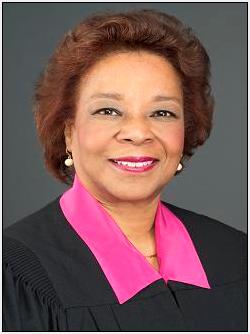
Judge Susan Paradise Baxter – Nominee for the U.S. District Court for the Western District of Pennsylvania

A well-respected magistrate judge with over twenty-two years on the bench, Judge Susan Paradise Baxter is a consensus nominee from the Trump Administration.  Her moderate background and support from senators of both parties, as well as her previous nomination from President Obama, should ensure a relatively smooth confirmation process.

Background

A Western Pennsylvania native, Baxter was born Susan Rose Paradise on September 20, 1956, in Latrobe, in the Pittsburgh suburbs.[1]  Baxter attended Pennsylvania State University, overlapping with fellow nominee Marilyn Horan, and graduating with a B.S. in 1978.  Baxter went on to get a Masters in Education and then a Juris Doctor from Temple University.[2]

After graduating, Baxter joined Cole Raywid & Braverman (now Davis Wright & Tremaine LLP) in Washington D.C. as an associate.  In 1989, Baxter became a partner at the firm.

In 1994, Baxter returned to Pennsylvania to serve as a court solicitor for the Court of Common Pleas for Erie County.[3]  A year later, Baxter was named to be a federal magistrate judge for the U.S. District Court for the Western District of Pennsylvania.[4]  Baxter continues to serve in that position today.

History of the Seat

The seat Baxter has been nominated for opened on August 16, 2013, with the resignation of Judge Sean McLaughlin.  In August 2013, Baxter applied for a federal judgeship with the application committee set up by Pennsylvania’s U.S. Senators Bob Casey (D-PA) and Pat Toomey (R-PA).[5]  Baxter interviewed with Casey and his staff in early 2015 and with Toomey in March of that year.[6]  In July 2015, Baxter was then nominated by President Obama for the vacancy on the U.S. District Court for the Western District of Pennsylvania.[7]

While Baxter had bipartisan support for the seat and was unanimously voted out of the Judiciary Committee in January 2016, she never received a floor vote and her nomination was returned at the end of the 114th Congress.

In January 2017, Toomey and Casey indicated their support for re-nominating Baxter for the Western District.  Baxter was officially re-nominated for the vacancy on December 20, 2017.[8]

Legal Experience

From 1983 to 1992, Baxter worked as an associate and a partner at Cole Raywid & Braverman in Washington D.C.  At the firm, Baxter handled approximately 100 cases, going to trial in ten cases.[9]  Among the most significant matters that Baxter handled at the firm, she represented a class of over one hundred former employees and stockholders of U.S. News & World Report in bringing an ERISA action.[10]  In 1994, Baxter’s family moved to Erie and Baxter worked as the Solicitor to the Erie County Court of Common Pleas, representing the judges on the court .[11]

Jurisprudence

Baxter has served as a federal magistrate judge for the last twenty two years.  During this time, Baxter handles pretrial matters in criminal and civil cases, as well as offering reports and recommendations to district court judges.[12]  Baxter also presides over civil cases with the consent of both parties, handling 20 cases to verdict and judgment over her tenure on the bench.[13]  Baxter has also written over 1300 opinions.[14]

Among her more prominent cases, Baxter presided over a class action suit under the Americans with Disabilities Act (ADA) challenging the lack of wheelchair ramps in many Erie intersections.[15]  Baxter certified the class of plaintiffs in the case, and presided over the entry of a consent decree to ensure compliance with the ADA.[16]  In another notable case, Baxter presided over unsuccessful settlement negotiations related to alleged Clean Air Act violations committed by the Erie Coke Corporation.[17]

Over the last twenty two years, Baxter has been reversed approximately nineteen times in over 1300 decisions she has made.[18]  In seventeen cases, Baxter’s report and recommendation was adopted by the district court, but the decision was ultimately reversed by the U.S. Court of Appeals for the Third Circuit.[19]  In two cases, Baxter’s report and recommendation was rejected by the district court, but was ultimately imposed by the Third Circuit.[20]

Political Activity

While Baxter is a Democrat, she has not been involved with any political party or campaign.[21]

Overall Assessment

Generally speaking, any nominee put forward by two administrations of different political parties is likely to be fairly uncontroversial.  Baxter is no different.  Her record on the bench reflects a close adherence to precedent and her low reversal rate suggests her relatively mainstream jurisprudence.  Furthermore, she has largely avoided controversial positions throughout her career and has the enthusiastic support of her home state senators (both of different political parties).  As such, Baxter will likely be confirmed swiftly with a strong bipartisan majority.


[1] Sen. Comm. on the Judiciary, 114th Cong., Susan Paradise Baxter: Questionnaire for Judicial Nominees 1.

[2] See id.

[3] See id. at 2.

[4] See id. 

[5] See id. at 50-51.

[6] Id.

[7] Press Release, White House, President Obama Nominates Seven to Serve on the United States District Courts (July 30, 2015) (on file at https://obamawhitehouse.archives.gov).

[8] Press Release, President Donald J. Trump Announces Ninth Wave of Judicial Nominees and Tenth Wave of United States Attorney Nominees (December 20, 2017) (on file at www.whitehouse.gov/thepressoffice).

[9] See Baxter, supra  n. 1 at 43.

[10] See Foltz v. U.S. News & World Report, Inc., Case No. 84-447 (D.D.C.).

[11] See Baxter, supra n. 1 at 43.

[12] See Baxter, supra n. 1 at 17.

[13] See id.

[14] Id.

[15] See Barrier Busters v. City of Erie, Civil Action No. 02-203 Erie.

[16] See id.

[17] Lisa Thompson, Erie Coke, Regulators Reach No Settlement: Erie Coke Case Goes to Judge After Settlement Negotiations Stall, Erie Times-News, Apr. 1, 2010.

[18] See Baxter, supra n. 1 at 33-37.

[19] See Haskell v. Superintendent Greene, SCI, Civil Action 10-249 Erie, 2015 WL 5227855 (W.D. Pa. Sept. 8, 2015), rev’d, 866 F.3d 139 (3d Cir. 2017) (reversing district court denial of writ of habeas corpus based on the state’s use of perjured testimony); Byrd v. Aaron’s, Inc., Civil Action 11-101 Erie, 2014 WL 1316055 (W.D. Pa. Mar. 31, 2014), rev’d and remanded, 784 F.3d 1154 (3d Cir. 2015) (reversing denial of class certification); Henry v. City of Erie, Civil Action 10-260 Erie, 2011 U.S. Dist. LEXIS 110562 (W.D. Pa. Sept. 28, 2011), rev’d and remanded, 728 F.3d 275 (3d Cir. 2013) (reversing denial of motion to dismiss based on qualified immunity); Tindell v. Penn., Civil Action 11-173 Erie (decision to revoke prisoner’s in forma pauperis due to three-strikes rule reversed by 3d Circuit); Torrence v. Sobina, Civil Action 10-217 Erie, 2011 WL 4473122 (W.D. Pa. Sept. 11, 2011), vacated and remanded, 455 Fed. Appx. 140 (3d Cir. Dec. 27, 2011) (reversed denial of plaintiff’s claims based on Eleventh Amendment immunity and remanded to dismiss for failure to exhaust); Mutschler v. SCI Albion CHCA, Civil Action 09-265 Erie, 2010 WL 3809849 (W.D. Pa. Sept. 23, 2010), aff’d in part and rev’d in part, 445 Fed. Appx. 617 (3d Cir. Sept. 27, 2011) (reversing dismissal of Eighth Amendment claim of deliberate indifference); DiLauri v. Mullen, Civil Action 09-198 Erie, 2011 WL 1428092 (W.D. Pa. Apr. 13, 2011), adopted by 2011 WL 2415243 (W.D. Pa. June 13, 2011), aff’d in part and vacated in part, 477 Fed. Appx. 944 (3d Cir. 2012) (reversing dismissal of plaintiff’s claims based on failure to plead involvement of defendants); Cauvel v. Schwan Home Servs. Inc., Civil Action 08-134 Erie, 2010 WL 5476698 (W.D. Pa. Dec. 31, 2010), rev’d and remanded, 458 Fed. Appx. 131 (3d Cir. Jan. 20, 2012) (reversing grant of summary judgment where genuine issue of material fact existed); Royster v. United States, Civil Action 07-228 Erie, 2010 WL 936764 (W.D. Pa. Mar. 11, 2010), rev’d and remanded, 475 Fed. Appx. 417 (3d Cir. Mar. 30, 2012) (reversing dismissal of FTCA claim for failure to exhaust); Nicholas v. Corbett, Civil Action 06-129 Erie, 2007 WL 1163694 (W.D. Pa. Apr. 18, 2007); Alston v. Forsyth, Civil Action 05-168 Erie, 2010 WL 95089 (W.D. Pa. Jan. 6, 2010), rev’d and remanded, 379 Fed. Appx. 126 (3d Cir. 2010) (reversing grant of summary judgment to defendant); Grier v. Klem, Civil Action 05-05 Erie, rev’d and remanded, 591 F.3d 672 (3d Cir. Jan. 12, 2010) (reversing dismissal of 1983 action based on intervening Supreme Court jurisprudence); Davila-Bajana v. Holohan, Civil Action 04-253 Erie, rev’d and remanded, 309 Fed. Appx. 606 (3d Cir. Feb. 5, 2009) (reversing dismissal of Eighth Amendment claim due to failure to exhaust); Armann v. Warden-McKean, Civil Action 04-118 Erie, 2006 WL 2882954 (W.D. Pa. Oct. 6, 2006), adopted by 2007 WL 1576407 (W.D. Pa. May 31, 2007), rev’d, 549 F.3d 279 (3d Cir. 2008) (reversing recommendation for evidentiary hearing in military tribunal challenge); Cooleen v. LaManna, Civil Action 04-63 Erie, rev’d and remanded, 248 Fed. Appx. 357 (3d Cir. 2007) (reversing dismissal of Eighth Amendment claim); Camp v. Brennan, Civil Action 98-180 Erie, aff’d in part and rev’d in part, 219 F.3d 279 (3d Cir. 2000) (reversing dismissal for failure to exhaust); Nelson v. Jashurek, Civil Action 95-97 Erie, rev’d and remanded, 109 F.3d 142 (3d Cir. 1997) (reversing dismissal of excessive force claim).

[20] See UPS Freight v. Nat’l Union Fire Ins. Co., Civil Action 06-137 Erie, 2007 WL 1880962 (W.D. Pa. June 26, 2007), vacated by 428 Fed. Appx. 168 (3d Cir. 2011); Jewell v. Reno, 297 F.3d 305 (3d Cir. 2002) (rejecting district court dismissal, contrary to magistrate recommendation, of plaintiff’s as-applied challenge).

[21] See Baxter, supra n. 1 at 40-41.

William Jung – Nominee to the U.S. District Court for the Middle District of Florida

It is not uncommon for unconfirmed nominees at the end of a president’s term to be renominated by a future president and then confirmed.  However, William Jung is unique as a nominee to have been renominated by two presidents of different parties only to see both nominations fail.  Now, Jung has been nominated by a third president and has to hope that the third time’s the charm.

Background

William Frederic Jung was born on March 29, 1958 in Fort Belvoir, Virginia.  Jung graduated magna cum laude from Vanderbilt University in 1980 and summa cum laude from the University of Illinois College of Law in 1983.  After graduating, Jung clerked for Judge Gerald Bard Tjoflat on the U.S. Court of Appeals for the Eleventh Circuit and for then-Associate Justice William Rehnquist on the U.S. Supreme Court.[1][2]

While most Supreme Court clerks parlay their clerkships into D.C.-based positions at large law firms, Jung instead joined the Tampa office of Carlton Fields Jordan Burt, P.A. as an associate.[3]  After two years, Jung moved to Miami to join the U.S. Attorney’s Office for the Southern District of Florida as an Assistant U.S. Attorney (AUSA).[4]  In 1990, Jung moved back to Tampa to be an AUSA in the Middle District of Florida.[5]

In 1993, Jung joined Anthony K. Black in starting the law firm Black & Jung, P.A.[6]  The firm was renamed Jung & Sisco, P.A. in 2000 when Black left and attorney Paul Sisco joined the firm.  Jung continues to practice as a partner at the firm to the present.

In 2007, Jung was one of 36 applicants to fill two vacant judgeships on the U.S. District Court for the Middle District of Florida.[7]  He was selected as one of four finalists by U.S. Senators Bill Nelson (D-FL) and Mel Martinez (R-FL).[8]  On July 10, 2008, Jung and U.S. Magistrate Judge Mary Stenson Scriven were nominated for the vacancies by President George W. Bush.  While Scriven was confirmed by the Senate on September 26, 2008, Jung did not get a hearing from the Democratic-controlled Judiciary Committee and his nomination was returned to the President.  President Obama declined to renominate Jung and instead nominated another finalist, Judge Charlene Honeywell, who was confirmed.

In 2013, Jung again applied to fill one of two open judgeships on the Middle District.[9]  Nelson and Sen. Marco Rubio (R-FL) selected Jung as one of four finalists.[10]  However, Obama chose to appoint two other finalists, Judge Carlos Mendoza and Paul Byron, who were confirmed.

In 2015, when two more seats opened on the Middle District, Jung applied once more.[11]  This time, Jung was nominated by Obama for the vacancy, alongside Judge Patricia Barksdale.  However, as in 2008, Jung’s nomination did not receive a hearing from the Republican-controlled Senate Judiciary Committee and was returned unconfirmed to the President.

History of the Seat

Jung has been nominated to a seat on the U.S. District Court for the Middle District of Florida.  This seat opened on August 1, 2015, when Judge Anne Conway moved to senior status.  On April 28, 2016, Jung was nominated by President Obama to fill this vacancy.  However, the Senate did not take any action on Jung’s nomination.

In early 2017, Nelson and Rubio urged Trump to renominate Jung and two other unconfirmed Obama picks in Florida.[12]  Jung was formally nominated on December 20, 2017.

Legal Experience

Jung started his legal career as a litigation associate at Carlton Fields.  In this role, Jung tried one “slip and fall” trial and handled one appeal in the Eleventh Circuit before becoming a federal prosecutor.[13]  As a federal prosecutor, Jung tried nearly 40 federal trials including white collar and public corruption cases.  Among his more notable cases, Jung prosecuted Tampa lawyer Charles Corces for “fixing” cases in collusion with state prosecutors.[14]

In 1993, Jung left the U.S. Attorney’s Office to start his own law firm.  In this role, Jung’s practice is evenly divided between complex civil and criminal defense matters.  Jung has particularly made a name in white collar defense, representing, among others, baseball players prosecuted for their use of steroids,[15] healthcare executives accused for accounting fraud,[16] a seafood company accused of importing rancid shrimp,[17] and the human resources director of a company alleged to have hired undocumented workers.[18]

Political Activity

Jung has been fairly active as a Republican donor, donating $2500 for Martinez’s 2004 campaign and $2500 to Rubio’s 2010 campaign, among others.[19]  Additionally, Jung served on the Hillsborough County Republican Central Executive Committee between 1998 and 2002.[20]

Jung has also supported Florida Democrat Dan Gelber, hosting a reception for his senate campaign in 2010 and donating $1350 to his campaign.[21]

Writings

Throughout his legal career, Jung has occasionally written on issues of law and policy.  Three articles that Jung has authored are particularly interesting.

Corporate Rights

In 1983, as a law student, Jung authored an article arguing that the Indictment Clause of the Fifth Amendment, which prohibits prosecution for a capital or infamous crime without a grand jury indictment, applies to corporations.[22]  While acknowledging that a corporation cannot face a capital charge, Jung delves into the common law history of “infamy” to argue that corporate infamy is not based on the potential for incarceration.[23]  Rather, Jung argues that, given the importance of public opinion on a corporation, it serves as a serious deterrent on criminal conduct.[24]  As such, Jung argues that corporations should receive the protections of indictment via grand juries.

Miranda v. Arizona

In a 2009 article, Jung discussed the Supreme Court decision in Miranda v. Arizona and the role of Chief Justice Rehnquist in reshaping the jurisprudence.[25]  Jung also makes a series of recommendations to improve Miranda including the implementation of uniform warnings and a requirement that all custodial interrogations be recorded.[26]

School Desegregation

In 2006, Jung wrote for the Florida Bar Journal in praise of his former boss Judge Tjoflat: specifically, praising Tjoflat’s implementation of the Supreme Court’s desegregation mantle in Swann v. Charlotte-Mecklenburg Board of Education as applied to the segregated Jacksonville school district.[27]  Specifically, Jung’s praises Tjoflat’s decision to insist of immediate desegregation rather than gradual and suggests that the judge is an unlikely hero of desegregation alongside civil rights heroes such as the Fifth Circuit four.[28]

Overall Assessment

While Jung’s last two nominations ended in disappointment, there is good reason to expect Jung to be confirmed this time around.  First, Jung’s nomination has the requisite qualifications for a district court appointment.  He has over thirty years of federal practice experience and has handled almost fifty federal trials.  Second, Jung is not particularly controversial, having the support of both Rubio and Nelson.  Finally, Jung’s last two nominations were made by a lame duck president facing an opposition congress in the last year of his term.  This time, Jung faces a senate that is eager to confirm Trump’s picks.  As such, his nomination will likely be confirmed fairly smoothly.

During the confirmation process, Jung may be asked to elaborate his views on the proper role of a trial judge, given his strong praise for Judge Tfolat’s assertive actions during the Jacksonville desegregation crisis.  He may also be asked to explain his views on corporate rights and whether he has evolved his opinion that corporate crimes are “infamous” for Fifth Amendment purposes.  However, barring the unexpected, such inquiries are unlikely to derail his nomination. After all, if Bush and Obama and Trump were able to agree on Jung’s fitness for the bench, it is unlikely that senators would disagree.


[1]Jung’s tenure as a Supreme Court clerk overlapped with, among others, Arizona Supreme Court Chief Justice W. Scott Bales and former Solicitor General Donald Verrelli.

[2] Sen. Comm. on the Judiciary, 114th Cong., William F. Jung: Questionnaire for Judicial Nominees 2.

[3] See id.

[4] Id.

[5] Id.

[6] See Susan Clary, Who’s News, St. Petersburg Times, Feb. 1, 1993.

[7] Elaine Silvestrini, 36 Step Up for 2 Open Federal Judgeships, Tampa Tribune, Nov. 12, 2007.

[8] Tampa & State, Four Nominated for Federal Judgeships, St. Petersburg Times, Dec. 18, 2007.

[9] Patty Ryan, 4 Left in Search for U.S. Attorney, Tampa Bay Times, Aug. 29, 2013.

[10] Derek Gilliam, Finalists Selected for Positions; 2 from NE Florida in Running for District Judge; 1 for U.S. Attorney, Florida Times-Union, Sept. 19, 2013.

[11] See supra n. 1 at 34-35.

[12] Andrew Pantazi, Rubio, Nelson Urge Trump on 3 Judges, Florida Times-Union, March 24, 2017.

[13] See supra n. 1 at 21.

[14] See Bruce Vielmetti, Jury Begins to Decide if Lawyer Was Taking a Bribe or Entrapped, St. Petersburg Times, Dec. 10, 1992.

[15] See United States v. Scruggs, No. 5:08-cr-144 (N.D. Cal.)

[16] See United States v. Whiteside, et al., No. S97-52-cr-FtM-24(d).

[17] See United States v. Sigma Int’l Seafood et al., No. 85-95-cr-T-24 (M.D. Fla.).

[18] See United States v. Ross, et al., No. 4:10-cr-201 (S.D. Tex.)

[20] See supra n. 1 at 19.

[21] See supra n. 19.

[22] William F. Jung, Recognizing a Corporation’s Rights Under the Indictment Clause, 1983 U. Ill. L. Rev. 477 (1983).

[23] See id. at 499-503.

[24] See id. at 504-05.

[25] See William F. Jung, Not Dead Yet: The Enduring Miranda Rule 25 Years After the Supreme Court’s October Term 1984, 28 St. Louis U. Pub. L. Rev. 447 (2009).

[26] See id. at 456-58.

[27] William F. Jung, The Last Unlikely Hero: Gerald Bard Tjoflat and the Jacksonville Desegregation Crisis 35 Years Later, 80 Fla. Bar. J. 10 (March 2006).

[28] See id. at 14.

Judge Joel Carson: Nominee to the U.S. Court of Appeals for the Tenth Circuit

A prominent Roswell-based attorney for the oil and gas industry and a part-time federal magistrate judge, Joel Carson is Trump’s second nominee to the U.S. Court of Appeals for the Tenth Circuit, replacing the conservative Judge Paul Kelly.

Background

Joel McElroy Carson III was born in Artesia, New Mexico on November 16, 1971.[1]  Carson attended Texas Tech University in Lubbock, getting a B.B.A. in Finance in 1994.[2]  After graduating, Carson returned to New Mexico to attend the University of New Mexico Law School, getting his J.D. in 1997.  Carson then clerked for Judge Bobby Baldock on the U.S. Court of Appeals for the Tenth Circuit and then joined the Roswell firm Hinkle Hensley Shanor & Martin LLP as an associate. In 2002, Carson became a partner at the firm.[3]

In 2008, Carson left the firm to join the Mack Energy Corporation as General Counsel.[4]  He stayed there for five years, leaving in 2014 to start his own firm Carson Ryan LLC.[5]

In 2015, Carson was tapped to be a part-time federal magistrate judge in Roswell, New Mexico.[6]  He continues to serve in that capacity, while maintaining his firm.

History of the Seat

Carson has been tapped for a New Mexico seat on the U.S. Court of Appeals for the Tenth Circuit.  The seat is being vacated by Judge Paul Kelly’s decision to move to senior status upon the confirmation of his successor.

In early 2017, Carson expressed his interest in the Tenth Circuit appointment to Rep. Steve Pearce (R-NM) and Sen. Tom Udall (D-NM).[7]  After an interview with the White House Counsel’s Office in May 2017, Carson was selected as a finalist for the seat by the White House, who sent five names to Udall and Sen. Martin Heinrich (D-NM).[8]  Among the names sent was that of William Levi, a Washington D.C. based associate at Sidley Austin who had been a clerk to Supreme Court Justice Samuel Alito and was only 33 years old.[9]  Udall balked at Levi’s name and suggested that another finalist, Judge James Browning of the U.S. District Court for the District of New Mexico, would have his support.[10]  Nevertheless, the White House decided not to nominate Browning or Levi, and instead nominated Carson for the seat on December 20, 2017.

Political Activity

Carson has been active in the Republican Party of New Mexico, serving on its Executive Committee, as well as the Secretary in 2011.[11]   Carson also volunteered with the Romney campaign in 2012 and the campaign of former senator Pete Domenici.[12]  Carson has also frequently spoken at Chavez County Republican Party functions, introducing other speakers including Domenici, Pearce, and Governor Susana Martinez.[13]

Carson has also frequently contributed to Republican candidates, including Domenici.  Notably, he has given approximately $10000 to Pearce over the last fifteen years.[14]  Carson also donated to the unsuccessful senate candidacies of Republicans Heather Wilson and Rick Berg in 2012 and to Sen. Ted Cruz in 2015.[15]  Carson has occasionally donated to New Mexico Democrats as well, including former Congressman Harry Teague and former Governor Bill Richardson.[16]

Legal Career

Carson has spent most of his legal career working with issues involving the energy industry, utilities, water and land rights.  As an attorney in private practice and as an in-house counsel at the Mack Energy Corporation, Carson handled complex energy litigation and transactions.  Among his more prominent cases, Carson represented an energy company seeking Takings Clause damages for the government’s delay in approving applications for permits to drill (APDs).[17]  While the Court of Federal Claims ruled for Carson’s client in the case, the Federal Circuit reversed, rejecting Carson’s argument that the delay in approving the permits constituted a regulatory taking.[18]

Outside his oil and gas expertise, Carson also represented the New Mexico legislature in defending its redistricting plans against legal challenges.[19]  Carson has also frequently represented indigent defendants as court-appointed counsel.[20]

Jurisprudence

Carson has served as a part-time federal magistrate judge since 2015.  In this role, Carson manages only criminal proceedings and habeas actions.  In the last three years, Carson has handled three cases to verdict or judgment, as well as writing one recommendation for a district judge.[21]  The three trials Carson handled, two bench and one jury, all involve criminal citations arising from crimes committed on federal property.  In the sole jury trial he presided over, the jury found the defendant not guilty of driving under the influence on an air force base.[22]  In the two bench trials, Carson found for the United States in one case[23] and for the defendant in another.[24]  In the sole habeas case he handled, Carson recommended that a prisoner’s habeas petition based on ineffective assistance of counsel be dismissed.[25]

Scholarship

As a law student at the University of New Mexico, Carson authored a paper titled “Reintroducing the Mexican Wolf”, which discussed the constitutional implications of property loss through the reintroduction of endangered species.[26]  Specifically, Carson argues that federal officials who reintroduce the wolf may find themselves constitutionally liable for damage the wolf inflicts.

In the paper, Carson argues that reintroducing a predator species such as the Mexican wolf would open officials up to Takings Clause actions from cattle farmers who lose animals.  Specifically, Carson suggests that such losses would constitute both a per se taking and a regulatory taking.[27]  While acknowledging that courts have previously held that damage from protected wildlife does not constitute a compensable taking,[28] Carson argues that such cases would come out differently when the government exercises “pervasive control” over the animals.[29]  Carson notes that “[d]epradations by Mexican wolves appear to fit neatly within the academic confines of takings law.”[30]

Carson goes on to suggest that federal officials who reintroduce endangered species could be liable for damages under Bivens.[31]  Specifically, Carson suggests that the federal government’s refusal to timely remove a wolf that roams onto private land would be “a picture perfect scenario for a Bivens claim.”[32]  Nevertheless, Carson steps back from a wholesale endorsement of Bivens actions based on wolf depredation, arguing that the Fish & Wildlife Service should instead create a compensation procedure to avoid the attorney’s costs associated with lawsuits.[33]  He concludes with the following observation:

“When citizens lose livestock to Mexican wolves, their private property has been taken for a public purpose.  Just compensation is due and the citizen should not be required to litigate all the way to the Supreme Court to recover.”[34]

Overall Assessment

Having worked there for twenty years, Carson is well-respected in the New Mexico legal community.  His (albeit brief) record on the federal bench does not suggest a bias for or against criminal defendants or the government.  In fact, his two bench rulings have come down evenly, one conviction and one acquittal.  Furthermore, unlike most Trump appellate nominees, Carson does not appear to have any ties to the Federalist Society.  As such, it is reasonable to assume that Carson will likely have a smooth confirmation to the federal bench.

However, Carson may face questions regarding his view on Takings jurisprudence.  Specifically, he may be questioned as to whether he will follow Tenth Circuit precedent holding that losses from wild animals do not constitute compensable takings.  He may also be questioned as to whether he agrees that federal officials who reintroduce wild animals can be sued under Bivens. (Interestingly, his broad view of Bivens liability may endear him to civil rights attorneys who argue that Bivens has been construed unduly narrowly by the courts).

If senators find that Carson’s views on Bivens and the Takings Clause are within the legal mainstream, he will likely be confirmed swiftly, and, at only forty-six, will shape Tenth Circuit jurisprudence for decades to come.


[1] Sen. Comm. on the Judiciary, 115th Cong., Joel Carson: Questionnaire for Judicial Nominees 1.

[2] See id.

[3] Id. at 2.

[4] Id.

[5] See id.

[6] See id. at 1-2.

[7] Sen. Comm. on the Judiciary, 115th Cong., Joel Carson: Questionnaire for Judicial Nominees 29-30.

[8] Id. at 30.

[9] Michael Coleman, Court Nominee’s Lack of NM Roots Prompts Concern, Albuquerque Journal, Sept. 10, 2017, https://www.abqjournal.com/1061212/court-nominees-lack-of-nm-roots-prompts-concern.html.  

[10] See id.

[11] Supra Carson, n. 1 at 15.

[12] See id.

[13] See id. at 7-9.

[15] See id. 

[16] See id.

[17] See Bass Enterprises Production Co. v. United States, 381 F.3d 1360 (Fed. Cir. 2004).

[18] See id. at 1365-66.

[19] See Jepsen v. Virgil-Giron, First Judicial District Court, Santa Fe County Case No. D-101-CV-2001102177 (2001).

[20] See, e.g., United States v. Madrid, 533 F.3d 1222 (10th Cir. 2011); United States v. Gonzalez-Jacquez, 566 F.3d 1270 (10th Cir. 2009).

[21] Supra Carson n. 1 at 9-10.

[22] See United States v. Bordayo, Case. No. 1:16-CR-3340-JMC (2016).

[23] United States v. Paige, Case. No. CVB CAFB 6038129 (2016).

[24] United States v. Malouf, Case No. CVB HAFB 3905866 (2016).

[25] Thomas v. Hatch, Case No. 1:17-CV-885 WJ/JMC (2018).

[26] Joel M. Carson, Reintroducing the Mexican Wolf: Will the Public Share the Costs, or Will the Burden Be Borne by a Few, 38 Natural Resources Journal 298 (1998).

[27] Id. at 305-06.

[28] Id. at 308-11 (citing Christy v. Hodel, 857 F.3d 1324 (9th Cir. 1988) and Mountain States Legal Found. v. Hodel, 799 F.2d 1423 (10th Cir. 1986).

[29] Id. at 311.

[30] Id. at 316.

[31] In Bivens v. Six Unknown Agents, 403 U.S. 388 (1971), the Supreme Court recognized a private right of action for individuals seeking to sue federal officials for damages from the violations of their constitutional rights.

[32] Id. at 321.

[33] See id. at 323-25.

[34] Id. at 325.