Judge Joseph Bianco – Nominee to the U.S. Court of Appeals for the Second Circuit

Joseph Frank Bianco, a 52-year old federal judge for the Eastern District of New York, has been nominated for a seat on the Second Circuit Court of Appeals. From his days prosecuting crimes related to the September 11th attacks to ruling on MS-13 cases, Bianco earned a strong reputation as both a lawyer and a judge. He is well-respected in the legal community and likely to be confirmed.

Background

Bianco was born on September 11, 1966 in Flushing, New York. Bianco graduated from Columbia Law School in 1991 and clerked for the Reagan-appointed judge, Peter Leisure, of the United States District Court for the Southern District of New York from 1992 to 1993. After Bianco’s clerkship, he entered private practice as an associate at Simpson, Thatcher and Bartlett.

In 1994, Bianco began his long career in the public sector, serving as an Assistant United States Attorney (AUSA) for the Southern District of New York. As an AUSA, Bianco gained exposure to cases involving terrorism and organized crime. Bianco briefly returned to private practice from 2003 to 2004 as counsel at the law firm of Debevoise & Plimpton. From 2004 until his judicial nomination in 2005, Bianco served as a Deputy Assistant Attorney General in the United States Department of Justice’s Criminal Division.

Bianco was nominated by President George W. Bush, and subsequently confirmed by the Senate, in 2005 to serve as a United States District Court Judge for the Eastern District of New York.

Throughout his career, Bianco has taught courses on terrorism, national security, and criminal procedure as an adjunct professor at Fordham University School of Law, Maurice A. Deane School of Law at Hofstra University, the Touro Law Center, and St. John’s University School of Law.

A Catholic, Bianco earned his Master of Arts from the Seminary of the Immaculate Conception in 2013 and is an ordained Roman Catholic deacon.

History of the Seat

Bianco was nominated by President Trump on October 10, 2018 to sit on the Second Circuit Court of Appeals. He is nominated to fill the seat vacated by Judge Reena Raggi, who took Senior Status on August 31, 2018.

Because the Senate did not act on his nomination before the end of the 115th Congress, Bianco’s nomination was returned to Trump on January 3, 2019. Trump subsequently resubmitted Bianco’s nomination, along with 51 others, on January 23, 2019, and the Senate Judiciary Committee held a hearing on his nomination on February 13, 2019.

While both home state Senators Chuck Schumer and Hillary Clinton supported Bianco’s 2005 judicial nomination at that time, neither Senator Schumer nor Senator Kirsten Gillibrand returned a blue slip for his current nomination. Gillibrand has since stated that she and Schumer strongly object to the appointments of the “far-right-wing judicial nominees” Michael Park (also nominated for a seat on the Second Circuit) and Joseph Bianco.[1]

Political History

Bianco’s involvement in politics is limited to campaigning for Jack Kemp’s presidential bid in 1988 as an undergraduate student at Georgetown University.

Legal Career

Bianco spent his legal career prosecuting high-profile terrorism and organized crime cases. As an AUSA, Bianco brought cases against Mokhtar Haouari (for conspiring to provide material support to the terrorist plot to bomb LAX),[2] Ahmed Sattar and Lynne Stewart (for providing material support to a terrorist organization),[3] Ihab Ali Nawawi (Osama bin Laden’s personal pilot and messenger),[4] the Lucchese crime family (one of the “five families” of the Mafia),[5] and the Westies (an organized crime group operating out of Hell’s Kitchen).[6] At one point, Bianco led the unit prosecuting crimes related to the September 11th terrorist attacks.

At the Department of Justice, Bianco supervised the Counterterrorism Section, the Fraud Section, the Appellate Section, and the Capital Case Unit.[7] During this time, Bianco worked closely with former FBI directors Robert Mueller and James Comey, and current FBI director Christopher Wray.

Jurisprudence

Bianco has served as a judge for the Eastern District of New York since 2006. Approximately 70% of his caseload is civil, while 30% is criminal. From 2008 to 2018, ninety-five of Bianco’s judgments were appealed; only five have been remanded, reversed, or vacated by the reviewing court.

Criminal Law

Since 2011, Judge Bianco has overseen a large number of criminal cases involving MS-13 members. At least one of these cases—that of Josue Portillo, a MS-13 member who plead guilty to a quadruple murder in August 2018—garnered the attention of Trump, who used the case as a rallying cry to crack down on illegal immigration.[8]

Though Portillo was just 15 years-old at the time of the murders, Bianco granted the government’s motion to charge him (as well as the co-defendants in the case) as adults, citing the severity of the crime and inadequacy of the juvenile justice system as partial justifications.[9] In other cases involving MS-13 members, however, Judge Bianco has shown leniency. In the case of Elmer Alexander Lopez, Bianco handed down less than the maximum sentence because the defendant had shown remorse for his actions.[10]

Employment Law

Bianco has a tendency to favor the defendant in employment law cases, fully or partially granting a motion to dismiss 84% of the time.[11] Bianco notably granted a motion to dismiss federal claims in Zarda v. Altitude Express, Inc.[12] In Zarda, the plaintiff claimed he was discriminated against by his employer because of his sexual orientation, arguing that such discrimination was in violation of Title VII’s prohibition of sex discrimination.

Per Second Circuit precedent at that time,[13] Bianco dismissed Zarda’s federal claims but allowed his state claims to proceed to trial. In 2018, the Second Circuit, sitting en banc, overturned decades-old precedent in finding that Title VII’s prohibition of discrimination on the basis of sex necessarily encompasses claims of discrimination based on sexual orientation.

Search & Seizure

Bianco often rules in favor of the state in Fourth Amendment search and seizure cases. In the case of U.S. v. Bailey,[14] Bianco’s ruling on a Summers detainment led to a reversal by the United States Supreme Court.

In Bailey, Bianco held that police validly detained the defendant pursuant to a warrant to search the defendant’s home, despite detaining him about a mile away from his property. Relying on the Summers rule, which allows officers “to detain occupants of the premises while a proper search is conducted,” Bianco held that the detention was valid because it was made “as soon as practicable.”

The Supreme Court reversed Bianco’s decision, holding that detainments pursuant to Summers are “limited to the immediate vicinity of the property to be searched,” further stating that the defendant in the case at hand was “detained at a point beyond any reasonable understanding of the immediate vicinity of the premises in question.”[15]

Speeches

Bianco has a long list of speaking engagements, dating back to his early years of practice. He speaks frequently at Federalist Society events on topics such as originalism, judicial restraint, national security, and government enforcement in the private sector.

Originalism

Bianco describes himself as a “really big fan of Justice Scalia,” stating that, “as a judge, I strongly share his originalist or textualist philosophy.”[16] In the last two years, Bianco has spoken at two Federalist Society events celebrating Scalia’s legacy.[17]

National Security

During his career as a prosecutor, Bianco spoke at a number of events, often highlighting the need of military courts and alternative tribunals in terrorism prosecutions. At a March 2007 event titled, “The Role of Terrorism on Judges and Judicial Activism,” Bianco expressed a need for tribunals and alternative judicial forums to try international terrorism cases. During his presentation he stated, “People will say to me, ‘Well, just let it go through the open court system,’ but without that classified evidence, some cases just won’t go very far.”[18]
More recently, at a January 2017 event, Bianco stated that, “[c]ivilian courts are not well-equipped to try terrorists whose terrorist activity takes place entirely, or almost entirely, overseas.” And at an October 2018 event, Bianco spoke about the difficulties of bringing foreign witnesses or classified evidence into U.S. Courts.[19]

Overall Assessment

Bianco has enjoyed an illustrious career prosecuting and overseeing some of the highest-profile terrorism and organized crime cases of his time. While neither home state senator has returned a blue slip for his nomination, Bianco enjoys a unanimous “Well Qualified” rating from the American Bar Association[20] and frequent praise from his colleagues.[21]

Bianco, a self-proclaimed originalist with a record of conservatism on matters of national security and police powers, will likely soon assume a seat on the Second Circuit Court of Appeals.


[1] Sens. Gillibrand, Schumer Object to Federal Court Appointments, Watertown Daily Times, Feb. 17, 2019, https://www.watertowndailytimes.com/news03/sens-gillibrand-schumer-object-to-federal-court-appointments-20190217&.

[2] U.S. v. Haouari, 2001 WL 1154714 (S.D.N.Y. 2001).

[3] U.S. v. Sattar, 2003 WL 22137012 (S.D.N.Y. 2003).

[4] In re: Grand Jury Subpoena of Ihab Ali, 1999 WL 595665 (S.D.N.Y. 1999); see also Nancy Peckenham, Judge Rules Government May Restrict Access to Evidence in Case Tied to Bin Laden, CNN, Nov. 6, 2000, http://www.cnn.com/2000/LAW/11/06/ali.perjury.trial.int/.

[5] U.S. v. Defede, 7 F.Supp.2d 390 (S.D.N.Y. 1998).

[6] U.S. v. Bokun, 73 F.3d 8 (S.D.N.Y. 1995).

[7] United States District Court, Eastern District of New York, Judge Joseph F. Bianco, https://www.nyed.uscourts.gov/content/judge-joseph-f-bianco.

[8] Liz Robbins, MS-13 Gang Member Pleads Guilty in Quadruple Murder Highlighted by Trump, New York Times, Aug. 20, 2018.

[9] U.S. v. Juvenile Male, 327 F. Supp. 3d 573 (E.D.N.Y. 2018).

[10] Michael O’Keefe, MS-13 Member Sentenced to 25 Years for Killing Fellow Gang Member in Brentwood, Newsday, Dec. 18, 2018, https://www.newsday.com/long-island/crime/ms-13-killings-brentwood-1.24712041.

[11] Carmen Castro-Pagan, Know Your Judge: Joseph F. Bianco, Bloomberg Law, April 18, 2018, https://biglawbusiness.com/know-your-judge-joseph-f-bianco.

[12] Zarda v. Altitude Express, Inc., No. 10 Civ. 4334 (oral decision), aff’d, 855 F.3d 76 (2d. Cir. 2017), rev’d en banc, 883 F.3d 100 (2d Cir. 2018).

[13] Simonton v. Runyon, 232 F.3d 33 (2d Cir. 2000).

[14] Bailey v. U.S., 568 U.S. 186 (2013).

[15] U.S. v. Bailey, 133 S.Ct. 1031, 1042 (2013).

[16] Sen. Comm. on the Judiciary, 115th Cong., Nomination of Joseph Bianco to the U.S. Court of Appeals for the Second Circuit, Questions for the Record, Feb. 20, 2019, https://www.judiciary.senate.gov/imo/media/doc/Bianco%20Responses%20to%20QFRs.pdf.

[17] The Federalist Society, Contributors: Joseph Bianco, https://fedsoc.org/contributors/joseph-bianco (last visited March 1, 2019).  

[18] Columbia Law School, Judge Bianco on Terrorism and the Role of Judges, March 2007, https://www.law.columbia.edu/pt-br/node/83221.

[19] Columbia Law School, Federal Judge Provides Behind-the-Scene Look at Terrorism Cases, Oct. 26, 2018.

[20] American Bar Association, Ratings of Article III and Article IV Judicial Nominees (last visited March 2, 2019), https://www.americanbar.org/content/dam/aba/uncategorized/GAO/Web%20rating%20Chart%20Trump%20115.pdf.

[21] James M. Wick, Hon. Joseph Bianco, The Federal Lawyer, Aug. 2018, http://www.fedbar.org/Resources_1/Judicial-Profiles/Judicial-PDFs/Hon-Bianco.aspx.
Michael Liburdi – Nominee to the U.S. District Court for the District of Arizona

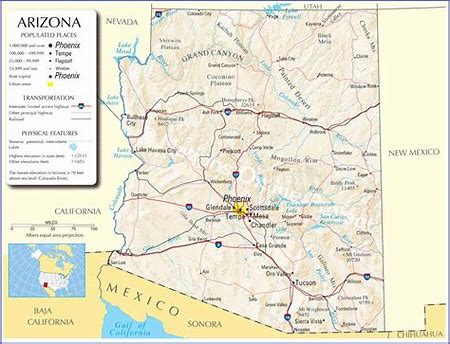
Usually, district court nominees don’t attract as much controversy as those appellate picks, particularly when the nominee has support from home state senators from both parties.  However, when it comes to Michael Liburdi, the support for his nomination is actually hurting home state senator Kyrsten Sinema, creating an interesting reversal of the usual dynamic.

Background

Michael Thomas Liburdi Jr. was born in Scranton, Pennsylvania in 1977.  Liburdi attended Arizona State University, graduating summa cum laude in 1998.[1]  After graduation, Liburdi spent a year in working as a legislative assistant at DeMenna and Associates.[2]

In 1999, Liburdi matriculated at Arizona State College of Law, graduating in 2002.[3]  He then clerked for Justice Ruth McGregor on the Arizona Supreme Court.  Following his clerkship, Liburdi joined the Phoenix Office of Perkins Coie as an associate.[4]  He stayed until 2011 (barring a year long stint in 2008 at the Federal Election Commission).

In 2011, Liburdi joined Snell & Wilmer LLP as an Associate and became a Partner in 2014.[5]  After the election of Republican Doug Ducey to the Arizona Governorship, Liburdi joined his office as his General Counsel.[6]  Liburdi stayed in that capacity until 2018, when he left to join Greenberg Taurig LLP as a Shareholder.

History of the Seat

Liburdi has been nominated to the U.S. District Court for the District of Arizona, to a seat vacated on July 31, 2018, by Judge David Campbell’s move to senior status.  Liburdi had broached his interest in a judicial appointment in late 2016 to senate staff and in August 2018 to the Department of Justice.[7]  He interviewed with the White House in September 2018 and was nominated in January 2019.

Political Activity & Memberships

Liburdi has been particularly active in the Arizona Republican Party, serving as the Campaign Counsel for Gov. Doug Ducey, Secretary of State Michele Reagan, Sen. Martha McSally, former Sen. Jeff Flake, Rep. Paul Gosar, and Congressional candidate Wendy Rogers, among others.[8]  He was also legal counsel for the House and Senate Victory Funds in Arizona in the 2012 election.[9]

In 2012, Liburdi led the assignment of poll watchers for the Arizona Republican Party, coordinating volunteers trained by the voter fraud watchgroup Verify the Vote AZ, which has received criticism for seeking to suppress the votes of minorities.[16]

Liburdi has been a member of the the Federalist Society for Law and Public Policy Studies (a conservative legal society that has produced many Trump judicial nominees) since 2005.[10]

Legal Experience

Liburdi has developed a career as a conservative attorney, particularly focusing on the area of election law.  He has also gained experience working as Counsel for Governor Doug Ducey.

Private Practice

Throughout his career, Liburdi has built a practice in election law, representing various organizations in lawsuits around electioneering, referendum, and voting.  Early in his career, for example, Liburdi represented the Clean Elections Institute in successfully challenging a referendum that sought to end Arizona’s public financing of campaigns.[11]  Liburdi also represented Arizona Together in unsuccessfully challenging a ballot measure that sought to ban same-sex marriage in Arizona.[12]

On the flip side, Liburdi served as lead plaintiff’s counsel in challenging Arizona’s Independent Redistricting Commission legislative plan, arguing that the Commission had unconstitutionally packed Republican voters.[13]  Liburdi lost the case, and the Supreme Court affirmed.[14]  In another case, Liburdi sought unsuccessfully to block provisional ballots from a heavily latino area of Cochise County, stating that the ballots in question were not sealed.[15]

Governor’s General Counsel

From 2015 to 2018, Liburdi worked for Gov. Ducey as his Chief Counsel, assisting him on judicial nominations, drafting executive orders, and leading efforts to manage and fight litigation against the Governor’s office.  For example, Liburdi defended a lawsuit contending that a school finding settlement negotiated by Ducey violated federal law.[18]  Liburdi also advised on the appointment of three conservatives to the Arizona Supreme Court: Justices Clint Bolick, Andrew Gould, and John Lopez.

Overall Assessment

Arizona Sen. Kyrsten Sinema has already drawn sharp criticism for returning a blue slip on and supporting Liburdi.  Looking at his record overall, one can see both where this criticism comes from, as well as why Sinema may have returned the blue slip.

Looking at the positions of the opposition, Liburdi has had a strongly partisan career.  He has worked and volunteered solely for Republicans, and, while working a Ducey’s counsel, has supported a strongly conservative administration.  Furthermore, Liburdi’s work challenging Arizona’s Independent Commission drawn maps and seeking to prevent the counting of votes from overwhelmingly Latino precincts may also be sources of criticism.

On the flip side, Liburdi is obviously a talented attorney.  Furthermore, not all of his work has been on behalf of conservative groups.  In 2006, Liburdi notably fought the  ballot initiative seeking to ban same-sex marriage, seeking to have it thrown off the ballot.  He has done the same for initiatives challenging Arizona’s public financing system.  These decisions suggest that Liburdi is willing to advocate for legal positions that may run contrary to conservative politics.

Overall, with Sinema’s support, it is likely that Liburdi will be confirmed in due course, even with significant opposition from other Democrats.


[1] Sen. Comm. on the Judiciary, 115th Cong., Michael T. Liburdi: Questionnaire for Judicial Nominees 1.

[2] See id. at 2.

[3] See id. at 1.

[4] See id.

[5] See id. at 2.

[6] See id.

[7] See id. At 53.

[8] Id. at 28-29.

[9] Id. at 29.

[10] See id. at 8.

[11] See Clean Elections Inst. Inc. v. Brewer, 209 Arix. 241 (2004).

[12] See Arizona Together v. Brewer, 214 Ariz. 118 (2006).

[13] Harris v. Arizona Ind. Redistricting Comm’n, 993 F. Supp. 2d 1042 (D. Ariz. 2014).

[14] See Harris v. Arizona Ind. Redistricing Comm’n, 136 S. Ct. 1301 (2016).

[15] Ryan J. Reilly, Arizona Republicans Sue to Block Ballots In Latino Precinct, Talking Points Memo, Nov. 13, 2012.

[16] See Evan Wyloge, Arizona Voter Fraud Group Preps Election Day Pounce, The Arizona Capitol Times, Nov. 2, 2012.

[17] See id. at 14.

[18] See Bob Christie, Judge: Land Trust Use to Fund Arizona Schools is Illegal, The Today File, Mar. 27, 2018.

M. Miller Baker – Nominee for the U.S. Court of International Trade

As noted previously, nominations to the U.S. Court of International Trade, which hears cases involving international trade and customs laws, generally do not draw the level of rancor that other judicial nominations do.  However, M. Miller Baker, a conservative attorney with a history of lawsuits on election law and voting law, may find himself an exception to that rule.

Background

Maurice Miller Baker was born in Houma, Louisiana, in 1962.  Baker did not graduate from college, although he attended Nicholls State University and Louisiana State University, and was accepted to Tulane University Law School in 1981 under an accelerated program.[1]  After graduating, Baker clerked for Judge John M. Duhe on the U.S. District Court for the Western District of Louisiana, and then for Judge Thomas Gee on the U.S. Court of Appeals for the Fifth Circuit.[2]

After his clerkships, Baker joined the Department of Justice, working in the Office of Legal Policy and the Civil Rights Division before leaving in 1989 to go into private practice.[3]  In 1991, Baker joined the staff of U.S. Sen. Orrin Hatch on the Senate Judiciary Committee.[4]

In 1993, Baker joined Carr Goodson Warner P.C. as an Associate and became a Partner in 1996.  In 2000, he moved laterally to McDermott Will & Emery LLP, where he serves as a Partner today.

In 2006, Baker was one of five people recommended by Virginia Senators to serve on the U.S. District Court for the Eastern District of Virginia (fellow Trump nominee Rossie Alston was another name on the list).[5]  The Bush Administration selected U.S. Magistrate Judge Liam O’Grady instead.

History of the Seat

Baker has been nominated for a seat vacated by Judge Donald Pogue, an appointee of President Bill Clinton, on July 1, 2014.  President Obama nominated Jeanne Davidson to fill the vacancy on July 30, 2015, but Davidson was never processed by the Republican-controlled Senate.  While Davidson was supported by a unanimous Senate Judiciary Committee vote, she never received a final confirmation on the Senate floor.

In April 2017, Baker was contacted by the White House to discuss a judicial appointment.[6]  Baker interviewed with the Department of Justice in September 2017 and was nominated on June 18, 2018.

Political Activity

Baker has a long political history, including his run as a Republican against Virginia State Senator George Barker in 2011.[7]  In the campaign, Baker highlighted his Federalist Society membership and ran as a “proven conservative,” running on lowering taxes and improving teacher pay.[8]  Ultimately, Baker lost, getting 47% of the vote.[9]

Other than his own run, Baker has volunteered and provided legal services to several Republican campaigns, including those of Ken Cuccinelli, Mark Obenshain, George Allen, David Vitter, Orrin Hatch, John Ashcroft, and James Gilmore.[10]  In his youth, Baker was a Democrat, having volunteered for the Carter-Mondale campaign in 1980 and serving as a member of the Young Democrats of Louisiana.[11]

Legal Experience

Baker has had a fairly distinguished legal career, including arguing three cases before the U.S. Supreme Court.  In his first case before the Court, Baker successfully won a unanimous decision that Louisiana’s open primary law violated federal statutes by allowing members of Congress to be chosen up to a month before the uniform election day.[12]  In the second, Beck once again won unanimously, with the Supreme Court finding that his client, a bankruptcy trustee, did not breach his fiduciary duty to his clients.[13]  In the third, Baker represented Arthur Andersen LLP in arguing that the company could seek to stay a federal lawsuit against it pending arbitration proceedings even where it was not a signatory to the arbitration agreement.[14]  The Supreme Court agreed in a 6-3 opinion.[15]

In addition to his Supreme Court work, Baker has been particularly active in suits regarding voting regulations.  For example, Baker represented Concerned Women of America, a conservative group, in seeking to distribute campaign materials without registering as a political committee.[16]  Baker also led an unsuccessful challenge to Oregon’s vote by mail process,[17] and to Texas laws permitting early voting.[18]

Overall Assessment

While nominations to the Court of International Trade are usually non-controversial, Baker’s is likely to draw opposition.  Specifically, Baker is likely to be challenged regarding the voting lawsuits he has brought, and specifically the contention that early voting and that vote by mail violates federal law.  Given the ubiquity of early voting (to a much greater degree than existed at the time of the suit), most reasonable observers would agree that the practice is both legal and constitutional.  As such, senators will most likely probe Baker’s views on the subject.

At the same time, Baker is being nominated to a specialized court.  While he may have the opportunity to “sit by designation”, on the Court of International Trade, Baker’s views on voting are unlikely to play much role.  As such, Democrats may choose to save their fire and focus their attention on nominees likely to cause more damage.

Note: A previous version of this article incorrectly stated that judges on the Court of International Trade do not have lifetime tenure. They do.


[1] Sen. Comm. on the Judiciary, 115th Cong., M. Miller Baker: Questionnaire for Judicial Nominees 1.

[2] See id. at 3.

[3] Id. at 2.

[4] Id.

[5] Alan Cooper, U.S. Senators John W. Warner and George Allen Name Alexandria Federal Nominees, Virginia Lawyers Weekly, May 8, 2006.

[6] See id. at 48-49.

[7] Christy Goodman, Voters to See Redrawn Election Districts, Wash. Post, May 12, 2011.

[8] State Senate District 39, Wash. Post, Aug. 18, 2011.

[9] See Baker, supra n. 1 at 21-22.

[10] Id. at 22.

[11] Id.

[12] Foster v. Love, 522 U.S. 67 (1997).

[13] Beck v. PACE Int’l Union, 551 U.S. 96 (2006).

[14] Arthur Andersen LLP v. Carlisle, 556 U.S. 624 (2009).

[15] See id.

[16] Rajiv Chandrasekharan, Conservatives Sue Va. and Democrats; Groups Seek Protection For Election Material, Wash. Post, Oct. 10, 1995.

[17] See Voting Integrity Project et al. v. Bomer, 61 F. Supp. 2d 600 (S.D. Tex. 1999).

[18] Voting Integrity Project et al. v. Keisling, 1999 U.S. Dist. LEXIS 22727 (D. Ore. Mar. 22, 1999).

Judge Pamela Barker – Nominee to the U.S. District Court for the Northern District of Ohio

A longtime insurance and civil practice attorney, Pamela Barker has served as a state judge in Ohio since 2011.  Her support from Ohio Senators Rob Portman and Sherrod Brown makes her a likely candidate for a smooth confirmation.

Background

Barker was born Pamela Ann Addison in Cleveland, Ohio in 1957.  Barker received her B.A. magna cum laude from Kenyon College in 1979 and her J.D. from the Ohio State College of Law in 1982.

Barker worked primarily in insurance litigation, working in various positions including as a Claims Attorney at Progressive Insurance Company, a Claims Litigation Manager at Bristol West Insurance Group and as a solo practitioner.  Barker also served as a magistrate for the City of Brecksville, Ohio.

In 2011, Gov. John Kasich appointed Barker to serve on the Cuyahoga County Superior Court. She continues to serve in that capacity today.

History of the Seat

Barker has been nominated for a seat on the U.S. District Court for the Northern District of Ohio.  This seat was vacated on January 1, 2017, when Judge Donald Nugent moved to senior status.

In October 2017, Senators Sherrod Brown, a Democrat, and Rob Portman, a Republican recommended Barker to fill the vacancy.[1]  Barker interviewed with the White House in October 2017 and was officially nominated on April 12, 2018.[2]

Legal Experience

While Barker has held a number of different positions throughout her legal career, her focus has largely remained the same: insurance litigation.  During her time as an attorney, Barker has represented plaintiffs and defendants.   For example, Barker represented a Bedford Heights police officer who was struck by a vehicle during a highway stop.[3]  On the flip side, Barker represented Progressive Insurance Co. against an insurance coverage suit before the Ohio Court of Appeals.[4]

Jurisprudence

Barker has served as a judge on the Cuyahoga County Court of Common Pleas since her appointment in 2011 by Gov. John Kasich.  In that capacity, Barker handles civil cases as well as criminal felony cases as has presided over 78 jury trials.[5]  Among her most notable cases, Barker sentenced a high ranking member of the Heartless Felons gang to life in prison[6] and presided over five convictions of “cold case” rapes and kidnappings against a defendant.[7]

Overall Assessment

With a largely uncontroversial record on the state bench and the support of Ohio liberal Sherrod Brown, Barker is largely considered a moderate-conservative in the mold of other Republicans on the Northern District of Ohio.  As such, she should be confirmed shortly with little opposition.


[1] Earl Rinehart, Trump May Not Like Ohio’s Federal Judge Choices, Columbus Dispatch, Nov. 20, 2017, https://www.dispatch.com/news/20171120/trump-may-not-like-ohios-federal-judge-choices.  

[2] Sen. Comm. on the Judiciary, 116th Cong., Pamela A. Barker: Questionnaire for Judicial Nominees 67-68.szaa

[3] Leonardi, et al. v. Franzreb and Allstate Ins. Co., Cuyahoga County Court of Common Pleas, Case No. CV-94-278901.

[4] See Nussbaum v. Progressive Cas. Ins. Co., 61 Ohio App.3d 1, 572 N.E.2d 119 (1988). 

[5] See Barker, supra n. 2 at 30.

[6] State of Ohio v. Nitsche, No. CR-14-581917 (Ohio Com. Pl.).

[7] State of Ohio v. Ford, Nos. CR-15-598281 and CR-17-614544 (Ohio Com. Pl.).

Timothy Reif – Nominee to the U.S. Court of International Trade

Nominations to the U.S. Court of International Trade, which hears cases involving international trade and customs laws, have generally not drawn the level of rancor that other judicial nominations have.  The last Obama judicial nominees confirmed by a Republican Senate in 2016, for example, were two selections for the Court of International Trade.  Timothy Reif, tapped by President Trump to fill a longstanding vacancy on the court, looks likely to maintain that tradition.

Background

Timothy Mark Reif was born in New York City on April 12, 1959.  Reif attended Princeton University and Columbia Law School.[1]  He was also a Fulbright Scholar, spending a year in Egypt.

After graduating law school, Reif joined Milbank Tweed Hadley & McCloy LLP as an Associate.[2]  In 1987, Reif joined the U.S. Trade Commission as an Attorney Advisor, and, in 1989, moved to the Office of the U.S. Trade Representative.[3]

In 1993, Reif joined the House Committee on Ways and Means as Trade Counsel.  He left in 1995 after Republicans took control of Congress to join Dewey Ballantine LLP as Special International Trade Counsel.[4]  In 1998, he returned to the Committee to serve as Chief International Trade Counsel, where he stayed until 2009.

In 2009, Reif joined the Office of the U.S. Trade Representative as General Counsel.[5]  In 2017, he became Senior Advisor to the Trade Representative, where he serves today.

History of the Seat

Reif has been nominated for a seat vacated by Judge Richard Eaton, an appointee of President Bill Clinton, on August 22, 2014.  President Obama nominated Elizabeth J. Drake, a D.C. based attorney, to fill the vacancy on July 30, 2015, but Drake was never processed by the Republican-controlled Senate.  While Drake was supported by a unanimous Senate Judiciary Committee vote, she never received a final confirmation on the Senate floor.

In the Fall of 2017, U.S. Trade Representative Robert Lighthizer recommended Reif for an appointment to the U.S. Court of International Trade.[6]  Reif interviewed with the White House in December 2017 and was nominated on June 18, 2018.

Political Activity

Reif has been a lifelong Democrat, volunteering for Ted Kennedy’s Presidential campaign in 1980, and volunteering for the Presidential campaigns of John Kerry and Barack Obama.[7]  Reif also donated to the campaign of Hillary Clinton in 2016.[8]

Legal Experience

Throughout his career, Reif has taken on many different positions, working with the U.S. Trade Representative, in Congress, and in private practice.

U.S. Trade Representative

Between 1989 and 1993, and, since 2009, Reif has worked for the U.S. Trade Representative, negotiating trade agreements and representing the United States in international tribunals.  Notably, Reif is one of the few Obama Administration officials to continue to serve to this day in the Trump Administration.

As general counsel to the U.S. Trade Representative, Reif challenged European Union subsidies offered to Airbus, arguing that they were intended to undercut competition from Boeing.[9]  Reif also defended U.S. Country of Origin labeling and Dolphin-Safe Tuna labeling against challenges from Canada and Mexico respectively.[10]

Committee on Ways and Means

From 1993 to 1994, and then from 1998 to 2009, Reif worked for the House Committee on Ways and Means, advising members on trade issues.  Reif’s tenure coincided with both Democratic and Republican majorities on the Committee, during the latter of which, Reif served as lead Democratic trade counsel.  During this time, Reif helped work on a bill normalizing trade relations with Vietnam.[11]

Private Practice

From 1995 to 1998, Reif worked as Special International Trade Counsel at Dewey Ballantine.  In that position, Reif represented clients working with the U.S. Trade Representative and the U.S. Department of Agriculture.  During that time, Reif was also involved in a fierce dispute over two paintings by Austrian painter Egon Schiele.[12]  The paintings were once owned by his ancestor Fritz Grunbaum and were seized by the Nazis after Grunbaum was sent to a concentration camp.[13]  Reif sought a claim to heirship of the paintings, under display in the Leopold Foundation in Vienna.[14]

Overall Assessment

As noted above, nominations to the Court of International Trade are usually non-controversial.  Reif’s is likely to particularly so, given his Democratic pedigree and his broad experience with issues of international trade.  As such, Reif is likely to secure a near unanimous confirmation to this unique tribunal.


[1] Sen. Comm. on the Judiciary, 115th Cong., Timothy M. Reif: Questionnaire for Judicial Nominees 1.

[2] See id. at 2.

[3] Id. at 1.

[4] Id. at 2.

[5] See id. 

[6] See id. at 55-56.

[7] See Reif, supra n. 1 at 41.

[9] Nicola Clark, Trade Group Rules Broadly for Boeing; Airbus Got Subsidies for all Planes, But Not All Were Illegal, WTO Says, Int’l Herald Tribune, July 1, 2010.  

[10] Tim Carman, Tuna, Meat Labels Face International Challenges, Wash. Post, Jan. 11, 2012.

[11] David J. Lynch, Vietnam Trade Bill Grinds to a Halt; Bush Will Show Up For Visit Overseas Empty-Handed as Vote Delayed Until December, USA Today, Nov. 15, 2006.

[12] Judith B. Dobrzynski, More Paintings by Schiele Face Ownership Questions, N.Y. Times, Jan. 15, 1998.

[13] See id.

[14] Judith B. Dobrzynski, German Court Revokes Ruling on Ownership of a Schiele Painting, N.Y. Times, Apr. 16, 1998.

Neomi Rao – Nominee to the U.S. Court of Appeals for the D.C. Circuit

If the confirmation of Brett Kavanaugh to the U.S. Supreme Court was explosive and controversial, the nomination of Neomi Rao to fill his seat on the D.C. Circuit promises to bring some fireworks of its own.  Rao, a scholar of Administrative Law, has already drawn fire for her writings in college, as well as her strong views on civil rights, executive power, and the administrative state.  As such, the confirmation fight over Rao, who would be the first South Asian woman on the federal appellate bench, is bound to leave some scars of its own.

Background

The daughter of Parsi (an Indian Zoroastrian community) doctors, Neomi Jehangir Rao was born in Detroit on March 22, 1973, and raised in Bloomfield Hills, Michigan.  Rao graduated cum laude from Yale University in 1995 with a B.A.[1]  Rao then spent two years as a reporter for the Weekly Standard, a conservative magazine originally edited by Bill Kristol and Fred Barnes.[2]

Rao then attended the University of Chicago Law School, graduating with a J.D. in 1999.  While in law school, Rao worked as a Law Clerk at the libertarian law firm the Institute of Justice and as a summer associate at Williams & Connolly LLP.[3]

After graduation, and a clerkship with Judge J. Harvie Wilkinson on the U.S. Court of Appeals for the Fourth Circuit, Rao joined the Senate Judiciary Committee, working under then Chairman Orrin Hatch as Counsel for Nominations and Constitutional Law.[4]  In 2001, Rao secured a prestigious clerkship with Justice Clarence Thomas, clerking on the Supreme Court alongside future federal judges Gregg Costa,[5] Vince Chhabria,[6] Alison Nathan,[7] and Michelle Friedland.[8]

After her Supreme Court clerkship, Rao joined Clifford Chance in London as an Associate.  In 2005, she returned to Washington to work as Associate Counsel and Special Assistant to President George W. Bush.[9]  In 2006, she left to become a Professor at the George Mason University Law School (later renamed the Antonin Scalia Law School), where she is currently on leave.

Since 2017, Rao has worked as Administrator for the Office of Information and Regulatory Affairs (OIRA) in the Trump Administration, overseeing regulations that emerge from the various cabinet agencies.

History of the Seat

Rao has been nominated for the seat vacated by now Justice Brett Kavanaugh.  Rao had started discussions with White House Counsel Don McGahn about serving on the D.C. Circuit in August 2018.[10]  Unlike other lower court nominees, Rao had a personal interview with President Trump on October 12, 2018.[11]  Rao was officially nominated on November 13, 2019, and renominated on January 23, 2019.

Political Activity

Rao has made a few political donations in her lifetime, all to Republicans.  In 2004, Rao donated $1000 to the Presidential Campaign of George Bush.[12]  Similarly, in 2008, she gave $500 to Sen. John McCain’s presidential campaign, and in 2012, $750 to the Presidential Campaign of Mitt Romney, as well as $250 to Sen. Ted Cruz.[13]  Additionally, Rao has given $1000 to Jeb Bush’s campaign in 2015.[14]

Rao has also volunteered with Lawyers for McCain in 2008 and Lawyers for Romney in 2012.[15]

OIRA

By her own account, Rao has not litigated extensively in the United States.  However, this does not mean that she has no legal experience.  In addition to positions on the Senate Judiciary Committee, in the White House, and at Clifford Chance in London, Rao has served as the head of the Office of Information and Regulatory Affairs (OIRA) since 2017.  OIRA is one of the most powerful governmental bodies as it reviews all the regulations that emerge from the various cabinet departments and oversees their implementations.  An OIRA head can thus, by slowing, speeding, or altering regulations, reshape administrative policy for the Administration.  Past OIRA heads, including Cass Sunstein, have had a significant role in directing administrative policies.

During her tenure as OIRA head, Rao has, by her own account, pursued a “regulatory freedom agenda.”[16]  She has bragged about having taken 176 deregulatory actions, including opening coastal areas in New England to scallop fishing, and having stalled 2253 regulatory actions.[17]  Rao also indicates her support for easing regulations governing self-driving cars and removing federal water regulations under the Clean Water Act.[18]

On the flip side, Rao’s tenure has attracted sharp criticism from watchdog groups, with Patrice Simms of Earthjustice arguing that Rao was “gutting…the Mercury Air Toxics Standards [which] save as many as 11,000 lives every year.”[19]  Simms also argued that Rao was ignoring her responsibilities to ensure that agencies complies with the law in their rulemaking and that most of the rules she approved went on to get struck down by federal judges.[20]

Scholarship

In her role on the faculty at George Mason since 2006, Rao has established herself as a thought leader in the conservative legal movement, advocating for the restrictions on administrative rulemaking, and fighting against the Obama Administration both on regulations and with judicial nominations.

Administrative Law

From 2015 to 2017, Rao served as Director and Founder for the Center for the Study of the Administrate State at George Mason University.  As such, Rao has written extensively on Administrative law, primarily in seeking to restrict the reach of administrative rulemaking.  In one article, Rao states that “by creating the modern administrative state, Congress has marginalized itself.”[21]  In another, Rao argues that Presidential removal authority is essential to ensure political control over independent agencies.[22]

Right to Dignity

In a 2011 article on the Volokh Conspiracy, Rao discusses the differences between government promotions of substantive dignity as opposed to intrinsic dignity.[23]  Specifically, in the article, Rao criticizes government restrictions supporting “substantive dignity,” giving the example of bans on the practice of dwarf tossing (a practice in which dwarves are thrown for sport).[24]  Rao suggests that such bans, alongside bans on the wearing of the burqa, actually hurt intrinsic dignity by denying humans the dignity of choice in their activities.[25]  She also extends these arguments to bans on prostitution or pornography, noting that the bans “represent[] a particular moral view of what dignity requires.”[26]

Rao’s position has been characterized by some as a “defense” of dwarf-tossing and has been criticized as such by Mother Jones Magazine.[27]

Sotomayor Nomination

In 2009, Rao testified before the Senate Judiciary Committee against the confirmation of then-Judge Sonia Sotomayor to the U.S. Supreme Court.[28]  In her testimony, Rao called Sotomayor an “accomplished nominee” but argued that Sotomayor had left open “the question of how a judge chooses to be faithful to the law.”[29]  Rao went on to state her own view of the role of a judge, as someone who “[decides] particular cases through an evenhanded application of the law.”[30]

College Writings

Rao’s writings as a college student have recently come under scrutiny for their occasionally inflammatory language and controversial positions.[31]  Some of her writings on race and affirmative action have been compared to those of Ryan Bounds, whose nomination was ultimately derailed by them.[32]  For example, in one article, Rao criticizes “multiculturalists” for seeking to “separate and classify everyone according to race, gender, and sexual orientation.”[33]  In another piece, Rao decries affirmative action as the “anointed dragon of liberal excess.”[34]  In an article, Rao states that “homosexuals want to redefine marriage and parenthood” and criticizes a Yale magazine for including “pornographic pictures of homosexual couplings.”[35]

Additionally, Rao has been accused on victim-blaming for a piece she wrote on the role of alcohol in date rape.[36]  In the article, Rao comments on the case of a woman who accused a fellow student of sexually assaulting her while she was drunk.[37]  In the piece, Rao notes:

“Unless someone made her drinks undetectably strong or forced them down her throat, a woman, like a man, decides when and how much to drink.  And if she drinks to the point where she can no longer choose, well, getting to that point was part of her choice.”[38]

After initially standing by her statements as “intentionally provocative,” Rao backed down somewhat in her confirmation hearing and suggested that she had matured since her college days.[39]

Overall Assessment

Despite her history making nomination and her obvious academic credentials, Neomi Rao is a controversial nominee.  As tempting as it is to leave the analysis at that, it is worth digging deeper to highlight some of the reasons this is so.

First, Rao’s tenure at OIRA and her prior scholarship are strongly critical of administrative rulemaking.  This is welcome to many conservatives who criticize the “administrative state” as an extraconstitutional behemoth.  However, for those who believe that their air, water, health, welfare, and natural resources are protected by such rulemakings, Rao’s strong views are a cause for concern.  Thus, this is a flashpoint of controversy.

Second, Rao is a strong libertarian who has sharply criticized dignity-based rulemaking as well as affirmative action, multiculturalism, and LGBT advocacy.  This is another flashpoint.

Third, Rao’s college writings have drawn particular fire at a time when consent is discussed strongly.  The fact that she is replacing Kavanaugh, whose nomination was dogged by accusations of sexual assault, is sure to add fuel to the fire.

Finally, Rao is being tapped for the second highest court in the United States, one that, unlike the Supreme Court, leans liberal.  Rao is sure to add a fiercely conservative voice to the DC Circuit, which is the tribunal which hears most challenges to administrative rulemaking.

Add in all these factors and you have a recipe for an explosive mix.  Expect Democrats to strongly criticize Rao and Republicans to equally strongly support her.  Given the Republican majority, her confirmation is therefore expected, but, as the Ryan Bounds case has proven, nothing can be taken for granted.


[1] See Sen. Comm. on the Judiciary, 116th Cong., Neomi J. Rao: Questionnaire for Judicial Nominees 1.

[2] Id. at 2.

[3] See id.

[4] Id.

[5] Costa clerked for Chief Justice William Rehnquist.

[6] Chhabria clerked for Justice Stephen Breyer.

[7] Nathan clerked for Justice John Paul Stevens.

[8] Friedland clerked for Justice Sandra Day O’Connor.

[9] Id.

[10] See id. at 48-49.

[11] See id.

[13] See id.

[14] Id.

[15] See Rao, supra n. 1 at 35.

[16] See Office of Management of Budget, The 2018 Regulatory Reform Report: Cutting the Red Tape; Unleashing Economic Freedom (available at https://www.whitehouse.gov/wp-content/uploads/2018/10/2018-Unified-Agenda-Cutting-the-Red-Tape.pdf).

[17] See id. 

[18] See id.

[19] Patrice L. Simms, A Lesson in Failure: OIRA, Neomi Rao, and Deregulation At Any Cost, American Constitution Society, ACSBlog, Feb. 4, 2019, https://www.acslaw.org/acsblog/a-lesson-in-failure-oira-neomi-rao-and-deregulation-at-any-cost/.  

[20] See id.

[21] Neomi Rao, Why Congress Matters: The Collective Congress in the Structural Constitution, 70 Fl. L. Rev. 1, 3 (2018).

[22] Neomi Rao, Removal: Necessary and Sufficient for Presidential Control, 65 Ala. L. Rev. 1205 (2014).

[23] Neomi Rao, Substantive Dignity – Dwarf-Throwing, Burqa Bans, and Welfare Rights, Volokh Conspiracy, May 18, 2011, http://volokh.com/2011/05/18/substantive-dignity-dwarf-throwing-burqa-bans-and-welfare-rights/.  

[24] See id.

[25] See id.

[26] Id.

[27] See Stephanie Mencimer, Trump’s Nominee to Replace Kavanaugh is a Staunch Defender of Dwarf-Tossing, Mother Jones, Nov. 16, 2018, https://www.motherjones.com/politics/2018/11/neomi-rao-dwarf-tossing-kavanaugh-replacement/.  

[28] Apprendi v. New Jersey, 530 U.S. 466 (2000).

[29] Neomi Rao, Testimony before the Senate Judiciary Committee, Transcript, July 16, 2009 (available at https://www.c-span.org/video/?287762-106/sotomayor-confirmation-hearing-day-4-legal-scholars-panel).  

[30] Neomi Rao, Symposium: Legal Issues and Sociolegal Consequences of the Federal Sentencing Guidelines: How Apprendi Affects Institutional Allocations of Power, 87 Iowa L. Rev. 465, 470-74 (January 2002).

[31] See, e.g., Zoe Tillman, Trump’s DC Circuit Nominee – And Reported Supreme Court Contender – Wrote Inflammatory Op-Eds in College, BuzzFeed News, Jan. 14, 2019, https://www.buzzfeednews.com/article/zoetillman/neomi-rao-nomination-college-writings-court-appeals.   

[32] See id.

[33] Neomi M. Rao, How the Diversity Game is Played, Wash. Times, July 17, 1994, https://assets.documentcloud.org/documents/5684162/7-17-94-Rao-How-the-Diversity-Game-Is-Played.pdf.   

[34] Neomi Rao, One Writer’s Battles, Weekly Standard, Nov. 10, 1996, https://assets.documentcloud.org/documents/5684160/11-10-96-Rao-One-Writers-Battles.pdf.  

[35] See Rao, supra n. 37.

[36] Neomi Rao, Shades of Gray, The Yale Herald, Oct. 14, 1994, https://assets.documentcloud.org/documents/5684161/10-14-94-Rao-Shades-of-Gray.pdf.  

[37] See id.

[38] See id.

[39] Zoe Tillman, Trump’s DC Circuit Nominee Neomi Rao Distanced Herself From Some of Her Inflammatory College Writings, Buzzfeed News, Feb. 5, 2009, https://www.buzzfeednews.com/article/zoetillman/neomi-rao-opeds-date-rape-trump-dc-circuit-nominee.  

[40]  Neomi Rao & Richard A. Biershbach, Integrating Remorse and Apology into Criminal Procedure, 114 Yale L.J. 85 (October 2004).

[41] Id. at 144-45.

[42] Neomi Rao, Mercy and Clemency: Forgiveness in Criminal Procedure, 4 Ohio St. J. Crim. L. 329 (Spring 2007).  

Judge Wendy Williams Berger – Nominee for the U.S. District Court for the Middle District of Florida

Judge Wendy Williams Berger is not a stranger to the art of judging, having been a state judge in Florida for the last thirteen years.  Berger, who served as an aide under Gov. Jeb Bush, looks favored to take a lifetime appointment on the Florida federal bench.

Background

Berger was born Wendy Leigh Williams on December 1, 1968 in Athens, Georgia.  Berger graduated cum laude from Florida State University in 1990 and from the Florida State University College of Law in 1992.[1]  After graduating, Berger joined the Office of the State’s Attorney for the Seventh Judicial Circuit in St. Augustine.[2]

In 2001, Berger joined the Office of Governor Jeb Bush as Assistant General Counsel and a Clemency Aide.[3]  She held that position until she was appointed in 2005 to be a Circuit Judge on the Seventh Judicial Circuit.[4]  In 2012, Gov. Rick Scott elevated Berger to be on the Fifth District Court of Appeal.[5]  She holds that position today.

In 2016, Berger was one of three finalists for an appointment to the Florida Supreme Court to the seat vacated by Justice James Perry.[6]  Scott ultimately chose to elevate Judge C. Alan Lawson, her colleague.

History of the Seat

Berger has been nominated to a seat on the U.S. District Court for the Middle District of Florida.  This seat opened on June 3, 2015, when Judge John Steele moved to senior status.  On April 28, 2016, U.S. Magistrate Judge Patricia Barksdale was nominated by President Obama to fill this vacancy.  However, even though Barksdale had the support of both Democratic Senator Bill Nelson and Republican Senator Marco Rubio, the Senate did not take any action on her nomination.

In early 2017, Nelson and Rubio urged Trump to renominate Barksdale and two other unconfirmed Obama picks in Florida.[7]  While Trump renominated one of the candidates, William Jung, Barksdale was not renominated.

In October 2017, Berger applied for the judgeship with the Judicial Nominating Commission (JNC) set up by Nelson and Rubio.[8]  She was interviewed by the JNC and was selected as a finalist in December 2017.[9]  After interviews with Nelson, Rubio, and the White House, Berger was nominated on April 10, 2018.

Legal Experience

Berger started her legal career as a Florida state prosecutor.  In this role, Berger tried approximately 50 trials, ranging from misdemeanors to capital cases.[10]  Notably, Berger prosecuted Tanya Hudson for the death of her baby, successfully obtaining two manslaughter convictions.[11]  For her part, Hudson argued that her baby was stillborn and that she had never intended to kill the child.[12]

In 2001, Berger joined the Office of Gov. Jeb Bush, advising him on legal issues and serving as his clemency aide.  In this role, Berger advised Bush on clemency petitions, monitored death row cases, and prepared death warrants for the Governor’s signature.[13]

Jurisprudence

Berger served as a Circuit Judge for Florida’s Seventh Judicial Circuit from 2005 to 2012, where she handled approximately 200 cases, including around 60 jury verdicts.[14]  Since 2012, Berger has served on the Fifth District Court of Appeal.

In the course of Berger’s time as an appellate judge, she has been reversed by the Florida Supreme Court in approximately 15 cases.[15]  Similarly, Berger has been reversed 17 times during her tenure as a trial judge.[16]  Judging against the panoply of cases she has handled, this means that Berger’s rulings have been reversed in approximately 8-10% of her cases, a slightly higher level of reversal than other nominees profiled on this blog.

Overall Assessment

As Berger has served on the Florida state bench with little controversy over the past thirteen years, there seem to be few barriers to her successful confirmation.  Furthermore, Berger has the support of the Judicial Nominating Commission set up by Rubio and Nelson.  Even as Nelson is no longer in the Senate, this should help Berger gain a comfortable confirmation.  Nevertheless, we may see some questions raised about Berger’s prosecution of Hudson.  Nonetheless, while the Hudson case is controversial, it is unlikely to derail Berger’s confirmation entirely.


[1] Sen. Comm. on the Judiciary, 114th Cong., Wendy Williams Berger: Questionnaire for Judicial Nominees 1.

[2]Id. at 2.

[3] See id.

[4] In Brief, Daytona Beach News Journal, Apr. 29, 2005.

[5] Judge Berger Appointed to State Court of Appeal, Florida Times-Union, Aug. 22, 2012.

[6] Frank Fernandez, 2 Judges from Daytona Appeals Court Finalists for State Supreme Court, Daytona Beach News Journal, Nov. 29, 2016.

[7] Andrew Pantazi, Rubio, Nelson Urge Trump on 3 Judges, Florida Times-Union, March 24, 2017.

[8] See Berger supra n. 1 at 61-62.

[9] See id.

[10] See id. at 49.

[11] See Hudson v. State, 745 So. 2d 1014 (Fla. 5th DCA 1999); Hudson v. State, 792 So. 2d 474 (Fla. 5th DCA 2001).

[12] Alexa Jaworski, Convicted Baby Killer Pleads For a New Life: Tanya Hudson Seeks to Overturn Verdict, The Florida Times Union, June 8, 2001, https://www.questia.com/newspaper/1G1-75408721/convicted-baby-killer-pleads-for-a-new-life-tanya.  

[13] See Berger supra n. 1 at 47-48.

[14] Id. at 16.

[15] See, e.g., Burton v. State, 191 So. 3d 543 (Fla. 5th DCA 2016), quashed by Burton v. State, No. SC16-1116, 2018 WL 798521 (Fla. Feb. 9, 2018); Churchill v. State, 169 So. 3d 1260 (Fla. 5th DCA 2015), quashed by 219 So. 3d 13 (Fla. 2017); Florence v. State, 128 So. 3d 198 (Fla. 5th DCA 2013), disapproved by Weatherspoon v. State, 214 So. 3d 578 (Fla. 2017); State v. Myers, 169 So. 3d 1227 (Fla. 5th DCA 2015), quashed by 211 So. 3d 962 (Fla. 2017); Worley v. Cent. Fla. Young Men’s Christian Ass’n, 163 So. 3d 1240 (Fla. 5th DCA 2015); Hilton Hotel Corp. v. Anderson, 153 So. 3d 412 (Fla. 5th DCA 2014), quashed by Anderson v. Hilton Hotel Corp., 202 So. 3d 846 (Fla. 2016).  

[16] See Biller v. State, 109 So. 3d 1240 (Fla. 5th DCA 2013), disapproved by Smith v. State, 204 So. 3d 18 (Fla. 2016); Leatherwood v. State, 108 So. 3d 1154 (Fla. 5th DCA 2013); Lee v. State, 89 So. 3d 290 (Fla. 5th DCA 2012); Long v. State, 99 So. 3d 997 (Fla. 5th DCA 2012); McKinnon v. State, 85 So. 3d 1188 (Fla. 5th DCA 2013);  Rose v. State, 68 So. 3d 377 (Fla. 5th DCA 2011); Wilbur v. State, 64 So. 3d 756 (Fla. 5th DCA 2011); Gonzalez-Ramos v. State, 46 So. 3d 67 (Fla. 5th DCA 2010); Allen v. State, 43 So. 3d 874 (Fla. 5th DCA 2010); Outin v. State, 12 So. 3d 322 (Fla. 5th DCA 2009); Eberhardt v. State, 5 So. 3d 783 (Fla. 5th DCA 2009); Helms v. State, 993 So. 2d 1135 (Fla. 5th DCA 2008); McCauslin v. State, 985 So. 2d 558 (Fla. 5th DCA 2008); Lawrence v. State, 991 So. 2d 406 (Fla. 5th DCA 2008); Sadler v. State, 980 So. 2d 567 (Fla. 5th DCA 2008); Dasher v. State, 956 So. 2d 1209 (Fla. 5th DCA 2007); Infinity Design Builders v. Hutchinson, 964 So. 2d 752 (Fla. 5th DCA 2007).

Eric Miller – Nominee to the U.S. Court of Appeals for the Ninth Circuit

Eric Miller is one of several clerks of Justice Clarence Thomas who are finding their way onto the bench (President Trump has already appointed ten to the federal bench).  Miller faces strong opposition from his home-state senators and from native american groups, which could complicate his path to the bench.

Background

Eric David Miller was born in Oak Park, Illinois, in 1975.  Miller received an A.B. from Harvard University in 1996 and a J.D. from the University of Chicago Law School in 1999.[1]  After graduating from law school, Miller clerked for Judge Laurence Silberman on the U.S. Court of Appeals for the D.C. Circuit and then for Justice Clarence Thomas on the U.S. Supreme Court.[2]

After his clerkships, Miller joined the Department of Justice, starting in the Appellate Staff of the Civil Division, and then shifting to the Office of Legal Counsel, before returning to the Civil Division in 2004.[3]  In 2006, Miller spent a year as Deputy General Counsel for the Federal Communications Commission and then joined the Office of the Solicitor General.[4]

In 2012, Miller left the Solicitor General’s office to join the Seattle office of Perkins Coie LLP as a Partner.  He continues to serve in that role.

History of the Seat

Miller has been nominated for a Washington seat on the U.S. Court of Appeals for the Ninth Circuit.  This seat opened on March 3, 2018 when Judge Richard Tallman moved to senior status.

In August 2017, Miller was contacted by the White House to gauge his interest in an appointment to the Ninth Circuit.[5]  In September 2017, Miller interviewed with the White House Counsel’s Office and was formally nominated on July 19, 2018.[6]

Both of Miller’s home state senators, Sen. Patty Murray and Sen. Maria Cantwell, have expressed opposition to Miller’s nomination.[7]

Political Activity & Memberships

Miller has a fairly limited political history, having donated $1000 each to Sen. Marco Rubio and Rep. Cathy McMorris Rodgers in 2014-15.[8]

Furthermore, Miller has been a member of the Federalist Society for Law and Public Policy Studies (a conservative legal organization that is the source of many Trump nominees) for various stretches, most recently in 2017.[9]

Legal Experience

Miller’s post-clerkship career can be organized into three chunks for analysis.  First, from 2001 to 2006, Miller worked in various capacities at the Department of Justice.  Then, from 2007 to 2012, Miller worked at the Solicitor General’s Office.  Finally, from 2012 to the present, Miller has been a Partner in the Seattle Office of Perkins Coie.

Department of Justice

From 2001 to 2006, Miller worked in the Department of Justice, serving in the appellate staff of the Civil Division from 2001 to 2003 and from 2004 to 2006.  From 2003 to 2004, Miller worked in the Office of Legal Counsel, his tenure coinciding with OLC head Jack Goldsmith, who clashed with the White House over the previous OLC memorandum that authorized enhanced interrogation techniques.

Solicitor General

From 2007 to 2012, Miller served as Assistant to the Solicitor General, working under six Solicitors General in the Bush and Obama Administration.  During this time, Miller argued 14 cases before the U.S. Supreme Court on behalf of the federal government and filed briefs in dozens of others.[10]  Of the cases Miller argued, the position he took prevailed in nine.[11]  Interestingly, Miller lost cases during this time to two future court of appeals judges: Judge Sri Srinivasan[12] and Judge Stephanos Bibas.[13]

Perkins Coie

Since 2012, Miller has been a Partner in the Seattle Office of Perkins Coie working in the appellate practice group.  During Miller’s tenure, he argued an additional two cases before the Supreme Court, both focusing on the issue of the sovereign immunity accorded to Indian tribes.  In the first, Miller prevailed before a unanimous Supreme Court in arguing that tribal sovereign immunity did not bar a suit against a member of the tribe in his individual capacity.[14]  In the second, Miller defended a Washington Supreme Court decision holding that sovereign immunity did not constitute a bar to a land suit and judgment where the court was seeking to exercise in rem jurisdiction.[15]  This time, Miller lost on a 7-2 vote with only Justices Thomas and Alito voting for his position.[16]

Writings

As a law student, Miller authored an article discussing the federal statute dictating Miranda warnings to criminal defendants.[17]  The statute in question, 18 U.S.C. § 3501, was enacted shortly after the landmark decision in Miranda v. Arizona, and sought to overrule the Supreme Court decision in federal criminal cases.[18]  However, in the next three decades, the Supreme Court did not consider the validity of the statute, which was never invoked by the Department of Justice.[19]

In his article, Miller argues that the Supreme Court should consider the constitutionality of the statute sua sponte, and that it was often appropriate for judges to raise issues not raised by the parties, including in cases involving the court’s jurisdiction, the application of judicial restraint, or a court frustration with the way parties have characterized the legal issues in the case.[20]  Miller argues that § 3501 clearly lays out rules for the admissibility of confessions, rules that the court should not ignore just because the parties agree that it should.[21]  Miller does not focus on the article on the constitutionality of § 3501, which was later struck down by the Supreme Court in Dickerson v. United States.[22]

Overall Assessment

Given his extensive appellate practice, it is easy to agree that Miller is qualified for a seat on the Ninth Circuit.  The American Bar Association agreed, giving him a unanimous Well Qualified rating.[23]  However, Miller’s path to confirmation may be complicated by the opposition of home state senators and that of Indian tribes.[24]  The latter argue that Miller has focused his private practice on seeking to cut down the sovereignty of Indian tribes.  Such arguments may be particularly persuasive to senators with large populations affected by such decisions.

As noted earlier, the Ninth Circuit has a (somewhat undeserved) reputation as an overly liberal court, and has attracted the President’s scorn for some of its rulings.  If Miller is confirmed, he will likely add a conservative voice to the court.  Furthermore, based on his law school writings, one could also argue that Miller would not be hesitant to exercise judicial power in raising issues not addressed by the parties where he believed the issues to be paramount to the case.  As such, one could expect Miller to be a more assertive voice on the court than the more circumspect judge he replaces.


[1] Sen. Comm. on the Judiciary, 115th Cong., Eric Miller: Questionnaire for Judicial Nominees 1.

[2] Id. at 2.

[3] Id.

[4] Id.

[5] See Miller, supra n. 1 at 42.

[6] Press Release, White House, President Donald J. Trump Announces Sixteenth Wave of Judicial nominees, Sixteenth Wave of United States Attorney Nominees, and Eleventh Wave of United States Marshall Nominees (July 13, 2018) (on file at www.whitehouse.gov/the-press-office).

[7] Agueda Pacheco-Flores, Cantwell and Murray Object to Process for Filling Federal Appeals Court Seat, Seattle Times, Oct. 23, 2018, https://www.seattletimes.com/seattle-news/cantwell-and-murray-object-to-process-for-filling-federal-appeals-court-seat/.  

[9] See Miller, supra n. 1 at 5.

[10] See id. at 18-23.

[11] See Astrue v. Capato, 566 U.S. 541 (2012); Talk Am. v. Michigan Bell Tell Co., 564 U.S. 50 (2011); Staub v. Proctor Hosp., 562 U.S. 411 (2011); United States v. Marcus, 560 U.S. 258 (2010); NRG Power Marketing, LLC v. Maine Pub. Util. Comm’n, 558 U.S. 165 (2010); Forest Grove Sch. Dist. v. T.A., 557 U.S. 230 (2009); Shinseki v. Sanders, 556 U.S. 396 (2009); Bridge v. Phoenix Bond & Indemnity Co., 553 U.S. 639 (2008); Knight v. Comm’r of Int’l Rev., 552 U.S. 181 (2008).

[12] Abuelhawa v. United States, 556 U.S. 816 (2009).

[13] See Vartelas v. Holder, 566 U.S. 257 (2012).

[14] Lewis v. Clarke, 137 S.Ct. 1285 (2017).

[15] Upper Skagit Indian Tribe v. Lundgren, 138 S.Ct. 1649 (2018).

[16] See id.

[17] Eric D. Miller, Should Courts Consider 18 U.S.C. 3501 Sua Sponte?, 65 U. Chi. L. Rev. 1029 (Summer 1998).

[18] See id. at 1031-32.

[19] Id. at 1033-38.

[20] Id. at 1039.

[21] Id. at 1052.

[22] 530 U.S. 428 (2000).

[23] See American Bar Association, Standing Committee on the Federal Judiciary, https://www.americanbar.org/content/dam/aba/uncategorized/GAO/Web%20rating%20Chart%20Trump%20115.pdf (last visited Jan. 31, 2019).

[24] See, e.g., John Echohawk, Eric Miller on the Ninth Circuit? Time for a More Suitable Candidate, Indian Country Today, Sept. 10, 2018, https://newsmaven.io/indiancountrytoday/opinion/eric-miller-on-the-ninth-circuit-time-for-a-more-suitable-candidate-ra4MF3aidUKNy_9AXVc3cQ/.  

Judge T. Kent Wetherell – Nominee for the U.S. District Court for the Northern District of Florida

A nonpartisan jurist with close ties to Florida Democrats, Judge Thomas Kent Wetherell looks fairly likely to receive a bipartisan confirmation to the federal bench.

Background

The son of former Florida State House Speaker T. Kent Wetherell, Judge Thomas Kent Wetherell II was born in Daytona Beach on August 26, 1970.  When Wetherell was ten, his father was elected to the Florida House of Representatives, where he would serve for twelve years, the last two as speaker.  For his part, Wetherell graduated magna cum laude from Florida State University and with High Honors from Florida State University College of Law.[1]

After graduating, Wetherell joined Hopping Green Sams & Smith in Tallahassee as an Associate.  Four years later, he joined the Florida Attorney General’s Office under Democrat Bob Butterworth as Deputy Solicitor General.[2]

In 2002, Wetherell became an Administrative Law Judge with the Florida Division of Administrative Hearings.[3]  In 2009, Gov. Charlie Crist appointed him to be a Judge on the First District Court of Appeal, where he serves to this day.

History of the Seat

The seat Wetherell has been nominated for opened on Dec. 31, 2015, with Judge John Smoak’s move to senior status.  Florida Senators Bill Nelson, a Democrat, and Marco Rubio, a Republican, continued the use of a Judicial Nominating Commission (JNC) to solicit recommendations for vacancies.  Acting on the recommendations of the JNC, President Obama nominated Philip Lammens, a magistrate judge for the U.S. District Court for the Middle District of Florida, to fill the vacancy.[4]  However, even though Lammens had the support of both Nelson and Rubio, he never received a hearing in the 114th Congress and his nomination was returned unconfirmed upon the election of Donald Trump.

In early 2017, Rubio and Nelson jointly recommended that Trump renominate Lammens and two other unsuccessful Obama nominees.[5]  However, while one of the other picks, William Jung, was renominated, Lammens was not.  Meanwhile, the JNC recommended Wetherell for the Northern District alongside three other candidates on November 16, 2017.[6]  Wetherell was nominated alongside another finalist, Judge Allen Winsor.[7]

Legal Experience

Wetherell started his career at the Tallahassee firm of Hopping Green Sams & Smith, where he practiced land use law, mostly representing developers seeking municipal approval.  He also worked as a lobbyist, handling matters related to the Administrative Procedure Act and the motor vehicle lemon law.

From 1999 to 2002, Wetherell served as Deputy Solicitor General under the newly created Solicitor General’s Office.  In this capacity, Wetherell handled appeals on behalf of the state, but also participated in trial efforts seeking to shield media attention from Dale Earnhart’s autopsy photos.[8]

Jurisprudence

Wetherell has served as a judge since 2002, serving as an Administrative Judge for seven years, and as a judge on the First District Court of Appeal for the last nine years.  In the former position, Wetherell handled licensing, permitting, and discrimination claims on an administrative level.  In the latter, Wetherell heard civil and criminal appeals from the Florida Circuit Courts.  During his time as an appellate judge, Wetherell heard approximately 6500 cases.[9]  Of these cases, Wetherell has been reversed three times.

In the first matter where Wetherell was reversed, he ruled that legislators were protected from being deposed in challenges to congressional reapportionment by legislative immunity.[10]  The Florida Supreme Court reversed over a dissent by Justice Charles Canady, finding that legislative privilege did not apply in the matter as legislative intent was essential for the lawsuit.[11]  In the second, Wetherell upheld an agency determination that the City of Miami could unilaterally modify a collective bargaining agreement with the police under the “financial urgency statute,” and the Florida Supreme Court reversed.[12]  In the third, the Florida Supreme Court reversed Wetherell’s ruling upholding a defendant’s convictions for use of a computer to solicit a minor and traveling to meet a minor.[13]

Political Activity

Wetherell has a fairly limited political history, including campaigning for his father in his state house campaigns.  For his own part, Wetherell has just one contribution of record, to Colorado Senator Ben Nighthorse Campbell, a Democrat-turned-Republican.[14]

Overall Assessment

Overall, Wetherell looks to be set for a comfortable confirmation.  His record shows little that is controversial and he is the product of a well-respected bipartisan commission.  Furthermore, given his ties to Florida Democrats including his father, Crist, and Butterworth, it is unlikely that he will draw strong opposition.


[1] Sen. Comm. on the Judiciary, 115th Cong., T. Kent Wetherell II: Questionnaire for Judicial Nominees 1.

[2] Id. at 2.

[3] Id. 

[4] Press Release, President Obama Nominates Eight to Serve on United States District Courts (Apr. 28, 2016) (on file at https://obamawhitehouse.archives.gov/the-press-office/).

[5] Andrew Pantazi, Rubio and Nelson Ask Trump to Keep Judicial Picks They Sent to Obama, Florida Times-Union, Mar. 23, 2017, https://www.jacksonville.com/news/national/2017-03-23/rubio-and-nelson-ask-trump-keep-judicial-picks-they-sent-obama.  

[6] Alex Leary, Finalists Named for Federal Bench in Northern District of Florida, The Buzz, Nov. 16, 2017, http://www.tbo.com/florida-politics/buzz/2017/11/16/finalists-named-for-federal-bench-in-northern-district-of-florida/.  

[7] Press Release, President Donald J. Trump Announces Thirteenth Wave of Judicial Nominees, and Seventh Wave of United States Marshal Nominees (April 26, 2018) (on file at www.whitehouse.gov/thepressoffice).

[8] See Wetherell, supra n.1 at 37.

[9] Id. at 16-17.

[10] Fla. House of Representatives v. Romo, 113 So. 3d 117 (Fla. 1st DCA 2013).

[11] League of Women Voters of Florida v. Fla. House of Representatives, 132 So. 3d 135 (Fla. 2013).

[12] Headley v. City of Miami, 118 So. 3d 885 (Fla. 1st DCA 2013), quashed, 215 So. 3d 1 (Fla. 2017).

[13] Griffis v. State, 133 So. 3d 650 (Fla. 1st DCA 2014), quashed, 2016 WL 1664979 (Fla. Apr. 27, 2016).

Paul Matey – Nominee for the U.S. Court of Appeals for the Third Circuit

After Judiciary Chairman Chuck Grassley’s reversal on blue slips, he has held hearings for nine nominees that lack blue slips from one or both home-state senators.  Of those, four have been confirmed on the floor and one has been rejected, the rest, including Paul Matey of New Jersey were blocked from a final vote by then-Sen. Jeff Flake’s objections.  In the new Congress without Flake, he remains a favorite to be confirmed.

Background

Paul Brian Matey was born in Edison, New Jersey on March 29, 1971.  Matey attended Scranton University and then spent four years working for Marvel Entertainment in New York City.[1]

In 1997, Matey joined Seton Hall University School of Law, graduating summa cum laude in 2001.[2]  Matey then clerked for Judge John Lifland on the U.S. District Court for the District of New Jersey and for Judge Robert Cowen on the U.S. Court of Appeals for the Third Circuit (Matey has been nominated for the seat that Cowen once held).

After his clerkships, Matey joined Kellogg, Hansen, Todd, Figel & Frederick LLC as an associate.  In 2005, Matey joined the U.S. Attorney’s Office for the District of New Jersey, working under U.S. Attorney Chris Christie.[3]  When Christie was elected Governor in 2009, Matey joined the Governor’s Office as Assistant Counsel.  He later was elevated to be Senior Counsel and Deputy Chief Counsel.

In 2015, Matey was hired to be General Counsel for University Hospital in Newark.[4]  He left this position in 2018 to become a Partner with Lowenstein Sandler LLP, where he works today.

History of the Seat

Matey has been nominated for a New Jersey seat on the U.S. Court of Appeals for the Third Circuit vacated by Judge Julio Fuentes.  Fuentes, a Democrat who was appointed by President Bill Clinton, moved to senior status on July 18, 2016.  As the vacancy opened up relatively late in the Obama Administration, no nominee was put forward to fill the seat.

Shortly after Trump’s election, Christie reached out to the Administration to recommend Matey for the Third Circuit.[5]  In August 2017, news outlets reported that New Jersey’s Democratic Senators, Robert Menendez and Cory Booker, had agreed to sign off on Matey in return for the nominations of Democrats to fill District Court vacancies.[6]  However, the deal never materialized and Matey wasn’t nominated until April 2018.  To date, no district court nominees have been put forward for New Jersey vacancies and Menendez and Booker has not returned blue slips on Matey.

Political Activity

As noted above, Matey worked for Christie when he served as Governor of New Jersey.  In addition, Matey’s only contribution of record is for Christie.[7]  Matey has also been a member of the Federalist Society for Law and Public Policy since 2001 and a member of the Republican National Lawyers Association since 2005.[8]

Legal Experience

While Matey started his legal career as an Associate at Kellogg, Huber, Hansen, Todd, Evans, and Figel PLLC in Washington D.C.[9], he is most known for his later positions with the U.S. Attorney’s Office, working for Gov. Chris Christie, as well as his time with University Hospital.

From 2005 to 2009, Matey worked as an Assistant U.S. Attorney under then-U.S. Attorney Chris Christie.  In this role, Matey worked primarily to prosecute complex white collar crimes, securities fraud, and healthcare fraud.  Matey also handled pornography cases.[10]

In 2010, when Christie was elected to be Governor of New Jersey, Matey joined his office to be Assistant Counsel, later becoming Senior Counsel and Deputy Chief Counsel.  In this role, Matey analyzed legislation, executive orders, and regulations, and gave legal advice to Christie.  Notably, Matey was Deputy Chief Counsel during the Bridgegate Scandal, when officials in the Christie Administration closed down much of George Washington bridge as political retribution against the mayor of Fort Lee.[11]  Matey was one of two officials who ultimately fired Bridget Anne Kelly, the individual who had authorized the lane closures.[12]

From 2015 to 2018, Matey worked as General Counsel for University Hospital in Newark.  Matey’s tenure has already been criticized by Sen. Cory Booker, who noted that patient safety ratings at the Hospital dropped from C to F during his time there.[13]

Writings and Speeches

While not an academic, Matey has written and elaborated on the law.  Much of his work is descriptive rather than normative.  For example, Matey authored an article explaining a recent New Jersey Supreme Court decision regarding the statute of limitations as it relates to toxic tort actions.[14]  Notably, in 2005, Matey co-authored a paper with Justice Neil Gorsuch criticizing securities class actions for creating “vast social costs.”[15]  In another 2003 paper, Matey argued that the First Amendment rights of network broadcasters should be evaluated based on the “market power of the broadcast content.”[16]  Matey argues that this approach would limit government regulation of the First Amendment rights of broadcasters with regard to areas such as Presidential Debates.[17]

Overall Assessment

Matey’s nomination has advanced, so far, without the support of New Jersey Senators Bob Menendez and Cory Booker.  Under the new blue slip regime, however, the lack of such support is not fatal.  That being said, Matey is still likely to face strong opposition based on his conservative judicial views, membership in the Federalist Society, and close associations to Christie.

Specifically, some may argue that Matey was handpicked over other better-qualified candidates due to his close association with Christie.  The ABA, notably, gave Matey a middling Qualified/Not Qualified rating.[18]

However, with a narrow Republican majority, Matey remains a favorite to be confirmed.  At this point, it would take four Republican defections to kill Matey’s nomination, a tall order as only one Trump nominee has seen that many defections on the floor, and those defections were from the right.  As such, it is likely that Matey will be confirmed in short order.


[1] Sen. Comm. on the Judiciary, 115th Cong., Paul Matey: Questionnaire for Judicial Nominees 1.

[2] See id.

[3] Id. at 2.

[4] See id. 

[5] See id. at 27-28.

[6] Andrew Seidman and Jonathan Tamari, Trump Poised to Nominate Christie Ally for U.S. Attorney in Complex Political Deal, Philadelphia Inquirer, Aug. 10, 2017, http://www2.philly.com/philly/news/politics/presidential/trump-poised-to-nominate-christie-ally-for-u-s-attorney-post-20170810.html.  

[7] Center for Responsive Politics, https://www.opensecrets.org/donor-lookup/results?name=paul+matey&cycle=&state=&zip=&employ=&cand= (last visited Nov. 10, 2018).

[8] See Matey, supra n. 1 at 5.

[9] During his time at Kellogg, Matey did have a chance to work with then-partner Neil Gorsuch.

[10] See, e.g., United States v. Valenzuela, 07-CR-00412 (N.J. 2007); United States v. Adams, 07-CR-00859 (N.J. 2007).

[11] See Matt Katz, Exclusive: Inside Bridgegate, New Jersey Monthly, Jan. 18, 2016, https://njmonthly.com/articles/jersey-living/exclusive-inside-bridgegate/.  

[12] Id. 

[13] See Twitter, @CoryBooker, Nov. 13, 2018, https://twitter.com/corybooker/status/1062474801560895493?lang=en.  

[14] Paul B. Matey, Surveys of Recent Developments in New Jersey Law – Torts: The Discovery Rule, 30 Seton Hall L. Rev. 101 (2003).

[15] Neil Gorsuch and Paul Matey, Settlements in Securities Fraud Class Actions: Improving Investor Protection, Wash. Legal Found., Working Paper No. 128, 2005. 

[16] Paul B. Matey, Abundant Media, Viewer Scarcity: A Marketplace Alternative to First Amendment Broadcast Rights and the Regulation of Televised Presidential Debates, 36 Ind. L. Rev. 101, 102 (2003).

[17] Id. at 137.