Judge Ada Brown – Nominee to the U.S. District Court for the Northern District of Texas

Judge Ada Brown is only the second African American woman appointed by the Trump Administration to the federal bench, and would be the first African American woman on the Northern District of Texas.

Background

Ada Elene Brown was born in 1974 in Oklahoma City.  She received a Bachelor of Arts from Spellman College in 1996 and a J.D. from Emory University School of Law in 1999.[1] After graduating from law school, Brown joined the Dallas County District Attorney’s Office, working first as a Family Violence Advocate and then as an Assistant District Attorney.

In 2005, Brown was appointed to be a trial court judge in Dallas County.  She left this position in 2007 to be a Litigation Attorney at McKool Smith P.C. in Dallas.[2] 

In 2013, Gov. Rick Perry appointed Brown to the Fifth District Court of Appeals based in Dallas, where Brown currently serves.[3]

History of the Seat

Brown has been nominated to fill a vacancy on the U.S. District Court for the Northern District of Texas.  The Northern District is facing a high level of turnover, with four of the twelve allotted judgeships for the District currently vacant.

The vacancy Brown has been nominated to fill opened on July 3, 2013, when Judge Terry Means moved to senior status, making it one of the oldest vacancies in the country.  On March 15, 2016, Obama nominated Judge Irma Ramirez, a federal magistrate judge, to fill the vacancy.[4]  While Judge Ramirez had the support of her home state senators and received a hearing in September 2016, her nomination never moved to the floor and thus was not confirmed.  She was not renominated to the Court by President Trump.

In April 2018, Brown interviewed with the Federal Judicial Evaluation Committee (FJEC) set up by Senators Cornyn and Cruz.  Upon Cornyn and Cruz’s recommendation, Brown was interviewed by the White House in July 2018, and officially nominated on March 26, 2019.

Legal Experience

Brown has worked both as a state prosecutor and in private practice at the firm of McKool Smith.  In the former position, Brown focused on criminal matters while handling an exclusively civil docket at the latter.[5]  Over the course of her career, Brown has tried over 200 cases, including approximately 100 jury trials.[6] 

In addition to her role as an attorney, Brown has served on the Texas Commission on Law Enforcement Standards and Education, which governs and supervises state law enforcement officials.  While a Commissioner, Brown voted to uphold the firing of Edwin Lang, a state trooper accused of falsifying DWI reports.[7]  She also voted to examine state trooper hiring policies after receiving evidence that officers who had failed polygraph tests were nonetheless hired.[8]

Jurisprudence

Brown served as a trial judge in Dallas from 2005 to 2007 and as an appellate judge since 2013.  In this role, Brown has written approximately 500 opinions as part of over 1500 cases.  Of Brown’s more prominent cases, she held that a defendant’s rights were violated when a trial judge denied a criminal defense attorney the opportunity to question prosecutors in an open hearing regarding potential Brady violations.[9] 

As a judge, Brown has shown a willingness to affirm summary dismissals of cases, even dissenting from opinions where colleagues found otherwise.  For example, in one case, the Court of Appeals affirmed the denial of dismissal for a libel case where the plaintiff had been accused of committing welfare fraud.[10]  However, Brown dissented, arguing that dismissal was appropriate as the article was satirical and thus not false, noting: “the substance of the article, especially viewed within its structure and tone, persuades me its primary purpose was to critique the food-stamps benefits system.”[11]  In another case, Brown wrote for the court in reversing a jury verdict for plaintiff after an electrical fire at their facility, holding that the evidence was insufficient to show that defendant’s negligence had caused the fire.[12]

Political Activity

Brown has been elected as a Republican to the state bench.  In addition, she has volunteered with the Dallas GOP and for local Republicans.[13]

Overall Assessment

The Northern District of Texas currently has only one African American judge serving actively on the court: Judge Sam Lindsay.  Brown is strongly favored to join Lindsay on the bench, given her youth, conservative credentials, and judicial experience.


[1] Sen. Comm. on the Judiciary, 116th Cong., Ada Brown: Questionnaire for Judicial Nominees 1.

[2] Id. at 2.

[3] States News Service, Gov. Perry Appoints Brown As Justice Of 5th Court of Appeals, States News Service, Sept. 3, 2013. 

[4] See supra n. 1.

[5] See Brown, supra n. 1 at 37-38.

[6] See id. at 38.

[7] Mike Ward, Firing of Star Trooper Upheld, Austin American-Statesman, July 16, 2010.

[8] Mike Ward, Some DPS Troopers Failed Polygraph Test, Austin American-Statesman, Feb. 20, 2009.

[9] Brantley v. State, No. 05-13-01060-CR, 2015 WL 846749 (Tex. App. Dallas Feb. 26, 2016 no pet.).

[10] D. Magazine Partners, L.P. v. Rosenthal, 475 S.W.3d 470 (Tex. App. Dallas 2015).

[11] See id. at 492 (Brown, J., dissenting).

[12] Oncor Elec. Delivery Co. LLC v. Southern Foods Group, LLC., 444 S.W.3d 699 (Tex. App. Dallas 2014).

[13] See Brown, supra n. 1 at 36.
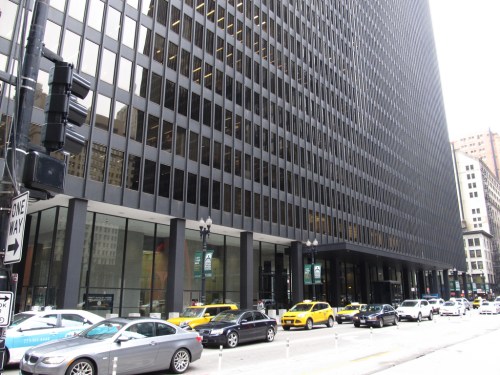
John Kness – Nominee to the U.S. District Court for the Northern District of Illinois

The Dirksen Courthouse - where the Northern District of Illinois sits.

John Kness has had a varied career, including as a musician and in law enforcement.  Now, Kness hopes to add “judge” to his resume.

Background

A native Illinoisan, John Fitzgerald Kness was born in Chicago in 1969.  Kness graduated from Northwestern in 1991 and then spent seven years as a musician and two years as a Patrol Officer in Oak Park, Illinois, before matriculating at Northwestern Law.[1]

After graduating, Kness rapidly switched jobs, spending a year with the Chicago office of Jenner & Block, a year clerking for Judge William Pryor on the U.S. Court of Appeals for the Eleventh Circuit, a year at Winston & Strawn, and then a year at Tabet DiVito & Rothstein in Chicago.[2] 

In 2007, Kness returned to Winston & Strawn, working as an Associate for two years before becoming a federal prosecutor in the Northern District of Illinois.[3]  In 2016, he left that role when he was hired (by a narrow 4-3 margin) to be the first in-house attorney at the College of DuPage.[4]  He currently holds that position.

History of the Seat

Kness has been nominated for a seat on the U.S. District Court for the Northern District of Illinois.  This seat opened on February 17, 2018, when Judge Samuel Der-Yeghiayan moved to senior status.  

In early 2018, Kness was contacted by the White House to gauge his interest in a federal judgeship.[5]  He subsequently interviewed with the White House and was tentatively selected as a nominee in June 2018.  In August 2018, he applied with a screening committee set up by Sens. Dick Durbin and Tammy Duckworth, both Democrats.  Kness was nominated with the agreement of the senators in June 2019.

Legal Career

Kness has spent his legal career approximately evenly divided between private practice and criminal prosecution.  In the former, Kness primarily worked in general litigation, while in the latter, Kness worked exclusively on criminal prosecutions.  Over the course of his legal career, Kness handled seven jury and one bench trials, all criminal.[6]

Notably, Kness prosecuted Hasan and Jonas Edmonds, cousins who sought to join ISIL in Syria and commit acts of terrorism.[7]  He was able to secure long sentences against both defendants.[8]  In other matters, Kness also prosecuted eight defendants who had engaged in the trading, production, and/or distribution of child pornography.[9]

Political Activity

Kness has been a longtime member of both the Federalist Society and the National Rifle Association, suggesting a conservative ideology.[10]  His only contribution of record is a $1000 donation to Rudolph Giuliani’s campaign in 2008.[11]

Overall Assessment

Overall, Kness’ background reveals little that should trouble his confirmation.  Given the support offered by Durbin and Duckworth, Kness will likely be confirmed without too much hassle.


[1] Sen. Comm. on the Judiciary, 116th Cong., John F. Kness: Questionnaire for Judicial Nominees 1.

[2] Id. at 2.

[3] Id.

[4] Robert Sanchez, COD Votes to Hire In-House Attorney, Chicago Daily Herald, Sept. 16, 2016.

[5] See Kness, supra n. 1 at 23-24.

[6] See id. at 13.

[7] See U.S. Fed. News, 2 Illinois Cousins Sentenced to Decades-Long Prison Terms For Conspiring to Provide Material Support to a Foreign Terrorist Organization – ISIL, Sept. 20, 2016. 

[8] See id.

[9] See States News Service, Eight Self-Identified “Boy Lovers” Sentenced to Federal Prison For Sexual Exploitation Crimes After FBI Investigation, Oct. 15, 2012.

[10] See Kness, supra n.1 at 5.

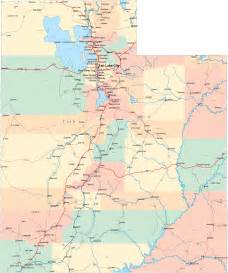
David Barlow – Nominee to the U.S. District Court for the District of Utah

At first glance, the Trump Administration’s appointment of David Barlow, an Obama-era U.S. Attorney, to the federal bench may seem odd.  However, as Barlow is a conservative Republican, his nomination speaks more to the Obama Administration’s approach to appointments than to Trump’s.

Background

David Bruce Barlow was born in 1971 in Provo, UT.  Barlow attended Brigham Young University, graduating summa cum laude in 1995.  He then received his J.D. from Yale Law School in 1998.[1]

After law school, Barlow clerked for Judge Peter Dorsey in the U.S. District Court for the District of Connecticut and then joined Lord Bissell & Brook in Chicago as an Associate.[2]  In 2000, Barlow moved to Sidley Austin in Chicago, where he became a partner in 2006.

In 2011, the newly elected Sen. Mike Lee asked Barlow to move to D.C. as his Chief Counsel.[3]  Shortly after, President Obama chose Barlow to be U.S. Attorney for the District of Utah.  The pick was controversial, largely because Obama bypassed the recommendations of several Democrats from U.S. Rep. Jim Matheson to name Barlow, and because Barlow had no experience with criminal law.[4]  Barlow left the U.S. Attorney’s Office in 2014 to rejoin Sidley Austin as a Partner.

In 2016, Barlow applied to be a judge on the Utah Court of Appeals.  While he was selected as a finalist for the seat, he was not picked by Gov. Gary Herbert, who chose Judge David Mortensen and attorney Jill Pohlman instead.[5]

In 2017, Barlow joined WalMart as Vice President of Compliance and, in 2018, returned to Utah to be a Partner at Dorsey & Whitney LLP, where he serves currently.

History of the Seat

Barlow has been nominated for a vacancy on the U.S. District Court for the District of Utah.  This seat was opened by Judge Clark Waddoups’ move to senior status on January 31, 2019.  He was directly contacted by Lee and the White House in early 2019 to gauge his interest in the judgeship and was nominated in May after an unusually swift vetting process.

Legal Experience

Barlow’s legal career can be divided into two halves for analysis: his time as a U.S. Attorney; and his work in private practice.

U.S. Attorney

From 2011 to 2014, Barlow served as U.S. Attorney for the District of Utah, supervising the federal prosecutor’s office on behalf of Attorney General Eric Holder.  As U.S. Attorney, Barlow led his office in a series of high profile prosecutions, including securing convictions against members of the Tongan Crip gang.[6]

However, Barlow’s tenure was not without controversy.  Notably, Barlow’s office was pushed to recuse itself from investigating Utah Attorney General John Swallow in favor of the DOJ Public Integrity Division.[7]  Additionally, Barlow’s office was sharply criticized by Judge Waddoups in a different case for their conduct, with the judge stating that prosecutors had failed to “conform their own conduct to the Constitution, the applicable ethical standards, rules and statutes.”[8]  Furthermore, Barlow’s office was criticized for settling criminal charges based on the Crandall Canyon Mine collapsed for two misdemeanor pleas and a $500,000 fine.[9] 

Private Practice

From 1998 to 2010 and since 2014, Barlow has worked in private practice, largely focused on complex civil actions.  Notably, Barlow represented the drug manufacturer AstraZeneca in defending against actions filed against it based on the drug Seroquel, which was alleged to cause diabetes.[10]  The action eventually ended with a jury verdict in AstraZeneca’s favor.  In another matter, Barlow represented General Electric (GE) in defending against lawsuits suggesting that asbestos exposure had caused plaintiffs to develop mesothelioma.[11]

Political Activity

Barlow is a Republican and was a supporter of Lee in his campaigns.[12]

Overall Assessment

Barlow comes to the confirmation process with extensive experience with both civil and criminal litigation.  Furthermore, Barlow’s work in the Obama Administration and his enthusiastic endorsement of Loretta Lynch to be Attorney General in 2015 may blunt charges that he is a doctrinaire conservative.  As such, while Barlow may draw questions regarding his tenure as a U.S. Attorney, he should be able to avoid the controversy drawn by previous Utah nominee Howard Nielson.


[1] Sen. Comm. on the Judiciary, 115th Cong., David B. Barlow Jr.: Questionnaire for Judicial Nominees 1.

[2] See id. at 2.

[3] Matt Canham, Lee Picks Top Lobbyist to Lead Its Staff, Salt Lake Tribune, Nov. 11, 2010.

[4] See Matt Canham, Obama Picks Republican Barlow As U.S. Attorney For Utah, Salt Lake Tribune, Aug. 4, 2011.

[5] Nominees Announced For Two Utah Court of Appeals Vacancies, Salt Lake Tribune, Mar. 29, 2016.

[6] Jeffrey Rosen, Conscience of a Conservative, N.Y. Times, Sept. 9, 2007, http://www.nytimes.com/2007/09/09/magazine/09rosen.html.  

[7] Dennis Romboy, U.S. Attorney For Utah Removed From Swallow Investigation, Deseret Morning News, May 6, 2013.

[8] Tom Harvey, How Rick Koerber Beat Federal Charges Alleging a Ponzi Scheme, Salt Lake Tribune, Aug. 25, 2014 (quoting Judge Clark Waddoups).

[9] Mike Gorrell, Crandall Canyon: Fines Don’t Satisfy Families of Mine Disaster Victims, Salt Lake Tribune, Mar. 11, 2012.

[10] Baker v. AstraZeneca Pharms. LP, MIDL 1099 07 MT 274 (N.J. Super. Ct.).

[11] In re Asbestos Litig., 77-C-ASB-2 (Del. Super. Ct.).

[12] See Barlow, supra n. 1 at 17.

Judge Halil Ozerden – Nominee to the U.S. Court of Appeals for the Fifth Circuit

Frequently reversed? A faux conservative? Judge Halil “Sul” Ozerden is getting hit hard from the right as a nominee to the Fifth Circuit.  As he is not guaranteed support from Democrats, it is an open question whether Ozerden can be confirmed.  However, he does bring a significant amount of judicial experience as a nominee.

Background

Halil Suleyman Ozerden was born in Hattiesburg, MS on December 5, 1966, the son of Turkish immigrants.  Ozerden graduated from the Georgetown University School of Foreign Service in 1989 and then spent six years as a fighter pilot in the U.S. Navy.  Ozerden then attended Stanford Law, graduating in 1998.

After graduating, Ozerden clerked for Judge Eldon Fallon on the U.S. District Court for the Eastern District of Louisiana and then joined the Gulfport firm, Dukes, Dukes, Keating & Faneca, P.A. as an Associate.  In 2003, Ozerden became a Partner at the firm.

In 2006, Ozerden, then only 39, was tapped by President George W. Bush for a vacancy on the U.S. District Court for the Southern District of Mississippi vacated by Judge David Bramlette.  Ozerden was confirmed unanimously by the Senate on April 24, 2007.  He serves in that capacity today.

History of the Seat

Ozerden has been nominated for a Mississippi seat on the U.S. Court of Appeals for the Fifth Circuit.  This seat opened on October 3, 2017 with Judge E. Grady Jolly’s move to senior status.  

In April 2017, Ozerden conducted meetings with Mississippi’s U.S. Senators and was recommended to the White House.[1]  However, despite interviewing with the White House in July 2017, Ozerden was not selected as the nominee until April 2018.[2]  Even after that point, there was no action on Ozerden’s nomination for a year.  During this time, some grumbled that Ozerden was not conservative enough to be nominated.[3]  Nevertheless, Ozerden was finally nominated after the intervention of White House Chief of Staff Mick Mulvaney, who served as a groomsman in Ozerden’s wedding.[4]

Political Activity

Ozerden was active in the Mississippi Republican Party before his elevation to the bench, volunteering for various Republican campaigns and serving as a Board Member of the Harrison County Republican Club.[5]  Compared to other appellate nominees, Ozerden is a latecomer to joining the Federalist Society, only doing so in 2019 when his nomination was under consideration.

Legal Career

Between 1999 and 2007, Ozerden worked in Gulfport, MS, handling general civil litigation.  During this time, he defended the Harrison County Sheriff against a civil rights action alleging that the plaintiff was wrongfully arrested and incarcerated.[6]  He also represented the office after a Sheriff’s Investigator caused a car accident which triggered severe medical injuries for the plaintiff.[7]

Jurisprudence

Ozerden has served as a judge on the U.S. District Court for the Southern District of Mississippi for the last twelve years.  In this role, Ozerden has presided over hundreds or criminal and civil cases, including sixty nine that have gone to verdict or judgment.[8]  We have summarized some of Ozerden’s most significant cases below:

Religious Rights

Ozerden has drawn criticism for conservative groups for his alleged “hostility” to religious rights.  The opposition is largely based on his ruling in Catholic Diocese of Biloxi v. Sebelius, in which he dismissed a challenge to the Obamacare contraceptive mandate on ripeness grounds.[9]

However, Ozerden’s record overall does not reflect a hostility to religious rights.  For example, Ozerden reviewed a claim of religious discrimination against the Woodland Village Nursing Home Center.[10]  In the claim, the plaintiff, a Jehovah’s Witness, was fired after she refused to pray the rosary with a Catholic nursing home resident.[11]  The nursing home moved to dismiss the lawsuit, arguing that the plaintiff had never identified the basis of her religious belief or objection to her employer, but had merely stated that it was religious.  Ozerden held that this was not a barrier and that the religious discrimination claim could move forward.[12]

However, the Fifth Circuit reversed, holding that the employee had failed to inform the employers of the specific nature of her religious belief, and that, as such, her claim wasn’t viable.[13]

The Fifth Circuit’s ruling was reversed and remanded by the U.S. Supreme Court.[14]  After the remand, the Fifth Circuit once again held for the defendant.[15]

State Farm

Ozerden presided over a qui tam lawsuit brought by State Farm insurance adjusters claiming that State Farm had instructed them to falsely identify wind damage as flood damage, so that the federal government would be responsible for the losses.[16]  State Farm attempted to secure dismissal of the lawsuit due to the plaintiff’s failure to keep the complaint under seal for 60 days, a motion that Ozerden denied.[17]  The Fifth Circuit affirmed Ozerden’s ruling and the Supreme Court affirmed in a unanimous opinion by Justice Anthony Kennedy.[18]

Reversal Rates

Ozerden has also been criticized for his high reversal rate, estimated by Severino at around 25%.[19]  Ozerden, for his part, has claimed that his reversal rate is around 4%.  Generally, the reversal rate of a judge can be determined in many ways: one is by comparing the number of cases in which a judge has been reversed to the total number of decisions issued by the judge; another is by comparing the number of cases in which a judge has been reversed to the total number of decisions issued by the judge that have been appealed.    

According to Ozerden’s questionnaire, his rulings have been wholly or partially reversed in seventeen cases.  In comparison, he has issued approximately 1400 opinions, leaving a reversal rate of around 2%.  However, because most interlocutory opinions are not appealable, a better comparison may be to focus on the number of cases that have actually been appealed (351).  This would give him a reversal rate of approximately 4%.  One could also use the number of cases that proceeded to verdict or judgment (69) , which would give you a rate of 25%. 

All in all, consider the following: Trump has nominated eight federal district court judges other than Ozerden to be appellate judges.  Of those, Thapar had 15 reversals in nine years; Erickson had 30 reversals in fourteen years; Engelhardt had 12 reversals in sixteen years; St. Eve had 43 reversals in sixteen years; Sullivan had 24 reversals in eleven years; Bianco had 13 reversals in twelve years; and Quattlebaum and Phipps had not been reversed in their short tenures.  As such, Ozerden’s seventeen reversals are fairly comparable to those of Trump’s other nominees.

Overall Assessment

Unlike Trump’s other nominees to the Fifth Circuit, Ozerden has attracted a fair amount of opposition from conservative groups.  This opposition is based largely on two arguments: first, that Ozerden’s high reversal rate shows a lack of “judicial competence”; second, that Ozerden has not been a conservative “leader” on the bench.  As noted earlier, while reasonable minds can differ, we don’t see Ozerden’s reversal rate as substantially different than those of Trump’s other nominees.  

Regarding the second complaint, the fundamental quality that litigants seek in judges is fairness.  As such, one expects that a judge will comport their rulings with the law rather than with politics or any judicial ideology or philosophy.  Ozerden’s record, overall, is conservative.  However, if it does not reflect conservative “leadership”, then it is to the judge’s credit.

Overall, it will be particularly interesting to see how Democrats choose to vote on Ozerden.  Will they see Ozerden as the best nominee they can expect from this Administration, or will they oppose Ozerden, forcing Republicans to find the votes to push him through?


[1] Sen. Comm. on the Judiciary, 116th Cong., Ozerden: Questionnaire for Judicial Nominees 55-56.

[2] See id. at 56.

[3] See Carrie Severino, Conservatives Voice Concerns Over Potential Fifth Circuit Nominee, Nat’l Review, Aug. 21, 2018, https://www.nationalreview.com/bench-memos/conservatives-voice-concerns-over-potential-fifth-circuit-nominee/.

[4] Eliana Johnson and Marianne Levine, Mulvaney Pushed Judicial Nominee Over Objections of White House Lawyers, Politico, June 13, 2019, https://www.politico.com/story/2019/06/13/mulvaney-halil-suleyman-fifth-circuit-1362794.

[5] See id. at 41-42.

[6] See Harris v. Forrest Cnty., Miss., No. 2:03-cv-604-KS-MTP (S.D. Miss.).

[7] See Mullins v. Haden, No. A2401-2002-0672 (Miss. Cir. Ct.).

[8] See Ozerden, supra n.1 at 15.

[9] Catholic Diocese of Biloxi Inc. et al. v. Sebelius et al., Civil No. 1:12CV158-HSO-RHW (Dec. 20, 2012).

[10] Nobach v. Woodland Village Nursing Cntr, Inc., 2013 WL 2145723 (S.D. Miss. May 15, 2013).

[11] See id.

[12] See id.

[13] Nobach v. Woodland Village Nursing Cntr, Inc., 762 F.3d 442 (5th Cir. 2014).

[14] Nobach v. Woodland Village Nursing Cntr, Inc., 135 S. Ct. 2803 (2015).

[15] Nobach v. Woodland Village Nursing Cntr, Inc., 799 F.3d 374 (5th Cir. 2015), cert. Denied, 136 S. Ct. 1166 (2016).

[16] See United States ex rel. Rigsby v. State Farm Fire & Cas. Co., 794 F.3d 457 (5th Cir. 2015).

[17] See id.

[18] See State Farm Fire & Cas. Co. v. United States ex rel. Rigsby, 137 S. Ct. 436 (U.S. 2016).

[19] See Severino, supra n.3.

Judge Stephanie Davis – Nominee to the U.S. District Court for the Eastern District of Michigan

Judge Stephanie Davis is one of two Michigan nominees nominated as part of a deal between the White House and Michigan’s Democratic Senators.  While the other nominee, Michael Bogren, was forced to withdraw due to Republican opposition, Davis has been widely approved by the Senate Judiciary Committee, refreshing given her left-of-center background.

Background

Davis was born Stephanie Renaye Dawkins in Kansas City Missouri in 1967.  Davis received a B.S. from Wichita State University in 1989 and her J.D. from the Washington University School of Law in 1992.[1]

After graduation, Davis joined the Detroit office of Dickinson Wright PLLC.[2]  In 1997, Davis joined the U.S. Attorney’s Office for the Eastern District of Michigan as a federal prosecutor.[3]  In 2010, newly appointed U.S. Attorney Barbara McQuade chose Davis to be Executive Assistant U.S. Attorney.[4] 

In 2016, Davis was appointed as a U.S. Magistrate Judge in 2016 where she still serves.

History of the Seat

Davis has been nominated for a seat on the U.S. District Court for the Eastern District of Michigan.  This seat opened on October 26, 2016, when Judge Gerald Rosen moved to senior status.  With the vacancy opening with only a couple of months left in the Obama Administration, no nominee was put forward to fill it.

In July 2017, Davis applied for the vacancy with a selection committee by Michigan Senators Debbie Stabenow and Gary Peters.[5]  Davis was recommended to the White House by the senators in December 2017.  After extensive negotiations, Davis was nominated on March 11, 2019.

Legal Career

Davis has held two primary positions in her pre-bench career.  From 1992 to 1997, Davis worked at the Detroit office of Dickinson Wright PLLC, where she focused largely on commercial litigation.  Then, from 1997 to 2016, Davis worked as a federal prosecutor, including as the Executive Assistant U.S. Attorney, the second in command to then-U.S. Attorney Barbara McQuade, from 2010 to 2016.

Notably, Davis prosecuted Sohrab Shafinia, a Farmington doctor, for writing prescriptions for controlled substances in exchange for cash payments.[6]  She also helped prosecute Detroit officials for taking bribes and kickbacks and conspiring to defraud retirees.[7]

Political Activity

Davis’ political activity has exclusively been in support of Democrats.  For example, Davis served with the transition team of Detroit mayor Dennis Archer in 1993 and volunteered to conduct election protection for the Obama campaign in 2008.[8]  She also gave $250 apiece to the Obama campaigns in 2008 and 2012.[9]  Furthermore, Davis was a member of the American Constitution Society, an organization of left-leaning lawyers and law students, from 2008 and 2016, and served on the Board of the Detroit Chapter of the group between 2012 and 2015.[10]

Jurisprudence

Davis has served as a U.S. Magistrate judge since her appointment in 2016.  In this role, she handles settlement, discovery, and makes recommendations on dispositive motions.  She also presides over cases where the parties consent.  Between 2016 and 2019, Davis presided over sixteen civil cases that proceeded to judgment.[11]  Davis’s more prominent trials include a Computer Fraud Act case against a former employee who stole information before setting up a competitor,[12] and a bench trial arising from a traffic collision at Fort Meade.[13]  Additionally, in another matter, Davis denied summary judgment against Muslim plaintiffs who argued that they were denied calorically equivalent meals during their fasts for Ramadan.[14]

Overall Assessment

While fellow Michigan nominee Bogren faced scrutiny for his legal advocacy, Davis has received bipartisan support in the Senate Judiciary Committee.  As such, one can predict a relatively comfortable confirmation for the experienced jurist.


[1] Sen. Comm. on the Judiciary, 114th Cong., Stephanie Davis: Questionnaire for Judicial Nominees 1.

[2] Id. at 2.

[3] Id.

[4] Id.

[5] Id. at 58.

[6] Michigan Physician Guilty of Conspiracy to Distribute Controlled Substance, Targeted News Service, Sept. 3, 2009.

[7] Jury Convicts Former Detroit City Treasurer, Pension Officials of Conspiring to Defraud Pensioners Through Bribery, U.S. Fed News, Dec. 8, 2014.

[8] Id. at 40.

[10] See Davis, supra n. 1 at 4.

[11] See id. at 12.

[12] Am. Furukawa, Inc. v. Hossain, 2017 U.S. Dist. LEXIS 161650 (E.D. Mich. Sept. 29, 2017).

[13] United States v. McNeill, Traffic Violation No. 2359730.

[14] Conway v. Purves, 2016 U.S. Dist. LEXIS 128171 (E.D. Mich. Aug. 1, 2016), report and recommendation adopted, 2016 U.S. Dist. LEXIS 127648 (E.D. Mich. Sept. 20, 2016) (Parker, J.).

Judge Kea Riggs – Nominee to the U.S. District Court for the District of New Mexico

Judge Kea Riggs, a New Mexico state judge has been nominated for the federal bench with the support of her home state Democratic senators.  

Background

Riggs was born Kea Lynn Whetzal in Midwest City, Oklahoma in 1965.  Riggs attended the University of Oklahoma and the University of Oklahoma Law School, graduating in 1990.[1]

After graduation, Riggs spent a year with the Las Cruces firm Cutter & Riggs, P.C. and then became an Assistant District Attorney in New Mexico’s Third Judicial District. She then joined joined the New Mexico Children, Youth and Families Department as a Children’s Court Attorney for a year before joining the Fifth Judicial District Attorney’s Office.[2]  In 1999, she joined Sanders, Bruin, Coll & Worley P.A. as an Associate.[3]  In 2006, Riggs left the firm to become a self-employed mediator.[4] 

From 2001 to 2014, Riggs served as a part-time U.S. Magistrate Judge in New Mexico.  She became a Judge on the Fifth Judicial District Court in New Mexico in 2014 and currently serves there.

History of the Seat

Riggs has been nominated for a seat on the U.S. District Court for the District of New Mexico.  This seat opened on February 7, 2018, when Judge Christina Armjio moved to senior status.  In April 2018, Riggs was one of four candidates recommended by New Mexico’s Democratic Senators to the White House.[5]  While Riggs was initially interviewed in May 2018, her formal vetting did not begin until February 2019.[6]  Riggs was nominated on May 3, 2019.

Legal Career

Riggs has held a number of different positions as an attorney, including serving as a mediator, state prosecutor, and in private practice.  However, overall, Riggs primarily practiced criminal law throughout her career, although she did handle some domestic and probate matters as well.[7]  By Riggs’ estimation, she has tried approximately 500 cases to trial and judgment.[8]  Interestingly, Riggs reports that virtually all of her litigation has been in state courts, not federal.[9]

Jurisprudence

Riggs has served as a U.S. Magistrate Judge on a part-time basis between 2001 and 2014 and as a District Court judge in New Mexico since her appointment in 2014.  In the former capacity, Riggs oversaw arraignments, bond hearings, and discovery disputes in federal court.  She also handled federal citations and misdemeanors.  For example, she fined a New Mexico man for hunting oryx in a federal wildlife refuge.[10]  In her latter role as a state judge, Riggs has handled both criminal and civil actions, including approximately 5000 bench trials.[11] 

Overall Assessment

As a Republican appointee with strong support from her Democratic home state senators, Riggs can be considered a consensus nominee.  While some may question Riggs’ experience (given her lack of practice in federal court), her long tenure on the bench and her lack of a controversial paper trail should ensure a smooth confirmation.


[1] Sen. Comm. on the Judiciary, 116th Cong., Kea W. Riggs: Questionnaire for Judicial Nominees 1.

[2] Id. at 2.

[3] Id.

[4] Id.

[5] Id. at 33-34.

[6] Id. at 34.

[7] See id. at 26-27.

[8] Id.

[9] Id. at 27.

[10] AP, NM Man Gets Probation for Wildlife Area Trespass, Associated Press State & Local Wire, Mar. 3, 2011.

[11] Riggs, supra n. 1 at 11.

Judge Robert Molloy – Nominee to the U.S. District Court of the Virgin Islands

The District Court of the Virgin Islands is a territorial court whose judges serve ten year terms.  Judge Curtis Gomez had his term expire in 2015, but is still sitting on the court due to the failure by Congress and the President to name a successor.  The nomination of Judge Robert Molloy offers the best chance in years for this court to gain a new judge.

Background

Robert Anthony Molloy was born in Christiansted, St. Croix in 1975.  Molloy received his B.S. from Hampton University in 1997, his J.D. from American University Washington College of Law in 2003 and his MBA from American University Kogod School of Business in 2004.[1]  After graduating, Molloy clerked on the Circuit Court of Arlington County and for Judge Raymond Finch on the U.S. District Court of the Virgin Islands.[2]

After his clerkships, Molloy worked as an Assistant Attorney General in the Office of Collective Bargaining with the Virgin Islands Government.[3]  In 2013, he was appointed by Gov. John de Jongh Jr. to the Superior Court of the Virgin Islands, where he currently serves.[4]

History of the Seat

The District Court of the Virgin Islands has two judgeships authorized.  Judge Jose Gomez, who was appointed by President Bush, saw his appointment expire in 2015.[5]  The Obama Administration declined to reappoint Gomez, but also refused to make another appointment, presumably due to unwillingness to expend energy on a pick likely to be blocked by the Republican Senate.[6]

In June 2018, Molloy was contacted by Anthony Ciolli, the President of the Virgin Islands Bar Association, to gauge his interest in the judgeship.[7]  After Molloy confirmed his interest, his nomination was sent to the White House by Congresswoman Stacey Plaskett, a Democrat.[8]  Molloy was nominated on May 29, 2019.

Political Activity

As a prosecutor in 2008, Molloy donated in support of the campaign of President Obama, giving $658.[9] 

Legal Experience

Molloy has spent his pre-bench legal career handling labor and employment matters for the Territorial Government as an Assistant Attorney General.  During his career, Molloy has tried 83 cases to verdict in bench trials but has not handled any jury trials.[10]  Notably, Molloy was part of the defense team that successfully argued that a Virgin Islands statute instituting an eight percent salary reduction on many territorial employees did not violate the Constitution.[11]

Jurisprudence

Molloy has served on the Superior Court of the Virgin Islands since 2013, where he has heard criminal, civil, and administrative cases.[12]  Molloy has also sat by designation with the Supreme Court of the Virgin Islands 10 times and has also sat with the Appellate Division of the District Court of the Virgin Islands.[13]  According to Molloy, he has presided over nineteen cases that proceeded to verdict or judgment, including thirteen jury trials.[14]

Among the most notable cases he handled, Molloy oversaw the first prosecution in the Virgin Islands for a prison guard having sexual relations with an inmate.[15]  In the case, Molloy upheld the statute criminalizing such conduct and held that it was not unconstitutionally vague.[16]  In another case, Molloy denied a motion to dismiss a class action based on a fungus infestation of plaintiffs’ property, holding that such an action was not preempted by federal law.[17]

Overall Assessment

Molloy has accomplished much in his relatively short legal career.  Despite not even being 45, Molloy has already served the better part of a decade on the territorial bench and is poised for elevation to the federal bench.  Given his political contributors and his backers, Molloy is likely a Democrat.  Nevertheless, the political cost to the Administration for nominating a Democrat is the least when it comes to a territorial court.  As such, Molloy’s expected confirmation should allow Gomez, who has now served four years past the end of his term, a chance to take a break and step down.


[1] Sen. Comm. on the Judiciary, 115th Cong., Robert A. Molloy: Questionnaire for Judicial Nominees 1.

[2] Id. at 1-2.

[3] See id. at 2.

[4] Id.

[5] Bernetia Atkins, Undercurrents: At District Court, They Also Serve Who Wait – For Replacement, The St. Thomas Source, Feb. 29, 2016, https://stthomassource.com/content/2016/02/29/undercurrents-at-district-court-they-also-serve-who-wait-for-replacement/.  

[6] See id.

[7] See Molloy, supra n. 1 at 52-53.

[8] Press Release, Congresswoman Stacey Plaskett’s Statement Regarding The Appointment Of Judge Robert Molloy To The United States District Court Of The Virgin Islands (May 29, 2019) (on file at https://plaskett.house.gov/news/documentsingle.aspx?DocumentID=3517).  

[10] See Molloy, supra n. 1 at 40-41.

[11] United Steelworkers, et al. v. Gov’t of the Virgin Islands, 66 V.I. 631 (2012), rev’d, 842 F.3d 201 (3d Cir. 2015).

[12] See Molloy, supra n. 1 at 9-10.

[13] See id. at 10.

[14] Id.

[15] People of the Virgin Islands v. Whyte, Super. Ct. Crim. No. SX-13-CR-026, 62 V.I. 95 (Super Ct. 2015).

[16] See id. 

[17] Alleyne, et al.v. Diageo USVI, Inc., et al., 63 V.I. 384 (Super Ct. 2015).

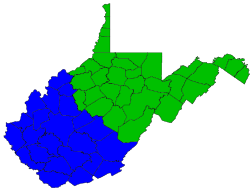
Judge Frank Volk – Nominee to the U.S. District Court for the Southern District of West Virginia

Judge Frank Volk currently serves as the Chief U.S. Bankruptcy Judge on the U.S. District Court for the Southern District of West Virginia.  He has been nominated to replace his former boss Judge John Copenhaver.

Background

A West Virginia native, Frank William Volk Jr. was born in Morgantown on November 10, 1965.  He graduated from West Virginia University in 1989 and received a Juris Doctor from the West Virginia University College of Law in 1992.[1]  After graduating from law school, Volk clerked for Judge Charles Haden on the U.S. District Court for the Southern District of West Virginia, for Judge M. Blane Michael on the U.S. Court of Appeals for the Fourth Circuit, and for Justice Margaret Workman on the West Virginia Supreme Court of Appeals.[2]  After these positions, Volk joined Haden’s chambers as a Law Clerk, where he stayed for nine years.  He then moved to Judge John Copenhaver’s chambers, working as a Law Clerk there between 2004 and 2015.[3] 

In 2015, Volk was selected to be a federal bankruptcy judge, holding that position to the present.

History of the Seat

Volk has been nominated to fill a vacancy on the U.S. District Court for the Southern District of West Virginia.  The seat opened on November 1, 2018, when Judge John Copenhaver moved to senior status.[4]  In June 2018, Volk sent his resume to West Virginia Senators Shelley Moore Capito (R-WV) and Joe Manchin (D-WV).[5]  After interviews with Capito, Manchin, and the White House, Volk was nominated on April 4, 2019.

Legal Experience/Jurisprudence

Volk has spent virtually his entire pre-bench legal career as a career law clerk, working for many of West Virginia’s most prominent jurists.  Notably, Volk worked for both Democrats, such as Michael and Workman, and Republicans, such as Haden and Copenhaver.  As such, he had significant experience in the workings of the court by the time he was appointed to the bench in 2015.  As a U.S. Bankruptcy Judge, Volk reviews federal bankruptcy filings and proceedings.  By his own account, Volk has presided over 6000 cases and over 3000 hearings.[6]  However, he has not presided over any trials.[7]

Notably, Volk presided over the bankruptcy and sale of the Charles Gazette-Mail, organizing the sale of the newspaper.[8]  He also approved the sale of the newspaper to H.D. Media, a Huntingdon based media company.[9]  In doing so, he rejected a rival bid from Ogden Newspapers, which announced that they did not wish to pursue the sale but did not formally withdraw their bid.[10]

Overall Assessment

It is not common to appoint U.S. Bankruptcy Judges to lifetime appointments.  It is also unusual to appoint career law clerks to the federal bench.  However, as a career law clerk who then became a bankruptcy judge, Volk brings a particularly unique resume for a lifetime appointment.  Strictly speaking, Volk should have little trouble being confirmed to the bench as he has the strong support of his home-state senators and a relatively uncontroversial record.  

The only hiccup, if any, may arise from his lack of litigation experience.  As Volk has acknowledged, his time as a career law clerk precluded him from the practice of law.  As such, Volk has never tried cases or even appeared as counsel of record throughout the bulk of his legal career.

Nevertheless, senators may find that Volk’s long experience working with Judge Haden and Copenhaver would more than make up for this lack of practice.  As such, this lack of litigation experience is unlikely to hamper Volk through the confirmation process.


[1] Sen. Comm. on the Judiciary, 116th Cong., Frank Volk: Questionnaire for Judicial Nominees 1.

[2] See id. at 2.

[3] Id.

[4] Judge Copenhaver was the last active district judge in the country appointed by President Gerald Ford.

[5] See Volk, supra n. 1 at 42.

[6] Id. at 9.

[7] Id.

[8] See Lacie Pierson, Judge Delays Ruling on Bidding Process for Gazette-Mail, Charleston Gazette-Mail, Feb. 1, 2018.

[9] Lacie Pierson, Judge Delays Ruling on Bidding Process for Gazette-Mail, Charleston Gazette-Mail, Mar. 10, 2018.

[10] Id.

Douglas Cole – Nominee to the U.S. District Court for the Southern District of Ohio

A former Ohio State Solicitor General and attorney in private practice, Douglas Cole would join the bench with over twenty years of practice experience.

Background

Cole was born in Janesville, WI in 1964.[1]  Cole received a B.A. from Ripon College in 1985, a B.S.E.E. from the University of Wisconsin College of Engineering in 1988 and his J.D. from the University of Chicago Law School in 1993.[2]  Following his graduation, Cole clerked for Judge Frank Easterbrook on the U.S. Court of Appeals for the Seventh Circuit.[3]

After his clerkship, Cole joined the Chicago office of Kirkland & Ellis as an associate.  Cole left in 1997 to become a Visiting Assistant Professor of Law at the University of Oklahoma College of Law and then, in 1998, joined Zeiger & Carpenter in Columbus as Of Counsel.[4]

In 2000, Cole became an Assistant Professor of Law at the Ohio State University Moritz School of Law.[5]  In 2003, he left when he was appointed State Solicitor General in Ohio.  Cole left the Solicitor General’s Office in 2006 when the Attorney General’s Office was taken over by Democrats, and joined the Columbus office of Jones Day as a Partner.[6]  In 2011, Cole left to become a Partner at Organ Cole in Columbus, where he still needs.

History of the Seat

Cole has been nominated for a seat on the U.S. District Court for the Southern District of Ohio.  This seat was vacated on May 31, 2018, when Judge Sandra Dlott moved to senior status.  However, he previously interviewed with the White House in 2017 in connection with the vacancy created by Judge Gregory Frost’s retirement.[7]  That seat was ultimately filled by Judge Sarah Morrison.

Cole reapplied for the Dlott vacancy with a selection commission put together by Ohio Senators Sherrod Brown, a Democrat, and Rob Portman, a Republican.[8]  Cole interviewed with the Commission in late August of 2018, and with Portman in September.[9]  He was nominated in May 2019.  

Legal Experience

Cole has fairly extensive experience with litigation, having worked both in private practice and as Ohio’s Solicitor General.  Cole has practiced in state and federal court through his career, having tried eleven cases to verdict.[10] 

Private Practice

At the firms of Kirkland & Ellis, Zeiger & Carpenter, Jones Day, and Organ Cole, Cole has primarily worked in commercial litigation.  Notably, Cole represented Uber in a suit seeking to allow the company to operate in Hillsborough County.[11]  He also represented ProMedica in a suit seeking to invalidate a Federal Trade Commission ruling undoing a hospital acquisition in Toledo.[12]

State Solicitor General

From 2003 to 2006, Cole served as Ohio’s Solicitor General, working under Republican Attorney General Jim Petro.  In this role, Cole argued five cases before the U.S. Supreme Court, winning three,[13] and losing two.[14]  The most notable of these cases was Cutter v. Wilkinson, in which Cole brought, on behalf of Ohio, a First Amendment challenge to the Religious Land Use and Institutionalized Persons Act (RLUIPA).[15]  In the challenge, Cole argued that RLUIPA, by requiring all restrictions on the religious rights of state prisoners to be justified by a “compelling state interest” elevated religion above nonreligion and violated the First Amendment.  The Court rejected this argument in a unanimous opinion by Justice Ginsburg.[16]

Political Activity

Cole has been a generous donor to Republicans over the last 10-12 years.[17]  Notably, Cole gave $10,000 to Sen. Ted Cruz’s campaign in 2012, and $7700 to Ohio State Treasurer Josh Mandel (who ran against Sen. Sherrod Brown in 2012).[18]

Overall Assessment

With over twenty years of practicing law, Cole certainly meets the base level of qualifications for the federal bench.  Overall, given the stamp of approval from Sen. Brown, Cole is favored to be confirmed before the end of the year.


[1] Sen. Comm. on the Judiciary, 115th Cong., Douglas R Cole: Questionnaire for Judicial Nominees 1.

[2] Id. 

[3] Id. at 2.

[4] Id.

[5] Id.

[6] Id. 

[7] Id. at 36.

[8] Id. 

[9] See id.

[10] Id. at 18.

[11] See Hillsborough Cnty. PTC v. Uber Tech., Case No. 15-CA-3097 (Circuit Ct, Hillsborough Cnty., Florida).

[12] ProMedica Health Sys. v. FTC, 749 F.3d 559 (6th Cir. 2014).

[13] DaimlerChrysler Corp. v. Cuno, 547 U.S. 332 (2006) (holding that plaintiffs lack standing to challenge economic development plan by Ohio); Bradshaw v. Stumpf, 545 U.S. 175 (2005) (upholding guilty plea by Ohio inmate but reversing and remanding sentence); City of Littleton v. Z.J. Gifts D-4, LLC, 541 U.S. 774 (2004) (holding that due process rights of adult business barred from operating in Littleton was not violated).

[14] Cutter v. Wilkinson, 544 U.S. 709 (2005) (holding that the Religious Land Use and Institutionalized Persons Act does not violate the First Amendment); Wilkinson v. Dotson, 544 U.S. 74 (2004) (holding that prisoners may raise challenges to their parole hearings in a 1983 suit).

[15] Cutter v. Wilkinson, 544 U.S. 709 (2005).

[16] Id.

[18] Id.

Jennifer Philpott Wilson – Nominee to the U.S. District Court for the Middle District of Pennsylvania

The scion of a well-established central Pennsylvania legal family, Jennifer Philpott Wilson has been nominated to fill a vacancy on the U.S. District Court for the Middle District of Pennsylvania.

Background

Wilson was born Jennifer Marie Philpott in 1975 in Washington D.C..[1]  She was one of seven children born to Jerry and Sandra Philpott, with her father being a longtime attorney in central Pennsylvania.[2]  Wilson attended Swarthmore College, receiving a B.A. degree in 1997, and subsequently getting a law degree from Brooklyn Law School.[3]

After graduating, Wilson clerked for Judge Jon McCalla on the U.S. District Court for the Western District of Tennessee and then for Judge Julio Fuentes on the U.S. Court of Appeals for the Third Circuit.[4]  After her clerkships, Wilson worked as an Associate at Chadbourne & Parke LLP in New York City.  

In 2005, Wilson became a trial attorney with the Tax Division at the Department of Justice.[5]  She left in 2009 to join her father’s practice as a Partner in Duncannon, Pennsylvania, and still practices there.

History of the Seat

The seat Wilson has been nominated for opened on October 11, 2018, with the move to senior status of Judge Yvette Kane.  In July 2018, Wilson applied for a federal judgeship with the application committee set up by Pennsylvania’s U.S. Senators Bob Casey (D-PA) and Pat Toomey (R-PA).[6]  Wilson was jointly recommended to the White House on February 13, 2019 and was nominated on May 3, 2019.[7] 

Legal Experience

Wilson started her career by working at Chadbourne & Parke LLP in New York City, where she worked on civil matters in New York courts.  Then, from 2005 to 2009, Wilson worked for the Tax Division with the Department of Justice.  During this time, Wilson represented the U.S. in a key case seeking unpaid taxes hidden behind “Son of BOSS” tax shelters.[8] 

Since 2009, Wilson has been a Partner with her father in Philpott Wilson, primarily practicing criminal defense.  Most notably, Wilson represented Mark Ciaverella, a Wilkes-Barre judge who was convicted for accepting kickbacks in exchange for sending children to private children’s detention facilities (“Kids for Cash”).[9]  Wilson succeeded in convincing Judge Christopher Conner to reverse three counts of racketeering, racketeering conspiracy, and conspiracy on statute of limitations grounds.[10]

Writings

In 2000, as a law student, Wilson co-authored a note criticizing public entity lawsuits against tobacco and gun industries for harms resulting from their products.[11]  The note explains the legal basis for state claims against tobacco industries in the 1990s and the substantial settlements obtained therefrom.  It also criticizes such litigation by Attorneys General, arguing that legislation is a more appropriate avenue to regulate tobacco.[12]  It also suggests that such suits against the gun industry is “motivated more by the prospect of regulating the manufacturers and generating revenue through settlements than by a desire to redress past wrongs.”[13] All in all, the note is deeply critical of such lawsuits, and suggests that they be cut back in favor of legislative solutions.[14]

Political Activity 

Wilson had no noticeable political activity until 2018, when she gave $570 to the Republican Federal Committee of Pennsylvania.[15]  The same year, Wilson joined the Perry County Republican Committee.[16]  Interestingly, Wilson’s father, Jerry Philpott has donated consistently to Democrats, giving 31 contributions to Hillary Clinton and other Democrats since 2016.[17]

Overall Assessment

As most Pennsylvania district court nominees have generally been confirmed with bipartisan majorities, Wilson looks likely to do the same.  Nevertheless, she may attract some opposition based on her relative youth and her criticism of public entity lawsuits (a tactic generally supported across the aisle as a way to recover the costs of smoking).  Overall, given her support and endorsement by Republican Sen. Toomey and Democratic Sen. Casey, Wilson is unlikely to be considered controversial.


[1] Sen. Comm. on the Judiciary, 115th Cong., Jennifer Philpott Wilson: Questionnaire for Judicial Nominees 1.

[2] See Attorney Profile, Philpott Wilson LLP, http://philpottwilson.com/jerry-philpott/3687394.

[3] See Wilson, supra n. 1 at 1.

[4] Id. at 1-2.

[5] Id. at 2.

[6] See id. at 25-26.

[7] Id. at 26.

[8] See Jade Trading, LLC. v. United States, 80 Fed. Cl. 11 (2007).

[9] James Halpin, Ciavarella’s Trial Lawyers Admit Failing to Address Potential Key Issue, The Citizens’ Voice, Sept. 15, 2017.

[10] James Halpin, Judge Rules in Ciavarella’s Favor in Kids-For-Cash Appeal, The Citizens’ Voice, Jan. 8, 2018.

[11] Philip C. Patterson & Jennifer M. Philpott, In Search of a Smoking Gun: A Comparison of Public Entity Tobacco and Gun Litigation, 66 Brooklyn L. Rev. 549 (Summer/Fall 2000).

[12] See id. at 576-78.

[13] Id. at 602.

[14] See id. at 606-07.

[16] See Wilson, supra n. 1 at 12.