Jodi Dishman – Nominee to the U.S. District Court for the Western District of Oklahoma

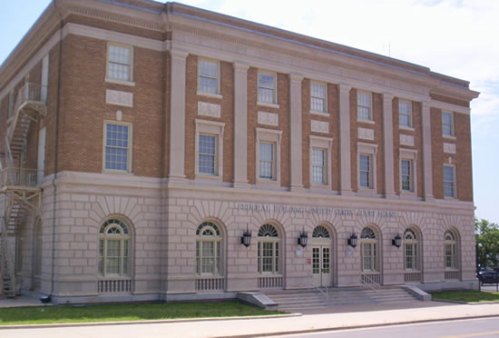
The Federal Courthouse in Lawton, Oklahoma

Jodi Dishman, an Oklahoma City based attorney, is Trump’s fourth pick for the Western District of Oklahoma, and will be the first woman appointed to the court after twenty five years.

Background

Dishman was born Jodi Marie Warmbrod in Memphis, TN in 1979.  Dishman attended Southern Methodist University, where she served as Student Body President.[1]  Dishman then attended the University of Oklahoma College of Law, where she graduated summa cum laude.[2]  After graduation, Dishman clerked on the U.S. Court of Appeals for the Fifth Circuit for Judges Carolyn Dineen King and Edward Prado.

After her clerkships, Dishman joined the San Antonio office of Akin Gump Strauss Hauer & Feld LLP as an Associate.  She become Counsel in 2010.  In 2012, she moved to Oklahoma City to join McAfee & Taft, where she became a Shareholder in 2014.  It is a position she currently holds.

History of the Seat

Dishman has been nominated to the U.S. District Court for the Western District of Oklahoma.  Judge Vicki Miles-LeGrange, who was the first African American appointed to this court when she joined in 1994, vacated this seat on November 5, 2018.  Dishman had previously interviewed with Oklahoma Senators in January 2017 to fill one of three other vacancies on the Western District, but was not selected.[3]  After Judges Miles-LeGrange moved to senior status, Dishman again expressed her interest.[4]  After another interview with an advisory committee set up by the senators, Dishman was selected as the nominee.

Legal Experience

Whether at Akin Gump or at McAfee & Taft, Dishman’s career has focused on commercial litigation.  Dishman has tried three cases as chief counsel and one as associate counsel in her career.[5]  The most prominent of these involved a lawsuit against an insurance company (her client) alleging that they breached their agreement in failing to make needed claim payments.[6]  Dishman also represented the company on appeal after a split verdict from the jury.

In another notable case, Dishman represented the Oklahoma City Landfill, LLC in a class action case by property owners who alleged that the landfill interfered with their properties.[7]  The case eventually settled.  

Overall Assessment

While most of Trump’s Oklahoma nominees have been fairly controversial, it’s unlikely that Dishman will be one of them.  While she is very young, Dishman has cut their teeth on some fairly complex cases, and, at forty, Dishman is the same age as the judge she will be replacing, Judge Miles-LeGrange, was at the time of her nomination.


[1] NBC News Broadcast, Attack on America, 12:00 Midnight, NBC, Sept. 15, 2001.

[2] Sen. Comm. on the Judiciary, 116th Cong., Questionnaire for Judicial Nominees: Jodi Dishman 1.

[3] Those seats were all filled with male candidates, Scott Palk, Charles Goodwin, and Patrick Wyrick.

[4] See id. at 32-33.

[5] See id. at 17.

[6] See Lavoy v. USAA General Indemnity Co., Case No. CJ-2014-131, District Ct., Jackson Cnty., Okla.

[7] See McCarty et al. v. Oklahoma City Landfill, LLC, et al., Case No. 5:12-cv-01152-C, W.D. Okla.

William Nardini – Nominee to the U.S. Court of Appeals for the Second Circuit

While New York senators have frequently clashed with the White House over judicial appointments in the state, their neighbors in Connecticut have quietly formed a working relationship that has produced three relatively uncontroversial nominations, including that of William Nardini to the Second Circuit.

Background

William Joseph Nardini was born in Glen Ridge, NJ in 1969.  Nardini received his B.A. summa cum laude from Georgetown University in 1990 and his J.D. from Yale Law School in 1994.[1]  After graduating, Nardini clerked for Judge Jose Cabranes on the U.S. Court of Appeals for the Second Circuit and then for Judge Guido Calabresi on the same court.  Nardini then clerked for Judge Sandra Day O’Connor on the U.S. Supreme Court

In 2000, Nardini joined the U.S. Attorney’s Office for the District of Connecticut.[2]  He currently serves as Criminal Chief of the Office.

History of the Seat

Nardini has been nominated for a Connecticut seat on the U.S. Court of Appeals for the Second Circuit.  This seat was vacated by Judge Christopher Droney, who moved to senior status on June 30, 2019.  

In April 2019, Nardini was contacted by the White House to gauge his interest in the Second Circuit.[3]  In May 2019, Nardini applied to a selection committee set up by Connecticut Senators Richard Blumenthal and Christopher Murphy (both Democrats).[4]  On July 31, 2019, Nardini interviewed with the White House and with Blumenthal and Murphy, who both decided to back his nomination.  Nardini was nominated in September 2019.

Legal Career

Nardini has primarily worked as a federal prosecutor in Connecticut.  However, Nardini also spent four years on detail with the U.S. Embassy in Rome, where he represented the United States in extradition and mutual legal assistance in Italian criminal matters.[5]  Over the course of his career, Nardini has handled ten jury trials and around 350 appeals before the Second Circuit.

Nardini primarily prosecuted public corruption, organized crime, and racketeering cases.  For example, Nardini prosecuted FBI Agent John Connolly for his corrupt relationships with mobster Whitey Bulger.[6]  Nardini also prosecuted former Connecticut NAACP head Ben Andrews for a corrupt relationship with State Treasurer Paul Silvester.[7]

Nardini also handled terrorism cases, including the prosecution of U.S. Navy sailor Hassan Abu-Jihaad for disclosing national security information to organizations engaging in material support for terrorists.[8]

Political Activity

Nardini has a fairly apolitical background, with his only political experience being support for NJ Assemblyman Joseph A. Mecca, a Democrat, in 1991.[9]

Writings

In 2006, Nardini authored an article discussing the tools that prosecutors can use in prosecuting and undermining organized crime.[10]  In the article, Nardini outlines the various tools prosecutors can use, from subpoenas and warrants to offers of transactional immunity that can encourage witnesses to turn against their superiors in a criminal enterprise.[11]  Nardini suggests that prosecutors can use the tools at their disposal “in concert” with each other to ensure maximum effectiveness to target organized crime.[12]

Overall Assessment

Unlike the last few nominations to the Second Circuit, who have all drawn controversy, Nardini will likely be confirmed relatively easily.  His nonpartisan background and focus on prosecuting organized crime and terrorists make him salable to senators of both parties, and the support of Blumenthal and Murphy won’t hurt.  As such, Nardini’s nomination and likely confirmation is a testament to how smoothly the process can be when all parties work together in good faith.


[1] Sen. Comm. on the Judiciary, 116th Cong., William Nardini: Questionnaire for Judicial Nominees 1.

[2] Judge Andy Oldham on the U.S. Court of Appeals for the Fifth Circuit was a co-clerk of Nardini’s.

[3] See id. at 31.

[4] See id.

[5] Id. at 19.

[6] United States v. Connolly, Criminal No. 99-CR-10428-JLT (D. Mass.).

[7] Larry Neumeister, Lawyer Argues for New Trial for former Connecticut NAACP Head, Associated Press, Sept. 20, 2006.

[8] See United States v. Abu-Jihaad, Criminal No. 3:07-CR-57 (MRK) (D. Conn.).

[9] See Nardini, supra n. 1 at 17.

[10] William J. Nardini, The Prosecutor’s Toolbox, J. Int. Criminal Justice (2006) 4 (3): 528 (July 1, 2006).

[11] See id.

[12] Id. at 536.

Judge Raag Singhal – Nominee to the U.S. District Court for the Southern District of Florida

Florida state court judge Raag Singhal is nothing if not persistent, having applied to be a judge 15 times before he was selected.  Singhal is now up for a federal judgeship after narrowly missing an appointment to the Florida Supreme Court.

Background

Anuraag Hari “Raag” Singhal was born in Philadelphia in 1963, the son of Indian parents who had moved to the U.S. in 1960.[1]  Singhal attended Rice University and Wake Forest University Law School.[2]

After graduation, Singhal spent a year with Fleming, O’Brien & Fleming as an Associate and then became a prosecutor in Ft. Lauderdale.[3]  In 1993, Singhal became a Partner in a criminal defense practice in Ft. Lauderdale, which he maintained until 2011.[4] 

In 2011, Singhal, who had previously applied fifteen times to be a judge, was finally appointed to be a Circuit Court Judge in Broward County by Republican Governor Rick Scott.  His appointment made him the first Asian-American judge in the county and only the third in Florida.[5]  Singhal continues to serve on that court.

In 2019, Singhal was considered by Gov. Ron DeSantis for appointment to the Florida Supreme Court, but DeSantis chose three other candidates instead.[6]

History of the Seat

Singhal has been nominated for a seat on the U.S. District Court for the Southern District of Florida.  This seat opened on August 5, 2016, when Judge James Cohn moved to senior status.  In October 2017, Singhal applied and interviewed with the Judicial Nominating Commission (JNC) formed by Florida Senators Marco Rubio and Bill Nelson.  The JNC chose Singhal as one of ten finalists to be passed onto the Senators.[7]  After interviews with Rubio and Nelson, Singhal was contacted by the Trump Administration in February 2018.[8]  After interviewing with the White House Counsel’s Office and the Department of Justice, Singhal was not contacted for a year before vetting resumed in April 2019.  Singhal was ultimately nominated in August 2019.  

Legal Career

For most of his pre-bench legal career, Singhal has worked as a criminal defense attorney, handling both white collar and violent crime cases.  Over the course of his career, Singhal tried over 200 jury trials, including 33 First Degree Murder cases.[9]  Singhal also accepted court appointments to represent difficult or problematic clients.

Among his most prominent appointments, Singhal was appointed to represent serial killer Aileen Wuornos, who was awaiting execution.[10]  While representing her, Singhal came to believe that Wuornos was not competent to be executed and communicated as such to the Florida Supreme Court.[11]  In response, then-Gov. Jeb Bush stayed Wuornos’ execution, pending review from psychiatrists.[12]  However, the examiners found Wuornos to be competent and she was subsequently executed.[13]  Even after the execution, which Wuornos had wanted, Singhal maintained his belief that she was insane.[14]

Jurisprudence

Singhal served as a Circuit Judge in Broward County since 2011.  As a Circuit Judge, Singhal handles major felonies and any civil cases with more than $15000 in controversy.  Over his eight year tenure on state court, Singhal has heard approximately 8000 cases, including over 450 trials.  Interestingly, Singhal was on the bench when an inmate slipped through his restraints and escaped in the middle of open court.[15]  The inmate later apologized to Singhal, who stayed on the case despite being named as a defense witness, arguing that he was escaping to obtain evidence of his innocence.[16] 

Most recently, Singhal presided over suits related to Brenda Snipes, the head of the Broward County Election Board, who has been criticized by Republicans for her poor management of elections.[17]  In August 2018, Singhal issued an injunction ordering Snipes not to open vote-by-mail ballots before they could be reviewed by the Canvassing Board.[18]  Singhal also presided over a suit brought by law professor Tim Canova, who alleged that ballots had been improperly destroyed by Snipes in his race against Rep. Debbie Wasserman-Schultz.[19]  Singhal ruled that Snipes acted contrary to state and federal law in destroying ballots in the race.[20]

Political Activity

Other than his own campaigns for judicial office, Singhal has volunteered with the Broward County Republican Party as an attorney.[21]  Singhal resigned his post with the Republican Party in 2010 to support the Independent Senate candidacy of Gov. Charlie Crist (Crist is now a Democrat serving in Congress).[22] 

Singhal has also been a member of the South Florida Chapter of the Federalist Society since 2011.[23]

Speeches, Writings, and Public Statements

As a criminal defense attorney, Singhal frequently spoke out in support of more compassionate sentencing and a reduction in over-incarceration.  For example, Singhal has generally pushed for treatment of drug addicts rather than incarceration.[24]  He has also argued for the reduction in federal disparities on crack cocaine sentencing, noting that the disparity unfairly targets African Americans for incarceration.[25]

Singhal has also been a strong advocate of more compassionate treatment of offenders convicted of white collar crimes, noting in one interview:

“Typically, the white collar criminal is more able to do good things than other people charged with violent offenses, and that’s just the way it is.”[26]

In the same interview, he pushed back against suggestions that white collar criminals are given special treatment, arguing that the disparity in sentencing for non-violent drug offenders and white collar criminals speaks in favor of leniency for both rather than stricter sentences.[27]

Overall Assessment

While Singhal has a long history with the Federalist Society and the Republican Party, he is unlikely be considered a controversial nominee.  This is primarily for two reasons.  First, as a criminal defense attorney, Singhal has a long record of advocating for the rights of defendants, which is likely to appeal to Democrats such as Sen. Cory Booker, who are passionate about overincarceration and implicit bias in criminal justice.  Second, Singhal’s record as a judge is fairly uncontroversial and does not demonstrate a bias towards any party.  As such, Singhal is likely to get a fairly comfortable confirmation and will present a moderate conservative voice on the Southern District of Florida.


[1] Paula McMahon, Broward’s First Asian-American Judge Formally Sworn In, South Florida Sun Sentinel, Jan. 20, 2012, https://www.sun-sentinel.com/news/fl-xpm-2012-01-20-fl-first-asian-american-judge-broward-20120120-story.html.  

[2] Sen. Comm. on the Judiciary, 116th Cong., Anuraag Singhal: Questionnaire for Judicial Nominees 1.

[3] Id. at 2.

[4] Id.

[5] See McMahon, supra n. 1.

[6] John Breslin, DeSantis Set to Announce Appointment of Second Supreme Court Justice, Florida Record, Jan. 14, 2019, https://flarecord.com/stories/511720805-desantis-set-to-announce-appointment-of-second-supreme-court-justice.  

[7] David Markus, Breaking — JNC Makes the Cut to 10 Finalists for District Judge, Southern District of Florida Blog, Nov. 29, 2017, http://sdfla.blogspot.com/2017/11/breaking-jnc-makes-cut-to-10-finalists.html.

[8] See Singhal, supra n. 1 at 64.

[9] Id. at 55.

[10] See Jackie Hallifax, Lawyer Tells High Court of ‘Grave Doubts’ About Wuornos, A.P., Sept. 24, 2002.

[11] Id. 

[12] Jackie Hallifax, Gov. Bush Issues Stays of Two Executions; Inmates’ Mental Competence to Waive Appeals at Issue, A.P., Sept. 30, 2002.

[13] Ron Word, Female Serial Killer Executed For Murders of Six Men, A.P., Oct. 9, 2002.

[14] Rich McKay, ‘I’ll Be Back,’ Serial Killer Declares Before Her Execution; Grin, Final Words Puzzle Witnesses, Orlando Sentinel, Oct. 10, 2002.

[15] See Elahe Izadi, ‘Worst Fears Were Realized’: Manhunt Underway for Murder Suspect Who Escaped Courthouse; Dayonte Resiles, 21, Escaped the Broward County Courthouse on Friday Morning, Leaving His Shackles and Jumpsuit Behind, Wash. Post, July 15, 2016.

[16] Ariel Zilber, ‘I Hope You Don’t Take It Personal’: Florida Man on Trial for Murder Pens Apology Letter to Judge After Escaping His Courtroom ‘To Gather Evidence That Would Prove My Innocence’, Daily Mail, Sept. 11, 2016.

[17] See Alana Goodman, Republicans Protest Broward County Election Overseer Who Is a Registered Democrat With Years of Ballot Blunders – As Lawyer Who Commissioned ‘Golden Showers’ Dossier Pushes For Recount to Topple Florida GOP ‘Winners’, Daily Mail, Nov. 9, 2018.

[18] See id.

[19] Marc Caputo, Florida to Monitor Broward Election Chief After Judge Finds ‘Unlawful’ Ballot Destruction in Wasserman Schultz Race, Politico, May 14, 2018.

[20] See id.

[21] See Anna Scott, Political System is Broken, Crist Says, Sarasota Herald Tribune, Apr. 30, 2010.

[22] See id.

[23] See Singhal, supra n. 1 at 5.

[24] See, e.g., William Raspberry, A Contemptible System, Wash. Post, Oct. 21, 2002.

[25] See Genaro C. Armas, State Prison Populations Levelling Off, While Federal Facilities Have Largest Increases, A.P. Int’l, Apr. 11, 2002.

[26] Interview with Neal Conan, Penalties Against White-Collar Crime, Nat’l Pub. Radio Talk of the Nation, Jan. 8, 2003.
[27] See id.

Karen Marston – Nominee to the U.S. District Court for the Eastern District of Pennsylvania

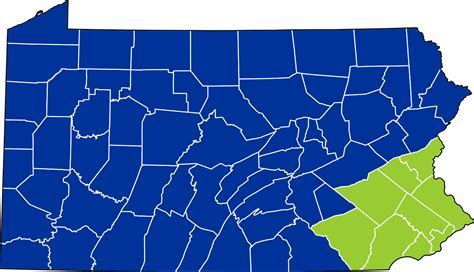
Karen Marston is the Administration’s fourth nominee (and first woman) tapped for the U.S. District Court for the Eastern District of Pennsylvania.    

Background

Karen Spencer Marston was born in Portsmouth, Virginia in 1968.  She received a B.A. from Davidson College, an M.A.T. from Salem College and a J.D. from Wake Forest University School of Law.[1]  Marston then joined the Charlotte firm Moore & Van Allen PLLC as an Associate.

In 2000, Marston became a federal prosecutor with the U.S. Attorney’s Office for the Western District of North Carolina.[2]  She moved to the U.S. Attorney’s Office for the Eastern District of Pennsylvania in 2006 and became Chief of the Narcotics & Organized Crime branch in 2018.[3]  She serves there today.

History of the Seat

Marston has been nominated for a seat on the U.S. District Court for the Eastern District of Pennsylvania.  This seat opened on September 28, 2017, when Judge Legrome Davis moved to senior status.  

In February 2019, Marston applied for and interviewed with the Judicial Nomination Advisory Panel for the Eastern District of Pennsylvania.  Marston then interviewed with Sen. Pat Toomey (R-Pa), Sen. Bob Casey (D-Pa), and the White House.  President Trump announced Marston’s nomination to the vacancy on August 14, 2019.

Legal Experience

Marston has spent most of her career as a federal prosecutor, primarily prosecuting drug and organized crime cases.  In the course of her career, Marston has tried thirty-five jury cases, a sizable number.[4]  Notably, Marston prosecuted the drug company Novartis for marketing its drug Trileptal for off-label uses, despite only being approved by the FDA for treatment of epilepsy.[5]  In 2016, Marston also prosecuted supporters of Sen. Bernie Sanders’ presidential bid for entering a secured area during the Democratic National Convention.[6]   

Political Activity

Marston has been a member of the Federalist Society since 2019.[7]  Other than that, her only political involvement has been as an intern with the National Republican Committee while in college.[8] 

Overall Assessment

For better or for worse, prosecutors generally tend to be uncontroversial nominees, salable as “tough on crime.”  With her record, Marston falls into this pattern and will likely be confirmed by a bipartisan majority.


[1] Sen. Comm. on the Judiciary, 115th Cong., Karen Marston.: Questionnaire for Judicial Nominees 1.

[2] Id. at 2.

[3] Id. 

[4] See id. at 17.

[5] United States v. Novartis Pharmaceutical Corp., 2:10-CR-650 (E.D. Pa.).

[6] See Jeremy Roebuck, Feds Drop Case Against Four DNC Fence-Jumpers, Philadelphia Inquirer, Aug. 9, 2016.

[7] See Marston supra n. 1 at 7-8.

[8] See id. at 13-14.

Sarah Pitlyk – Nominee to the U.S. District Court for the Eastern District of Missouri

The area in white is covered by the Eastern District

Justin Walker is not the only Kavanaugh clerk and surrogate to receive a federal judicial nomination.  Missouri-based pro-life attorney and former Kavanaugh clerk Sarah Pitlyk has been nominated to a judgeship based in St. Louis.

Background

Pitlyk was born Sarah Elizabeth Martin in 1977 in Indianapolis.[1]  She received a B.A. summa cum laude from Boston College in 1999, and then received an M.A. from Katholieke Universiteit Leuven in Belgium, and from Georgetown University before getting a J.D. from Yale University in 2008.[2]  After graduating, Pitlyk worked at Covington & Burling LLP in Washington D.C.  Pitlyk left the firm on hiatus to clerk for Justice Brett Kavanaugh (when he was on the D.C. Circuit), returning after her clerkship in 2011.[3]

In 2013, Pitlyk moved to Missouri to work as an Associate at the RUNNYMEDE law group, working with Stephen Clark (now a Judge on the U.S. District Court for the Eastern District of Missouri).[4]  She left in 2017 to join the Thomas More Society as Special Counsel, where she currently works.

History of the Seat

Pitlyk has been nominated for a vacancy on the U.S. District Court for the Eastern District of Missouri.  This seat opened on December 31, 2018, when Judge Catherine Perry moved to senior status.  In January 2019, newly elected Senator Josh Hawley reached out to Pitlyk to gauge her interest in the judgeship.[5]  In May 2019, Pitlyk began the vetting process with the White House and was nominated in August 2019.

Legal Experience

Excluding her clerkship, Pitlyk has approximately ten years of litigation experience, with stints at Covington & Burling, the RUNNYMEDE law group, and the Thomas More Society.  During this time, Pitlyk has litigated three cases that have gone to final judgment, including one as Chief Counsel.

Notably, in her short legal career, Pitlyk has litigated a number of controversial cases, generally trying to push the law in a more pro-life direction.  For example, while at RUNNYMEDE, Pitlyk worked with Clark on a suit unsuccessfully trying to establish the personhood of frozen embryos.[6]  At the Thomas More Society, Pitlyk was a part of the defense team for David Daleiden, a pro-life activist who faced criminal and civil suits for releasing videos purporting to show Planned Parenthood officials discussing the sale of fetal tissue.[7]  During her representation, Daleiden and his organization were held in contempt for violating a court order against disseminating the videos (the violations were based on the actions of Daleiden’s attorneys in a related criminal case).[8]

Pitlyk’s most notable case is her challenge to a St. Louis ordinance preventing any employer from discriminating against employees who had undergone abortions.[9]  Pitlyk argued that the ordinance created a protected class “based on social opinion” and infringed on the rights of Catholic organizations in the city.[10]  The ordinance was ultimately partially enjoined by Judge Audrey Fleissig.[11] 

Writings

Similar to Kentucky nominee Justin Walker, Pitlyk was a prominent surrogate for then-Judge Brett Kavanaugh during the campaign to confirm him in 2018.  Notably, Pitlyk sought to counter concerns that Kavanaugh was not committed to women’s rights, noting that he was solicitous of her needs while she was a new mother and clerking for him.[12]  In another interview, Pitlyk called Justice Kavanaugh “an exemplary judge: brilliant, principled, and faithful to the text.”[13]  In a July 2018 article, Pitlyk described Kavanaugh as having a “rock-solid record on the issues that matter most to social conservatives.”[14] 

Overall Assessment

There’s perhaps no issue as divisive in U.S. politics as abortion.  As such, any nominee with a long history of advocacy on either side of the issue is likely to face problems with confirmation.  When you add in the resurgence of the Kavanaugh confirmation as a divisive issue, it is likely that Pitlyk will face an uncomfortable (if not necessarily unsuccessful) confirmation fight.


[1] Sen. Comm. on the Judiciary, 116th Cong., Sarah Pitlyk: Questionnaire for Judicial Nominees 1.

[2] Id.

[3] Id. at 2.

[4] Id.

[5] Id. at 37-38.

[6] See McQueen v. Gadberry, 507 S.W.3d 127 (Mo. App. 2016).

[7] Bob Egelko, Antiabortion Activist, Lawyers Held in Contempt Over Secret Videos, SFGate, July 17, 2017, https://www.sfgate.com/bayarea/article/Antiabortion-activist-lawyers-held-in-contempt-11295298.php.

[8] Nat’l Abortion Fed. v. Ctr. for Med. Progress, 926 F.3d 534 (9th Cir. 2019).

[9] Jim Salter, Catholics Challenge St. Louis ‘Abortion Sanctuary’ Law, A.P., May 22, 2017.

[10] Id. (quoting Sarah Pitlyk).

[11] Our Lady’s Inn. v. City of St. Louis, 349 F. Supp. 3d 805 (E.D. Mo. 2018).

[12] See, e.g., What Kavanaugh Is Like Behind the Scenes, Western Free Press, Aug. 9, 2018.

[13] See Elizabeth Williamson, Phalanx of Former Clerks Rushes Into Action, N.Y. Times, July 12, 2018.

[14] Sarah Pitlyk, Judge Brett Kavanaugh’s Impeccable Record of Constitutional Conservatism, Nat’l Rev., Jul. 3, 2018, https://www.nationalreview.com/2018/07/judge-brett-kavanaughs-impeccable-record-of-constitutional-conservatism/.  

Steven Menashi – Nominee to the U.S. Court of Appeals for the Second Circuit

The 40 year old Menashi is poised to be one of the most controversial appellate nominees from the Trump Administration, given his writings exploring sensitive issues including ethnonationalism, religion, and constitutional meaning.  

Background

Steven James Menashi was born on January 15, 1979.  Menashi received his B.A. magna cum laude from Dartmouth College in 2001.  After graduating, Menashi worked for the Hoover Institute, a think tank based out of Stanford University and then spent a year working as an editorial writer for the New York Sun.  Menashi then joined Stanford Law School, graduating in 2008 with the Order of the Coif.  After graduating, Menashi clerked for Judge Douglas Ginsburg on the U.S. Court of Appeals for the D.C. Circuit and then for Justice Samuel Alito on the U.S. Supreme Court.

After his clerkships, Menashi joined the New York City office of Kirkland & Ellis.  In 2016, Menashi left to become a law professor with the Antonin Scalia Law School at George Mason University.  In 2017, he joined the U.S. Department of Education, serving as Acting General Counsel.  In 2018, Menashi joined the White House as Special Assistant to the President and Associate Counsel to the President, where he currently serves.

History of the Seat

Menashi has been nominated for a New York seat on the U.S. Court of Appeals for the Second Circuit.  This seat was vacated by Judge Dennis Jacobs, who moved to senior status on May 31, 2019.  

Legal Career

Menashi’s primary litigation experience has been the five years he spent at Kirkland & Ellis.  At the firm, Menashi participated in a number of suits involving pharmaceutical companies.  For example, he was part of the legal team that defended Abbott Laboratories for a suit relating to the psoriasis drug Humira, which the plaintiff alleged caused her to develop squamous cell carcinoma of the tongue.[1]  Menashi also defended a number of pharmaceutical companies against qui tam lawsuits alleging that they had defrauded the federal government by submitting fraudulent reimbursement claims.[2]  In a more controversial matter, he represented Teva Woman’s Health, a pharmaceutical company intervening in a suit seeking to allow emergency contraceptives to be sold without requiring a prescription.[3]

On the constitutional side, Menashi represented Jewish religious organizations in intervening in a lawsuit that challenged approval of religious projects in the City of Boca Raton.[4]  Judge Marra ultimately dismissed the lawsuit, brought by self-identified Christians, for lack of standing.[5]

Writings

Having worked as a journalist and an academic, Menashi has written extensively on the law, public policy, and issue areas that interest him.  While it is difficult to succinctly summarize all of his writings, two particular strains are highlighted below.

Constitutional Structure and Administrative Law

Menashi has written extensively on the U.S. Constitution, separation of powers, and federalism.  In interpreting the Constitution, Menashi is generally a proponent of textualism and a critic of the “living Constitution.”[6]  Furthermore, he is critical of the current structure of administrative law, arguing that it fails to support limited government and gives too much power to administrative agencies.[7]  Interestingly, he supported President Obama for using policy czars that were appointed solely by the White House and (unlike many agency heads) insulated from congressional oversight, noting that having the legislature oversee executive policy was “the greater threat to separated powers.”[8]  From these writings, one can conclude that Menashi is generally a proponent of greater executive power and less delegation of authority to agency heads and lawmakers.  

Ethnonationalism and Israel

Perhaps none of Menashi’s writings has drawn as much attention as a 2010 paper on the ethnonationalistic nature of Israel.[9]  The article has been criticized by various commentators, including Rachel Maddow as a call for state nationalism and “racial purity.”  In turn, Maddow and Menashi’s critics have themselves been criticized for being “racist” and “anti-semitic” in their criticism of Menashi.[10]

The article itself discusses Israel, and its commitment to being a “Jewish” state.  In the article, Menashi counters arguments that liberal democracies cannot bind themselves along an ethnonationalistic identity, arguing instead that the Holocaust “revealed that a liberal scheme of human rights requires a system of particularistic nation-states.”[11]  Menashi goes on to argue that the Holocaust targeted individuals who had no nation-state to support them and who were dependent on the concepts of “universal human rights” for protection.[12]  He goes on to argue that Israel’s system of citizenship and nationality is no different than those of other nation-states, comparing Israel’s “law of return” to kin-repatriation systems in other countries.

Menashi concludes:

“A political order may insist that certain human differences are irrelevant while people themselves regard those differences as meaningful and are consequently reluctant to recognize others as their equals.  Where the political order does not account for differences which correspond to deeply felt allegiances, the fact of difference becomes a threat to the political order.”[13]

Political Activity

Menashi has donated primarily to Republicans throughout his career.[14]  For example, Menashi donated to support Mitt Romney’s presidential campaign in 2012, as well as the Right to Rise PAC, which supported Jeb Bush’s presidential campaign in 2016.[15] 

Overall Assessment

There is little doubt that Menashi’s confirmation will be contentious.  Critics, after all, have a fair basis for arguing that Menashi holds a strongly conservative judicial philosophy and that his confirmation will move the closely divided Second Circuit sharply to the right.  

However, in discussing Menashi’s nomination, it is worth taking the time to consider the specific critiques based on Menashi’s 2010 article on ethnonationalism.  The thesis of the article could be summed up as follows: critics of Israel for maintaining an ethnonationalistic identity as a “Jewish” state are mistaken, as such ethnonationalistic identities are fundamental to the functioning of a liberal democracy.  Menashi’s article reads as a recognition that humans are tribal creatures and have inherent tendencies to organize in groups.  As such, the most vulnerable are those with no organized force to advocate for them.  In that sense, the article attempts to make a point consistent with one others have tried to make regarding race, namely that prejudice is such a deeply ingrained human quality, and that makes true blindness and universalism impossible.  As such, it is only through a recognition of race/nationalism and its impact, that one can completely transcend it.

That being said, Menashi’s critics (and it goes without saying that one can criticize an individual’s views without necessarily being motivated by prejudice) aren’t entirely off base either.  Menashi’s historical analysis is based upon the essential “statelessness” of the Jews (and other minorities targeted by the Holocaust).[16]  However, one could argue that the Jews targeted by the Holocaust were not stateless, but rather were the citizens of their home countries.  Furthermore, one could note that they were betrayed, not by universalism, but by a restrictive nationalism that denied their citizenship and humanity.

As such, one can disagree with Menashi’s thesis in the article.  While it is true that Israel’s brand of national ideology is far from unique among liberal democracies, it does not necessarily follow that such ethnonationalism is inherent or fundamental to liberal democracy.  Rather, one could use the United States as proof that liberal democracies can base their identity around a state ideology rather than ethnicity and can continue to thrive as such.

Overall, Menashi’s prolific writing career leaves senators with many aspects on which to question him, making today’s hearing all the more powerful for its impact.


[1] DiBartolo v. Abbott Labs., 914 F. Supp. 2d 601 (S.D.N.Y. 2012).

[2] United States v. Alpharma, Inc. et al., 928 F. Supp. 2d 840 (D. Md. 2013).

[3] Tummino v. Hamburg, 936 F. Supp. 2d 162 (E.D.N.Y. 2013).

[4] Gagliardi v. City of Boca Raton, 197 F. Supp. 3d 1359 (S.D. Fla. 2016).

[5] See id. at 1365-66.

[6] See Steven Menashi, The Undead Constitution, Policy Review (Oct-Nov. 2009).  

[7] Douglas H. Ginsburg and Steven Menashi, Our Illiberal Administrative Law, NYU Journal of Law & Liberty (2016).

[8] Steven Menashi, All the President’s Czars; Obama Emerges As a Champion of the Unitary Executive, Weekly Standard, Oct. 12, 2009.

[9] Steven Menashi, Ethnonationalism and Liberal Democracy, University of Pennsylvania Journal of Int’l Law (Nov. 2010).

[10] See, e.g., David Bernstein, Rachel Maddow’s Racist Smear of Second Circuit Nominee Steve Menashi, Reason, Aug. 17, 2019, https://reason.com/2019/08/17/rachel-maddows-racist-smear-of-second-circuit-nominee-steve-menashi/.  

[11] Id. at 61.

[12] Id. at 64.

[13] Id. at 121.

[15] See id.

[16] See supra n. 9 at 64.

Jeremy Rosen – Nominee to the U.S. District Court for the Central District of California

The Los Angeles-based Jeremy Rosen has been  one of the most prominent conservative attorneys in California for years, frequently commenting on legal issues and working on prominent matters.  After consideration for the Ninth Circuit, Rosen has been tapped for the U.S. District Court for the Central District of California.

Background

Jeremy Brooks Rosen was born in Hanover, NH on October 16, 1971.  Rosen attended Cornell University, getting a B.A. in 1993.[1]  He then received a J.D. magna cum laude from Duke University School of Law in 1997.[2]

After law school, Rosen clerked for Judge William Byrne on the U.S. District Court for the Central District of California and for Judge Ferdinand Fernandez of the U.S. Court of Appeals for the Ninth Circuit.  He then spent a year at Munger Tolles & Olson LLP before joining Horvitz & Levy LLP as an Associate.[3] He became a Partner with the firm in 2008 and has served there ever since.

Additionally, since 2013, Rosen has served as Director of the Ninth Circuit Appellate Advocacy Clinic at Pepperdine University School of Law.[4] 

History of the Seat

Rosen has been nominated to the U.S. District Court for the Central District of California, to a seat vacated on October 29, 2015, by Judge Margaret Morrow’s move to senior status.  Despite the seat opening with more than a year left in the Obama Administration, the Administration did not put a candidate forward to fill the vacancy.  

Rosen had broached his interest in a judicial appointment in June 2017 with the White House.[5]  He interviewed with the White House in August 2017 (for both the Ninth Circuit or a district court seat) and then with selection committees set up by California’s Democratic Senators Dianne Feinstein and Kamala Harris.[6]  In October 2018, Rosen was nominated by the White House to the U.S. District Court for the Central District of Califronaia.

Legal Experience

Unusually for a district court nominee, Rosen has primarily worked as an appellate attorney, handling cases in a variety of legal issue areas.  As such, Rosen has not tried any cases.  Among his more prominent appeals, Rosen represented a pastor who was ousted in a church vote.[7]  He also represented a male inmate who sought to limit observation from female prison guards while he showered and used the bathroom.[8]

As Director of the Ninth Circuit Appellate Advocacy Clinic at Pepperdine University School of Law, Rosen also supervised law students in their legal representations.  For example, he served as a supervisor for students as they represented a Title VII plaintiff seeking relief after her complaint was dismissed for failure to pay the filing fee.[9]

Political Activity

In addition to being a longtime member of the Federalist Society, Rosen is politically active, volunteering for a number of Republican campaigns.[10]  For example, in 1988, Rosen volunteered for George Bush’s presidential campaign.[11]  Similarly, Rosen supported President George W. Bush in 2004, John McCain in 2008, and Jeb Bush in 2016.[12]

Writings & Commentary

Rosen has written extensively on the law and policy, especially discussing California’s anti-SLAPP statute (which allows defendants sued for First Amendment activity to strike the suits against them).[13]  In other matters, Rosen has also commented on judicial nominations issues.  For example, Rosen was one of many conservatives (including Ninth Circuit Judge Dan Collins) who endorsed Judge Paul Watford, when he nominated by President Obama to the Ninth Circuit in 2011.[14]  Watford was ultimately confirmed in 2012, despite drawing opposition from many Republican senators who saw him as a future Supreme Court nominee.

Overall Assessment

As a prominent (but still young) California appellate attorney, Rosen reminds one of other Ninth Circuit nominees such as Watford, or Judge Kenneth Lee.  However, unlike them, Rosen has been tapped for the district court.  Presumably, this is to better accord with the wishes of California’s home state senators.  That being said, while Rosen is probably one of the more acceptable choices for California’s senators when it comes to district court nominees, he may still face questions for his lack of trial court experience.  As such, some senators may be concerned that Rosen has never tried a case and may be unfamiliar with the minutiae of trial-level litigation.  Ironically, Rosen may have better luck as a nominee to the Ninth Circuit, to which his appellate experience seems better suited.


[1] Sen. Comm. on the Judiciary, 115th Cong., Jeremy Rosen: Questionnaire for Judicial Nominees 1.

[2] See id.

[3] See id. at 2.

[4] See id. 

[5] See id. at 75.

[6] Id.

[7] Hawkins v. St. John Missionary Baptist Church, No. F071584 (Cal. Ct. App. Mar. 15, 2017).

[8] Byrd v. Maricopa Cnty. Bd. of Super., 745 F.3d 919 (9th Cir. 2017).

[9] Escobedo v. Applebees, 787 F.3d 1226 (9th Cir. 2015).

[10] See Rosen, supra n. 1 at 41-42.

[11] Id.

[12] See id.

[13] See, e.g., Jeremy Rosen, Mark Goldowitz, Josephine Mason, Anti-SLAPP: Why We Need a Federal Counterpart, Los Angeles Daily Journal, June 9, 2012.

[14] Ian Millhiser, Is President Obama’s Latest Judicial Nominee Too Qualified to Get Confirmed, ThinkProgress, Oct. 18, 2011, https://thinkprogress.org/is-president-obamas-latest-judicial-nominee-too-qualified-to-get-confirmed-d47438ba802d/.  

Philip Halpern – Nominee to the U.S. District Court for the Southern District of New York

Jeanine Pirro is not only a former judge and television personality but is also close to the Trump Administration.  Her influence can be seen in the nomination of Philip Halpern to the Southern District of New York.

Background

Philip Morgan Halpern was born in Derby, CT on April 17, 1956.  Halpern attended Fordham University and Pace University School of Law.[1] 

After graduating, Halpern clerked for Judge Irving Ben Cooper on the U.S. District Court for the Southern District of New York and then joined the New York office of Kimmelman, Sexter & Sobel P.A. as an Associate.[2]  In 1984, he shifted to Collier, Halpern & Newberg LLP in White Plains, where he became a Partner in 1985 and Managing Partner in 1995.[3]  He is still with that office.

History of the Seat

Halpern has been tapped for a seat on the U.S. District Court for the Southern District of New York to a seat vacated by Judge Kevin Castel, who moved to senior status on August 5, 2017.  After being recommended to the White House by Pirro, Halpern interviewed with the White House Counsel’s Office in mid 2017.[4]  He was selected as a nominee in March 2018 and was nominated on October 10, 2018.[5]

Political Activity

While he is a registered Republican, Halpern has donated to both Democrats and Republicans.[6]  Among Republicans, Halpern gave $2000 to then-Sen. Al D’Amato in 1995 and $2500 to Republican Senate candidate Linda McMahon in 2012.[7]  Among Democrats, Halpern gave $300 to Sen. Robert Menendez (D-NJ) in 2011 and $650 to Sen. Cory Booker (D-NJ) in 2013.[8]

Legal Career

Halpern has spent virtually his entire legal career at the firm of Collier Halpern & Newberg.  One of his former partners at the firm was Albert Pirro, who was married at the time to Jeanine.[9]  Pirro left the firm in 2000 after being convicted of tax fraud.[10]  Halpern actually later represented his former partner before the State Bar, and successfully persuaded them to impose a lower remedy than revocation of Pirro’s law license.[11]

In other matters, Halpern represented an association of taverns and restaurants in challenging Westchester County’s smoking ban.[12]  He also represented Home Depot in trying to sue city officials in Rye, NY, for causing delays in building stores, a suit ultimately rejected by the New York Court of Appeals (despite its name the highest court in NY).[13]  In 2004, he represented a developer who had acquired an old Orthodox Jewish cemetery and faced legal obstacles to developing on the land.[14]

Writings

While not as prolific as other judicial nominees, Halpern has written occasionally on the law, generally in a descriptive manner.  For example, Halpern praises the use of motions for summary judgment as a strategic tool for litigators to present their best case before the judge.[15]  In another, Halpern describes the availability of jury trials in cases that mix principles of law with equitable relief.[16]

Overall Assessment

With a fairly bipartisan political history and nearly forty years of legal experience, Halpern would seem unlikely to draw significant controversy in the confirmation process.  However, Hapern’s confirmation process does not seem to have gone through Sens. Chuck Schumer and Kirsten Gillibrand, who represent New York, and, given the controversy over New York’s appellate nominees, they are unlikely to be receptive to the Administration’s nominees.  It is nonetheless possible that Halpern will be confirmed as part of a nominations deal.


[1] Sen. Comm. on the Judiciary, 115th Cong., Lewis Halpern: Questionnaire for Judicial Nominees 1.

[2] See id. at 2.

[3] Id.

[4] Id. at 45-46.

[5] See id.

[7] See id.

[8] Id.

[9] See Winnie Hu, After Tax Fraud Conviction, Pirro Leaves Law Practice, N.Y. Times, July 1, 2000.

[10] See id.

[11] Pirro’s Law License is Suspended for 3 Years, N.Y. Times, May 17, 2003.

[12] Elsa Brenner, Tough Smoking Law Survives Challenge, N.Y. Times, June 23, 1996.

[13] Thomas Crampton, A Body Blow to Retail Goliaths, N.Y. Times, May 23, 2004.

[14] Daniel J. Wakin, Lost in Yonkers: A Cemetery and 135 of its Children, N.Y. Times, July 7, 2004.

[15] See Philip Halpern, Unlocking a Valuable Tool: Summary Judgment Hearings on Issues of Fact, 33 Westchester B. J. 98 (Fall/Winter 2006).

[16] Philip M. Halpern, Mixing Law and Equity Causes of Action Does Not Preclude a Jury Trial, 35 Pace L. Rev. 807 (Spring 2015).

Daniel Epstein – Nominee to the U.S. Court of Federal Claims

Dan Epstein, Special Assistant to President Trump, and a former anti-regulatory litigator, is the latest nominee to the Court of Federal Claims (“CFFC”).

Background

David Zachary Epstein was born in Houston in 1983.  Epstein received a B.A. from Kenyon College in 2005 and a J.D. from Emory University School of Law in 2008.[1]  After law school, Epstein joined the Charles Koch Foundation as a legal reform associate.[2]  He then joined the House Committee on Oversight & Government Reform in 2009, working under Rep. Darrell Issa (R-CA).[3]

In 2011, Epstein founded the Cause of Action, Institute, a nonprofit focusing on promoting conservative economic and regulatory positions.[4]  In 2016, he joined the Trump transition team as an Attorney.  After the Trump Administration came into office, he joined the White House as Associate Counsel, getting promoted to Senior Associate Counsel and Special Assistant to the President in 2018.[5] 

History of the Seat

Epstein has been nominated for a seat on the U.S. Court of Federal Claims (CFC), an Article I court that hears monetary claims against the federal government.  Judges to the CFC are appointed for 15-year terms, and can be reappointed.  The seat Epstein was nominated for opened up on October 22, 2013, with the with the retirement of Judge Edward Damich.  On May 21, 2014, Armando Bonilla, an Associate Deputy Attorney General was nominated for the vacancy by President Obama.[6]  Bonilla and four other nominees to the Court were approved by the Senate Judiciary Committee unanimously.  However, the nominations were blocked by Sen. Tom Cotton (R-AR), who argued that the CFC did not need any more judges.[7]  Despite rebuttals from federal claims attorneys and Chief Judge Patricia Campbell-Smith, Cotton maintained his blockade, and the Obama Administration was unable to fill any vacancies on the Court, leaving six of the sixteen judgeships vacant.[8]

In May 2017, Epstein was contacted by the White House to gauge his interest in an appointment to the CFC.  Epstein was nominated on June 24, 2019.

Legal Activity

Epstein’s primary litigation experience has been in his role at Cause of Action, in which he litigated cases, generally against administrative regulations or challenging administrative dispositions.  Epstein notably handled a number of cases seeking to use the Freedom of Information Act (FOIA) to test the boundaries of disclosure.  For example, in one case, Epstein successfully obtained a ruling that taxpayer confidentiality principles could not shield public disclosure of unauthorized inspections or disclosures by government officials.[9]

Among other matters, Epstein represented businesses challenging Federal Trade Commission (“FTC”) enforcement actions,[10] the provision of subsidies to vehicle companies,[11] and the authority of the Consumer Product Safety Commission (“CPSC”) to hold the CEO of Buckyballs personally liable for injuries caused by the magnets he produced.[12] 

Writings

Epstein has frequently written on the law, generally outlining an anti-regulatory perspective.[13]  However, he has also been critical of perceived cases of lack of transparency or corruption in government.  For example, in a 2014 article, Epstein criticizes the use of “fiscal sponsorship” among environmental nonprofits, suggesting that the common practice “not only allows donors to hide from the public, but to hide from the IRS as well…”[14]  Similarly, in a 2015 article, Epstein criticizes the Department of Energy for giving green energy subsidies to Tesla and Fisker while not granting them to other companies he represents.[15]  He concludes by arguing, not that the playing field for subsidies be level, but rather that such subsidy programs should be eliminated entirely as “the capacity for corruption is immense – and inevitable.”[16]

Political Activity

As noted above, Epstein was a part of the Trump transition team in 2016.  In addition, he also was a volunteer for the Trump campaign as well as one for the Romney campaign in 2012.[17]

Overall Assessment

Like many of Trump’s nominees to the CFC, Epstein is very young (only 36).  Additionally, Epstein does not seem to have litigated significantly within the CFC.  However, Epstein’s focus on government accountability and transparency are relevant to a court handling claims against the federal government.  In weighing Epstein’s nomination, senators may question him to ensure that he would follow the law and facts in evaluating claims rather than focus on policy considerations relating to government transparency.


[1]  Sen. Comm. on the Judiciary, 115th Cong., David Z. Epstein: Questionnaire for Judicial Nominees 1.

[2] Id. at 2.

[3] Id.

[4] Id.

[5] See id.

[6] Press Release, White House, Presidential Nominations Sent to the Senate (May 21, 2014) (on file at https://obamawhitehouse.archives.gov/the-press-office).

[7] Jordain Carney, Cotton Blocks Senate From Approving Federal Claims Judges, The Hill, July 14, 2015, http://thehill.com/blogs/ballot-box/247934-cotton-blocks-senate-from-approving-federal-claims-judges.

[8] Daniel Wilson, Claims Court a Quiet Victim of Senate Nomination Deadlock, Law360, July 18, 2016, https://www.law360.com/articles/817931/claims-court-a-quiet-victim-of-senate-nomination-deadlock.

[9] See Cause of Action v. Treasury Inspector Gen. for Tax Admin., 70 F. Supp. 3d 45 (D.D.C. 2014).

[10] In the Matter of LabMD, Inc., No. 9357 (Nov. 13, 2015).

[11] See XP Vehicles, Inc. v. Dep’t of Energy, 118 F. Supp. 3d 38 (D.D.C. 2015).

[12] Zucker v. CPSC, No. 13-3355 (D. Md. 2013).

[13] See, e.g., Dan Epstein, Hounded Out of Business By Regulators, Wall St. Journal, Nov. 19, 2015, https://www.wsj.com/articles/hounded-out-of-business-by-regulators-1447978301.  

[14] Dan Epstein, The Dark Money Complex, Roll Call, Aug. 13, 2014, https://www.rollcall.com/news/the_dark_money_complex_commentary-235693-1.html.  

[15] Dan Epstein, A Case Study in Pay-to-Play Cronyism, The Hill, Aug. 4, 2015, https://thehill.com/blogs/congress-blog/the-administration/250109-a-case-study-in-pay-to-play-cronyism.  

[16] Id.

[17] See Epstein, supra n.1 at 32-33.

Judge Kevin Sweazea – Nominee to the U.S. District Court for the District of New Mexico

Judge Kevin Sweazea, a federal magistrate judge, has been nominated for the federal bench in New Mexico.  His experience largely reverses that of other New Mexico nominee Kea Riggs.  While Riggs was a longtime U.S. magistrate judge before being appointed to the state bench, Sweazea was a longtime state court judge before being appointed as a magistrate.

Background

Kevin Ray Sweazea was born in McIntosh, South Dakota in 1963.  Sweazea attended the University of New Mexico and the Baylor University School of Law, graduating in 1988.[1] 

After graduation, Sweazea spent a year with the Albuquerque firm Pongetti Myers & Wilson and then joined Anthony J. Williams, Attorney At Law, as an Associate. After two years there, he became a solo practitioner in Los Lunas, expanding his firm in 2001, but maintaining status as a Partner.[2]  In 2001, Gov. Gary Richardson appointed Sweazea to be a district judge on the Seventh Judicial District Court in New Mexico.[3] 

From 2017, Sweazea became a U.S. Magistrate Judge in New Mexico and currently serves there.

History of the Seat

Sweazea has been nominated for a seat on the U.S. District Court for the District of New Mexico.  This seat opened on July 25, 2018, when Judge Robert Brack moved to senior status.  In May 2018, Sweazea was one of four candidates recommended by New Mexico’s Democratic Senators to the White House.[4]  While Sweazea was initially interviewed in May 2018, his formal vetting did not begin until February 2019.  Sweazea was nominated in June 2019.

Legal Career

Sweazea’s pre-bench legal career is primarily as a sole practitioner.  During his practice, Sweazea primarily handled transactional matters and civil litigation.  In particular, Sweazea handled cases involving property law, including a case in which he represented a property owner who sought an easement for access through his neighbor’s property,[5] and a suit involving breach of contract regarding the construction and sale of units in a subdivision.[6]  Interestingly, when asked to identify the top ten cases he had worked on as an attorney, Sweazea only identifies four, suggesting that he cannot name other matters on which he worked that he considers significant.[7]

Jurisprudence

Sweazea has served as a District Court judge in New Mexico between 2001 and 2017 and as a U.S. Magistrate Judge since his appointment in 2017.  In his former role as a state judge, Sweazea handled both criminal and civil actions, including approximately 11000 cases that proceeded to final judgment.[8] 

Early in his judicial career, Sweazea presided over the trial of David Parker Ray, who was charged with kidnapping and raping a Colorado woman.[9]  Sweazea sentenced Ray to 223 years in prison after Ray finally entered a guilty plea.[10]  Ray would later attempt to withdraw his plea but was blocked by the New Mexico Court of Appeals.[11]

Sweazea was also involved in the case against police officer Noah Pestak, the son of magistrate judge Thomas Pestak, who married a pregnant 15 year old girl he met while on duty.[12]  Sweazea approved the marriage license after two previous judges declined to do so.[13]  Sweazea faced a court complaint filed by Sheriff Joe Baca, who also charged Noah Pestak with statutory rape.[14]  In filing the complaint, Baca argued that New Mexico law required Sweazea to report the rape to the authorities and that he failed to do so.[15]  It is unclear whether Pestak was convicted of the charges (UPDATE: the charges against the Officer were dismissed with prejudice) or whether Sweazea faced any discipline from the complaint, but the complaint did not prevent Sweazea from being appointed as a U.S. Magistrate Judge or as a U.S. District Court Judge.

As a U.S. Magistrate Judge, Sweazea oversees arraignments, bond hearings, and discovery disputes in federal court as well as handling federal citations and misdemeanors.  Among the more notable cases he handled as a federal magistrate judge, Sweazea held that, under the Armed Career Criminal Act, the elements of Third Degree Robbery under Oregon law do not qualify the crime as a violent offense.[16]  This ruling was reversed by U.S. District Judge James Browning who held that third degree robbery always involves the threat of violence or use of violent, and, as such, that the crime qualifies as a violence offense under the ACCA.[17]

Overall Assessment

While Sweazea was recommended by his Democratic home state senators, he may still face some obstacles in the confirmation process.  The most prominent will likely be his role in the Pestak case, where senators may probe why Sweazea granted judicial permission for the marriage and why he did not report suspicions of statutory rape.  However, as it is unclear whether Sweazea was found to have violated any judicial canons in New Mexico, and as the incident has not affected his future career, it may not prove dispositive for his confirmation.


[1] Sen. Comm. on the Judiciary, 116th Cong., Kevin Sweazea: Questionnaire for Judicial Nominees 1.

[2] Id. at 2.

[3] See SANTA FE, Governor Appoints Sweazea to Seventh District, Associated Press State & Local Wire, Feb. 23, 2001.

[4] See Press Release, Office of Sen. Tom Udall, Udall, Heinrich, Pearce Recommend Candidates to Fill Two Vacancies on U.S. District Court (May 2, 2018).

[5] Burleson v. Cordova, No. N/A (N.M. 7th Jud. Dist. 2000).

[6] Quemado Lake Estates v. El Caso Ranch, Inc., No. N/A (N.M. 7th Jud. Dist. 2004).

[7] See Sweazea, supra n. 1 at 42-44.

[8] See id. at 14.

[9] Jeff Simons, Former Husband Testifies in Sex-Torture Trial, A.P. State & Local Wire, Apr. 11, 2001.

[10] TRUTH & CONSEQUENCES, NM, Ray Gets 223-Plus Years, A.P. State & Local Wire, Sept. 20, 2001.

[11] Deborah Baker, Court Refuses to Let Ray Withdraw Guilty Plea, A.P. State & Local Wire, Mar. 20, 2002.

[12] TRUTH & CONSEQUENCES, NM, NM Officer, 15-Year-Old’s Wedding Raises Eyebrows, A.P. State & Local Wire, June 25, 2012.

[13] See Ben Johnson, Former Cop Paid For Abortion to Hush Up 15-Year-Old Girl, Police Say, LifeSite, Jul. 30, 2012, https://www.lifesitenews.com/news/fmr.-cop-paid-for-abortion-to-hush-up-15-year-old-girl-police-say.  

[14] LAS CRUCES, NM, Ex-NM Officer Who Married 15-Year-Old Charged, A.P. State & Local Wire, July 28, 2012.

[15] See Johnson, supra n. 13 (quoting Sheriff Joe Baca).

[16] United States v. Hammond, 2017 WL 3098261 (D.N.M. June 23, 2017).

[17] See United States v. Hammond, 286 F. Supp. 3d 1270, 1290-91 (D.N.M. 2017).