Judge Colleen Lawless – Nominee to the U.S. District Court for the Central District of Illinois

Three years onto the state court bench, Judge Colleen Lawless has been nominated for a seat for the U.S. District Court for the Central District of Illinois.

Background

Born Colleen Rae Schuster, Lawless received a B.A. from Illinois Wesleyan University in 2005 and a J.D. from Northern Illinois University School of Law in 2009.

After graduation, Lawless joined Londrigan, Potter & Randle P.C., becoming a shareholder with the firm.

In 2019, Lawless became an associate judge on the Illinois 7th district Circuit Court. She currently serves on the court.

History of the Seat

Lawless has been nominated for a future vacancy on the U.S. District Court for the Central District of Illinois, which Judge Sue Myerscough has indicated will open upon the confirmation of a successor. In June 2022, Lawless was recommended by Illinois’ Democratic Senators Richard Durbin and Tammy Duckworth for the seat alongside Chicago attorney Johanes Maliza and University of Illinois attorney Rhonda Perry.

Legal Career

Before she became a judge, Lawless spent her entire legal career at Londrigan, Potter & Randle P.C. in Springfield.

At the firm, Lawless handled civil litigation, including representing a plaintiff suing her insurance company in seeking coverage regarding her stay in a facility (the company disputed whether the facility qualifies as a nursing home for benefit purposes). See Perry v. Transamerica Life Ins. Co., 2010 U.S. Dist. LEXIS 67973 (C.D. Ill. July 8, 2010). She also represented Marvin Manns, an African American water maintenance worker who sued the City of Decatur for discrimination after he was terminated after refusing to sign an agreement that gave him a lower pay but allowed him to bypass civil service selection rules. See Manns v. City of Decatur, 2011 U.S. Dist. LEXIS 82780 (C.D. Ill. July 28, 2011) (granting summary judgment to defendants).

Lawless has also handled class action suits, including a Fair Labor Standards Act suit against Treasure Hunters Roadshow. See Lee v. THR & Associates, 2013 U.S. Dist. LEXIS 208963 (C.D. Ill. Apr. 5, 2013).

Jurisprudence

Since 2019, Lawless has served as a judge on the Illinois 7th Judicial Circuit Court, which covers the Springfield area. As a Circuit Court judge, Lawless handles civil and criminal trial-level cases, as well as administrative appeals.

Among the cases that Lawless handled on the bench, she denied an emergency motion from Sean Shea seeking the return of his minor child, who had left the state with the mother. See Cagwin v. Shea, 2022 IL App (4th) 210619-U (Ill. App. Mar. 11, 2022). An appellate court affirmed Lawless’ decision, finding that she appropriately found that injunctive relief was inappropriate.

Overall Assessment

With a career focused on civil cases (which usually draw less controversy), and an uneventful tenure on the state bench, Lawless should be unlikely to draw much ire through the confirmation process. Nonetheless, this may also be why Democrats choose to deprioritize her nomination, pushing more controversial names through while they retain their majority.

Orelia Merchant – Nominee to the U.S. District Court for the Eastern District of New York

Orelia Merchant currently serves as the Chief Deputy to New York Attorney General Letitia James, a role which has given her scope to participate in much of the office’s key litigation. Merchant has now been nominated for a federal judgeship.

Background

Merchant attended Dillard University, an HBCU in New Orleans, getting a B.Sc. in 1992. She then got a Master of Arts in marine science from the College of William & Mary in 1995 and then a J.D. from Tulane University Law School in 1998.

Merchant subsequently worked for four years as regional counsel to the U.S. Environmental Protection Agency and then spent two years as a Special Assistant U.S. Attorney for the Eastern District of Louisiana.

In 2002, Merchant became a federal prosecutor at the U.S. Attorney’s Office for the Eastern District of New York. She held this role until she joined the New York Attorney General’s Office in 2019, where she currently serves.

History of the Seat

Merchant has been nominated for a seat on the U.S. District Court for the Eastern District of New York. This seat opened on January 1, 2022 when Judge William Kuntz took senior status.

Legal Experience

Merchant started her legal advocacy career early, working as a law student to fight plans by a Japanese chemical company to build a plant in Convent, Louisiana, earning the ire of Gov. Mike Foster, who called her and her fellow students “vigilantes” and “outlaws.” See Tulane University Law Students Help Poor People of Convent, Louisiana, Keep Out Another Chemical Plant, CBS News Transcripts, Oct. 19, 1998. After law school, Merchant continued her environmental advocacy, working with the EPA on complaints against Pole Air Corp. for alleged violations of clean air laws from the company’s radio tower. See Epa Cites Pole Zero for Air Pollution, PR Newswire, July 27, 2001.

Merchant subsequently worked as a special assistant U.S. Attorney (SAUSA) with the U.S. Attorney’s Office for the Eastern District of Louisiana, where she handled civil cases, including employment discrimination. See, e.g., Capers v. Henderson, 153 F. Supp. 2d 846 (E.D. La. 2001).

From 2002 to 2019, Merchant worked as a federal prosecutor with the U.S. Attorney’s Office for the Eastern District of New York, working in the Civil Division. Among her time with the office, Merchant was awarded for her work on litigation post-Hurricane Sandy involving FEMA. Other matters she handled for the office included defending civil asset forfeitures in criminal cases. See, e.g., Buculei v. United States, 440 F. Supp. 2d 225 (E.D.N.Y. 2006). Merchant also handled government defense against employment discrimination cases and tort claims. Compare Andretta v. Napolitano, 922 F. Supp. 2d 411 (E.D.N.Y. 2013) to Korotkova v. United States, 990 F. Supp. 2d 324 (E.D.N.Y. 2014).

Since 2019, Merchant has served as Chief Deputy Attorney General for the State of New York. In this position, Merchant heads the Division of State Counsel, which includes the Litigation Bureau and the Civil Recoveries Bureau.

Political Activity

Merchant has a handful of political donations to her name, all to Democrats.

Overall Assessment

Having spent the past two and a half decades in litigation, Merchant comes to the federal bench well prepared for its challenges. However, given the limited Senate calendar, Merchant is unlikely to be confirmed before the end of the Congress.

Judge Ramon Reyes – Nominee to the U.S. District Court for the Eastern District of New York

A federal magistrate judge with sixteen years on the bench, Judge Ramon Reyes is a relatively conventional nominee from the Biden Administration for the Eastern District bench.

Background

Reyes received a B.Sc. from Cornell University in 1988, a J.D. from Brooklyn Law School in 1992 and an LLM. from the New York University School of Law in 1992. Reyes then clerked for Judge David Trager on the U.S. District Court for the Eastern District of New York before joining O’Melveny & Myers in New York City.

In 1998, Reyes joined the U.S. Attorney’s Office for the Southern District of New York as an AUSA.

In 2006, Reyes became a federal magistrate judge on the U.S. District Court for the Eastern District of New York. He serves on that court today.

History of the Seat

Reyes has been nominated to fill a seat on the U.S. District Court for the Eastern District of New York. This seat opened on July 23, 2022 when Judge Kiyo Matsumoto moved to senior status.

Legal Career

Reyes started his legal career by clerking on the U.S. District Court for the Eastern District of New York. He then worked as an associate at O’Melveny & Myers in New York City. While at the firm, Reyes represented the Insurance Company of North America in a liability suit regarding damages from the cleanup of environmental damage caused at natural gas lines. See Interstate Power Co. v. Insurance Co. of N. Am., 603 N.W.2d 751 (Iowa 1999).

From 1998 to 2006, Reyes worked for the U.S. Attorney’s Office for the Southern District of New York as a federal prosecutor. At the office, Reyes handled civil charges, including defending against a Title VII lawsuit alleging employment discrimination brought by a postal worker. See Brown v. Henderson, 115 F. Supp. 2d 445 (S.D.N.Y. 2000). The district court granted summary judgment in favor of the Postal Service and Reyes argued the case on appeal before the Second Circuit, which affirmed. See Brown v. Henderson, 257 F.3d 246 (2d Cir. 2001). He also defended the constitutionality of the National Voter Registration Act of 1993. See Kalsson v. United States FEC, 356 F. Supp. 2d 371 (S.D.N.Y. 2005).

Jurisprudence

Reyes has served as a U.S. Magistrate Judge since his appointment in 2006. In this role, Reyes handles arraignments, bail hearings, and discovery disputes. Additionally, Reyes also presides over cases by the consent of the parties. One of the trials he presided over involved a naming dispute between Patsy’s Italian Restaurant and Patsy’s Pizzeria. See John Marzulli, Jury Mulls Name Fight of 2 Patsy’s. W. Side Spot, Harlem Pizzeria Battle, New York Daily News, Apr. 9, 2008. Reyes ruled that both eateries were barred from using only the name “Patsy’s.” See Simone Weichselbaum, Eateries Can’t Stand Pat(sy), Judge Insists, New York Daily News, Sept. 10, 2008.

Reyes also handled a sexual contact charge against an Orthodox rabbi involving allegations that he touched the groin and breast of an Israeli army officer sitting next to him. See John Marzulli, Rabbi Groped Me on Flight, Faking Sleep. Israeli Dad of 11 Denies All, New York Daily News, May 5, 2011. Reyes found the defendant guilty, finding the victim’s testimony “compelling and wholly believable.” See John Marzulli, Rabbi Guilty in Grope of Female Soldier, New York Daily News, May 6, 2011. Reyes sentenced the defendant to 60 days in jail. See John Marzulli, Perv Rabbi Gets 60 Days in Jail, New York Daily News, May 5, 2011.

Writings

Over the course of his legal career, Reyes has occasionally commented on the law. For example, as a magistrate, Reyes coauthored a paper discussing the Eastern District’s efforts to manage a flood of lawsuits brought about as a result of Hurricane Sandy. See Cheryl L. Pollak, Ramon E. Reyes, & Robyn Weinstein, Esq., “Hurricane” Sandy: A Case Study of the Eastern District of New York’s Effort to Address Mass Litigation Resulting From the Effects of Climate Change, 5 Tex. A&M J. Prop. L. 158 (2019).

As an associate at O’Melveny, Reyes authored an article discussing the home taping of copyrighted audio soundtracks. See Ramon E. Reyes, Jr., Can the Common Law Adequately Justify a Home Taping Royalty Using Economic Efficiency Alone?, 16 N.Y.L. Sch. J. Int’l & Comp. L. 235 (1996). The article details the various regimes different countries have employed to account for losses from the home copying of copyrighted materials, criticizing the use of a “home taping royalty” or a surcharge on the purchase of recording devices and blank tapes as a method of addressing this issue. See id. at 263-64. In another article, Reyes extrapolates from a settlement between Australia and Nauru to cover damages caused by phosphate mining at Nauru that international law establishes a fiduciary duty for administering bodies to properly manage colonies and territories. See Ramon E. Reyes, Jr., Nauru v. Australia: The International Fiduciary Duty and the Settlement of Nauru’s Claims for Rehabilitation of its Phosphate Lands, 16 N.Y.L. Sch. J. Int’l & Comp. L. 1 (1996).

Overall Assessment

It is unlikely that Reyes will face much opposition in the confirmation process. His tenure as a magistrate judge and an AUSA has been relatively uneventful and his experience would allow him to hit the ground running as a district court judge.

Arun Subramanian – Nominee to the U.S. District Court for the Southern District of New York

Susman Godfrey partner Arun Subramaniam has spent the last fifteen years at one of New York’s most prominent white shoe law firms. He is now poised to become the first Indian American judge on the U.S. District Court for the Southern District of New York.

Background

Arun Subramanian graduated from Case Western Reserve University in 2001 and then from Columbia Law School in 2004. After graduating, Subramanian clerked for Judge Dennis Jacobs on the U.S. Court of Appeals for the Second Circuit and for Judge Gerard Lynch on the U.S. District Court for the Southern District of New York (Lynch, a former Columbia law professor, would later be elevated to the Second Circuit himself). Subramanian then clerked for Justice Ruth Bader Ginsburg on the U.S. Supreme Court (alongside future federal judges Eric Murphy (Kennedy), Dan Bress (Scalia), and future Senator Mike Lee).

Subramanian then joined the firm of Susman Godfrey, where he still serves as a partner.

History of the Seat

Subramanian has been tapped for a seat on the U.S. District Court for the Southern District of New York to a seat vacated by Judge Alison Nathan’s elevation to the Second Circuit on March 31, 2022. He was recommended for the position by Senate Majority Leader Chuck Schumer. See Tim Balk, Chuck Touts Three Judges for Fed Courts, Daily News, June 10, 2022.

Legal Career

Subramanian has spent his entire legal career post-clerkship at the firm of Susman Godfrey, where he has worked primarily in commercial litigation and advisory work. Subramanian’s work also included bankruptcy cases. See, e.g., Buchwald Capital Advisors LLC v. JP Morgan Chase Bank, N.A., 447 B.R. 170 (S.D.N.Y. Bankr. 2011).

Notably, Subramanian represented a class of plaintiffs suing Barclays and other banks for manipulating interest rates. See Maureen Farrell, Barclays Not Alone in Rate-Fixing Scandal, CNNMoney.com, July 3, 2012. Subramanian also represented the parents of DNC staffer Seth Rich in a suit against Fox News alleging that the network’s promotion of conspiracy theories about Rich’s death intentionally caused them emotional distress. See Rich v. Fox News Network LLC., 939 F.3d 112 (2d Cir. 2019).

In other matters, Subramanian has represented parties on the appellate level in New York state courts, see, e.g., Transparent Value, LLC v. Johnson, 93 A.3d 599 (N.Y. App. Div. 2012), and on the federal level. See, e.g., Gelboin v. Bank of Am. Corp., 823 F.3d 759 (2d 2015). Notably, Subramanian argued before the Federal Circuit, convincing the court to reverse the dismissal of a patent infringement action. See BASCOM Global Internet Servs. V. AT&T Mobility LLC, 827 F.3d 1341 (Fed. Cir. 2016).

Writings and Statements

In his role as an attorney, Subramanian has occasionally commented in the media. For example, as part of his role in the Barclays lawsuit, Subramanian was quoted in an article discussing the manipulation of interest rates by big banks. See James O’Toole, Big Banks at Center of Interest Rate Probe, CNNMoney.com, Mar. 11, 2012. See also James O’Toole, Lawsuits Against Banks Loom in Libor Scandal, CNNMoney.com, July 6, 2012.

Political Activity

Subramanian has been a frequent donor to Democratic party candidates for office, giving more than $58000 over the last fifteen years, including a $10000 contribution to Governor Kathy Hochul’s campaign in 2022.

Overall Assessment

With a star-studded resume and extensive experience with the commercial litigation that makes up a large part of the Southern District of New York’s docket, Subramanian makes for a qualified, if conventional, judicial nominee.

Anthony Johnstone – Nominee to the U.S. Court of Appeals for the Ninth Circuit

University of Montana Law Professor Anthony Johnstone has spent his career engaging with the law, including serving as Montana Solicitor General under then Attorney General Steve Bullock.

Background

Anthony Devos Johnstone was born in 1973 in Minneapolis, Minnesota. Johnstone graduated from Yale University in 1995 and from the University of Chicago Law School in 1999 before joining the New York office of Cravath Swaine & Moore.

In 2004, Johnstone moved to Montana to join the Attorney General’s Office. In 2008, Johnstone was selected to be Montana’s State Solicitor, where he served until 2011.

Since 2011, Johnstone has served as a professor at the University of Montana Blewitt School of Law.

History of the Seat

Johnstone has been nominated for a future vacancy that will open upon his former boss Thomas’ move to senior status upon confirmation of a successor. Originally recommended for the vacancy by Sen. Jon Tester, Johnstone was nominated after interviews with Tester and Sen. Steve Daines and with the White House.

Legal Career

After clerking for Judge Sidney Runyan Thomas, Johnstone started his career at the New York office of Cravath Swaine & Moore.

From 2004 to 2008, Johnstone worked for the Montana Attorney General’s Office. In this role, he advised on the language of ballot initiatives, including a proposed initiative to ban same sex marriage. See Bob Anez, Gay Advocacy Group Attacks Same-sex Marriage Ban, A.P. State & Local Wire, Apr. 26, 2004. He also worked on advisory opinions, including one stating that county voters had the right to vote on closing a garbage incinerator. See Draft Opinion: Voters Have Right to Decide Fate of Incinerator, A.P. State & Local Wire, June 22, 2004. In this role, Johnstone also defended the constitutionality of prospective ballot measures in court. See, e.g., Matt Gouras, Another Legal Challenge to Spending Cap Heard Thursday, A.P. State & Local Wire, Sept. 14, 2006. Johnstone also argued before the Montana Supreme Court regarding misconduct by trustees for the art collection of Alberta Bair. See Susan Gallagher, State Supreme Court Weighs Fate of Museum on Montana Ranch, A.P. State & Local Wire, Nov. 1, 2007.

From 2008 to 2011, Johnstone worked as Montana’s State Solicitor, serving as Montana’s primary lawyer in court. In this role, Johnstone argued a number of cases before the Montana Supreme Court, including a ruling in which the Montana Supreme Court ruled that Montanans had the right to assisted suicide. See Baxter v. Montana, 2009 MT 449 (2009). Johnstone also argued that gay couples were not entitled to spousal benefits under state law because the statute limited them to married couples (gay marriage being banned in Montana at the time). See Matt Volz, Gay Couples Argue for Same Rights as Wedded People, A.P. State & Local Wire, Jan. 26, 2011.

Since 2011, Johnstone has served as a law professor, focusing on issues of constitutional law.

Writings

As a law professor, Johnstone has written and spoken extensively on the law. We cover some of the topics he has covered below.

Election Law and Campaign Finance

Election law is one of Johnstone’s expertises. He has testified before the Senate in support of campaign finance restrictions invalidated by the Supreme Court in its Citizens United decision. See Richard Hanners, Federal Judge Rules Against State Campaign Finance Limits, Hungry Horse News, Oct. 4, 2012. He also argue in favor of a resolution calling Citizens United wrongly decided at a debate between the American Constitution Society and the Federalist Society. See Resolved: Citizens United Was Wrongly Decided, US Official News, May 4, 2015. He has also written on the negative impact of Citizens United on judicial elections. See Anthony Johnstone, A Past and Future of Judicial Elections: The Case of Montana, 16 J. App. Prac. & Process 47 (Spring 2015).

Criminal Law

On the criminal side, Johnstone commented on whether the Constitution’s Speedy Trial right applies to sentencing as well as trial. See Matt Volz, U.S. Supreme Court Takes Up Speedy Trial Fight in Montana Case, A.P. State & Local, Mar. 24, 2016.

First Amendment

Johnstone has been critical of campus “free speech zones,” arguing that they necessarily imply that there are certain areas on campus where free speech was not protected. See Claire Shinner, Legislation Aims to Bolster Campus First Amendment Rights, Montana Kaimin: University of Montana, Feb. 23, 2021. Johnstone has also criticized legislative proposals that prevent the removal of students from groups for harassment, noting that they may prevent the university from enforcing its policies. See Mariah Thomas, Free-Speech Legislation Raises Discrimination Concerns, Montana Kaimin: University of Montana, Mar. 2, 2021.

Overall Assessment

Given the extensive nature of Johnstone’s writings and media comments, there is plenty for opponents to mine. Nonetheless, the bulk of his writings and legal experience makes Johnstone hard to pigeonhole as an ideologue. If Democrats hold the Senate, he will likely be confirmed comfortably.

P. Casey Pitts – Nominee to the U.S. District Court for the Northern District of California

Altshuler Berzon partner P. Casey Pitts has spent most of his career as a union-side labor lawyer. He is now poised to join the U.S. District Court for the Northern District of California, where he would be the only judge to identify as LGBTQ.

Background

Pitts got his B.A. from Yale University in 2003 and his J.D. from Yale Law School in 2008. After graduating, Pitts clerked for Judge Stephen Reinhardt on the U.S. Court of Appeals for the Ninth Circuit and then joined Altshuler Berzon LLP in San Francisco, serving currently as a Partner in the firm.

History of the Seat

Casey has been nominated to the U.S. District Court for the Northern District of California, to a seat vacated on December 15, 2021, by Judge Lucy Koh’s elevation to the Ninth Circuit.

Legal Experience

Pitts has spent his entire legal career at the left-leaning law firm Altshuler Berzon LLP (co-founded by Ninth Circuit liberal lion Marsha Berzon). At the firm, Pitts focused primarily on union-side labor law. Notably, Pitts represented the Writers Guild of America in a suit challenging talent agencies from accepting packaging fees from studios. See Writers Guild Suggests Judge’s Recusal in Agency Packaging Suit, Variety, May 1, 2019. The suit ended in a settlement. See Bryan Koenig, Writers Guild Cuts Deal With Last Talent Agency in Fee Suit, Law360, Feb. 8, 2021. Pitts also represented SEIU Local 668 in defending against a claim seeking repayment of union dues. See Bill Wichert, 3d Circ. Nixes Post-Janus Challenges to Union Dues, Law360, Jan. 19, 2021.

Among non-labor matters, Pitts argued before the California Court of Appeals on behalf of a class of plaintiffs challenging alleged false advertising on behalf of Apple Inc. See Justices Recharge iPhone Marketing Suit Against Apple, ICT Monitor Worldwide, Sept. 16, 2014. Pitts also represented a transgender employee fired by Tower Loan after he refused to sign a document stating that he was not in compliance with their personnel policies. See Civil Rights Groups Sue National Finance Company for Illegally Firing Transgender Employee, Targeted News Service, Apr. 13, 2015.

Statements and Writings

As a law student, Pitts authored an article critical of the military’s then policy of “Don’t Ask, Don’t Tell,” arguing that it hurts recruitment among the youth. See P. Casey Pitts, To Young People, “Don’t Ask, Don’t Tell” Means “Don’t Enlist,”, 116 Yale L.J. Pocket Part. 254 (November 14, 2006).

Overall Assessment

Pitts is facing a tight deadline to get confirmed by the end of the year. If not confirmed, Pitts’ confirmation would depend on Democrats keeping the Senate as it’s unlikely that a Republican senate would find him an acceptable nominee.

Charnelle Bjelkengren – Nominee to the U.S. District Court for the Eastern District of Washington

The U.S. District Court for the Eastern District of Washington is poised to get a new judge, with the Biden Administration putting forward the nomination of Judge Charnelle Bjelkengren to replace Judge Salvador Mendoza.

Background

Charnelle Marie Bjelkengren received her B.A. from Mankato State University University in 1997 and a J.D. from Gonzaga University School of Law in 2000. Bjelkengren then served as an assistant attorney general for the Washington Attorney General’s Office.

In 2013, Bjelkengren became an administrative judge for the Office of Administrative Hearings with Washington State.

In 2019, Bjelkengren was appointed to be a Superior Court judge in Washington, where she currently serves.

History of the Seat

Bjelkengren has been nominated for the U.S. District Court for the Eastern District of Washington. This seat opened on September 16, 2022, when Judge Salvador Mendoza was elevated to the U.S. Court of Appeals for the Ninth Circuit.

Legal Experience

Between 2001 and 2013, Bjelkengren served as an assistant attorney general with the Washington Attorney General’s Office. Among her duties with the office, Bjelkengren defended the administrative suspensions of the licenses of drivers convicted of DUI. See, e.g., In re License Suspension of Richie, 113 P.3d 1045 (Wash. App. 2005). She also handled administrative disputes involving employment benefits. See, e.g., Markam Group, Inc. v. Employment Sec. Dep’t, 200 P.3d 748 (Wash. App. 2009).

Jurisprudence

From 2013 to 2019, Bjelkengren worked as an administrative law judge, working with the Employment Security Department and the Department of Social and Health Services. In 2019, Bjelkengren was appointed to the Spokane County Superior Court, becoming the first black female judge in Eastern Washington. See Will Campbell, Inslee Appoints 1st Black Female Judge in E. Washington, Spokesman Review, Apr. 11, 2019.

Overall Assessment

Bjelkengren has attracted little controversy throughout her career, and that is likely to continue in the confirmation process.

Judge Gordon Gallagher – Nominee to the U.S. District Court for the District of Colorado

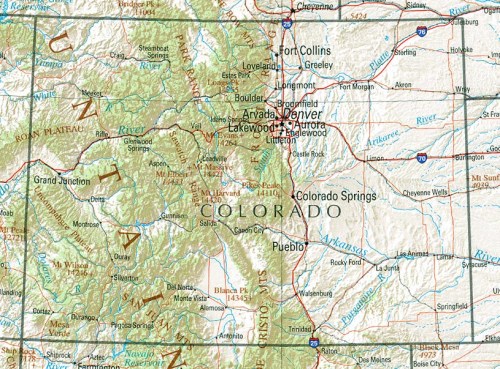
Judge Gordon Gallagher, who has served as a federal magistrate judge for the past decade, is Biden’s fourth nominee to the federal district court bench in Colorado.

Background

Gordon Gallagher attended Macalester College in St. Paul, graduating in 1991. He then received a J.D. from the University of Denver Strum Law School in 1996.

After graduating, Gallagher spent two years at Underhill and Underhill P.C. and then joined the Mesa County District Attorney’s Office. In 2000, Gallagher became a solo practitioner.

In 2012, Gallagher was appointed to be a U.S. Magistrate Judge and has served as such since.

History of the Seat

Gallagher has been nominated for a vacancy on the U.S. District Court for the District of Colorado. This seat will open on February 10, 2023 when Judge William Martinez takes senior status. Gallagher was previously recommended by Colorado Senators Michael Bennet and John Hickenlooper to replace Judge Christine Arguello, but fellow magistrate judge Nina Wang was chosen instead. Gallagher was then nominated to replace Martinez.

Legal Experience

Gallagher began his legal career at the firm of Underhill and Underhill P.C. before spending two years as a state prosecutor. However, the vast majority of his pre-bench career was spent as a solo practitioner, where he worked primarily in criminal defense. Among his notable cases, Gallagher represented Cheyenne Corbett, a teen mom charged with murder for the death of her baby shortly after it was born. See Teen Mom Charged with Murder Invoked Privacy Law, A.P. State & Local Wire, July 28, 2006.

Jurisprudence

Gallagher has served as a federal magistrate judge since his appointment in 2012. In this role, he presides by consent over civil matters and misdemeanors, assists district judges with discovery and settlement, and writes reports and recommendations on legal issues. Among the cases that he presided over, Gallagher handled a number of cases involving damage to federal lands. For example, he found Scott Wagner guilty of damage for building an unapproved pond partially on federal property. See Man Found Guilty for Altering and Damaging Forest Service Lands Within the Gunnison National Forest, Targeted News Service, Dec. 7, 2012. In another case, Gallagher sentenced Earl Bennett to a year of probation and $30000 in restitution for illegally building a road on federal property. See Man Sentenced for Illegally Building Road on U.S. Forest Service Land, U.S. Fed News, Aug. 27, 2018.

Writings and Statements

Gallagher has made a couple of media statements in his role as an attorney. For example, in 2003, Gallagher commented on the performance of Pamela Mackey, the defense attorney for Kobe Bryant in his rape trial. See Mike Wiggins and Michael C. Bender, Questions of Ethical Propriety Arise Over Bryant’s Defense, Cox News Service, Oct. 10, 2003.

Overall Assessment

Throughout his legal career, Gallagher has held a variety of positions, including as a prosecutor, a defense lawyer, and a judge. As such, his qualifications for a federal judgeship are undeniable. If Gallagher is given a hearing this Congress, he will likely be confirmed easily. However, given that Martinez is not taking senior status until next February and that a Republican senate might find Gallagher an acceptable nominee, it wouldn’t be surprising if Democrats prioritized other judges.

Jabari Wamble – Nominee to the U.S. Court of Appeals for the Tenth Circuit

The Kansas-based vacancy on the Tenth Circuit vacated by Judge Mary Briscoe in March 2021 is the oldest pending appellate vacancy on the federal judiciary. After eighteen months without a nominee, the White House has put forward the name of federal prosecutor Jabari Wamble.

Background

Jabari Brooks Wamble got a B.A. from the University of Kansas in 2002 and a J.D. from the University of Kansas School of Law in 2006. After graduating, Wamble spent two years in the Johnson County District Attorney’s Office before becoming an assistant attorney general in Kansas.

In 2011, Wamble joined the U.S. Attorney’s Office for the District of Kansas and has served there since.

Wamble is married to Marissa Cleaver, the daughter of U.S. Representative Emanuel Cleaver from Kansas City, Missouri.

History of the Seat

Wamble was tapped for a Kansas seat on the U.S. Court of Appeals for the Tenth Circuit. The seat was vacated by Judge Mary Briscoe’s move to senior status on March 15, 2021.

Legal Career

Wamble has spent his entire career in criminal prosecution, albeit at three different levels. He started his career at the Johnson County District Attorney’s Office. From 2007 to 2011, Wamble served in the Kansas Attorney General’s office. While at the Attorney General’s office, Wamble defended the conviction of Oliver McWilliams for Medicaid fraud. See State v. McWilliams, 283 P.3d 187 (Kan. 2012). While the Court of Appeals reversed McWilliams’ conviction, the Kansas Supreme Court reinstated it over the dissent of Justice Johnson.

Since 2011, Wamble has served as a federal prosecutor for the U.S. Attorney’s Office for the District of Kansas. Among his notable prosecutions with the office, Wamble prosecuted Richard Ballard, who pleaded guilty to wire fraud for collecting investment for environmentally friendly bottled water and pet chews, and then using the funds for personal use.

Wamble has also briefed and argued a number of appeals before the Tenth Circuit. For example, he was counsel of record in a suit that affirmed the defendant’s conviction for failing to pay child support. See United States v. Fuller, 751 F.3d 1150 (10th Cir. 2014).

Overall Assessment

Despite his youth, Wamble has built a solid reputation during his legal career, which likely speaks to Kansas Senator Jerry Moran’s relatively positive reaction to the nomination of a young Democrat for the Kansas seat. See Hannah Albarazi, Biden’s 10th Cir. Pick Seen as Humble Yet Savvy Prosecutor, Law360, Aug. 11, 2002. While some may criticize Wamble for having leapfrogged more experienced candidates due to his connection to Cleaver, there is little to criticize in Wamble’s record itself. If Democrats make his nomination a priority, Wamble will likely be confirmed before the end of the Congress.

Judge DeAndrea Benjamin – Nominee to the U.S. Court of Appeals for the Fourth Circuit

Having lost a bitter battle to join the South Carolina Court of Appeals last year, Judge DeAndrea Benjamin has now been nominated for a seat on the U.S. Court of Appeals for the Fourth Circuit.

Background

Born DeAndrea Gist in Columbia, South Carolina, in 1972, Benjamin received a B.A. from Winthrop University in 1994 and a J.D. from the University of South Carolina Law School in 1997. After graduating, Benjamin clerked for Judge L. Casey Manning on the Fifth Judicial Circuit of South Carolina. She then spent two years at the Fifth Judicial Circuit Solicitor’s Office and another two years at the South Carolina Attorney General’s Office before opening her own practice in 2001.

While practicing, Benjamin also worked part-time as a Columbia city judge and on the Juvenile Parole Board. In 2010, Benjamin narrowly lost an election in the South Carolina legislature to become a family court judge to Gwendolyn Young Smalls. See Small Bests Benjamin for Family Court Judge, S.C. Politics Today, Feb. 3, 2010. In 2011, Benjamin was appointed to be a Circuit Judge on the Fifth Judicial Circuit in a unanimous vote. See Wife of Columbia Mayor Elected Judge, A.P. State & Local Wire, Feb. 3, 2011.

Benjamin’s husband, Steve Benjamin is a prominent South Carolina Democrat who lost a race for Attorney General to (now Governor) Henry McMaster in 2002 and served as Mayor of Columbia from 2010 to 2022. In 2010, during the mayoral election, the Benjamins were criticized for listing two primary residences of their tax forms, which they explained was because they moved. See Tax Wars Dominate Capital City Mayoral Race, FITSNews For You, Apr. 17, 2010.

In 2013, Benjamin’s brother Donald Gist Jr. was tragically shot and killed in Charlotte, N.C. See SC Mayor’s Brother-in-Law Killed in Charlotte, A.P. Online, Dec. 7, 2013.

In 2021, Benjamin was up for a seat on the South Carolina Court of Appeals but lost after opposition from conservatives critical of her husband. See Judge and Columbia Mayor’s Wife Loses Partisan Judicial Race, A.P. State & Local, Feb. 3, 2021. The legislature selected Judge Jay Vinson instead.

History of the Seat

Benjamin has been nominated to replace U.S. Circuit Henry Floyd, who moved to senior status on December 31, 2021. Benjamin was recommended for the vacancy by U.S. Rep. Jim Clyburn, who is close to the Biden Administration.

Legal Experience

Benjamin has held a variety of positions throughout her legal career. She started her career at the Fifth Judicial Circuit Solicitor’s Office, where she handled criminal prosecutions in Richland and Kershaw counties. Subsequently, at the South Carolina Attorney General’s Office, she continued criminal prosecutions, including the sexual assault prosecution of York County Sheriff’s Deputy Tommy Benfield Sr. See Former Sheriff’s Deputy Indicted on Sex Charges, A.P. State & Local Wire, Sept. 23, 2000.

From 2001 to 2011, Benjamin worked as a solo practitioner in Columbia. Among the cases she handled during this time, Benjamin represented James McKinney, a teacher who sued an investigator with Richland County for arresting him on warrants not supported by probable cause. See McKinney v. Richland Cnty. Sheriff’s Dep’t, 431 F.3d 415 (4th Cir. 2005). After Judge Margaret Seymour denied summary judgment for the defendants, the Fourth Circuit reversed, finding that the defendants were entitled to qualified immunity. See id. at 419.

Benjamin also handled a number of employment discrimination suits, including that of Ada Irene Dawson, an African-American FBI agent who sued for racial discrimination, a hostile work environment, and retaliation. See Dawson v. United States, 549 F. Supp. 2d 736 (D.S.C. 2008). Benjamin also represented Beverly Mahomes who sued the U.S. Postal Service for racial discrimination after her termination. See Mahomes v. Potter, 590 F. Supp. 2d 775 (D.S.C. 2008).

Jurisprudence

Benjamin has served as a South Carolina Circuit Court judge since her election in 2011. In this role, she serves as a trial judge handling both civil and criminal matters for the counties of Richland and Kershaw.

Among her criminal cases, Benjamin has shown a willingness to hand out harsh sentences. For example, she sentenced Brett Parker to two terms of life in prison after he was convicted of killing his wife and his business partner. See Judge Sentences Columbia Man to 2 Life Terms, A.P. State & Local Wire, May 29, 2013. She also sentenced Christopher Harmon to 20 years in prison for kidnapping and sexual assault. See North August Man Sentenced to 20 Years for 2017 Kidnapping, Sexual Assault Case, Aiken Standard, Dec. 19, 2019.

On the civil side, Benjamin dismissed a suit challenging South Carolina’s ban on online eye exams, finding the company had failed to plead an injury sufficient to give them standing to challenge the law. See Judge Dismisses Case Challenging Online Eye Exam Ban, Columbia Regional Business Report, Jan. 30, 2018. The South Carolina Court of Appeals reversed, finding that the requirements for standing had been met. See Opternative, Inc. v. S.C. Bd. of Med. Examiners, 859 S.E.2d 263 (S.C. App. 2021).

Benjamin also sat by designation on the South Carolina Supreme Court. See, e.g., Burch v. Burch, 717 S.E.2d 757 (S.C. 2011).

During her time on the circuit court bench, some of Benjamin’s decisions were appealed to the South Carolina Court of Appeals and the South Carolina Supreme Court. The majority of these decisions were affirmed. See, e.g., State v. Brown, 740 S.E.2d 493 (S.C. 2013) (affirming jury instructions given in larceny conviction). Some of the decisions that were reversed are highlighted below:

Lee v. Univ. of S.C. (757 S.E.2d 394 (S.C. 2014)) – The plaintiff contracted with the University to give him an opportunity to purchase football and basketball tickets throughout his lifetime in consideration for taking out a life insurance policy with the University as a beneficiary. The University subsequently began imposing seat license fees on all purchases, which the plaintiff challenged as a breach of contract. Benjamin ruled that the plaintiff was not being denied his contractual right of purchase by imposing the licensing fees. The South Carolina Supreme Court reversed 4-1, finding that the payment of the licensing fee constituted an additional condition the University attempted to impose on a contract that did not require it. Justice Costa Pleicones would have affirmed.

Sanders v. State (773 S.E.2d 580 (S.C. 2015)) – The Defendant in the case agreed to waive all collateral review of any conviction in exchange for the state agreeing not to seek the death penalty. When the Defendant subsequently attempted to collaterally challenge his conviction, Benjamin dismissed the challenge under the agreement. The South Carolina Supreme Court reversed, finding that Benjamin should have convened an evidentiary hearing to confirm if the Defendant’s attorney was constitutionally defective in advising him to consent to the agreement.

Lucero v. State (777 S.E.2d 409 (S.C. App. 2015)) – The Defendant challenged her conviction for drug trafficking collaterally after an immigration judge ordered her removed based on the conviction. Benjamin granted post-conviction relief based on the Supreme Court’s decision in Padilla v. Kentucky, which found that defense counsel needed to advise non-citizens of immigration consequences from their pleas. The Court of Appeals reversed, finding that the Padilla decision could not be applied retroactively to the Defendant’s case.

State v. Stukes (787 S.E.2d 480 (S.C. 2016)) – The Defendant was convicted of rape after a trial in which the complainant claimed that she was assaulted while the Defendant argued that the intercourse was consensual. Benjamin advised the jury, consistent with the statute, that the complainant’s statement need not be corroborated to be believed. The South Carolina Supreme Court reversed 3-2, finding that, while the instruction was an accurate statement of the law, it confused the jury in this instance and was impermissible. Justice Kittredge dissented, finding any error to be harmless.

State v. Herndon (845 S.E.2d 499 (S.C. 2020)) – The Defendant, after a conviction for voluntary manslaughter, challenged Benjamin’s refusal to give the jury a Logan charge, or an instruction advising them as to how they should consider circumstantial evidence, as opposed to direct evidence. The South Carolina Supreme Court reversed, finding that, as the state’s evidence was almost entirely circumstantial, the charge was required to be given.

Overall Assessment

Benjamin has had her share of judicial disappointment, including losing bids for the Family Court and the South Carolina Court of Appeals. While Benjamin may well draw opposition in her bid for the Fourth Circuit, her confirmation will largely be tied to what Sen. Lindsay Graham chooses to do. Graham, who has generally been one of the most friendly Republican senators to Biden nominees, could grease the path for his home-state nominee if he supports her. If Graham chooses to oppose Benjamin, however, it is unlikely that she would be confirmed.