Mustafa Kasubhai – Nominee to the U.S. District Court for the District of Oregon

Judge Mustafa Kasubhai made history in 2018 as the first Muslim-American on the federal bench (albeit not in a lifetime appointment). He has now been nominated to such a position by President Biden.

Background

Born in Reseda, California in 1970 to an Indian immigrant family, Mustafa Taher Kasubhai received a B.A. from the University of California, Berkeley in 1992 and a J.D. from the University of Oregon School of Law in 1996.

A year after graduation, Kasubhai opened his own law practice in Eugene, Oregon, which he maintained until being appointed to the Oregon Workers’ Compensation Board in 2003.

In 2007, Governor Ted Kulongoski appointed Kasubhai to the Lane County Circuit Court. In 2018, Kasubhai was chosen to be a U.S. Magistrate Judge with the U.S. District Court for the District of Oregon, where he currently serves.

History of the Seat

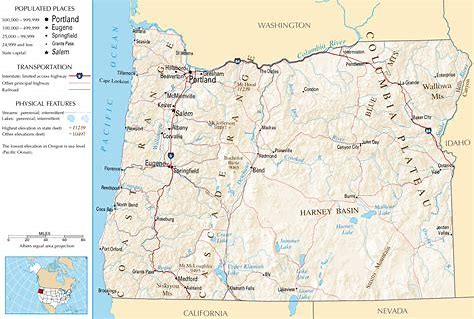
Kasubhai has been nominated for a seat on the U.S. District Court for the District of Oregon. This seat will open on December 29, 2023, when Judge Ann Aiken moves to senior status. Kasubhai was among six candidates recommended to the White House by Oregon Senators in June 2023.

Legal Experience

Kasubhai started his legal practice in Eugene Oregon in 1997 and maintained that practice until his appointment to the Oregon Board of Workers’ Compensation in 2003. His practice consisted largely of representing plaintiffs in workers’ compensation claims and in personal injury suits. In addition to a heavily administrative practice, Kasubhai also tried ten jury trials. Notably, Kasubhai represented the daughter of a decedent who died of carbon monoxide poisoning after the use of a propane heater in a tent. Kasubhai represented the plaintiffs in a 8-day jury trial which ended in a verdict for the plaintiff, which was subsequently affirmed on appeal. See Benjamin v. Walmart, 185 Or. App. 444 (2002). Kasubhai also represented a worker who cracked a tooth on an employer-provided snack in administrative proceedings and before the Oregon Court of Appeals. See Liberty Northwest Ins. Corp. v. Nichols, 186 Or. App. 664 (2002).

Jurisprudence

Kasubhai served as a Circuit Court Judge from 2007 to 2018. In this role, he served as a primary trial judge, supervising criminal and civil cases. In a notable decision later affirmed by the Oregon Court of Appeals, Kasubhai denied a motion to suppress, finding that the defendant, as a guest in the home being searched, lacked a privacy interest implicating the Fourth Amendment. See State v. Gonzalez, 292 Or. App. 342 (2018). In another notable decision, Kasubhai instructed a jury that drug use, drug dependence, and drug-induced psychosis did not constitute mental diseases or defects that affected the defendant’s culpability in murdering his girlfriend, which the Oregon Court of Appeals affirmed. See State v. Folks, 290 Or. App. 94 (2018).

Since 2018, Kasubhai has served as a federal magistrate judge for the U.S. District Court for the District of Oregon, in which role he handles pretrial release, discovery matters, as well as cases where parties consent to his jurisdiction. Among the notable cases he handled, parties consented to have him hear a “rule of reason” Sherman Act claim regarding a collective decision by Defendant neurologists to stop covering the Plaintiff’s calls. See Ireland, M.D. v. Bend Neurological Associates, et al., No. 6:16-cv-02054-MK, 2021 WL 1229937 (D. Or. Mar. 31, 2021). Kasubhai granted summary judgment to the Defendants on the claims, which was affirmed by the Ninth Circuit. See 2023 WL 2783240 (9th Cir. Apr. 5, 2023). In another decision pending on appeal, Kasubhai granted summary judgment in favor of a union, finding that its withdrawal of union fees from the plaintiff did not violate the First Amendment because it was not a state actor. See Cram v. Local 503 SEIU, 590 F. Supp. 3d 1330 (D. Or. 2022).

Political Activity

Kasubhai has a handful of political donations to his name, all to Democratic candidates.

Writings and Statements

Kasubhai has written and spoken frequently on the law, particularly in favor of greater diversity both on the bench in the legal community, with some of his expressed views being raised in criticism at his confirmation hearing. See also The Honorable Mustafa Kasubhai, Old Oregon, Autumn 2009 (available at https://scholarsbank.uoregon.edu/xmlui/bitstream/handle/1794/10018/OQ_Autumn09.pdf). However, Kasubhai’s writings extend back to his law student days, when he authored an article critical of state rape laws that required showings of force in order to criminalize rape, arguing that the laws should be based around consent (or lack thereof) demonstrated by the victim. See Mustafa T. Kasubhai, Destabilizing Power in Rape: Why Consent Theory in Rape Law is Turned On Its Head, 11 Wis. Women’s L.J. 37 (1996-1997) (available at https://api.law.wisc.edu/repository-pdf/uwlaw-library-repository-omekav3/original/03d50dd18ada15fb757ee7dce07c20df3c1172d1.pdf).

Overall Assessment

Reviewing Kasubhai’s judicial record reveals some contrast with the portrait painted by critics at his confirmation hearing. His rulings have largely been affirmed and do not reveal anything out of the judicial mainstream. Judge Michael Mosman, probably the most prominent conservative voice on the Oregon district court bench, has written in support of Kasubhai’s nomination. However, despite all of this, it is likely that Kasubhai’s nomination will prove controversial based on his past writings. Nonetheless, if Democrats buckled down, they likely could confirm Kasubhai in due course before Judge Aiken moved to senior status.

Shanlyn Park – Nominee to the U.S. District Court for the District of Hawaii

State Judge Shanlyn Park, who had spent most of her career as a federal public defender in Hawaii, has been nominated to a lifetime appointment on Hawaii’s federal bench.

Background

Shanlyn Alohakeao Souza Park was born in Honolulu in 1969. She received a B.A. from the Chaminade University of Honolulu in 1991 and her J.D. from the University of Hawaii William S. Richardson School of Law in 1995. After graduating, Park clerked for U.S. Magistrate Judge Francis Yamashita and then became an Assistant Federal Public Defender with the District of Hawaii in 1997. In 2017, she left to return to private practice in Honolulu.

Since 2021, Park has served as a Circuit Court Judge for the First Circuit for the State of Hawaii.

History of the Seat

Park has been nominated for a vacancy on the U.S. District Court for the District of Hawaii. This seat will open when Judge Leslie Kobayashi moves to senior status on October 9, 2024.

Legal Experience

For the vast majority of her career, Park worked as a federal public defender in Hawaii, representing indigent defendants in both misdemeanor and felony matters in federal court. Notably, Park represented a co-defendant in a murder case, where she was able to negotiate a 30 year sentence for her client with opposing counsel Jill Otake (who later joined the federal bench under President Trump). See United States v. Jackson, Cr. No. 15-00293 SOM-KSC (D. Haw.). Notably, Park also represented Jeffrey Drye, who was charged with abusive sexual contact and sexual assault in the first degree. Drye v. United States, Civ. No. 12-00355 JMS (D. Haw.). After his conviction, Drye filed a petition alleging, among other claims, that Park provided him with ineffective assistance of counsel. See id. Specifically, Drye alleged that Park was ineffective in allowing Drye to testify at trial, in failing to file an appeal, and in her representation at sentencing. Id. Judge J. Michael Seabright rejected all three contentions. On the first, he found that, while Park advised Drye to testify, that advice “was a reasonable, strategic choice.” See id. On the second contention, Seabright noted that Drye himself had declined to file an appeal and that Park would not have been able to help him on a petition suggesting that she herself was ineffective. See id. Regarding the sentencing, Seabright noted:

“The only conclusion these facts support is that Park provided Drye extremely competent representation that resulted in Drye receiving a lower sentence than he otherwise could have received.”

From 2017 to 2021, Park worked in private practice, working on commercial litigation, including mediations and arbitration. Notably, Park represented Kaluakoi Poolside, LLC. in a commercial arbitration involving a dispute over the maintenance of common areas of a shared commercial property. See The West Molokai Association of Apartment Owners v. Kaluakoi Poolside, LLC., Case No. 16-0033-A (Dispute Prevention & Resolution Hawai’i Inc.).

Jurisprudence

In 2021, Park was appointed to the First Circuit of Hawaii by Governor David Ige. She initially worked in the Family Court Division and then in 2023 shifted to the Criminal Division. Over the course of her tenure, Park has presided over 21 jury trials, all in criminal cases.

Overall Assessment

Park’s Judiciary hearing attracted relatively little attention, and there is little reason to believe that this will change through the confirmation process. With Judge Kobayashi’s departure from active status still a year away, Park is almost certain to be confirmed well in advance of the vacancy opening.

Micah Smith – Nominee to the U.S. District Court for the District of Hawaii

Micah Smith, a former SCOTUS clerk, and longtime federal prosecutor, would bring a star-studded resume to the federal bench.

Background

Born in Mill Hall, Pennsylvania in 1981, Micah Smith graduated summa cum laude from the Lock Haven University of Pennsylvania in 2003 and then received a J.D. magna cum laude from Harvard Law School in 2006. After graduating, Smith clerked for Judge Guido Calabresi on the U.S. Court of Appeals for the Second Circuit and then for Justice David Souter on the U.S. Supreme Court, in a clerk class that included Senator Josh Hawley, California Solicitor General Michael Mongan, and federal judge Rachel Kovner.

Smith subsequently joined the Washington D.C. Office of O’Melveny & Myers and in 2012 moved to be a federal prosecutor with the U.S. Attorney’s Office for the Southern District of New York. In 2018, he shifted to the U.S. Attorney’s Office for the District of Hawaii, where he serves as Appellate Chief.

History of the Seat

Smith has been nominated for a vacancy on the U.S. District Court for the District of Hawaii. This seat will open when Judge J. Michael Seabright moves to senior status on January 30, 2024.

Legal Experience

After his clerkships, Smith started his legal career at the D.C. Office of O’Melveny & Myers. In this role, Smith worked primarily on appellate litigation, handling a wide variety of issue areas. This included briefing at the Supreme Court, where he was part of the legal team for Antoine Jones, who successfully challenged the attachment of a GPS tracking device on his vehicle under the Fourth Amendment. See United States v. Jones, 565 U.S. 400 (2011). Smith also represented the D.C. Public Charter School Board pro bono in defending its decision to revoke the charter of a failing school. See KIMA v. D.C. Public Charter School Board, 55 A.3d 894 (D.C. Ct. App. Nov. 15, 2012).

Between 2012 and 2018, Smith worked as a federal prosecutor with the U.S. Attorney’s Office for the Southern District of New York. Smith started as a line prosecutor with the office before advancing into a supervisory role. His notable cases with the office included a jury trial resulting in the conviction for conspiring to distribute crack cocaine in the Bronx. See United States v. Muir, 710 F. App’x 510 (2d Cir. Feb. 9, 2018). Smith was also co-lead counsel alongside fellow judicial nominee Margaret Garnett in the trial leading to the conviction of a defendant charged with ordering hitmen to murder his nephew. See United States v. Ventura, 673 F. App’x 82 (2d Cir. Dec. 15, 2016).

After moving to Hawaii in 2018, Smith has worked as a federal prosecutor. Smith has handled a number of supervisory roles with the office, to include the Criminal Civil Rights Coordinator and his current role as Chief of Appeals and Legal Strategy. While with the office, Smith notably prosecuted an individual for assaulting the patron of an illegal gambling business while working as security because the patron refused to share his winnings with him. See United States v. Siatunuu, No. 19-cr-00119 (D. Haw. 2019-21) (Judge J. Michael Seabright). In this representation, Smith litigated against Assistant Federal Public Defender Shanlyn Park, who has been nominated alongside him to the Hawaii federal bench.

Overall Assessment

While he is unlikely to get the support of his co-clerk sitting on the Senate Judiciary Committee, Smith nonetheless is likely to sail to confirmation. Given his youth and stellar credentials, Smith would likely also be a strong contender for future elevation, including potentially when Judge Mark Bennett takes senior status.

Colleen Holland – Nominee to the U.S. District Court for the Western District of New York

The 39-year-old Holland has served for the last five years as a career law clerk to Chief Judge Elizabeth Wolford on the U.S. District Court for the Western District of New York. Holland now has been nominated to join Wolford as a judge on the court.

Background

Born in 1984, Holland received a Bachelor of Arts and Bachelor of Science from the University of Rochester in 2006 and went onto earn her J.D. summa cum laude from Cornell Law School in 2010 (graduating first in her class). Holland then went into private practice, moving between Nixon Peabody LLP, LeClairRyan PC and Boylan Code LLP.

In between her private practice positions, Holland clerked for Judge Elizabeth Wolford and for Judge Michael Telesca on the U.S. District Court for the Western District of New York.

Since 2018, Holland has served as a career law clerk for Chief Judge Wolford and also as special counsel for her since 2021.

History of the Seat

Holland has been nominated to a seat on the U.S. District Court for the Western District of New York. This seat opened on April 1, 2023, when Judge Frank Geraci moved to senior status.

Legal Experience

Of the thirteen years that Holland has spent out of law school, she has spent more than half in the chambers of the Western District of New York, where she has served as a clerk and an advisor to the judges of the court, including in drafting “hundreds of judicial opinions.” However, as none of Holland’s work as a clerk bears her name, it is difficult to determine the exact nature of her work product.

Outside of her time at the Western District of New York, Holland has worked in commercial litigation in the Rochester area. Among her cases during this time, Holland represented Tumac Lumber Company in a contract dispute involving a failure to pay for delivered goods. See Tumac Lumber Inc. v. Chenango Valley Pet Foods, Inc., Civil Action No. 3:11-CV-0698 (DEP) (N.D.N.Y. May 15, 2012). Holland also filed a breach of contract suit against Coupons.com, alleging that the site was using proprietary technology that was provided to them for use in evaluating a business relationship. See Document Security Sys. Inc. v. Coupons.com, Inc., No. 11-CV-6528-CJS (W.D.N.Y. Aug. 20, 2012).

Writings

As a law student, Holland authored a note discussing the increasing diagnoses of Autism Spectrum Disorders (“ASDs”) and the legal rights implicated for those diagnosed. See Colleen D. Holland, Autism, Insurance, and the Idea: Providing a Comprehensive Legal Framework, 95 Cornell L. Rev. 1253 (2009-2010), available at https://scholarship.law.cornell.edu/cgi/viewcontent.cgi?article=3183&context=clr. In the paper, Holland advocates for a new conception of ASDs, arguing that it is important to support the “actual, expressed needs of the autistic individual.” See id. at 1282.

Overall Assessment

It is not unprecedented for career law clerks to be appointed to the federal bench (Judge Frank Volk in West Virginia is another recent example), as many of the skills they develop on the job transfer over to the position of judge. However, as much of their work as a career law clerk is behind the scenes, it is difficult to gauge a nominee’s temperament or philosophy when they have spent a significant portion of their career as a career law clerk. When combined with Holland’s youth and the fact that she has spent over 4-5 years litigating, many may criticize Holland over a lack of judicial experience. As such, perhaps more than other nominees, Holland needs to watch out for “gotcha” moments at her confirmation hearing.

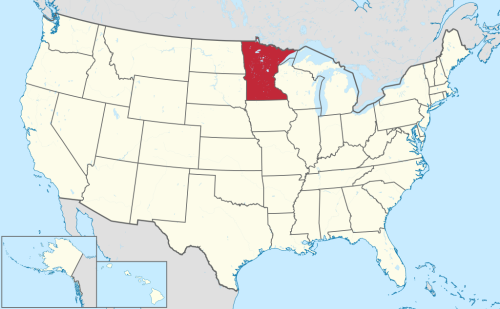
Judge Jeffrey Bryan – Nominee to the U.S. District Court for the District of Minnesota

Judge Jeffrey Bryan has a long history in the Minnesota legal community, having practiced law here for over a decade and then spent another decade as a state court judge. Bryan is now poised to join the federal bench.

Background

Bryan was born in El Paso, Texas, on April 16, 1976. Bryan attended the University of Texas at Austin, receiving a B.A. in 1998. He then attended Yale University Law School, graduating in 2002.

After graduation, Bryan clerked for Judge Paul Magnuson on the U.S. District Court for the District of Minnesota. He then joined the Minneapolis office of Robins Kaplan LLP as an associate. In 2007, Bryan left the firm to become a federal prosecutor with the U.S. Attorney’s Office for the District of Minnesota.

In 2013, Democratic Governor Mark Dayton appointed Bryan to a seat on the 2nd Judicial District of Minnesota, which covers Ramsey County (St. Paul).

In 2019, Governor Tim Walz appointed Bryan to the Minnesota Court of Appeals to replace Judge Heidi Schellhas. He continues to serve on that court to this day.

History of the Seat

Bryan has been nominated for a seat on the U.S. District Court for the District of Minnesota to replace Judge John Tunheim, who will take senior status upon appointment of a successor.

Legal Career

Bryan began his legal career as an associate at Robins Kaplan LLP, where he worked on complex civil litigation. However, Bryan also represented indigent clients as part of appointments as a Special Assistant Public Defender. See, e.g., State v. Fenning, No. A04-275 (Minn. Ct. App. 2005).

In 2007, Bryan shifted to become a federal prosecutor with the U.S. Attorney’s Office for the District of Minnesota, where he worked on white collar, gang, and drug trafficking cases. See, e.g., United States v. Mims, 567 F. Supp. 2d 1059 (D. Minn. 2008). Bryan also argued cases before the Eighth Circuit. See, e.g., United States v. Ybarra, 580 F.3d 735 (8th Cir. 2009) (affirming conviction for conspiracy to distribute marijuana).

Jurisprudence

Bryan was appointed to be a District Court judge in St. Paul by Governor Mark Dayton in 2013 to replace Judge J. Thomas Mott. In this role, he served as a primary trial judge, supervising criminal and civil cases. Bryan also served at Co-Chair of the Ramsey County Juvenile Detention Alternatives Initiative.

In 2019, Governor Tim Walz appointed Bryan to the Minnesota Court of Appeals, replacing Judge Heidi Schellhas, and Bryan has served on the court since. Of his recent opinions from the Court of Appeals, Bryan reversed a district court decision denying a motion for postconviction relief, finding that the district court had erred in finding that the claim was procedurally barred. See Edwards v. State, No. A22-1221 (Minn. Ct. App. 2023).

Writings

In 2006, Bryan authored an article discussing the intersection of feminism and Christianity. See Jeffrey M. Bryan, Sexual Morality: An Analysis of Dominance Feminism, Christian Theology, and the First Amendment, 84 U. Det. Mercy L. Rev. 655 (2006-2007). Specifically, Bryan discusses the role of Christian feminists in narrowing a gap between Christianity and feminism, and outlines points of convergence that can be found. See id.

Overall Assessment

Senator Amy Klobuchar has had a significant degree of success in ensuring the smooth confirmation of judges in her home state. Based on his record, there is little to suggest that Bryan will be an exception, and it is expected that Bryan will join the Minnesota bench before the end of the year.

Judge Eumi Lee – Nominee to the U.S. District Court for the Northern District of California

A year after naming Judge Trina Thompson to the U.S. District Court for the Northern District of California, President Biden has nominated her Alameda County colleague, Judge Eumi Lee, to join her on the Northern District bench.

Background

Lee got her B.A. from Pomona College in 1994 and her J.D. from the Georgetown University Law Center in 1999. After graduating, Lee clerked for Judge Jerome Turner on the U.S. District Court for the Western District of Tennessee and then for Judge Warren Ferguson on the U.S. Court of Appeals for the Ninth Circuit.

Subsequently, Lee joined Keker & Van Nest, shifting in 2005 to become a Clinical Professor of Law at the University of California College of Law, San Francisco (formerly UC Hastings). In 2018, Lee became a Superior Court Judge in Alameda County, where she currently serves.

History of the Seat

Lee has been nominated to the U.S. District Court for the Northern District of California, to a seat vacated on May 17, 2023, by Judge William Orrick.

Legal Experience

Lee started her legal career in private practice at the firm of Thelen Reid & Priest, further moving to Keker & Van Nest. During her time in private practice, Lee represented the French company Societe Commerciale Toutelectric in an appeal from a default judgment imposed after striking its answer as a discovery sanction for failing to produce three witnesses for deposition. See Am. Home Assurance Co. v. Societe Commerciale Toutelectric, 104 Cal. App. 4th 406 (2002). The appellate court affirmed the sanction and the default judgment. See id.

While at Keker & Van Nest, Lee was part of the legal team representing Cobra Solutions, Inc., which successfully sued to have San Francisco City Attorney Dennis Herrera disqualified from an investigation of the company as Herrera had previously worked at a firm that had represented Cobra Solutions. See San Francisco v. Cobra Solutions, Inc.,135 P.3d 20 (Cal. 2006). After the trial court disqualified the City Attorney’s office and a divided panel of the Court of Appeals affirmed, the California Supreme Court, in a 5-2 decision by Justice Joyce Kennard, affirmed the disqualification of the entire office. See id.

Lee subsequently spent thirteen years as a clinical professor of law at the University of California College of Law, San Francisco (formerly UC Hastings), where she co-founded the Hastings Institute for Criminal Justice.

Jurisprudence

Since 2018, Lee has served as a judge on the Alameda County Superior Court. In this role, Lee presides over trial court matters in criminal, civil, family, and other state law matters. Lee was the first Korean American judge in Alameda County.

Statements and Writings

As a law professor, Lee has frequently written on spoken on issues in the law. Early in her time as a professor, Lee joined a Comment urging retention of robust protections under the Family and Medical Leave Act (“FMLA”) in response to a Request for Information issued by the Department of Labor under President George W. Bush.

Lee has written extensively on prison populations in California, the parole system, and the recurring problem of recidivism. Compare Eumi K. Lee, The Center to Real Reform? Political, Legal, and Social Barriers to Reentry in California, 7 Hastings Race and Poverty L.J. 243 (2010) with Eumi K. Lee, An Overview of Special Populations in California Prisons, 7 Hastings Race and Poverty L.J. 223 (2010). As part of her writing on criminal justice issues, Lee has been a sharp critic of the proliferation of websites publishing booking photos and keeping them up barring payment to take the photos down. See Eumi K. Lee, Monetizing Shame: Mugshots, Privacy, and the Right to Access, 70 Rutgers U.L. Rev. 557 (2017-2018). Lee has argued that such websites essentially ensure that the subjects are forever tainted by the arrest, when where the charges are eventually dropped. See Olivia Solon, Haunted By a Mugshot: How Predatory Web Sites Exploit the Shame of Arrest, Taipei Times, June 18, 2018, https://www.taipeitimes.com/News/feat/archives/2018/06/18/2003695058.

Political Activity

Lee has been a frequent donor to Democratic Party candidates throughout her career. California Attorney General Rob Bonta has been a frequent recipient of donations from Lee, having received around $1800 total.

Overall Assessment

If confirmed, Lee would join a federal court that already has a reputation as one of the most liberal in the nation. Lee’s record, while demonstrating her experience and scholarship with various areas of law, also suggests that she would sit within the liberal mainstream of that court. While Lee is likely to draw strong opposition through the confirmation process, she should nonetheless see confirmation by the end of the year.

Judge Karoline Mehalchick – Nominee to the U.S. District Court for the Middle District of Pennsylvania

President Biden has nominated fellow Scranton native Karoline Mehalchick, a federal magistrate judge, to a vacancy on the U.S. District Court for the Middle District of Pennsylvania.

Background

Born in 1976 in Scranton, Pennsylvania, Karoline Mehalchick received a B.Sc. from Pennsylvania State University in 1998 and a J.D. from Tulane Law School in 2001.

After graduating, Mehalchick clerked for Judge Trish Corbett with the Lackawanna County Court of Common Pleas and then joined Oliver, Price & Rhodes as an Associate, becoming Partner in 2008. In 2013, Mehalchick was appointed to be a federal magistrate judge, where she currently serves.

History of the Seat

The seat Mehalchick has been nominated for opened on August 1, 2021 with the move to senior status of Judge John Jones.

Legal Experience

Between 2002 and 2013, Mehalchick worked at the firm of Oliver, Price & Rhodes in Lackawanna County, frequently representing municipalities in defending against various suits. See, e.g., Smith v. Borough of Dunmore, 633 F.3d 176 (3d Cir. 2011). Among her notable cases, Mehalchick represented the Diocese of Scranton in defending against suits brought by individuals alleging sexual abuse from ordained clergy in the diocese. See Doe v. Liberatore, 478 F. Supp. 2d 742 (M.D. Pa. 2007). Mehalchick has also represented private parties, including in an unfair competition suit brought in federal court. See Bobrick Corp. v. Santana Prods. Inc., 698 F.Supp.2d 479 (M.D. Pa. 2010).

On the plaintiff’s side, Mehalchick represented plaintiffs in a suit denying them a permit to place an outdoor sign on Interstate 81. See Joyce Outdoor v. Dep’t of Transp., 49 A.3d 518 (Comm. Ct. Pa. 2012).

Mehalchick also argued cases before the Third Circuit, including a defense of the Borough of Dunmore against a 1983 suit brought by a full-time firefighter. See Dee v. Borough of Dunmore, 549 F.3d 225 (3d Cir. 2008).

Judicial Experience

Since 2013, Mehalchick has served as a federal magistrate judge on the U.S. District Court for the Middle District of Pennsylvania. In this role, Mehalchick handles bond and release decisions, administrative law cases, discovery disputes, settlement, as well as reports and recommendations on substantive motions. See, e.g., Luciano-Jimenez v. Doll, 547 F. Supp. 3d 462 (M.D. Pa. 2021) (Mannion, J.) (accepting Judge Mehalchick’s recommendation ordering a prisoner released with conditions).

A number of Mehalchick’s rulings and opinions have been appealed to the Third Circuit, which has largely affirmed the rulings. See, e.g., Talley v. Wetzel, 15 F.4th 275 (3d Cir. 2021) (affirming district court order allowing prisoner to proceed in forma pauperis). In one notable opinion, Mehalchick ruled, on an issue of first impression, that incentive bonuses by third parties need to be included by employers when calculating the overtime rate. See Secretary United States Department of Labor v. Bristol Excavating Co., 935 F.3d 122 (3d Cir. 2019). The Third Circuit affirmed in part and reversed in part, finding that all incentive bonuses do not necessarily need to be considered when calculating overtime and that the record did not support the conclusion that the overtime bonuses in this case should be considered. See id. at 128.

Among other cases where Mehalchick’s opinion has been reversed, two Third Circuit panel reversed her grant of summary judgment against prisoner suits for lack of exhaustion. See Downey v. Pennsylvania Dep’t of Corr., 968 F.3d 299 (3d Cir. 2020); Hardy v. Shaikh, 959 F.3d 578 (3d Cir. 2020).

Political Activity

Mehalchick’s sole donation of record is to former Scranton mayor Christopher Doherty, a Democrat.

Overall Assessment

With experience in private practice and a decade as a magistrate judge, Mehalchick has racked up a significant legal record for her relatively young age. Given her relatively mainstream record, Mehalchick should see a comfortable confirmation.

Judge Jennifer L. Hall – Nominee to the U.S. District Court for the District of Delaware

U.S. Magistrate Judge Jennifer Hall has extensive experience litigating in Delaware federal court and is now poised to join it with a lifetime appointment.

Background

Jennifer L. Hall received a B.S. from the University of Minnesota in 1997, her M. Phil. from Yale University in 2000, her Ph.D. from Yale University in 2003, and her J.D. from the University of Pennsylvania School of Law in 2006. After graduating, Hall clerked for Judge Sharon Prost on the U.S. Court of Appeals for the Federal Circuit and then for Judge Kent Jordan on the U.S. Court of Appeals for the Third Circuit.

Hall subsequently joined Fish & Richardson, where she spent three years as an Associate before becoming a federal prosecutor in Delaware. She subsequently became Chief of the Civil Division of the U.S. Attorney’s Office in 2015.

In 2019, Hall became a U.S. Magistrate Judge on the U.S. District Court for the District of Delaware, where she currently serves.

History of the Seat

Hall has been nominated for a vacancy that will open by Judge Richard Andrews’ move to senior status on December 31, 2023.

Legal Experience

After her clerkships, Hall started her legal career at the firm of Fish & Richardson where she represented plaintiffs in a patent infringement suit over a generic version of the pain drug Amrix, which concluded in a bench trial before Judge Sue L. Robinson. See In re Cyclobenzaprine Hydrochloride, 794 F. Supp. 2d 517 (D. Del. 2011).

From 2011 to 2019, Hall worked as an AUSA in Delaware, handling both affirmative civil cases (brought by the government) and defensive ones. Compare United States v. Energy Solutions, Inc., 265 F. Supp. 3d 415 (D. Del. 2017) with LKQ Corp. v. U.S. Dep’t of Homeland Security, 369 F. Supp. 3d 577 (D. Del. 2019). Among her larger cases, Hall was lead counsel in challenging the acquisition of Andrews County Holding, Inc. by the defendants, arguing that the acquisition would significantly affect competition for disposal of low-level radioactive waste. United States v. Energy Solutions, Inc., 265 F. Supp. 3d 415 (D. Del. 2017). In 2017, U.S. District Judge Sue Robinson enjoined the merger as a violation of the Clayton Act. See id. at 446.

Hall also handled some criminal cases, including arguing appeals before the Third Circuit. See, e.g., United States v. Boney, 769 F.3d 153 (3d Cir. 2014).

Judicial Experience

Since 2019, Hall has served as a U.S. Magistrate Judge, presiding over discovery issues, pretrial release, administrative cases, and cases with the consent of the parties.

Among her notable decisions, Hall conducted a bench trial in response to an Eighth Amendment claim brought by Christopher West, an incarcerated individual, who alleged that he was deprived of a mattress. See West v. Emig, C.A. No. 13-2103-JLH (D. Del. Oct. 24, 2022) (Memorandum Opinion). Hall made a factual finding that West had been deprived of a mattress for a period of one month, but noted that the deprivation was based on a legitimate penological interest, as West had developed a habit of ripping over mattresses and swallowing the filling. See id. As a conclusion, Hall found both that West had not established an Eighth Amendment violation and that the officers were entitled to qualified immunity. See id.

Among the reports and recommendations she authored, Hall recommended the denial of a motion to dismiss racial and religious discrimination claims brought by a black muslim firefighter, while recommending the granting of contractual discrimination and hostile work environment claims, noting that the complaint failed to allege facts supporting those claims. See Ferrell v. City of Wilmington, C.A. No. 21-1593-RGA (D. Del. Feb. 1, 2023).

Overall Assessment

Like fellow Delaware nominees Leonard Stark, Gregory Williams, and Tamika Montgomery-Reeves, Hall has an unimpeachable resume for her position and little in her background that should cause controversy. She should be confirmed well in advance of Andrews’ move to senior status.

Brandy McMillion – Nominee to the U.S. District Court for the Eastern District of Michigan

Federal prosecutor Brandy McMillion is Biden’s fifth pick for the U.S. District Court for the Eastern District of Michigan.

Background

Brandy R. McMillion received a B.S.E. from the University of Michigan in 2001, her M.S.E. from the same university the following year, and her J.D. from the George Washington University Law School in 2006.

After graduation, McMillion spent a year as an associate at Pepper Hamilton L.L.P. before joining the liberal law firm Perkins Coie L.L.P. In 2012, McMillion became a senior litigation associate at Bryan Cave L.L.P. In 2015, McMillion became a federal prosecutor with the U.S. Attorney’s Office for the Eastern District of Michigan, where she currently serves as chief of the General Crimes Unit.

History of the Seat

McMillion has been nominated for a seat on the U.S. District Court for the Eastern District of Michigan. This seat opened on August 13, 2022, when Judge Gershwin Drain took senior status.

Legal Career

McMillion spent the first half of her career working in civil litigation at the firms of Pepper Hamilton, Perkins Coie, and Bryan Cave. Among the matters she handled during this time, McMillion worked on intellectual property cases, including appellate work. See, e.g., iLight Technologies, Inc. v. Fallon Luminous Products Corp., No. 2009-1342 (Fed. Cir. Apr. 20, 2010). Notably, McMillion represented Redbox Automated Retail, who was one of several defendants in a patent infringement lawsuit brought over a patent for a client-server communication applet. See Parallel Networks LLC v. Abercrombie & Fitch Co. et al., 704 F.3d 958 (Fed. Cir. 2013).

Since 2015, McMillion has worked as a federal prosecutor, where her role included prosecuting narcotics offenses. See, e,g., United States v. Vasquez, Crim. Case No. 18-20284 (E.D. Mich. Nov. 13, 2018). Notably, McMillion worked on the prosecution of Dr. Rajendra Bothra who was acquitted in 2022 of 40 counts related to an alleged $500 million health care fraud scheme. See Melissa Nann Burke, Biden Taps Prosecutor McMillion for Federal Bench in Michigan, Detroit News, June 28, 2023, https://www.detroitnews.com/story/news/local/michigan/2023/06/28/biden-taps-prosecutor-mcmillion-for-federal-bench-in-michigan/70363298007/. Bothra’s acquittal came as the result of a successful defense strategy to defend Bothra’s work, characterized by the prosecution as a “pill-mill” as legitimate pain intervention. See Tresa Baldas, How 4 Doctors Beat the Feds in Botched $500 Million Pill Mill Case, Detroit Free Press, June 30, 2022, https://www.freep.com/story/news/local/michigan/macomb/2022/06/30/doctors-opioid-scheme-birmingham-bothra/7778004001/.

Political Activity

In 2009, McMillion made a single donation to Democratic senate candidate Alexi Giannoulias, her only partisan donation of record.

Overall Assessment

With extensive experience in litigation on both the civil and criminal side, McMillion should enter the federal bench ready to address the legal issues before her. With a paucity of controversial writings or advocacy behind her, McMillion may nonetheless face scrutiny for her prosecution of Bothra, particularly as the latter was a politically connected Republican. However, McMillion can note that Bothra was indicted under the Trump Administration as a defense to any political element to the prosecution.

Margaret Garnett – Nominee to the U.S. District Court for the Southern District of New York

S.D.N.Y. federal prosecutor Margaret Garnett has worked on a number of prominent cases throughout her career, including one described as the largest criminal tax case in U.S. history. Garnett has now been nominated for the federal bench.

Background

Margaret Garnett received her B.A. from the University of Notre Dame in 1992, an M.A. from Yale University in 1995, and a M. Phil. from Yale University in 1997, before getting a J.D. in 2000 from Columbia Law School. After law school, Garnett joined Wachtell, Lipton, Rosen & Katz as an associate. In 2004, she left to clerk for Judge Gerald Lynch on the U.S. District Court for the Southern District of New York (Lynch was later elevated to the Second Circuit). After her clerkship, Garnett joined the U.S. Attorney’s Office for the Southern District of New York, where she rose to be Chief of Appeals. In 2017, she left to join the New York Attorney General’s Office and subsequently joined the New York City Department of Investigation.

In 2021, Garnett rejoined the U.S. Attorney’s Office for the Southern District of New York, serving initially as deputy U.S. Attorney and then as Special Counsel to the U.S. Attorney since 2023.

History of the Seat

Garnett has been nominated to the vacancy on the U.S. District Court for the Southern District of New York vacated on April 21, 2023 by Judge Vincent Bricetti’s move to senior status.

Legal Career

Garnett started her career as an associate at Wachtell, Lipton, Rosen & Katz, and then as a clerk before becoming a federal prosecutor in New York, where she has spent the vast majority of her career. In her first stint with the U.S. Attorney’s Office, Garnett notably prosecuted “the largest criminal tax case” in American history, covering multiple partners and employees at KPMG, who were indicted with conspiracy and tax evasion. See U.S. v. Stein, 452 F. Supp. 2d 230 (S.D.N.Y. 2006). Garnett also argued before the U.S. Court of Appeals for the Second Circuit. See, e.g., United States v. Gagliardi, 506 F.3d 140 (2d Cir. 2007).

In 2017, Garnett left to join the New York Attorney General’s Office and then joined the New York City Department of Investigation. In this role, Garnett was sued by groups challenging the state’s eviction moratorium during the Covid-19 pandemic. See Chrysafis v. Marks, 15 F.4th 208 (2d Cir. 2021).

Writings

During her time with the New York City Department of Investigation, Garnett notably authored a critical report of the New York Police Department’s response to the George Floyd protests, noting that the response “lacked a clearly defined strategy” and that officers lacked training to respond. The 115 page report (available here) detailed multiple officer and civilian injuries, and issues with the response, and recommended that a civilian independent board exercise oversight over the police department, noting that none of the three oversight agencies currently overseeing the NYPD have the ability to bind the department on specific allegations of misconduct.

Overall Assessment

Garnett has a powerful champion in her corner for confirmation in Senate Majority Leader Chuck Schumer. However, while her prosecution-heavy experience is generally less “controversial” in the confirmation process, Garnett may nonetheless draw attention for her critical report of the NYPD and its role in the 2020 protests. It will be interesting to see, how much attention, if any, her writings on that front draw in the confirmation process.