James C. Ho – Nominee to the U.S. Court of Appeals for the Fifth Circuit

As a well-respected appellate attorney, James C. Ho is a safe choice for the federal bench.  Furthermore, Ho, who has both a reputation as a solid conservative and impeccable academic credentials, would give the Trump Administration some badly needed diversity in their judicial ranks, as he would be the first Asian American on the Fifth Circuit, and only the third Taiwanese American federal judge.[1]

Background

Ho was born in Taiwan in 1973, immigrating to the U.S. a year later.  Ho received a B.A. with Honors in Public Policy from Stanford University in 1995, and went onto the University of Chicago Law School, graduating with High Honors in 1999.  After graduating, Ho clerked for Fifth Circuit Judge Jerry Edwin Smith, a noted conservative.

In 2001, Ho moved to Washington D.C. to work for the Civil Rights Division in the Department of Justice.  Ho later moved to the Office of Legal Counsel (OLC), working under Assistant Attorney General (and now federal judge) Jay Bybee.  In 2003, Ho was hired by newly elected Texas Senator John Cornyn to serve as his Chief Counsel.

In 2005, Ho was hired out of the Senate by Justice Clarence Thomas and served a one-year clerkship with the Justice.  After the clerkship concluded, Ho joined the law firm Gibson Dunn as an Associate.  Just two years later, Texas Attorney General Greg Abbott chose Ho to replace the departing Texas Solicitor General (and current U.S. Senator) Ted Cruz.

In 2010, Ho left the Texas Solicitor General’s Office to rejoin Gibson Dunn as a partner in their Dallas office.  Ho currently serves as the co-chair of the firm’s Appellate and Constitutional Law Practice Group.

History of the Seat

Ho has been nominated for a Texas seat on the U.S. Court of Appeals for the Fifth Circuit.  This seat opened on December 31, 2013 with Judge Carolyn Dineen King’s move to senior status.  King, an appointee of President Jimmy Carter, moved to senior status with three years left in the Obama Administration.  The Administration vetted Judge Marina Garcia Marmolejo, who Obama has previously tapped for the U.S. District Court for the Southern District of Texas, for the vacancy, but ultimately chose not to move forward with the nomination.[2]  Ultimately, no nomination was put forward by the Obama Administration for the vacancy and the seat was left vacant.

The King vacancy, along with a second Texas vacancy opened by the retirement of Judge Emilio Garza, prompted a long negotiation involving Senators John Cornyn and Ted Cruz, as well as Texas Governor Greg Abbott, as the Trump Administration attempted to accommodate four candidates: Ho; Texas Supreme Court Justice Don Willett; U.S. District Judge Reed O’Connor; and appellate attorney Andy Oldham.[3]  Ho and Willett were ultimately nominated on September 28, 2017.[4]

Political Activity

Ho has been a generous donor to Republican candidates.  Cruz and Cornyn have been particular beneficiaries of his largesse, receiving $21806 and $7300 respectively.[5]  Additionally, Ho has contributed to $7600 to Cruz’s PAC, the Jobs, Growth, & Freedom Fund, and smaller contributions to Senators Chuck Grassley, Mike Lee, and Tom Cotton.

Legal Experience

While Ho is most celebrated as an appellate litigator, he spent the first five years of his legal career in government, working first for the Department of Justice, and then for Cornyn’s staff.  Notably, in February 2002, Ho drafted a memo to John Yoo, the Deputy Assistant Attorney General at OLC regarding the Interpretations of Article 3 of the Geneva Conventions.[6]  While the memo has not been made public, a section of it was cited by Yoo in his own memorandum claiming the legality of waterboarding and other interrogation tactics.[7]

During his initial stint as an associate at Gibson Dunn, Ho represented the American Civil Liberties Union (ACLU) , the Free Market Foundation, and the Texas Eagle Forum in successfully overturning restrictions on campaign money intended to influence the Texas House Speaker’s race.[8]

As Texas Solicitor General, Ho was tasked with representing the State of Texas in proceedings in state and federal court.  During his tenure, Ho argued one case at the U.S. Supreme Court, successfully arguing that the Religious Land Use and Institutionalized Persons Act (RLUIPA) does not allow for suit against state officials in their private capacity.[9]  Ho also filed amicus briefs supporting the enforcement of the Second Amendment against municipalities in McDonald v. City of Chicago.[10]

Notably, as Solicitor General, Ho was also involved in the defense of the University of Texas’ affirmative action policies, challenged by conservatives who viewed them as discriminating against white applicants.[11]  Ho defended the affirmative action policies as “nuanced, student-by-student analysis.”[12]

After leaving the Texas Solicitor General’s office for Gibson Dunn, Ho took charge of their Appellate and Constitutional Law practice group.  In that capacity, Ho notably was part of the legal team defending the University of Texas’ admission policy at the U.S. Supreme Court.  The Supreme Court ultimately upheld the admission policy over charges that it constituted race-based discrimination, accepting Ho’s arguments.[13]

Speeches and Writings

Over the course of his legal career, Ho has both spoken and written on the law and the Constitution. Below are some of the key topics he has addressed.

Birthright Citizenship

Ho is a strong proponent of “birthright citizenship”: the guarantee in the Fourteenth Amendment that all individuals born in the United States gain citizenship, regardless of the legal status of their parents.  In 2007, Ho testified before the Texas Legislature against HB 28, a bill that would strip state services from the children of illegal immigrants, arguing that the bill violates the Fourteenth Amendment.[14]  Furthermore, in a 2006 article, Ho sharply criticized proposals to change birthright citizenship for children of illegal immigrants, noting that “birthright is protected no less for children of undocumented persons than for descendants of Mayflower passengers.”[15]

International Law, War, and Terrorism

In 2003, Ho authored an article responding to critics of the U.S. War in Iraq.[16]  Specifically, Ho argued that critics were mistaken in focusing the legitimacy of the coalition efforts on the presence or absence of Weapons of Mass Destruction (WMDs).[17]  Rather, Ho argued:

“…self-defense justification does not turn on evidence of WMD, but rather on the reasonable expectations and fears of the United States and Coalition partners…”[18]

Additionally, Ho co-authored an article with his old boss John Yoo on international law and terrorism.  In the article, Ho and Yoo argued that the September 11th terrorist attacks and subsequent conflict with Al Qaeda qualifies as a “war” under international law.[19]  They went to argue that, despite this fact, Al Qaeda members are not entitled to “prisoner of war” status or the protections that come with it.[20]

Overall Assessment

Ho would bring a truly unusual background to the federal bench.  He would be one of a handful of naturalized citizens serving on the federal judiciary, as well as one of the few with legislative and executive experience.

However, for all the unique qualities Ho would bring to the bench, he is nonetheless a fairly traditional nomination.  As a former Supreme Court clerk with a long history of appellate advocacy, Ho’s qualifications for the bench are unquestionable.  Further, while Ho is a strong conservative, his willingness to defend affirmative action and birthright citizenship for all shows the ability to reject conservative orthodoxy when it conflicts with the law.

Ultimately, many Democrats may decide that a principled conservative like Ho is the best they can hope for from the Trump Administration.  As such, Ho shouldn’t face the level of confirmation opposition as his co-nominee Willett, and will likely be confirmed swiftly.


[1] Judges Raymond Chen and Theodore Chuang are both Taiwanese American.

[2] Debra Cassens Weiss, 5th Circuit Nominees May Include a GOP Judge, ABA Journal, Dec. 10, 2013, http://www.abajournal.com/news/article/5th_circuit_nominees_may_include_a_gop_judge.  

[3] Zoe Tillman, Political Drama in Texas Has Left Trump Struggling to Fill Court Seats, Buzzfeed, Sept. 19, 2017, https://www.buzzfeed.com/zoetillman/political-drama-in-texas-has-left-trump-struggling-to-fill?utm_term=.faDyjV6gGd#.td4DkPEl10.  

[4] Zoe Tillman, The Stalemate Over Texas Court Vacancies is Over, As Trump Announces Nominess, Buzzfeed, Sept. 28, 2017, https://www.buzzfeed.com/zoetillman/stalemate-over-texas-court-vacancies-ends-as-trump?utm_term=.irqgDE26xn#.oaPzmk365o.  

[6] Al Kamen, Gonzales Witness Under Their Noses, Wash. Post, Jan. 10, 2005.

[7] Alliance for Justice, AJC Nominee Snapshot: James Ho, https://www.afj.org/wp-content/uploads/2017/11/AFJ-Snapshot-Ho.pdf.  

[8] Laylan Copelin, Outside Cash Allowed in Speaker’s Race, Austin American Statesman, Feb. 27, 2008.

[9] Sossamon v. Texas, 563 U.S. 277 (2011).

[10] 561 U.S. 742 (2010).

[11] Ralph K.M. Haurwitz, Judge Struggles with UT Race Bias Lawsuit, Austin American Statesman, May 20, 2008.

[12] See id.

[13] See Fisher v. University of Texas, 579 U.S. __ (2016).

[14] Juan Castillo, Panels Ask: Can State Fix Border Problems, Austin American Statesman, Mar. 29, 2007.

[15] James C. Ho, Defining “American”: Birthright Citizenship and the Original Understanding of the 14th Amendment, 9 Green Bag 2d 367 (Summer 2006).

[16] James C. Ho, International Law and the Liberation of Iraq, 8 Tex. Rev. Law & Pol. 79 (Fall 2003).

[17] Id. at 79-80.

[18] Id. at 83.

[19] James C. Ho, John Yoo, The New York University – University of Virginia Conference on Exploring the Limits of International Law: The Status of Terrorists, 44 Va. J. Int’l L. 207, 209 (Fall 2003).

[20] Id. at 217-18.
Justice Don Willett – Nominee to the U.S. Court of Appeals for the Fifth Circuit

Perhaps no other Trump nominee has the level of pre-nomination buzz as Willett.  The gregarious Texas Supreme Court Justice is particularly famous for his presence on Twitter, calling himself the “tweeter laureate of Texas.”[1]  Furthermore, Willett has attracted attention for his economically libertarian judicial philosophy and his presence on then-candidate Trump’s Supreme Court shortlist.[2]  In any case, his strongly held and demonstrated legal philosophies are likely to draw both controversy and opposition, making for a challenging confirmation process.

Background

Donny Ray Willett was born in Dallas, TX in 1966.  Willett attended Baylor University, graduating with a B.B.A. in 1988.  After graduating, Willett spent a year in Waco, TX, working as an LSAT instructor, a tutor, and a waiter at Steak and Ale Restaurant.  In 1989, Willett joined Duke University School of Law, getting a J.D. with Honors, and a M.A. in 1992.

After graduating, Willett clerked for the senior Judge Jerre Stockton Williams on the U.S. Court of Appeals for the Fifth Circuit, and then joined the Austin office of Haynes & Boone, LLP.

In 1996, Willett joined the Office of then-Governor George W. Bush as the Director of Research and Special Projects.  After Bush’s election to the Presidency, Willett served on the transition team, and moved to Washington D.C. to serve as Special Assistant to the President.

In 2002, Willett was tapped to be Deputy Assistant Attorney General at the Office of Legal Policy at the Department of Justice, handling both Justice policy and vetting judicial nominations. After a year there, Willett was hired by Texas Attorney General Greg Abbott to be the Deputy Attorney General for Legal Counsel.

In 2005, Willett was appointed by Governor Rick Perry to the Texas Supreme Court, filling a vacancy left by Priscilla Owen’s move to the Fifth Circuit.  He was narrowly elected to a full term in 2006, prevailing by a 51-45% margin over Democrat Bill Moody.  He was re-elected comfortably in 2012 and continues to serve on the Court.

History of the Seat

Willett has been nominated for a Texas seat on the U.S. Court of Appeals for the Fifth Circuit.  This seat opened on August 1, 2012 with Judge Emilio Garza’s retirement.  The Administration vetted Judge Xavier Rodriguez, a moderate Republican nominated to the U.S. District Court for the Western District of Texas by Bush, for the vacancy.[3]  Ultimately, no nomination was put forward by the Obama Administration for the vacancy and the seat was left vacant.

The Garza vacancy, along with a second Texas vacancy opened by the retirement of Judge Carolyn Dineen king, prompted a long negotiation involving Senators John Cornyn and Ted Cruz, as well as Texas Governor Greg Abbott, as the Trump Administration attempted to accommodate four candidates: Willett; former Texas Solicitor General James Ho; U.S. District Judge Reed O’Connor; and appellate attorney Andy Oldham.[4]  Willett and Ho were ultimately nominated on September 28, 2017.[5]

Political Activity

Willett serves as a Republican on the Texas Supreme Court (Texas judges are elected in partisan elections).  While initially appointed to the Court, Willett has campaigned for election to six-year terms on the court twice, winning with 51% in 2006, and 79% in 2012.

In his 2012 campaign, Willett ran numerous campaigns ads, championing descriptions of himself as “the judicial remedy to Obamacare,” and describing his efforts to keep the Ten Commandments on display.  Willett also unveiled endorsements from Abbott and the controversial Texas Lt. Gov. Dan Patrick.

Legal Career

With the exception of a short stint litigating at Haynes and Boone, Willett has spent virtually his entire pre-bench legal career in policy.  Willett began this stint as a policy advisor to then-Governor George W. Bush.  When Bush ran in the 2000 Presidential Election, Willett joined the campaign as a policy advisor, responsible for coordinating policy outreach to various interest groups and advocacy organizations.  After Bush’s election, Willett served on the transition team.

In 2001, Willett was hired by Bush to be Special Adviser to the President.  In this role, Willett sat on the Domestic Policy Council, as well as heading Bush’s Office of Faith-Based and Community Initiatives.  In 2002, Willett moved to the Department of Justice, heading the Office of Legal Policy.  In that capacity, Willett helped vet federal judicial nominees, as well as developing the PROTECT Act.

In 2003, Willett was hired by Abbott to be Deputy Attorney General for Legal Counsel.  In this capacity, Willett advised Abbott on various legal issues affecting the State of Texas.  Additionally, Willett, along with Cruz, filed an amicus brief at the Supreme Court opposing a suit arguing that the words “under god” in the Pledge of Allegiance violated the Establishment Clause of the U.S. Constitution.[6]  Willett also assisted in leading the State of Texas’ successful defense of its Ten Commandments monument at the U.S. Supreme Court.[7]

Jurisprudence

Willett has served on the Texas Supreme Court for more than twelve years.  The Texas Supreme Court has an exclusively civil docket, and as such, it has been on civil matters that Willett has developed a record.  Willett’s jurisprudence emphasizes limitations on the state’s police power, broad views of economic liberty and property rights.

Economic Liberty

Willett’s most famous opinion is likely his concurrence in Patel v. Texas Department of Licensing & Regulation, where he lays out his views on economic rights protected under the Constitution.  Patel involved a challenge to Texas’ licensing scheme for eyebrow threaders.[8]  The Texas Supreme Court upheld the challenge, holding that Texas’ licensing scheme was “so burdensome as to be oppressive” under the Texas Constitution.[9]  In concurrence, Willett, joined by Justices Debra Lehrmann and John DeVine, wrote:

“Self-ownership, the right to put your body and mind to productive enterprise, is not a mere luxury to be enjoyed at the sufferance of governmental grace, but is indispensable to human dignity and prosperity.”[10]

Willett went on to detail the history of Texas licensing programs, finally noting:

“…the Texas occupational licensure regime…[forces] many lower-income Texans to face a choice: submit to illogical bureaucracy or operate an illegal business?”[11]

Finally, Willett rejects what he terms “judicial passivity” deeming it “incompatible with individual liberty and constitutionally limited government.”[12]

In response, Chief Justice Nathan Hecht, himself a Republican, accused the majority of twisting the law to favor their own policy preferences, noting:

“Result is an inapt tool for shaping principle; it’s supposed to work the other way around.”[13]

Freedom of Speech

In Service Employees International Union 5 v. Professional Janitorial Services of Houston, Inc., Willett dissented from the Texas Supreme Court’s refusal to hear an appeal from a lower court ruling holding that professional websites that do not have the “primary business” of reporting the news do not qualify for the protections offered to “electronic media” under Texas law.[14]  In his dissent, Willett urged the Court to take the case and clarify the protections offered to blogs and other nontraditional news sources, noting:

“I doubt the Framers intended that First Amendment protections were meant solely for the institutional press and ‘professional’ journalists.”[15]

Tort & Discrimination Actions

In several cases, Willett has sided with defendants against plaintiffs alleging tort and discrimination claims.[16]  For example, in Mission Consolidated Independent School District v. Garcia, Willett held that an employee could not make a prima facie case of age discrimination where they had been replaced with an employee who was older than them.[17]  In dissent, Chief Justice Wallace Jefferson wrote:

“That Garcia did not establish the elements of a prima facie case means only that a court will not presume discrimination — it does not mean Garcia cannot possibly prevail. By equating the two inquiries, the Court dismisses Garcia’s claims prematurely and forces her to prove her case to establish jurisdiction.”[18]

Property Rights

In El Ali v. Texas, Willett dissented from the Texas Supreme Court’s refusal to hear a due process challenge to Texas’ civil forfeiture law.[19]  In his dissent, Willett argued that the law infringes on property owners’ rights by requiring them to prove their innocence to recover forfeited property.[20]

Tweets

In addition to his legal philosophy, Willett is known for his active presence on the social media platform Twitter.  Under the handle @JusticeWillett, Willett has tweeted on various subjects including sports, history, and politics.  Willett’s tweets have been described as “humorous,”[21] and “entertaining.”[22]

Notably, Willett issued a series of tweets mocking then-candidate Donald Trump in 2016, including satirizing Trump’s referral to Hillary Clinton as “low-energy” and his insistence that Mexico would pay for a U.S.-Mexico border wall.[23]  In fact, some commentators suggested that Willett’s slow path to the bench was the result of his anti-Trump tweets.[24]

Willett has reportedly agreed to stop tweeting as a condition of his nomination.[25]

Overall Assessment

Willett’s nomination has already drawn buzz from conservative and libertarian groups, as well as fierce opposition from civil rights groups and liberal interest organizations.  This is largely because, with Willett, what you see is what you get.  Willett has a demonstrated record as a strongly conservative jurist, and is likely to establish an equally conservative profile on the federal bench.

For critics looking to make a case against Willett, they will likely argue that his concurrence in Patel shows a tendency to reject judicial restraint, and embrace activism from the bench.  It is possible, although unlikely, that some Republicans, who favor the Bork model of judicial restraint, may see this as a reason to vote against Willett.

Nevertheless, one key distinction must be noted.  On the Texas Supreme Court, Willett sat as one of the primary arbiters of Texas law.  On the Fifth Circuit, Willett is bound not only by the U.S. Supreme Court, but also by prior circuit precedent.  As such, Willett will have far less opportunity to shape a Lochnerian revolution from the appellate bench.

Overall, Willett is likely to have a similar profile on the bench to the now retired Judge Janice Rogers Brown, another former state supreme court justice appointed to the federal court of appeals.  Like Brown, Willett is likely to be an advocate of “judicial engagement” from the bench.  However, Willett’s ultimate success in this endeavor will be limited by the limited role of the federal judiciary.  If Willett is ever nominated for the Supreme Court, however, all bets are off.


[1] Alex Pappas, Trump Taps ‘Tweeter Laureate of Texas’ Willett for Federal Appeals Court, Fox News, Sept. 28, 2017, http://www.foxnews.com/politics/2017/09/28/trump-taps-tweeter-laureate-texas-willett-for-federal-appeals-court.html.  

[2] Eric Benson, Don Willett’s Quiet Revolution, Texas Observer, Nov. 17, 2016, https://www.texasobserver.org/don-willett-trump-supreme-court/.  

[3] Debra Cassens Weiss, 5th Circuit Nominees May Include a GOP Judge, ABA Journal, Dec. 10, 2013, http://www.abajournal.com/news/article/5th_circuit_nominees_may_include_a_gop_judge.  

[4] Zoe Tillman, Political Drama in Texas Has Left Trump Struggling to Fill Court Seats, Buzzfeed, Sept. 19, 2017, https://www.buzzfeed.com/zoetillman/political-drama-in-texas-has-left-trump-struggling-to-fill?utm_term=.faDyjV6gGd#.td4DkPEl10.  

[5] Zoe Tillman, The Stalemate Over Texas Court Vacancies is Over, As Trump Announces Nominess, Buzzfeed, Sept. 28, 2017, https://www.buzzfeed.com/zoetillman/stalemate-over-texas-court-vacancies-ends-as-trump?utm_term=.irqgDE26xn#.oaPzmk365o.  

[6] Brief for the State of Texas, et al. as Amicus Curiae supporting Petitioner, Elk Grove Unified Sch. Dist. v. Newdow, 542 U.S. 1 (2004).

[7] Van Orden v. Perry, 545 U.S. 677 (2005).

[8] See Patel v. Tex. Dep’t of Licensing & Regulation, 469 S.W.3d 69 (2015).

[9] See id. at 88.

[10] See id. at 92 (Willett, J., concurring).

[11] Id. at 108.

[12] Id. at 137.

[13] Id. at 145 (Hecht, C.J., dissenting).

[14] See 481 S.W.3d 210 (Tex. 2014) (Willett, J., dissenting from denial of pet.).

[15] Id. at 213.

[16] See Bostic v. Georgia-Pacific Corp., 439 S.W.3d 332 (Tex. 2014); Mission Consolidated Ind. Sch. Dist. v. Garcia, 372 S.W.3d 629 (Tex. 2012); Waffle House Inc. v. Williams, 313 S.W.3d 796 (Tex. 2010).

[17] Mission Consolidated Ind. Sch. Dist. v. Garcia, 372 S.W.3d 629, 643 (Tex. 2012)

[18] Id. at 644 (Jefferson, C.J., dissenting).

[19] See El Ali v. Texas, 428 S.W.3d 824 (Tex. ) (Eid, J., concurring).

[20] Id. at 828-29.

[21] Greg Price, Trump Administration Tells Justice Dan [sic] Willett to Shut Down His Twitter, Ignoring the President’s Tweets, Newsweek, Oct. 20, 2017, http://www.newsweek.com/trump-twitter-judge-shut-down-689554.

[22] Ken Herman, Twitter Silence From Texas Tweeter Laureate, Austin American Statesman, Oct. 13, 2017, http://www.mystatesman.com/news/opinion/herman-twitter-silence-from-texas-tweeter-laureate/tSDVSBXRZ25hR3RHuCA4II/.

[23] Bobby Blanchard, 9 Times Texas Supreme Court Justice Don Willett Dissed Donald Trump on Twitter, The Dallas Morning News, May 2016, https://www.dallasnews.com/news/politics/2016/05/18/9-times-texas-supreme-court-justice-don-willett-threw-shade-at-donald-trump-on-twitter.

[24] See, e.g., Dianna Wray, Is Don Willett Being Kept From the Federal Bench Because of His Trump Tweets, Houston Press, June 20, 2017, http://www.houstonpress.com/news/is-texas-supreme-court-justice-don-willett-not-on-the-fifth-circuit-us-court-of-appeals-because-of-donald-trump-9529982.  

[25] See Price, supra n. 21.

John Broomes – Nominee to the U.S. District Court for the District of Kansas

John Broomes, a corporate lawyer based in Wichita, brings a diverse background to the bench, having worked in the U.S. Navy, as an engineer, and as a manager at Koch Industries before changing careers to become a lawyer.  This experience makes Broomes an unusual choice for a judicial nominee.

Background

John Wesley Broomes was born in New Orleans in 1969.  Broomes attended the University of Texas at Austin, graduating with a B.S. in Petroleum Engineering in 1991.  Upon graduation, Broomes joined the U.S. Navy as a Lieutenant and Submarine Officer.  After serving for five years, Broomes moved to Wichita, Kansas to be an Engineer and Ranch Supervisor at Castle Rock Ranch, Inc.

In 1997, Broomes left Castle Rock Ranch to move to the communications company Omnipoint Communications, Inc. as a Project Manager.  He left the position that same year to Koch Industries, Inc., working as a Project Manager.  In 2000, Broomes was elevated to be a Laboratory Manager.

In 2000, Broomes left Koch Industries, Inc. to attend Washburn University School of Law in Topeka.  After graduating, Broomes served as a Law Clerk to U.S. Magistrate Judge Donald Bostwick on the U.S. District Court for the District of Kansas, and then to U.S. District Judge Monti Belot on the same court.

In 2007, Broomes joined the Wichita office of the Hinkle Law Firm LLC. as an Associate.  In 2010, Broomes was elevated to be a Partner at the office, where he currently works.

History of the Seat

Broomes has been nominated for a vacancy on the U.S. District Court for the District of Kansas.  This vacancy opened when Judge J. Thomas Marten moved to senior status on May 1, 2017, a move that had been announced a year in advance.[1]

In December 2016, Broomes expressed his interest in a federal judgeship with Kansas Senators Pat Roberts and Jerry Moran.  After interviews with Roberts and Moran, Broomes’ name was submitted to the White House.  Broomes interviewed with the White House Counsel’s Office and the Department of Justice on May 19, 2017.  He was officially nominated on September 7, 2017.

Political Activity

Broomes, a Republican, has donated both time and money to other Republicans running for office.  Broomes discloses in his Senate Judiciary Questionnaire that he serves as Republican Precinct Committeeman for Payne Township, a position he has held since 2010.  Furthermore, Broomes has served on the campaign committee of Kansas Republican Dennis Hedke.  Broomes has also donated to former Republican Congressmen Mike Pompeo and Todd Tiahrt, as well as the Presidential campaigns of Mitt Romney in 2012, and Ted Cruz in 2016.[2]

Legal Experience

Other than his experience as a law clerk on the federal bench, Broomes’ primary legal experience is his ten years of practice at the Hinkle Law Firm.  In this capacity, Broomes serves as an outside legal adviser for many large businesses, advising them on both transactional and litigation matters.  Among the matters he has litigated, Broomes has taken on a number of complex cases involving the oil and gas industry, including a class action involving royalties,[3] oil and gas lease disputes,[4] and leasehold interests.[5]

In one case, Broomes was named as a defendant in a fraudulent misrepresentation case involving his conduct as litigation counsel.  Specifically, Broomes and the Hinkle Law Firm were sued by Paul Atkins, the defendant in a breach of contract case filed by Broomes, who argued that Broomes’ submissions of exhibits in the breach of contract action constituted “fraud upon the court.”[6]  The actions were ultimately dismissed by the federal trial judge and affirmed by the Tenth Circuit.[7]

Writings

Both as a student and as an attorney, Broomes has written and published several legal articles.  Most of these focus on natural resources, oil and gas rights, and resource rights.  However, two of Broomes’ earlier articles address more controversial subjects, namely the interpretation of statutory language in the Clean Water Act, and the rights of terrorism suspects at Guantanamo Bay.

Legislative History and the Clean Water Act

In 2001, Broomes released a Comment in the Washburn Law Journal titled “Navigating in Isolated Waters: Section 404 of the Clean Water Act Revisited.”[8]  The piece discusses the then-recent Supreme Court decision in Solid Waste Agency of Northern Cook County v. United States Army Corps of Engineers, which limited section 404 of the Clean Water Act from regulating isolated, intrastate waters.[9]  In the article, Broomes disagrees with Chief Justice Rehnquist’s majority opinion in its finding that the plain text of the section compelled the limitation.  Instead, Broomes notes that “the provision’s clarity arises not from the plain text of the statute, but from its legislative history.”[10]  Broomes goes on to criticize the majority’s reliance on the plain meaning of the statute as “[approaching] the case with a rather cavalier tone.”[11]

Instead, Broomes finds support for the majority’s reading from the Clean Water Act’s legislative history, noting:

“Furthermore, the legislative history of the 1977 Amendments shows overwhelming disapproval of the jurisdictional position taken by the Corps.”[12]

He notes that this legislative history is the “richest source of support” for the majority’s holding, and by failing to rely on it, the majority “undermines the credibility of its opinion and positions this case for overruling as an aberration.”[13]

Rights for Terrorism Suspects

As a law student, Broomes published an article in the Washburn Law Journal titled “Maintaining Honor in Troubled Times: Defining the Rights of Terrorism Suspects Detained in Cuba.”[14]  The article endorses trying terrorism suspects detained at Guantanamo Bay in federal courts.[15]  Specifically, Broomes acknowledges the limited application of Fourth, Fifth, and Sixth Amendment protections outside the domestic criminal context, but nonetheless endorses the rights of prisoners to seek writs of habeas corpus in federal courts,[16] noting:

“…the federal judiciary must properly fulfill its responsibility to review these detentions and military trials through the writ of habeas corpus.”[17]

The U.S. Supreme Court endorsed the right of terrorism suspects to seek the writ of habeas corpus in federal court in 2008.[18]

Overall Assessment

As a Republican tapped for the federal bench by a Republican President, it can be surmised that Broomes will be a judicial conservative.  However, Broomes’ writings suggest a willingness to stray from conservative legal ideology.  First, Broomes’ article on Solid Waste Agency suggests a willingness to embrace legislative history, in contrast with the well-outlined positions of Justice Clarence Thomas and the late Justice Antonin Scalia, who disfavored it.  Furthermore, Broomes’ endorsement of habeas rights for Guantanamo detainees takes the position favored by the Supreme Court majority in Boumediene, and not the one embraced by the Court’s conservative bloc.  While these writings are from very early in Broomes’ legal career, and while his views may have evolved from that point, they suggest a moderate conservative outlook on the bench.  As such, Broomes should not expect much opposition in the confirmation process.


[1] Press Release, Kansas Bar Association, Hon. J. Thomas Marten Announces Decision to Take Senior Status (June 8, 2016) (on file at https://www.ksbar.org/news/292977/Hon.-J.-Thomas-Marten-Announces-Decision-to-Take-Senior-Status.htm).

[2] Center for Responsive Politics, https://www.opensecrets.org/donor-lookup/results?name=john+broomes (last visited Nov. 12, 2017).

[3] Wallace B. Roderick Irrevocable Trust v. XTO Energy, Inc., Case No. 08-cv-01330, 2016 WL 4039641 (D. Kan. July 28, 2016).

[4] Hall Penderosa, LLC. v. Petrohawk Properties, L.P., 90 So. 3d 512 (La. Ct. App. 2012).

[5] Perionnet v. Matador Res. Co., 144 So. 3d 791 (La. 2013).

[6] See Atkins v. Heavy Petroleum Partners, LLC., 635 Fed. Appx. 483, 485-86 (10th Cir. 2015).

[7] See id. at 484.

[8] John W. Broomes, Navigating in Isolated Waters: Section 404 of the Clean Water Act Revisited, 41 Washburn L.J. 209 (Fall 2001).

[9] 531 U.S. 159 (2001).

[10] Broomes, supra n. 9 at 223.

[11] Id.

[12] Id. at 229.

[13] Id. 

[14] John W. Broomes, Maintaining Honor in Troubled Times: Defining the Rights of Terrorism Suspects Detained in Cuba, 42 Washburn L.J. 107 (Fall 2002).

[15] See id. at 108.

[16] Id. at 131-33.

[17] Id. at 140.

[18] Boumediene v. Bush, 553 U.S. 723 (2008).

Rebecca Grady Jennings – Nominee to the U.S. District Court for the Western District of Kentucky

A Louisville based civil litigator, Rebecca Grady Jennings is on track to become the first woman exclusively appointed to the U.S. District Court for the Western District of Kentucky. (Judge Jennifer Coffman was appointed to a joint seat serving both the Western and the Eastern Districts of Kentucky.  However, Coffman was a Lexington attorney in the Eastern District prior to her appointment).  While Jennings is very young (not even 40), she is unlikely to draw significant opposition due to her mainstream background.

Background

Jennings was born Rebecca Christine Grady in Wilmington, DE in 1978.  Jennings attended Emory University, along with a stint studying abroad at Oxford, graduating in 1999.  Upon graduation, Jennings attended American University Washington College of Law, graduating in 2002.

Jennings then clerked for Judge William Haynes on the U.S. District Court for the Middle District of Tennessee. After her clerkship, Jennings joined the Louisville Kentucky office of Middleton Reutlinger PSC as an Associate.  Jennings was elevated to be a Director in 2009, and has served as Chair of the Litigation Department since 2014.

History of the Seat

Jennings has been nominated for a seat on the U.S. District Court for the Western District of Kentucky.  This seat opened on April 1, 2014, when Judge John G. Heyburn moved to senior status.  While the seat opened in President Obama’s second term, the Obama Administration and Kentucky Senators Mitch McConnell and Rand Paul were unable to reach an agreement on a nominee to fill the vacancy.  As such, no nomination was put forward by the Obama Administration.

Jennings received a call from Paul’s office indicating her consideration for a federal judgeship in April 2017.  After interviews with Paul and McConnell, Jennings’ name was recommended to the White House.  Jennings interviewed with the White House and the Department of Justice in May, and her nomination was officially put forward on September 7, 2017.

Political Activity

While Jennings has never held public office, she has donated occasionally to Republicans.[1]  Among her donations, Jennings gave $1000 to the senatorial campaign of Trey Grayson, $1000 to McConnell, and $1000 to the Republican Party of Kentucky.

Legal Experience

After her clerkship on the U.S. District Court for the Middle District of Tennessee, Jennings has spent the rest of her legal career at the same firm: the Louisville law firm Middleton Reutlinger, serving first as a litigation associate, then as a partner, and finally as head of the litigation division.  In this role, Jennings mainly focuses on complex commercial litigation, including contract claims, professional malpractice, and intellectual property.  Jennings also maintains an employment law portfolio, primarily defending employers against discrimination claims, but also working on compliance matters.

In one of her more prominent cases, Jennings represented Republican Dana Seum Stephenson, who had been elected to the Kentucky State Senate in 2004.[2]  Stephenson’s opponent Virginia Woodward challenged Stephenson’s seating, arguing that Stephenson did not meet the Kentucky Constitution’s residency requirements.  Jennings was part of the legal team representing Stephenson throughout the proceedings, and at the Kentucky Supreme Court, which affirmed a lower court ruling holding that Stephenson was ineligible to serve.[3]

Jennings has also frequently defended school districts against First Amendment and sex discrimination challenges.  She notably defended school programs offering single-sex classes,[4] school dress codes,[5] and school locker room assignment plans.[6]

Overall Assessment

In a hearing expected to be dominated by the testimony of the American Bar Association (ABA), it is unlikely that Jennings will draw much controversy.  Despite her age, Jennings was rated Qualified by the ABA, and has fifteen years of substantive legal experience, significantly more than many of the other young nominees.  Furthermore, Jennings has Paul and McConnell, both influential senators, as her champions.  As such, it is likely that Jennings will be confirmed by the Senate before the end of the year.


[1] Center for Responsive Politics, https://www.opensecrets.org/donor-lookup/results?name=rebecca+jennings&order=desc&sort=D (last visited Nov. 9, 2017).

[2] Stephenson v. Woodward, 182 S.W.3d 162 (Ky. 2005).

[3] See id. 

[4] A.N.A. ex rel. S.F.A. v. Breckenridge Cty. Bd. of Educ., 833 F. Supp. 2d 673, 675 (W.D. Ky 2011).

[5] Blau v. Fort Thomas Pub. Sch. Dist., 401 F.3d 381 (6th Cir. 2005).

[6] Richards et al v. Oldham Cnty. Bd. of Educ. et al., Civil Action No. 3:10-CV-00769 (W.D. Ky) (United States District Judge John G. Heyburn II).

St. Sen. Mark Norris – Nominee to the U.S. District Court for the Western District of Tennessee

While the federal judicial appointment process is political, it is unusual for politicians to directly be appointed to the judiciary.  As such, Mark Norris, the Majority Leader of the Tennessee State Senate, has a unique background as a nominee.  While other judges such as Judge Orlando Luis Garcia, Judge Henry Floyd, and Judge William J. Ray have stints as legislators, they all had judicial experience prior to their nominations.  Norris does not.

Background

Mark Saalfield Norris Jr. was born on [redacted] in Akron, Ohio.  Norris received a Bachelor of Arts degree from Colorado College in 1977 and went onto earn his J.D. from the University of Denver College of Law in 1980.  After graduating, Norris joined the Memphis office of Armstrong Allen PLLC. as an associate, working in Tennessee state and federal court litigation.  In 1987, Norris became a partner at the firm.

In 1994, Norris was elected to the Shelby County Commission, which establishes policy and taxation for Shelby County (which covers Memphis).  Norris served on the Commission until 2000, with a stint as the Chairman from 1996 to 1997.

In 2000, Norris was elected to the Tennessee State Senate to represent District 32, representing the heavily Republican Memphis suburbs.  In 2006, Norris was elected to be the Chairman of the Senate Republican Caucus, and upon the election of Republicans to the Tennessee Senate Majority, Norris was elected Majority Leader in 2007.  He continues to hold that position.

In 2006, Norris left his partnership at Armstrong Allen, and joined Adams and Reece LLP. as a Special Counsel.  He continues to hold this position.

History of the Seat

Norris has been nominated to a seat on the U.S. District Court for the Western District of Tennessee.  This seat opened on March 18, 2017, when Judge Daniel Breen moved to senior status.  In February 2017, Norris was contacted by Sen. Lamar Alexander (R-TN) to gauge his interest in a federal judicial vacancy.  After Norris confirmed his interest, he interviewed with the White House in March 2017 and was declared the presumed candidate.  Norris was formally nominated on July 13, 2017.

Legal Experience

Setting aside his stint in the state legislature and on the Shelby County Commission, Norris has practiced law at two firms: Armstrong Allen PLLC. and Adams & Reece LLP.  In both positions, Norris handled a general civil litigation practice, focusing on personal injury, commercial, and other civil claims, including insurance defense.  Over the course of his career, Norris has been counsel of record in approximately 600 cases.  For example, Norris served as Chief Counsel for a couple who sued Memphis after the wife broke her ankle near a city library.[1]  Norris also defended various municipalities based on a provision in the Tennessee Constitution requiring all consolidation of municipalities to have a majority of residents both within and without the municipality.[2]

State Legislative Service

As noted above, Norris has served in the Tennessee State Senate since 2000, and as the Majority Leader since 2007.  In this capacity, Norris helps lead the Senate’s agenda, and has ignited controversy in two areas in particular: LGBT rights; and Refugee Resettlement.

LGBT Rights

In 2017, Norris supported a measure that would redefine terms in state law to their “natural and ordinary meaning”, a measure widely viewed as attempting to counter-act the Supreme Court’s decision legalizing same-sex marriage.[3]  Norris was also part of a group of 53 Republican legislators who sought to intervene in a same-sex divorce case in Knoxville, arguing that they had an interest in the interpretation of the state’s marriage laws.[4]

Refugee Resettlement

Norris has been accused by some of anti-Muslim animus by some organizations based on his strong opposition to the settling of Syrian refugees in Tennessee.[5]  In 2016, Norris sponsored a resolution in the Tennessee Senate demanding that the Attorney General file suit to block the resettlement of refugees in Tennessee.[6]  In defending his actions, Norris cited a news study from the alt-right website Breitbart stating that 27% of refugees resettled in Tennessee between 2011 and 2015 tested positive for latent tuberculosis, noting:

“Public health is at risk, and doing nothing is not an option.”[7]

Norris neglected to mention the fact that, even if the Breitbart sources are accurate, latent tuberculosis is not contagious.[8]

Overall Assessment

There is generally good reason why state legislators are not directly appointed to the federal bench.  As legislating is inherently political, legislators invariably have a long record of controversial actions that can be mined for opposition.  Unfortunately for him, Norris does as well.  Norris’ strong conservative record in the Tennessee Senate and his rhetoric on same-sex marriage and refugee resettlement will certainly be used by opponents to paint him as a bigot.

However, Norris benefits from his thirty seven year long practice history.  He can argue that his representation of personal injury plaintiffs as well as defendants shows a willingness to understand both sides of the law.  Furthermore, Norris benefits from his strong endorsement from Alexander and Sen. Bob Corker (R-TN).

With Republicans in the majority, Norris remains the odds-on favorite for confirmation.  However, if he fails to adequately address concerns about his views or doubles-down at his hearing, all bets are off.


[1] See Cross v. City of Memphis, Case No. 72984 (Circuit Court of Shelby County), rev’d and remanded, 20 S.W.3d 642 (Tenn. 2000).

[2] Tigrett et al. v. Robert Cooper. et al., 7 F. Supp. 3d 792 (W.D. Tenn. 2014), dismissed as moot, 595 F. App’x 554 (6th Cir. 2014).

[3] Jake Lowary, Senate Passes ‘Natural, Ordinary Meaning’ Bill Slammed by LGBT Groups as Discriminatory, Tennessean, April 27, 2017, http://www.tennessean.com/story/news/politics/2017/04/27/senate-passes-natural-ordinary-meaning-bill-slammed-lgbt-groups-discriminatory/100976184/.  

[4] Tom Humphrey, 53 GOP Legislators Want to Intervene in Same-Sex Divorce, Humphrey on the Hill, Sept. 12, 2016, http://knoxblogs.com/humphreyhill/2016/09/12/53-gop-legislators-want-intervene-sex-divorce/.  

[5] See, e.g. Alliance for Justice, AFJ Nominee Report: Mark Norris, https://www.afj.org/wp-content/uploads/2017/10/AFJ-Norris-Report.pdf.

[6] See Tom Humphrey, Legislators Challenge Refugee Resettlement on Public Health Grounds, Knoxville News Sentinel, June 19, 2016, http://archive.knoxnews.com/news/politics/legislators-challenge-refugee-resettlement-on-public-health-grounds-35a811e3-cf1d-4759-e053-0100007f-383569751.html/.  

[7] See id.

[8] See Latent Tuberculosis, https://en.wikipedia.org/wiki/Latent_tuberculosis (last visited Nov. 1, 2017).

L. Steven Grasz – Nominee to the U.S. Court of Appeals for the Eighth Circuit

L. Steven “Steve” Grasz has a long history of partisan political advocacy, including his current stint working in both litigation and lobbying.  The well-connected attorney is also notably the first Trump nominee to get a unanimous “Not Qualified” rating from the American Bar Association (ABA).  Even setting the rating aside, Grasz’ strong conservative views, and his long record of expressing such views virtually guarantee him a tough confirmation.

Background

Leonard Steven Grasz was born in 1961 in Chappell, Nebraska.  After getting a B.A. from the University of Nebraska at Lincoln in 1984, Grasz moved to Washington D.C. to work as a Legislative Assistant for Republican Congresswoman Virginia Smith.  After a year in Washington, Grasz returned to Nebraska for law school, joining the University of Nebraska College of Law.  In 1986, Grasz took a leave of absence from law school to work as the State Campaign Coordinator for Don Stenberg, who was running for Attorney General of Nebraska.  After Stenberg lost the primary to incumbent Robert Spire, Grasz returned to law school.  Grasz graduated Order of the Coif in 1989.

After graduating, Grasz joined the Omaha office of Kutak Rock LLP. as an associate.  In 1991, after the election of Don Stenberg as Nebraska Attorney General, Grasz was hired to be Chief Deputy Attorney General.  Grasz held this position throughout Stenberg’s tenure, departing in 2002 as Stenberg’s final term wound down.

In 2002, Grasz joined the Omaha office of Husch Blackwell LLP. as Of Counsel.  In 2005, Grasz was made a Partner at the firm, and in 2013, he was named a Senior Partner.  Grasz currently serves as a Senior Partner in their office.

From August 2015, Grasz has served on the Board of the Nebraska Family Alliance, a non-profit organization that advocates for a traditional conception of family, marriage, and “foundational principles.”  The Nebraska Family Alliance takes on a number of issues, from combatting human trafficking, to fighting policies by the Nebraska State Activities Association to make sports more welcoming to transgender and gender-non-conforming students.  Grasz also served for two years as Assistant Secretary for Nebraskans for the Death Penalty, Inc., an organization seeking to overturn a legislatively imposed ban on the death penalty.

History of the Seat

Grasz has been nominated for a Nebraska seat on the U.S. Court of Appeals for the Eighth Circuit.  This seat opened on June 30, 2017 with Judge William J. Riley’s move to senior status.  Riley, an appointee of President George W. Bush, has been eligible to take senior status (a status which allows for more flexibility in workload, and opens up a vacancy on the court) since October 2014, but chose to remain active until June, announcing his retirement in December 2016.

In early 2017, Grasz expressed his interest in appointment to the Eighth Circuit to Nebraska Senators Deb Fischer and Ben Sasse.  On March 15, Grasz formally submitted an application to the Senators’ online judicial selection process.  Grasz was formally recommended for the vacancy on May 23, 2017, and was nominated on August 3rd, 2017.[1]

Political Activity

Grasz has a long history of involvement with the Republican party, from his service on the campaign of Republican Don Stenberg back in 1986 to his current membership as Legal Counsel and Treasurer for Republican Governor Pete Ricketts’ election committee.  Additionally, Grasz has contributed to the campaigns of numerous Republicans including Stenberg, former Congressman Lee Terry, the Nebraska Republican Party, and the Presidential Campaign of Mitt Romney.[2]

Additionally, Grasz served as General Counsel for the Nebraska Republican Party from 2007-2013, and served as Legal Counsel to the mayoral campaigns of Republican Jean Stothert.

Legal Experience

Grasz’ first legal position out of law school was conducting legal research on commercial civil litigation issues as an Associate at Kutak Rock LLP.  After moving to the Nebraska Attorney General’s office in 1991, Grasz had two primary roles: to provide legal guidance through writing Attorney General Opinions; and to represent the State of Nebraska in state and federal litigation.

One of the most significant cases that Grasz participated in as Chief Deputy Attorney General was Stenberg v. Carhart.  This suit involved a challenge to Nebraska’s ban on late-term abortions involving particular techniques.  Dr. LeRoy Carhart, an abortion provider specializing in late-term abortions, brought suit against the law, and Grasz was the chief counsel defending the law.  U.S. District Judge Richard Kopf,[3] the Eighth Circuit Court of Appeals,[4] and the U.S. Supreme Court in a 5-4 vote all struck down the statute,[5] ruling against Grasz’s position.  Grasz argued the case at the trial and appellate levels, and briefed at the Supreme Court, where Stenberg handled the oral argument.

Grasz also participated in other controversial cases.  In 2001, he successfully argued that allowing a woman to adopt her lesbian partner’s biological child would be an “end-run” around Nebraska’s ban on same-sex marriage.[6]  In another case, Grasz argued against employees seeking accommodation for their clinical depression under the Americans with Disabilities Act (ADA), noting “[i]t’s not a reasonable accommodation for the state to pay them for not getting any work done.”[7]  He also led the state’s first suit prosecuting farmers under I-300, an initiative prohibiting non-family farms from owning land or livestock for farming or ranching.[8]

Grasz also occasionally challenged the constitutionality of Nebraska statutes and ballot provisions, including a successful challenge against Nebraska’s ban on ‘soft money’ in political financing.[9]

As Chief Deputy Attorney General, Grasz was occasionally called upon to offer opinions on Nebraska law.  In one opinion, Grasz noted that the Defense of Marriage Act did not protect Nebraska from being forced to recognize same sex marriages, and suggested that a Nebraska ban on same sex marriage was necessary.[10]  In another opinion, Grasz reversed a 1973 Attorney General opinion that held that the State Constitution prohibited the leasing of air rights to a private entity.[11]  This reversal cleared the way for construction of a monumental arch over I-80.[12]  This opinion drew sharp criticism from State Senator Chris Beutler, who questioned its objectivity and noted “the handling of the entire question by the Attorney General’s office was unprofessional.”[13]  In another instance, Grasz refused to approve the Nebraska Board of Education’s standards, noting that presenting evolution as a fact, rather than a theory could violate student’s free exercise rights.[14]

In 2003, Grasz left the Attorney General’s office to re-enter private practice at Husch Blackwell LLP.  As a private practice attorney, Grasz has split his time between litigation and government relations (lobbying) on behalf of firm clients.  On the litigation side, Grasz notably led a challenge to the constitutionality of I-300, which he had defended as a government attorney.[15]  Grasz also represented pro-capital punishment advocates in defending the validity of a ballot initiative seeking to reinstate capital punishment in Nebraska.[16]

Speeches and Writings

Over the course of his legal career, Grasz has made public statements on the law both in his official capacity and as a private citizen.  Below, we have summarized some of the key areas where Grasz has built a record.

Reproductive Rights (& Carhart)

Grasz is a strong opponent of late-term abortions, and has been critical of the application of the Roe and Casey framework to their regulation.  In 1999, Bush authored a paper titled “If Standing Bear Could Talk…Why There is No Constitutional Right to Kill a Partially-Born Human Being.”[17]  The paper, draws a distinction between termination of an “unborn” fetus, which is protected by Roe and “partial-birth abortion,” which is equated to infanticide.[18]  While acknowledging that this distinction is set apart from the “viability” standard established in Roe, Grasz urges courts to hold that the “partially-born” are protected as persons under the Fourteenth Amendment.[19]  Grasz’ paper drew sharp criticism from U.S. District Judge Richard Kopf, himself a Republican, who authored a response noting:

“I conclude that Mr. Grasz proposes a strain of judicial activism that he ought to decry.”[20]

Judicial Selection in Nebraska

In 2012, Grasz authored a report for the Federalist Society on “Judicial Selection in Nebraska.”[21]  The report is sharply critical of the current merit-selection system that Nebraska has in place, arguing that the system magnifies the influence of groups such as the ACLU, Planned Parenthood and the Trial Lawyers’ Association (although it does not cite any sources for this claim).[22]  The report also criticizes the Nebraska model for limiting selection membership by party, and by treating independents on par with the major parties even though only 18% of Nebraskans are registered independents.[23]  Finally, the Report offers a series of reforms intended to improve the merit selection process, including broadening the base of candidates to the nominating commission, and reducing the influence of the ABA.[24]

Regulating Visual Depictions of Child Nudity

In 1998, Grasz co-authored a law review article titled “Child Pornography and Child Nudity: Why and How States May Constitutionally Regulate the Production, Possession, and Distribution of Nude Visual Depictions of Children.”[25]  While acknowledging that lower courts have mostly held the opposite, the article argues that the First Amendment does not protect the nude depictions of children outside the context of pornography to the same extent that adults are protected.[26]  The article also offers model language for lawmakers to follow to craft a constitutional statute that would regulate nude depictions of minors.[27]

Letters to the Editor

Throughout his life, Grasz has authored numerous letters to the editor detailing his political views.  In one, Grasz criticizes EPA regulations as “outrageous and unnecessary” and notes that “we are going to file as many suits in as many courts as necessary” to invalidate the criticized regulations.[28]  In another, Grasz criticizes Chief Justice Roberts for voting to preserve the Individual Mandate in the Affordable Care Act, noting that the decision “ushered in the ultimate transfer of limitless power to the federal government.”[29]

ABA Rating

On October 30, 2017, the American Bar Association Standing Committee on the Federal Judiciary rated Grasz “Not Qualified” for a seat on the Eighth Circuit by a unanimous vote.  The accompanying report by Pamela Bresnahan details the process of the evaluation and outlines three main reasons for the rating:

First, Bresnahan notes that concerns were raised based on Grasz’ views of stare decisis.  Specifically, Grasz’ article on Partial-Birth Abortion was considered a call to judicial activism by the Committee.

Second, Bresnahan adds that several concerns were raised about Grasz’ willingness to separate his personal views from his role as a judge.  Bresnahan noted that several of the attorneys who had worked with Grasz indicated that Grasz was not “open-minded” and that bias would infect his rulings.

Finally, Bresnahan notes that many of the individuals interviewed described Grasz as “gratuitously rude” in their personal interactions.

Bresnahan also makes two additional points worth noting.  First, she notes that several attorneys seemed to be omitted in his Judiciary Questionnaire.  Second, she notes that many of the interviewees were reluctant to participate, given Grasz’ close-connections within the Nebraska Republican Party.

Overall Assessment

Until this week, the Grasz nomination had proceeded fairly quietly, for several reasons.  First, unlike other nominees, including Barrett, Larsen, Eid, and Bibas, Grasz came from a state with two Republican senators, vitiating the need for blue slip lobbying.  Second, unlike the previous set of nominees, Grasz was not an academic, and thus, did not have the same level of paper trail of controversial ideas.  In fact, before last week, the main criticism of Grasz was based on his service on the Board of the Nebraska Family Association.[30]

However, that has all changed with the ABA rating release yesterday.  Now, liberals are pushing back aggressively against Grasz, arguing that he is unqualified for the bench, while conservatives, such as Sen. Ben Sasse,[31] are attacking the ABA as a liberal interest group.  Regardless of your views of the ABA’s reasoning (and its bias), there is plenty in Grasz’ record to raise concerns among senators.

First, it can be argued that Grasz’ writings show an inclination towards bending the law to serve policy functions.  Grasz’ piece on Partial Birth Abortion has already been criticized by the well-respected Kopf for endorsing judicial activism.  Furthermore, Grasz’ argument that visual representations of child nudity are not protected by the First Amendment, when most courts have held the opposite, suggests a bent towards legal reasoning focused on policy results rather than prior precedent.  While such thinking is acceptable as an advocate, it is concerning on the bench.

Second, Grasz’ tenure at the Nebraska Attorney General’s office suggests a tendency to interpret the law in accordance with political preferences.  Notably, Grasz’ conclusion that teaching evolution as fact violates the free exercise rights of students is at odds with the Supreme Court’s ruling to the contrary in Edwards v. Aguillard.  Furthermore, Grasz’ willingness to overturn a prior Attorney General opinion to enable the construction of an arch on a Nebraska highway has already drawn criticism from state officials.[32]

Overall, taking Grasz’ career, his writings, and his advocacy together lends a picture of a brilliant but deeply conservative advocate.  However, it also raises legitimate questions about Grasz’ willingness to base his rulings solely on the law as written, rather than the law as conservatives may wish it to be.  Grasz’ confirmation hearing tomorrow will better determine if such concerns are well-founded or not.


[1] Press Release, White House, President Donald J. Trump Announces Sixth Wave of Judicial Candidates and Fifth Wave of U.S. Attorney Candidates (Aug. 3, 2017) (on file at www.whitehouse.gov/the-press-office).

[2] Center for Responsive Politics, https://www.opensecrets.org/donor-lookup/results?name=grasz&order=desc&sort=D (last visited Oct. 30, 2017).  

[3] Carhart v. Stenberg, 11 F. Supp. 2d 1134 (D. Neb. 1998).

[4] Carhart v. Stenberg, 192 F.3d 1142 (8th Cir. 1999).

[5] Stenberg v. Carhart, 530 U.S. 914 (2000).

[6] Margaret Reist, Gay Couple Battles Adoption Law, Lincoln Journal Star, Aug. 5, 2001.

[7] Stephanie Armour, Disabilities Act Abused? Law’s Use Sparks Debate, USA Today, Sept. 25, 1998.

[8] Art Hovey, State to Sue to Enforce Farming Law: Says Company Too Far-Flung to Be Family, Lincoln Journal Star, July 15, 1999.

[9] Butch Mabin, ‘Soft Money’ Law Defended Case Goes to Supreme Court, Lincoln Journal Star, Sept. 29, 1999.

[10] Same-Sex Marriage – Impact of Baehr v. Lewin and the Defense of Marriage Act on Nebraska Law, Neb. Op. Att’y Gen. No. 96090 (December 30, 1996).  See also Butch Mabin, State May Need Own Ban on Same-Sex Marriages, Lincoln Journal Star, Dec. 31, 1996.

[11] Legality of Leasing State Right of Way Space Above Interstate 80 for Development of an Archway, Neb. Op. Att’y Gen. No. 97048 (September 16, 1997).

[12] Fred Knapp, I-80 Archway Clears Hoop with Decision State Allowed to Lease Air Rights, Lincoln Journal Star, Sept. 17, 1997.

[13] Association Press and Journal Star Writers, Opinion on Archway Questioned, Lincoln Journal Star, Sept. 18, 1997.

[14] Kara G. Morrison, Evolution v. Creation: Nebraska, Others [sic] States Still Struggle With Issues, Lincoln Journal Star, Sept. 23, 1999.

[15] Art Hovey, Officials Answer I-300 Suit, Lincoln Journal Star, Jan. 29, 2005.

[16] Hargesheimer v. Gale, 294 Neb. 123, 881 N.W.2d 589 (2016).

[17] L. Steven Grasz, If Standing Bear Could Talk…Why There is No Constitutional Right to Kill a Partially-Born Human Being, 33 Creighton L. Rev. 23 (Dec. 1999).  

[18] Id. at 26-27.

[19] Id. at 33.

[20] Hon. Richard G. Kopf, An Essay on Precedent, Standing Bear, Partial Birth Abortion and Word Games – A Response to Steve Grasz and Other Conservatives, 35 Creighton L. Rev. 11, 12 (Dec. 2001).

[21] L. Steven Grasz, Judicial Selection in Nebraska,  The Federalist Society, April 2012, https://docuri.com/download/grasznebraska2012wp_59bb8560f581719a3172a06f_pdf.  

[22] Id. at 6.

[23] Id.

[24] Id. at 7, 10-11.

[25] L. Steven Grasz, Patrick J. Pfatlzgraff, Child Pornography and Child Nudity: Why and How States May Constitutionally Regulate the Production, Possession, and Distribution of Nude Visual Depictions of Children, 71 Temple L. Rev. 609 (Fall 1998).

[26] Id. at 610-11.

[27] Id. at 629-32.

[28] Steve Grasz, A Cheap Shot, Lincoln Journal Star, July 23, 1999.

[29] Steve Grasz, Local View: Roberts Jeopardized Legitimacy of High Court, Lincoln Journal Star, Jul. 9, 2012, http://journalstar.com/news/opinion/editorial/columnists/local-view-roberts-jeopardized-legitimacy-of-high-court/article_e6de9051-3758-5c30-af0b-3659f94fbecd.html.  

[30] Zoe Tilman, One of Trump’s Judicial Nominees Sits on the Board of a Group that Defends “Conversion” Therapy, Buzzfeed, Sept. 25, 2017, https://www.buzzfeed.com/zoetillman/one-of-trumps-judicial-nominees-sits-on-the-board-of-a?utm_term=.hvAGblQoOB#.yx37MgA89b.  

[31] Seung Min Kim, ABA Deems Another Trump Judicial Nominee ‘Not Qualified’, Politico, Oct. 30, 2017, https://www.politico.com/story/2017/10/30/aba-trump-judicial-nominee-not-qualified-244327.  

[32] See supra n. 13.

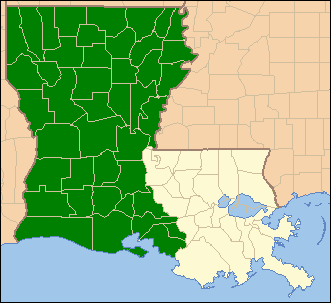
Judge Terry Doughty – Nominee to the U.S. District Court for the Western District of Louisiana

The Western District of Louisiana is currently facing a judge shortage unlike any other district in the country.  Due to unexpected retirements, lingering vacancies, and the Republican-controlled 114th Congress’ refusal to confirm President Obama’s nominee to the court, the Western District (allotted seven active judges) is expected to fall to just two by the end of the year.  As such, President Trump’s nomination of Judge Terry Doughty to the court takes on greater importance.

Background

Terry Alvin Doughty was born on January 16, 1959 in Rayville, Louisiana.  Doughty received a Bachelor in Science at Louisiana Tech University in 1981, going straight to Louisiana State University Law Center, graduating with a J.D. in 1984.

In 1984, Doughty joined the Rayville law firm, Cotton, Bolton & Hoychick, as an associate.  The next year, Doughty joined the Fifth Judicial District Attorney’s Office as a part-time prosecutor.  In 1987, Doughty was promoted to be a partner, and the firm was renamed Cotton, Bolton, Hoychick & Doughty.

In 2008, Doughty was elected to a judgeship on Louisiana’s Fifth Judicial District.  He was re-elected in 2014, and currently serves in that capacity.

History of the Seat

Doughty has been nominated to fill a vacancy on the U.S. District Court for the Western District of Louisiana.

The vacancy Doughty has been nominated to fill opened on May 31, 2016, when Judge Robert James moved to senior status.  In 2016, Doughty contacted Rep. Ralph Abraham (R-LA) to express his interest in the vacancy opened by Judge James’ retirement.  After interviewing with Sen. Bill Cassidy and then-Sen. David Vitter, Doughty’s nomination was not taken up by the Obama Administration.

After the election of President Trump, Doughty interviewed again with Cassidy and Sen. John Kennedy.  Upon Cassidy and Abraham’s recommendation, Doughty was interviewed by the White House in April 2017, and officially nominated on August 3, 2017.

Legal Experience

From the time he graduated law school to his election to the bench, Doughty served at the same firm: Cotton, Bolton, Hoychick & Doughty.  At the firm, Doughty practiced civil litigation, focusing primarily on the representation of insurance companies.  For example, Doughty represented an insurance company in proceedings involving an injury caused by a cow to a resident of the insured household.[2]  Doughty also represented a defendant and his insurer in an action over an injury caused by a falling deer stand.[3]

Alongside his work at Cotton Bolton, Doughty also worked as a part-time prosecutor working in Franklin, Richland, and West Carroll Parishes.  In this role, Doughty successfully persuaded the Fifth Circuit to reinstate a conviction thrown out by a federal district judge on appeal.[4]  Similarly, Doughty successfully persuaded the Fifth Circuit to reinstate a murder conviction overturned by Judge Robert James for violating North Carolina v. Alford.[5]  Doughty also assisted in a second degree murder trial involving a defendant who shot the victim with a .38 pistol.[6]  The verdict was overturned by the Louisiana Court of Appeal.[7]

Jurisprudence and Reversals

Doughty serves as a district judge in the Fifth Judicial District of Louisiana.  In that capacity, Doughty presides over criminal, civil, and juvenile cases.  In his nine years on the state bench, Doughty has presided over almost 300 cases.  Of those cases, 33 have been appealed to higher courts, and two have been partially reversed:

Credit et al. v. Richland Parish Sch. Bd. et al. – This case involved a child who had been pushed under a school bus by another student.  Doughty ruled that, under Louisiana law, school employees were protected from suit by the decedent’s mother based on qualified immunity.[8]  The Louisiana Second Circuit Court of Appeals reversed, holding that Louisiana statutes only protected school employees from suits based on acts of commission, not omission.[9]  The Louisiana Supreme Court reversed again, upholding Doughty’s ruling as to most of the defendants, but holding that Doughty erred in blocking suit against the bus driver.[10]

Aymond et al. v. Citizens Progressive Bank – This case involved a suit for damages by farm entities against a bank based on a farm loan.  In his ruling, Doughty found that the plaintiffs could not maintain an action against the bank.  The Louisiana Second Circuit Court of Appeals partially reversed.[11]

Additionally, Doughty has attracted some criticism for his conduct on the breach of contract lawsuit, KT Farms et al. v. Citizens Progressive Bank et al.  Specifically, Doughty had been accused of a bias against plaintiff’s attorney Sedric Banks and of a conflict of interest involving his own aspirations to a federal judgeship.[12]  Based on an allegedly hostile comment made by Doughty from the bench, Banks filed a motion to recuse.[13]  During the motion hearing, Doughty testified that he had questioned Luke Letlow, the chief of staff of Congressman Abraham, as to negative press articles about his conduct relating to Banks.[14]  Furthermore, Doughty denied that he believed that Banks was “messing up” his chances at a federal judgeship.[15]  Judge James “Jimbo” Stephens ultimately ruled that Doughty was not required to recuse himself from the case.[16]

Additional questions have been raised based on Doughty’s close connection with Abraham, who is a stockholder of one of the defendant bank’s parent company.[17]  Further, Abraham’s son-in-law is a member of the bank’s board of directors.[18]

Overall Assessment

While there is little doubt that the Western District desperately needs judges, Doughty’s path to the bench, like that of his co-nominee Michael Juneau, has the potential to get rocky.  In Doughty’s case, this is primarily due to the allegations raised by Sedrick Banks in the Citizens Progressive Bank case.  Senators may question Doughty as to the propriety of his remaining of the case, given the close links between the defendants and his congressional sponsor for a federal judgeship.  In defense, Doughty can note that another judge (Stephens) has ratified his conduct and has confirmed that no ethical violations are raised by his presence on the case.

Given Doughty’s conservative record on the bench, it is unlikely that Senate Democrats will want to give him the benefit of the doubt on a close case.  However, Doughty’s chances of confirmation will largely depend of whether any of the Committee’s Republicans find his conduct ethically problematic.  If not, Doughty can expect a swift, if not smooth, confirmation.


[1] Tyler Bridges, 42 Parish Area of Western Louisiana Suffers From Vacant Federal Judgeships, The Acadiana Advocate, Aug. 22, 2017, http://www.theadvocate.com/acadiana/news/article_dad54e68-8791-11e7-9cfc-678529cbf1c6.html.

[2] Andrade v. Shiers, 564 So.2d 787 (La. 2d Cir. 1990).

[3] J. Cooper, et ux v. D. Cooper, III et al., 786 So.2d 240 (La. 2d Cir. 2001).

[4] Cupit v. Whitley, 28 F.3d 532 (5th Cir. 1994).

[5] Orman v. Cain, 228 F.3d 616 (5th Cir. 2000).

[6] State v. Ruff, 504 So.2d 72 (La. 2d Cir. 1987).

[7] See id.

[8] See Credit et al. v. Richland Parish Sch. Bd. et al., 2010 WL 8759525.

[9] See Credit et al. v. Richland Parish Sch. Bd. et al., 61 So.3d 861 (La. 2d Cir. 2011).

[10] See Richland Parish Sch. Bd. et al. v. Credit et al., 85 So.3d 669 (La. 2012).

[11] See 206 So.3d 330 (La. 2d Cir. 2016).

[13] See Parker, Judge, supra n. 12.

[14] See id.

[15] Id.

[16] Id.

[17] See Parker, Family, supra n. 12.

[18] See id.

Judge Terry Moorer – Nominee to the U.S. District Court for the Southern District of Alabama

Judge Terry Moorer, a U.S. Magistrate Judge in the Middle District of Alabama, is a man of many firsts.  He is President Trump’s first African American nominee to the federal bench.[1]  He is also the first African American nominee to the Alabama federal bench named by a Republican President, and the first Republican-appointed African American nominee since Judge C. Darnell Jones in 2008.  He would also be the first African American judge on the U.S. District Court for the Southern District of Alabama.  The historic nature of his nomination aside, Moorer may draw questions about his conduct in a politically charged case involving Alabama gambling.

Background

Terry Fitzgerald Moorer was born in Greenville, AL in 1961.  After getting an associate’s degree from Marion Military Institute in 1979, Moorer received a B.A. from Huntingdon College in 1983.   Moorer immediately proceeded to the University of Alabama Farrow School of Law, graduating in 1986.  While a law student, Moorer clerked for Justice Samuel A. Beatty on the Alabama Supreme Court.

After getting his J.D., Moorer joined the Office of the Staff Judge Advocate at Fort Rucker.  After four years there, Moorer joined the U.S. Attorney’s Office for the Middle District of Alabama as an Assistant U.S. Attorney.  In 2001, Moorer became the lead of the Organized Crime and Drug Enforcement Task Force (OCDETF).

From 1990 to 2005, Moorer also served  as a Judge Advocate in the Alabama National Guard.  From 2005 to 2014, Moorer served as a Military Judge.

In 2007, Moorer was selected to be U.S. Magistrate Judge for the U.S. District Court for the Middle District of Alabama.  He continues to serve in that position.

In 2013, Moorer applied for vacancies on the U.S. District Court for the Northern District of Alabama and the Middle District of Alabama.  He interviewed with Congresswoman Terri Sewell (D-AL) and the Alabama Democratic Party, but was not selected for the vacancies.  In 2015, Moorer interviewed again with Sen. Richard Shelby (R-AL) and then-Sen. Jeff Sessions (R-AL).  Again, Moorer was nominated by the Obama Administration for any of the vacancies.

History of the Seat

The seat Moorer has been nominated for opened on June 8, 2017, with Judge William Steele’s move to senior status.  While Moorer’s nomination for an unspecified seat on the U.S. District Court for the Middle District of Alabama had been announced on May 8, the White House ended up nominated two other lawyers: Emily Coody Marks, and Brett Talley, to that court.  Moorer was instead nominated to the U.S. District Court for the Southern District of Alabama on September 7, 2017.

Political Activity

In the 1980s, Moorer served as a paid campaign aide in two campaigns.  From April 1982 to September 1982, Moorer recruited and coordinated volunteers for the gubernatorial campaign of Alabama House Speaker Joe McCorquodale.  McCorquodale ultimately lost the Democratic primary to former Governor George Wallace, who won the general election.

From April 1986 to July 1986, Moorer also served as a paid campaign aide for the campaign of Don Siegelman to be Alabama Attorney General.  Siegelman, a Democrat, was ultimately elected and went on to become Governor in 1998.

Legal Experience

Moorer’s first job out of law school was working as a Judge Advocate for the U.S. Army.  In this role, Moorer represented the command in disciplinary proceedings, including court martials.  Moorer also provided legal assistance to members of the armed forces, and represented army hospitals in medical malpractice cases.  Other than this position, most of Moorer’s career as an attorney has been as a federal prosecutor.

Moorer worked as an Assistant U.S. Attorney in the U.S. Attorney’s Office for the Middle District of Alabama from 1990 to late 2006.  As a federal prosecutor, Moorer worked on cases involving narcotics, organized crime, firearms, fraud, immigration, gang activity, and child pornography.  Notably, early in his tenure, Moorer was the lead counsel in prosecuting PHE, one of the largest pornography distributors in the United States, for sending unsolicited material to juveniles.[2]

During his last six years as a federal prosecutor, Moorer was supervised by U.S. Attorney Leura Canary, the wife of prominent Alabama Republican Bill Canary.  As U.S. Attorney, Canary led the prosecution of then-Democratic Governor (and Moorer’s old boss) Don Siegelman on federal bribery and mail fraud charges.[3]  While the charges, which were extremely controversial and criticized for political motivation, overlapped with Moorer’s tenure at the office, there is no evidence of Moorer’s involvement in the case.

Jurisprudence

Moorer has served as a U.S. Magistrate Judge on the U.S. District Court for the Middle District of Alabama since 2007.  In this role, Moorer presides over pretrial, trial, grand jury and discovery matters.  He also hears civil trials in cases where both parties consent to his presence on the case.  In his ten years on the bench, Moorer has heard approximately 11 cases that have gotten a verdict or judgment.

Notably, Moorer presided over the deeply controversial trial of eleven defendants charged with illegally attempting to legalize gambling in Alabama.[4]  The charges drew criticism for being politically motivated, intended to hurt Democrats, and legally spurious.[5]  Moorer himself drew criticism for his refusal to call Republican Governor Bob Riley to testify in the trial, with one commentator, attorney Roger Shuler, arguing that Moorer had bent to the will of the Alabama Republican Party.[6]  Ultimately, the defendants were acquitted of all charges.[7]

As a U.S. Magistrate Judge, Moorer is called on to rule on pretrial motions in criminal cases, including motions to suppress evidence under the Fourth Amendment.  In the overwhelming majority of such motions he has reviewed, Moorer has recommended that the evidence not be suppressed.[8]  In one case, Moorer recommended that a suppression motion be denied in a case where an individual, pulled over for traffic offenses, was further detained and questioned after investigation of the traffic investigation had ended.[9]  Specifically, Moorer held that even if a constitutional violation had occurred, the “effect of suppression here would be marginal at best” in deterring future violations.[10]  Judge W. Harold Albritton declined to adopt that portion of Moorer’s reasoning, arguing that Moorer should have refrained from that “unnecessary” finding after having denied the motion to suppress.[11]

In the ten years that Moorer has served on the bench, nine of his decisions have been partially and completely reversed by a higher court.  Most notably, in one case, Moorer held that government officials were protected by qualified immunity against suit by an inmate alleging inadequate dental care.[12]  After the district court adopted Moorer’s report and recommendation, the Eleventh Circuit reversed, holding that material facts at issue in the case should have led to a denial of summary judgment.[13]

Overall Assessment

Given his long tenure as both a federal prosecutor and a U.S. Magistrate Judge, Moorer is well-prepared for the federal district court.  While Moorer’s record is fairly conservative, critics are likely to attack two aspects in particular: first, they may reiterate the allegations of bias raised against Moorer during the McGregor trial; second, they may attempt to question Moorer’s involvement, if any, in the Siegelman prosecution.

In response to these lines of inquiry, Moorer’s defenders can note that he had no involvement in the Siegelman case, and further, the acquittals in McGregor show Moorer’s ultimate fairness to the defendants.

Overall, the odds lean in favor of Moorer’s confirmation, which would give the U.S. District Court for the Southern District of Alabama its first African American federal judge.


[1] Kent Faulk, Trump Nominates Black Alabama Judge to Federal Bench, AL.com, Sept. 7, 2017, http://www.al.com/news/birmingham/index.ssf/2017/09/african_american_nominated_by.html.

[2] United States v. PHE, 2:93-cr-329-ID (M.D. Ala. 1993).

[3] Scott Pelley, Did Ex-Alabama Governor Get a Raw Deal?, 60 Minutes, Feb. 21, 2008, https://www.cbsnews.com/news/did-ex-alabama-governor-get-a-raw-deal/.  

[4] United States v. McGregor, Crim. Act. No. 2:10-cr-0186-MHT (M.D. Ala. 2011).  

[5] See Roger Shuler, Leura Canary’s “October Suprise” Becomes Reality, Legal Schnauzer, Oct. 4, 2010, https://legalschnauzer.blogspot.com/2010/10/leura-canarys-october-surprise-becomes.html.  See also BMAZ, Leura Canary Strikes Again: Alabama Bingo Arrests, Shadowproof, Oct. 4, 2010, https://shadowproof.com/2010/10/04/leura-canary-strikes-again-alabama-bingo-arrests/.  

[6] Roger Shuler, Is That Racism Hanging in the Air at the Federal Bingo Trial in Alabama, Legal Schnauzer, June 16, 2011, https://legalschnauzer.blogspot.com/2011/06/is-that-racism-hanging-in-air-at.html.  See also Bob Martin, Was Federal Court’s Table Set, The Tuskegee News, Nov. 18, 2010, http://www.thetuskegeenews.com/opinion/was-federal-court-s-table-set/article_7ecd8108-9586-5a36-ba85-667b0b0f93a8.html.  

[7] Kim Chandler, Milton McGregor, Five Others Acquitted in Alabama Gambling Trial, AL.com, March 8, 2012, http://blog.al.com/spotnews/2012/03/milton_mcgregor_5_others_acqui.html.  

[8] See, e.g., United States v. Cruz, 2017 WL 1745066 (M.D. Ala. April 17, 2017); United States v. Hughes, 2016 WL 6305963 (M.D. Ala. Oct. 27, 2016); United States v. Terry, 2015 WL 5852947 (M.D. Ala. Oct. 7, 2015); United States v. King, 2015 WL 4620530 (M.D. Ala. June 30, 2015); United States v. Nevels, 2014 WL 272309 (M.D. Ala. Jan. 23, 2014); United States v. McCall, 2014 WL 65738 (M.D. Ala. Jan. 8, 2014); United States v. Tears, 2012 WL 6568545 (M.D. Ala. Dec. 17, 2012); United States v. Vaught, 2012 WL 3670652 (M.D. Ala. July 26, 2012); United States v. Lovvorn, 2012 WL 3743975 (M.D. Ala. April 24, 2012); United States v. Thomas, 2010 WL 5579877 (M.D. Ala. Dec. 29, 2010); United States v. Guice, 2010 WL 5575287 (M.D. Ala. Nov. 30, 2010); United States v. Bruce, 2010 WL 3730149 (M.D. Ala. Aug. 31, 2010); United States v. Turner, 2010 WL 3880043 (M.D. Ala. Aug. 4, 2010); United States v. Thoussaint, 2010 WL 447107 (M.D. Ala. Feb. 4, 2010); United States v. Nelb, 2009 WL 4666868 (M.D. Ala. Dec. 2, 2009); United States v. DeJesus, 2009 WL 3488690 (M.D. Ala. Oct. 22, 2009); United States v. Rendon, 2009 WL 3052277 (M.D. Ala. Sept. 21, 2009); United States v. Brooks, 2009 WL 2960378 (M.D. Ala. Sept. 10, 2009); United States v. Hall, 2009 WL 2132702 (M.D. Ala. July 14, 2009).  But see United States v. Smith, 694 F. Supp. 2d 1242 (M.D. Ala. 2009) (adopting report and recommendation by Moorer granting motion to suppress in part); United States v. Mock, 2012 WL 7988590 (M.D. Ala. Nov. 29, 2012) (granting motion to suppress in part).

[9] United States v. Williams, 2010 WL 5579879 (M.D. Ala. Dec. 6, 2010).

[10] Id. at *3.

[11] See United States v. Williams, 2011 WL 124508 (M.D. Ala. Jan. 14, 2011).

[12] Iacullo v. United States, 2:10-cv-589-TMH, 2014 WL 2861427 (M.D. Ala. June 24, 2014).

[13] See Iacullo v. United States, 657 F. App’x 916 (11th Cir. 2016).

[14] As a law student at Georgetown, Kelly spent a year as a Work-Study Reference Clerk at the Edward Bennett Williams Law Library.

Karen Gren Scholer – Nominee for the U.S. District Court for the Northern District of Texas

Compared to previous presidents, President Trump has nominated fewer women and racial minorities to the bench.  As such, the nomination of Karen Gren Scholer is notable: as Scholer is not a former nominee of President Obama, but is an Asian American woman.

Background

Scholer, nee Karen Anne Gren, was born in 1957 in Tokyo, Japan.  Scholer received a Bachelor of Arts at Rice University in 1979 and a Juris Doctor from Cornell University Law School in 1982.  After graduating from law school, Scholer joined the Dallas law firm Strasburger & Price, LLP. as an Associate.  In 1989, Scholer was named a Partner at the firm.

In 1996, Scholer left Strasburger & Price to join Andrews & Kurth LLP. as a partner.  She served as Partner for four years, and as Of Counsel for a few months.  In 2000, Scholer was elected as a Republican to the 95th Judicial District Court in Dallas.  Scholer was re-elected unopposed in 2004.

In 2009, Scholer left the bench to join the Dallas office of Jones Day as a Partner.  In 2014, she left Jones Day to become a Principal at the firm Carter Scholer PLLC.  She currently serves in that capacity.

In 2014, Scholer also began work as an arbitrator and mediator for the American Arbitration Association.  She also serves in that capacity presently.

On July 30, 2014, Scholer applied to Senators John Cornyn and Ted Cruz for a vacancy on the U.S. District Court for the Northern District of Texas.  In April 2015, Scholer also applied for a vacancy on the U.S. District Court for the Eastern District of Texas.  After interviews with the Obama Administration and Democratic Representatives Marc Veasey and Eddie Bernice Johnson, Scholer was nominated to a vacancy on the U.S. District Court for the Eastern District of Texas on March 15, 2016.[1]  Scholer’s nomination had the support of Cornyn and Cruz[2] but attracted opposition from East Texas Republican Rep. Louie Gohmert due to Scholer’s base in Dallas.[3]  While Scholer received a hearing before the Senate Judiciary Committee, her nomination was never approved and died at the end of the Obama presidency.

History of the Seat

Scholer has been nominated to fill a vacancy on the U.S. District Court for the Northern District of Texas.  The Northern District is facing a high level of turnover, with four of the twelve allotted judgeships for the District currently vacant, and a fifth scheduled to open later next year.  The high level of vacancies have been exacerbated by the Republican Senate’s failure to confirm three Obama nominations to the Northern District in the 114th Congress.

The vacancy Scholer has been nominated to fill opened on May 1, 2016, when Judge Jorge Antonio Solis moved to senior status.  On March 15, 2016, Obama nominated James Wesley Hendrix, the 39-year-old appellate chief of the U.S. Attorney’s Office for the Northern District of Texas to fill the vacancy.[4]  While Hendrix had the support of his home state senators and received a hearing in September 2016, his nomination never moved to the floor and thus was not confirmed.  Hendrix was not renominated to the Court by President Trump.

After the election of President Trump, Scholer applied again for the vacancies on the Eastern and Northern Districts of Texas.  Upon Cornyn and Cruz’s recommendation, Scholer was interviewed by the White House in May 2017, and officially nominated on September 7, 2017.

Legal Experience

Scholer has spent virtually her entire legal career as a civil litigator.  In her initial position at Strasburger & Price LLP., Scholer focused on personal injury cases, specializing in the defense of product liability cases.  For example, Scholer was part of the defense team in a product liability action against General Motors based on allegedly defective three-point seatbelts in the backseats.[5]  Scholer also defended Budget Rent a Car in a personal injury action over an injury caused by a falling suitcase on a shuttle bus.[6]  Scholer continued this product liability work as a partner at Andrews & Kurth LLP.

After her eight years on the bench, Scholer joined the Dallas office of Jones Day as a partner in the complex tort and product liability section.  In this role, Scholer primarily handled the defense of Yamaha in a multi-district product liability action based on the defective design of the Yamaha Rhino off road vehicle.[7]

As a named partner at Carter Scholer PLLC., Scholer handles business tort and personal injury litigation.  Scholer also occasionally represents plaintiffs, notably representing the victim of a slip-and-fall to a successful settlement.[8]

Jurisprudence and Reversals

Scholer served two four year terms as a judge on the 95th Judicial District Court in Dallas.  In this role, Scholer presiding over civil cases in Dallas, including contract and tort cases.  Scholer was also briefly appointed by Governor Rick Perry to serve on the Tenth Circuit Court of Appeals of Texas for a single case.

Of Scholer’s more prominent cases, she presided over a medical malpractice trial where the plaintiff alleged that the defendant had negligently removed fat and skin creating infection in her sutures.[9]  Scholer presided over a jury verdict for the plaintiff in $291,000 in damages.  Scholer also presided over a jury verdict to the plaintiff in an unsafe workplace case brought by the employee of a public utility company.[10]  Scholer denied a defense motion for a new trial and entered judgment for the plaintiff.[11]

In her eight years on the bench, Scholer’s opinions have been reversed or criticized by a higher court in 19 cases.  On these, two are particularly notable:

City of Dallas v. VRC, LLC. – In this case, a towing company filed suit against a Dallas ordinance setting rates for non-consensual towing of vehicles, alleging that the rates were too low, and constituted a “regulatory taking.”[12]  The City argued lack of jurisdiction due to governmental immunity, and lack of ripeness.[13]  Scholer ruled against the City on both claims, allowing the case to move ahead.[14]  The Fifth Circuit Court of Appeals of Texas reversed, finding that there was no viable regulatory takings claim under either state or federal law.[15]

Ferguson v. Building Materials Corp. of America – This case involved a personal injury suit brought after an eighteen wheeler crashed into a building which collapsed on the plaintiff.[16]  Scholer granted summary judgment to the defendants in the case, finding that the plaintiff’s claims were judicially estopped.[17]  While the Fifth Circuit affirmed Scholer, the Texas Supreme Court reversed in a per curiam decision.[18]

Political Activity

Scholer has a long history with the Republican party, having been elected twice as a Republican to the state bench.  Scholer has also volunteered with the Travis County Republican Party between 1999-2010, and has been a member of the Texas Federation of Republican Women since 1999.

Overall Assessment

As noted with Judge David Counts, nominees put forward by presidents of both parties generally fare an easier time through the confirmation process.  For her part, Scholer does not have a paper trail of controversial statements, or any particularly unorthodox legal or judicial views.  While she does have a long history as a Republican, a partisan history, in and of itself, should not be disqualifying for the bench.  As such, a prompt confirmation should be expected for Scholer, who will be the first Asian American judge on the Northern District of Texas, when confirmed.


[1] Press Release, White House, President Obama Nominates Six to Serve on the United States District Courts (March 15, 2016) (on file at https://obamawhitehouse.archives.gov).

[2] John Council, Cornyn Pledges to Help Obama Seat Texas Judges, Texas Lawyer, March 28, 2016, http://www.law.com/texaslawyer/almID/1202752774603/.

[3] Press Release, Office of Rep. Louie Gohmert, Gohmert Objects to President Obama’s Eastern District of Texas Judge Nominee (April 7, 2016) (on file at https://gohmert.house.gov/news/documentsingle.aspx?DocumentID=398311).  

[4] See supra n. 1.

[5] Tarrantino et al. v. General Motors Corp. et al., Cause No. 86-12794, 14th Judicial District Court of Dallas County, Texas; Judge John Marshall; 1986-89.

[6] Simmons v. Budget Rent a Car, Civil Action No. 3:81-cv-01431-F, United States District Court for the Northern District of Texas, Judge Robert Porter, 1982-84.

[7] In re: Yamaha Motor Corp., Rhino ATV Products Liability Litigation, Master File No. 3:09-MD-2016-BC, Multi District Litigation in the United States District Court, Western District of Kentucky; Judge Jennifer Coffman, 2009-2013.

[8] Bearden v. Half Price Books, Cause No. 14-1168, 134th Judicial District Court of Dallas County, Texas; Judge Dale Tiller; 2014-15.

[9] Trebold v. Fowler, M.D., Cause No. 00-06073.

[10] Dennis v. Texas Utility Co, Inc. dba TU Electric Co., Cause No. 96-09957.

[11] See id.

[12] City of Dallas v. VRC, LLC., 260 S.W.3d 60 (Tex. App.-Dallas 2008 no pet.).

[13] See id.

[14] Id.

[15] See id.

[16] Ferguson v. Building Materials Corp. of America., 295 S.W.3d 642 (Tex. 2009).

[17] Id.

[18] Id.

Judge Walter David Counts III – Nominee for the U.S. District Court for the Western District of Texas

Generally, Presidents select judicial nominees from the political party that they belong to: Republicans select Republican judges; Democrats select Democrats.  Where Presidents make cross-party appointments, they are typically in deference to home-state senators of the opposite party, or as part of a package deal to confirm judges of their own party.  One of the exceptions to this rule was the appointment of Judge Robert Junell, a Democratic state legislator in Texas, who was appointed to the U.S. District Court for the Western District of Texas by President George W. Bush.  Interestingly, President Trump’s nominee to fill the vacancy left by Junell could also qualify: U.S. Magistrate Judge David Counts.

Background

Walter David Counts III was born in Knox City, TX in 1961, the son of Walter David Counts Jr.  Counts attended Texas Tech University in Lubbock, graduating in 1983.  In the summer of 1983, Counts worked as a Congressional Intern for former Democratic Rep. Jack Hightower.

After college, Counts attended St. Mary’s University School of Law, graduating in 1986.  Upon graduating, Counts joined the Austin firm Martin, Cox, Greenberg & Jones as an Associate Attorney.  After a year there, Counts joined the Travis County District Attorney’s Office as an Assistant District Attorney.  In 1990, Counts left to set up a solo practice in Austin, only to return to the District Attorney’s Office in 1991.

In 1995, Counts joined the U.S. Attorney’s Office for the Western District of Texas.  In 1999, Counts became Deputy Chief of Major Crimes in the Criminal Division.  In 2009, Counts was appointed by the Chief Judge of the U.S. District Court of the Western District of Texas to be a magistrate judge for the court.  He currently serves in that position.

On March 15, 2016, Counts was nominated by President Obama to serve as a U.S. District Court judge.  With the support of Republican Senators John Cornyn and Ted Cruz, Counts received a Senate Judiciary Committee hearing on September 7, 2016.  However, despite the friendly hearing, Counts was never voted out of Committee and his nomination ended upon the conclusion of the Obama presidency.

History of the Seat

Counts has been nominated for a vacancy on the U.S. District Court for the Western District of Texas.  This seat opened on February 13, 2015, when Judge Robert Junell moved to senior status.[1]  After extensive negotiations between President Obama and Senators Cornyn and Cruz, a package of five nominees to the Texas federal bench were announced on March 15, 2016.[2]  The package included Counts’ nomination to the vacancy left by Junell.  While the package of judges received a joint hearing on September 7, 2016, they were never voted on by the Senate Judiciary Committee.

In January 2017, Counts applied for the vacancy again to the Federal Judicial Evaluation Committee set up by Cornyn and Cruz.  After interviews with the Committee and the White House Counsel’s Office, Counts was nominated for the vacancy on September 11, 2017.

Legal Experience

There have been only two short periods of time in which Counts has not been either a prosecutor or a judge.  First, after graduating from law school, Counts worked at Martin, Cox, Greenberg and Jones, a civil law firm based in Austin.  In this position, which he only held for a year, Counts represented public health companies and nursing homes in regulatory proceedings.  Second, from 1990-91, Counts maintained a solo practice, practicing criminal defense.  Other than these two short periods, Counts spent his entire legal career before joining the bench in one of two positions: as a state prosecutor in Travis County; and as a federal prosecutor in the U.S. Attorney’s Office for the Western District of Texas.

Travis County District Attorney

Counts worked in the Travis County District Attorney’s Office from 1987-1990 and 1991-1995.  As a state prosecutor there, Counts worked primarily in violent felony cases, including sexual assault and murder.  Counts notably prosecuted a convicted serial rapist who had assaulted and murdered young women after being released on parole.[3]  Counts was able to successfully prosecute Mr. McDuff and obtain the death penalty, even while having to navigate the evidentiary obstacles of not having the victim’s body.[4]

Notably, Counts also prosecuted Joel Rene Valdez on a rape charge.[5]  Valdez presented an unusual defense: that the victim’s insistence that he wear a condom implied her consent.[6]  Despite heavy media attention, Counts was able to obtain a conviction and a 40-year sentence against Valdez.[7]

U.S. Attorney

In 1995, Counts became a federal prosecutor in the U.S. Attorney’s Office for the Western District of Texas.  In this role, Counts prosecuted a variety of cases, including narcotics, firearms, immigration, white collar crime, and public corruption.  Among the more notable matters he handled, Counts successfully prosecuted Frio County Treasurer for setting up schemes to steal funds from county and federal programs.[8]  Counts also prosecuted two San Antonio City Council members for taking kickbacks from attorneys in exchange for city contracts.[9]

Jurisprudence

Counts has served as a U.S. Magistrate Judge since 2009.  In this capacity, Counts handles pretrial, grand jury, and discovery matters in criminal cases in the Midland/Odessa and Pecos Divisions of the Western District of Texas.  Counts also handles civil trials with the consent of both parties.

Among his more notable trials, Counts presided over the jury trial of two oilfield workers who sought unpaid overtime wages under the Fair Labor Standards Att (FLSA).[10]  After a jury verdict for the plaintiffs, Counts awarded them liquidated damages and attorney’s fees, denying the employer’s motions for a new trial.[11]  On the criminal front, Counts presided over the guilty pleas of four prominent Midland and Odessa citizens who were charged with mortgage fraud, bank fraud, and money laundering.[12]

In his eight years on the bench, Counts has written hundreds of Reports and Recommendations for federal district judges.  Of these, four have been partially rejected by the district judge.[13]  Of these, the most notable is Counts’ opinion in Sherwood v. United States.[14]  The case involved a habeas petition brought by a prisoner who argued that his right to self-representation during his trial was impeded.[15]  While Counts recommended that the plaintiff receive relief for his petition, the district court rejected this recommendation of relief.[16]

Political Activity

Counts has no political donation history, although his father, W. David Counts Jr., served as in the Texas state legislature as a Democrat between 1988 and 2002.

Overall Assessment

Generally speaking, nominees put forward by presidents of the opposite party (or presidents of both parties) fare well in the confirmation process.  The same process is likely to hold up for Counts.  Republicans are unlikely to object to Counts as he is the product of a recommendation process set up by Cornyn and Cruz, two conservative senators.  Democrats are unlikely to object to Counts given his previous nomination by President Obama, his ties to a prominent Democratic officeholder, and his relatively moderate record.

If confirmed, one can expect Counts to have a similar record to that of the judge he replaces.  Like Judge Robert Junell, Counts will likely be a center-right voice on the federal bench in Midland.


[1] John Council, U.S. District Judge Rob Junell Hits Career Peak, Texas Lawyer, Feb. 12, 2015, http://www.texaslawyer.com/id=1202717806165/US-District-Judge-Rob-Junell-Hits-Career-Peak?slreturn=20170918151134.

[2] Press Release, White House, President Obama Nominates Six to Serve on the United States District Courts (March 15, 2016) (on file at https://obamawhitehouse.archives.gov).  

[3] See State v. McDuff, No. 93-5281 (147th Dist. Ct., Travis Cnty., Tex. 1995).

[4] See id.

[5] See State v. Valdez, No. 92-5263 (147th Dist. Ct., Travis Cnty, Tex. 1995).

[6] Special to the N.Y. Times, Man is Convicted of Rape in Case Involving Condom, N.Y. Times, May 14, 1993.

[7] Sue Anne Presley, Rapist Asked to Use Condom Gets 40 Years; Terror ‘Indiscribable’, Victim Tells Court, Wash. Post, May 15, 1993.

[8] See United States v. Cantu, No. 5:07-CR-00662 (W.D. Tex. May 7, 2009).

[9] See United States v. Martin, No. 5:02-CR-00527 (W.D. Tex. Apr. 6, 2005).

[10] See Carley v. Crest Pumping Tech., No. 7:15-CV-00161, 2016 WL 8856917 (W.D. Tex. Jan 10, 2017).

[11] See id.

[12] United States v. Hilliard, No. 7-14-CR-00001 (W.D. Tex. Jan. 13, 2015).

[13] Lindig Construction & Trucking, Inc. v. Bonelli, No. 7:15-CV-00116 (W.D. Tex. April 6, 2016), adopted in part by 2016 WL 8677200 (W.D. Tex. Aug. 19, 2016); Nestor v. Penske Truck Leasing Co., L.P., No. 4:14-CV-00036, 2015 WL 4603313 (W.D. Tex. July 7, 2015), adopted in part by 2015 WL 4601255 (W.D. Tex. July 29, 2015); United States v. Venegas, No. 7:13-CR-00061 (W.D. Tex. Dec. 2 2013), aff’d, 594 F. App’x. 822 (5th Cir. 2014); Sherwood v. United States, No. 4:04-CR-00191 (W.D. Tex. Apr. 5, 2012).

[14] Sherwood v. United States, No. 4:04-CR-00191 (W.D. Tex. Apr. 5, 2012).

[15] Id.

[16] Id.