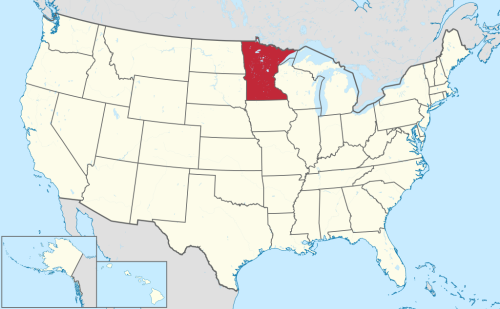
Eric Tostrud – Nominee to the U.S. District Court for the District of Minnesota

Eric Tostrud, a Minneapolis based attorney and law professor, is part of a package deal of nominees made between the Trump Administration and Minnesota’s Democratic senators.  Like his fellow nominee Nancy Brasel, Tostrud should be seen as a consensus nominee.

Background

A native Minnesotan, Eric Christian Tostrud was born in St. Paul on June 14, 1965.  Tostrud received his B.A. cum laude from St. Olaf College in 1987 and then a J.D. summa cum laude from the William Mitchell College of Law in St. Paul.[1]

After graduation, Tostrud clerked for Judge Edward Devitt on the U.S. District Court for the District of Minnesota and Judge George MacKinnon on the U.S. Court of Appeals for the D.C. Circuit. In 1992, he joined the Minneapolis office of Lockridge Grindal Nauen PLLP as an Associate.[2]  He was made a Partner at the firm in 1998, and became Of Counsel in 2014.[3]  He continues to practice as Of Counsel at Lockridge to this day.[4]

In 1993, Tostrud began teaching at Mitchell Hamline School of Law (formerly William Mitchell, his alma mater) as an Adjunct Professor.[5]  His title became Distinguished Practitioner in Residence in 2015.[6]  Additionally, Tostrud has been an Adjunct Professor at the University of Minnesota Law School since 2011.[7]

History of the Seat

Tostrud has been nominated for a seat on the U.S. District Court for the District of Minnesota.  This seat opened on October 31, 2016, when Judge Donovan Frank moved to senior status.  As the seat opened with only three months left in President Obama’s presidency, no nomination was ever made to fill the seat.

In November 2016, Tostrud applied for the judgeship with Minnesota Senator Amy Klobuchar (D-Minn).[8]  In January 2017, he also applied to the parallel application process conducted by Rep. Erik Paulsen (R-Minn).[9]  His name was submitted by Paulsen to the White House in June.

Meanwhile, Klobuchar (D-Minn) and the Trump Administration began negotiations over two vacancies on the U.S. District Court.  They ultimately agreed on Tostrud, Paulsen’s candidate, and Minneapolis Judge Nancy Brasel, who was supported by Klobuchar.[10]  President Trump announced both Brasel and Tostrud on July 13, 2017.[11]

Legal Career

Other than his clerkships and his position as a law professor, Tostrud has spent his entire legal career at the same firm: Lockridge Grindal Nauen PLLP (Lockridge).  At the firm, Tostrud worked in complex civil litigation, focusing on the Employee Retirement Income Security Act of 1974 (ERISA).[12]  Notably, Tostrud represented the Hartford Life & Accident Insurance Co. in defending many ERISA claims.[13]

In another notable case, Tostrud represented many hospitals in defending against antitrust claims brought by a group of nurse-anesthetists, successfully moving for summary judgment and defending the judgement on appeal.[14] In another case, Tostrud successfully defended against a class action suit alleging failure to provide insurance discounts.[15]

Since 2014, Tostrud has been a full-time law professor, teaching Federal Civil Procedure, Advanced Civil Procedure, and Electronic Discovery at Mitchell Hamline School of Law.[16]  Additionally, he has taught Federal Jurisdiction at the University of Minnesota Law School.[17]

Political Activity

Tostrud has had a close relationship with Paulsen, having served as his Finance Chairman on his state legislative and congressional campaigns.[18]  He has also been a generous donor to other Republicans, giving $10,000 to the Republican Party of the 3rd Congressional District of Minnesota in 2016, as well as donating to former Speaker John Boehner and Sen. Marco Rubio.[19]  However, Tostrud also donated $1000 to Sen. John Kerry (D-Mass.) in 2003.[20]

Writings

In 2001, Tostrud authored a letter to the editor for the Minnesota Lawyer discussing the Supreme Court’s recent 5-4 decision in Board of Trustees of the University of Alabama, et al. v. Garrett et al.[21]  The decision had held that the Eleventh Amendment barred citizens from suing states for violations of the Americans with Disabilities Act (ADA).  In the letter, Tostrud is critical of the decision.[22]  Specifically, he notes that the decision is contrary to the plain text of the Eleventh Amendment, stating:

“When the Supreme Court openly disregards the actual words of the Constitution to reach an outcome, the consequences can be grave.”[23]

Overall Assessment

As with his paired nominee, Nancy Brasel, Tostrud is a consensus nominee.  While Tostrud has a longer record of political donation and activity than Brasel, it is important to note that political activity should not, in and of itself, disqualify nominees for the bench.  Furthermore, Tostrud has the support of Klobuchar, who is well respected on both sides of the aisle, and who will help him navigate the confirmation thicket.

If confirmed, Tostrud will likely be a moderate-conservative jurist.  Looking at his 2001 letter to the editor, Tostrud appears to advocate a focus on the “plain text” of the Constitution in interpretation, an approach generally identified with conservatives.  However, the letter itself applies that interpretation to support a “liberal” result, and one advocated by the Supreme Court’s liberal dissenters.  This suggests, not necessarily that Tostrud is a liberal or a conservative, but rather that his focus is on getting the law correct, rather than the outcome.

Given these factors, Tostrud should be comfortably confirmed alongside Brasel, restoring the Court to full strength.


[1] Sen. Comm. on the Judiciary, 115th Cong., Eric Tostrud: Questionnaire for Judicial Nominees 1.

[2] Id. at 2.

[3] Id.

[4] Id.

[5] Id.

[6] Id.

[7] Id.

[8] Id. at 32.

[9] Id.

[10] Stephen Montemayor, White House Moves Closer to Filling Minnesota’s U.S. Attorney, Federal Judge Openings, Minneapolis Star Tribune, Dec. 14, 2017, http://www.startribune.com/white-house-moves-closer-to-filling-minnesota-s-u-s-attorney-federal-judge-openings/464179853/.  

[11] Press Release, White House, President Donald J. Trump Announces Eleventh Wave of Judicial Candidates (Feb. 12, 2018) (on file at https://www.whitehouse.gov/the-press-office/2017/07/13/president-donald-j-trump-announces-eleventh-wave-judicial-candidates).  

[12] See Tostrud, supra n. 1 at 15-16.

[13] See, e.g., Feller v. Hartford Life & Accident Ins. Co., 817 F. Supp. 2d 1097 (S.D.Iowa 2010); Meylor v. Hartford Life & Accident Ins. Co., 444 F. Supp. 2d 963 (N.D. Iowa 2006); Sloan v. Hartford Life & Accident Ins. Co., 433 F. Supp. 2d 1037 (D.N.D. 2006); Dorholt v. Hartford Life & Accident Ins. Co., 417 F. Supp. 2d 1094 (D. Minn. 2006); Lao v. Hartford Life & Accident Ins. Co., 319 F. Supp. 2d 955 (D. Minn. 2004); Estate of Bruce Haag v. Hartford Life & Accident Ins. Co., 188 F. Supp. 2d 1135 (D. Minn. 2002); Vesaas v. Hartford Life & Accident Ins. Co., 981 F. Supp. 1196 (D. Minn. 1996).

[14] See Minn. Assoc. Of Nurse Anesthetists v. Unity Hosp., et al., 208 F.3d 655 (8th Cir. 2000), aff’ing, 5 F. Supp. 2d 694 (D. Minn. 1998).

[15] Palmer v. Illinois Farmers Ins. Co., 820 F. Supp. 2d 1004 (D. Minn. 2011), aff’d, 666 F.3d 1081 (8th Cir. 2012).

[16] Tostrud, supra n. 1 at 29-30.

[17] Id. at 29.

[18] See S.T., At the Races, Roll Call, Jan. 15, 2008.

[20] See id.

[21] Eric Tostrud, Commentary on Recent Supreme Court Decision, The Minnesota Lawyer, Mar. 26, 2001.

[22] See id. 

[23] Id.
Judge Nancy Brasel – Nominee to the U.S. District Court for the District of Minnesota

Judge Nancy Brasel, a well-respected state jurist in Minnesota, is part of a package deal of nominees made between the Trump Administration and Minnesota’s Democratic senators.  Her moderate record and uncontroversial background should net her a comfortable confirmation.

Background

Brasel was born Nancy Ellen Notebook in Durham in the United Kingdom on January 20, 1969.  Brasel attended Trinity University in San Antonio and then received a Master of Arts from the University of Texas at Austin.  Brasel then attended the University of Minnesota Law School, graduating in 1996.[1]

After graduation, Brasel clerked for Judge Donald Lay on the U.S. Court of Appeals for the Eighth Circuit. She then joined the Minneapolis office of Leonard Street and Deinard as an associate.[2]  In 1999, she joined Greene Espel PLLP as a member and became a partner in 2002.[3]  In 2008, Brasel left the firm to become a federal prosecutor with the U.S. Attorney’s Office for the District of Minnesota.[4]

In 2011, Democratic Governor Mark Dayton appointed Brasel to a seat on the 4th Judicial District of Minnesota, which covers Hennepin County (Minneapolis).[5]  She continues to serve on that court to this day.

History of the Seat

Brasel has been nominated for a seat on the U.S. District Court for the District of Minnesota.  This seat opened on May 31, 2016, when Judge Ann Montgomery moved to senior status.  As the seat opened with only seven months left in President Obama’s presidency, no nomination was ever made to fill the seat.  In early 2017, Brasel applied for the judgeship with Rep. Erik Paulsen (R-Minn).[6]

Meanwhile, Minnesota Senator Amy Klobuchar (D-Minn) and the Trump Administration began negotiations over two vacancies on the U.S. District Court.  They ultimately agreed on Brasel, Klobuchar’s candidate, and Minneapolis attorney Eric Tostrud, who was supported by Paulsen.[7]  President Trump announced both Brasel and Tostrud on July 13, 2017.[8]

Legal Career

After her clerkship with the strongly liberal Lay, Brasel worked as an associate at Leonard, Street & Deinard, where she defended employers in employment law, discrimination, and sexual harassment cases.  For example, Brasel helped a defendant employer against an action for “negligent infliction of emotional distress” brought by a former employee.[9]

In 1999, Brasel moved to Greene Espell PLLP, handling more complex litigation including securities actions.  While at the firm, Brasel defended fourteen Northern Minnesota cities being sued for fraud based on representations related to municipal bonds, successfully settling the case.[10]  She also represented Deloitte on appeal in defending a negligent misrepresentation action.[11]

In 2008, Brasel became a federal prosecutor for the U.S. Attorney’s Office for the District of Minnesota, handling white collar crime and narcotics cases.[13]  Notably, she  prosecuted 23 defendants for drug trafficking based on evidence from wiretaps, leading to guilty pleas from all defendants.[14]

Jurisprudence and Reversals

Brasel has served as a District Court judge in Minneapolis since her appointment in 2011.  In this role, she serves as a primary trial judge, supervising criminal and civil cases.  Over the last six years, Brasel has presided over approximately 75 trials, including approximately 25 jury trials.[15]  Brasel’s more prominent trials include a breach of contract case regarding commercial flooring,[16] the termination of parental rights in a case where the father had killed one of his children,[17] and a challenge to the warrantless collection of a urine sample by a DUI defendant.[18]

Over the course of her seven year tenure on the state bench, Brasel has been reversed by higher courts in five cases.[19]  Of those five reversals, in two cases, Brasel’s grants of summary judgment to the defendant were reversed by a higher court.[20]  Another two reversals were in criminal cases, reversing a conviction[21] and a sentence[22] respectively on appeals from defendants.  The final case reversed the grant of a motion to suppress by Brasel.[23]

Political Activity

Other than her nonpartisan election campaign in 2012, Brasel has a relatively limited political history.  She has never participated in political campaigns and has only two political contributions of record: both to Klobuchar.[24]

Writings

In 2002, Brasel authored an article discussing Minnesota’s Private Attorney General statute as it relates to fraud cases.[25]  Specifically, she discussed a then-recent Minnesota Supreme Court decision that limited private attorney general cases to those that conferred a “public benefit.”  In reviewing the statute’s text, legislative history, and purpose, as well as similar statutes in other states, Brasel suggested two factors that could determine “public benefit,” whether the attorney general had authority to bring the suit, and the number of consumers affected by the defendant’s actions.[26]

Overall Assessment

Among the pool of Trump nominees, Brasel is a fairly consensus pick.  Appointed to the state bench by a Democrat and recommended by another, Brasel also has a mainstream record on the state bench, and an uncontroversial background.

Given these factors, Brasel should be confirmed with bipartisan support this year, lending relief to an overworked federal bench in Minnesota.


[1] Sen. Comm. on the Judiciary, 115th Cong., Nancy Brasel: Questionnaire for Judicial Nominees 1.

[2] Id.

[3] Id.

[4] Id.

[5] Dan Heilman, Minnesota Gov. Dayton Fills Judge Slots; Most From Public Sector, The Minnesota Lawyer, Sept. 16, 2011.

[6] Brasel, supra n. 1 at 35.

[7] Stephen Montemayor, White House Moves Closer to Filling Minnesota’s U.S. Attorney, Federal Judge Openings, Minneapolis Star Tribune, Dec. 14, 2017, http://www.startribune.com/white-house-moves-closer-to-filling-minnesota-s-u-s-attorney-federal-judge-openings/464179853/.  

[8] Press Release, White House, President Donald J. Trump Announces Eleventh Wave of Judicial Candidates (Feb. 12, 2018) (on file at https://www.whitehouse.gov/the-press-office/2017/07/13/president-donald-j-trump-announces-eleventh-wave-judicial-candidates).  

[9] See Riebhoff v. Cenex/Land O’Lakes Agronomy Co., 1998 Minn. App. LEXIS 1408 (Minn. Ct. App. Dec. 29, 1998).

[10] Franklin High-Yield Tax-Free Income Fund v. City of Baudette, et al., No. 98-CV-1576, 1999 WL 33912055 (D. Minn. Sept. 13, 1999).

[11] Crest Group, Inc. v. Deloitte & Touche, LLP., No. 27-CV-03-005617 (Minn. Ct. App. Sept. 25, 2007).

[12] See id.

[13] Brasel, supra n. 1 at 26.

[14] United States v. Abdul-Ahad, No. 08-CR-142 (D. Minn. Oct. 27, 2008).

[15] See Brasel, supra n. 1 at 9.

[16] Building Restoration Corp. v. B&B Companies, Inc., No. 27-CV-15-21845.

[17] In the Matter of the Welfare of the Children of C.A.P., Nos. 27-JV-14-7814 and 27-JV-16-1631.

[18] State v. Taylor, No. 27-CR-12-8310.

[19] Brasel, supra n. 1 at 22.

[20] See Bray v. Starbucks Corp., No. 27-CV-16-3979 (Minn. Dist. Ct. Mar. 24, 2017), aff’d in part, rev’d in part, No. A17-0823 (Minn. Ct. App. Dec. 26, 2017) (reversing grant of summary judgment on public accommodation claim); Tap House Restaurant v. Cassidy Turley Comm. Real Estate Serv., No. 27-CV-16-7177, rev’d, No. A17-0774 (Minn. Ct. App. Dec. 11, 2017).

[21] State v. Witherspoon, No. 27-CR-11-28854, rev’d, No. A12-1247 (Minn. Ct. App. July 1, 2013) (reversing conviction for second degree riot based on sufficiency of the evidence).

[22] State v. Charette, No. 27-CR-11-28468, aff’d in part, rev’d in part, No. A12-1541 (Minn. Ct. App., Sept. 3, 2013) (reversing for resentencing).

[23] State v. Harrington, No. 27-CR-11-28655, rev’d, No. A17-0774 (Minn. Ct. App. Dec. 11, 2017).

[25] Nancy E. Brasel, Recent Decisions of the Minnesota Supreme Court: Ad Hoc Deceptions in Private Disputes: When Does a Private Plaintiff Confer a Public Benefit Under Minnesota’s Private Attorney General Statute, 29 Wm. Mitchell L. Rev. 321 (2002).

[26] See id. at 341.

Wendy Vitter – Nominee to the U.S. District Court for the Eastern District of Louisiana

Before her nomination to a federal judgeship, Wendy Vitter was perhaps best known in connection to her husband, former Senator and Congressman David Vitter.  In particular, Wendy was remembered for her participation in a press conference during the D.C. Madam scandal in 2007.[1]  Now a nominee to a federal judgeship, Vitter faces new scrutiny on her professional record and public views.

Background

Vitter was born Wendy Lee Freret Baldwin in 1961 in New Orleans.  Vitter attended Sam Houston State University, graduating in 1982.[2]  She then worked as a substitute teacher and Exercise Instructor for a few months before joining Tulane University Law School, graduating with a J.D. in 1986.[3]

After graduation, Vitter joined the Orleans Parish District Attorney’s Office as an Assistant District Attorney.[4]  In 1989, she was elevated to become Deputy Chief of Trials and in 1990, she became the Chief of Trials.[5]  In 1992, Vitter joined Abbott & Meeks as an associate.

Vitter left Abbott & Meeks in 1993 and stayed out of the workforce for the next 19 years, supporting her husband as he ran for the state legislature, the U.S. House, and the Senate.  In 2007, both Vitters burst onto the political news scene under less than ideal circumstances, when the Senator’s phone number was uncovered in a sting of the D.C. Madam (a woman charged with running a high-end brothel).[6]  In a high profile news conference, Vitter stood by her husband and assured reporters that she was “proud to be Wendy Vitter.”[7]  Ultimately, the allegations did not affect David Vitter’s 2010 re-election campaign, although some alleged that they helped to sink his gubernatorial campaign in 2015.[8]

In 2012, Vitter rejoined legal practice as a Project Director at The Roman Catholic Archdiocese of New Orleans.[9]  In 2013, she became General Counsel to the Archdiocese.[10]  She continues to work there to this day.

History of the Seat

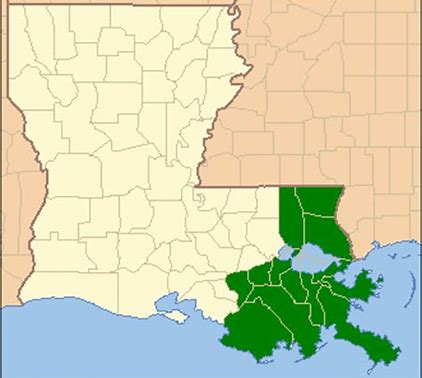
Vitter has been nominated for a vacancy on the U.S. District Court for the Eastern District of Louisiana.  This seat was opened by Judge Helen Ginger Berrigan’s move to senior status on August 23, 2016.  While Berrigan, a left-leaning judge, retired under a Democratic president, the Obama Administration did not put forward a nominee for the vacancy.

Shortly after the election of President Donald Trump, Vitter reached out to Louisiana Senators Bill Cassidy and John Kennedy to express her interest in a federal judgeship.[11]  On April 7, 2017, Vitter interviewed with the White House Counsel’s Office.[12]  In June 2017, Vitter interviewed with a judicial selection committee created by Cassidy, and was selected as a nominee in September 2017.[13]  Vitter was officially nominated on January 23, 2018.[14]

Legal Experience

Vitter began her legal career as a prosecutor in New Orleans under District Attorney Harry Connick Sr.  While she started in juvenile courts, Vitter worked her way up to becoming Chief of Trials, trying over one hundred cases in her five years as a prosecutor.[15]  Among the cases she worked on, Vitter prosecuted Marcus Hamilton for the brutal murder of Father Patrick McCarthy.[16]  During the trial, Hamilton argued that he had killed McCarthy in response to repeated sexual advances made by McCarthy against him.[17]  Despite the argument, Vitter was able to secure the death penalty against Hamilton, which was upheld by the Louisiana Supreme Court.[18]  Vitter also prosecuted the first capital case in Louisiana where DNA evidence was introduced at trial.[19]

In 1992, Vitter moved to the firm Abbott & Meeks, handling maritime litigation, product liability, and class actions in federal court.[20]  However, she left this position approximately a year later.[21]

In 2013, Vitter rejoined the workforce as General Counsel to the Archdiocese of New Orleans.[22]

In this position, Vitter advises the Archdiocese on legal matters, including compliance with employment laws, the Americans with Disabilities Act, wage and hour regulations, and other laws.[23]  She also represents the Archdiocese in state court and before federal agencies.[24]

Political Activity & Speeches

Perhaps unsurprisingly, given Vitter’s marriage to a politician, she has an extensive history of political activity, including over 120 public appearances campaigning for her husband.[25]  Vitter has also served as an unofficial advisor in all of her husband’s campaigns.[26]  She has also donated to the Presidential campaign of former Senator Phil Gramm.[27]

Vitter has been active in the pro-life movement, serving as Honorary Chair for the Notre Dame Seminary Priests for Life luncheon in 2013 and getting the Proudly Pro-Life Award from the New Orleans Right to Life Educational Foundation for her efforts.[28]  In early March, the Alliance for Justice reported that Vitter’s judiciary questionnaire had omitted some of her pro-life activism, specifically two speeches, and participation in a panel.[29]  In the panel in question, Vitter advocated the work of fellow panelist Angela Lanfranchi, and encouraged attendees to pick up and use Lanfranchi’s brochure, The Pill Kills.[30]  The brochure in question suggests that

“women on the contraceptive pill are more likely to die a violent death, because they are more likely to cheat on their male partners, to face fertility problems, to have unhealthy children, and to have poor relationships to their partners” and that this would “influence rates of intimate partner violence.”[31]

Overall Assessment

In opposing judicial nominees, senators generally raise one or more of the following allegations: lack of experience; lack of integrity; and lack of impartiality.  In Vitter’s case, critics may potentially raise all three points against her.  We will evaluate each argument in turn to judge its plausibility and persuasiveness.

Firstly, critics may argue that Vitter lacks the requisite experience to be a federal judge.  The ABA requires a minimum of twelve years of legal practice to be qualified for a federal judicial appointment.  Vitter practiced as a state prosecutor for five years, in private practice for one year, and then as General Counsel for five years, leaving her narrowly short of the ABA’s requirements.  More concerning than the inability to meet the ABA standard, however, is the fact that Vitter’s federal court experience is extremely limited, with Vitter having practiced in federal court only for a year.  Furthermore, none of the matters she worked on during this year, by her own views, were significant enough to warrant inclusion in her Senate Judiciary Questionnaire.

In response, Vitter’s supporters can argue that she has handled over one hundred criminal trials in state court, and numerous civil proceedings as General Counsel.  Furthermore, they can argue that Vitter’s extensive experience in capital cases is particularly apposite to federal court work, as capital cases are notoriously complex and involve intimate knowledge of both facts and law.  As such, they would argue that she is qualified for the federal trial bench.

Secondly, Vitter’s critics may echo the arguments made by the Alliance for Justice, arguing that her failure to properly disclose all of her speeches and panels suggests a willful attempt to deceive the Judiciary Committee.  However, it is important to note that Vitter disclosed over one hundred speeches over a eighteen year period, making it fairly unlikely that the disclosure of 2-3 additional speeches would have been deemed dispositive.  It is far more likely that the speeches were overlooked rather than deliberately omitted.

Thirdly, Vitter’s critics may argue that her long history of partisan advocacy and of pro-life activism suggests an inability to enforce precedents favorable to abortion rights.  They may also argue that Vitter’s endorsement of Lanfranchi’s claims about contraception reflects her embrace of ideology over facts.  Assuming that Vitter, as numerous nominees before her have, will assure the Committee of her commitment to precedent and her understanding that Roe v. Wade is the law of the land, Vitter’s backers will likely point to such a commitment as evidence of her ultimate fidelity to the law rather than to her ideology.  They may also attempt to argue, as they have done with others, that attacking Vitter for her pro-life ideology amounts to an attack on her faith.

In looking over the arguments above, it is unlikely that Vitter will be deemed a “consensus” nominee.  However, she is still favored for confirmation for two reasons.  First, the Republican Judiciary Committee senator most likely to turn against a Trump nominee, Sen. John Kennedy, is solidly behind Vitter.  Second, given that many of the senators on both sides of the aisle served with Vitter’s husband, it would be particularly awkward for them to block Vitter’s path to the federal bench.  Relationships are still important in Washington, and as such, Vitter may fare better than a different nominee sharing her background and views.


[1] Griffin Connolly, Vitter’s Wife Nominated by Trump for Federal Judgeship in Louisiana, Roll Call, Jan. 24, 2018, https://www.rollcall.com/news/politics/vitters-wife-nominated-trump-federal-judgeship-louisiana

[2] Sen. Comm. on the Judiciary, 115th Cong., Wendy Vitter.: Questionnaire for Judicial Nominees 1.

[3] Id.

[4] See id. at 2.

[5] Id.

[6] Dana Milbank, Sex and the Conservative, Wash. Post, July 17, 2007.

[7] Id.

[8] Chris Cillizza, Why Did David Vitter’s Prostitute Problem Kill Him in 2015 and Not in 2010?, Wash. Post, Nov. 23, 2015, https://www.washingtonpost.com/news/the-fix/wp/2015/11/23/why-did-david-vitters-prostitution-problem-kill-him-in-2015-and-not-in-2010/?utm_term=.5a8c2d0dddc4.  

[9] Id.

[10] Id.

[11] Id. at 41.

[12] Id.

[13] Id.

[14] Press Release, White House, President Donald J. Trump Announces Tenth Wave of Judicial Candidates (January 23, 2018) (on file at www.whitehouse.gov/the-press-office).  

[15] See Vitter, supra n. 2 at 30-31.

[16] See State v. Marcus Hamilton, 681 So.2d 1217 (La. 1996).

[17] See id. at 1221.

[18] Id. at 1229.

[19] See State v. Steven Quatrevingt, 670 So.2d 197 (La. 1996).

[20] See Vitter, supra n. 2 at 31.

[21] Id. 

[22] Id. 

[23] See id.

[24] See id.

[25] See Vitter, supra n. 2 at 8-25.

[26] Id. at 29.

[28] See Vitter, supra n. 2 at 4.

[29] See Drew Broach, Wendy Vitter’s Nomination Falls Under New Scrutiny For Questionnaire Omissions, New Orleans Times Picayune, Mar. 2, 2018, http://www.nola.com/national_politics/2018/03/wendy_vitter_omissions_judicia.html.

[30] Carter Sherman and Taylor Dolven, A Trump Judge Pick Left Anti-Abortion Speeches Off Her Senate Disclosure Form, Vice News, Mar. 1, 2018, https://news.vice.com/en_us/article/vbpndy/a-trump-judge-pick-left-anti-abortion-speeches-off-her-senate-disclosure-form.  

[31] Id. (quoting The Pill Kills).

Judge Robert Summerhays – Nominee for the U.S. District Court for the Western District of Louisiana

Like Dan Domenico and Dominic Lanza before him, Judge Robert Summerhays is a Trump district court nominee who was originally considered for the Court of Appeals.  While Summerhays was ultimately not selected for the Fifth Circuit (the Administration chose Kyle Duncan), he is now pending appointment to the Western District of Louisiana.

Background

Robert Rees Summerhays was born on September 10, 1965 in Fort Worth, Texas.  Summerhays attended the University of Texas at Austin, graduating with high honors in 1989, and then joined the U.S. General Accounting Office in Dallas as an evaluator.[1]

After two years in Dallas, Summerhays enrolled at the University of Texas at Austin Law School, graduating with high honors in 1994.[2]  He then clerked for Judge Eugene Davis on the U.S. Court of Appeals for the Fifth Circuit.[3]  After his clerkship, Summerhays joined the Dallas office of Weil, Gotshal & Manges LLP as an associate.  In 2003, he became a partner at the firm.[4]

In 2006, Summerhays was named a Bankruptcy Judge on the U.S. Bankruptcy Court for the Western District of Louisiana.[5]  He still serves on that court today.  He also served as Chief Bankruptcy Judge from 2009 to 2017.[6]

History of the Seat

Summerhays has been nominated to fill a vacancy on the U.S. District Court for the Western District of Louisiana.  The Western District is facing a vacancy crisis, with four of the seven allotted judgeships for the District currently vacant, and only two nominees pending.[7]  This crisis was exacerbated by the Republican Senate’s failure to confirm any Obama nominations to Louisiana seats in the 114th Congress.

The vacancy Doughty has been nominated to fill opened on June 5, 2017, when Judge Rebecca Doherty moved to senior status.  However, Summerhays was actually recommended by Louisiana senators Bill Cassidy and John Kennedy for appointment to the U.S. Court of Appeals for the Fifth Circuit seat vacated by Judge Eugene Davis.[8]  In his interview with the White House, Summerhays expressed his willingness to take a District Court appointment if the White House chose not to nominate him for the Court of Appeals.[9]  Sure enough, the Trump Administration nominated conservative lawyer Kyle Duncan for the Fifth Circuit and tapped Summerhays for the Western District.

Legal Experience

After his clerkship, Summerhays joined the Dallas office of Weil, Gotshal & Manges LLP, working in complex commercial litigation and securities litigation.[10]  Among the more prominent cases he handled at the time, Summerhays represented Ernst & Young in defending against a securities class actions suit, managing the litigation until the ultimate dismissal by Judge Sam Lindsay.[11]  He also represented the plaintiff in a state-law antitrust action against United Technologies Corporation, leading to a verdict for his client.[12]

Summerhays also handled many mediations, arbitrations, and other alternative dispositions.  Notably, he represented Hughes Electronics in a $1 Billion arbitration action against Boeing, guiding the case to a settlement.[13]

Jurisprudence and Reversals

Summerhays serves as a Bankruptcy Judge in the Western District of Louisiana.  In that capacity, Summerhays presides over bankruptcy matters, and has supervised 232 adversary proceedings and has entered final orders in over 16,000 cases.[14]  In his twelve years on the bench, three of his decisions were substantially reversed by higher courts:

In re Vidalier[15] – The district court reversed Summerhays’ ruling that a married debtor could not file late joint tax returns after the death of his spouse for years when the spouse was alive.[16]

Joyner v. Liprie[17] – This case involved an estate action brought by a former business partner that was removed to federal court.  Summerhays declined to remand the action to state court, ruling that the causes of action brought could not be asserted by the plaintiff.[18]  The District Court declined to adopt this portion of the report, remanding the action to state court.[19]

In re Miller[20] – In this case, Summerhays ruled that 11 U.S.C. § 1325 prevented a creditor from seeking an unsecured deficiency claim.[21]  The Fifth Circuit reversed this ruling.[22]

Writings

As a young attorney, Summerhays authored an article discussing the scope of Corporate Attorney-Client privilege.[23]  In the article, Summerhays criticizes the Fifth Circuit decision in Garner v. Wolfinbarger, which created an exception to attorney-client privilege in suits where corporate shareholders were suing management in derivative suits.[24]  Summerhays notes that the “doctrinal underpinnings of the Garner exception are frustratingly ambiguous.”[25]  He also criticizes the expansion of Garner to cover non-derivative suits and suits against majority shareholders.[26]  Instead, he proposes limiting Garner only to suits where shareholders are seeking to vindicate either rights common to all shareholders or rights of the corporations.[27]  Judge James “Jimbo” Stephens ultimately ruled that Doughty was not required to recuse himself from the case.[28]

Overall Assessment

Unlike fellow nominee Michael Juneau, who faced significant opposition in the Senate Judiciary Committee, Summerhays should face a relatively easy confirmation for three reasons.  First, Summerhays has extensive experience with complex litigation including arbitrations and mediations, a good skill set for a federal trial judge.  Second, Summerhays has a long and uncontroversial record on the bench, including a very low rate of reversal.  Finally, Summerhays lacks a controversial paper trail and has managed not to offend any key judicial stakeholders.

As such, it is likely that Summerhays will be confirmed by this summer, adding another Trump appointment onto the Western District of Louisiana.


[1] Sen. Comm. on the Judiciary, 115th Cong., Robert Summerhays: Questionnaire for Judicial Nominees 2.

[2] Id. at 1.

[3] Id. at 2.

[4] Id.

[5] Id.

[6] Id.

[7] Tyler Bridges, 42 Parish Area of Western Louisiana Suffers From Vacant Federal Judgeships, The Acadiana Advocate, Aug. 22, 2017, http://www.theadvocate.com/acadiana/news/article_dad54e68-8791-11e7-9cfc-678529cbf1c6.html.

[8] See Summerhays, supra n. 1 at 56.

[9] Id.

[10] See Summerhays, supra n. 1 at 44.

[11] In re Capstead Mortg. Secs. Litig., 258 F. Supp. 2d 533 (N.D. Tex. 2003).

[12] Chromalloy Gas Turbine Corp. v. United Tech. Corp., No. 95-CI-12541 (Bexas County, Tex. filed 1995).

[13] Boeing-Hughes Electronics Purchase Price Arbitration.

[14] See Summerhays, supra n. 1 at 14.

[15] 2006 WL 3873268 (Bankr. W.D. La. Dec 22, 2006), rev’d, 2008 WL 4003671 (W.D. La. Aug. 29, 2008).

[16] See id.

[17] 2012 WL 1144614 (Bankr. W.D. La. Apr. 04, 2012), report and recommendation adopted in part, rejected in part, Joyner v. S.F.L. & S.I.L., 485 B.R. 538 (W.D. La. 2013).

[18] See id.

[19] See id.

[20] No. 07-20542 (Bankr. W.D. La. Jan. 24, 2008), rev’d, 570 F.3d 633 (5th Cir. 2009).

[21] See id.

[22] See id.

[23] Robert R. Summerhays, The Problematic Expansion of the Garner v. Wolfinbarger Exception to the Corporate Attorney-Client Privilege, 31 Tulsa L.J. 275 (Winter 1995).

[24] Id. at 286.

[25] See id. at 302.

[26] See id.

[27] Id. at 315.

[28] Id.

Unconfirmed: Sherman Unger

“Unconfirmed” seeks to revisit nominees who were never confirmed to lifetime appointments, to explore the factors why, and to understand the people involved.

On December 13, 2017, L. Steven Grasz became the first judicial nominee to be confirmed by the Senate despite being rated unanimously “Not Qualified” by the Standing Committee on the Federal Judiciary of the American Bar Association (ABA).[1]  To appreciate the eroded power of the ABA with regard to nominations, we look back to a nomination that ABA opposition stopped: Sherman Unger.

Born in Chicago on October 9, 1927, Unger developed his legal career in Ohio, working as a Cincinnatti based partner at Frost & Jacobs.  In 1969, the newly elected Richard Nixon chose Unger to be General Counsel to the U.S. Department of Housing and Urban Development.[2]  Unger returned to private practice in 1971 and stayed there for the next ten years.  In 1981, new President Ronald Reagan tapped Unger again to be General Counsel to the Department of Commerce.

In 1982, Congress created the U.S. Court of Appeals for the Federal Circuit, a specialized tribunal to hear patent case appeals from across the nation.  In doing so, they elevated all the judges on the U.S. Court of Customs and Patent Appeals and the appellate division of the U.S. Court of Claims, and created an additional twelfth seat to round out the court.  For appointment to this twelfth seat, U.S. Attorney General William French Smith recommended Unger.[3]  In his recommendation letter to the White House, Smith indicated that an ABA rating on Unger was not yet available, but recommended the nomination nonetheless.[4]  On December 15, 1982, Unger was formally nominated to the U.S. Court of Appeals for the Federal Circuit.[5]

Unfortunately, the ABA soon weighed in, and it wasn’t pretty: the Standing Committee unanimously found Unger “Not Qualified” for the judgeship.[6]  Faced with the unfavorable rating as they entered the 97th Congress, the Reagan Administration hesitated to renominate Unger, waiting until April 21, 1983 before doing so.[7]  Meanwhile, the Senate Judiciary Committee decided to undergo its own investigations and held hearings to allow the ABA to testify on the nomination.[8]

Over the course of five hearings, Unger, the ABA, and other witnesses testified on the nomination.[9]  ABA Representatives Brooksley Born and William Thaddeus Coleman Jr. claimed that Unger “lacked the personal integrity” to be a federal judge, citing several instances of misconduct.[10]  Specifically, they argued that Unger had a history of unethical behavior, including “falsifying affidavits, making improper contact with a bankruptcy judge, receiving improper payments in a bankruptcy case and failing to report $40,000 in income on his 1968 federal tax returns.”[11]  In response, the White House noted that many prominent lawyers, including Carter Administration officials Lloyd Cutler and Griffin Bell, had reached out to the Committee and the ABA in support of Unger’s nomination.[12]

In a hearing before the Committee on October 27, 1983, Unger acknowledged “mistakes” that he had made in the past but argued that he was a “good trial lawyer” and “an honest man.”[13]  Despite his plea, the Committee did not take further action on the nomination.[14]  Shortly after Congress adjourned that year, Unger passed away from cancer: he was 56 years old.[15]

Looking back on the Unger nomination and his untimely death, one can argue that the Senate Judiciary Committee’s refusal to process his nomination was particularly cruel.  However, at least one scholar has speculated that the lack of action was intended as a courtesy to Unger in his final months.[16]  After all, the Committee was aware of Unger’s cancer diagnosis (Unger himself acknowledged it in the Oct. 27 hearing).[17]  Furthermore, even though the Committee was controlled by Republicans, the lack of ABA support and the seriousness of the allegations against him made it likely that Unger would have been rejected on a direct vote.[18]

As for the Reagan Administration, they chose South Carolina lawyer Jean Galloway Bissell for the unfilled vacancy, and Bissell was swiftly confirmed.  However, the lingering anger against the ABA for its treatment of Unger remained.  While Unger was the only appellate nominee to get a unanimous “Not Qualified” rating in the Reagan presidency, his treatment, alongside those of other nominees, provided the motivation for the Bush Administration’s rejection of ABA pre-screening of nominees, a move the Trump Administration followed.[19]  In a sense, we are still living with the post-Unger universe with regard to judicial nominees and the ABA.


[1] AP, Leonard Steven Grasz, Trump Judicial Nominee Rated As “Not Qualified,” Oked By Senate, CBS, Dec. 13, 2017, https://www.cbsnews.com/news/leonard-steven-grasz-trump-judicial-pick-not-qualified-okd-senate/.  

[2] Abstracts, N.Y. Times, Jan. 17, 1969.

[3] See Sheldon Goldman, Picking Federal Judges 324 (Yale University Press 1997).

[4] See id.

[5] Id.

[6] Id.

[7] Id.

[8] Id.

[9] See id.

[10] See id.

[11] See J.Y. Smith, Sherman Unger, 56, Nominee to U.S. Court, Dies, Wash. Post, Dec. 4, 1983.

[12] See Sheldon Goldman, Picking Federal Judges 324 (Yale University Press 1997).

[13] J.Y. Smith, Sherman Unger, 56, Nominee to U.S. Court, Dies, Wash. Post, Dec. 4, 1983 (quoting Sherman Unger).

[14] See id.

[15] See id.

[16] See Sheldon Goldman, Picking Federal Judges 324 (Yale University Press 1997).

[17] Id.

[18] See Al Kamen, Inside: the Federal Judiciary: More and More Judges, Wash. Post, Oct. 25, 1985 (suggesting that Unger was about to be rejected before his death).

Jeremy Kernodle – Nominee for the U.S. District Court for the Eastern District of Texas

A young yet experienced litigator, Jeremy Kernodle has been nominated for a judgeship in the U.S. District Court for the Eastern District of Texas, rather than in the Northern District, where he is based.

Background

Jeremy Daniel Kernodle was born in Memphis in 1976.  Kernodle attended Harding University in Arkansas, graduating summa cum laude in 1998.[1]  He then attended Vanderbilt University School of Law, graduating with Highest Honors in 2001.[2]  He then clerked for Judge Gerald Tjoflat on the U.S. Court of Appeals for the Eleventh Circuit.  Following his clerkship, Kernodle joined the Washington D.C. Office of Covington & Burling LLP as an associate.[3]

In 2005, Kernodle joined the Office of Legal Counsel in the Department of Justice as an attorney-advisor.[4]  In 2006, he moved to Dallas to become an associate at Haynes & Boone LLP.[5]  In 2012, Kernodle became a partner at the firm and continues to serve in that capacity today.

History of the Seat

Kernodle has been nominated to the U.S. District Court for the Eastern District of Texas, to a seat vacated on January 7, 2016, by Judge Michael Schneider’s move to senior status.  While Schneider moved to senior status with over a year left in the Obama Administration, no nominee was put forward for the vacancy.

In February 2017, Kernodle applied for a judgeship with the Evaluation Committee set up by Texas Senators John Cornyn and Ted Cruz, both Republicans.[6]  He interviewed with the Committee on March 16, 2017.[7]  Kernodle then interviewed with Cornyn and Cruz in May 2017, after which his name was submitted to the White House.[8]  Kernodle interviewed with the White House late in July 2017.  His nomination was submitted to the U.S. Senate on January 23, 2018.

Political Activity & Memberships

Kernodle has been fairly active in the Dallas Republican Party, having served as a Precinct Chair and on the Host Committee.[9]  He also donated $2500 to the Dallas Republican Party in 2017, as well as giving to Cornyn and Cruz.[10]

Kernodle has also been a member of the Federalist Society for Law and Public Policy Studies (a conservative legal society that has produced many Trump judicial nominees) since 2006 and has served as President of the Dallas Lawyers Chapter since 2014.[11]

Legal Experience

Other than a brief stint at the Department of Justice, Kernodle has spent his entire legal career in private practice.  He started his career as an associate in the Washington D.C. office of Covington & Burling, specifically, in the Litigation and Supreme Court Practice Group.  While there, he appealed the dismissal of a malicious prosecution charge and argued the case before the Third Circuit.[12]

In 2005, Kernodle joined the Office of Legal Counsel (OLC) at the U.S. Department of Justice, which is tasked with providing advice on the legality of the Justice Department’s initiatives.[13]  While he did not participate in litigation at OLC, such a background has drawn significant criticism towards other Trump nominees.

In 2006, Kernodle joined Haynes & Boone in Dallas as an associate.  He was then made a partner in 2012.  At the firm, Kernodle has developed an expertise in False Claims Act cases, specifically in defending government contractors charged under the FCA.  For example, Kernodle successfully defending a healthcare company in a qui tam suit alleging fraud.[14]  In another suit, Kernodle successfully challenged a National Labor Relations Board order against the Dresser-Rand Co.[15]

Writings, Interviews, and Expressed Views

Over his career, Kernodle has developed an expertise in the False Claims Act (FCA), a law imposing liability on those who defraud the government.  He has authored numerous articles discussing developments in False Claims Act jurisprudence and caselaw.  In one such article, Kernodle suggests that the FCA will continue to expand in scope, leading to many lawsuits being brought under it.[16]

While Kernodle has generally focused his writing on the False Claims Act, as a law student, he wrote on the emerging “state-created danger” theory of liability for states and municipalities.[17]  The theory, which arose largely from the Supreme Court’s decision in DeShaney v. Winnebago County Department of Social Services, holds that the government can be held liable for a deprivation of constitutional rights where the government is responsible for creating the danger to the individual.[18]  Noting the variety of circuit court interpretations of the theory, Kernodle proposed a five part test for when the government could be held liable under the “state-created danger” theory: (1) the government acted affirmatively; (2) toward a specific plaintiff; (3) with deliberate indifference; (4) causing the harm; (5) in a way that shocks the conscience of the court.[19]  Such a restrictive test, Kernodle argues, is necessary for “confining recovery and protecting legislative decisions.”[20]

Overall Assessment

Kernodle fits neatly into the Trump Administration’s judicial focus on young conservatives with impeccable academic credentials.  Kernodle’s supporters will tout his litigation experience and expertise in the False Claims Act as evidence of his intellect.  Furthermore, conservatives will cheer Kernodle’s long history with the Federalist Society.

While Kernodle does not share the paper trail of controversial statements made by other Texas nominees, his nomination may nonetheless draw some opposition.  Firstly, critics may question Kernodle’s role at OLC, probing his views on topics such as the legality of interrogation techniques.  Secondly, they may criticize Kernodle’s lack of connections to the Eastern District of Texas, where he has been nominated.  (Interestingly, there are three nominee-less vacancies on the Dallas-center Northern District of Texas)

Overall, it is unlikely that his brief tenure at OLC or his affiliation with the Federalist Society will be disqualifying for the majority of the U.S. Senate.  As such, Kernodle will likely be confirmed in due course.


[1] Sen. Comm. on the Judiciary, 115th Cong., Jeremy D. Kernodle: Questionnaire for Judicial Nominees 1.

[2] See id.

[3] See id. at 2.

[4] See id. at 2.

[5] See id.

[6] See id. at 30.

[7] See id.

[8] See id.

[9] See id. at 15.

[11] See id.

[12] See Green v. Robinson, 112 Fed. Appx. 165, 2004 U.S. App. LEXIS 21304 (3d Cir. Oct. 13, 2004) (affirming dismissal of malicious prosecution claim).

[13] See Kernodle, supra n. 1 at 17.

[14] See United States ex rel. Colquitt v. Abbott Laboratories, 858 F.3d 365 (5th Cir. 2017).

[15] See Dresser-Rand, Co. v. NLRB, 838 F.3d 512 (5th Cir. 2016); Dresser-Rand, Co. v. NLRB, 576 F. App’x. 332 (5th Cir. 2014).

[16] Jeremy Kernodle, Christopher Rogers, and Nicole Somerville, Fraud Alert: What Every Texas Lawyer Should Know About the False Claims Act, 78 Texas B.J. 704, 705 (Oct. 2015).

[17] Jeremy Daniel Kernodle, Protecting the Police: Clarifying the Test for Holding the Government Liable Under 42 § 1983 and the State-Created Danger Theory, 54 Vand. L. Rev. 165 ( Jan. 2001).

[18] 489 U.S. 189, 200 (1989).

[19] See Kerndole, supra n. 29 at 187.

[20] Id. at 199.

Judge C.J. Williams – Nominee for the U.S. District Court for the Northern District of Iowa

Judge C.J. Williams served as a law professor and a federal prosecutor for two decades before becoming a federal magistrate judge two years ago.  Last month, Williams was nominated for a lifetime judgeship on the U.S. District Court for the Northern District of Iowa.

Background

A native Iowan, Charles Joseph Williams was born in Cedar Rapids in 1963.  Williams received a B.A. with high distinction from the University of Iowa in 1985 and a J.D. with high distinction from the University of Iowa College of Law in 1988.  In 1997, he also received an LLM from the University of Missouri-Kansas City School of Law.

After graduating law school, Williams clerked for Judge Donald O’Brien on the U.S. District Court for the Northern District of Iowa.[1]  After a two year clerkship, Williams joined the U.S. Department of Justice Criminal Division as a trial attorney, and spent a year at the U.S. Attorney’s Office for the Eastern District of Virginia as a Special Assistant U.S. Attorney.[2]

In 1992, Williams joined the Kansas City law firm, Lathrop & Gage LLC.  In 1997, he returned to Iowa to become a federal prosecutor with the U.S. Attorney’s Office for the Northern District of Iowa.[3]  He held that position until 2016, when he was appointed to become a U.S. Magistrate Judge for the Northern District, replacing Judge Leonard Strand, who had been confirmed to a federal judgeship.[4]

Since 2001, Williams has taught Federal Criminal Practice and other courses on criminal law and practice at the University of Iowa School of Law.[5]

History of the Seat

The seat Williams has been nominated for opened on October 1, 2017, with Judge Linda Reade’s move to senior status.  Williams applied to a screening committee formed by Senators Chuck Grassley and Joni Ernst in August 2017, and interviewed before the Committee in late September.  On October 12, 2017, Grassley and Ernst sent the names of four finalists, including Williams, to the White House.[6]  After interviews with the White House Counsel’s Office and the Department of Justice, Williams was formally nominated to the U.S. District Court for the Northern District of Iowa on February 15, 2018.

Legal Experience

After his clerkship, Williams’ first legal position was at the Department of Justice prosecuting narcotics cases.[7]  In this position, Williams reviewed death penalty drug cases and helped prosecute a former Deputy Attorney General.[8]  In 1991, Williams became a Special Assistant U.S. Attorney (SAUSA) in the Eastern District of Virginia.[9]  In 1992, Williams became a trial attorney at Lathrop & Gage LLC.[10]  Williams helped start the firm’s criminal representation section.[11]

In 1997, Williams was hired to be an Assistant U.S. Attorney (AUSA) with the U.S. Attorney’s Office for the Northern District of Iowa.  There, Williams helped prosecute Sholom Rubashkin, the CEO of Agriprocessors, a kosher slaughterhouse and meatpacking plant that had allegedly hired thousands of illegal aliens.[12]  Rubashkin’s prosecution drew particular concern due to the participation of Judge Linda Reade (who eventually presided over the case) in a highly controversial raid of the Agriprocessor plant.[13]  During his hearing, Williams clarified that he was not involved in the raid or the prosecutions of workers in the plant.[14]

Williams also participated in the death penalty conviction of Angela Johnson, the girlfriend of a drug kingpin who was convicted of the drug related murders of two federal witnesses and three others.[15]  Johnson’s death penalty sentence was ultimately overturned by Judge Mark Bennett and the Attorney General chose not to pursue the penalty again.[16]  However, in his recap of the case, Judge Bennett complimented Williams’ handling of the case, calling him “well-qualified, talented, and exceptionally professional.”[17]

Jurisprudence

Williams has served as a U.S. Magistrate Judge on the U.S. District Court for the Northern District of Iowa since 2016.  In this role, Williams has presided over one jury trial and one bench trial.[18]  The jury trial involved damages to soybean and corn crops from hail, and the insurance company’s estimation of a lower loss.[19]  Williams ended up reducing the jury’s award of $1.5 million in punitive damages to $163,500.[20]

The bench trial that Williams presided over involved the abduction of three children by their mother and their removal to Turkey in violation of the Hague Convention.[21]  While Williams found that the removal of the children was unlawful, he did not order their return, noting that this would endanger the lives of one child, who needed a kidney transplant.[22]

In his two years on the bench, Williams has been reversed by a District Court judge on three occasions.  The rejections are outlined below:

United States v. Myers[23] – Presiding over the defendant’s arraignment, Williams ordered the defendant released before trial.  Judge Linda Reade reversed his decision and ordered the defendant detained.

United States v. Hayes[24] – Williams found that the government had charged two duplicitous counts of possessing a firearm as a prohibited person.  He recommended that the counts be merged.  Judge Leonard Strand agreed that the counts were duplicitous but found the correct remedy to be dismissal of one of the charges.

Cordes v. Berryhill[25] – In this social security action, Williams recommended that the ALJ’s decision denying social security benefits be affirmed.  Strand rejected this recommendation and reversed the ALJ recommendation.

Writings

As both an AUSA and an adjunct professor at the University of Missouri Kansas City School of Law, Williams has written fairly extensively on a variety of legal topics.  Williams began his legal academic career early, authoring a law review note discussing limitations on the Miranda right to counsel.[26]  He went on to dissect and examine many statutory provisions[27] and common law and evidentiary standards.[28]  However, he was particularly prolific in discussing jury selection.

In one notable article, Williams advocates for amending the Federal Rules of Criminal Procedure to give attorneys the right to conduct voir dire (questioning) of potential jurors.[29]  Williams notes that the current rules allow a judge to solely conduct voir dire or dispense with voir dire entirely.[30]  Blocking attorney participation in the voir dire process, Williams notes, limits the effectiveness of jury selection tools such as peremptory strikes and is often less effective at picking an impartial jury.[31]

In another article, Williams outlines the history of peremptory strikes and suggests that the number of such strikes permitted “should be as small as possible.”[32]  Expanding on that theme in another article, Williams advocates a consistent method for exercising peremptory strikes across the federal judiciary.[33]  Specifically, Williams endorses the sequential-strike method, which requires both sides to voir dire blocks of jurors, with each side making determinations as to whether to strike a juror after a for-cause determination has been made.[34]

Overall Assessment

As noted previously, federal magistrate judges are fairly safe nominees for the federal bench.  While Williams has had a fairly short tenure as a magistrate, his long history as a federal prosecutor and fairly uncontroversial record on the bench makes him an uncontroversial nominee.

Furthermore, Williams has a powerful champion, namely, Senate Judiciary Committee Chairman Chuck Grassley.  As Chairman, Grassley has carefully guided Iowa judges through the nomination thicket, getting two confirmed during the otherwise unproductive 114th Congress.  As such, the odds look fairly good for a prompt confirmation for Williams.


[1] Sen. Comm. on the Judiciary, 115th Cong., C.J. Williams: Questionnaire for Judicial Nominees 2.

[2] See id.

[3] See id.

[4] See id.

[5] See id. at 57.

[6] Press Release, Office of Sen. Chuck Grassley, Senators Ernst and Grassley Recommend Four Iowa Lawyers For Federal Judiciary Post (Oct. 17, 2017) (available at http://www.1380kcim.com/news/2017/senators-ernst-and-grassley-recommend-four-iowa-lawyers-for-federal-judiciary-post/).

[7] See Williams, supra n. 1 at 45.

[8] Id.

[9] Id.

[10] Id.

[11] Id.

[12] United States v. Rubashkin, No. 08-CR-1324-LRR (N.D. Iowa).

[13] Josh Nelson, UPDATE: Rubashkin Asks For New Trial After Judge’s Role in Raid is Detailed, Waterloo Cedar Falls Courier, August 5, 2010, http://wcfcourier.com/news/local/article_f4f87fee-a0ae-11df-918f-001cc4c03286.html.

[14] Trish Mehaffey, Federal Magistrate Answers Questions From U.S. Senate Judiciary Regarding His Nomination as District Judge, Dubuque Gazette, March 20, 2018, http://www.thegazette.com/subject/news/government/federal-magistrate-answers-questions-from-us-senate-judiciary-regarding-his-nomination-as-district-judge-20180321.

[15] United States v. Johnson, 01-CR-3046-MWB & 09-CV-3064-MWB (N.D. Iowa).

[16] Id. 

[17] Mark W. Bennett, Sudden Death: A Federal Trial Judge’s Reflections on the ABA Guidelines for the Appointment and Performance of Defense Counsel in Death Penalty Cases, 42 Hofstra L. Rev. 391 (Winter 2013).

[18] See Williams, supra n. 1 at 30.

[19] Bruhn Farms Joint Venture v. Fireman’s Fund Ins. Co., 2017 WL 2888585 (May 11, 2017).

[20] See id.

[21] Leonard v. Lentz, No. 17-CV-3037-CJW, 2017 WL 6887535 (N.D. Iowa Nov. 1, 2017); 2018 WL 459341 (N.D. Iowa Jan. 18, 2018).

[22] See id.

[23] 17-CR-20188-LRR (Apr. 26, 2017).

[24] 2017 WL 1955334 (May 11, 2017).

[25] 2017 WL 3951641 (Sept. 8, 2017).

[26] Charles J. Williams, Connecticut v. Barrett and the Limited Invocation of the Right to Counsel: A New Limitation on Fifth Amendment Miranda Protections, 73 Iowa L. Rev. 743 (March 1988).

[27] See, e.g., C.J. Williams, An Argument For Putting the Posse Comitatus Act to Rest, 85 Miss. L.J. 99 (2016); C.J. Williams, What is the Gist of the Mail Fraud Statute, 66 Okla. L. Rev. 287 (Winter 2014); Charles J. Williams, Towards a Comprehensive Health Care Anti-Kickback Statute, 64 UMKC L. Rev. 291 (Winter 1995).

[28] See, e.g., C.J. Williams, Fault and the Suicide Victim: When Third Parties Assume a Suicide Victim’s Duty of Self-Care, 76 Neb. L. Rev. 201 (1997). See also C.J. Williams and Dasha Ternavska, A Series of Unfortunate Events: The Admissibility of “Other Fires” Evidence in Arson Cases, 48 Conn. L. Rev. 685 (Feb. 2016).

[29] C.J. Williams, To Tell You The Truth, Federal Rule of Criminal Procedure 24(A) Should Be Amended To Permit Attorneys To Conduct Voir Dire of Prospective Jurors, 67 S.C. L. Rev. 35 (Autumn 2015).

[30] See id. at 58.

[31] Id. at 60.

[32] C.J. Williams, On the Origin of Numbers: Where did the Number of Peremptory Strikes Come From and Why is Origin Important, 39 Am. J. Trial Advoc. 481, 515 (Spring 2016).

[33] C.J. Williams, Proposing a Peremptory Methodology for Exercising Peremptory Strikes, 54 Am. Crim. L. Rev. 277 (Winter 2017).

[34] Id. at 296-97.

Judge Amy St. Eve – Nominee for the U.S. Court of Appeals for the Seventh Circuit

In 2002, the 35-year-old Amy St. Eve became one of the youngest judges ever appointed to the U.S. District Court for the Northern District of Illinois.  Last month, St. Eve was nominated by President Trump to the prestigious U.S. Court of Appeals for the Seventh Circuit, an elevation that is supported by her home state senators.  It is a promotion she is likely to get.

Background

Amy Joan St. Eve was born in Belleville, Illinois on November 20, 1965.  St. Eve attended Cornell University, getting a B.A. in 1987.  She continued on to Cornell Law School, getting her J.D. in 1990.

After graduating law school, St. Eve joined the New York office of Davis, Polk & Wardwell as an Associate.[1]  In October 1994, St. Eve was hired by Whitewater Independent Counsel Kenneth Starr to be a prosecutor for his office.[2]  In 1996, St. Eve moved to be a federal prosecutor for the U.S. Attorney’s Office for the Northern District of Illinois.[3]  In May 2001, she joined Abbott Laboratories in Abbott Park, Illinois as Senior Counsel of Litigation.[4]

On March 21, 2002, St. Eve was nominated by President George W. Bush for a vacancy on the U.S. District Court for the Northern District of Illinois vacated by Judge George Lindberg.  Engelhardt’s nomination was championed by then-Sen. Peter Fitzgerald (R-Ill.).  St. Eve was confirmed unanimously by the Senate on August 1, 2002.  She serves as a federal district judge today.

History of the Seat

St. Eve has been nominated for a Illinois seat on the U.S. Court of Appeals for the Seventh Circuit.  This seat opened with Judge Ann Claire Williams’ move to senior status on June 5, 2017.

On June 22, 2017, the White House Counsel’s Office reached out to St. Eve to gauge her interest in the Seventh Circuit appointment.[5]  St. Eve interviewed with the office on June 27.[6]  In December 2017, St. Eve was subsequently informed by Illinois Senators Richard Durbin and Tammy Duckworth that she would be nominated for the vacancy.  Her nomination was officially sent to the Senate on February 15, 2018.

Legal Career

St. Eve began her legal career as an associate at Davis Polk & Wardwell in New York City, where she represented businesses in defending civil and white collar criminal cases.[7]  In 1994, she joined the legal team assembled by Independent Counsel Ken Starr in investigating and prosecuting the Whitewater cases.  As an attorney there, St. Eve helped prosecute then-Arkansas-Governor Jim Guy Tucker for bank fraud and government fraud.[8]

In 1996, St. Eve became a federal prosecutor at the U.S. Attorney’s Office for the Northern District of Illinois.  During her tenure, St. Eve prosecuted white collar crime, narcotics, and fraud.  However, many of her most notable cases focused on government corruption.  For example, St. Eve participated in “Operation Safe Road,” a government investigation of corruption under the Illinois Secretary of State’s office during the tenure of Republican George Ryan (later the Governor).[9]  As a result of the investigation, St. Eve successfully prosecuted numerous employees who had fraudulently given out vehicle operator licenses in exchange for cash bribes.[10]  Ryan himself would eventually be indicted and convicted after St. Eve’s confirmation to the bench.

Jurisprudence & Reversals

St. Eve has served as a judge on the U.S. District Court for the Northern District of Illinois for the last sixteen years.  In this role, St. Eve has presided over 123 trials, 49 in criminal cases and the remaining 74 in civil cases.[11]  We have summarized two areas where St. Eve has made a mark:

Religious Discrimination

In two cases where she reached opposite results, St. Eve has elucidated her views on the level of protection offered to employees when they allege religious discrimination.[12]  In one case, St. Eve found that Wal Mart did not discriminate against a Christian employee when she was dismissed for telling other employees that “gay people are sinners and are going to hell.”[13]  Rather, St. Eve found that, to allege discrimination, the employee needed to show that non-Christian employees who held the same anti-gay views she did were treated differently by Wal Mart.[14]  As no such allegation was made, St. Eve ruled that dismissing the employee was not anti-Christian discrimination.[15]

In contrast, St. Eve declined to dismiss the discrimination case brought by an employee at Sidetrack, a Chicago gay bar, who alleged harassment and discrimination based on his Christian beliefs.[16]  In the suit, the plaintiff alleged “anti-Christian video clips Sidetrack played during comedy nights, offensive performances ridiculing Christians at special events, and degrading comments Sidetrack employees…made to Plaintiff because of his religion.”[17]  In denying summary judgment for Sidetrack, St. Eve found that a reasonable jury could find that the evidence constituted discrimination against the plaintiff based on his religious, rather than his political beliefs.[18]

Civil Rights Cases

During her fifteen years as a judge, St. Eve has presided over many civil rights cases.  In her rulings, St. Eve has been evenhanded, ruling for plaintiffs in some cases,[19] and for the defendants in others.[20]

In one notable case, St. Eve presided over a challenge by a special education teacher who was injured by an autistic student.[21]  The teacher alleged substantive due process violations and Monell liability due to failure to train after a struggle with an autistic student led to head injuries and a serious concussion.[22]  Specifically, the teacher criticized the school’s administration for failing to put the student in a therapeutic day school.[23]

St. Eve rejected the teacher’s claim, arguing that the administration’s decision to allow the student to continue attending school “was not an arbitrary decision, but instead was based on a deliberative process.”[24]  As such, St. Eve granted summary judgment for the defendants.[25]  The Seventh Circuit ultimately affirmed St. Eve’s decision.[26]

Reversals

In the sixteen years that St. Eve has served as a federal judge, she has been reversed by higher courts 43 times: 39 times by the Seventh Circuit; and four times by the Federal Circuit.[27]  In fourteen cases, the Seventh Circuit reversed St. Eve’s dismissal of a plaintiff’s civil complaint or a grant of summary judgment against the plaintiff.[28]  In contrast, St. Eve’s rulings in favor of plaintiffs have been reversed in three cases.[29]  In the criminal context, St. Eve’s sentences have been reversed by the Seventh Circuit in twelve cases.[30]

Overall Assessment

St. Eve comes to the confirmation process with a long judicial paper trail.  This record establishes her as a middle-of-the-road judge with no bias towards either conservative or liberal judicial philosophies.  Additionally, with her long tenure as a federal judge, St. Eve’s qualifications for the appellate bench are unquestionable.

Furthermore, St. Eve’s record as a federal prosecutor also speaks to her evenhandedness.  While she participated in the politically charged investigation over Whitewater, and successfully prosecuted Democratic Governor Jim Guy Tucker, she also worked to bring down a system of patronage and corruption established by a Republican secretary of state in Illinois.  Her success on both fronts makes it difficult to paint her as a partisan prosecutor.

As such, St. Eve is likely to be seen as a “consensus” nominee, one expected to get a swift and uncontroversial confirmation.


[1] Sen. Comm. on the Judiciary, 115th Cong., Amy St. Eve: Questionnaire for Judicial Nominees 1.

[2] See id. at 53.

[3] See id.

[4] See id. at 2.

[5] See id. at 68.

[6] See id.

[7] See id. at 53.

[8] See United States v. McDougal, 95-cr-175 (E.D. Ark.)

[9] See Andrew Zajac and Flynn McRoberts, Operation Safe Road: License Scheme Led to Wider Investigation, Chicago Tribune, Dec. 18, 2003, http://articles.chicagotribune.com/2003-12-18/news/0312180299_1_driver-s-licenses-plates-applicants.

[10] See United States v. Mastrodomenico, 98-cr-623 (N.D. Ill.); United States v. Seibel, 99-cr-78 (N.D. Ill.); United States v. Golumb, 99-cr-871 (N.D. Ill.).

[11] See St. Eve, supra n. 1 at 21.

[12] Patrik Jonnson, Danziger Bridge Retrial Takes New Orleans Back to Katrina Chaos, Christian Science Monitor, Sept. 19, 2013.

[13] Matthews v. Walmart, Inc., No. 08 C 5312, 2010 WL 11545667, at *2 (N.D. Ill. Apr. 26, 2010), aff’d sub nom. Matthews v. Wal-Mart Stores, Inc., 417 F. App’x 552 (7th Cir. 2011).

[14] See id. at *3-4.

[15] See id.

[16] Parker v. Side by Side, Inc., 50 F. Supp. 3d 988, 995 (N.D. Ill. 2014).

[17] Id. at 1002.

[18] Id. at 1013-14.

[19] See, e.g., Ayoubi v. Basilone, No. 14 C 0602, 2016 WL 6962189, at *5 (N.D. Ill. Nov. 28, 2016) (denying Defendants’ motion to dismiss); Sokol v. City of Chicago, Illinois, No. 13 CV 5653, 2014 WL 5473050, at *3 (N.D. Ill. Oct. 29, 2014) (denying proposed order to protect confidential information by Defendants); Pierce v. Cook Cty., No. 12 C 5725, 2014 WL 4376231, at *5 (N.D. Ill. Sept. 4, 2014) (denying Defendants’ motion to dismiss action as unexhausted).  

[20] See, e.g., Smith v. Ramirez, No. 12 C 509, 2014 WL 4070202, at *1 (N.D. Ill. Aug. 14, 2014) (denying Plaintiff’s motion for summary judgment); Hicks v. Young, No. 10 C 3874, 2011 WL 5507379, at *1 (N.D. Ill. Nov. 9, 2011) (granting Defendant’s motion to dismiss for failure to state a claim); Caudle El v. Lake Cty. Sheriffs, No. 08 C 6534, 2010 WL 11546028, at *4 (N.D. Ill. June 1, 2010) (granting summary judgment to Defendants on deliberate indifference claim); Jackson v. Indian Prairie Sch. Dist. 204, No. 08 C 4312, 2010 WL 11545957, at *5 (N.D. Ill. Apr. 30, 2010), aff’d, 653 F.3d 647 (7th Cir. 2011) (granting summary judgment for Defendants).

[21] See Jackson v. Indian Prairie Sch. Dist. 204, No. 08 C 4312, 2010 WL 11545957, at *5 (N.D. Ill. Apr. 30, 2010), aff’d, 653 F.3d 647 (7th Cir. 2011).

[22] Id. at *3.

[23] See id. at *4.

[24] Id.

[25] Id. at *5.

[26] 653 F.3d 647 (7th Cir. 2011).

[27] See St. Eve, supra n. 1 at 40-46.

[28] See Yanhke v. Kane Cnty., 823 F.3d 1066 (7th Cir. 2016); Reid v. Illinois, 808 F.3d 1103 (7th Cir. 2015); Smith v. Dart, 803 F.3d 304 (7th Cir. 2015); Petrovic v. Enter. Leasing Co. of Chicago, LLC, 513 F. App’x 609 (7th Cir. 2013); Todd v. Kohl’s Dep’t Store, 490 F. App’x 824 (7th Cir. 2013); Schwartz v. Prudential Ins. Co. of Am., 450 F.3d 697 (7th Cir. 2006); Shaffer v. Am. Med. Ass’n, 662 F.3d 439 (7th Cir. 2011); Fairley v. Andrews, 578 F.3d 518 (7th Cir. 2009); Makor Issues & Rights, Ltd. v. Tellabs, 437 F.3d 588 (7th Cir. 2006); Shapo v. Engle, 463 F.3d 641 (7th Cir. 2006); Davis v. Carter, 452 F.3d 686 (7th Cir. 2006); Bremgettcy v. Horton, 423 F.3d 674 (7th Cir. 2005); Blue Cross & Blue Shield of Ill. v. Cruz, 396 F.3d 793 (7th Cir. 2005); Xechem, Inc. v. Bristol Myers Squibb Co., 372 F.3d 899 (7th Cir. 2004).

[29] See Riley v. Blagojevich, 425 F.3d 357 (7th Cir. 2005); Transpersonnel, Inc. v. Roadway Express, Inc., 422 F.3d 456 (7th Cir. 2005); Schimmer v. Jaguar Cars, Inc., 384 F.3d 402 (7th Cir. 2004).

[30] See United States v. Harrington, 834 F.3d 733 (7th Cir. 2016); United States v. Rogers, 528 F. App’x 641 (7th Cir. 2013); United States v. Vidal, 705 F.3d 742 (7th Cir. 2013); United States v. Knox, 496 F. App’x 649 (7th Cir. 2012); United States v. Hernandez, 479 F. App’x 735 (7th Cir. 2012); United States v. Knox, 412 F. App’x 867 (7th Cir. 2011); United States v. Black, 625 F.3d 386 (7th Cir. 2010); United States v. Knox, 573 F.3d 441 (7th Cir. 2009); United States v. Adefumi, 279 F. App’x 401 (7th Cir. 2008); United States v. Smith, 276 F. App’x 497 (7th Cir. 2008); United States v. McMahan, 495 F.3d 410 (7th Cir. 2007); United States v. Garcia, 439 F.3d 363 (7th Cir. 2006).

Michael Scudder – Nominee to the U.S. Court of Appeals for the Seventh Circuit

Richard Posner is a hard act to follow.  Like him or hate him, it’s hard to deny the mercurial judge’s legal genius.  After Posner’s abrupt resignation, Trump is looking to replace him with a biglaw litigator with a stellar academic resume.  A former Supreme Court clerk who worked for the Bush White House, Scudder has the credentials to succeed Posner.

Background

Michael Yale Scudder was born in 1971 in Fort Wayne, Indiana.  He attended Saint Joseph’s College in Indiana, graduating summa cum laude in 1993.[1]  He then worked for two years as a staff accountant in the Fort Wayne office of Ernst & Young.[2]

In 1995, Scudder joined the Northwestern University Pritzker School of Law.  He graduated magna cum laude in 1998.[3]  After graduating, Scudder clerked for Judge Paul Niemeyer on the U.S. Court of Appeals for the Fourth Circuit and then for Justice Anthony Kennedy on the U.S. Supreme Court.[4][5]

After his clerkship, Scudder joined the Cleveland office of Jones Day, where he served as an associate for two years.  In 2002, Scudder was hired at the U.S. Attorney’s Office for the Southern District of New York to be a federal prosecutor.[6]  In 2006, Scudder moved to Main Justice as Counselor to Deputy Attorney General Paul McNulty.

In 2007, Scudder was hired by the White House as Associate Counsel to the President.[7]  He was promoted to be General Counsel of the National Security Council and Senior Associate Counsel to the President, where he focused on national security issues.[8]  In 2009, Scudder left to join the Chicago Office of Skadden, Arps, Slate, Meagher & Flom LLP as a Partner.  He continues to work in that capacity today.

History of the Seat

Scudder has been nominated for an Illinois seat on the U.S. Court of Appeals for the Seventh Circuit.  This seat opened on September 2, 2017 with the sudden resignation of Judge Richard Posner.[9]  However, Scudder had been under consideration for a judicial appointment much earlier.  On June 6, 2017, Scudder received a call from the White House Counsel’s office gauging his interest in a 7th Circuit seat.[10]  He interviewed with the White House shortly thereafter.[11]

In October 2017, Scudder interviewed with a screening committee set up by Illinois Senators Richard Durbin and Tammy Duckworth.[12]  He interviewed with Durbin and Duckworth later that month, and was designated the presumptive nominee on December 4, 2017.[13]  Scudder was nominated on February 12, 2018.

Political Activity

Scudder has generally steered clear of electoral politics.  He has not volunteered on any campaigns, and his only political contribution of record is a $250 contribution to Republican Congressional candidate Jay Jorgensen in Utah, who clerked on the Supreme Court with Scudder.[14]

Legal Practice

Scudder’s first legal position after his clerkships was at Jones Day, a firm that has yielded many Trump executive attorneys and judicial nominees.  In 2002, Scudder moved on to join the U.S. Attorney’s Office for the Southern District of New York, one of the most prestigious prosecutorial offices in the country, to work under future FBI Director James Comey.[16]  During his four years as a federal prosecutor, Scudder worked with the narcotics, general crimes, and violent crimes units, trying six cases and handling six appeals.[15]  Among his more notable cases, Scudder helped prosecute a pediatrician for traveling abroad to have sex with minors at resorts in Mexico and Honduras.[17]

In 2006, Scudder joined the National Security team at the Deputy Attorney General’s office at the Department of Justice.[18]  In 2007, Scudder moved to the White House Counsel’s Office working on monitoring legislation and litigation related to national security.[19]  A few months after his move, Scudder was promoted to be Senior Associate Counsel to the President and General Counsel of the National Security Council, where he spent his time working with the Council on legal issues associated with national security and counterterrorism.[20]

In 2009, shortly after the inauguration of the Obama Administration, Scudder joined the Chicago Office of Skadden Arps as a partner.[21]  At Skadden, Scudder focused on business litigation, and white collar matters.[22]  He particularly specialized in cases involving accounting and the law.[23]  During his time at Skadden, Scudder handled two jury trials.[24]

Among the most notable cases he handled at Skadden, Scudder has represented the University of North Carolina at Chapel Hill in defending the constitutionality of its admissions process.[25]  Throughout the suit, Scudder has defended the University’s admissions policies, which incorporate race and ethnicity, as constitutional.[26]  Scudder also filed amicus briefs on behalf of the University in supporting the University of Texas’ affirmative action programs in Fisher v. University of Texas at Austin.[27]

Aside from his paid work, Scudder has been active in representing criminal defendants pro bono.  For example, Scudder successfully persuaded the Seventh Circuit to reverse an indigent defendant;s conviction due to the trial judge’s failure to give proper jury instructions regarding the defendant’s prior crimes.[28]  Additionally Scudder has filed amicus briefs in a number of criminal cases at the Supreme Court, generally supporting greater rights for criminal defendants.[29]

Writings

As a law student, Scudder authored an article analyzing the recently passed Private Securities Litigation Reform Act of 1995.[30]  In the article, Scudder discusses the damages cap imposed by the legislation, arguing that Congress’ “theory of damages may have initial appeal, but it lacks empirical support.”[31]  He also argues that a better damages limitation provision would have limited investor recovery to the actual losses they had suffered.[32]

Overall Assessment

While it is always tricky to predict that a nominee will be smoothly confirmed, the odds look fairly good for Michael Scudder.  First of all, Scudder has the strong support of his home state senators, both of whom are Democrats.  Second, Scudder lacks a controversial paper trail and has not participated in many controversial cases.  Rather, in his more hot-button cases, such as the UNC affirmative action suit, Scudder has taken the “liberal” position in litigation.  Third, unlike many Trump appellate nominees, Scudder does not have a history with the Federalist Society.

None of this is to suggest that there are no objections that can be raised against Scudder.  Questions may be raised about Scudder’s work on national security issues at the Bush Administration. Specifically, senators may seek to probe whether Scudder shares the broad views of executive power claimed by the Administration in conducting counterterrorism and national security operations.

Nonetheless, Scudder is well-placed for a comfortable confirmation.  Additionally, given his academic credentials, clerkships, and uncontroversial background, Scudder should be considered a strong likelihood for a future Supreme Court nominee, especially under a Republican presidency.


[1] Sen. Comm. on the Judiciary, 115th Cong., Michael Y. Scudder: Questionnaire for Judicial Nominees 1.

[2] Id. at 3.

[3] Id. at 1.

[4] Id. at 2.

[5] Scudder was joined at the court by other luminaries such as Judge Ketanji Brown Jackson, Supreme Court advocate Kannon Shanmugam and law professors Benjamin Liebman, Rebecca Tushnet, Kermit Roosevelt III, Tim Wu, and Richard Primus.

[6] Id. 

[7] Peter Baker and R. Jeffrey Smith, Miers Steps Down as White House Gears For Battle, Wash. Post, Jan. 5, 2007.

[8] See Scudder, supra n. 1 at 2.

[9] Jason Meisner and Patrick O’Connell, Richard Posner Announces Sudden Retirement From Federal Appeals Court in Chicago, Chicago Tribune, Sept. 1, 2017, http://www.chicagotribune.com/news/local/breaking/ct-judge-richard-posner-retires-met-20170901-story.html.

[10] See Scudder, supra n. 1 at 33.

[11] See id.

[12] Id.

[13] Id. 

[15] See Scudder, supra n. 1 at 18.

[16] See United States v. Gabb, 80 Fed. Appx. 142 (2d Cir. 2003).

[17] See Susan Saulny, Ex-Doctor Receives Sentence of 21 Years in Child Sex Case, N.Y. Times, Feb. 14, 2004.

[18] See Scudder, supra n. 1 at 18.

[19] Id.

[20] Id.

[21] Id.

[22] Id.

[23] See, e.g., In re Robert D. Hesselgesser, CPA, United States Securities and Exchange Commission No. 3-17214 (April 19, 2016).

[24] See id.

[25] Students for Fair Admissions, Inc. v. Univ. of North Carolina, No. 1:14-cv-00954-LCB-JLW (M.D.N.C. filed Nov. 17, 2014).

[26] See id.

[27] See Brief of Amicus Curiae The University of North Carolina at Chapel Hill in Support of Respondents, Fisher v. University of Texas at Austin, 136 S. Ct. 2198 (2016) (No. 14-981).

[28] United States v. Robinson, 724 F.3d 878 (7th Cir. 2013).

[29] See Brief of Amicus Curiae Center on the Administration of Criminal Law in Support of Petitioners, Camreta v. Greene, 563 U.S. 692 (2011) (Nos. 09-1454 & 09-1478); Brief of Amicus Curiae Center on the Administration of Criminal Law in Support of Petitioner, Bailey v. United States, 568 U.S. 186 (2013) (No. 11-770); Brief of Amicus Curiae Center on the Administration of Criminal Law in Support of Respondents, Fisher v. University of Texas at Austin, 136 S. Ct. 2198 (2016) (No. 14-981).

[30] Michael Y. Scudder, The Implications of Market-Based Damages Caps in Securities Class Actions, 92 Nw. U.L. Rev. 435 (Fall 1997).

[31] Id. at 474.

[32] See id.i

Unconfirmed: The Neverending Vacancy

When Judge Malcolm Howard took senior status on December 31, 2005, the 66-year-old Reagan appointee likely expected a successor to be appointed in a matter of months.  Today, over twelve years later, Howard’s seat on the U.S. District Court for the Eastern District of North Carolina is still vacant, the longest district court vacancy in U.S. history.[1]  The story of this vacancy spans three Administrations and three failed nominations, as well as involving the ugly specter of racism and politics in the “new south.”

Let us start off with two facts: first, the Eastern District of North Carolina, which covers 44 counties from Raleigh into the North Carolina coastline, has one of the highest percentage of black residents in the nation, with over 25% of the population being African American;[2] second, the Eastern District of North Carolina has never had a single African American judge.[3]  North Carolina’s relative paucity of African American federal judges relates partly back to Sen. Jesse Helms, the notoriously conservative senior senator from North Carolina.  Over his thirty year tenure, Helms oversaw the nominations of 15 district court judges and three appellate judges from North Carolina, only two of whom were black.  As such, by the time that Howard moved to senior status, many felt that the Eastern District of North Carolina was overdue for an African American judge.  However, President George W. Bush’s nominated Thomas Alvin Farr, a 52-year-old white private practice attorney from Raleigh.

Farr’s nomination came before a Democratic-controlled Senate on January 9, 2007, alongside the nominations of Thomas Schroeder, William Osteen Jr., and Martin Reidinger to fill three other North Carolina vacancies.[4]  The Senate confirmed Osteen and Reidinger on September 10, 2007, and confirmed Schroeder on December 14, 2007.  However, despite having the strong support of North Carolina senators Elizabeth Dole and Richard Burr, Farr received neither a hearing nor a vote.  In the 2008 elections, two simultaneous actions killed Farr’s hope of confirmation: first, Illinois Senator Barack Obama, a Democrat, was elected to be the new President of the United States; second, Dole was defeated for re-election by Democrat Kay Hagan.

Entering office with a new Democratic president, Hagan recommended three candidates to President Obama for the Howard seat: Superior Court Judges Allen Cobb and Quentin Sumner, and Assistant U.S. Attorney Jennifer May-Parker.[5]  Notably, two of the three candidates, Sumner and May-Parker, were African American.  On July 21, Burr wrote to Obama endorsing the candidacies of Cobb and May-Parker for the seat.[6]

However, despite the joint recommendations, the White House failed to put a nomination forward.  As his first term came to an end, Obama managed to place two North Carolina judges on the U.S. Court of Appeals for the Fourth Circuit, as well as two more on the District Courts.  And yet, the Administration failed to nominate anyone to the Eastern District.

Some speculated that the Administration had failed to nominate a candidate because it was looking for an African American nominee.[7]  Rep. G.K. Butterfield urged the White House to nominate an African American to the seat, noting that 26.5% of the residents under the Eastern District were black.[8]  For her part, Hagan refused to recommend any additional candidates to the White House.[9]

On June 20, 2013, four and a half years after he came to office, Obama finally submitted a nomination to the Howard seat, which had, by now, been vacant for seven and a half years.  The nominee was Jennifer May-Parker, the African American federal prosecutor recommended by Hagan and Burr in July 2009.[10]  However, despite his support for May-Parker in 2009, Burr refused to return a blue slip on the nomination.[11]  Burr declined to offer a reason for his blockade of May-Parker, but his intransigence prevented a hearing or a vote on May-Parker.  Furthermore, in the 2014 elections, Hagan lost re-election to Republican Thom Tillis.  Bowing to the political realities, the Obama Administration chose not to renominate Jennifer May-Parker in the Republican-controlled 114th Congress.

After withdrawing May-Parker’s nomination in early 2015, Obama did not submit another nomination to the Howard seat until April 2016, when he nominated Patricia Timmons-Goodson, a member of the U.S. Commission on Civil Rights and a former North Carolina Supreme Court Justice.[12]  The nomination drew a sharp response from Burr who argued that Obama had broken an agreement that would have filled the vacancy, calling the nomination an “election season stunt.”[13]  Despite criticism within his home-state,[14] Burr stuck to his stance, blocking Timmons-Goodson for the rest of the Obama administration.  Notably, in a private meeting, Burr took credit for the “longest vacancy,” touting it as an example of his frustration of the Obama Administration’s goals.[15]  Overall, Burr weathered the criticism and won re-election.  Furthermore, the election of President Donald Trump in 2016 put an end to the Timmons-Goodson nomination.

With a new Republican president and two Republican senators, the stars seemed aligned for the swift confirmation of a nominee to the Howard seat.  Sure enough, on July 13, 2017, Trump renominated Farr, over ten years after his initial nomination by Bush.  However, since then, Farr’s second nomination has bogged down over criticism of his work defending voting restrictions in North Carolina, and his alleged role in illegal voter suppression while working on the Helms campaign in 1990.[16]  As a result, Farr’s nomination has twice passed through the Judiciary Committee on narrow party-line votes, and has still not been called up by Senate Majority Leader Mitch McConnell.

Furthermore, Farr’s confirmation on the floor isn’t assured.  With Sen. John McCain frequently absent for medical reasons, McConnell has only a narrow 50-49 margin on controversial votes.  With Democrats united against Farr, McConnell cannot afford any defections if he intends to confirm Farr.  Thus, with the NAACP and other groups lobbying moderate Republicans heavily,[17] the outcome is still uncertain.  And as such, the neverending vacancy goes on, still unfilled.


[1] See Will Doran, Sen. Richard Burr Claims Responsibility for Longest Judicial Vacancy in U.S. History, Politifact North Carolina, Nov. 3, 2016, http://www.politifact.com/north-carolina/statements/2016/nov/03/richard-burr/sen-richard-burr-claims-responsibility-longest-jud/.  

[2] See Ari Berman, He Defended North Carolina’s Voter Suppression Law. Now He’s Set to Become a Federal Judge There, Mother Jones, Oct. 18, 2017, https://www.motherjones.com/politics/2017/10/he-defended-north-carolinas-voter-suppression-law-now-hes-set-to-become-a-federal-judge-there/.

[3] See id.

[4] Archive of Federal Judicial Vacancies, http://www.uscourts.gov/judges-judgeships/judicial-vacancies/archive-judicial-vacancies/2007/02/vacancies/pdf (last visited March 11, 2018).

[5] WRAL, Hagan Looks to Split U.S. Attorney Job, Capitol Broadcasting Company, July 10, 2009, http://www.wral.com/news/local/politics/story/5547659/.

[6] Letter from Richard Burr, North Carolina Senior Senator, to Barack Obama, The President of the United States (July 21, 2009) (on file at http://big.assets.huffingtonpost.com/Burrletter.pdf).  

[7] Patrick Gannon, Race, Politics Keep Judge’s Seat Empty for 7 Years, Star News, Jan. 12, 2013, http://www.starnewsonline.com/news/20130112/race-poltics-keep-judges-seat-empty-for-7-years.

[8] See id.

[9] See id.

[10] Press Release, Office of President Barack Obama, President Obama Announces Intent to Nominate Three to Serve on the United States District Court (June 20, 2013) (on file at https://obamawhitehouse.archives.gov/the-press-office).

[11] Jennifer Bendery and Sam Stein, Richard Burr Blocks Judicial Nominee After Recommending Her to Obama, Huff. Post, Jan. 8, 2014, https://www.huffingtonpost.com/2014/01/08/richard-burr-judicial-nominee_n_4563083.html.  

[12] Press Release, Office of President Barack Obama, President Obama Nominates Eight to Serve on the United States District Courts (April 26, 2016) (on file at https://obamawhitehouse.archives.gov/the-press-office).

[13] Press Release, Office of Sen. Richard Burr, Sen. Burr’s Statement on the White House’s Nomination for the Eastern District Judge (April 29, 2016) (on file at https://www.burr.senate.gov/press/releases/).  

[14] CBC Editorial, Burr Needs to End Political Games, Back Timmons-Goodson Judicial Appointment, WRAL.com, Oct. 5, 2016, http://www.wral.com/editorial-burr-needs-to-end-petty-political-games-back-timmons-goodson-judicial-appointment/16083659/.  

[15] See Will Doran, Sen. Richard Burr Claims Responsibility for Longest Judicial Vacancy in U.S. History, Politifact North Carolina, Nov. 3, 2016, http://www.politifact.com/north-carolina/statements/2016/nov/03/richard-burr/sen-richard-burr-claims-responsibility-longest-jud/.  

[16] See Alexander Nazaryan, President Trump is Rewarding a Lawyer Who Has Fought to Block the Black Vote with a Plum Federal Judgeship, Newsweek, Sept. 21, 2017, http://www.newsweek.com/trump-north-carolina-farr-voter-suppression-668649.

[17] See Anne Blythe, Trump’s Pick on Bench is ‘Tantamount to Hitler Wreacking Havoc’ Among Jews, NAACP Leader Says, News & Observer, Mar. 5, 2018, http://www.newsobserver.com/news/local/article203587414.html.