Judge Chad Kenney – Nominee for the U.S. District Court for the Eastern District of Pennsylvania

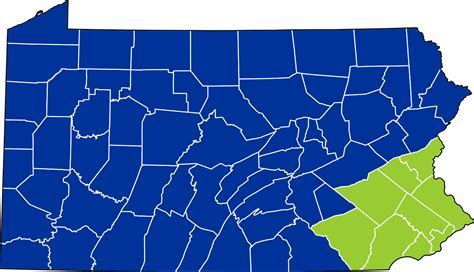
A former elected Sheriff in Pennsylvania, Judge Chad Kenney comes to the federal bench with experience in law enforcement and on the state bench.

Background

A native Pennsylvanian, Chad Francis Kenney Sr. was born in Lower Merion on August 8, 1955.  He attended Villanova University, graduating cum laude in 1976 and then getting a J.D. from Temple University School of Law in 1980.[1]

After graduation, Kenney worked at Benson Zion & Associates in Haverford for a year and then joined the Superior Court of Pennsylvania as a Staff Lawyer.[2]  In 1983, Kenney joined the Law Office of Boardman and Schermer in Philadelphia.  After six years there, Kenney started his own law practice in Upper Darby.[3]

In 1992, Kenney joined O’Donnell & Kenney as a named partner.  In 1996, he left the position to become an Assistant County Solicitor in Media, Pennsylvania.[4]  In 1998, Kenney was elected to be County Sheriff for Delaware County.[5]

In 2003, Democratic Governor Ed Rendell appointed Kenney to the Delaware County Court of Common Pleas.[6]  Kenney served as President Judge of the Court from 2012 to 2017 and still serves as a Judge today.

History of the Seat

Kenney has been nominated for a seat on the U.S. District Court for the Eastern District of Pennsylvania.  This seat opened on January 11, 2016, when Judge L. Felipe Restrepo was elevated to the U.S. Court of Appeals for the Third Circuit.  While the seat opened with a year left in President Obama’s second term, no nomination was ever made to fill the seat.

After reaching out to Sen. Patrick Toomey (R-PA), Kenney interviewed for a judgeship with Toomey and his staff in February 2017.[7]  Kenney then interviewed with Sen. Bob Casey (D-PA) in April 2017 and with the White House in May.[8]  President Trump announced Kenney’s nomination to the vacancy on December 20, 2017.[9]

Jurisprudence

From 2003, Kenney has served as a Judge on the Delaware County Court of Common Pleas, which is the primary trial courts in Pennsylvania.  As a Judge, Kenney presided over cases in civil and criminal matters, as well as domestic relations, juvenile, and family law matters.  Over the last fifteen years, Kenney has presided over approximately 150 jury trials.[10]

Charter School Funding

In 2015, newly elected Democratic Governor Tom Wolf created a new funding formula for charter schools in the state, one that critics suggested was intended to shut down the schools.[11]  The new funding plan set a uniform funding rate for charter schools based on the number of students served.[12]  Based in part on the formula and seeking to resolve a budget crisis, Wolf attempted to cut the tuition payments paid by the Chester Upland School District to charter schools.[13]  However, Kenney refused to approve the cut, instead rejecting Wolf’s plan and requiring the School District to continue to fully fund charter schools.[14]

Public Defender “Punishment”

In 2013, Joseph De Ritis, a recently-terminated Delaware County public defender, filed a lawsuit naming Kenney as one of the defendants.  The lawsuit claimed that Kenney had conspired by Douglas Roger, the head of the defender’s office to fire De Ritis for not pressuring his clients to accept plea deals rather than take cases to trial.[15]  De Ritis based his claim on the hearsay statement that Kenney thought that De Ritis was not moving his cases quickly enough.[16]  Kenney was ultimately dropped from the lawsuit by Judge Cynthia Rufe in 2016.[17]

Reversals

Over his fifteen years on the bench, Kenney’s rulings have been reversed by higher courts five times.  Of these reversals, the most significant is in Commonwealth v. Goldsborough.[18]  In that case, Kenney granted a defendant’s motion to suppress all evidence from his arrest, finding that the police lacked probable cause to detain the defendant.[19]  The Pennsylvania Superior Court reversed the decision, finding that probable cause existed for the detention.[20]

Political Activity

Before he became a judge, Kenney was an elected Sheriff in Delaware County where he was supported by the Pennsylvania Republican Party.[21]  Kenney also served as Pennsylvania State Republican Committee member from 1996 and 2003.[22]  He also donated in support of Pennsylvania Senator Arlen Specter (a liberal Republican who later switched parties to become a Democrat).[23]

Overall Assessment

For the most part, close cooperation between Toomey and Casey on judicial nominations have spared Pennsylvania nominees the controversy that other states have drawn.  Toomey supported the renomination of two Obama nominees, for example, who did not receive votes in 2016.  Kenney, whose nomination was a product of this cooperation, also looks likely to receive a comfortable conformation.


[1] Sen. Comm. on the Judiciary, 115th Cong., Chad F. Kenney Jr.: Questionnaire for Judicial Nominees 1.

[2] Id. at 3.

[3] Id. at 2-3.

[4] Id.

[5] Id. at 3.

[6] Id. at 1.

[7] Id. at 43.

[8] Id.

[9] Press Release, White House, President Donald J. Trump Announces Ninth Wave of Judicial Candidates and Tenth Wave of United States Attorney Nominees (December 20, 2017) (on file at https://www.whitehouse.gov/the-press-office).  

[10] See Kenney, supra n. 1 at 20.

[11] Jan Murphy, Charter School Advocates Think Gov. Tom Wolf Is Out to Shut Their Schools Down, Penn Live, Mar. 4, 2015, http://www.pennlive.com/politics/index.ssf/2015/03/charter_school_advocates_think.html.  

[12] See id.

[13] Mari A. Schaefer and Caitlin McCabe, Judge Rejects Wolf Challenge to Charter Funding, Philadelphia Inquirer, Aug. 26, 2015.

[14] Id. 

[15] Julie Zauzmer, Ex-Delco Defender: Fired Over Lack of Plea Deals, Philadelphia Inquirer, Dec. 5, 2013.

[16] See id.

[17] Alex Rose, Judge Dropped as Defendant in Wrongful Firing Lawsuit, Delaware County Daily Times, Mar. 2, 2016, http://www.delcotimes.com/article/DC/20160302/NEWS/160309905.

[18] 31 A.3d 299 (Pa. Super. Ct. 2011).

[19] See id. at 304.

[20] Id. at 308.

[21] See Nancy Petersen, Sanchez Likely As County’s First Hispanic Judge, Philadelphia Inquirer, Nov. 5, 1997.

[22] See Kenney, supra n. 1 at 36.

Andrew Oldham – Nominee for the U.S. Court of Appeals for the Fifth Circuit

Young, well-credentialed, and fiercely conservative, Andy Oldham is exactly the type of nominee that Trump promised to name to the federal bench if elected.  While Oldham’s involvement in aggressive conservative litigation may have secured him the nomination, it is likely to draw strong opposition from Senate Democrats.

Background

Andrew Stephen Oldham was born in Richmond, VA on December 15, 1978.  Oldham received a B.A. with Highest Honors from the University of Virginia in 2001, and then received a Master of Philosophy from the University of Cambridge in 2002.[1]  Oldham then attended Harvard Law School, graduating magna cum laude in 2005.  (At Harvard Law, one of Oldham’s professors was U.S. Sen. Elizabeth Warren).[2]

After law school, Oldham moved to Washington D.C. to clerk for Judge David Sentelle on the U.S. Court of Appeals for the D.C. Circuit.  Oldham then moved to the Office of Legal Counsel (OLC), working under acting Assistant Attorney General Stephen Bradbury.  In 2008, Oldham secured a clerkship with Justice Samuel Alito on the U.S. Supreme Court.[3]

In 2009, Oldham joined the law firm Kellogg Huber as an Associate.  Just three years later, Texas Attorney General Greg Abbott hired Oldham as Deputy Solicitor General, working with fellow judicial nominee Cam Barker.

In 2015, when Abbott was elected to be Texas Governor, Oldham became his Deputy General Counsel.[4]  Oldham became the Acting General Counsel in 2017 and the General Counsel in 2018.

History of the Seat

Oldham has been nominated for a Texas seat on the U.S. Court of Appeals for the Fifth Circuit.  This seat opened on April 2, 2018 with Judge Edward Prado’s resignation to be the U.S. Ambassador to Argentina.  However, Oldham had been on the White House’s radar much earlier.  In 2017, Oldham was a finalist alongside Texas Supreme Court Justice Don Willett; U.S. District Judge Reed O’Connor; and appellate attorney James Ho to fill two Texas vacancies on the Fifth Circuit.[5]  Ho and Willett were ultimately nominated on September 28, 2017 and confirmed in December 2017.[6]  Oldham remained under consideration, however, and was nominated to the Prado seat on February 15, 2018.

Political Activity

Oldham does not have a long donation history, with his only donation of record being a $500 contribution to Cruz during his presidential campaign in 2016.[7]  Additionally, Oldham served as an envelope stuffer for Republican George Allen’s senatorial campaign in 2000.[8]

Oldham has also been a member of the Federalist Society for Law and Public Policy Studies, a conservative legal organization that has produced many Trump nominees, since 2002.[9]  He has also been a member of the National Rifle Association since 2015.[10]

Legal Experience

Oldham has served in both advisory positions: at the Office of Legal Counsel and then as Abbott’s General Counsel; and litigation positions: at Kellogg Huber and the Texas Attorney General’s Office.  While Oldham has engaged substantively with the law in each of these positions, the bulk of his most controversial (and significant) cases have been handled as Deputy Solicitor General of Texas, a role in which Oldham spearheaded much conservative activist litigation, as well as amicus work handled as Abbott’s Counsel.  Below, we highlight some of Oldham’s work on hot-button issues:

DAPA & Immigration

Oldham was lead counsel in challenging the Obama Administration’s Deferred Action for Parental Accountability (DAPA), which deferred action status for deportation purposes for immigrants with children who were American citizens or lawful permanent residents.[11]  Oldham drafted the initial complaint and successfully argued for a nationwide injunction before Judge Andrew Hanen.[12]

Abortion and Healthcare

As Deputy Solicitor General of Texas, Oldham managed the defense of Texas laws that critics alleged impeded a woman’s right to have an abortion.  Oldham was part of the legal team that successfully persuaded the Fifth Circuit to overturn a trial injunction and find that Texas laws requiring abortion providers to have admitting privileges in local hospitals and restricting medication abortions were constitutional.[13]  Oldham was also involved in the defense of the restrictions under an “as-applied challenge” brought by a McAllen Texas abortion clinic.[14]  The Supreme Court would eventually find that the provisions created an “undue burden” on a woman’s right to choose.[15]

Oldham was also lead counsel in a challenge to the Affordable Care Act under the “Origination Clause” of the Constitution.[16]  Shortly after Oldham left the case, the Fifth Circuit dismissed the challenge for lack of standing.

Habeas Rights

As Deputy Texas Solicitor General, Oldham argued two cases before the Supreme Court, in both cases arguing, unsuccessfully, for the barring of habeas claims raised by the plaintiffs.  In the first case, a 5-4 majority of the Supreme Court ruled against Oldham’s position, finding that the ineffective assistance of state habeas counsel can excuse the procedural default of a habeas claim.[17]  In the second case, a 6-3 majority held that a habeas inmate did not need to cross-appeal a claim he had lost on the trial level in order to raise it during a defense of claims he had won.[18]

Second Amendment

As Deputy General Counsel for Governor Abbott, Oldham filed an amicus brief on behalf of the Governors of Texas, Louisiana, Maine, Mississippi, Oklahoma, and South Dakota in a Second Amendment challenge to a California law requiring good cause to carry a concealed firearm.[19]  Despite Oldham’s and other briefs filed supporting the Second Amendment challenge, the Ninth Circuit held en banc that the Second Amendment does not protect a right to concealed carry.[20]

Campaign Finance

In the Texas Attorney General’s Office, Oldham helped defend Texas’ campaign finance laws against First Amendment challenges brought by a group of nonprofits and general-purpose political committees.[21]  The plaintiffs challenged Texas’ ban on corporate contributions for issue-oriented general-purpose committees, as well as requirements that the committees have appointed treasurers, collect ten contributions, and wait sixty days before exceeding $500 in contributions and expenditures.[22]  In the challenge defended by Oldham, the Fifth Circuit struck down the ten contribution limit and the sixty day waiting period but upheld the other requirements.[23]

Environmental & Administrative Law

At the Texas Attorney General’s Office, Oldham helped craft the challenge to greenhouse gas rules promulgated by the EPA under the Clean Air Act.  Specifically, Oldham focused on the challenge to the EPA “tailoring” rule, which determined which sources emitting air pollutants were required to get permits, and argued that the rule should not be subjected to Chevron deference.  The Supreme Court struck down the “tailoring” rule by a 5-4 margin.[24]

Overall Assessment

Oldham, with his impeccable academic credentials, his youth, and future Supreme Court potential, was always going to attract attention in the confirmation process.  However, given Oldham’s involvement in conservative impact litigation, his nomination is likely to be deeply controversial.

In particular, Oldham’s role in litigation against DAPA, and EPA rules, as well as his role defending abortion restrictions that were struck down as unconstitutional will be argued to suggest that he is a conservative extremist.  Democrats may note that Oldham had an unusually active role in shaping and filing litigation intended to further conservative policy goals and stymie liberal ones.  As such, they will argue that Oldham will continue that goal on the bench and be a judicial activist.

Oldham’s supporters, including Cornyn and Cruz, who sit on the Senate Judiciary Committee, will undoubtedly argue that it is inappropriate to impute a lawyer’s positions on behalf of his client to the lawyer himself.  However, as Cruz himself voted against Trump nominee Mark Bennett based on stances he took as Hawaii Attorney General, Democrats may decide that what’s sauce for the goose is sauce for the gander.  As such, Oldham’s confirmation will ultimately turn on his decisions rather than his qualifications.


[1] Sen. Comm. on the Judiciary, 115th Cong., Andrew Oldham: Questionnaire for Judicial Nominees 1.

[2] Fred Thys, Warren’s Former Students See Her As Anything But ‘Elitist’, WBUR, Apr. 23, 2012, http://legacy.wbur.org/2012/04/23/warren-popular-former-students.

[3] See Oldham, supra n. 1 at 2.

[4] Id.

[5] Zoe Tillman, Political Drama in Texas Has Left Trump Struggling to Fill Court Seats, Buzzfeed, Sept. 19, 2017, https://www.buzzfeed.com/zoetillman/political-drama-in-texas-has-left-trump-struggling-to-fill?utm_term=.faDyjV6gGd#.td4DkPEl10.

[6] Zoe Tillman, The Stalemate Over Texas Court Vacancies is Over, As Trump Announces Nominess, Buzzfeed, Sept. 28, 2017, https://www.buzzfeed.com/zoetillman/stalemate-over-texas-court-vacancies-ends-as-trump?utm_term=.irqgDE26xn#.oaPzmk365o.

[8] Oldham, supra n. 1 at 14.

[9] See id. at 5.

[10] Id.

[11] Texas v. United States, 86 F. Supp. 591 (S.D. Tex. 2015) (issuing a preliminary injunction against DAPA).

[12] See id.

[13] Planned Parenthood of Greater Texas Surgical Health Servs. v. Abbott, 748 F.3d 583 (5th Cir. 2014).

[14] Whole Woman’s Health v. Lakey, 46 F. Supp. 3d 673 (W.D. Tex. 2014).

[15] Whole Woman’s Health v. Hellerstedt, 136 S. Ct. 2292 (2016).

[16] Holtz v. Burwell, 784 F.3d 984 (5th Cir. 2015).

[17] Trevino v. Thaler, 133 S. Ct. 1911 (2013).

[18] Jennings v. Stephens, 135 S. Ct. 793 (2015).

[19] Peruta v. Cnty. of San Diego, 824 F.3d 919 (9th Cir. 2016) (en banc).

[20] See id. at 924.

[21] Catholic Leadership Coalition of Texas v. Reisman, et al., 764 F.3d 409 (5th Cir. 2014).

[22] See id. at 414.

[23] Id.

[24] Texas v. EPA; Utility Air Regulatory Group v. EPA, 134 S. Ct. 2427 (2014).

Alan Albright – Nominee for the U.S. District Court for the Western District of Texas

An attorney who first became a judge over 25 years ago (and left the bench approximately 20 years ago) would not seem like a likely judge from an Administration focused on youth as a key criteria of nomination.  However, Alan Albright became a judge at just 32 years of age and left the bench before he was forty.  As such, the seasoned litigator, now 58, is still young enough to serve on the bench for another thirty years.

Background

Alan D. Albright was born on November 24, 1959 in Hershey, PA.  After getting a B.A. from Trinity University in 1981, Albright received a J.D. from the University of Texas Law School in 1984.  After his graduation, Albright served as a law clerk to Judge James Nowlin on the U.S. District Court for the Western District of Texas.[1]

After his clerkship, Albright joined McGinnis, Lochridge & Kilgore LLP. as an associate.  Two years later, he joined the Austin office of Akin Gump Strauss Hauer & Feld as an associate.  In 1992, Albright, only 32, was tapped to be a U.S. Magistrate Judge for the U.S. District Court for the Western District of Texas.

Albright left the bench in 1999 to join the Austin office of Thompson & Knight LLP.  Two years later, he left Thompson to join Gray Cary (now DLA Piper) as a Partner.  In 2005, he moved to the Austin office of Fish & Richardson as a Partner.  In 2009, he joined the Austin office of Bracewell & Giuliani (now Bracewell) as a Partner.  In 2014, he left Bracewell to become a Partner at Sutherland Asbill & Brennan.  In 2015, he returned to Bracewell as a Partner, and works there to this day.

History of the Seat

Albright has been nominated for a vacancy on the U.S. District Court for the Western District of Texas.  This seat opened on September 14, 2016, when Judge Walter Scott Smith Jr. retired amidst allegations of sexual misconduct.[2]  In February 2017, Albright applied for a federal judgeship with an Evaluation Committee set up by Texas Republican Sens. John Cornyn and Ted Cruz.[3]  He interviewed with the Committee in March 2017 and then with Cornyn and Cruz in April.  Albright interviewed with the White House and Department of Justice on July 18, 2017.[4]  He was nominated on January 24, 2018.

Legal Experience

Albright’s work in private practice can be divided into two periods sandwiched around his seven years on the bench.  The first period was from 1986, when Albright finished his clerkship, to 1992, when he became a federal judge.  During his period, Albright primarily worked in insurance litigation, starting at the Austin firm McGinnis, Lochridge & Kilgore LLP and then working for the Biglaw firm Akin Gump.

The second period was from 1999, when Albright left the bench, to the present.  In this period, the primary focus of Albright’s career has been on patent litigation, at the firms Thompson & Knight, Gray Cary, Fish & Richardson, and Bracewell & Giuliani (now Bracewell).  Notably, Albright represented Overstock.com in defending against a patent infringement action, representing the website through a jury trial (the jury found for the defendants).[5]

While Albright focused primarily on patent litigation , he occasionally handled other cases.  Notably, Albright represented the Williamson County government in defending against a suit brought by Robert Lloyd, a conservative Republican who claimed that the County had improperly taken his political affiliation and his opposition to abortion and same-sex marriage into account in rejecting him for a Constable appointment.[6]

Jurisprudence

Albright served as a U.S. Magistrate Judge on the U.S. District Court for the Western District of Texas from 1992 to 1999.  In this capacity, Albright presided over the pretrial aspects of approximately 1000 misdemeanor and civil cases and approximately 500 civil cases.[7]  He also presided over around 15-20 civil cases by consent.[8]   Among the more prominent cases Albright handled, he overturned a $275,000 jury verdict for a San Marcos plaintiff shot by a police officer on qualified immunity and official immunity grounds (his decision was affirmed on appeal).[9]  In another notable case, Albright found for the parents of a daughter who suffered permanent injuries during birth due to the negligence of the doctor delivering the baby.[10]

In his seven years on the bench, Albright was reversed by the Fifth Circuit in four cases.  In three of the reversals, the Fifth Circuit reversed plaintiff-friendly rulings by Albright.[11]  In the fourth case, the Fifth Circuit reversed the grant of summary judgment to the defendant in a Lanham Act case.[12]

Political Activity

Albright has been a frequent donor to Republican candidates.  Cornyn was a particular beneficiary, having received approximately $5000 from Albright.[13]  Albright also donated almost $5000 to Rudy Giuliani’s 2008 Presidential campaign.[14]

Additionally, Albright volunteered on the campaigns of several Texas politicians, including Republican Governor Bill Clements, and Democrats Bob Krueger and Henry Cisneros.[15]

Overall Assessment

Compared to other nominees from Texas who have incited more pushback, Albright is relatively uncontroversial.  His long-time tenure as a patent litigator has allowed Albright to steer clear of controversial cases while maintaining the intellectual vigor needed for the bench.  Additionally, supporters will argue Albright’s representation of Williamson County in defending against a discrimination suit brought by a conservative employee reflects an apolitical approach to the law.

Furthermore, Albright’s record on the bench is relatively non-ideological.  While Albright did overturn a jury verdict for a plaintiff against the cop who shot him, his ruling for the victims of medical negligence in a bench trial suggests that he is not biased against plaintiffs.  Furthermore, most of his reversals from the Fifth Circuit have been from plaintiff-friendly rulings.

Overall, these factors, combined with his age and experience, suggest that Albright will be considered a consensus nominee.


[1] Sen. Comm. on the Judiciary, 115th Cong., Alan D. Albright: Questionnaire for Judicial Nominees 46.

[2] Tommy Witherspoon, Probe of Federal Judge Ends With His Retirement, Waco Tribune, Sept. 29, 2016, http://www.wacotrib.com/news/courts_and_trials/probe-of-federal-judge-ends-with-his-retirement/article_232c914f-578a-5e3d-813e-0f963cd75be3.html.

[3] See Albright, supra n. 1 at 44.

[4] See id.

[5] Alcatel-Lucent USA v. Amazon.com, Inc., 6:09-cv-00422-LED (E.D. Tex. Nov. 2, 2011), aff’d, 505 F. App’x 957 (Fed. Cir. 2013).

[6] Lloyd v. Birkman, No. 1:13-cv-00505 (W.D. Tex.).

[7] See Albright, supra n. 1 at 13-14.

[8] Id.

[9] Tamez v. City of San Marcos, No. 93-CV-666 (W.D. Tex. July 8, 1996), aff’d, 118 F.3d 1085 (5th Cir 1997), cert. denied, 522 U.S. 115 (1998).

[10] Jackson v. United States, No. 1:96-cv-00491-ADA (W.D. Tex. Aug. 20, 1998).

[11] See Castillo v. City of Round Rock, Tex., No. A-96-CV-863 (W.D. Tex. Feb. 2, 1998), rev’d, 177 F.3d 977 (5th Cir. 1999), cert. denied, 528 U.S. 1019 (1999) (reversing denial of summary judgment to defendants, noting that claims were barred by qualified immunity); Travis v. Bd. of Regents of the Univ. of Tex. Sys., No. A-94-CV-712 (W.D. Tex.), rev’d, 122 F.3d 259 (5th Cir. 1997), cert. denied, 522 U.S. 1148 (1992) (reversing verdict for plaintiff on sex discrimination and retaliation claims); Texas v. Thompson, No. A-93-CA-343 (W.D. Tex. Dec. 12, 1994), appeal dismissed in part and rev’d in part, 70 F.3d 390 (5th Cir. 1995) (per curiam) (reversing denial of summary judgment to one defendant). 

[12] Soc’y of Fin. Exam’rs v. Nat’l Ass’n of Certified Fraud Exam’rs, Inc., No. A-92-CA-792/ A-92-CV-937 (W.D. Tex. Dec. 8, 1993), vacated, 41 F.3d 223 (5th Cir. 1995), cert. denied, 515 U.S. 1103 (1995).

[14] See id.

[15] See Albright, supra n. 1 at 29-30.

Thomas Kleeh – Nominee for the U.S. District Court for the Northern District of West Virginia

A West Virginia legislative attorney and labor and employment lawyer, Thomas Kleeh is the first federal judicial nominee in sixty years to be proposed by a West Virginia Republican senator.  While Kleeh shares strong conservative bona fides, he is also supported by his Democratic home state senator.

Background

A West Virginia native, Thomas Shawn Kleeh was born in Wheeling on September 14, 1974.  He graduated summa cum laude from West Virginia University in 1996 and received a Juris Doctor from the West Virginia University College of Law in 1999.[1]  After graduating from law school, Kleeh joined the Bridgeport, WV office of Steptoe & Johnson as an Associate and became a Partner with the firm in 2006.[2]  He continues to work there today.

Additionally, from 2015 to 2017, Kleeh served as a Per Diem Staff Attorney to the West Virginia Senate Judiciary Committee.  In 2018, Kleeh serves as Staff Attorney to Senate President Mitch Carmichael.[3]

History of the Seat

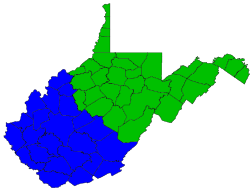
Kleeh has been nominated to fill a vacancy on the U.S. District Court for the Northern District of West Virginia.  The seat opened on August 12, 2017, when Judge Irene Keeley moved to senior status.  Interestingly, Kleeh did not apply to be considered for the judgeship.  Rather, he was contacted by Senator Shelley Moore Capito (R-WV) in May 2017.[4]  After interviews with Capito, Rep. David McKinley (R-WV), and Sen. Joe Manchin (D-WV), Kleeh’s name was submitted to the White House.  Kleeh was nominated on February 15, 2018.

Legal Experience

While Kleeh has served as a Staff Attorney in the West Virginia Senate for the past three years, his primary legal experience has been with the Labor and Employment Department at Steptoe & Johnson.  In his 19 years at the firm, Kleeh has handled six jury trials and three bench trials.[5]

As a labor and employment attorney, Kleeh defended many employers in discrimination and wrongful termination suits filed by their employees.[6]  For example, Kleeh successfully defended West Virginia State University against a wrongful termination suit filed by an employee who was dismissed for allegedly abandoning her duties to chaperone a group field trip.[7]  Kleeh has also frequently defended schools and school boards against suits brought by students.[8]

Writings

As a law student, Kleeh authored an article criticizing the common law distinction between invitees and licensees with regard to property owner liability.[9]  West Virginia common law, also followed by many other states, lays out different duties of care that a landowner must abide by with regard to guests on his property based on whether the guest is a trespasser, licensee (present for their own pleasure), or invitee (present for the benefit of the property owner).  In his article, Kleeh criticizes this distinction, suggesting that injured parties shouldn’t go uncompensated “because of the purpose of their particular visit[.]”[10]

Interestingly, Kleeh also criticizes the longetivity of the distinction, noting that it was developed “in feudal England.”[11]  Instead, Kleeh suggests that the distinction be abandoned and the duty of care be left to juries, noting:

“Perhaps West Virginia should place more trust in juries to decide what constitutes reasonable behavior rather than relying on eighteenth century common law to do so.”[12]

Political Activity

Kleeh has frequently supported Republican West Virginia candidates as a donor, including donating $1750 to Capito’s senate run in 2014.[13]  Kleeh has also given to $1000 each to McKinley and fellow Republican Rep. Evan Jenkins, as well as donating to the Congressional Campaign of controversial West Virginia Supreme Court Justice Spike Maynard.[14]  Additionally, Kleeh supported the Supreme Court campaign of Justice Beth Walker, who challenged and defeated Justice Brent Benjamin by running as a conservative.[15]

Overall Assessment

As he has attracted little media attention so far and is strongly supported of both his home state senators, Kleeh looks likely to be confirmed on a bipartisan vote.  (Even if some Democrats are skeptical of Kleeh’s conservative political background, they are unlikely to embarrass Manchin by airing such concerns publicly).

Interestingly, Kleeh’s paper on property owner liability suggests that he supports basing rules of jurisprudence on the practicalities of modern litigation rather than “eighteenth century common law.”  While views expressed in a 20-year-old article cannot be given excessive importance, the article’s reasoning suggests that Kleeh’s jurisprudence may be adaptable to legal and practical changes.

While District Court judges do not have the same scope to shape jurisprudential rules that Circuit Court judges do, it will be interesting to see if Kleeh shows a similar willingness to adapt the law to modern considerations as a judge.


[1] Sen. Comm. on the Judiciary, 115th Cong., Thomas Kleeh: Questionnaire for Judicial Nominees 1.

[2] See id. at 2.

[3] Id.

[4] See id. at 33.

[5] Id. at 24-25.

[6] See, e.g., M. Tim Crum v. Mingo Community Action Partnership, Inc., Circuit Court of Mingo County, West Virginia, Civil Action No. 09-C-287; Legg v. Rivers Edge Mining, Inc. et al., Circuit Court of Boone County, West Virginia, Civil Action No. 04-C-207 (2006).

[7] See Fuller v. Bd. of Governors of West Virginia State University, Circuit Court of Kanawha County, West Virginia, Civil Action No. 13-C-454, affirmed at 2016 WL 3369566 (2016).

[8] See, e.g., Danielle T. v. Kanawha Cnty. Bd. of Educ., et al., United States District Court for the Southern District of West Virginia, Civil Action No. 2:01-0514 (S.D.W.V.); Epps v. Putnam Cnty. Bd. of Educ., United States District Court for the Southern District of West Virginia, Civil Action No. 2:00-0069 (S.D.W.V. 2001).  

[9] Thomas S. Kleeh, Self v. Queen: Retaining Eighteenth Century Feudalistic Jurisprudence to Determine a Landowner’s Duty of Care, 100 W. Va. L. Rev. 467 (Winter 1997).

[10] Id. at 467.

[11] Id. at 492.

[12] See id.

[14] See id.

[15] See Kleeh, supra n. 1 at 22.

Peter Phipps – Nominee for the U.S. District Court for the Western District of Pennsylvania

A DOJ litigator with extensive experience in the federal courts, the 45-year-old Peter Phipps looks likely to join the Western District of Pennsylvania before the end of the year.

Background

Peter Joseph Phipps was born on April 8, 1973 at Dyess Air Force Base in Abilene, TX.[1]  Phipps attended the University of Dayton, getting a B.A. in History and a B.S. in Physics.[2]  He continued on to the Stanford University Law School, graduating with a J.D. in 1998.  He then joined the Washington D.C. Office of Jones Day (a firm that has sent many alumni to the Trump Administration and the federal bench).[3]

In 2001, Phipps left Jones Day to clerk for Judge R. Guy Cole on the U.S. Court of Appeals for the Sixth Circuit.  He then joined the Federal Programs Branch of the Civil Division of the U.S. Department of Justice.[4]  He is still with the same office in Washington D.C., working as Senior Trial Counsel.  Phipps has also served as an Adjunct Professor at Duquesne University School of Law in Pittsburgh since 2014.[5]

History of the Seat

The seat Phipps has been nominated for opened on September 30, 2013, with Judge Terrence McVerry’s move to senior status.  On July 30, 2015, President Obama nominated Judge Marilyn Horan from the Butler County Court of Common Pleas to fill the vacancy.[6]  The nomination of Horan, a Republican, was made as a package along with those of three Democrats to other vacancies.

While all four nominees in the package received a hearing on December 9, 2015, two of them, Judge Robert Colville, and Judge John Milton Younge, were blocked from Judiciary Committee consideration by Chairman Chuck Grassley, who was unhappy with their support of abortion rights.[7]  At the same time, Horan and Judge Susan Baxter were blocked by Senate Majority Leader Mitch McConnell on the Senate floor and were never confirmed.  Both were ultimately renominated by Trump.[8]

Phipps applied to the bipartisan judicial selection committee set up by Pennsylvania Senators Bob Casey and Pat Toomey in April 2017.[9]  Phipps interviewed with Toomey and Casey and was then recommended to the White House.  He was formally nominated on February 15, 2018.

Legal Experience

While Phipps’s primary legal occupation has been as a litigator at the Department of Justice, he began his career as an Associate in the Washington D.C. Office of Jones Day, representing corporations in civil litigation.[10]  Overall, Phipps has worked as counsel of record in three civil trials, as well as handling appellate matters in other cases.[11]

As Senior Trial Counsel at the Federal Programs Branch of the Department of Justice, Phipps litigated many contentious cases.  In one case, Phipps defended the U.S. Department of Housing and Urban Development against a class action suit brought by African American plaintiffs alleging racial discrimination in public housing.[12]  Through the litigation, which lasted ten years, Phipps worked through two separate trials, and managed to negotiate a settlement in the case.[13]

In another notable case, Phipps defended the constitutionality of the military’s “Don’t Ask, Don’t Tell” policy, which barred individuals engaging in homosexual conduct from serving openly in the armed forces.[14]  In yet another case, Phipps defended the constitutionality of HHS grants for faith based organizations that have religious objections to abortion and contraception.[15]

More recently, Phipps defended the constitutionality of the Professional and Amateur Sports Protection Act of 1992 (PASPA).[16]  PASPA’s constitutionality was challenged by New Jersey, which sought to legalize sports betting in its state in violation of the Act.[17]  Phipps represented the government in several suits before the District Court, the Third Circuit, and in certiorari arguments before the U.S Supreme Court.[18]

Overall Assessment

While Phipps, at 45, is a relatively young judicial nominee, his qualifications for the federal bench are unquestionable.  As an attorney with the Federal Programs Branch of the Department of Justice, Phipps has had experience in some of the most consequential litigation the Department engages in, preparing him well for the  issues he would face as a trial judge.

Skeptics may draw opposition based on Phipps’ defense of DADT and grants to faith-based organizations.  However, as an attorney at Federal Programs, Phipps has an ethical responsibility to present defenses to federal laws and regulations and his views in litigation cannot necessary be imputed as his personal views.

Overall, given that Phipps has the support of his Democratic and Republican home-state senators, as well as a fairly noncontroversial record, he looks set for a relatively painless confirmation.


[1] Sen. Comm. on the Judiciary, 115th Cong., Peter J. Phipps: Questionnaire for Judicial Nominees 1.

[2] Id.

[3] See id. at 2.

[4] See id.

[5] Id.

[6] Press Release, White House, President Obama Nominates Seven to Serve on the United States District Courts (July 30, 2015) (on file at https://obamawhitehouse.archives.gov).

[7] Philip Wegmann, After Facing Questions on Abortion, 2 Obama Judicial Nominations Fail to Advance, The Daily Signal, Jan. 29, 2016, http://dailysignal.com/2016/01/29/after-facing-questions-on-abortion-2-obama-judicial-nominees-fail-to-advance/.  

[8] Press Release, President Donald J. Trump Announces Ninth Wave of Judicial Nominees and Tenth Wave of United States Attorney Nominees (December 20, 2017) (on file at www.whitehouse.gov/thepressoffice).

[9] Sen. Comm. on the Judiciary, 115th Cong., Peter J. Phipps: Questionnaire for Judicial Nominees 24.

[10] Id. at 10.

[11] Id. at 11-12.

[12] Thompson v. HUD, No. 95-395 (D. Md.) (Garbis, J.) (Grimm, J.).

[13] See id.

[14] Witt v. United States Air Force, No. 06-5195 (W.D. Wash.) (Leighton, J.).

[15] American Civil Liberties Union of Northern California v. Hargan, No. 16-3539 (N.D. Cal.) (Beeler, M.J.).

[16] See NCAA v. Christie, Nos. 3:12-4947; 3:14-6450 (D.N.J.) (Shipp, J.); Nos. 13-1713,-1714,-1715 (3d Cir.); Nos. 14-4546,-4568,-4569 (3d Cir.) (subsequently en banc); Nos. 13-967; -979; -980, Nos. 16-476,-477 (U.S.).

[17] See id.

[18] Commonwealth v. Opperman, 780 A.2d 714 (Pa. Super. Ct. 2001).

UPDATED – Michael Truncale – Nominee for the U.S. District Court for the Eastern District of Texas

UPDATED 4/19 with comment from the Department of Justice

A longtime stalwart in the Texas Republican Party and a one-time Congressional candidate, Michael Truncale is a strongly conservative pick for the Eastern District of Texas.

Background

A native of Beaumont, Michael Joseph Truncale was born in 1957.  Truncale received a B.B.A. from Lamar University in 1978 and an M.B.A. from the University of North Texas in 1980.[1]  After two years as a Financial Analyst, Truncale attended Southern Methodist University School of Law, serving as Student Bar Association President there, and getting his J.D. in 1985.[2]  He then joined the Beaumont firm Orgain, Bell & Tucker as an associate.[3]  In 1991, Truncale became a partner at Orgain and still works as a partner there.[4]

History of the Seat

Truncale has been nominated to the U.S. District Court for the Eastern District of Texas, to a seat vacated on February 28, 2018, with Judge Ron Clark’s move to senior status.

In April 2017, Truncale applied for a judgeship with the Evaluation Committee set up by Texas Senators John Cornyn and Ted Cruz, both Republicans.[5]  He interviewed with the Committee on April 20, 2017.[6]  Truncale then interviewed with Cornyn and Cruz in May 2017, after which his name was submitted to the White House.[7]  Truncale interviewed with the White House late in July 2017.  His nomination was submitted to the U.S. Senate on January 23, 2018.

Political Activity & Memberships

Truncale has a long history of involvement with the Texas Republican Party, starting with working as a volunteer during the 1984 Presidential election.  From 2006 to 2014, Truncale served on the Executive Committee of the Texas Republican Party.[8]  He also was a Republican Delegate for John McCain in 2008 and a volunteer for the Trump campaign.[9]

Additionally, Truncale has been a generous donor to Republicans. Cornyn has been a particular beneficiary, having received almost $7000 in contributions over the last twelve years.[10]  Truncale also donated $1000 to Cruz in 2015.[11]

In 2011, after congressional redistricting reshaped Texas’ 14th Congressional District and Rep. Ron Paul declined to run for re-election, Truncale was the first Republican candidate to announce his campaign.[12]  In his campaign, Truncale emphasized his support for a Balanced Budget Amendment, cutting back federal regulations, and his opposition to the Affordable Care Act.[13]  Ultimately, Truncale came in third in the Republican primary, securing 14.03% of the vote, and did not make the runoff, which was eventually won by then State Rep. Randy Weber.[14]

Legal Experience

Truncale has spent his entire career at the firm of Orgain, Bell & Tucker.  At the firm, Truncale worked in civil defense, practicing in Texas state and federal courts.  He also practiced white collar criminal defense in federal court.[15]  Over the course of his legal career, Truncale has tried over 100 matters in state and federal court.[16]

Additionally, in 1992, Truncale became certified as a mediator under Texas law, mediating cases including contract disputes, tort actions, sexual harassment cases, and libel suits.[17]  In 2017 and 2018, Truncale mediated nine different suits, including suits under tort law, landlord-tenant law, and contract law.[18]

Interviews and Expressed Views

As noted above, Truncale was a congressional candidate in the 2011-12 election cycle.  As a candidate, Truncale ran as a conservative, expressing his desire for limited government, low spending and taxation, and the rollback of government regulation.  While many of his interviews and speeches focus on general talking points and his support of conservative agenda items such as the repeal of the Affordable Care Act and the implementation of the Balanced Budget Amendments, a few also discuss his views on the judiciary and the Constitution, as well as more potentially controversial topics.

Judicial Philosophy

Truncale, who served on the Federal Judicial Evaluation Commission for Texas during the Obama Administration, has labeled himself a “strict constructionist.”[19]  He has also described himself as a “conservative by conviction, not by convenience.”  In an interview, Truncale described his judicial philosophy as follows:

“I do not believe that judges should legislate from the bench…and, really, overlook the plain meaning of the United States Constitution.  That’s how we’ve got into a lot of trouble now.  That’s why government has gotten too big.  That’s why we’ve forgotten about the Tenth Amendment, which means that power is to be retained by the people and by the states, and that the people and the states don’t exist for the furtherance of the federal government…”[20]

Obamacare – Expansion of the Federal Government

In many of his speeches, Truncale has attacked Obamacare as a symbol of an expanding federal government.  One talking point that Truncale would often repeat was that “If Obamacare is not allowed to stand, there is no limit to what the federal government can do to you.”[21]

In another forum, Truncale noted:

“It [Obamacare] is unconstitutional.  There is no right in the Constitution for the government to tell you what kind of insurance to buy…”[22]

These remarks were made before the Supreme Court upheld the Obamacare individual mandate in June 2012.

Immigration

While Truncale, similar to other Republicans, advocated for stronger border enforcement during his campaign, one particular statement may draw controversy.  At a CD14 Job Interview in 2012, Truncale was asked a question about border security.  In responding, Truncale noted his desire in stronger border enforcement and “boots on the ground” near the Texas-Mexico border.[23]  He appears to say the following:

“And, of course, we must…with regard to immigration…we must not continue to have the maggots coming in.”[24]

While it is unclear what exactly Truncale means through the use of the term “maggots”, or if that is the term he used, the context of his statement and his preface “with regard to immigration” suggests that he is using the term to refer to immigrants (or potentially undocumented immigrants).  If this is what Truncale said and meant, his use of such inflammatory language may raise questions about his willingness and inability to treat litigants fairly, regardless of their background.

4/19 – UPDATE: According to Drew Hudson from the Department of Justice, Truncale  used the word “magnets”, not “maggots.”  Hudson notes that by magnets, Truncale was referring to incentives for illegal immigrants to enter the United States, such as entitlement programs.  As such, the correct transcription, Hudson suggests, is:

“And, of course, we must…with regard to immigration…we must not continue to have the magnets coming in.”

Abortion

In a May 2012 forum, Truncale was asked about his views on government funding of Planned Parenthood.  Truncale responded:

“I don’t think we should be funding Planned Parenthood.  I’m pro-life.”[25]

In another interview, Truncale criticized the Obama Administration’s contraception mandate, describing it as an “assault on the Catholic Church.”[26]

Gun Rights

In an interview with the Police News, Truncale described himself as a supporter of Second Amendment rights, noting:

“Once you start chiseling away at the Second Amendment rights, once you start chiseling away the First Amendment rights, with regard to religion, then all of our liberties are at risk.”[27]

Overall Assessment

In evaluating Truncale’s overall record, it is important to separate his record as an attorney from his record as a congressional candidate.  Looking solely at Truncale’s legal record, there is little to disqualify him from the federal bench.  His experience in complex civil litigation prepares him well for many of the matters he would address as a federal court judge, while his experience with white collar defense would help him on the criminal side.  Additionally, having spent his entire life in Beaumont, Truncale is intimately familiar with the legal community he would be serving as a judge.

However, the legal and political views expressed by Truncale during his congressional campaign may raise concerns regarding his impartiality on the bench.  Truncale’s self-description as a “conservative by conviction” may be raised by critics to argue that, on the bench, he would be motivated by conservative ideology rather than fidelity to the law.  Additionally, Truncale may draw opposition for his use of the term “maggots” during a discussion of immigration.

UPDATE – 4/19: As noted above, the Department of Justice argues that Truncale actually used the term “magnets.”  Obviously, if he actually said magnets, this should not bear on his qualification for judicial office.

Overall, Truncale’s nomination speaks to the danger of picking judges with electoral pasts.  Statements made as candidates invariably have a way of coming back to haunt nominees.


[1] Sen. Comm. on the Judiciary, 115th Cong., Michael Truncale: Questionnaire for Judicial Nominees 1.

[2] See id.

[3] See id. at 2.

[4] Id.

[5] See id. at 46.

[6] See id.

[7] See id.

[8] Id. at 5.

[9] See id. at 34.

[11] See id.

[12] Sherry Koonce, Beaumont Attorney Seeks District 14 Seat, The Port Arthur News, Aug. 3, 2011.

[13] David Yates, Tort Reform Among Issues for Beaumont Attorneys Running for Congress, Southeast Texas Record, May 22, 2012.

[14] Sherry Koonce, Brazoria County Candidates Lead Republicans in District 14 Race, Port Arthur News, May 29, 2012.

[15] See Truncale, supra n. 1 at 38.

[16] Id.

[17] See id. at 36.

[18] Id. at 35-36.

[19] Michael Truncale, Lake Jackson Tea Party Forum (May 1, 2012) (available at https://www.youtube.com/watch?v=n1ztJk4m8P4).

[20] Michael Truncale, Interview with the Police News (Feb. 18, 2012) (available at https://www.youtube.com/watch?v=Kzb9XP3Xago).

[21] Michael Truncale, Candidate for U.S. House, Address to the Southeast Texas Tea Party (Apr. 3, 2012) (available at https://www.youtube.com/watch?v=7DBeSssCOCM). See also Michael Truncale, North Galveston County Chamber of Commerce Forum (Feb. 21, 2012) (available at https://www.youtube.com/watch?v=LMSs6Ld1ggw); Michael Truncale, Beaumont Chamber of Commerce Republican Candidate Forum (January 13, 2012) (available at https://www.youtube.com/watch?v=8Qqpe7VM_UI); Michael Truncale, Lake Jackson Tea Party Forum (May 1, 2012) (available at https://www.youtube.com/watch?v=n1ztJk4m8P4).

[22] Michael Truncale, Lake Jackson Tea Party Forum (May 1, 2012) (available at https://www.youtube.com/watch?v=uN7KCQ6RzIw).   

[23] Michael Truncale, CD14 Job Interview (uploaded on May 23, 2012) (available at https://www.youtube.com/watch?v=Hr3rSPRTGJM).

[24] See id. at 1:31-1:36.

[25] Michael Truncale, Lake Jackson Tea Party Forum (May 1, 2012) (available at https://www.youtube.com/watch?v=HXUVd_Li-GM).  

[26] Michael Truncale, Interview with the Police News (Feb. 18, 2012) (available at https://www.youtube.com/watch?v=Kzb9XP3Xago).

[27] See id.

Judge Susan Brnovich – Nominee to the U.S. District Court for the District of Arizona

Judge Susan Brnovich, a well-respected state judge in Arizona, has been nominated to the federal bench upon the recommendation of Arizona’s Republican senators.  It is a promotion she is likely to get.

Background

Brnovich was born Susan Marie Skibba in 1968 in Madison, WI.  Brnovich graduated from the University of Wisconsin in 1990 and then jointly attended the University of Wisconsin Law School and Graduate School, getting a J.D. and an M.S. in Business in 1994.[1]

After graduation, Brnovich spent a year working as a bartender at an Applebee’s in Tempe, Arizona. She then joined the Maricopa County Attorney’s Office as a Deputy County Attorney.[2]  In 2003, she joined the Maricopa County Superior Court as a Commissioner, handling certain uncontested cases and other assigned matters.[3]  In 2009, Brnovich was appointed to the Court as a Superior Court Judge by Democratic Governor Janet Napolitano.[4]  She continues to serve on that Court.

In 2012, Brnovich applied for appointment to the Arizona Supreme Court, for the vacancy opened by the elevation of Justice Andrew Hurwitz to the U.S. Court of Appeals for the Ninth Circuit.[5]  Brnovich was not selected as one of the three finalists, and the seat went to Arizona Court of Appeals Judge Ann Scott Timmer.

History of the Seat

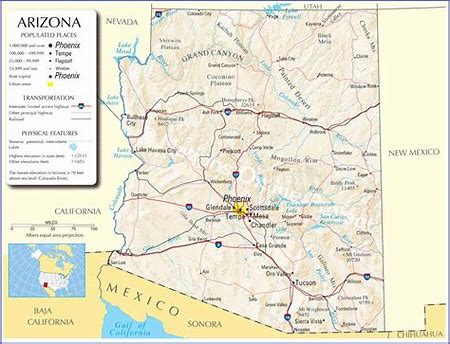
Brnovich has been nominated for a seat on the U.S. District Court for the District of Arizona.  This seat opened on July 5, 2016, when Judge Neil Vincent Wake moved to senior status.  As the seat opened with only six months left in President Obama’s presidency, no nomination was ever made to fill the seat.

In early 2017, Brnovich applied for the judgeship with a selection committee put together by Senators John McCain and Jeff Flake.[6]  She then interviewed with the committee in March and was selected unanimously as a finalist for the District Court, alongside five other candidates.[7]

Brnovich interviewed with the White House Counsel’s Office in April 2017.[8]  President Trump nominated her on January 24, 2018.[9]

Legal Career

Brnovich has spent her entire pre-bench legal career as a Deputy County Attorney for Maricopa County.  As a state prosecutor, Brnovich gained experience working with misdemeanors, felonies, and domestic violence cases.[10]  During her seven years as a prosecutor, Brnovich tried 49 jury trials and one bench trial.[11]

Notably, Brnovich prosecuted and secured the death penalty against a father who burned his two year old daughter to death.[12]  She also prosecuted Scottsdale abortion doctor Dr. John Biskind for the death of one of his patients after a ruptured uterus sustained during an abortion.[13]  The doctor was found guilty of manslaughter and sentenced to five years in prison.[14]

Jurisprudence and Reversals

Brnovich has served as a Superior Court judge since her appointment in 2009.  In this role, she serves as a primary trial judge, supervising criminal and civil cases.  Over the last nine years, Brnovich has presided over approximately 100 trials, including approximately 70 jury trials.[15]  Among her more notable decisions, Brnovich sentenced a man convicted of beating an 81-year-old monk to death to 21 years in prison,[16] tossed a Republican state legislative candidate off the ballot due to the failure to submit enough valid signatures,[17] and reversed the indictment of a Phoenix man charged with live streaming the rape of a passed-out woman, finding that the prosecution had erred by informing the grand jury that the defendant had exercised his right to remain silent.[18]

Over the course of her nine year tenure on the state bench, Brnovich has been reversed by higher courts in five cases.[19]  Of those five reversals, in two cases, Brnovich’s rulings on issues of family support in divorce cases were reversed by the Arizona Court of Appeals.[20]  Another two cases involved reversals of convictions based on trial errors made by Brnovich.[21]  The final case reversed a sentence granted by Brnovich based on a subsequent superseding precedent that changed the law.[22]

Political Activity

Brnovich has a fairly limited political history, having donated to the Arizona Republican Party once in 2002.[23]

In 2014, while Brnovich was a sitting state judge, her husband Mark ran for and won the election to be Arizona’s Attorney General.  During the election, Brnovich refrained from campaigning on behalf of her husband but did attend some election events and appeared in a campaign video.[24]

Overall Assessment

Looking at Brnovich’s overall record, it is unlikely that she will face much opposition in the confirmation process.  With almost a decade on the state court bench and a dozen years of legal experience before, she is unquestionably qualified for a federal appointment.  Furthermore, her record on the state bench is fairly uncontroversial and she has shown a willingness to rule against Republican interests.  It is also unlikely that her prosecution of Dr. Biskind will be used against her, as her prosecution was based, not on the abortion itself, but on the lack of medical treatment offered to the patient.  Furthermore, as a line prosecutor, Brnovich was likely not the last word on charging decisions in high profile cases.

Given these factors, Brnovich should be confirmed fairly comfortably, adding another conservative voice to the Arizona federal bench.


[1] Sen. Comm. on the Judiciary, 115th Cong., Susan Brnovich: Questionnaire for Judicial Nominees 1.

[2] Id. at 2.

[3] Id.

[4] Id.

[5] Gary Grado, Arizona Supreme Court Vacancy Attracts 14 Applicants, The Arizona Capitol Times, July 19, 2012.

[6] Brnovich, supra n. 1 at 26.

[7] Jeremy Duda, The Flake and McCain Seal of Approval, Yellow Sheet Report, Apr. 24, 2017.

[8] See Brnovich, supra n. 1 at 26.

[9] Press Release, White House, President Donald J. Trump Announces Tenth Wave of Judicial Candidates (Feb. 12, 2018) (on file at https://www.whitehouse.gov/the-press-office/2017/07/13/president-donald-j-trump-announces-tenth-wave-judicial-candidates).  

[10] See Brnovich, supra n. 1 at 18-19.

[11] Id. at 19.

[12] State v. Grell, CR1999-095294 (Ariz. Super. Ct.).

[13] State v. Biskind, CR1999-000198 (Ariz. Super. Ct.).

[14] Scottsdale Abortion Doctor Sentenced to Five Years in Prison, Arizona Daily Sun, May 4, 2001, http://azdailysun.com/scottsdale-abortion-doctor-sentenced-to-five-years-in-prison/article_d08ec172-9b1c-55da-9a1f-b94c9f9ada55.html.  

[15] See Brnovich, supra n. 1 at 8.

[16] Mike Sakal, 21 Years for Man Convicted of Mesa Assault, Attempted Murder of Former Monk, East Valley Tribune, Feb. 27, 2012.

[17] Ben Giles, Judge Tosses Begody-Begay From Election Ballot, Arizona Capital Times, June 24, 2016.

[18] Gary Grado, Judge: Rape Suspect’s Rights Violated, East Valley Tribune, Jan. 30, 2010.

[19] Brnovich, supra n. 1 at 15-16.

[20] See Egizii v. Egizii, No. 1 CA-CV 17-0199 (Ariz. Ct. App. Apr. 12, 2018) (reversing and remanding for specific finding on how parties are to split the proceeds from the sale of the home); In re Marriage of Gersten, 219 P.3d 309 (Ariz. Ct. App. 2009) (reversing rulings on child support).

[21] See State v. Stuart, No. 1 CA-CR 12-0340 (Ariz. Ct. App. Aug. 13, 2013) (reversing conviction due to improper expert testimony); State v. Bunting, 250 P.3d 1201 (Ariz. Ct. App. 2011) (reversing conviction based on improper colloquy as part of defendant’s waiver of jury rights).

[22] State v. Thomas, No. 1 CA-CR 11-0250 (Ariz. Ct. App. July 12, 2012).

[24] See Brnovich, supra n. 1 at 17.

Unconfirmed: Prof. Wenona Whitfield

“Unconfirmed” seeks to revisit nominees who were never confirmed to lifetime appointments, to explore the factors why, and to understand the people involved.

Judicial nominations don’t always fail due to high-profile political opposition.  Sometimes, nominations fail because staffers or White House attorneys raise personal objections.  The late Illinois Senator Paul Simon (no, not that Paul Simon) includes one such nomination story in his 1999 autobiography, that of Prof. Wenona Whitfield.[1]

When Bill Clinton was elected in 1992, the federal bench in Illinois had many vacancies, including two on the U.S. District Court on the Southern District of Illinois.  To fill these vacancies, Simon created an advisory committee to choose candidates for the federal bench, alongside fellow Senator Carol Moseley-Braun.[2]  To head the Committee for the Southern District, Simon chose Hiram Lesar, the former dean of the Southern Illinois University School of Law (SIU Law).[3]  For his part, Lesar recommended one of the University’s property professors: Wenona Whitfield.

Whitfield had a long history in the legal community of Southern Illinois.  She received a B.A. from Illinois Wesleyan in 1970 and a J.D. from SIU Law in 1977.[4]  Just a few years later, Whitfield began teaching at SIU Law, teaching Property and Health Law.[5]  Having had more than a decade of teaching experience by the time Clinton came into office, Whitfield’s nomination in March of 1995 made her poised to become the first African-American judge and the first woman on the Southern District of Illinois.[6]

Whitfield’s nomination was not initially considered controversial.  The Chief Judge of the Southern District, Judge Phil Gilbert (a Republican appointed by President George H.W. Bush) strongly supported Whitfield, and her initial meetings with Republican members of the Senate Judiciary Committee went smoothly.[7]  According to Simon, then-Chairman of the Senate Judiciary Committee Orrin Hatch (R-UT) assured him that he “would do everything he could to help [Whitfield].”[8]

However, Simon notes, Hatch’s staff put the brakes on the nomination, citing the fact that Whitfield was a recovering alcoholic.[9]  Seeking to alleviate their concerns, Whitfield assured the Committee that she would resign before letting her condition affect her work on the bench.[10]  This assurance, along with Simon’s lobbying, led to Hatch giving Whitfield a hearing on July 31, 1996.[11]

Unfortunately, the hearing, already late in the 1996 Presidential election cycle, did not lead to further movement on Whitfield’s nomination.  According to Simon, Hatch indicated that he wanted to move Whitfield through the Committee, but couldn’t, due to opposition from Senate Majority Leader Trent Lott (R-MS).[12]  However, when Simon took the matter directly to Lott, he contradicted Hatch’s account, noting that both his parents were alcoholics and that, as such, he had no opposition to Whitfield.[13]  Lott promised to move Whitfield to a floor vote if she passed through Committee.[14]  Upon going back to Hatch, he reiterated his position on Whitfield, maintaining that Lott was the barrier to a final vote.[15]  Ultimately, the impasse was never settled and Whitfield was never confirmed by the Senate.

After his re-election, Clinton chose not to re-nominate Whitfield (her chances were likely hurt by Simon’s retirement).  Instead, on April 28, 1998, Clinton nominated Illinois State Judge David Herndon to fill the seat.  Herndon’s nomination moved relatively smoothly and he was unanimously confirmed on October 21, 1998.

As for what happened with Whitfield’s nomination, Simon maintains that the opposition stemmed from Hatch or more specifically, Hatch’s staff, noting:

“I sense that his staff saw a black woman and that “spelled” liberal to them.”[16]

To be fair, it remains unclear as to whether the objections to Whitfield’s personal background were pretextual.  Under Hatch’s leadership, the Senate did confirm ten African American female nominees put forward by Clinton.  However, many qualified African American women were also rejected under Hatch’s tenure, including Judge Frederica Massiah-Jackson.

As for the Southern District of Illinois, it did not receive a female or an African American judge until 2014, when Judges Nancy Rosenstengel and Staci Yandle were confirmed.


[1] Paul Simon, P.S.: The Autobiography of Paul Simon 192-93 (Bonus Books Inc. 1999).

[2] See id. at

[3] Id.

[4] See Wenona Whitfield, Biography at the SIU School of Law, http://www.law.siu.edu/our-people/faculty/adjunct/whitfield.html.  

[5] Id.

[7] See Simon, supra n. 1 at 192.

[8] Id. at 192-93 (quoting Orrin Hatch).

[9] Id. at 193.

[10] Id.

[12] See Simon, supra n. 1 at 193.

[13] Id. (quoting Trent Lott).

[14] Id.

[15] Id.

[16] Id.

On the “Correctness” of Brown v. Board of Education

This morning, five judicial nominees testified before the Senate Judiciary Committee, the most controversial of whom was Wendy Vitter, tapped for the U.S. District Court for the Eastern District of Louisiana.  Among many sharp exchanges that Vitter had with Committee Democrats during the hearing, one was particularly notable:

Sen. Richard Blumenthal (D-Conn.) asked Vitter if she believed that Brown v. Board of Education, the seminal Supreme Court decision desegregating public schools, was correctly decided.  Vitter answered as follows:

“Senator, I don’t mean to be coy, but I think I get into a difficult…diff…difficult area when I start commenting on Supreme Court decisions, which are correctly decided and which I may disagree with.  Again, my personal, political, or religious views, I would set aside.  That is Supreme Court precedent.  It is binding.  If I were honored to be confirmed, I would be bound by it and of course I would uphold it.”

Blumenthal pressed his question and Vitter repeated her refusal, stating:

“And again, I would respectfully not comment on what could be my boss’ ruling, the Supreme Court.  I would be bound by it.  And if I start commenting on ‘I agree with this case or don’t agree with that case,’ I think we get into a slippery slope.”

Vitter’s answer has already been criticized by the Leadership Conference on Civil Rights, and judicial nominations guru Christopher Kang, among others.  It will no doubt be raised repeatedly by opponents to argue that Vitter is an opponent of the Brown decision and thus, unfit for the bench.  Setting aside any normative evaluation of Vitter, it is worth asking: how can a judicial nominee ethically answer Blumenthal’s question?

The “Correct” Answer

From a moral sense, there is little doubt Brown was correctly decided.  This is the consensus position of the legal community and of most (but not all) Americans.  As such, isn’t that the “correct” answer to the question?

Last month, Sixth Circuit nominee John Nalbandian seemed to agree, answering Blumenthal’s question as follows:

“Brown, Senator, is a seminal decision in the Supreme Court’s history and corrected an egregious error in Plessy v. Ferguson and I believe…I believe it was [correctly decided].”

However, about a minute later, Nalbandian was asked if  Roe v. Wade, which established the right to terminate a pregnancy, was correctly decided.  He said the following:

“I’m reluctant, and I think it would be inappropriate for me to go down a list of Supreme Court cases and say I think this case was rightly decided and that case was not, because I think it would call into question my partiality going forward.”

The problem here is that the two answers are essentially irreconcilable.  Regardless of one’s feelings about the cases, both Brown and Roe are binding precedents of the U.S. Supreme Court.  As such, it is truly odd that a nominee can comment on the “correctness” of one without compromising his impartiality, but not the other.

Nalbandian did attempt a distinction between Roe and Brown, arguing that Brown is widely accepted while Roe raises issues that may come before him as a judge.  However, it’s hard to accept this answer for two reasons:

First, Nalbandian is up for a lower court judgeship.  As such, he will have no opportunity to opine on the “correctness” of Roe.  Rather, it is his responsibility to apply Roe, its progeny, and all other Supreme Court precedents.  Thus, as a lower court judge, all Supreme Court precedents bind him equally.

Second, there is no such thing as a case that will NEVER come before the judge.  Long settled precedents are constantly re-examined in the legal system.  AustinBowers, MillerBakke have all been challenged and re-evaluated before the Supreme Court in the last two decades.  As such, the distinction between a “settled” case like Brown and an “unsettled” case like Roe appears even more spurious.

The “Principled” Answer

So setting aside the BrownRoe decision Nalbandian made, we come back to the Vitter answer, which is to decline to opine on all Supreme Court precedents.  After all, it is a lower court judge’s responsibility to apply ALL Supreme Court precedents, even those that they believe to be wrongly decided.  As such, the only “principled” answer is to decline to state the “correctness” of any Supreme Court decision.

Unfortunately, this answer looks awful from a political sense.  It leads to a nominee being battered for not “supporting” popular precedents such as Brown, or worse, having their partiality questioned through their refusal to answer.

Avoiding the Trap

The dual pressures noted above are not a bug but rather a feature of Blumenthal’s question.  Asking whether Brown was correctly decided, while innocuous on the surface, is a cleverly worded Catch-22.  Answer in the affirmative and you’re forced into unprincipled verbal gymnastics when the follow-up question about Roe hits.  Decline to answer out of principle and you’re branded uncooperative or prejudiced.

As such, I’d propose the following answer to Blumenthal’s question:

“Senator, Brown is a very important precedent of the U.S. Supreme Court.  If you’d asked me about the case when I was a private citizen, I would have happily discussed my respect for the decision and its progeny.  However, I’m here as a judicial nominee, and as such, I have a responsibility to conduct myself as I would on the bench.  Just as it would be inappropriate for a lower court judge to discuss the “correctness” of Supreme Court decisions, it would be equally inappropriate for me.  I can, however, assure you that I will faithfully apply Brown and its progeny, as well as all other Supreme Court cases.”

Such an answer adopts the best parts of both Nalbandian’s and Vitter’s answers.  It sidesteps the Brown question but makes clear the reasons for the sidestep while re-iterating respect for Brown.  While no answer is immune to being twisted, it is unlikely that the answer above would be taken to suggest that the nominee opposed Brown itself.

It will be interesting to see if Blumenthal repeats the Brown question at the hearing in two weeks, and, if he does so, how judicial nominees choose to answer.  Should they choose to do so, nominees adopting the proposed answer above will be seen as exercising the sincerest form of flattery.

Mark Bennett – Nominee to the U.S. Court of Appeals for the Ninth Circuit

Experienced Hawaii litigator Mark Bennett is an unusual nominee from the Trump Administration in one key aspect: his age.  While the Trump Administration has generally chosen judges in their 40s and 50s for the appellate bench, Bennett is 65 years old.  Not only is he the oldest of all of Trump’s appellate nominees by far, he is also older than 80% of Obama’s appellate picks.  In fact, in the last thirty years, just two appellate judges have been chosen at an older age than Bennett.  Nevertheless, Bennett’s age, experience and general moderation make him an acceptable nominee for Hawaii’s Democratic home-state Senators, leading to an easier confirmation.

Background

Mark Jeremy Bennett was born on February 24, 1953 in Brooklyn, NY.  After getting a B.A. summa cum laude from Union College in Schenectady, NY in 1976, Bennett received a J.D. magna cum laude from Cornell Law School in 1979.[1]  He then clerked for Judge Samuel King on the U.S. District Court for the District of Hawaii.[2]

After his clerkship and a brief period of self-employment, Bennett joined the U.S. Attorney’s Office for the District of Columbia as an Assistant U.S. Attorney.[3]  Two years later, he moved to Hawaii to be a federal prosecutor at the U.S. Attorney’s Office for the District of Hawaii, staying there for seven years.[4]

In 1990, Bennett joined McCorriston Miller Mukai MacKinnon LLP. as Of Counsel, becoming a Partner in 1991.[5]  While serving as a Partner, Bennett served as a Special Prosecuting Attorney for the City of Honolulu and as Special Deputy Attorney General in the Hawaii Attorney General’s office.[6]

In 2003, the newly elected Republican Governor Linda Lingle chose Bennett to be Hawaii’s new Attorney General.[7]  Bennett was confirmed by the Democratic State Senate and served as Hawaii’s chief legal and law enforcement officer throughout the eight years Lingle was in office.

In 2011, after the election of Democrat Neil Abercrombie to the Governorship, Bennett joined the Hawaii law firm Starn, O’Toole, Marcus & Fisher as a Director.[8]  He serves in that capacity to this day.

History of the Seat

Bennett has been nominated for a Hawaii seat on the U.S. Court of Appeals for the Ninth Circuit.  This seat opened on December 31, 2016 with Judge Richard Clifton’s move to senior status.

Bennett’s name was proposed for the Ninth Circuit by Hawaii Senators Mazie Hirono and Brian Schatz, both Democrats, who reached out to Bennett in mid-2017.[9]  In November 2017, Bennett interviewed with the White House Counsel’s Office and was formally nominated on February 15, 2018.[10]

Political Activity

Bennett has a long history of involvement with the Republican Party of Hawaii, including serving as the Party’s counsel in 2001-02.[11]  Bennett also volunteered on Lingle’s gubernatorial campaigns in 2002 and 2006, as well as supporting Republican James Aiona’s gubernatorial campaign in 2010.[12]  Bennett also supported Lingle in her 2012 Senate bid against Hirono.[13]

Additionally, Bennett has also been a generous donor to the Republican Party of Hawaii, donating almost $5000 over the years, including $400 in October 2017, after his name had been proposed for a federal judgeship but before the formal vetting process had begun.[14]  Bennett has also donated to support Lingle, former U.S. Senator Kelly Ayotte and Hawaii State Legislator Cynthia Thielen, all Republicans.[15]  On the flip side, Bennett financially supported Rep. Colleen Hanabusa (a Democrat) in her primary challenge to Schatz in 2014.[16]

Legal Career

After his clerkship, Bennett spent ten years working as a federal prosecutor in D.C. and Hawaii.  In these roles, Bennett handled both criminal and civil cases, handling prosecutions at the trial level, and defending convictions on appeal.  In 1990, he joined the Honolulu office of McCorriston Miller Mukai MacKinnon LLP, working in complex civil litigation.  While at the firm, Bennett represented Texaco in defending against a $2 billion antitrust case brought by Democratic Governor Benjamin Cayetano.[17]

From 2002 to 2010, Bennett served as the Attorney General of Hawaii (his work as Attorney General is summarized in the next section).  He left the office in early 2011 to join Starn, O’Toole, Marcus & Fisher, working in complex civil litigation.  Among his most important work at the firm, Bennett defended the University of Hawaii against suits by students alleging data breaches, successfully settling the case.[18]  He also represented the Hawaii legislature as amicus before the Hawaii Supreme Court.[19]

While at Starn O’Toole, Bennett also worked as an arbitrator and mediator, requiring him to judge and resolve complex disputes.  Over the last seven years, Bennett has served as an arbitrator in four cases and as a mediator in six.[20]

Attorney General of Hawaii

From 2002 to 2010, Bennett served as Attorney General for the State of Hawaii, an appointed position.  In this role, Bennett defended state laws and policies against litigation, as well as taking on affirmative criminal and civil actions against individuals and corporations.  We summarize some of the legal positions Bennett took as Attorney General.

Gun Control

In 2008, the U.S. Supreme Court struck down the District of Columbia’s ban on ownership of handguns, finding an individual right to bear arms in the Second Amendment of the U.S. Constitution.[21]  When the case was being argued, state attorneys general of both parties weighed in both in favor of and against the D.C. ban.[22]  While 31 attorneys general weighed in against the ban, five, including Bennett, signed onto a brief supporting it.[23]  Speaking about the case, Bennett noted:

“We think that a decision that the Second Amendment prohibits strict gun-control laws is just wrong.”[24]

Notably, at the time of the suit, Hawaii had some of the strictest gun control laws in the country.[25]

Takings

In 2005, Bennett argued Lingle v. Chevron before the Supreme Court.  The case involved a challenge by Chevron to a Hawaii law that limited the rent that Chevron could charge to independent gasoline dealers leasing their stations.  After the Ninth Circuit struck down the law as an unconstitutional “taking” of Chevron’s property, Bennett defended the law in oral arguments before the Supreme Court.[26]  The Supreme Court unanimously held for Hawaii and Bennett’s position, arguing that state economic regulation did not necessarily constitute a “taking” even where it did not advance a legitimate state interest.[27]

LGBT Rights in Hawaii Prisons

In the mid-2000s, the Department of Justice filed a civil rights suit against the State of Hawaii on behalf of three LGBT inmates who faced harassment and abuse from prison staff.[28]  Hawaii also faced a related suit brought by the ACLU.[29]  As Attorney General, Bennett helped settle the suit against the federal government, with Hawaii agreeing to increased conditions and monitoring of its youth prisons, more resources for suicide prevention and the prevention of sexual abuse, and criminal background checks against prison officials.[30]

Discrimination and the Statute of Limitations

Jones v. R.R. Donnelly & Sons Co. involved an action for racial discrimination brought by African American plaintiffs against a printing company.[31]  The key question before the Supreme Court was whether a four-year federal statute of limitation established for all acts passed after 1990 covered the suit in question.  Bennett joined five other state attorneys general, led by future Eleventh Circuit Judge Bill Pryor (and argued by another future Eleventh Circuit Judge, Kevin Newsom), in filing an amicus brief urging the application of a two year statute of limitations under state law.[32]  However, the Supreme Court unanimously rejected Bennett’s position, holding that the four year federal statute of limitations applied to the action in this case.[33]

Incidental Use of Religion in Public Life

Bennett has weighed in as amicus in two court of appeals cases involving the incidental use of religion in public life.  The first case involved a challenge to the voluntary recitation of the pledge of allegiance, which the plaintiff argued was a violation of the Establishment Clause.[34]  Bennett joined an amicus brief on behalf of 30 state attorneys general supporting Loudoun County.[35]  The Fourth Circuit held that the voluntary recitation of the pledge did not violate the Establishment Clause.[36]

The second case was a challenge from notable atheist Michael Newdow to the use of prayer and the phrase “so help me God” in the inauguration ceremony of President Barack Obama.[37]  Bennett joined all 50 state attorneys general in an amicus brief opposing the plaintiffs in the case.[38]  The D.C. Circuit found that the plaintiffs lacked standing.[39]

Rights of Native Hawaiians

As Attorney General, Bennett was a strong advocate for Native Hawaiians’ rights.  For example, Bennett testified in the Senate in support of the Akaka bill, sponsored by former Sen. Daniel Akaka (D-Hawaii), which conferred the same status to native Hawaiians as enjoyed by all other recognized native tribes.[40]

Additionally, Bennett strongly defended the Kamehameha Schools (a group of Hawaii private schools) policy favoring admission for native Hawaiians.  After a Ninth Circuit panel struck down the policy as unconstitutional discrimination, Bennett successfully persuaded an en banc panel to uphold the policy on a 8-7 vote.[41]  Bennett argued that the policy was permissible even though it was intended to create opportunities for native Hawaiians and not for diversity purposes.[42]

Nevertheless, Bennett has taken adverse positions to those of Native Hawaiians.  Notably, he successfully persuaded a unanimous Supreme Court that the “apology resolution” passed by Congress signaling the rights of native Hawaiians to their “ancestral territory” did not create substantive rights that restricted the State of Hawaii.[43]

Overall Assessment

As noted above, Bennett’s age makes him a fairly unusual pick from the Trump Administration.  That being said, his age and level of experience brings several advantages in the confirmation process.  Firstly, it is more difficult to attack Bennett as unqualified or inexperienced.  Rather, objective observers can agree that Bennett possesses the requisite legal qualifications for an appellate appointment.  Secondly, it defuses attacks from Democrats, who might be concerned that defeating Bennett would lead to a younger appointment from Trump.

The disadvantage of Bennett’s long legal history is that it can be mined for partisan opposition.  However, Bennett’s record provides no obvious fault lines for Democrats to oppose his nomination.  Bennett has not taken any positions on many legal hot button issues, including reproductive rights, and the positions he has taken (e.g. gun control) are hardly conservative.

Rather, had Bennett been nominated by a Democratic president, it is likely that Bennett would have drawn strong opposition from conservatives, given his defense of Hawaii’s strong gun laws, and affirmative action based admissions policies.  As the nomination comes from Trump, most conservative opposition is likely to be muted.

Additionally, it is important to note that Bennett’s defense of both gun control and race-based admissions policies were made in his capacity as Hawaii Attorney General.  Given that the Attorney General is charged with defending Hawaii’s laws, Bennett had an ethical responsibility to mount a strong defense.  As such, one cannot necessarily attribute the positions that Bennett took as Attorney General as his own legal views.

Overall, Bennett represents the kind of appellate nominee who should be more common: a credential, experienced advocate with expertise in a wide range of legal issues.  Barring any flare-ups over the positions he advocated as Attorney General, he should be confirmed smoothly.


[1] Sen. Comm. on the Judiciary, 115th Cong., Mark J. Bennett: Questionnaire for Judicial Nominees 1.

[2] Id. at 2.

[3] Id.

[4] Id.

[5] Id.

[6] Id.

[7] See Tim Ruel, Lingle Recruits Texaco Defense Lawyer, Honolulu Star-Tribune, Dec. 10, 2002, http://archives.starbulletin.com/2002/12/10/news/story5.html.  

[8] State Attorney General Mark Bennett to Join Law Firm, Hawaii News Now, 2010, http://www.hawaiinewsnow.com/story/13584825/state-attorney-general-mark-bennett-to-join-law-firm.

[9] See Bennett, supra n. 1 at 123.

[10] Press Release, White House, President Donald J. Trump Announces Eleventh Wave of Judicial Candidates (Feb. 15, 2017) (on file at www.whitehouse.gov/the-press-office).

[11] See Bennett, supra n. 1 at 97.

[12] See id.

[13] Id.

[15] Id.

[16] Id.

[17] See Ruel, supra n. 7.

[18] Gross v. University of Hawai’i, No. 11-1-1217-06 (Haw. 1st Cir. Ct.).

[19] Nelson v. Hawaiian Homes Comm’n, 2018 WL 798192 (Haw. Feb. 8, 2018).

[20] See Bennett, supra n. 1 at 99-100.

[21] District of Columbia v. Heller, 554 U.S. 570 (2008).

[22] John Gramlich, D.C. Gun-Control Case Divides State Attorneys General, Charleston Gazette, Mar. 9, 2008.

[23] Id.

[24] Id. (quoting Mark Bennett).

[25] See id.

[26] Linda Greenhouse, Justices Appear Reluctant to Increase Land-Use Oversight, N.Y. Times, Feb. 23, 2005.

[27] Lingle v. Chevron, 544 U.S. 528 (2005).

[28] Janis L. Magin, Hawaii Agrees to Broad Changes in Procedures for Incarcerated Gay Youths, N.Y. Times, Feb. 13, 2006.

[29] See id.

[30] Id. 

[31] 541 U.S. 369 (2004).

[32] See id.

[33] Id.

[34] Myers v. Loudoun Cnty. Pub. Schs., 418 F.3d 395 (4th Cir. 2005).

[35] Id. 

[36] Id. 

[37] Newdow v. Roberts, 603 F.3d 1002 (D.C. Cir. 2010).

[38] Id.

[39] Id.

[40] See Testimony of Hawaii Attorney General Mark J. Bennett in Support of Passage of the Akaka Bill, Hawaii Bar Journal (July 2006).

[41] Z-Nation, Schools’ Hawaiians-First Rule Ok’ed, Monterey County Herald, Dec. 6, 2006.

[42] Id.

[43] See Hawaii v. Office of Hawaiian Affairs, 556 U.S. 163 (2009).