Judge David Novak – Nominee to the U.S. District Court for the Eastern District of Virginia

Twelve years ago, a young prosecutor named David Novak was nominated to serve on the U.S. District Court for the Eastern District of Virginia, only to see his nomination stalled.  Today, Novak, now a federal magistrate judge, is getting a second shot at that court.

Background

David John Novak was born in Greensburg PA in 1961.  He received a B.S. magna cum laude from St. Vincent College in Latrobe PA in 1983 and then got a J.D. from Villanova University Law School in 1986.[1]

After graduation, Novak worked as an Assistant District Attorney at the Philadelphia District Attorney’s Office and then worked as a federal prosecutor in the U.S. Attorney’s Office for the Southern District of Texas.[2]  In 1994, Novak moved to the U.S. Attorney’s Office for the Eastern District of Virginia.[3]

In 2007, Novak was nominated by President George W. Bush for a seat on the U.S. District Court for the Eastern District of Virginia vacated by Judge Robert Payne.[4]  While Novak received a hearing before the Senate Judiciary Committee in 2008, his nomination was never approved by Committee and he was not confirmed before the end of the 110th Congress.  President Obama chose not to renominate Novak, instead choosing John Gibney, who was confirmed and serves today.

In 2012, Novak was appointed as a U.S. Magistrate Judge in the Richmond Division of the U.S. District Court for the Eastern District of Virginia.  He continues to serve there today.

History of the Seat

Novak has been nominated for a seat on the U.S. District Court for the Eastern District of Virginia.  This seat opened on June 1, 2018, when Judge Henry Hudson moved to senior status.  While Novak originally applied for an Alexandria based vacancy that opened with Judge Gerald Lee’s retirement, he was not recommended for that seat and was instead supported by Virginia Senators Mark Warner and Tim Kaine, both Democrats, for the Richmond-based seat opened by Judge Hudson.  Novak was nominated on March 15, 2019.

Legal Experience

Novak spent virtually all of his career prior to taking the bench as a prosecutor, working first in Philadelphia, then in Houston, and finally in Richmond.  In Richmond, Novak became Chief of the Criminal Division in 2010, overseeing the criminal prosecutors under U.S. Attorney Neil McBride.

Most notably, Novak was the lead prosecutor against Zacarias Moussaoui, a French national who pleaded guilty of conspiring with Al Qaeda to kill American citizens in the September 11 attacks.[5]  On behalf of the Department of Justice, Novak presented evidence to the jury seeking the death penalty against Moussaoui.[6]  The case hit a hurdle when it was revealed that TSA Attorney Carla J. Martin had coached witnesses in violation of Judge Leonie Brinkema’s orders.[7]  Novak himself acknowledged the egrigiousness of Martin’s actions in court, which led Brinkema to impose a sanction against the government.  Ultimately, the jury decided not to impose the death penalty on Moussaoui, prompting the defendant to proclaim: “America, you lost; you lost, Novak. I won.”[8]

Jurisprudence

Novak has served as a U.S. Magistrate Judge since 2012.  In this capacity, Novak oversees discovery, adjudicates cases where jurisdiction is consented to, and presides over settlement.  In his time as a magistrate, Novak has presided over 7 bench and 3 jury trials.  Among his most significant trials, Novak presided over a negligence trial arising from a motorcyclist injured after being struck by an eighteen-wheeler.[9]

Over his seven years on the bench, Novak’s rulings have been partially reversed by higher courts six times.[10]  None of these reversals involve controversial issues or detail significant criticism of Novak’s reasoning.

Writings

In 1999, Novak authored an article[11] to provide guidance for federal prosecutors on handling death penalty cases.[12]  In the article, Novak outlines the various unique processes and issues that are raised in a capital case, including the notices issued by the Department of Justice, discovery, victim impact evidence, and voir dire.  Overall, Novak concludes that death penalty cases require “an enormous amount of preparation” and that prosecutors must “be dedicated to learning all aspects of the defendant’s life.”[13]

Political Activity

As a federal prosecutor, Novak occasionally donated to Republican candidates, including donations to U.S. Senator George Allen, N.Y.C.Mayor Rudolph Giuliani, and Rep. Eric Cantor.[16]

Overall Assessment

While Novak’s initial nomination to the federal bench stalled, his path to the federal bench looks much smoother this time around.  As Novak has already gotten the sign-off of Virginia’s Democratic senators, and given his impressive resume, it is more a question of when, rather than if, Novak will be confirmed.


[1] Sen. Comm. on the Judiciary, 115th Cong., David J. Novak Jr.: Questionnaire for Judicial Nominees 1.

[2] Id. at 2.

[3] Id. 

[4] Press Release, Warner and Webb Applaud Selection of Davis, Novak for Federal Judgeships (Office of Sens. Warner and Webb) (Nov. 15, 2007).

[5] Philip Sh and Benjamin Weiser, 2 Rival Legal Teams For ‘20th Hijacker’ Case, N.Y. Times, Dec. 18, 2001.

[6] Brooke A. Masters, U.S. Defends Its Moussaoui Stance, Wash. Post, May 11, 2002.

[7] Jerry Markon and Timothy Dwyer, Judge Halts Terror Trial, Wash. Post, Mar. 14, 2006.

[8] Neil A. Lewis, 911 Plotter Gets Life in Jail; Jury Swayed By Moussaoui’s Tough Childhood, Pittsburgh Post Gazette, May 4, 2006.

[9] Scott v. Watsontown Trucking Co., 920 F. Supp. 2d 644 (E.D. Va. 2013), aff’d, 553 F. App’x 259 (4th Cir. 2013).

[10] See Taylor v. Timepayment Corp., 2019 WL 1375594 (E.D. Va. Feb. 5, 2019); Testemark v. Berryhill, 736 F. App’x 395 (4th Cir. 2018); Parham v. Comm’r of Soc. Sec., 627 F. App’x 233 (4th Cir. 2015); Loving v. Astrue, 2012 WL 4329277 (E.D. Va. June 22, 2012); Fed. Nat’l Mortg. Assoc. v. CG Bellkor, LLC, 980 F. Supp. 2d 703 (E.D. Va. 2013); L. Foster Consulting, LLC v. XL Group, Inc., 2012 WL 2785904 (E.D. Va. June 1, 2012).

[11] The article was reviewed and incorporated feedback by then AUSA James Comey (who has since become famous for his tenure at the Department of Justice).

[12] David J. Novak, Trial Advocacy: Anatomy of a Federal Death Penalty Prosecution: A Primer for Prosecution, 50 S.C. L. Rev. 645 (Spring 1999).

[13] Id. at 677.

[14] Id. (quoting Judge Rossie Novak).

[15] Brad Kutner, Senator Don McEachin Talks LGBTQ Issues Ahead of the 2016 General Assembly Session, GayRVA, Aug. 26, 2015, http://www.gayrva.com/news-views/senator-don-mceachin-talks-lgbtq-issues-ahead-of-the-2016-general-assembly-session/.  

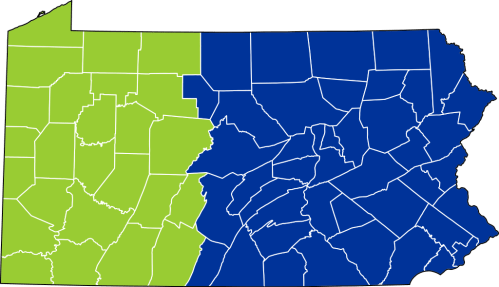
Stephanie L. Haines – Nominee to the U.S. District Court for the Western District of Pennsylvania

A prosecutor with a relatively apolitical background, Stephanie Haines looks poised for a comfortable confirmation to the federal bench in Pennsylvania.

Background

A Western Pennsylvania native, Haines was born in Johnstown in 1969.[1]  Haines attended Juniata College in Huntingdon, Pa. and received a B.A. degree in 1992, subsequently getting a law degree from Ohio Northern University.[2]

After graduating, Haines clerked for Judge Eugene Fike in Somerset, Pa. and then joined the U.S. Army, working in various legal roles, including as a Legal Assistance Attorney, a Prosecutor, and an Appellate Defense Attorney.[3]  Since 2005, Haines has been a Judge Advocate with the West Virginia National Guard.

In 2002, Haines became a federal prosecutor in West Virginia and, since 2007, has served as a federal prosecutor in Johnstown, Pennsylvania (the sole one since 2018).[4]

History of the Seat

The seat Haines has been nominated for opened on November 24, 2017, with the move to senior status of Judge David Cercone.  In March 2017, Haines applied for a federal judgeship with the application committee set up by Pennsylvania’s U.S. Senators Bob Casey (D-PA) and Pat Toomey (R-PA).[5]  While the panel recommended Haines, no further action was taken until July 31, 2018, when Toomey interviewed Haines and her name was passed to the White House.[6]

Haines was officially nominated on March 5, 2019.

Legal Experience

Haines has practiced law for over twenty years, working in one of two capacities: as a military lawyer; and as a federal prosecutor.  In the former position, Haines represented service members in assisting with estate planning, family law, and other matters, as well as prosecuting and defending soldiers in military courts.[7]  Since 2002, Haines has represented the U.S. government as a federal prosecutor, first in West Virginia and, since 2007, in Pennsylvania.  During this time, Haines tried approximately 40 cases.[8]

Among the most notable cases Haines handled, she prosecuted Rev. Joseph Maurizio, a Catholic priest, charged with sexually exploiting minors during trips to Honduras.[9]  Early in the case, Haines successfully convinced Judge Kim Gibson to reverse the grant of home detention for the defendant.[10]  Maurizio was eventually found guilty in a jury trial of five counts, including those alleging illicit sexual conduct.[11]

Overall Assessment

As a result of close cooperation between Casey and Toomey, Pennsylvania’s district court nominees have generally avoided the partisan rancor that other states have produced.  Haines looks likely to be no different, and, given her background as a prosecutor and her long service record, she is unlikely to draw much controversy.


[1] Sen. Comm. on the Judiciary, 114th Cong., Stephanie L. Haines: Questionnaire for Judicial Nominees 1.

[2] See id.

[3] Id. at 1-2.

[4] Id. at 2.

[5] See id. at 25.

[6] Id.

[7] See id. at 12-13.

[8] See id. at 13-14.

[9] See United States v. Maurizio, Crim. No. 3:14-23 J (W.D. Pa.).

[10] See Paul Pierce, Priest Charged in Sex Case Won’t Be Freed, Pittsburgh Tribune Review, Nov. 15, 2014; see also Paul Pierce, Priest’s Home Detention Irks Prosecutor, Pittsburgh Tribune Review, Nov. 7, 2014.

[11] Paul Pierce, Somerset County Priest Found Guilty, Pittsburgh Tribune Review, Sept. 23, 2015.

Daniel P. Collins – Nominee for the U.S. Court of Appeals for the Ninth Circuit

Longtime appellate attorney and former Scalia clerk Dan Collins is one of three California nominees to the Ninth Circuit who face the joint opposition of home state senators Dianne Feinstein and Kamala Harris.  His nomination moved out of the Senate Judiciary Committee on a party-line vote despite this opposition.

Background

Daniel Paul Collins was born in Brooklyn in 1963.  Collins received an A.B. from Harvard in 1985 and a J.D. from the Stanford Law School in 1988.[1]  After graduating from law school, Collins clerked for Judge Dorothy Nelson on the U.S. Court of Appeals for the Ninth Circuit and then spent two years at the Department of Justice Office of Legal Counsel.  Collins then clerked for Justice Antonin Scalia on the U.S. Supreme Court, clerking with Judge Jeffrey Sutton of the Sixth Circuit and conservative lawyer Ed Whelan.[2][3]

After his clerkships, Collins became a federal prosecutor in the Central District of California, leaving in 1996 to join the Los Angeles Office of Munger, Tolles & Olson LLP.[4]  In 2001, Collins left Munger to work as Associate Deputy Attorney General at the U.S. Department of Justice.[5]  Collins rejoined Munger in 2003 and has served as a Partner since.

History of the Seat

Collins has been nominated for a California seat on the U.S. Court of Appeals for the Ninth Circuit.  This seat opened on December 11, 2015 when Judge Harry Pregerson moved to senior status.  On February 25, 2016, President Obama nominate U.S. District Judge Lucy Koh to fill the vacancy.  Even though the Senate was controlled by Republicans, Koh received a favorable reception before the Senate Judiciary Committee and was approved 13-7 on September 15, 2016.  However, she was blocked from a final floor vote by Senate Majority Leader Mitch McConnell and never confirmed.

In March 2017, Collins was contacted by the White House to gauge his interest in an appointment to the Ninth Circuit.[6]  In late 2017 and early 2018, Collins interviewed with Advisory Committees set up by California’s Democratic Senators.[7]  Collins’ nomination was announced in October 2018 and he was renominated on February 6, 2019.

Both of Collins’s home state senators, Sen. Dianne Feinstein and Sen. Kamala Harris, have expressed opposition to Collins’s nomination.

Political Activity & Memberships

Collins has a very active political history, having donated extensively to Republican candidates from 1998 to 2016.[8]  Over this time, Collins has given over $85000 to Republican candidates.[9]  For example, in a single contribution in December 2013, Collins gave $15000 to the National Republican Senatorial Committee.[10]  Similarly, in October 2016, Collins gave $2700 contributions to Republican Senate candidates Marco Rubio, Todd Young, Ron Johnson, and Joe Heck (all except Heck won their elections).[11]

Furthermore, Collins has been a member of the Federalist Society for Law and Public Policy Studies (a conservative legal organization that is the source of many Trump nominees) since 1995.[12]

Legal Experience

Collins has primarily worked in two legal postures.  The first is at the government, as a prosecutor from 1992 to 1996 and at the Department of Justice, where he was from 2001 to 2003.  The second is at Munger, Tolles & Olson, where he has spent virtually the rest of his legal career.

Assistant U.S. Attorney

From 1992 to 1996, Collins worked as an Assistant U.S. Attorney with the Central District of California.  Here, Collins primarily handled appeals, while also trying eight jury trials during his tenure.[13]  One of those trials was that of Jeffrey Van Poyck who was convicted of two counts of armed bank robbery and one count of conspiracy (the convictions were upheld on appeal).[14]

Department of Justice

From 2001 to 2003, Collins worked in the Department of Justice, serving as Associate Deputy Attorney General.  In this role, Collins worked on several of the Department’s legislative initiatives, including the drafting and passage of the PROTECT Act of 2003, which increases penalties and authorizes additional law enforcement tools relating to child pornography and sexual abuse.[15]  To this end, Collins testified in Congress in support of much of the language that eventually found its way into the PROTECT Act, specifically noting that such language would not interfere with “First Amendment freedoms.”[16]

Munger Tolles & Olson

Since 2003, Collins has been a Partner in the Los Angeles Office of Munger, Tolles & Olson LLP working in appeals and complex civil litigation.  As a Munger Partner, Collins helped recruit Paul Watford (now a judge on the Ninth Circuit) to the firm.[17]  At the firm, Collins has extensive experience with complex commercial appeals, including representing Occidental Petroleum Corp. against suits alleging complicity in illegal bombings conducted by the Colombian military,[18] defending Jeppesen Data Plan, Inc. against allegations that they transported the plaintiffs to locations where they were tortured,[19] and representing Philip Morris in a suit to successfully strike down Massachusetts regulations restricting cigarette advertising.[20]  Particularly notably, Collins represented a series of oil companies in defending against a suit by native american tribes seeking damages for global warming.[21]

Writings

Collins has frequently written on the law, starting as a law student, when he authored a student note discussing the role of circumstantial evidence and the burden of proof on a decision to grant or deny summary judgment.[22]  In much of his writing, Collins looks back to the original understanding or meaning of a law to decipher its current application, suggesting that Collins would identify as an “originalist.”  For example, in one article, Collins outlines the history of the Alien Tort Statute as a way of understanding its scope.[23]  In another article, Collins argues that the right to a jury trial is innately tied with the accuracy of the outcome, citing the debates over the jury right during the drafting of the Constitution.[24]

Overall Assessment

It is easy to compare Collins with his former Munger colleague Judge Watford.  Both were former Supreme Court clerks (Watford clerked for Justice Ginsburg) and longtime commercial litigators at Munger when nominated for the bench.  As such, some may argue that Collins deserves the bipartisan confirmation that Watford received in 2012.  However, opponents are likely to draw a few distinctions.  First, Watford had built a largely nonideological profile before his nomination, with prominent conservatives confessing that they had no idea what his political views were.  In contrast, Collins is a clearly defined conservative with his writings showing an originalist lean and a long political history.  Second, Watford had the support of his home-state senators, unlike Collins.

On his own merits, Collins obviously has the intellectual capacity and legal ability for the Ninth Circuit.  It remains for senators to decide if his record has demonstrated the requisite level of impartiality needed to be a fair judge as opposed to an advocate.


[1] Sen. Comm. on the Judiciary, 115th Cong., Daniel P. Collins: Questionnaire for Judicial Nominees 1.

[2] Id. at 2.

[3] Other clerks that year included future federal judges Jeffrey Meyer, Gregory Katsas, and Gregory Maggs.

[4] Id.

[5] Id.

[6] See id. at 63.

[7] Id.

[9] Id.

[10] Id.

[11] Id.

[12] See Collins, supra n. 1 at 5.

[13] Id. at 25.

[14] See United States v. Van Poyck, 77 F.3d 285 (9th Cir. 1996).

[15] Pub. L. 108-21.

[16] Lyndall Schuster, Regulating Virtual Child Pornography in the Wake of Ashcroft v. Free Speech Coalition, 80 Denv. U.L. Rev. 429, 444 (2002) (citing the Child Obscenity and Pornography Prevention Act of 2002 and the Sex Tourism Prohibition Improvement Act of 2002: Hearing on H.R. 4623 and H.R. 4477 Before the Subcomm. On Crime, Terrorism, and Homeland Sec. of the Comm. on the Judiciary, 107th Cong. (2002) (statement of Associate Deputy Attorney General Daniel P. Collins, on behalf of the Department of Justice)).

[17] Carol J. Williams, Lawyer Tapped For 9th Circuit, Los Angeles Times, Oct. 18, 2011.  

[18] Galvis Mujica v. Occidental Petroleum Corp., 771 F.3d 580 (9th Cir. 2014).

[19] Mohamed v. Jeppesen DataPlan, Inc., 614 F.3d 1070 (9th Cir. 2010) (en banc).

[20] Lorillard Tobacco Co. v. Reilly, 533 U.S. 525 (2001).

[21] Native Village of Kivalina v. ExxonMobil Corp., 696 F.3d 849 (9th Cir. 2012).

[22] Daniel P. Collins, Summary Judgment and Circumstantial Evidence, 40 Stan. L. Rev. 491 (January 1988).

[23] Kristin Linsley Myles and Daniel P. Collins, Burdens, the Future of International Human Rights Litigation, 32 Litigation 40 (Spring 2006).

[24] Daniel P. Collins, Juries and the Criminal Justice System: What Role?: Making Juries Better Factfinders, 20 Harv. J.L. & Pub. Pol’y 489 (Winter 1997).

James Wesley Hendrix – Nominee for the U.S. District Court for the Northern District of Texas

James Wesley Hendrix is not even 42 yet, and still has the distinction of having been nominated to the bench by Presidents of two different parties.  After his initial nomination under President Obama stalled, Hendrix has a new opportunity under President Trump.

Background

James Wesley Hendrix was born in Lubbock, TX in 1977.  He attended the University of Chicago, receiving his Bachelor of Arts with Honors in 2000 and a Juris Doctor with High Honors from the University of Texas School of Law in 2003 (alongside fellow Northern District nominee Matthew Kacsmaryk).  After graduating from law school, Hendrix clerked for Judge Patrick Higginbotham on the U.S. Court of Appeals for the Fifth Circuit and then joined the Dallas office of Baker Botts as an associate (again, alongside Kacsmaryk).

In 2007, Hendrix left Baker Botts and joined the U.S. Attorney’s Office for the Northern District of Texas as an Assistant U.S. Attorney (AUSA) (Kacsmaryk would make the same move a year later).  For his part, Hendrix stuck with the office, serving as Chief of the Appellate Division since 2011.

History of the Seat

Hendrix has been nominated to fill a vacancy on the U.S. District Court for the Northern District of Texas to a seat vacated by Judge Samuel Cummings on December 31, 2014.  On March 15, 2016, Obama, with the approval of Texas Senators John Cornyn and Ted Cruz, nominated U.S. Magistrate Judge E. Scott Frost to fill the vacancy.  Hendrix himself was nominated for a different vacancy on the court.  While both Frost and Hendrix received favorable receptions before the Senate Judiciary Committee, neither was reported out before the end of the Obama Administration.

While Hendrix applied almost immediately for a renomination, he was not initially recommended by Cornyn and Cruz to the Trump Administration.[1]  It was only after Hendrix reapplied in 2018 that Cornyn and Cruz sent his name to the White House.  Nevertheless, Hendrix interviewed with the White House in July 2018 and was nominated on January 17, 2019.[2]

Legal Experience

Hendrix has worked in two primary legal positions in his career: as an associate at Baker Botts; and as a federal prosecutor.  In his initial position at Baker Botts, Hendrix focused on civil litigation, handling wage-and-hour, patent, and real estate litigation.[3]

Since 2007, Hendrix worked as a federal prosecutor in the U.S. Attorney’s Office for the Northern District of Texas.  In this capacity, Hendrix worked primarily with the appellate division, handling over 350 appeals over the course of his career.[4]  Notably, Hendrix argued before the en banc Fifth Circuit that Texas burglary constituted a qualifying offense under the Armed Career Criminal Act, which would trigger enhanced sentencing penalties.[5]  The Fifth Circuit narrowly found against Hendrix’s position on a 8 to 7 vote in an opinion authored by his former boss, Judge Higginbotham.[6]

Overall Assessment

While his career has largely been parallel to that of Kacsmaryk’s, Hendrix is unlikely to share Kacsmaryk’s controversy.  While Kacsmaryk has attracted opposition for his work for the First Liberty Institute, Hendrix has gained respect across the board with his work in the government.  Furthermore, Hendrix’s nomination by the Obama Administration, and the reluctant endorsement by Cornyn and Cruz, suggests that he is not an aggressive conservative, and will likely be confirmed by a bipartisan majority this year.


[1] Sen. Comm. on the Judiciary, 115th Cong., James W. Hendrix: Questionnaire for Judicial Nominees 31.

[2] Id.

[3] Id. at 15.

[4] See id.

[5] See United States v. Herrold, 883 F.3d 517 (5th Cir. 2018).

[6] See id.

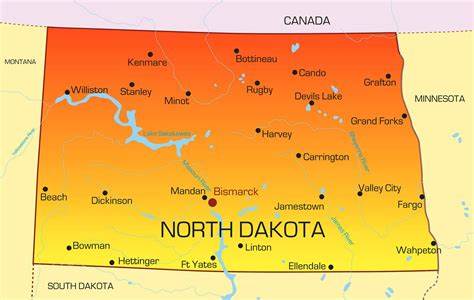
Peter Welte – Nominee for the U.S. District Court for the District of North Dakota

Peter Welte has worn many hats throughout his career: farmer, student, prosecutor, teacher, and, if his confirmation is secured, judge.

Background

Peter David Welte was born in New Britain, CT on December 21, 1965.  Welte graduated from the University of North Dakota in 1989 and then spent five years working for the U.S. Department of Agriculture and then the Cystic Fibrosis Foundation.[1]  He then attended the University of North Dakota Law School, graduating with distinction.[2]

After graduating, Welte worked as City Attorney in Larimore, North Dakota until he took a position as Assistant State’s Attorney for Grand Forks County.  In 2003, Welte was elected to become State’s Attorney for Grand Forks County, a position he held until 2015.

In 2015, Welte joined the Vogel law firm, a North Dakota institution whose alumni include two Eighth Circuit Judges, and former U.S. Attorney Timothy Purdon.[3]  He serves in that capacity today.

Welte has also been self-employed as a grain farmer at Ash Grove Farm since 1995.

History of the Seat

The seat Welte has been nominated for opened on October 12, 2017, with Judge Ralph Erickson’s elevation to the U.S. Court of Appeals for the Eighth Circuit.  In October 2017, Welte contacted North Dakota’s senators John Hoeven and Heidi Heitkamp to express his interest in the vacancy.[4]   Welte interviewed with the White House in December 2017, after which, his nomination sat in limbo for almost six months.  In May 2018, Welte was preliminary selected as a nominee for the seat.  However, Welte was not nominated until eight months after that, in which time, Heitkamp lost her re-election to Kevin Cramer, a Republican.  Cramer and Hoeven both support Welte’s nomination.

Legal Experience

Welte has spent the most significant portion of his legal career as a state prosecutor in Grand Forks.  As the elected State’s Attorney for Grand Forks County, Welte supervised the office and served as Chief Counsel for 19 county agencies and boards.  Notably, Welte brought the initial state prosecution against Alfonso Rodriguez for the murder of college student Dru Sjodin.[5]  Rodriguez was eventually prosecuted federally by Drew Wrigley (later the Lt. Governor of North Dakota) for the murder and sentenced to death.  Welte also oversaw the results of an investigation into the Grand Forks County Correctional Center after an inmate committed suicide at the institution, deciding not to bring any criminal charges as a result of the death.[6]  In contrast, Welte did bring charges against two Grand Forks Police officers who made an African American man stand outside in sub-zero temperatures without a coat.[7]

Welte’s tenure as Grand Forks prosecutor has not been without controversy, however.  In 2008, Naomi Lee made a complaint of prosecutorial misconduct against Welte and Assistant State’s Attorney Meredith Larson for choosing not to pursue charges against the man Lee claimed had sexually assaulted her.[8]  Larson had chosen not to continue with the prosecution after inculpatory statements made by the defendant were thrown out by a judge.[9]  Welte and Larson faced a hearing before an inquiry committee of the North Dakota State Bar but no disciplinary action appears to have been taken.

Political Activity

Welte is a Republican who was elected to be Grand Forks County State’s Attorney in 2002, 2006, 2010, and 2014.[10]  He has also volunteered on the campaigns of Hoeven, as well as Attorney General Wayne Stenehjem.[11]

Writings

Welte has frequently written both academically and as a blogger on legal issues.  In 2010, Welte wrote an article criticizing the North Dakota Supreme Court’s decision in Riemers v. Eslinger for expanding the right to a jury trial for violations of municipal offenses.[12]  In Riemers, the Court relied on the history of the jury trial right in North Dakota and held that the right extended beyond the protections of the federal constitution to petty offenses.[13]  Welte argued that the right to a jury trial for petty offenses was a waste of resources, noting that a jury empaneled for a $20 ticket cost the state $780.[14]  As such, he encouraged the narrowing of the right through reversal, legislative action, or constitutional amendments.

Overall Assessment

The District of North Dakota desperately needs new federal judges.  Since Erickson’s elevation to the Eighth Circuit, Judge Daniel Hovland has been the only active judge on the court, and he is set to vacate his seat this year.  As such, Welte will certainly be needed.

Looking at Welte’s record overall, it reads as that of a mainstream conservative with a few potential flashpoints but nothing that will draw excessive opposition.  As such, Welte looks likely to join the District of North Dakota this year, the first new judge since Erickson joined sixteen years ago.


[1] Sen. Comm. on the Judiciary, 115th Cong. Peter D. Welte: Questionnaire for Judicial Nominees 3.

[2] See id. at 1.

[3] Id. at 2.

[4] Id. at 51.

[5] Dave Kolpack, Man with Record as Sex Offender Arrested in Connection With Missing North Dakota Student, Associated Press, Dec. 2, 2003.

[6] Kevin Bonham, INVESTIGATION: Jailers Missed Suicide Attempt, Grand Forks Herald, Oct. 14, 2006.

[7] Susanne Nadeau, Officers Face Charges, Grand Forks Herald, Mar. 11, 2008.

[8] Stephen J. Lee, Prosecutors Face Inquiry Over Dismissal Of Rape Case, Grand Forks Herald, Mar. 14, 2008, https://www.grandforksherald.com/news/2070726-prosecutors-face-inquiry-over-dismissal-rape-case.  

[9] See id.

[10] See Welte, supra n. 1 at 35.

[11] See id.

[12] Peter D. Welte, The Law of Unintended Consequences: The North Dakota Supreme Court Recognizes the Right to a Jury Trial for Noncriminal Traffic Offenses in Riemers v. Eslinger, 86 N.D. L. Rev. 505 (2010).

[13] See id. at 514-15.

[14] Id. at 518-19.

Michael Park – Nominee to the U.S. Court of Appeals for the Second Circuit

The 43 year old Park has spent the last four years as a conservative legal superstar at the boutique firm of Consovoy McCarthy Park PLLC.  He now faces an opportunity to be elevated to one of the most prestigious courts in the nation, but faces the opposition of a uniquely powerful senator.

Background

Michael Hun Park was born in St. Paul Minnesota on April 1, 1976.  Park received his B.A. from Princeton University in 1998 and his J.D. from Yale Law School in 2001.[1]  After graduating, Park clerked for then Judge Samuel Alito on the U.S. Court of Appeals for the Third Circuit and then joined the New York office of Wilmer Cutler Pickering Hale and Dorr LLP as an associate.

In 2006, Park joined the Department of Justice, working in the Office of Legal Counsel.  In 2008, Park left to clerk for Alito, now a Justice on the U.S. Supreme Court.[2]  After his clerkship, Park joined the New York office of Dechert LLP as an Associate, becoming a Partner in 2012.  In 2015, Park left to become a Partner at the conservative boutique firm Consovoy McCarthy Park PLLC, where he currently serves.

History of the Seat

Park has been nominated for a New York seat on the U.S. Court of Appeals for the Second Circuit.  This seat was vacated by Judge Gerald Lynch, who moved to senior status on September 5, 2016.

In March 2017, Park was contacted by the White House to gauge his interest in the Second Circuit.[3]  Park’s name was then suggested to Schumer and Gillibrand as one of four potential nominees for the Second Circuit.[4]  Park began the nomination process in November 2017 and was nominated on October 10, 2018.  Park, however, is not supported by Schumer and Gillibrand, who both declined to return blue slips on his nomination.

Legal Career

Park has had a fairly distinguished career, including clerkships at the U.S. Supreme Court, and stints at the Department of Justice.  Early in his career, Park served as an Associate at Wilmer Cutler in New York where he represented Bankfirst in defending against actions based on the Americans with Disabilities Act.[5]  At the Office of Legal Counsel in the Department of Justice, Park primarily worked in an advisory capacity, but also helped organize the legal defense in immigration actions.[6]  Finally, at Dechert, Park primarily handled commercial and securities matters in state and federal courts.

However, Park has made his mark primarily at the conservative boutique firm Consovoy McCarthy & Park PLLC, which he helped found.  At Consovoy, Park has helped push conservative outcomes through litigation across the country.

Affirmative Action

Park has led in the field of affirmative action, bringing suits challenging the use of race in college admissions across the country, including against the University of North Carolina.[7]  Most notably, Park has led the suit challenging Harvard’s admissions policy for its impact of Asian American students.[8]  The lawsuit has drawn significant media attention as well as divided views across the political spectrum.[9]

Environmental Regulations

Park has represented the Chamber of Commerce and other business groups in their challenge to the Environmental Protection Agency’s “waters of the United States” rule.[10]  Their lawsuit was dismissed by Judge Claire Eagan, and an appeal ultimately ended with an administrative closing in accordance with the revision of the rule by the EPA.

Planned Parenthood

Park has represented the head of the Kansas Department of Health and Environment in suspending state Medicaid contracts with Planned Parenthood affiliates in the state.  The termination was, however, enjoined by Judge Julie Robinson, with her injunction being upheld by the Tenth Circuit.[11]

Overall Assessment

There is little doubt that Park possesses the legal ability and intellectual vigor for a seat on the Second Circuit.  However, given his use of litigation to push conservative policy outcomes at Consovoy, opponents are likely to raise serious concerns regarding Park’s impartiality on the bench.  Combined with the opposition of Schumer, the leader of Senate Democrats, Park’s confirmation may be rockier than that of his contemporaries.


[1] Sen. Comm. on the Judiciary, 115th Cong., Michael Park: Questionnaire for Judicial Nominees 1.

[2] Judge Andy Oldham on the U.S. Court of Appeals for the Fifth Circuit was a co-clerk of Park’s.

[3] See id. at 77.

[4] Zoe Tillman, The White House Has Pitched a Nominee for Manhattan’s Powerful US Attorney Opening, Buzzfeed News, Aug. 7, 2017, https://www.buzzfeednews.com/article/zoetillman/the-white-house-has-pitched-a-nominee-for-manhattans.  

[5] Aquino v. Prudential Life & Cas. Ins. Co., 419 F. Supp. 2d 259 (E.D.N.Y. 2005).

[6] See Gegaj v. Mukasey, 262 Fed. Appx. 343 (2d Cir. 2008).

[7] Students for Fair Admission v. Univ. of N.C., 319 F.R.D. 490 (M.D.N.C. 2017).

[8] Students for Fair Admission, Inc. v. President & Fellows of Harvard College, No. 1:14-cv-14176-ADB (D. Mass. Filed Nov. 17, 2014).

[9] See Carrie Jung, Harvard Discrimination Trial Ends, But Lawsuit is Far From Over, Nat’l Pub. Radio, Nov. 2, 2018, https://www.npr.org/2018/11/02/660734399/harvard-discrimination-trial-is-ending-but-lawsuit-is-far-from-over.  See also P.R. Lockhart, The Lawsuit Against Harvard That Could Change Affirmative Action in College Admissions, Explained, Vox, Oct. 18, 2018, https://www.vox.com/2018/10/18/17984108/harvard-asian-americans-affirmative-action-racial-discrimination.  

[10] Chamber of Commerce of the United States v. EPA, No. 16-5038 (10th Cir.).

[11] Planned Parenthood of Kan. & Mid-Missouri v. Andersen, 882 F.3d 1205 (10th Cir. 2018).

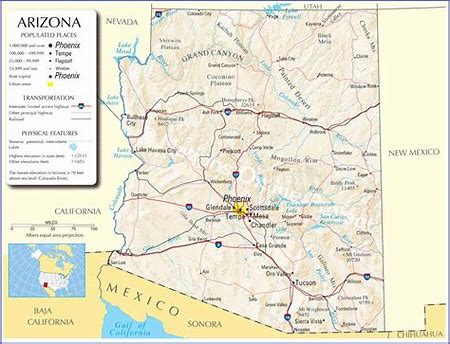
Michael Liburdi – Nominee to the U.S. District Court for the District of Arizona

Usually, district court nominees don’t attract as much controversy as those appellate picks, particularly when the nominee has support from home state senators from both parties.  However, when it comes to Michael Liburdi, the support for his nomination is actually hurting home state senator Kyrsten Sinema, creating an interesting reversal of the usual dynamic.

Background

Michael Thomas Liburdi Jr. was born in Scranton, Pennsylvania in 1977.  Liburdi attended Arizona State University, graduating summa cum laude in 1998.[1]  After graduation, Liburdi spent a year in working as a legislative assistant at DeMenna and Associates.[2]

In 1999, Liburdi matriculated at Arizona State College of Law, graduating in 2002.[3]  He then clerked for Justice Ruth McGregor on the Arizona Supreme Court.  Following his clerkship, Liburdi joined the Phoenix Office of Perkins Coie as an associate.[4]  He stayed until 2011 (barring a year long stint in 2008 at the Federal Election Commission).

In 2011, Liburdi joined Snell & Wilmer LLP as an Associate and became a Partner in 2014.[5]  After the election of Republican Doug Ducey to the Arizona Governorship, Liburdi joined his office as his General Counsel.[6]  Liburdi stayed in that capacity until 2018, when he left to join Greenberg Taurig LLP as a Shareholder.

History of the Seat

Liburdi has been nominated to the U.S. District Court for the District of Arizona, to a seat vacated on July 31, 2018, by Judge David Campbell’s move to senior status.  Liburdi had broached his interest in a judicial appointment in late 2016 to senate staff and in August 2018 to the Department of Justice.[7]  He interviewed with the White House in September 2018 and was nominated in January 2019.

Political Activity & Memberships

Liburdi has been particularly active in the Arizona Republican Party, serving as the Campaign Counsel for Gov. Doug Ducey, Secretary of State Michele Reagan, Sen. Martha McSally, former Sen. Jeff Flake, Rep. Paul Gosar, and Congressional candidate Wendy Rogers, among others.[8]  He was also legal counsel for the House and Senate Victory Funds in Arizona in the 2012 election.[9]

In 2012, Liburdi led the assignment of poll watchers for the Arizona Republican Party, coordinating volunteers trained by the voter fraud watchgroup Verify the Vote AZ, which has received criticism for seeking to suppress the votes of minorities.[16]

Liburdi has been a member of the the Federalist Society for Law and Public Policy Studies (a conservative legal society that has produced many Trump judicial nominees) since 2005.[10]

Legal Experience

Liburdi has developed a career as a conservative attorney, particularly focusing on the area of election law.  He has also gained experience working as Counsel for Governor Doug Ducey.

Private Practice

Throughout his career, Liburdi has built a practice in election law, representing various organizations in lawsuits around electioneering, referendum, and voting.  Early in his career, for example, Liburdi represented the Clean Elections Institute in successfully challenging a referendum that sought to end Arizona’s public financing of campaigns.[11]  Liburdi also represented Arizona Together in unsuccessfully challenging a ballot measure that sought to ban same-sex marriage in Arizona.[12]

On the flip side, Liburdi served as lead plaintiff’s counsel in challenging Arizona’s Independent Redistricting Commission legislative plan, arguing that the Commission had unconstitutionally packed Republican voters.[13]  Liburdi lost the case, and the Supreme Court affirmed.[14]  In another case, Liburdi sought unsuccessfully to block provisional ballots from a heavily latino area of Cochise County, stating that the ballots in question were not sealed.[15]

Governor’s General Counsel

From 2015 to 2018, Liburdi worked for Gov. Ducey as his Chief Counsel, assisting him on judicial nominations, drafting executive orders, and leading efforts to manage and fight litigation against the Governor’s office.  For example, Liburdi defended a lawsuit contending that a school finding settlement negotiated by Ducey violated federal law.[18]  Liburdi also advised on the appointment of three conservatives to the Arizona Supreme Court: Justices Clint Bolick, Andrew Gould, and John Lopez.

Overall Assessment

Arizona Sen. Kyrsten Sinema has already drawn sharp criticism for returning a blue slip on and supporting Liburdi.  Looking at his record overall, one can see both where this criticism comes from, as well as why Sinema may have returned the blue slip.

Looking at the positions of the opposition, Liburdi has had a strongly partisan career.  He has worked and volunteered solely for Republicans, and, while working a Ducey’s counsel, has supported a strongly conservative administration.  Furthermore, Liburdi’s work challenging Arizona’s Independent Commission drawn maps and seeking to prevent the counting of votes from overwhelmingly Latino precincts may also be sources of criticism.

On the flip side, Liburdi is obviously a talented attorney.  Furthermore, not all of his work has been on behalf of conservative groups.  In 2006, Liburdi notably fought the  ballot initiative seeking to ban same-sex marriage, seeking to have it thrown off the ballot.  He has done the same for initiatives challenging Arizona’s public financing system.  These decisions suggest that Liburdi is willing to advocate for legal positions that may run contrary to conservative politics.

Overall, with Sinema’s support, it is likely that Liburdi will be confirmed in due course, even with significant opposition from other Democrats.


[1] Sen. Comm. on the Judiciary, 115th Cong., Michael T. Liburdi: Questionnaire for Judicial Nominees 1.

[2] See id. at 2.

[3] See id. at 1.

[4] See id.

[5] See id. at 2.

[6] See id.

[7] See id. At 53.

[8] Id. at 28-29.

[9] Id. at 29.

[10] See id. at 8.

[11] See Clean Elections Inst. Inc. v. Brewer, 209 Arix. 241 (2004).

[12] See Arizona Together v. Brewer, 214 Ariz. 118 (2006).

[13] Harris v. Arizona Ind. Redistricting Comm’n, 993 F. Supp. 2d 1042 (D. Ariz. 2014).

[14] See Harris v. Arizona Ind. Redistricing Comm’n, 136 S. Ct. 1301 (2016).

[15] Ryan J. Reilly, Arizona Republicans Sue to Block Ballots In Latino Precinct, Talking Points Memo, Nov. 13, 2012.

[16] See Evan Wyloge, Arizona Voter Fraud Group Preps Election Day Pounce, The Arizona Capitol Times, Nov. 2, 2012.

[17] See id. at 14.

[18] See Bob Christie, Judge: Land Trust Use to Fund Arizona Schools is Illegal, The Today File, Mar. 27, 2018.

M. Miller Baker – Nominee for the U.S. Court of International Trade

As noted previously, nominations to the U.S. Court of International Trade, which hears cases involving international trade and customs laws, generally do not draw the level of rancor that other judicial nominations do.  However, M. Miller Baker, a conservative attorney with a history of lawsuits on election law and voting law, may find himself an exception to that rule.

Background

Maurice Miller Baker was born in Houma, Louisiana, in 1962.  Baker did not graduate from college, although he attended Nicholls State University and Louisiana State University, and was accepted to Tulane University Law School in 1981 under an accelerated program.[1]  After graduating, Baker clerked for Judge John M. Duhe on the U.S. District Court for the Western District of Louisiana, and then for Judge Thomas Gee on the U.S. Court of Appeals for the Fifth Circuit.[2]

After his clerkships, Baker joined the Department of Justice, working in the Office of Legal Policy and the Civil Rights Division before leaving in 1989 to go into private practice.[3]  In 1991, Baker joined the staff of U.S. Sen. Orrin Hatch on the Senate Judiciary Committee.[4]

In 1993, Baker joined Carr Goodson Warner P.C. as an Associate and became a Partner in 1996.  In 2000, he moved laterally to McDermott Will & Emery LLP, where he serves as a Partner today.

In 2006, Baker was one of five people recommended by Virginia Senators to serve on the U.S. District Court for the Eastern District of Virginia (fellow Trump nominee Rossie Alston was another name on the list).[5]  The Bush Administration selected U.S. Magistrate Judge Liam O’Grady instead.

History of the Seat

Baker has been nominated for a seat vacated by Judge Donald Pogue, an appointee of President Bill Clinton, on July 1, 2014.  President Obama nominated Jeanne Davidson to fill the vacancy on July 30, 2015, but Davidson was never processed by the Republican-controlled Senate.  While Davidson was supported by a unanimous Senate Judiciary Committee vote, she never received a final confirmation on the Senate floor.

In April 2017, Baker was contacted by the White House to discuss a judicial appointment.[6]  Baker interviewed with the Department of Justice in September 2017 and was nominated on June 18, 2018.

Political Activity

Baker has a long political history, including his run as a Republican against Virginia State Senator George Barker in 2011.[7]  In the campaign, Baker highlighted his Federalist Society membership and ran as a “proven conservative,” running on lowering taxes and improving teacher pay.[8]  Ultimately, Baker lost, getting 47% of the vote.[9]

Other than his own run, Baker has volunteered and provided legal services to several Republican campaigns, including those of Ken Cuccinelli, Mark Obenshain, George Allen, David Vitter, Orrin Hatch, John Ashcroft, and James Gilmore.[10]  In his youth, Baker was a Democrat, having volunteered for the Carter-Mondale campaign in 1980 and serving as a member of the Young Democrats of Louisiana.[11]

Legal Experience

Baker has had a fairly distinguished legal career, including arguing three cases before the U.S. Supreme Court.  In his first case before the Court, Baker successfully won a unanimous decision that Louisiana’s open primary law violated federal statutes by allowing members of Congress to be chosen up to a month before the uniform election day.[12]  In the second, Beck once again won unanimously, with the Supreme Court finding that his client, a bankruptcy trustee, did not breach his fiduciary duty to his clients.[13]  In the third, Baker represented Arthur Andersen LLP in arguing that the company could seek to stay a federal lawsuit against it pending arbitration proceedings even where it was not a signatory to the arbitration agreement.[14]  The Supreme Court agreed in a 6-3 opinion.[15]

In addition to his Supreme Court work, Baker has been particularly active in suits regarding voting regulations.  For example, Baker represented Concerned Women of America, a conservative group, in seeking to distribute campaign materials without registering as a political committee.[16]  Baker also led an unsuccessful challenge to Oregon’s vote by mail process,[17] and to Texas laws permitting early voting.[18]

Overall Assessment

While nominations to the Court of International Trade are usually non-controversial, Baker’s is likely to draw opposition.  Specifically, Baker is likely to be challenged regarding the voting lawsuits he has brought, and specifically the contention that early voting and that vote by mail violates federal law.  Given the ubiquity of early voting (to a much greater degree than existed at the time of the suit), most reasonable observers would agree that the practice is both legal and constitutional.  As such, senators will most likely probe Baker’s views on the subject.

At the same time, Baker is being nominated to a specialized court.  While he may have the opportunity to “sit by designation”, on the Court of International Trade, Baker’s views on voting are unlikely to play much role.  As such, Democrats may choose to save their fire and focus their attention on nominees likely to cause more damage.

Note: A previous version of this article incorrectly stated that judges on the Court of International Trade do not have lifetime tenure. They do.


[1] Sen. Comm. on the Judiciary, 115th Cong., M. Miller Baker: Questionnaire for Judicial Nominees 1.

[2] See id. at 3.

[3] Id. at 2.

[4] Id.

[5] Alan Cooper, U.S. Senators John W. Warner and George Allen Name Alexandria Federal Nominees, Virginia Lawyers Weekly, May 8, 2006.

[6] See id. at 48-49.

[7] Christy Goodman, Voters to See Redrawn Election Districts, Wash. Post, May 12, 2011.

[8] State Senate District 39, Wash. Post, Aug. 18, 2011.

[9] See Baker, supra n. 1 at 21-22.

[10] Id. at 22.

[11] Id.

[12] Foster v. Love, 522 U.S. 67 (1997).

[13] Beck v. PACE Int’l Union, 551 U.S. 96 (2006).

[14] Arthur Andersen LLP v. Carlisle, 556 U.S. 624 (2009).

[15] See id.

[16] Rajiv Chandrasekharan, Conservatives Sue Va. and Democrats; Groups Seek Protection For Election Material, Wash. Post, Oct. 10, 1995.

[17] See Voting Integrity Project et al. v. Bomer, 61 F. Supp. 2d 600 (S.D. Tex. 1999).

[18] Voting Integrity Project et al. v. Keisling, 1999 U.S. Dist. LEXIS 22727 (D. Ore. Mar. 22, 1999).

Judge Pamela Barker – Nominee to the U.S. District Court for the Northern District of Ohio

A longtime insurance and civil practice attorney, Pamela Barker has served as a state judge in Ohio since 2011.  Her support from Ohio Senators Rob Portman and Sherrod Brown makes her a likely candidate for a smooth confirmation.

Background

Barker was born Pamela Ann Addison in Cleveland, Ohio in 1957.  Barker received her B.A. magna cum laude from Kenyon College in 1979 and her J.D. from the Ohio State College of Law in 1982.

Barker worked primarily in insurance litigation, working in various positions including as a Claims Attorney at Progressive Insurance Company, a Claims Litigation Manager at Bristol West Insurance Group and as a solo practitioner.  Barker also served as a magistrate for the City of Brecksville, Ohio.

In 2011, Gov. John Kasich appointed Barker to serve on the Cuyahoga County Superior Court. She continues to serve in that capacity today.

History of the Seat

Barker has been nominated for a seat on the U.S. District Court for the Northern District of Ohio.  This seat was vacated on January 1, 2017, when Judge Donald Nugent moved to senior status.

In October 2017, Senators Sherrod Brown, a Democrat, and Rob Portman, a Republican recommended Barker to fill the vacancy.[1]  Barker interviewed with the White House in October 2017 and was officially nominated on April 12, 2018.[2]

Legal Experience

While Barker has held a number of different positions throughout her legal career, her focus has largely remained the same: insurance litigation.  During her time as an attorney, Barker has represented plaintiffs and defendants.   For example, Barker represented a Bedford Heights police officer who was struck by a vehicle during a highway stop.[3]  On the flip side, Barker represented Progressive Insurance Co. against an insurance coverage suit before the Ohio Court of Appeals.[4]

Jurisprudence

Barker has served as a judge on the Cuyahoga County Court of Common Pleas since her appointment in 2011 by Gov. John Kasich.  In that capacity, Barker handles civil cases as well as criminal felony cases as has presided over 78 jury trials.[5]  Among her most notable cases, Barker sentenced a high ranking member of the Heartless Felons gang to life in prison[6] and presided over five convictions of “cold case” rapes and kidnappings against a defendant.[7]

Overall Assessment

With a largely uncontroversial record on the state bench and the support of Ohio liberal Sherrod Brown, Barker is largely considered a moderate-conservative in the mold of other Republicans on the Northern District of Ohio.  As such, she should be confirmed shortly with little opposition.


[1] Earl Rinehart, Trump May Not Like Ohio’s Federal Judge Choices, Columbus Dispatch, Nov. 20, 2017, https://www.dispatch.com/news/20171120/trump-may-not-like-ohios-federal-judge-choices.  

[2] Sen. Comm. on the Judiciary, 116th Cong., Pamela A. Barker: Questionnaire for Judicial Nominees 67-68.szaa

[3] Leonardi, et al. v. Franzreb and Allstate Ins. Co., Cuyahoga County Court of Common Pleas, Case No. CV-94-278901.

[4] See Nussbaum v. Progressive Cas. Ins. Co., 61 Ohio App.3d 1, 572 N.E.2d 119 (1988). 

[5] See Barker, supra n. 2 at 30.

[6] State of Ohio v. Nitsche, No. CR-14-581917 (Ohio Com. Pl.).

[7] State of Ohio v. Ford, Nos. CR-15-598281 and CR-17-614544 (Ohio Com. Pl.).

Timothy Reif – Nominee to the U.S. Court of International Trade

Nominations to the U.S. Court of International Trade, which hears cases involving international trade and customs laws, have generally not drawn the level of rancor that other judicial nominations have.  The last Obama judicial nominees confirmed by a Republican Senate in 2016, for example, were two selections for the Court of International Trade.  Timothy Reif, tapped by President Trump to fill a longstanding vacancy on the court, looks likely to maintain that tradition.

Background

Timothy Mark Reif was born in New York City on April 12, 1959.  Reif attended Princeton University and Columbia Law School.[1]  He was also a Fulbright Scholar, spending a year in Egypt.

After graduating law school, Reif joined Milbank Tweed Hadley & McCloy LLP as an Associate.[2]  In 1987, Reif joined the U.S. Trade Commission as an Attorney Advisor, and, in 1989, moved to the Office of the U.S. Trade Representative.[3]

In 1993, Reif joined the House Committee on Ways and Means as Trade Counsel.  He left in 1995 after Republicans took control of Congress to join Dewey Ballantine LLP as Special International Trade Counsel.[4]  In 1998, he returned to the Committee to serve as Chief International Trade Counsel, where he stayed until 2009.

In 2009, Reif joined the Office of the U.S. Trade Representative as General Counsel.[5]  In 2017, he became Senior Advisor to the Trade Representative, where he serves today.

History of the Seat

Reif has been nominated for a seat vacated by Judge Richard Eaton, an appointee of President Bill Clinton, on August 22, 2014.  President Obama nominated Elizabeth J. Drake, a D.C. based attorney, to fill the vacancy on July 30, 2015, but Drake was never processed by the Republican-controlled Senate.  While Drake was supported by a unanimous Senate Judiciary Committee vote, she never received a final confirmation on the Senate floor.

In the Fall of 2017, U.S. Trade Representative Robert Lighthizer recommended Reif for an appointment to the U.S. Court of International Trade.[6]  Reif interviewed with the White House in December 2017 and was nominated on June 18, 2018.

Political Activity

Reif has been a lifelong Democrat, volunteering for Ted Kennedy’s Presidential campaign in 1980, and volunteering for the Presidential campaigns of John Kerry and Barack Obama.[7]  Reif also donated to the campaign of Hillary Clinton in 2016.[8]

Legal Experience

Throughout his career, Reif has taken on many different positions, working with the U.S. Trade Representative, in Congress, and in private practice.

U.S. Trade Representative

Between 1989 and 1993, and, since 2009, Reif has worked for the U.S. Trade Representative, negotiating trade agreements and representing the United States in international tribunals.  Notably, Reif is one of the few Obama Administration officials to continue to serve to this day in the Trump Administration.

As general counsel to the U.S. Trade Representative, Reif challenged European Union subsidies offered to Airbus, arguing that they were intended to undercut competition from Boeing.[9]  Reif also defended U.S. Country of Origin labeling and Dolphin-Safe Tuna labeling against challenges from Canada and Mexico respectively.[10]

Committee on Ways and Means

From 1993 to 1994, and then from 1998 to 2009, Reif worked for the House Committee on Ways and Means, advising members on trade issues.  Reif’s tenure coincided with both Democratic and Republican majorities on the Committee, during the latter of which, Reif served as lead Democratic trade counsel.  During this time, Reif helped work on a bill normalizing trade relations with Vietnam.[11]

Private Practice

From 1995 to 1998, Reif worked as Special International Trade Counsel at Dewey Ballantine.  In that position, Reif represented clients working with the U.S. Trade Representative and the U.S. Department of Agriculture.  During that time, Reif was also involved in a fierce dispute over two paintings by Austrian painter Egon Schiele.[12]  The paintings were once owned by his ancestor Fritz Grunbaum and were seized by the Nazis after Grunbaum was sent to a concentration camp.[13]  Reif sought a claim to heirship of the paintings, under display in the Leopold Foundation in Vienna.[14]

Overall Assessment

As noted above, nominations to the Court of International Trade are usually non-controversial.  Reif’s is likely to particularly so, given his Democratic pedigree and his broad experience with issues of international trade.  As such, Reif is likely to secure a near unanimous confirmation to this unique tribunal.


[1] Sen. Comm. on the Judiciary, 115th Cong., Timothy M. Reif: Questionnaire for Judicial Nominees 1.

[2] See id. at 2.

[3] Id. at 1.

[4] Id. at 2.

[5] See id. 

[6] See id. at 55-56.

[7] See Reif, supra n. 1 at 41.

[9] Nicola Clark, Trade Group Rules Broadly for Boeing; Airbus Got Subsidies for all Planes, But Not All Were Illegal, WTO Says, Int’l Herald Tribune, July 1, 2010.  

[10] Tim Carman, Tuna, Meat Labels Face International Challenges, Wash. Post, Jan. 11, 2012.

[11] David J. Lynch, Vietnam Trade Bill Grinds to a Halt; Bush Will Show Up For Visit Overseas Empty-Handed as Vote Delayed Until December, USA Today, Nov. 15, 2006.

[12] Judith B. Dobrzynski, More Paintings by Schiele Face Ownership Questions, N.Y. Times, Jan. 15, 1998.

[13] See id.

[14] Judith B. Dobrzynski, German Court Revokes Ruling on Ownership of a Schiele Painting, N.Y. Times, Apr. 16, 1998.