An End – And a Beginning

So it’s finally here.  After nearly eight years, and more than four hundred nominee profiles, it’s time to close the final chapter on the Vetting Room.  When I first started the Vetting Room eight years ago, I wrote my hopes that this blog would be a way to “inform the general public about candidates for the federal bench.”  I think we’ve succeeded in doing that.  I also hoped that, by providing “disinterested” commentary (in the sense that we’re not advocating for or against individual nominees), the Vetting Room could be a part of de-escalating confirmation tensions and supporting an apolitical judiciary.

Reflecting back, there is much to be proud of.  I never expected that a small legal blog started by a nobody with some assistance from his friends and associates would become one of the most widely searched resources on judicial nominees.  Furthermore, I’ve received messages of praise and support from prominent liberals and conservatives who have praised the tone and content of our write-ups.  Similarly, I’ve fielded angry messages and comments both from folks convinced that we’re secretly suppressing unfavorable information on nominees and from those accusing us of writing hit pieces, in one case, addressing a single article.  Needless to say, we must be doing something right.

I’m also thankful for all the support we’ve gotten, not just from the amazing attorneys who wrote for us, but also from attorneys and law students who helped with research, and from fellow legal bloggers and lawyers who shared, retweeted and commented on our posts.  I would note that Howard Bashman of How Appealing has been particularly generous with sharing our write-ups and with his support.

Given all this, one might wonder why the Vetting Room is shuttering.  Especially with an incoming Administration that is likely to push to reshape the judiciary in a more conservative direction, and likely to be the source of dozens, if not hundreds, of posts.  Well, see, that’s the thing.

Writing and managing a legal blog is not cost-less. Several hours of research, wordsmithing, and analysis go into each post, not just in how to frame each nominee’s background, but also in determining what information should or should not be included. Time spent here is time not spent with my family, or pursuing other passions and interests. Having kept up with the blog through four years of a Republican President and four years of a Democratic President, now seems like the right time to move on.

The Vetting Room is not being taken down, and the posts that are here will stay on (at least for the near future).  As time dictates, additional posts detailing the history of the judiciary (some of my favorite writing but ones I’ve had trouble keeping up with) may be added.

This is not to say that it is time to disengage from judicial nominations entirely. Our founding fathers intended for the confirmation process to include public review and input. In the end, all Americans have an interest in having a Judiciary that decides based on the rule of law, rather than ideology or partisanship. And I expect that vigilance in the process will not cease.

Perhaps, if other interested attorneys come forward who would want to carry the mantle for an apolitical judiciary, the Vetting Room may revive as such. Until then, I thank all the readers this blog has maintained for their support and encouragement, and hope that, in our own way, we’ve had a positive impact on the judicial nomination discourse.
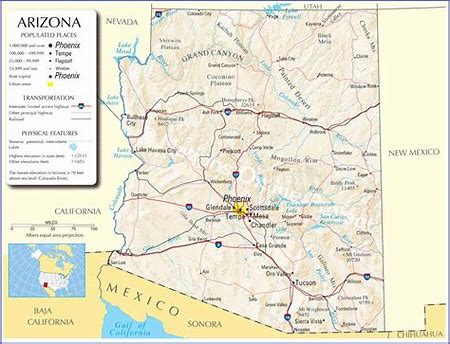
Sharad Desai – Nominee to the U.S. District Court for the District of Arizona

The brother of Ninth Circuit Judge Roopali Desai, Phoenix based attorney Sharad Desai is vying to become the first Indian American judge on the federal district court bench in Arizona.

Background

Born to an Indian immigrant family in Phoenix, Desai received a joint B.S. and B.A. from the University of Arizona in 2003 and then a J.D. from New York University School of Law in 2006. Desai then returned to Arizona to clerk for Arizona Supreme Court Justice Rebecca White Berch.

After his clerkship, Desai joined Osborn Maledon, P.A. in Phoenix. He became a Member with the firm in 2012. In 2015, he shifted to Honeywell International Inc., a business conglomerate working in aerospace and technology, among other areas, where he serves as Vice President and General Counsel.

History of the Seat

Desai has been nominated to the U.S. District Court for the District of Arizona, to a seat to be vacated on October 21, 2024, when Judge G. Murray Snow takes senior status.

Legal Experience

After his clerkship, Desai worked in litigation at Osborn Maledon, P.A. While at the firm, Desai represented a class of retired Arizona judges in a class action suit against a change in the calculations of pension benefit increases for judges. See Fields v. Elected Officials’ Retirement Plan, 320 P.3d 1160 (Ariz. 2014). Desai secured a victory for the class in trial court, which was affirmed by the Arizona Supreme Court. See id.

While at the firm, Desai was appointed by the Arizona District Court to represent a class of pretrial detainees in litigation by the Maricopa County Sheriff’s Office seeking to terminate consent agreements overseeing conditions in their jails. See Graves v. Arpaio, 48 F. Supp. 3d 1318 (D. Ariz. 2014). Desai maintained his representation of the class until he left the firm in 2015.

On the pro bono side, Desai represented a Nevada prisoner seeking recovery for costs from litigation challenging a disciplinary hearing against him. As part of his representation, Desai briefed and argued the appeal before the Ninth Circuit. See Jones v. McDaniel, 607 F. App’x 710 (9th Cir. 2015).

For the last nine years at Honeywell International Inc., Desai has served as a Counsel, advising various divisions of the company, and overseeing litigation in general. However, he has not appeared in court during this time. Nonetheless, Desai has supervised litigation, including in a $38 million product liability suit involving a Honeywell autopilot on an aircraft, which ended in a jury verdict in Honeywell’s favor after a two week trial. See Egbers v. Honeywell, Int’l, Cook County Circuit Ct. Case No. 06 L 6992 (Ill. 2016).

Overall Assessment

Perhaps more than any other Senator, Senator Kirsten Synema has been able to grease the wheels for nominees from her state. The three nominees to Arizona courts from the Biden Administration have each drawn more than 60 senators in support, a remarkable feat, given that only around 20% of the Administration’s judicial nominees have drawn that level of support.

While Desai is unlikely to get the same level of support, given the fact that his nomination will almost certainly be considered in the lame duck session, it is possible that Sinema will be able to work her magic a fourth time and ensure that Desai joins the bench in due course.

Sarah Davenport – Nominee to the U.S. District Court for the District of New Mexico

Las Cruces based federal prosecutor Sarah Davenport is hoping to make it onto the federal bench before the end of 2024.

Background

Born in Hobbs in Southern New Mexico, Davenport received his B.A. from New Mexico State University in 1998 and a J.D. from the University of New Mexico School of Law in 2006. Since then, Davenport has worked for the U.S. Attorney’s Office for the District of New Mexico, starting as a law clerk, and then working as an AUSA, and currently as a Supervisory AUSA.

History of the Seat

Davenport has been nominated for a future vacancy on the U.S. District Court for the District of New Mexico. This seat will open when Judge William Johnson, who will take senior status upon the confirmation of a successor.

Legal Career

Davenport has spent her entire legal career at the U.S. Attorney’s Office for the District of New Mexico, specifically working in the Las Cruces office in Southern New Mexico, where she worked on criminal prosecutions. During her tenure, Davenport tried four jury trials to verdict, including the prosecution of Jessie Marquez for participation in a conspiracy to distribute methamphetamine. See United States v. Marquez, 898 F.3d 1036 (10th Cir. 2018). After being convicted at trial, Marquez appealed, and Davenport briefed and argued the appeal before the Tenth Circuit, which ended in an affirmance. See id.

Among other matters, Davenport represented the U.S. Attorney’s Office in defending against challenges to pre-trial detention. See, e.g., United States v. Perez, 785 F. Supp. 2d 1177 (D.N.M. 2011) (Browning, J.) (denying motion for release).

Overall Assessment

Given her background as a federal prosecutor, Davenport appears to have the background in the criminal litigation that makes up a significant portion of a federal judge’s docket. Her ultimate chances of confirmation will turn largely on whether Democrats are able to appropriately prioritize it before the end of the Congress.

Elizabeth Coombe – Nominee to the U.S. District Court for the Northern District of New York

The scion of a politically active (and Republican leaning) family in Northern New York, Elizabeth Coombe is looking to beat the clock in the Biden Presidency and join the federal bench.

Background

Born in 1967 in Ridgewood, New Jersey, the daughter of Richard Coombe, who would go on to serve a decade in the New York Assembly, and as Chairman of the Sullivan County Republican Party. Coombe received an A.B. from Hamilton College in 1989 and a J.D. from the University of Michigan Law School in 1992. Coombe then clerked for Judge Diana Murphy on the U.S. District Court for the District of Minnesota.

After her clerkship, Coombe served as Staff Attorney for the U.S. Securities & Exchange Commission and then in the Civil Division of the U.S. Department of Justice. In 1998, Coombe joined the U.S. Attorney’s Office for the District of Columbia. In 2003, she shifted to the Albany Office of the U.S. Attorney’s Office for the Northern District of New York. Since 2018, Coombe has served as First Assistant U.S. Attorney.

History of the Seat

Coombe has been nominated to a seat on the U.S. District Court for the Northern District of New York. This seat was vacated on September 1, 2024, when Judge Glenn Suddaby took senior status.

Legal Experience

Coombe started her legal career at the Securities and Exchange Commission, where she worked on an investigation of the National Association of Securities Dealers Inc. She then shifted to the Civil Division at the Department of Justice, where, among other matters, Coombe worked on employee retirement suits brought before the Merit Systems Protection Board and the Federal Circuit. See Dilworth v. Office of Personnel Management, 132 F.3d 713 (Fed. Cir. 1997).

Between 1998 and 2003, Coombe worked as a criminal AUSA in the District of Columbia. In this role, Coombe also argued appeals before the D.C. Court of Appeals (not to be confused with the D.C. Circuit). See, e.g., Mercer v. United States, 724 A.2d 1176 (D.C. 1999). Coombe also defended against 2255 motions, or motions to amend, vacate, or set aside sentences in federal court. See, e.g., Culter v. United States, 241 F. Supp. 2d 19 (D.D.C. 2003). In a notable case, she defended convictions against Rico McLaughlin for the shooting of a government informant. See United States v. McLaughlin, 164 F.3d 1 (D.C. Cir. 1998).

Since 2003, Coombe has worked as a federal prosecutor in the Northern District of New York. Notably, while with the office, Coombe prosecuted New York Senate Majority Leader Joseph Bruno for corruption charges. See United States v. Bruno, 661 F.3d 733 (2d Cir. 2011). Bruno was initially convicted but the convictions were vacated after the U.S. Supreme Court’s decision in United States v. Skilling limited the reach of the honest services fraud statute. Bruno was acquitted in a retrial.

Coombe also prosecuted Giridhar Sekhar for seeking to blackmail the New York State Comptroller into approving an investment into his company. See United States v. Sekhar, 683 F.3d 436 (2d Cir. 2012). After Sekhar was convicted at trial and the Second Circuit affirmed, the Supreme Court reversed, finding that one could not extort someone for a recommendation as it was not a piece of property under the Hobbes Act. See Sekhar v. United States, 570 U.S. 529 (2013).

Political Activity

Despite coming from a politically active family, Coombe’s own political activity is fairly limited. Other than volunteering on her father’s campaigns, Coombe’s sole contribution was to Rep. John Katko (R-NY) in 2014.

Overall Assessment

While Coombe was nominated relatively late in the Senate calendar, her hearing was relatively calm compared to her fellow nominee to the Northern District. Given Coombe’s Republican ties, it’s possible that she may be seen as a consensus candidate to reach the bench, compared to other nominees pending.

Judge Anthony Brindisi – Nominee to the U.S. District Court for the Northern District of New York

While comparatively uncommon, former members of the House of Representatives have, on occasion, been nominated to be federal judges. Former New York Congressman Anthony Brindisi is the first former member of the House to be nominated to the federal bench since James Rogan in 2007, and, if confirmed, would be the first on the bench since Judge William Martini was confirmed in 2002.

Background

Born November 22, 1978, in Utica, Anthony Joseph Brindisi got his Bachelor of Arts from Siena College in 2000 and went on to earn his J.D. from Albany Law School in 2004. After law school, Brindisi joined his father’s firm, Brindisi, Murad & Brindisi Pearlman. He continued to work there until his election to the U.S. House in 2018.

After leaving the House in 2021, Brindisi rejoined the firm. In 2022, he was appointed to the New York State Court of Claims, where he serves.

Brindisi also served in the New York State Assembly between 2011 and 2019, and in the U.S. House of Representatives between 2019 and 2021.

History of the Seat

Brindisi has been nominated to a seat on the U.S. District Court for the Northern District of New York. This seat will be vacated when Judge David Hurd takes senior status. The Biden Administration previously appointed New York Assistant Attorney General Jorge Rodriguez to replace Hurd in 2022. However, Hurd took exception to the fact that Rodriguez was not based out of Utica and withdrew his intention to take senior status. In 2024, Hurd again indicated his willingness to take senior status upon confirmation of a successor.

Legal Experience

Between 2004 and 2018, and again from 2021 to 2022, Brindisi practiced law at his father’s firm in Utica. At the firm, Brindisi handled civil litigation, for example, representing the family of a girl struck by a motor vehicle in a suit against a municipality for failing to reduce speed limits or posting signs for children at play. See Dennis v. VanSteinburg, 2009 NY Slip Op (NY Appellate Div., 4th Dept. 2009). Brindisi’s work also encompassed appellate work, as well as trial level litigation. See, e.g., Scaparo v. Village of Ilion, 921 N.E.2d 590 (N.Y. App. 2009).

Jurisprudence

Brindisi has served as a judge on the New York State Court of Claims since Governor Kathy Hochul appointed him to the court in 2022. The New York Court of Claims is a specialized court that handles civil claims against the state and state agencies, where judges serve for nine year terms. Among the few opinions of Brindisi that are available for review, he granted a motion to dismiss claims arising from alleged sexual abuse suffered by the plaintiff in a correctional institution. See RS v. State of New York, 2024 Slip Op. 50859 (NY: Court of Claims 2024). In the opinion, Brindisi found that the claims were barred as untimely as they were served outside the one-year window that New York law permitted. See id. Brindisi noted that he was “sympathetic to claimant” but lacked the discretion under the law to waive the jurisdictional requirements of the law. See id.

Political Activity

Unlike most judicial nominees, Brindisi has an extensive political history, to include a list of public statements on most issues that is too long to detail here. A summary of Brindisi’s political history is below.

From 2011 to 2018, Brindisi served in the New York State Assembly, which is the lower house of the legislature. In this position, Brindisi generally earned a reputation as a moderate, For example, Brindisi described himself as a “strong supporter of the Second Amendment” and opposed the New York Securing Ammunitions and Firearms Act, criticizing the law for a lack of due process. See NY-22 Minute: Brindisi Questioned on Gun Policy By Luke Perry, Utica University Center of Public Affairs and Election Research, Mar. 9, 2018, https://www.ucpublicaffairs.com/home/2018/3/9/ny-22-minute-brindisi-questioned-on-gun-policy-by-luke-perry.

From 2019 to 2021, Brindisi served in the U.S. House. Notably, while in the House, Brindisi voted to impeach former President Donald Trump on both counts in 2019. See Mark Weiner, Rep. John Katko, Anthony Brindisi Split on Trump Impeachment Vote, Syracuse.com, Dec. 18, 2019, https://www.syracuse.com/news/2019/12/rep-john-katko-anthony-brindisi-split-on-trump-impeachment-vote.html. Brindisi subsequently lost his re-election in 2020 by a razor thin margin.

In 2021, Brindisi ran for a seat on the New York State Supreme Court, losing to Syracuse attorney Danielle Fogel, who was a childhood friend of Brindisi’s. See Douglass Dowty, Syracuse Lawyer Fogel Wins ‘Dream Job’ on State Supreme Court Against Ex-Congressman Brindisi, Syracuse.com, Nov. 2, 2021, https://www.syracuse.com/politics/2021/11/syracuse-lawyer-fogel-wins-dream-job-on-state-supreme-court-against-ex-congressman-brindisi.html.

Overall Assessment

The last two ex-Congressmen to be nominated for the federal bench had very different trajectories onto the bench. Martini was confirmed comfortably with no controversy, while Rogan’s nomination stalled due to the lack of support of his home state senator.

For his part, Brindisi’s path of the bench is likely to track in between the previous two. He is expected to get a hearing. However, such a hearing is likely to draw significant questioning based on his political stances. Given the rapidly closing window for judicial confirmations, it remains to be seen if Brindisi will be confirmed in time.

Keli Neary – Nominee to the U.S. District Court for the Middle District of Pennsylvania

At the Pennsylvania Attorney General’s Office, Keli Neary has represented the Commonwealth in a number of notable suits. She has now been nominated for a lifetime appointment to the federal bench.

Background

Neary received a B.A. cum laude from the University of Pittsburgh at Johnstown in 2003 and a J.D. from Widener University Commonwealth Law School in 2006.

After graduating, Neary clerked on the Pennsylvania Court of Common Pleas and then joined the Pennsylvania State Police’s Office of Chief Counsel. In 2012, Neary joined the Pennsylvania Attorney General’s Office, where she currently serves as Executive Deputy Attorney General in the Civil Division.

History of the Seat

The seat Neary has been nominated for will open on January 17, 2025, when Judge Christopher Conner takes senior status.

Legal Experience

Neary started her career at the Office of Chief Counsel for the Pennsylvania State Police. While in this role, Neary defended against Open Records requests filed seeking information from the police. See, e.g., State Police v. Office of Open Records, 995 A.2d 515 (Comm. Ct. Pa. 2010). Neary also represented the Police in grievances and pay disputes. See, e.g., State Police v. State Troopers Ass’n, 992 A.2d 969 (Comm. Ct. Pa. 2010). In one notable case, the Pennsylvania Superior Court denied an appeal argued by Neary seeking to block discovery of personnel records of a state trooper, ruling that the granting of a motion to compel could not be appealed on an interlocutory basis. See Com. v. Brister, 16 A.3d 530 (Pa. Sup. Ct. 2011).

In 2012, Neary shifted to the Pennsylvania Attorney General’s Office, where she has worked since, where, among other cases, she defends the state against constitutional claims. See, e.g., Musila v. Lock Haven University, 970 F. Supp. 2d 384 (M.D. Pa. 2013). Among these matters, Neary represented the State in a bench trial over constitutional claims arising from the plaintiff’s ejection from a Pennsylvania horse racing stadium and the suspension of his horse trainer’s license. See Adamo v. Dillon, 900 F. Supp. 2d 499 (M.D. Pa. 2012). Notably, Neary represented the State of Pennsylvania in a 2016 suit filed by Presidential candidate Roque de la Fuente, who sought a ballot position. See De La Fuente v. Cortes, 261 F. Supp. 3d 543 (M.D. Pa. 2017). Neary also represented the Commonwealth of Pennsylvania in defending against a suit arguing that the Takings Clause prohibits the state creation and funding of the Joint Underwriting Association as a medical malpractice insurer. See Pa. Prof. Liab. Joint Underwriting Ass’n v. Wolf, 324 F. Supp. 3d 519 (M.D. Pa. 2018).

Among other matters, Neary defended against suits seeking to change an individual’s Sexual Offender Registration status. See, e.g., Konyk v. Pennsylvania State Police of Com., 133 A.3d 96 (Comm. Ct. Pa. 2016); Dougherty v. Pennsylvania State Police of Com., 138 A.3d 152 (Comm. Ct. Pa. 2016).

Among other politically salient cases she has handled, Neary defended Pennsylvania’s Contact Tracing and Mask Mandate programs developed during the Covid-19 pandemic. See Parker v. Wolf, 506 F. Supp. 3d 271 (M.D. Pa. 2020). She was also part of the legal team defending the results of the 2020 Presidential election in Pennsylvania against suits brought by former President Trump seeking to throw out lawfully cast votes. See Donald J. Trump for President, Inc. v. Boockvar, 502 F. Supp. 3d 899 (M.D. Pa. 2020). Neary also participated in suits against Pennsylvania’s indoor dining ban. See M. Rae, Inc. v. Wolf, 509 F. Supp. 3d 235 (M.D. Pa. 2020).

Overall Assessment

Neary’s time in the Attorney General’s office has given her both extensive experience litigating in the Harrisburg Division of Pennsylvania’s Middle District as well as participation in several particularly controversial cases, involving both Covid-19 related restrictions and Pennsylvania’s election regulations. It is likely that Neary will draw some opposition to her confirmation based on her positions in these suits, although, acting as an advocate, Neary can likely draw a distinction between her own positions and those of her client.

Tiffany Johnson – Nominee to the U.S. District Court for the Northern District of Georgia

Seeking to solidify his mark on the federal bench as his time as President winds down, President Biden has nominated federal prosecutor Tiffany Johnson to replace Judge Steve Jones on the Northern District of Georgia.

Background

Born in 1986, Tiffany Johnson got a B.A. magna cum laude from Princeton University in 2009 and then attended Wake Forest University Law School, graduating in 2012. Following her graduation, Johnson joined Parker, Hudson, Rainer & Dobbs LLP in Atlanta as a litigation associate. Since 2017, Johnson has worked as an Assistant U.S. Attorney for the Northern District of Georgia, starting in the Civil Division and then working in the Criminal Division.

History of the Seat

Johnson has been nominated for a seat on the U.S. District Court for the Northern District of Georgia. This seat will open on January 1, 2025, when Judge Steve Jones moves to senior status.

Legal Experience

Johnson started her legal career at the Atlanta office of Parker, Hudson, Rainer & Dobbs LLP. At the firm, Johnson represented the Plumbers and Steamfitters Local No. 150 Pension Fund in an ERISA dispute relating to contributions into the system. See Plumbers and Steamfitters Local No. 150 Pension Fund v. Muns Group, Inc., No. 1:15-cv-200 (S.D. Ga. Aug. 26, 2016).

From 2017 to 2020, Johnson served as an Assistant U.S. Attorney with the Civil Division of the U.S. Attorney’s Office for the Northern District of Georgia. In this role, Johnson acted to defend the United States in civil suits filed, for example, in suits challenging immigration decisions made by the Department of Homeland Security. See, e.g., CARE v. Nielsen, 461 F. Supp. 3d 1289 (N.D. Ga. 2020).

Since 2020, Johnson has worked as a federal prosecutor with the Criminal Division of the U.S. Attorney’s Office for the Northern District of Georgia. Among the matters she handled there, Johnson prosecuted Atlanta CFO Jim Beard for improperly using city money to pay his personal expenses. See City of Atlanta’s Former Chief Financial Officer Pleads Guilty to Federal Program Theft and Tax Obstruction, AllonGeorgia, Apr. 8, 2024, https://allongeorgia.com/georgia-public-safety/city-of-atlantas-former-chief-financial-officer-pleads-guilty-to-federal-program-theft-and-tax-obstruction/.

Overall Assessment

At 37, Johnson is one of the youngest nominees put forward for the federal bench by Biden. However, provided that Democrats can remain united on her nomination, Johnson should nonetheless be able to confirmed before the end of this Congress.

Byron Conway – Nominee to the U.S. District Court for the Eastern District of Wisconsin

After their previous nomination of Judge William Pocan to fill a vacancy on the Eastern District of Wisconsin failed due to the opposition of Sen. Johnson, the Biden Administration is trying again with Green Bay attorney Byron Conway.

Background

Byron B. Conway received his B.A. from Santa Clara University in 1998 and his J.D. from the Marquette University in 2002. Conway then joined the Milwaukee firm Gimbel Reilly Guerin & Brown LLP.

In 2006, Conway shifted to the Green Bay office of Habush, Habush, & Rottier S.C., where he currently serves as a shareholder.

History of the Seat

Conway has been nominated to the U.S. District Court for the Eastern District of Wisconsin, to a seat vacated on December 31, 2019, by Judge William Griesbach. In June 2021, Wisconsin senators Ron Johnson and Tammy Baldwin, a Republican and a Democrat, respectively, recommended four candidates to the White House to fill the vecancy. See Craig Gilbert, Baldwin and Johnson Bring Forward Four Candidates to Fill Federal Judgeship in Green Bay, Milwaukee Journal Sentinel, June 22, 2021, https://www.jsonline.com/story/news/politics/2021/06/22/four-candidates-named-fill-federal-judgeship-green-bay/5312798001/. On December 15, 2021, the White House nominated Judge William Pocan to fill the seat. However, Senator Ron Johnson declined to return a blue slip for Pocan, blocking his nomination.

Subsequently, Baldwin and Johnson recommended Conway alongside Marc Hammer to fill the vacancy. Conway was announced for the vacancy on July 3, 2024. Both Baldwin and Johnson have indicated their support for Conway and have returned blue slips for him, and supported him through his judiciary committee hearing. See Sarah Lehr, A Long-Vacant Federal Judgeship in Wisconsin Could Finally Be Filled, Wisconsin Pub. Radio, July 23, 2024, https://www.wpr.org/news/vacant-federal-judgeship-wisconsin-could-fill.

Political Activity

Conway has been a frequent donor throughout his legal career, giving primarily to Democrats and judicial candidates endorsed by the Democratic party. He does have a handful of donations to Republicans, including Rep. Scott Fitzgerald.

Legal Experience

Conway has primarily worked in personal injury litigation through his career. For example, Conway was part of the legal team for plaintiffs suing for damages after a propane related explosion at the Cedar Grove Resort in Ellison Bay, Wisconsin. See Brooks v. General Cas. Co. of Wis., 619 F. Supp. 2d 599 (E.D. Wis. 2008).

Among other notable cases, Byron Conway represented James Starks, a former running back with the Green Bay Packers, whose career ended due to his car being struck by another vehicle. See Yash Roy, Johnson, Baldwin Make Recommendations for Long-Vacant Federal Judgeship in Green Bay, Milwaukee Journal Sentinel, June 8, 2023, https://www.jsonline.com/story/news/politics/2023/06/08/johnson-baldwin-make-recommendations-for-eastern-district-vacancy/70289980007/.

Overall Assessment

Conway has already crossed one hurdle that held up the previous nominee to this vacancy: his home state senators have returned positive blue slips for him. As such, Conway’s nomination has reached a Senate Judiciary Committee hearing, and is favored for confirmation.

Karla Campbell – Nominee to the U.S. Court of Appeals for the Sixth Circuit

Tennessee Senators and the Biden Administration have now clashed over three different appellate nominations to the Sixth Circuit. The Administration has nonetheless managed to muscle out labor lawyer Karla Campbell’s nomination onto the Senate floor.

Background

Born in Knoxville in 1979, Karla Marie Campbell received a B.A. from the University of Virginia in 2002, and a J.D. from the Georgetown University Law Center in 2008 before joining Watson & Renner in Washington D.C. for a year. Campbell subsequently joined Branstetter Stranch & Jennings PLLC in Nashville.

After a year there, Campbell became an inaugural law clerk for partner Jane Branstetter Stranch, who was appointed by President Obama to the Sixth Circuit. Campbell returned to the firm after, where she still practices.

History of the Vacancy

Campbell has been nominated for a Tennessee seat on the U.S. Court of Appeals for the Sixth Circuit. If confirmed, she would replace Stranch, for whom she had previously clerked.

Legal Experience

Campbell has spent virtually her entire legal career at the firm of Stranch Jennings & Garvey PLLC (formerly Branstetter Stranch & Jennings PLLC), where she worked on plaintiff side employment and tort litigation, including the representation of labor unions in Tennessee.

For example, Campbell has represented plaintiffs suing for violations of the Employee Retirement Income Security Act (ERISA). See, e.g., Vaden v. Dekalb Telephone Co-op., Inc., 21 F. Supp. 3d 901 (M.D. Tenn. 2014). Notably, Campbell represented Andre Deschamps in an ERISA claim against his employer after they failed to honor a promise to maintain ten years of pension credit that he had entered the position with. See Deschamps v. Bridgestone Americas, Inc., 169 F. Supp. 3d 375 (M.D. Tenn. 2015). After the district court sided with Deschamps, the Sixth Circuit affirmed. Deschamps v. Bridgestone Americas, Inc., 840 F.3d 267 (6th Cir. 2016).

Outside of the ERISA context, Campbell was part of a legal team challenging medical treatments for Tennessee inmates being treated for Hepatitis C as inadequate, including through a bench trial that ended in a verdict finding no violation of the Eighth Amendment. See Atkins v. Parker, 412 F. Supp. 3d 761 (M.D. Tenn. 2019) (Crenshaw, J.).

Campbell also had the opportunity to argue a number of cases before the Sixth Circuit. For example, she convinced the Sixth Circuit to reverse the dismissal of an ERISA action against Cumberland University. See Hitchcock v. Cumberland University 403 (b) DC Plan, 851 F.3d 552 (6th Cir. 2017).

Political Activity

Campbell has made a number of political donations throughout her career, all to Democrats. This includes a donation to Congressional candidate Odessa Kelly, which drew scrutiny at her confirmation hearing.

Writings

Notable among Campbell’s writings in a paper she authored as a J.D. candidate at Georgetown endorsing a cross-border “labor exchange program.” See Karla M. Campbell, Guest Worker Programs and the Convergence of U.S. Immigration and Development Policies: A Two-Factor Economic Model, 21 Geo. Immigr. L.J. 663 (2006-2007). In the paper, Campbell discusses guest worker programs proposed by then President George W. Bush, and argues that a cross-border labor exchange program would permit a maximization of economic goals for the United States and foreign economic stakeholders. See id.

Overall Assessment

Despite the opposition of her home state senators, Campbell’s nomination has reached the Senate floor. However, here, it joins a long queue of judicial nominations that will need essential unanimous support from the Democratic caucus in order to be confirmed. It remains to be seen if Campbell’s nomination will cross that threshold, given the limited floor time left this Congress.

Judge Jonathan Hawley – Nominee to the U.S. District Court for the Central District of Illinois

U.S. Magistrate Judge Jonathan Hawley has been tapped by the Biden Administration to replace Judge James Shadid, who will take senior status next month.

Background

A native of Central Illinois, Hawley was born in Peoria in 1971. He received a B.A. cum laude from the University of Illinois at Chicago in 1992 and a J.D. cum laude from DePaul University College of Law in 1997. Hawley then clerked for Judge Michael McCuskey on the Illinois Third District Appellate Court and then continued with McCuskey when the latter was appointed to the U.S. District Court for the Central District of Illinois. Hawley then clerked for Justice James Heiple on the Illinois Supreme Court.

Hawley subsequently joined the Federal Public Defender’s Office for the Central District of Illinois.

In 2014, Hawley became a federal magistrate judge in the Central District of Illinois, where he still works.

History of the Seat

Hawley has been nominated for a future vacancy on the U.S. District Court for the Central District of Illinois, which Judge James Shadid will vacate on September 27, 2024. On April 12, 2024, Illinois Senators Durbin and Duckworth recommended Hawley for the seat alongside state judges Katherine Legge and Christopher Doscotch and Assistant Public Defender Mohammad Ahmed . Hawley was nominated for the seat on July 3, 2024.

Legal Career

Before he became a judge, Hawley spent his entire legal career as an assistant federal public defender for the Central District of Illinois. Hawley rose to be Chief Public Defender with the office, in which capacity he represented the petitioner before the U.S. Supreme Court in a suit arguing that the Fair Sentencing Act, which reduced the disparity in penalties between powder and crack cocaine, applied to offenders who committed offenses before the effectiveness of the Act but were sentenced after. See Dorsey v. United States, 567 U.S. 260 (2012). The Supreme Court agreed in a 5-4 decision. See id.

Hawley was also part of the legal team representing Benjamin Robers, arguing that the district court erred in awarding restitution in a mortgage fraud case based on the value lost by the bank from the sales of the properties rather than the value of the seizure of the properties. Robers v. United States, 572 U.S. 639 (2014). This time, the Supreme Court unanimously disagreed. See id.

Jurisprudence

Since 2014, Hawley has served as a magistrate judge on the U.S. District Court for the Central District of Illinois. As a magistrate judge, Hawley writes reports and recommendations for district judges, supervises discovery disputes and settlements, and hears cases by consent of the parties.

Many of Hawley’s most notable cases arose from prisoner litigation alleging violations of their rights and/or negligence. In one case, Hawley found that prison doctors were not negligent in failing to diagnose a prisoner’s appendicitis, a decision affirmed by the Seventh Circuit. See Brown v. Osmundson, 38 F.4th 545 (7th Cir. 2022).

Among reversals Hawley has seen, the Seventh Circuit reversed his grant of summary judgment to a doctor who waited seven weeks to send a prisoner back to an orthopedic surgeon (the surgeon had previously recommended that the prisoner return after three weeks). See Zaya v. Sood, 836 F.3d 800 (7th Cir. 2016). In another case, the Seventh Circuit reversed Hawley’s dismissal of a prisoner’s lawsuit upon a finding that the prisoner’s submission included fraudulent statements. See Sanders v. Melvin, 25 F.4th 475 (7th Cir. 2022). The Seventh Circuit reversed, finding that the finding of fraud was clearly erroneous and that Hawley erred in failing to consider sanctions short of dismissal. See id. at 478.

Overall Assessment

During the confirmation process, Hawley may draw questions regarding some of his reversals as a Magistrate Judge. But, nonetheless, Hawley should be able to be confirmed if he avoids further controversy.