Jamel Semper – Nominee to the U.S. District Court for the District of New Jersey

A lifelong prosecutor who was considered to be U.S. Attorney in 2021, Jamel Semper has now been nominated to a seat on the New Jersey federal bench.

Background

Born in Brooklyn in 1981, Jamel Ken Semper received a Bachelor of Arts from Hampton University in 2003 and a J.D. from Rutgers School of Law in 2007. He then clerked for Judge Harold Fullilove on the Essex County Superior Court and became a state prosecutor with the Union County Prosecutor’s Office. In 2013, Semper shifted to the Essex County Prosecutor’s Office, and in 2018, to the U.S. Attorney’s Office for the District of New Jersey, where he currently serves as Deputy Chief of the Criminal Division.

History of the Seat

At the recommendation of Senator Cory Booker, Semper has been nominated to replace Judge John Michael Vazquez, who resigned from the bench on September 8, 2023.

Legal Experience

Semper started his career as a state prosecutor, first working in the Union County Prosecutor’s Office and then shifting to the Essex County Prosecutor’s Office. Notably, with the latter office, Semper prosecuted Ali Mohammad Brown, who ended up pleading guilty of murder and terrorism for the murder of Brendan Tevlin as part of “Jihad”. See Alex Johnson, Man Pleads Guilty to N.J. Murder, Admits to Three Others in ‘Jihad’, NBC News, Mar. 6, 2018, https://www.nbcnews.com/news/us-news/man-pleads-guilty-n-j-murder-admits-three-others-jihad-n854346. Semper also prosecuted Lamar Hunt, who was found guilty by a jury of murder for killing a man his girlfriend had been texting with. See Thomas Moriarty, Man Gets Life for Luring Shooting Victim to His Death, NJ.com, July 25, 2017, https://www.nj.com/essex/2017/07/lamar_hunt_sentenced_to_life_for_white_castle_killing.html.

Since 2018, Semper worked at the U.S. Attorney’s Office for the District of New Jersey. At the office, Semper was named Deputy Chief of the Criminal Division in 2022. Among the matters he handled there, Semper prosecuted Richard Adebayo, who was convicted after a two-week jury trial, of conspiracy to commit wire fraud, 14 counts of wire fraud, and two counts of aggravated identity theft. See Essex County Man Convicted of Wire Fraud and Aggravated Identity Theft, Press Release, Office of the U.S. Attorney, June 28, 2019 (available at https://www.justice.gov/usao-nj/pr/essex-county-man-convicted-wire-fraud-and-aggravated-identity-theft).

Overall Assessment

Semper is one of a number of Biden appointees that is transforming New Jersey’s federal bench. While a relatively young nominee, Semper’s background as a prosecutor is likely to avoid too much opposition and will likely lead to a smooth confirmation.

Judge John Kazen – Nominee to the U.S. District Court for the Southern District of Texas

The son of a long-serving federal judge, Judge John Kazen is President Biden’s first nominee to the Texas district courts.

Background

John Andrew Kazen was born in Lincoln, Nebraska in 1964, the son of George Kazen, who would later be appointed to the U.S. District Court for the Southern District of Texas. Kazen graduated from the University of Texas at Austin in 1987 and received a J.D. from the University of Houston Law Center in 1990. After graduating, Kazen spent a year as a law clerk to Judge Robert Manley Parker on the U.S. District Court for the Eastern District of Texas before joining Kemp, Smith, Duncan & Hammond P.C. in El Paso. In 1998, Kazen shifted to became a name Partner at Kazen, Meurer & Perez, L.L.P. in Laredo.

In 2018, Kazen was appointed as a U.S. Magistrate Judge for the U.S. District Court for the Southern District of Texas, where he currently serves.

History of the Seat

Kazen has been nominated to fill a vacancy opened by Judge Vanessa Gilmore’s retirement on January 2, 2022.

Legal Experience

Before he joined the federal bench, Kazen spent approximately twenty-six years in private practice, starting in El Paso and then shifting to Laredo. Kazen’s practice was primarily focused on representing defendants in personal injury cases. During the course of his career, he tried 18 jury trials. For example, Kazen represented the tile manufacturer Interceramic in a suit brought by a plaintiff truck driver based on injuries sustained dring the transport of the tiles. See Garcia-Gutierrez v. Interceramic, Inc., No. B-98-128 (S.D. Tex. 1998). The suit concluded in a jury verdict in favor of the defendant.

Outside the personal injury context, Kazen represented the security company ADT in a civil RICO (Racketeer Influenced and Corrupt Organizations Act) lawsuit against another security company relating to the sales of security systems in Mexico. See ADT Security Services, S.A. De C.V. v. Alert 24 Security, L.L.C., No. 2006CVQ001051-D2 (111th Dist. Ct., Webb Cnty. Tx.). He represented the company to a jury trial, where the jury found in his favor on the RICO claim but against him on the other claims.

Kazen has also handled a number of employment discrimination cases. For example, he represented the Texas Migrant Council in defending against a national origin discrimination suit, which ended in a jury verdict for Kazen’s client. See Alvarez v. Tex. Migrant Council, Inc., No. 5:2000-cv-00153 (S.D. Tex. 2000). In another case, Kazen successfully moved for summary judgment in a national origin discrimination case brought by a teacher against the Laredo Independent School District. See Garza v. Laredo Indep. Sch. Dist., 2009 WL 221258 (5th Cir. 2009).

Jurisprudence

Since 2018, Kazen has been a federal magistrate judge on the U.S. District Court for the Southern District of Texas. In this role, Kazen presides over bond hearings, discovery disputes, and cases where the parties consent to his jurisdiction. During his tenure on the bench, Kazen has presided over eight trials: seven of them civil. For example, Kazen presided over a bench trial involving a Federal Tort Claims Act suit after a Border Patrol agent shot the plaintiff, after which, Kazen granted a motion to dismiss, finding that sovereign immunity was not waived for the specific actions of the border patrol agent. See Cantu Silva v. United States, No. 5:19-CV-151 (S.D. Tex. Oct 31, 2022).

In another notable case, Kazen granted a motion to dismiss Section 1983 claims brought relating to the arrest of a citizen journalist by the Laredo police, finding that the officers were entitled to qualified immunity. See Villarreal v. City of Laredo, 44 F.4th 363 (5th Cir. 2022). The Fifth Circuit, in a 2-1 opinion, reversed, finding the violation of the plaintiff’s rights to be “obvious.” See id. at 367. In dissent, Chief Judge Priscilla Richman stated that Kazen “faithfully applied the law” in his decision. Id. at 382. Shortly after, the Fifth Circuit granted en banc rehearing to the decision, vacating the reversal.

Political Activity

Kazen has been a frequent donor to Democratic candidates for office, including multiple donations to President Obama and to Rep. Henry Cuellar.

Overall Assessment

With Texas’ federal judges among the most overworked in the country, the nomination of Kazen couldn’t come fast enough. As Kazen has the strong support of Texas’ Republican Senators, he is likely to be comfortably confirmed before the end of the year.

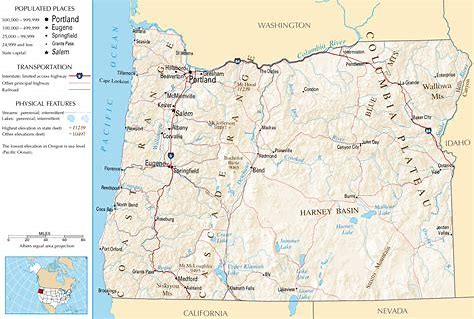
Mustafa Kasubhai – Nominee to the U.S. District Court for the District of Oregon

Judge Mustafa Kasubhai made history in 2018 as the first Muslim-American on the federal bench (albeit not in a lifetime appointment). He has now been nominated to such a position by President Biden.

Background

Born in Reseda, California in 1970 to an Indian immigrant family, Mustafa Taher Kasubhai received a B.A. from the University of California, Berkeley in 1992 and a J.D. from the University of Oregon School of Law in 1996.

A year after graduation, Kasubhai opened his own law practice in Eugene, Oregon, which he maintained until being appointed to the Oregon Workers’ Compensation Board in 2003.

In 2007, Governor Ted Kulongoski appointed Kasubhai to the Lane County Circuit Court. In 2018, Kasubhai was chosen to be a U.S. Magistrate Judge with the U.S. District Court for the District of Oregon, where he currently serves.

History of the Seat

Kasubhai has been nominated for a seat on the U.S. District Court for the District of Oregon. This seat will open on December 29, 2023, when Judge Ann Aiken moves to senior status. Kasubhai was among six candidates recommended to the White House by Oregon Senators in June 2023.

Legal Experience

Kasubhai started his legal practice in Eugene Oregon in 1997 and maintained that practice until his appointment to the Oregon Board of Workers’ Compensation in 2003. His practice consisted largely of representing plaintiffs in workers’ compensation claims and in personal injury suits. In addition to a heavily administrative practice, Kasubhai also tried ten jury trials. Notably, Kasubhai represented the daughter of a decedent who died of carbon monoxide poisoning after the use of a propane heater in a tent. Kasubhai represented the plaintiffs in a 8-day jury trial which ended in a verdict for the plaintiff, which was subsequently affirmed on appeal. See Benjamin v. Walmart, 185 Or. App. 444 (2002). Kasubhai also represented a worker who cracked a tooth on an employer-provided snack in administrative proceedings and before the Oregon Court of Appeals. See Liberty Northwest Ins. Corp. v. Nichols, 186 Or. App. 664 (2002).

Jurisprudence

Kasubhai served as a Circuit Court Judge from 2007 to 2018. In this role, he served as a primary trial judge, supervising criminal and civil cases. In a notable decision later affirmed by the Oregon Court of Appeals, Kasubhai denied a motion to suppress, finding that the defendant, as a guest in the home being searched, lacked a privacy interest implicating the Fourth Amendment. See State v. Gonzalez, 292 Or. App. 342 (2018). In another notable decision, Kasubhai instructed a jury that drug use, drug dependence, and drug-induced psychosis did not constitute mental diseases or defects that affected the defendant’s culpability in murdering his girlfriend, which the Oregon Court of Appeals affirmed. See State v. Folks, 290 Or. App. 94 (2018).

Since 2018, Kasubhai has served as a federal magistrate judge for the U.S. District Court for the District of Oregon, in which role he handles pretrial release, discovery matters, as well as cases where parties consent to his jurisdiction. Among the notable cases he handled, parties consented to have him hear a “rule of reason” Sherman Act claim regarding a collective decision by Defendant neurologists to stop covering the Plaintiff’s calls. See Ireland, M.D. v. Bend Neurological Associates, et al., No. 6:16-cv-02054-MK, 2021 WL 1229937 (D. Or. Mar. 31, 2021). Kasubhai granted summary judgment to the Defendants on the claims, which was affirmed by the Ninth Circuit. See 2023 WL 2783240 (9th Cir. Apr. 5, 2023). In another decision pending on appeal, Kasubhai granted summary judgment in favor of a union, finding that its withdrawal of union fees from the plaintiff did not violate the First Amendment because it was not a state actor. See Cram v. Local 503 SEIU, 590 F. Supp. 3d 1330 (D. Or. 2022).

Political Activity

Kasubhai has a handful of political donations to his name, all to Democratic candidates.

Writings and Statements

Kasubhai has written and spoken frequently on the law, particularly in favor of greater diversity both on the bench in the legal community, with some of his expressed views being raised in criticism at his confirmation hearing. See also The Honorable Mustafa Kasubhai, Old Oregon, Autumn 2009 (available at https://scholarsbank.uoregon.edu/xmlui/bitstream/handle/1794/10018/OQ_Autumn09.pdf). However, Kasubhai’s writings extend back to his law student days, when he authored an article critical of state rape laws that required showings of force in order to criminalize rape, arguing that the laws should be based around consent (or lack thereof) demonstrated by the victim. See Mustafa T. Kasubhai, Destabilizing Power in Rape: Why Consent Theory in Rape Law is Turned On Its Head, 11 Wis. Women’s L.J. 37 (1996-1997) (available at https://api.law.wisc.edu/repository-pdf/uwlaw-library-repository-omekav3/original/03d50dd18ada15fb757ee7dce07c20df3c1172d1.pdf).

Overall Assessment

Reviewing Kasubhai’s judicial record reveals some contrast with the portrait painted by critics at his confirmation hearing. His rulings have largely been affirmed and do not reveal anything out of the judicial mainstream. Judge Michael Mosman, probably the most prominent conservative voice on the Oregon district court bench, has written in support of Kasubhai’s nomination. However, despite all of this, it is likely that Kasubhai’s nomination will prove controversial based on his past writings. Nonetheless, if Democrats buckled down, they likely could confirm Kasubhai in due course before Judge Aiken moved to senior status.

Shanlyn Park – Nominee to the U.S. District Court for the District of Hawaii

State Judge Shanlyn Park, who had spent most of her career as a federal public defender in Hawaii, has been nominated to a lifetime appointment on Hawaii’s federal bench.

Background

Shanlyn Alohakeao Souza Park was born in Honolulu in 1969. She received a B.A. from the Chaminade University of Honolulu in 1991 and her J.D. from the University of Hawaii William S. Richardson School of Law in 1995. After graduating, Park clerked for U.S. Magistrate Judge Francis Yamashita and then became an Assistant Federal Public Defender with the District of Hawaii in 1997. In 2017, she left to return to private practice in Honolulu.

Since 2021, Park has served as a Circuit Court Judge for the First Circuit for the State of Hawaii.

History of the Seat

Park has been nominated for a vacancy on the U.S. District Court for the District of Hawaii. This seat will open when Judge Leslie Kobayashi moves to senior status on October 9, 2024.

Legal Experience

For the vast majority of her career, Park worked as a federal public defender in Hawaii, representing indigent defendants in both misdemeanor and felony matters in federal court. Notably, Park represented a co-defendant in a murder case, where she was able to negotiate a 30 year sentence for her client with opposing counsel Jill Otake (who later joined the federal bench under President Trump). See United States v. Jackson, Cr. No. 15-00293 SOM-KSC (D. Haw.). Notably, Park also represented Jeffrey Drye, who was charged with abusive sexual contact and sexual assault in the first degree. Drye v. United States, Civ. No. 12-00355 JMS (D. Haw.). After his conviction, Drye filed a petition alleging, among other claims, that Park provided him with ineffective assistance of counsel. See id. Specifically, Drye alleged that Park was ineffective in allowing Drye to testify at trial, in failing to file an appeal, and in her representation at sentencing. Id. Judge J. Michael Seabright rejected all three contentions. On the first, he found that, while Park advised Drye to testify, that advice “was a reasonable, strategic choice.” See id. On the second contention, Seabright noted that Drye himself had declined to file an appeal and that Park would not have been able to help him on a petition suggesting that she herself was ineffective. See id. Regarding the sentencing, Seabright noted:

“The only conclusion these facts support is that Park provided Drye extremely competent representation that resulted in Drye receiving a lower sentence than he otherwise could have received.”

From 2017 to 2021, Park worked in private practice, working on commercial litigation, including mediations and arbitration. Notably, Park represented Kaluakoi Poolside, LLC. in a commercial arbitration involving a dispute over the maintenance of common areas of a shared commercial property. See The West Molokai Association of Apartment Owners v. Kaluakoi Poolside, LLC., Case No. 16-0033-A (Dispute Prevention & Resolution Hawai’i Inc.).

Jurisprudence

In 2021, Park was appointed to the First Circuit of Hawaii by Governor David Ige. She initially worked in the Family Court Division and then in 2023 shifted to the Criminal Division. Over the course of her tenure, Park has presided over 21 jury trials, all in criminal cases.

Overall Assessment

Park’s Judiciary hearing attracted relatively little attention, and there is little reason to believe that this will change through the confirmation process. With Judge Kobayashi’s departure from active status still a year away, Park is almost certain to be confirmed well in advance of the vacancy opening.

Micah Smith – Nominee to the U.S. District Court for the District of Hawaii

Micah Smith, a former SCOTUS clerk, and longtime federal prosecutor, would bring a star-studded resume to the federal bench.

Background

Born in Mill Hall, Pennsylvania in 1981, Micah Smith graduated summa cum laude from the Lock Haven University of Pennsylvania in 2003 and then received a J.D. magna cum laude from Harvard Law School in 2006. After graduating, Smith clerked for Judge Guido Calabresi on the U.S. Court of Appeals for the Second Circuit and then for Justice David Souter on the U.S. Supreme Court, in a clerk class that included Senator Josh Hawley, California Solicitor General Michael Mongan, and federal judge Rachel Kovner.

Smith subsequently joined the Washington D.C. Office of O’Melveny & Myers and in 2012 moved to be a federal prosecutor with the U.S. Attorney’s Office for the Southern District of New York. In 2018, he shifted to the U.S. Attorney’s Office for the District of Hawaii, where he serves as Appellate Chief.

History of the Seat

Smith has been nominated for a vacancy on the U.S. District Court for the District of Hawaii. This seat will open when Judge J. Michael Seabright moves to senior status on January 30, 2024.

Legal Experience

After his clerkships, Smith started his legal career at the D.C. Office of O’Melveny & Myers. In this role, Smith worked primarily on appellate litigation, handling a wide variety of issue areas. This included briefing at the Supreme Court, where he was part of the legal team for Antoine Jones, who successfully challenged the attachment of a GPS tracking device on his vehicle under the Fourth Amendment. See United States v. Jones, 565 U.S. 400 (2011). Smith also represented the D.C. Public Charter School Board pro bono in defending its decision to revoke the charter of a failing school. See KIMA v. D.C. Public Charter School Board, 55 A.3d 894 (D.C. Ct. App. Nov. 15, 2012).

Between 2012 and 2018, Smith worked as a federal prosecutor with the U.S. Attorney’s Office for the Southern District of New York. Smith started as a line prosecutor with the office before advancing into a supervisory role. His notable cases with the office included a jury trial resulting in the conviction for conspiring to distribute crack cocaine in the Bronx. See United States v. Muir, 710 F. App’x 510 (2d Cir. Feb. 9, 2018). Smith was also co-lead counsel alongside fellow judicial nominee Margaret Garnett in the trial leading to the conviction of a defendant charged with ordering hitmen to murder his nephew. See United States v. Ventura, 673 F. App’x 82 (2d Cir. Dec. 15, 2016).

After moving to Hawaii in 2018, Smith has worked as a federal prosecutor. Smith has handled a number of supervisory roles with the office, to include the Criminal Civil Rights Coordinator and his current role as Chief of Appeals and Legal Strategy. While with the office, Smith notably prosecuted an individual for assaulting the patron of an illegal gambling business while working as security because the patron refused to share his winnings with him. See United States v. Siatunuu, No. 19-cr-00119 (D. Haw. 2019-21) (Judge J. Michael Seabright). In this representation, Smith litigated against Assistant Federal Public Defender Shanlyn Park, who has been nominated alongside him to the Hawaii federal bench.

Overall Assessment

While he is unlikely to get the support of his co-clerk sitting on the Senate Judiciary Committee, Smith nonetheless is likely to sail to confirmation. Given his youth and stellar credentials, Smith would likely also be a strong contender for future elevation, including potentially when Judge Mark Bennett takes senior status.