Senate Judiciary Committee Advances Thapar’s Nomination to the Floor

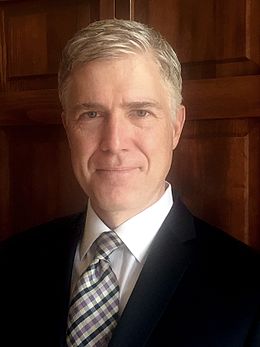
Today, the Senate Judiciary Committee advanced the nomination of Judge Amul Thapar to the U.S. Court of Appeals to the Sixth Circuit.  The vote to move his nomination was 11-8, with all Republicans voting in favor, and all Democrats voting against (Senator Mazie Hirono did not cast a vote).

In explaining her opposition, Senator Feinstein (D-CA), the ranking member of the committee, noted Thapar’s decision in Winter v. Wolnitzek.  This blog discussed Winter and other cases where Thapar had been reversed here.

Thapar now joins a small but growing list of nominees waiting for a floor vote.  Given his close ties to Senate Majority Leader Mitch McConnell, it would not be surprising to see Thapar called up for a confirmation vote before the Memorial Day recess.

Judge David Nye – Nominee to the U.S. District Court for the District of Idaho

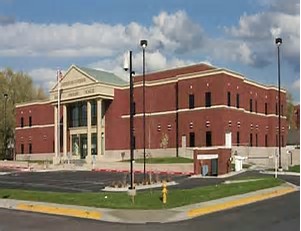
The Idaho Federal Courthouse in Pocatello, where Nye will likely sit.

In December 2016, the Republican-controlled U.S. Senate left 59 pending judicial nominations made by President Obama unconfirmed as it adjourned.  Among those nominations was that of Judge David Nye, an Idaho state judge named to a federal district court seat.  Last week, Nye’s nomination was improbably revived by President Trump, giving him another opportunity for a lifetime appointment.

Background

David Charles Nye was born in 1958 in Lynwood, California.  After spending a year at the University of Utah, Nye received his Bachelor’s degree and his J.D. from Brigham Young University in Provo.  After graduation, Nye spent two years at the Utah Attorney General’s office, before moving to Idaho to serve as a law clerk for Judge George Granata on Idaho’s Fifth District Court.

In 1987, Nye joined the Pocatello law firm, Merrill & Merrill, as an associate.  He was promoted to a partner there two years later.  At the firm, Nye maintained a diverse litigation practice, representing both plaintiffs and defendants in civil cases, as well as working on contract disputes, family law, and administrative cases.

In 2007, Nye was appointed by Republican Governor Butch Otter to a judgeship on Idaho’s Sixth District Court.  As a District Judge, Nye handled all felony cases and civil cases involving more than $10,000 in damages.  Nye was re-elected to this position in 2010 and 2014.[1] 

On April 5, 2016, upon the recommendation of Idaho Senators Mike Crapo and Jim Risch, Nye was nominated for a seat on the U.S. District Court for the District of Idaho by President Barack Obama.

History of the Seat

The District of Idaho, which covers the entire state, has only two authorized active judgeships.  For 20 years, the same two judges, Edward Lodge, and B. Lynn Winmill, held those judgeships.  In 2014, however, Judge Lodge announced his move to senior status, opening up a vacancy for President Obama to fill.[2]  In response, Crapo and Risch, both Republicans, both offered to work with the Obama Administration to find a nominee who was acceptable to all parties.[3] 

This began a sixteen-month long negotiation between the Senators and the Obama Administration.  After receiving criticism for a secretive selection process that ignored qualified female candidates,[4] the Senators suggested Erika Malmen, a little-known environmental attorney whose husband, Jeff, was prominent in the Idaho Republican Party.[5]  After Malmen was rejected by the Administration, the Senators turned to Idaho Fifth District Court Judge G. Richard Bevan, a Republican and former prosecutor.[6]

After Bevan was also rejected by the White House, Crapo and Risch reached out to Nye in late January 2016 to gauge his interest for the position.[7]  On Feb. 4, the Senators formally recommended Nye to the White House.  The White House formally nominated Nye on April 5, 2016.

With both Crapo and Risch’s support, Nye’s nomination received a hearing on June 21, 2016,[8] and was voted out of the Judiciary Committee unanimously on July 15.[9]
However, it proceeded to languish on the floor due to Senate Majority Leader Mitch McConnell’s refusal to confirm any of President Obama’s judicial nominees.  Despite the efforts of Crapo and Risch, the nomination expired unconfirmed at the end of the 114th Congress.

Nevertheless, the Idaho Senators immediately indicated that they would re-recommend Nye to the Trump Administration.[10]  On May 8, 2017, Trump announced that he would renominate Nye to the District of Idaho.[11]

Legal Experience

For approximately twenty years before he became a judge, Nye practiced law in Pocatello, working primarily in litigation.  During this time, he tried approximately 90 trial court cases, the vast majority of which were jury trials.

Among Nye’s most notable cases are several where he served as defense counsel in personal injury cases.  Early in his career, Nye obtained summary judgment on behalf of a fertilizer plant against two workers who suffered burn injuries while working there.  Nye successfully argued that the case was barred by Idaho’s statute of repose.[12]  Similarly, Nye successfully defended a dairy farm in an action brought by an injured employee,[13] and a farmer whose cow ran onto a highway and caused a car accident.[14]

Nye also represented plaintiffs and criminal defendants.  Nye unsuccessfully represented a defendant challenging the constitutionality of Utah’s law prohibiting the showing of harmful materials to minors.[15]  He also represented road workers injured from an accident at a construction site in their unsuccessful appeal to the Idaho Supreme Court.[16]

Jurisprudence and Reversals

In his ten years on the state bench, Nye has presided over more than 1200 cases.  Approximately 7% of Nye’s decisions have been reversed by higher courts.  Here is a summary of the more prominent reversals.

Reversals in Civil Cases

Bennett v. Patrick – In this case, the Idaho Supreme Court reversed Nye’s refusal to award attorney’s fees to prevailing plaintiffs in a car accident case.[17]  Nye had refused to award attorney’s fees to the plaintiffs under Idaho Statute IC § 12-120(4), which eliminated attorney’s fees in cases where the initial demand was greater than $25,000.  The Supreme Court found that, while plaintiff’s trial demand was indeed greater than $25,000, their initial offer of settlement was less, and as such, the plaintiffs are not barred from recovering attorney’s fees under IC § 12-120(4).

Cummings v. Stephens – This case involved an appeal from Nye’s judgment for the plaintiffs in a dispute involving the sale of a farm.[18]  Nye had found that a title company was negligent in issuing title on the farm and owed $50,000 in damages to the buyer.[19]  The Idaho Supreme Court reversed the grant of damages, while affirming the finding of negligence.[20]

Sadid v. Idaho State Univ. – This case involved a professor’s suit against his university for breach of employment contract and violation of First Amendment Rights.[21]  The professor argued that his dismissal was based on his public criticism of the university and its administrators.[22]  Nye granted summary judgment against the professor, finding that he spoke as a public employee on matters not of public concern, and as such, his dismissal was not a violation of the First Amendment.[23]  The Idaho Supreme Court reversed this holding, but affirmed the grant of summary judgment on alternative grounds.[24]

Wanner v. State Dep’t of Transp. – In this case, a motorist challenged the suspension of his personal and commercial driver’s license after he failed a breathalyzer test.  Nye struck down the suspension of the commercial driver’s license, holding that the state had failed to provide adequate notice.[25]  On appeal, the Idaho Supreme Court agreed that the notice was inadequate but reversed the ruling, noting that the motorist had failed to exhaust his administrative remedies.[26]

Reversals in Criminal Cases

Cook v. State – In this case, Nye granted a Rule 60(b) motion to reduce the sentence of a defendant whose previous sentence had been struck down by the Idaho Court of Appeals.[27]  The Idaho Court of Appeals reversed this reduction of sentence, arguing that Nye had failed to require the defendant to show incompetent performance by his sentencing counsel.[28]

State v. Erickson – This case involved a defendant’s challenge to his conviction, arguing that the prosecution had engaged in misconduct during his trial, including shifting the burden of proof to the defense.[29]  While Nye denied the challenge, the Idaho Court of Appeals reversed, holding that the prosecutorial misconduct in the case was a fundamental error.[30]

Overall Assessment

The willingness of both President Obama and President Trump to nominate Nye speaks to his uncontroversial background.  A review of his record as an attorney and a judge does not suggest a bias towards prosecutors, plaintiffs, or defendants.  When Nye’s nomination by President Obama failed, Crapo and Risch could have chosen a more conservative candidate.  The fact that they did not speaks to the support and respect that Nye commands.

For over 20 years, Judge Lodge and Judge Winmill have managed Idaho’s busy trial docket among themselves.  The likely confirmation of Judge Nye will give them both a well-deserved break.


[1] Idaho District Court judges serve four year terms, and can be re-elected in nonpartisan elections.

[2] Betsy Z. Russell, Judge Lodge to Take Senior Status, Idaho to Get New Federal Judge, The Spokesman-Review, Sept. 24, 2014, http://www.spokesman.com/stories/2014/sep/24/judge-lodge-take-senior-status-idaho-get-new-feder/.

[3] David Cole, In Search of the Best Person for the State, Couer D’Alene/Post Falls Press, Sept. 26, 2014, http://www.cdapress.com/archive/article-e388fae9-46fc-5371-bc45-4058f2be739b.html (quoting Sen. Risch) (“There will be people who won’t be acceptable to Sen. Crapo or I, and there will be people who won’t be acceptable to the President, but at the end of the day, we’ll come up with somebody and fill the spot.”).

[4] Betsy Z. Russell, Women Shut Out of Idaho Judge Selection, The Spokesman-Review, Apr. 25, 2015, http://www.spokesman.com/stories/2015/apr/28/women-shut-out-of-idaho-judge-selection/.  

[5] Betsy Z. Russell, The Boise Attorney Who Could Be Idaho’s Next Federal Judge: Erika Malmen, The Spokesman-Review, Oct. 21, 2015, http://www.spokesman.com/blogs/boise/2015/oct/21/boise-attorney-who-could-be-idahos-next-federal-judge-erika-malmen/.

[6] Betsy Z. Russell, Twin Falls Judge Now Being Considered for Federal Judgeship, Idaho Statesman, Dec. 9, 2015, http://www.idahostatesman.com/news/politics-government/state-politics/article48808210.html.  

[7] Unlike Malmen and Bevan, Nye is not registered with the Idaho Republican Party.

[8] Nathan Brown, Nye on Track for Confirmation as Idaho Federal Judge, MagicValley.com, Jun. 22, 2016, http://magicvalley.com/news/local/govt-and-politics/nye-on-track-for-confirmation-as-idaho-federal-judge/article_cbc12dbf-4f81-59d5-a2b7-e0a5d40bc878.html.

[10] Betsy Z. Russell, White House Agrees to Renominate Judge Nye for Long-Vacant Federal Judgeship, The Spokesman-Review, Apr. 27, 2017, http://www.spokesman.com/blogs/boise/2017/apr/27/white-house-agrees-re-nominate-judge-nye-long-vacant-idaho-federal-judgeship/.

[11] Press Release, White House, President Donald J. Trump Announced Judicial Candidate Nominations (May 8, 2017) (on file at www.whitehouse.gov/the-press-office).

[12] West v. El Paso Products Co., 832 P.2d 306 (Idaho 1992).

[13] Loza v. Arroyo Dairy, 53 P.3d 347 (Idaho Ct. App. 2002).

[14] Karlson v. Harris et al., 97 P.3d 428 (Idaho 2004).  

[15]  State v. Brown, 856 P.2d 358 (Utah App. 1993).

[16]  Fuhriman v. State Dep’t of Transp., 153 P.3d 480 (Idaho 2007).

[17] Bennett v. Patrick, 276 P.3d 1231 (Idaho 2011).

[18] Cummings v. Stephens, Bear Cnty. Case No. CV-2009-183.

[19] See id.

[20] Cummings v. Stephens, 336 P.3d 281 (Idaho 2014).

[21] Sadid v. Id. State Univ., Bannock Cnty. Case No. CV-2008-3942.

[22] Id.

[23] Id.

[24]Sadid v. Id. State Univ.,265 P.3d 1144 (Idaho 2011).

[25] Wanner v. State Dep’t of Transp., Franklin Cnty. Case No. CV-2008-364.

[26] Wanner v. State Dep’t of Transp., 244 P.3d 1250 (Idaho 2011).

[27] Cook v. State, Lake Cnty. Case No. CV-2004-267.

[28] State v. Cook, 2010 WL 9589151 (Idaho Ct. App., Aug. 27, 2010).

[29] State v. Erickson, 227 P.3d 933 (Idaho Ct. App. 2010).

[30] United States v. Badger, 581 F. App’x 541 (6th Cir. 2014).

President Trump Announces Ten Nominees to the Federal Bench

Today, President Trump nominated five judges to the U.S. Court of Appeals.  They are:

John K. Bush, a partner at the Louisville office of Bingham, Greenebaum, Doll LLP. and the President of the Louisville Chapter of the Federalist Society, was nominated to the Sixth Circuit Court of Appeals.

Justice Joan Larsen of the Michigan Supreme Court, a former clerk of Justice Antonin Scalia, was nominated to the Sixth Circuit Court of Appeals.

Amy Coney Barrett, a professor at the University of Notre Dame Law School, and a former clerk of Justice Antonin Scalia, was nominated to the Seventh Circuit Court of Appeals.

Justice David Stras of the Minnesota Supreme Court, a former clerk of Justice Clarence Thomas, was nominated to the Eighth Circuit Court of Appeals.

Kevin Newsom, a partner at Bradley Arant Boult, and a former clark of Justice David Souter, was nominated to the Eleventh Circuit Court of Appeals.

Trump also nominated four judges to the U.S. District Courts.  They are:

Terry Moorer, a U.S. Magistrate Judge, was nominated to the U.S. District Court for the Middle District of Alabama.

Dabney Friedrich, a former member of the U.S. Sentencing Commission, was nominated to the U.S. District Court for the District of Columbia.

David Nye, a judge on the Sixth District Court of Idaho, was nominated to the U.S. District Court for the District of Idaho.

Scott L. Palk, an assistant law dean at the University of Oklahoma Law School, was nominated to the U.S. District Court for the Western District of Oklahoma.

Finally, Trump nominated Damien Schiff, a senior attorney with the Pacific Legal Foundation, was nominated to the U.S. Court of Federal Claims.

Judge Amul R. Thapar – Nominee to the U.S. Court of Appeals for the Sixth Circuit

Judge Amul Roger Thapar has broken many barriers in his life.  He was the first Indian American to serve as U.S. Attorney for a federal district, the first Indian American to serve as an Article III federal judge, and finally, the first nominee to a lower court vacancy by the Trump Administration.  For each of these steps, Thapar has one man to thank, Senate Majority Leader Mitch McConnell (R-KY), who has carefully steered his protege’s career.  Nevertheless, setting aside McConnell’s influence, Thapar’s conservative record and relative youth make him an ideal candidate for a judgeship under a Republican Administration.

Background

Amul Roger Thapar was born to a family of Indian immigrants in Detroit, Michigan on Apr. 29, 1969.  Thapar attended Boston College and UC Berkeley School of Law, receiving his J.D. in 1994.  After graduating, Thapar clerked for Judge J. Arthur Spiegel on the Southern District of Ohio and Sixth Circuit Judge Nathaniel Jones.  After a short stint as an associate at Williams and Connolly, Thapar joined the U.S. Attorney’s Office in Washington D.C.

In 2002, Thapar joined the U.S. Attorney’s Office in the Southern District of Ohio.  During this time, Thapar volunteered for the campaigns of several Kentucky Republicans, including Gov. Ernie Fletcher, Sen. Jim Bunning, Secretary of State Trey Grayson, and Congressman Geoff Davis, as well as the re-election campaign of President George W. Bush.

Despite having no previous work experience in Kentucky, Thapar was handpicked by McConnell to serve as the U.S. Attorney for the Eastern District of Kentucky in 2006, replacing Gregory Van Tatenhove, who had been confirmed to a federal judgeship.  As the chief federal prosecutor in Eastern Kentucky, Thapar supervised all civil and criminal litigation in the district.

In May 2007, only a year after becoming the U.S. Attorney, the then 38-year-old Thapar was nominated for a federal district court seat vacated by Judge Joseph Hood.  The Democratic controlled Senate Judiciary Committee gave Thapar a hearing on Oct. 24, 2007.[1]  The Committee unanimously approved Thapar’s nomination on Nov. 15, 2007.[2]  Thapar was then unanimously confirmed by the Senate on Dec. 13, 2007, making him the then youngest Article III judge in the country.[3]

History of the Seat

Thapar has been nominated for a Kentucky seat on the U.S. Court of Appeals for the Sixth Circuit.  This seat opened four years ago with the retirement of Judge Boyce Martin, a fierce liberal voice on the circuit.[4]  Martin’s retirement in 2013 gave then-President Barack Obama the first opportunity to fill the seat.  However, the Senate’s blue slip process allowed McConnell and Sen. Rand Paul (R-KY) veto power over Obama’s choices.  After negotiating with McConnell for two years, Obama nominated Kentucky Supreme Court Justice Lisabeth Tabor Hughes for the seat.[5]  Hughes, who would have been the first female judge from Kentucky on the Sixth Circuit, was blocked by McConnell, who argued that he was not consulted on the choice.[6]  Other observers believed, however, that McConnell was leaving the seat open for the candidate he wanted to fill the position: Thapar.[7]

Without McConnell’s support, Hughes’ nomination never received a hearing in the Republican-controlled Senate, and was returned at the end of the Obama Administration.  Less than two months later, Thapar was nominated for the seat.

Jurisprudence

In his nine years on the federal bench, Thapar has authored more than 600 orders and opinions.  These opinions are frequently peppered with colloquialisms, aphorisms, and other forms of folksy language.[8]  While Thapar’s record generally indicates a conservative judicial philosophy, there are some notable characteristics that suggest a more independent bent.

Willingness to Let Civil Cases Reach the Jury

A trial judge is supposed to grant summary judgment when there is no substantial dispute of facts between the parties for a jury to resolve.  In some cases, judges grant summary judgment to dismiss cases even where substantial factual disputes remain.[9]  While Thapar has granted summary judgement to defendants in many cases,[10]  his overall record indicates a willingness to allow juries to resolve factual disputes.[11]

For example, in one case, Thapar noted:

“In baseball, ties go to the runner. In summary judgment, ties go to the plaintiff. Why? Because civil litigants have a right to a jury trial. And when a case comes down to a close call, the jury must be the one to make it.”[12]

Similarly, Thapar noted in another case:

“Courts are ill-equipped to resolve disputes between experts about critical facts, and at the summary judgment stage, courts are not authorized to do so. So it should come as no surprise that the heavily factual dispute between the parties here must proceed to trial.”[13]

In yet another case, where the plaintiff sued Walmart for failure to adequately clear a spill, Thapar denied Walmart’s motion for summary judgement, arguing that a jury should decide if Walmart had sufficient time to notice and clean the spill.[14]

Mixed Record on Criminal Procedural Protections

As a former prosecutor, one would expect Thapar to take a narrow view of Fourth, Fifth, and Sixth Amendment protections.  While there are a handful of cases in which Thapar has granted suppression motions based on violations of procedural rights, his overall jurisprudence generally sides against defendants.

For example, Thapar has repeatedly upheld searches and seizures from Fourth Amendment challenges.[15]  In U.S. v. Frechette, while sitting by designation on the Sixth Circuit, Thapar held that the purchase of a one-month subscription to a child pornography site provided “probable cause” for a search warrant.[16]  Thapar’s opinion sparked a fierce dissent by Judge Karen Nelson Moore, who noted that Thapar’s “radical view of probable cause” was “far more expansive than any circuit had taken to date.”[17]

In another case, Thapar held that officers did not violate the Fourth Amendment where they took the suspect to a hospital to undergo a digital rectal exam.[18]  Specifically, Thapar relied on the fact that officers reasonably believed that the medical exam was necessary to the suspect, and that they did not ask for the rectal exam.[19]

However, in a few cases, Thapar has sided with defendants against law enforcement or prosecutorial overreach.[20]  In one case, Thapar found that DEA agents violated the Fourth Amendment by placing a GPS tracker on a defendant’s car without a warrant.[21]  In another, case, Thapar held that law enforcements erroneously relied on a warrant that was not supported by probable cause in searching a defendant’s home, and as such, all items found in the search must be suppressed.[22]

Willingness to Overrule Administrative Rulings on Disability Claims

The Eastern District of Kentucky covers many counties where residents rely on coal mining as the chief source of employment.  As a result, the judges of the Eastern District hear many appeals from denials of benefits from the Social Security Administration.  In these cases, judges are generally asked to defer to the findings of the Administrative Law Judges (ALJs) below.  As such, reversals are rare. 

Thapar’s cases generally follow this pattern.  In most of the social security appeals he has heard, Thapar has affirmed the decision of the ALJ below.[23]  However, in a number of cases, Thapar has reversed the ALJ, ruling that they have failed to support their ruling denying benefits.[24]  For example, in one case, Thapar held that the ALJ had failed to adequately support his ruling that the plaintiff was not disabled.[25]

Prominent Reversals

Over his eight year tenure on the Eastern District of Kentucky, approximately fifteen of Thapar’s opinions have been reversed by the Sixth Circuit, or the Supreme Court.  Here is a summary of the more prominent reversals.

Reversals by the Sixth Circuit

Hill v. Lappin – This case involved a prisoner, Hill, who brought a Bivens action arguing that he was placed in segregated housing in retaliation for grievances he had filed against prison staff.  Thapar dismissed the case, stating that prisoners did not have a constitutional right to avoid prison transfers or segregation.[26]  The Sixth Circuit reversed in an opinion by Judge Ronald Gilman.[27]  Judge Gilman argued that Hill had successfully pled a First Amendment retaliation claim.[28]

Turner v. Astrue – This case involved an appeal from denial of benefits by an ALJ.  While Thapar reversed the denial of benefits, he ruled that the plaintiff was not entitled to attorney’s fees.[29]  The Sixth Circuit reversed, holding that the plaintiff had earned attorney’s fees under the Equal Access to Justice Act.[30]

Sours v. Big Sandy Reg’l Jail Auth. – This case involved a suit against a state prison after an inmate died of complications from diabetes.  Thapar held that the prison nurse and other officials were entitled to summary judgment.[31]  The Sixth Circuit affirmed the grant of summary judgment against most prison officials, but reversed the grant with respect to the nurse.[32]

United States v. Badger – This case involved a $5000 fine imposed on a prisoner by Thapar.  To ensure collection of the fine, Thapar ordered the garnishment of funds from the prisoner’s prison account.[33]  The Sixth Circuit reversed the garnishment, holding that the law only permitted garnishment when the prisoner was already in default on the fine.[34]

United States v. Walli – This case involved three defendants who were opposed to the proliferation of nuclear weapons.  The defendants broke into a nuclear facility, and vandalized it with banners and human blood.  Thapar affirmed the defendants’ convictions for willful injury of national defense premises with intent to harm the national defense.[35]  The Sixth Circuit reversed in an opinion by Judge Raymond Kethledge, holding that the defendants did not “intend” to harm the national defense.[36]

Winter v. Wolnitzek – This case involved challenges to a number of canons in the Kentucky Code of Judicial Conduct.  Thapar struck down the canons, ruling that they violated the First Amendment.[37]  On appeal, the Sixth Circuit, in an opinion by Judge Jeffrey Sutton, affirmed most of the rulings, but held that one canon, which prohibited judges from holding political fundraisers, was not unconstitutional.[38]

Summary Reversals by the Supreme Court

Lovell v. Duffey – In this case, Thapar, sitting by designation on the Sixth Circuit, joined a decision by Judge Ronald Gilman rejecting a claim for ineffective assistance of counsel made by a state court prisoner.[39]  The Supreme Court summarily reversed the ruling, remanding it for consideration in light of its ruling in Cullen v. Pinholster.[40]

Overall Assessment

Being the first is not always ideal.  The first judicial nominee sent by a polarizing President often brings unwarranted scrutiny.  Judge David Hamilton, President Obama’s first nominee to the federal bench, was, by all accounts, a moderate, credentialed, and well-liked candidate.  He nevertheless faced a well-organized smear campaign smearing him as a radical extremist.

It remains to be seen if Thapar will face a similar campaign.  But, looking at his record, there is nothing to suggest that he will be an extremist on the bench.  Thapar has made decisions that have been reversed by higher courts, as has virtually every district judge in the country.  Nevertheless, there is no pattern in these reversals that suggest that Thapar is ruling based on his personal views.  Rather, his record suggests that, while Thapar is conservative, he is nonetheless a judge who takes the law seriously.

Setting aside his demographic fame as the first Indian American to take a Sixth Circuit seat, Thapar is unquestionably qualified for this appointment, and likely would be a credit to the court.


[1] Confirmation Hearings on Federal Appointments Before the S. Comm. on the Judiciary, 110th Cong. Serial No. J-110-15 (2007) (Statement of Sen. Patrick Leahy).

[2] Executive Business Meeting Before the S. Comm. on the Judiciary, 110th Cong. Serial No. J-110-15 (2007) (Statement of Sen. Patrick Leahy).

[3] This record would be broken by the confirmation of Judge Edmond Chang three years later.

[4] Sam Roberts, Boyce F. Martin, Jr., Liberal U.S. Judge in Seminal Cases, Dies at 80, N.Y. Times, Jun 7, 2016, https://www.nytimes.com/2016/06/08/us/boyce-f-martin-jr-liberal-federal-appellate-judge-dies-at-80.html?_r=0.

[5] Press Release, The White House, President Obama Nominates Justice Lisabeth Tabor Hughes to Serve on the United States Court of Appeals (Mar. 17, 2016) (on file with the White House).

[6] Joseph Gerth, McConnell Rejects Obama Choice of Ky. Judge, Louisville Courier Journal, Mar. 18, 2016, http://www.courier-journal.com/story/news/politics/2016/03/18/mcconnell-says-he-kill-6th-circuit-nomination/81971446/ (quoting Robert Steurer, spokesperson for McConnell) (“Rather than work with [McConnell] to fill this vacancy, [the Obama White House] submitted Justice Hughes without even notifying Leader McConnell.  He will not support action on this nomination.”).

[7] Id. (“Louisville lawyer Sheryl Snyder said that he believes that McConnell is backing U.S. District Judge Amul Thapar…”).

[8] See, e.g., Nationwide Mut. Fire Ins. Co. v. Nelson, 912 F. Supp. 2d 452, 453 (E.D. Ky. 2012) (“After Nelson’s lie, he quickly learned that Nationwide was no longer on his side.”).

[9] See, e.g., Burgess v. Bowen, 466 F. App’x 272, 284 (4th Cir. 2012) (reversing grant of summary judgment in a case with “an abundance of genuine factual disputes on material issues”).

[10] See, e.g., Collins v. Penske Truck Leasing Corp., No. CV 13-181-ART, 2015 WL 5698536, at *1 (E.D. Ky. Sept. 28, 2015); Mountain Motorsports Paving & Const. LLC v. Yamaha Motor Corp., U.S.A., No. CIV. 14-76-ART, 2014 WL 5341865, at *1 (E.D. Ky. Oct. 20, 2014); Perry v. Corr. Corp. of Am., No. CIV. 11-150-ART, 2012 WL 5289413, at *1 (E.D. Ky. Oct. 23, 2012); Boggs v. 3M Co., No. CIV. 11-57-ART, 2012 WL 3644967, at *1 (E.D. Ky. Aug. 24, 2012), aff’d, 527 F. App’x 415 (6th Cir. 2013).

[11] See, e.g., Worldwide Equip. Enterprises, Inc. v. Broan-Nuton LLC, 191 F. Supp. 3d 684, 691 (E.D. Ky. 2016); City of Pikeville, Kentucky v. Broan-Nutone, LLC, No. CV 15-71-ART, 2016 WL 2843916, at *1 (E.D. Ky. May 10, 2016) (holding that the plaintiff did not need expert evidence to prove damages); Griffith v. Conn, No. CV 11-157-ART-EBA, 2016 WL 1029331, at *1 (E.D. Ky. Mar. 14, 2016); Holder v. Saunders, No. CV 13-38-ART, 2015 WL 6756374, at *1 (E.D. Ky. Nov. 4, 2015); Adler v. Elk Glenn, LLC, No. CIV. 12-85-ART, 2013 WL 6632057, at *1 (E.D. Ky. Dec. 17, 2013); EQT Gathering, LLC v. A Tract of Prop. Situated in Knott Cty., Ky., 970 F. Supp. 2d 655, 657 (E.D. Ky. 2013); Nevels v. Deerbook Ins. Co., No. CIV. 10-83-ART, 2011 WL 3903209, at *1 (E.D. Ky. Sept. 6, 2011); Recycling Sols. Tech., LLC v. Rosenberg, No. CIV.A. 10-55-ART, 2011 WL 1696826, at *1 (E.D. Ky. May 4, 2011); Ziarko v. Crawford Law Offices, PLLC, No. CIV 10-153-ART, 2010 WL 5059569, at *1 (E.D. Ky. Dec. 6, 2010).  See also Brown v. Travelers Cas. Ins. Co. of Am., No. 15-50-ART, 2016 WL 1644342, at *4 (E.D. Ky. Apr. 25, 2016) (denying a motion for judgment on the pleadings).

[12] Bentley v. Highlands Hosp. Corp., No. CV 15-97-ART, 2016 WL 7234757, at *1 (E.D. Ky. Dec. 13, 2016) (internal citations omitted).

[13] Am. Towers LLC v. BPI, Inc., No. CIV. 12-139-ART, 2014 WL 3818193, at *1 (E.D. Ky. Aug. 4, 2014).

[14] Stanley v. Walmart Stores E., LP, No. 15-86-ART, 2016 WL 3079837, at *3 (E.D. Ky. May 31, 2016).

[15] See United States v. Herrera, 636 F. App’x 250, 254 (6th Cir. 2016); United States v. Lovell, No. CRIM. 14-25-ART-10, 2014 WL 7069317, at *1 (E.D. Ky. Dec. 12, 2014); United States v. Roos, No. CRIM. 12-09-2-ART, 2013 WL 1136629, at *1 (E.D. Ky. Mar. 18, 2013); United States v. Cunnagin, No. CRIM. 10-31-ART, 2011 WL 4072817, at *1 (E.D. Ky. Sept. 13, 2011); United States v. Marcum, No. CRIM. 10-53-ART, 2011 WL 1115000, at *1 (E.D. Ky. Mar. 25, 2011); United States v. Polly, No. CRIM. 10-25-ART, 2010 WL 3984936, at *1 (E.D. Ky. Oct. 8, 2010); United States v. Pennington, No. CRIM.10-11-ART, 2010 WL 3724841, at *1 (E.D. Ky. Sept. 17, 2010); United States v. Dadanovic, No. CRIM. 09-63-ART, 2010 WL 3620251, at *1 (E.D. Ky. Sept. 10, 2010); U.S. Taylor, No. CRIM. 09-43-ART, 2010 WL 3190740, at *1 (E.D. Ky. Aug. 11, 2010); United States v. Goetting, No. CRIM.09-60(1)&(2)ART, 2010 WL 989035, at *1 (E.D. Ky. Mar. 15, 2010).

[16] United States v. Frechette, 583 F.3d 374, 376 (6th Cir. 2009).

[17] Id. at 381 (Moore, J., dissenting).

[18] United States v. Shepherd, No. CRIM. 13-25-ART-EBA-, 2014 WL 4594565, at *1 (E.D. Ky. Sept. 15, 2014), aff’d, 646 F. App’x 385 (6th Cir. 2016).

[19] Id.

[20] See, e.g., United States v. Sydnor, No. CR 16-21-ART-HAI-(2), 2017 WL 772341, at *6 (E.D. Ky. Feb. 28, 2017) (suppressing non-Mirandized statement as elicited in violation of the Fifth Amendment).

[21] United States v. Lee, 862 F. Supp. 2d 560, 562 (E.D. Ky. 2012).

[22] See United States v. Rice, 704 F. Supp. 2d 667, 668 (E.D. Ky. 2010).

[23] See, e.g., Oaks v. Colvin, No. CV 15-249-ART, 2016 WL 6133859, at *1 (E.D. Ky. Mar. 30, 2016); Eaton v. Colvin, No. CV 15-111-ART, 2015 WL 12683970, at *1 (E.D. Ky. Dec. 23, 2015); Roberts v. Colvin, No. CV 15-164-ART, 2015 WL 12661963, at *1 (E.D. Ky. Dec. 22, 2015); Morgan v. Colvin, No. CV 15-45-ART, 2015 WL 12672119, at *1 (E.D. Ky. Dec. 7, 2015); Rolf v. Colvin, No. CV 14-56-ART, 2014 WL 12567181, at *1 (E.D. Ky. Oct. 24, 2014); Morgan v. Astrue, No. CIV. 12-36-ART, 2012 WL 6623266, at *1 (E.D. Ky. Dec. 19, 2012). 

[24] Buchanan v. Colvin, No. CV 13-133-ART, 2014 WL 12649006, at *1 (E.D. Ky. May 12, 2014) (reversing the ALJ for failing to follow the “treating physician” rule); Thomas v. Colvin, No. CIV. 12-157-ART, 2013 WL 2103143, at *1 (E.D. Ky. May 13, 2013); Coleman v. Astrue, No. CIV. 12-172-ART, 2013 WL 173196, at *1 (E.D. Ky. Jan. 16, 2013);

[25] Pike v. Colvin, No. CV 13-154-ART, 2014 WL 12573849, at *1 (E.D. Ky. Feb. 11, 2014).

[26] Hill v. Lappin, No. CIV.A. 09-07-ART, 2009 WL 1036127, at *1 (E.D. Ky. Apr. 17, 2009), rev’d, 630 F.3d 468 (6th Cir. 2010).

[27] Hill v. Lappin, 630 F.3d 468 (6th Cir. 2010).

[28] Id. at 471-72.

[29] Turner v. Astrue, 764 F. Supp. 2d 864, 866 (E.D. Ky. 2010).

[30] Turner v. Comm’r of Soc. Sec., 680 F.3d 721 (6th Cir. 2012).

[31] Sours v. Big Sandy Reg’l Jail Auth., 946 F. Supp. 2d 678, 681 (E.D. Ky. 2013).

[32] Sours v. Big Sandy Reg’l Jail Auth., 593 F. App’x 478 (6th Cir. 2014).

[33] United States v. Badger, No. CRIM. 13-3-ART, 2013 WL 5529329, at *2 (E.D. Ky. Oct. 1, 2013).

[34] United States v. Badger, 581 F. App’x 541 (6th Cir. 2014).

[35] United States v. Walli, 976 F. Supp. 2d 998, 1006–07 (E.D. Tenn. 2013).

[36] United States v. Walli, 785 F.3d 1080 (6th Cir. 2015).

[37] Winter v. Wolnitzek, 56 F. Supp. 3d 884, 889 (E.D. Ky. 2014).

[38] Winter v. Wolnitzek, 834 F.3d 681 (6th Cir. 2016).

[39] Lovell v. Duffey, 629 F.3d 587, 588 (6th Cir. 2011), cert. granted, judgment vacated, 566 U.S. 902, 132 S. Ct. 1790, 182 L. Ed. 2d 613 (2012).

[40] Lovell v. Duffey, 566 U.S. 902, 132 S. Ct. 1790, 182 L. Ed. 2d 613 (2012).
Judge Neil Gorsuch CONFIRMED as Associate Justice to the United States Supreme Court

The U.S. Senate has confirmed Judge Neil Gorsuch to serve as Associate Justice to the U.S. Supreme Court, filling the seat vacated last year with the death of Associate Justice Antonin Scalia.  The 49 year old Gorsuch will be President Trump’s first appointee to the high court, as well as the first Article III judge he has successfully appointed.

The final roll call on the nomination was 54-45, the second narrowest margin for a successful Supreme Court nominee in modern times (the narrowest being Justice Clarence Thomas’ 52-48 confirmation in 1991).  Every Republican Senator supported confirmation, joined by 3 Democratic Senators: Senators Joe Donnelly (D-IN), Heidi Heitkamp (D-ND), and Joe Manchin (D-WV).

Understanding Blue Slips: What Are They and Why Do They Matter?

On March 21, 2017, President Trump made his first lower court nomination: Judge Amul R. Thapar for a seat on the Sixth Circuit Court of Appeals.[1]  With over 136 current and future vacancies on the federal bench,[2] more nominees will likely follow.  With a Republican majority in the Senate, the elimination of the filibuster on lower court nominations, and conservative groups howling for blood, there is little incentive for Trump to choose moderates for the bench. However, one Senate practice may work to constrain Trump’s more conservative nominees and encourage him to work with Democrats: the blue slip.

The History of the Blue Slip (From Cumberland to Biden)

Derived from the traditions of senatorial courtesy, the blue slip is named after the traditional blue paper it is printed on.  When a nominee is submitted to the Senate Judiciary Committee, “blue slips” are sent to the Senators representing the nominee’s home state.  The Senators then return the blue slip, indicating either approval or disapproval of the nominee.  If a home state Senator expresses opposition to a nominee, or refuses to return a blue slip, the Committee does not move the nomination to the floor.

The blue slip practice has a long history, going back at least one hundred years.[3]  The first example of a Senator using a blue slip to oppose a nominee dates back to the Wilson Presidency, when Senator Thomas Hardwick (D-GA) objected to the nomination of U. V. Whipple.[4]  Whipple’s nomination was subsequently rejected by the full Senate.

While the practice of using blue slips dates back a century, there is no consistent practice as to the effect of a negative blue slip on a nominee.  For approximately the first forty years of blue slip practice, a negative blue slip did not stop all action on a nominee.[5]  However, in 1956, Chairman James Eastland (D-MS) modified committee policy, indicating that a negative blue slip (or failure to return one) would act as a veto on committee consideration of a nominee.[6]In 1979, the rule changed again under new Chairman Edward Kennedy (D-MA), who stated that, in the absence of positive blue slips, he would have the committee vote on whether to proceed on consideration of the nominee.[7]  In 1980, the Committee held a hearing on the nomination of James Sheffield despite a negative blue-slip from home state Senator James Byrd (I-VA).[8]

In 1981, with President Ronald Reagan in office with a new Republican Senate, incoming Chairman Strom Thurmond (R-SC) announced that he would continue Kennedy’s blue slip policy, and would not necessarily view negative blue slips as reasons not to proceed on a nomination.[9]  In 1983, Thurmond processed (and the Senate later confirmed) John Vukasin to a seat on the Northern District of California, over the objection of Senator Alan Cranston (D-CA).[10]  In 1986, he held a hearing on the nomination of Albert Moon despite the objections of both his home state Senators, Daniel Inouye (D-HI) and Spark Matsunaga (D-HI).[11]

In 1987, Democrats retook the majority, and Joseph Biden (D-DE), the incoming Chairman, announced a new blue slip policy.  Under Biden’s policy, negative blue slips would only block committee consideration in cases where the White House failed to adequately consult with home state Senators before choosing the nominee.[12]  Under this new policy, the Committee processed (and the Senate confirmed) Vaughn Walker to a seat on the Northern District of California over the objection of Senator Cranston.[13]

The Blue Slip in the Clinton and Bush Presidencies

In 1994, the “Republican Revolution” swept a new majority into the U.S. Senate, and propelled Senator Orrin Hatch (R-UT) to the Chairmanship of the Judiciary Committee.  While Hatch indicated that he would continue to follow Biden’s modified blue slip policy, in application, his policy allowed Senators could veto judicial nominations from their home state.

Notably, Senator Jesse Helms (R-NC) blocked the nominations of three Clinton choices for North Carolina seats on the Fourth Circuit, Judges James Beaty, James Wynn and J. Rich Leonard.[14]  Similarly, Judge Helene White and Kathleen McCree Lewis, both nominated to Michigan seats on the Sixth Circuit were blue-slipped by Senator Spencer Abraham (R-MI), while Jorge Rangel and Enrique Moreno, nominated for Texas seats on the Fifth Circuit were blocked by Senator Phil Gramm (R-TX).[15]

In 2001, when President Bush came to office, Hatch announced a modification in his blue slip policy, indicating that he would move forward on nominees, even without blue slips, provided that the White House had consulted with the home state Senators over the vacancies.[16]

In 2003, Hatch moved the nomination of Carolyn Kuhl to the Ninth Circuit through Committee despite not receiving a blue slip from Senator Barbara Boxer (D-CA).[17]  Later that year, Hatch moved three Michigan nominees to the Sixth Circuit over the objections of Senators Debbie Stabenow (D-MI) and Carl Levin (D-MI).[18]  All four nominees, however, were blocked through filibusters by Senate Democrats.

In 2006, Democrats retook control of the U.S. Senate.  Incoming Judiciary Committee Chairman Patrick Leahy (D-VT) announced that he would only move on judicial nominees that had two blue slips returned.  As such, during the last two years of the Bush Presidency, a number of nominees were blue-slipped by Democratic Senators.  For example, Senators Jack Reed (D-RI) and Sheldon Whitehouse (D-RI) blocked consideration of Judge William Smith for a seat on the First Circuit.[19]  Similarly, Senator Mary Landrieu (D-LA) blocked the nomination of David Dugas to a judgeship on the Middle District of Louisiana.[20]

The pressure of blue slip approval forced the White House to start making “package deals” with Democratic Senators, offering them a chance to recommend nominees in exchange for their support for the White House’s picks.  In one notable instance, the Administration agreed to nominate previously blue-slipped Clinton nominee Helene White for the Sixth Circuit, in exchange for Michigan’s Democratic Senators supporting Raymond Kethledge, who had been nominated for a second seat.[21]  In another case, the White House agreed to withdraw the nomination of Judge Gene Pratter to a seat on the Third Circuit, instead nominating Judge Paul Diamond, who was deemed acceptable to Senator Bob Casey (D-PA).[22]

Blue Slips in the Obama Presidency

In 2009, with the Obama Administration making judicial nominations, Leahy reiterated his blue slip policy, indicating that he would not move any nominees without blue slips from both the home state senators.  This strict policy gave Republican Senators significant leverage over the Obama Administration in discussions over judicial nominations.  The first Senator to exercise the blue slip privileges was Senator David Vitter (R-LA), who blocked the nomination of Brian Anthony Jackson to a seat on the Middle District of Louisiana until the White House committed to keeping Bush-era U.S. Attorney Jim Letten on the job.[23]  Upon a White House commitment to keep Letten, Vitter returned his blue slips and allowed Jackson to be confirmed.

While Vitter used the blue slip process to secure support for an unrelated nomination, other Senators used it to protect their prerogative to choose nominees for the state.  Senators James Inhofe (R-OK) and Tom Coburn (R-OK) used the blue slip process to block confirmation on Arvo Mikkanen’s nomination to a seat on the Northern District of Oklahoma, claiming they were not consulted before the nomination was made.[24]  Similarly, Senators John Cornyn (R-TX) and Kay Bailey Hutchison (R-TX) refused to approve any nomination to Texas courts that was not vetted through their selection committee, cutting Democrats out of the process.[25]  Senators Ron Johnson (R-WI) and Dan Coats (R-IN) blocked the nominations of Victoria Nourse and Myra Selby respectively to seats on the Seventh Circuit Court of Appeals, arguing that the nomination should emerge from a bipartisan nominating committee.[26]

Other Senators used blue slips to block nominees based on substantive objections.  Senators Lindsay Graham (R-SC) and Tim Scott (R-SC) blocked Judge Alison Renee Lee’s nomination to serve on the U.S. District Court for South Carolina based on allegations that she was “soft-on-crime”.[27]  Senator Dean Heller (R-NV) blocked the nomination of Judge Elissa Cadish for the U.S. District Court in Nevada based on her pre-Heller opinion that the Second Amendment does not protect the right to bear arms for an individual.[28]

On rare occasions, the White House was able to successfully use leverage to force a blue-slipping Senator to give way.  Senator Robert Menendez (D-NJ), for example, was forced to withdraw his blockade of Judge Patty Shwartz for a seat on the Third Circuit under pressure from liberal groups.[29]  Similarly, pressure from civil rights groups pushed Sen. Marco Rubio (R-FL) to return a blue slip on Judge Brian Davis’ nomination to the Middle District of Florida.[30]

Not all Republican Senators exercised their blue-slip leverage s vigorously.  Some took a more hands-off approach, allowing the White House and their Democratic colleagues to take the lead on judicial nominees for their state.  Sen. John Boozman (R-AR), for example, supported the nominations of five Arkansas judges proposed by his colleague Sen. Mark Pryor (D-AR).[31]  Similarly, Senators Lamar Alexander (R-TN) and Bob Corker (R-TN) backed two circuit and six district court appointments by the Obama Administration.[32]  Additionally, they supported the Administration’s unsuccessful nomination of Edward Stanton to a seat on the U.S. District Court for the Western District of Tennessee.[33]  Senator Roy Blunt (R-MO) returned blue slips on every judicial nominee for his state, regardless of whether he supported the nominee on the merits.  Notably, he opposed the nomination of Judge Ronnie White to serve on the the Eastern District of Missouri, and Stephen R. Bough to serve on the Western District of Missouri, but nonetheless allowed the nominees to be considered by the committee, and eventually confirmed.[34]

Other Republican Senators used the leverage of blue slips to work out nomination deals with their Democratic colleagues.  Senators Bob Casey (D-PA) and Pat Toomey (R-PA) worked out a deal that would allow Toomey to put forward one district court judge for every three that Casey named.  Under this deal, Toomey was able to secure the confirmation of several Republican judges.[35]   Senators Dick Durbin (D-IL) and Mark Kirk (R-IL) had a similar deal, which allowed Kirk to name a number of Republicans to the Northern District of Illinois.[36]

In other states, the White House was forced to work out package deals with Republican Senators that would allow long-vacant judgeships to be filled.  By 2013, the overworked court in Arizona, had six out of its thirteen judgeships vacant due to an impasse between Senator John McCain (R-AZ) and the White House over the nomination of Rosemary Marquez.[37]  Marquez was eventually confirmed as part of a package deal with five other nominees, including McCain protege Diane Humetewa.[38]  Similarly, the White House was able to appoint David Hale, a Democrat, to the Western District of Kentucky only when paired with Greg Stivers, a Republican.[39] 

The Administration’s willingness to work with Republican Senators on nominations was tempered by pressure from its own base.  For example, in 2013, the White House and Senators Saxby Chambliss (R-GA) and Johnny Isakson (R-GA) announced a deal that would fill two seats on the Eleventh Circuit and four seats on the Northern District of Georgia.[40]  One of the nominees proposed by the Senators, Judge Michael Boggs, attracted fierce opposition from civil rights groups due to his anti-gay rights stances as a state legislator.[41]  Ultimately, the White House was forced to jettison Boggs, and leave the seat vacant.

At times, even pre-approving nominees with Republican Senators did not guarantee their future support.  Notably, Senator Pat Roberts (R-KS) initially expressed support for the nomination of Steve Six to the Tenth Circuit.  However, under pressure from conservative groups, he and Sen. Jerry Moran (R-KS) came out in opposition to Six shortly after his hearing, essentially killing his nomination.[42]  Similarly, Obama’s nomination to the Northern District of Georgia after Boggs, Judge Dax Erik Lopez, a Republican and a member of the conservative Federalist Society, was blocked by Sen. David Perdue (R-GA) after conservative groups objected to Lopez’s membership in Latino civic organizations.[43]  Sen. Rubio blocked two nominees to the Southern District of Florida, Judge William Thomas, and Mary Barzee Flores, after initially indicating his support to the White House.[44]

Ultimately, Leahy’s strict adherence to blue slips placed the Obama Administration in an impossible situation.  Republican Senators frequently rejected nominees proposed by the Administration while either failing to offer names of their own, or suggesting picks that were too conservative.  As negotiations over nominees fell apart, many states with Republican Senators saw vacancies linger unfilled for years.

Blue Slips in the Age of Trump

Shortly after the election of President Trump, Judiciary Committee Chairman Chuck Grassley (R-IA) announced that he would continue to honor the strict blue slip policy that Leahy set out.[45]  This theoretically gives Democrats the same leverage over judicial nominations that Republicans had in the Obama Administration.  In previous Republican administrations, Democratic Senators generally took a hands-off approach to judicial nominations, rejecting nominees only when they were viewed as too extreme.  However, after the increased use of blue slipping under the Obama Administration, it is possible that Democrats will be emboldened to demand pre-approval of judicial nominees.  As such, the Administration may have to rely on package deals in states with Democratic Senators, agreeing to nominate Democrats to some seats on the federal bench.

Additionally, Republican Senators are themselves pushing for the renomination of Obama nominees left unconfirmed at the end of the 114th Congress.  Senators Mike Crapo (R-ID) and Jim Risch (R-ID) have already asked Trump to renominate Judge David Nye, the unconfirmed Obama selection for a vacancy on the U.S. District Court in Idaho.[46]  Senator Toomey has asked Trump to renominate Judge Susan Paradise Baxter, a Democrat nominated by Obama for a seat on the Western District of Pennsylvania.[47]

With Republicans in the majority, and the filibuster for lower court nominations abolished, the blue slip is one of the only tools Democrats have to temper the ideology of Trump’s judicial nominations.  While Republicans used it to great effectiveness to prevent Obama from filling vacancies, it remains to be seen how aggressively Democrats will wield the blue slip.


[1] Press Release, The White House, President Donald J. Trump Announces Intent to Nominate Judge Amul R. Thapar for the U.S. Court of Appeals for the Sixth Circuit (Mar. 21, 2017) (on file with the White House).

[3] See Mitchel A. Sollenberger, The History of the Blue Slip in the Senate Committee on the Judiciary, 1917-Present, CRS Report for Congress (Oct. 22, 2003), http://congressionalresearch.com/RL32013/document.php.

[4] Id. 

[5] See id. (noting that the objections of Senator Theodore Bilbo did not stop the confirmation of Judge Edwin Holmes to the Fifth Circuit).

[6] Id.

[7] Id.

[8] Id.

[9] Id.

[10]See id.

[11] Id. (noting that Moon was never confirmed).

[12] Id.

[13] Id.

[14] See J. Rich Leonard, I Got the Merrick Garland Treatment: Appeals Court Nominee, USA Today, Apr. 6, 2016, http://www.usatoday.com/story/opinion/2016/04/07/former-nominee-modern-confirmation-process-judicial-nominees-senate-constitution-column/82446356/.

[15] Amy Steigerwalt, Battle Over the Bench: Senators, Interest Groups, and Lower Court Nominations 62 (University of Virginia Press 2010).

[16] See Sollenberger, supra n. 3.

[17] Id.

[18] Id.

[19] Cf. Zachary McCune, Federal Judge Appointment Stalled for Flanders ‘71, The Brown Daily Herald, Feb. 6, 2007, http://www.browndailyherald.com/2007/02/06/federal-judge-appointment-stalled-for-flanders-71/ (noting the Senators’ support for another candidate, Robert Flanders).

[20] Avery Davidson, Sen. Landrieu Admits to Blocking the Appointment of David Dugas, WAFB 9NEWS, Feb. 15, 2008, http://www.wafb.com/story/7881770/sen-landrieu-admits-to-blocking-the-appointment-of-david-dugas?clienttype=printable&redirected=true.

[21] Ken Thomas, Bush Nominates Michigan Appellate Judge to Sixth Circuit, Foxnews.com, Apr. 15, 2008, http://www.foxnews.com/printer_friendly_wires/2008Apr15/0,4675,JudicialNominees,00.html.  

[22] The Associated Press, Bush Backs Five For Bench in State, Pittsburgh Tribune, July 25, 2008, http://triblive.com/x/pittsburghtrib/news/regional/s_579380.html.

[23] Sen. David Vitter Holding Up Obama Nominations for Word on Jim Letten, The Times-Picayune, Jan. 10, 2010, http://www.nola.com/politics/index.ssf/2010/01/sen_david_vitter_holding_up_ob.html.

[24] Editorial Board, Mystery Surrounds Rejection of Mikkanen Judicial Nomination, The Oklahoman, Dec. 20, 2011, http://newsok.com/article/3633391.

[25] Gary Martin, Texas Democrats Rap Obama on Judicial Posts, MySA, July 2, 2011, http://www.mysanantonio.com/opinion/columnists/gary_martin/amp/Texas-Democrats-rap-Obama-on-judicial-posts-1449451.php.

[26] See Craig Gilbert, Ron Johnson ‘Filister’ of Nourse Nomination to Federal Bench Draws Fire, Milwaukee Journal Sentiel July 18, 2011, http://archive.jsonline.com/blogs/news/125741928.html; Marilyn Odendahl, Indiana’s Judicial Nominees Headed Toward Disappointment, The Indiana Lawyer, Dec. 28, 2016, http://www.theindianalawyer.com/indianas-judicial-nominees-headed-toward-disappointment/PARAMS/article/42372.

[27] Ali Watkins, S.C. Sen. Tim Scott Joins Opposition to Nomination of State Judge, McClatchy D.C. Bureau, July 17, 2014, http://www.mcclatchydc.com/news/politics-government/congress/article24770623.html.  

[28] Laura Myers and Steve Tetreault, Heller Stands Firm Against Nevada Judicial Nominee, Las Vegas Review Journal, Apr. 10, 2012, http://www.reviewjournal.com/news/government/heller-stands-firm-against-nevada-judicial-nominee.

[29] Humberto Sanchez, Menendez Bows to Political Pressure, Backs Obama’s Judicial Nominee, Roll Call, Jan 13, 2012, http://www.rollcall.com/news/menendez_bows_to_pressure_backs_obamas_judicial_nominee-211490-1.html.

[30] Alex Leary, Rubio Releases Hold on African-American Judicial Candidate But Continues to Block Another, The Tampa Bay Times, Sept. 19, 2013, http://www.tampabay.com/blogs/the-buzz-florida-politics/rubio-releases-hold-on-african-american-judicial-candidate-but-continues/2142787.

[31] See Press Release, Office of Sen. John Boozman, Senate Clears P.K. Holmes to Serve as U.S. District Judge for Western District (Feb. 7, 2011) (on file at www.boozman.senate.gov); Press Release, Office of Sen. John Boozman, Pryor, Boozman Announce Nomination of Susan Hickey for U.S. District Judge for the Western District of Arkansas (Apr. 6, 2011) (on file at www.boozman.senate.gov); Press Release, Office of Sen. John Boozman, Senate Confirms Kris Baker for U.S. District Judge for the Eastern District of Arkansas (May 7, 2012) (on file at www.boozman.senate.gov); Press Release, Office of Sen. John Boozman, Pryor, Boozman Applaud Confirmation of Judge Jay Moody as U.S. District Judge for the Eastern District of Arkansas (Feb. 25, 2014) (on file at www.boozman.senate.gov); Press Release, Office of Sen. John Boozman, Pryor, Boozman Congratulate Timothy Brooks on Confirmation as U.S. District Judge for the Western District of Arkansas (Mar. 5, 2014) (on file at www.boozman.senate.gov).

[32] See Tom Humphrey, Nashville Lawyer Stranch Confirmed for 6th Circuit Judgeship, Knoxville Blogs, Sept. 14, 2010, http://knoxblogs.com/humphreyhill/2010/09/14/nashville_lawyer_stranch_confi/; Tom Humphrey, Senate Confirms Memphis Judge for 6th Circuit Court of Appeals, Knoxville Blogs, Sept. 7, 2011, http://knoxblogs.com/humphreyhill/2011/09/07/_washington_-_us_senator/; Kevin Sharp ‘93 Confirmed to Seat on U.S. District Court for the Middle District of Tennessee, Vanderbilt Law School Blog, May 3, 2011, https://law.vanderbilt.edu/news/kevin-sharp-93-confirmed-to-seat-on-u-s-district-court-for-the-middle-district-of-tennessee/; Press Release, Office of Sen. Bob Corker, Alexander, Corker on Upcoming Senate Vote on Judge John Thomas Fowlkes Jr., of Memphis, to be U.S. District Judge for the Western District of Tennessee (Jun. 20, 2012) (on file at www.boozman.senate.gov); Georgiana Vines, Pamela Reeves, Federal Court Nominee, Draws Praise, Knoxville News Sentinel, May 18, 2013, http://archive.knoxnews.com/news/columnists/georgiana-vines/georgiana-vines-pamela-reeves-federal-court-nominee-draws-praise-ep-358247730-355838351.html; Tom Humphrey, Senate Confirms Appointment of University of Memphis Administrator as Federal Judge in West Tennessee, Knoxville Blogs, Apr. 30, 2014,http://knoxblogs.com/humphreyhill/2014/04/; Zack Petersen, Mayor Berke’s Former Chief-of-Staff Unanimously Confirmed as Federal Judge, Chattanooga Times Free Press, Dec. 7, 2015, http://www.timesfreepress.com/news/local/story/2015/dec/07/chattanoogas-travis-mcdonough-confirmed-federal-judge/339361/; Mary Troyan, Senate Confirms Waverly Crenshaw for Federal Judgeship, Tennessean, Apr. 11, 2016, http://www.tennessean.com/story/news/2016/04/11/senate-confirms-waverly-crenshaw-federal-judgeship/82898132/.     

[33] Michael Collins, Edward Stanton Unlikely to be Confirmed as Federal Judge, USAToday, Nov. 10, 2016, http://www.tennessean.com/story/news/politics/2016/11/10/edward-stanton-unlikely-confirmed-federal-judge/93598860/.

[34] See Chuck Raasch, Senate Confirms St. Louis’ Ronnie White as Federal Judge, St. Louis Post-Dispatch, Jul. 16, 2014, http://www.stltoday.com/news/local/govt-and-politics/senate-confirms-st-louis-ronnie-white-as-federal-judge/article_c758368a-534d-59e1-8ad6-5367e272c5e6.html; Steve Kraske, Senate Confirms Kansas City Lawyer Steve Bough for Federal Judgeship, Kansas City Star, Dec. 16, 2014, http://www.kansascity.com/news/local/news-columns-blogs/the-buzz/article4541083.html.

[35] Judge Matthew Brann for the Middle District of Pennsylvania; and Judges Jeffrey Schmehl, Edward Smith, and Jerry Pappert to the Eastern District of Pennsylvania.

[36] Judges John Tharp, Thomas Durkin, Manish Shah, and John Robert Blakey.

[37] Lee Fang, After Blocking a Judicial Nominee to the Arizona District Court, McCain Falsely Claims the Nomination Was Never Made, ThinkProgress, Sept. 1, 2011, https://thinkprogress.org/after-blocking-a-judicial-nominee-to-arizona-district-court-mccain-falsely-claims-the-nomination-was-ff2c0ee9280d.

[38] William Peacock, Esq., AZ’s 6 New Federal Judges Include 1st Female Native American Fed. Judge, FindLaw, May 16, 2014, http://blogs.findlaw.com/ninth_circuit/2014/05/arizs-6-new-judges-include-1st-female-native-american-fed-judge.html.

[39] Andrew Wolfson, 2 Judges Confirmed in Ky’s Western District, Louisville Courier-Journal, Dec. 4, 2014, http://www.courier-journal.com/story/news/local/2014/12/04/judges-confirmed-kys-western-district/19910589/.

[40] See Daniel Malloy, Obama Nominates Leslie Abrams – Stacey’s Sister – for Federal Judgeship, Atlanta Journal Constitution, Mar. 11, 2014, http://politics.blog.ajc.com/2014/03/11/obama-nominates-leslie-abrams-staceys-sister-for-federal-judgeship/.

[41] Jonathan Allen, Civil Rights Leaders to Hit Obama, Politico, Dec. 23, 2013, http://www.politico.com/story/2013/12/civil-rights-leaders-to-hit-obama-on-judges-101473.

[42] Editorial Board, Steve Six Deserved Better, The Wichita Eagle, July 29, 2011, http://www.kansas.com/opinion/editorials/article1078676.html.

[43] Greg Bluestein, David Perdue Blocks Latino Judicial Nominee, Atlanta Journal Constitution, Jan. 21, 2016, http://politics.blog.ajc.com/2016/01/20/david-perdue-wont-back-dax-lopezs-judicial-nomination/.

[44] See Lizette Alvarez, Rubio Withdraws Support for Gay Black Judge’s Nomination for Federal Bench, N.Y. Times, Sept. 23, 2013, http://www.nytimes.com/2013/09/24/us/politics/rubio-withdraws-support-for-gay-black-judges-nomination-to-the-federal-bench.html; Jay Weaver, Sen. Marco Rubio Blocks Confirmation of Judge He Recommended, Miami Herald, Jun 4, 2016, http://www.miamiherald.com/news/politics-government/article81786967.html.

[45] Joe Palazzolo, Donald Trump Looks to Put His Stamp on Federal Courts, Wall Street Journal, Nov. 11, 2016, https://www.wsj.com/articles/donald-trump-looks-to-put-his-stamp-on-federal-courts-1478892603.

[46] Betsy Russell, Sens. Crapo, Risch Standing By Nye Nomination; Trump Administration Also May Support It, Eye on Boise, Nov. 14, 2016, http://www.spokesman.com/blogs/boise/2016/nov/14/sen-crapo-risch-standing-nye-nomination-trump-administration-also-may-support-it/.

[47] Ed Palatella, Nomination Process Reset for Erie Federal Judgeship, GoErie.com, Feb. 28, 2017, http://www.goerie.com/news/20170228/nomination-process-reset-for-erie-federal-judgeship.

Judge Neil Gorsuch – Nominee to be Associate Justice of the Supreme Court: Part Seven – En Banc Decisions

This post is one of a series exploring the background and jurisprudence of Judge Neil Gorsuch.

The Senate Judiciary Committee finished its questioning of Judge Neil Gorsuch yesterday with relatively no substantive discussion of his judicial views.  Even by the standards set by previous nominees, Gorsuch has been particularly reticent, refusing to express opinions about seminal cases including Brown v. Board of Education.[1]  As such, observers trying to determine the kind of justice Gorsuch would be are forced to rely on his conduct on the Tenth Circuit Court of Appeals.  Today, we will look at Gorsuch’s behavior in en banc cases (cases where the Tenth Circuit sits as a whole) to draw conclusions about his behavior on the Supreme Court.

Taking Cases En Banc

En banc review of a panel decision is a relatively rare procedure.  The Tenth Circuit only sits en banc in cases of “exceptional public importance or on a panel decision that conflicts with a decision of the United States Supreme Court or [the Tenth Circuit].”[2]  Because the Tenth Circuit publishes the list of judges who vote in favor of en banc rehearing of panel decisions, Gorsuch’s votes on rehearing are public.

For his part, Gorsuch has rarely voted in favor of en banc rehearing, even in cases where other Republican appointees have advocated for it.  For example, Gorsuch declined to join Judge Michael McConnell’s call for en banc rehearing of an opinion denying felons the defense of “innocent possession” in firearm possession cases.[3]

In a handful of cases, however, Gorsuch has voted in favor of en banc rehearing.[4]

American Atheists, Inc. v. Davenport – This case involved a challenge to 12-foot tall memorial crosses erected by the Utah highway patrol association alongside public roadways.  The Tenth Circuit panel, led by Judge David Ebel struck down the crosses as a public endorsement of Christianity.[5]  Four Republican appointees on the Tenth Circuit, including Gorsuch, voted to rehear the case.[6]  Gorsuch wrote a dissent from the denial of en banc rehearing, arguing that the court’s use of the “reasonable observer” test in evaluating public monuments is a mistake.[7]  He also joined the principal dissent by Judge Paul Kelly.[8]

Little Sisters of the Poor Home of the Aged v. Burwell – This case involved a Catholic charity who objected to the provision of contraceptive coverage to its employees under the Affordable Care Act.  They also objected to submitting paperwork under the Act that would exempt them from providing such coverage.  A panel of the Tenth Circuit voted to reject the charity’s claim under the Religious Freedom Restoration Act (RFRA).[9]  Gorsuch voted with all four other Republican appointees on the Tenth Circuit for en banc rehearing.[10]  He also joined Judge Harris Hartz’s principal dissent from denial of rehearing.[11]

Pauly v. White – This case involved a suit against a police officer who shot a suspect to death through the window of his home.  A panel of the Tenth Circuit ruled 2-1 that the officer was not entitled to “qualified immunity” for his actions.[12]  The full Tenth Circuit split 6-6 on whether to take the case en banc, with Gorsuch voting to rehear the case.[13]  Gorsuch also joined the principal dissent by Judge Nancy Moritz, as well as a separate dissent by Judge Hartz.[14]

Planned Parenthood Assoc. Of Utah v. Herbert – This case involved a challenge to the Utah Governor’s decision to cut off “pass-through” federal funds to Planned Parenthood.  After a trial judge declined to enjoin the Governor’s decision, a panel of the Tenth Circuit reversed.[15]  Along with three other Republican appointees, Gorsuch voted to rehear the case en banc, and wrote the primary dissent in the case, arguing that the panel applied the wrong standard in granting the preliminary injunction.[16]

En Banc Opinions

Looking at the small universe of en banc cases in which Gorsuch has participated, it is notable how many opinions Gorsuch has written.  There are only a couple of en banc cases in which Gorsuch has not written either the majority opinion, a concurrence, or a dissent.[17]  Gorsuch’s most notable opinions are summarized below:

Zamora v. Elite Logistics, Inc. –   This case involved a Title VII employment discrimination suit.[18]  The court deadlocked 7-to-7 on the issue of whether summary judgment to the employer was appropriate, with Gorsuch on the side of the employer.[19]  Additionally, Gorsuch filed a concurrence, discussing the anti-discrimination provisions in the Immigration Reform and Control Act of 1986 (IRCA).[20]

Wilson v. Workman – This case involved the question of how much deference should be offered to state court proceedings that don’t consider evidence that would entitle defendants to relief.  Judge McConnell, writing for a majority of seven judges, held that, where a state court fails to take into account non-record evidence that “would entitle the petitioner to habeas relief,” the court is not entitled to deference under the Anti-Terrorism and Effective Death Penalty Act (AEDPA).[21]  Gorsuch dissented, joined by four of his colleagues, arguing that AEDPA’s text contradicts McConnell’s reading.[22]

Hydro Resources, Inc. v. E.P.A. –  This case, previously discussed here, involved a challenge to an EPA rule requiring Indian tribes to obtain additional state permits to mine on their land.  Writing for a six judge majority, Gorsuch ruled that the tribes had satisfied the injury-in-fact requirement under Article III to bring suit.[23]  Five judges dissented from the ruling.[24]

The Wilderness Society v. Kane County – This case involved a challenge to a Utah county ordinance that allowed off-road vehicles onto federal land.  The en banc court, in an opinion written by Judge Paul Kelly and joined by five other judges, held that the environmental groups challenging the ordinance lacked standing to bring suit.[25]  Gorsuch, joined by Judges Mary Beck Briscoe and Terrence O’Brien, concurred in the judgment, arguing that there is no need to address standing in the case because the case is ultimately moot.[26]

Hobby Lobby Stores, Inc. v. Sebelius –  This case, previously discussed here, involved a challenge to the contraceptive mandate in the Affordable Care Act.  Gorsuch joined the plurality opinion, written by Chief Judge Timothy Tymkovich, holding that the plaintiffs had succeeded in their challenge to the mandate.[27]  He also concurred with the opinion, raising the issue of prudential standing.[28]

United States v. Rentz – This case, previously discussed here, involved the interpretation of a statute that criminalized the carrying of a firearm during a violent offense.  Writing for a six judge plurality, Gorsuch found that the act’s text prevented prosecutors from charging multiple counts for a single use or carry of a firearm.[29]  Four other judges joined a concurrence by Judge Scott Matheson,[30] which agreed with Gorsuch, while Judge Kelly dissented.[31]

Overall Assessment

Looking at Gorsuch’s en banc record, we conclude that he sits squarely in the mainstream of the conservative wing of the Tenth Circuit.  In every en banc decision he has made, Gorsuch has been joined by the majority of the Republican appointees on the court.  In contrast, most of the dissenters from Gorsuch’s decisions have been Democratic appointees.

Extrapolating from these cases, it is likely that Gorsuch will be a mainstream conservative on the Supreme Court.  His voting record would likely mirror that of Chief Justice John Roberts and Justice Samuel Alito, rather than that of Justice Anthony Kennedy.

This post is one of a series exploring the background and jurisprudence of Judge Neil Gorsuch.


[1] See Alexander Bolton and Lydia Wheeler, Gorsuch Rewrites Playbook for Confirmation Hearings, TheHill, Mar. 22, 2017, http://thehill.com/homenews/news/325343-gorsuch-rewrites-playbook-for-confirmation-hearings.

[2] 10th Cir. R. 35.1(A).

[3] United States v. Baker, 523 F.3d 1141 (10th Cir. 2008) (McConnell, J.) (dissenting from denial of rehearing en banc).

[4] See, e.g., Pauly v. White, 817 F.3d 715, 716 (10th Cir. 2016) (noting that Judge Gorsuch voted to rehear case en banc, along with five other judges); Little Sisters of the Poor Home for the Aged, Denver, Colo. v. Burwell, 799 F.3d 1315 (10th Cir. 2015) (noting that Judge Gorsuch joined four other judges in voting to rehear the case en banc).

[5] See American Atheists, Inc. v. Davenport, 616 F.3d 1145 (10th Cir. 2010).

[6] See American Atheists, Inc. v. Davenport, 637 F.3d 1095, 1101 (10th Cir. 2010) (noting that Judges Gorsuch, Kelly, Tymkovich, and O’Brien voted to grant en banc rehearing).

[7] See id. at 1108.

[8] Id. at 1101.

[9] Little Sisters of the Poor Home for the Aged, Denver, Colo. v. Burwell, 794 F.3d 1151 (10th Cir. 2015)

[10] Little Sisters of the Poor Home for the Aged, Denver, Colo. v. Burwell, 799 F.3d 1315 (10th Cir. 2015).

[11] See id. 

[12] See Pauly v. White, 814 F.3d 1060 (10th Cir. 2016).

[13] Pauly v. White, 817 F.3d 715, 716 (10th Cir. 2016) (noting that Judges Kelly, Hartz, Tymkovich, Gorsuch, Holmes, and Moritz voted to rehear the case).

[14] See id.

[15] Planned Parenthood Ass’n of Utah v. Herbert, 828 F.3d 1245, 1248 (10th Cir. 2016).

[16] Planned Parenthood Ass’n of Utah v. Herbert, 839 F.3d 1301, (Mem)–1302 (10th Cir. 2016).

[17] See, e.g., Contreras-Bocanegra v. Holder, 678 F.3d 811, 819 (10th Cir. 2012) (Lucero, J.) (writing for a unanimous court in reversing the Board of Immigration Appeals); United States v. Sturm, 672 F.3d 891, 892 (10th Cir. 2012) (Murphy, J.) (writing for a ten judge majority, including Gorsuch, in affirming a child pornograph conviction).

[18] United States v. Braden, 458 F. App’x 751, 753 (10th Cir. 2012).

[19] Zamora v. Elite Logistics, Inc., 478 F.3d 1160 (10th Cir. 2007).

[20] See id. at 1183 (Gorsuch, J., concurring).

[21]Wilson v. Workman, 577 F.3d 1284, 1287 (10th Cir. 2009).

[22] Id. at 1315 (Gorsuch, J., concurring).

[23] Hydro Res., Inc. v. U.S. E.P.A., 608 F.3d 1131, 1134 (10th Cir. 2010).

[24] See id. at 1131 (noting that Judges Ebel, Briscoe, Henry, Lucero, and Murphy dissented).

[25] The Wilderness Soc. v. Kane Cty., Utah, 632 F.3d 1162, 1165 (10th Cir. 2011).

[26] Id. at 1174 (Gorsuch, J., concurring in the judgment).

[27] Hobby Lobby Stores, Inc. v. Sebelius, 723 F.3d 1114, 1152 (10th Cir. 2013), aff’d sub nom. Burwell v. Hobby Lobby Stores, Inc., 134 S. Ct. 2751, 189 L. Ed. 2d 675 (2014).

[28] See id. at 1151 (Gorsuch, J., concurring).

[29] United States v. Rentz, 777 F.3d 1105, 1115 (10th Cir. 2015).

[30] Id. at 1116 (Matheson, J., concurring).

[31] Id. at 1130 (Kelly, J., dissenting).

Judge Neil Gorsuch – Nominee to be Associate Justice of the Supreme Court: Part Six – Criminal Procedure

This post is one of a series exploring the background and jurisprudence of Judge Neil Gorsuch.

Much of the question of Judge Neil Gorsuch on the second day of his confirmation hearing focused on his views on separation of powers, civil rights, and constitutional interpretation.  Comparatively little time was spent on Gorsuch’s views on criminal cases.  While we have previously explored Gorsuch’s jurisprudence on the Fourth Amendment, we will now turn to his record on the Fifth and Sixth Amendments.

Fifth Amendment – Prohibition Against Double-Jeopardy

The Double Jeopardy Clause of the Fifth Amendment bars the government from trying an individual twice for the same crime.  Practically, this means that a defendant who has been acquitted of an offense cannot be retried of the same offense.[1]  It also prevents the government from retrying a case that has been dismissed by a judge for lack of evidence.[2]  However, it does not prohibit the government from retrying a defendant where a conviction has been reversed because of a trial error unrelated to guilt or innocence.[3]

For his part, Gorsuch has shown a willingness to strictly enforce the Double Jeopardy Clause.  For example, in one case, Gorsuch overturned the conviction of a man for first degree murder and second degree murder, where the convictions were drawn from the death of the same victim.[4]  In another case, Gorsuch affirmed the dismissal of cumulative federal law punishments under the Assimilative Crime Act.[5] 

Nevertheless, Gorsuch has rejected Double Jeopardy claims in a few cases.  In one case, Gorsuch found that retrying a defendant whose initial conviction had been reversed for ineffective assistance of counsel was not barred by Double Jeopardy.[6]  In another case, he found that trying a defendant for conspiracy in addition to the underlying offense did not violate Double Jeopardy.[7]

Fifth Amendment – Right Against Self-Incrimination

The Fifth Amendment protects individuals from being forced in incriminate themselves in criminal cases.  This principle was applied by the Supreme Court in Miranda v. Arizona in ruling that any statements elicited from witnesses who had not been read their rights could be excluded in subsequent criminal proceedings.[8] 

Gorsuch has generally sided with the government in Fifth Amendment challenges to confessions.  In United States v. Braden, Gorsuch found that a defendant’s waiver of her Miranda rights was not rendered invalid by her intoxication at the time.[9]  Similarly, in another case, Gorsuch rejected a challenge against a prosecutor who had negatively commented on a defendant’s failure to present evidence.[10]

In contrast, in United States v. Benard, where the Tenth Circuit rejected Fifth Amendment challenges in a firearm possession case, Gorsuch dissented.[11]  In dissent, Gorsuch argued that the government had failed to prove that statements admitted in violation of the Fifth Amendment did not affect the defendant’s ultimate conviction.[12]

Sixth Amendment – Right to Counsel

The Sixth Amendment protects our right to counsel during criminal proceedings.  The Supreme Court has held that this right is violated when defense counsel is ineffective.[13]  A counsel’s performance is ineffective when it meets two criteria: it falls below an objective standard of reasonableness (deficient); and it prejudices the defendant (prejudice).[14]

In most of the ineffective assistance of counsel cases he addressed, Gorsuch rejected the claims on the second prong of Strickland, arguing that the deficient performance of defense counsel did not change the outcome of the trial.[15]  In a handful of cases, Gorsuch rejected the claims on the first prong of Strickland, finding that counsel’s performance was not deficient.[16]  In comparison, we were unable to find a single case in which Gorsuch found that a defendant had satisfied both prongs of Strickland and was entitled to a new trial.

Fifth Amendment – Brady Evidence

Under the Supreme Court’s decision in Brady v. Maryland, prosecutors are required to turn over all exculpatory evidence (evidence that could exonerate the defendant) to the defense.[17] In order to be turned over to the defense, evidence must be “material” to either guilt or punishment.

Gorsuch has rejected most of the Brady cases he has addressed on one of three grounds: the materiality of the withheld evidence;[18] the lack of prejudice from the withholding;[19] or the procedural bar of the Brady claim.[20]  However, in one notable case, Gorsuch excoriated prosecutors for failing to disclose emails that would have supported the defendant’s entrapment defense.[21]  While the majority of the Tenth Circuit panel affirmed the conviction in the case, Gorsuch dissented, noting:

“The conviction before us, hanging on the barest of threads and dependant on the omission of exculpatory evidence, is ‘inconsistent with the rudimentary demands of justice.’”[22]

Overall Assessment

The Fifth and Sixth Amendments of the Constitution protect our right to a fair trial.  The presumption of innocence, the bar against double jeopardy, and the right to counsel have worked to ensure that defendants in the American justice system are accorded due process before conviction.  Even in an era where most criminal cases are settled by plea bargaining, these provisions protect defendants who exercise their right to a jury trial.

Gorsuch’s overall record on these issues is mixed.  While he has sometimes shown a willingness to read these provisions strictly, protecting defendant’s rights, he has also shown a tendency to excuse government errors in producing exculpatory documents, and the deficient performance of counsel.  Overall, while he is unlikely to be the champion of criminal procedural rights Justice Scalia was, there is no reason to believe that a Justice Gorsuch would bring a prosecutorial bias to the bench.

This post is one of a series exploring the background and jurisprudence of Judge Neil Gorsuch.


[1] See Evans v. Michigan, 133 S.Ct. 1069, 1074, 185 L.Ed.2d 124 (2013).

[2] See Fong Foo v. United States, 369 U.S. 141, 143, 82 S.Ct. 679, 7 L.Ed.2d 629 (1962) (per curiam).

[3] See Lockhart v. Nelson, 488 U.S. 33, 38, 109 S.Ct. 285, 102 L.Ed.2d 265 (1988).

[4] Wood v. Milyard, 721 F.3d 1190, 1195 (10th Cir. 2013).

[5] United States v. Christie, 717 F.3d 1156, 1172 (10th Cir. 2013).

[6] See United States v. Bergman, 746 F.3d 1128, 1131 (10th Cir. 2014).

[7] See United States v. Mendivil, 208 F. App’x 647, 650 (10th Cir. 2006).

[8] Miranda v. Arizona, 384 U.S. 436, 86 S.Ct. 1602, 16 L.E.2d 694 (1963).

[9] United States v. Braden, 458 F. App’x 751, 753 (10th Cir. 2012).

[10] Matthews v. Workman, 577 F.3d 1175, 1188 (10th Cir. 2009).  See also Littlesun v. Parker, 380 F. App’x 758, 761 (10th Cir. 2010).

[11] United States v. Benard, 680 F.3d 1206, 1215 (10th Cir. 2012) (Gorsuch, J., concurring in part and dissenting in part).

[12] See id.

[13] Strickland v. Washington, 466 U.S. 668, 104 S.Ct. 2052, 80 L.E.2d 674 (1984).

[14] See id.

[15] See, e.g., Chavez v. Franco, 609 F. App’x 527, 528–29 (10th Cir. 2015); United States v. Hendrix, 571 F. App’x 661, 663 (10th Cir. 2014); United States v. Goodwin, 541 F. App’x 851, 853 (10th Cir. 2013); United States v. Summers, 539 F. App’x 877, 880 (10th Cir. 2013); United States v. Diaz, 500 F. App’x 798, 799 (10th Cir. 2012); Jones v. Hartley, 366 F. App’x 964, 965 (10th Cir. 2010); Williams v. Zavaras, No. 09-1518, 2010 WL 653320, at *2 (10th Cir. Feb. 24, 2010).

[16] See, e.g., Wickham v. Friel, 299 F. App’x 813, 817 (10th Cir. 2008); United States v. Cervantes, 267 F. App’x 741, 743–44 (10th Cir. 2008); United States v. Golden, 255 F. App’x 319, 322–23 (10th Cir. 2007); United States v. Mullane, 226 F. App’x 810, 813 (10th Cir. 2007).

[17] Brady v. Maryland, 373 U.S. 83, 83 S.Ct. 1194, 10 L.E.2d 215 (1963).

[18] See, e.g., Banks v. Workman, 692 F.3d 1133, 1144 (10th Cir. 2012).

[19] See, e.g., United States v. Rivera, 478 F. App’x 509, 511 (10th Cir. 2012).

[20] See, e.g., Smith v. Addison, 373 F. App’x 886, 889 (10th Cir. 2010).

[21] United States v. Ford, 550 F.3d 975 (10th Cir. 2008).

[22] Id. at 995 (Gorsuch, J., dissenting) (quoting Brady v. Maryland) (internal quotation marks omitted).

President Trump Announces His First Circuit Court Nomination – Judge Amul R. Thapar

Today, President Trump announced his intent to nominate Judge Amul R. Thapar to a Kentucky seat on the Sixth Circuit Court of Appeals.  Judge Thapar, who was the first Indian-American federal judge upon his confirmation in 2007, is currently serving on the U.S. District Court for the Eastern District of Kentucky.  This is President Trump’s first nomination for a lower court seat.  There are currently over 135 vacancies in the federal judiciary.

Judge Neil Gorsuch – Nominee to be Associate Justice of the Supreme Court: Part Five – Bivens and 1983

This post is one of a series exploring the background and jurisprudence of Judge Neil Gorsuch.

During an interview given over the weekend, Judge Harris Hartz of the Tenth Circuit Court of Appeals, a colleague of Judge Neil Gorsuch, described the latter as respecting “limits on [government] power.”[1]  However, in most cases challenging the deprivation of constitutional rights by the government, Gorsuch has found himself on the government’s side.

42 U.S.C. § 1983 allows individuals whose rights have been violated to sue responsible state officials.[2]  Similar to §1983, the Supreme Court’s decision in Bivens v. Six Unknown Named Agents allows individuals to sue federal actors who have violated their rights under color of law.[3]  Suits under §1983 and Bivens must be relatively circumscribed in scope.  Such actions can only be brought against individual actors, and not against the state in general.[4]  You cannot recover unless the state actor, in depriving your rights, have acted “under color of law.”[5]  In other words, the actions of rogue actors acting outside the law cannot be subject to Bivens or §1983 liability.  Additionally, such actions do not extend to the conduct of private actors contracting with the government.[6]  Even given the rules constraining Bivens and §1983 actions, Gorsuch’s record on such suits stands out as government-friendly.

In his twelve years on the Tenth Circuit, Gorsuch has voted to dismiss Bivens and §1983 cases over 60 times, while only voting to grant in a handful of cases.[7]  In many of these cases, Gorsuch declined to reach the merits of the suits, dismissing for failure to exhaust administrative remedies,[8] failure to plead sufficient facts or connection,[9] and sovereign immunity.[10]

In other cases, Gorsuch has dismissed suits under the doctrine of “qualified immunity.”  Qualified Immunity protects state actors who violate the law in depriving individuals of constitutional rights, provided that the law violated is not “clearly established.”[11]  However, the doctrine has rapidly expanded to protect state actors even in cases where their conduct is clearly unlawful, as long as there is no apposite case expressly forbidding it.[12]  For his part, Gorsuch has invoked qualified immunity broadly, protecting state and federal actors from suit over unlawful conduct.[13] 

In one notable example, Gorsuch found that an officer who fired a taser gun at an individual’s head (against training) was nonetheless entitled to qualified immunity.[14]  In dismissing the suit against him, Gorsuch noted that qualified immunity should “protect from civil liability for damages all officers except the plainly incompetent or those who knowingly violate the law. (internal quotation marks omitted).”[15]  His decision sparked separate opinions by both of his fellow panel members.  In her dissent, Judge Mary Briscoe noted that the application of qualified immunity was a mistake, noting that it was clearly established that “it is excessive to use a Taser to control a target without having any reason to believe that a lesser amount of force—or a verbal command—could not exact compliance.”[16]  In his own concurrence, Judge Scott Matheson noted there was “a constitutional violation in this case”,[17] while agreeing with Gorsuch on the dismissal of the case.

In another case, Judge Carlos Lucero wrote for a Tenth Circuit panel rejecting qualified immunity for police officers who unreasonably delayed a defendant’s arraignment.[18]  Gorsuch dissented from the decision, arguing that, while it is clearly established that the Fourth Amendment protects the right to a timely arraignment, the contours of such a right are not clearly established.[19]

Gorsuch has sided with §1983 plaintiffs in one notable case.  In Browder v. City of Albuquerque, Gorsuch held that an officer who collided with a car while speeding through a red light was not entitled to qualified immunity.[20]  Nevertheless, Gorsuch wrote a concurrence to his own opinion in the case, decrying the use of a §1983 action in the case, and arguing that state tort law would have adequately remedied the plaintiffs.[21]

Looking at Gorsuch’s Bivens and §1983 jurisprudence, it is difficult to see a commitment to check government power.  Rather, the record suggests that Gorsuch sees §1983 as limited to rare and extraordinary circumstances, and that most, if not all, constitutional violations are shielded by qualified immunity.  To be fair to Gorsuch, he is not the only judge to take an expansive view of qualified immunity.[22]  Nevertheless, given the media narrative on Gorsuch’s willingness to limit government power,[23] such a willingness does not extend to individuals whose rights have been wrongly deprived.

This post is one of a series exploring the background and jurisprudence of Judge Neil Gorsuch.


[1] Zoe Tillman, A Federal Judge Offers A Behind-the-Bench Look at Trump’s First Supreme Court Nominee, BuzzfeedNews, Mar. 19, 2017, https://www.buzzfeed.com/zoetillman/judge-offers-a-behind-the-bench-look-at-trumps-supreme?utm_term=.hxbaP7R7py#.lqk2MJ1Jvo (quoting Judge Harris Hartz).

[2] See 42 U.S.C. § 1983 (West) (“Every person who, under color of any statute, ordinance, regulation, custom, or usage, of any State or Territory or the District of Columbia, subjects, or causes to be subjected, any citizen of the United States or other person within the jurisdiction thereof to the deprivation of any rights, privileges, or immunities secured by the Constitution and laws, shall be liable to the party injured in an action at law, suit in equity, or other proper proceeding for redress…”).

[3] Bivens v. Six Unknown Named Agents of Fed. Bureau of Narcotics, 403 U.S. 388, 397, 91 S. Ct. 1999, 2005, 29 L. Ed. 2d 619 (1971).

[4] See, F.D.I.C. v. Meyer, 510 U.S. 471, 472, 114 S. Ct. 996, 999, 127 L. Ed. 2d 308 (1994) (declining to extend Bivens to cover federal agencies).

[5] See West v. Atkins, 487 U.S. 42, 48, 108 S. Ct. 2250, 2254–55, 101 L. Ed. 2d 40 (U.S. 1988) (“To state a claim under § 1983, a plaintiff must allege the violation of a right secured by the Constitution and laws of the United States, and must show that the alleged deprivation was committed by a person acting under color of state law.”).

[6] See Corr. Servs. Corp. v. Malesko, 534 U.S. 61, 63, 122 S. Ct. 515, 517, 151 L. Ed. 2d 456 (2001).

[7] Compare In re Estate of Bleck ex rel. Churchill, 643 F. App’x 754, 757 (10th Cir. 2016) (rejecting excessive force claim brought against police officer) with Riddle v. Hickenlooper, 742 F.3d 922, 930 (10th Cir. 2014) (holding that Colorado’s restrictions on campaign financing violates the Equal Protection Clause).

[8] See Farris v. Frazier, 599 F. App’x 851 (10th Cir. 2015), cert. dismissed, 136 S. Ct. 833, 193 L. Ed. 2d 703 (2016).

[9] See Jones v. Kansas, 572 F. App’x 648, 649 (10th Cir. 2014); Crabtree v. Oklahoma, 564 F. App’x 402, 404 (10th Cir. 2014).

[10] See Johnson v. Oklahoma Dep’t of Transp., 645 F. App’x 765, 768 (10th Cir. 2016).

[11] David French, Another Federal Court of Appeal Attacks the Second Amendment, Nat’l Rev., Mar. 20, 2017, http://www.nationalreview.com/article/445909/andrew-scott-case-second-amendment-attacked-eleventh-circuit-appeals-court.

[12] See id.

[13] See, e.g., Pippin v. Elbert Cty., Colorado, 604 F. App’x 636, 637 (10th Cir. 2015); Hernandez v. Story, 459 F. App’x 697, 698 (10th Cir. 2012); Aragon v. City of Albuquerque, 423 F. App’x 790, 794 (10th Cir. 2011).  

[14] Wilson v. City of Lafayette, 510 F. App’x 775, 780 (10th Cir. 2013).

[15] Id.

[16] Id. at 787 (Briscoe, J., concurring in part and and dissenting in part).

[17] Id. At 792. (Matheson, J., concurring).

[18] Webb v. Thompson, 643 F. App’x 718, 723-24 (10th Cir. 2016).

[19] See id. at 725 (Gorsuch, J., concurring in part and dissenting in part).

[20] See Browder v. City of Albuquerque, 787 F.3d 1076 (10th Cir. 2015).

[21] See id. At 1085 (Gorsuch, J., concurring) (“…there’s little reason to think state courts would fail to fulfill their oaths to see justice done in this case…”).

[22] See White v. Pauly, 580 U.S. __ (2017) (per curiam) (reversing the denial of qualified immunity to officers who entered a home without identifying themselves as police officers and killed the residents who attempted to defend themselves).

[23] See, e.g., Nina Totenberg, Trump’s Supreme Court Nominee Skeptical of Federal Agency Power, Nat’l Pub. Radio, Mar. 17, 2017, http://www.npr.org/2017/03/17/520310365/trumps-supreme-court-nominee-skeptical-of-federal-agency-power.